Playa De Las Americas
Playa de las Americas is the loud, compact, walkable heart of south Tenerife, and this page sets out what the official sources actually say about its beach, its boats, its buses and its weather.
Short answer
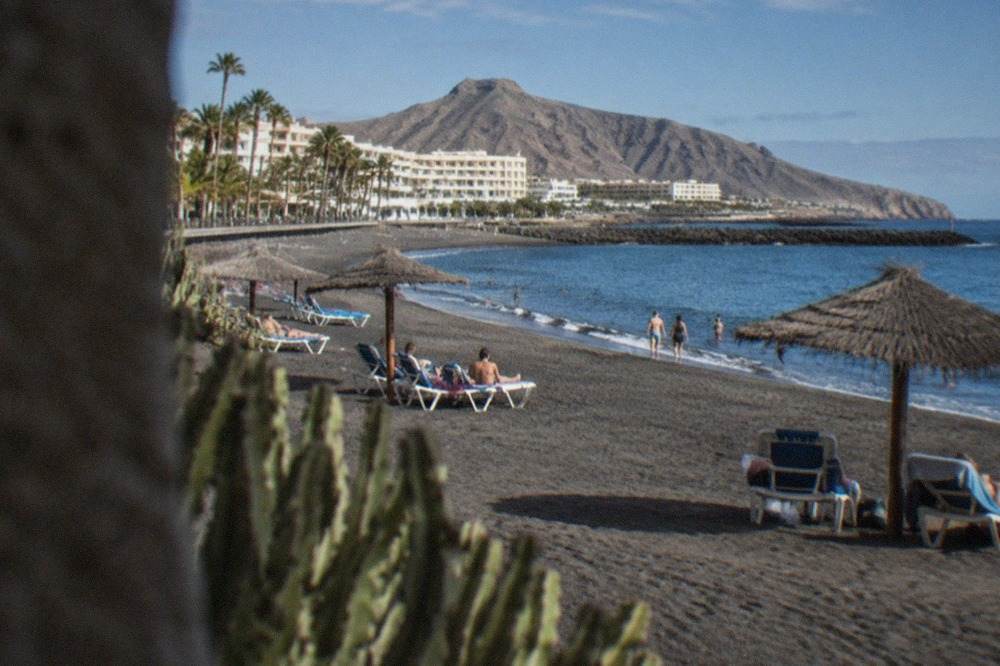
Playa de las Americas is a purpose-built resort base on Tenerife's south coast, in the municipality of Arona, next to Costa Adeje and Los Cristianos, with a swimmable beach, whale boats, water parks and nightlife within a short radius.
Playa de las Americas sits on Tenerife's south coast in the municipality of Arona, and it is the resort most visitors picture when they picture this island: hotels stacked behind a swimmable beach, boat trips leaving from the next bay, and a strip of bars that runs late. It is also one of the smallest of the big resort bases, which is the fact that shapes every practical decision on this page, because almost nothing here needs a car. This Tenerife Travel Guide page reports what the official sources say about the beach, the boats, the buses, the weather and the family days out, and it says plainly where the resort ends and its neighbours begin.
What Is Playa de las Americas?
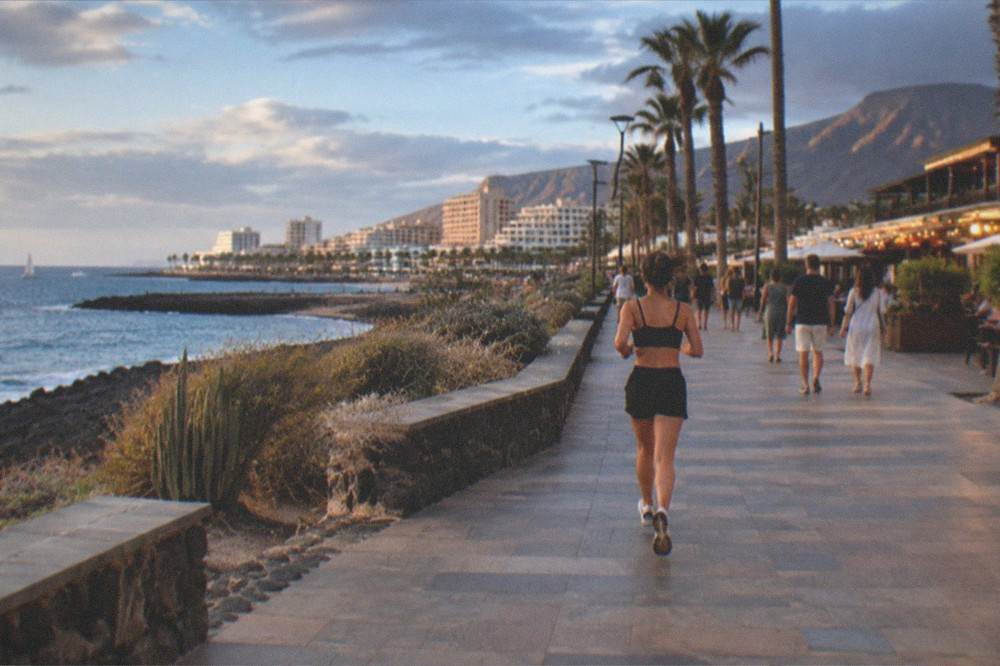
Playa de las Americas is a purpose-built tourist resort on the south coast of Tenerife, in the municipality of Arona, sitting between Costa Adeje to the west and Los Cristianos to the east. It is not a town with a long history: it was laid out for tourism, which is why the hotels, the beach access and the nightlife sit close together and almost everything is walkable. The resort grew around a stretch of coast that was previously largely empty, and the planning shows: the beach promenade runs continuously into the neighbouring bases, so a walker can cover the whole south-coast strip on foot. For anyone comparing bases before booking, the honest summary is that Playa de las Americas is the loudest and most central of the three, Costa Adeje is the more polished and quieter neighbour, and Los Cristianos is the one with the ferry port and the more Spanish working town behind it. The comparison page on Los Cristianos vs Costa Adeje sets out those differences in detail.
The resort's position is its main practical asset. Whale watching boats leave from Los Cristianos and from Puerto Colon in Costa Adeje, both on the doorstep. Siam Park and the other big family attractions are minutes away by bus or taxi. And the national park road climbs from the coast in under an hour of driving, which is why so many Teide sunset tours collect from hotels here first.
Where Is Playa de las Americas on the Map?
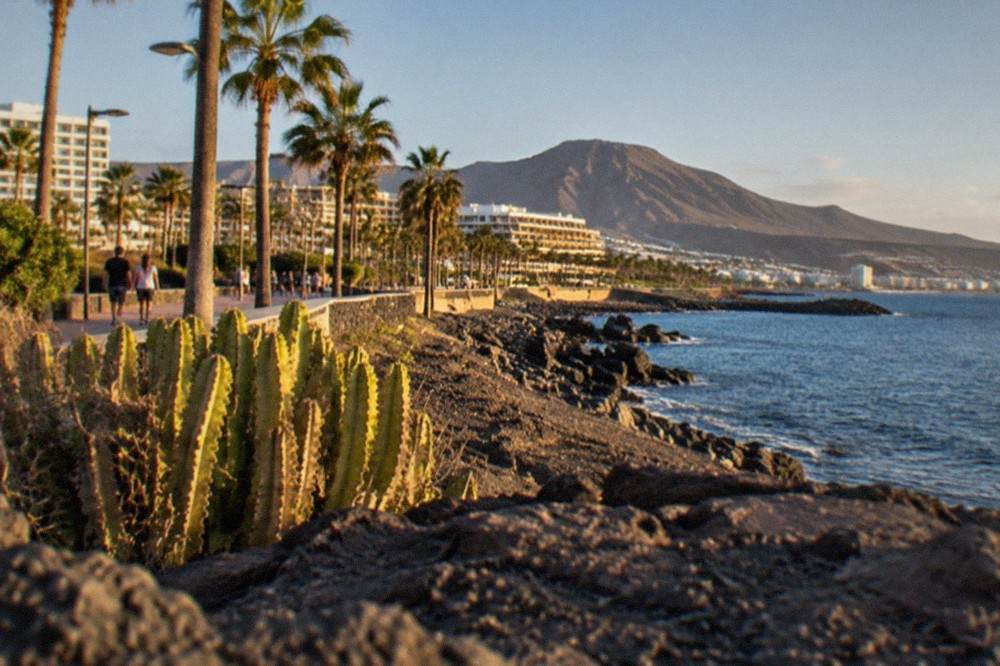
Playa de las Americas occupies a short stretch of Arona's coast on Tenerife's south side, roughly between the municipality of Adeje to the west and the town of Los Cristianos to the east, about fifteen minutes by bus from Tenerife South Airport. The tourist board's own municipal pages settle the boundaries: Costa Adeje and El Duque sit in Adeje, Las Vistas sits in Arona, and Los Gigantes sits in Santiago del Teide on the far west of the island. Playa de las Americas and its neighbours therefore form one continuous built-up strip along Arona and Adeje's coast, and the resort's own beach merges into Las Vistas, the golden-sand beach the tourist board lists in Arona, at its eastern end.
That continuity matters for planning. A visitor staying at the western edge of Playa de las Americas can walk to the eastern end of Los Cristianos without ever leaving the promenade, and the resort bases to the west, including Playa Paraiso and Playa San Juan and Alcala, are quieter and further from the airport. To the east lie Las Galletas and Costa del Silencio, a fishing-village base that has grown but not transformed. Inland, San Miguel de Abona holds the traditional town and the golf courses, and the coast at El Puertito is a small, protected cove between the big resorts.
| Base | Municipality (per the tourist board) | Character, in official and site terms |
|---|---|---|
| Playa de las Americas | Arona | Purpose-built resort, the loudest and most central of the south bases |
| Costa Adeje and El Duque | Adeje | Polished neighbour to the west, grey-sand El Duque beach |
| Las Vistas | Arona | Golden-sand beach between Playa de las Americas and Los Cristianos |
| Los Cristianos | Arona | Ferry port and working town to the east |
| Playa Paraiso | Adeje | Quieter cliff-side base further west |
| Las Galletas and Costa del Silencio | Arona | Fishing village and low-rise base to the east |
For a first-time visitor the practical reading of the table is simple: every base in it shares the same airport, the same whale boats and the same weather, and the choice between them is a choice about noise level and walkability rather than about access.
What Is the Beach Like at Playa de las Americas?
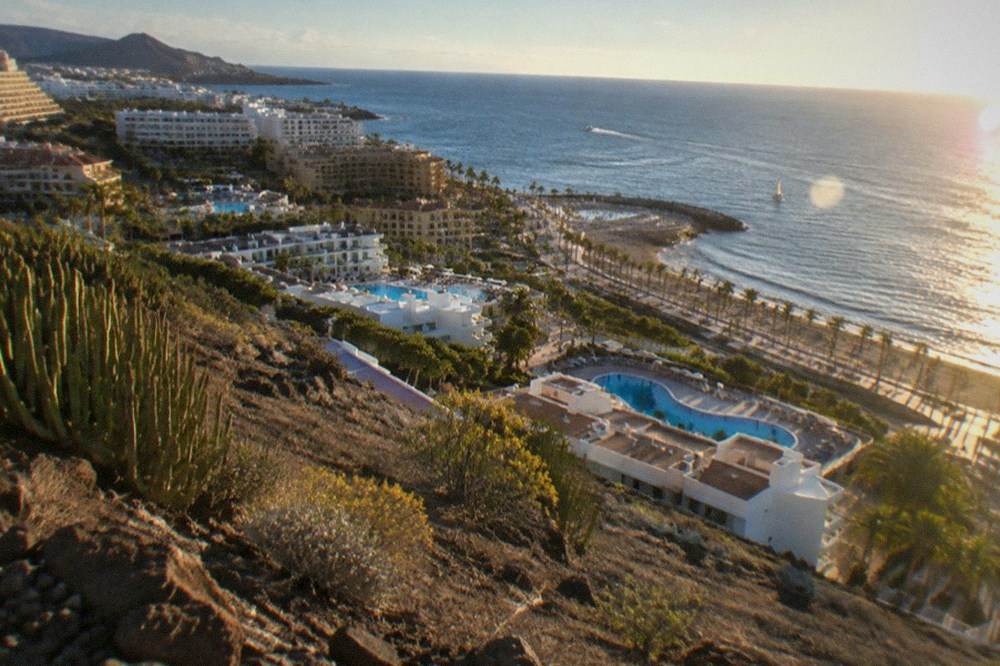
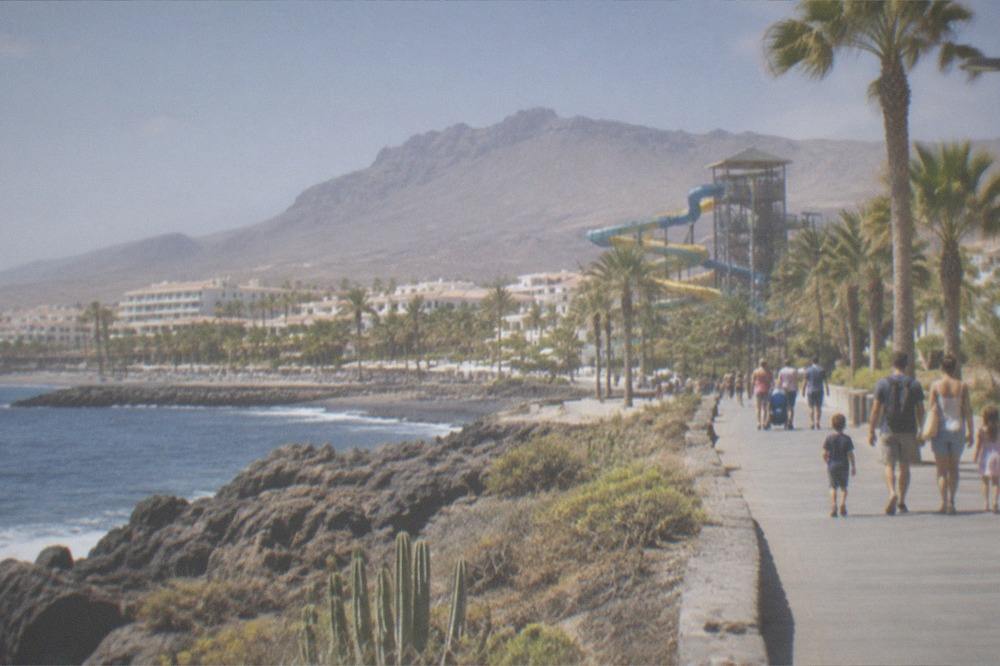
The resort's own beach is a sheltered, swimmable town beach with imported pale sand and calm water behind breakwaters, and it runs into Las Vistas, the golden-sand beach the tourist board lists in Arona, at its eastern end. The tourist board describes Las Vistas as golden sand, calm behind a row of breakwaters, and that description is the reliable one for the stretch most hotel guests actually use. Sand colour on this coast is worth checking against the official descriptions rather than against the brochures, because the tourist board is blunt about it: El Duque in Costa Adeje is grey sand, Playa de Fanabe is pale sand, and golden sand is what the board says of Las Vistas and of Playa de las Teresitas up at Santa Cruz.
The water is the reason families base themselves here. The breakwaters that calm Las Vistas and the neighbouring bays make the south-coast beaches the island's easiest swimming, in contrast to the north-coast strands like Playa de Benijo, where the tourist board's own page warns of the open Atlantic. The south coast also carries the island's warmest sea: the NOAA series for the south coast records 22.2 degrees Celsius in July, 23.1 in August and 23.7 in September and October.
| Beach | Location | What the tourist board's own page says |
|---|---|---|
| Las Vistas | Arona, between Playa de las Americas and Los Cristianos | Golden sand, calm behind a row of breakwaters |
| Playa del Duque | Costa Adeje, Adeje | Grey sandy beach |
| Playa de Fanabe | Costa Adeje, Adeje | Pale sand |
| Playa de las Teresitas | San Andres, Santa Cruz | Golden sand, palm trees, breakwaters that calm the water |
| El Medano | Granadilla de Abona | Fine grey sand, under Montana Roja |
| El Bollullo | La Orotava | Black sand at the foot of a cliff |
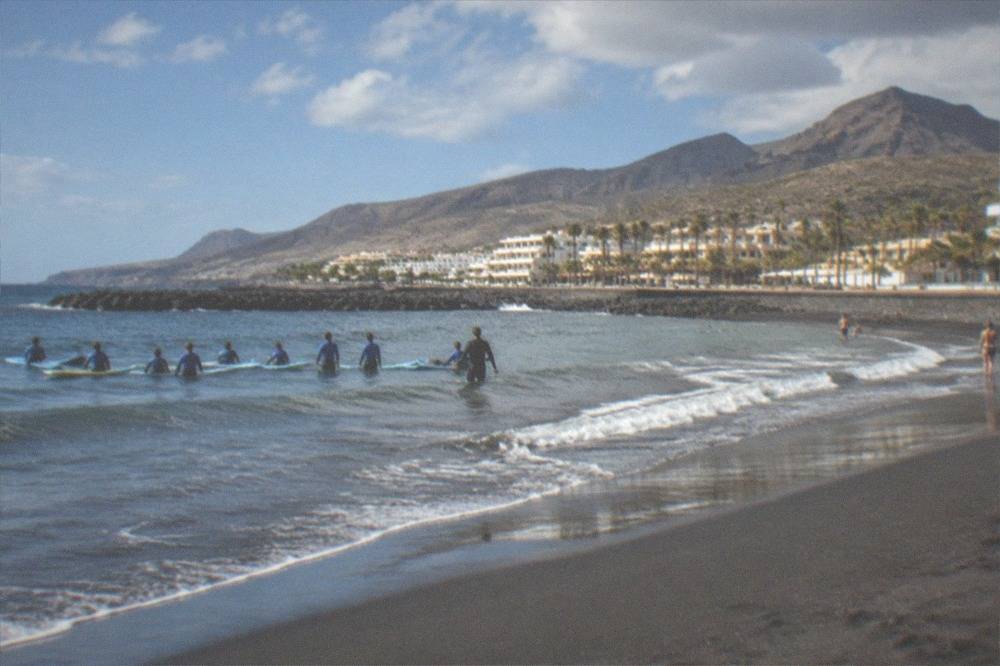
The beach is also the resort's learner surf spot, and the surf schools run their beginner sessions on exactly this stretch. A small-group lesson with photos included is the easiest way onto a board, and the listing for the surf lesson running from Playa de las Americas can be checked directly: Check availability. The site's surf lessons overview covers the other breaks on the island for anyone who catches the bug.
Can You Watch Whales and Dolphins from Playa de las Americas?
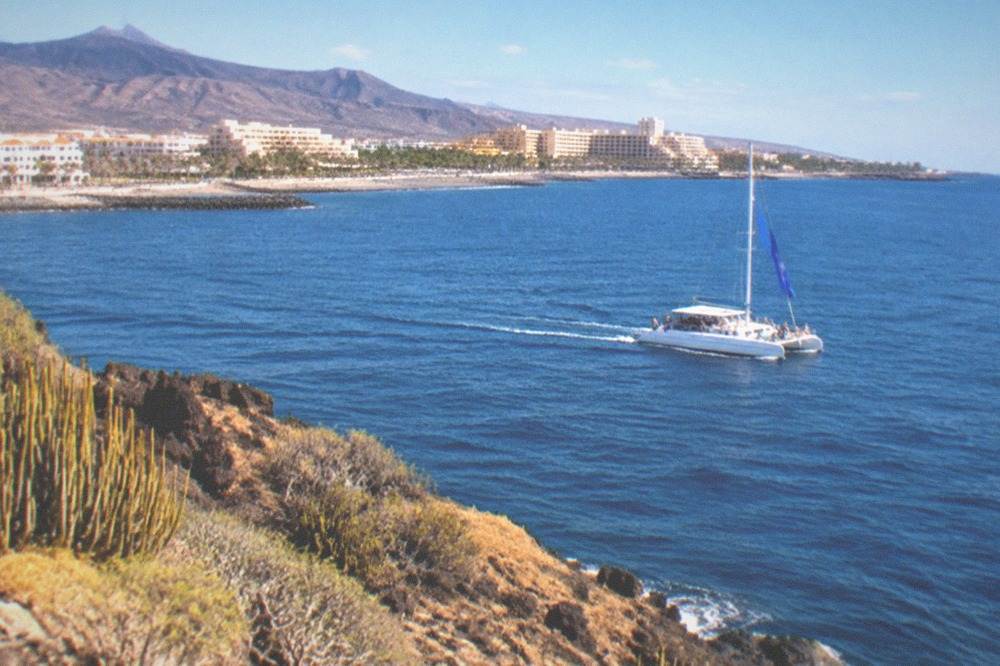
Yes, and it is one of the strongest reasons to base here: the whale watching boats leave from Los Cristianos and Puerto Colon, both on the resort's doorstep, into a stretch of water the World Cetacean Alliance designated a Whale Heritage Area in January 2021, holding what the WCA calls a unique resident population of pilot whales and bottlenose dolphins. The designation is the World Cetacean Alliance's, not UNESCO's, and the WCA's page for the Tenerife-La Gomera Marine Area is the source for both the date and the resident population claim. No official count of the whales exists, so none is printed here.
The activity is tightly regulated by Decreto 178/2000, the Canary decree that governs every authorised boat, and the rules are worth knowing because they let a visitor tell a legal operator from a careless one at a glance.
| Rule under Decreto 178/2000 | The decree's figure |
|---|---|
| Minimum approach distance to whales or dolphins | 60 metres, no approach closer |
| Boats allowed within 500 metres of the animals | No more than three |
| Speed within 500 metres | 4 knots maximum |
| Swimming or diving with the animals | Prohibited within 500 metres |
| Feeding, chasing or circling | Prohibited |
| Authorised boats | Must fly the Barco Azul flag, issued with the permit and at each annual renewal |
The Barco Azul flag is the practical test: an authorised boat flies it, and the decree's article 15 makes the flag compulsory at each annual renewal of the permit. The eco-focused no-chase catamaran trip that runs from Los Cristianos, with underwater windows, is one of the listings that fits the decree's spirit, and the card below carries its live price and departure details. The site's wider whale and dolphin watching page compares the boat types and departure ports.
Is Playa de las Americas Good for Families?
Yes, and for a specific reason: the resort sits between the two biggest paid family attractions on the island, with Siam Park in Costa Adeje on one side and the boat trips of Los Cristianos on the other, while its own beach is calm enough for children behind the breakwaters. Siam Park's own page states it opens 365 days a year, 10:00 to 18:00 from 1 May to 29 Oct and 10:00 to 17:00 from 30 Oct to 30 Apr. The park's award record should be quoted with its attribution: Loro Parque's own release says Tripadvisor awarded the Travellers' Choice Award for the best waterpark in the world for a fifth consecutive year, and later years were not confirmed on the awarding body's page, so this site does not claim them.
Beyond the water park, the family options fan out quickly. Jungle Park sits in the hills just above the resort, and the Los Gigantes cliffs, which the tourist board says tower up to 600 metres, are reachable on a boat trip or a west-coast drive. Families with a full week can climb into the national park for the volcanic landscape of the Roques de Garcia, which needs no booking of any kind, unlike the summit trail.
The Siam Park entry ticket is the single most-booked family product on this site, and the card below carries its live price and current availability. The site's water parks guide compares Siam Park with Aqualand and Lago Martianez for families weighing the options.
Do You Need a Car in Playa de las Americas?
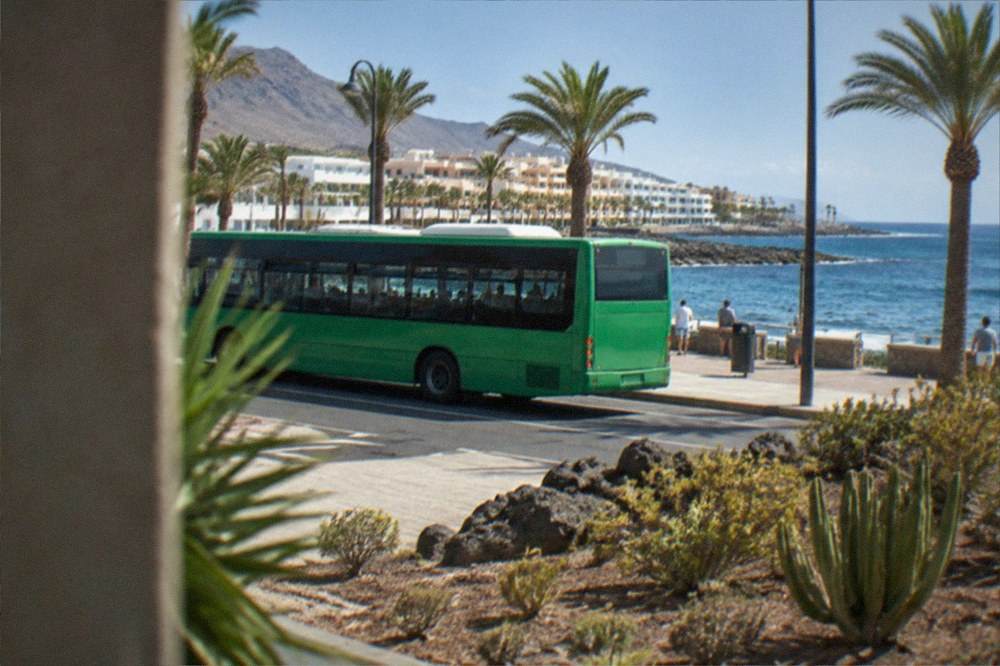
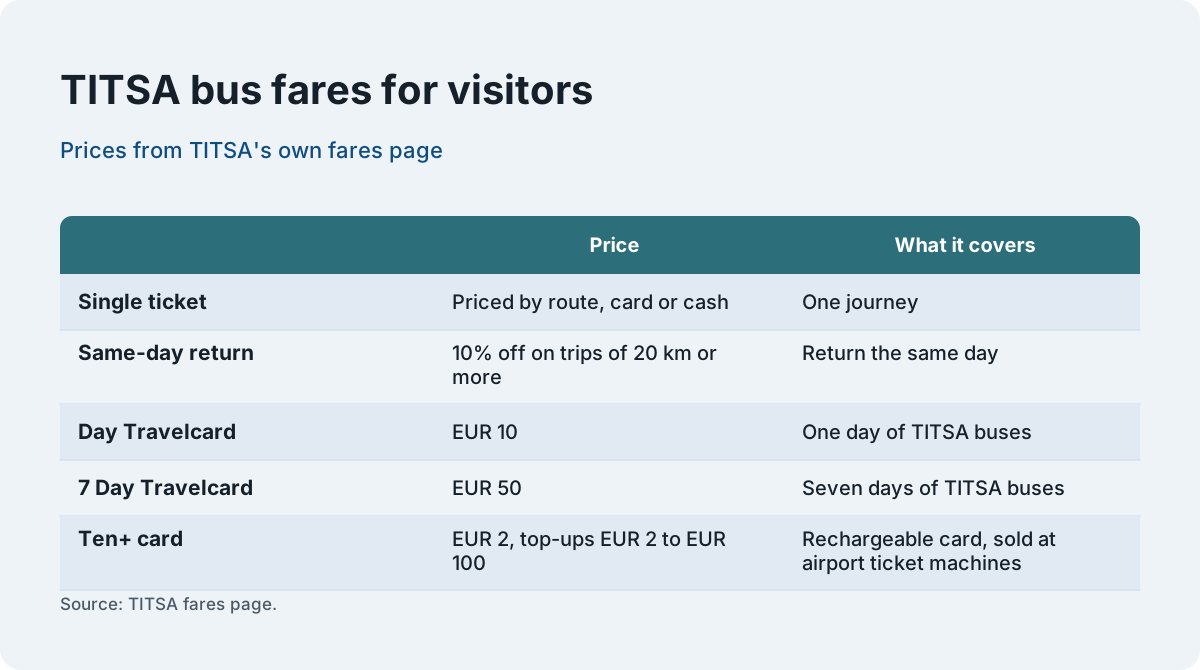
No, and this is the resort's defining practical advantage: TITSA buses connect it to the airport, to Costa Adeje, to Los Cristianos and up to the island's north, while visitors pay for single tickets, the EUR 10 day travelcard or the EUR 50 seven-day travelcard, because the 2026 free-transport subsidy applies only to resident passes held by Canary Islands residents. TITSA's own fares page is the source for the visitor products, and the Canary government's 2026 subsidy notice is the source for who qualifies: nobody who is not a resident. The same honesty applies to the tram: Metrotenerife's network does not reach either airport and does not reach the south coast, so the tram is irrelevant to a stay here.
| TITSA visitor product | Price (TITSA's fares page) | What it covers |
|---|---|---|
| Single ticket | Priced by route, card or cash | One journey |
| Same-day return | 10% off on trips of 20 km or more | Return the same day |
| Day Travelcard | EUR 10 | One day of TITSA buses |
| 7 Day Travelcard | EUR 50 | Seven days of TITSA buses |
| Ten+ card | EUR 2, top-ups EUR 2 to EUR 100 | Rechargeable card, sold at airport ticket machines |
One thing the south coast does not have, at least on the listings this site carries: a free walking tour. The three English-guided, pay-what-you-want walks carded here all run in the north, on GuruWalk, in La Laguna, Puerto de la Cruz and Santa Cruz de Tenerife, and no free walk is listed for the resort south on GuruWalk. That is a statement about what is listed, not proof that none exists. Visitors who want a guided walk without paying a fixed fee can plan one around a northern day trip instead.
For everything else, the site's getting around Tenerife page covers the buses, the tram and the taxis in full, and car hire in Tenerife covers the case for a car, which on this coast is really only the case for days out to Icod de los Vinos and the far west.
What Is the Weather Like in Playa de las Americas?
The south coast is the driest and sunniest part of Tenerife: AEMET's normals for Tenerife South Airport record July and August means of 24 and 24.7 degrees Celsius with zero rain days, against 13.1 and 14.3 degrees at the island's north airport in January, and the sea off the south coast peaks at 23.7 degrees Celsius in September and October. The two airport stations sit a short drive apart and describe two different islands, which is the single most useful weather fact for choosing a base. The south station's annual total, as AEMET publishes it, is 132 mm of rain on 15.2 days with a millimetre or more, against 520 mm on 64 days at the north airport.
| Month | South airport mean daily max C | South airport rain days | Sea surface C off the south coast |
|---|---|---|---|
| January | 21.7 | 1.8 | 19.9 |
| March | 23.1 | 1.9 | 19.1 |
| May | 23.9 | 0.3 | 20.2 |
| July | 27.7 | 0 | 22.2 |
| September | 27.9 | 0.6 | 23.7 |
| November | 24.8 | 1.9 | 22.5 |
The air normals are AEMET's 1981 to 2010 series and the sea figures are NOAA's 1991 to 2020 series, two datasets from two periods, which is why they are never blended into one claim. For anyone planning around the numbers, the practical reading is that the swimming season runs from late spring well into autumn, and that even the winter months hold daytime maxima above 21 degrees on the south coast.
Where to Eat, Drink and Go Out in Playa de las Americas
The resort's eating and going out splits cleanly in two: the promenade holds the international menus and the nightlife strip that runs late, while the better Canarian cooking sits in the towns behind the coast and up in the hills, and the two carded evening shows, a medieval banquet at Castillo San Miguel and flamenco in Costa Adeje, sit a short ride from the resort. The site's Tenerife nightlife guide maps the strips and the quieter alternatives. For eating, the honest split is the same as everywhere on the south coast: the promenade holds the international menus, and the better Canarian cooking sits in the towns behind the coast and up in the hills, which is where the site's guachinches and best restaurants guides point. The island's own dishes, papas arrugadas and mojo, appear on most menus here, and the island's food guide covers what else to look for.
For a different evening altogether, the medieval banquet and tournament show at Castillo San Miguel and the flamenco shows in Costa Adeje are the two carded evening options closest to the resort, and the site's medieval night and shows page lists them. Visitors planning a winter trip should also know that the Santa Cruz Carnival runs on the capital's official programme, with the 2027 theme Roma: El imperio del Carnaval and the Pinata weekend on 26 and 27 February 2027, dates that sit after Ash Wednesday and should not be corrected from the church calendar.
Where to Stay in Playa de las Americas
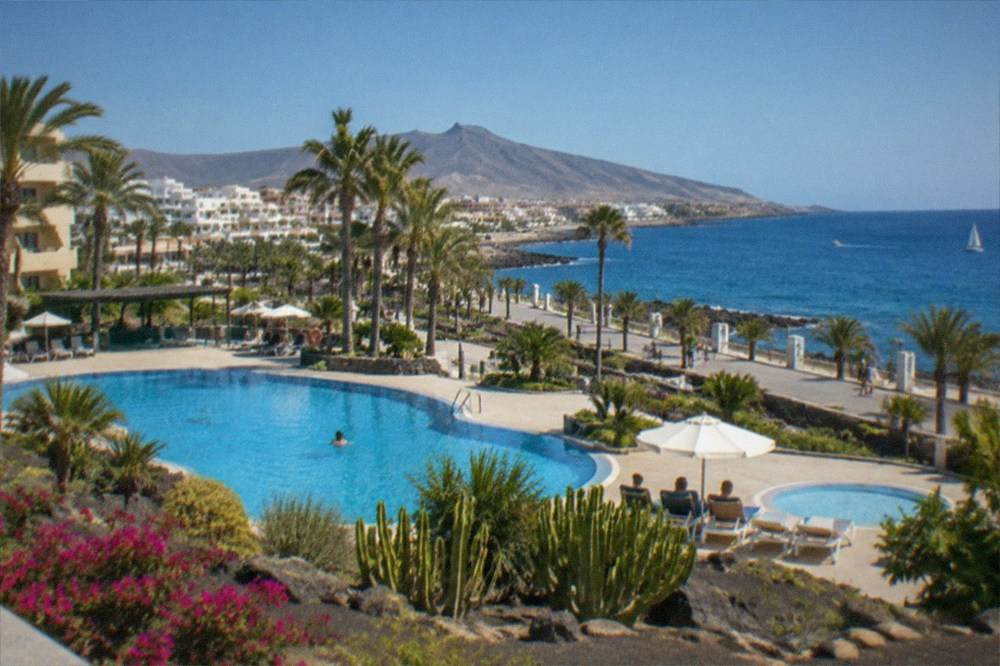
The resort's accommodation is dominated by mid-range and upscale hotels and apartment complexes within walking distance of the beach and the nightlife strip, and the choice within it comes down to which end of the resort you pick: the quieter western edge towards Costa Adeje, or the eastern end that runs into Los Cristianos. The site's where to stay in Tenerife guide places the resort in the island-wide picture, and its all-inclusive Tenerife page covers the packages, which are heavily sold here. For anyone weighing the resort against a quieter base, Puerto de Santiago on the west coast is the usual low-key alternative within reach of the same airport.
For visitors who want to compare current room rates across the resort's hotels and apartments, the site's stay search covers Playa de las Americas directly: compare stays in Playa de las Americas. No nightly rate is quoted here, because rates move daily and none can be re-checked at build time. What drives them, on this coast, is season, proximity to the beach and how far the room sits from the nightlife strip, and those three factors are worth more planning time than any published figure.
Common Questions About Playa de las Americas
what is las americas like in tenerife?
It is the island's most compact and loudest purpose-built resort: a swimmable, breakwater-protected beach running into the golden sand of Las Vistas, whale boats and water parks on the doorstep, TITSA buses to everywhere else, and a nightlife strip that runs late. The tourist board places it in the municipality of Arona, between Costa Adeje and Los Cristianos. It suits visitors who want everything walkable; it does not suit visitors seeking a quiet or traditionally Canarian base.
where is las americas tenerife
On Tenerife's south coast, in the municipality of Arona, between Costa Adeje to the west and Los Cristianos to the east. Tenerife South Airport, AENA's Tenerife Sur, is the closest airport, and TITSA's airport page lists lines 10, 40, 711, 343 and 415 serving it.
Can you swim at Playa de las Americas?
Yes. The resort's own beach and Las Vistas sit behind rows of breakwaters, which the tourist board credits with calming the water, and the sea off the south coast runs from 19.1 degrees Celsius in March to 23.7 in September and October in the NOAA series.
Is Playa de las Americas the same as Costa Adeje?
No. They are neighbouring resorts on one continuous promenade, but they sit in different municipalities: Playa de las Americas and Las Vistas in Arona, Costa Adeje and El Duque in Adeje, per the tourist board's own municipal pages.
Are the buses free for tourists in Playa de las Americas?
No. The 2026 100% subsidy on public transport applies to resident passes only, held by Canary Islands residents on personalised cards. Visitors pay for single tickets, the EUR 10 day travelcard or the EUR 50 seven-day travelcard, per TITSA's fares page.
Which airport should you fly into for Playa de las Americas?
Tenerife South, AENA's Tenerife Sur, which recorded 13,969,678 passengers in 2025. TITSA's airport page lists lines 10, 40, 711, 343 and 415 there, and the 343 express runs to Los Cristianos, the resort's eastern neighbour.