Surfing and Surf Lessons in Tenerife
Tenerife sits in the Atlantic trade-wind belt, which gives the island's south and west coasts a surf season that runs through the European winter, when the sea is at its warmest and the crowds on the sand are at their thinnest.
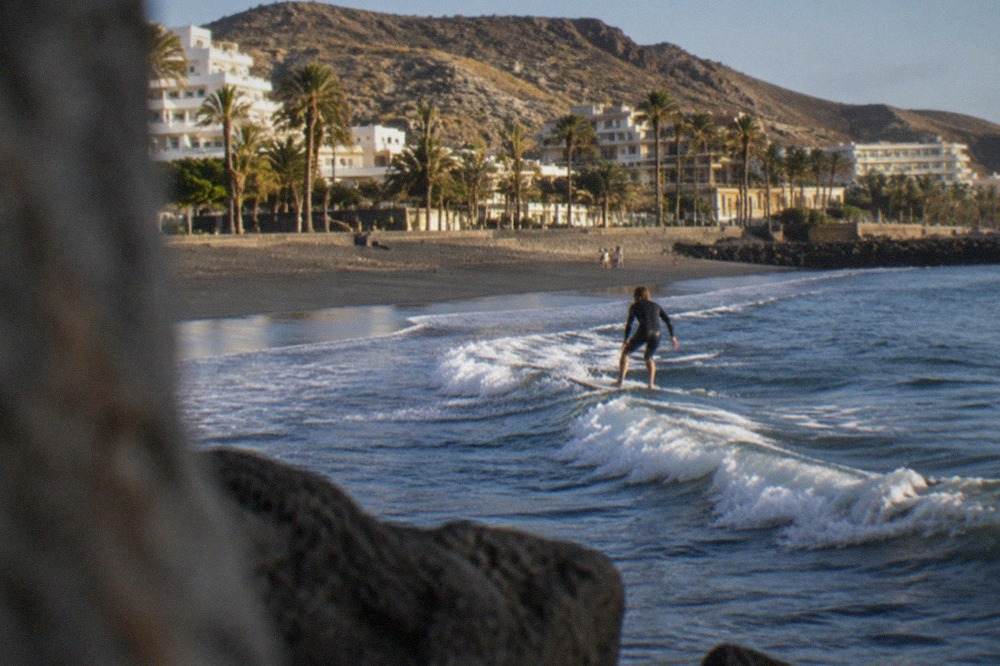
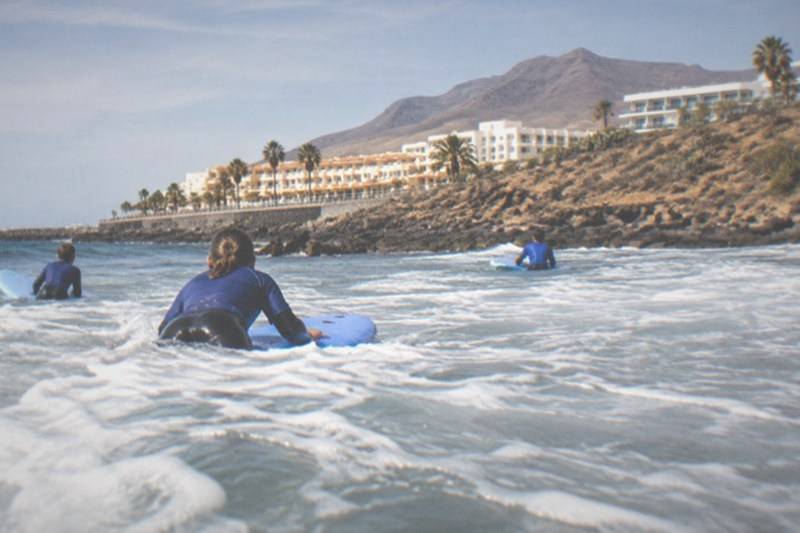
Surf Lesson, Photos Included
Tenerife: Surfing Lesson for All Levels, Photos included
Playa de las Américas is one of the easier places to learn to surf in Tenerife, and this lesson starts on the sand before you paddle out. All equipment is supplied, and photographs from the session are included.
from $43.42 Per person, in USD. A promotional rate, so the regular price is higher.
Check Price & Availability →Opens the live booking page with up-to-date dates and prices. All booking and payment happen there; this guide takes none of it.
- Area
- Playa de las Americas
- Length
- 2 hours
- Kind
- On and Under the Water
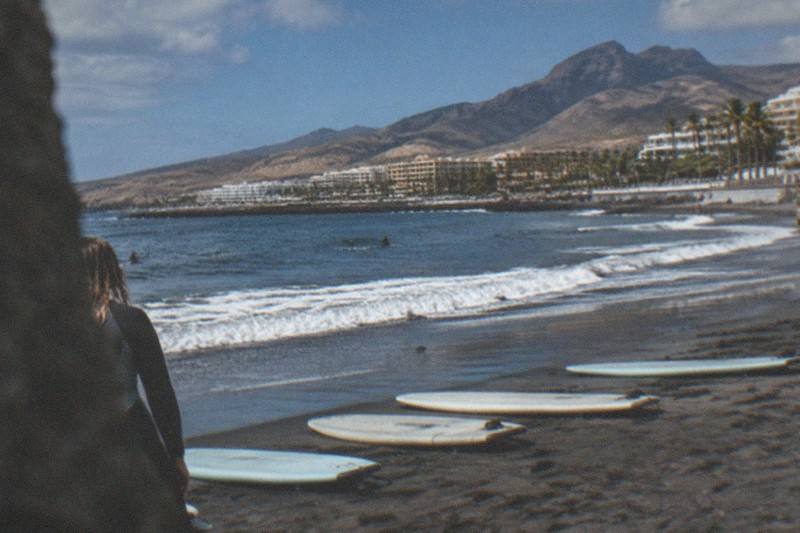
Small-Group Beginner Surf Lesson
Group Surf Lessons
from $52.69 Per person, in USD. The total depends on the date and option you pick.
Check Price & Availability →- Area
- Playa de las Americas
- Length
- 2 hours
- Kind
- On and Under the Water
Short answer
Yes, Tenerife works for beginners: the south coast around Playa de las Americas has gentle beach breaks, warm water year round, and licensed surf schools running two-hour group lessons with boards and wetsuits included.
The Atlantic does something generous for Tenerife that the Mediterranean never manages for mainland Spain: it stays warm enough to surf without a thick wetsuit in the middle of January. Sea surface temperatures off the south coast, in the NOAA series covering 1991 to 2020, never drop below 19.1 Celsius in March and peak at 23.7 Celsius in September and October. That, plus a winter swell season that coincides with the island's quietest beach months, is why so many European surfers treat Tenerife as a cold-season escape rather than a summer one. This guide sets out what the verified climate and sea data say about timing, what a first lesson actually involves, and how the island's surf courses compare with the other water activities on offer.
Is Tenerife Good for Beginner Surfers?
Yes, Tenerife is a strong choice for a first surf lesson: the south coast around Playa de las Americas carries beginner-oriented surf schools running two-hour group courses, the sea never falls below 19 Celsius, and the island's beach-break conditions suit learners better than the rock-reef waves that intimidate newcomers on other Canary islands. The island's surf economy is built around first-timers, and the roster of courses sold through this site reflects that: the flagship lesson at Playa de las Americas runs two hours and includes photos of your session, while a separate small-group beginner option covers the same fundamentals in a tighter group.
The reason the south coast suits learners is physical rather than fashionable. Beach breaks, where the wave breaks over sand rather than rock, forgive mistakes in a way reefs do not, and a sandy entry means a first wipeout ends in soft ground. Arona, the municipality that contains Playa de las Americas, also holds Las Vistas, which the tourist board describes as golden sand behind a row of breakwaters that calm the water, so a nervous companion has a sheltered swimming beach within the same stretch of coast while the lesson runs. The wider area is covered in this site's guide to Arona and Chayofa.
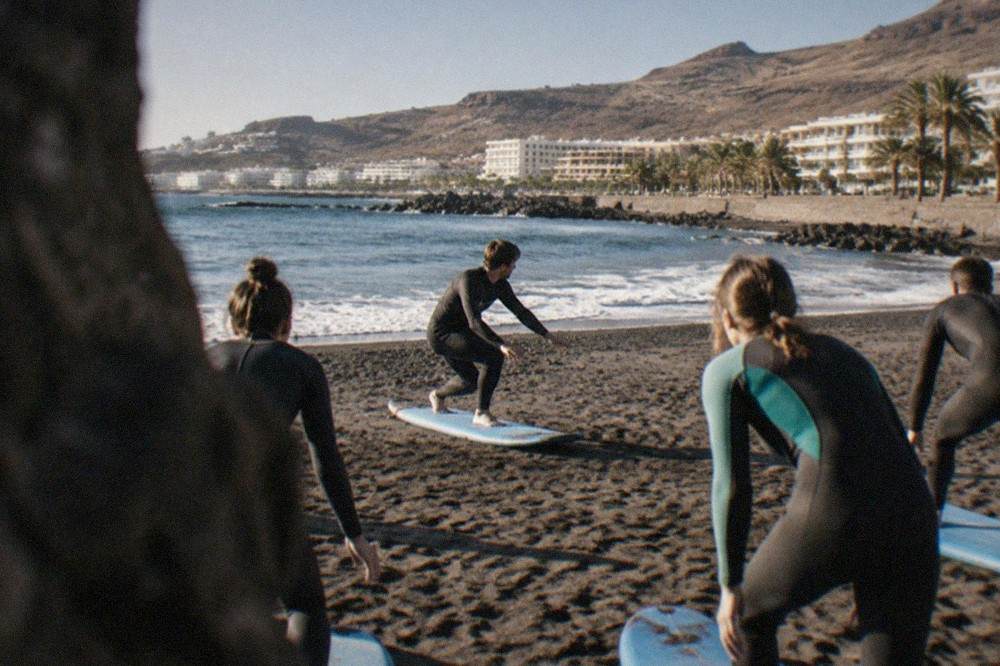
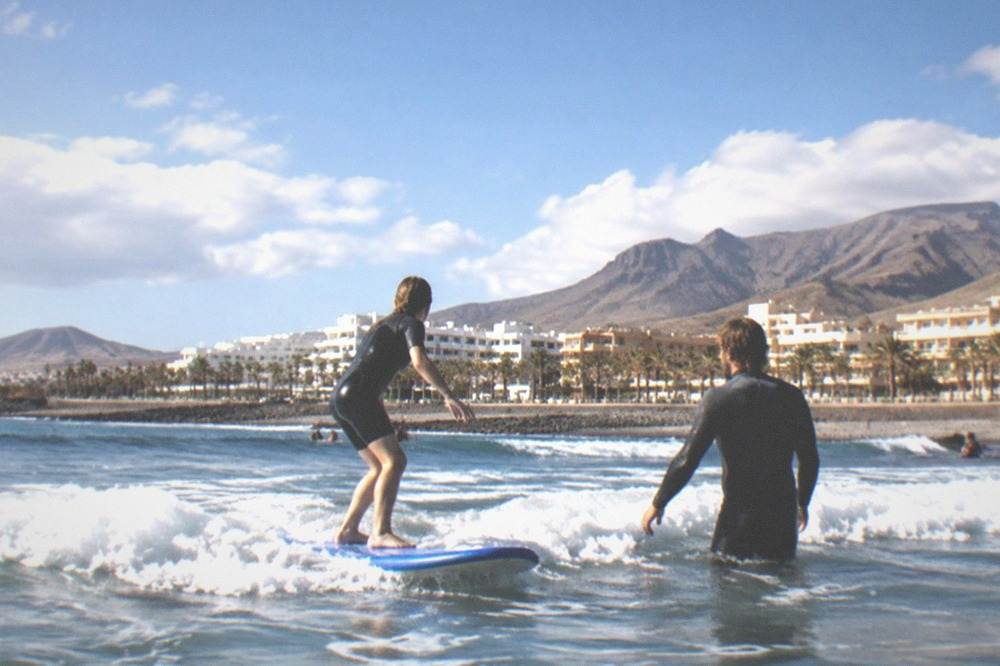
A typical first lesson follows a shape that is fairly standard across the island's schools: a dry-land briefing on safety and the pop-up movement, then into the water for pushed-start waves, where the learner is already standing on the board when the wave arrives. The listing for the Playa de las Americas course states that photos are included, which matters more than it sounds, because a beginner's first ridden wave is usually gone from memory before it is over and the photo is the proof it happened. What the listing does not promise, and no honest page should, is that you will stand up on your first session: that depends on the day's conditions and your own balance.
For anyone weighing the options side by side, the cards below show the current highest-rated courses and water activities for this stretch of coast.
Does Tenerife Have Good Surfing?
Tenerife has genuine surfing, not just surf lessons: the island sits in the open Atlantic, takes winter swell on its north and west coasts, and holds breaks suited to every level from first-timer beach break to experienced reef wave, with the trade-off that the same islands that make the water warm also mean conditions vary sharply between coasts. The north coast faces the incoming Atlantic swell more directly, which is why the island's more demanding waves sit there, while the south coast around Playa de las Americas is sheltered enough that a beginner session is rarely called off outright.
The honest framing is that Tenerife is a learner-and-improver island more than a big-wave destination. The waves that make surf films are not what the island is known for; what it offers instead is reliability of the mild kind, warm water, and a dense cluster of licensed schools. For a visitor whose holiday is based in Costa Adeje or Los Cristianos, the practical question is not whether Tenerife has world-class surf but whether it has a wave a complete novice can stand up on, and on the south coast the answer to that is yes on most days of the year.
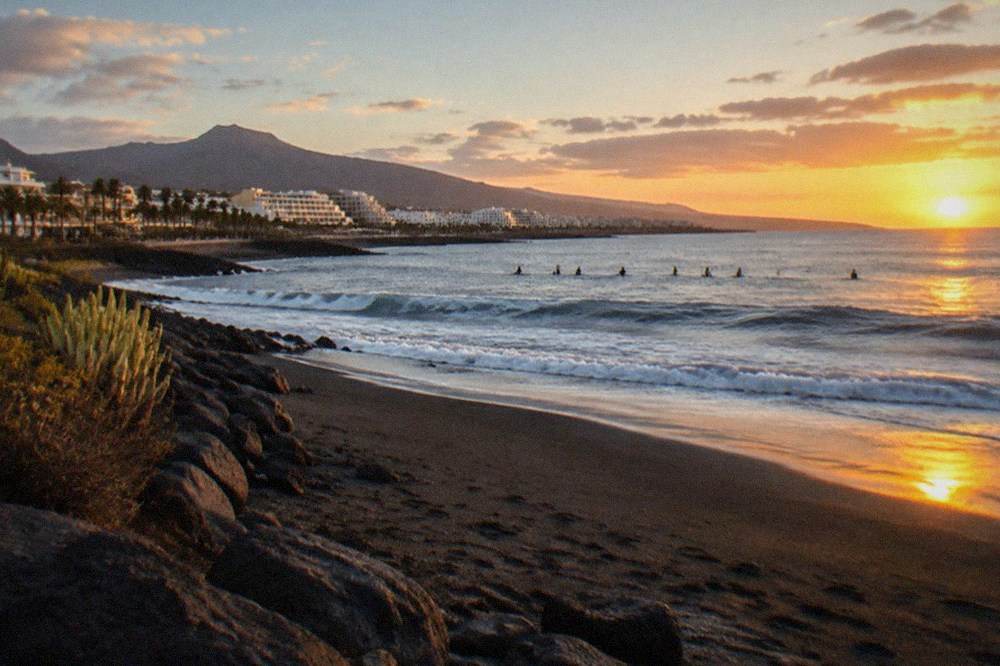
One point of caution is worth stating plainly: this site's verified fact pack holds no data on individual surf spots, their wave heights or their difficulty grades, so no page here will tell you that a named break is "fast" or "heavy". Where a break matters to your plan, confirm the current conditions with the surf school itself, because local knowledge on the day beats any guide written months earlier. The schools running the lessons are the same people who read the daily forecast and decide which stretch of sand to use.
If the surf is flat on your week, the south coast does not leave you stranded. The same stretch of water carries kayaking with turtles trips out of Los Cristianos, scuba diving try-dives in Costa Adeje, and the full range of jet ski and watersports sessions from Arona, so a mixed group can split the morning between the surf lesson and something else.
When to Go Surfing in Tenerife?
The best months for a beginner surf holiday in Tenerife are October to March, when the sea holds between 21 and 23.7 Celsius, the air on the south coast stays in the low twenties by day, and tourist arrivals by air dip from their March peak, though the sea never drops below 19 Celsius, so a lesson is plausible in any month of the year. The data behind that comes from two different official series, and it is worth understanding what each one measures, because the timing decision is really a trade between warmth, swell and crowds.
The sea surface figures below are NOAA's 1991 to 2020 averages for the water off the south coast. Note the flatness of the curve: this is not a destination with a cold season in the water.
| Month | Sea surface temperature off the south coast |
|---|---|
| Jan | 19.9 C |
| Feb | 19.2 C |
| Mar | 19.1 C |
| Apr | 19.5 C |
| May | 20.2 C |
| Jun | 21.4 C |
| Jul | 22.2 C |
| Aug | 23.1 C |
| Sep | 23.7 C |
| Oct | 23.7 C |
| Nov | 22.5 C |
| Dec | 21.1 C |
The air figures are AEMET's 1981 to 2010 climate normals for the Tenerife South Airport station, which sits at 64 metres and represents the coastal south better than the island's higher stations do. Two things stand out for a surfer: the almost total absence of rain from June to August, and the sunshine hours, which climb to 295 in July.
| Month | Mean daily max C | Mean daily min C | Rain days of 1 mm or more | Sunshine hours |
|---|---|---|---|---|
| Jan | 21.7 | 15.2 | 1.8 | 193 |
| Feb | 22.0 | 15.0 | 2.2 | 195 |
| Mar | 23.1 | 15.6 | 1.9 | 226 |
| Apr | 23.1 | 16.0 | 1.1 | 219 |
| May | 23.9 | 17.0 | 0.3 | 246 |
| Jun | 25.4 | 18.8 | 0.0 | 259 |
| Jul | 27.7 | 20.2 | 0.0 | 295 |
| Aug | 28.4 | 21.1 | 0.2 | 277 |
| Sep | 27.9 | 21.1 | 0.6 | 213 |
| Oct | 26.8 | 20.0 | 1.6 | 214 |
| Nov | 24.8 | 18.2 | 1.9 | 193 |
| Dec | 22.8 | 16.5 | 3.5 | 195 |
Crowds are the third variable, and the island's own statistics agency, ISTAC, counts tourists arriving by air, excluding Canary Islands residents, month by month. The pattern is consistent across recent years: a March peak, a spring dip, and a strong autumn-winter run.
| Month | Tourists by air, 2024 | Tourists by air, 2025 |
|---|---|---|
| Jan | 612,169 | 643,460 |
| Feb | 632,295 | 648,255 |
| Mar | 678,693 | 677,688 |
| Apr | 578,602 | 604,370 |
| May | 528,408 | 539,410 |
| Jun | 522,461 | 542,881 |
| Jul | 580,512 | 611,623 |
| Aug | 603,529 | 618,578 |
| Sep | 551,175 | 563,261 |
| Oct | 617,714 | 631,662 |
| Nov | 652,800 | 659,656 |
| Dec | 679,245 | 671,202 |
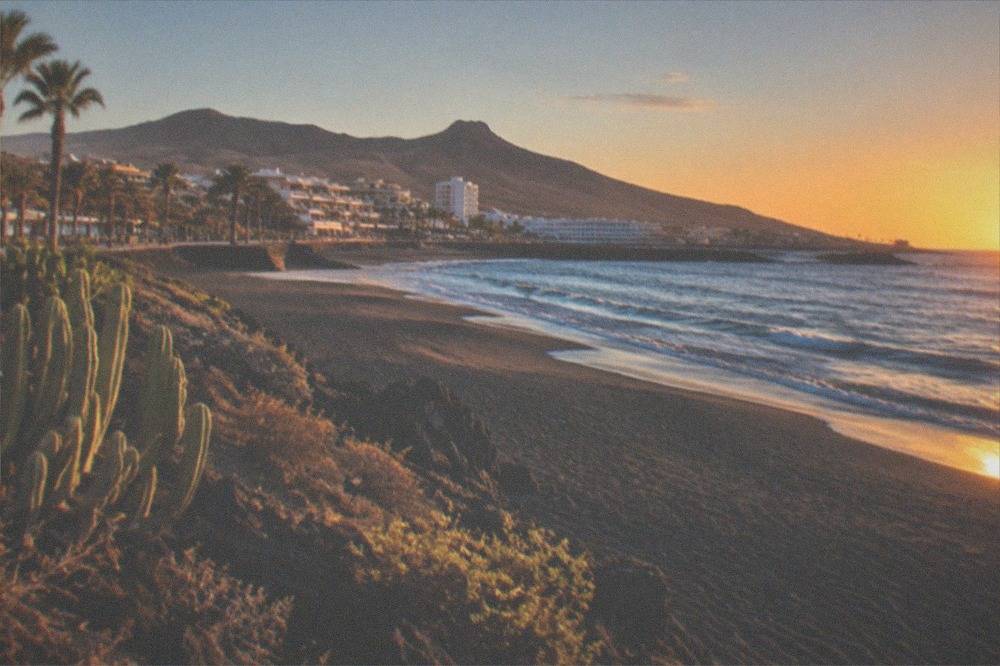
Read together, the three tables make the case for the shoulder and winter months without any editorialising. May and June combine warm water, almost no rain and the year's lowest arrival figures; October and November pair the warmest sea of the year, 23.7 and 22.5 Celsius, with beaches that are calmer than the March peak. July and August are not ruled out, far from it, but they are the months when the south's beaches are busiest and the midday heat argues for an early-morning lesson slot. The month-by-month picture, including what else each season offers, is laid out in the site's guide to Tenerife weather by month.
What a Surf Lesson in Tenerife Actually Covers
A standard beginner lesson in Tenerife runs about two hours, includes the board and wetsuit, and spends its time on three things: beach safety and board control, the pop-up movement practised on the sand, and pushed-start waves in the water, with the instructor choosing the spot and the hour according to the day's conditions. Beyond that core, courses differ mainly in group size and extras: the Playa de las Americas lesson includes photos of the session, while the small-group option trades a bigger crowd for closer coaching.
The two products this site carries show the range clearly. The main lesson, rated by thousands of past guests, is pitched at all levels, which in practice means the instructor splits the group so that first-timers get the sand briefing while anyone with experience paddles straight out. The small-group beginner course is the same idea with fewer learners per instructor, which suits anyone who knows they want corrections rather than just encouragement. Neither listing states an age minimum or a swimming requirement, so confirm both with the operator before booking if either applies to your group; that is a detail no guide page can honestly state on the operator's behalf. The rest of the planning pages sit on Tenerife Travel Guide.
A word on fitness, stated carefully because altitude and medical advice are outside this site's remit: surfing is more tiring than it looks, and the pop-up uses muscles most desk jobs ignore. The operator's own health exclusions matter more on Tenerife's other headline activity, the Teide cable car, where the operator refuses riders with cardiovascular conditions, pregnant women and children under 3 because of the altitude, but the same honest principle applies here: if you have a condition that exercise in the sea could aggravate, ask a doctor first rather than the booking page.
For the full details, dates and live pricing of the flagship course, the card below is the place to look.
Where the Lessons Sit on the Island
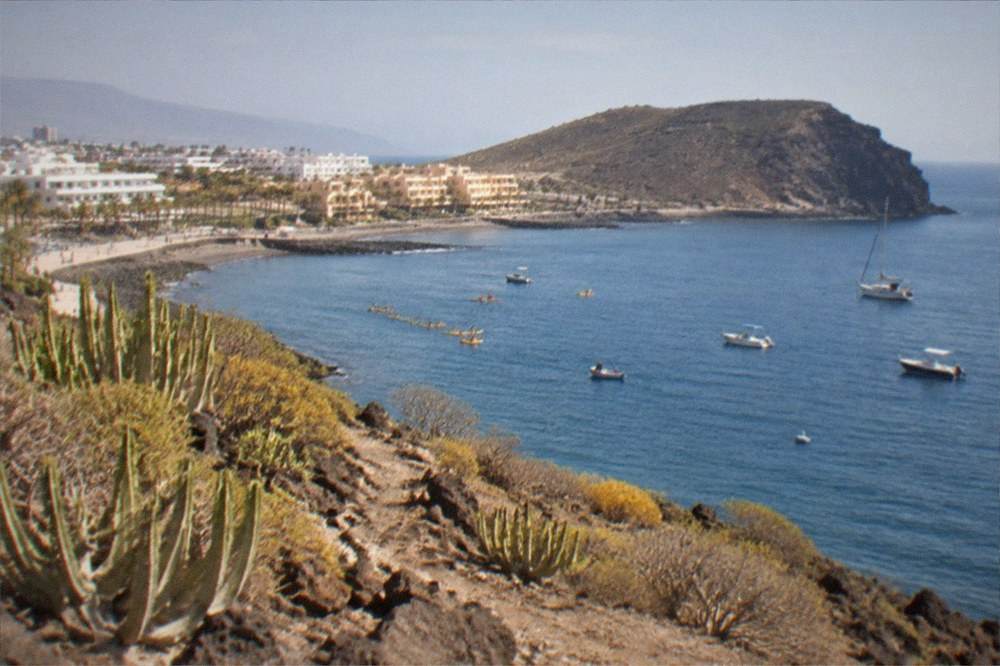
Most beginner surf lessons on this site's roster run from Playa de las Americas in Arona, on Tenerife's south coast, with the island's other water-sport bases clustered in the same corner: Los Cristianos for kayaking and boat trips, Costa Adeje for diving and parasailing, and El Medano, a fine grey-sand beach under Montana Roja, as the island's better-known spot for wind-driven water sports. The geography matters for a visitor because the south is where the airports, the hotels and the sheltered beaches all sit within a short drive of each other.
Tenerife South Airport, AENA's Tenerife Sur, handled 13,969,678 passengers in 2025, an all-time record, and TITSA's own airport page lists lines 10, 40, 711, 343 and 415 serving it, so the transfer to the surf beaches is a bus ride rather than an expedition. Visitors pay for that transport, which is worth saying plainly because a great deal of confusion surrounds this: the 2026 hundred per cent subsidy on public transport in the Canaries applies to resident passes only, and visitors buy single tickets, the EUR 10 day travelcard or the EUR 50 seven-day travelcard. The full network is covered in the guide to Tenerife buses.
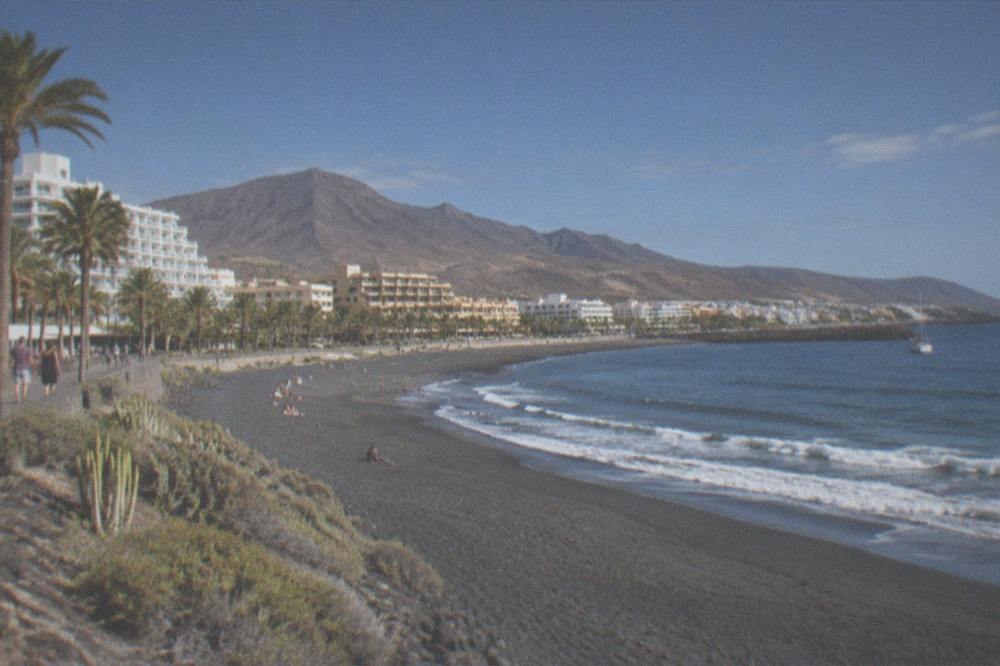
El Medano deserves its own sentence even on a surf-lesson page, because the tourist board describes it as fine grey sand under Montana Roja, and it sits in Granadilla de Abona, the municipality that also holds the airport. Its reputation belongs to boards with sails and kites rather than plain surfboards, and this site's fact pack holds no verified data on its surf conditions, so treat that as orientation rather than a recommendation. The area has its own page, covering El Medano in full.
If your holiday base is the north rather than the south, the same lesson logic applies with a longer transfer, and the island's bus and tram network, covered in the island's transport guides, connects Puerto de la Cruz and Santa Cruz de Tenerife to the south. A morning lesson followed by an afternoon somewhere quieter is one of the easiest day shapes on the island, and the general excursions round-up covers the coach-based options for groups who would rather not drive.
Surf Lessons Compared with the Rest of Tenerife's Water
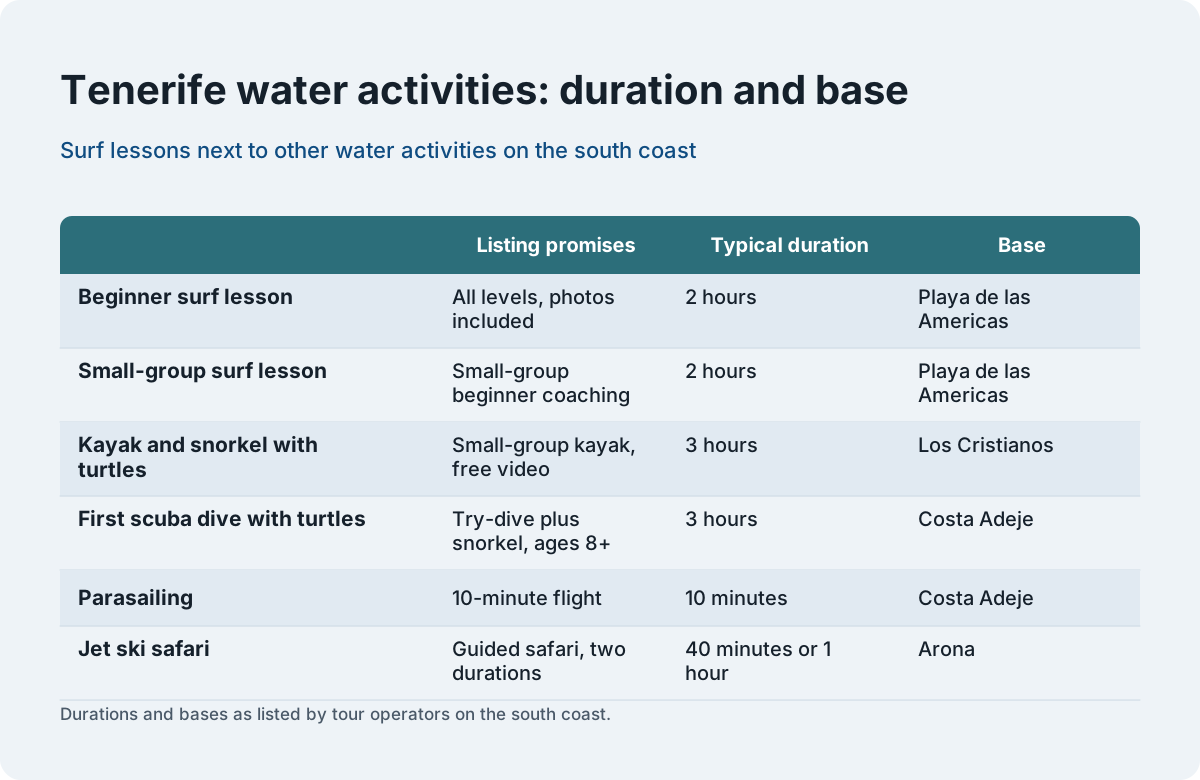
A surf lesson is the longest and most skill-based of the beginner water sessions on Tenerife's south coast: it runs about two hours against ten minutes for parasailing and forty minutes to an hour for a jet ski safari, and it is the only one of the six main options that teaches a repeatable technique rather than showing you a sight, which is why it rewards a second session in a way the others do not. The table below sets out what each main product kind involves, drawn from the roster's own listings; prices live on the cards, not on this page.
| Activity | What the listing promises | Typical duration | Base |
|---|---|---|---|
| Beginner surf lesson | All levels, photos included | 2 hours | Playa de las Americas |
| Small-group surf lesson | Small-group beginner coaching | 2 hours | Playa de las Americas |
| Kayak and snorkel with turtles | Small-group kayak, free video | 3 hours | Los Cristianos |
| First scuba dive with turtles | Try-dive plus snorkel, ages 8 and up | 3 hours | Costa Adeje |
| Parasailing | 10-minute flight | 10 minutes | Costa Adeje |
| Jet ski safari | Guided safari, two durations | 40 minutes or 1 hour | Arona |
The pattern to notice is duration and exposure. A surf lesson is the longest of the beginner water sessions at two hours, and it is the one that teaches a skill rather than shows you something, which is why it suits a visitor with more than one day on the island: the second lesson builds on the first in a way a second boat trip does not. Families with younger children often split the difference, with one adult taking the lesson while the rest of the group takes the whale and dolphin watching cruise, since the two run from the same stretch of coast at Los Cristianos.
For the small-group alternative, the card below carries the live details.
The whale boats themselves are worth a sentence of context here, because the island's waters are regulated in a way few visitors know: Decreto 178/2000 forbids any boat from approaching within 60 metres of a whale, caps boats at four knots within 500 metres, and requires authorised vessels to fly the Barco Azul flag. The World Cetacean Alliance designated the Tenerife-La Gomera marine area a Whale Heritage Area in January 2021, citing a unique resident population of pilot whales. None of that bears on a surf lesson, but it explains why the same patch of ocean supports so many operators with such high review counts: the resident marine life is a genuine, protected feature of the coast you will be surfing along.
A Sensible Way to Order the Week
For a first visit built around learning to surf, the shape the data supports is simple: book the first lesson early in the holiday rather than on the last day, take the morning slot in summer when AEMET's normals show the south coast reaching 28.4 Celsius by day in August, and be relaxed about timing in the cooler months, when the sea is still above 19 Celsius and the midday heat is not a factor. A spare day after the first lesson lets you use a second session if the first is blown out or the muscle memory needs reinforcement, and the schools themselves decide the hour by the day's conditions.
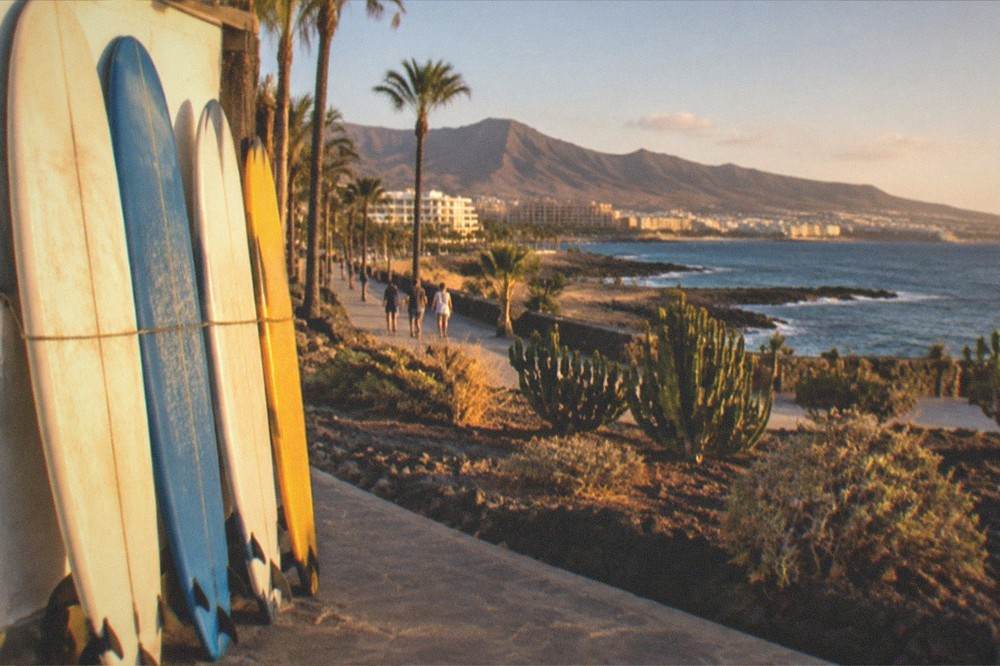
Pair the lessons with the things the south coast does uniquely well. The boat trips and catamarans run from the same harbours, the kayaking with turtles sessions share the water you learned in, and on a flat afternoon the water parks and the rest of the things to do in Tenerife for families fill the gap without a long drive. A surf lesson is two hours of a fortnight; the point of picking the right one is that those two hours are the part of the holiday people still talk about the following spring.
For anyone still choosing between the main options, this final comparison carries the live prices and availability.
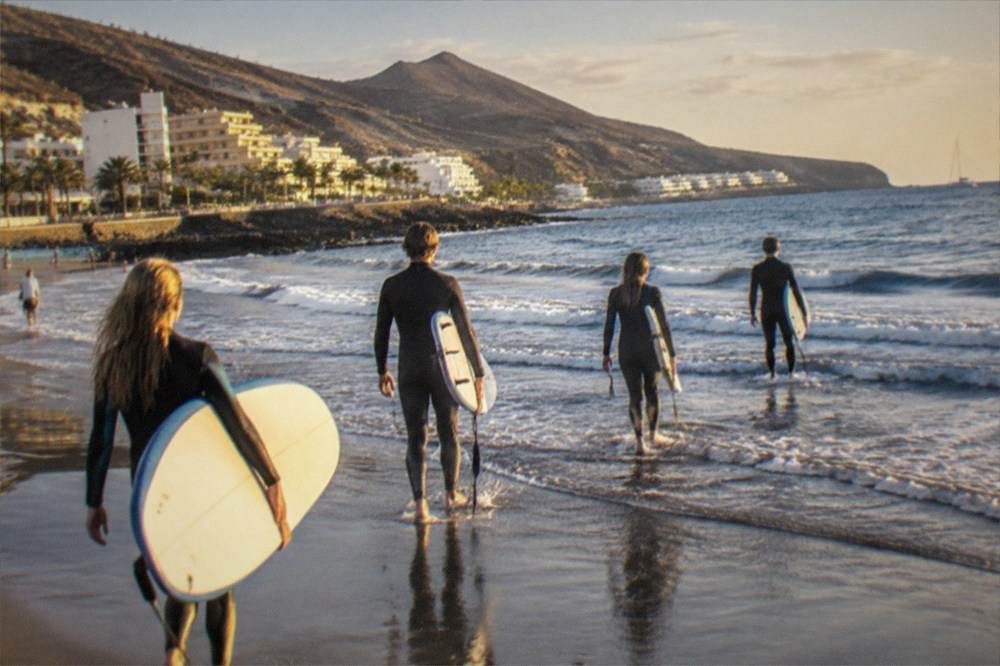
One last practical note on getting to the sand: the schools supply the boards and wetsuits, so the only things a learner needs to bring are swimwear, a towel, sun protection and the sense to leave valuables at the hotel. Confirm the exact meeting point and the age minimum with the operator's live listing when booking, because those details sit with the school, not with any guide. Beyond that, the water is warm, the winter is the season, and the south coast is set up for exactly this.
Common Questions About Surfing in Tenerife
What is the 12 second rule in surfing?
It is a piece of surf etiquette, not a law: the general principle is that the surfer already riding a wave, or closest to the breaking part of it, has priority, and the widely taught rule of thumb is to count how long you have been up and riding before assuming the wave is yours to share. This site's fact pack holds no official source defining the rule, so treat it as convention taught by instructors rather than regulation. Your lesson's beach briefing will cover local priority in practice.
What is a female surfer called?
The ordinary word is simply surfer. The term "surfer girl" and the older "wahine", borrowed from Hawaiian, circulate in surf culture, but no official body regulates the vocabulary and this site's verified facts say nothing on it, so the plain answer is that a woman who surfs is a surfer.
What is the sharkiest surf spot in the world?
Various coastlines are described that way in surf media, but no verified source in this site's fact pack ranks surf spots by shark encounters, so no page here will name one. What can be said from the island's own designation is that Tenerife's waters are noted for resident pilot whales and bottlenose dolphins, not for sharks, and the Canary regulation of boat approaches concerns cetaceans rather than shark risk.
How many surfers are attacked by sharks every year?
No figure for global shark attacks on surfers appears in this site's verified facts, and inventing a statistic is worse than leaving the question open. The honest answer is that attacks are rare enough that researchers count them individually, and a reader who wants the number should go to the research bodies that compile incident records rather than a travel guide. For Tenerife specifically, the island's marine-life record in this site's facts concerns whales and dolphins, with no shark incident data on file.
is tenerife good for beginner surfers?
Yes. The south coast around Playa de las Americas carries beach-break conditions, licensed schools running two-hour all-levels lessons with photos included, and sea temperatures that never fall below 19.1 Celsius in the NOAA 1991 to 2020 series, so neither the waves nor the water are the barrier they can be elsewhere.