El Medano
El Medano is the tourist board's fine grey sand beach under Montana Roja, in the municipality of Granadilla de Abona on Tenerife's southeast coast. This guide sets out what the official sources say about the beach, the weather station nearest to it, the buses that serve the airport close by, and the tours that fit a stay here.
Short answer
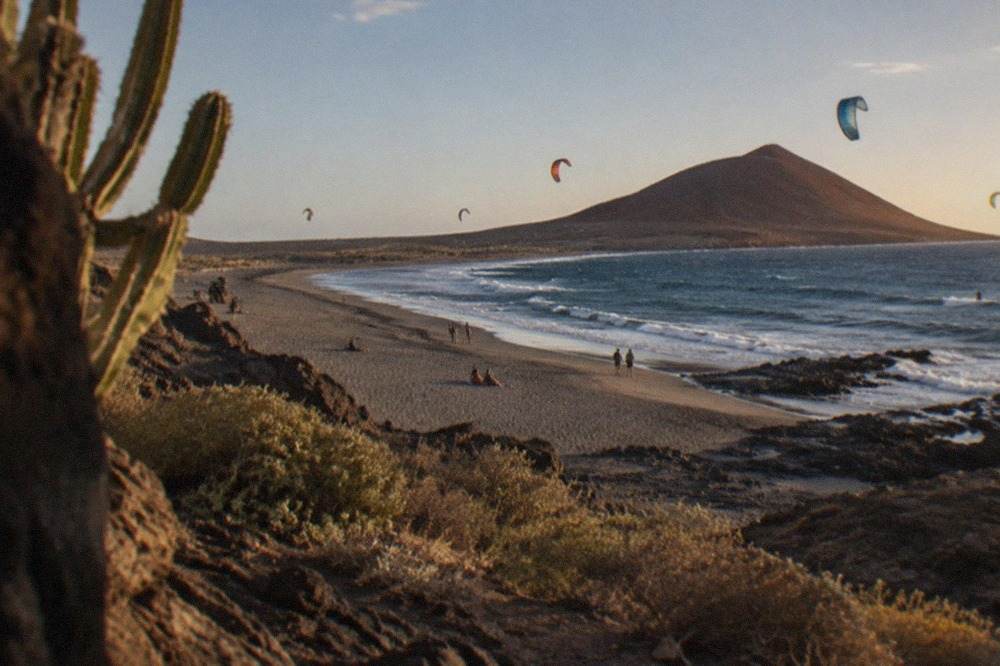
El Medano is a coastal town in Granadilla de Abona on Tenerife's southeast coast, with a fine grey sand beach that the tourist board places under Montana Roja. It sits within reach of Tenerife South Airport, which AENA records as handling 13,969,678 passengers in 2025, and it is a practical base for boat trips, whale watching and water sports along the southern coast.
El Medano occupies a stretch of Tenerife's southeast coast in the municipality of Granadilla de Abona, and the tourist board's own page for the beach records it as fine grey sand, sitting under Montana Roja. That single sentence carries more hard information than most resort write-ups, because it settles the two questions every visitor asks first: what the sand will look like, and what stands behind it. The answer to the second is a red volcanic cone, and the answer to the first is grey, not the golden tone of the island's imported-sand city beaches.
This is a guide to what the official sources actually say. Where a number appears below, it comes from a verified page: AEMET's climate normals, AENA's passenger statistics, TITSA's fare tables, the tourist board's beach descriptions, Fred. Olsen Express's route times. Where no verified number exists, the guide says so plainly rather than guessing, because an invented figure dressed as fact is worse than an honest gap. The pages of Tenerife Travel Guide are written that way throughout.
Where Is El Medano and What Kind of Place Is It?
El Medano is a coastal town in the municipality of Granadilla de Abona, on Tenerife's southeast coast, facing the open Atlantic rather than the sheltered southwest. Its beach is fine grey sand under the red volcanic cone of Montana Roja, according to the tourist board's own page, and the town sits in the part of the island served by Tenerife South Airport, AENA's Tenerife Sur.
Granadilla de Abona is one of Tenerife's 31 municipalities, and the INE municipal register recorded a population of 58,752 for it on 1 January 2025. That makes it the fourth most populous municipality on the island, after Santa Cruz de Tenerife, La Laguna and Arona, and considerably larger than the resort municipalities most visitors could name. El Medano is one of its coastal settlements.
The character of the place follows from its geography. The tourist board describes the sand as fine and grey, which distinguishes it at a stroke from Las Teresitas in San Andres and Las Vistas in Arona, both of which the same organisation records as golden sand. Grey sand is volcanic sand, the ground-down product of the island's own geology, and it is the natural state of most of Tenerife's coastline. The beaches that read as golden are the engineered exceptions.
Montana Roja is the second half of the tourist board's description, and it matters practically as well as visually. A volcanic cone at the back of a beach shapes the wind over the bay, and El Medano's position on the southeast corner of the island puts it where the trade winds arrive off the open Atlantic. The verified facts in this site's research hold no wind statistics for the bay, so this guide states the geography and leaves the numbers alone.
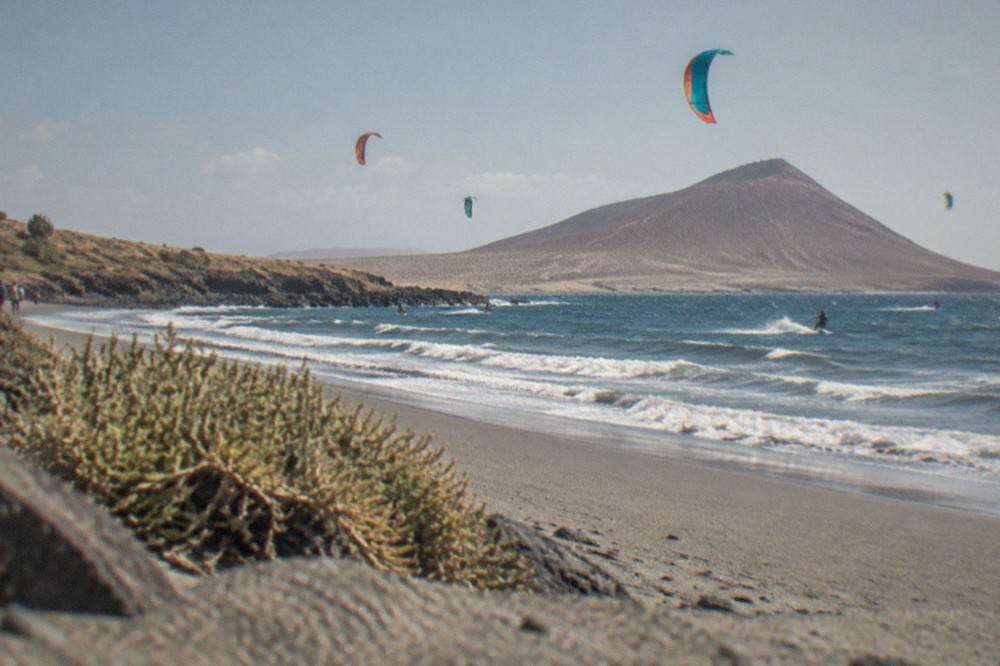
For orientation against the island's better-known bases, El Medano sits east of the main southern resort strip. Costa Adeje and Playa de las Americas lie to the west along the southwest-facing coast, and Los Cristianos sits between them at the western end of the same shoreline. Golf del Sur, on the list of the island's areas this site covers, is the nearest of the developed neighbours to the west, and Palm Mar lies just along the coast. A reader comparing bases should also read the site's Tenerife North vs South guide, because El Medano belongs firmly to the south's sphere even though its mood is quieter than the Adeje strip.
What Is the Beach at El Medano Like?
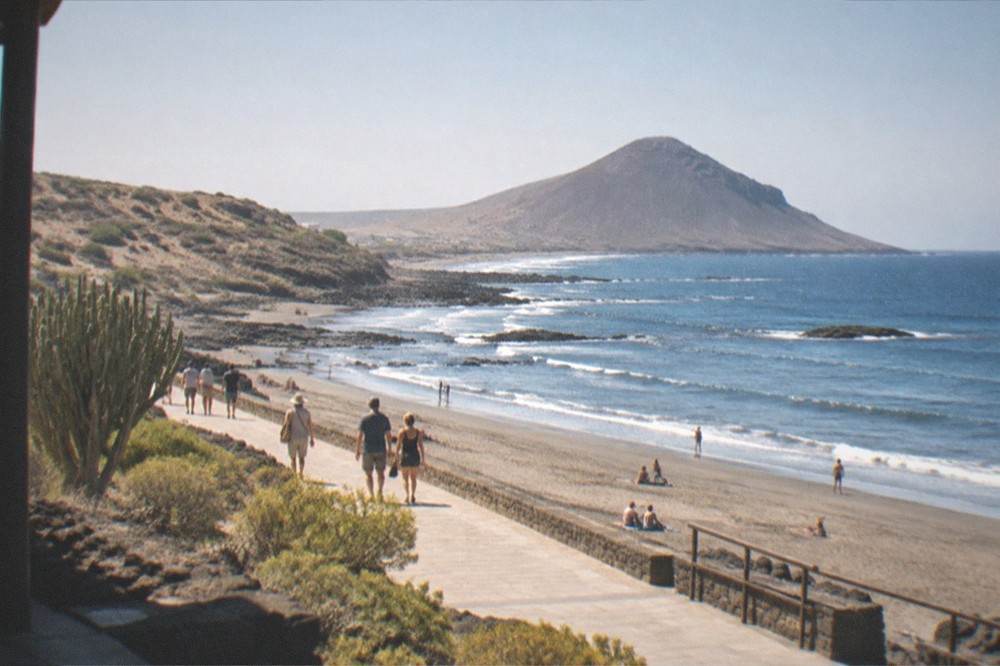
The tourist board describes El Medano as a beach of fine grey sand under Montana Roja, in the municipality of Granadilla de Abona. Grey sand is the natural volcanic colour of most of Tenerife's coast, and the same official source describes only Las Teresitas and Las Vistas as golden sand, so a visitor should expect a darker shoreline here than the island's postcard beaches.
The sand-colour question is worth settling properly, because Tenerife's beaches are frequently misdescribed. The tourist board maintains a page for each of the main beaches, and this site's verified research records what each page says. The table below sets out the official descriptions side by side, so the differences are visible at a glance rather than buried in separate pages.
| Beach | Municipality | Sand, in the tourist board's words |
|---|---|---|
| El Medano | Granadilla de Abona | Fine grey sand, under Montana Roja |
| Las Teresitas | Santa Cruz (San Andres) | Golden sand, palm trees, breakwaters that calm the water |
| Las Vistas | Arona | Golden sand, calm behind a row of breakwaters |
| Playa del Duque | Adeje | Grey sandy beach |
| Fanabe | Adeje | Pale sand |
| El Bollullo | La Orotava | Black sand at the foot of a cliff |
Two things follow from that table. First, El Medano's grey sand is not a defect or a surprise: the tourist board's description of Playa del Duque, one of the most photographed strands in Costa Adeje, is grey as well, and the golden beaches are the exceptions that required engineering. Second, no official page read for this site states where any beach's sand was imported from, and this guide does not fill that gap from memory, because the Sahara-shipment stories that circulate about Las Teresitas are unsourced here.
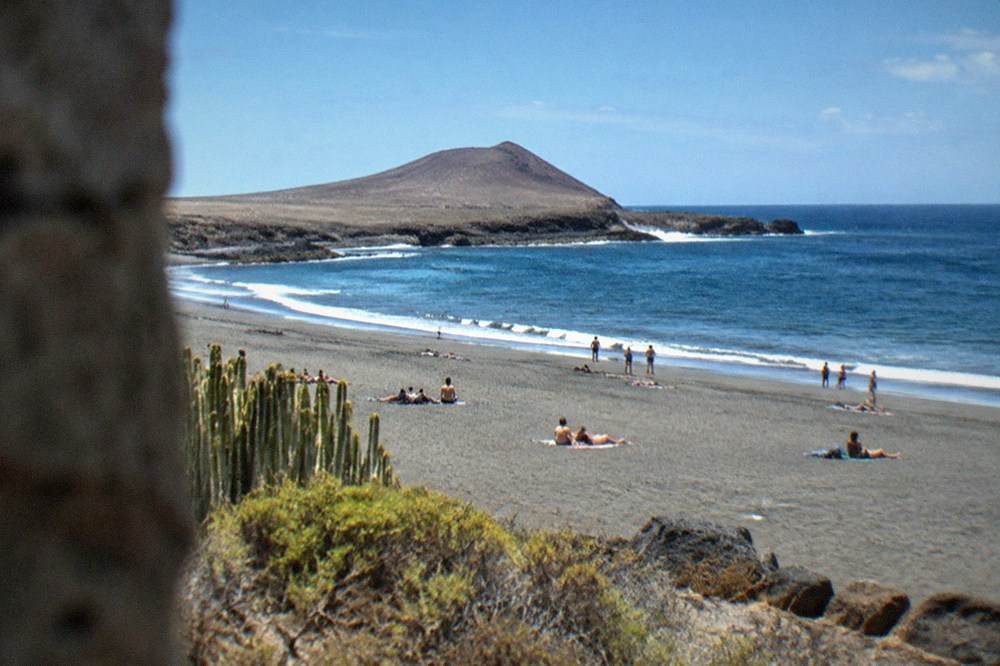
What the grey sand means in practice is a matter of taste rather than fact, and this guide reports rather than testifies. Dark sand absorbs more heat than light sand under the midday sun, and visitors commonly bring beach shoes for the walk from the promenade to the water. Neither of those observations is a verified statistic, so treat them as ordinary planning notes rather than official guidance.
The beach's setting under Montana Roja gives the shoreline its shape. A cone at one end of a bay tends to produce a long curved strand with a headland, and the tourist board's framing, beach under cone, is the kind of description that implies exactly that form. For readers who want the darker end of the island's volcanic spectrum, the site's black sand beaches guide covers El Bollullo and its neighbours in the north.
What Can You Do on the Water Around El Medano?
The southern coast of Tenerife is one of Europe's most regulated places to watch whales and dolphins: Decreto 178/2000 forbids any boat from approaching within 60 m, caps boats at 4 knots within 500 m and bans swimming within 500 m, and authorised vessels fly the Barco Azul flag. Boat trips, kayak tours and snorkelling sessions all depart from nearby ports, and the cards below carry the live prices.
The legal framework matters to a reader choosing a trip, because it is the difference between a wildlife encounter and a chase. The Canary government's Decreto 178/2000 of 6 September sets the rules for every authorised operator: no approach within 60 metres of a cetacean, no more than three boats within 500 metres, a maximum of 4 knots inside that zone, no swimming or diving within 500 metres, and no feeding, chasing or circling. Article 15 requires authorised boats to fly the Barco Azul flag, issued with the permit and renewed annually. A boat without that flag is not carrying the permit.
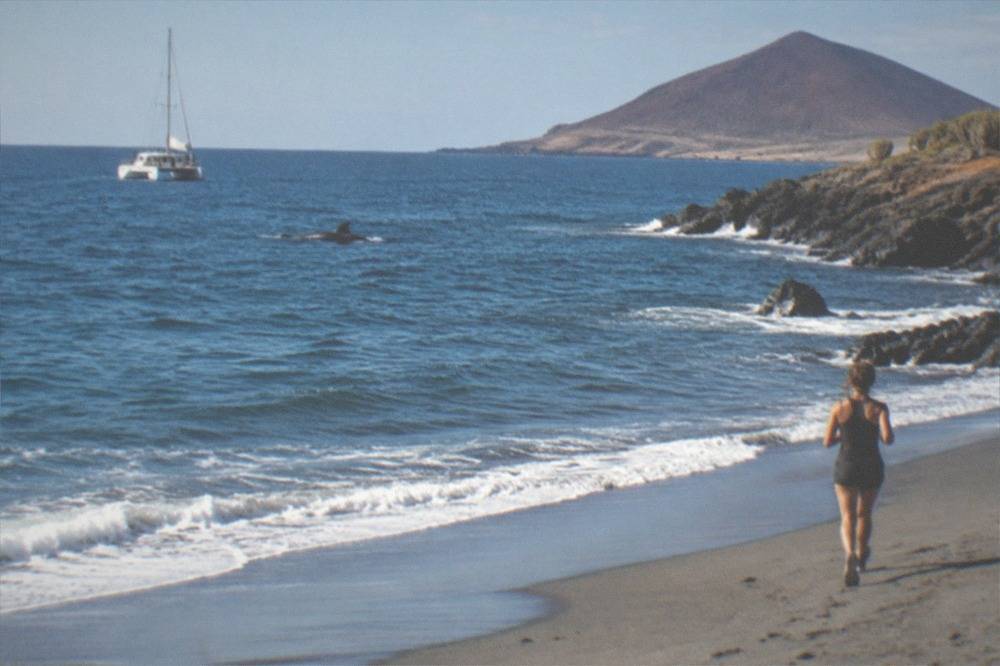
The designation behind the area's whale reputation belongs to the World Cetacean Alliance, which records that the Tenerife-La Gomera Marine Area became a designated Whale Heritage Area in January 2021, and describes a unique resident population of pilot whales, bottlenose dolphins and a migration stop for 21 other cetacean species. The programme is now called Whale Heritage Areas. No official count of the pilot whales exists in this site's verified research, so none is printed here.
For a reader based in El Medano, the practical departure points are Los Cristianos and the Costa Adeje ports, both along the coast to the west. A small-group kayak and snorkel session runs from Los Cristianos, rated 4.7 from 12,101 reviews on its listing, and it is the trip this page recommends most often for El Medano visitors because the sea life it visits, turtles in a rich marine ecosystem, suits the same southeast-facing water. Check availability on the operator's live listing, and read the site's kayaking with turtles page for the full picture.
The no-chase catamaran alternative, rated 4.6 from 15,261 reviews, is built around the same restraint the decree requires, with underwater windows rather than pursuit. Its card above carries the live price and booking link. The site's whale and dolphin watching page compares the full range of authorised trips from every southern port.
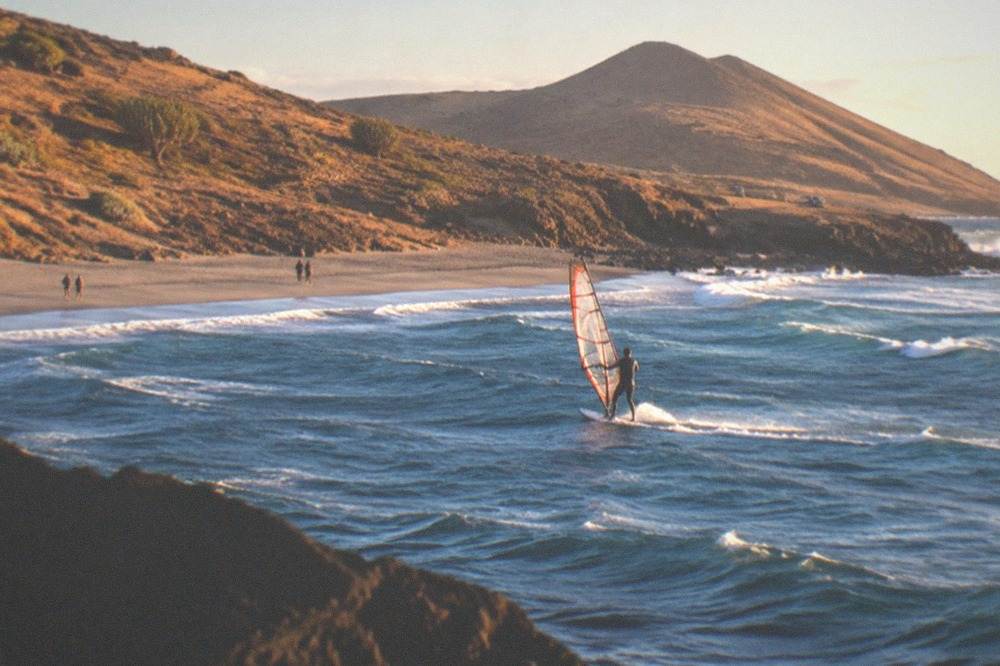
Beyond the boats, the water around a windy southeast bay suits the sports that need wind. This site's verified facts hold no school-by-school record of El Medano's kite and windsurf scene, so the honest report is this: the geography that puts a cone behind a bay on the trade-wind corner of the island is the geography those sports look for, and the town's surf lessons and jet ski and watersports pages list the operators that serve the southern coast. For a change of pace on a flat-water day, Siam Park in Costa Adeje opens 365 days a year, 10:00 to 18:00 from 1 May to 29 October and 10:00 to 17:00 from 30 October to 30 April, per the park's own hours page.
How Do You Get to El Medano?
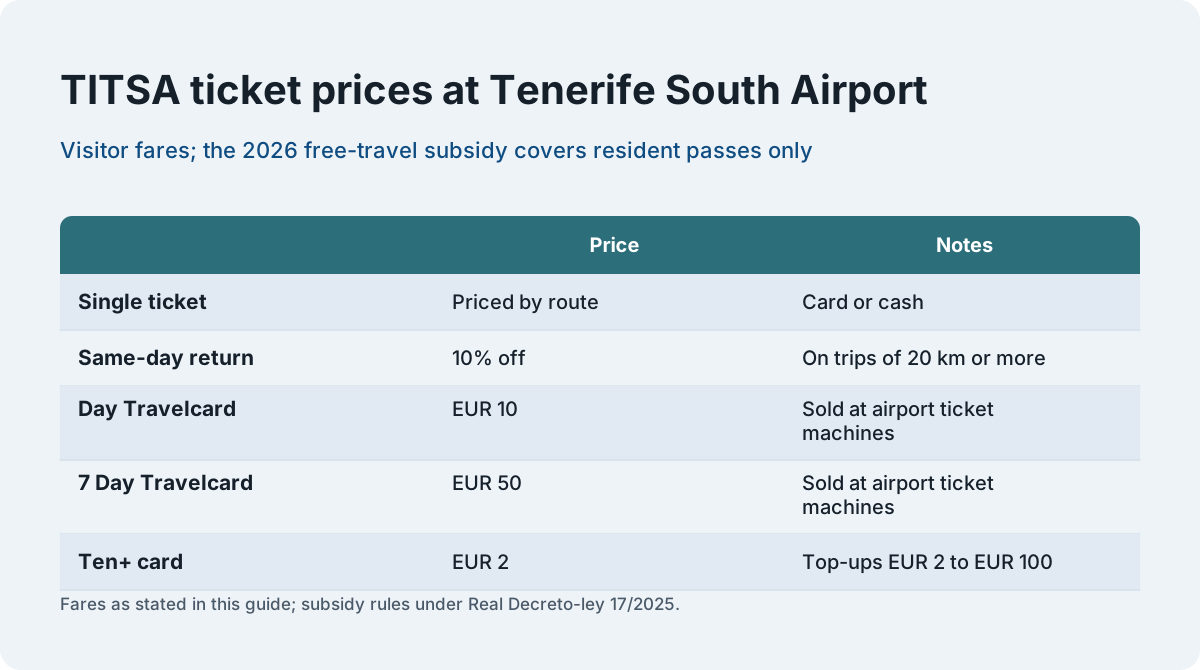
Tenerife South Airport, AENA's Tenerife Sur, is the airport that serves this coast, and TITSA's own airport page lists lines 10, 40, 711, 343 and 415 there. Visitors pay for public transport: single tickets, the EUR 10 day travelcard or the EUR 50 seven-day travelcard, because the 2026 free-travel subsidy applies to resident passes only.
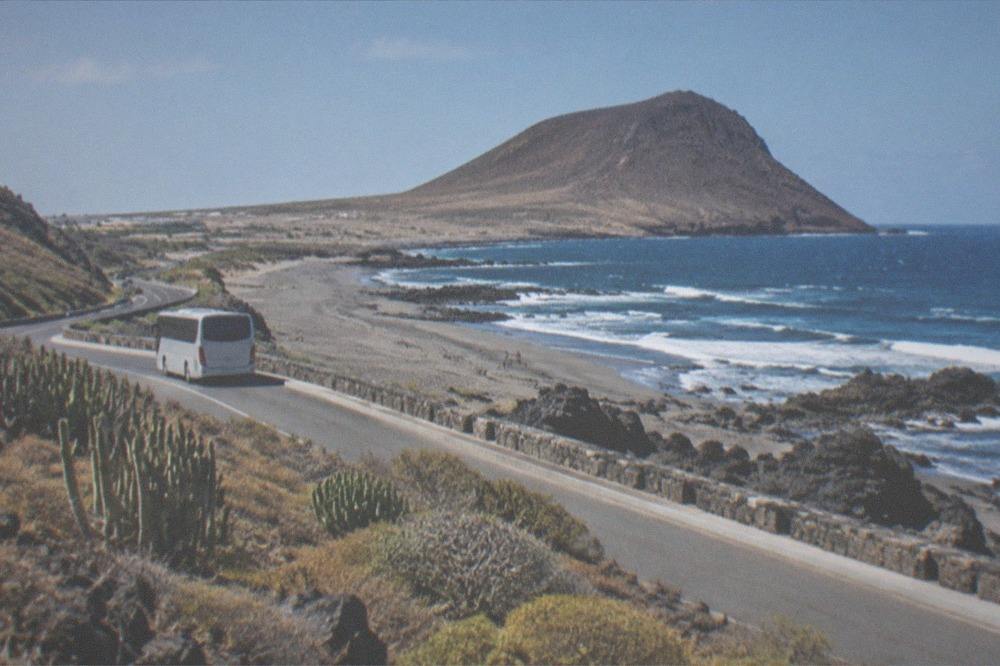
The bus lines are worth listing exactly, because invented line numbers are one of the most common errors in Tenerife guidance. TITSA's page for Tenerife South Airport names five services: line 10 to Santa Cruz, line 40 to Costa Adeje bus station via Los Cristianos, the 711 night bus linking Santa Cruz, the airport, Los Cristianos and Costa Adeje, line 343 express from Puerto de la Cruz to Los Cristianos via both airports, and line 415 to El Fraile and San Isidro. Line 415's destinations sit close to El Medano's stretch of coast, and the full network is mapped on the site's Tenerife buses and TITSA page.
| TITSA line at Tenerife South Airport | Route, as TITSA's own page lists it |
|---|---|
| 10 | Santa Cruz |
| 40 | Costa Adeje bus station via Los Cristianos |
| 711 | Night bus: Santa Cruz, airport, Los Cristianos, Costa Adeje |
| 343 | Express: Puerto de la Cruz to Los Cristianos via both airports |
| 415 | El Fraile, San Isidro |
The fare structure is a place where visitors are routinely misled, so this guide states it precisely. The Canary government's 100% subsidy on public transport, in force since 1 January 2026 under Real Decreto-ley 17/2025, applies to resident passes only: the monthly pass requires residency in the Canary Islands, the youth pass requires being under 30 and resident, and the child card requires residency in Tenerife. Visitors do not qualify. What visitors buy is in the table below, at TITSA's own prices.
| Ticket | Price | Notes |
|---|---|---|
| Single ticket | Priced by route | Card or cash |
| Same-day return | 10% off | On trips of 20 km or more |
| Day Travelcard | EUR 10 | Sold at airport ticket machines |
| 7 Day Travelcard | EUR 50 | Sold at airport ticket machines |
| Ten+ card | EUR 2 | Top-ups EUR 2 to EUR 100 |
Taxis on the island are white and metered from the start of every trip, per the tourist board's transport page, and a fixed price can be agreed in advance for excursions. There is no tram to either airport: Metrotenerife's fares page states nothing of the kind, and the tram is a Santa Cruz to La Laguna service that never leaves that corridor. The site's airport transfers guide covers the options in full, and driving in Tenerife covers the road network for anyone hiring a car.
Where Should You Stay Near El Medano?
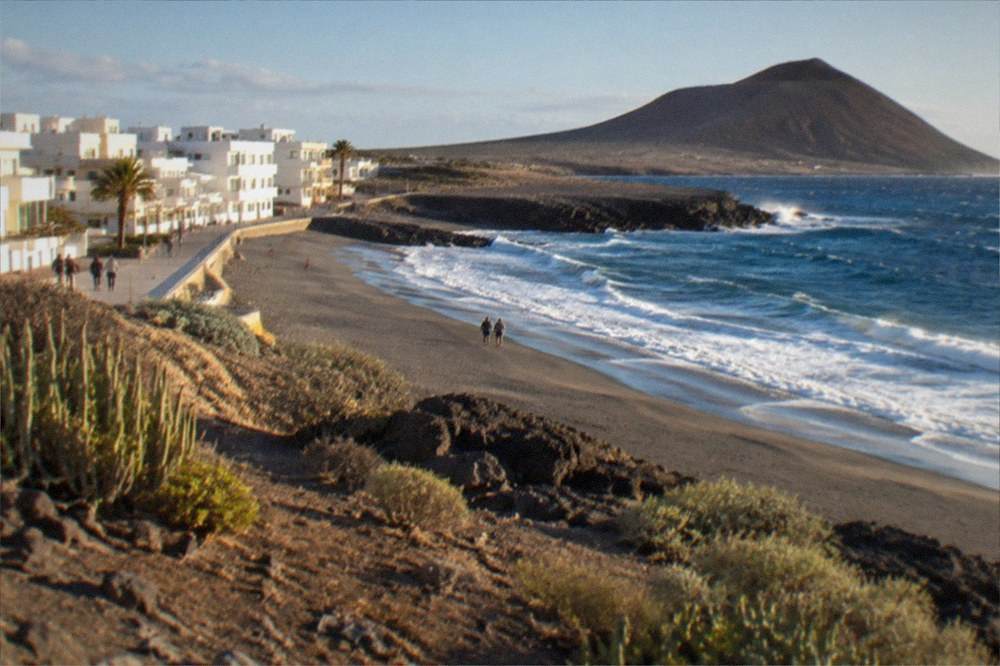
El Medano sits in Granadilla de Abona, a municipality the INE register recorded at 58,752 people on 1 January 2025, and its accommodation sits alongside the neighbouring developed areas of Golf del Sur, Palm Mar and Callao Salvaje to the west. No per-night lodging rate is quoted anywhere on this site, because hotel rates move daily and none can be re-checked at build time.
What drives the cost of a stay here, as anywhere on the south of the island, is the season, the distance from the beach and how far ahead the booking is made. The island's tourism is strongly seasonal: ISTAC's series counts 649,614 tourists arriving by air in January 2026 against 518,359 in May 2026, and the winter months carry the heavier traffic. Booking early for the winter peak is the one piece of advice the numbers support on their own.
For readers comparing areas before they commit, the site's where to stay in Tenerife guide is the place to start, and the best area for couples and best area for families pages narrow the choice by party. Readers who prefer to search stays across the island directly can look at accommodation across Tenerife. The neighbouring area pages for Golf del Sur, Callao Salvaje and Playa Paraiso describe the quieter western alternatives.
What Is the Weather Like at El Medano?
AEMET's climate normals for Tenerife South Airport, the station nearest to this coast, record a July mean daily maximum of 27.7 C against a January mean daily maximum of 21.7 C, with rainfall concentrated between October and March and virtually none from June to August. The sea off the south coast, on NOAA's 1991 to 2020 series, runs from 19.1 C in March to 23.7 C in September and October.
The airport station sits at 64 m, which makes it a fair proxy for the low-lying southeast coast, and its normals cover 1981 to 2010. The table below gives the shape of the year. Note the two periods: the air normals are 1981 to 2010, the sea figures are 1991 to 2020, and this guide never writes one period for both.
| Month | Mean daily max C | Mean daily min C | Rain mm | Sunshine hours |
|---|---|---|---|---|
| Jan | 21.7 | 15.2 | 17 | 193 |
| Feb | 22 | 15 | 20 | 195 |
| Mar | 23.1 | 15.6 | 15 | 226 |
| Apr | 23.1 | 16 | 7 | 219 |
| May | 23.9 | 17 | 1 | 246 |
| Jun | 25.4 | 18.8 | 0 | 259 |
| Jul | 27.7 | 20.2 | 0 | 295 |
| Aug | 28.4 | 21.1 | 1 | 277 |
| Sep | 27.9 | 21.1 | 4 | 213 |
| Oct | 26.8 | 20 | 12 | 214 |
| Nov | 24.8 | 18.2 | 26 | 193 |
| Dec | 22.8 | 16.5 | 30 | 195 |
The rain column deserves a second look, because it corrects a lazy assumption. This coast is dry by any standard, an annual 132 mm on AEMET's own published total spread over 15.2 days with 1 mm or more, but November and December are its wettest months and the sea is at its warmest at the very end of summer. A reader planning a September trip gets the warmest water of the year, 23.7 C on the NOAA series, while a February reader gets cooler seas and the Carnival season in Santa Cruz.
| Month | Sea surface C |
|---|---|
| Jan | 19.9 |
| Feb | 19.2 |
| Mar | 19.1 |
| Apr | 19.5 |
| May | 20.2 |
| Jun | 21.4 |
| Jul | 22.2 |
| Aug | 23.1 |
| Sep | 23.7 |
| Oct | 23.7 |
| Nov | 22.5 |
| Dec | 21.1 |
The site's month-by-month pages carry the same data in more detail, including Tenerife in September and Tenerife in October for the warm-sea window, and the Tenerife weather by month guide for the whole year at every station.
Which Day Trips Work from El Medano?
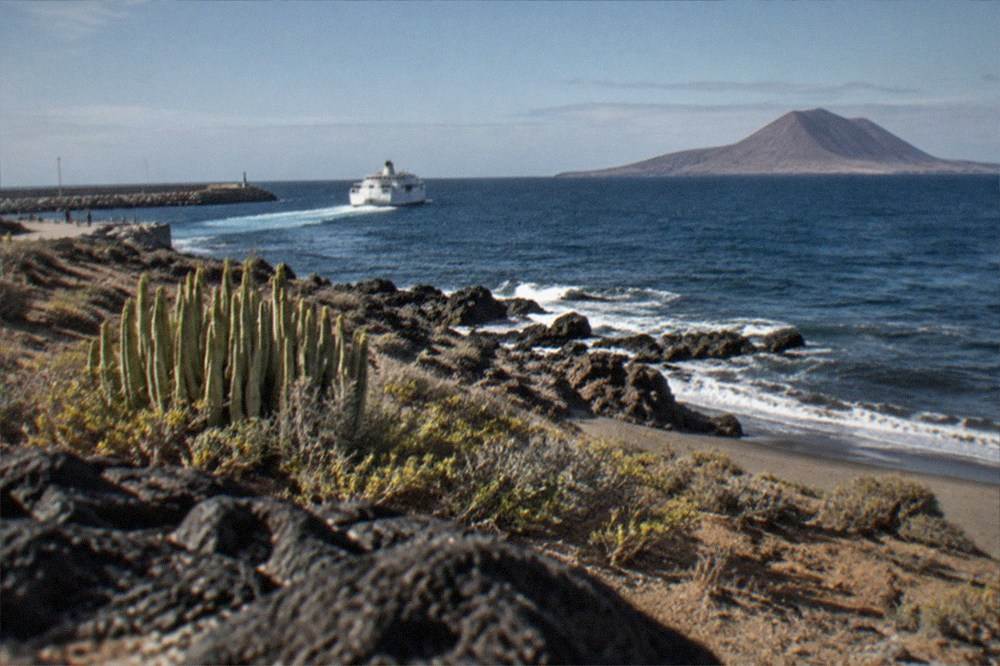
El Medano's position on the southeast coast puts the whole island within a day trip, and the verified ferry table gives 50 minutes from Los Cristianos to San Sebastian de La Gomera, 150 minutes to Santa Cruz de La Palma and 140 minutes to Valverde on El Hierro. Teide National Park, the most visited park in Spain's network at 5,242,653 visitors in 2024, is reachable by road for a day.
The ferry times below are Fred. Olsen Express's own published figures, and Armas Trasmediterranea also sells the La Gomera route. A day on La Gomera is the classic boat day trip from the south, and the site's La Gomera page covers it in full, with La Palma and El Hierro for the longer crossings.
| Route | Crossing time |
|---|---|
| Los Cristianos to San Sebastian de La Gomera | 50 min |
| Los Cristianos to Santa Cruz de La Palma | 150 min |
| Los Cristianos to Valverde, El Hierro | 140 min |
| Santa Cruz de Tenerife to Agaete, Gran Canaria | 80 min |
Inland, the island's headline sight is Mount Teide, 3,715 m on the figures Spain's own sources give, inside a national park declared by decree on 22 January 1954 and inscribed by UNESCO on 2 July 2007. Driving through the park carries no entry fee on any official page this site has read. Two trails do now carry per-booking public fees: since Monday 19 January 2026 the 09:00 to 17:00 slots on the summit trail PNT 10 cost EUR 15 for visitors and EUR 6 for residents of the other Canary Islands, free for Tenerife residents and children, and the Montana Blanca trail PNT 07 costs visitors EUR 6 on working days and EUR 10 at weekends and on public holidays. Both are booked on Tenerife ON, which releases a new week of slots every Monday at 07:00 Canary time so that 56 days stay bookable. The site's Teide summit permit guide walks through the booking step by step.
Closer to home, the Masca, Garachico and Icod route strings the northwest's sights into one loop, and the north Tenerife from the south page covers Puerto de la Cruz and La Laguna for a change of climate as well as scenery. The site's main things to do in Tenerife page indexes everything by kind.
Common Questions About El Medano
Is the sand at El Medano grey?
Yes. The tourist board's own page for the beach describes it as fine grey sand, under Montana Roja. Grey volcanic sand is the natural state of most of Tenerife's coastline; the tourist board describes only Las Teresitas and Las Vistas as golden sand.
Which municipality is El Medano in?
El Medano is in Granadilla de Abona, on the island's southeast coast. The INE municipal register recorded 58,752 people in Granadilla de Abona on 1 January 2025, the fourth largest population of Tenerife's 31 municipalities.
Is public transport free for visitors in Tenerife?
No. The 2026 100% subsidy applies to resident passes only, and every subsidised pass requires residency in the Canary Islands. Visitors pay for single tickets, the EUR 10 day travelcard or the EUR 50 seven-day travelcard, all sold at airport ticket machines.
How far is El Medano from Tenerife South Airport?
This site does not state a distance or a journey time for that trip, because no official page in its verified research records one. TITSA's airport page lists lines 10, 40, 711, 343 and 415 at Tenerife South Airport, and line 415 serves El Fraile and San Isidro on this stretch of coast.
When is the sea warmest at El Medano?
On NOAA's 1991 to 2020 series for the south coast, the sea surface temperature peaks at 23.7 C in both September and October. March is the coolest month at 19.1 C.
Can you watch whales from El Medano?
The whale-watching fleet departs from the ports to the west, mainly Los Cristianos and Costa Adeje, not from El Medano itself. Every authorised boat flies the Barco Azul flag under Decreto 178/2000, which forbids approaches within 60 m and caps boats at 4 knots within 500 m of any cetacean.