Tenerife Buses: TITSA Routes, Fares and the Ten+ Card
TITSA runs nearly every bus on Tenerife. Here is what its own pages say about tickets, travelcards, airport lines and the routes that reach the island's big sights.
Short answer
Visitors pay for TITSA buses: a single ticket priced by route, a EUR 10 day travelcard or a EUR 50 seven-day travelcard. The 2026 free-travel subsidy is for Canary residents only.
TITSA runs the bus network that covers Tenerife, and its own fares page is unusually clear about what a visitor pays. A single ticket is priced by route and can be bought with card or cash on board; the day travelcard costs EUR 10 and the seven-day version EUR 50; and the 100 percent fare subsidy that made headlines in 2026 applies to resident passes only. That last point is the one that catches most holidaymakers out, so this page deals with it early. Everything below is reported from the operator's and the Canary government's own pages, with the routes, the airports and the card mechanics spelled out.
Can You Get Around Tenerife by Bus?
Yes, and for most visitors the TITSA network is the practical way to travel without a car. TITSA's own airport pages list direct lines from both airports to Santa Cruz, Costa Adeje, Los Cristianos and Puerto de la Cruz, and its fares page sells a EUR 10 day travelcard and a EUR 50 seven-day card at airport ticket machines. What the network does not do is reach either airport by tram, which does not exist, or replace the reservations some trails require.
The honest framing is that the bus network covers the places most visitors go and a good number of the places they don't. TITSA's pages list express lines linking the south airport to Santa Cruz, the 343 running from Puerto de la Cruz to Los Cristianos via both airports, and local lines reaching down to El Médano and up into La Orotava. Where the network thins is at the extremes: the high mountain trails, the boat-and-bus choreography of Masca, and the small villages of Anaga, where connections exist but are built around local timetables rather than holiday schedules.
For a visitor deciding between bus and car, the comparison is not really about coverage. It is about flexibility. A car lets you leave when you like and stop at the viewpoints between towns, which matters in a national park where the road itself is the attraction; our page on car hire in Tenerife covers that side. The bus wins on cost for a single traveller, on parking in towns like Puerto de la Cruz and La Laguna, and on the airport transfer, where a ticket from the machine beats arranging anything in advance. The wider getting around Tenerife guide sets out the full set of options, including the tram in Santa Cruz and La Laguna.
How Do You Pay for Buses on Tenerife?
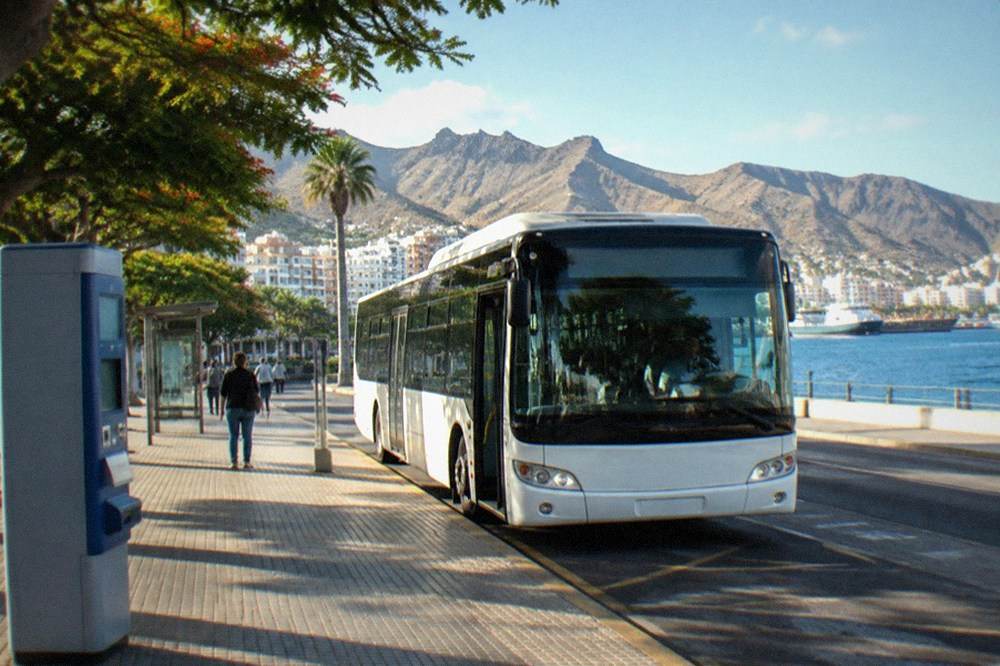
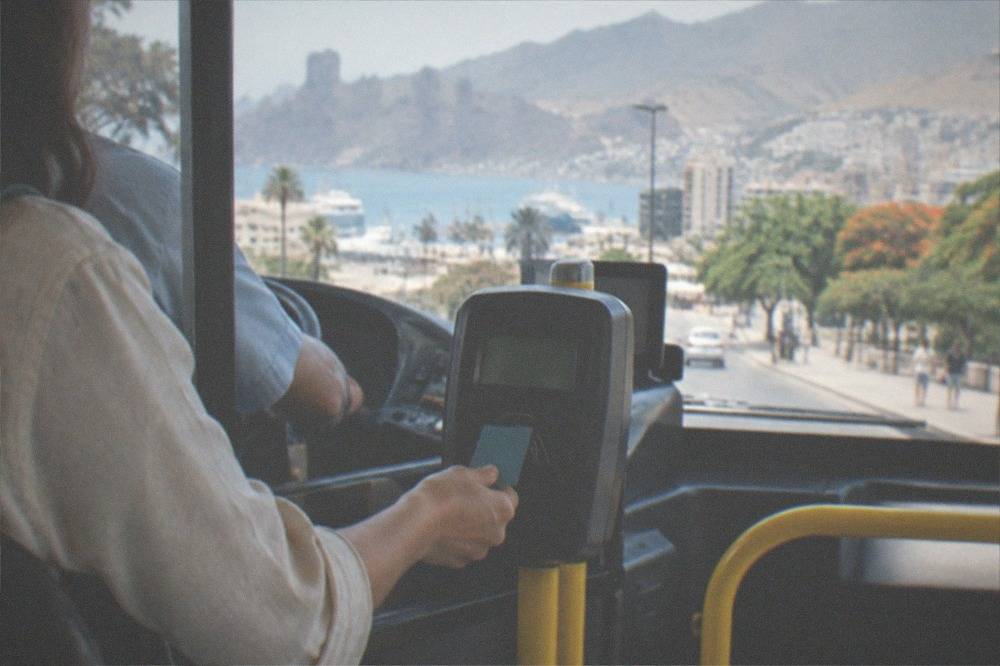
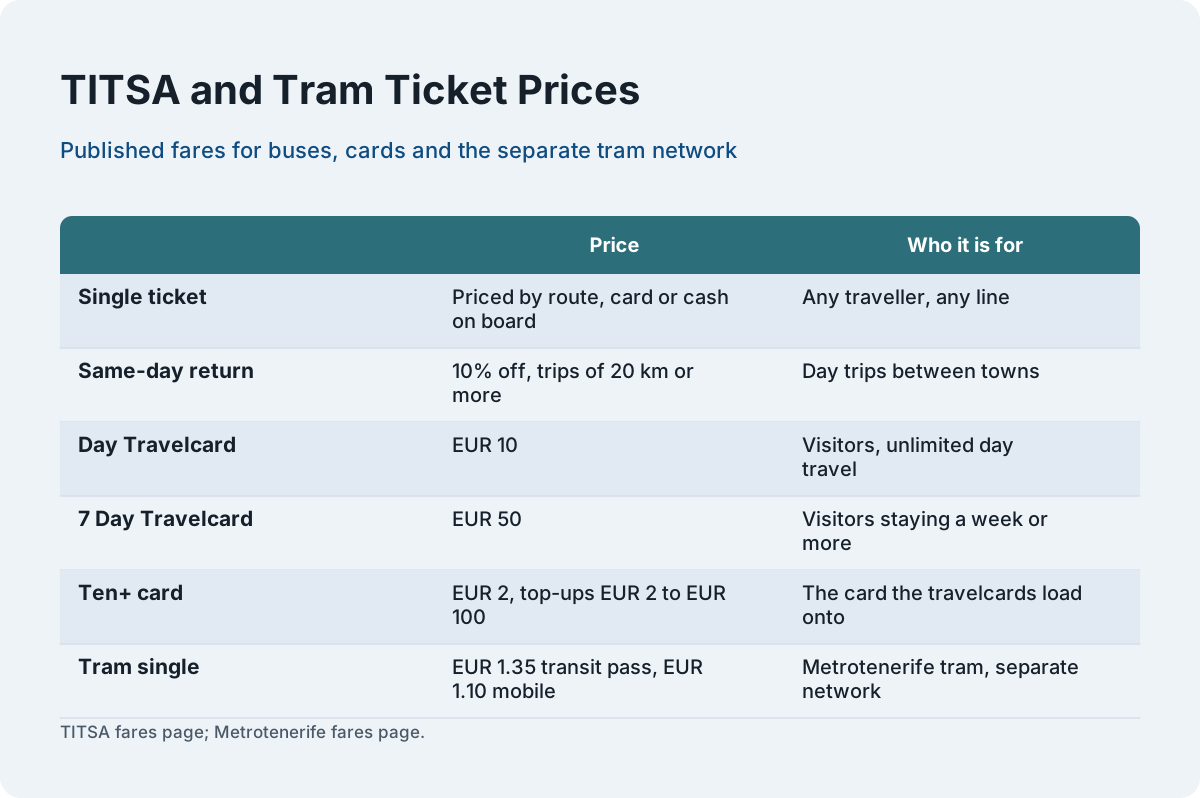
TITSA's fares page lists three ways a visitor can pay: a single ticket priced by route, bought on board with card or cash; a same-day return at 10 percent off for trips of 20 km or more; and the travelcards, a EUR 10 day card and a EUR 50 seven-day card loaded onto a Ten+ card that costs EUR 2. The airport ticket machines sell the travelcards, so the card you need can be in your hand before you leave the terminal.
The Ten+ card is the piece of kit that makes the rest simple. It is a stored-value card: you pay EUR 2 for the card itself, load money onto it at a machine or point of sale, and tap on and off. TITSA's page puts the top-up range at EUR 2 to EUR 100, which covers everything from a single harbour hop to a week of cross-island travel. The day and seven-day travelcards sit on the same plastic, and because the machines are at the airports, the usual advice is to buy the card at the same time as the travelcard rather than hunting for a machine in town.
Cash is still accepted for single tickets, which matters for anyone arriving without a contactless card or deciding on a whim to ride a line up the coast. The one payment question TITSA's pages do not answer for a visitor is contactless bank-card tap-in, so treat the Ten+ card as the plan and the cash single as the fallback rather than assuming a bank card will work at the validator.
If you want your bus tickets arranged before you fly, you can also buy bus tickets online for the routes you already know you will take, then top up a Ten+ card at the airport machine for everything spontaneous.
How Much Does a Bus Ticket Cost in Tenerife?
There is no flat fare: TITSA prices each single ticket by route, so a short hop within one town costs less than the express run between coasts. The fixed figures the operator publishes are the travelcards, EUR 10 for a day and EUR 50 for seven days, the EUR 2 Ten+ card fee, and the 10 percent same-day return discount on journeys of 20 km or more. For any specific route fare, TITSA's own fares page is the source.
This is the point where most guides invent a number, and it is worth being blunt about why we won't. A "typical fare" for a Tenerife bus route would be a figure no official page states, and fares on a distance-priced network genuinely vary from one line to the next. What a visitor can plan around is the travelcard arithmetic instead: if a day involves three or four rides, the EUR 10 day travelcard is the figure to compare against, and a week of daily excursions is what the EUR 50 seven-day card exists for.
The same honesty applies to the tram, which is a separate operator, Metrotenerife, running in the Santa Cruz and La Laguna area. Its published single fare is EUR 1.35 on a transit pass or EUR 1.10 by mobile. It is not part of the TITSA network, and Metrotenerife's fares page says nothing about a tram to either airport, so any transfer plan that involves "the tram from the airport" is not a plan.
| Ticket or card | Price | Who it is for | Where the figure comes from |
|---|---|---|---|
| Single ticket | Priced by route, card or cash on board | Any traveller, any line | TITSA fares page |
| Same-day return | 10% off, trips of 20 km or more | Day trips between towns | TITSA fares page |
| Day Travelcard | EUR 10 | Visitors, unlimited day travel | TITSA fares page |
| 7 Day Travelcard | EUR 50 | Visitors staying a week or more | TITSA fares page |
| Ten+ card | EUR 2, top-ups EUR 2 to EUR 100 | The card the travelcards load onto | TITSA fares page |
| Tram single | EUR 1.35 transit pass, EUR 1.10 mobile | Metrotenerife tram, separate network | Metrotenerife fares page |
How Much Does a Bus Pass for Tenerife Cost?
For a visitor, the passes that exist cost EUR 10 for the day travelcard and EUR 50 for the seven-day travelcard, both sold on the EUR 2 Ten+ card at airport ticket machines. The free pass you may have read about is real but is not yours: the 2026 subsidy covers resident passes only, which by Metrotenerife's eligibility rules means residency in the Canary Islands, a personalised Ten+ card, and passes labelled for residents, under-30 residents or resident children under ten. Visitors do not qualify.
The resident subsidy deserves a careful sentence because it is the most misreported fact on this subject. The Canary government announced a 100 percent subsidy on passes and multi-trip tickets for all of 2026, in force since 1 January 2026 under Real Decreto-ley 17/2025, and on 15 June 2026 the State committed to the overdue payments and to continuing the measure. Every subsidised pass in the scheme, however, carries a residency requirement on the operator's own eligibility page. A tourist reading "free public transport in Tenerife" in a search result is reading a residents' policy described without its condition.
There is one further wrinkle even for residents: Metrotenerife's page excludes the Teide and Teno lines from the resident passes. For a visitor this is mostly academic, but it is worth knowing that the mountain lines are treated as a special category even within the island's own system, which is consistent with the way the high country is managed everywhere else, from the trail reservations on Tenerife ON to the smoking ban in the national park.
| Pass | Price | Eligibility |
|---|---|---|
| Day Travelcard | EUR 10 | Visitors and residents alike, sold at airport machines |
| 7 Day Travelcard | EUR 50 | Visitors and residents alike |
| Monthly pass, subsidised | Free under the 2026 subsidy | Resident in the Canary Islands only |
| Youth pass, subsidised | Free under the 2026 subsidy | Under 30 and resident |
| Child card, subsidised | Free under the 2026 subsidy | Under 10 and resident in Tenerife |
| Personalised Ten+ for residents | EUR 5 via tenmas.es | Required for the subsidised passes |
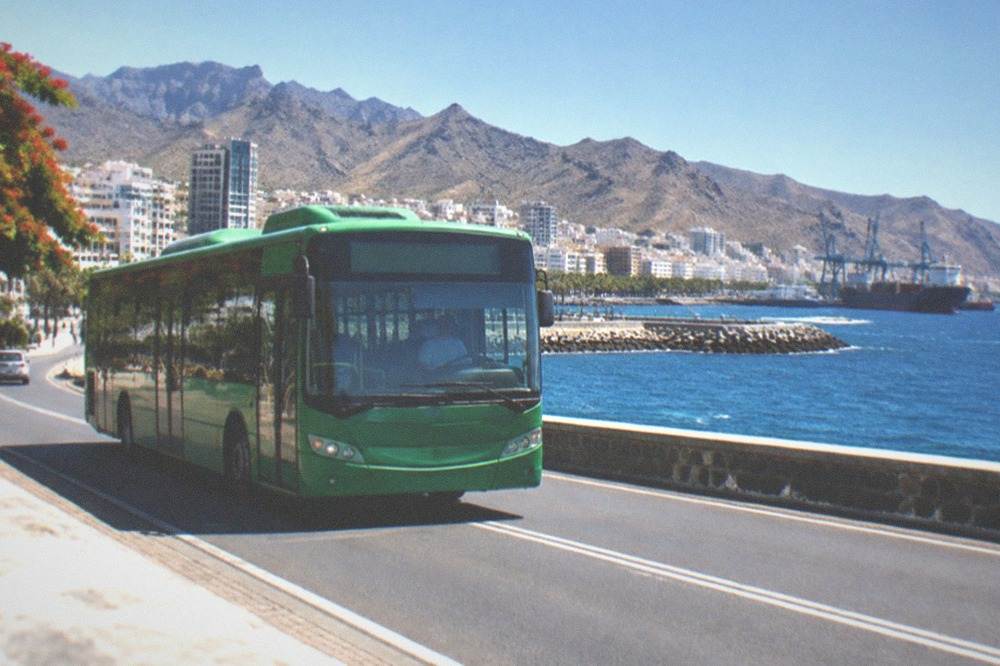
Which TITSA Bus Lines Serve Each Tenerife Airport?
TITSA's own airport pages list five lines at Tenerife South, 10, 40, 711, 343 and 415, and three at Tenerife North, 20, 30 and 343. Line 343 is the through line, an express from Puerto de la Cruz to Los Cristianos that calls at both airports, and line 711 is the night service linking Santa Cruz, the south airport, Los Cristianos and Costa Adeje. There is no tram connection to either airport, so the bus lines below are the public-transport transfer.
The two airports have official names worth learning because timetables and announcements use them: AENA calls them Tenerife Sur and Tenerife Norte-Ciudad de La Laguna, with Tenerife South the one most charter and low-cost holiday flights use. Our pages on Tenerife South Airport and Tenerife North Airport go into the terminals in detail, and the airport transfers guide compares the bus against taxi and private options.
| Airport | Line | Route as TITSA lists it |
|---|---|---|
| Tenerife South | 10 | Santa Cruz |
| Tenerife South | 40 | Costa Adeje bus station via Los Cristianos |
| Tenerife South | 711 | Night bus: Santa Cruz, airport, Los Cristianos, Costa Adeje |
| Tenerife South | 343 | Express: Puerto de la Cruz to Los Cristianos via both airports |
| Tenerife South | 415 | El Fraile, San Isidro |
| Tenerife North | 20 | Santa Cruz via La Laguna |
| Tenerife North | 30 | Puerto de la Cruz |
| Tenerife North | 343 | Express to the south |
The practical reading of that table: if your accommodation is in the Costa Adeje or Los Cristianos belt, line 40 from the south airport is the direct route; if you are headed for Puerto de la Cruz, the 343 serves both airports and both coasts; and if you land at the north airport, line 30 is the one that runs to Puerto de la Cruz while line 20 takes you into the capital via La Laguna. The night bus, 711, is the line to note down before a late arrival, because it is the only listed service covering the airport, Los Cristianos and Costa Adeje in the small hours.
Buses to Teide, Masca and the Big Sights
The bus reaches the edges of Tenerife's headline sights rather than their hearts: TITSA line 355 from Santiago del Teide is the mandatory way in for Masca hikers, the cable car base at 2,356 m is reachable by road, and the whale-watching harbours of Los Cristianos and Costa Adeje sit on regular lines. What no bus can substitute for is a reservation: the Teide summit trail needs a Tenerife ON booking, Masca needs a pre-booked boat exit, and those are separate from any bus ticket.
Masca is the clearest example of the bus being part of the attraction's rules rather than just a way to reach it. The operator's booking page makes the transfer compulsory: hikers arrive on TITSA line 355 from Santiago del Teide, private vehicles are refused, and the bus ticket must be shown at the control. The descent-only ticket costs EUR 40.66 with the boat sold separately, and the return from Los Gigantes runs on lines 462 or 325. The Masca, Garachico and Icod route day trip guide covers the full itinerary.
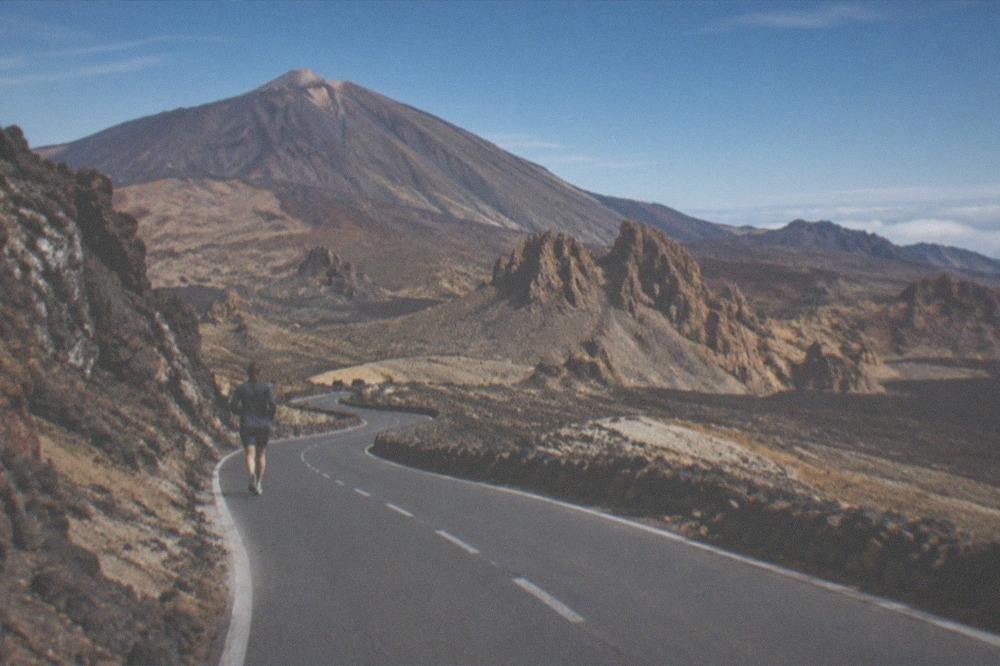
Teide is a different shape of problem. Driving through the national park costs nothing and needs no booking on any page read, and the cable car is an operator ticket from the base station at 2,356 m to La Rambleta at 3,555 m. The summit trail, PNT 10 Telesforo Bravo, is a personal reservation on Tenerife ON, with slots released every Monday at 07:00 Canary time so that 56 days stay bookable, and since 19 January 2026 the daytime slots cost EUR 15 for visitors. The full permit mechanics are in our Teide summit permit guide. A bus or coach gets you to the park; only the reservation gets you to the crater.
The harbour trips are the easy ones. Whale and dolphin watching leaves from Los Cristianos and Costa Adeje, both of which are bus hubs with lines from the airports and from Santa Cruz, and the regulation behind the boats is stricter than most visitors expect: Decreto 178/2000 bans any approach within 60 m, caps three boats within 500 m, limits speed to 4 knots inside that zone and forbids swimming within 500 m, and authorised boats fly the Barco Azul flag. If you would rather the whole day be arranged, the no-chase eco encounter below is the kind of trip that fits the rules by design.
For Teide itself, plenty of visitors skip the self-drive parking question entirely and take a coach with the cable car ticket bundled in, which pairs well with a bus-based holiday because it removes the mountain road and the base-station car park hours from your day.
And for the two big parks, the combined Loro Parque and Siam Park ticket is the pairing that suits a week based on the bus network, since both parks sit on lines the network already serves, Loro Parque in Puerto de la Cruz and Siam Park in Costa Adeje.
How Good Is Public Transport in Tenerife?
By the operator's own published network, good for everything a visitor usually wants: direct airport lines at both terminals, an express linking the two coasts, travelcards sold at the machines where you land, and a day card at EUR 10 that removes fare arithmetic from your planning. Its limits are equally concrete: no tram to either airport, thin service in the high mountains and Anaga, and a resident-only subsidy no visitor can claim.
It is a network built for the island's daily life that happens to cover the holiday map well. The numbers behind that judgement come from the demand side as much as the supply side. Tenerife South Airport handled 13,969,678 passengers in 2025, an all-time record, and Tenerife North handled 7,174,977, and the island's population stands at about 960,000 across 31 municipalities. A network that moves a population of that size plus a visitor economy this large is not a token service; the airport pages alone list eight distinct lines, and the fares page sells products, the day and seven-day travelcards, that only make sense on a network people actually ride all day.
Where a visitor should be realistic is frequency and the last bus home. Evening service on the tourist corridors is strong, with the 711 running through the night between Santa Cruz and Costa Adeje, but a mountain village or a remote beach is a different timetable, and the ferry-style discipline of checking the last departure applies. The Tenerife weather by month guide is the companion piece here: the south coast is dry year-round, while the north airport station records 520 mm of rain annually, and a wet evening in the north is a bus evening, not a walking one.
Planning a Bus Week on Tenerife
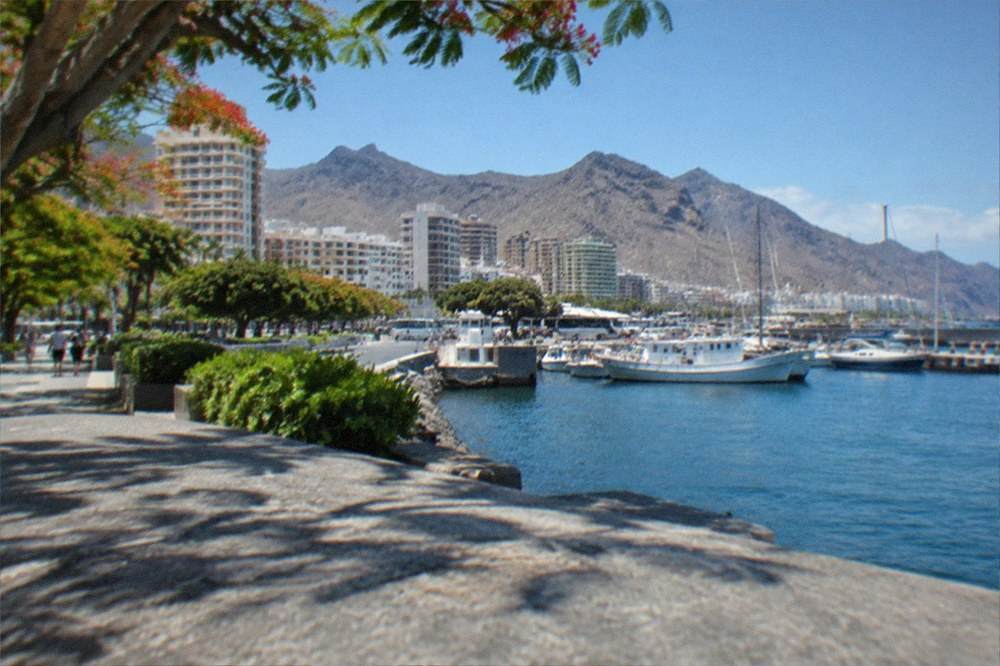
A week without a car works best when the base and the day trips point the same way: Costa Adeje and Los Cristianos give you the airport line 40, the harbour trips on your doorstep and the express 343 north to Puerto de la Cruz, while Puerto de la Cruz reverses the geometry and Santa Cruz suits a city-and-carnival trip with the tram sharing the La Laguna corridor. The reservations, not the buses, are what to sort before the week starts.
Costa Adeje and Los Cristianos give you the airport line 40, the harbour trips on your doorstep, and the express 343 north to Puerto de la Cruz for Loro Parque and the old town. Puerto de la Cruz reverses the geometry: the 343 brings the south to you, and the northern towns, La Orotava, Garachico and Icod de los Vinos, are local rides rather than expeditions. Santa Cruz suits a city-and-carnival trip, with the tram sharing the La Laguna corridor and the Anaga lines leaving from the capital's interchange.
The reservations are what to sort before the week starts, not during it. The Teide summit slots open Mondays at 07:00 Canary time with 56 days bookable, Masca's sessions run 08:30 to 13:00 with 25 places every 30 minutes, and Barranco del Infierno sells 20 places every 30 minutes with a EUR 15 non-resident ticket. None of those is a bus product, and all of them can sell out on the day you wanted, which is why the order of operations on a bus holiday is: book the reservation, then plan the bus day around it.
| Sight or activity | Bus access | Separate booking needed |
|---|---|---|
| Whale watching, Los Cristianos and Costa Adeje | Harbour hubs on regular lines | Boat ticket only |
| Teide cable car | Road access to the 2,356 m base station | Cable car ticket from the operator |
| Teide summit trail PNT 10 | Bus or coach to the park | Tenerife ON reservation, EUR 15 visitors, daytime slots |
| Masca gorge | TITSA line 355 from Santiago del Teide, mandatory | caminobarrancodemasca.com, EUR 40.66 plus boat |
| Barranco del Infierno | Adeje, on the local network | Online booking compulsory, EUR 15 non-resident |
| Loro Parque | Puerto de la Cruz lines | Park ticket |
| Siam Park | Costa Adeje lines | Park ticket |
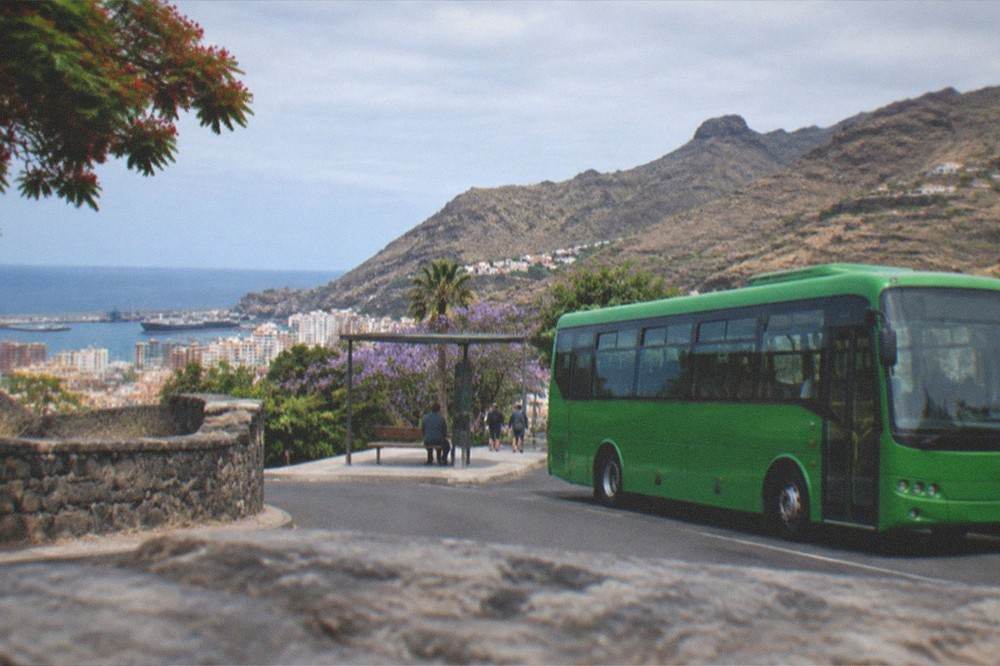
One habit worth forming from day one: keep the Ten+ card somewhere tap-ready and check the machine balance when you pass an interchange, because the top-up range of EUR 2 to EUR 100 means a card can quietly run low mid-week. And if the week's plan leans heavily on the same corridor, note the same-day return discount, 10 percent off on trips of 20 km or more, which turns the out-and-back day trips into the cheapest tickets on the network.
For the full picture of what to fill a bus week with, the things to do in Tenerife page is the site's master list, and this guide from the Tenerife Travel Guide desk sits beside the transport pages that cover the tram, the taxis and the ferries to the neighbouring islands.
Common Questions About Tenerife Buses
Is there an app for buses in Tenerife?
TITSA publishes its timetables and line information on its own website, which is the official source this site reports from. No page in our verified research describes a specific app's features, so rather than guess at what an app does, check the operator's own site for the current tools it offers for journey planning and ticket purchase.
How much is the 343 bus in Tenerife?
Line 343 is the express from Puerto de la Cruz to Los Cristianos via both airports. Its single fare is priced by route like every TITSA line, and no official page in our research prints the figure, so TITSA's own fares page is where the current price lives. The fixed comparisons that are published are the EUR 10 day travelcard and the EUR 50 seven-day travelcard.
What bus services are available on Tenerife?
TITSA operates the island's bus network: single tickets priced by route, the same-day return with 10 percent off on trips of 20 km or more, the EUR 10 day travelcard, the EUR 50 seven-day travelcard on the EUR 2 Ten+ card, airport lines at both terminals including the night bus 711, and the mountain and rural lines such as 355 to Santiago del Teide. The tram in the Santa Cruz and La Laguna area is a separate operator, Metrotenerife, with a EUR 1.35 single fare on a transit pass.
Where to buy a ticket for hop on hop off bus?
The open-top sightseeing bus is a commercial city tour, not part of the TITSA network, so its tickets come from the tour operator's live listing rather than from a bus stop or a travelcard machine. Check availability with the operator before your travel day, because schedules for city tours are set seasonally by the operator and no official page in our research publishes them.
How do I go to hop on hop off bus?
Buy the ticket from the operator's live listing first, then find the boarding point the operator specifies. In practice these tours start close to the main cruise port and city-centre stops in Santa Cruz, and TITSA's city lines and the tram both serve the centre, so the public network is the way to reach the boarding point even though it is not the tour itself.