Masca, Garachico and Icod in One Day
The west of Tenerife packs a gorge descent, a town buried by lava and a thousand-year-old tree into one loop of road, and most of the rules that govern it changed recently.
Short answer
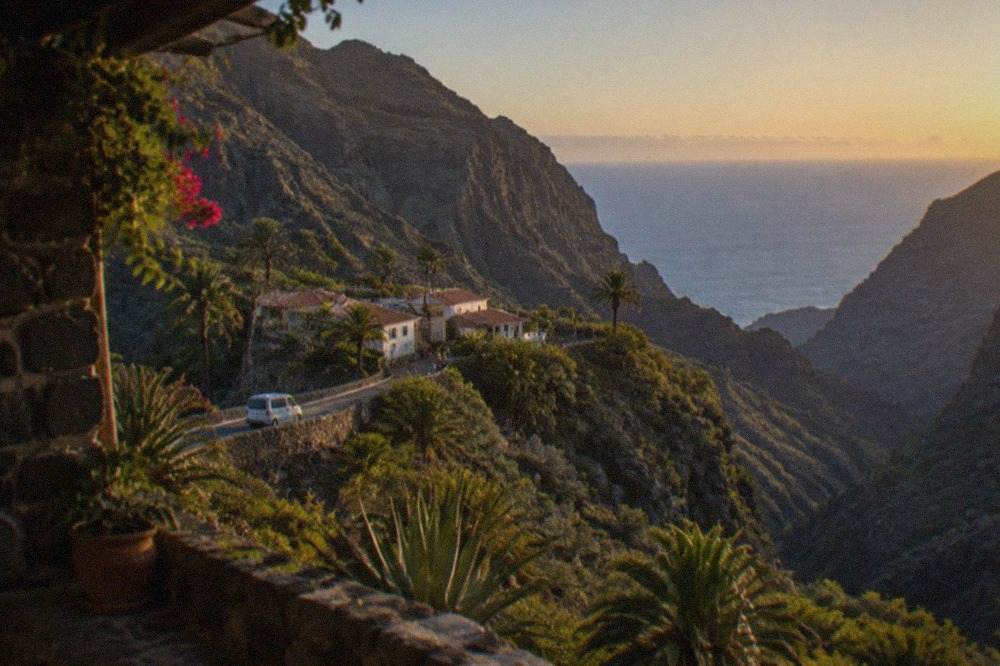
Drive or take a coach tour from the south to Masca village, then continue to Garachico's lava rock pools and the Drago Milenario in Icod de los Vinos. The gorge itself is a pre-booked descent with a boat exit, EUR 40.66 for the general ticket, and hikers must arrive on TITSA line 355; the village viewpoint, Garachico and the dragon tree need no booking at all.
The road from the south resorts into the Teno mountains is the single most requested day trip on the island, and it is also the one where the rules changed most recently. The Masca gorge is open, but only as a pre-booked descent with a boat exit, booked at caminobarrancodemasca.com rather than on Tenerife ON. Garachico, buried by the Trevejo volcano in 1706, is free to wander. The Drago Milenario in Icod de los Vinos is a tree whose age two official bodies state differently, and neither claim is a round number. This page lays out the whole route, stop by stop, with the fees, bus lines and booking rules that a planner actually needs.
What Does the Masca, Garachico and Icod Route Actually Cover?
The route is a west-coast loop of roughly three fixed stops: Masca village in the Teno mountains, the lava-buried town of Garachico on the coast, and the Drago Milenario dragon tree in Icod de los Vinos, usually driven south to north and finished along the TF-5 back towards the resorts. Most travellers start from Costa Adeje or Los Cristianos, climb into the Teno massif, and work back along the north coast. The 7-day itinerary usually reserves a full day for exactly this loop, and it earns it: each stop is a different thing, a mountain hamlet, a drowned port and a single celebrated tree, and none of them can be compressed into a photo stop.
The order matters more than the map suggests. Masca sits at the end of a long, winding mountain road, so it belongs early in the day while energy and light are high. Garachico and Icod are on the flatter north coast and stay pleasant into the afternoon. A coach tour runs the same logic, and the nine-hour Teide, Masca, Icod and Garachico tour covers the same three stops plus the national park in one day.
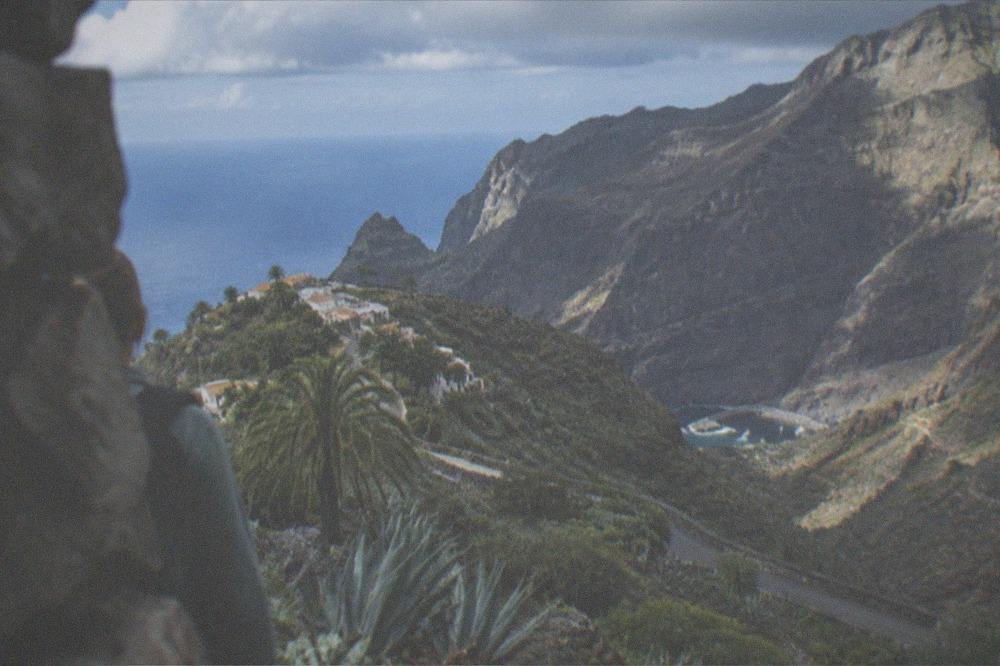
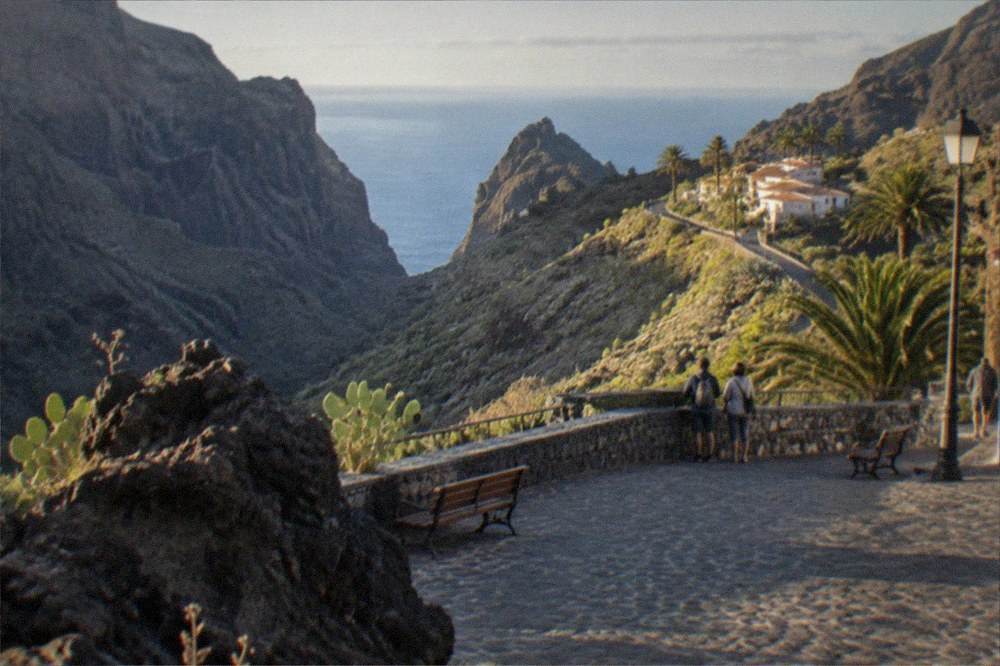
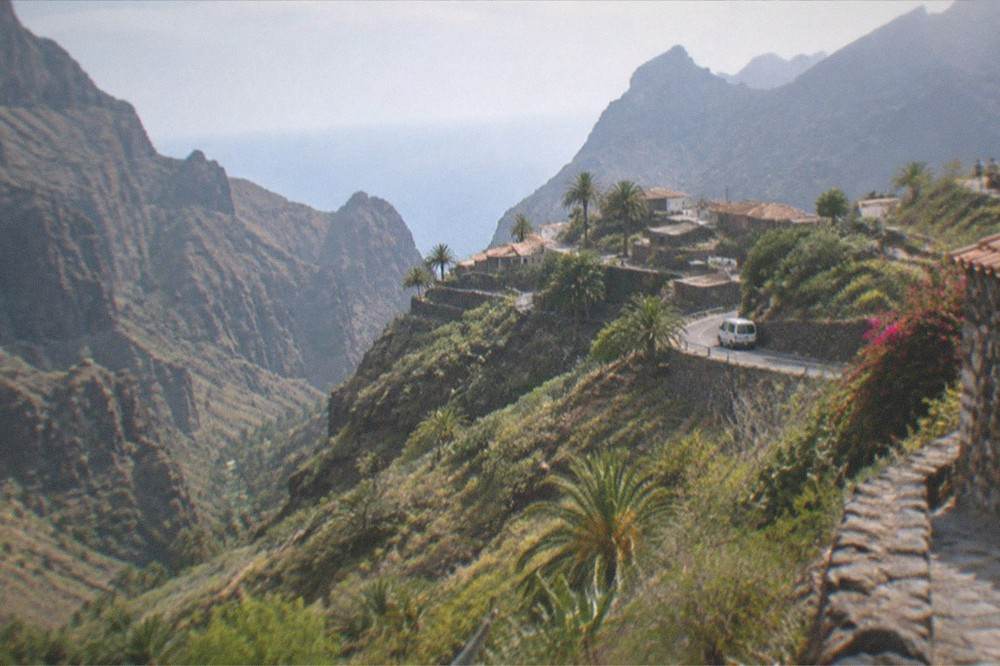
What the route does not include, unless you add hours, is the Masca gorge descent itself. The village viewpoint and the hamlet's narrow lanes are open to anyone who drives or rides there. The gorge below it is a controlled trail with a ticket, a quota and a boat exit, and that is a separate decision.
Can You Still Walk the Masca Gorge on a Day Trip?
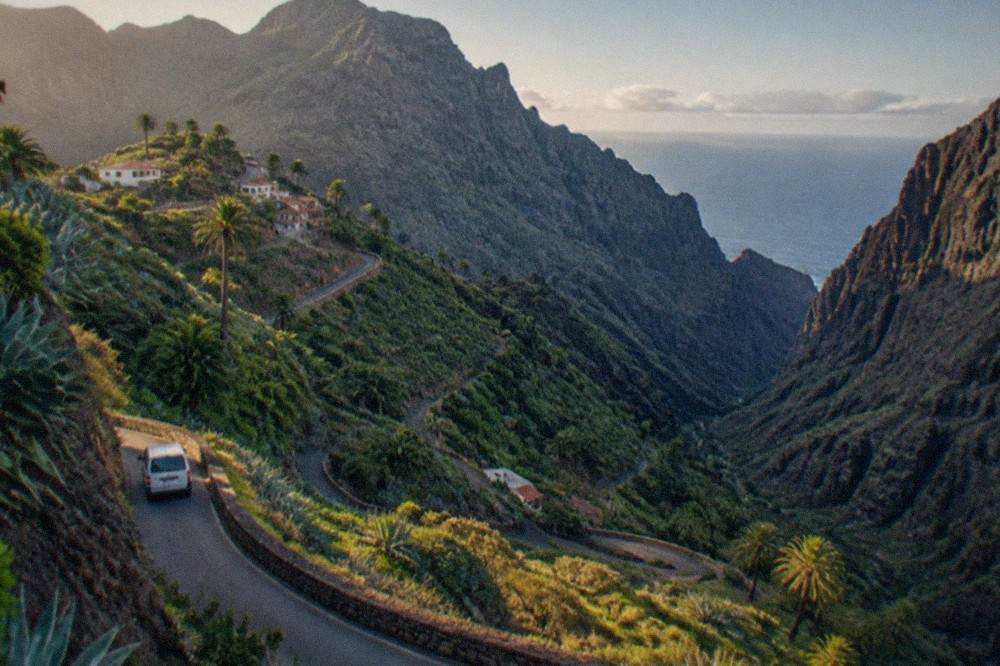
Yes, but only as a one-way descent with a pre-booked boat exit: the general ticket is EUR 40.66 with the boat charged separately, entry sessions run 08:30 to 13:00 with 25 places every 30 minutes, and hikers must arrive on TITSA line 355 from Santiago del Teide, because private vehicles are refused at the control. The operator's booking page states every one of those rules. The gorge is open under a continuing pilot scheme, descent only, and the boat ticket must be booked in advance for no later than four hours after the descent slot. It is not a two-way walk in the current phase, and it is not free: Tenerife residents and federation members enter free, everyone else pays, and the reduced rates for Canary residents and under-18s are on the booking page rather than in a published figure here.
The footwear rule catches more people than the price. Closed mountain footwear is a condition of entry, and the operator's page says walkers are refused without it even with a valid booking. The same page calls the gorge the place with the most rescues in the Canary Islands in recent years, which is why the controls exist at all.
Then there is the sea. The pier at Masca bay can close suddenly when conditions turn, and a closure voids the day's ticket. The return leg is your own arrangement: the booking page notes that travel back from Los Gigantes to Santiago del Teide is not included, and names TITSA lines 462 or 325 for it.
For most day-trippers the honest choice is this: walk the gorge only if you can give it the whole day, and otherwise visit the village. The village itself, its viewpoint over the gorge and the road down to it cost nothing and need no booking. The Masca attraction page covers the gorge rules in full.
| Masca gorge rule | What the operator's page states |
|---|---|
| Direction | Descent only, leaving by boat from Masca bay |
| General ticket | EUR 40.66, boat not included |
| Free entry | Tenerife residents and Canaries federation members, refunded after the control check |
| Reduced rates | Canary residents, under-18s and federated members, figures on the booking page |
| Entry sessions | 08:30 to 13:00, 25 places every 30 minutes, 50 at the 09:00 session |
| Arrival | TITSA line 355 from Santiago del Teide, bus ticket shown at the control |
| Footwear | Closed mountain footwear compulsory, refusal without it |
| Boat exit | Separate ticket, booked in advance, no later than 4 hours after the slot |
| Return | Not included; TITSA lines 462 or 325 from Los Gigantes |
If the full descent is more day than you have, a guided alternative exists that walks the laurel forest above the village instead of the gorge floor:
There is also a boat-based version that pairs Masca bay with the natural pools and the cliffs, which suits travellers who want the scenery without the trail rules:
Should You Drive the Route Yourself or Take a Tour?
Driving gives you control of the timings and costs nothing beyond petrol and parking, while a coach tour removes the mountain roads, the parking search and the schedule arithmetic for a single day that packs in Teide, Masca, Icod and Garachico; the right answer depends on whether the Teno switchbacks appeal to you or appal you. The road to Masca is the deciding factor. It is narrow, steep and busy in the middle of the day, and coach drivers run it daily. The driving guide and the car hire guide cover the practicalities of hiring and driving on the island.
A self-drive day also has to answer the parking question at each stop, and the timings question at Masca, where the morning sessions are the ones worth having. A tour answers neither, because the coach does both. The trade is simple: you surrender the freedom to linger in Garachico for as long as the rock pools deserve.
The most popular guided version of this exact route is the nine-hour island tour:
What Is There to See in Garachico?
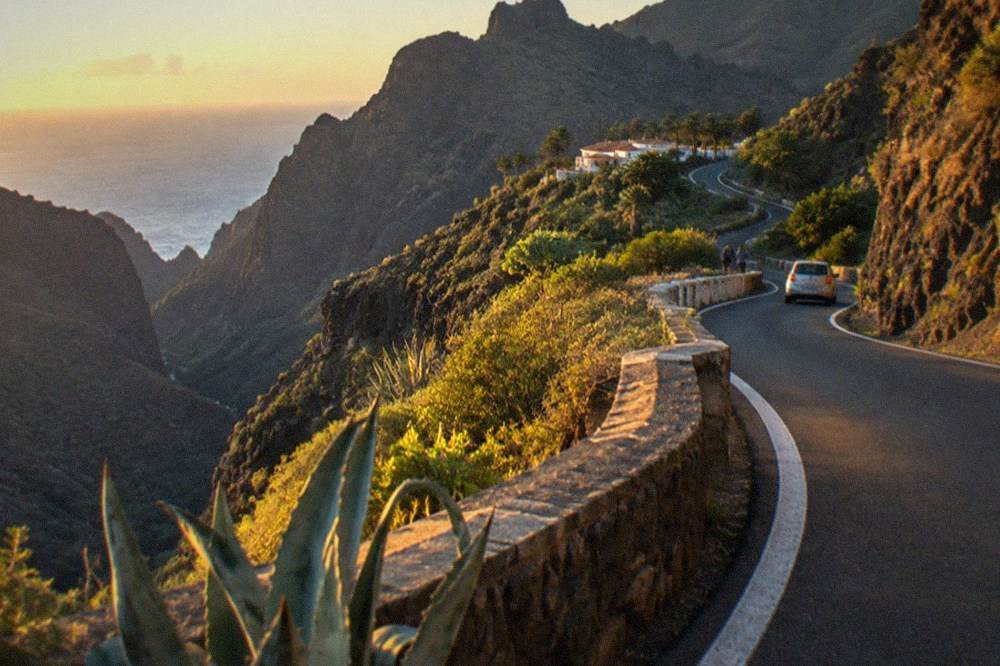
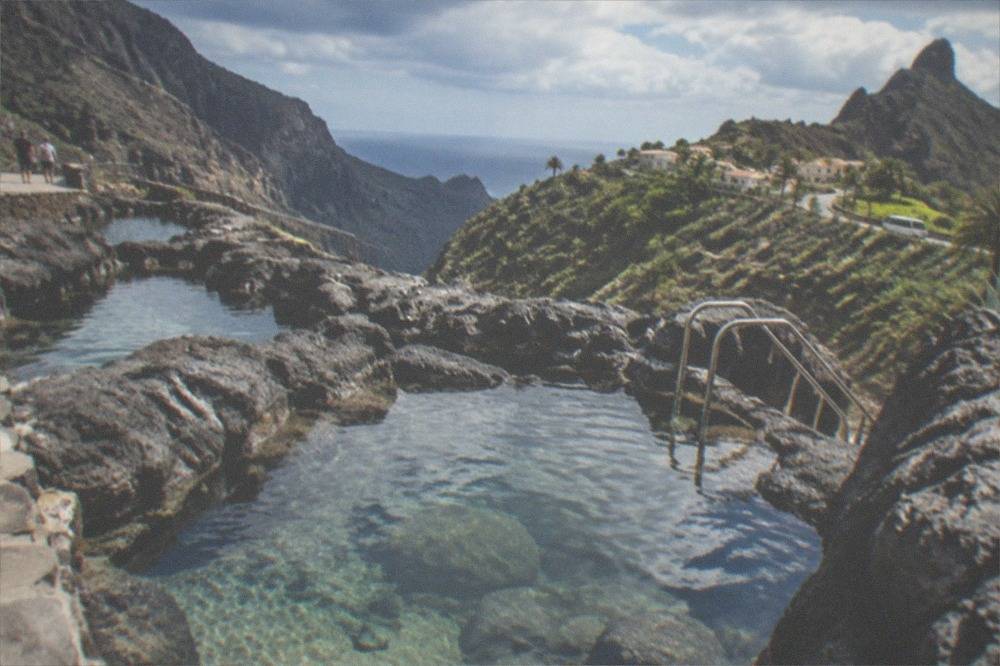
Garachico is a small north-coast town that was the island's trade hub in the 16th and 17th centuries until the Trevejo volcano erupted in 1706, destroyed almost the entire town and buried its old port, and its lava flows now form the natural rock pools that people swim in today. The tourist board's own page tells that story plainly. What the eruption buried, the sea rebuilt as swimming pools: the lava rock formations at the water's edge have become the town's main draw, and they cost nothing to use. The natural pools page covers them in detail, and the Garachico area guide covers the rest of the town.
The town rewards the time a self-drive day can give it and a coach schedule usually cannot. The old quarter is compact, the seafront pools are the obvious stop, and the whole place is a working Canarian town rather than a resort. For cruise passengers with only one day, Garachico is the middle stop of the standard shore route, and the one-day cruise port itinerary builds the same logic around a ship's timetable.
Garachico also sits on the road between Masca and Icod, which is why the three stops form a loop rather than a list. Coming out of the Teno mountains you reach the coast here, and from here the road runs east along the north shore.
Is the Drago Milenario in Icod de los Vinos Worth the Stop?
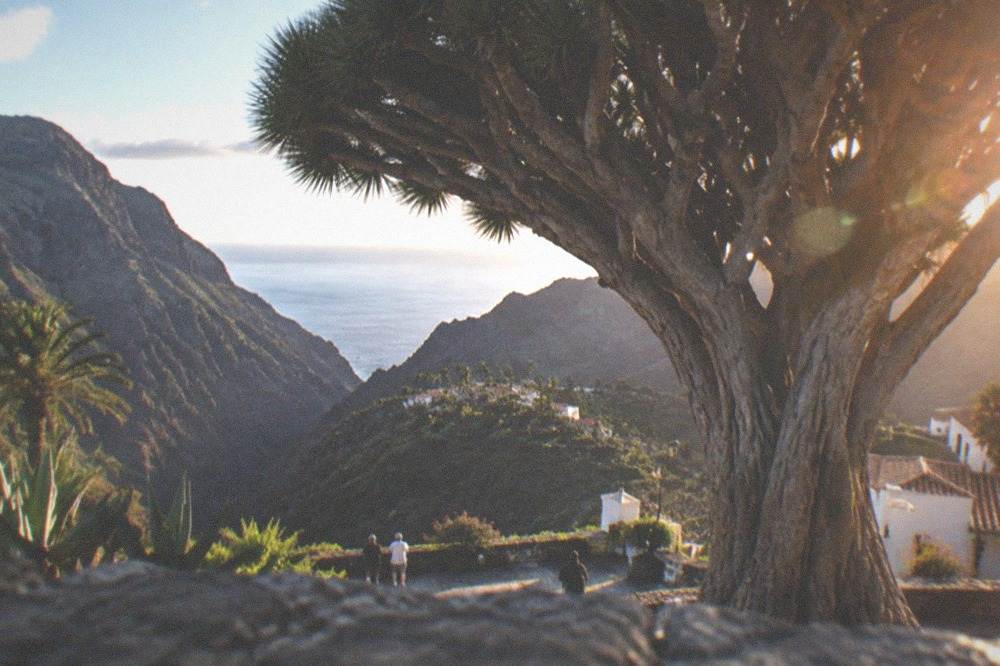
The Drago Milenario is a dragon tree that Icod council calls about 21 m tall with a trunk about 17 m round, declared a National Monument in 1917, and its age is an estimate that two official sources state differently: the council attributes roughly 1,000 years to it and the tourist board says over 800, so the honest figure is 800 to 1,000 years. It is the oldest and largest known specimen of its species, in the council's words, and it stands in a small park in Icod de los Vinos. The stop is short: the tree is the sight, and the town around it is a pleasant place to finish the loop.
The age claim is the part worth getting right, because inflated numbers circulate widely. Neither official source says the tree is thousands of years old, and both frame the age as an estimate rather than a measurement. The Icod dragon tree page carries the full comparison.
No entry price or opening hours for the tree's park are on file here, so none is stated. The stop costs nothing to view from the public square beside it, and the town's plaza is the standard viewing point. Other pages covering the same trip are gathered on Tenerife Travel Guide.
| Claim about the Drago Milenario | Source | Wording |
|---|---|---|
| Height | Icod council | About 21 m tall |
| Trunk | Icod council | Base about 17 m round |
| Status | Icod council | National Monument, 1917 |
| Age, council | Icod council | Approximately 1,000 years "attributed" |
| Age, tourist board | Turismo de Tenerife | "Over 800 years" |
| Standing | Icod council | Oldest and largest known of its species |
How Do the Los Gigantes Cliffs Fit Into the Day?
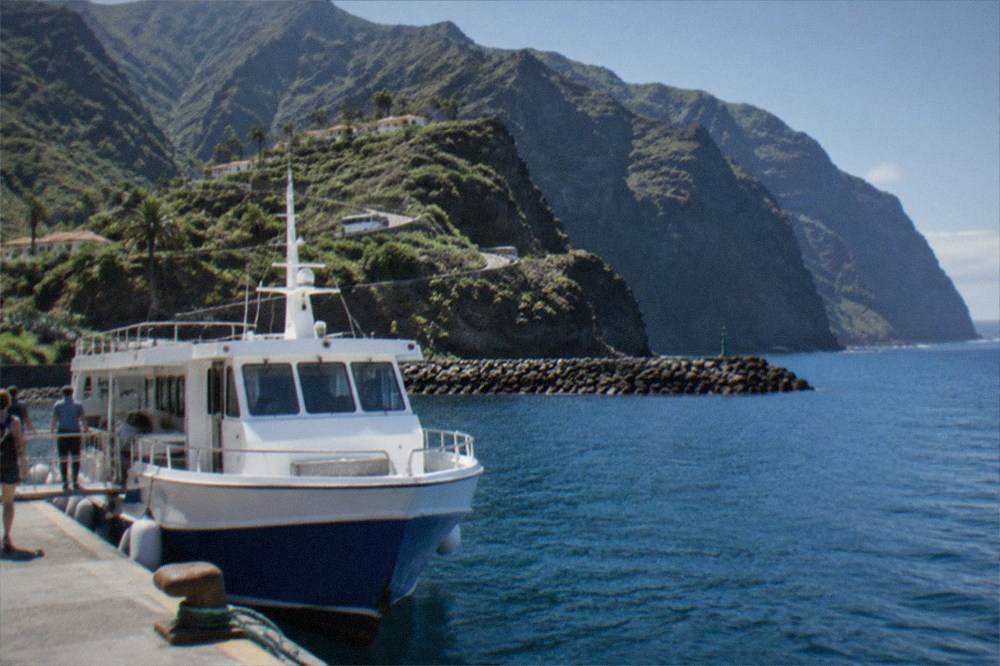
The Los Gigantes cliffs, which Turismo de Tenerife describes as towering up to 600 m high with a seabed about 30 m deep at their foot inside Teno Rural Park, sit at the western end of the same coast road, and they fit the route either as the boat exit from a Masca descent or as a viewpoint stop between Masca and Garachico. The cliffs belong to the same municipality as Masca, Santiago del Teide, and the boat from Masca bay lands at Los Gigantes, which is why the gorge's return leg starts there. The Los Gigantes area guide covers the town, and a whale-watching cruise from the harbour is the standard way to see the rock face from below.
The figure that circulates most is the wrong one. Some pages call the cliffs 800 m high; the tourist board's page says up to 600 m, and that is the number this site uses. From the road above, the miradors along the coast give the landward view without a boat.
What Are the Real Costs of the Day?
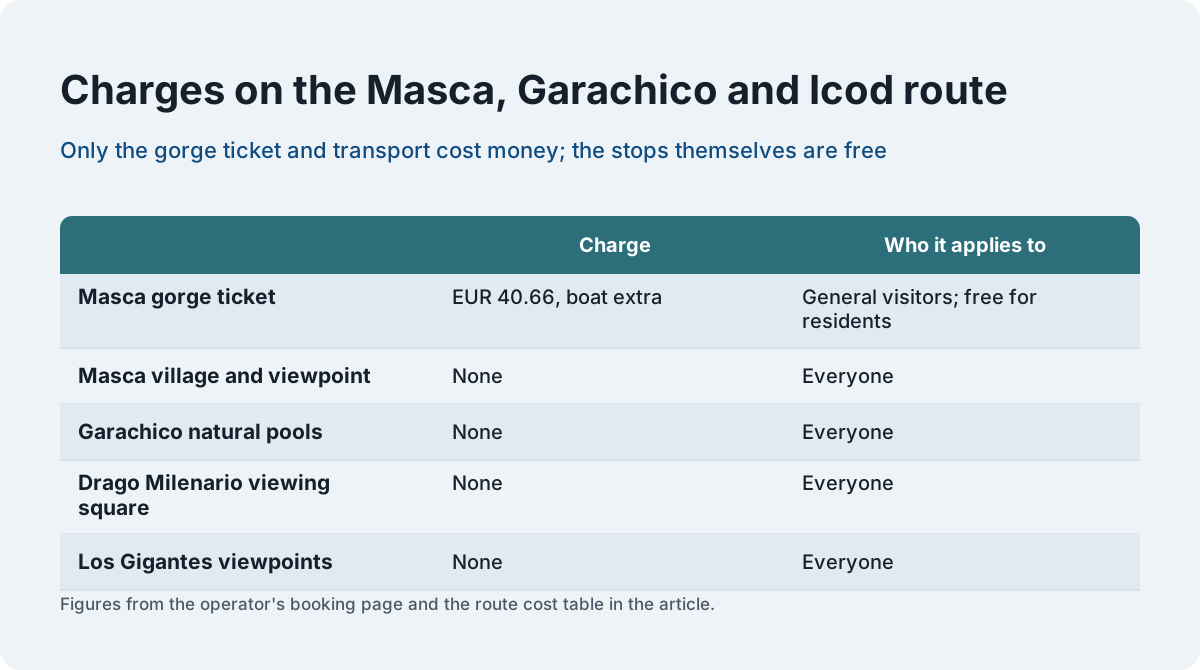
The route's only compulsory charges are the Masca gorge ticket at EUR 40.66 for general visitors plus the separate boat, and petrol or bus fares; the villages, the Garachico pools, the Los Gigantes viewpoints and the Drago Milenario's square cost nothing, and there is no per-night tourist tax on Tenerife, because no official page shows one in force or approved. The charges that do exist on the island are per-booking fees on specific trails: the Teide summit and Montaña Blanca trails, the Masca ticket and the Barranco del Infierno ticket. None of them is a lodging tax, and the tourist tax and local rules page sets that out in full.
For transport, visitors pay their own way. The 100% public transport subsidy that the Canary government confirmed for 2026 applies to resident passes only; visitors buy single tickets, the EUR 10 day travelcard or the EUR 50 seven-day travelcard. On the route itself, TITSA lines 355 and 365 serve Masca, stop code 4553, and lines 462 and 325 run the return from Los Gigantes to Santiago del Teide. The TITSA buses guide has the fare products.
| Item on the route | Charge | Who it applies to |
|---|---|---|
| Masca gorge ticket | EUR 40.66, boat extra | General visitors; free for Tenerife residents and federation members |
| Masca village and viewpoint | None | Everyone |
| Garachico natural pools | None | Everyone |
| Drago Milenario viewing square | None | Everyone |
| Los Gigantes viewpoints | None | Everyone |
| Visitor bus travel | Single ticket, EUR 10 day card or EUR 50 seven-day card | All visitors; the resident subsidy is not for tourists |
When Is the Best Time of Year for This Day Trip?
The north coast around Garachico and Icod is measurably wetter than the south of the island, with AEMET's normals showing 82 mm of rain in December at Tenerife North Airport against 30 mm the same month at Tenerife South Airport, so summer gives the most reliable single day for the route and winter makes the morning sessions at Masca more important than in July. The two airports' weather stations bracket the route's climates: the south station reflects the resort side where most travellers start, and the north station reflects the coast the loop finishes on. The weather by month guide carries the full tables.
The mountain section adds its own layer. Masca sits high in the Teno massif, where morning cloud is common even in months the coast stays dry, and the gorge's pier closes on sea state rather than rainfall. The operator's own warnings, sudden pier closures and the rescue record, argue for booking the earliest session available rather than the latest.
| Month | Rain at Tenerife North Airport (mm) | Rain at Tenerife South Airport (mm) | Rain days of 1 mm or more, north |
|---|---|---|---|
| January | 80 | 17 | 7.7 |
| February | 70 | 20 | 7.4 |
| March | 61 | 15 | 6.8 |
| April | 39 | 7 | 6.2 |
| May | 19 | 1 | 3.8 |
| June | 11 | 0 | 2.4 |
| July | 6 | 0 | 1.7 |
| August | 5 | 1 | 1.1 |
| September | 16 | 4 | 2.8 |
| October | 47 | 12 | 6.5 |
| November | 81 | 26 | 8.3 |
| December | 82 | 30 | 8.8 |
How Do You Plan the Timings for One Day?
A workable self-drive order is Masca village for the first entry session of the morning, Garachico for the middle of the day with the rock pools at high afternoon light, and Icod de los Vinos for the dragon tree before the return along the north coast, because the Masca road is the part that punishes a late start and the other two stops stay pleasant later. The gorge descent does not fit inside that shape: it needs the whole day, the boat exit and the return bus from Los Gigantes. A village visit does.
The tour version compresses the same logic into nine hours. The related tour below runs Teide, Masca, Icod and Garachico in that order with a coach, and it is the standard answer for travellers who want the loop without the wheel:
| Stop | What it is | Booking needed | Time it deserves |
|---|---|---|---|
| Masca village | Mountain hamlet and gorge viewpoint | None for the village; ticket and bus for the gorge | Morning, an hour or more |
| Los Gigantes | Cliffs up to 600 m, harbour town | None for viewpoints | A short stop or a boat trip |
| Garachico | Lava-buried town and natural pools | None | Midday, the longest stop |
| Icod de los Vinos | Drago Milenario, 800 to 1,000 years old | None for the square | Late afternoon, under an hour |
What Are the Alternatives If You Have More Than One Day?
With extra days the west-coast loop combines naturally with Teide National Park on a separate day, or with a ferry to La Gomera from Los Cristianos, a crossing Fred. Olsen Express lists at 50 minutes, and both pair well because they draw on completely different terrain from the coastal loop. The Teide from the south day trip covers the volcano side, and the La Gomera day trip covers the ferry. The north Tenerife from the south page overlaps with the Icod and Garachico legs if you would rather split the coast from the mountains.
The island-hopping option deserves a note of caution. The ferries and island hopping guide covers the routes, but La Gomera deserves its own full day rather than a squeeze alongside Masca. Travellers comparing the islands before committing can start with which Canary island is best.
For a longer stay, the 7-day Tenerife itinerary places this route in a full week, and the north versus south guide helps decide where to base so the loop starts on the right side of the island.
If the west-coast loop has sold you on the island's guided days, these three cover the same ground and the neighbouring ones:
Common Questions About the Masca, Garachico and Icod Route
Can you walk the Masca gorge without a booking?
No. The gorge is open under a pilot scheme as a descent only, with a pre-booked boat exit, and the booking is made at caminobarrancodemasca.com. Walking without a reservation can be penalised, and hikers must also arrive on TITSA line 355 from Santiago del Teide and show the bus ticket at the control.
Can you drive to Masca village itself?
Yes. The village and its viewpoint are open to drivers and bus passengers alike, and no booking is needed to see the hamlet. The restriction applies to gorge hikers only: they must arrive on TITSA line 355, and a private vehicle means refusal at the control.
Is Garachico worth visiting?
Yes, and it costs nothing. The town was the island's trade hub in the 16th and 17th centuries until the Trevejo volcano erupted in 1706 and buried the old port, and the lava formations at the water's edge are now natural swimming pools open to anyone.
How old is the Drago Milenario?
Between 800 and 1,000 years, and both figures are estimates. Icod council attributes approximately 1,000 years to the tree, and Turismo de Tenerife says over 800; neither source supports the larger numbers that circulate online.
Is there a tourist tax on Tenerife that affects this day trip?
No per-night lodging tax is shown on any official page read, in force or approved. The charges that do exist are per-booking fees on specific trails: the Teide trails PNT 10 and PNT 07, the Masca gorge ticket and the Barranco del Infierno ticket.
Can you do Masca, Garachico and Icod by public transport?
Partly. TITSA lines 355 and 365 serve Masca, stop code 4553, and lines 462 and 325 run the return from Los Gigantes to Santiago del Teide. Visitors pay normal fares, single tickets, the EUR 10 day travelcard or the EUR 50 seven-day travelcard, because the 2026 free-travel subsidy applies to resident passes only.
The loop works because each stop answers a different question: Masca is the island's geology at its most dramatic, Garachico is its history at its most literal, and the Drago Milenario is its natural history at its slowest. Plan the mountain road for the morning, keep the gorge as its own full day if you intend to walk it, and the rest of the route takes care of itself.