El Caleton Natural Pools, Garachico
The lava that destroyed Garachico's port in 1706 created the rock pools its visitors now swim in. This guide sets out what the official record says about the town, the pools, the weather by month and the buses that reach it.
Short answer
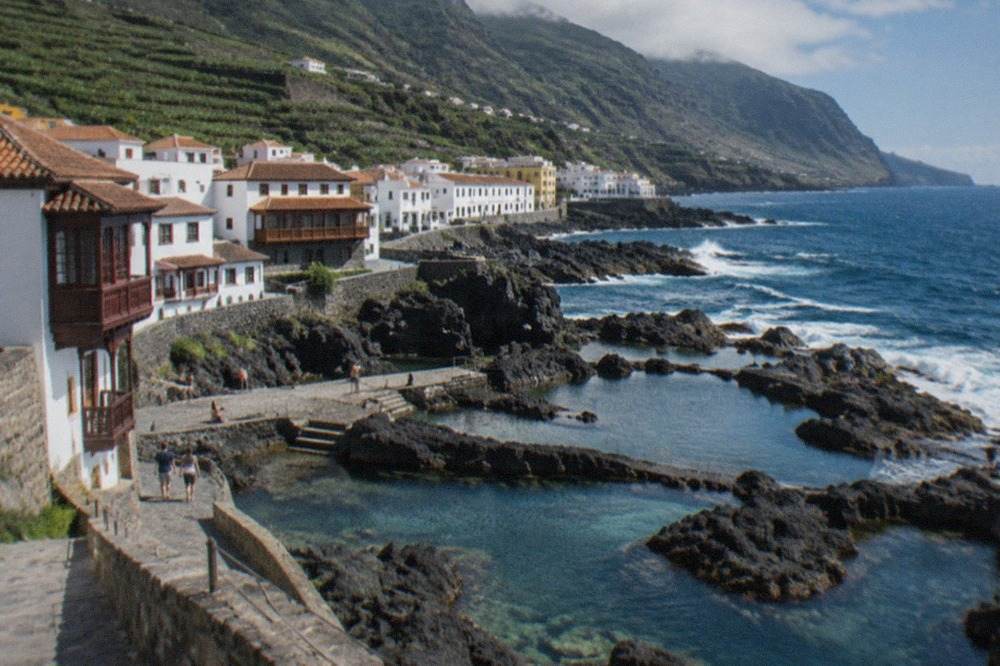
The El Caleton natural pools are free lava-rock pools on Garachico's seafront, formed when the Trevejo volcano erupted in 1706 and buried the old port. No official page lists an entry charge or set opening hours for the pools themselves.
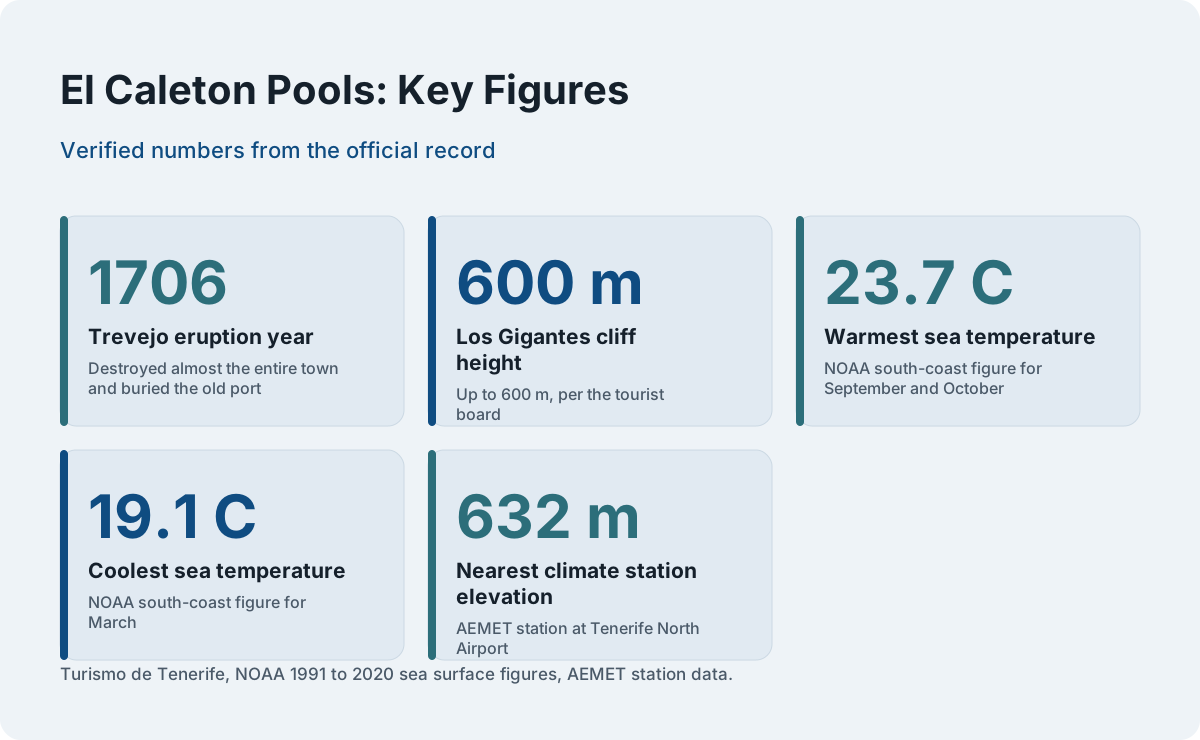
The Trevejo volcano erupted in 1706, destroyed almost the entire town of Garachico and buried its old port, and the rock pools that today's swimmers know as El Caleton sit on the lava field that event left behind. That is the plainest way to explain this place: the worst thing in Garachico's history produced its most visited feature. The tourist board's own page records that Garachico had been the island's trade hub in the 16th and 17th centuries before the eruption ended that role, and the town it became afterwards is the quiet, low-rise place visitors find now, on the north-west coast of Tenerife.
This page gathers what the official sources actually say about the pools, the town around them and the practicalities of reaching the area. Where a figure is not on file, it says so rather than guessing. The pools themselves are a public seafront feature, and no official page read for this guide lists an entry charge, a booking system or set opening hours for them, so nothing of that kind is stated here.
What Are the El Caleton Natural Pools?
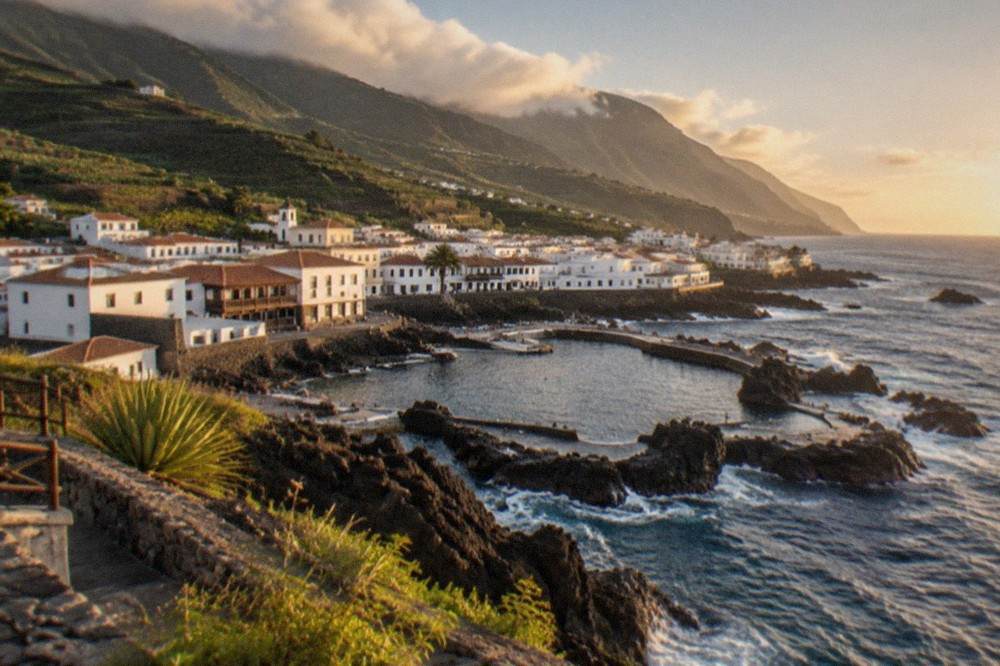
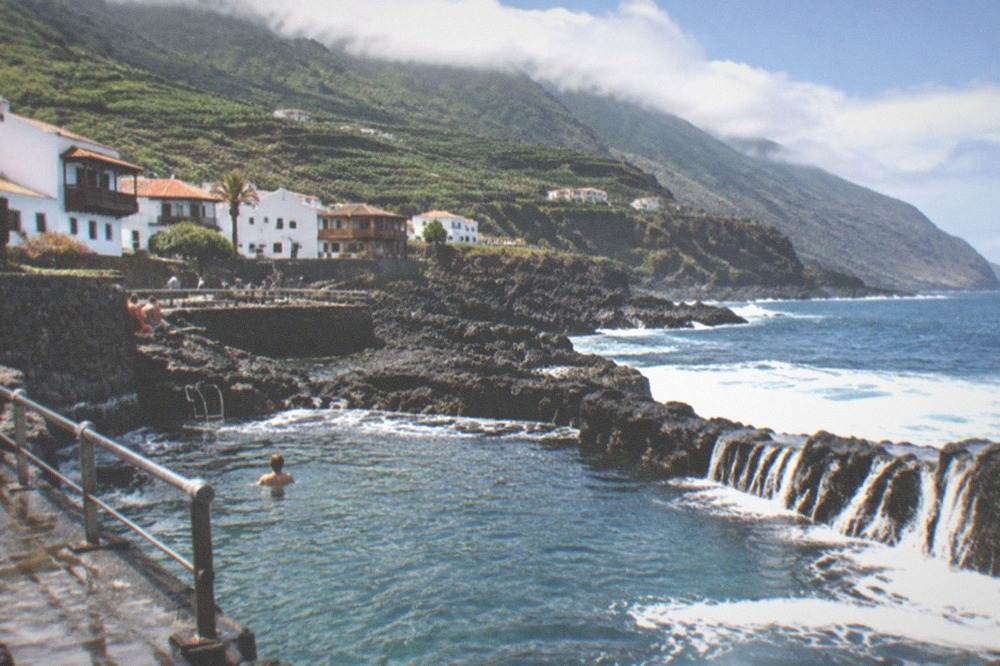
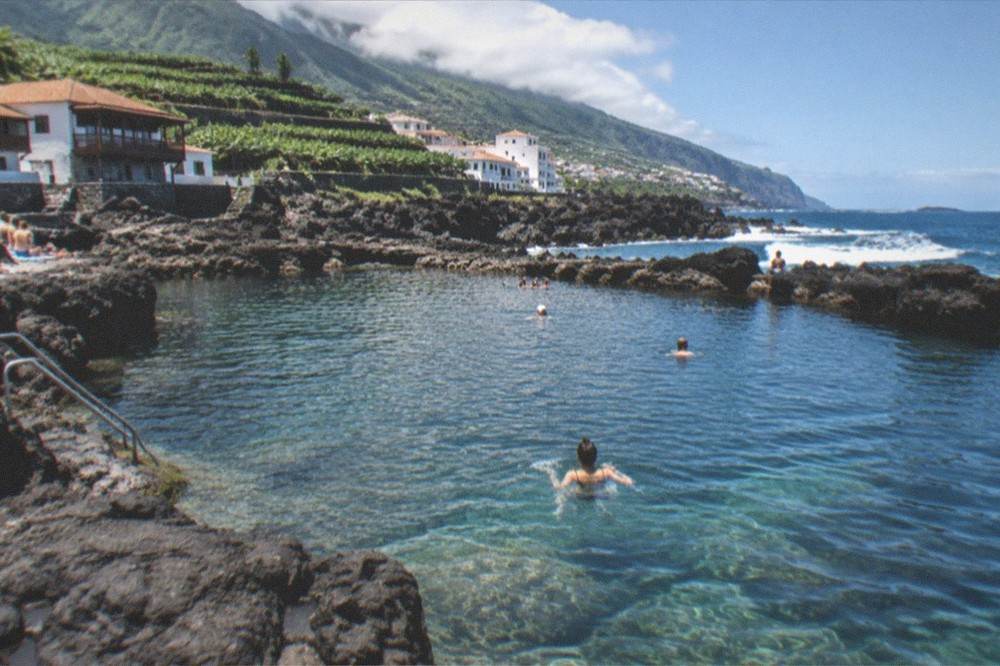
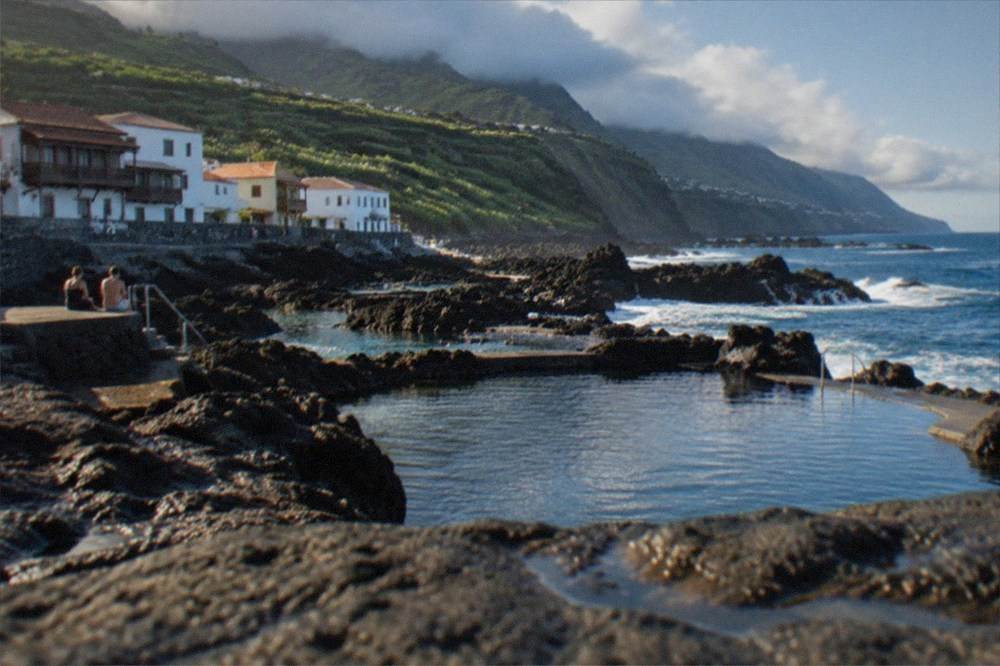
The El Caleton natural pools are a chain of lava-rock basins on Garachico's seafront, filled and emptied by the Atlantic through channels in the rock. They are a public feature of the town, and no official page read for this guide lists an entry charge, a booking requirement or fixed opening hours for them, so visitors should treat any figure of that kind on another site with caution.
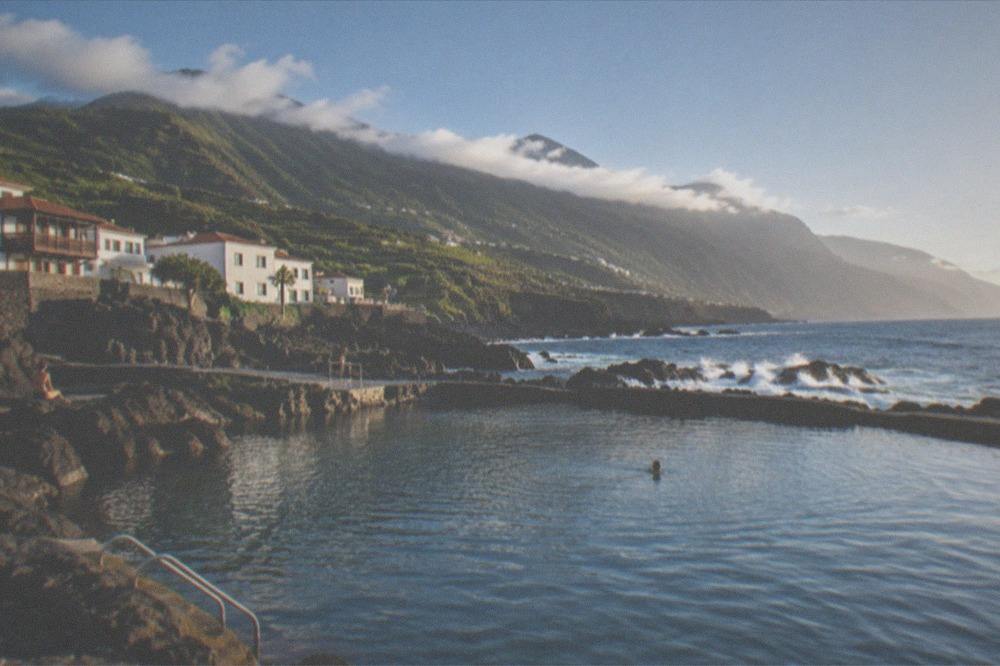
What the record does support is the setting. The pools sit at the foot of the lava field left by the 1706 eruption, in a town the tourist board describes as having been the island's trade hub in the 16th and 17th centuries before the Trevejo volcano buried its port. The rock is dark and the water is seawater, moved in and out by the swell rather than piped or treated. That is the whole mechanism: the sea does the work, and the lava does the containing.
The name matters too. "El Caleton" is the form used in this guide's approved sources for the pool area on the seafront, and it is kept to one spelling throughout. Some pages treat the pools and the seafront promenade as one thing, others separate them; either way, the swimming is in the rock basins, not on a constructed beach. There is no lifeguard service on file for this site, and no official page read here states one, so swimmers should not rely on supervision that no source confirms.
Why Does Garachico Have Lava-Forged Pools?
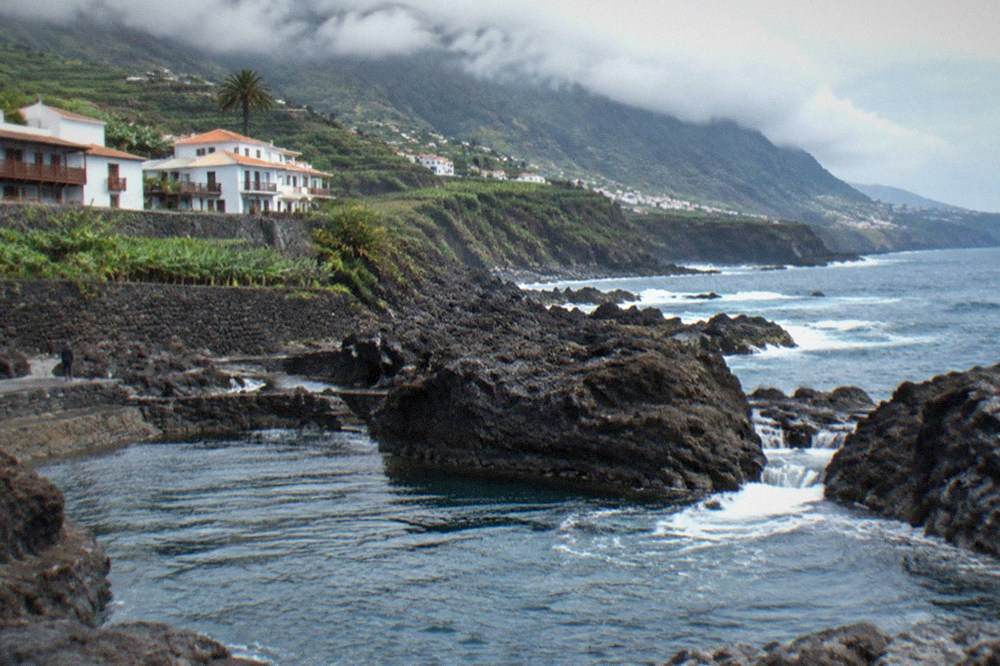
Garachico's pools exist because the Trevejo volcano erupted in 1706, destroyed almost the entire town and buried the old port under lava. The lava reached the sea, cooled into rock at the waterline, and the sea has since carved and filled basins in it. The pools are, in the most literal sense, the shape of the town's worst disaster.
The tourist board's page for the municipality carries the whole story in three lines: the eruption of 1706, the destruction of almost the entire town, and the burial of the old port. It also records what came before, that Garachico had been the island's trade hub in the 16th and 17th centuries. The port that the lava buried was the reason the town existed at all, and the rock the eruption deposited along the shore is the reason it is visited today.
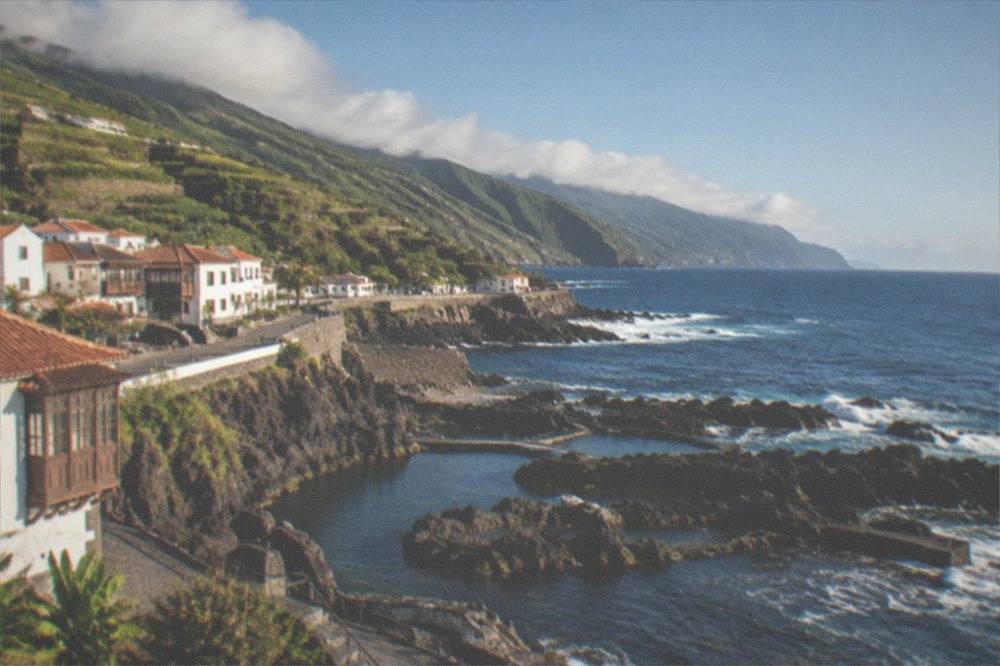
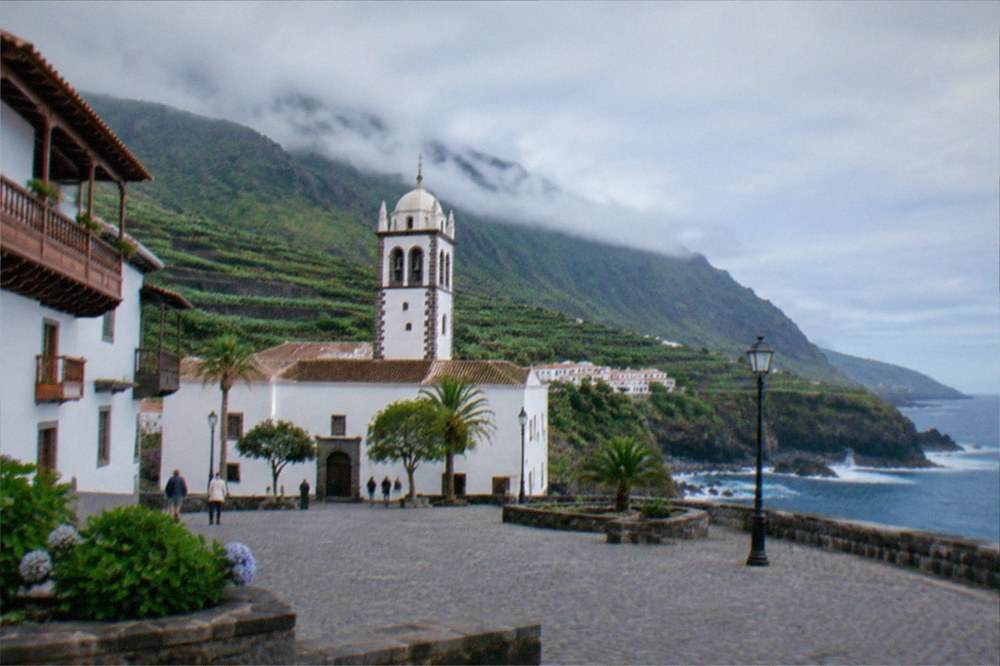
That inversion is worth holding onto when planning a visit, because it explains the town's character. Garachico was never rebuilt as a port. What stands now is a small, low town with a seafront given over to rock, water and swimmers rather than cranes and cargo, and the pools sit where the trade once did. The Garachico area page carries more on the town itself, and the Masca, Garachico and Icod route covers how the town fits into a wider day out on the north-west coast.
| Event | What the official record says | Source |
|---|---|---|
| 16th and 17th centuries | Garachico was the island's trade hub | Turismo de Tenerife, municipality page |
| 1706 | The Trevejo volcano erupted and destroyed almost the entire town | Turismo de Tenerife, municipality page |
| 1706 | The eruption buried the old port | Turismo de Tenerife, municipality page |
| After 1706 | Lava at the waterline formed the rock basins now used for swimming | Derived from the same record |
The pools are the reason many visitors come, but they are not the only thing the 1706 lava left. The same coast runs west towards the Los Gigantes cliffs, which the tourist board says tower up to 600 m, and inland towards the Masca gorge, a pre-booked descent with a boat exit. A tour that strings the coast together is one way to see all of it without planning each leg, and the cards above show what the operators list.
Is It Safe to Swim at El Caleton?
No official page read for this guide states a lifeguard service, a flag system or a supervised season at the El Caleton pools, so no claim of that kind is made here. What the sources do support is common sense for any Atlantic rock pool: the water is open to the sea, the swell changes the conditions, and the decree that governs Tenerife's waters treats the sea around the island as an environment to respect, not an amenity that is tamed.
Rock pools of this type fill and drain with the tide and the swell. On a calm day the basins hold still, clear water; when the swell rises, the same channels that fill them push water over the rock. No official page read here gives a tide table or a swell threshold for El Caleton, so the honest advice is to read the water on the day and stay out of it when waves are breaking across the basins.
Two verified rules from elsewhere on the island are worth knowing while swimming anywhere on this coast. First, the Cabildo bans smoking in every open-air space of Teide National Park, car parks included, a reminder that wildfire rules in the Canary Islands are taken seriously and apply well beyond the volcano. Second, whale watching in Tenerife's waters is governed by Decreto 178/2000, which sets a 60 m minimum approach distance and bans swimming within 500 m of the animals; the sea off Garachico is part of the same regulated environment, and boats that carry the Barco Azul flag are the authorised ones.
| Rule | Figure | Who states it |
|---|---|---|
| Minimum approach distance to whales | 60 m | Decreto 178/2000 |
| Boats allowed within 500 m of a whale | At most three | Decreto 178/2000 |
| Speed within 500 m | 4 knots maximum | Decreto 178/2000 |
| Swimming or diving near whales | Banned within 500 m | Decreto 178/2000 |
| Authorised whale boats | Must fly the Barco Azul flag | Decreto 178/2000, article 15 |
For a visitor who wants the coast explained rather than worked out alone, a guided day takes the planning off the table.
The box above links to a tour whose listing covers Masca, the Los Gigantes cliffs and natural pools with a picnic included, running from Los Cristianos. It suits travellers staying in the south who want the north-west coast in one organised day, with the operator's live listing carrying the current price and dates.
When Is the Best Time to Visit the Pools?
The nearest official climate record is AEMET's station at Tenerife North Airport, 632 m up on the other side of the island, which shows the warmest, driest months as June to September and the wettest as November to December. Garachico sits on the damper north-west coast, so the north-side figures are the better guide than the south airport's, and summer is when the pools are warmest and the rain days fewest.
The numbers below are AEMET's 1981 to 2010 normals for the Tenerife North Airport station, the closest long-record station on file to Garachico's side of the island. They are not Garachico's own figures, and no station record for Garachico itself is on file here. What they show is the shape of the northern coast's year: mild winters, warm summers, and rain concentrated between October and February, with 64 rain days of 1 mm or more across the year.
| Month | Mean daily max C | Mean daily min C | Rain mm | Rain days of 1 mm or more | Sunshine hours |
|---|---|---|---|---|---|
| Jan | 16.0 | 10.2 | 80 | 7.7 | 150 |
| Feb | 16.7 | 10.0 | 70 | 7.4 | 168 |
| Mar | 18.2 | 10.7 | 61 | 6.8 | 188 |
| Apr | 18.5 | 10.9 | 39 | 6.2 | 202 |
| May | 20.1 | 12.0 | 19 | 3.8 | 234 |
| Jun | 22.2 | 14.0 | 11 | 2.4 | 237 |
| Jul | 24.7 | 15.7 | 6 | 1.7 | 262 |
| Aug | 25.7 | 16.6 | 5 | 1.1 | 269 |
| Sep | 24.9 | 16.5 | 16 | 2.8 | 213 |
| Oct | 22.5 | 15.2 | 47 | 6.5 | 194 |
| Nov | 19.6 | 13.3 | 81 | 8.3 | 155 |
| Dec | 17.1 | 11.5 | 82 | 8.8 | 137 |
Sea temperature tells the swimmer's half of the story. NOAA's 1991 to 2020 figures for the sea surface off Tenerife's south coast peak at 23.7 C in September and October and bottom out at 19.1 C in March. Those are south-coast figures, published for a different period from the air normals, so the two datasets are never blended here into one claim; but the seasonal shape, warmest sea in early autumn, coolest in late winter, holds for the island generally.
How Do You Get to Garachico Without a Car?
Garachico is reached on TITSA's bus network, and visitors pay for it: single tickets priced by route, the EUR 10 day travelcard or the EUR 50 seven-day travelcard. The 100% fare subsidy the Canary government confirmed for 2026 applies to resident passes only, so no visitor should plan around free buses. That subsidy, in force since 1 January 2026 under Real Decreto-ley 17/2025, requires residency in the Canary Islands and a personalised Ten+ card.
TITSA's fares page is the source for everything a visitor can actually buy. Single tickets are priced by route and can be paid by card or cash; a same-day return gets 10% off on trips of 20 km or more; and the travelcards above are sold at airport ticket machines. The Ten+ card itself costs EUR 2, with wallet top-ups from EUR 2 to EUR 100. The tram's single fare, EUR 1.35 on a transit pass or EUR 1.10 by mobile, applies to the Santa Cruz to La Laguna line only, and Metrotenerife's own pages do not state a tram connection to either airport, so the tram does not enter airport-transfer planning. Other pages covering the same trip are gathered on Tenerife Travel Guide.
| TITSA product | Price | Notes |
|---|---|---|
| Single ticket | Priced by route | Card or cash accepted |
| Same-day return | 10% off | Trips of 20 km or more only |
| Day Travelcard | EUR 10 | Sold at airport ticket machines |
| 7 Day Travelcard | EUR 50 | Sold at airport ticket machines |
| Ten+ card | EUR 2 | Top-ups EUR 2 to EUR 100 |
| Resident subsidised passes | EUR 0 in 2026 | Canary Islands residents only, personalised card |
For the specific lines that serve Garachico itself, TITSA's network pages carry the current timetables, and no line list for the town is on file in this guide's verified facts, so none is invented here. What is on file is the wider rule that matters to any bus day out: the Teide and Teno lines are excluded from the resident passes, and the Teno massif is the range that Garachico sits beneath. A visitor combining the pools with the Icod dragon tree or the Masca gorge should check the TITSA site for the day's times before committing to a route.
The card above is the Masca, Los Gigantes and natural pools tour from Los Cristianos, whose listing includes a picnic and runs five to five and a half hours. For a swimmer staying in the south who wants one organised northern day, it removes the bus connections entirely.
What Else Is There to Do in Garachico?
Garachico's own attractions are compact and mostly free to walk: the seafront pools, the old town that survived 1706, and the natural rock formations along the shore. The town also sits on the classic north-west circuit that takes in the Icod dragon tree, whose age the two official sources put at 800 to 1,000 years as an estimate, and the colonial streets that made the town a stop on every island tour.
The dragon tree deserves its own sentence of caution, because it is the most misquoted tree in the Canaries. Icod council attributes an age of approximately 1,000 years to it and calls it the oldest and largest known of its species; the tourist board says it is estimated to be over 800 years old. This guide writes "800 to 1,000 years" and says it is an estimate, because that is what the two official sources support and nothing more.
Around the town, the paid and permitted attractions of the region are few and clearly priced, which makes a refreshing change. The table below lists the official charges on file for the area's bookable walks, all stated exactly as the official pages give them.
| Attraction or trail | Visitor charge | Who states it |
|---|---|---|
| El Caleton pools, Garachico | No charge listed on any official page read | This guide's research |
| Masca gorge descent | EUR 40.66 general ticket, boat extra; free for Tenerife residents | caminobarrancodemasca.com |
| Barranco del Infierno, Adeje | EUR 15 non-resident adult; EUR 5 Canary residents | barrancodelinfierno.es |
| Teide summit trail PNT 10, daytime slots | EUR 15 visitors; EUR 6 other Canary residents; free for Tenerife residents and children | Tenerife ON |
| Teide trail PNT 07, working days | EUR 6 visitors; EUR 3 other Canary residents | Tenerife ON |
| Teide trail PNT 07, weekends and holidays | EUR 10 visitors; EUR 5 other Canary residents | Tenerife ON |
| Teide cable car return | EUR 42 adult, EUR 21 child aged 3 to 13, shown as price from | volcanoteide.com |
Note what is not in that table: a per-night tourist tax, because no official page read for this site shows one in force or approved on Tenerife. The charges that do exist are per-booking fees on specific trails and the Masca ticket, none of them a lodging tax. Travellers who want the volcano rather than the sea on the same trip should read the Teide National Park pages before assuming a summit permit is free: since Monday 19 January 2026 the 09:00 to 17:00 slots on PNT 10 cost EUR 15 for visitors, and the reservation itself is booked on Tenerife ON.
For a different water day, the catamaran card above runs from Costa Adeje with drinks included, two to three hours, under the whale watching rules described earlier on this page.
What Other Natural Pools Does Tenerife Have?
Garachico's pools are the best known of Tenerife's natural swimming pools, but the island has others, and the tourist board's beach pages describe several swimmable shores with different characters: golden sand at Las Teresitas and Las Vistas, grey sand at El Duque and El Medano, and black sand at the cliff-footed El Bollullo in La Orotava. A full round-up of the island's rock pools sits on the natural pools guide.
The sand colour list is worth quoting precisely, because guides get it wrong constantly. The tourist board describes El Duque as a grey sandy beach, not a golden one; golden sand is what it says of Las Teresitas, in San Andres by Santa Cruz, and of Las Vistas in Arona. El Medano is fine grey sand under Montana Roja. El Bollullo, on the north coast not far by road from Garachico, is black sand at the foot of a cliff. The natural pools guide carries the full island-wide list, and El Bollullo is the north-coast beach closest in character to the wilder side of Garachico's shore.
Should You Combine Garachico with a Boat Trip or a Park Day?
Garachico pairs naturally with a boat trip out of a south or west-coast port, or with a paid park if the weather turns. A twin ticket covering both Loro Parque and Siam Park exists as a single product, and the parks keep long seasons: Siam Park opens 365 days a year, 10:00 to 18:00 from 1 May to 29 October and 10:00 to 17:00 the rest of the year, while Loro Parque runs 09:30 to 17:30 every day.
Those hours come from the parks' own pages and are the only ones stated here. Loro Parque's FAQ also lists its own car park at EUR 7 per day, useful for anyone driving the north-west circuit rather than taking the bus. The twin ticket card below is the combined product; its live listing carries the current price.
If the plan is a full north-west loop under your own steam, the Masca, Garachico and Icod route page sets out the order that works, and the ferry connections from Los Cristianos, 50 minutes to San Sebastian de La Gomera on Fred. Olsen Express, open up the La Palma and El Hierro crossings for a longer trip. None of that is needed for the pools themselves, which ask nothing of a visitor but a towel and a sense of what the sea is doing.
Common Questions About Garachico Natural Pools
Do the Garachico natural pools cost anything?
No official page read for this guide lists an entry charge, a booking system or fixed opening hours for the El Caleton pools. They are a public seafront feature. Charges in the wider area are separate and specific: the Masca gorge ticket, the Barranco del Infierno trail and the Teide trail fees, none of which applies to Garachico's pools.
Can you swim at Garachico in winter?
The north of the island is mild in winter rather than warm: AEMET's Tenerife North Airport normals show January mean daily maxima of 16.0 C and December's at 17.1 C, with 80 and 82 mm of rain respectively. The sea is at its coolest in March at 19.1 C on the south-coast figures. Swimming is possible on a calm winter day, but the rain days are frequent and the swell should be read on the day.
How were the Garachico pools formed?
The Trevejo volcano erupted in 1706, destroyed almost the entire town and buried the old port under lava, according to Turismo de Tenerife's page for the municipality. The lava that reached the sea cooled into rock at the waterline, and the basins the sea fills in it are the pools visitors swim in today.
Is there a beach at Garachico?
The swimming at Garachico is in the lava-rock pools rather than on a constructed beach. Visitors who want sand rather than rock will find the tourist board listing golden sand at Las Teresitas and Las Vistas, grey sand at El Duque and El Medano, and black sand at El Bollullo in La Orotava, the last of them the closest in character on the north coast.
Can you visit Garachico and Masca on the same day?
Yes, and organised tours do exactly that, but note the Masca rules before planning it independently: the gorge is a pre-booked descent only, the general ticket is EUR 40.66 with the boat exit booked separately, and hikers must arrive on TITSA line 355 from Santiago del Teide, since arriving by private vehicle means refusal.