The Dragon Tree of Icod (Drago Milenario)
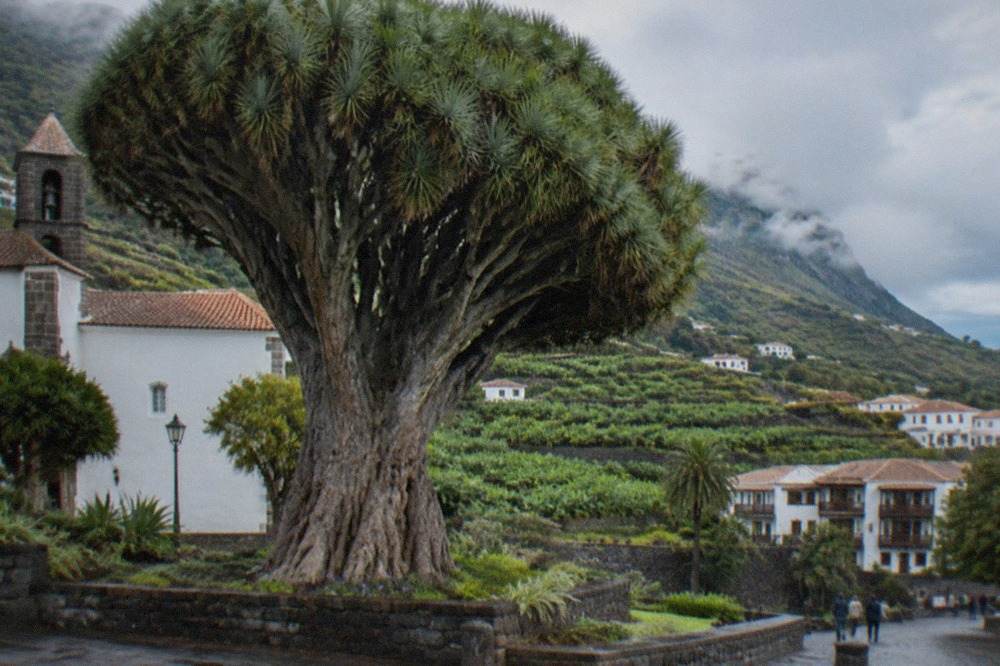
Icod de los Vinos, on Tenerife's green north coast, holds the tree the island calls its oldest living monument: the Drago Milenario, a dragon tree the council says stands about 21 metres tall with a trunk base about 17 metres round.
Short answer
The Drago Milenario stands in the town of Icod de los Vinos in north Tenerife. Icod council attributes an age of roughly 1,000 years to it and calls it the oldest and largest known of its species; Turismo de Tenerife says over 800 years. It has been a National Monument since 1917.
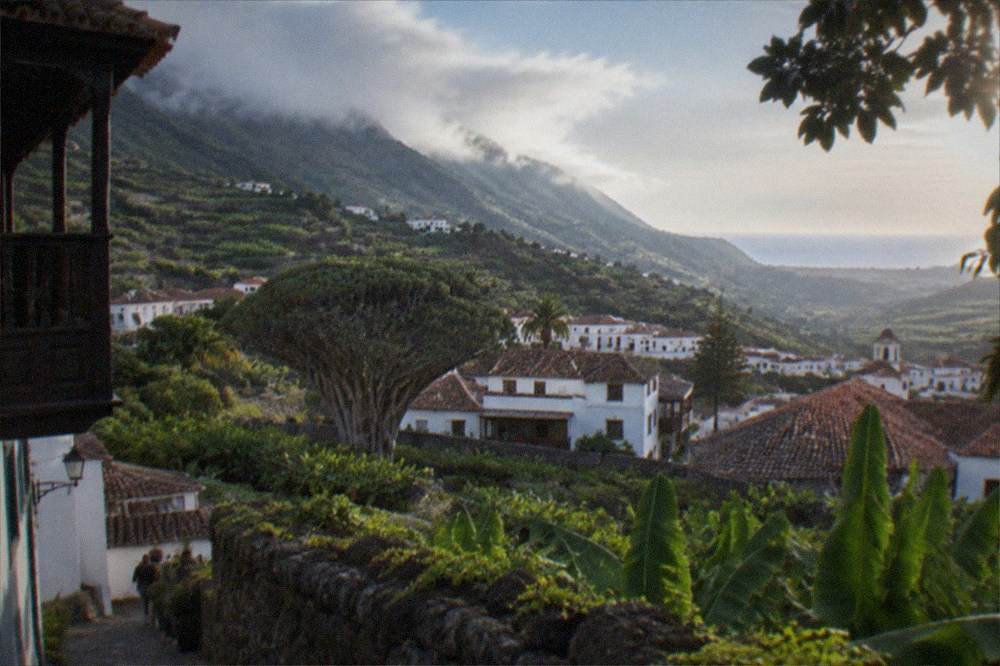
Icod de los Vinos sits on Tenerife's green north coast, under the slopes of the Teide National Park and above vineyards that give the town its name. In a park beside the church of San Marcos stands the tree the island treats as a living monument: the Drago Milenario, a dragon tree that Icod council says rises about 21 metres, with a trunk base about 17 metres round. Two official bodies give two different ages for it, which is itself the most honest thing a guide can tell you about this tree, and both figures are set out below exactly as their sources state them.
Where Is the Oldest Dragon Tree in Tenerife?
The oldest dragon tree in Tenerife is the Drago Milenario in the town of Icod de los Vinos, on the island's north coast. Icod council, which owns the tree's official heritage page, calls it the oldest and largest known of its species, attributes an age of approximately 1,000 years to it, and records that it was declared a National Monument in 1917.
The council's own heritage page is the primary source for the tree, and it is worth being precise about what that page actually claims. It gives the height as about 21 metres and the trunk base as about 17 metres round. It does not offer a precise birthday, and neither should any guide: the page says an age of approximately 1,000 years is "attributed" to the tree, which is a careful, hedged claim, not a measurement. Tree rings cannot settle the matter, because a dragon tree's trunk does not form them in the way a pine or an oak does.
The town around the tree is part of the visit. Icod de los Vinos is a working Canarian municipality of vineyards and wine houses, and the dragon tree stands at its historic centre, next to the church and the main square. The tourist board's own pages treat the tree as one of the island's headline sights, in the company of the pyramids of Güímar and the Los Gigantes cliffs.
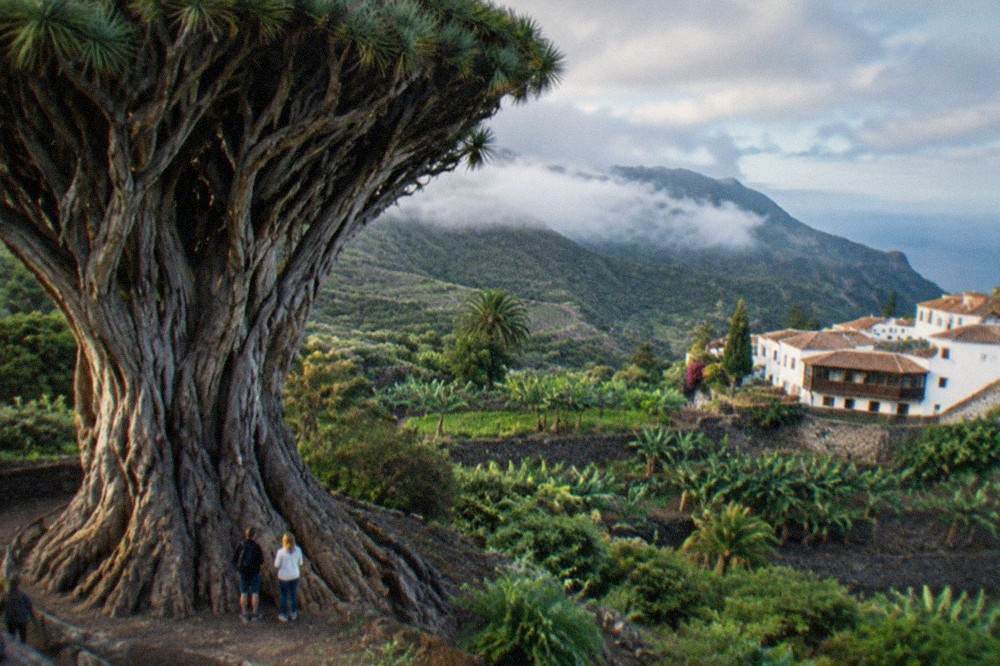
What the official record states, in one place:
| Fact | Official figure | Source |
|---|---|---|
| Height | About 21 m | Icod council heritage page |
| Trunk base circumference | About 17 m round | Icod council heritage page |
| Age, council's claim | Approximately 1,000 years "attributed" | Icod council heritage page |
| Age, tourist board's claim | "Over 800 years old" (estimate) | Turismo de Tenerife |
| Monument status | National Monument, 1917 | Icod council heritage page |
| Standing among its species | Called the oldest and largest known of its species | Icod council heritage page |
Where Is the Dragon Tree Located?
The Drago Milenario is located in the Parque del Drago, in the historic centre of Icod de los Vinos, a north-coast municipality of Tenerife roughly midway along the island's northern edge between Puerto de la Cruz and the Garachico peninsula. The tree stands beside the church of San Marcos, at the heart of the old town.
Icod de los Vinos is a municipality in its own right, one of Tenerife's 31, and its old town climbs a hillside inland from the sea. The dragon tree's position at the centre of it is the reason the town's name travels: ask for "dragon tree Tenerife" and the answer that comes back is this town, not a wild ravine or a botanic garden. The tree is fenced and viewed from paths around its base, which protects a root system that supports a crown the size of a small building.
The two official age claims deserve their own comparison, because most pages you will read print one and ignore the other:
| Source | Age claim | Exact wording on file |
|---|---|---|
| Icod council | About 1,000 years | "An age of approximately 1,000 years is attributed to it" |
| Turismo de Tenerife | Over 800 years | "Estimated to be over 800 years old" |
| This site's position | 800 to 1,000 years | An estimate, stated as an estimate, with both sources named |
Neither body claims certainty, and the disagreement between two official sources is not a scandal, it is how estimates work. What can be said without a hedge is the monument status: 1917, on the council's page. Any page that gives the tree a single confident age, whether 3,000 years or "several thousand", is repeating a number no official source states.
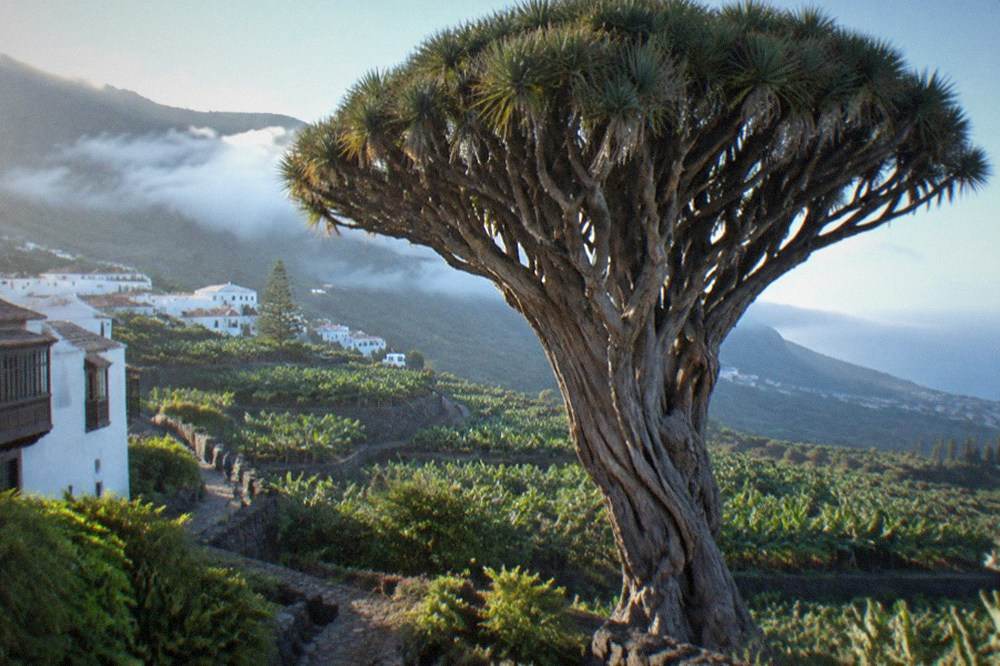
Getting to Icod under your own steam is one option; letting someone else handle the mountain roads is another. The tours below cover the north coast and the island loop.
Are There Dragon Trees on Tenerife?
Yes, dragon trees grow across Tenerife, but the Drago Milenario in Icod de los Vinos is the one the island's official bodies single out: Icod council calls it the oldest and largest known of its species. The tourist board's flora pages confirm the dragon tree as a signature plant of the island, and the Icod specimen is the one given National Monument status.
The dragon tree, Dracaena draco, is a Canarian native in the broadest sense: the tourist board carries it on its flora and fauna pages as a plant of the island, and the council's monument page treats the Icod tree as the exemplar of its kind. Younger specimens grow in parks and gardens across the island, including in Puerto de la Cruz, but no official page read by this desk ranks any other specimen by age or size, so none is ranked here.
What makes the Icod tree the destination rather than merely the oldest is the setting. The town wraps around it: church, square, wine houses, and the steep streets of a place that has grown up in the tree's shadow for centuries. A visit is a town visit, not a roadside photo stop, which is why the organised day tours that include Icod give it a proper block of time.
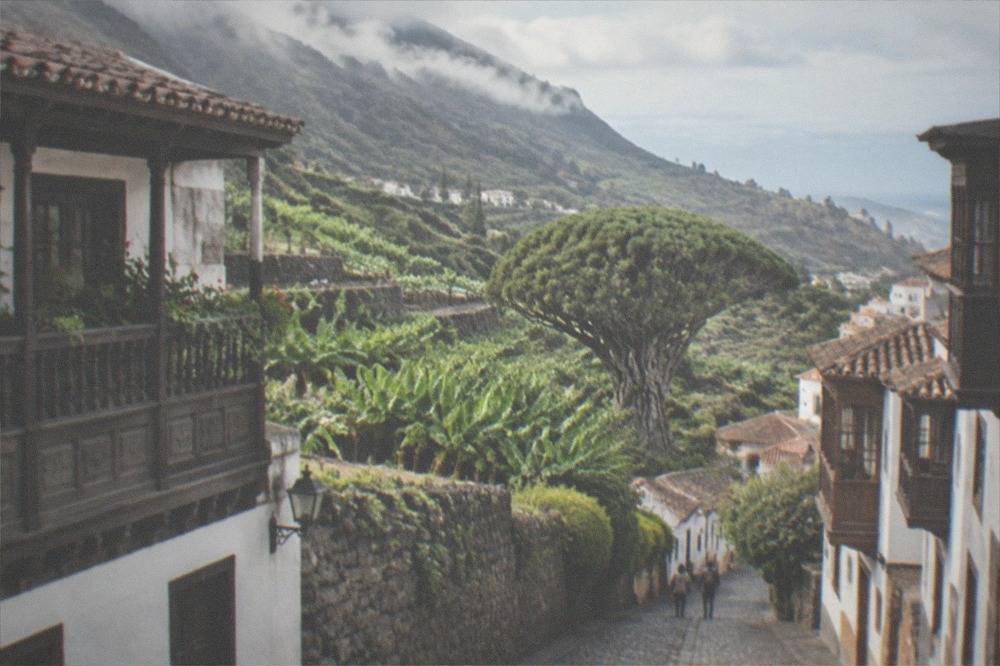
If the plan is a single day that takes in the tree and the rest of the north coast without any driving, a guided island loop is the straightforward answer.
How Do You Get to Icod de los Vinos?
The practical route for most visitors is by road from the motorway network of north Tenerife, or by TITSA bus. TITSA's own airport pages list lines 20, 30 and 343 at Tenerife North Airport, and the island's bus network serves the north coast towns including Icod. Visitors pay normal fares: single tickets, a EUR 10 day travelcard or a EUR 50 seven-day travelcard.
Two airports serve the island, and the north one is the closer base for this trip. AENA's names are Tenerife Sur (TFS) and Tenerife Norte-Ciudad de La Laguna (TFN); "Los Rodeos" is the familiar name for the northern airport, not its official title. From the north, the bus lines TITSA lists on its own airport pages are these:
| Airport | TITSA lines listed on TITSA's own page | Where they run |
|---|---|---|
| Tenerife North (TFN) | 20 | Santa Cruz via La Laguna |
| Tenerife North (TFN) | 30 | Puerto de la Cruz |
| Tenerife North (TFN) | 343 | Express to the south, Puerto de la Cruz to Los Cristianos |
| Tenerife South (TFS) | 10 | Santa Cruz |
| Tenerife South (TFS) | 40 | Costa Adeje bus station via Los Cristianos |
| Tenerife South (TFS) | 711 | Night bus, Santa Cruz, airport, Los Cristianos, Costa Adeje |
| Tenerife South (TFS) | 415 | El Fraile, San Isidro |
Line 343 is the useful one for a north-coast itinerary, because it links the two airports through Puerto de la Cruz. From there the TITSA network continues along the north coast. This desk does not invent line numbers: the lines above are the ones TITSA itself lists, and the rest of the journey should be planned on TITSA's own journey planner.
Fares are simple, and one persistent myth needs correcting: public transport on Tenerife is not free for visitors. The 2026 subsidy the Canary government announced covers resident passes only, held on a personalised Ten+ card that requires Canary Islands residency. Visitors pay the published products:
| Ticket | Price | Notes |
|---|---|---|
| Single ticket | Priced by route | Card or cash on board |
| Same-day return | 10% off | On trips of 20 km or more |
| Day Travelcard | EUR 10 | Sold at airport ticket machines |
| 7 Day Travelcard | EUR 50 | Sold at airport ticket machines |
| Ten+ card | EUR 2 | Top-ups EUR 2 to EUR 100 |
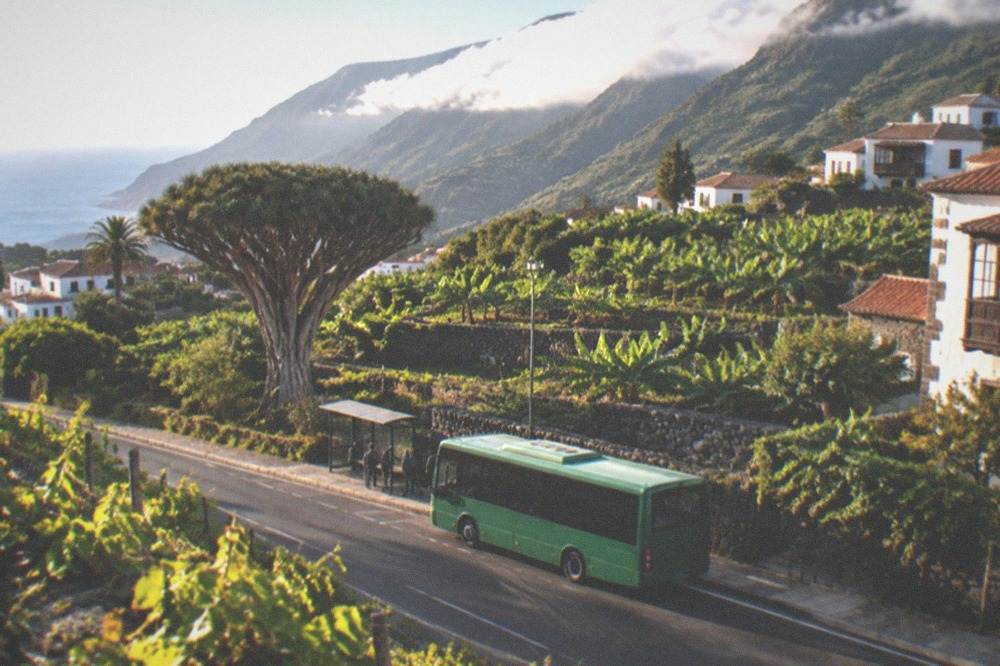
For a visitor based in the south, the honest arithmetic is that Icod is a long cross-island trip by bus, and a guided tour that includes the north coast is often the better use of a single day. The Masca, Garachico and Icod route is the classic loop, and it exists as a ready-made day trip for exactly this reason.
What Is Unusual About Dragon Trees?
Three things, on the official record: the Icod specimen's age is claimed differently by two official bodies, roughly 1,000 years by the council and over 800 by the tourist board, which is unusual honesty for a living monument; it has held National Monument status since 1917; and the council calls it the oldest and largest known of its species, a claim about standing rather than about any measured birthday.
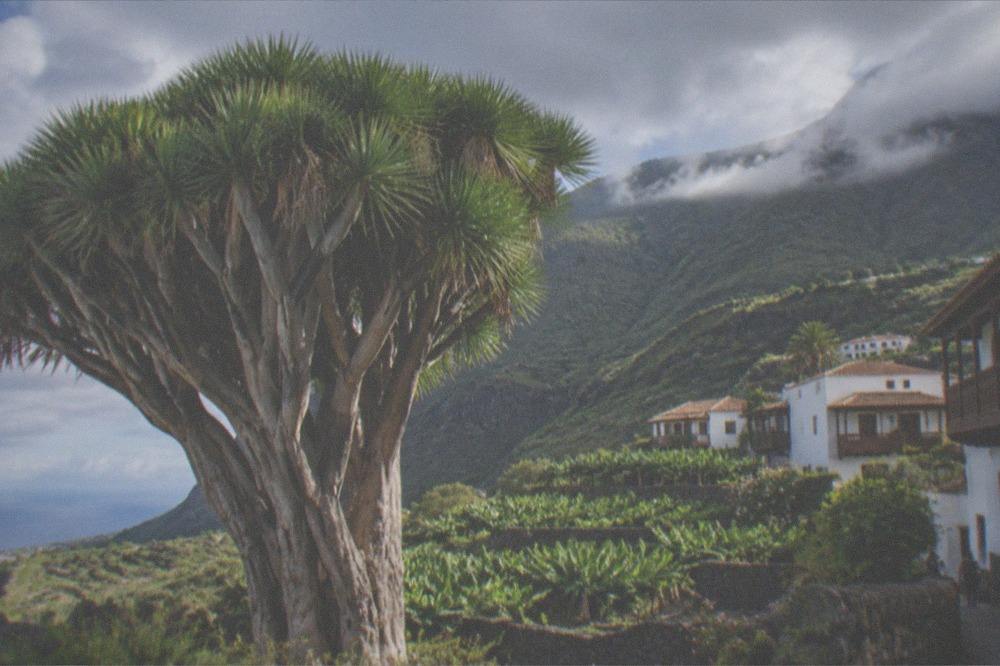
The first unusual thing is the tree itself. A dragon tree grows by stacking rosettes of blade-like leaves on a trunk that thickens from the base upward, which produces the swollen, contorted silhouette that makes old specimens look less like trees and more like monuments. The Icod tree's base, about 17 metres round, is the visual proof of centuries of that growth, whatever the exact count turns out to be.
The second unusual thing is the paper trail. Very few living trees anywhere have a national monument declaration from 1917 and two government bodies publicly disagreeing, gently, about their age. The council says approximately 1,000 years is attributed to the tree; the tourist board says over 800. Both are estimates. A guide that prints one figure as settled fact is overselling what any source actually knows.
The third is what the tree means to the town. Icod de los Vinos has built its identity around the specimen: the park, the viewing paths, the town's place on every north-coast itinerary. The tree is not an attraction the island tolerates, it is one the island's own institutions promote.
When Is the Best Time to Visit the Dragon Tree?
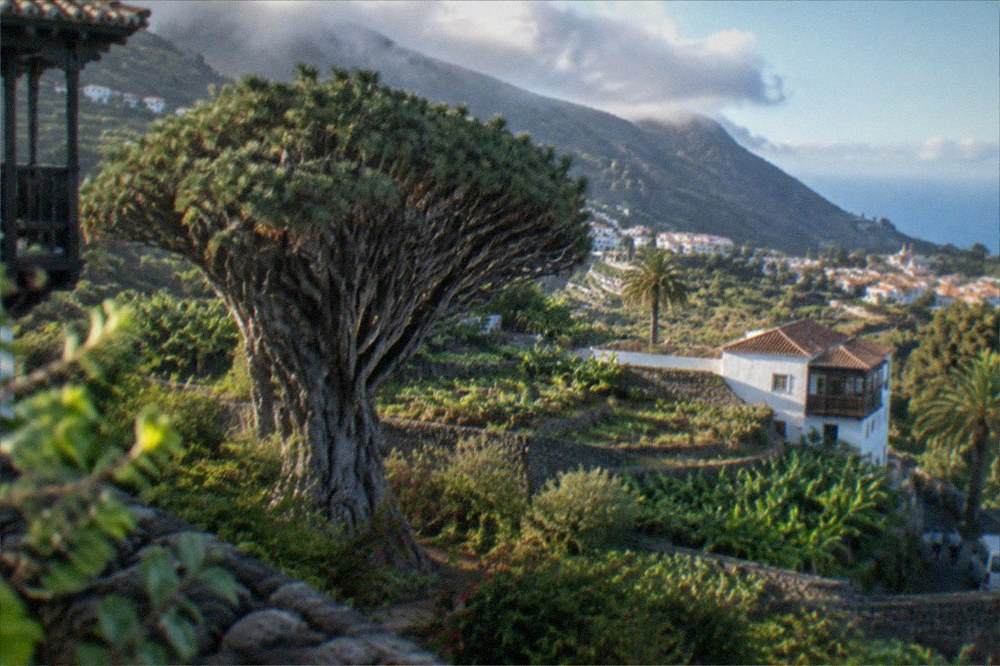
The north coast is green for a reason: AEMET's climate normals for Tenerife North Airport, at 632 m, record 80 mm of rain in January and 82 mm in December, against 5 mm in August, with mean daily maxima ranging from 16 Celsius in January to 25.7 in August. The driest, brightest window for a north-coast day trip is May to September, when monthly rainfall drops below 20 mm.
The contrast with the south of the island is stark and worth planning around. The same AEMET tables record an annual 132 mm of rain at Tenerife South Airport against 520 mm at the northern station, which is why the vineyards around Icod look the way they do and why the south looks like a beach holiday. A wet day in the north is not a ruined day, but the mountain viewpoints between Icod and the park lose their views in cloud, so the forecast matters more here than anywhere else on the island.
| Month | Mean daily max (C) | Mean daily min (C) | Rain (mm) | Sunshine (hours) |
|---|---|---|---|---|
| Jan | 16.0 | 10.2 | 80 | 150 |
| Feb | 16.7 | 10.0 | 70 | 168 |
| Mar | 18.2 | 10.7 | 61 | 188 |
| Apr | 18.5 | 10.9 | 39 | 202 |
| May | 20.1 | 12.0 | 19 | 234 |
| Jun | 22.2 | 14.0 | 11 | 237 |
| Jul | 24.7 | 15.7 | 6 | 262 |
| Aug | 25.7 | 16.6 | 5 | 269 |
| Sep | 24.9 | 16.5 | 16 | 213 |
| Oct | 22.5 | 15.2 | 47 | 194 |
| Nov | 19.6 | 13.3 | 81 | 155 |
| Dec | 17.1 | 11.5 | 82 | 137 |
These are AEMET's 1981 to 2010 normals for the station at Tenerife North Airport, published by Spain's state meteorological agency, and they describe the climate of the northern hills rather than the beach strip. Winter visitors should also know that ice and snow can appear on the high trails of the stratovolcano in the cold months, triggering a mandatory crampons-and-ice-axe rule on the Teide trails, though the dragon tree at sea level in Icod is of course unaffected.

How Do You Build a Day Around the Dragon Tree?
The classic north-coast loop pairs the Drago Milenario in Icod de los Vinos with the Garachico natural pools, the old port town buried by the 1706 eruption, and the viewpoints of the Teide National Park, in either direction along the TF-roads. Guided versions of this route run as full-day coach and jeep tours from the south, and the independent version is a straightforward drive or bus ride along the northern coast road.
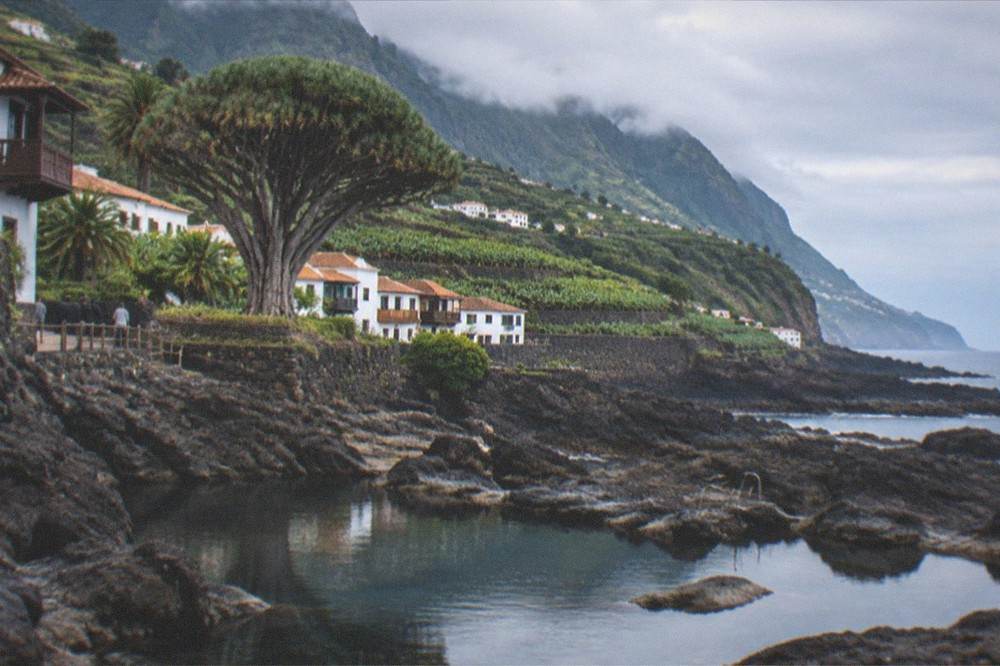
Garachico is the natural second stop, and its history is on the tourist board's own page: the Trevejo volcano erupted in 1706, destroyed almost the entire town and buried the old port, ending Garachico's run as the island's trade hub of the 16th and 17th centuries. Today the town's seafront rock pools are what draw visitors, and they sit a short drive along the coast from Icod. The full route, with Masca added, is described in this site's guide to the Masca, Garachico and Icod route.
Going with a guide changes the day. The tree itself needs no guide, but the roads between the north-coast towns are mountain roads, and a tour that folds Icod into a loop with a driver is the version of this day most visitors actually enjoy. The island tour below is the one this desk rates for the purpose, and the hike above Masca suits travellers who want the north's forests on foot instead.
For a different pace, the laurel-forest walk above Masca, in the hills above Santiago del Teide, pairs a guided hike with a picnic, and works as a second day for visitors basing themselves in the north.
Santa Cruz deserves its own half day rather than a rushed add-on, and a bike or e-bike tour of the capital is a way to cover its waterfront and old quarter quickly. The editorial desk behind Tenerife Travel Guide rates it as a good pairing with a north-coast morning, since the tram-linked capital sits on the east side of the island.
What Official Visitor Charges Exist on Tenerife?
No per-night tourist tax exists on Tenerife: no official page shows a lodging tax in force or approved. The charges that do exist are per-booking fees on specific reservation trails and sites, including EUR 15 for visitors on the 09:00 to 17:00 slots of the Teide summit trail since 19 January 2026, and the EUR 40.66 Masca gorge ticket, which does not include the boat.
The distinction matters because a lot of pages blur it. The dragon tree's park in Icod carries no entry charge on any official page this desk has read, and this site does not state an entry price or opening hours for it: check the council's own page before travelling. What the island does charge for, officially, is set out below, every figure exactly as its source states it.
| Charge | Visitor price | Who pays it | Source |
|---|---|---|---|
| Teide summit trail PNT 10, 09:00 to 17:00 slots | EUR 15 | Visitors; EUR 6 for other Canary residents; free for Tenerife residents and children | Tenerife ON |
| Teide trail PNT 07 Montana Blanca, 09:00 to 17:00 | EUR 6 working days, EUR 10 weekends and holidays | Visitors; reduced rates for Canary residents | Tenerife ON |
| Masca gorge descent | EUR 40.66, boat not included | Visitors; free for Tenerife residents | caminobarrancodemasca.com |
| Barranco del Infierno | EUR 15 | Non-resident adults; EUR 5 Canary residents | barrancodelinfierno.es |
| Cable car return ticket | EUR 42.00 adult, EUR 21 child aged 3 to 13 | Non-residents, shown as "price from" | The cable car operator |
None of these is a tax on staying, and none applies to the dragon tree, the beaches or the drive through the national park. The Teide trail fees are booked on Tenerife ON, with a new week of slots released every Monday at 07:00 Canary time so that 56 days stay bookable; the Masca ticket is booked on the gorge's own site, not Tenerife ON.
Common Questions About the Icod Dragon Tree
Where is the oldest dragon tree in Tenerife?
In the Parque del Drago in Icod de los Vinos, on the island's north coast. Icod council's heritage page calls it the oldest and largest known of its species, attributes an age of approximately 1,000 years to it, and records its declaration as a National Monument in 1917.
What are dragon trees good for?
On the official record, the Icod dragon tree's value is as a monument and an emblem: a National Monument since 1917, promoted by both the council and the tourist board as one of the island's headline sights. The historical uses of dragon trees, including the resin once known as dragon's blood, are not recorded on the official pages this desk has read, so they are not stated here.
Are there dragon trees on Tenerife?
Yes. The tourist board carries the dragon tree on its flora and fauna pages as a plant of the island, and younger specimens grow in parks and gardens across Tenerife. The Icod specimen is the one official bodies single out by age, size and monument status.
What are the common problems with dragon trees?
The official pages read for this article do not list pests, diseases or cultivation problems for the species, so this desk does not state any. Gardeners' questions on the subject are best answered by a horticultural source; what is on file concerns the Icod monument, not the care of dragon trees in general.
What is unusual about dragon trees?
Two official bodies give the Icod tree different ages, roughly 1,000 years attributed by the council and over 800 years estimated by the tourist board, which is rare candour for a living monument. Its trunk thickens from the base rather than adding conventional rings, so no precise age can be counted, and the council still calls it the oldest and largest known of its species.
Can you visit the dragon tree and Garachico on the same day?
Yes, and it is the classic pairing. Garachico's seafront lies along the same north coast, and its history is on the tourist board's own page: the Trevejo volcano erupted in 1706, destroyed almost the entire town and buried its old port. Guided full-day tours run the loop from the south, and the independent version is a drive or bus ride along the northern coast road.