Icod De Los Vinos
Icod de los Vinos sits on Tenerife's green north coast, and its plaza holds a tree that two official sources date differently. This page reports what the council, the tourist board and the transport operator actually say.
Short answer
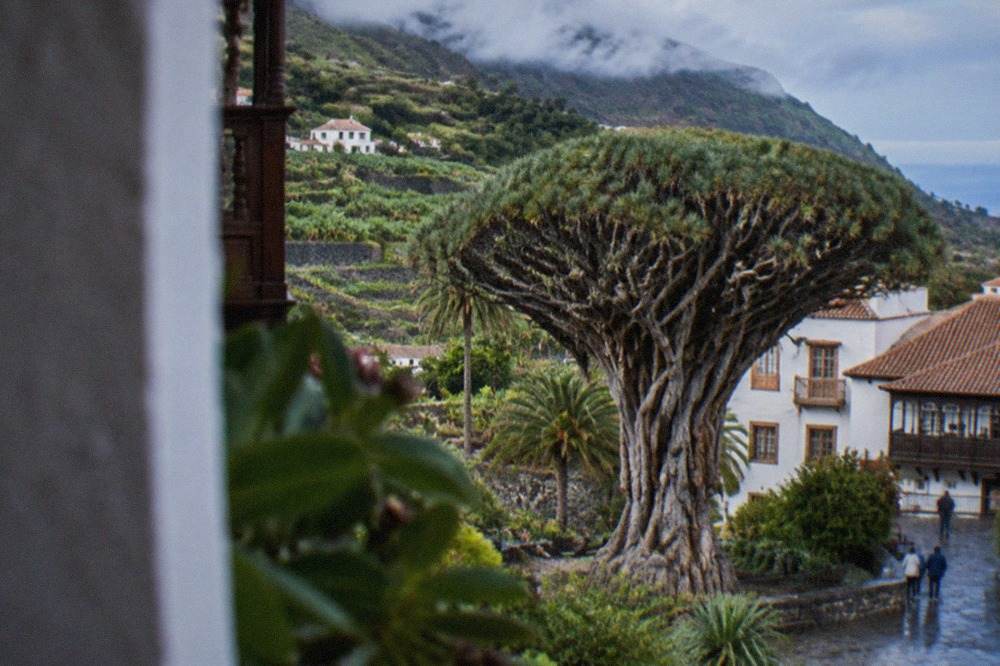
Icod de los Vinos is a wine town on Tenerife's north coast, best known for the Drago Milenario, a dragon tree that official sources estimate at 800 to 1,000 years old. It is reachable by TITSA bus and works as a half-day stop on a north-coast loop.
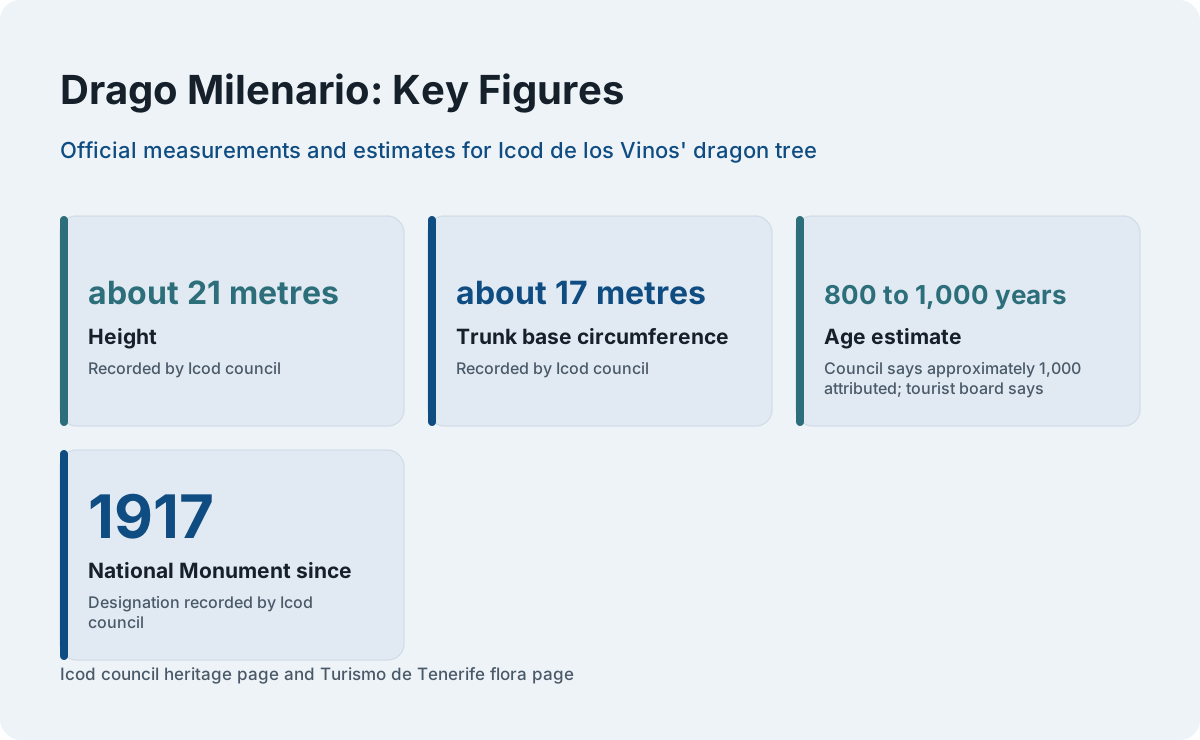
Icod de los Vinos is a municipality of about 12,600 people on Tenerife's north coast, according to the municipal register figures compiled by Spain's national statistics office, and its name announces the two things that made it: the town and its vines. The council's own heritage page records the Drago Milenario as a National Monument since 1917, standing about 21 metres tall with a trunk base about 17 metres round. That single tree draws most of the visitors who come up from the southern resorts, and it is the reason this town appears on nearly every north-coach itinerary on the island. What follows is what the official sources say about the tree, the town, the buses that reach it and the weather to expect, assembled by the editorial desk behind this Tenerife Travel Guide because a lot of what circulates about the Drago is not supported by any official page.
What Is Icod de los Vinos Known For?
Icod de los Vinos is known for two things above all: the Drago Milenario, a dragon tree the council calls the oldest and largest known of its species, and the wine tradition that gives the town its name. It sits on Tenerife's humid north coast, inland from the sea, and works as the standard half-day stop on any tour of the island's north.
The vineyards came first in the town's economy and remain in its name. The municipal register lists Icod de los Vinos among Tenerife's 31 municipalities, with a population of about 12,582 people, a figure that makes it a modest country town rather than a resort. The tourist economy of the island is concentrated elsewhere: the tourist board's 2025 balance counts 5,451,268 tourists lodged in hotels and apartments across the island, with the UK the largest source market at 2,057,896 lodged guests, and most of that demand sits along the south coast between Costa Adeje and Los Cristianos. Icod receives a different kind of visitor, the day-tripper coming north on a loop that usually takes in Teide National Park and Garachico as well.
The town's position matters for planning. It sits high enough above the coast that its climate is closer to the island's northern hill country than to the beaches, and the road network ties it to Puerto de la Cruz to the east and Garachico to the west. Visitors who base themselves in Puerto de la Cruz reach it most easily; visitors coming from the south should expect a substantial drive each way, which is why the organised coach loops are popular.
How Old Is the Drago Milenario Really?
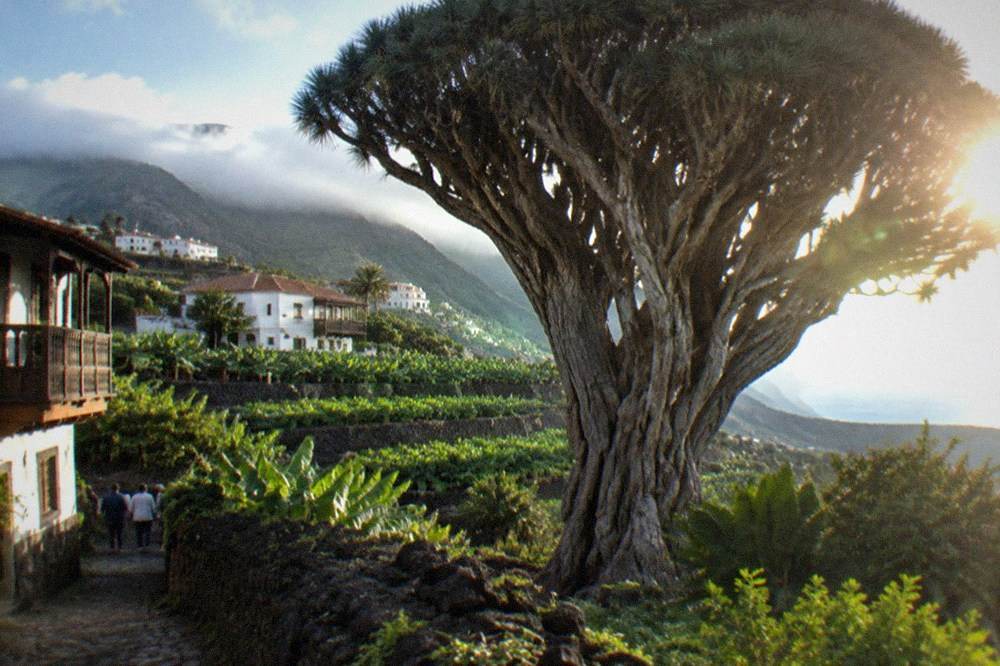
The honest answer is an estimate, and two official sources give different ones. Icod council says an age of approximately 1,000 years is attributed to the tree; the Tenerife tourist board says it is estimated to be over 800 years old. This site reports both, as 800 to 1,000 years, and treats the figure as an estimate rather than a measured fact.
The council's heritage page is the primary source for everything physical about the tree. It records the 1917 National Monument designation, the height of about 21 metres, the trunk base of about 17 metres round, and the attribution of roughly a millennium. The tourist board's flora page is more conservative. Neither page states an entry price or opening hours for the park around the tree, and this site does not invent them: anyone planning a visit should check the current arrangements on the official pages before setting out, because the verified facts on file do not include them.
Plenty of older guides repeat much larger numbers. Claims of three thousand years, or "over 2,000", circulate widely and appear on no official page this project has read. Dragon trees are notoriously hard to date because their wood does not form conventional annual rings, which is why both official sources hedge with "attributed" and "estimated". A visitor who repeats the thousand-year figure is repeating the council's own claim, which is the strongest attribution available.
| Claim | Figure | Official source |
|---|---|---|
| Designation | National Monument since 1917 | Icod council |
| Height | About 21 m | Icod council |
| Trunk base | About 17 m round | Icod council |
| Age, council's wording | Approximately 1,000 years "attributed" | Icod council |
| Age, tourist board's wording | "Over 800 years", estimated | Turismo de Tenerife |
| Standing | Called the oldest and largest known of its species | Icod council |
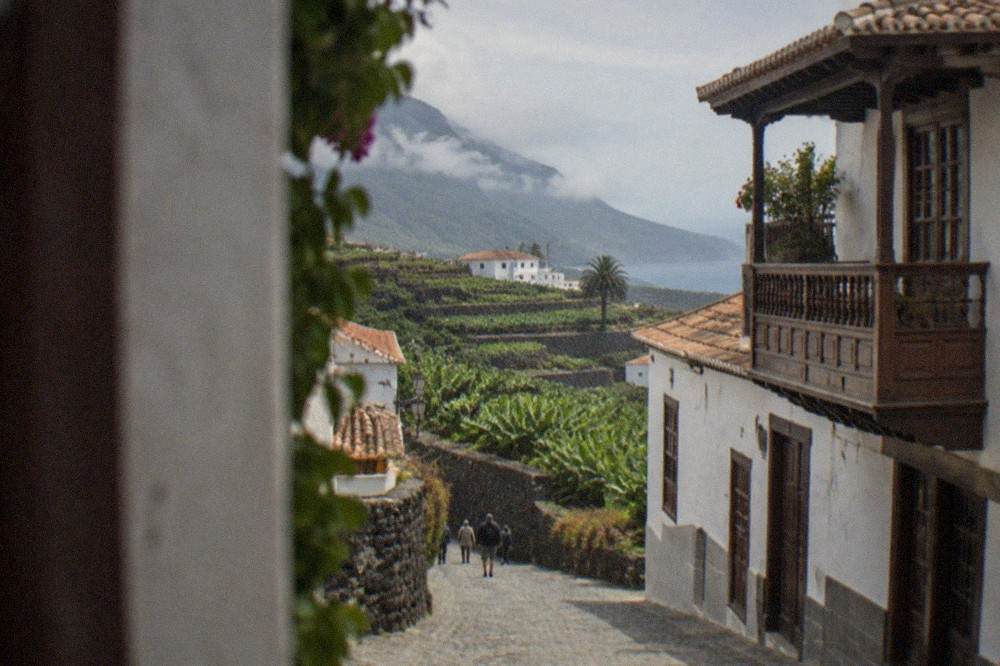
The tree's full story, including how it compares with the island's other dragon trees, sits on the Icod dragon tree page. The plaza around it is the town's focal point, and the council's own description treats the tree as the anchor of the heritage quarter. Visitors with mobility in mind should note that the town sits on a hillside, as the layout of any Canarian hill town does, and the plaza is the natural orientation point from which everything else is found.
How Do You Get to Icod de los Vinos Without a Car?
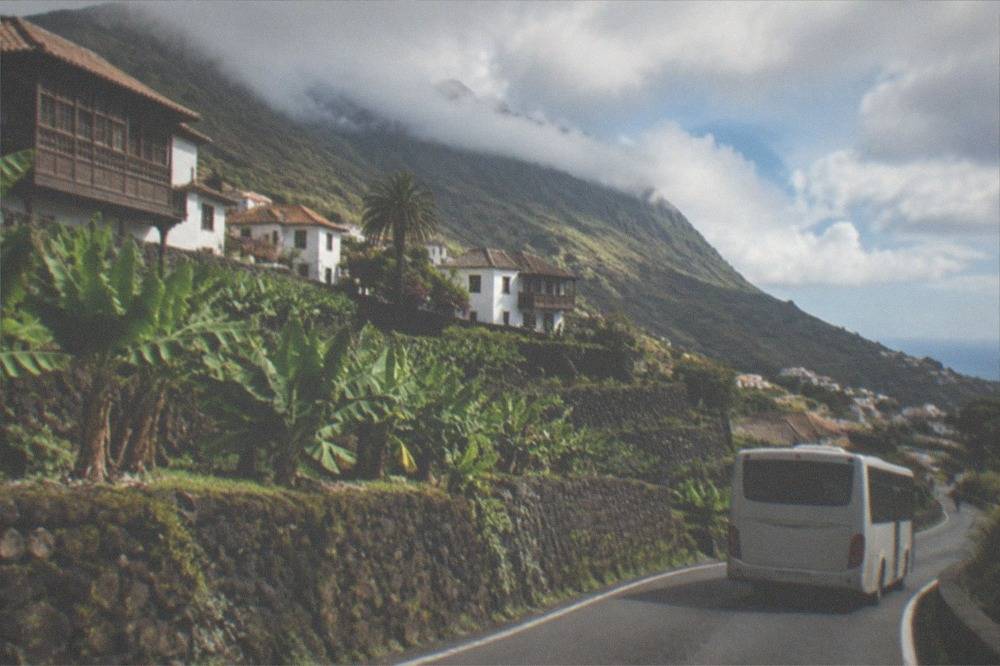
There is no airport in Icod and no rail line anywhere on Tenerife, so the bus network is the car-free answer. TITSA, the island operator, lists lines 20, 30 and 343 at Tenerife North Airport and lines 10, 40, 711, 343 and 415 at Tenerife South Airport, and visitors pay for their tickets: single fares, a EUR 10 day travelcard or a EUR 50 seven-day travelcard.
The airport lines are the verified backbone of any bus plan, and the table below reproduces exactly what TITSA's own airport pages state. Line 343 is the express that connects Puerto de la Cruz with Los Cristianos via both airports, which makes it the one route that serves a north-coast itinerary from either arrival point. The 2026 free-transport subsidy that the Canary government announced applies to resident passes only, held on a personalised Ten+ card by people resident in the Canary Islands, so visitors should plan on paying.
| Airport | TITSA lines, per the operator's own pages | Destinations listed |
|---|---|---|
| Tenerife North (TFN) | 20 | Santa Cruz via La Laguna |
| Tenerife North (TFN) | 30 | Puerto de la Cruz |
| Tenerife North (TFN) | 343 | Express to the south |
| Tenerife South (TFS) | 10 | Santa Cruz |
| Tenerife South (TFS) | 40 | Costa Adeje bus station via Los Cristianos |
| Tenerife South (TFS) | 711 | Night bus: Santa Cruz, airport, Los Cristianos, Costa Adeje |
| Tenerife South (TFS) | 343 | Express: Puerto de la Cruz to Los Cristianos via both airports |
| Tenerife South (TFS) | 415 | El Fraile, San Isidro |
TITSA's fares page gives the visitor products plainly: the day travelcard at EUR 10, the seven-day travelcard at EUR 50, and the Ten+ card itself at EUR 2, with wallet top-ups from EUR 2 to EUR 100, sold at the airport ticket machines. A same-day return carries a 10% discount on trips of 20 km or more, which the operator's fares page states as a standing rule. The tram, which Metrotenerife runs between Santa Cruz and La Laguna, does not serve either airport and does not reach Icod, so it has no place in a plan for this town; the fares page for the tram lists its single fare at EUR 1.35 on a transit pass, but that is relevant only to the two cities it links.
For most visitors the practical choice is between the bus network and an organised day that includes Icod in a wider loop. The bus rewards patience and costs the least; the organised day rewards time. If the second option appeals, the tours below are the verified products that fit a north-coast plan, and their live listings carry the current prices and availability.
The three cards above span the two ways most visitors fold Icod into a holiday: a shore excursion built around the north-coast trio of Teide, Icod and Garachico, a boat trip from the west coast, and the twin-park ticket that pairs Loro Parque in Puerto de la Cruz with Siam Park in the south. Each card prints its own live price, and this site never quotes one in prose.
What Can You See in Icod de los Vinos in Half a Day?
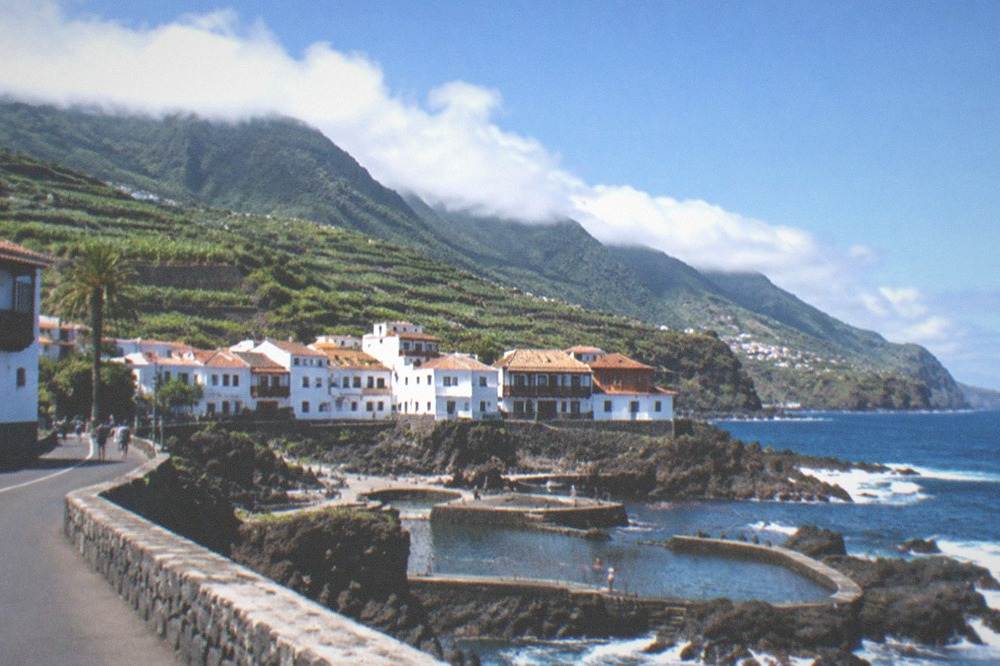
A half-day in Icod de los Vinos centres on the Drago Milenario and the plaza around it, followed by the old town's streets and, on a longer loop, the drive west to Garachico, whose old port the tourist board records as buried by the 1706 eruption of the Trevejo volcano. The town itself is compact enough that the tree, the plaza and the surrounding streets fill a morning without a vehicle.
The council's heritage listing makes the tree the anchor, and the tourist board's page on Garachico supplies the historical pairing that most itineraries add. Garachico had been the island's trade hub in the 16th and 17th centuries, the board records, until the 1706 eruption destroyed almost the entire town and buried the old port. That single sentence is the verified history on file, and it is what makes the short coastal hop from Icod to Garachico feel like a story rather than a drive. Visitors should not expect a museum town: Garachico is a living town whose natural pools sit below the old quarter, and the drive between the two towns passes through some of the island's most planted landscape.
Inside Icod, the practical half-day shape is simple. The plaza and the tree come first, because the tree is the reason the coach stops here. The surrounding streets carry the town's traditional architecture, and the wine tradition that names the place is visible in the shops and bars of the centre. Anyone who wants the craft heritage of the island's north can continue to Casa de los Balcones, the preserved 17th-century house that is the standard stop for Canarian woodwork, on a route that continues east toward La Orotava and La Laguna.
The box above routes to the small-group shore excursion that covers Teide, Icod and Garachico from Santa Cruz, a product that fits cruise passengers especially well, since the cruise port in Santa Cruz is where those passengers come ashore. The tour's live listing carries its current price and departure details.
For visitors staying a full week, the fuller coach loop is the other strong fit: a nine-hour tour that takes in Teide National Park, Masca, Icod and Garachico in one day, which is the most efficient way to see all four if driving is not on the agenda.
That card prints its own live price and rating. The same operator family also runs a whole-island tour with a northern focus for visitors who want the loop without the Masca element.
Is Icod de los Vinos Worth Visiting?
Yes, for two kinds of traveller. It is worth visiting for anyone who wants the Drago Milenario, the single most famous living thing on Tenerife and a National Monument since 1917, and for anyone touring the north coast anyway, since Icod sits directly on the route between Teide National Park and Garachico. Visitors seeking beaches or nightlife should stay south, because Icod offers neither.
The honest framing is that Icod is a stop, not a resort. The tourist board's own beach pages place the island's headline sand elsewhere: golden sand at Las Teresitas near Santa Cruz and at Las Vistas in Arona, grey sand at El Duque in Costa Adeje. Nothing in the verified facts describes a headline beach at Icod. What the town offers instead is the tree, the wine country around it and a position that makes it the natural midday stop on the classic north loop.
The tree justifies the stop on its own, and the council's claim that it is the oldest and largest known of its species is the strongest official statement any Canarian attraction can make. A visitor who arrives with the age figure handled honestly, as an estimate of 800 to 1,000 years rather than a settled number, leaves with a genuine piece of the island's natural heritage. The town around it is unhurried, and the tourist board's 2025 figures, which record 7,561,659 tourists visiting Tenerife in total, are a reminder of how unevenly that demand spreads: the north coast towns see day visitors, while the south holds the overnight weight.
The card above is the small-group excursion that pairs Icod with Teide and Garachico, and its listing carries the live price and availability for anyone who would rather not drive the loop.
What Is the Weather Like in Icod de los Vinos?
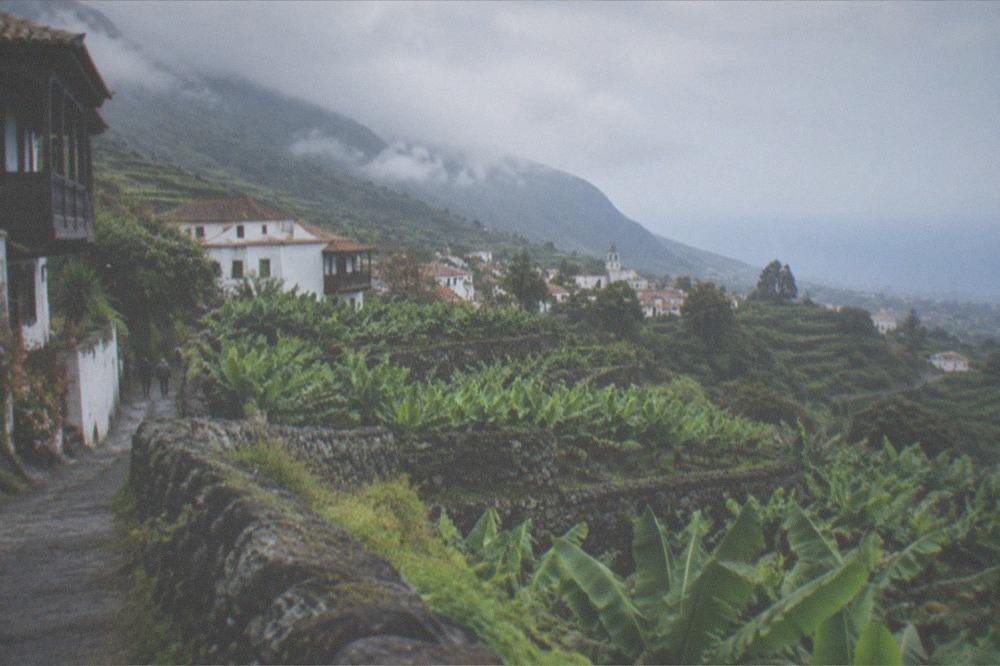
Icod sits on the humid north of the island, and the nearest long-run station in the verified climate record is Tenerife North Airport at 632 m, which AEMET's 1981-2010 normals give as mild and wet by Canarian standards: mean daily maxima from 16 Celsius in January to 25.7 in August, and 520 mm of rain across the year on 64 days with 1 mm or more. The south coast is markedly drier.
The contrast is the planning point. AEMET's normals for Tenerife South Airport record 132 mm of rain across the year on 15.2 qualifying days, roughly a quarter of the northern figure, while Santa Cruz at sea level sits between the two at 226 mm. Icod, being on the windward north, belongs with the wetter regime, which is precisely why the vines thrive there and why the landscape is green. The table below gives the northern station's monthly normals, which a visitor can read as a fair guide to the hill country around Icod.
| Month | Mean daily max (C) | Mean daily min (C) | Rain (mm) | Days with 1 mm or more | Sunshine hours |
|---|---|---|---|---|---|
| Jan | 16.0 | 10.2 | 80 | 7.7 | 150 |
| Feb | 16.7 | 10.0 | 70 | 7.4 | 168 |
| Mar | 18.2 | 10.7 | 61 | 6.8 | 188 |
| Apr | 18.5 | 10.9 | 39 | 6.2 | 202 |
| May | 20.1 | 12.0 | 19 | 3.8 | 234 |
| Jun | 22.2 | 14.0 | 11 | 2.4 | 237 |
| Jul | 24.7 | 15.7 | 6 | 1.7 | 262 |
| Aug | 25.7 | 16.6 | 5 | 1.1 | 269 |
| Sep | 24.9 | 16.5 | 16 | 2.8 | 213 |
| Oct | 22.5 | 15.2 | 47 | 6.5 | 194 |
| Nov | 19.6 | 13.3 | 81 | 8.3 | 155 |
| Dec | 17.1 | 11.5 | 82 | 8.8 | 137 |
These are AEMET's 1981-2010 normals for the station at Tenerife North Airport, published by the state meteorological agency, and they describe the northern hill country rather than the coast itself. The sea tells a different story: NOAA's 1991-2020 record for the sea surface off Tenerife's south coast runs from 19.1 Celsius in March to 23.7 in September and October, warm enough for swimming year-round regardless of what the air is doing. Two datasets, two periods, and a visitor planning a north-coast day should pack for the air, not the sea.
Rain on the north coast is a feature, not a fault. The same rainfall that fills AEMET's November and December rows is what keeps the vineyards and the laurel landscapes green, and a cloudy morning in Icod often sits beside a sunny afternoon on the south coast, because the trade clouds pile against the northern slopes. Anyone walking the higher trails, including the Teide routes, should check the alerts on Tenerife ON before setting out, since bookings there can be suspended for fire risk or weather alerts.
Where Should You Stay to Visit Icod de los Vinos?
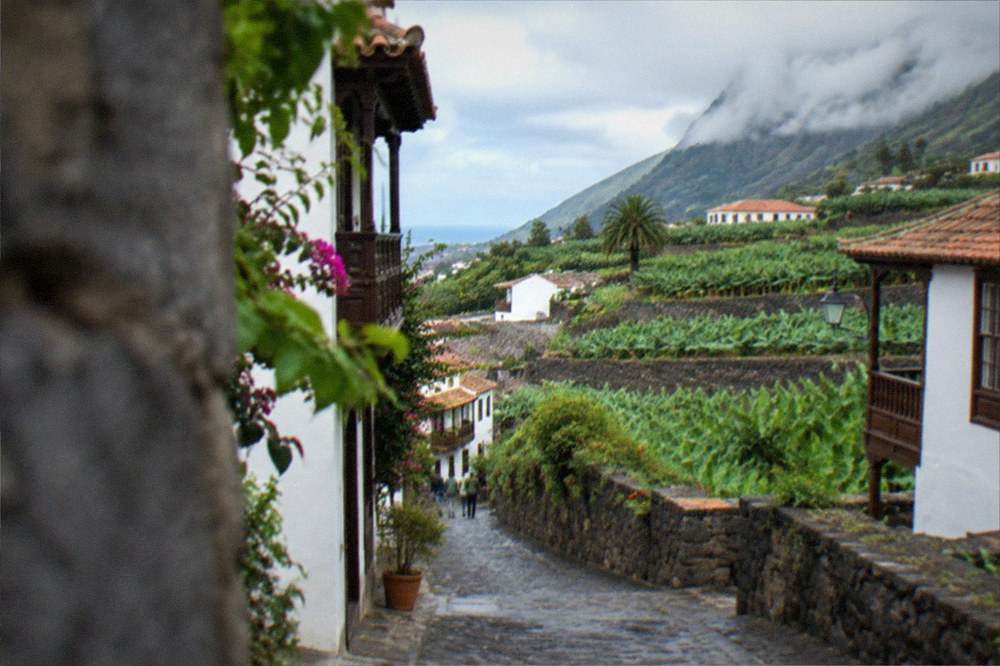
Puerto de la Cruz is the practical base for a north-coast plan that includes Icod, because TITSA's own airport pages route line 30 and the 343 express through it, and the town is the north's established resort. Visitors who prefer the south's beaches can still reach Icod, but the drive each way is long enough that an organised day tour usually serves them better.
Puerto de la Cruz holds the north's hotel weight, and its position between Santa Cruz and Icod makes it the natural base for anyone whose holiday centres on the Drago, Garachico and Teide rather than on sand. The town's own attractions, including Loro Parque with its 09:30 to 17:30 opening hours every day of the year and its own car park at EUR 7 per day, sit within the same northern loop. Visitors weighing the two bases can read the Los Gigantes page for the west-coast alternative, though that area serves the cliffs and the boat trips more than the vine country.
For anyone booking a northern stay, the options below carry live availability.
Find places to stay in northern Tenerife
The link above opens the live listings for island accommodation, and this site never quotes a nightly rate, because hotel prices move daily and no figure on file can be re-checked at the moment a reader acts on it. What drives the cost instead is the season, the proximity to the coast and how early the booking is made, with the island's demand peaking in the months the FRONTUR air-arrival series shows as busiest: in 2025, 643,460 tourists arrived by air in January and 671,202 in December, against a softer 539,410 in May.
What Official Charges Should a Visitor to the North Expect?
Tenerife has no per-night tourist tax, and no official page this project has read shows one in force or approved. The charges that do exist are per-booking fees on specific sites: EUR 15 for visitors on the 09:00 to 17:00 slots of the Teide summit trail PNT 10 since 19 January 2026, EUR 6 to EUR 10 on the Montana Blanca trail depending on the day, EUR 40.66 for the Masca gorge descent, and EUR 15 for Barranco del Infierno.
None of these touches Icod itself, but most itineraries that reach Icod also reach at least one of them, so the table below sets out the verified figures in one place. The Teide summit permit is booked on Tenerife ON, the Cabildo's platform, with a new week of slots released every Monday at 07:00 Canary time so that 56 days stay bookable; the old national parks booking page no longer takes Teide bookings and directs users to Tenerife ON instead. Masca is booked separately, at caminobarrancodemasca.com, and requires arrival on TITSA line 355 from Santiago del Teide.
| Charge | Visitor figure | Who pays less | Booking route |
|---|---|---|---|
| Teide summit trail PNT 10, 09:00 to 17:00 slots | EUR 15 | Other Canary residents EUR 6; Tenerife residents and children exempt | Tenerife ON |
| Teide trail PNT 07, Montana Blanca, working days | EUR 6 | Other Canary residents EUR 3; Tenerife residents EUR 0 | Tenerife ON |
| Teide trail PNT 07, weekends and public holidays | EUR 10 | Other Canary residents EUR 5; Tenerife residents EUR 0 | Tenerife ON |
| Masca gorge descent | EUR 40.66, boat not included | Tenerife residents free; reduced rates for Canary residents and under-18s | caminobarrancodemasca.com |
| Barranco del Infierno | EUR 15 | Canary residents EUR 5 | Advance online booking compulsory |
The cable car is a separate purchase again, an operator ticket rather than a public fee: the operator's 2026 price page lists the non-resident return at EUR 42.00 for adults and EUR 21.00 for children aged 3 to 13, shown as a price from, with resident rates far lower. The cable car stops at La Rambleta at 3,555 m and does not reach the summit; the crater trail is the separate permit-only route described above. Visitors combining a Teide morning with an Icod afternoon should also note the operator's access rules, which refuse the cable car to people with cardiovascular conditions, pregnant women and children under 3.
Smoking is banned across every open-air space of Teide National Park, car parks included, under the Cabildo's wildfire measure, so the stop at the viewpoints belongs to non-smokers for the duration. And the sales tax on the island is IGIC, not VAT, with the tax agency's table showing 7% on everyday goods; non-resident travellers can claim IGIC back through the form 403 process. None of this dampens a north-coast day, but knowing it prevents surprises at the checkpoint and the till.
The chart below gathers the headline numbers a visitor to Icod and the north actually plans around.
Common Questions About Icod De Los Vinos
Is Icod de los Vinos worth visiting?
Yes, for visitors touring Tenerife's north coast. The Drago Milenario, a National Monument since 1917 and the tree the council calls the oldest and largest known of its species, is the strongest single reason to go, and the town sits directly on the route between Teide National Park and Garachico. Visitors whose holiday centres on beaches and nightlife will find the south coast a better fit.
How old is the Drago Milenario?
Official sources give an estimate, not a measurement. Icod council says an age of approximately 1,000 years is attributed to the tree; the Tenerife tourist board says it is estimated to be over 800 years old. This site reports the range 800 to 1,000 years and treats any larger figure, such as claims of three thousand years, as unsupported by any official page.
Can you reach Icod de los Vinos by public transport?
Yes, by TITSA bus. The operator's airport pages list lines 20, 30 and 343 at Tenerife North Airport and lines 10, 40, 711, 343 and 415 at Tenerife South Airport, and visitors pay for their tickets: single fares, a EUR 10 day travelcard or a EUR 50 seven-day travelcard. The 2026 free-transport subsidy applies to resident passes only.
Is there an entry fee for the Drago Milenario park?
No verified source states an entry price or opening hours for the park, so this site does not print either. Check the council's official pages for current arrangements before visiting. What is verified is the tree itself: about 21 m tall, a trunk base about 17 m round, and a National Monument since 1917.
What else is near Icod de los Vinos?
Garachico, a short drive west, whose old port the tourist board records as buried by the 1706 eruption of the Trevejo volcano after the town had served as the island's trade hub in the 16th and 17th centuries. Puerto de la Cruz lies east, and Teide National Park sits above both, which is why the standard north-coach loop takes in all three in a day.
Does Tenerife charge a tourist tax that affects a stay in Icod?
No official page read shows a per-night lodging tax in force or approved on Tenerife. The charges that do exist are per-booking fees on specific sites: the Teide trail fees, the Masca ticket and the Barranco del Infierno ticket, none of which applies to the town of Icod itself.