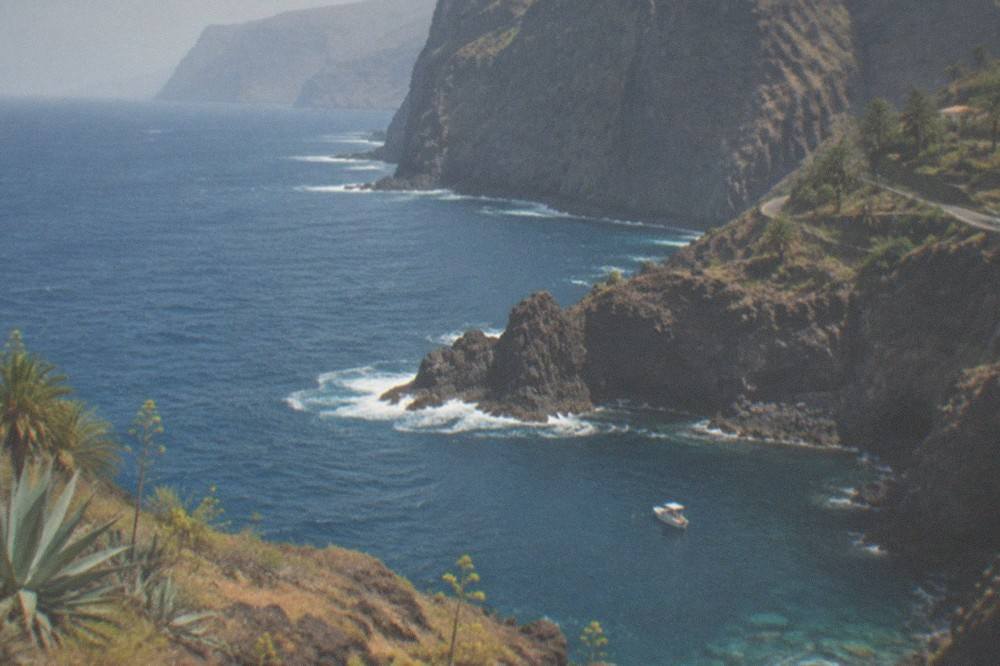
Los Gigantes
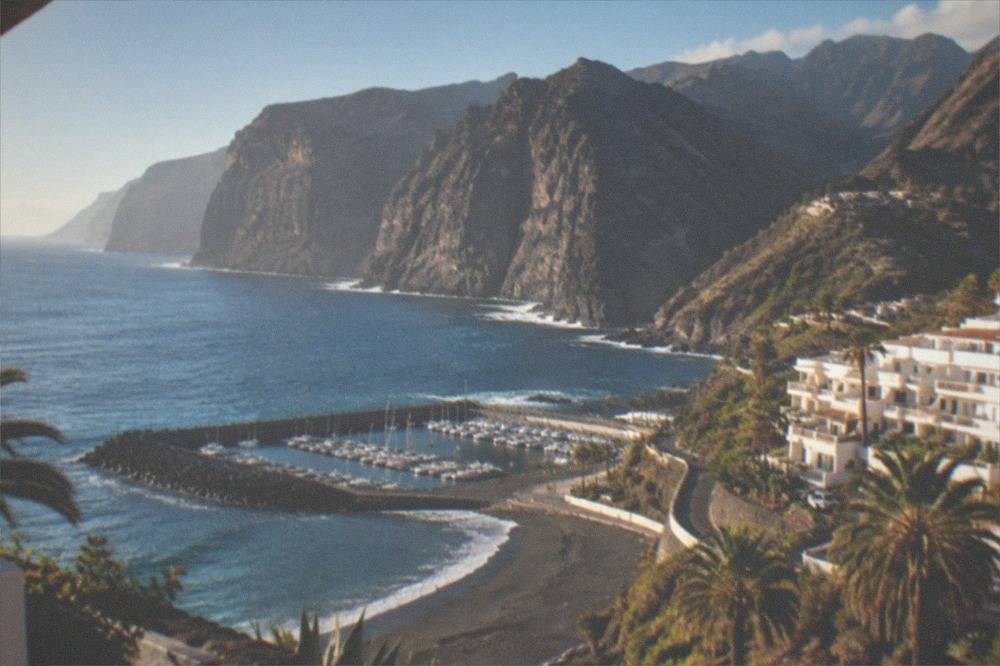
The cliffs of Los Gigantes rise up to 600 m out of the sea on Tenerife's northwest coast, and the small resort town beneath them is the base for boat trips, whale watching and the Masca gorge boat exit.
Short answer
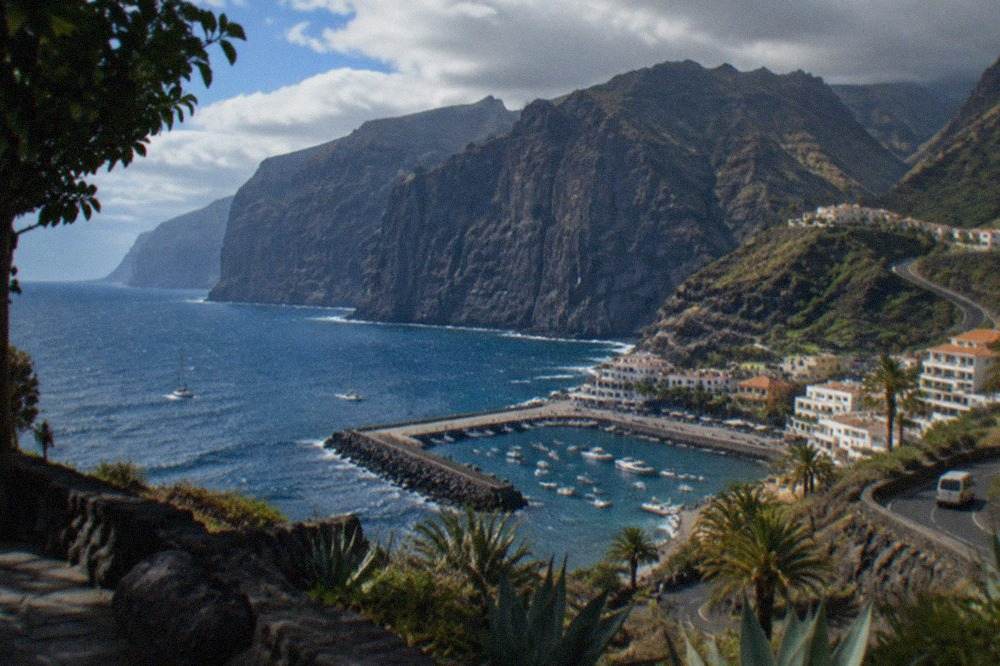
Los Gigantes is a small resort on Tenerife's west coast beneath cliffs that Turismo de Tenerife says tower up to 600 m high. It is the departure point for whale watching cruises to the foot of the cliffs and the boat exit from the Masca gorge.
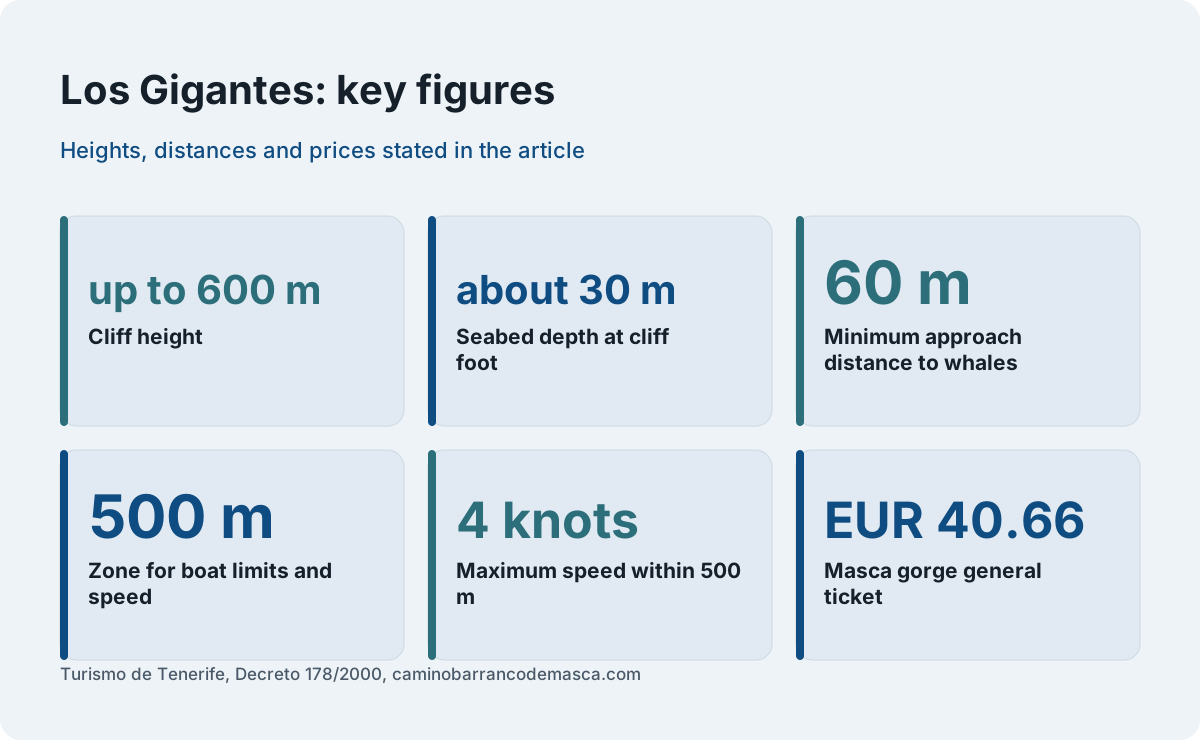
The tourist board's own page for the Los Gigantes cliffs describes rock walls that "tower up to 600 m (1,970 ft) high", with a seabed about 30 m deep at their foot, inside Teno Rural Park. That single sentence separates Los Gigantes from every other resort on the island: the town itself is small and quiet, a marina, a black-sand beach and a low-rise sprawl of apartments in the municipality of Santiago del Teide, but the setting is the most vertical on Tenerife. This page sets out what is verified about the cliffs, the boat trips that leave from the harbour, the whale watching rules that govern every cruise, the Masca gorge boat exit that finishes at the neighbouring bay, and the practical questions of getting there and staying.
Where Are the Los Gigantes Cliffs and How High Do They Rise?
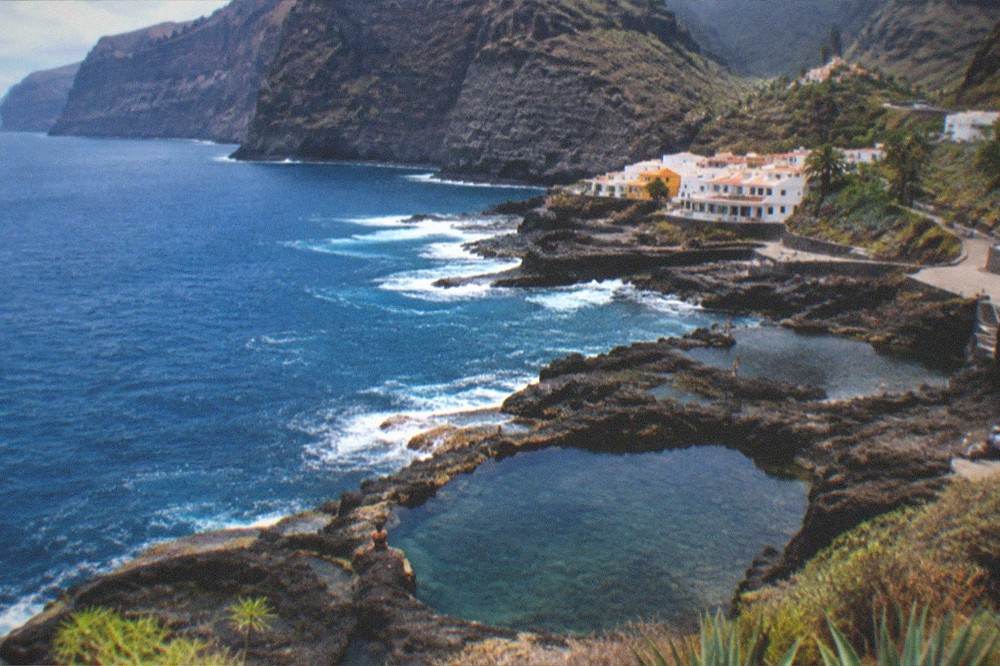
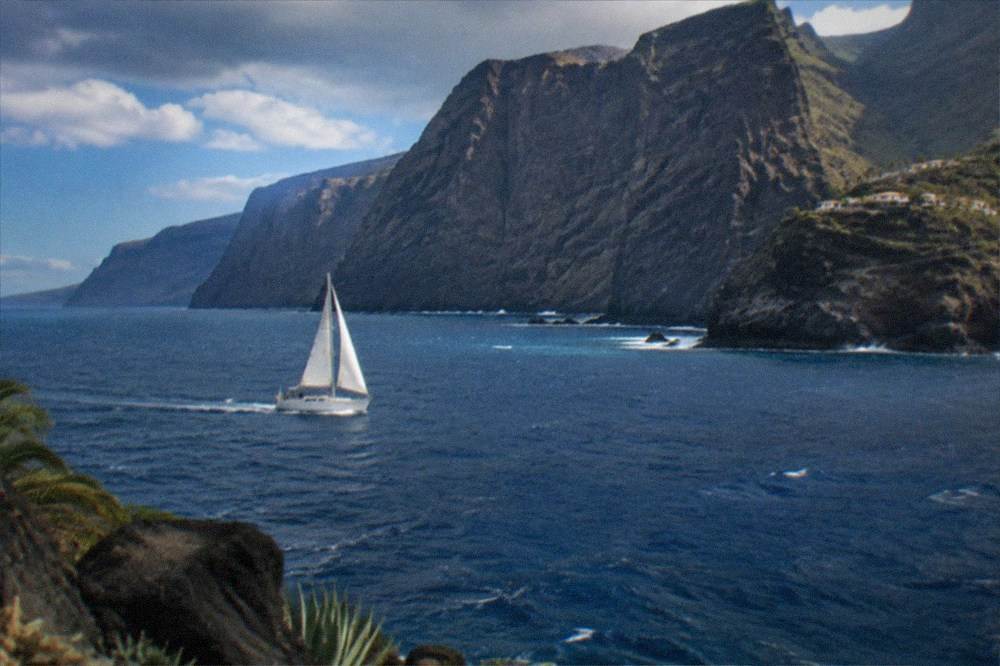
The cliffs of Los Gigantes stand on Tenerife's northwest coast inside Teno Rural Park, in the municipality of Santiago del Teide, and Turismo de Tenerife describes them as rising up to 600 m, with a seabed about 30 m deep at their foot. The resort town of Los Gigantes sits beneath them, at the point where the rock face meets a small marina and beach.
The figure matters because older guides inflate it. Pages still print 800 m, but the tourist board's wording is "up to 600 m", and that is the only height this site states. Santiago del Teide is the municipality, one of Tenerife's 31, with a registered population of 12,582 on the INE count for 1 January 2025, small enough that the town, the neighbouring village of Puerto de Santiago and the hamlet of Masca are its main settlements on the coast and in the hills.
Geographically the cliffs are the western edge of the Teno massif, the oldest surviving part of the island's volcanic basement. On the water side the drop is near vertical; on the land side the same massif folds into the barrancos that lead down to Masca bay, which is why the gorge walk and the cliffs belong to the same planning conversation. A boat is the only way to see the rock face whole, and the harbour at Los Gigantes is where most of those boats leave from.
Is It Worth Visiting Los Gigantes, Tenerife?
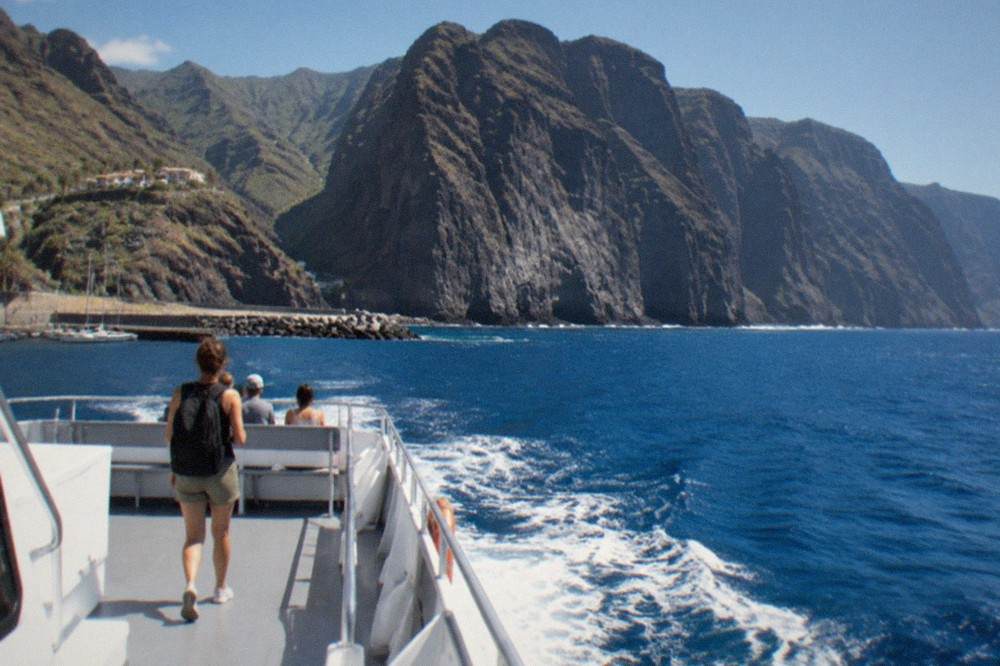
For most visitors, yes, as a half-day or full-day trip from the south: the cliff face from the water, a whale watching cruise, and a swim stop are the core of a visit, and the town is compact enough to see on foot. Travellers chasing nightlife or a long golden beach should look instead at Costa Adeje or Playa de las Americas.
The honest case for Los Gigantes rests on two things the resort cannot lose: the cliffs and the sea. The World Cetacean Alliance records that the Tenerife-La Gomera Marine Area, which starts off this coast, holds a "unique resident population of pilot whales", bottlenose dolphins, and acts as a migration stop for 21 other cetacean species, inside a Special Area of Conservation. That is why a short cruise from Los Gigantes harbour has a realistic chance of encountering pilot whales within sight of the cliffs, a combination few harbours in Europe can offer.
The case against is equally real. The resort is small, the beach is dark sand rather than golden, and the drive from the main southern resorts is a winding road through Santiago del Teide. Visitors staying in Costa Adeje or Los Cristianos usually come for the day, often on an organised excursion, and the Masca, Garachico and Icod route folds the cliffs into a full west-coast loop. Whether it is worth it depends on what a reader wants from the word "worth": scenery and boats, yes; bars and shopping, less so.
What Boat Trips and Whale Watching Leave from Los Gigantes?
Cruises from Los Gigantes harbour run whale and dolphin watching trips along the base of the cliffs, typically with a swim stop, and every authorised boat in these waters operates under Decreto 178/2000, which bans approach within 60 m of the animals, caps boats at three within 500 m and requires the Barco Azul flag. Sailboat and catamaran options both run from this coast.
The law is worth understanding before booking anything, because it tells a reader what a compliant trip looks like. Decreto 178/2000 of 6 September, published in the Canary Islands' Official Gazette, sets the rules for all whale watching in these waters: no approach within 60 m, no more than three boats within 500 m of the same animals, a maximum of 4 knots within 500 m, no swimming or diving within 500 m, and no feeding, chasing or circling. Article 15 adds the visible mark of compliance: authorised boats must fly the Barco Azul flag, issued by the Canary tourism department with the permit and renewed annually.
| Rule under Decreto 178/2000 | What it means on the water |
|---|---|
| Minimum approach distance | No boat within 60 m of the animals |
| Boat limit | No more than three boats within 500 m |
| Speed | Maximum 4 knots within 500 m |
| Swimming | No swimming or diving within 500 m |
| Behaviour | No feeding, chasing or circling |
| Flag | Authorised boats must fly the Barco Azul flag |
The designation behind the marketing is the World Cetacean Alliance's, not UNESCO's: the WCA records that the Tenerife-La Gomera Marine Area became a designated Whale Heritage Area in January 2021, and the programme is now called Whale Heritage Areas. No official count of the pilot whales exists, so any number a reader sees elsewhere should be treated with caution; the WCA's own wording is only "a unique resident population".
Two cruises from this harbour illustrate the range. The Los Gigantes dolphin and whale watching cruise with a swim stop runs two hours from the marina, and the operator's listing shows it rated 4.7 from 5,673 reviews; Check availability on the live listing for current times. A sailboat version, rated 4.9 from 2,264 reviews over three hours, covers the same water under sail where conditions allow.
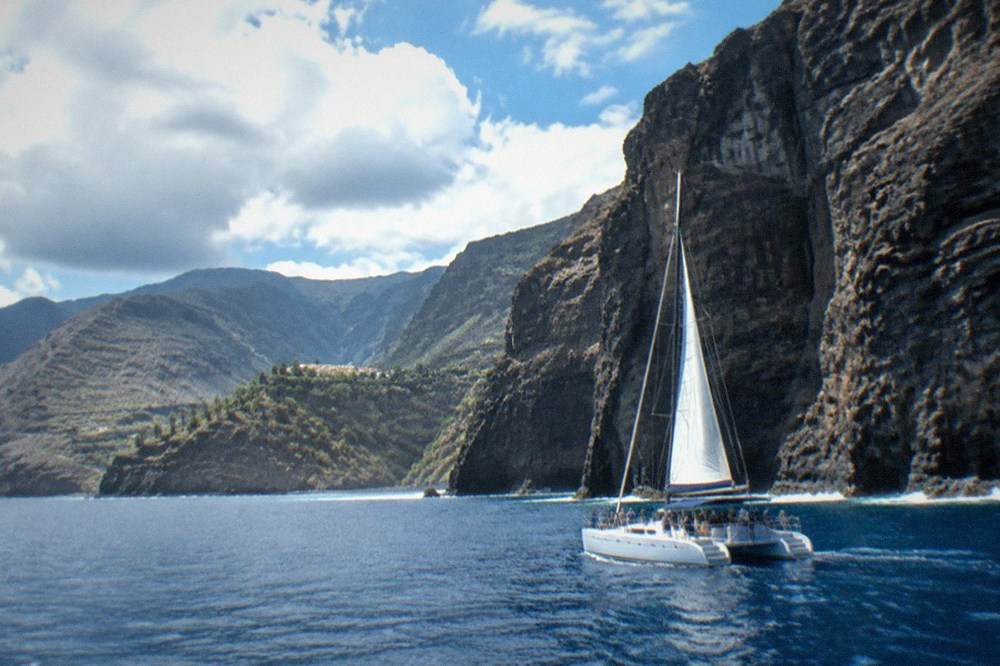
The cliffs themselves are the other half of the trip. From the water the rock walls read differently than from the viewpoints above: the tourist board's "up to 600 m" becomes a wall that fills the frame, and the seabed about 30 m down means boats can hold close inshore. Most cruises combine the cliff run with a lookout for pilot whales and a swim stop in a cove, then return to the marina. Readers based further south can also sail the same waters from Costa Adeje, where a whale watching catamaran with drinks runs two to three hours, rated 4.7 from 4,167 reviews.
Is It Worth Staying in Los Gigantes, Tenerife?
Staying in Los Gigantes suits travellers who want a quiet base with boat access, cliff views and short trips to Masca, Garachico and the Teno massif, and it is calmer than Costa Adeje or Playa de las Americas. It suits families and couples better than groups wanting nightlife, and a car, or a willingness to use TITSA buses, widens what the stay can include.
The trade is straightforward. What the resort offers is scale and quiet: a marina, seafront restaurants, a dark-sand beach, and evenings that end early. What it lacks is the density of the big southern resorts, the direct motorway link, and the beach clubs of the Costa Adeje coast. Readers comparing the two hubs can weigh them in detail in the guide to Los Cristianos vs Costa Adeje; Los Gigantes sits outside that comparison as the deliberately quieter third option on the west coast.
The practical argument for staying is the day trips. Masca village, the boat exit from the gorge, the pools of Garachico and the dragon tree at Icod de los Vinos all sit on the same western quarter of the island, and staying here puts them within a short drive rather than a two-hour round trip from the south. A combined excursion that covers Masca, the cliffs and natural pools with a picnic included runs about five to five and a half hours from the Los Cristianos side, rated 4.6 from 417 reviews, which shows how much of the west coast one organised day can cover; the same logic applies in reverse from a Los Gigantes base.
For accommodation, the island's current holiday letting listings carry the live picture for apartments and hotels in the resort, and the short-term rental law, Ley 6/2025 of 10 December, published in the Canary Islands' Official Gazette on 12 December 2025, governs how holiday accommodation operates island-wide. There is no per-night tourist tax in force or approved on Tenerife; the charges that do exist are the per-booking trail fees on Teide, the Masca ticket and the Barranco del Infierno ticket.
How Does the Masca Gorge Connect to Los Gigantes?
The Masca gorge walk is a descent-only trail that finishes with a pre-booked boat from Masca bay to the coast near Los Gigantes, booked at caminobarrancodemasca.com for a general ticket of EUR 40.66 with the boat extra, and hikers must arrive on TITSA line 355 from Santiago del Teide, since private vehicles are refused. The return from Los Gigantes to Santiago del Teide runs on TITSA lines 462 or 325.
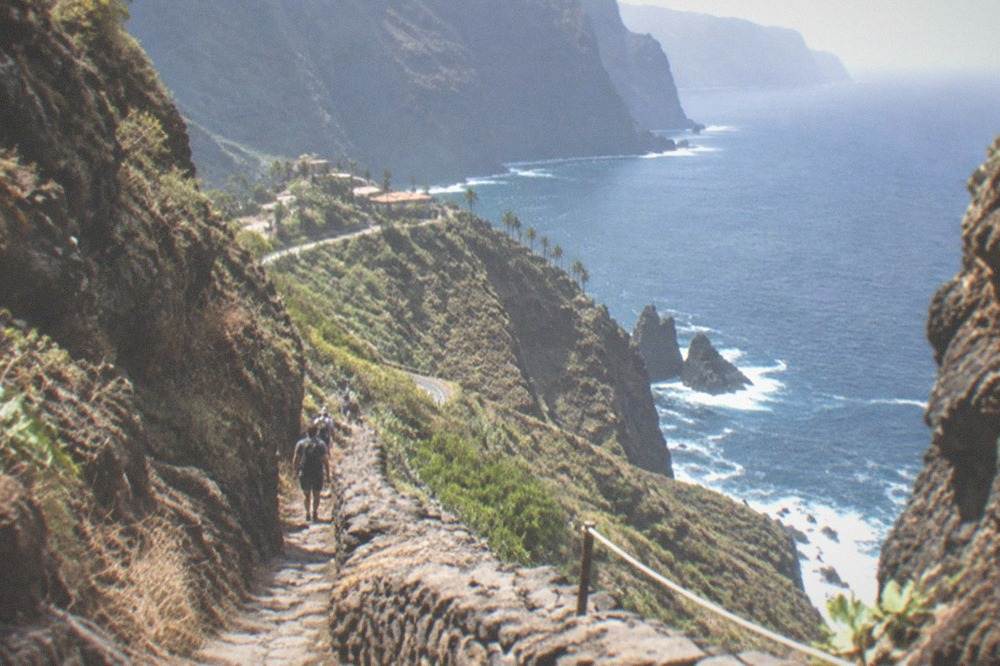
Masca is the walk that ends at this coast, and most descriptions of it are out of date. The gorge is open, under a continuing pilot scheme, as a descent only: walkers start in Masca village, descend the barranco, and leave by boat from Masca bay, with the boat ticket booked separately in advance and timed for no later than four hours after the descent slot. Walking it both ways is not sold in the current phase, and the trail is not free: the general ticket is EUR 40.66, boat not included, with free entry for Tenerife residents and federation members, and special rates for Canary residents and under-18s. Other pages covering the same trip are gathered on Tenerife Travel Guide.
| Masca gorge: who pays what | Ticket |
|---|---|
| General ticket (boat not included) | EUR 40.66 |
| Tenerife residents | Free, paid up front and refunded after the control check |
| Mountaineering or caving federation members from the Canaries | Free, same refund arrangement |
| Canary residents, under-18s, federated members | Special rates, figures not published on the booking page |
| Booking site | caminobarrancodemasca.com |
The logistics are strict, and the operator enforces them. Entry sessions run 08:30 to 13:00 with the trail open 08:30 to 18:00, releasing 25 places every 30 minutes and 50 at the 09:00 session. Closed mountain footwear is a condition of entry, and walkers are refused without it even holding a booking. The operator calls the gorge the place with the most rescues in the Canaries in recent years, and warns that the pier can close suddenly when the sea turns, voiding the day's ticket. That is the single biggest planning risk on this coast, and it is the reason the boat exit must be booked before setting off.
Getting back is the part that involves Los Gigantes directly. The return from Los Gigantes to Santiago del Teide is not included in the ticket; TITSA lines 462 or 325 cover it. Readers planning the full west-coast day can pair the gorge with the drive through Garachico, whose old port was buried by the Trevejo volcano's eruption in 1706 after the town had served as the island's trade hub through the 16th and 17th centuries.
How Do You Get to Los Gigantes?
Most visitors reach Los Gigantes by road from Tenerife South Airport, about an hour's drive west through Santiago del Teide, or by TITSA bus with a change; TITSA's airport pages list lines 10, 40, 711, 343 and 415 at Tenerife South, and the resort is reached by connecting through the south coast or Santiago del Teide. Taxis on Tenerife are white, metered from the start of the trip, and a fixed price can be agreed in advance for excursions.
The bus network is the honest budget answer. TITSA's own airport pages list the lines at each terminal, and the visitor products are single tickets priced by route, the EUR 10 day travelcard and the EUR 50 seven-day travelcard, sold at airport ticket machines. Public transport is not free for visitors: the 2026 subsidy applies to resident passes only, on a personalised Ten+ card, so a visiting reader pays the fares as printed.
| TITSA lines at each airport, per TITSA's own pages | Lines |
|---|---|
| Tenerife South (TFS) | 10 Santa Cruz; 40 Costa Adeje via Los Cristianos; 711 night bus; 343 express Puerto de la Cruz to Los Cristianos via both airports; 415 El Fraile, San Isidro |
| Tenerife North (TFN) | 20 Santa Cruz via La Laguna; 30 Puerto de la Cruz; 343 express to the south |
AENA's official names for the two airports are Tenerife Sur and Tenerife Norte-Ciudad de La Laguna; "Reina Sofia" and "Los Rodeos" are the familiar names rather than the current titles. Tenerife South handled 13,969,678 passengers in 2025, an all-time record, and it is the airport most visitors to this coast arrive at. There is no tram to either airport, and the tram network does not reach the west coast at all. Readers weighing a hire car against buses for the whole island can compare them properly in the guide to getting around Tenerife.
When Is the Best Time to Visit Los Gigantes?
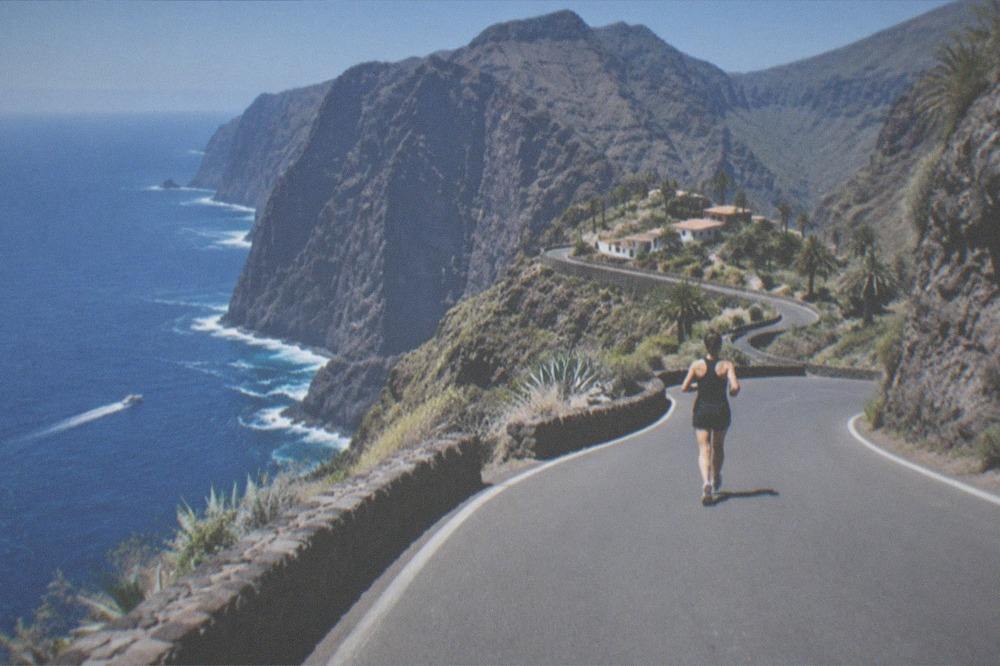
The sea off Tenerife's south and west coast is warmest from July to October, between 22.2 and 23.7 Celsius on the NOAA 1991-2020 averages, which lines up with the swim stops on the cliff cruises, while the air at the nearby Tenerife South Airport station averages daily maxima of 27.7 to 28.4 Celsius in July and August with no measurable rain days in June and July.
The sea figures deserve their own table, because they drive the two things this coast sells: swimming and boat trips. The NOAA series for the sea surface off the south coast, 1991-2020, is a different dataset from the AEMET air normals of 1981-2010, and the two periods should not be confused.
| Month | Sea surface temperature off the south coast (C) | Mean daily max at Tenerife South Airport (C) | Rain days of 1 mm or more at the airport |
|---|---|---|---|
| Jan | 19.9 | 21.7 | 1.8 |
| Feb | 19.2 | 22.0 | 2.2 |
| Mar | 19.1 | 23.1 | 1.9 |
| Apr | 19.5 | 23.1 | 1.1 |
| May | 20.2 | 23.9 | 0.3 |
| Jun | 21.4 | 25.4 | 0 |
| Jul | 22.2 | 27.7 | 0 |
| Aug | 23.1 | 28.4 | 0.2 |
| Sep | 23.7 | 27.9 | 0.6 |
| Oct | 23.7 | 26.8 | 1.6 |
| Nov | 22.5 | 24.8 | 1.9 |
| Dec | 21.1 | 22.8 | 3.5 |
Crowd pressure follows the arrival figures. The ISTAC series counts tourists arriving by air, excluding Canary Islands residents, and it shows the winter months as the island's peak: 657,396 arrived by air in February 2026 and 649,614 in January 2026, against 518,359 in May 2026. For this coast specifically, that means the cliff cruises and the Masca quota are under most pressure exactly when the sea is at its coolest, and the shoulder months pair warmer water with thinner crowds. The Masca release rule compounds this: a new week of slots opens every Monday at 07:00 Canary time, keeping 56 days bookable, so a winter visitor is competing for a fixed quota against the island's busiest arrival months.
What Else Is Near Los Gigantes?
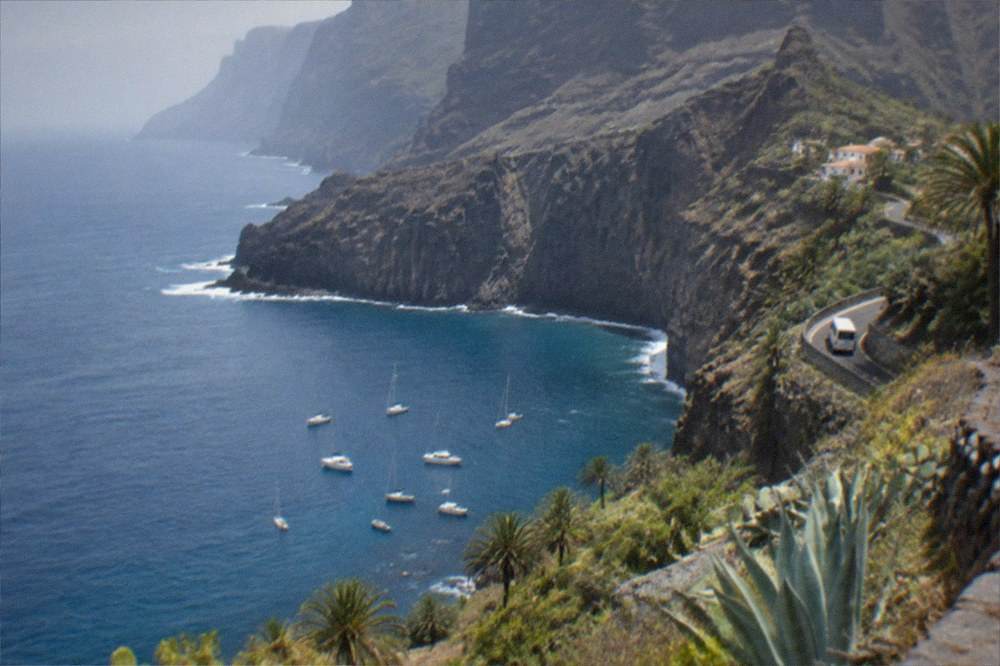
Within a short drive of Los Gigantes sit the village of Masca in its barranco, the colonial town of Garachico with its natural pools, the dragon tree at Icod de los Vinos, and the viewpoints of the Teno massif, including the lighthouse headland at Punta de Teno, which sits inside the same rural park as the cliffs.
The west coast is the island's most compact sightseeing circuit. Garachico's lava-rock pools are the obvious swim stop after a morning on a boat, and the town's history, destroyed almost entirely by the 1706 eruption of the Trevejo volcano after two centuries as the island's trade hub, is written into its streets. Further north, the dragon tree at Icod de los Vinos carries two official ages, the council's attributed estimate of about 1,000 years and the tourist board's "over 800 years", and this site prints both as estimates rather than a settled figure.
South along the coast, the quiet settlements of Los Abrigos and the fishing-village stretches of the southeast are a different island again; readers with a full week can compare the west coast against the north in the guide to Tenerife North vs South. For a first visit built around this coast, the practical sequence is a cliff cruise from the harbour, the Masca gorge for walkers with a booking, and a drive north to Garachico and Icod, which is exactly the loop the organised west-coast excursions follow.
A note on what this coast does not promise. The cliffs are dramatic, but the resort is not a nightlife destination, and the beach is dark sand, not the golden sand the tourist board describes at Las Teresitas and Las Vistas. Readers planning an evening out will find the fuller picture in the guide to Tenerife nightlife, which sits mostly on the south coast. What Los Gigantes sells, and sells honestly, is the view from the water, the animals offshore, and the shortest route on the island into the Teno hills.
Common Questions About Los Gigantes
Is it worth going to Los Gigantes, Tenerife?
Yes, for the cliffs and the sea: the rock walls rise up to 600 m, the whale watching waters off this coast hold a resident population of pilot whales, and the harbour runs cruises with swim stops. It is a scenery-and-boats destination rather than a nightlife or shopping one, so the answer depends on what a visit is for.
What is the closest town to Los Gigantes?
Puerto de Santiago adjoins Los Gigantes directly along the coast, and both sit in the municipality of Santiago del Teide, which had 12,582 registered residents on the INE count for 1 January 2025. Masca village, in the same municipality, sits in the hills above the coast.
How much does a taxi cost from Tenerife South Airport to Los Gigantes?
No verified fare for this route is on file, so this site prints no figure. What is verified: taxis on Tenerife are white and metered from the start of the trip, and a fixed price can be agreed in advance for excursions. Ask the driver or the airport taxi rank for the metered fare before setting off.
is it worth staying in los gigantes, tenerife?
It is worth staying here for a quiet base with boat access, cliff views and short trips to Masca, Garachico and the Teno massif. It suits families and couples better than groups wanting the nightlife of Playa de las Americas or the beach clubs of Costa Adeje, and a car or a willingness to use TITSA buses widens what the stay covers.
Can you swim from the boats at Los Gigantes?
Yes, several cruises from the harbour include a swim stop, and the operator's listing for the Los Gigantes dolphin and whale watching cruise names one. Swimming with the whales themselves is banned: Decreto 178/2000 prohibits swimming or diving within 500 m of the animals, so swim stops happen in coves, not in encounters.