Costa Adeje
Costa Adeje is the hotel-lined stretch of Adeje municipality on Tenerife's south-west coast, and this page reports what the official sources say about it: which beach has which sand, how warm the sea gets, what the whale watching rules allow and what a day trip from here involves.
Short answer
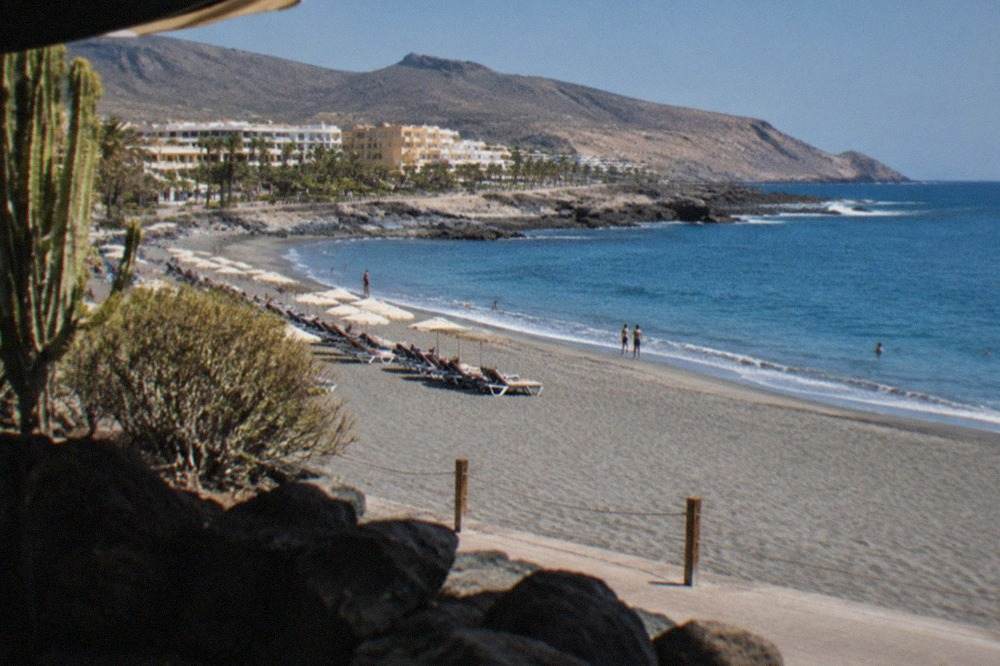
Costa Adeje sits in the municipality of Adeje on Tenerife's south-west coast. The tourist board describes El Duque as a grey sandy beach and Fanabe as pale sand, the resort is home to Siam Park, and whale watching boats leave from the Costa Adeje coast under Decreto 178/2000.
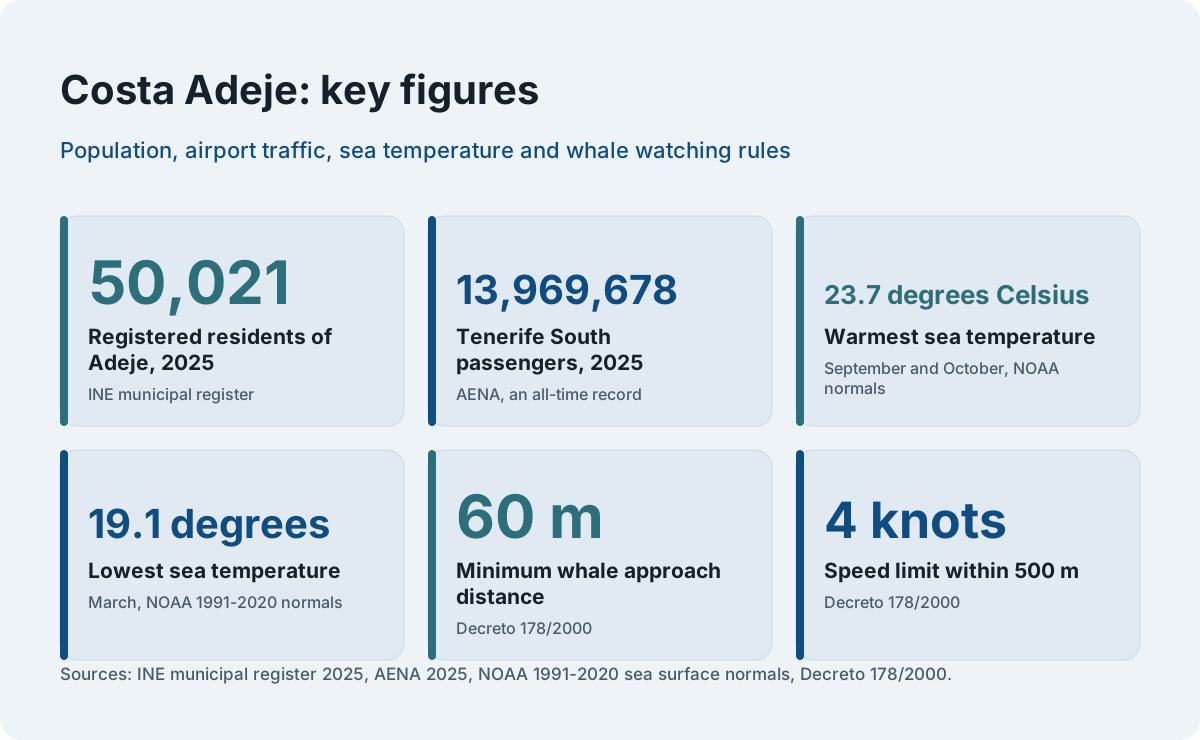
Costa Adeje is the name given to the hotel-lined coastal stretch of the municipality of Adeje, on Tenerife's south-west shore. The INE municipal register recorded 50,021 people living in Adeje in 2025, the fifth largest population of the island's 31 municipalities, and the resort belt along its coast has become the densest concentration of visitor beds in the south. This page reports what the official sources say about the resort: which beach carries which sand according to the tourist board, how warm the sea gets by month, what the whale watching rules permit, and what the area offers beyond the promenade.
Where Is Costa Adeje?
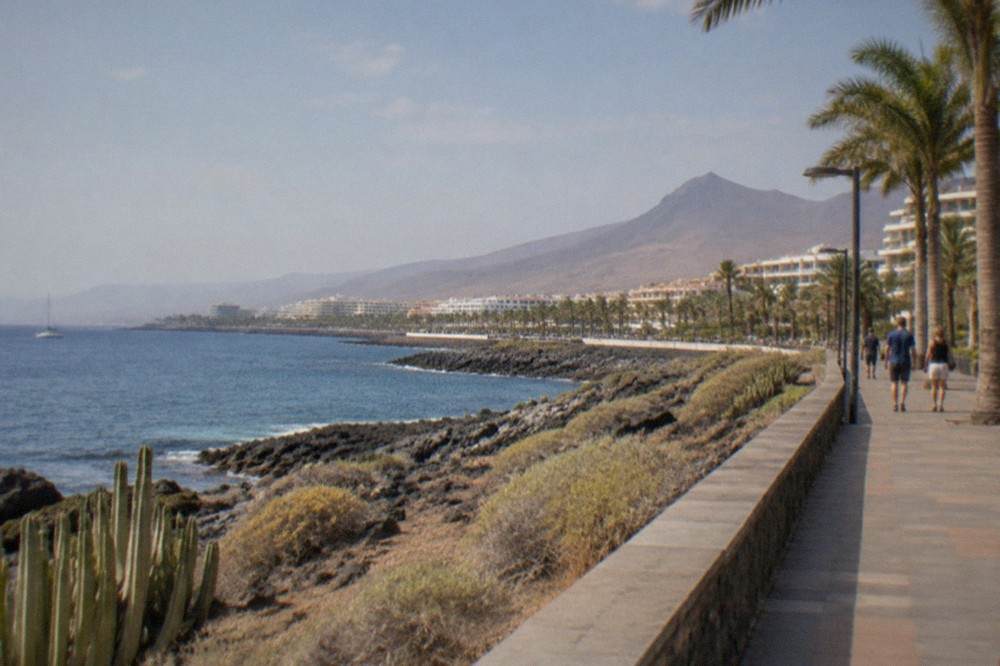
Costa Adeje is the coastal resort zone of the municipality of Adeje, on Tenerife's south-west coast, roughly between the quieter La Caleta cove to the north and the border with Playa de las Américas and Arona to the east. The municipality itself had 50,021 registered residents in 2025, and the tourist board places both Costa Adeje and El Duque inside it. Inland and uphill sits the original village of Adeje old town, a separate settlement from the coastal belt, and the whole resort sits within easy reach of Tenerife South Airport, which AENA records handling 13,969,678 passengers in 2025.
The name causes real confusion for first-time visitors. "Adeje" is the municipality, a large area running from the coast up into the hills, while "Costa Adeje" refers to the developed resort strip along its shoreline. Neighbouring areas each have their own character: La Caleta is the small fishing-village-turned-dining-spot to the north, while Playa de las Américas continues the coast eastward across the municipal border. If you are weighing the two main south-coast bases against each other, the Los Cristianos vs Costa Adeje comparison covers the differences in full.
| Fact | Figure | Source basis |
|---|---|---|
| Municipality | Adeje (Costa Adeje and El Duque both sit in it) | Turismo de Tenerife |
| Registered population of Adeje, 2025 | 50,021 | INE municipal register |
| Island population, 1 January 2025 | about 960,000 (sum of 31 municipalities) | INE |
| Nearest airport | Tenerife South (AENA: Tenerife Sur) | AENA |
| Tenerife South passengers, 2025 | 13,969,678, an all-time record | AENA |
Is Costa Adeje a Nice Part of Tenerife?
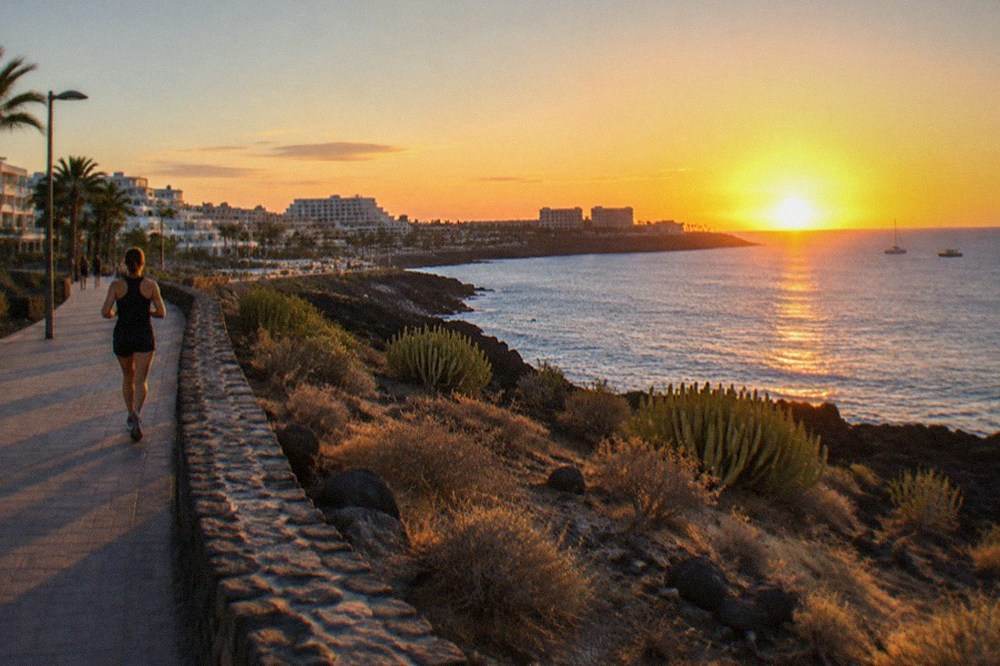
Costa Adeje is the most hotel-dense stretch of Tenerife's south coast, and whether it is "nice" depends on what a visitor wants: the tourist board's own pages describe well-kept beaches, the resort hosts the island's best-known water park, and the whale watching fleet sails from this coast, while the trade-off is a built-up, tourist-first environment rather than a quiet Canarian town. The honest editorial answer is that it is a very good base for a beach-and-activities holiday and a poor one for anyone seeking unspoilt village life. The village character survives uphill in Adeje old town, and the small-cove alternative survives in La Caleta, but the coastal strip itself is purpose-built resort territory.
What the resort does have, on the record, is serious infrastructure. Siam Park's own page states it opens 365 days a year. The whale watching fleet along this coast operates under Decreto 178/2000, the Canary regulation that sets approach distances and boat numbers, and authorised boats fly the Barco Azul flag. The World Cetacean Alliance records that the Tenerife-La Gomera marine area became a designated Whale Heritage Area in January 2021, supported by what it calls a unique resident population of pilot whales. Few European resort strips can list that combination within a few hundred metres of their sunbeds.
What Is the Nicest Beach in Costa Adeje?
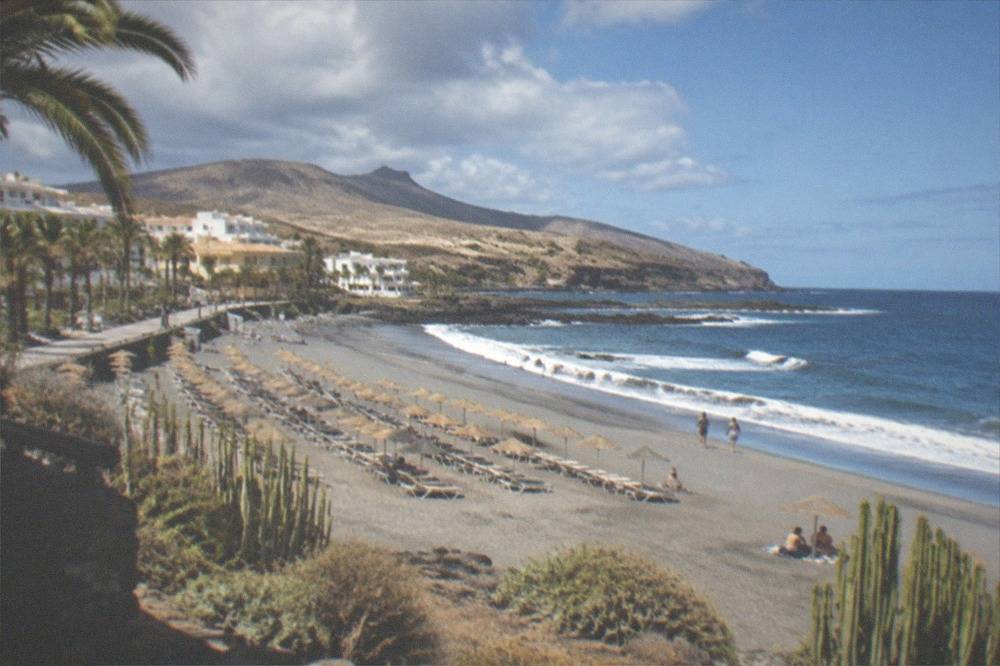
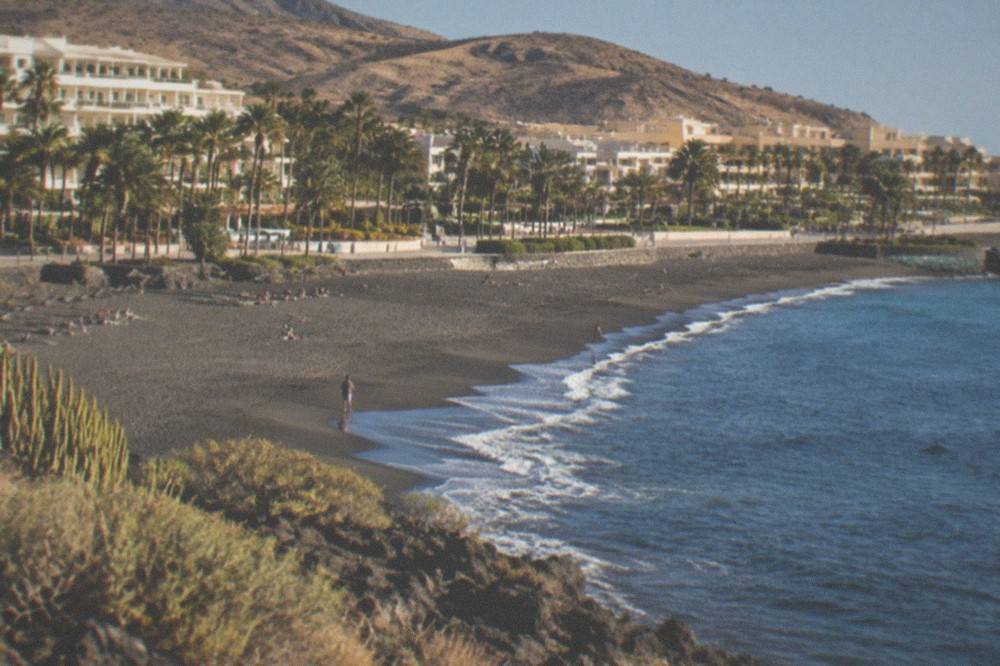
The tourist board describes Playa del Duque as a grey sandy beach, the largest and best-known of Costa Adeje's beaches, and it is the one most visitors mean when they name the resort's flagship stretch; Fanabe, next along, is described as pale sand. The sand colour matters because many older guides repeat a golden-sand claim for El Duque that the official page does not make. The tourist board's golden-sand descriptions belong to Las Teresitas in Santa Cruz and Las Vistas in Arona, not to El Duque. Grey volcanic sand is what the official description says, and the beach's reputation rests on its width, its promenade and its calm-water setting rather than on the colour of the sand.
The beach strip runs continuously along the resort front. El Duque anchors the western end, Fanabe continues east, and the whole stretch is backed by the promenade that links the hotel zone. For swimmers, the tourist board describes calm water behind breakwaters at the golden-sand beaches it profiles elsewhere on the south coast, and Costa Adeje's beaches share the same sheltered, lee-shore position. The sand colours below are quoted exactly as the tourist board states them, beach by beach.
| Beach | Sand, in the tourist board's words | Where it is |
|---|---|---|
| Playa del Duque | Grey sandy beach | Costa Adeje, Adeje |
| Fanabe | Pale sand | Costa Adeje, Adeje |
| Las Teresitas | Golden sand, palms, breakwaters that calm the water | San Andrés, Santa Cruz |
| Las Vistas | Golden sand, calm behind a row of breakwaters | Arona |
| El Médano | Fine grey sand, under Montaña Roja | Granadilla de Abona |
| El Bollullo | Black sand at the foot of a cliff | La Orotava |
What Family Attractions Does Costa Adeje Offer?
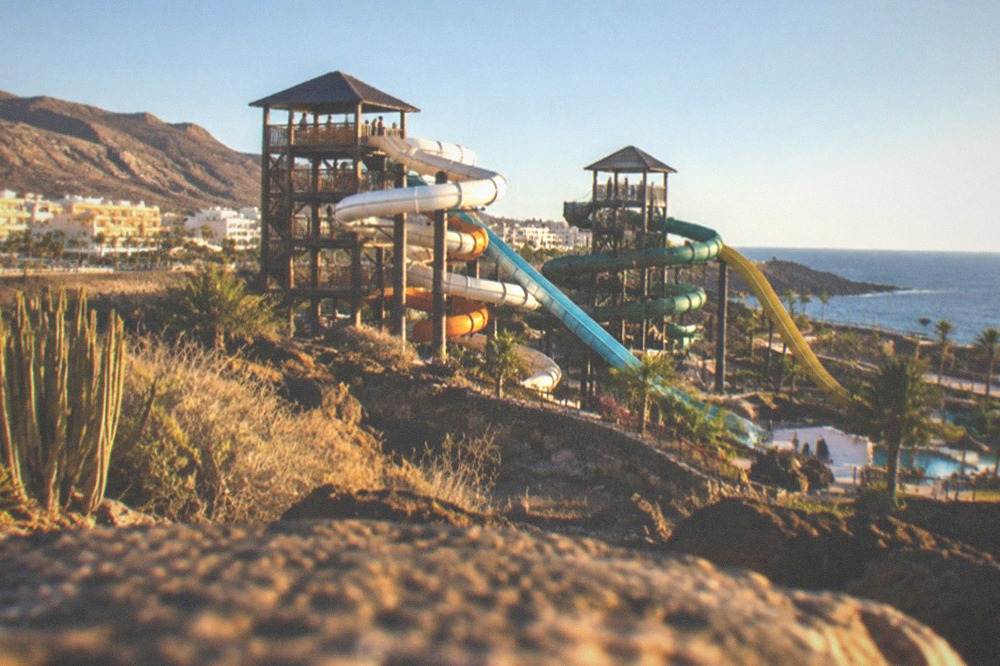
Siam Park is the headline family attraction in Costa Adeje, open 365 days a year on its own published schedule, with Aqualand Costa Adeje as the second water park in the resort, and the coast's whale watching boats as the natural-world option. Siam Park's own page sets the hours: 10:00 to 18:00 from 1 May to 29 October, and 10:00 to 17:00 from 30 October to 30 April. Loro Parque's release records that Tripadvisor awarded Siam Park the Travellers' Choice award for the best waterpark in the world for a fifth consecutive year, an attribution worth keeping precise, since later years are not confirmed on the awarding body's page.
Aqualand Costa Adeje is the resort's other water park, covered in its own Aqualand page. Beyond the parks, the family case for the area is straightforward: sheltered beaches, a compact promenade, and boat trips that the decree regulates tightly enough that a family can expect a controlled approach to wildlife rather than a chase. The Barco Azul flag is the visible proof of authorisation, and Decreto 178/2000 requires authorised boats to fly it.
| Siam Park season | Opening hours | Days |
|---|---|---|
| 1 May to 29 October | 10:00 to 18:00 | 365 days a year |
| 30 October to 30 April | 10:00 to 17:00 | 365 days a year |
Can You Swim in the Sea in Costa Adeje?
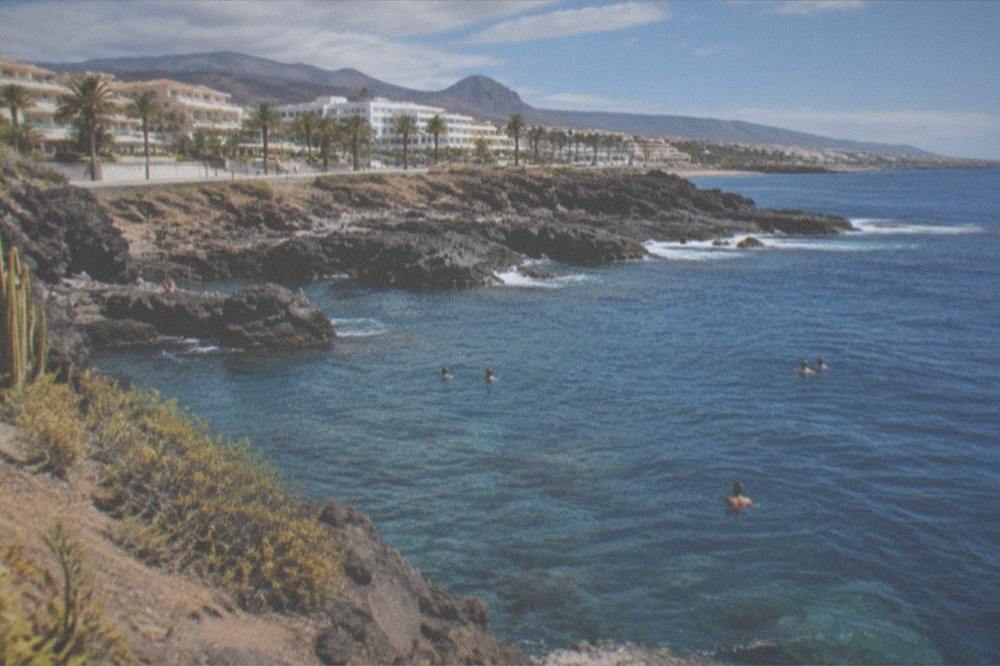
Yes, and the sea off the south coast is at its warmest in September and October at 23.7 degrees Celsius, cooling to its lowest at 19.1 degrees in March, according to NOAA's 1991-2020 sea surface normals for this coast, so swimming is comfortable year-round by Atlantic standards. The air side of the equation comes from AEMET's station at Tenerife South Airport, whose 1981-2010 normals show mean daily maxima ranging from 21.7 degrees in January to 28.4 in August. The two datasets cover different periods, the air normals 1981-2010 and the sea figures 1991-2020, and this page keeps them separate for that reason.
Rain rarely interrupts a beach day here. The same AEMET station records July and June as its driest months, with zero days of rain of 1 mm or more in the 1981-2010 normals, and even the wettest months, December and November, average only 3.5 and 1.9 such days. This is the lee side of the island, and the contrast with the north is stark: AEMET's Tenerife North Airport station records 64 rain days a year against the south coast's 15.2. The wider set of guides lives on Tenerife Travel Guide.
| Month | Mean daily max air C (TFS station) | Rain days of 1 mm or more | Sea surface C |
|---|---|---|---|
| Jan | 21.7 | 1.8 | 19.9 |
| Feb | 22.0 | 2.2 | 19.2 |
| Mar | 23.1 | 1.9 | 19.1 |
| Apr | 23.1 | 1.1 | 19.5 |
| May | 23.9 | 0.3 | 20.2 |
| Jun | 25.4 | 0 | 21.4 |
| Jul | 27.7 | 0 | 22.2 |
| Aug | 28.4 | 0.2 | 23.1 |
| Sep | 27.9 | 0.6 | 23.7 |
| Oct | 26.8 | 1.6 | 23.7 |
| Nov | 24.8 | 1.9 | 22.5 |
| Dec | 22.8 | 3.5 | 21.1 |
What Whale Watching Rules Apply Off Costa Adeje?
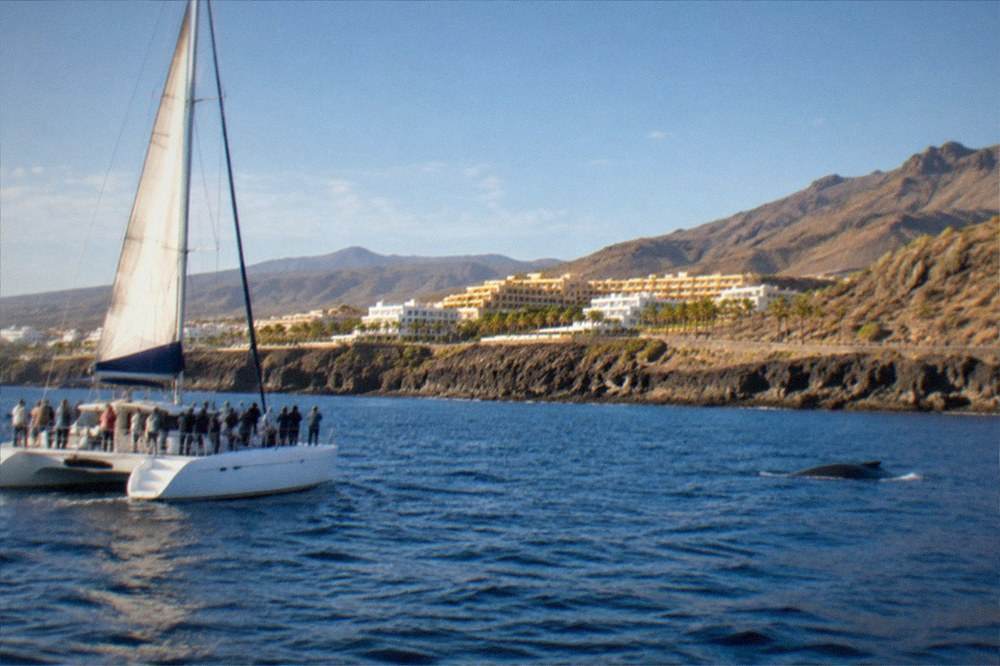
Decreto 178/2000 governs every whale and dolphin trip on this coast: boats may not approach within 60 metres of the animals, no more than three boats may be within 500 metres, speed is limited to 4 knots inside that zone, and swimming or diving with the animals is prohibited within 500 metres. Authorised boats must fly the Barco Azul flag, issued by the Canary tourism department with the permit and renewed annually. The regulation also bans feeding, chasing and circling the animals.
The designation behind the marketing is worth getting right. The World Cetacean Alliance, not UNESCO, records that the Tenerife-La Gomera marine area became a designated Whale Heritage Area in January 2021, and the programme is now called Whale Heritage Areas. The WCA describes a unique resident population of pilot whales, bottlenose dolphins, and a migration stop for 21 other cetacean species, inside a Special Area of Conservation. No official population count exists, and this site does not print one.
| Rule under Decreto 178/2000 | Figure |
|---|---|
| Minimum approach distance | 60 m |
| Boats allowed within 500 m | No more than 3 |
| Speed within 500 m | 4 knots maximum |
| Swimming or diving within 500 m | Prohibited |
| Feeding, chasing, circling | Prohibited |
| Authorised boat flag | Barco Azul, mandatory |
For visitors who want to get under the surface rather than watch it, the same lee coast hosts try-dive and snorkel trips, and the roster's Costa Adeje scuba option takes beginners into a turtle habitat. The card below carries the current details.
What Is the Coldest Month in Costa Adeje?
January is the coldest month on the coast here, with AEMET's 1981-2010 normals for the Tenerife South Airport station showing a mean daily maximum of 21.7 degrees Celsius and a mean daily minimum of 15.2, and the sea at 19.9 degrees, so "coldest" on this coast still means T-shirt weather by northern European standards. December is the wettest month at 30 mm of rain in the normals, against zero in June and July. The numbers below come from the airport station a short way along the same coast, the closest AEMET publishes to the resort.
The altitude gradient is the thing to understand about Tenerife weather generally. Drive up to the Teide Observatory ridge at Izana, 2,369 m, and AEMET's normals there show January mean daily maxima of just 7.5 degrees, with 47 mm of rain. A day trip from a Costa Adeje beach morning to a frost-possible volcano afternoon is entirely normal on this island, and the Teide from the south day trip is the standard way to do it. Pack a layer for the volcano even in August.
Where Is the Best Place to Eat in Costa Adeje?
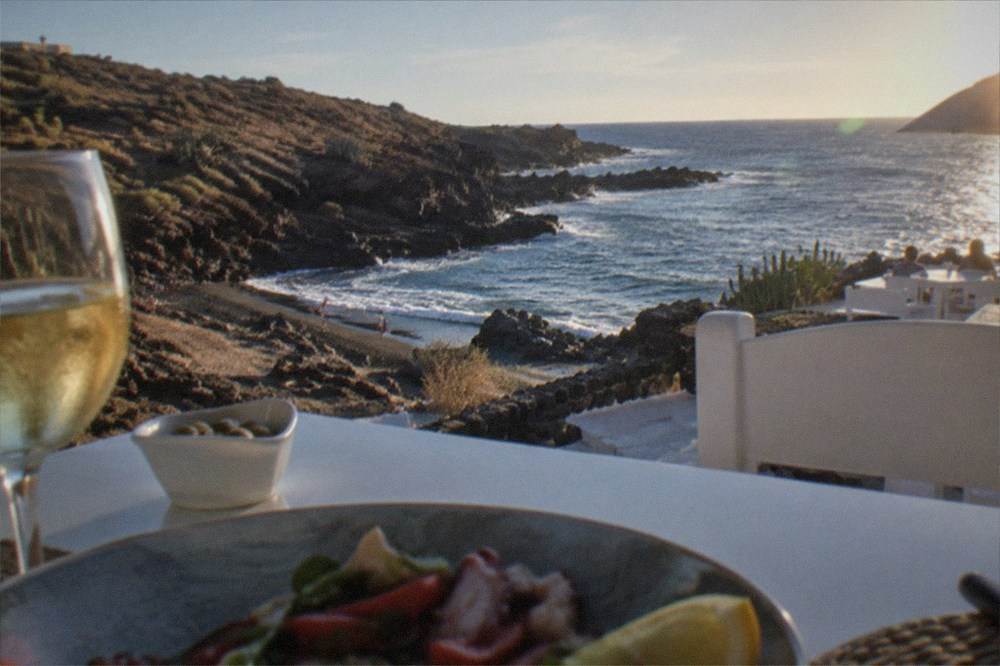
The editorial desk does not rank individual restaurants, but the pattern on the record is clear: the resort's own hotel and promenade dining sits alongside a small-cove scene at La Caleta, and the island's traditional guachinche kitchens, the informal family-run eating rooms, are concentrated in the north rather than in the resort south, so the honest answer separates resort dining from the Canarian originals. For the full restaurant picture, the best restaurants guide covers the island, and the Tenerife markets guide tracks where the fresh produce actually comes from.
Where do the locals eat in Costa Adeje? The question assumes a local dining scene inside the resort, and the honest answer is that the densest Canarian dining is found uphill in Adeje old town and in the neighbouring towns, not on the beachfront strip, which is priced and styled for visitors. La Caleta is the compromise: a former fishing village whose seafront restaurants sit a short drive from the hotel zone. The desk reports what the sources say rather than naming a single "best" table, because no official source ranks restaurants and a ranking invented here would be fiction dressed as advice.
What Luxury Hotels Are in Costa Adeje?
This desk does not review or rank individual hotels, and no official source lists the resort's properties by grade, so the honest answer is structural: Costa Adeje is the most luxury-dense stretch in Tenerife, with the five-star stock clustered along the El Duque and beachfront frontage, and live availability and current rates are shown on the booking listings rather than printed here. Hotel rates move daily and this site never quotes one. What can be stated is the resort's position: the tourist board's own beach pages place El Duque at the heart of the hotel zone, and the concentration of high-grade properties along that frontage is the reason the name carries the price reputation it has.
For readers comparing bases rather than properties, the choice usually comes down to Costa Adeje versus its neighbours, and the comparison guide covers that ground. For readers who have chosen the area and need a bed, the live listings carry the current prices, and the desk's advice is to weigh the position within the resort, the walk to the beach and the transfer time from Tenerife South Airport, before anything else. If a late flight leaves a gap between checkout and departure, luggage storage in Costa Adeje solves the last-day problem. To compare current rates across the resort's hotels in Costa Adeje, the live listings show live availability.
How Do You Get Around and Beyond Costa Adeje?
Visitors pay for public transport in Tenerife: the resident subsidy does not apply to holidaymakers, so the relevant TITSA products are single tickets priced by route, the EUR 10 day travelcard and the EUR 50 seven-day travelcard, both sold at airport ticket machines, with the Ten+ card itself costing EUR 2. The 2026 100% subsidy announced by the Canary government applies to resident passes only, held on a personalised Ten+ card. Taxis on the island are white and metered from the start of the trip, per the tourist board's public transport page, and a fixed price can be agreed in advance for excursions.
The resort is also a strong base for days out. The Teide national park drive carries no entry fee on any official page read, and the standard route from the south is covered in the day-trip guide. The ferry port at Los Cristianos, a short hop along the coast, runs Fred. Olsen Express services to San Sebastián de La Gomera in 50 minutes, to Santa Cruz de La Palma in 150 minutes and to Valverde in El Hierro in 140 minutes. La Gomera day trips with lunch run from the south of the island by coach and ferry.
| TITSA product for visitors | Price | Notes |
|---|---|---|
| Single ticket | Priced by route | Card or cash |
| Same-day return | 10% off | On trips of 20 km or more |
| Day Travelcard | EUR 10 | Sold at airport ticket machines |
| 7 Day Travelcard | EUR 50 | Sold at airport ticket machines |
| Ten+ card | EUR 2 | Top-ups EUR 2 to EUR 100 |
One point the desk flags because so many pages get it wrong: there is no tram to either airport, and Metrotenerife's fares page states nothing of the kind. TITSA buses serve both. The free walking tours carded on this site are all in the north, at La Orotava, Puerto de la Cruz and Santa Cruz de Tenerife, run on the GuruWalk pay-what-you-want basis; the resort south has no free walking tour listed on GuruWalk, which is a statement about what is listed, not proof that none exists.
Common Questions About Costa Adeje
Which is the nicest part of Costa Adeje?
The tourist board's descriptions point to El Duque, which it describes as a grey sandy beach, as the resort's flagship stretch, with the promenade-backed beachfront and the hotel zone around it as the core. La Caleta, at the quieter northern end, is the small-cove alternative for dining rather than sunbeds.
is adeje a nice part of tenerife?
Adeje is the fifth most populous municipality on the island, with 50,021 registered residents in 2025, and its coastal strip is the island's densest resort zone. It is a strong base for beaches, Siam Park and boat trips, and a poor choice for anyone seeking quiet village life, which survives uphill in Adeje old town rather than on the coast.
what luxury hotels are in costa adeje?
This desk does not rank individual properties and no official source lists them by grade. The five-star stock clusters along the El Duque frontage, and current rates and availability are shown on the live booking listings, which this site never quotes because they move daily.
where is the best place to eat in costa adeje?
No official source ranks restaurants, so the desk reports the pattern instead: promenade and hotel dining along the beachfront, and the small-cove restaurant scene at La Caleta as the local-flavour option within reach of the resort.
where do the locals eat in costa adeje?
The densest Canarian dining sits uphill in Adeje old town and in the neighbouring towns rather than on the visitor-priced beachfront strip. La Caleta, a former fishing village, is the closest thing the immediate area has to a local dining scene.
what is the nicest beach in costa adeje?
Playa del Duque, which the tourist board describes as a grey sandy beach, is the largest and best-known. Fanabe, described as pale sand, continues the same frontage. Golden sand is what the tourist board says of Las Teresitas and Las Vistas, not of El Duque.