Adeje Old Town
Adeje Old Town sits on a hillside above the Costa Adeje resort belt, the administrative and historic centre of a municipality that counted 50,021 residents on the INE register in 2025. This guide reports what the official sources say about the old quarter, its transport links, the beaches below it and the tours that pair well with a stay.
Short answer
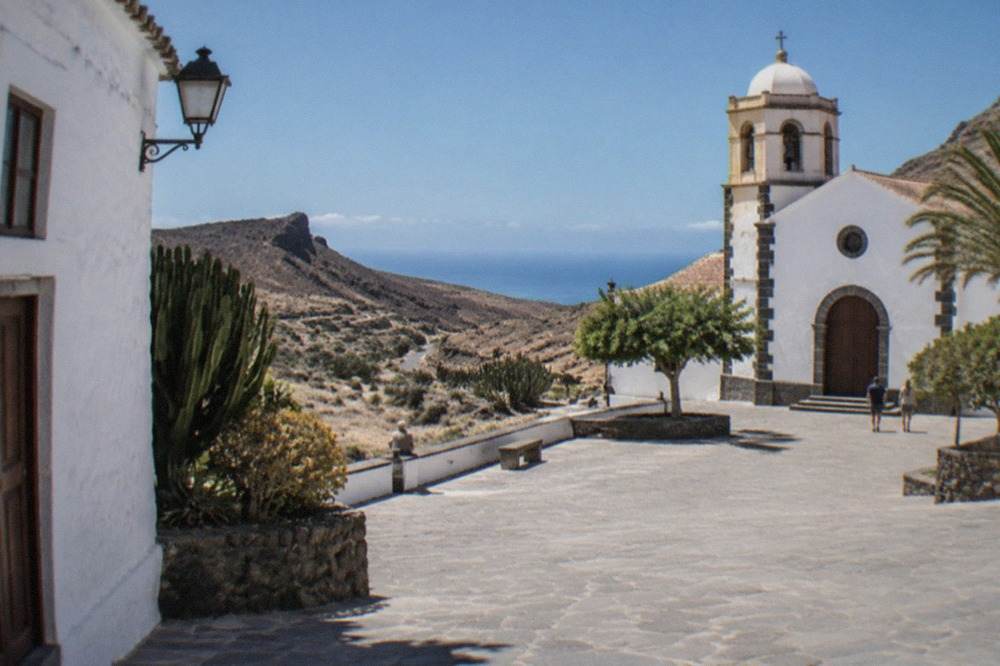
Adeje Old Town is the historic hillside centre of the Adeje municipality in south-west Tenerife, sitting above the Costa Adeje hotel strip. The municipality held 50,021 residents in 2025, making it one of the island's largest, and the old quarter is reached by TITSA bus from Costa Adeje and the surrounding resorts. It is a quiet half-day of squares, churches and Canarian architecture rather than a resort attraction.
Adeje is a municipality of 50,021 residents, the fifth largest on Tenerife by population, and most visitors only ever meet its coastal half: Costa Adeje, El Duque, Fanabe, the hotel towers and the promenade. The old town is the other half. It sits uphill from the resort belt, a compact quarter of low Canarian buildings, church squares and council offices that administers the whole municipality, from the beaches at sea level to the barranco paths that climb toward the island's spine. The tourist board places both Costa Adeje and El Duque inside Adeje's boundaries, which surprises visitors who assume the resort is a place apart. The old quarter is where the municipality's identity actually lives, and it is a short and cheap bus ride from the hotels below.
This page reports what the official sources hold about the old town and its surroundings: the population figures from the INE municipal register, the transport rules from TITSA, the beach descriptions from the tourist board's own pages, and the tour options this site has verified. Where a fact is not on an official page, it is left out rather than guessed. The old quarter itself has no entry fee, no ticket and no booking, which is part of its appeal after a day of timed slots and queues elsewhere on the island.
Where Is Adeje Old Town on the Map of Tenerife?
Adeje Old Town is the historic centre of the Adeje municipality on Tenerife's south-west coast, roughly ten kilometres inland of the Costa Adeje hotel strip and connected to it by regular TITSA bus services. The municipality held 50,021 residents in 2025, the fifth-largest population on the island after Santa Cruz de Tenerife, La Laguna, Arona and Granadilla de Abona, and the old town is its administrative seat.
The geography matters more than the distance. The resort belt runs along the coast; the old town sits several hundred metres above it on the slope of the Adeje valley, where the barranco that gives the municipality its name comes down from the high island. What that means in practice is a genuine separation: the old quarter has its own rhythm, its own squares and its own local population, and it does not trade on the resort trade below. The tourist board's beach pages confirm the administrative split, listing Costa Adeje and El Duque as Adeje's beaches, with Fanabe also inside the municipality and described as pale sand.
For orientation, the neighbouring areas are useful to know. Arona lies immediately east, holding Los Cristianos, Las Vistas and Playa de las Américas, and the comparison between the two resort zones is covered in the site's guide to Los Cristianos vs Costa Adeje. To the south-west lies La Caleta, the small fishing-village-turned-dining-spot that belongs to the same stretch of coast. The full island picture, including where Adeje sits relative to the north, is in the site's overview of things to do in Tenerife.
The register figures for the island's biggest municipalities put Adeje's size in context, and they are worth a table because most guides quote only Santa Cruz:
| Municipality (INE register, 2025) | Residents |
|---|---|
| Santa Cruz de Tenerife | 211,957 |
| La Laguna | 161,108 |
| Arona | 87,793 |
| Granadilla de Abona | 58,752 |
| Adeje | 50,021 |
| Puerto de la Cruz | 31,137 |
| Santiago del Teide | 12,582 |
Adeje's population is striking because it is a recent creation: the municipality was a rural and small settlement for most of its history, and the resort boom along its coast multiplied it. The INE register records the result, not the story, and no founding date or growth figure appears on the official pages this site has read, so none is invented here.
What Can You See in and Around Adeje Old Town?
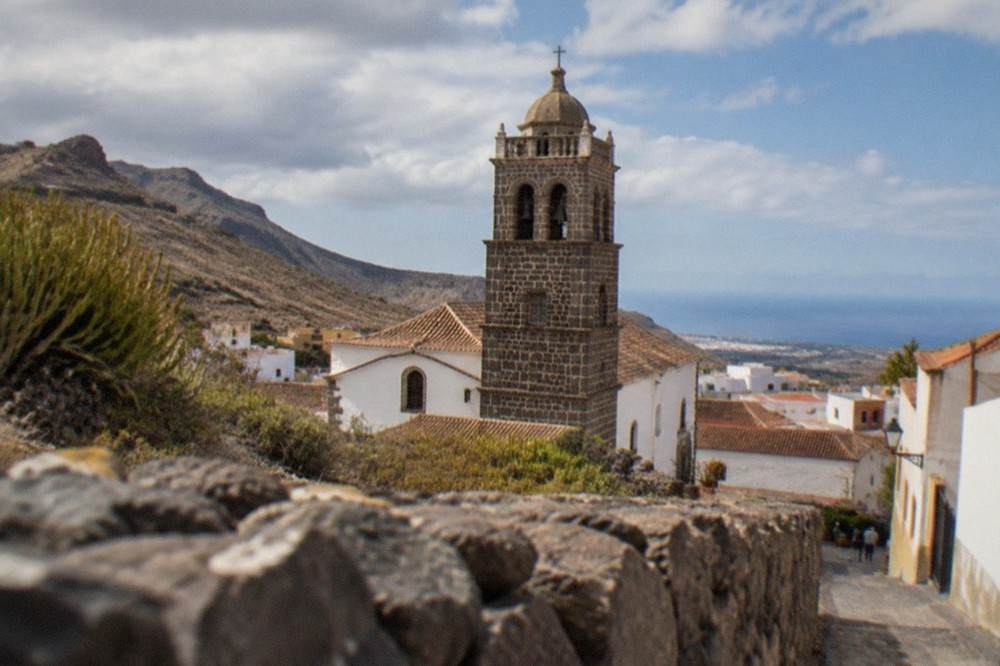
The old town's sights are its church square, its narrow Canarian streets and its council buildings, all free to wander with no ticket or booking, plus the surrounding barranco paths that climb into the hills behind the quarter. No official page lists an entry fee, opening charge or guided requirement for the old quarter itself, so it costs nothing beyond the bus fare, and the walking is unhurried and self-guided.
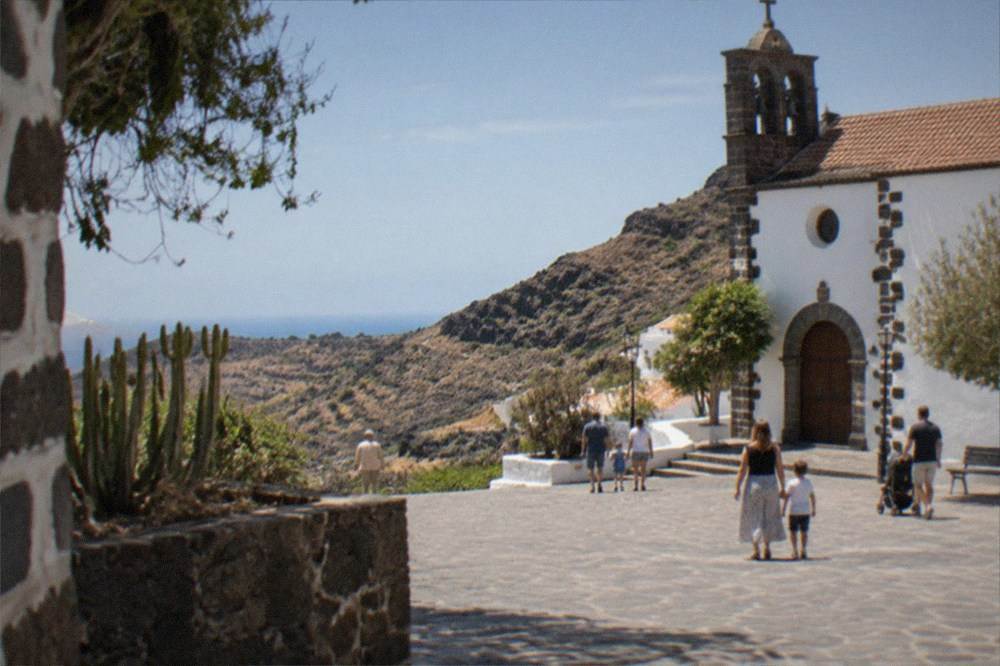
The honest framing comes first: this is not a museum or a monument zone. The old quarter is a working administrative centre where the municipality's business gets done, and its appeal is precisely that. Low buildings with Canarian balconies, a church at the heart of the square, small bars and shops serving the people who live there rather than the people who book the hotels below. An hour or two of wandering covers it, and the tourist board's own material on the municipality does not package it as anything grander.
What the area does have, in abundance, is walking. The barranco de Adeje runs down from the high island toward the coast, and the municipality sits on the route of the island's long-distance trails, which the hiking guide on this site covers in detail. The Camino Real, the historic royal path that crossed Tenerife, passes through this part of the south-west, and sections of it are walkable from the old town without any permit. That distinguishes it from the reservation-only trails in the national park: on Teide, trail PNT 10 Telesforo Bravo needs a personal Tenerife ON reservation, and since Monday 19 January 2026 the 09:00 to 17:00 slots cost EUR 15 for visitors and EUR 6 for residents of the other Canary Islands, free only for Tenerife residents and children. The old town's paths carry no such requirement, and the Cabildo's temporary measure keeps the island's other trails free of booking until 31 December 2026.
For visitors who want structure rather than a self-guided wander, the touring options that fit this page are city and food experiences, and the site has verified a set worth comparing:
One thing to state plainly, because the question comes up: the resort south, which includes Adeje, Los Cristianos, Costa Adeje, Arona and Playa de las Américas, has no free walking tour listed on GuruWalk. The three free, pay-what-you-want walks carded on this site all run in the north: La Orotava, Puerto de la Cruz and the historic centre of Santa Cruz. If a free guided walk is what you want from your Tenerife trip, the northern towns are where the listings sit, and the old town of Adeje is best explored on your own feet.
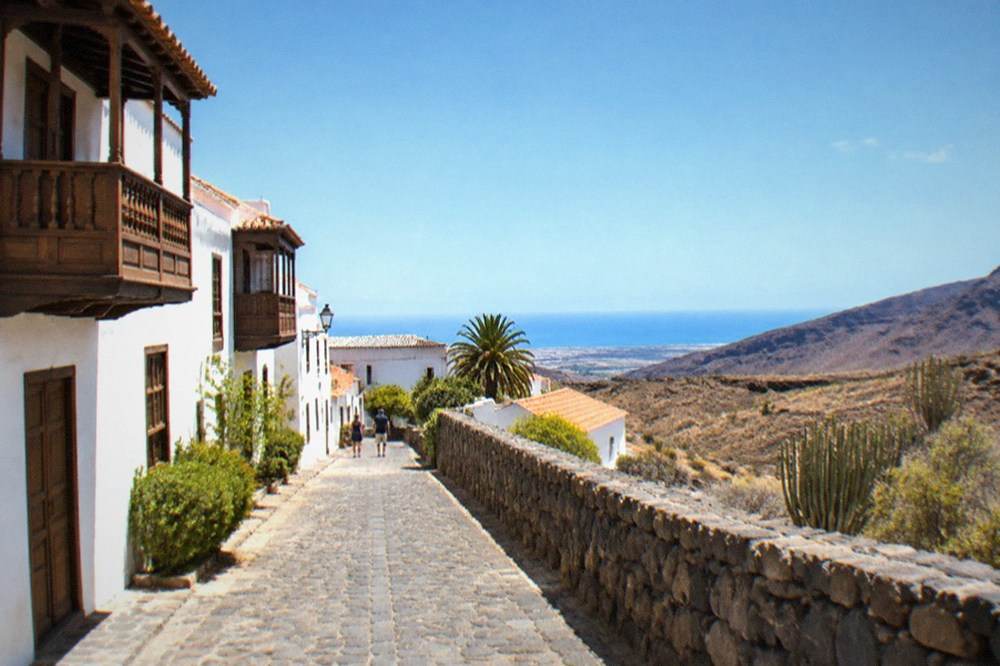
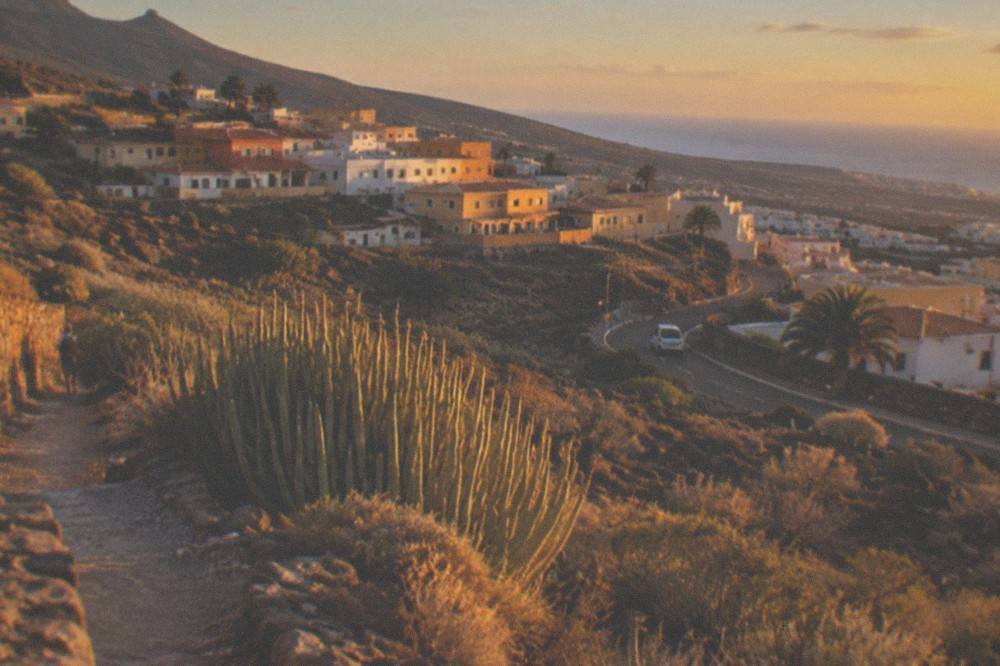
The streets themselves reward slow looking. Canarian architecture in this part of the island favours thick walls, small windows and interior patios, built for the heat rather than for show, and the old quarter preserves more of it than the coast does. The tourist board's material on the municipality describes the contrast between the old agricultural settlement and the modern resort, and the walk between the two, if you take it, tells the story in elevation: the towers thin out, the buildings drop to a storey or two, and the streets narrow.
How Do You Get to Adeje Old Town from the Resorts and the Airport?
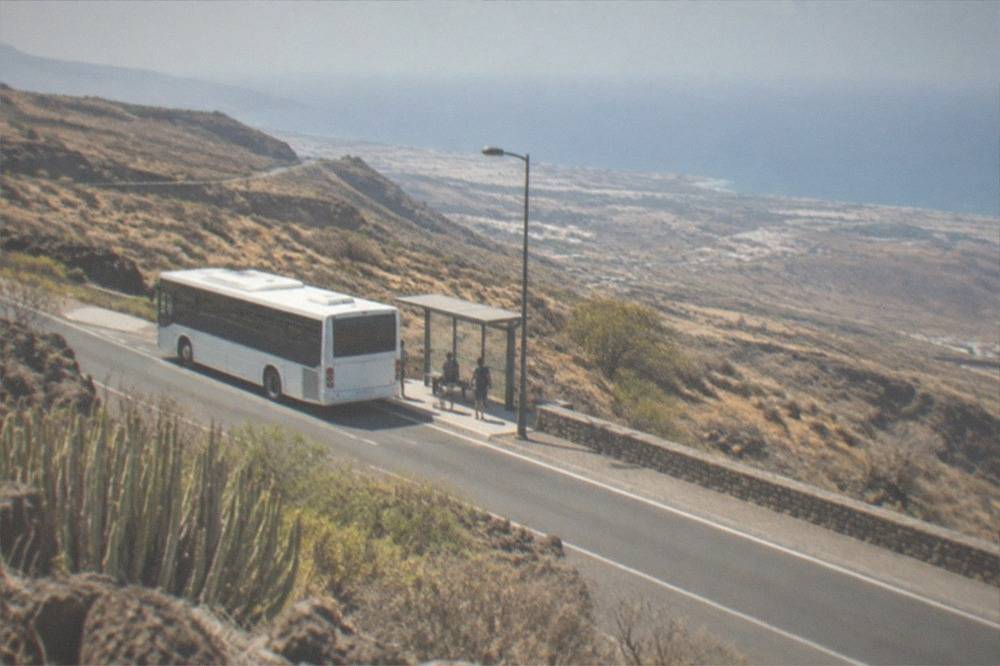
TITSA buses connect Adeje Old Town with Costa Adeje, Los Cristianos, Playa de las Américas and Tenerife South Airport, and visitors pay standard fares: single tickets priced by route, the EUR 10 day travelcard or the EUR 50 seven-day travelcard, sold at airport ticket machines. The free 2026 public-transport subsidy applies to resident passes only, so no visitor rides free, and taxis are white, metered from the start of every trip.
The bus is the practical answer for most visitors staying on the south coast. TITSA's network covers the Adeje valley, with services linking the coast road to the old town up the hill, and the Costa Adeje bus station is the hub where the area's lines converge. The fare structure is on TITSA's own fares page: single tickets are priced by route and can be paid by card or cash, a same-day return carries 10% off on trips of 20 km or more, and the visitor products are the EUR 10 day travelcard and the EUR 50 seven-day travelcard, both loadable on a Ten+ card that costs EUR 2. Wallet top-ups run from EUR 2 to EUR 100.
The resident subsidy deserves its own sentence because it is widely misrepresented. The Canary government's 100% subsidy, in force since 1 January 2026, applies to passes that require residency in the Canary Islands and a personalised card. Visitors do not qualify, and the lines to Teide and Teno are excluded from the subsidised passes anyway. The honest version is simple: budget for the travelcard, buy it at the airport machine when you land, and the buses of the south coast are yours for the week.
From Tenerife South Airport, TITSA's own airport page lists the lines that serve it: line 10 to Santa Cruz, line 40 to Costa Adeje bus station via Los Cristianos, line 711 as the night service, line 343 as the express from Puerto de la Cruz to Los Cristianos via both airports, and line 415 toward El Fraile and San Isidro. Line 40 is the one that matters for Adeje, because it terminates at the Costa Adeje bus station from which the valley services climb. The airport transfer options in full, including the trade-offs of car hire, are covered in the site's airport transfers planning guide, and the wider question of whether a car is worth it at all has its own answer page.
Taxis complete the picture. The tourist board's transport page states the rules plainly: Tenerife's taxis are white, all metered from the start of the trip, with a fixed price agreed in advance for excursions rather than urban rides, and adapted "eurotaxis" exist for wheelchair users. For the short hop between the coast and the old town the meter is the only relevant fact, and no fare estimate appears here because none is on an official page.
Which Beaches Sit Below Adeje Old Town?
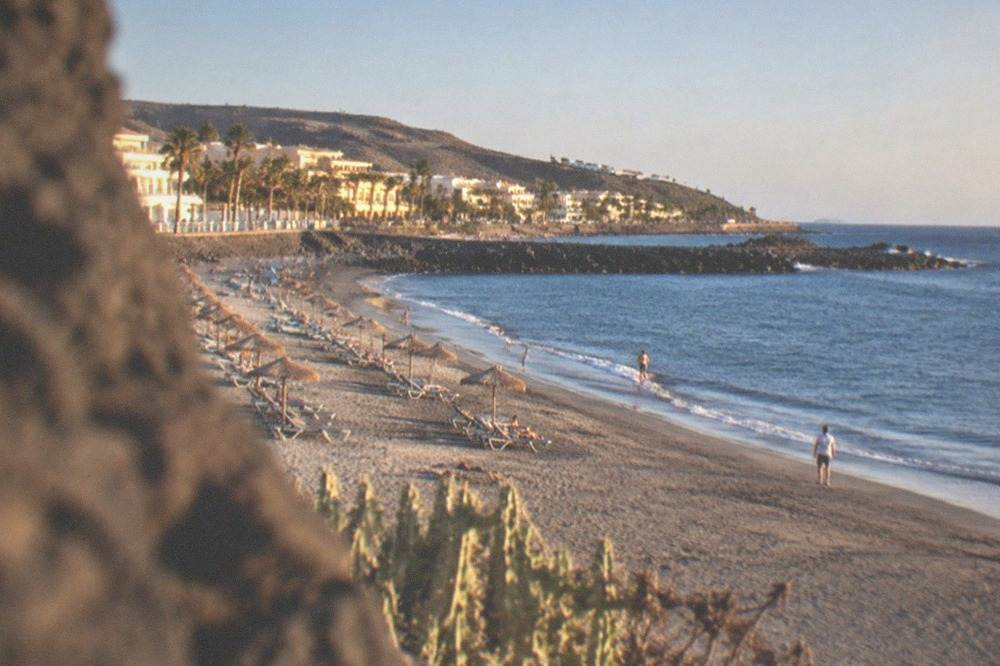
The Adeje coastline holds Playa del Duque, a grey sandy beach on the tourist board's own page, and Fanabe, which the same source describes as pale sand, both inside the municipality and reached from the old town by bus or a downhill drive. The neighbouring beaches of Las Vistas lie in Arona, not Adeje, and the island's golden-sand beaches named by the tourist board are Las Teresitas and Las Vistas elsewhere on the coast.
Sand colour is a small thing that visitors care about a great deal, and the tourist board's beach pages are the authority worth quoting. El Duque is grey sand, full stop: the page says so, and no amount of brochure photography changes it. Fanabe next door is pale sand. Both are inside Adeje, which makes the old town the inland anchor of a genuinely varied beach run, and the site's guide to the best beaches in Tenerife puts the whole coast in order.
| Beach | Municipality | Sand on the tourist board's page |
|---|---|---|
| Playa del Duque | Adeje | Grey sand |
| Fanabe | Adeje | Pale sand |
| Las Vistas | Arona | Golden sand, calm behind breakwaters |
| Las Teresitas | Santa Cruz (San Andrés) | Golden sand, palms, breakwaters |
| El Médano | Granadilla de Abona | Fine grey sand under Montaña Roja |
| El Bollullo | La Orotava | Black sand at the foot of a cliff |
The pattern in that table is the real information: Tenerife is a volcanic island, most of its natural sand is dark, and the golden beaches are the engineered ones, protected by breakwaters and, in the case of Las Teresitas, planted with palms. Choosing a base by sand colour is therefore choosing between the grey and black natural strands and the golden built ones, and Adeje's stretch offers the grey and pale end of the range. The swim itself is a separate question, and the site's answer page on swimming in the sea in Tenerife covers temperatures and conditions.
Where Should You Eat Around Adeje Old Town?
The old town and its coastline hold the municipality's Canarian restaurants, small bars and the Friday and weekend market tradition of the south coast, none of which requires a booking system beyond phoning ahead at busy weekend hours, and the island's guachinche tradition of informal, seasonal Canarian dining is the style to look for. No official page prices individual restaurants, so this guide names the traditions and the sources rather than inventing a bill.
The old quarter's food is local food, which is the point of going up the hill. The municipality's restaurants are covered in the site's guide to the best restaurants in Tenerife, and the island's market culture, including the south-coast markets that serve Adeje, has its own page on Tenerife's markets. What the old town adds to those guides is context: the restaurants here feed the municipal workforce and the families of the valley, so the menus lean Canarian rather than international, and the mojo, papas arrugadas and fresh fish traditions dominate.
The guachinche deserves explanation for first-time visitors, because the word appears on every food page about this island and is often misused. A true guachinche is a seasonal, family-run dining room attached to a small wine producer, serving its own wine with a short menu of home cooking, and the tradition is regulated in this island's rules: they may only sell their own produce. The site's dedicated guachinches guide explains the system and where the genuine ones cluster, which is the Tacoronte and El Sauzal wine country of the north rather than the south coast. For a taste of the island's wine tradition closer to a day trip from Adeje, the winery tours of the north are the verified option, and the Tacoronte winery with its four-wine and cheese tasting is carded below:
Back in the old town, the practical advice is unglamorous: eat where the tables are full of people speaking Canarian Spanish, order the fish of the day, and accept that the kitchen closes when the kitchen closes. The resort belt below has every cuisine in the world and a price to match; the hill does not, and that is the trade. The rest of the planning pages sit on Tenerife Travel Guide.
What Is the Weather Like in Adeje and the South Coast?
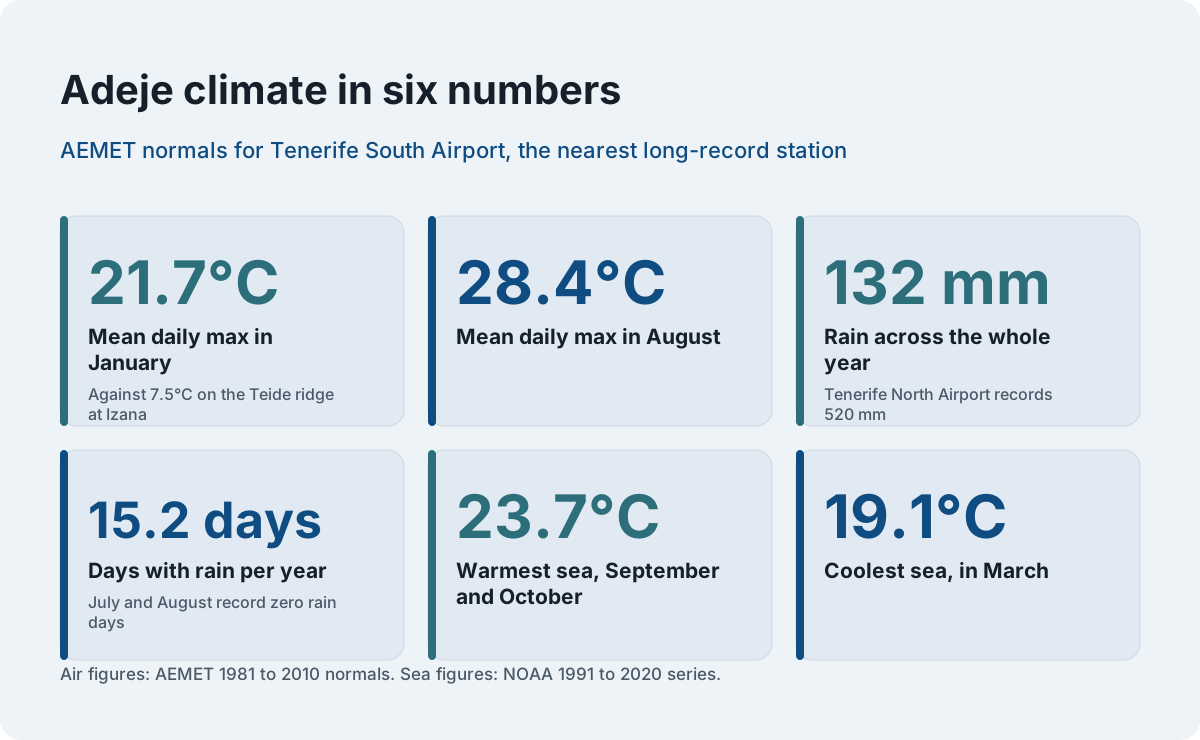
Adeje sits in Tenerife's driest corner: AEMET's climate normals for Tenerife South Airport, the nearest long-record station, show mean daily maxima of 21.7°C in January rising to 28.4°C in August, with just 132 mm of rain across the whole year on 15.2 days, and July and August recording zero rain days. The sea off the south coast averages 23.7°C in September and October at its warmest and 19.1°C in March at its coolest.
The numbers matter because the south coast is not "Tenerife weather", it is a specific microclimate. The same AEMET tables give Tenerife North Airport 520 mm of rain on 64 days a year, four times the south's total, while the Teide observatory ridge at Izana records mean daily maxima of just 7.5°C in January against the south coast's 21.7°C. A visitor can breakfast in short sleeves in Costa Adeje and need a winter coat at the cable car's base station the same morning, and the planning pages that pretend otherwise set people up badly.
| Month | Mean daily max (°C) | Mean daily min (°C) | Rain (mm) | Rain days (1 mm+) | Sunshine (hours) |
|---|---|---|---|---|---|
| Jan | 21.7 | 15.2 | 17 | 1.8 | 193 |
| Feb | 22.0 | 15.0 | 20 | 2.2 | 195 |
| Mar | 23.1 | 15.6 | 15 | 1.9 | 226 |
| Apr | 23.1 | 16.0 | 7 | 1.1 | 219 |
| May | 23.9 | 17.0 | 1 | 0.3 | 246 |
| Jun | 25.4 | 18.8 | 0 | 0.0 | 259 |
| Jul | 27.7 | 20.2 | 0 | 0.0 | 295 |
| Aug | 28.4 | 21.1 | 1 | 0.2 | 277 |
| Sep | 27.9 | 21.1 | 4 | 0.6 | 213 |
| Oct | 26.8 | 20.0 | 12 | 1.6 | 214 |
| Nov | 24.8 | 18.2 | 26 | 1.9 | 193 |
| Dec | 22.8 | 16.5 | 30 | 3.5 | 195 |
These are AEMET's 1981 to 2010 normals for the station at Tenerife South Airport, 64 m above sea level, which stands in for the Adeje coast better than any island-wide average. The sea-surface figures are a different dataset, NOAA's 1991 to 2020 series, and the two periods should not be conflated: the air normals and the sea normals come from different baselines, and both are printed here as their sources publish them.
The practical reading of the table is straightforward. Winter in Adeje is beach weather by northern European standards, with afternoons above 21°C and the sea near 20°C, and the site's month-by-month guides, including Tenerife in January, work through what that means for each part of the island. Summer is hot but not extreme, and the Atlantic keeps the coast a few degrees below what the same latitude produces in the Mediterranean. What the table cannot tell you is the wind: the south coast trades steady, and the site's what to pack for Tenerife guide covers the layers that earn their place in a suitcase.
Which Day Trips Work Best from Adeje Old Town?
Adeje's position makes it the strongest base on the island for Teide by road, the west-coast villages of the Teno massif and boat trips from the ports of the south, all reachable without changing island or ferry, and the site's verified day-trip itineraries cover the routes. The La Gomera ferry runs from Los Cristianos in 50 minutes, and the whale-watching fleet sails from Costa Adeje and Los Cristianos under the Canary Islands' approach-distance rules.
The big one is Teide. The national park's driving route, its viewpoints and its visitor infrastructure need no booking at all, and the site's Teide from the South day-trip guide is built around exactly the starting point the old town provides. What does need booking is specific: the cable car is an operator ticket, the summit trail PNT 10 is a Tenerife ON reservation, and the Montaña Blanca trail PNT 07 carries its own reservation and fee, EUR 6 for visitors on working days and EUR 10 at weekends. Permits are released every Monday at 07:00 Canary time with 56 days kept bookable, and no page states how fast they go, so no lead time is given here beyond the release rule.
The west coast is the second natural run. Los Gigantes and its cliffs, which the tourist board describes as tower up to 600 m high, sit inside Teno Rural Park, and the villages of the massif, including Teno Alto and Buenavista at the road's end, make a full day of switchbacks and viewpoints. The classic loop that pairs the west with the north, taking in Masca, Icod de los Vinos and Garachico, has its own itinerary page on the Masca, Garachico and Icod route.
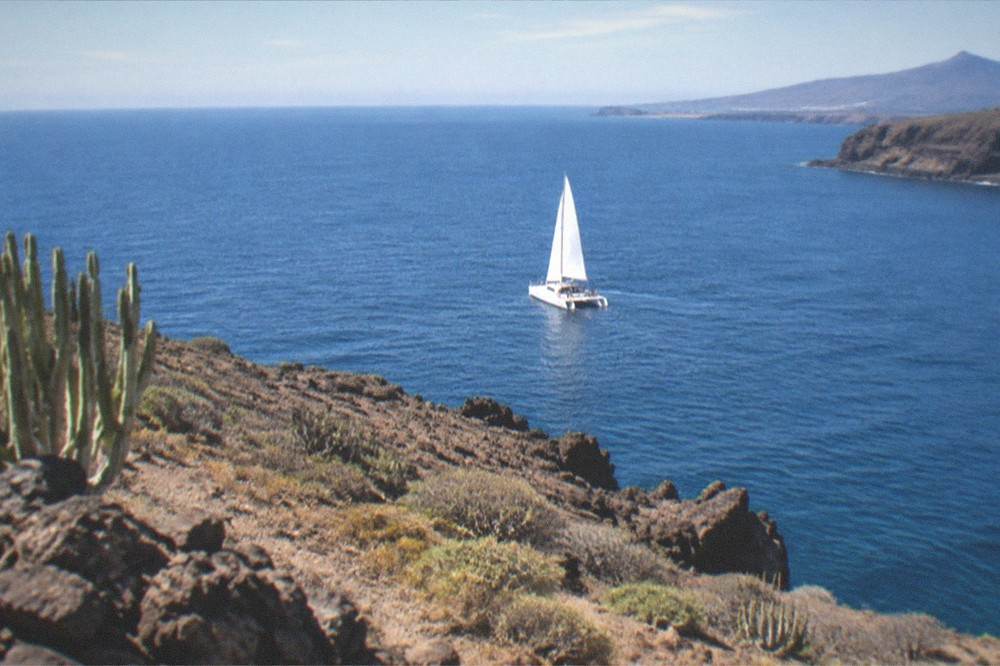
The sea is the third. The waters between Tenerife and La Gomera are a designated Whale Heritage Area, a designation made by the World Cetacean Alliance in January 2021, holding what the Alliance calls a unique resident population of pilot whales, bottlenose dolphins and a migration stop for 21 other cetacean species. The rules that protect them come from Decreto 178/2000: no boat may approach within 60 m, at most three boats within 500 m, a 4-knot limit inside 500 m, no swimming within 500 m, and authorised boats fly the Barco Azul flag. Choosing a boat that flies the flag and follows the decree is the single most useful thing a visitor can do with a booking, and the no-chase catamaran carded below is one of the verified options:
For the full sea comparison, including the eco yachts and the sailboats out of Los Gigantes, the site's whale and dolphin watching page lists the fleet with its ratings and durations.
Is Adeje Old Town Worth Visiting with Kids or on a Budget?
Adeje Old Town costs nothing to visit beyond the bus fare, which makes it one of the genuinely free half-days on the south coast, and it suits families as a slow wander rather than an attraction, while the municipality's paid family options, including the water parks of the Costa Adeje strip, sit a short bus ride below. Budget travellers get the most from the old town by combining it with the free beaches and the hillside paths, and the site's budget guide prices the island honestly.
The free half is real and worth stating twice. The old quarter, its square and its streets carry no charge, the barranco paths behind it need no permit under the Cabildo's temporary rule, and the beaches below are public. The paid half of the municipality is equally real: the water parks and animal parks of the coast, including Aqualand Costa Adeje, are the family staples, and the site's Tenerife with kids guide weighs them against the free alternatives. A family that splits the week, mornings in the old town and on the sand, afternoons in one park, spends far less than one that treats every day as a ticketed day.
The budget question has an island-wide answer that this page can only sketch. No tourist tax exists on Tenerife: no official page read shows a per-night lodging tax in force or approved, and the charges that do exist are the per-booking trail fees on Teide, the Masca ticket at EUR 40.66 and the Barranco del Infierno ticket at EUR 15 for non-resident adults. The site's Tenerife on a budget guide carries the full breakdown, and the is Tenerife expensive answer page tackles the question directly.
For stays in the municipality itself, the booking is the biggest lever on cost, more than any daily choice once you are there, and the site's partner search for island accommodation covers the options:
Compare places to stay across Tenerife
How Does Adeje Old Town Compare with the Island's Other Old Quarters?
Adeje Old Town is smaller and less visited than the north's historic quarters, with La Laguna's UNESCO-listed colonial centre, Puerto de la Cruz's old resort core and La Orotava's balcony houses all offering more concentrated heritage, while Adeje's advantage is proximity: it is the only historic quarter within a bus ride of the Costa Adeje hotel strip, so it fits a resort week without a full day's travel.
The comparison is honest in both directions. The north has the depth. La Laguna holds the UNESCO inscription, and UNESCO's own listing describes it as the first non-fortified Spanish colonial town whose layout provided the model for many colonial towns in the Americas. Puerto de la Cruz has the old harbour quarter and the island's longest resort tradition. La Orotava has the Casa de los Balcones and the valley's grandest domestic architecture, and the free, pay-what-you-want GuruWalk walking tours of all three northern towns are carded on this site. The south has the convenience, and for a family on a seven-night Costa Adeje holiday, an afternoon in the old town beats a two-hour each-way excursion.
The prettiest-town question, which readers ask constantly, has its own answer page on the prettiest town in Tenerife, and the honest summary is that Adeje's old quarter is pleasant and local rather than picture-famous. What it does better than anywhere in the north is fit a resort day: up the hill after breakfast, a long Canarian lunch, back down for the beach by late afternoon.
For visitors who want the northern quarters with a guide rather than alone, the city tours carded on this site include the bike and e-bike tour of Santa Cruz, which starts from the cruise terminal end of the capital and covers its highlights in two and a half hours:
And for the full comparison set of tours that pair with a south-coast base, from the Teide sunset coaches to the winery visits of the north, the site's Tenerife excursions page lists them with ratings and durations side by side.
Common Questions About Adeje Old Town
Is Adeje Old Town the same place as Costa Adeje?
No. Adeje Old Town is the historic hillside centre of the municipality of Adeje, while Costa Adeje is the modern hotel and beach strip on the coast below it, also inside the same municipality. The tourist board's own pages list Costa Adeje and El Duque as Adeje's beaches, and the register counted 50,021 residents in the municipality as a whole in 2025. The two are linked by TITSA bus but are distinct places with distinct characters.
Do I need a car to visit Adeje Old Town?
No. TITSA buses link the old town with the Costa Adeje bus station, Los Cristianos and the surrounding resorts, and visitors can use single tickets, the EUR 10 day travelcard or the EUR 50 seven-day travelcard. Taxis are also available, white and metered from the start of every trip. A car helps for the west-coast villages and the national park roads, and the site's guide to car hire covers the trade-offs.
Is there a free walking tour of Adeje Old Town?
The resort south, which includes Adeje, Los Cristianos, Costa Adeje, Arona and Playa de las Américas, has no free walking tour listed on GuruWalk. The three free, pay-what-you-want walks carded on this site all run in the north: La Orotava, Puerto de la Cruz and the historic centre of Santa Cruz. The old town of Adeje is best explored on your own, at no cost.
What does it cost to visit Adeje Old Town?
Nothing beyond transport. No official page lists an entry fee, ticket or booking requirement for the old quarter, its square or its streets. The charges that do exist in the wider municipality are the paid attractions of the coast, and on the island generally the per-booking fees are the Teide trail reservations, the Masca ticket and the Barranco del Infierno ticket. There is no tourist tax on Tenerife accommodation on any official page read.
Can you walk from Costa Adeje to Adeje Old Town?
The old town sits uphill from the coast, and the route climbs through the Adeje valley, so the walk is a steady ascent rather than a promenade stroll. No official page gives a walking time or distance for the route, and none is estimated here. The TITSA bus up the hill is the practical option, and the site's guide to getting around Tenerife covers the bus network in full.
Which is better, Adeje Old Town or the northern historic towns?
They serve different trips. La Laguna holds the UNESCO-listed colonial centre, Puerto de la Cruz the old resort quarter and La Orotava the grand balcony houses, and all three have free GuruWalk walking tours listed. Adeje Old Town is smaller and less ornate, but it is the only historic quarter within a short bus ride of the Costa Adeje hotel strip, so it fits a resort week without a full day of travel. Visitors with a car or a full free day will get more from the north.