Mount Teide Day Trip from Costa Adeje and Los Cristianos
The south of Tenerife is where most visitors stay, and Mount Teide is the one excursion almost everyone takes. This page sets out what the official sources say about the cable car, the summit permit, the fees and the rules, so the day can be planned around facts rather than forum threads.
Short answer
Drive or take a coach tour from Costa Adeje to the cable car base station at 2,356 m; the return cable car to La Rambleta costs EUR 42 for a non-resident adult, and the crater trail needs a separate Tenerife ON reservation costing EUR 15 for visitors on the daytime slots.
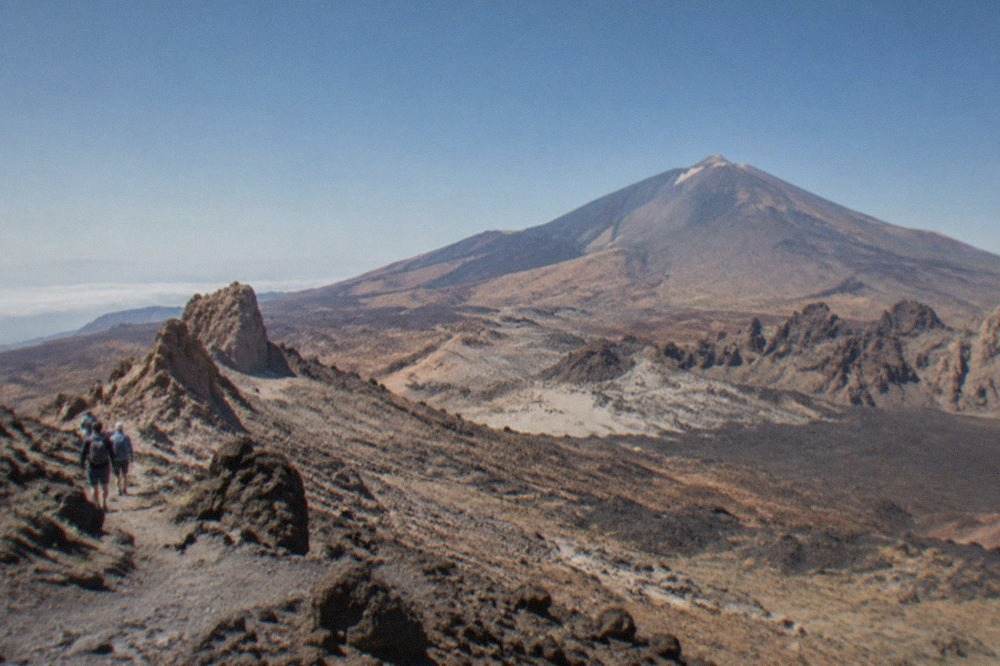
The road out of Costa Adeje climbs out of the resort belt, crosses the lava fields above Vilaflor and finishes at a car park sitting 2,356 metres above the sea. That car park is the base station of the Teide cable car, and it is the point where almost every Teide day trip from the south either begins or ends. The volcano above it stands 3,715 metres high according to Spain's own sources, MITECO and Turismo de Tenerife, and the park around it recorded 5,242,653 visitors in 2024, the most visited of Spain's national parks.
This page is the Tenerife Travel Guide briefing for the trip from the south coast. It keeps three things separate that many pages blur together: driving through Teide National Park, which carries no entry fee on any official page read; riding the cable car, which is an operator ticket; and walking the summit trail PNT 10 Telesforo Bravo, which is a personal reservation booked through Tenerife ON. Getting those three confused is how visitors end up at La Rambleta with a ticket that does not reach the crater.
How Do You Get from Costa Adeje to Mount Teide?
There is no train and no tram to the national park: the options are a hire car, a coach excursion with hotel pickup, or a TITSA bus, and every one of them finishes at the same pair of decision points, the cable car base station at 2,356 m or a trailhead such as Montana Blanca. The park itself charges nothing to enter, so the journey is the only unavoidable cost of the day besides what you choose to do at the top.
No official page states a driving time from Costa Adeje to the base station, and this site does not invent one. What the sources do record is the shape of the trip. The base station car park opens 08:00 to 18:00 in the standard season and to 19:40 in the extended periods, which brackets the cable car's own operating hours. TITSA runs bus lines to the Teide area, and Metrotenerife's fares page notes that the Teide and Teno lines are excluded from the subsidised resident passes, which tells you the bus exists but that visitors pay normally: single tickets, the EUR 10 day travelcard or the EUR 50 seven-day travelcard.
The coach option is the one most south-coast visitors take, because it folds the transfer, the cable car ticket and a guide into a single booking. The roster on this site carries several: a full Teide tour with cable car ticket and coach transfer, small-group volcanic and forest tours of four to five hours, and jeep safaris that reach both Teide and Masca. The trade-off is simple. A coach ties the day to a timetable and turns around in time for dinner, while a hire car leaves whenever it likes and can add the Masca, Garachico and Icod route on the way back down.
Cable Car or Summit Trail: What Does Each Ticket Get You?
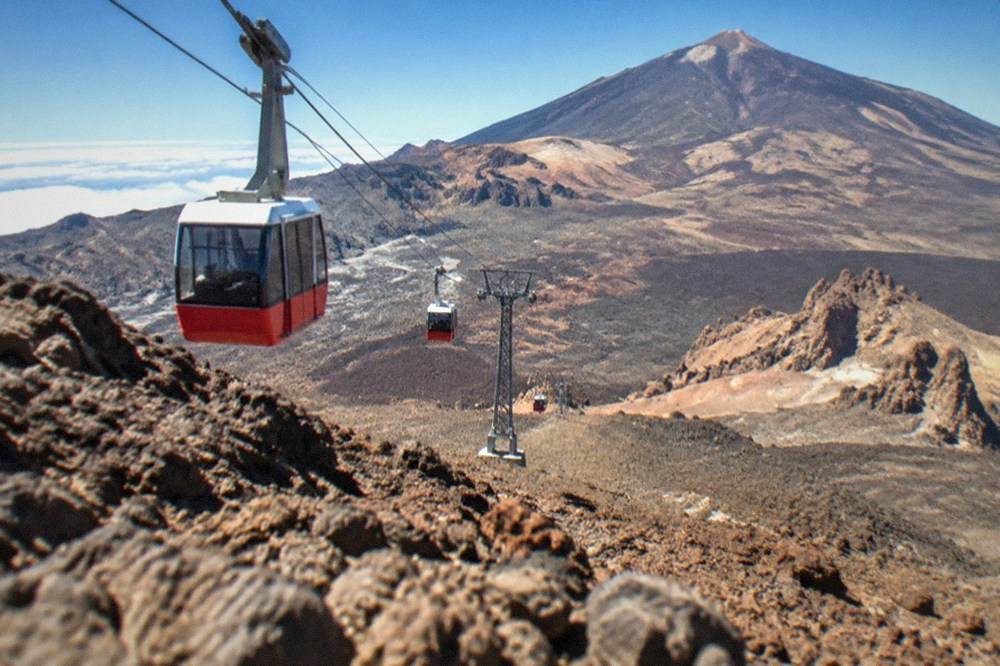
The cable car is an operator ticket that carries you from the base station at 2,356 m to La Rambleta at 3,555 m, and it stops there: it does not reach the summit. The crater trail, PNT 10 Telesforo Bravo, is a separate personal reservation booked on Tenerife ON, and since 19 January 2026 its daytime slots cost EUR 15 for visitors. A cable car ticket alone leaves you about 160 vertical metres and one permit short of the top.
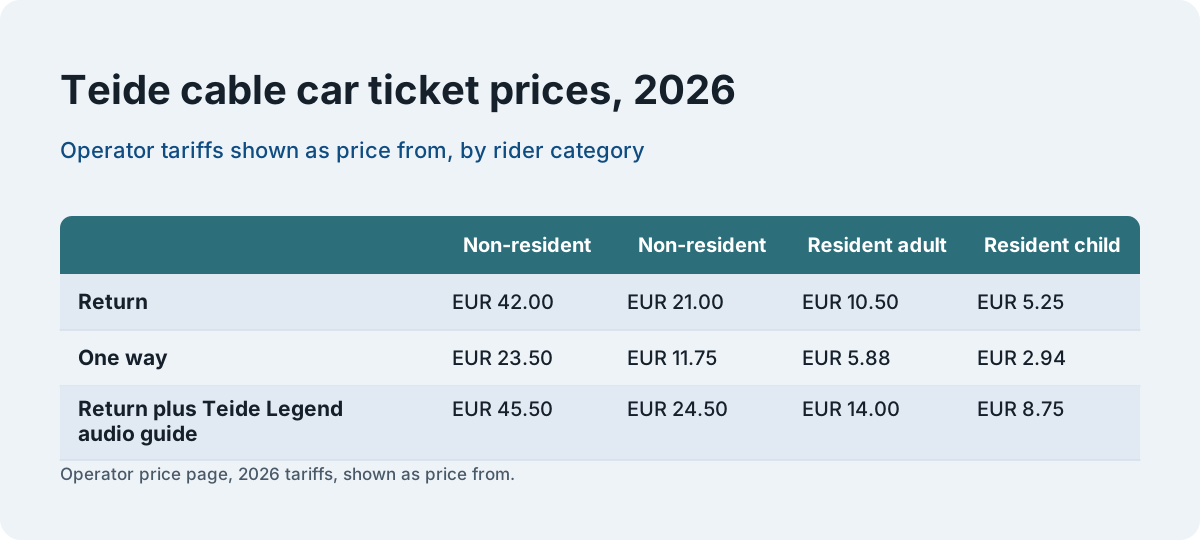
The operator's own price page sets the 2026 cable car tariffs, shown as "price from". A non-resident adult return is EUR 42.00, a child return for ages 3 to 13 is EUR 21, and a one-way adult ticket is EUR 23.50. Residents of the Canary Islands pay far less: EUR 10.50 for an adult return. The return ticket with the Teide Legend audio guide is EUR 45.50 for a non-resident adult, and for anyone who wants commentary on the volcano without a guide, an audio tour of Teide is also sold separately and can be booked as a self-guided option.
| Cable car ticket, 2026 | Non-resident adult | Non-resident child (3 to 13) | Resident adult | Resident child |
|---|---|---|---|---|
| Return | EUR 42.00 | EUR 21.00 | EUR 10.50 | EUR 5.25 |
| One way | EUR 23.50 | EUR 11.75 | EUR 5.88 | EUR 2.94 |
| Return plus Teide Legend audio guide | EUR 45.50 | EUR 24.50 | EUR 14.00 | EUR 8.75 |
The operator's access rules matter more than most visitors expect. People with cardiovascular conditions, pregnant women and children under 3 are not allowed to ride, because of the altitude, and the operator tells anyone with a health problem to ask a doctor first. The same exclusion logic applies to the summit trail: Tenerife ON states that PNT 10 is not suitable for people with heart, respiratory or mobility problems, that children under 3 have no access, and that under-16s walk only with an adult.
For a visitor staying in Los Cristianos or Costa Adeje who wants the crater rather than the viewpoint, the honest sequence is: book the PNT 10 permit on Tenerife ON first, then the cable car, then the transfer. A guided summit hike with hotel pickup is the third route to the top, and it suits walkers who would rather not manage the two bookings themselves, but the permit obligation sits underneath every option.
What Does the Teide Summit Permit Cost and How Do You Book It?
Since Monday 19 January 2026 the 09:00 to 17:00 slots on PNT 10 cost EUR 15 for visitors, EUR 6 for residents of the other Canary Islands and nothing for Tenerife residents, with children exempt from the fee. The booking is made on Tenerife ON, tenerifeon.es, which releases a new week of slots every Monday at 07:00 Canary time and keeps 56 days bookable. The ticket is personal, non-refundable and checked against ID at the trailhead.
The booking site changed in 2025: from 4 August 2025 Tenerife ON released the slots for 1 September onward, and the old national parks booking page now only tells users to book on Tenerife ON. Anyone repeating a fixed lead time, "book two months ahead" and the like, is guessing: the only release rule on file is the Monday 07:00 weekly release with 56 days bookable, and no official page gives a figure for how fast slots go. This site does not show live availability, and no page here will tell you how many places were free on any given day.
| Who is walking | PNT 10 fee, 09:00 to 17:00 slots | PNT 07 fee, working days | PNT 07 fee, weekends and public holidays |
|---|---|---|---|
| Tenerife residents | EUR 0 | EUR 0 | EUR 0 |
| Other Canary Islands residents | EUR 6 | EUR 3 | EUR 5 |
| All other users | EUR 15 | EUR 6 | EUR 10 |
The daytime paid slots on PNT 10 are 09:00 to 11:00, 11:00 to 13:00, 13:00 to 15:00 and 15:00 to 17:00, which match the cable car's operating hours. The out-of-hours slots, 06:00 to 09:00 for sunrise and 18:00 to 22:00 for sunset, also need a reservation even though they carry no fee mark. Walking without one may be penalised, and failing to use a booking can bar a user from new applications for three months. The fee is set by the place of residence on the ID card or passport, which must be shown at the checkpoint, and children are exempt from the fee, with the booking page showing the age band that applies.
The neighbouring trail, PNT 07 Montana Blanca to La Rambleta, is the walking route up, and it needs its own Tenerife ON reservation on the same terms: EUR 6 for visitors on working-day slots, EUR 10 at weekends. A full permit walkthrough, including the sunrise and sunset slots and the refuge, sits on the Teide summit permit page. The Altavista refuge has reopened after refurbishment with 49 beds and takes prior reservations, but a night there is not a substitute for the permit.
What If Cloud or Wind Ruins the Teide Plan?
The cable car's operating hours change with the seasons, its last ascent is one hour before closing and its last descent ten minutes before, and bookings can be suspended for fire risk or weather alerts, so the day needs a fallback. If the summit is under cloud, the park's lower viewpoints still cost nothing, and the south coast's water parks are the alternative most families switch to.
The operator's 2026 timetable runs 09:00 to 17:00 through the winter and spring shoulder, extends to 18:40 over Easter and the summer, and steps back down through October. On a 17:00 day the last ascent is 16:00 and the last descent 16:50. Hours for the last weeks of the year are not on file, so the operator's timetable is the thing to check before a December trip.
| Period, 2026 | Cable car hours | Last ascent |
|---|---|---|
| 1 Jan to 27 Mar | 09:00 to 17:00 | 16:00 |
| 28 Mar to 12 Apr | 09:00 to 18:40 | 17:40 |
| 13 Apr to 30 Jun | 09:00 to 17:00 | 16:00 |
| 1 Jul to 30 Sep | 09:00 to 18:40 | 17:40 |
| 1 to 13 Oct | 09:00 to 18:00 | 17:00 |
| 14 to 24 Oct | 09:00 to 17:30 | 16:30 |
A common pattern on the south coast is to hold a Siam Park ticket in reserve for exactly this reason. The park is open 365 days a year, 10:00 to 18:00 from 1 May to 29 October and 10:00 to 17:00 the rest of the year, and it sits inside Costa Adeje itself, so no mountain road is involved in the switch.
What Rules Apply Inside Teide National Park?
The Cabildo bans smoking in every open-air space of the national park, trails, viewpoints, car parks and recreation areas included, as a wildfire measure, and in winter ice and snow make crampons and an ice axe mandatory equipment on the stratovolcano trails, with a signed declaration. No official page lists an entry fee for the park: the only charges are the per-booking fees on trails PNT 10 and PNT 07.
The smoking ban catches a lot of visitors out, because it applies at the viewpoints and in the car parks, not just on the trails. The wildfire rules also mean bookings can be suspended for fire risk or weather alerts, and Tenerife ON's alerts page is the official place to check before setting out from the coast. The park was declared by decree on 22 January 1954, covers 18,990 hectares with a peripheral protection zone of 7,374.32 hectares, and was inscribed by UNESCO as a World Heritage site on 2 July 2007 under natural criteria (vii) and (viii). UNESCO's own wording on the volcano is precise and worth keeping intact: rising 7,500 metres above the ocean floor, it is "regarded as the world's third-tallest volcanic structure".
The altitude itself is the other rule that bites. The cable car lifts a visitor from 2,356 to 3,555 metres in minutes, and the operator's exclusion list exists because that change is fast. This site gives no medical advice beyond that list: the operator tells anyone with a health problem to ask a doctor first, and that is the official position. Visitors who want the volcano's geological story can read whether Mount Teide is active before the trip, which is a fair question to be asking on the drive up.
When Is the Best Time of Year for a Teide Day Trip from the South?
AEMET's climate normals show the coast and the mountain as two different climates: Santa Cruz averages 25 degrees in July while the Izana station on the Teide ridge averages 18.5, and January brings 47 mm of rain to the ridge against 32 mm in the capital. The pattern that matters for a day trip is that the ridge is cold and sometimes icy from November to March, and dry and clear from June to August, when rainfall is effectively zero.
The two stations are 2,333 metres apart vertically, and the numbers below are AEMET's 1981 to 2010 normals. What they mean in practice: pack for the ridge, not for the beach, in every month. Even in July the ridge averages a 14-degree night minimum, and from November the mean sits below 8 degrees with four to six rain days a month. The ice and snow rule on the stratovolcano trails exists because winter mornings up there genuinely freeze.
| Month | Izana (Teide ridge), mean daily max C | Izana rain, mm | Santa Cruz, mean daily max C | Santa Cruz rain, mm |
|---|---|---|---|---|
| Jan | 7.5 | 47 | 21.0 | 32 |
| Feb | 8.0 | 67 | 21.2 | 35 |
| Mar | 10.2 | 58 | 22.1 | 38 |
| Apr | 11.8 | 18 | 22.7 | 12 |
| May | 14.5 | 7 | 24.1 | 4 |
| Jun | 18.9 | 0 | 26.2 | 1 |
| Jul | 23.0 | 0 | 28.7 | 0 |
| Aug | 22.6 | 5 | 29.0 | 2 |
| Sep | 18.6 | 13 | 28.1 | 7 |
| Oct | 14.3 | 37 | 26.3 | 19 |
| Nov | 11.1 | 54 | 24.1 | 34 |
| Dec | 8.8 | 60 | 22.1 | 43 |
Can You Do Teide and Stargazing on the Same Day Trip?
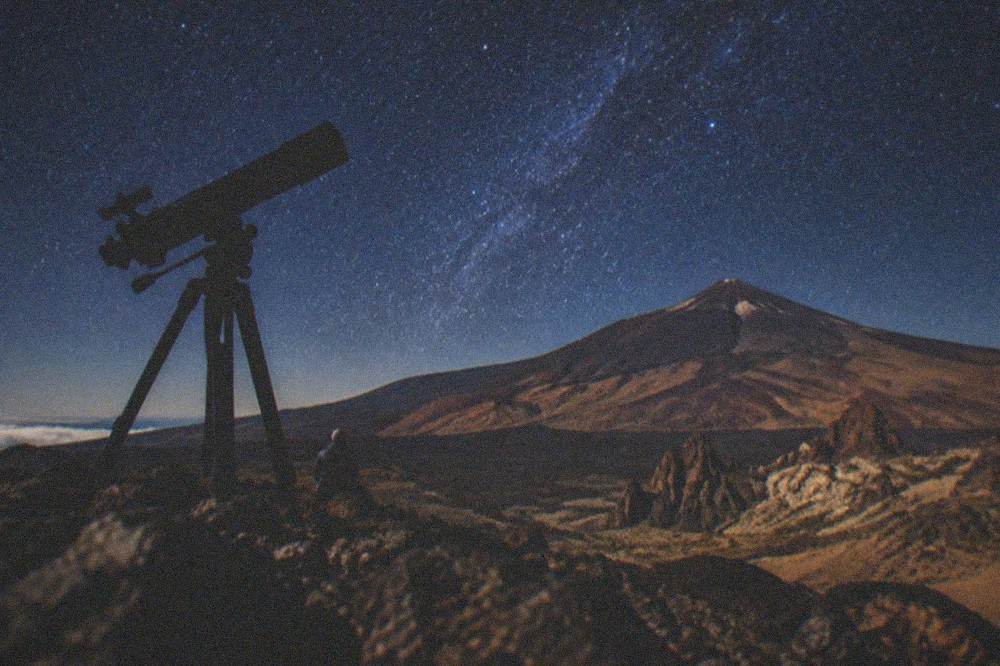
Yes, and the sunset-and-stargazing tours from the south are built exactly for it: the roster carries coach tours with hotel pickup running about eight hours, telescope experiences of three hours and small-group self-drive options, all finishing inside the national park after dark. The reason the park works for this is official: the Fundacion Starlight lists El Teide as a Starlight Tourist Destination and Cumbres de Tenerife as a Starlight Reserve, both since October 2013.
The sunset slots on PNT 10, 18:00 to 22:00, exist because the mountain is a serious night-sky site, and the observatory at Izana, about 2,400 metres up, runs guided visits by prior reservation only, with under-16s free and a resident discount. Its page was showing fully booked when the facts file was compiled, so anyone wanting the observatory rather than a tour should book early. The practical choice for a south-coast visitor is between a coach tour that handles the drive back down the mountain at midnight and a self-drive stargazing session, which suits anyone confident about the descent in the dark.
The full comparison of the night-sky options, including the astrophotography sessions, sits on the Teide stargazing tours page, and the broader choice of daytime excursions is on Teide tours. Visitors weighing the south against the north for the whole holiday can start from Los Cristianos versus Costa Adeje for the base, since the Teide trip is similar from either.
What Else Can You Combine with Teide from the South?
The classic combination is the Teide loop with the northwest: Masca, Icod de los Vinos and Garachico, which the roster covers as a nine-hour coach tour, and the Anaga mountains in the far northeast are the other full-day alternative. La Gomera is the one excursion that leaves the island entirely, a 50-minute ferry from Los Cristianos to San Sebastian de La Gomera, with jeep safaris and coach-and-ferry day trips both carded on this site.
The Masca gorge itself is not a free walk-up: it is open under a pilot scheme as a descent only, with a pre-booked boat exit, a EUR 40.66 general ticket and a mandatory TITSA line 355 arrival from Santiago del Teide, since private vehicles are refused. That is a commitment of a day on its own, which is why most south-coast visitors see Masca village from a coach viewpoint rather than walk the gorge. The north Tenerife from the south route covers the other direction, taking in Puerto de la Cruz and La Laguna without a ferry.
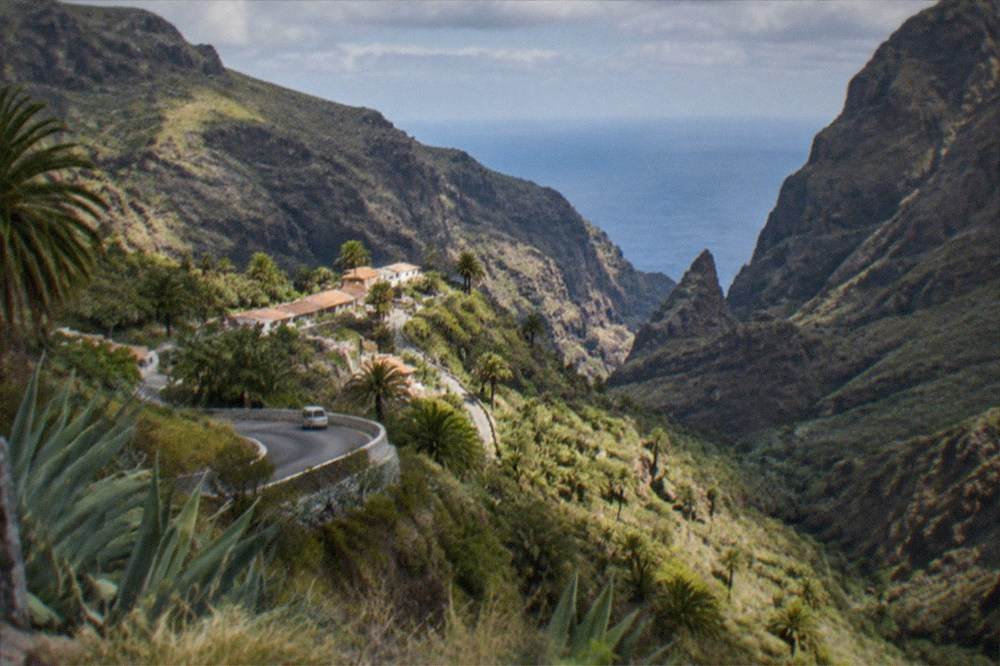
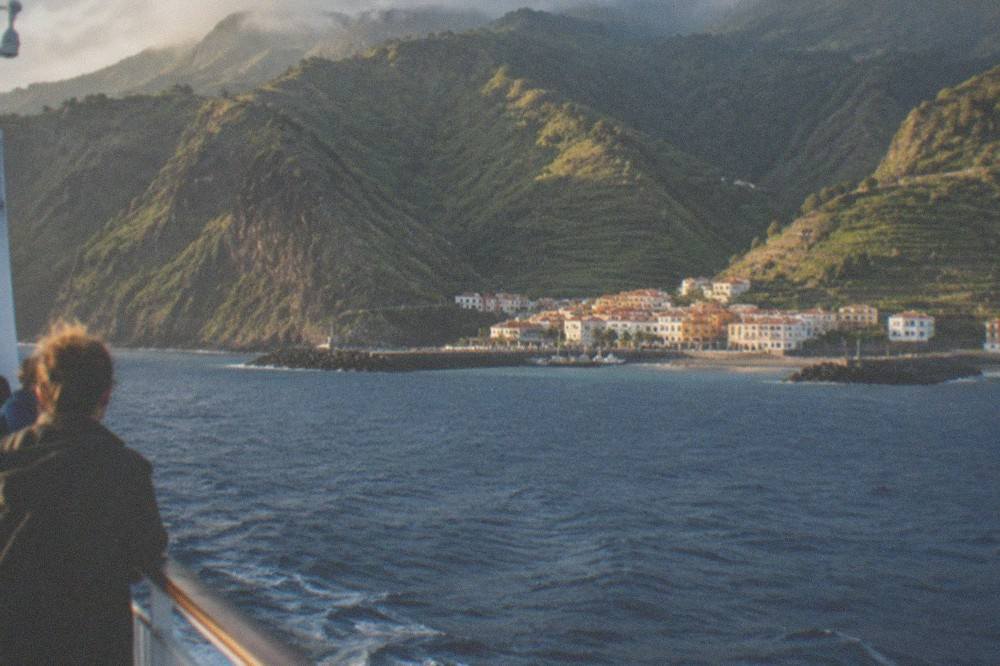
For La Gomera, the ferry crossing is 50 minutes each way on Fred. Olsen Express from Los Cristianos, and the jeep safari version of the day trip covers Garajonay with lunch included. It is a long day from the south coast, but it is the only way to stand on a second island and be back for breakfast the next morning.
Common Questions About a Mount Teide Day Trip from the South
Is the drive from Costa Adeje to Mount Teide difficult?
The road climbs from sea level to the base station at 2,356 m, and no official source states a driving time, so plan the day around the cable car's timetable rather than a number. The last ascent is one hour before closing and the last descent ten minutes before. In winter, ice and snow on the stratovolcano trails make crampons and an ice axe mandatory equipment, and Tenerife ON's alerts page should be checked before setting out.
Do I need a permit just to visit Teide National Park?
No official page lists an entry fee or a booking requirement for driving through the park or using the viewpoints. The reservations that exist are for specific trails: PNT 10 to the summit crater, PNT 07 Montana Blanca, PNT 09, PNT 23 and PNT 28, plus other reservation-only routes elsewhere on the island. As a temporary measure, all other trails on Tenerife ON need no authorisation until 31 December 2026.
Can children ride the Teide cable car?
The child fare applies from age 3 to 13, and children under 3 are not allowed to ride at all, because of the altitude. Pregnant women and people with cardiovascular conditions are also excluded by the operator's access rules. On the summit trail PNT 10, children under 3 have no access and under-16s walk only with an adult; children are exempt from the trail fee, and the booking page shows the age band that applies.
Is there a tourist tax on Tenerife that affects the day trip?
No official page read shows a per-night lodging tax in force or approved on Tenerife. The visitor charges that do exist are per-booking fees: the Teide trail fees on PNT 10 and PNT 07 since 19 January 2026, the Masca ticket and the Barranco del Infierno ticket, which costs EUR 15 for a non-resident adult with compulsory advance booking.
Which is better from the south, the cable car or a guided summit hike?
The cable car reaches La Rambleta at 3,555 m and stops there; the crater needs the PNT 10 reservation on top. A guided summit hike bundles the logistics and the pickup, and the roster carries one rated highly from a small number of reviews, but the permit obligation applies either way. Walkers who want the crater without the cable car use trail PNT 07, which needs its own reservation at EUR 6 for visitors on working days.