Teide Stargazing and Sunset Tours
The Fundacion Starlight has listed El Teide as a Starlight Tourist Destination since October 2013, and the ridge above 2,000 metres carries some of the clearest night skies in Europe. This page sets out what the official sources say about where to stargaze on Tenerife, which months give the clearest conditions, and what the sunset and telescope tours actually cover.
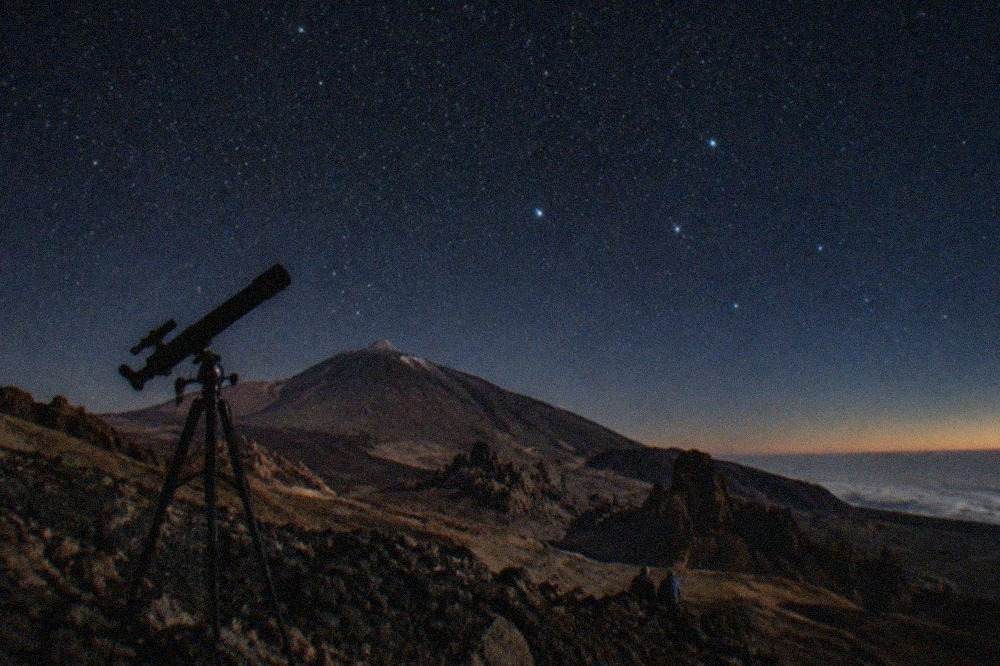
Telescope Stargazing, 3 Hours
Tenerife: Teide National Park Sunset & Stargazing Tour
Watch the sun drop from the national park, then stay for a guided session at the telescope as the stars come out. Teide's altitude makes the sky unusually sharp, so bring a coat.
from $45.94 Per person, in USD. The total depends on the date and option you pick.
Check Price & Availability →Opens the live booking page with up-to-date dates and prices. All booking and payment happen there; this guide takes none of it.
- Area
- Teide National Park
- Length
- 3 hours
- Kind
- Teide Sunset and Stargazing
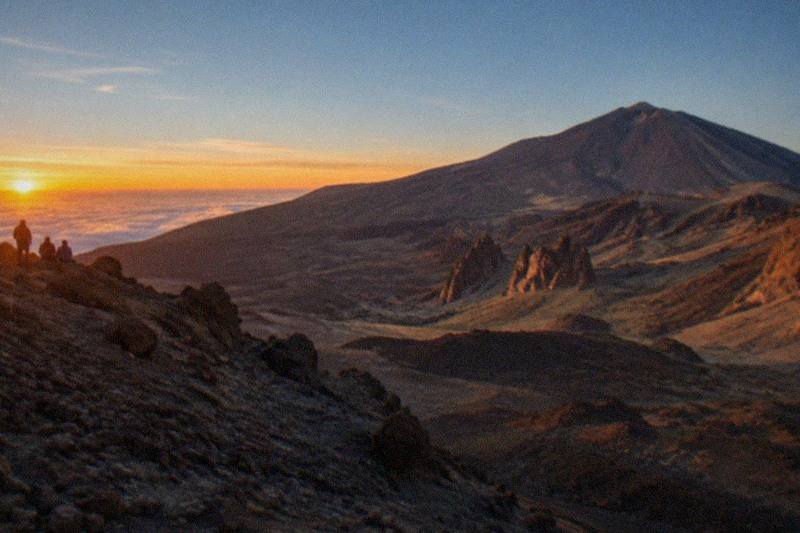
Small-Group Sunset, Self-Drive Option
Tenerife: Sunset and Stargazing at Teide National Park
from $40.20 Per person, in USD. A promotional rate, so the regular price is higher.
Check Price & Availability →- Area
- Teide National Park
- Length
- 3 to 5 hours
- Kind
- Teide Sunset and Stargazing
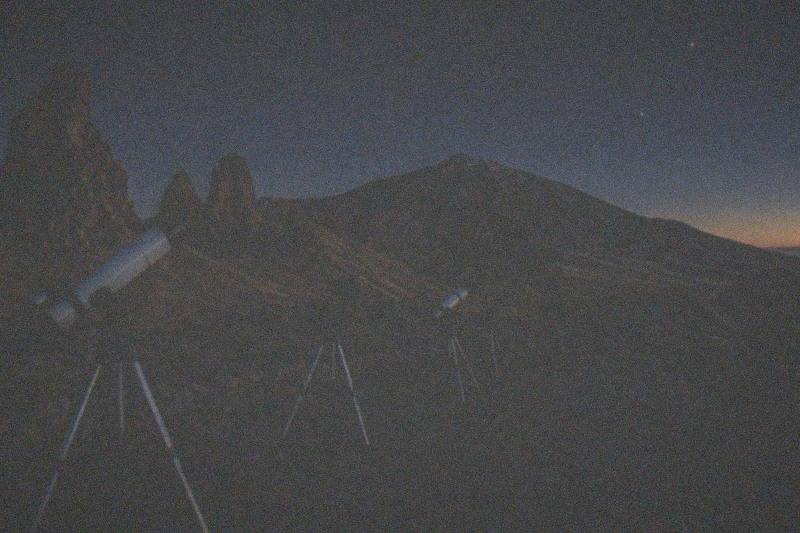
Coach Tour, Dinner Included
Teide Sunset & Stargazing Coach Tour with Hotel Pickup & Return
from $76.11 Per person, in USD. The total depends on the date and option you pick.
Check Price & Availability →- Area
- Tenerife
- Length
- 8 hours
- Kind
- Teide Sunset and Stargazing
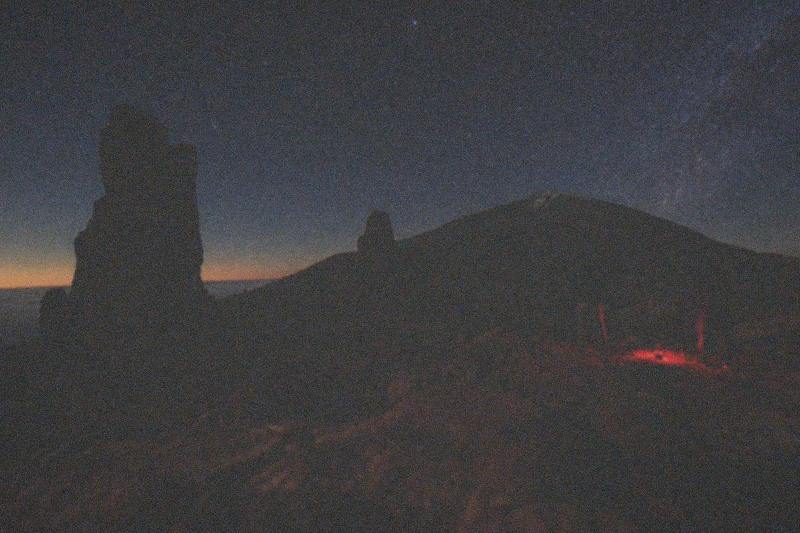
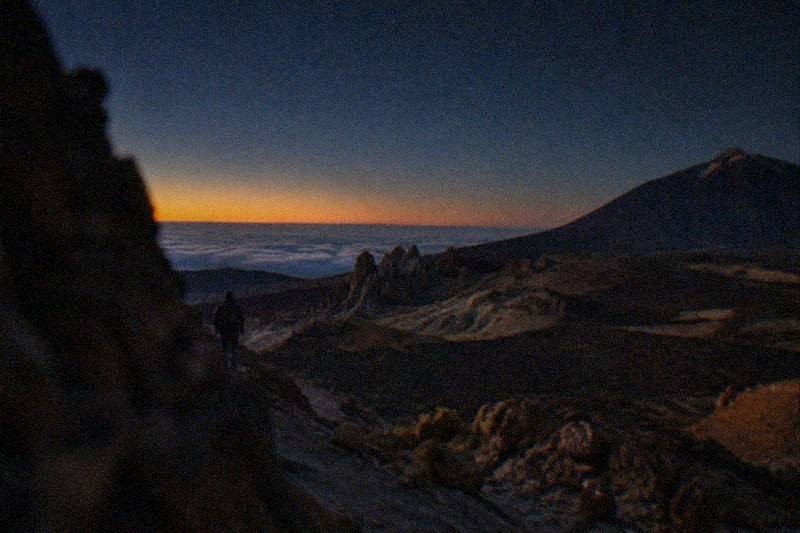
Teide by Night, North or South
Teide by Night: Sunset and Stargazing with Telescopes Experience
from $104.21 Per person, in USD. The total depends on the date and option you pick.
Check Price & Availability →- Area
- Teide National Park
- Length
- 8 to 9 hours
- Kind
- Teide Sunset and Stargazing
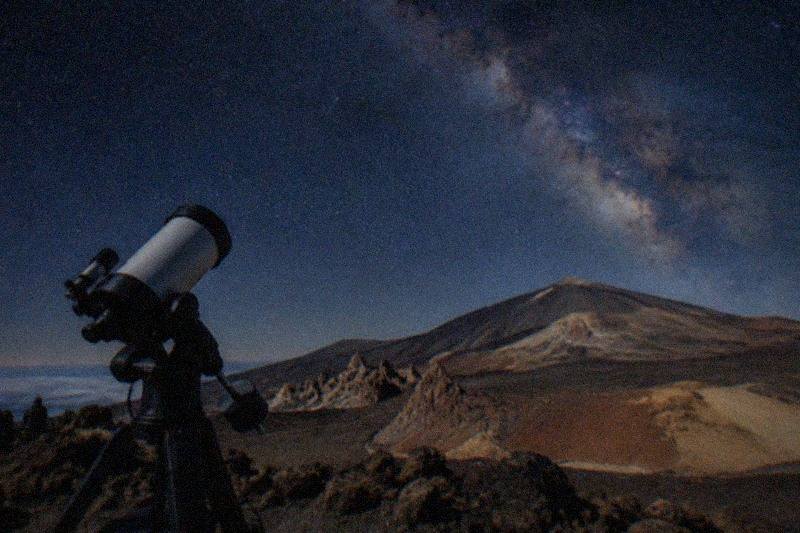
Large Telescope, Small Group
Teide National Park: Guided Large Telescope Stargazing Tour
from $74.66 Per person, in USD. The total depends on the date and option you pick.
Check Price & Availability →- Area
- Teide National Park
- Length
- 3 hours
- Kind
- Teide Sunset and Stargazing
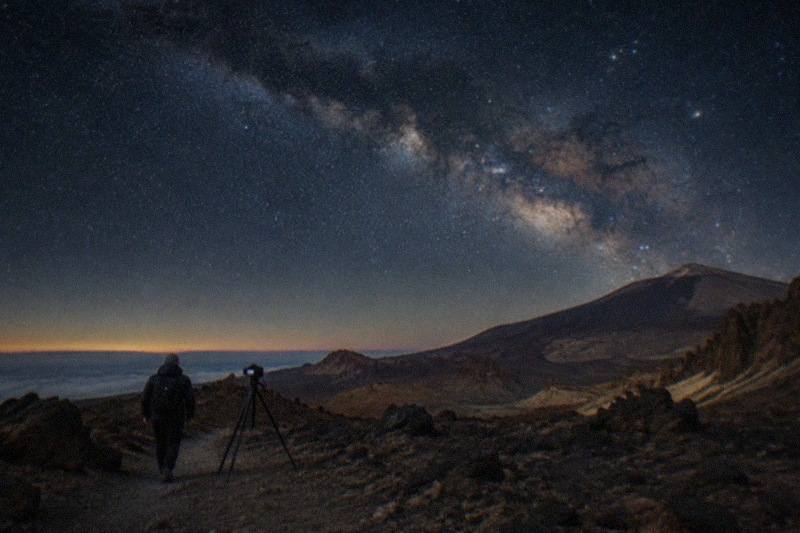
Self-Drive Astrophotography Session
Teide National Park: Small Group Stargazing with Astrophotography
from $40.98 Per person, in USD. The total depends on the date and option you pick.
Check Price & Availability →- Area
- Teide National Park
- Length
- 1 hour 20 minutes
- Kind
- Teide Sunset and Stargazing
Short answer
Stargazing on Tenerife is at its best on the high volcanic ridge around Mount Teide, where the Fundacion Starlight has certified both a Starlight Tourist Destination and a Starlight Reserve. Guided sunset and telescope tours run from both the south and the north of the island, and the clearest months are the dry summer season, when the Izana station records zero rain days and around 382 sunshine hours a month.
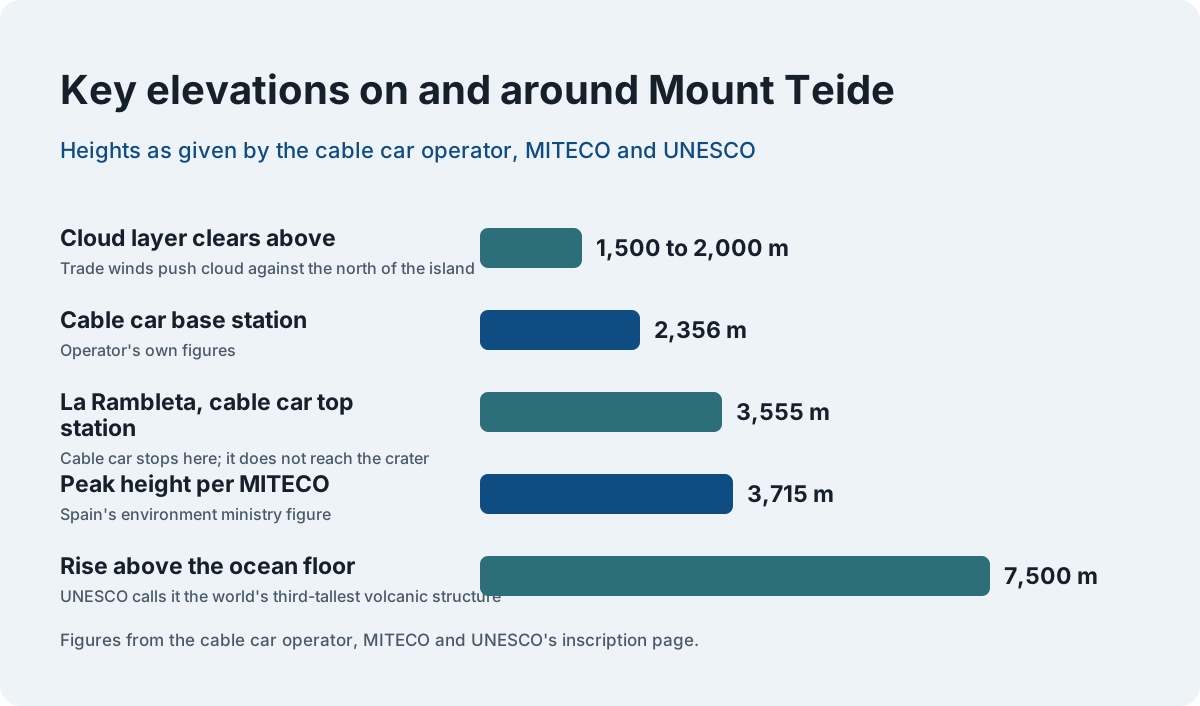
The Fundacion Starlight lists two separate certifications for this island: "El Teide (Canarias), Octubre 2013" as a Starlight Tourist Destination, and "Cumbres de Tenerife (Canarias), Octubre 2013" as a Starlight Reserve. That pairing is unusual. Most certified destinations hold one badge or the other, and Tenerife holds both, which is the formal backbone behind every claim made about stargazing here. The height does the rest: the cable car base station sits at 2,356 m, the upper station at La Rambleta at 3,555 m, and the observatory ridge at Izana at about 2,400 m, all of it above the layer of cloud that so often hides the night sky from the coast.
This page is a researched guide to the whole after-dark side of Teide National Park: where the certified dark sky actually is, what the climate records say about the best months, what the guided sunset and telescope tours include, and which permits and rules apply once the sun goes down. Nothing here is a first-hand account; every claim stands on an official page, an operator's own listing, or a published climate record.
Why Is Teide One of the Best Stargazing Sites in Europe?
Mount Teide holds two Starlight certifications, sits above the cloud layer at 2,356 metres and more, and stands inside a national park that UNESCO inscribed on 2 July 2007 under natural criteria for its landscape values. The Fundacion Starlight has listed El Teide as a Starlight Tourist Destination since October 2013 and the Cumbres de Tenerife as a Starlight Reserve over the same date, a combination few places in Europe hold.
The geography explains the astronomy. The trade winds push a layer of cloud against the north of the island, and above roughly 1,500 to 2,000 metres the air clears. The cable car's own figures put its base station at 2,356 m and La Rambleta at 3,555 m, so anyone standing on the upper mountain is looking through air that the coastal resorts never get. The Instituto de Astrofisica de Canarias placed the Teide Observatory at Izana, about 2,400 m, for exactly this reason, and the tourist board records that the first telescope there began work in 1964.
UNESCO's own inscription page for the park adds the wider frame: rising 7,500 m above the ocean floor, Teide is "regarded as the world's third-tallest volcanic structure", and the peak is, in UNESCO's words, "the highest peak on Spanish soil". Spain's own environment ministry, MITECO, gives the height as 3,715 m, and that is the figure this site uses. The park was declared by decree on 22 January 1954 and covers 18,990 hectares, with a peripheral protection zone of 7,374.32 hectares around it.
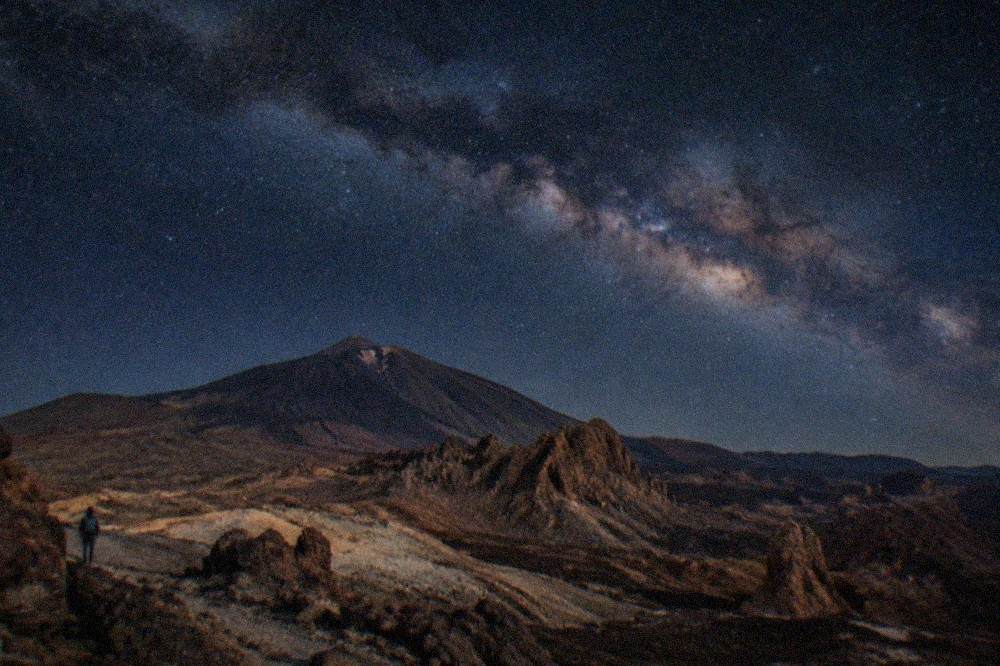
None of this needs a tour to witness. The national park is open to drivers and walkers in the ordinary way, and no official page lists an entry fee for it; the charges that exist are per-booking public fees on two specific trails, PNT 10 and PNT 07, which this page covers further down. What the tours add is transport after dark, telescopes, and a guide who can name what the sky is showing. For the daytime side of the same mountain, the Teide cable car and the wider Teide tours scene are covered on their own pages.
Where to Stargaze in Tenerife?
The certified dark sky sits on the high volcanic ridge of Teide National Park and the Cumbres de Tenerife, with the main stargazing viewpoints above 2,000 metres along the roads through the park, the area around the Izana observatory, and the Chio and La Orotava access roads. The Fundacion Starlight's Reserve covers the Cumbres de Tenerife, so the certified zone is the high ground, not the resorts.
The practical answer for most visitors is the national park road network after sunset. The park's own visitor figures show the scale of the place: 5,242,653 people entered in 2024, the most visited park in Spain's entire national park network, and almost all of them come in daylight. After dark the car parks and viewpoints empty out, and the same lay-bys that are crowded at midday become the island's best observing positions.
The rule that catches people out is the smoking ban. The Cabildo de Tenerife bans smoking in all open-air spaces of the national park: trails, viewpoints, car parks and recreation areas, as a wildfire prevention measure. That applies at night exactly as it does by day, and it applies to the spots people drive up to for the stars. Bookings and permits can also be suspended for fire risk or weather alerts, and Tenerife ON's alerts page is the official place to check before any night on the mountain.
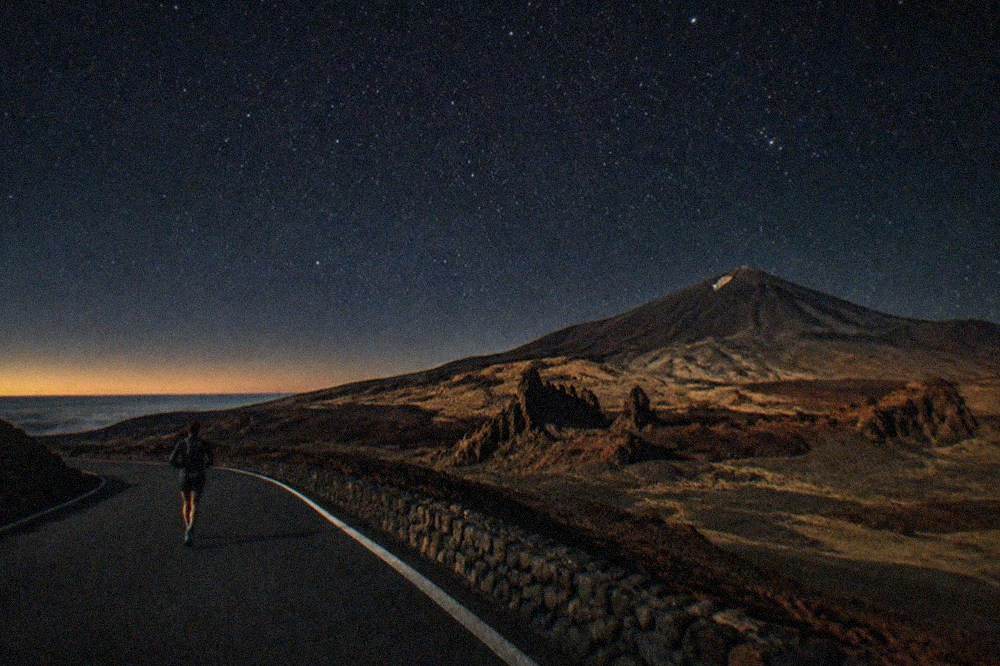
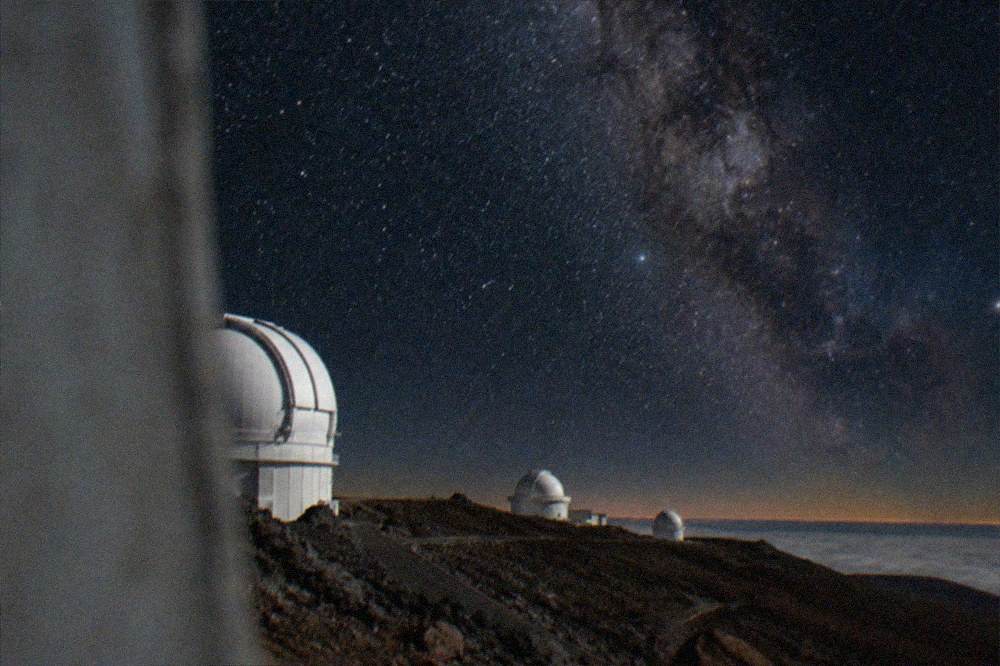
The observatory ridge at Izana is a special case. The Teide Observatory is a working scientific facility of the Instituto de Astrofisica de Canarias, and its visits page states that guided visits are by prior reservation only, with under-16s free, a resident discount, and Spanish school visits free. The page carried a fully booked notice when this site's research was done, so anyone set on an observatory visit should book well ahead and expect limited availability. A commercial tour of the observatory is bookable as a product, covered below, but the observatory's own programme and the tour product are separate things.
For travellers without a car, the guided tours solve the transport problem entirely, since most run pickup from the main resort zones. The trade-off is schedule: a shared tour leaves and returns at fixed times. Independent drivers get the freedom to stay later and to chase the clearest stretch of road, at the cost of driving a mountain road in the dark. The day trips to Teide from the south page covers the driving routes in detail.
Can I Go Stargazing on Mount Teide?
Yes, and no permit exists for stargazing itself: watching the sky from the park's roads, car parks and viewpoints carries no booking and no charge on any official page read. What does need reservations are the specific trails, PNT 10 to the crater and PNT 07 on Montana Blanca, and the Altavista refuge, which reopened after a 2026 refurbishment and takes prior reservations for its 49 beds.
The distinction matters because the summit trail is not a stargazing venue in the ordinary sense. Tenerife ON lists trail PNT 10 Telesforo Bravo, La Rambleta to the crater, as requiring a personal reservation, with accredited guides required and organisations not allowed. The 18:00 to 22:00 slot is the one a night walker books, and it carries no fee mark on the official page, but it is a reservation and walking without one may be penalised. Since Monday 19 January 2026 the daytime 09:00 to 17:00 slots cost EUR 15 for visitors, EUR 6 for residents of the other Canary Islands, and nothing for Tenerife residents and children, whose exemption the booking page's own age band defines.
Anyone tempted to treat the refuge as a shortcut around the summit rules should stop there: no official page confirms that a night at Altavista replaces the summit permit, and this site does not state it. What is on file is that the refuge reopened after its 2026 renovation with 49 beds, a first-aid room, dining area and toilets, booked at refugioaltavista.com, and that Tenerife ON's own notice gives two different figures for its altitude, 3,260 m in the headline and 3,200 m in the body.
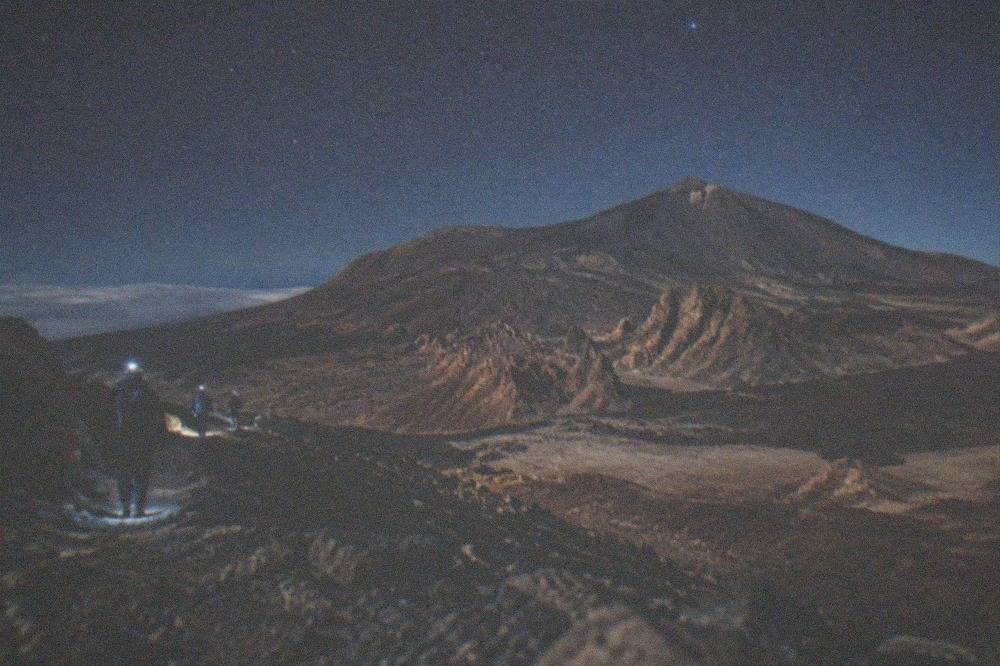
The full permit rules, the weekly Monday 07:00 release that keeps 56 days bookable, and the non-refundable conditions are laid out on the Teide summit permit page. For the ordinary stargazer, the summary is simpler than the internet makes it: the sky is free, the viewpoints are free, the two booked trails are the exception, and the release rule on the official page is the only lead time worth trusting. No fixed "book months ahead" figure exists on any official page, and none is stated here.
The cable car adds a daytime option with its own rules. The operator's 2026 prices show a non-resident adult return at EUR 42.00 and a child return at EUR 21, shown as "price from", with resident rates far lower, and the operator refuses the ride to people with cardiovascular conditions, pregnant women and children under 3. The cable car stops at La Rambleta at 3,555 m; it does not reach the crater, and the crater trail is the separate permit described above.
Can You See the Milky Way from Teide?
Yes: the ridge above the cloud layer on Teide is a Starlight Reserve zone where the Milky Way's core is visible to the naked eye in dark-sky conditions, and the Fundacion Starlight's certification of the Cumbres de Tenerife since October 2013 is the formal recognition of that darkness. The clearest views come on dry summer nights, when the Izana climate station records zero days of rain.
The honest caveat is that seeing the Milky Way and photographing it are different ambitions. A moonless night matters more than almost anything else, since a bright moon washes out the faint band of the galactic plane. The dry season helps: AEMET's climate normals for the Izana station, at 2,369 m on the observatory ridge, record zero days with rain of 1 mm or more in both June and July, and 0.1 days in July's neighbouring months at either end of the summer. The same station records 382 sunshine hours in both June and July, which means long clear evenings.
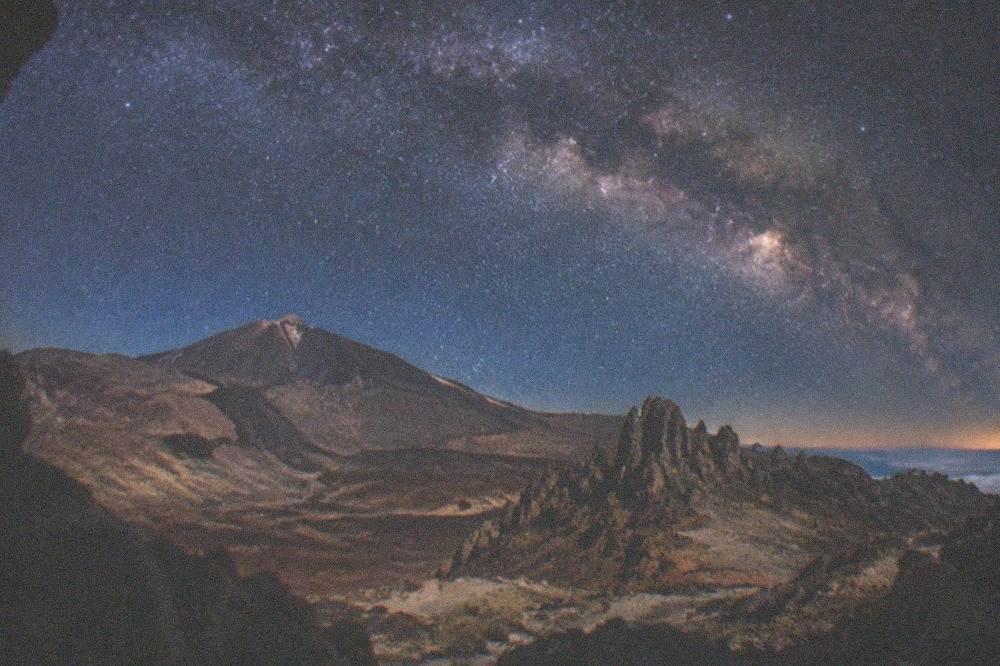
Winter changes the picture. Izana records 4.5 rain days of 1 mm or more in January and 5.6 in December, with mean daily maxima of 7.5 and 8.8 Celsius respectively, and ice and snow on the stratovolcano trails trigger a mandatory equipment rule: crampons and ice axe join the kit list, plus a signed declaration. A winter night on the mountain can be superb, but it is a colder, more conditional proposition than a July one, and the alerts page should be checked before any winter visit.
For the guided side, the telescope tours are the product built around exactly this question. Several operators run small-group sessions with telescopes and, in some cases, astrophotography, and the roster on this site includes a dedicated astrophotography session and a large-telescope small-group tour alongside the general sunset trips. The tour cards below carry the live details.
Which Month Is Best for Stargazing on Tenerife?
June and July are the statistically clearest months: AEMET's normals for the Izana station on the Teide ridge record zero rain days in both, 382 sunshine hours each, and mean daily maxima of 18.9 and 23 Celsius. August and September stay dry and warm, while November to February bring the most cloud, with 4 to 5.6 rain days a month at the summit station.
The numbers come from AEMET, Spain's state meteorological agency, and its 1981 to 2010 normals for station C430E at Izana, 2,369 m. They describe the summit climate, not the coast: Santa Cruz, at 36 m, records a far milder and wetter-winter version of the same island, and the south airport station is drier than both. Anyone planning a stargazing trip is planning for the summit station's conditions. The wider set of guides lives on Tenerife Travel Guide.
| Month | Mean daily max (C) | Mean daily min (C) | Rain days (1 mm or more) | Sunshine hours |
|---|---|---|---|---|
| Jan | 7.5 | 1.1 | 4.5 | 226 |
| Feb | 8 | 1.3 | 4 | 223 |
| Mar | 10.2 | 2.7 | 4.1 | 260 |
| Apr | 11.8 | 3.5 | 2.7 | 294 |
| May | 14.5 | 5.8 | 1.1 | 356 |
| Jun | 18.9 | 9.9 | 0.2 | 382 |
| Jul | 23 | 14 | 0.1 | 382 |
| Aug | 22.6 | 13.8 | 0.5 | 358 |
| Sep | 18.6 | 10.4 | 1.6 | 295 |
| Oct | 14.3 | 6.9 | 3.7 | 259 |
| Nov | 11.1 | 4.5 | 4.4 | 220 |
| Dec | 8.8 | 2.4 | 5.6 | 218 |
Two readings follow from the table. First, the cold is real: even in July the mean nightly minimum at Izana is 14 Celsius, and in January it is 1.1 Celsius, so the packing list for a night on the ridge is a winter one at any time of year. Second, the shoulder months are underrated. May and September combine single-digit rain days with reasonable evening temperatures, and September's sea surface temperature off the south coast, 23.7 Celsius on the NOAA series, means a stargazing night can be paired with a genuinely warm day at the coast.
The moon matters more than the month, in the end. A cloudless June night under a full moon shows fewer stars than a December night under a new moon. The tours run year round and the operators pick their viewing positions for the conditions of the evening, which is one of the quieter arguments for booking one rather than driving up blind.
What Do Teide Sunset and Stargazing Tours Actually Include?
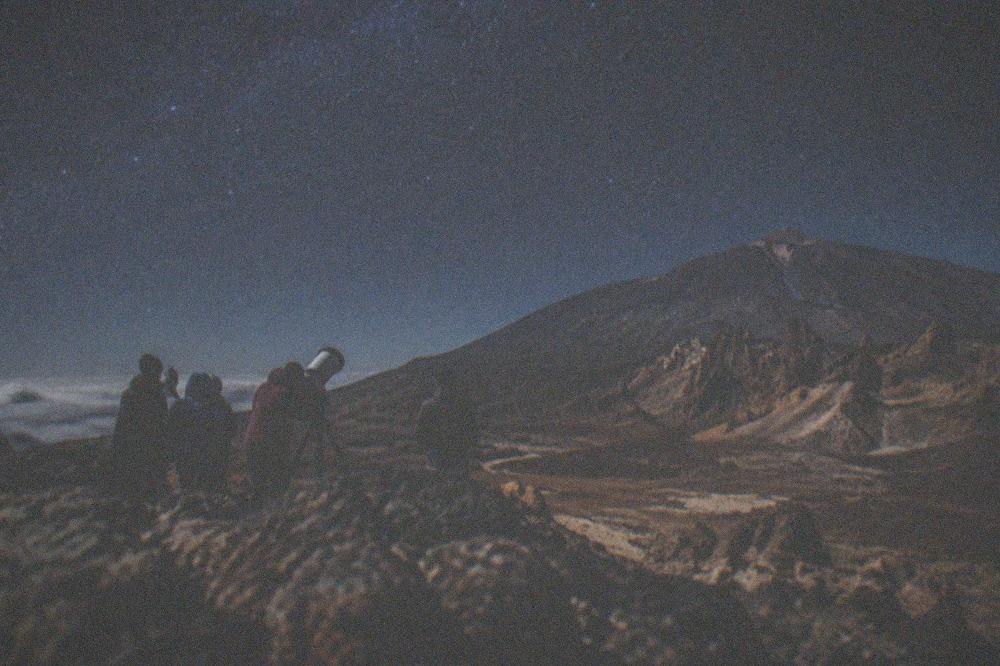
The roster on this site splits the after-dark products into three shapes: a coach-based sunset and stargazing tour with hotel pickup and dinner, small-group telescope sessions of around three hours with a self-drive option, and an astrophotography session aimed at photographers. Durations run from one hour twenty minutes to nine hours, and every one of them is an operator ticket, not a permit.
The differences are practical, not cosmetic. A coach tour collects from the resorts, feeds its guests and returns them late, which suits travellers without a car and anyone who would rather not drive a mountain road at night. A small-group telescope session with a self-drive option suits a hire car and gives the longest time at the eyepiece per hour of the evening. The astrophotography session is the specialist pick, a self-drive product for people who want images, not just views.
| Product type | Typical shape | Pickup style | Who it suits |
|---|---|---|---|
| Coach sunset and stargazing | Around 8 hours with dinner | Hotel pickup and return | No-car travellers, families |
| Small-group telescope tour | Around 3 hours, telescopes | Hotel pickup or self-drive | Couples, keen observers |
| Astrophotography session | Around 1 hour 20 minutes | Self-drive | Photographers |
| Observatory guided tour | Around 1 hour 30 minutes | Meet at the observatory | Astronomy enthusiasts |
The card below is the flagship small-group product on this site, a telescope stargazing tour of around three hours rated 4.2 from 4,551 reviews on its listing, and the trio band earlier in this page carries the coach version alongside it. Where a tour's price or live availability is the question, the product card prints it, and this site never types a figure the card has not supplied.
One boundary worth restating: none of these tours replaces a trail booking. The telescope sessions run from roadside positions inside the park, not on the permit-only trails, and the observatory tour is a separate product from the observatory's own reservation-only visit programme. If the crater at night is the ambition, the reservation is made on Tenerife ON, and the guides to sunsets in Tenerife cover the twilight hour that precedes every one of these trips.
What About the Daytime Side of the Same Mountain?
The same ridge hosts the cable car from 2,356 m to La Rambleta at 3,555 m, the reservation-only observatory visits at Izana, and the guided daytime tours that cover the volcanic landscape, with the observatory's own page stating that visits are by prior reservation only and under-16s enter free. A combined day-and-night plan is the most efficient use of the drive up.
The cable car's 2026 timetable, on the operator's own page, runs 09:00 to 17:00 in the standard periods, extending to 18:40 in the Easter and summer stretches, with the last ascent one hour before closing and the last descent ten minutes before. The base station car park runs 08:00 to 18:00 in the standard season. Its non-resident return fare is EUR 42.00 for an adult, EUR 21 for a child aged 3 to 13, shown as "price from", and the operator bars people with cardiovascular conditions, pregnant women and children under 3 from riding at all.
| Teide item | What it is | Booking needed | Fee basis |
|---|---|---|---|
| Driving through the national park | Roads, viewpoints, car parks | No | No entry fee on any official page |
| Cable car to La Rambleta | 2,356 m to 3,555 m | Operator ticket | EUR 42.00 adult return, "price from" |
| Trail PNT 10 to the crater | La Rambleta to the summit | Tenerife ON reservation | EUR 15 visitors, 09:00 to 17:00 slots |
| Trail PNT 07 Montana Blanca | Ascent to La Rambleta | Tenerife ON reservation | EUR 6 working days, EUR 10 weekends |
| Observatory visit | Guided, at Izana | Prior reservation | Under-16s free, resident discount |
| Altavista refuge | 49 beds, reopened 2026 | refugioaltavista.com | Booked directly with the refuge |
The daytime tours in this site's roster include the cable car trip with coach transfer, a guided observatory tour with a solar telescope, and small-group volcanic and forest tours of the park. The observatory card is below; the wider Teide tours page holds the full daytime range, and the question of whether the volcano itself is sleeping is answered, with sources, on the is Mount Teide active page.
Where Is the Best Place to Stargaze on Tenerife?
The best stargazing positions are the high roadside viewpoints of Teide National Park and the Chio and La Orotava access roads above 2,000 metres, inside the Starlight Reserve zone of the Cumbres de Tenerife, with the area around the Izana observatory ridge the darkest of all. The coast is the worst place: the resort zones of the south hold the most light pollution on the island.
The physics of the island does the sorting. Light pollution on Tenerife concentrates in the southwest, where Adeje, Arona and the coastal strip hold the bulk of the island's tourism. The north coast is smaller in scale but cloudier, as the AEMET normals for Tenerife North Airport show: 520 mm of rain a year on 64 rain days, against 132 mm on 15.2 days at the south airport station. The high ridge escapes both problems at once, rising above the cloud on the north and above the light on the south.
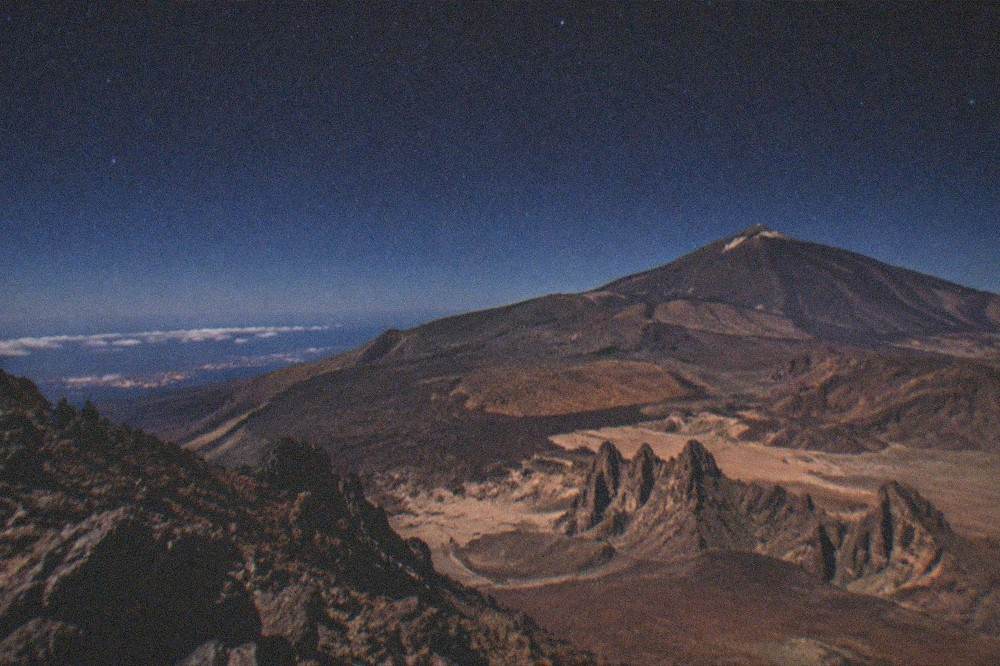
For a self-drive evening, the practical plan the sources support is simple: drive up in daylight, watch the sunset from a viewpoint, and stay for the sky to darken fully, since the sunsets themselves are covered in their own guide. The smoking ban applies everywhere outdoors in the park, the car park hours at the cable car base end at 18:00 in the standard season, and Tenerife ON's alerts page is the official word on fire-risk closures, which can suspend bookings and close access. Warm layers are not optional: the summit station's mean nightly minimum is below 2 Celsius from December to March.
The tours, by contrast, handle the logistics. The coach products collect from the resort zones, the small-group sessions drive their guests or meet them at a set point, and the operators' guides choose the night's positions. For travellers who want the sky without the planning, that is the trade the product makes, and the band below carries the current trio of evening options alongside two daytime and marine picks for the rest of the week.
How Do You Plan a Stargazing Trip Around Everything Else?
Build the evening around the moon and the climate record rather than the calendar: pick a June or July date for the driest statistics, a new-moon night for the darkest sky, book a telescope or coach tour for transport and optics, and reserve any trail or observatory visit separately on its own official system, since no tour replaces a permit.
The order of operations is where most plans go wrong. The tour is the easy booking, and the trail reservations are the scarce ones: Tenerife ON releases a new week every Monday at 07:00 Canary time, keeping 56 days bookable, and the observatory's own visit programme runs on prior reservation with a fully booked notice on its page at the time of this site's research. The trail fees are non-refundable, with no changes of date, slot or names, and a no-show can bar the user from new applications for three months, so a summit plan should be the certain one, not the hopeful one.
| Plan | Book first | Book on official systems | Free of charge |
|---|---|---|---|
| Roadside stargazing | Nothing | Nothing | Yes, no entry fee listed |
| Telescope tour | Tour card | Nothing further | No |
| Sunset coach tour | Tour card | Nothing further | No |
| Night on PNT 10 (18:00 to 22:00 slot) | Guided hike product, if used | Tenerife ON reservation | Reservation still needed, no fee mark on the slot |
| Observatory visit | Observatory tour product, if used | Observatory reservation page | Under-16s free |
| Altavista refuge night | Nothing via tours | refugioaltavista.com | No |
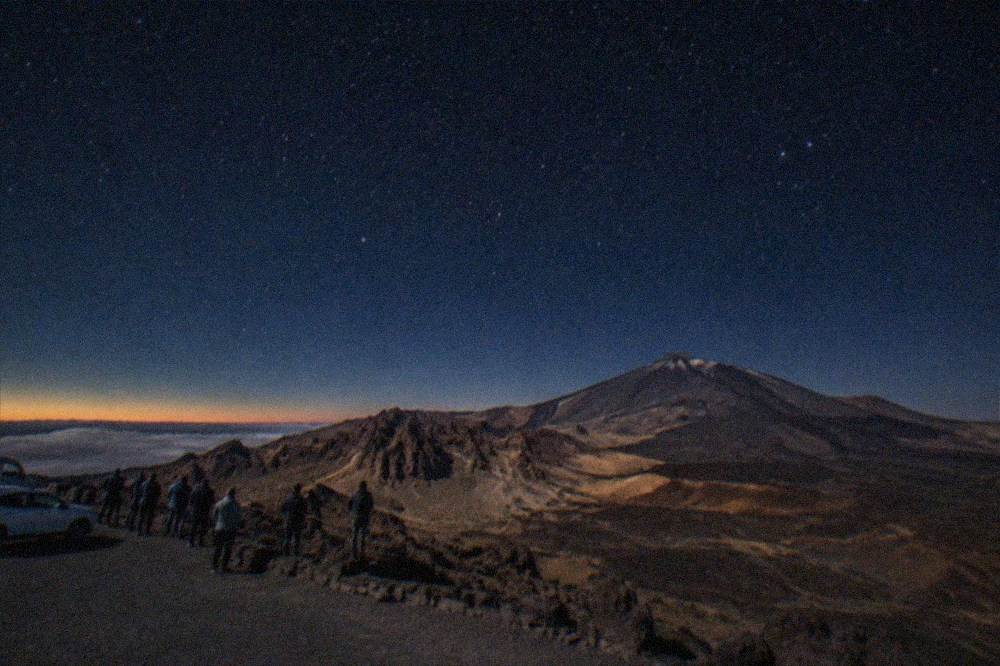
The rest of the island fills the daylight hours around it. The excursions page holds the full range, from the marine trips out of Los Cristianos to the buggy and jeep convoys into the park, and the whale and dolphin watching page covers the sea side of the same southwest coast, where the World Cetacean Alliance designated the Tenerife-La Gomera Marine Area a Whale Heritage Area in January 2021. A stargazing week can pair the ridge at night with the water by day without repeating itself.
Common Questions About Stargazing on Tenerife
What month is best for stargazing?
June and July, on the climate record: AEMET's normals for the Izana station on the Teide ridge record zero rain days in both months and 382 sunshine hours each. May and September are strong runner-up months with only 1.1 and 1.6 rain days. The moon phase matters as much as the month, and a new-moon night in a cloudier month can beat a full-moon night in July.
Where can I see the dark sky on Tenerife?
On the high volcanic ridge of Teide National Park and the Cumbres de Tenerife, above roughly 2,000 metres, inside the zone the Fundacion Starlight has certified as a Starlight Reserve since October 2013. The roadside viewpoints along the park's access roads are the practical positions. The resort zones on the south coast hold the most light pollution on the island and are the weakest positions.
Do I need a permit to stargaze on Mount Teide?
No. Stargazing from the park's roads, viewpoints and car parks needs no booking and carries no charge on any official page read. The reservations that exist are for specific trails: PNT 10 to the crater, whose 18:00 to 22:00 slot is a bookable reservation, and PNT 07 on Montana Blanca. Since Monday 19 January 2026 the daytime slots on PNT 10 cost EUR 15 for visitors and EUR 6 for residents of the other Canary Islands.
Can you see the Milky Way from Teide?
Yes. The ridge above the cloud layer is a certified Starlight Reserve zone, and the galactic band is visible to the naked eye on a moonless night. The clearest statistics belong to June and July, when the Izana station records zero rain days. Warm clothing is needed at any time of year, since the station's mean nightly minimum is 14 Celsius even in July.
Is the Teide Observatory open to visitors?
Yes, by prior reservation only. The observatory's own visits page states that guided visits require advance booking, that under-16s enter free, that there is a resident discount, and that Spanish school visits are free. The page carried a fully booked notice when this site's research was carried out, so early booking is essential, and a commercial guided tour of the observatory is also available as a separate product.
Is smoking allowed at the stargazing viewpoints?
No. The Cabildo de Tenerife bans smoking in all open-air spaces of Teide National Park, including trails, viewpoints, car parks and recreation areas, as a wildfire prevention measure. The ban applies at night exactly as it does by day, and fire-risk alerts can suspend bookings and close access, so Tenerife ON's alerts page should be checked before any evening on the mountain.
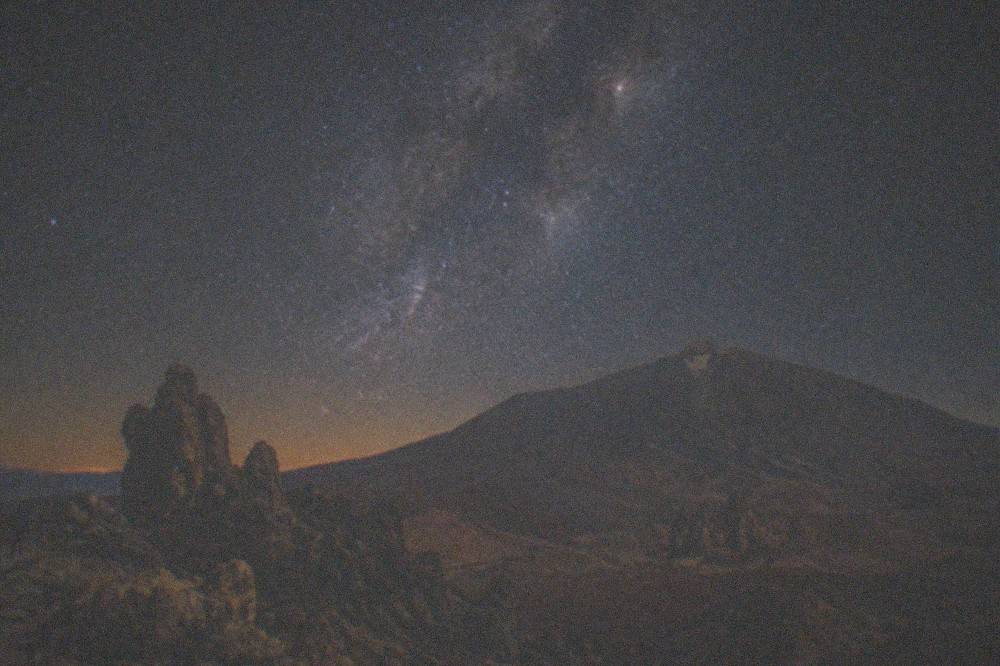
The short version of this whole page: the certification is real, the height is the mechanism, the summer months are the statistics, and the only bookings that matter are the trail reservations on Tenerife ON and the observatory's own visit programme. Everything else, the sky included, is open.