Where to Watch the Sunset in Tenerife
Tenerife's sunsets are unusual for a holiday island: the best of them happen at 2,356 metres, above the clouds, inside a national park that UNESCO lists for its night sky as much as its rock.
Short answer
The best Tenerife sunset is from Teide National Park, where the cable car base station sits at 2,356 m and the light drops above a sea of clouds. Coastal alternatives include Los Gigantes, where the cliffs tower up to 600 m, and the golden-sand bays of the south. Evening slots on the Teide summit trail need a Tenerife ON reservation, and since 19 January 2026 the daytime slots carry a public fee.
Teide National Park received 5,242,653 visitors in 2024, the most of any park in Spain's national park network, and a large share of them come in the late afternoon for one reason: the light. The park sits high enough that the cable car's base station alone stands at 2,356 m, and from that height a Tenerife sunset plays out above the cloud layer rather than beneath it. This page lays out where the island's best evening light is found, what the official hours and permit rules allow, and which months give the clearest skies, all from the operators' and public bodies' own pages.
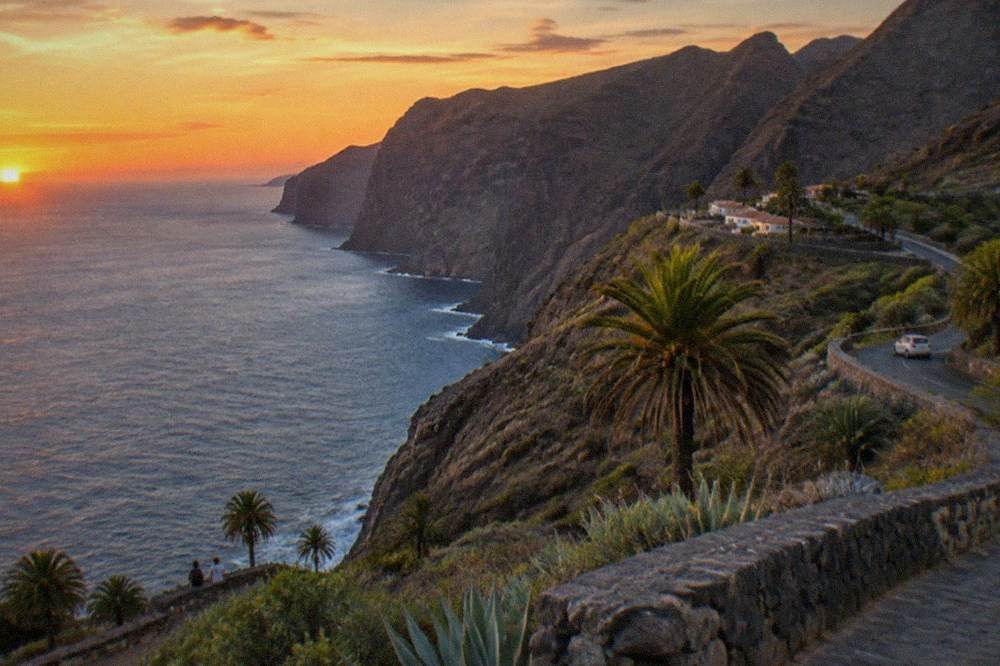
The island's shape does half the work. Tenerife is a single stratovolcano with ridges running in several directions, so the west-facing coast around Los Gigantes and the high ground of the national park both face the setting sun, while the north and east offer their own, quieter versions of the same show. The tourist board describes the Los Gigantes cliffs as towering up to 600 m, with a seabed about 30 m deep at their foot, which is why the evening light there falls on rock rather than sand. Choosing between these settings is the real decision, and the sections below take each in turn.
Where to Watch Sunset in Tenerife
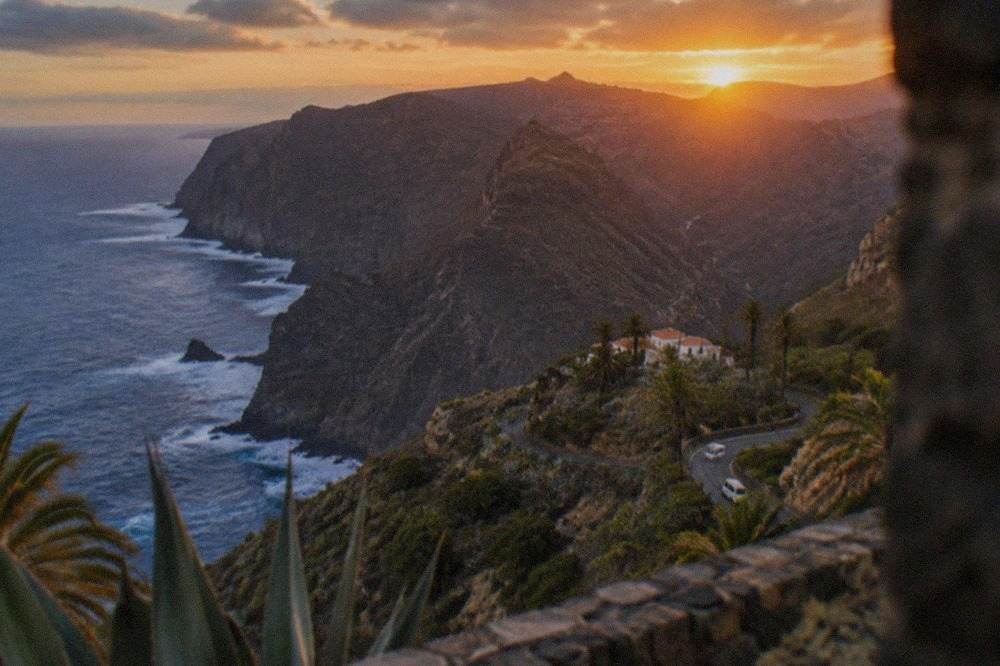
The strongest Tenerife sunset settings are Teide National Park above the clouds, the cliffs and bay at Los Gigantes on the west coast, and the calm golden-sand beaches of the south such as Las Teresitas and Las Vistas, with the high ground of Anaga offering a forest-framed alternative in the north. Each works because of geography rather than luck: the national park's viewing terraces sit well above the usual cloud layer, the west coast faces the open Atlantic, and the southern bays are sheltered by breakwaters that the tourist board says calm the water.
The national park is the headline act. UNESCO inscribed the park in 2007 under natural criteria (vii) and (viii), and the Fundacion Starlight has listed "El Teide (Canarias). Octubre 2013" as a Starlight Tourist Destination, with "Cumbres de Tenerife (Canarias). Octubre 2013" as a Starlight Reserve. Those certificates are about the night sky, but they exist because the same altitude that gives the park its darkness also gives it its evening light: from the base station at 2,356 m, sunset often happens over a sea of clouds filling the valleys below.
Los Gigantes, in the municipality of Santiago del Teide, is the coastal counterpart. The cliffs rise inside Teno Rural Park, and the tourist board's own page gives the height as "up to 600 m". Boat operators run evening trips along the base of the rock, and the whale-watching fleet out of the neighbouring harbours is regulated by Decreto 178/2000, which keeps any authorised boat at least 60 m from cetaceans and allows no more than three boats within 500 m of them.
For a flat, easy evening, the tourist board describes Las Teresitas, in San Andrés near Santa Cruz, as golden sand with palm trees and breakwaters, and Las Vistas, in Arona, as golden sand calm behind a row of breakwaters. Both are family-friendly sunset settings in the sense that the water is sheltered, though Las Teresitas faces north-east, so it catches the afterglow rather than the sun itself dropping into the sea. Readers planning a wider trip can compare the island's two halves on our Tenerife North vs South guide.
Why Teide National Park Is the Island's Signature Sunset
Teide National Park delivers Tenerife's most dramatic sunset because its viewing ground sits at 2,356 m and its upper cable car station at 3,555 m, high above the layer of trade-wind cloud that often fills the island's lower slopes, so the sun sets into a cloud sea rather than coastal haze. The park was declared by decree on 22 January 1954, covers 18,990 ha with a peripheral protection zone of 7,374.32 ha, and UNESCO credits Mount Teide as the highest peak on Spanish soil at 3,715 m.
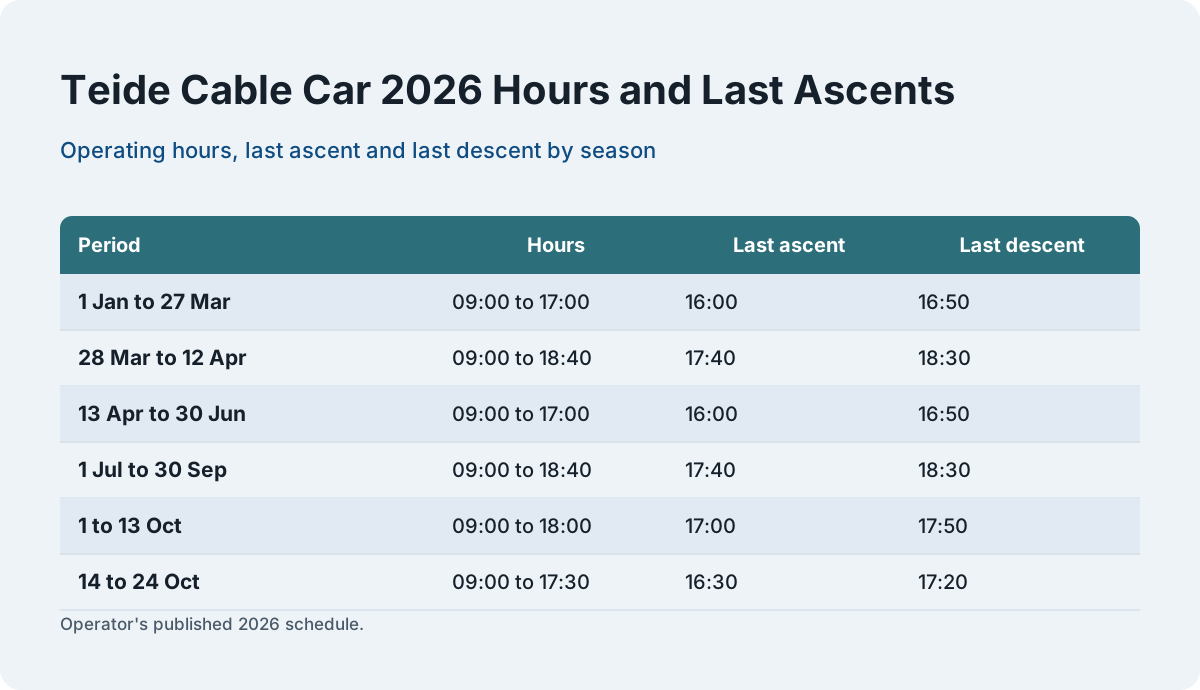
The operator's own pages set the practical limits. The cable car runs from the base station at 2,356 m to La Rambleta at 3,555 m, and its 2026 hours shift by season: 09:00 to 17:00 in the standard periods, extending to 18:40 in the summer and Easter windows. The last ascent is one hour before closing and the last descent ten minutes before closing, which on a 17:00 day means 16:00 and 16:50. That matters for sunset planning, because in the standard season the cable car has stopped running well before the light turns, and an evening on Teide means either driving up or joining an organised sunset tour.
| Cable car period (2026) | Operating hours | Last ascent | Last descent |
|---|---|---|---|
| 1 Jan to 27 Mar | 09:00 to 17:00 | 16:00 | 16:50 |
| 28 Mar to 12 Apr | 09:00 to 18:40 | 17:40 | 18:30 |
| 13 Apr to 30 Jun | 09:00 to 17:00 | 16:00 | 16:50 |
| 1 Jul to 30 Sep | 09:00 to 18:40 | 17:40 | 18:30 |
| 1 to 13 Oct | 09:00 to 18:00 | 17:00 | 17:50 |
| 14 to 24 Oct | 09:00 to 17:30 | 16:30 | 17:20 |
The base station car park runs 08:00 to 18:00 in the standard season and to 19:40 in the extended periods, which tells you how the operator expects evening visits to work: in summer the park is open to vehicles late enough for a sunset from the viewpoints, and in the shoulder season it is not. The rules also matter. The Cabildo bans smoking in all open-air spaces of the national park, car parks and viewpoints included, as a wildfire measure, and the operator refuses cable car rides to people with cardiovascular conditions, pregnant women and children under 3.
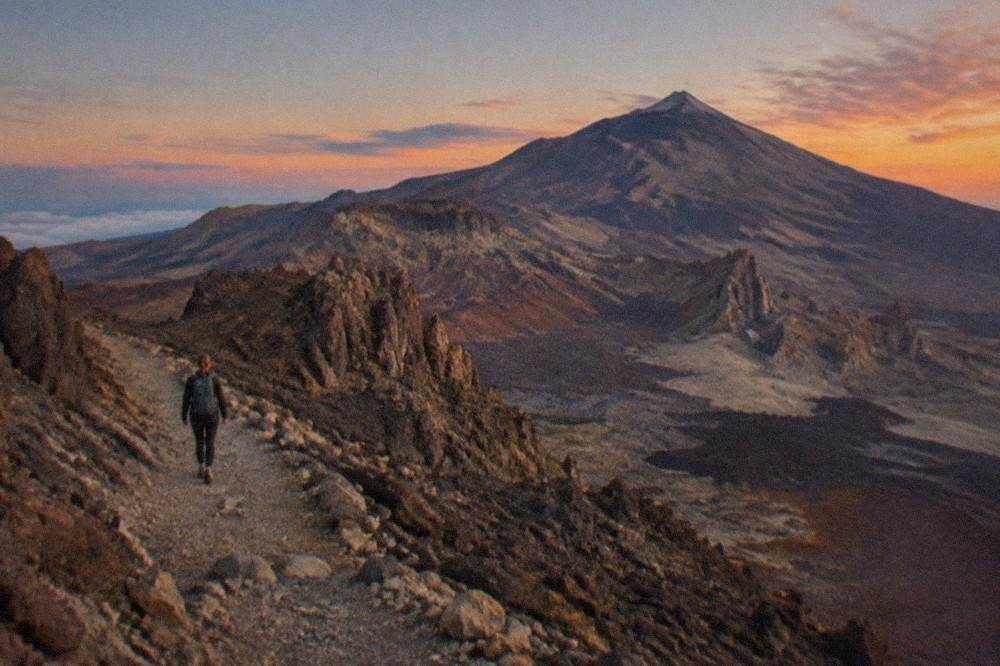
Two things about the summit itself are worth separating, because many pages blur them. The cable car stops at La Rambleta at 3,555 m; it does not reach the crater. The trail from La Rambleta to the summit, PNT 10 Telesforo Bravo, needs a personal reservation on Tenerife ON, the Cabildo's booking platform, and Tenerife ON lists 06:00 to 09:00 and 18:00 to 22:00 as bookable evening and sunrise slots alongside the four paid daytime slots. Our Teide summit permit guide covers the booking mechanics in full.
For visitors who want the sunset and the stars without driving a mountain road at night, an organised evening is the usual answer, and the roster on this site carries several versions of it.
The coach option with hotel pickup and return is the one most first-time visitors settle on: it handles the drive, includes dinner, and stays for a stargazing session after the sun has gone. The small-group volcanic and forest tour is a daytime alternative that suits visitors who would rather see the park's rock formations in full light and find their sunset nearer the coast. And the no-chase catamaran is the sea option, which the next section takes up.
Which Months Give the Clearest Tenerife Sunset Skies?
July is the clearest month for a Tenerife sunset on the coast, with AEMET's climate normals showing zero rain days and 337 sunshine hours in Santa Cruz, while April to June and September offer nearly as much sun with fewer crowds, and November to February trades some cloud for warmer evening colour. On the mountain at Izana, 2,369 m, June and July each average 382 sunshine hours against 226 in January, so the higher the viewpoint, the more the summer months matter.
These figures come from AEMET's published climate normals for two of the island's stations, and they are worth reading side by side because the island's vertical relief makes its weather local. The coastal station at Santa Cruz records an annual 226 mm of rain over 29.7 days with 1 mm or more, while the mountain station at Izana, on the observatory ridge, records 33.4 such days. The same July day can be cloudless at sea level and wrapped in cloud at 2,300 m, or the reverse, which is why the sunset above the cloud layer is never guaranteed and why the tour operators build stargazing into the same evening.
| Month | Santa Cruz sunshine hours | Santa Cruz rain days (1 mm+) | Izana sunshine hours | Izana rain days (1 mm+) |
|---|---|---|---|---|
| Jan | 178 | 4.2 | 226 | 4.5 |
| Feb | 186 | 3.8 | 223 | 4 |
| Mar | 221 | 3.8 | 260 | 4.1 |
| Apr | 237 | 2.4 | 294 | 2.7 |
| May | 282 | 0.9 | 356 | 1.1 |
| Jun | 306 | 0.2 | 382 | 0.2 |
| Jul | 337 | 0 | 382 | 0.1 |
| Aug | 319 | 0.3 | 358 | 0.5 |
| Sep | 253 | 0.9 | 295 | 1.6 |
| Oct | 222 | 3.1 | 259 | 3.7 |
| Nov | 178 | 4.7 | 220 | 4.4 |
| Dec | 168 | 5.4 | 218 | 5.6 |
The sea temperature shapes whether a sunset turns into a swim. NOAA's 1991 to 2020 normals for the water off the south coast put the sea at 23.7 C in September and October, the warmest of the year, falling to 19.1 C in March. An evening on a southern beach is a different proposition in October than in February, and the table below gives the monthly figures so readers can judge for themselves. Our month-by-month pages, starting with Tenerife in October and the full Tenerife weather by month guide, carry the air temperatures alongside.
| Month | Sea surface temperature off the south coast |
|---|---|
| Jan | 19.9 C |
| Feb | 19.2 C |
| Mar | 19.1 C |
| Apr | 19.5 C |
| May | 20.2 C |
| Jun | 21.4 C |
| Jul | 22.2 C |
| Aug | 23.1 C |
| Sep | 23.7 C |
| Oct | 23.7 C |
| Nov | 22.5 C |
| Dec | 21.1 C |
Watching the Sunset from the Sea Off Tenerife
A sunset boat trip off Tenerife's south and west coasts combines the evening light with the island's resident cetaceans, and every authorised boat operates under Decreto 178/2000, which forbids approach within 60 m of whales and dolphins, allows no more than three boats within 500 m, and requires authorised vessels to fly the Barco Azul flag. The World Cetacean Alliance designated the Tenerife-La Gomera Marine Area a Whale Heritage Area in January 2021 and records a unique resident population of pilot whales plus bottlenose dolphins in a Special Area of Conservation.
That legal frame is what makes an evening trip more than a boat ride. The decree's rules, 4 knots maximum within 500 m and no swimming or diving within 500 m of the animals, are why the better operators advertise themselves as no-chase or respectful encounters, and the Barco Azul flag is the visible proof a boat holds its authorisation. A sunset departure has a practical advantage as well: the whale-watching fleet sails from Los Cristianos, Costa Adeje and Los Gigantes, all on the island's south-west quadrant, so the boats head out with the sun behind the coastline rather than ahead of it. The rest of the planning pages sit on Tenerife Travel Guide.
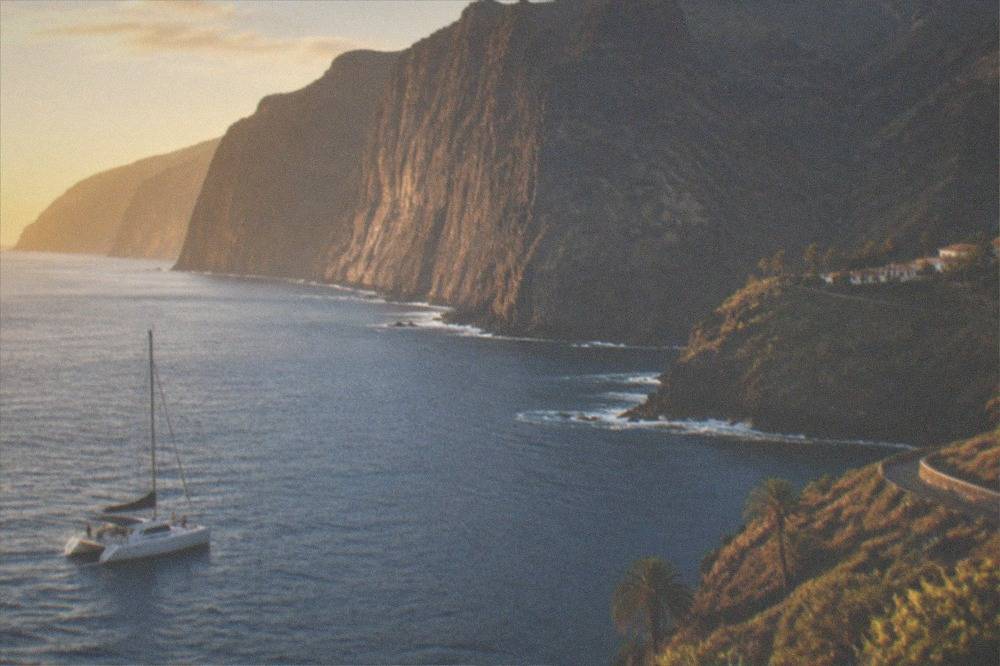
The Los Gigantes departures deserve their own mention because the cliffs give the trip its scale. The tourist board's page for the acantilados gives the height as up to 600 m and notes the roughly 30 m depth of the seabed at their foot, so an evening sail runs along a rock face that keeps its colour long after the sky above has gone dark. Several of the tours in our roster sail this coast, and the full range is on our boat trips and catamarans page.
For visitors who like their evening on the water with a swim stop, the roster includes eco catamaran and sailboat options out of Costa Adeje and Los Gigantes. The card below is the one this page rates for a golden-hour departure: a no-chase catamaran with underwater windows, rated 4.6 from 15,261 reviews, running an hour and a half out of Los Cristianos.
Do You Need a Permit or a Ticket for a Teide Sunset?
You need no ticket to watch the sunset from the national park's viewpoints or to drive through the park, since no official page lists an entry fee, but the summit trail PNT 10 requires a Tenerife ON reservation even in the 18:00 to 22:00 evening slot, and since Monday 19 January 2026 the daytime 09:00 to 17:00 slots cost EUR 15 for visitors and EUR 6 for residents of the other Canary Islands, with Tenerife residents and children paying nothing. The evening and sunrise slots are listed as bookable reservations without a fee mark on Tenerife ON's trail page.
The booking mechanics are strict, and the platform's own notices spell them out. A new week of slots is released every Monday at 07:00 Canary time, keeping 56 days bookable, and no official page states how quickly they go. Bookings are personal: ID or passport must be shown at the checkpoint, the fee depends on the place of residence on that document, and the reservations are non-refundable with no changes of date, slot or name, refunded only if the trail closes or the cable car is not operating. Failing to use a booking can bar a user from new applications for three months, and walking without a reservation may be penalised.
| Trail and slot | Tenerife residents | Other Canary residents | All other users |
|---|---|---|---|
| PNT 10 Telesforo Bravo, 09:00 to 17:00 slots | EUR 0 | EUR 6 | EUR 15 |
| PNT 07 Montana Blanca, 09:00 to 17:00, working days | EUR 0 | EUR 3 | EUR 6 |
| PNT 07 Montana Blanca, weekends and public holidays | EUR 0 | EUR 5 | EUR 10 |
| PNT 10 and PNT 07, evening and sunrise slots | Bookable reservation, no fee mark on the trail page | Bookable reservation | Bookable reservation |
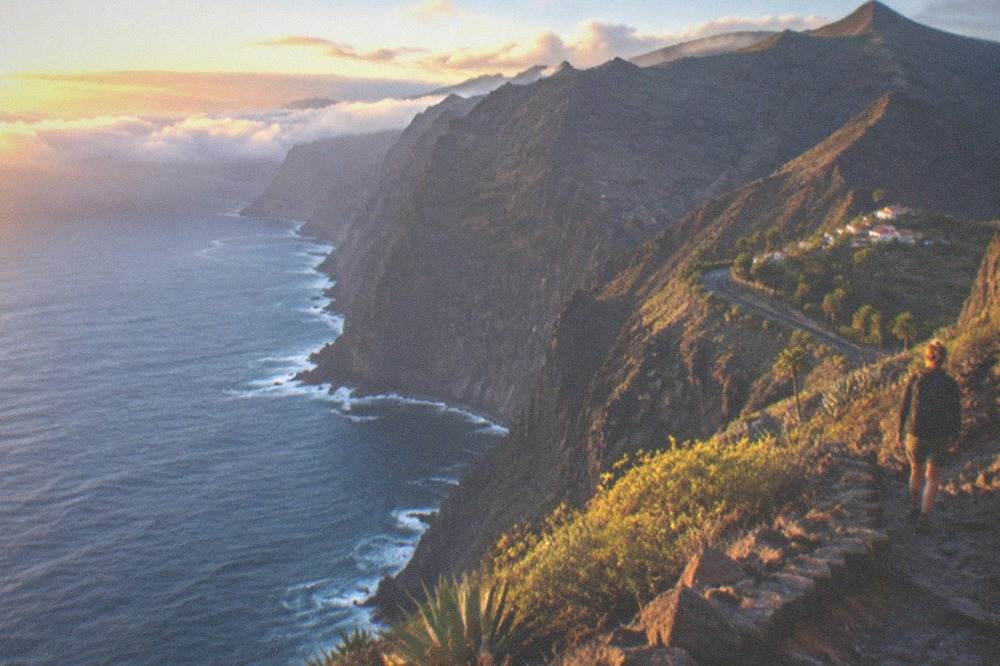
Two health rules from the official pages matter at sunset altitude. Tenerife ON warns that PNT 10 is not suitable for people with heart, respiratory or mobility problems, sets no access for children under 3, and allows under-16s only with an adult. In winter conditions, ice and snow add crampons and an ice axe to the mandatory equipment list, with a signed declaration. The Altavista refuge, reopened after a 2026 refurbishment with 49 beds and booking on refugioaltavista.com, serves as a support point for high-mountain activity, though the park's own pages do not say a night there replaces the summit reservation.
For most visitors, the honest summary is this: the sunset itself, from the roadside viewpoints inside the park, costs nothing and needs no booking. The crater at sunset needs a reservation made weeks ahead on a Monday-morning release. The cable car, in the seasons when it runs late, is a separate operator ticket, with a non-resident adult return shown as EUR 42.00 from the operator's price page. Deciding which of those three evenings you want is easier before you travel than at the base station car park.
The Best Sunset Spots Beyond Teide
Beyond the national park, Tenerife's strongest sunset settings are Los Gigantes and the west-coast villages of Santiago del Teide, the grey-sand beach of El Medano under Montana Roja in the south-east, the black-sand cove of El Bollullo at the foot of a cliff in La Orotava, and the high laurel-forest ridges of Anaga Rural Park in the north-east. The tourist board's own beach pages supply the descriptions: El Medano is fine grey sand beneath Montana Roja, El Bollullo is black sand at the foot of a cliff, and Fanabe, in Costa Adeje, is pale sand.
El Medano deserves its place on the list for a reason the beach descriptions only hint at: the wind that makes it a kitesurfing beach also keeps the evening air moving, and the dunes and Montana Roja give the low sun something to light up. It sits in the municipality of Granadilla de Abona, on the island's south-east corner, so it faces both the setting sun across the land and the open water to the east, which makes it one of the few spots where the afterglow outlasts the sunset itself.
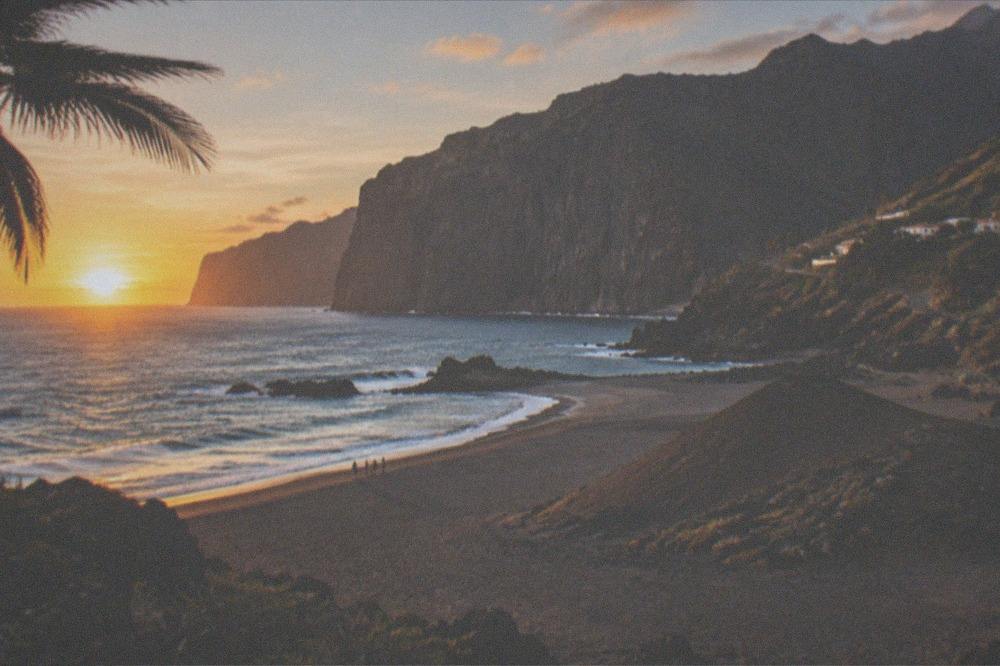
The north is the quiet alternative. Anaga Rural Park, on the island's north-east shoulder, holds laurel forest and dark-sand coves such as Playa de Benijo, and its ridges face both the Atlantic and the evening sky. One caution from the official pages applies to the area's most famous walk: the El Pijaral trail, PRA 72, the so-called Enchanted Forest, needs a Tenerife ON reservation released each Monday at 07:00 for at most 14 days ahead, and organised tours by companies are not permitted there. The Cabildo names the Bosque de los Enigmas trail and the Pista de Las Hiedras as permit-free alternatives in the same park.
El Bollullo, in La Orotava, is the north coast's most photogenic evening cove: black sand at the foot of a cliff, reached on foot from the road above, with the Atlantic running straight at it. The tourist board's description is short, and that is the point: there is no promenade and no lighting to speak of, so the evening ends when the light does. Readers building a whole trip around the island's quieter side can start from our Tenerife North vs South comparison or the broader things to do in Tenerife round-up.
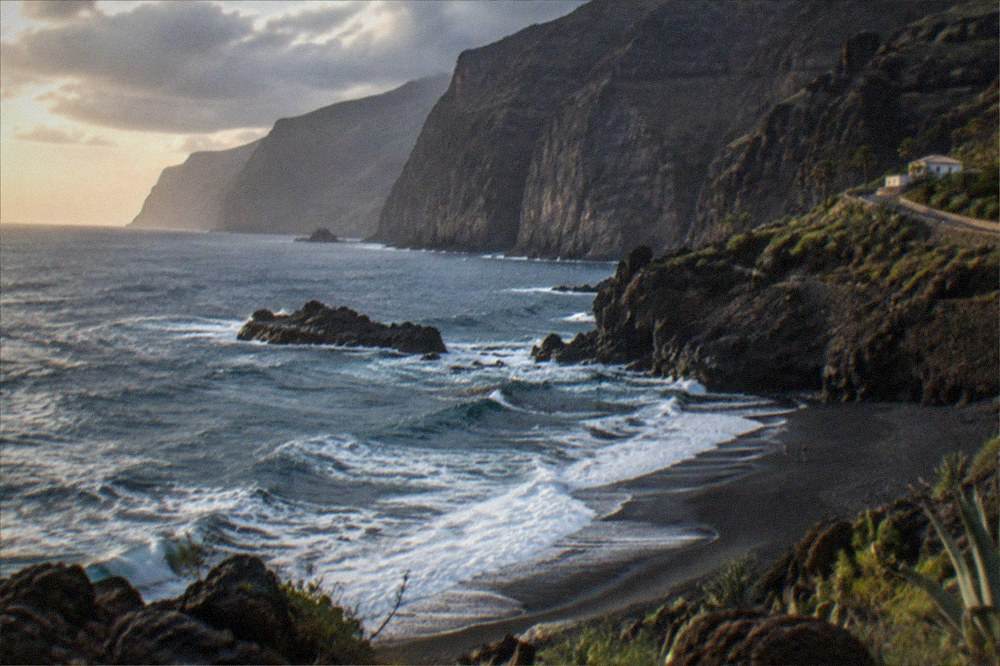
How to Plan a Sunset-and-Stars Evening on Teide
A sunset-and-stars evening on Teide works best as a booked coach tour with hotel pickup, because the cable car's last descent falls before sunset in the standard season, the park's own alerts can suspend bookings for fire risk or weather, and the drive down after dark is a mountain road that most visitors prefer not to navigate themselves. The Fundacion Starlight's certificates for El Teide and the Cumbres de Tenerife, both listed from October 2013, are the formal recognition behind the island's stargazing reputation, and the Teide Observatory at Izana, about 2,400 m, has run guided visits by prior reservation since its first telescope began work in 1964.
The stargazing half of the evening is what turns a sunset into a night out, and the roster on this site carries several formats: a coach tour with dinner, small-group sessions with telescopes, a self-drive astrophotography session, and a large-telescope small-group tour. The differences that matter are group size, whether transport is included and whether the session stays after full darkness. The coach tour below is the one this page recommends for a first visit, rated 4.8 from 2,961 reviews over eight hours with dinner included.
Visitors who would rather drive themselves have a self-drive alternative with a different flavour: a small-group sunset and stargazing session rated 4.7 from 3,600 reviews, running three to five hours with a self-drive option, which suits anyone staying near the park or with a hire car already booked. And for the visitor whose priority is the telescope rather than the sunset, the large-telescope guided session, rated 4.9 from 380 reviews, keeps the group small and the eyepiece busy.
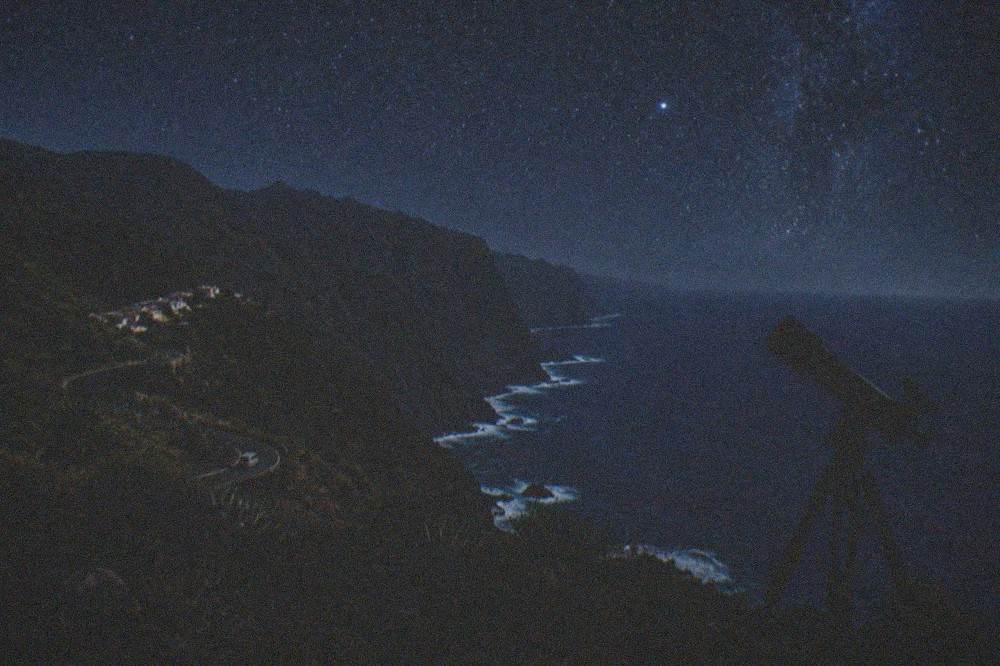
The observatory itself is a separate booking and a separate kind of evening. The Instituto de Astrofisica de Canarias runs guided visits by prior reservation only, with under-16s free and a resident discount, and the visits page has carried a fully booked notice, so anyone set on it should book far ahead. It is a daytime-style guided tour of a working observatory rather than a sunset event, and the IAC's own page is the only place that shows current availability.
One planning note on transport, because it catches visitors out: public transport on Tenerife is not free for visitors. The 2026 subsidy the Canary government announced covers resident passes only, and visitors pay single fares or the EUR 10 day travelcard and EUR 50 seven-day travelcard from TITSA. The TITSA network serves the towns, but the national park's upper reaches are not a bus-friendly sunset destination in the evening, which is another reason the coach tours exist. Our getting around Tenerife page covers the options.
Common Questions About Tenerife Sunsets
Where to watch sunset in Tenerife?
The strongest settings are Teide National Park above the cloud layer, the cliffs at Los Gigantes, which the tourist board says tower up to 600 m, and the sheltered southern bays such as Las Vistas in Arona. El Medano under Montana Roja and El Bollullo's black-sand cove in La Orotava are quieter alternatives, and Anaga's ridges frame the evening in the north-east.
Can you see the sunset from the top of Mount Teide?
Yes, with a reservation. The summit trail PNT 10 Telesforo Bravo lists 18:00 to 22:00 as a bookable evening slot on Tenerife ON, and walking without a reservation may be penalised. The cable car itself stops at La Rambleta at 3,555 m and does not reach the crater, and in the standard season its last descent is before sunset.
Is the Teide sunset tour worth it?
For most visitors, yes, because it solves the three things that are hard to arrange alone: the drive up and down in the dark, dinner at altitude, and a telescope with a guide after full darkness. The coach tour with hotel pickup is rated 4.8 from 2,961 reviews over eight hours, and the park's Starlight certification from the Fundacion Starlight underpins the stargazing half of the evening.
What time is sunset in Tenerife?
No official page in this site's research files publishes sunset times, so none is printed here. What the records do show is the light: AEMET's normals give Santa Cruz 337 sunshine hours in July and 168 in December, and the cable car's summer hours run to 18:40, which indicates how late the light holds in the high season.
Do you have to pay to watch the sunset in Teide National Park?
No. No official page lists an entry fee for the national park, and driving through or using the viewpoints carries no charge on any page read. The charges that exist are per-booking fees on two trails: since 19 January 2026 the PNT 10 daytime slots cost visitors EUR 15 and the PNT 07 slots EUR 6 on working days, EUR 10 at weekends.
Can you smoke while waiting for the sunset in the park?
No. The Cabildo de Tenerife bans smoking in all open-air spaces of Teide National Park, including trails, viewpoints, car parks and recreation areas, as a wildfire prevention measure. Bookings can also be suspended for fire risk or weather alerts, and Tenerife ON's alerts page is the place to check before an evening visit.
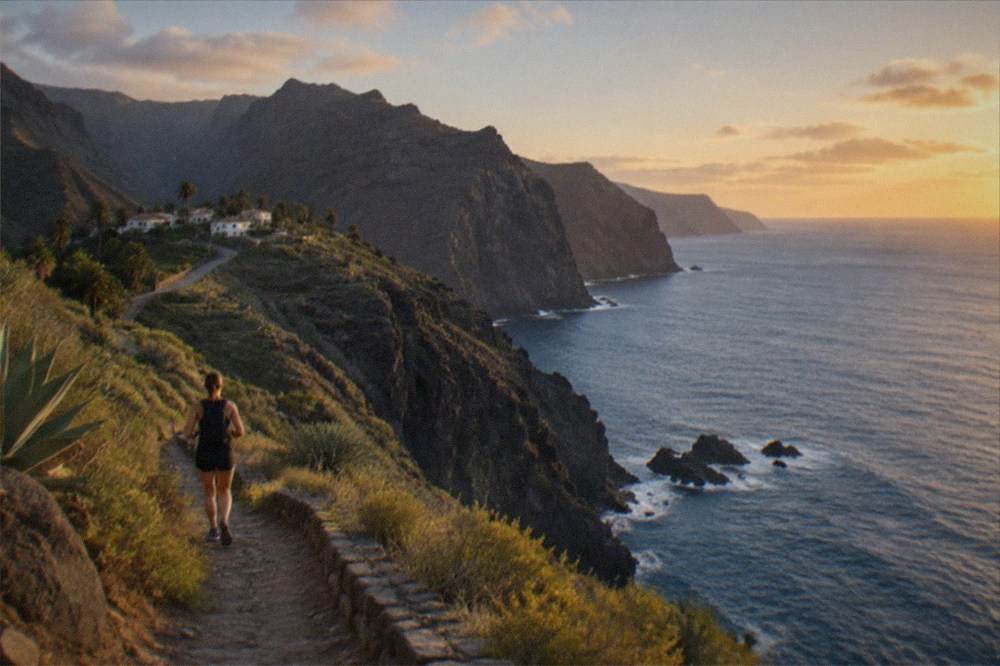
The pattern across all of this is simple: Tenerife's best sunset is whichever of the three settings matches your evening. The national park gives altitude and, on a clear night, the stars, but it asks for planning or a booked coach. The sea gives the cliffs and the whales under rules that protect both, on a boat flying the Barco Azul flag. The beaches and coves give the easy version, on grey, gold and black sand, with nothing to book at all. Pick the one that fits the day you have, and check the operator's live listing for the tour before you commit to the evening.