Boat Trips and Catamaran Cruises
Tenerife's south coast is one of the few places in Europe where a short boat trip can reasonably expect to meet pilot whales and bottlenose dolphins, and the law that protects them shapes every cruise on the water.
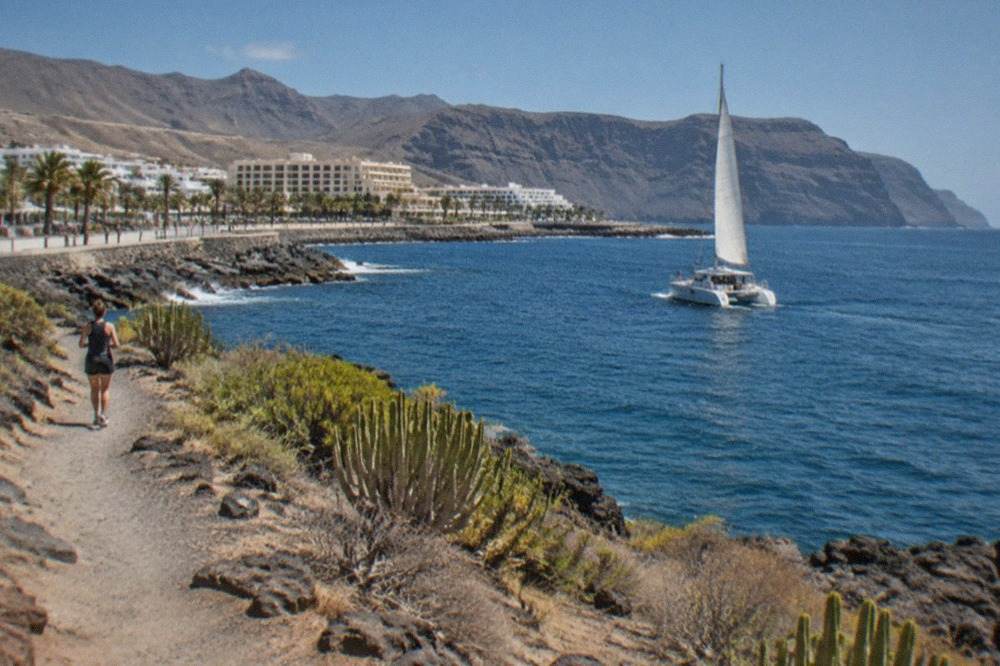
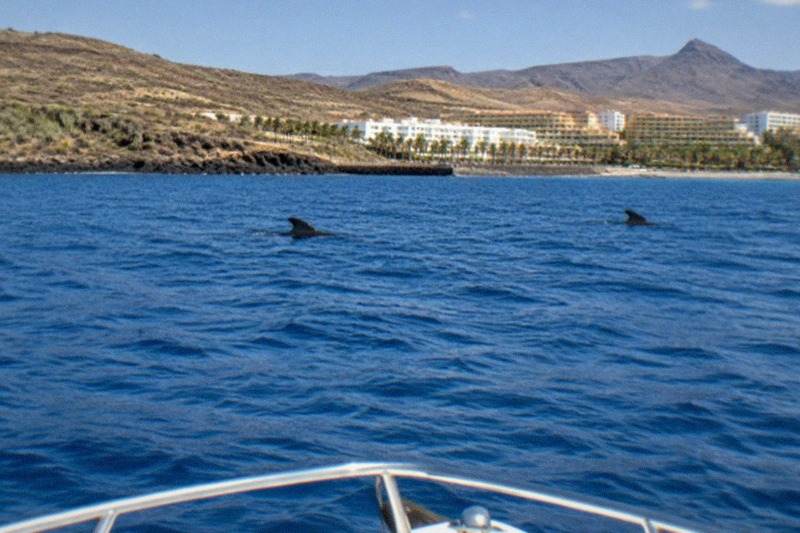
Eco Yacht Safari, Swim Stop
Travelin’ Lady: Eco Yacht Whale & Dolphin Safari + Swim
Glide out on an eco electric yacht through the waters between Tenerife and La Gomera, where a resident pilot whale population lives year round. There is time for a swim stop on the way back.
from $34.34 Per person, in USD. A promotional rate, so the regular price is higher.
Check Price & Availability →Opens the live booking page with up-to-date dates and prices. All booking and payment happen there; this guide takes none of it.
- Area
- Los Cristianos
- Length
- 1 hour 30 minutes
- Kind
- Whale and Dolphin Watching
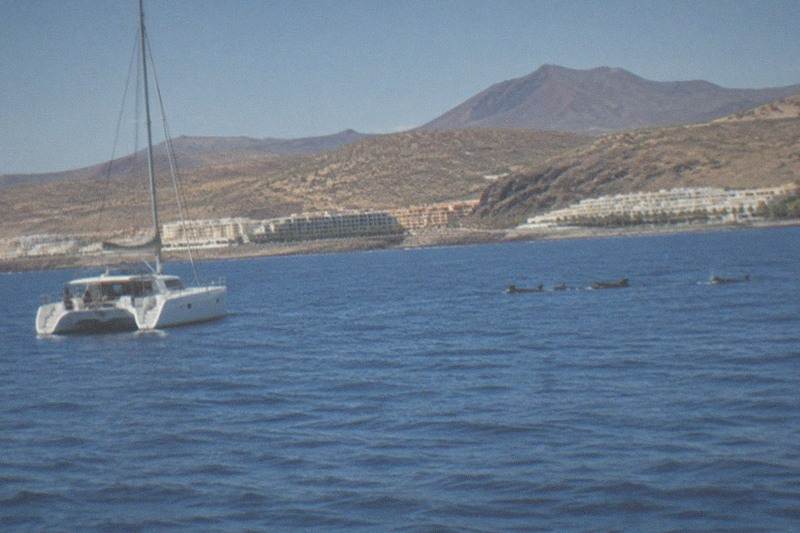
No-Chase Catamaran, Underwater Windows
Tenerife: Eco No-Chase Respectful Whale & Dolphin Encounter
from $32.16 Per person, in USD. A promotional rate, so the regular price is higher.
Check Price & Availability →- Area
- Los Cristianos
- Length
- 1 hour 30 minutes
- Kind
- Whale and Dolphin Watching
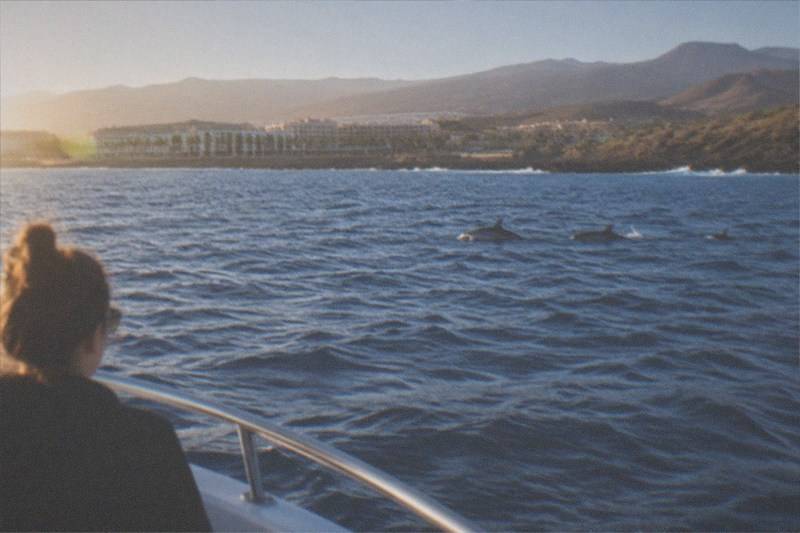
Puerto Colon Catamaran, Food and Drinks
Costa Adeje: Whale & Dolphin Eco-Cruise with Snacks & Drinks
from $53.98 Per person, in USD. The total depends on the date and option you pick.
Check Price & Availability →- Area
- Costa Adeje
- Length
- 3 hours
- Kind
- Whale and Dolphin Watching
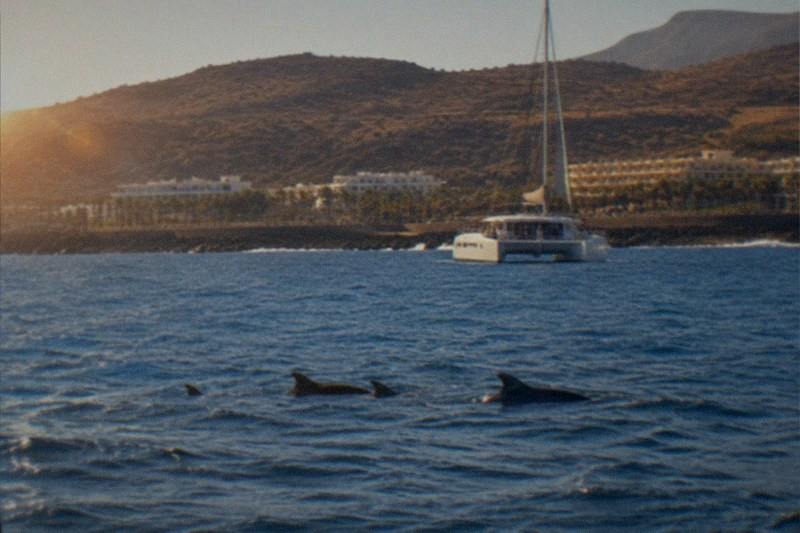
Catamaran, Drinks, 2 or 3 Hours
Costa Adeje: Whale Watching Catamaran Tour with Drinks
from $40.20 Per person, in USD. The total depends on the date and option you pick.
Check Price & Availability →- Area
- Costa Adeje
- Length
- 2 to 3 hours
- Kind
- Whale and Dolphin Watching
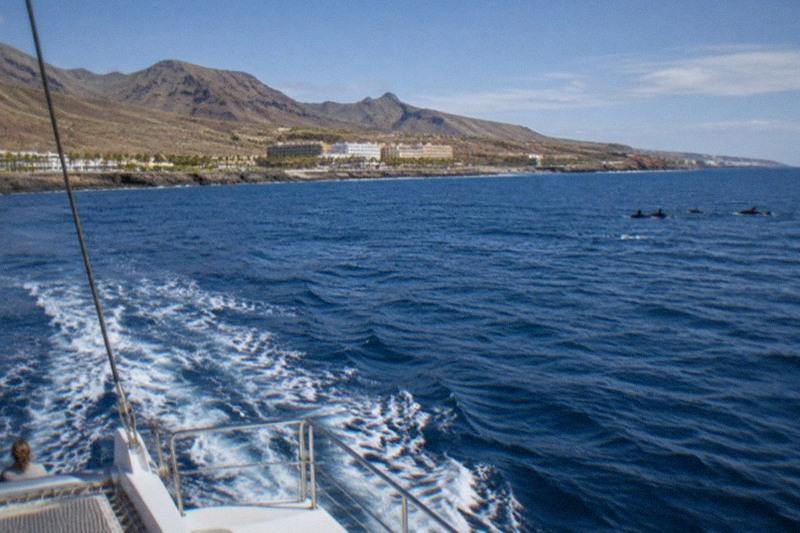
Catamaran, Buffet and Transfer
Whale and Dolphin Watching Catamaran with Transfer and Buffet
from $73.77 Per person, in USD. The total depends on the date and option you pick.
Check Price & Availability →- Area
- Costa Adeje
- Length
- 3 hours
- Kind
- Whale and Dolphin Watching
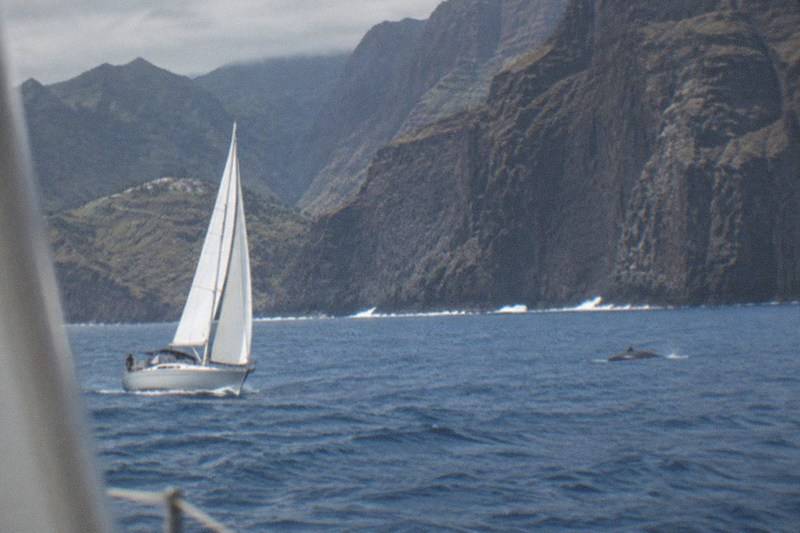
Sailboat Cruise, Los Gigantes
Tenerife: Los Gigantes Whale Watching Cruise by Sailboat
from $86.14 Per person, in USD. The total depends on the date and option you pick.
Check Price & Availability →- Area
- Los Gigantes
- Length
- 3 hours
- Kind
- Whale and Dolphin Watching
Short answer
The best boat trips in Tenerife run from Los Cristianos, Puerto Colon in Costa Adeje and Los Gigantes, and most are whale and dolphin watching cruises governed by Decreto 178/2000, which bans approaches within 60 metres of the animals and requires authorised boats to fly the Barco Azul flag.
The stretch of water between Tenerife and La Gomera is a Special Area of Conservation, and the World Cetacean Alliance records a "unique resident population of pilot whales" there alongside bottlenose dolphins, with 21 other cetacean species passing through on migration. That is why boat trips are the single most crowded category of excursion on the island: almost every cruise sold from the southern ports is, at some level, a whale and dolphin watching trip, whether the listing leads with the sail, the swim stop or the drinks. This page sets out what the law allows, what the ports offer, and how to choose between a catamaran, a sailboat, an eco rib and a jet ski.
What Kinds of Boat Trips Run in Tenerife?
The main categories are whale and dolphin watching catamarans from Los Cristianos, Costa Adeje and Los Gigantes, eco cruises with swim stops, sailboat cruises along the Los Gigantes cliffs, jet ski safaris along the south coast, and ferry crossings to La Gomera, La Palma and El Hierro, and almost all of them depart from the ports between Los Cristianos and Puerto de Santiago.
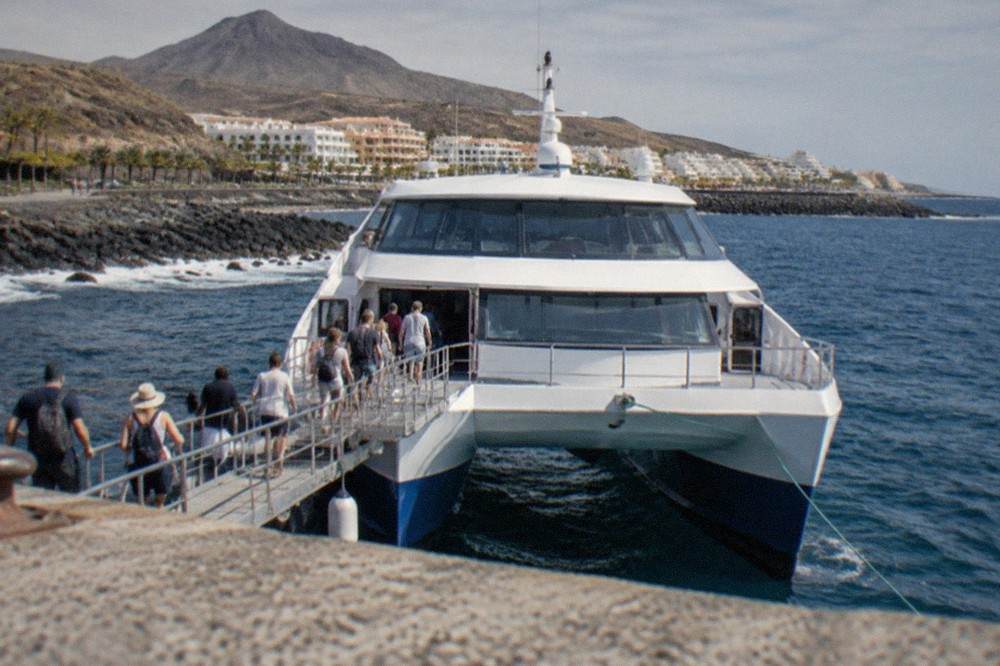
The whale and dolphin watching fleet dominates. The operator rosters this site carries list catamaran cruises from Los Cristianos and Puerto Colon, eco yacht safaris with swim stops, small-boat trips capped at ten guests, and no-chase catamarans with underwater viewing windows. The differences that matter are the boat size, the group size and the on-board service: a three-hour catamaran with drinks and a swim stop is a different product from a ninety-minute eco encounter, even when both follow the same coastline.
Alongside them sit the trips that are about the water itself rather than its wildlife. Jet ski safaris run guided convoys of forty minutes or a full hour from the Arona coast. Kayak and snorkel tours launch from Los Cristianos. A full treatment of those is on the kayaking with turtles page, and the powered options are grouped under jet ski and watersports.
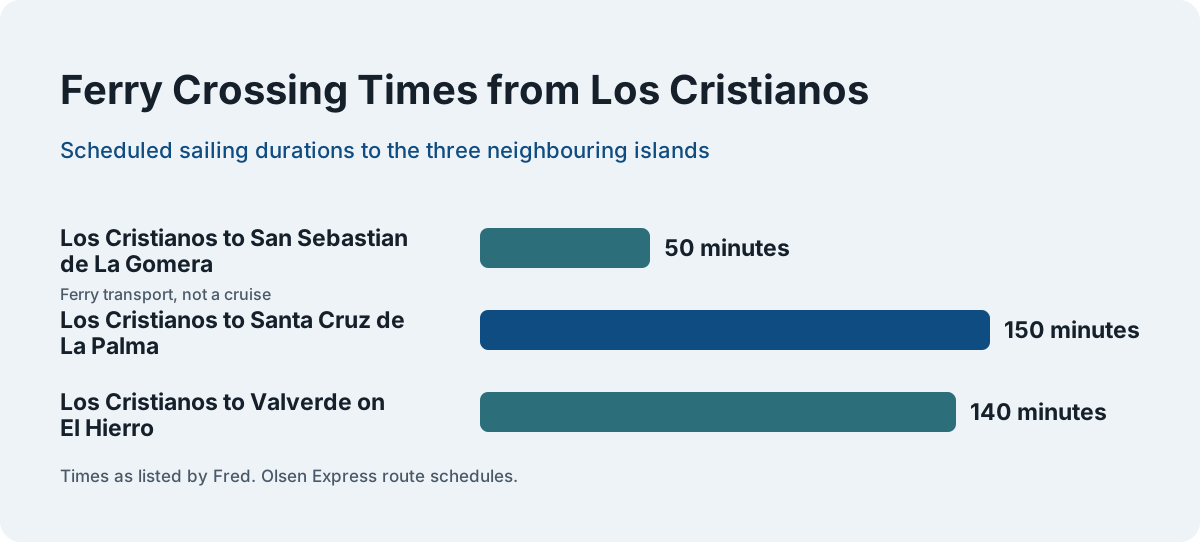
The ferries are a category of their own. Fred. Olsen Express lists Los Cristianos to San Sebastian de La Gomera at 50 minutes, to Santa Cruz de La Palma at 150 minutes and to Valverde on El Hierro at 140 minutes. These are transport, not cruises, but a day trip to La Gomera by ferry is one of the most rewarding days a boat can give you, and the La Gomera day trip page covers it in full.
There are also the hybrid days that mix a boat with something ashore. The Masca, Los Gigantes and natural pools excursion in the roster bundles a coach loop with a picnic, and the cruise shore excursions from Santa Cruz put a boat day inside a port call. If your holiday is built around one big day out rather than several small ones, the Tenerife excursions page compares the full-day options side by side.
Where Do the Boat Trips Depart From?
The three working departure points for tourist cruises are Los Cristianos harbour in Arona, Puerto Colon in Costa Adeje, and the small port at Los Gigantes in Santiago del Teide, with Los Cristianos also serving as the island's ferry terminal for La Gomera, La Palma and El Hierro.
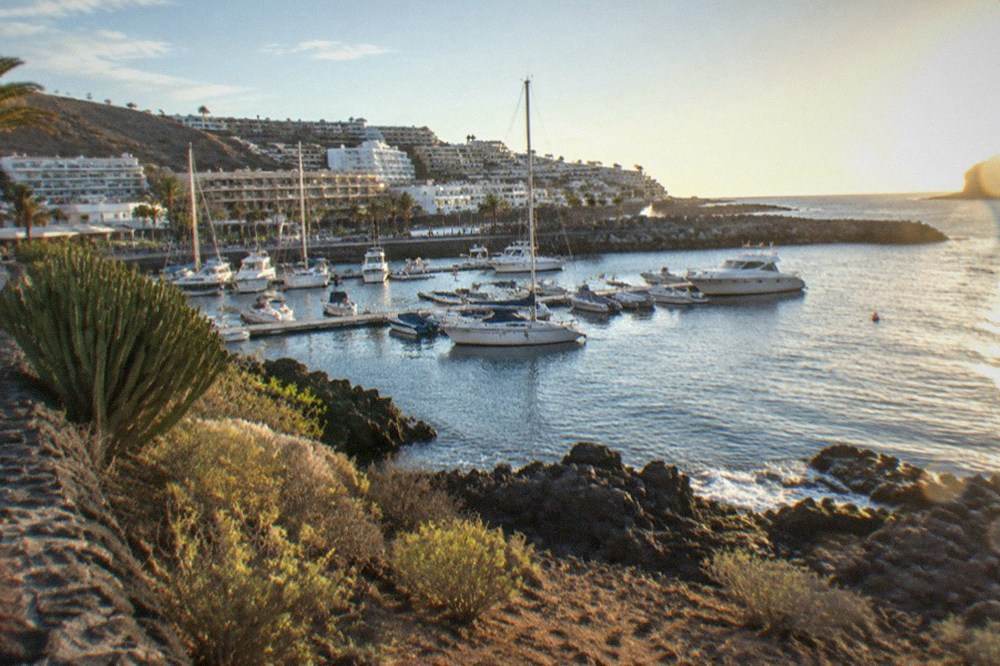
Los Cristianos is the busiest of the three. The eco yacht safari and the no-chase catamaran in the roster both list it as their area, and it doubles as the ferry port. Puerto Colon in Costa Adeje is the catamaran hub for the Adeje hotel belt: the whale watching catamarans with drinks, the eco-cruise with snacks, and the catamaran with buffet and transfer all sail from there, which matters if you would rather not take a transfer bus. Los Gigantes serves the quieter west coast, and its cruises combine whale and dolphin watching with a look at the cliffs the tourist board describes as towering "up to 600 m" above a seabed about 30 m deep at their foot.
The port choice decides your coastline. From Los Cristianos and Puerto Colon the boats work the calm southern shelf where the resident pilot whales live. From Los Gigantes the route runs under the cliffs of Teno Rural Park, which adds scenery to the wildlife. The Los Gigantes cliffs page covers the formation itself.
| Departure port | Municipality | What sails from there |
|---|---|---|
| Los Cristianos | Arona | Eco yacht safaris, no-chase catamarans, ferries to La Gomera, La Palma and El Hierro |
| Puerto Colon, Costa Adeje | Adeje | Catamarans with drinks, eco-cruises with snacks, buffet catamaran with transfer |
| Los Gigantes | Santiago del Teide | Dolphin and whale cruises with swim stops, sailboat cruises under the cliffs |
A practical note on getting to the pontoon: the catamaran with buffet and transfer is the one product in the roster that names hotel transfer as part of the day, and the others expect you at the harbour. If you are staying in the south without a car, Los Cristianos and Puerto Colon are both reachable on the TITSA network, and the Tenerife buses page explains the visitor travelcards, the EUR 10 day travelcard and the EUR 50 seven-day version.
What Are the Whale Watching Rules in Tenerife?
Decreto 178/2000 of the Canary government governs every whale and dolphin trip: boats may not approach within 60 metres of the animals, no more than three boats may be within 500 metres at once, speed is capped at 4 knots within 500 metres, and swimming, diving, feeding, chasing or circling the animals are all prohibited, so authorised boats must fly the Barco Azul flag.
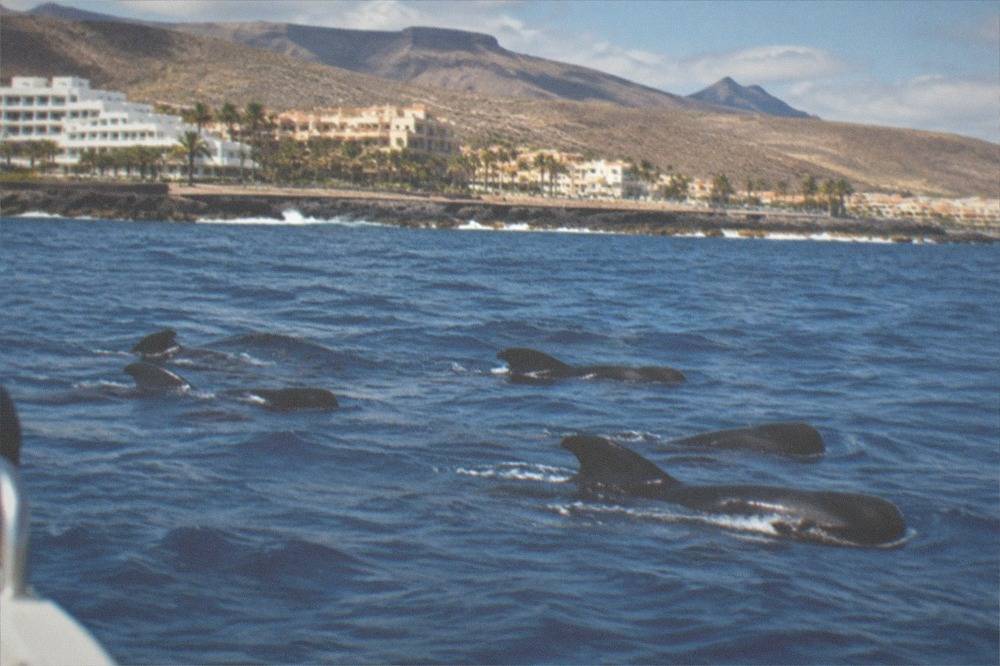
The decree is the reason Tenerife's whale watching is restrained rather than theatrical. A boat that keeps 60 metres away and 4 knots within 500 metres cannot chase, and the animals choose whether to close the gap. The three-boat limit inside 500 metres means the fleet spreads out rather than clustering on one pod. No swimming is allowed within 500 metres of the animals, which is why the swim stops on these cruises happen in bays, not beside the whales.
| Rule under Decreto 178/2000 | Figure |
|---|---|
| Minimum approach distance | 60 m |
| Maximum boats within 500 m | 3 |
| Maximum speed within 500 m | 4 knots |
| Swimming or diving within 500 m | Prohibited |
| Feeding, chasing, circling | Prohibited |
| Flag required on authorised boats | Barco Azul |
The Barco Azul flag is the compliance mark to look for at the pontoon. Article 15 of the decree requires authorised boats to fly it, and the flag is issued by the Canary tourism department with the permit and renewed annually. If a boat is not flying it, the permit question is open.
The designation behind the resident population is worth getting right. The World Cetacean Alliance states that the "Tenerife-La Gomera Marine Area became a designated Whale Heritage Area in January 2021", and the programme is now called Whale Heritage Areas. It is not a UNESCO listing, and the WCA page gives no count of the pilot whales: it records only that the population is resident and unique. The whale and dolphin watching page goes deeper on the wildlife itself.
Which Boat Trip Suits Your Group?
Families with young children tend to do best on a catamaran with a swim stop and drinks, wildlife-focused visitors on a small eco boat or a no-chase catamaran, couples on a sailboat cruise under the Los Gigantes cliffs, and adrenaline-seekers on a jet ski safari, because the differences between these products are group size, stability and how much of the day is spent on the water.
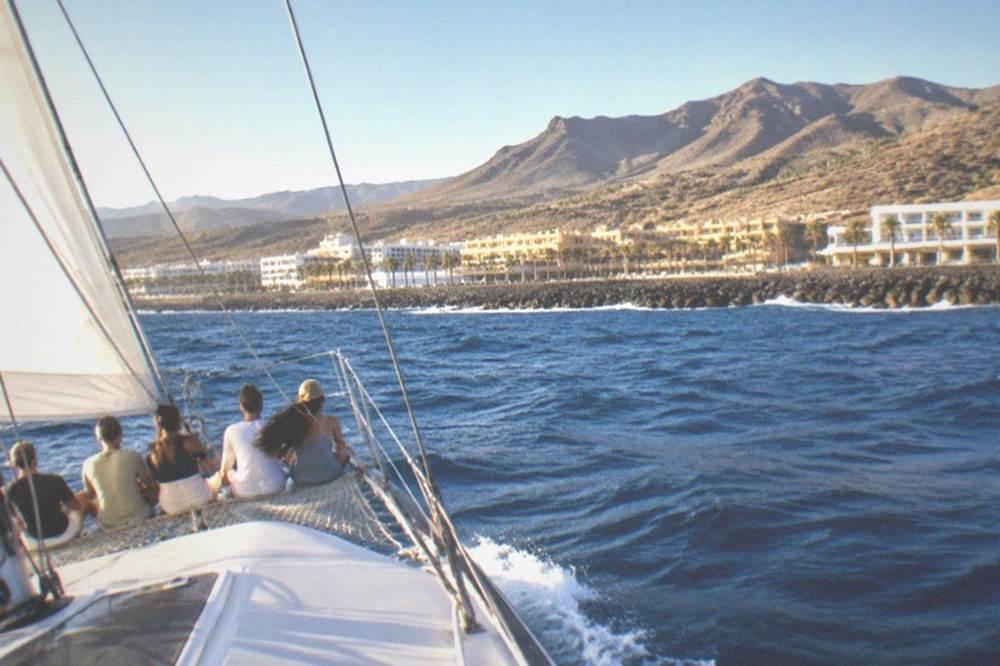
Duration is the first filter. The roster's whale watching products run from 90 minutes to 3 hours, which is short enough to fit around a morning at the beach. The eco yacht safari and the no-chase catamaran both run 90 minutes, which suits younger children whose attention runs out before the sea does. The three-hour options add the swim stop and the lunchier end of the day.
Boat type is the second filter. A catamaran is stable, shaded and sociable. A sailboat, such as the Los Gigantes cruise by sailboat, is quieter and lower in the water, which is the point for many couples. A small eco boat capped at ten guests gets closest to the spirit of the decree, because with so few people aboard the skipper can hold off and let the animals come to the boat.
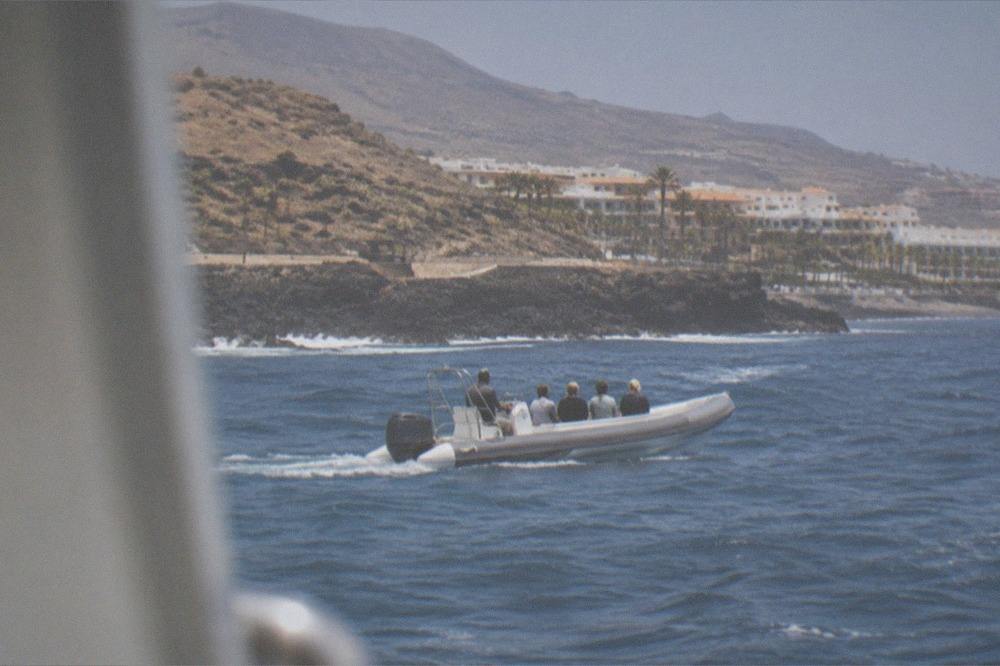
For visitors who want speed rather than wildlife, the jet ski safari runs guided convoys of 40 minutes or an hour along the south coast from Arona. It is a powered-water day rather than a cruise, and the listing offers the choice of two durations.
When Is the Best Time of Year for a Boat Trip in Tenerife?
September and October are the calmest and warmest months on paper, with sea surface temperatures off the south coast at 23.7 degrees Celsius and AEMET's Santa Cruz normals showing mean daily maxima of 28.1 and 26.3 degrees, while the resident pilot whales and bottlenose dolphins are present all year, so the wildlife does not have a season even though the sea does.
The sea temperature table is the one to plan around, because it decides whether the swim stop is a pleasure or an act of will. NOAA's 1991 to 2020 normals for the water off the south coast run from 19.1 degrees in March to 23.7 in September and October. The air normals are a different dataset over a different period, 1981 to 2010, so the two are never blended into one figure. Everything else covered here is indexed on Tenerife Travel Guide.
| Month | Sea surface temperature off the south coast (C) | Mean daily max, Santa Cruz (C) | Rain days of 1 mm or more, Santa Cruz |
|---|---|---|---|
| Jan | 19.9 | 21.0 | 4.2 |
| Mar | 19.1 | 22.1 | 3.8 |
| Jun | 21.4 | 26.2 | 0.2 |
| Sep | 23.7 | 28.1 | 0.9 |
| Oct | 23.7 | 26.3 | 3.1 |
| Dec | 21.1 | 22.1 | 5.4 |
Rain rarely stops a sailing. AEMET's Santa Cruz station records zero days with 1 mm or more of rain in July and 0.2 in June, against 5.4 in December. The weather that actually cancels boat trips is wind and swell, especially on the Los Gigantes side, where the pier at Masca can close suddenly when the sea turns, and the operator of the Masca gorge warns that sea conditions can void a day's ticket. The same logic applies to cruises: if the forecast is for wind, the west coast trips feel it first, and the southern shelf stays sailable.
Because the pilot whales and bottlenose dolphins are resident, the wildlife odds do not swing with the calendar the way they do in migration destinations. What swings is the sea state, the crowd level and the temperature of the swim stop. The best time to visit Tenerife page carries the full month-by-month argument.
Can You Combine a Boat Trip with a Swim?
Yes, most catamaran cruises include a swim stop, but the stop is always in a bay or anchorage and never within 500 metres of whales or dolphins, because Decreto 178/2000 prohibits swimming and diving within 500 metres of the animals, and the sea's own temperature decides how pleasant it is.
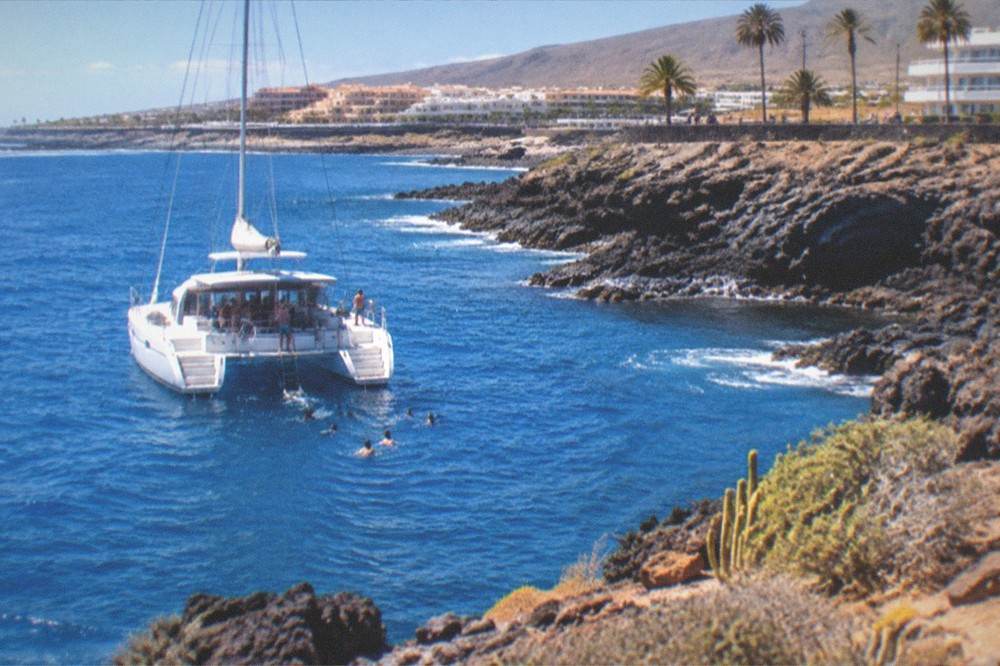
The swim stop is the part of a catamaran day that the listing usually sells hardest, and it is a genuine feature rather than a promise: the boats anchor in the coves along the Adeje and Santiago del Teide coasts, and the ladder goes down. What no lawful operator can offer is a swim with the whales. The 500-metre rule is absolute, and any listing that implies otherwise is describing something the decree does not permit.
The water temperature sets the experience. Between June and November the sea off the south coast runs at 21.4 to 23.7 degrees, which most British visitors find warm. In March, at 19.1, the same swim is brisk. Wetsuits are not standard on catamaran swim stops, though the kayak tours in the roster include them, which tells you something about the difference between a dip from a boat and an hour in the water.
Snorkelling from the boat is a different matter from swimming with cetaceans, and it is allowed wherever the boat anchors. The coves off the Adeje coast hold turtles, and the dedicated kayak and snorkel products in the roster are built around them, with free video included on the Los Cristianos departure. If the swim stop is the main reason you are booking, read the listing carefully: some cruises include snorkel gear at the stop and others do not, and the listing is the only place that says.
What About Ferries and Island Hopping by Boat?
Los Cristianos is the ferry hub, with Fred. Olsen Express listing 50 minutes to San Sebastian de La Gomera, 140 minutes to Valverde on El Hierro and 150 minutes to Santa Cruz de La Palma, and the Santa Cruz to Agaete crossing to Gran Canaria taking 80 minutes, so a boat can also be your transport rather than your excursion.
| Ferry route | Crossing time (Fred. Olsen Express) |
|---|---|
| Los Cristianos to San Sebastian de La Gomera | 50 min |
| Los Cristianos to Valverde, El Hierro | 140 min |
| Los Cristianos to Santa Cruz de La Palma | 150 min |
| Santa Cruz de Tenerife to Agaete, Gran Canaria | 80 min |
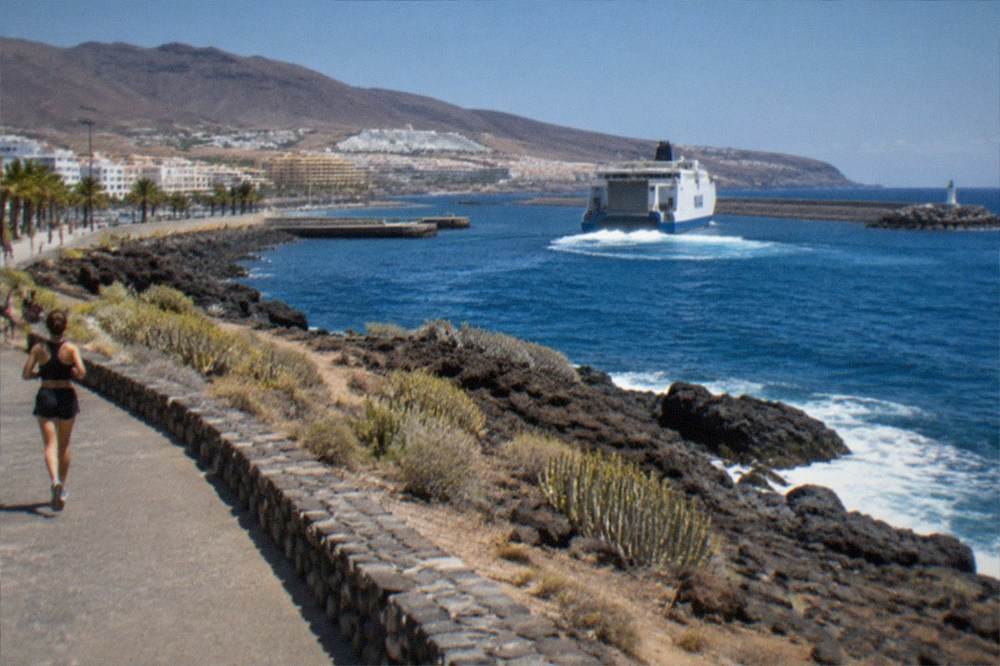
The Gomera crossing is the one most visitors can actually use. Fifty minutes each way makes a day trip realistic, and the coach-and-ferry excursions in the roster bundle the sailing with lunch on the island. The La Gomera page covers the island itself, and the wider comparison of every crossing sits on the island hopping guide.
The Gran Canaria route is the practical alternative to an inter-island flight: 80 minutes from Santa Cruz to Agaete, on the north-west of Gran Canaria. The Gran Canaria from Tenerife page covers what to do once you are off the boat.
How Do You Choose a Responsible Whale Watching Operator?
Look for the Barco Azul flag on the boat, a listing that names the 60-metre approach rule or describes no-chase behaviour, small group sizes, and an operator whose listing talks about holding distance and letting animals approach, because the decree's rules are only as good as the skipper's discipline in following them.
The roster carries several operators whose own listings lead with restraint. The eco no-chase encounter describes itself as respectful, the eco yacht safari runs from Los Cristianos with a swim stop away from the animals, and the small-boat eco adventure caps its trips at ten guests. None of this is a guarantee of any sighting, and no honest listing offers one: what the resident population means is that the odds are unusually good, not that the animals are booked.
A practical checklist: the Barco Azul flag at the pontoon, a boat that is not overfilled, a crew that throttles down rather than steers at the pod, and a skipper who ends the encounter when the animals leave. The decree already requires the first and forbids the chasing, so an operator whose listing advertises close approaches is advertising something the law does not allow.
Price is the one thing this page will not print, by design. Tour prices move with season and availability, and the live listing is the only honest source for the figure on the day you book. What you can compare here is structure: duration, boat type, group size, what is included at the swim stop, and whether the price of the day covers your transfer to the port. Those five questions narrow the field faster than any price comparison, and the cards below carry the current figures for the three products this page rates most highly.
Common Questions About Tenerife Boat Trips
Can you see whales in Tenerife?
Yes, and with unusually good odds, because the World Cetacean Alliance records a resident population of pilot whales and bottlenose dolphins in the Tenerife-La Gomera Marine Area, alongside 21 migratory cetacean species. No official count of the whales exists, so no number is printed here.
Where do boat trips leave from in Tenerife?
The tourist fleet sails from Los Cristianos, Puerto Colon in Costa Adeje and Los Gigantes. Los Cristianos is also the ferry port for La Gomera, La Palma and El Hierro.
How close do the boats get to the whales?
No closer than 60 metres, under Decreto 178/2000. Within 500 metres of the animals a boat may not exceed 4 knots, no more than three boats may be present, and swimming and diving are prohibited.
Can you swim with dolphins in Tenerife?
No. Swimming and diving within 500 metres of whales or dolphins are prohibited by the Canary decree, so the swim stops on catamaran cruises take place in bays, well away from the animals.
Is the sea warm enough to swim from the boat?
For most of the year, yes. The sea surface off the south coast runs from 19.1 degrees Celsius in March to 23.7 in September and October, on NOAA's 1991 to 2020 series.
Do you need to book a boat trip in advance?
The whale watching fleet is the busiest excursion category on the island, and the catamarans have fixed capacity, so booking ahead is sensible in the peak months. Check each operator's live listing for current availability.