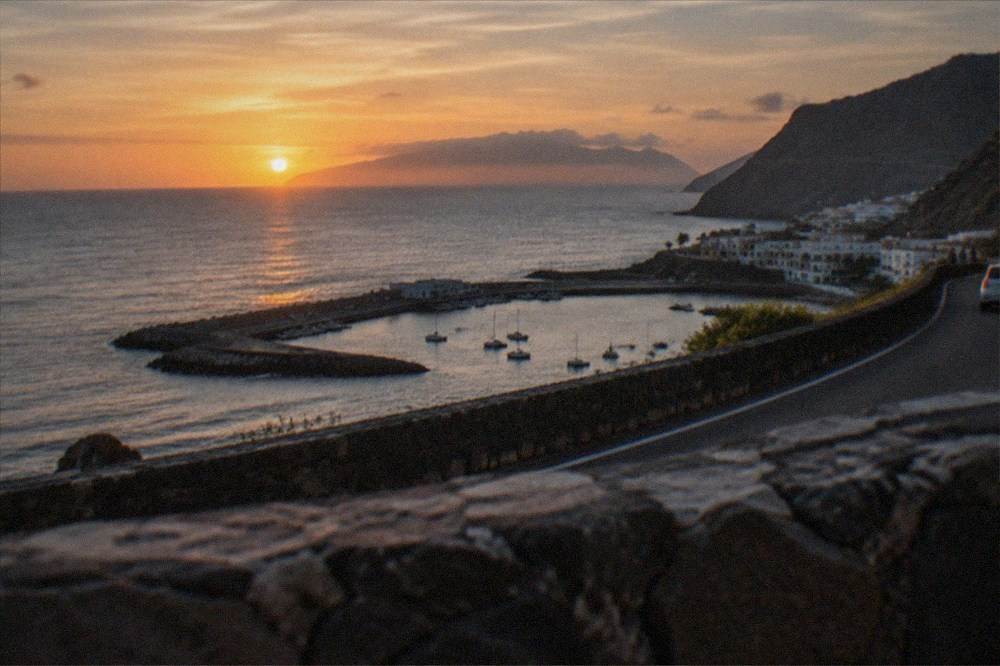
Gran Canaria from Tenerife
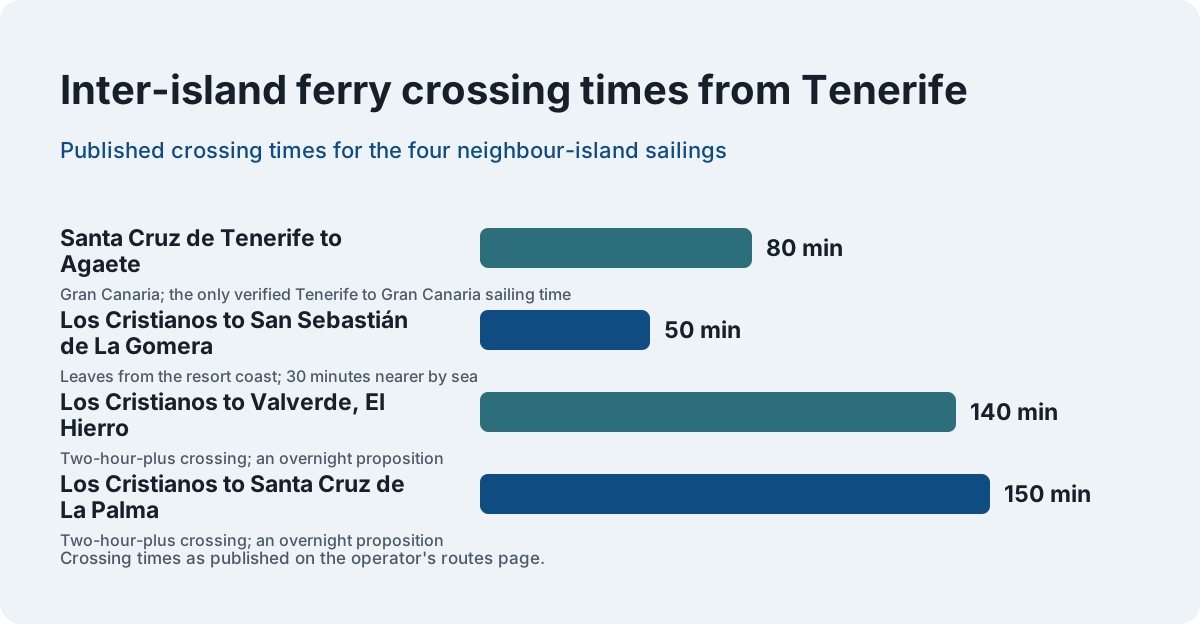
The crossing from Santa Cruz de Tenerife to Agaete on Gran Canaria takes 80 minutes on Fred. Olsen Express, the one inter-island link from Tenerife's capital to its neighbour. This page sets out what the route allows, what it does not, and what to do with the day instead.
Short answer
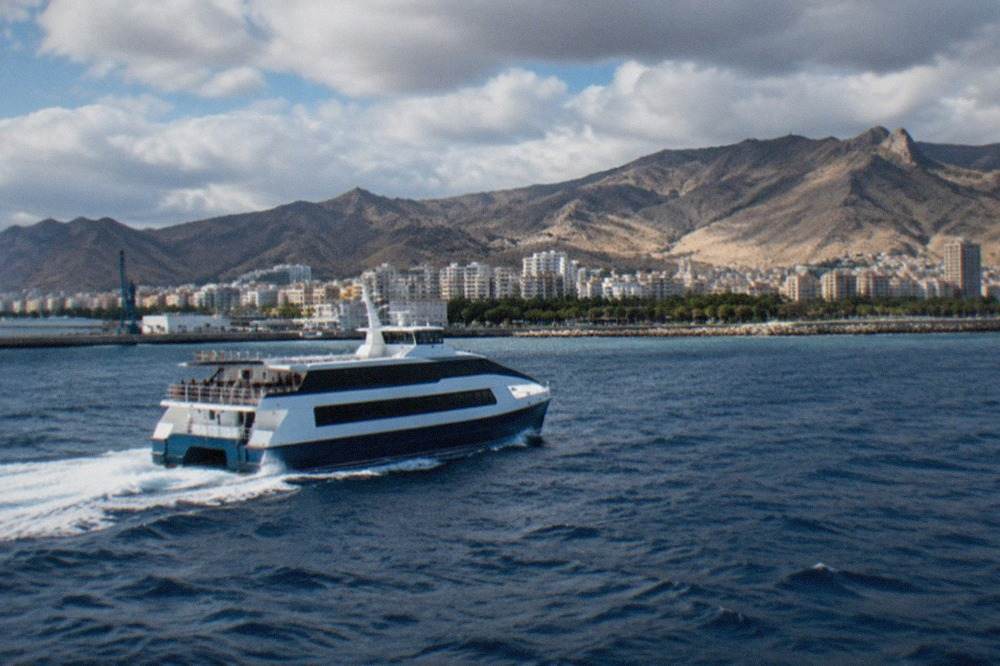
The Tenerife to Gran Canaria ferry runs from Santa Cruz de Tenerife to Agaete and takes 80 minutes on Fred. Olsen Express. It is the shortest inter-island link from the capital, but a day trip leaves limited hours on the far side, and the La Gomera crossing from Los Cristianos is the easier neighbour to visit in one day.
Eighty minutes is all the sea that separates Tenerife from Gran Canaria on the fastest link. Fred. Olsen Express lists the crossing from Santa Cruz de Tenerife to Agaete at 80 minutes, which puts the neighbour island closer, in sailing time, than many a drive across Tenerife itself. That fact alone sells the idea to a lot of holidaymakers staying in the south resorts, and the arithmetic is genuinely tempting.
The catch is everything around those 80 minutes. Agaete sits on Gran Canaria's northwest coast, not beside Las Palmas, and the crossing starts from Santa Cruz de Tenerife, not from Los Cristianos where the other island ferries leave. This page works through the route as the operators publish it, weighs whether a day trip is realistic, and offers the alternatives that fit a single day better. The comparison between the two islands in depth is covered on Tenerife vs Gran Canaria, and the wider island-hopping picture sits on island hopping and inter-island ferries.
How Long Is the Ferry from Tenerife to Gran Canaria?
The crossing from Santa Cruz de Tenerife to Agaete on Gran Canaria takes 80 minutes, and Fred. Olsen Express is the operator that publishes that figure on its routes page. It is the only Tenerife to Gran Canaria sailing time on file here, and no other operator's crossing time, frequency or fare for this route is stated, because none has been verified. Treat 80 minutes as the planning number and check the operator's live listing for the sailing times on your date.
The route is a capital-to-coast link rather than a resort-to-resort one. Santa Cruz de Tenerife is in the island's northeast, so travellers based in Costa Adeje, Los Cristianos or Playa de las Américas face a transfer north before the ferry is even in sight. The distance is real, and on a day trip it comes out of the far side of the clock.
The 80-minute figure deserves one honest caveat: it is the operator's published crossing time, not a door-to-door promise. Weather, port calls and schedule changes move real journeys, and the sailing times themselves vary by day and season. Everything about the day's shape, the departure port, the arrival port and the time on the water, comes from the operator's own routes page, and the live listing is the only place that carries today's sailings.
| Route | Operator | Crossing time |
|---|---|---|
| Santa Cruz de Tenerife to Agaete, Gran Canaria | Fred. Olsen Express | 80 min |
| Los Cristianos to San Sebastián de La Gomera | Fred. Olsen Express | 50 min |
| Los Cristianos to Santa Cruz de La Palma | Fred. Olsen Express | 150 min |
| Los Cristianos to Valverde, El Hierro | Fred. Olsen Express | 140 min |
The table shows the whole inter-island picture from Tenerife in one view, because the Gran Canaria crossing only makes sense next to its rivals. La Gomera is 30 minutes nearer by sea and leaves from the south, which is why it dominates the day-trip market. La Palma and El Hierro are two-hour-plus crossings and are overnight propositions, covered on La Palma and El Hierro day trips.
Which Port Does the Gran Canaria Ferry Leave From?
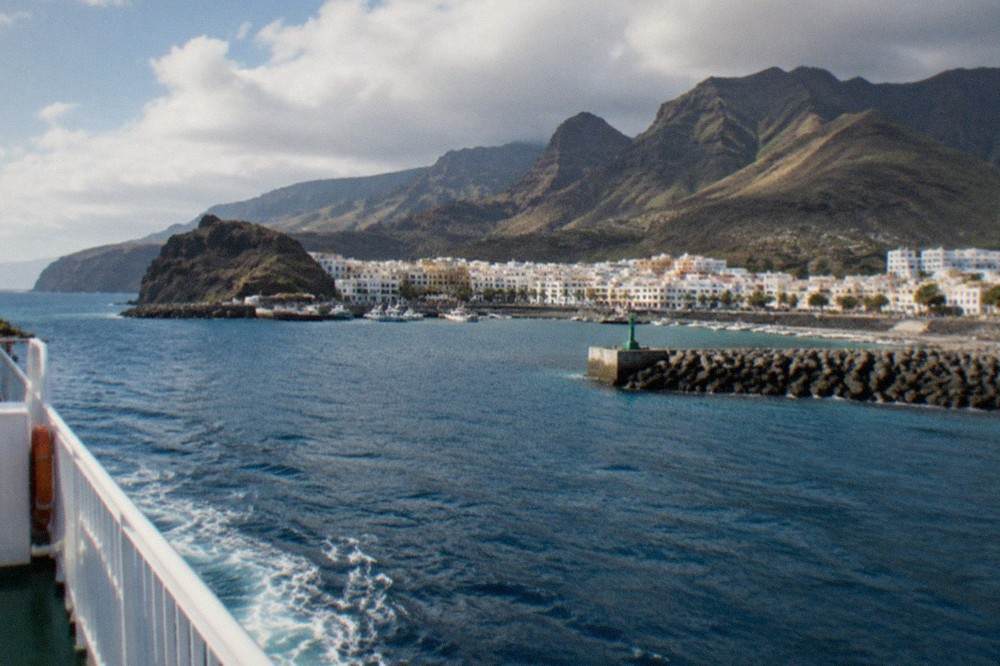
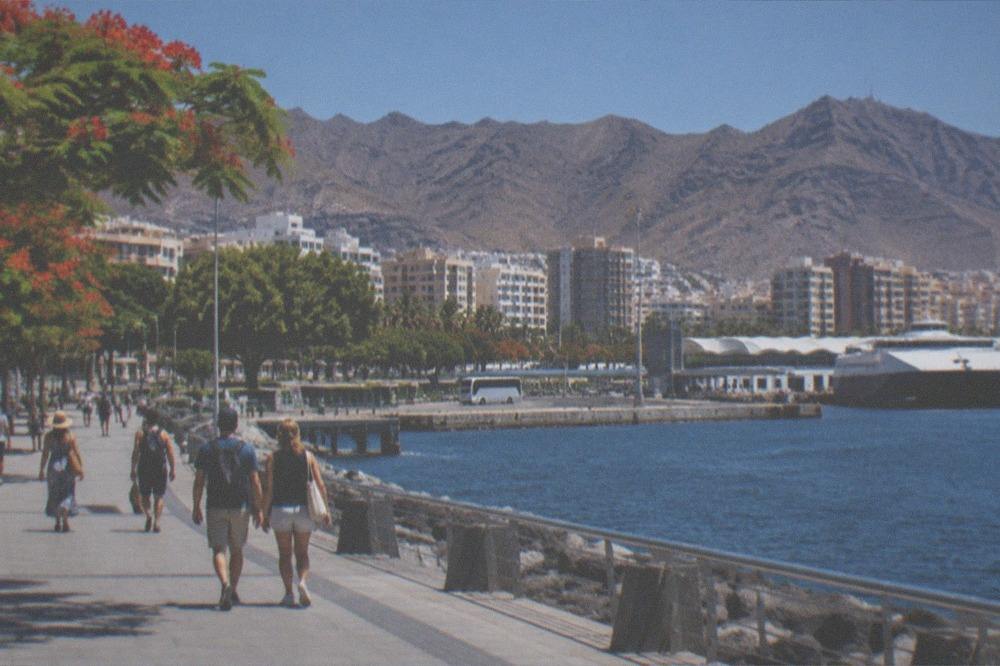
The Gran Canaria ferry leaves from the port of Santa Cruz de Tenerife, in the island's capital, and arrives at Agaete on Gran Canaria's northwest coast. That is the pairing Fred. Olsen Express publishes. It matters because most visitors stay in the south of Tenerife, so the day begins with a transfer of real length to reach the capital, and the La Gomera and La Palma ferries, by contrast, leave from Los Cristianos in the south.
The port location shapes the whole plan. A traveller in Costa Adeje or Los Cristianos must first get to Santa Cruz, and TITSA's network is the realistic way to do it. The verified bus lines for the airports are 10, 40, 711, 343 and 415 at Tenerife South and 20, 30 and 343 at Tenerife North, and the capital is served by the routes that converge there; the airport pages are the reliable reference for which line fits which starting point. Visitors pay for public transport: single tickets, the EUR 10 day travelcard or the EUR 50 seven-day travelcard, because the 2026 free-travel subsidy applies to resident passes only.
For anyone weighing the two halves of Tenerife as a base, this port geography is one of the strongest arguments in the whole Tenerife north vs south debate. A northern base puts the Gran Canaria ferry within easy reach. A southern base puts the Gomera ferry within easy reach instead, and that trade-off decides most people's island-hopping more than any loyalty to either coast.
The arrival port matters just as much. Agaete is a small town on the northwest of Gran Canaria, and the crossing lands there rather than at Las Palmas. No distances, transfer times or connections on the Gran Canaria side are stated on this page, because none has been verified from an official source. Plan the far side from the operator's own port information, and treat anything a forum or blog claims about onward travel as unverified until an official page confirms it.
Is a Day Trip to Gran Canaria from Tenerife Realistic?
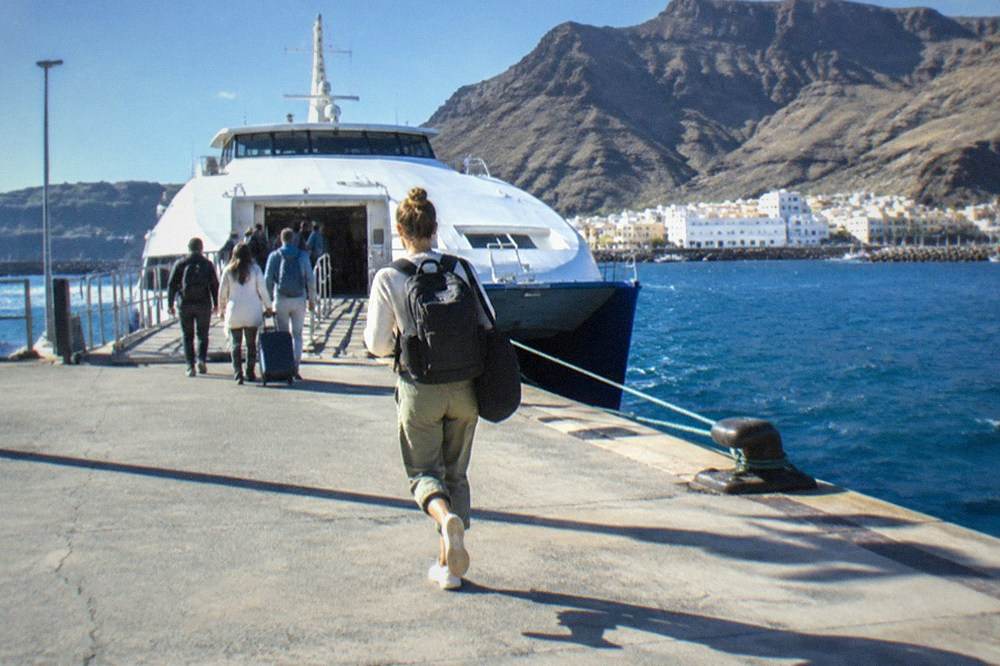
A day trip is possible but tight, and the honest answer is that the 80-minute crossing plus the transfer to Santa Cruz leaves only the middle of the day on Gran Canaria. The route lands at Agaete, not Las Palmas, and no verified onward times exist for the Gran Canaria side, so the hours actually available depend on connections this page cannot confirm. For a guaranteed full day on a neighbouring island, the La Gomera crossing from Los Cristianos is the realistic choice.
Count the day out loud. A southern-resort start means a bus or taxi to Santa Cruz, a check-in window at the port, 80 minutes of water, and then the same sequence in reverse with a last sailing to catch. What remains on Gran Canaria is a late-morning-to-mid-afternoon window, minus whatever the arrival port demands. That can still be a good day, but it is a day with a hard edge at both ends, and a missed return sailing is not a small inconvenience on an island-hopping itinerary.
The contrast with La Gomera is stark and worth stating plainly. The Gomera ferry takes 50 minutes from Los Cristianos, leaves from the resort coast, and there is an organised day trip that bundles the ferry with a coach tour of the island and lunch, which removes every piece of the planning. Armas Trasmediterranea also sells the Los Cristianos to San Sebastián route alongside Fred. Olsen Express, so the crossing itself has two operators.
For readers set on Gran Canaria, the workable shape is a two-night stay rather than a day trip, using the 80-minute crossing as a short hop and giving the island the time its interior deserves. For readers set on a day trip, the choice is between accepting a compressed Gran Canaria day and taking the easier neighbour. Both are defensible; only one is relaxed.
What Can You Do Instead If the Crossing Does Not Fit Your Day?
If the Gran Canaria timing does not work, the strongest single-day alternatives are the La Gomera day trip with lunch, a whale and dolphin watching cruise from the south coast, or a scuba try-dive with turtles at Costa Adeje. Each fits inside a resort day without a pre-dawn start, and each is a bookable product with a live listing rather than a plan that depends on port connections.
La Gomera is the headline alternative and has its own full page on La Gomera day trips. The organised version handles the ferry, the island coach loop and lunch in one booking, which is exactly what a compressed schedule wants. The ferry itself can also be booked directly: for the crossing alone, check the La Gomera ferry listing for the Los Cristianos to San Sebastián de La Gomera route.
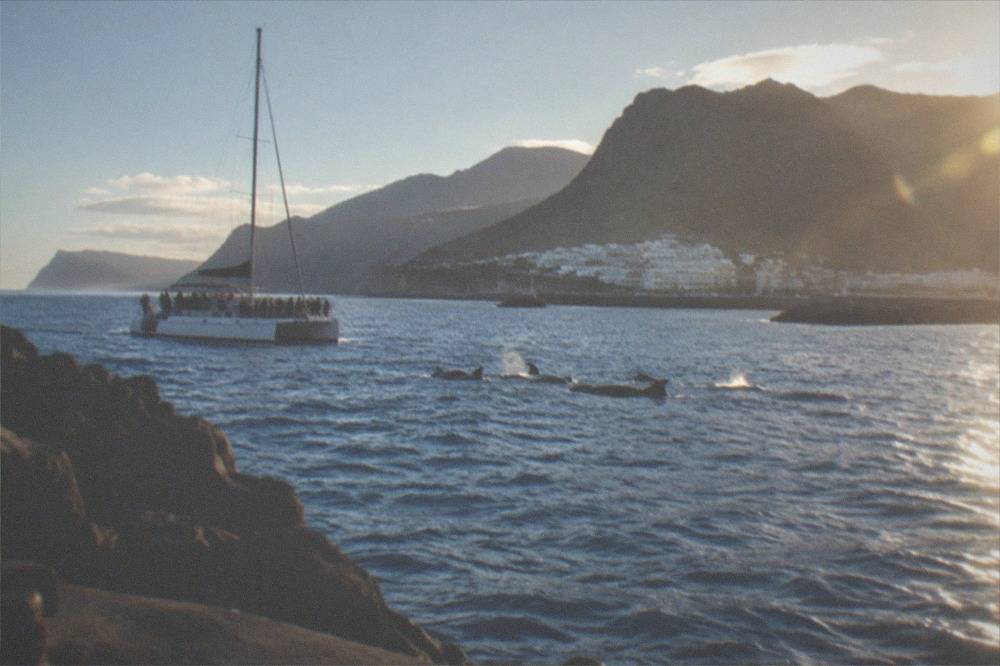
The sea alternatives need no ferry at all. Tenerife's southwest coast is one of the most reliable places in Europe to see pilot whales and bottlenose dolphins, a resident population the World Cetacean Alliance describes as unique, and the whale watching is regulated by Decreto 178/2000: no approach within 60 metres, at most three boats within 500 metres, and authorised boats fly the Barco Azul flag. A no-chase catamaran with underwater windows is the family-friendly version of the trip.
Under the water, a first scuba dive with turtles at Costa Adeje turns a non-ferry day into something a day trip to another island cannot match. The listing describes a two-in-one try-dive plus snorkel session for ages 8 and up, in a bay where turtles are the resident attraction rather than a hopeful sighting.
When Is the Best Time of Year for the Crossing?
The sea off Tenerife's south coast is warmest in September and October at 23.7 Celsius and coolest in March at 19.1 Celsius, on NOAA's 1991 to 2020 figures, while Santa Cruz averages 25 Celsius in July and August against 18.2 in January, on AEMET's 1981 to 2010 normals. For a ferry-and-explore day, the May to September window pairs the warmest sea with the fewest rain days in the capital, though every month is workable on this coast.
The two datasets measure different things and are not interchangeable. The air normals are AEMET's 1981 to 2010 series for the Santa Cruz station; the sea surface figures are NOAA's 1991 to 2020 series for the water off the south coast. Both are climate averages, not forecasts, and neither says anything about a specific week. What they do say is that the ferry-and-beach combination has no bad season here, only wetter and drier ones.
| Month | Sea surface C | Santa Cruz mean daily max C | Santa Cruz rain days (1 mm or more) |
|---|---|---|---|
| Jan | 19.9 | 21 | 4.2 |
| Feb | 19.2 | 21.2 | 3.8 |
| Mar | 19.1 | 22.1 | 3.8 |
| Apr | 19.5 | 22.7 | 2.4 |
| May | 20.2 | 24.1 | 0.9 |
| Jun | 21.4 | 26.2 | 0.2 |
| Jul | 22.2 | 28.7 | 0 |
| Aug | 23.1 | 29 | 0.3 |
| Sep | 23.7 | 28.1 | 0.9 |
| Oct | 23.7 | 26.3 | 3.1 |
| Nov | 22.5 | 24.1 | 4.7 |
| Dec | 21.1 | 22.1 | 5.4 |
Crowds run on a different calendar from the weather. ISTAC's FRONTUR-Canarias series counts tourists arriving in Tenerife by air, excluding Canary Islands residents, and its 2025 figures show the winter months are the busy ones: 679,245 arrived by air in December 2024 and the series stays high through February, while May and June are the quietest, at 539,410 and 542,881 by air in 2025. A ferry day in late spring trades a degree or two of sea warmth for noticeably thinner crowds.
| Month | Tourists arriving by air, 2025 |
|---|---|
| Jan | 643,460 |
| Feb | 648,255 |
| Mar | 677,688 |
| Apr | 604,370 |
| May | 539,410 |
| Jun | 542,881 |
| Jul | 611,623 |
| Aug | 618,578 |
| Sep | 563,261 |
| Oct | 631,662 |
| Nov | 659,656 |
| Dec | 671,202 |
What Charges Will You Actually Pay on a Day Trip?
There is no tourist tax on Tenerife: no official page shows a per-night lodging tax in force or approved. The charges that do exist are per-booking fees on specific trails and sites, such as EUR 15 for visitors on the Teide summit trail's daytime slots since 19 January 2026 and the EUR 40.66 Masca gorge ticket, and the ferry fare itself is priced on the operator's live listing. None of these is a tax on staying.
This matters for the Gran Canaria plan because day-trippers sometimes budget for a "tourist tax" that does not exist. What they should budget for is the ferry fare, which moves with season and demand and is only honestly stated on the listing: check the Gran Canaria ferry listing for the Santa Cruz de Tenerife to Agaete route. Fares are never quoted on this page, because no verified fare is on file and any figure would go stale.
The official charges that do exist, all verified, are these:
| Charge | Who pays | Amount |
|---|---|---|
| Teide summit trail PNT 10, 09:00 to 17:00 slots | Visitors | EUR 15 |
| Teide summit trail PNT 10, 09:00 to 17:00 slots | Other Canary Islands residents | EUR 6 |
| Teide trail PNT 07 Montaña Blanca, working days | Visitors | EUR 6 |
| Teide trail PNT 07 Montaña Blanca, weekends and holidays | Visitors | EUR 10 |
| Masca gorge descent ticket | General | EUR 40.66, boat not included |
| Barranco del Infierno | Non-resident adult | EUR 15 |
| Barranco del Infierno | Canary residents | EUR 5 |
Teide permits are booked on Tenerife ON, not on the old national parks booking site, and slots are released every Monday at 07:00 Canary time with 56 days kept bookable. The Masca ticket is bought at caminobarrancodemasca.com, and the descent requires arrival on TITSA line 355 from Santiago del Teide, with private vehicles refused. None of these applies to a Gran Canaria ferry day, but a longer Tenerife itinerary usually touches at least one of them, and the Teide summit permit guide covers that booking in full.
What Should You Book Before the Day?
Book the ferry crossing itself first, on the operator's live listing, because the sailing times and fares are only stated there. Beyond the crossing, book only what the day genuinely needs: nothing else on the Tenerife side requires pre-booking for a ferry day, while Teide trail permits, Masca tickets and the Barranco del Infierno all require advance reservations if they appear elsewhere in the trip. The ferry is the one booking the day cannot survive without.
The order of operations for a Gran Canaria day is short. Fix the sailing first, both directions, on the same listing. Then fix the transfer to Santa Cruz, whether that is a TITSA travelcard bought at an airport ticket machine or a taxi arranged the evening before. Then stop: everything else on a single-day crossing is optional, and over-booking a compressed day is how ferry days go wrong.
For the alternative days, the booking question answers itself. The La Gomera tour with lunch is one booking that covers the ferry, the coach and the meal. Whale watching trips run several times a day from Los Cristianos, Costa Adeje and Los Gigantes, so they tolerate a late decision better than any ferry. The scuba try-dive needs a calendar slot but no planning beyond it.
What Do Travellers Say About the Crossing?
Travellers' reviews concentrate on the organised inter-island day trips rather than the raw crossing: the La Gomera day trip with lunch is rated 4.1 from 2,218 reviews, while the sea-based alternatives off Tenerife's own coast rate higher, up to 4.9 from 380 reviews on a small-group stargazing night. The pattern is consistent: the organised neighbour-island day beats the self-managed crossing, and the home-island sea days beat both on satisfaction.
The numbers behind that summary come from the live listings and are printed by the product cards, not in prose. What the pattern suggests is practical rather than mysterious: a day trip with a fixed return sailing carries stress that a coastal cruise does not, and stress shows up in reviews. The Gomera tour's 4.1 sits below the whale watching fleet's 4.6 to 4.7 band, and the difference is the clock.
Reviews also repeat two warnings worth carrying into any ferry plan. First, sea conditions matter: the Masca operator's own page, for a different crossing, warns that the pier can close suddenly when the sea turns, and any open-sea sailing can be disrupted by weather. Second, the port-side logistics dominate the experience: travellers who reached the terminal early report calm days, and travellers who sprinted report the opposite. Neither warning is specific to the Gran Canaria route, but both apply to it.
Common Questions About the Tenerife to Gran Canaria Ferry
How long is the ferry from Tenerife to Gran Canaria?
The crossing from Santa Cruz de Tenerife to Agaete takes 80 minutes on Fred. Olsen Express, per the operator's routes page. That is the sailing time only; the transfer to Santa Cruz port and the connections on the Gran Canaria side are additional and are not stated on this page because no verified figures exist for them.
Can you do Gran Canaria as a day trip from Tenerife?
Yes, but the day is compressed. The 80-minute crossing starts from Santa Cruz de Tenerife, so southern-resort travellers add a transfer north before boarding, and the route lands at Agaete rather than Las Palmas. A day trip is workable with an early start and a realistic plan; for a full, unhurried day on a neighbouring island, the La Gomera crossing from Los Cristianos, at 50 minutes, is the easier option.
Where does the Gran Canaria ferry leave from in Tenerife?
From the port of Santa Cruz de Tenerife, the island's capital, on the northeast coast. The La Gomera, La Palma and El Hierro ferries leave from Los Cristianos in the south, which is why those islands dominate the day-trip market for visitors staying in the main resorts.
Is there a tourist tax to pay for visiting Gran Canaria?
No per-night tourist tax exists on Tenerife: no official page shows one in force or approved. The charges that do exist are per-booking fees on specific Tenerife trails and sites, such as the Teide summit trail's EUR 15 visitor fee on the 09:00 to 17:00 slots and the EUR 40.66 Masca ticket. Nothing on this site's verified facts covers Gran Canaria's own local charges.
Which is the better day trip, Gran Canaria or La Gomera?
For a single day from the southern resorts, La Gomera is the more practical choice: the ferry leaves from Los Cristianos, takes 50 minutes, and an organised day trip with lunch covers the ferry, coach and island tour in one booking. Gran Canaria rewards a longer stay, using the 80-minute crossing from Santa Cruz as a short hop and giving the island more than a compressed afternoon.
Do I need to book the ferry in advance?
The sailing times and fares live on the operator's listing, and this page does not quote either. As a rule of thumb for any inter-island crossing, fix both the outward and return sailings before committing to the rest of the day, because a missed return on a day trip is not easily undone. Book the transfer to Santa Cruz port at the same time.
The closing judgement is simple. The Tenerife to Gran Canaria ferry is a genuine 80-minute hop and a fine way to start a two-island holiday, but as a single-day outing it asks more of a schedule than most holidaymakers want to give. Weigh it against the La Gomera day trip on the same evidence this page uses, and if the compressed day still appeals, book the sailings first and build the rest of the plan around them, as the editorial desk at Tenerife Travel Guide recommends for every crossing in the archipelago.