La Palma and El Hierro from Tenerife
La Palma and El Hierro are the two longest ferry crossings from Tenerife, at 150 and 140 minutes each way from Los Cristianos, and that single fact shapes everything about visiting them.
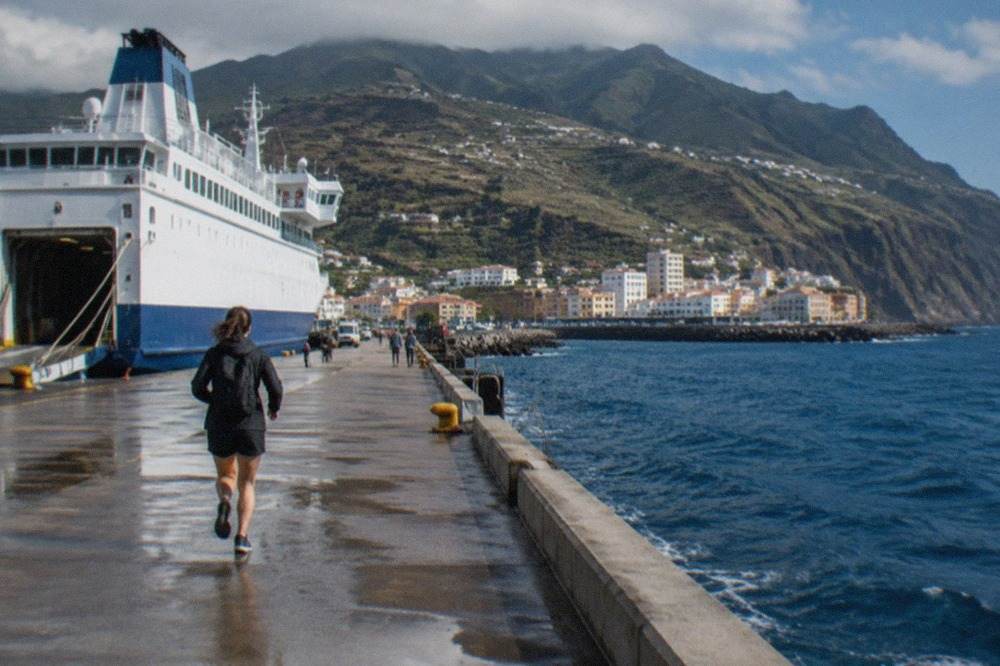
Short answer
The ferry from Los Cristianos to Santa Cruz de La Palma takes 150 minutes and the ferry to Valverde on El Hierro takes 140 minutes, both operated by Fred. Olsen Express. Neither crossing is a casual hop, so most travellers weigh them against the 50-minute La Gomera sailing.
Two names come up whenever a traveller in Tenerife starts looking past the island's own beaches: La Palma and El Hierro. Both are real, reachable places, and both sit at the far end of the ferry timetable. Fred. Olsen Express lists the crossing from Los Cristianos to Santa Cruz de La Palma at 150 minutes and the crossing to Valverde on El Hierro at 140 minutes, which puts them in a different category from the 50-minute hop to La Gomera. This page sets out what the verified record supports: the crossings themselves, the port logistics on the Tenerife side, the climate data that exists, and an honest read on whether these two islands work as day trips at all.
How Long Is the Ferry from Tenerife to La Palma?
The ferry from Los Cristianos, on Tenerife's south coast, to Santa Cruz de La Palma takes 150 minutes each way, a crossing time listed by Fred. Olsen Express on its official routes page. That is two and a half hours of sailing in each direction, so a return day trip means roughly five hours at sea before any time ashore is counted. The route departs from Los Cristianos port, not from Santa Cruz de Tenerife.
Five hours of sailing frames the day tightly. A morning departure puts a traveller in Santa Cruz de La Palma around midday, and an afternoon return sailing means the visit ashore is measured in a handful of hours rather than a full day. The verified record for this route holds the crossing time and the operator, and nothing else: sailing frequencies, fares and seasonal timetables are not in the verified facts for this page, so none is stated here. Check the operator's live listing for the days and times that actually run.
That last point matters more on this route than on any other from Tenerife. A crossing this long only works as a day trip if the departures line up, and the only way to know that is the operator's own timetable. What can be said with confidence is the geometry: La Palma is the westernmost of the ferries' destinations from Los Cristianos, and the 150-minute figure is the longest single crossing Fred. Olsen Express lists from a Canary port on the routes this desk has verified.
How Long Is the Ferry from Tenerife to El Hierro?
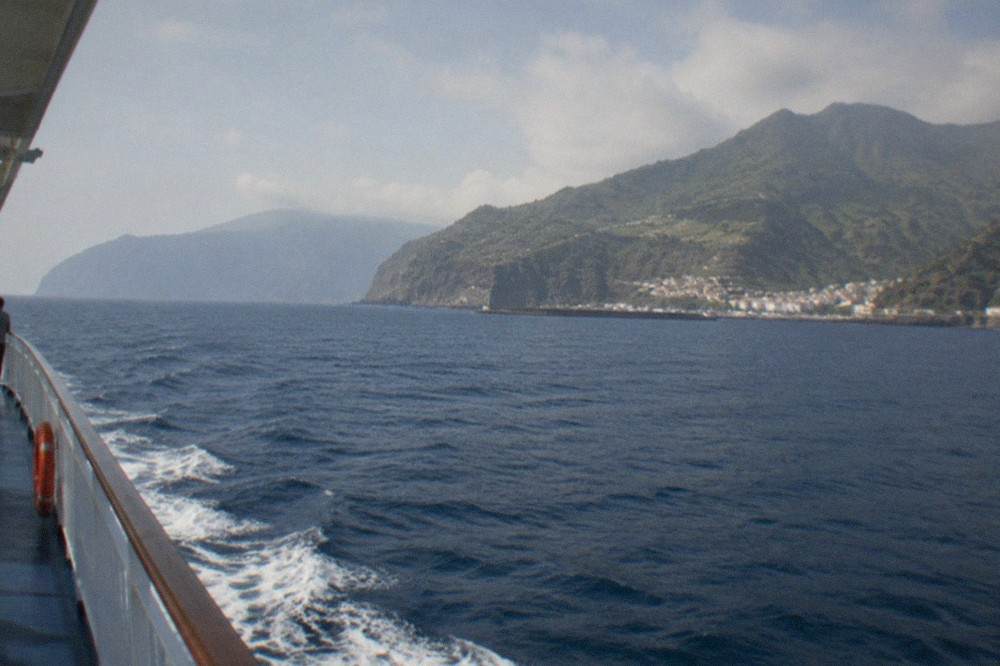
The ferry from Los Cristianos to Valverde, the port town of El Hierro, takes 140 minutes each way, again as listed by Fred. Olsen Express. El Hierro is the second-longest crossing from Tenerife, ten minutes shorter than La Palma but nearly three times the length of the La Gomera sailing. Like the La Palma route, it leaves from Los Cristianos and arrives at a single named port.
The practical picture is close to La Palma's. Two crossings of 140 minutes each add up to well over four hours at sea, and the time ashore depends entirely on how the departures pair up on the day. The verified record holds no attraction data for El Hierro itself, no opening hours, no visitor figures and no sailing frequencies, so this page does not describe the island beyond what the ferry listing states: the port of Valverde and the crossing time.
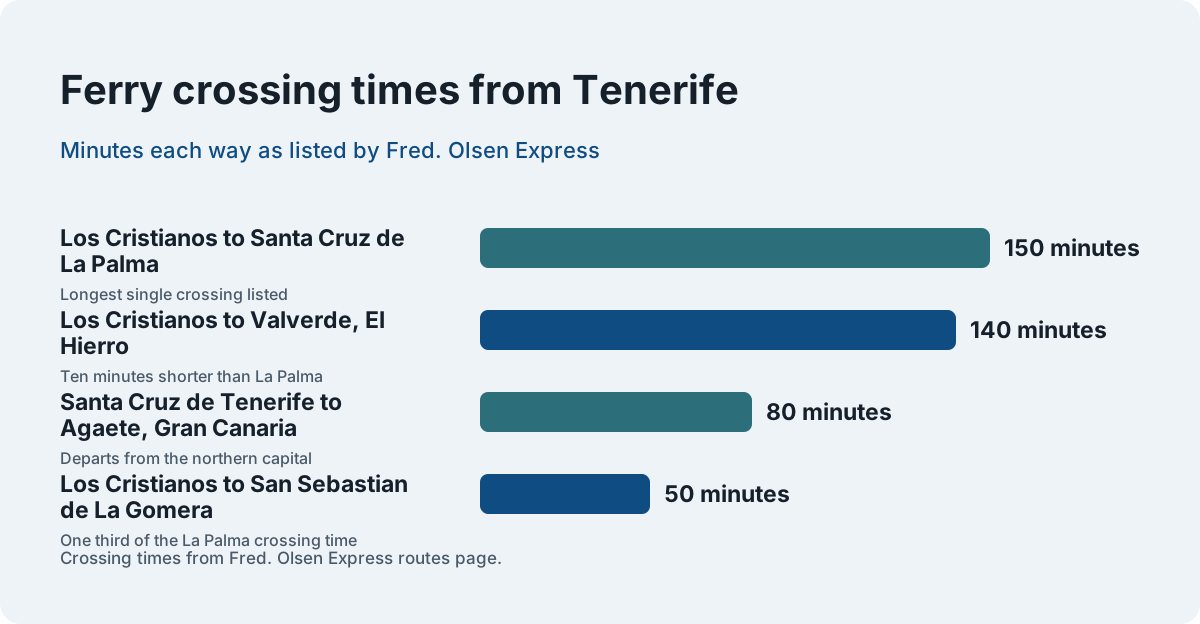
What the record does support is the comparison, and the comparison is the useful thing for a traveller deciding where a spare day goes. The four verified crossings from Fred. Olsen Express sit in a clear order of effort, and the table below shows it. Anyone weighing a long crossing against a short one can read the decision at a glance.
| Route from Tenerife | Arrival port | Crossing time | Operator |
|---|---|---|---|
| Los Cristianos to La Palma | Santa Cruz de La Palma | 150 minutes | Fred. Olsen Express |
| Los Cristianos to El Hierro | Valverde | 140 minutes | Fred. Olsen Express |
| Los Cristianos to La Gomera | San Sebastian de La Gomera | 50 minutes | Fred. Olsen Express |
| Santa Cruz de Tenerife to Gran Canaria | Agaete | 80 minutes | Fred. Olsen Express |
The pattern is blunt. La Palma and El Hierro demand the most sea time of any destination on the list, Gran Canaria from the northern capital takes 80 minutes, and La Gomera remains the short sailing it has always been. For travellers who like the water as much as the destination, the long crossings are part of the appeal. For anyone measuring hours ashore, the shorter routes win on arithmetic alone.
Is La Palma, Canary Islands Worth Visiting?
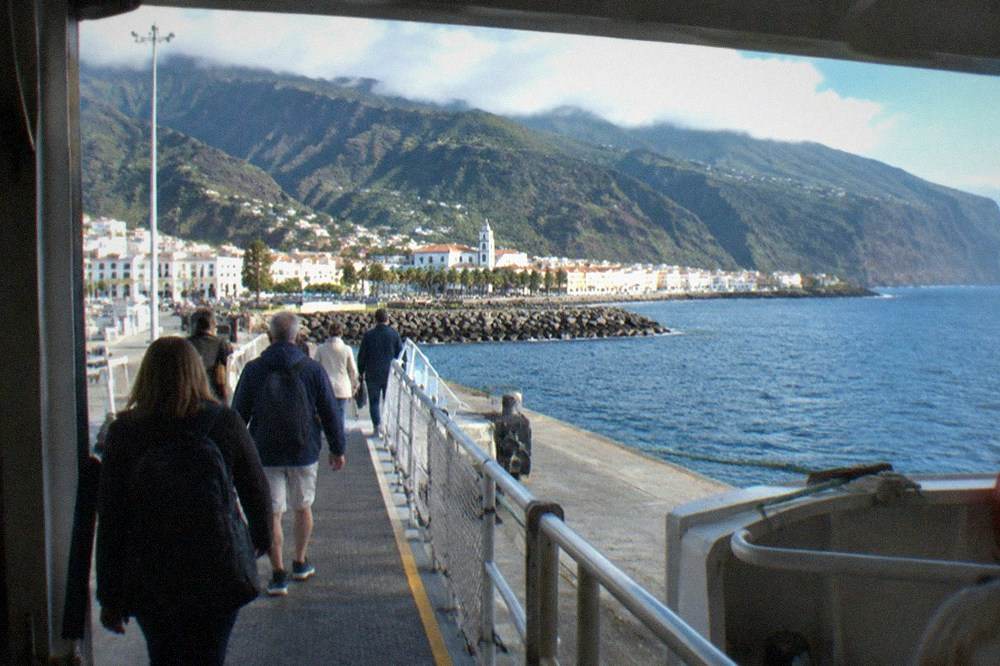
The honest answer is that the crossing, not the island, is what this desk can verify. The record holds the 150-minute sailing each way and nothing about La Palma's attractions, so no claim is made here about waterfalls, volcanoes or viewpoints. Worth visiting depends on appetite: a traveller who wants a long sea journey and a few hours in Santa Cruz de La Palma will get exactly that, and one who wants a full day ashore should look at the shorter crossings.
This is a page that prefers a hedge to a fabrication. Plenty of guides describe La Palma in confident detail, and some of that detail may well be true, but none of it is in the verified facts behind this site, so none of it appears here. What the verified record does establish is the shape of the day: a very early start to reach Los Cristianos, two and a half hours of sailing, a compressed visit, and a return that lands back on Tenerife at night. That shape suits some travellers and defeats others.
The decision usually comes down to trip length. On a week in Tenerife, a five-hour round trip at sea for a short visit ashore competes badly against a day in the national park, a whale-watching trip from the same port, or the shorter island crossings. On a longer stay, or for a traveller with a specific reason to stand on La Palma, the arithmetic changes and the crossing becomes a reasonable price for it. Some visitors plan an overnight on the island rather than racing the ferry back, which turns the long sailing into a relaxed part of the itinerary instead of a constraint on it.
Is La Gomera an Easier Day Trip from Tenerife?
Yes, and by a wide margin. The ferry from Los Cristianos to San Sebastian de La Gomera takes 50 minutes each way, one third of the La Palma crossing time, and the route is also sold by Armas Trasmediterranea as well as Fred. Olsen Express. That makes La Gomera the one neighbouring island that genuinely works as a relaxed day trip from southern Tenerife, with most of the day spent ashore rather than at sea.
The comparison is not close. Where La Palma demands 150 minutes each way, La Gomera asks for 50, and the island's own highlight, the Garajonay laurel forest, sits within reach of a day's visit. For travellers based in the south, the La Gomera day trip guide covers the island in full, and the organised options remove the ferry-and-bus planning entirely.
The jeep safari format suits La Gomera's terrain particularly well. The roster lists a full-day Gomera jeep excursion from Arona that includes Garajonay and lunch, rated 4.7 from 571 reviews, and a coach-and-ferry day trip from southern Tenerife with lunch included, rated 4.1 from 2,218 reviews. Both handle the crossing and the island's winding roads, which is most of the work of a Gomera day. More of these guides are collected on Tenerife Travel Guide.
For a sense of scale, Garachico on Tenerife's north coast was the island's trade hub in the 16th and 17th centuries before the Trevejo volcano buried its old port in 1706, and the era of tall ships that connected these islands left a network of ports that the modern ferries still use. Los Cristianos, once a fishing village, is now the departure point for three of the four verified crossings. Travellers with a spare day and a preference for staying on Tenerife itself have plenty to fill it, from the Teide day trip from the south to the Masca, Garachico and Icod route, and the wider roundup of things to do across the island covers the full list.
Is La Palma the Same as Tenerife?
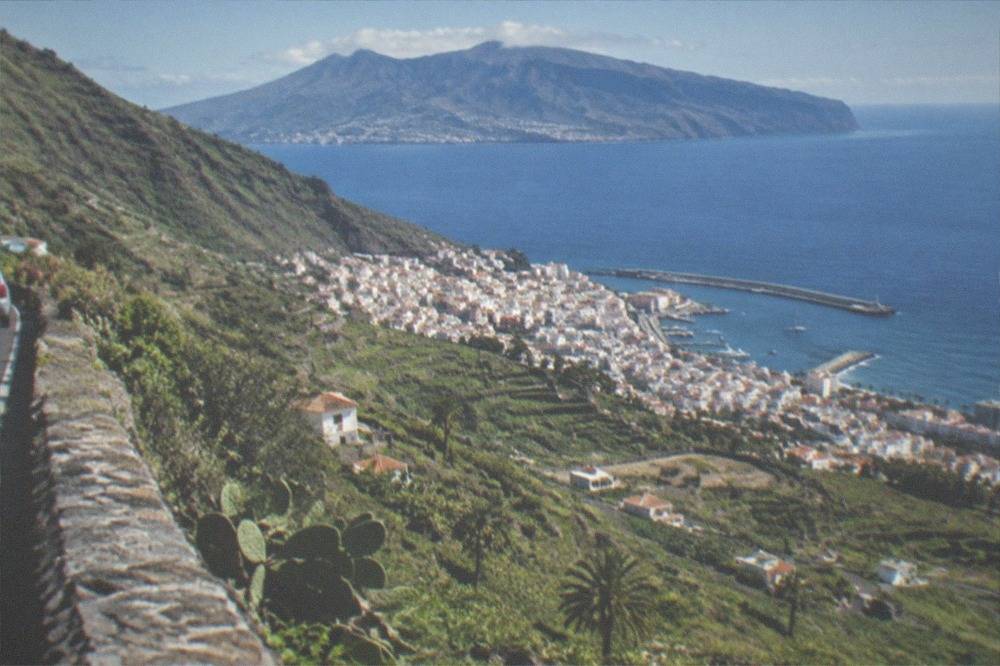
No. La Palma and Tenerife are separate islands within the same archipelago, each with its own capital and its own island authority, linked by a 150-minute ferry crossing. Tenerife is the most populous island, with about 960,000 people across 31 municipalities, and its capital is Santa Cruz de Tenerife. La Palma's ferry port, Santa Cruz de La Palma, is a different town on a different island, and the two share nothing administratively.
The confusion usually comes from the shared island group. The Canary Islands are one archipelago, but they are not one destination, and the differences are not cosmetic. Tenerife carries the two airports, the national park and the bulk of the tourism; the smaller western islands have their own characters, their own microclimates and their own pace. A traveller who books a hotel in Tenerife and assumes La Palma is a short drive away will be disappointed: the only connections are the ferries from Los Cristianos and, on the verified record for this page, no flight times are held either way.
How Do You Get to Los Cristianos Port?
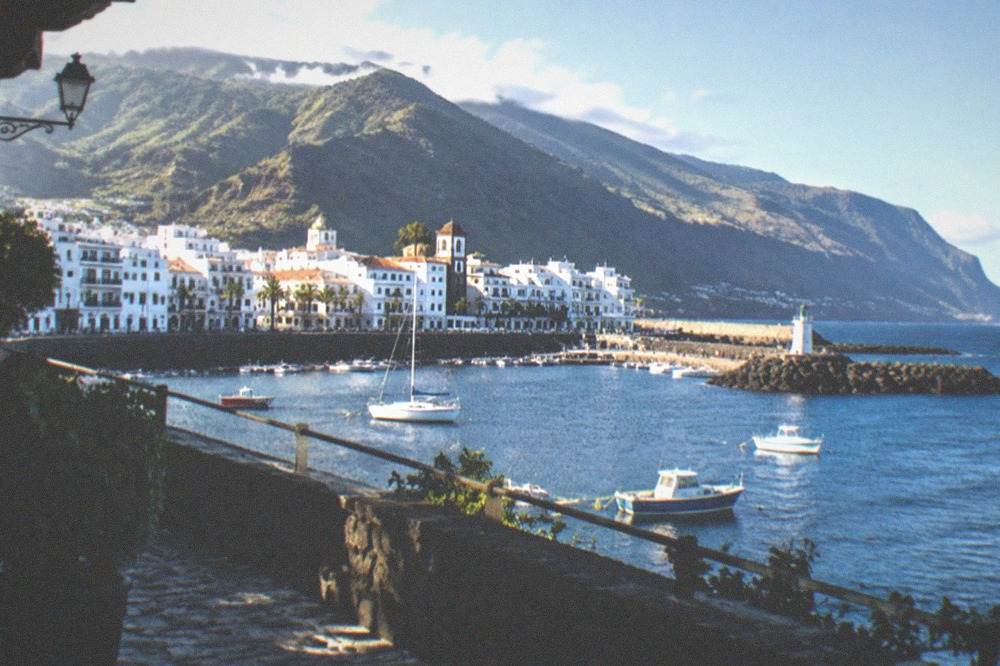
Los Cristianos port sits on Tenerife's south coast, and the verified TITSA airport page lists line 40 from Tenerife South Airport to Costa Adeje bus station via Los Cristianos, plus line 343, the express that runs from Puerto de la Cruz to Los Cristianos via both airports. A visitor with a Ten+ card pays EUR 2 for the card itself, and the day travelcard costs EUR 10 with the seven-day version at EUR 50.
The bus is the budget route and, on the verified record, the only one this page can detail. TITSA's own airport pages list the lines below, and the day travelcard sold at airport ticket machines covers a day of hopping on and off. Visitors pay for public transport on Tenerife: the 100% subsidy announced by the Canary government for 2026 applies to resident passes only, so a holidaymaker uses single tickets or the visitor travelcards.
| TITSA line at Tenerife South Airport | Destination |
|---|---|
| 10 | Santa Cruz |
| 40 | Costa Adeje bus station via Los Cristianos |
| 343 | Express, Puerto de la Cruz to Los Cristianos via both airports |
| 711 | Night bus, Santa Cruz, airport, Los Cristianos, Costa Adeje |
| 415 | El Fraile, San Isidro |
Taxis are the alternative, and the tourist board's own page states the rules that matter: they are white, all metered from the start of the trip, and a fixed price can be agreed in advance for excursions. No fare figure appears on that page, and none is invented here.
| TITSA ticket | Price | Notes |
|---|---|---|
| Single ticket | Priced by route | Card or cash |
| Same-day return | 10% off | On trips of 20 km or more |
| Day Travelcard | EUR 10 | Sold at airport ticket machines |
| 7 Day Travelcard | EUR 50 | Visitor product |
| Ten+ card | EUR 2 | Wallet top-ups EUR 2 to EUR 100 |
One more thing about Los Cristianos: the port is also the island's whale-watching base, and the sea between Tenerife and La Gomera is where the resident pilot whales live, a population the World Cetacean Alliance describes as unique. A morning or afternoon on the water from the same quayside is the natural companion to a ferry day, and the eco yacht safari from Los Cristianos, rated 4.7 from 19,175 reviews, is the roster's most-reviewed option.
When Is the Best Month to Cross to La Palma or El Hierro?
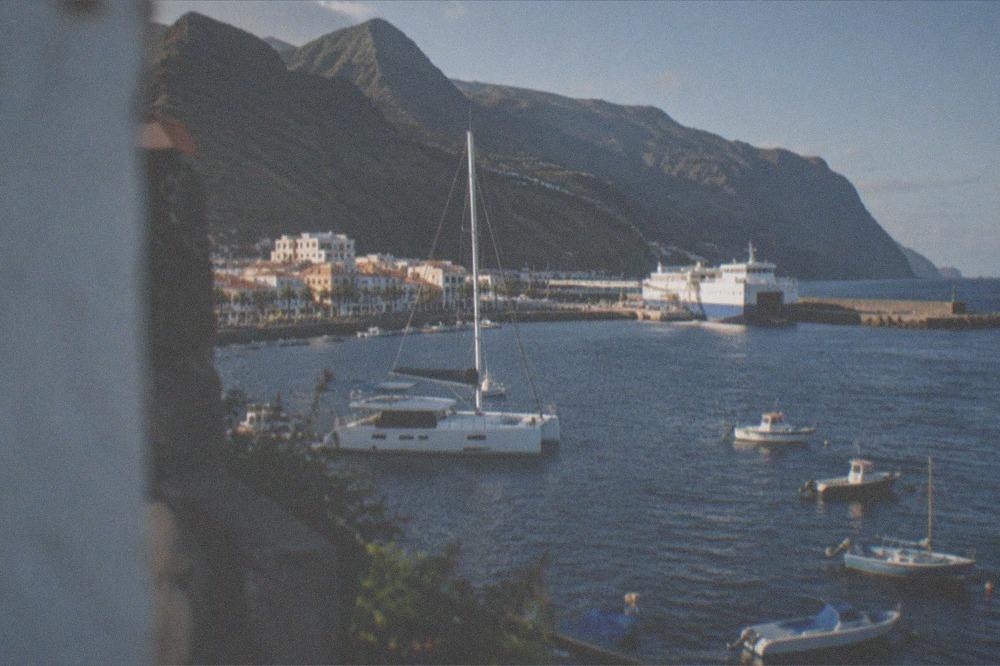
AEMET's climate normals for Tenerife South Airport show the calmest, driest crossing months are June to September, with zero days of significant rain in June and July, mean daily maxima of 25.4 to 28.4 degrees Celsius, and sea surface temperatures of 21.4 to 23.7 degrees Celsius peaking in September and October. November to January brings the wettest, greyest weather on the departure coast, with 26 to 30 mm of rain a month.
The sea, not the air, is the real variable on a long crossing, and the verified sea-surface figures come from NOAA's 1991-2020 dataset, a different period from AEMET's 1981-2010 air normals, so the two are never blended into one claim. What the numbers say together is plain: late summer and early autumn offer the warmest water and the driest departure weather, while the winter months are when rain days multiply at the airport station, from 1.8 in January to 3.5 in December.
| Month | Mean daily max C | Mean daily min C | Rain days of 1 mm or more |
|---|---|---|---|
| Jan | 21.7 | 15.2 | 1.8 |
| Feb | 22.0 | 15.0 | 2.2 |
| Mar | 23.1 | 15.6 | 1.9 |
| Apr | 23.1 | 16.0 | 1.1 |
| May | 23.9 | 17.0 | 0.3 |
| Jun | 25.4 | 18.8 | 0 |
| Jul | 27.7 | 20.2 | 0 |
| Aug | 28.4 | 21.1 | 0.2 |
| Sep | 27.9 | 21.1 | 0.6 |
| Oct | 26.8 | 20.0 | 1.6 |
| Nov | 24.8 | 18.2 | 1.9 |
| Dec | 22.8 | 16.5 | 3.5 |
Sea conditions can change a crossing day regardless of the averages, and the one verified case where sea state cancels a plan is Masca, where sudden pier closures void that day's ticket. The ferry operators' own terms are the authority on what happens to a long crossing in rough weather, and a traveller booking a 150-minute sailing in winter should read them before paying.
| Month | Sea surface C off the south coast |
|---|---|
| Jan | 19.9 |
| Feb | 19.2 |
| Mar | 19.1 |
| Apr | 19.5 |
| May | 20.2 |
| Jun | 21.4 |
| Jul | 22.2 |
| Aug | 23.1 |
| Sep | 23.7 |
| Oct | 23.7 |
| Nov | 22.5 |
| Dec | 21.1 |
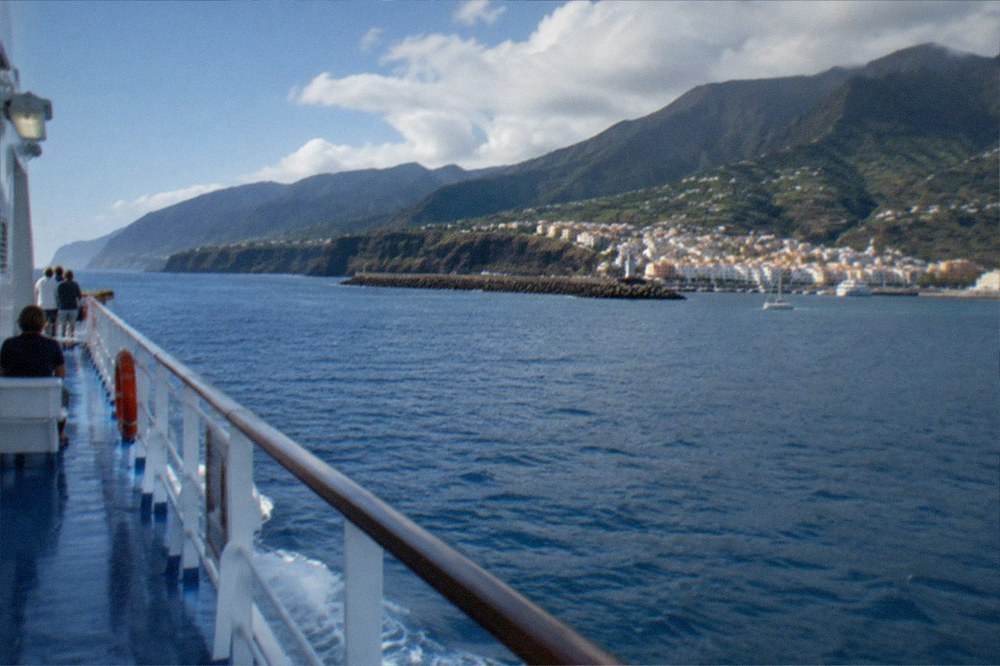
For travellers who want the long crossings but would rather not commit a whole holiday to them, the Gran Canaria day trip from Tenerife runs from Santa Cruz de Tenerife to Agaete in 80 minutes, and the north Tenerife road trip shows what the home island offers without a ferry at all. The neighbouring resort areas, from El Medano with its fine grey sand under Montana Roja to the quieter coves around La Caleta, are all within a short bus ride of Los Cristianos on a day when the sea looks uninviting.
Common Questions About La Palma and El Hierro Day Trips
is la palma colder than tenerife?
The verified record behind this page holds AEMET climate normals for four Tenerife stations but no official climate row for La Palma, so no temperature comparison is stated here. What can be said is that Tenerife itself spans an enormous range: Santa Cruz averages 18.2 degrees Celsius in January while the Izana station on the Teide ridge, at 2,369 metres, averages 4.3 degrees in the same month. Any island-to-island comparison should come from an official meteorological source read directly, not from a travel guide's shorthand.
Where do the ferries to La Palma and El Hierro leave from?
Both crossings leave from Los Cristianos port on Tenerife's south coast. The La Palma ferry arrives at Santa Cruz de La Palma after 150 minutes and the El Hierro ferry arrives at Valverde after 140 minutes, both listed by Fred. Olsen Express. TITSA line 40 runs from Tenerife South Airport to Costa Adeje bus station via Los Cristianos, and line 343 is the express connecting both airports with Los Cristianos.
Can you visit both La Palma and El Hierro on one trip from Tenerife?
Not as a single day trip, on the arithmetic alone. The two crossings together mean nearly five hours of sailing each way to two different ports, and the verified record holds no inter-island ferry between La Palma and El Hierro, no sailing frequencies and no fares. A traveller determined to see both would need an overnight stay on at least one of them, planned around the operators' own timetables.
Is there a tourist tax on Tenerife or the other islands?
No official page read for this site shows a per-night lodging tax in force or approved on Tenerife. The charges that do exist are per-booking public fees on specific trails: the Teide summit trail PNT 10 costs EUR 15 for visitors on the 09:00 to 17:00 slots since 19 January 2026, the Montaña Blanca trail PNT 07 costs EUR 6 on working days, the Masca gorge ticket is EUR 40.66 and Barranco del Infierno is EUR 15 for non-resident adults. None of these is a tax on staying anywhere.