La Caleta, Tenerife: The Quiet Corner of the Adeje Coast
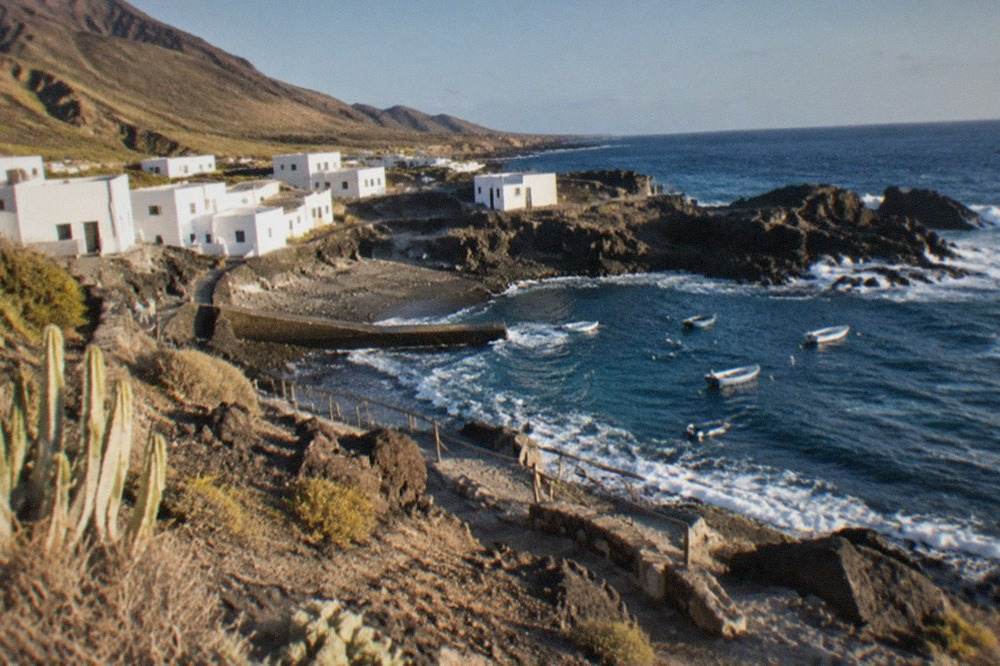
La Caleta is the small, quiet settlement on the Adeje coast, a short way north of the main Costa Adeje hotel strip, where the sand gives way to rocky coves and the pace drops several notches.
Short answer
La Caleta is a small former fishing village on Tenerife's south-west coast, within the municipality of Adeje, sitting between the built-up Costa Adeje hotel zones and the wilder cliffs towards Playa Paraiso. It is known for rocky bathing coves and seafood restaurants rather than beaches, and it suits travellers who want quiet within reach of the big resort facilities a short drive away.
La Caleta sits on the south-west coast of Tenerife, inside the municipality of Adeje, where the dense hotel architecture of Costa Adeje thins out and the coastline turns back towards rock. It began as a fishing village, and the tourist board's own material still describes it in those terms: a small place with a seafront of coves rather than a broad strip of sand. That distinction shapes everything about a stay here. Travellers comparing it with Playa de las Americas or Los Cristianos are really choosing between two different kinds of holiday: the quiet, food-led village and the full resort machine.
This page sets out what the verified sources say about the stretch of coast La Caleta belongs to, what the sea and the weather actually do here across the year, how the whale-watching rules work on this shore, and how the village fits into a wider south Tenerife itinerary. Where a detail about the village itself has no official source, the page says so plainly and tells you whom to ask instead of guessing. That is how this editorial desk works: every figure below comes from a named official source, and nothing is filled in from memory.
Where Is La Caleta in Tenerife?
La Caleta is a small coastal settlement in the municipality of Adeje, on Tenerife's south-west coast, positioned north of the main Costa Adeje hotel zones and close to Playa Paraiso, roughly between the island's busiest resort strip and the wilder cliff coastline further north. It belongs administratively to Adeje, the same municipality that contains Costa Adeje and El Duque, which matters for local services and for understanding how quickly the resort facilities change character along this shore.
Adeje is one of the island's larger municipalities by population: the municipal register recorded 50,021 residents in Adeje in 2025, against 87,793 in neighbouring Arona and 211,957 in Santa Cruz de Tenerife, the island capital. Those figures come from the INE register, and they explain the geography. Adeje's coast runs from Callao Salvaje in the south, through Playa Paraiso and La Caleta, past El Duque, and into the Costa Adeje core, while Arona holds Los Cristianos and Las Americas on the other side of the hill.
For flight planning, the nearest major airport is Tenerife South, which AENA calls Tenerife Sur. AENA's 2025 statistics record 13,969,678 passengers there, an all-time record, so the transfer from arrivals to this end of the coast is a well-worn route. TITSA's airport page lists line 40 as the bus towards Costa Adeje bus station via Los Cristianos, which is the public-transport option a visitor would combine with a taxi or a connection for the last stretch.
What Kind of Place Is La Caleta Compared with Its Neighbours?
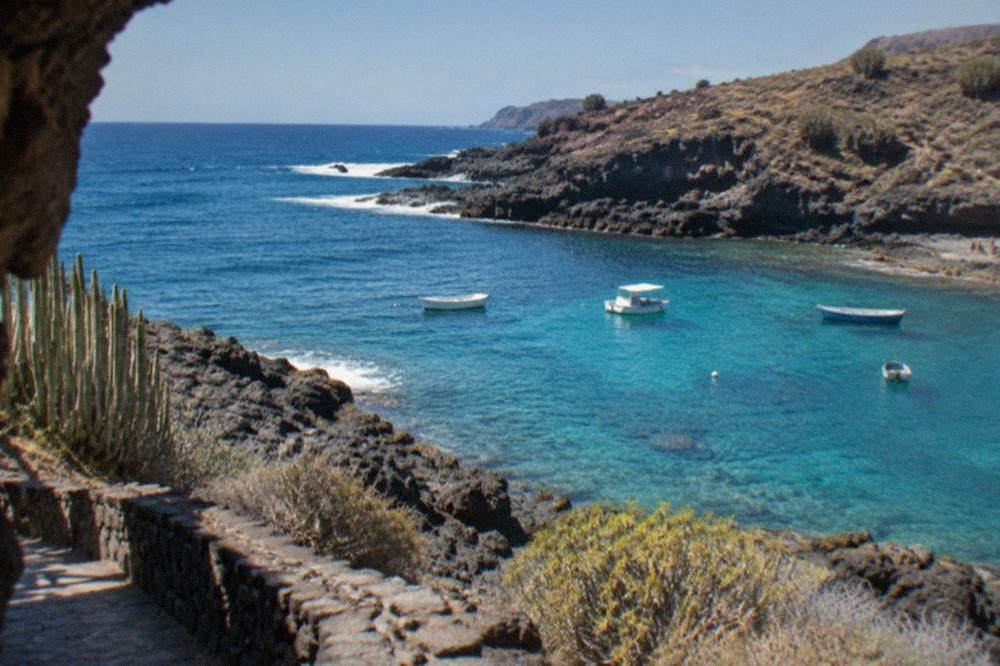
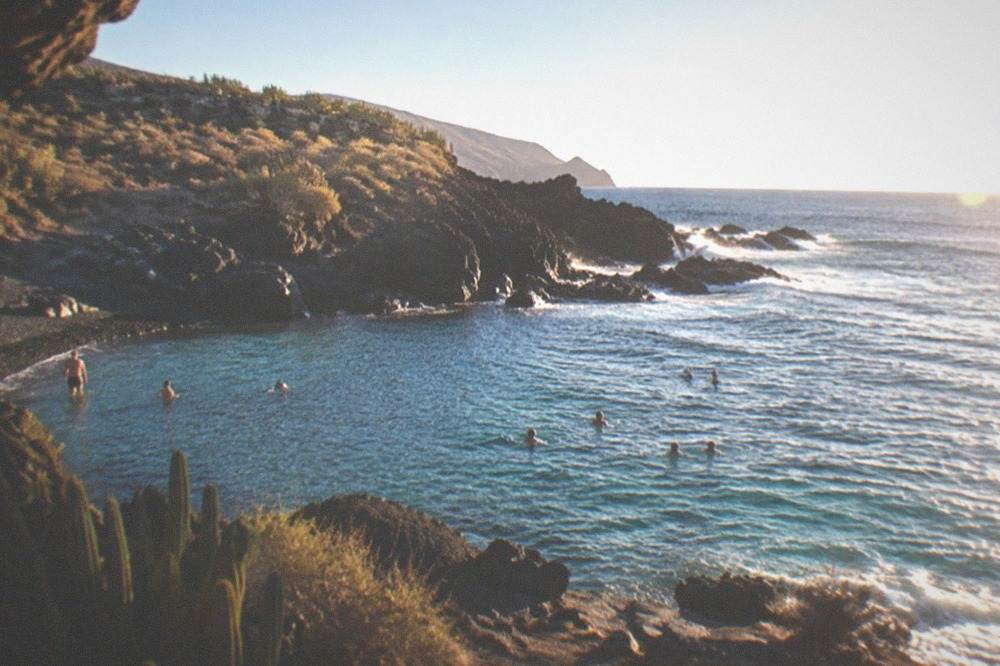
La Caleta is the quiet, food-led end of the Adeje coast: a former fishing village with rocky coves and a seafront restaurant scene, rather than a beach resort. The tourist board's beach pages make the contrast explicit for this stretch of shore, describing El Duque as a grey sandy beach, Fanabe as pale sand, and La Caleta's own shoreline as coves and rocks rather than a sand strip, so travellers wanting wide sand stay further south and travellers wanting calm and seafood come here.
The sand question matters more on this coast than most guides admit. The tourist board's own beach descriptions, read page by page, assign golden sand to Las Teresitas near Santa Cruz and Las Vistas in Arona, pale sand to Fanabe, grey sand to El Duque, and fine grey sand to El Medano further east. La Caleta does not appear on that list of named sand beaches at all, which tells a reader the honest thing: the bathing here is from coves, platforms and rocky entries, not from a lifeguarded golden arc.
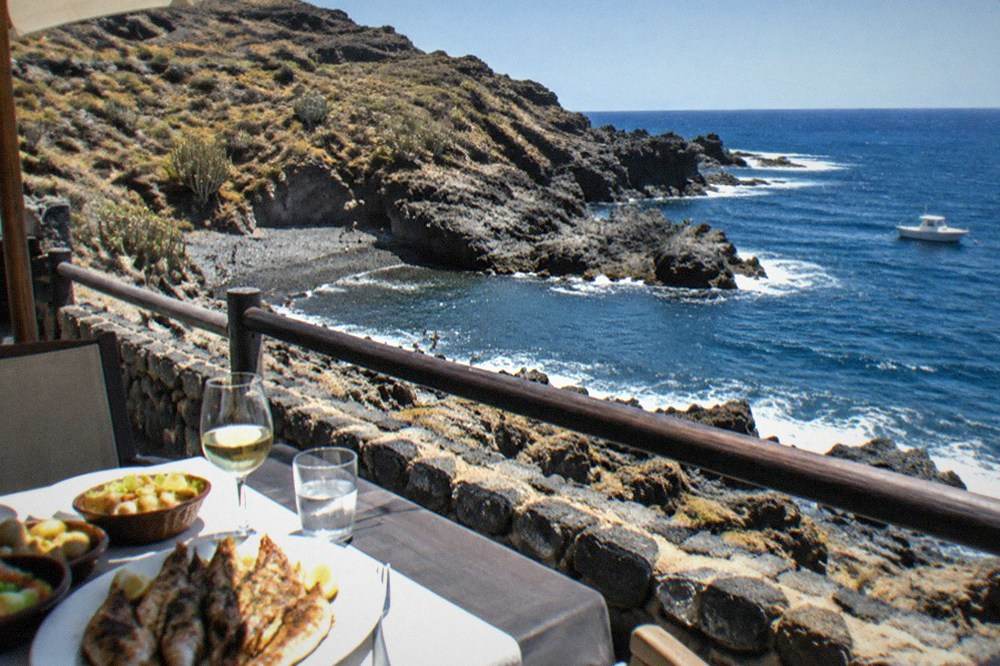
What the village does have is a reputation for fish restaurants concentrated in a very small seafront, and that reputation is the reason many visitors make the short trip here from the big hotels for an evening. No official source in this site's fact file prices, names or ranks those restaurants, so this page will not either: the practical advice is simply that the village is small, walkable in a short loop, and that booking ahead for a seafront table in the evening is the sensible default in high season.
The comparison table below pulls together what the verified sources say about the named beaches nearest to La Caleta, so a reader can see at a glance where the sand actually is.
| Beach or area | Municipality | What the tourist board's page says | Character for a visitor |
|---|---|---|---|
| El Duque | Adeje | Grey sandy beach | The manicured end of Costa Adeje, sunbeds and hotels |
| Fanabe | Adeje | Pale sand | Family beach inside the resort zone |
| La Caleta | Adeje | Not listed as a named sand beach | Rocky coves, seafront fish restaurants |
| Las Vistas | Arona | Golden sand, calm behind breakwaters | The main purpose-built swimming beach between the resorts |
| El Medano | Granadilla de Abona | Fine grey sand, under Montana Roja | Wind-sports beach on the south-east coast |
Can You See Whales and Dolphins from the La Caleta Coast?
Yes, the waters off this coast are part of one of the most closely watched marine areas in Europe: the World Cetacean Alliance designated the Tenerife-La Gomera Marine Area a Whale Heritage Area in January 2021, citing a unique resident population of pilot whales, bottlenose dolphins and a migration stop for 21 other cetacean species. Boats on authorised trips follow Decreto 178/2000, the Canary regulation that sets a 60-metre minimum approach distance, and authorised vessels fly the Barco Azul flag.
The designation is worth getting right, because many pages repeat it loosely. It is the World Cetacean Alliance's programme, not UNESCO's, and the WCA page is the source for both the January 2021 date and the species list. No official whale population number exists in any source this desk has read, so none appears here: "a unique resident population of pilot whales" is as far as the record goes.
The rules on the water come from Decreto 178/2000 of 6 September, published in the Canary Official Gazette. They bind every authorised operator, and a traveller who knows them can tell a compliant boat at a glance.
| Rule in Decreto 178/2000 | Figure |
|---|---|
| Minimum approach distance to any cetacean | 60 m |
| Maximum boats within 500 m of an animal | 3 |
| Maximum speed within 500 m | 4 knots |
| Swimming or diving within 500 m | Prohibited |
| Feeding, chasing or circling | Prohibited |
| Flag every authorised boat must fly | Barco Azul |
Boats depart from the piers along this coast, particularly Puerto Colon in Costa Adeje and the harbour at Los Cristianos, both a short drive or bus ride from La Caleta. The catamaran trip with buffet and transfer is the option most visitors from this end of Adeje choose, because it collects from the hotels and solves the return journey.
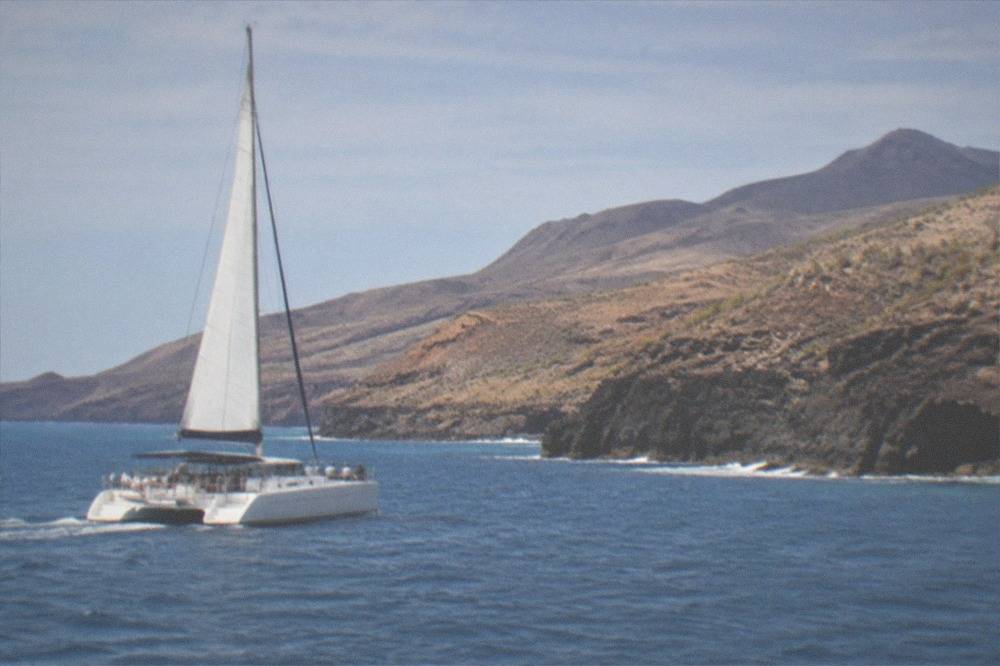
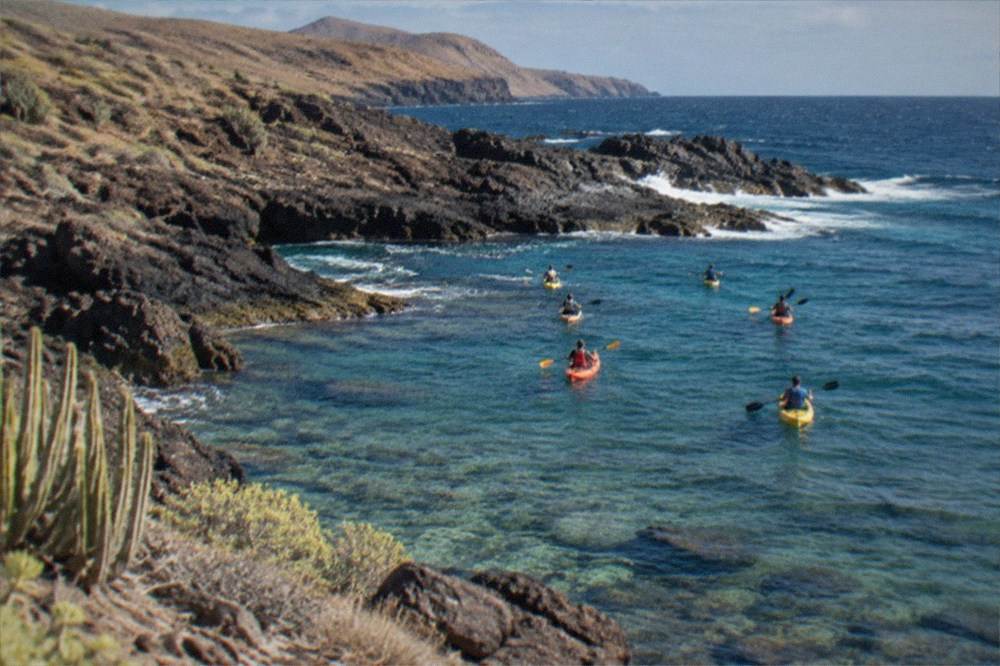
A quieter alternative to the big catamarans is the small-boat model: a ten-guest eco-adventure from Costa Adeje, or the no-chase catamarans out of Los Cristianos that hold position and let animals approach. The kayak and snorkel trips from Los Cristianos reach the same coastal ecosystem from the water line, with turtles in the shallows rather than whales offshore, and they suit travellers who want to be on the sea rather than looking across it.
What Are the Sea and Weather Like at La Caleta Through the Year?
The sea off Tenerife's south coast runs from 19.1 degrees Celsius in March to 23.7 degrees in September and October, in NOAA's 1991 to 2020 series, which makes it swimmable year-round without a wetsuit for most people. The air at the south coast, measured at the AEMET station at Tenerife South Airport, averages 24 degrees in July with zero rain days and 18.4 in January with rain on fewer than two days, so the warm season is long and the wet season short and mild.
Two datasets sit behind those numbers and they must not be blurred: the air figures are AEMET's 1981 to 2010 normals, the sea figures are NOAA's 1991 to 2020 series. Both describe this end of the island, where the coast sits in the rain shadow of the central mountains. The contrast with the north is stark: AEMET's station at Tenerife North Airport records 520 mm of rain across the year on 64 days, against 132 mm on 15.2 days at the south airport. That is why the south coast, La Caleta included, is where the winter-sun market concentrates.
| Month | Sea surface C (NOAA 1991-2020) | Mean daily max C, south airport (AEMET) | Rain days of 1 mm or more |
|---|---|---|---|
| Jan | 19.9 | 21.7 | 1.8 |
| Feb | 19.2 | 22 | 2.2 |
| Mar | 19.1 | 23.1 | 1.9 |
| Apr | 19.5 | 23.1 | 1.1 |
| May | 20.2 | 23.9 | 0.3 |
| Jun | 21.4 | 25.4 | 0 |
| Jul | 22.2 | 27.7 | 0 |
| Aug | 23.1 | 28.4 | 0.2 |
| Sep | 23.7 | 27.9 | 0.6 |
| Oct | 23.7 | 26.8 | 1.6 |
| Nov | 22.5 | 24.8 | 1.9 |
| Dec | 21.1 | 22.8 | 3.5 |
The practical reading of that table is straightforward. September and October combine the warmest sea of the year with air temperatures easing off the August peak, and they sit outside the peak family months. January is the coolest sea month on the list and still warmer than a British August in the Channel. What the table cannot tell you is the state of any particular cove on any particular day: swimming from rocks depends on the swell, and no official source rates La Caleta's coves for safety, so check locally before entering the water.
Do You Need a Car to Stay in La Caleta?
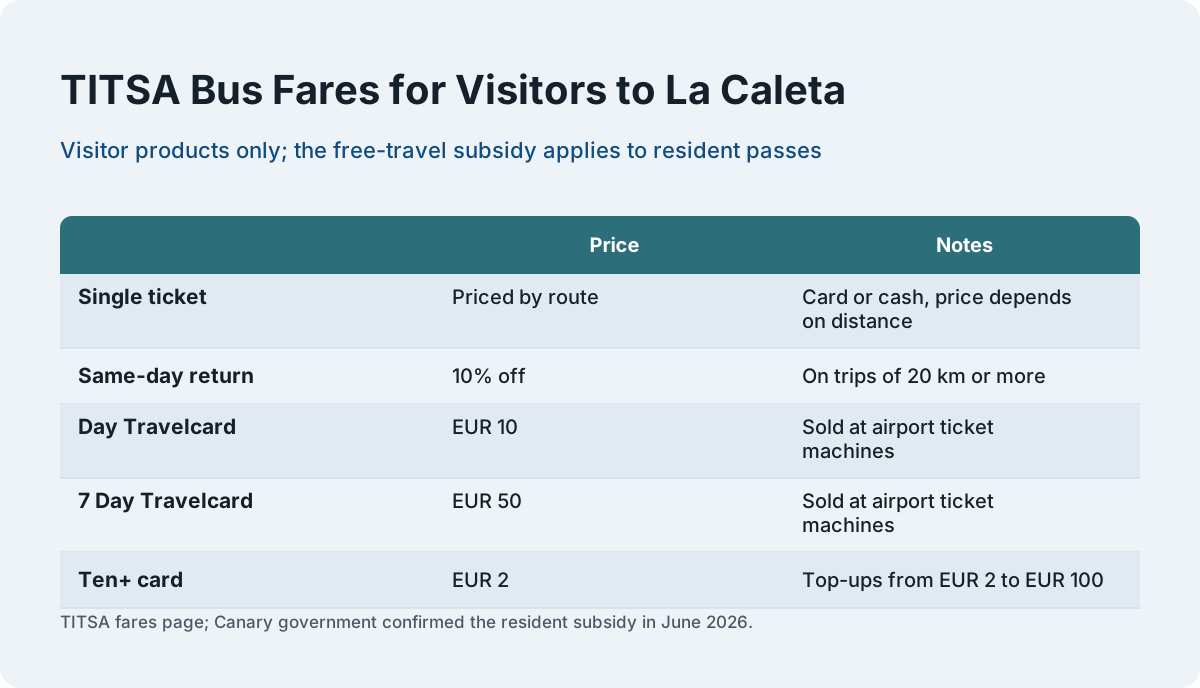
A car is useful but not essential: Tenerife's TITSA bus network serves the south coast, and visitors can pay with single tickets, a EUR 10 day travelcard or a EUR 50 seven-day travelcard, all sold at airport ticket machines. The 2026 free-transport subsidy the Canary government announced applies to resident passes only, so a visitor should not plan around free buses: the free pass requires residency in the Canary Islands and a personalised Ten+ card.
The distinction matters because "public transport is free in Tenerife" is now one of the most repeated half-truths in travel content. The subsidy is real, and the Canary government confirmed in June 2026 that the state had committed to the overdue payments and to continuing the measure. But every subsidised pass on the fares pages is a resident product: the monthly pass is marked "Resident in the Canary Islands", the youth pass requires residency and being under 30, and the child card requires residency in Tenerife. Visitors buy the products in the table below.
| TITSA product for visitors | Price | Notes from the fares page |
|---|---|---|
| Single ticket | Priced by route | Card or cash, price depends on distance |
| Same-day return | 10% off | On trips of 20 km or more |
| Day Travelcard | EUR 10 | Sold at airport ticket machines |
| 7 Day Travelcard | EUR 50 | Sold at airport ticket machines |
| Ten+ card | EUR 2 | Top-ups from EUR 2 to EUR 100 |
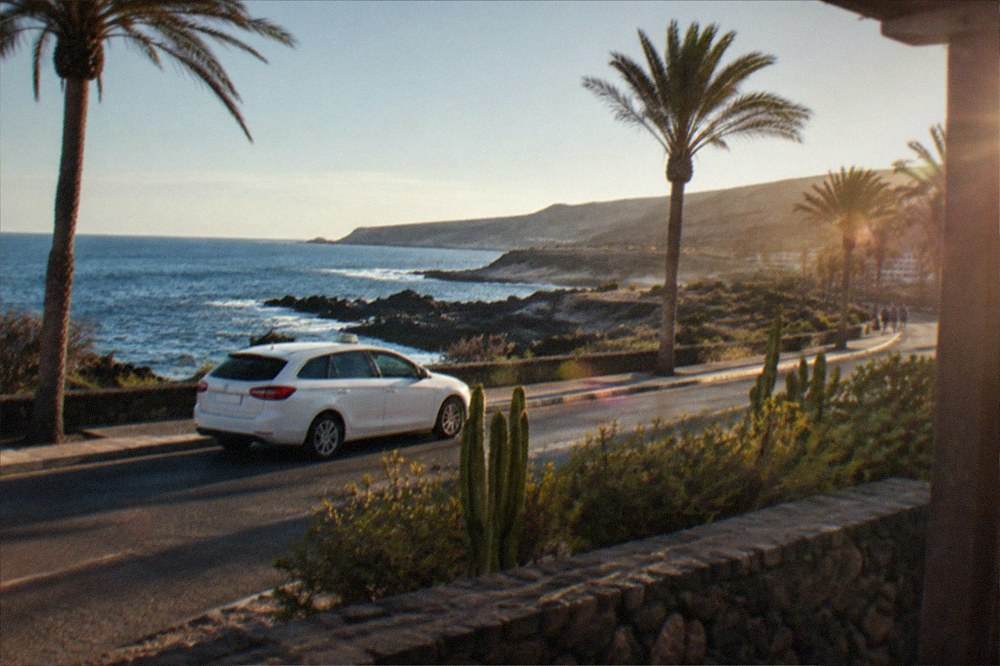
Two lines are excluded from the resident passes even for locals, the fares page notes: the Teide and Teno lines. That is a footnote for a La Caleta reader planning a mountain day. For evenings out along the coast, the island's taxis are white, all metered from the start of the trip, and a fixed price can be agreed in advance for excursions, which is the arrangement to ask for on a longer dinner run up the coast.
For travellers weighing up the whole question of whether a car earns its keep on this island, the detailed comparison lives in the site's wider transport coverage, and the honest short version for this village is that a car broadens the restaurant catchment enormously while the bus network covers the resort corridor well. If you are comparing bases before committing, the Tenerife Travel Guide homepage collects the area-by-area breakdowns, including the quiet-versus-lively trade-offs along this shore.
What Can You Do Near La Caleta on a Day Off the Beach?
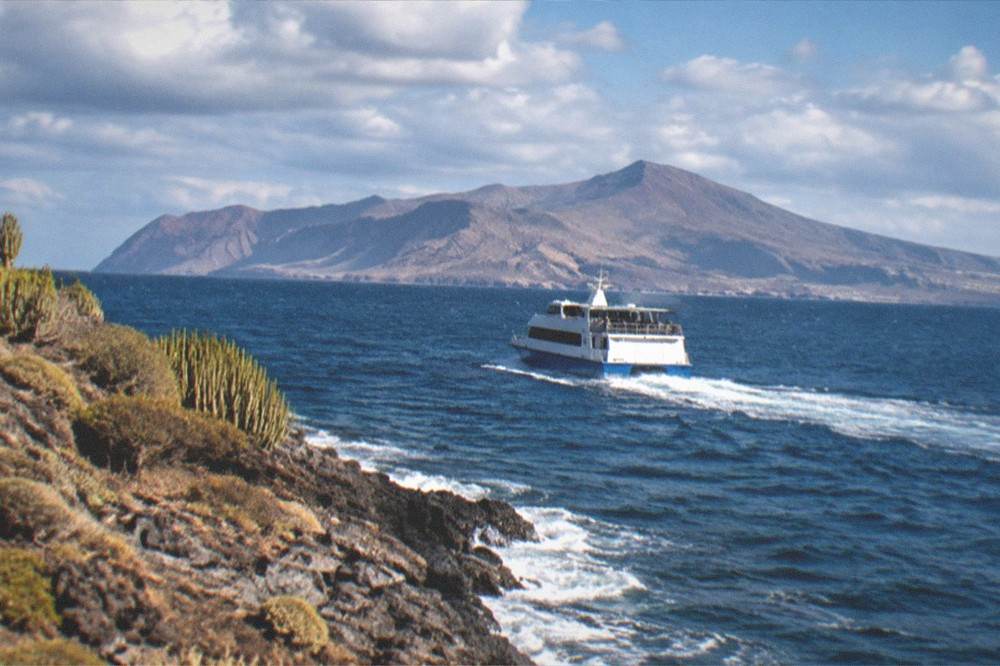
The realistic day trips from this end of the coast split three ways: whale and dolphin trips from the local piers, the volcanic and old-town loop through the north-west (Garachico, Icod de los Vinos and the Teide roads), and the ferry crossings from Los Cristianos to the neighbouring islands, where Fred. Olsen Express lists La Gomera at 50 minutes and La Palma at 150 minutes. All three are reachable from La Caleta without changing base, which is one of the quiet advantages of the Adeje coast.
The ferry table below is worth reading closely, because the neighbouring islands are closer than most first-time visitors expect.
| Ferry route from Los Cristianos | Crossing time (Fred. Olsen Express) |
|---|---|
| San Sebastian de La Gomera, La Gomera | 50 min |
| Santa Cruz de La Palma, La Palma | 150 min |
| Valverde, El Hierro | 140 min |
La Gomera is the classic pairing with a south-coast stay, and the La Gomera day trip page carries the full itinerary; Armas Trasmediterranea also sells the La Gomera crossing, so there is a second operator on that route. On Tenerife itself, the loop through Garachico and Icod de los Vinos pairs the 1706 eruption site, which the tourist board says destroyed almost the entire town and buried its old port, with the Drago Milenario, a tree the Icod council says stands about 21 m tall with an age of approximately 1,000 years attributed to it, while the tourist board's own page says over 800: two official sources, so this site writes "800 to 1,000 years" and calls it an estimate.
Closer to hand, the wild dune-and-volcano landscape of La Tejita and Montana Roja gives a completely different beach afternoon from the coves at the door, and the kayaking and snorkel trips from Los Cristianos reach turtle habitat inside the same marine area the whale boats work. For a town day, the free walking tours listed on this site are a GuruWalk product, free to join and tip-based, and all three English-guided ones run in the north: La Orotava, Puerto de la Cruz and the historic centre of Santa Cruz de Tenerife. No free walk is listed for the resort south on GuruWalk, so a reader wanting one should plan it around a northern day out, and the free walking tours page carries the details.
Where Should You Stay in and Around La Caleta?
La Caleta itself is a small village with a limited stock of accommodation, so most travellers who want this end of the coast choose between a stay inside the village for quiet and proximity to the seafront restaurants, or a base a short distance away in Costa Adeje or Playa Paraiso with the village as an evening destination. The choice is about noise and walkability rather than scenery: the whole shore shares the same sunsets, and the official climate record shows no weather difference between them.
No official source prices or rates accommodation in the village, and this site does not quote nightly rates for anything it earns from, because rates move daily and cannot be re-checked at publication. What drives the cost on this coast is the same everywhere: season, with the ISTAC arrival series showing the winter months among the busiest of the year for air arrivals, and proximity to the seafront. Travellers who want to compare options across the island can search stays across Tenerife and weigh the quiet of the village against the facilities of the big resort zones.
For readers still choosing between the south-coast bases, the differences are laid out in the site's area guides: the village against the hotel core of Costa Adeje, the nightlife of Playa de las Americas, and the working-harbour town of Los Cristianos. La Caleta is the smallest and quietest of the four, and the trade-off is that everything bigger is a bus ride or a taxi away.
Common Questions About La Caleta in Tenerife
Is La Caleta in Costa Adeje?
La Caleta sits inside the municipality of Adeje, the same municipality as Costa Adeje and El Duque, but it is a separate, much smaller settlement north of the main hotel zones. The municipal register recorded 50,021 residents in Adeje in 2025, and the village is the quiet end of that municipality's coast.
Does La Caleta have a sandy beach?
The tourist board's beach pages do not list La Caleta among the named sand beaches of the island. The shoreline here is rocky coves, and the nearest beaches the tourist board describes by their sand are El Duque, which it calls a grey sandy beach, and Fanabe, which it calls pale sand, both further south along the same coast.
Can you swim at La Caleta?
People do swim from the coves, and the sea off the south coast is warm year-round, running from 19.1 degrees Celsius in March to 23.7 in September and October in NOAA's series. No official source rates the village's coves for safety, so check the swell and the conditions locally before entering the water.
How far is La Caleta from the airport?
The nearest airport is Tenerife South, which AENA calls Tenerife Sur, and it is the island's busier airport with 13,969,678 passengers recorded in 2025. No verified journey time for the transfer to La Caleta exists in this site's fact file, so plan it with your transfer operator or the TITSA route planner rather than a figure quoted here.
Are there free walking tours at La Caleta?
No free walking tour is listed for the resort south on GuruWalk, the platform this site carries free walks from. The three English-guided free, pay-what-you-want walks listed are all in the north: La Orotava, Puerto de la Cruz and the historic centre of Santa Cruz de Tenerife.
Is La Caleta good for whale watching?
The waters off this coast fall inside the Tenerife-La Gomera Marine Area, designated a Whale Heritage Area by the World Cetacean Alliance in January 2021, with a resident population of pilot whales and bottlenose dolphins. The boats depart from the piers at Puerto Colon and Los Cristianos a short way along the coast, and authorised vessels fly the Barco Azul flag under Decreto 178/2000.