North Tenerife Road Trip: 3 Days from La Laguna to Teno
Three days, one volcano, a UNESCO colonial town and the cliffs of Teno: the north of Tenerife is the island's half most visitors never drive, and the rules that govern it, from the summit permit to the Masca shuttle, are the things that decide whether the route works.
Short answer
Base yourself in or near La Laguna, drive the TF-5 corridor west through La Orotava and Icod de los Vinos to Garachico, then spend the final day in the Teno massif around Masca and Buenavista, booking the Masca descent and any Teide trail reservation before you arrive.
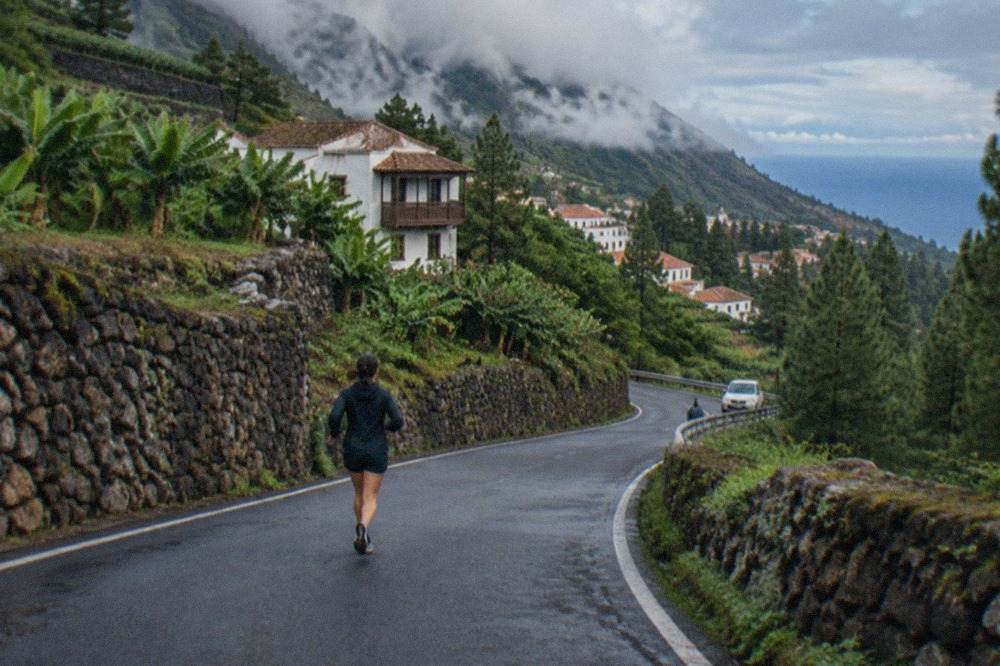
The north of Tenerife is where the island stops performing. The airport the package flights use is in the south; the motorway corridor the locals use runs through the north, linking Santa Cruz de Tenerife, La Laguna and Puerto de la Cruz, and the green half of the island sits above it. A road trip here moves through three different landscapes in three days: the colonial grid of La Laguna, the laurel-green valleys and vineyards of La Orotava, and the dry, cliff-bound northwest of Teno. This route is built around the rules that actually govern the region, because two of its headline stops, the Teide summit trail and the Masca gorge, are reservation-only, and a driver who arrives without a booking does not get in.
Where Should a North Tenerife Road Trip Start?
Start in or near San Cristóbal de La Laguna, the island's second-largest municipality at 161,108 residents, because it sits at the centre of the northern road network, close to Tenerife North Airport, and its UNESCO-listed historic centre is the one stop on this route that works best on foot rather than behind a wheel.
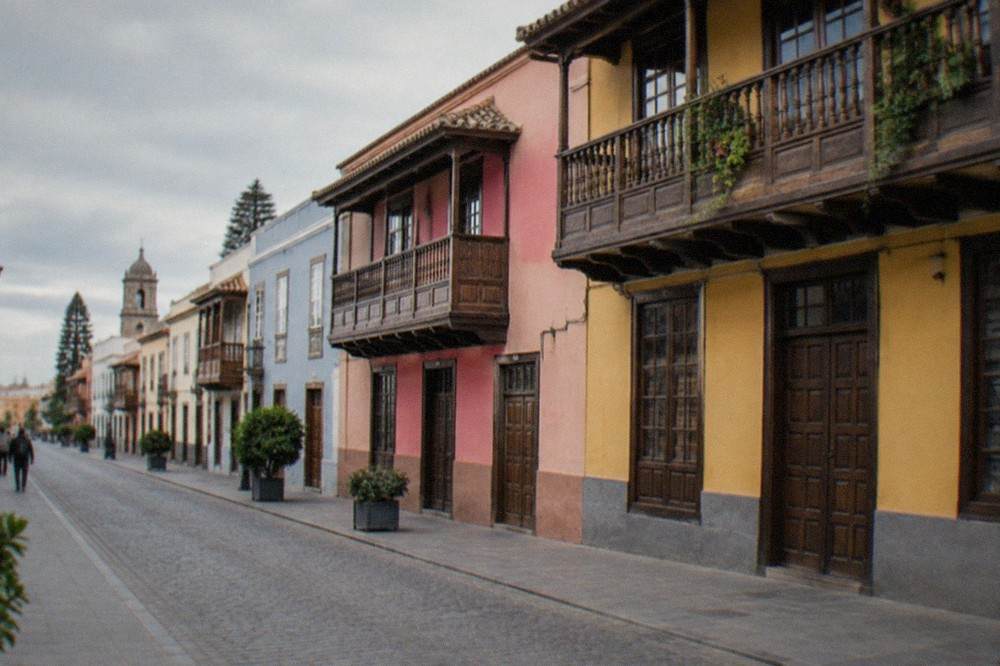
La Laguna's old town is a UNESCO World Heritage property under criteria (ii) and (iv). UNESCO's own description calls it "the first non-fortified Spanish colonial town, and its layout provided the model for many colonial towns in the Americas". That layout, a grid of low, coloured houses and church towers, is compact enough that a car is a nuisance inside it. Park at the edge and walk.
The practical case for La Laguna is the geography. The town sits inland at altitude, which means cooler nights than the coast, and it sits at the junction of the roads that run west to Puerto de la Cruz and north into Anaga. If your flight lands at Tenerife North Airport, whose AENA name is Tenerife Norte-Ciudad de La Laguna, you are minutes away. AENA recorded 7,174,977 passengers there in 2025.
If you would rather have a guide for the old town than walk it alone, the free walking tour of the historic centre of Santa Cruz de Tenerife covers the capital instead, and a bike or e-bike tour of Santa Cruz starts from the cruise terminal. For La Laguna itself, the sensible first evening is simply the streets at dusk, followed by dinner in one of the town's many guachinche-style local restaurants.
For anyone weighing the north against the beach resorts, the comparison guide to Tenerife North vs South sets out the trade-offs in full.
What Should Day One Cover from La Laguna to Puerto de la Cruz?
Day one runs La Laguna in the morning, then west along the coast road to Puerto de la Cruz, taking in the botanical garden and the town's seafront, with the Jardin Botanico open daily and the town's old centre compact enough for an afternoon on foot; it is the lightest driving day of the three, roughly one corridor rather than a loop.
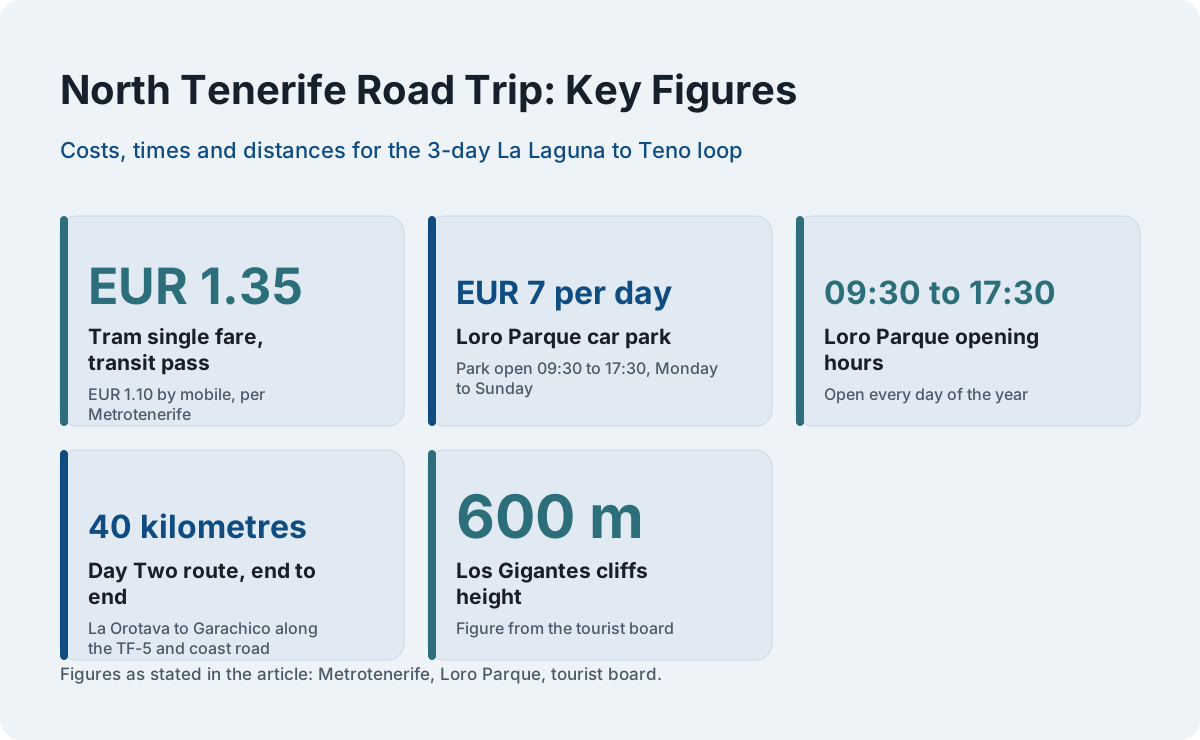
Spend the morning in La Laguna. The UNESCO inscription covers the old town's layout, so the walk is the attraction: the cathedral, the former convent buildings and the long, shaded Calle de La Carrera. There is no entry fee for the town itself. The tram connects La Laguna with Santa Cruz, and a single tram fare is EUR 1.35 on a transit pass or EUR 1.10 by mobile, per Metrotenerife's fares page, so a detour into the capital costs less than a coffee.
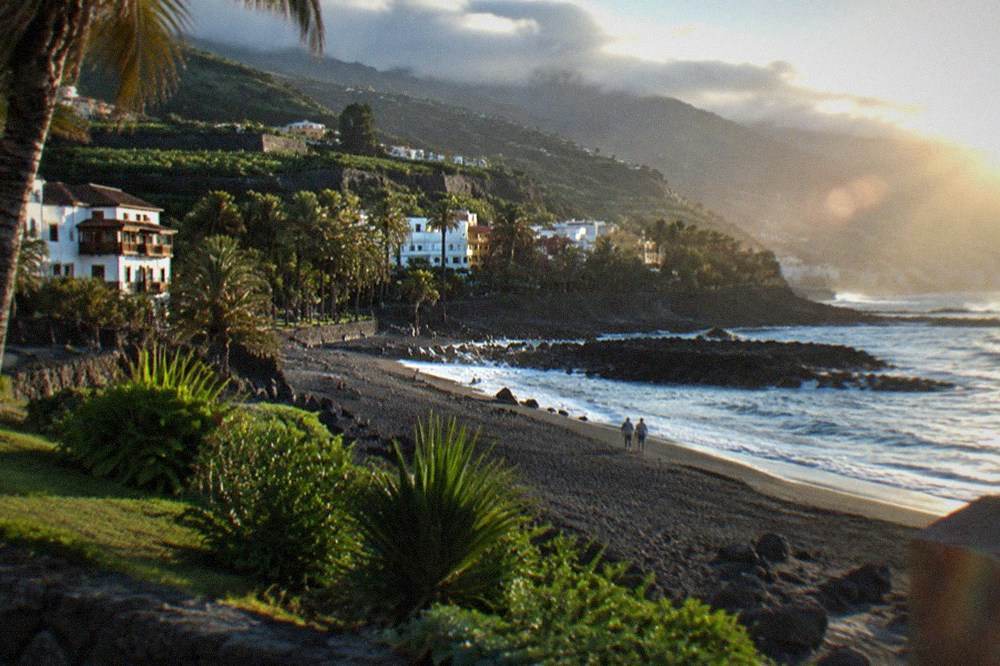
In the afternoon, drive west to Puerto de la Cruz, the historic resort town of the north, population 31,137. Two stops are worth the time. The Jardin Botanico holds one of the oldest plant collections in Spain, founded to acclimatise species from the New World. And the seafront around Playa Jardín, the black-sand beach designed with volcanic stone and tropical planting, gives the day its one proper coastline.
One warning for families: if the day is your only chance at Loro Parque, the zoo and marine park in Puerto de la Cruz is open 09:30 to 17:30, Monday to Sunday, every day of the year, with its own car park at EUR 7 per day. That is a full day in itself, so fold it into a longer trip rather than this three-day loop, or accept that Day One becomes a park day. The deeper planning question, how many days the island deserves overall, is answered in How Many Days in Tenerife.
If you are still choosing the shape of the whole holiday, the general 3 Days in Tenerife itinerary covers the south as well, and the longer 5 Days in Tenerife and 7 Days in Tenerife versions let you slow this same route down.
For travellers who prefer not to drive at all, there is a guided alternative that covers the northern highlights in one move:
And for those who would rather have the whole northwest delivered in a single organised day, a coach loop exists that strings Teide National Park, Masca, Icod and Garachico together:
What Should Day Two Cover from La Orotava to Icod and Garachico?
Day two is the big westward run: La Orotava's balconied old town and the Casa de los Balcones in the morning, the Drago Milenario in Icod de los Vinos at midday, and Garachico's lava-rock coastal pools in the afternoon, a route of roughly 40 kilometres end to end along the TF-5 and the northern coast road, with every stop free to enter except where a fee is listed below.
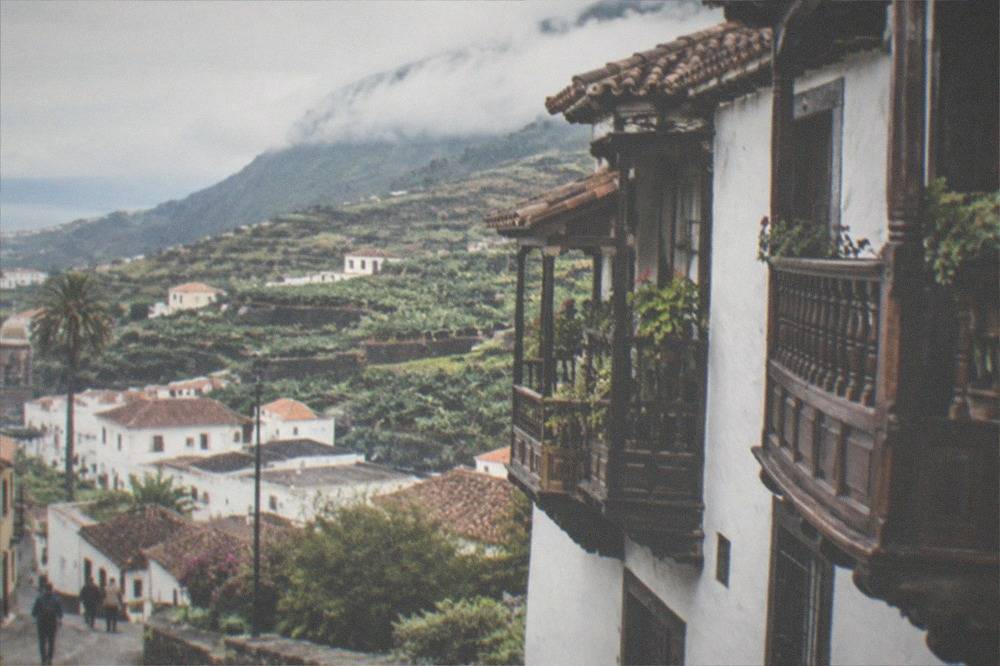
Start in La Orotava, the town of balconies. The Casa de los Balcones preserves the traditional Canarian architecture of carved pine balconies and central courtyards, and the town's gardens sit above the Orotava valley with the island's greenest scenery. The town is small and walkable, and the morning light on the valley is the reason to come early.
Then drive west to Icod de los Vinos and the Drago Milenario, the dragon tree that gives the town its identity. Two official sources give two ages for the tree, and both are estimates: Icod council says "an age of approximately 1,000 years is attributed to it", while Turismo de Tenerife says it is "estimated to be over 800 years old". The honest figure is 800 to 1,000 years, and it is an estimate, not a count. The council also records the tree as a National Monument since 1917, about 21 m tall, with a trunk base about 17 m round.
| What the official pages say about the Drago Milenario | Figure | Source |
|---|---|---|
| Height | About 21 m | Icod council |
| Trunk base circumference | About 17 m | Icod council |
| Attributed age | Approximately 1,000 years | Icod council |
| Estimated age | Over 800 years | Turismo de Tenerife |
| National Monument since | 1917 | Icod council |
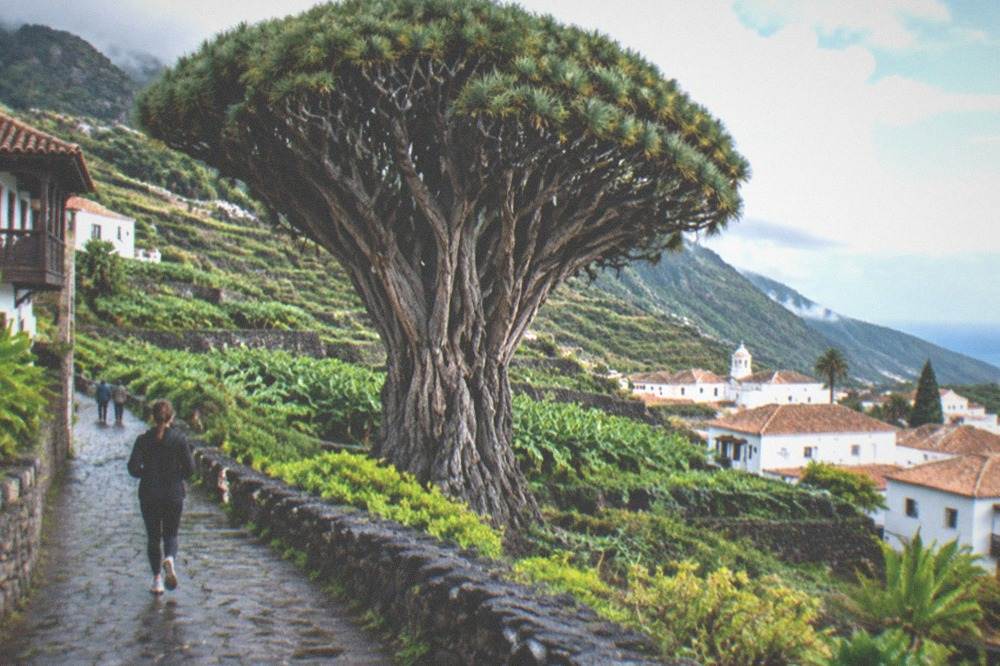
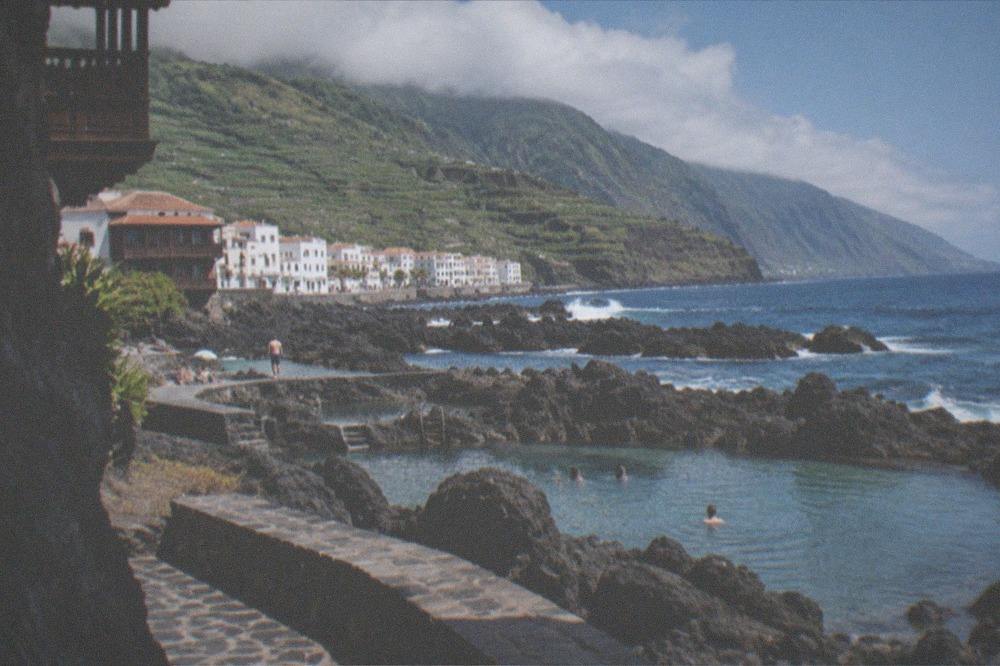
Finish in Garachico, the town the Trevejo volcano nearly destroyed in 1706. The eruption, recorded by the tourist board, destroyed almost the entire town and buried its old port, and Garachico had been the island's trade hub through the 16th and 17th centuries. What the lava left on the shoreline is now the town's attraction: natural rock pools that the sea refills at every tide. The Garachico natural pools cost nothing to look at and are the best free swim on this route.
The north's weather is the one thing to plan around, and the official climate normals explain why this coast is so green. AEMET's station at Tenerife North Airport, at 632 m, records 520 mm of rain across 64 days with 1 mm or more per year, against 132 mm on 15.2 days at Tenerife South Airport. The north is genuinely wetter, above all from October to February.
| Month | Mean daily max at Tenerife North Airport | Rain mm | Days with 1 mm or more |
|---|---|---|---|
| Jan | 16.0 | 80 | 7.7 |
| Feb | 16.7 | 70 | 7.4 |
| Mar | 18.2 | 61 | 6.8 |
| Apr | 18.5 | 39 | 6.2 |
| May | 20.1 | 19 | 3.8 |
| Jun | 22.2 | 11 | 2.4 |
| Jul | 24.7 | 6 | 1.7 |
| Aug | 25.7 | 5 | 1.1 |
| Sep | 24.9 | 16 | 2.8 |
| Oct | 22.5 | 47 | 6.5 |
| Nov | 19.6 | 81 | 8.3 |
| Dec | 17.1 | 82 | 8.8 |
Source: AEMET station C447A, normals 1981-2010. The sea figures tell the other half of the story: NOAA's 1991-2020 series puts the sea surface off the south coast at 23.7 Celsius in September and October, the warmest of the year, and never below 19.1 Celsius, so swimming is a year-round option even when the air up here feels wintry.
If driving the whole northwest yourself sounds like more steering than you want, the organised version of exactly this day exists as a guided tour:
How Do You Reach Teno, Masca and Los Gigantes on Day Three?
Day three leaves the coast road and climbs into the Teno massif: Punta de Teno lighthouse at the far northwest tip, the village of Masca in its gorge, and the cliffs at Los Gigantes, which the tourist board says tower up to 600 m, with the critical rule being that the Masca gorge descent is reservation-only, booked at caminobarrancodemasca.com, and hikers must arrive on TITSA line 355 from Santiago del Teide, not by private car.
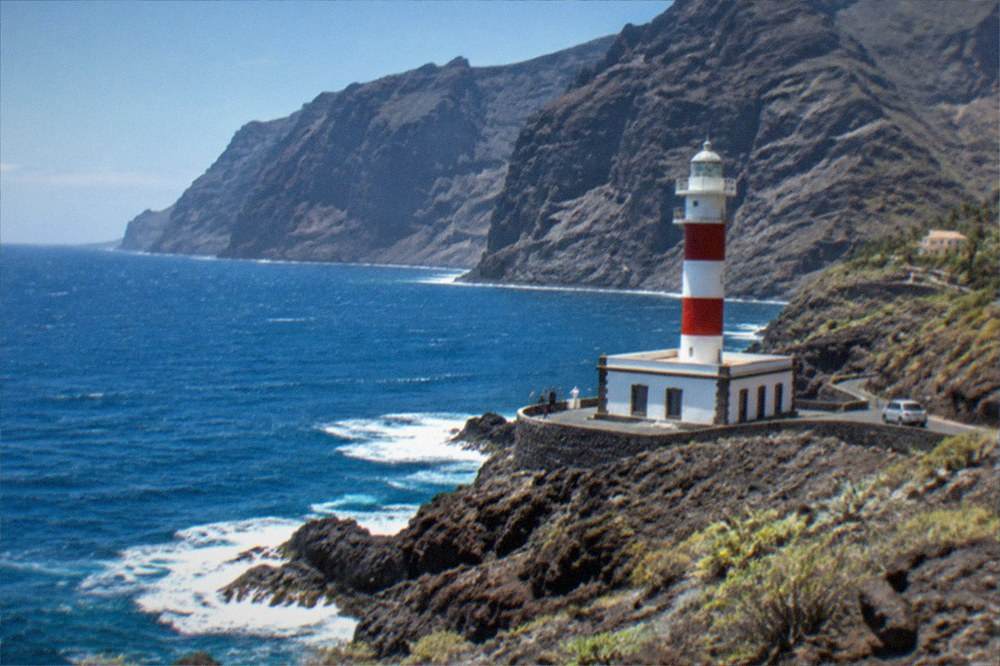
The Teno massif is the oldest part of the island's landscape and the least visited corner of this route. Teno Alto and Buenavista sit on a plateau of smallholdings and laurel forest, and the road out to Punta de Teno ends at a lighthouse on a lava spit below cliffs. Check the access situation before you set out: the road to the point has been managed with restrictions in the past, and the local authority's current rule is the one that counts on the day.
Masca is the decision point of the day. The gorge trail is open under a continuing pilot scheme, descent only, leaving by boat from Masca bay, and the general ticket is EUR 40.66 with the boat not included. It is booked at caminobarrancodemasca.com, not on Tenerife ON. Tenerife residents and mountaineering or caving federation members from the Canaries enter free, paying up front and being refunded after the check at the control, and special rates exist for Canary residents, under-18s and federated members. Two rules catch drivers out: closed mountain footwear is a condition of entry, with refusal even for a valid booking without it, and hikers must arrive on the compulsory TITSA line 355 shuttle from Santiago del Teide, showing the transport ticket, because private vehicles are refused. The trail is open 08:30 to 18:00 with entry sessions from 08:30 to 13:00, releasing 25 places every 30 minutes and 50 at the 09:00 session. Everything else covered here is indexed on Tenerife Travel Guide.
| Masca gorge rule | What the official page says |
|---|---|
| Status | Open, pilot scheme, descent only with boat exit |
| Booking site | caminobarrancodemasca.com |
| General ticket | EUR 40.66, boat not included |
| Free entry | Tenerife residents and Canarian federation members, refunded after control |
| Arrival | Compulsory TITSA line 355 from Santiago del Teide, ticket shown |
| Private vehicles | Refused |
| Footwear | Closed mountain footwear, or refusal |
| Entry sessions | 08:30 to 13:00, 25 places per 30 minutes, 50 at 09:00 |
| Boat exit | Separate ticket, booked beforehand, within 4 hours of the slot |
The operator's own risk statement deserves attention: it calls Masca the place with the most rescues in the Canaries in recent years, and the pier can close suddenly when the sea turns, which voids the ticket for that day. If you walk it, book an early slot and treat the boat connection as the fixed point of the afternoon.
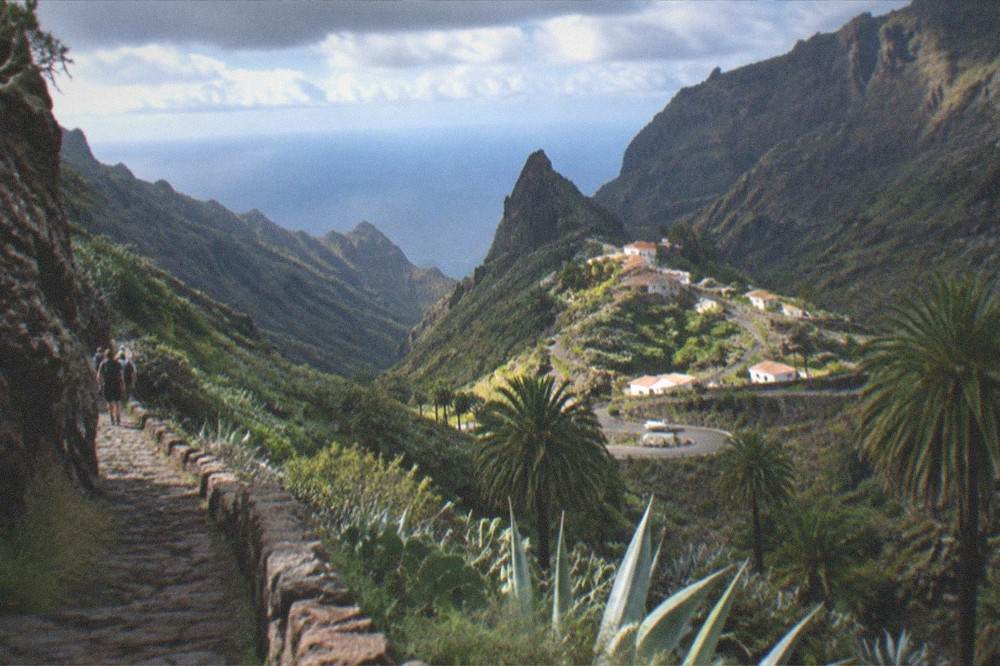
From Masca the road drops southwest toward the coast and Los Gigantes, where the cliffs the tourist board describes as towering "up to 600 m (1,970 ft)" meet a seabed about 30 m deep at their foot, inside Teno Rural Park. The return from Los Gigantes to Santiago del Teide, if you have walked the gorge, is not included in the Masca ticket: TITSA lines 462 or 325 cover it.
For travellers who want the gorge scenery without the reservation logistics, a boat-and-village tour covers Masca, the cliffs and natural pools with a picnic included:
And if the day's plan is to skip the gorge entirely and let someone else drive the massif, the small-group alternatives are worth a look:
Where Does Mount Teide Fit Into a Northern Route?
Teide National Park sits directly south of the northern corridor and is a half-day detour from La Laguna or La Orotava, but the three things inside it are separate: driving through and stopping at viewpoints needs no booking, the cable car to La Rambleta at 3,555 m is an operator ticket from EUR 42.00 return, and the summit trail PNT 10 needs a personal reservation on Tenerife ON, costing EUR 15 for visitors on the 09:00 to 17:00 slots since 19 January 2026.
The park is the most visited in Spain's national park network, with 5,242,653 visitors in 2024, and it was declared by decree on 22 January 1954, covering 18,990 ha. UNESCO inscribed it in 2007 under natural criteria (vii) and (viii), and its wording on the mountain's scale is precise: "Rising 7,500 m above the ocean floor, it is regarded as the world's third-tallest volcanic structure." Spain's own sources give the peak's height as 3,715 m, and that is the figure this site uses.
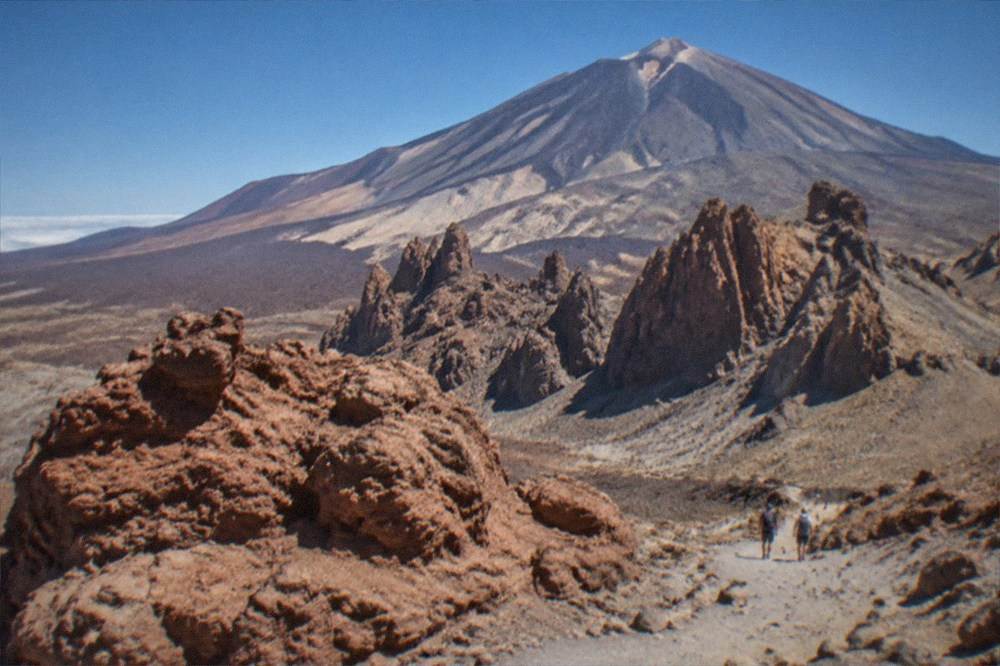
The cable car runs from a base station at 2,356 m to La Rambleta at 3,555 m, and it stops there: the crater is a separate, permit-only trail. The operator's standard 2026 hours are 09:00 to 17:00 in the low season, extending to 18:40 between 28 March and 12 April and from 1 July to 30 September, with the last ascent one hour before closing and the last descent ten minutes before. The operator does not allow children under 3, pregnant women, or people with cardiovascular conditions, and the child fare band is age 3 to 13.
| Cable car ticket, 2026 | Non-resident adult | Non-resident child (3 to 13) | Resident adult | Resident child |
|---|---|---|---|---|
| Return | EUR 42.00 | EUR 21.00 | EUR 10.50 | EUR 5.25 |
| One way | EUR 23.50 | EUR 11.75 | EUR 5.88 | EUR 2.94 |
| Return plus audio guide | EUR 45.50 | EUR 24.50 | EUR 14.00 | EUR 8.75 |
Source: the operator's own prices page, shown as "price from".
The summit trail, PNT 10 Telesforo Bravo, is the reservation that defeats most plans. Tenerife ON lists it as requiring a personal reservation, with accredited guides required and organisations not allowed. A new week of slots is released every Monday at 07:00 Canary time, keeping 56 days bookable, and no other lead time should be trusted. Since Monday 19 January 2026 the 09:00 to 17:00 slots cost EUR 15 for visitors and EUR 6 for residents of the other Canary Islands, free for Tenerife residents, with children exempt from the fee. The out-of-hours slots, 06:00 to 09:00 and 18:00 to 22:00, carry no fee mark but still require a reservation, and walking without one can be penalised. Bookings are non-refundable, with no changes of date, slot or names, and failing to use a booking can bar a user from new applications for three months. One more rule for the road: the Cabildo bans smoking in every open-air space of the national park, car parks included.
| Trail fee, 09:00 to 17:00 slots | Tenerife residents | Other Canary residents | All other users |
|---|---|---|---|
| PNT 10 Telesforo Bravo (summit) | EUR 0 | EUR 6 | EUR 15 |
| PNT 07 Montana Blanca, working days | EUR 0 | EUR 3 | EUR 6 |
| PNT 07 Montana Blanca, weekends and holidays | EUR 0 | EUR 5 | EUR 10 |
Source: Tenerife ON, fees from 19 January 2026.
A guided summit hike with hotel pickup is the alternative for anyone who wants the crater without managing the reservation themselves, and it is one of the options in the band below. For the full permit picture, the Teide Summit Permit guide goes deeper, and the Teide National Park page covers the viewpoints and the other trails.
What Does a Car Actually Cost on This Route, and What Are the Driving Rules?
Car hire is the one cost on this route that cannot be quoted, because rates move daily and this site does not print them, but the fixed costs around the driving are verifiable: there is no tourist tax on Tenerife, no toll on any road, the general drink-drive limit is 0.5 g/l in blood, and the only charges a driver on this route meets are the trail fees, the cable car ticket and the Masca ticket, all listed above.
No official page read shows a per-night lodging tax in force or approved on Tenerife, so do not budget for one. The charges that do exist are the per-booking public fees on the Teide trails, the Masca ticket and the Barranco del Infierno ticket, which is EUR 15 for a non-resident adult and EUR 5 for Canary residents, with advance online booking compulsory, no children under 5, and a child ticket for ages 5 to 12. The gorge admits 20 people every 30 minutes in the mornings and the trail ends at a waterfall.
For the driving itself, the rules that matter are simple. The general legal drink-drive limit the DGT page refers to is 0.5 g/l in blood, and a lunchtime glass of wine before the Teno switchbacks is a bad trade. Taxis are white and metered from the start of the trip, with a fixed price agreeable in advance for excursions, per the tourist board. And the mountain roads in Teno and around Teide are narrow and steep: allow more time than the distance suggests, and never plan the Masca descent and a long afternoon drive on the same day.
If you have not yet booked the car, this is the point in the planning to do it:
For the wider picture on getting around, Getting Around Tenerife covers buses, trams and taxis, and the Tenerife Buses guide explains the visitor travelcards: the day travelcard at EUR 10 and the seven-day travelcard at EUR 50, sold at airport ticket machines. The 2026 free-transport subsidy is for residents only, so visitors pay.
Is There a Good Alternative to Driving the North Yourself?
Yes: the north is the best-served part of the island for organised day trips, with a nine-hour coach loop covering Teide National Park, Masca, Icod de los Vinos and Garachico in one day, guided hikes running in Anaga and above Masca, and free GuruWalk walking tours in Santa Cruz, La Orotava and Puerto de la Cruz, so a traveller without a car can still see everything on this route except the Teno lighthouse road.
The trade is control against effort. The coach loop takes in the four headline stops of Day Two plus Teide in a single long day, which is efficient and tiring. Guided hikes suit anyone who wants the walking without the navigation: the Anaga Rural Park hike runs three to six hours with route options, and a full-day Anaga tour with hotel pickup runs seven hours. For the towns, the free walks are tip-based: GuruWalk runs a free tour of the historic centre of Santa Cruz de Tenerife, a free La Orotava tour and a free Puerto de la Cruz tour, each about 90 minutes, and you simply reserve a place and tip the guide at the end. Details of all three are on the free walking tours page.
If your time is short and the north is one part of a bigger plan, the North Tenerife from the South day trip page reframes this same route for southern-based visitors, and the 10 Days in Tenerife itinerary gives every stop here the time it deserves.
Common Questions About North Tenerife Road Trips
Can I drive to Masca village and walk the gorge from there?
No. The official booking page is explicit: hikers must arrive on the compulsory TITSA line 355 shuttle from Santiago del Teide and show the transport ticket, and arriving by private vehicle means refusal. You can drive to Masca village to look around, but the gorge descent itself starts only with the shuttle ticket and a valid reservation.
Do I need to book anything before a three-day northern route?
Two things, if you want them: the Masca gorge descent, booked at caminobarrancodemasca.com, and the Teide summit trail PNT 10, booked on Tenerife ON, where a new week of slots is released every Monday at 07:00 Canary time with 56 days always bookable. The cable car is an operator ticket you buy in advance or on the day, subject to availability. Everything else on the route, the towns, the viewpoints and the Garachico pools, needs no booking.
Is the north of Tenerife worth it compared with the south?
The two halves serve different holidays. The south holds the main beach resorts, the water park and the driest weather; the north holds the UNESCO town of La Laguna, the Orotava valley, the dragon tree, Garachico and the greenest landscapes on the island. AEMET's normals show the north genuinely wetter in winter, so the trade is character against guaranteed sunshine, and the Tenerife North vs South guide sets out the full comparison.
What is the best time of year for this road trip?
The northern climate normals point to May and June as the sweet spot: at Tenerife North Airport, May brings a mean daily maximum of 20.1 Celsius with 19 mm of rain, and June 22.2 Celsius with 11 mm. September is nearly as dry, with 16 mm. Winter months are mild but wetter, with 80 mm in January and 82 mm in December, and the sea is still swimmable year-round, never below 19.1 Celsius in the official series.
Can I add La Gomera to a northern road trip?
It is a stretch but possible: Fred. Olsen Express runs the ferry from Los Cristianos to San Sebastian de La Gomera in 50 minutes, and Armas Trasmediterranea also sells the route. The ferry port is in the south of Tenerife, though, so La Gomera pairs better with a southern base or a dedicated day trip, and the La Gomera day trip page covers the crossing in detail.
Is there a tourist tax I should budget for on this route?
No official page shows a per-night lodging tax in force or approved on Tenerife. The charges that do exist are the per-booking fees on the two Teide trails, the Masca ticket at EUR 40.66 and the Barranco del Infierno ticket at EUR 15 for a non-resident adult, so a driver on this route pays for reservations, not for staying.
Three days is enough to drive the north properly, provided the two reservations are made before the wheels turn: book the Masca descent for the morning of Day Three, decide early whether the Teide crater is in or out, and let everything else, the balconies, the dragon tree and the lava pools, happen at the pace the road allows.