5 Days in Tenerife
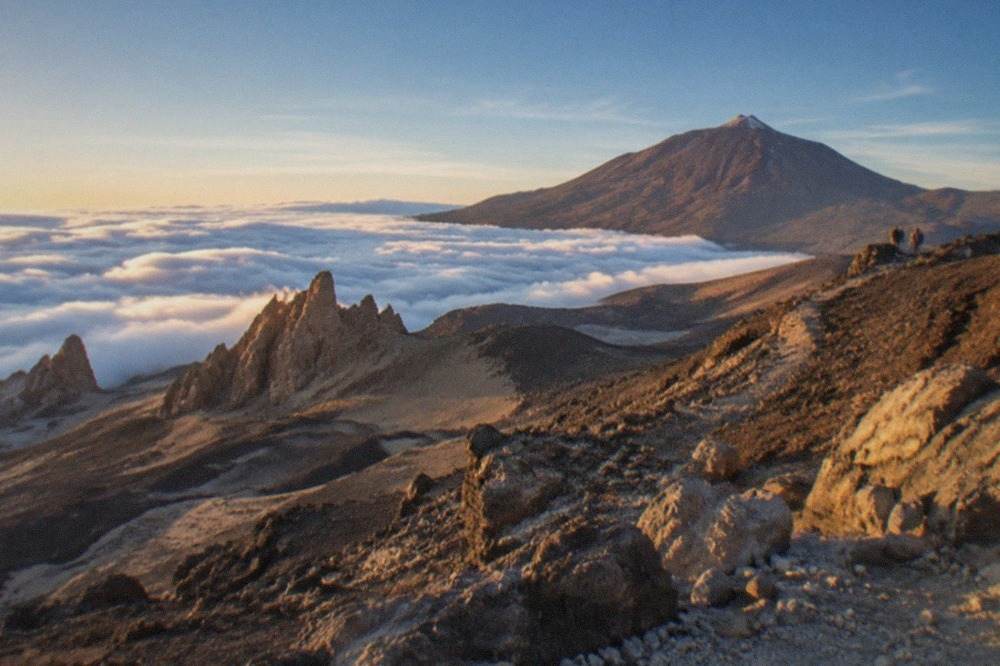
Five days is enough to see Teide, the whales, Masca, Anaga and the north coast, provided each day is planned around the permits, timetables and fees that actually govern the island.
Short answer
Five days in Tenerife covers the volcano, a whale-watching trip, the Masca descent, the Anaga mountains and the north coast towns, with one booking-heavy day (Teide or Masca) anchoring the middle of the week.
Teide National Park received 5,242,653 visitors in 2024, making it the most visited park in Spain's national park network, and the whales off the south coast live inside a Special Area of Conservation regulated by Decreto 178/2000. Five days is enough to see both, plus Masca, Anaga and the north coast, but only if the week is sequenced around the things that need booking: the Teide trail reservations, the Masca ticket and the boat exit, and the whale trips that sail on a timetable. This itinerary from the Tenerife Travel Guide desk puts each of those on its own day and leaves the free days, the beaches and the old towns, to fill the gaps.
Is Five Days in Tenerife Enough?
Five days is enough to cover Tenerife's four headline experiences, the volcano, the whales, the Masca gorge and the Anaga mountains, plus the north coast towns, if one day is reserved for Teide, one for the sea, one for the west, one for the northeast and one for beaches and Santa Cruz, because the two permit-controlled walks, Teide and Masca, cannot both be done on the same day.
The island is bigger than the resort map suggests. It holds 31 municipalities and roughly 960,000 residents, and the drive from the southern resorts to the Anaga massif crosses the whole spine of the island. Five days works because it lets each region keep a full day rather than a rushed half. Readers with three days should see 3 Days in Tenerife instead, and those with a week can slow the pace using 7 Days in Tenerife. If you are still deciding the length of the trip, the answer page on how many days to spend in Tenerife breaks the trade-off down.
Here is the shape of the week this page builds:
| Day | Region | Anchor sight | Booking needed |
|---|---|---|---|
| One | Teide National Park | The cable car and Roques de Garcia | Cable car ticket, summit permit only if walking PNT 10 |
| Two | South coast | Whale watching from Costa Adeje or Los Cristianos | Boat tour |
| Three | West | Masca gorge descent | Masca ticket, boat exit, TITSA line 355 |
| Four | Northeast | Anaga Rural Park | Tenerife ON reservation only for El Pijaral |
| Five | North coast and Santa Cruz | Garachico, Icod de los Vinos, beaches | None |
The order is deliberate. Teide sits highest and is the most weather-sensitive day, Masca depends on sea conditions at the pier, and both are non-refundable once booked, so they go early enough in the week that a cancelled day can be reshuffled. The free days, Anaga and the north coast, absorb any displaced plans.
Day One: Teide National Park and the Cable Car
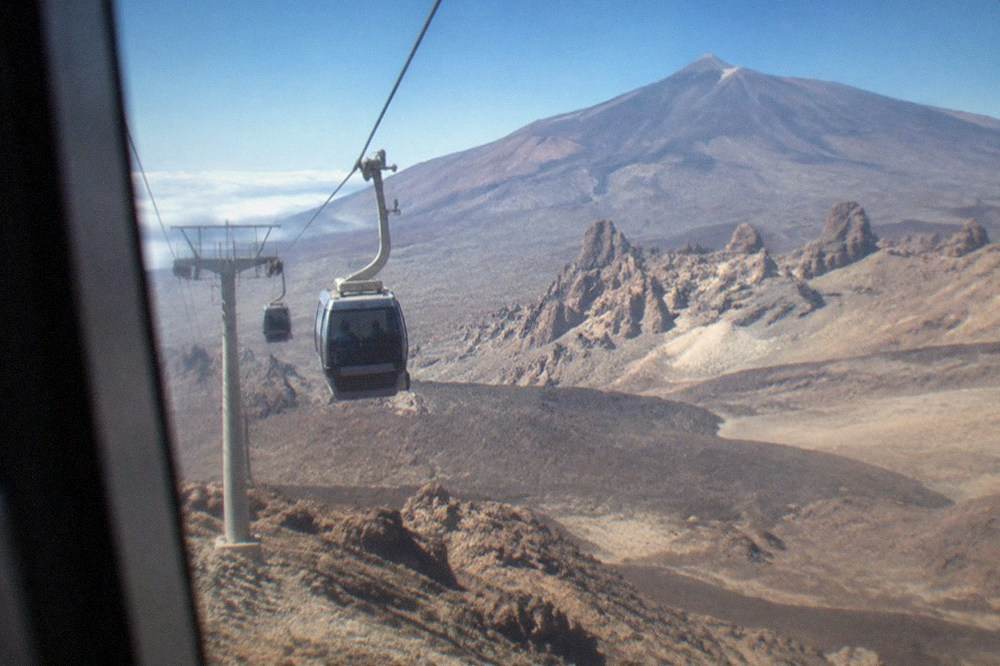
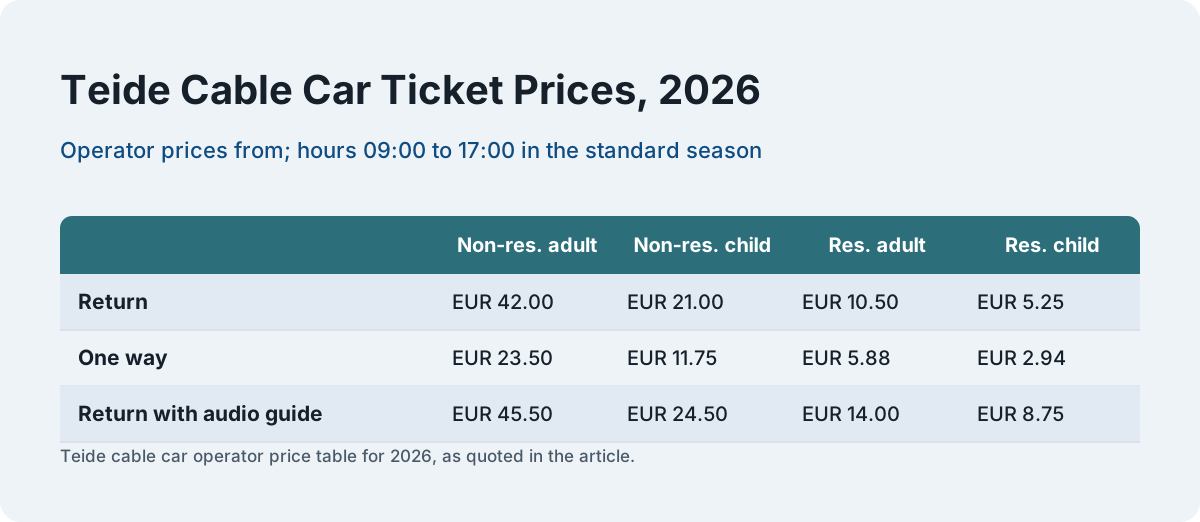
Teide National Park is the first day because it needs the most planning: the cable car runs from 2,356 m to La Rambleta at 3,555 m between 09:00 and 17:00 in the standard season, a non-resident return ticket costs EUR 42.00 from the operator, and the crater trail PNT 10 Telesforo Bravo needs a separate personal reservation on Tenerife ON that since 19 January 2026 costs EUR 15 for visitors on the daytime slots.
Three separate things happen on this mountain and pages that blur them mislead readers. Driving through the national park and stopping at the viewpoints costs nothing and needs no booking. The cable car is an operator ticket, and the crater is a permit-only trail the cable car does not reach. The operator's own access rules refuse the cable car to people with cardiovascular conditions, pregnant women and children under 3, and the child fare runs from age 3 to 13. Smoking is banned in every open-air space of the park, car parks included, under a Cabildo wildfire measure.
| Cable car ticket, 2026 | Non-resident adult | Non-resident child (3 to 13) | Resident adult | Resident child |
|---|---|---|---|---|
| Return | EUR 42.00 | EUR 21.00 | EUR 10.50 | EUR 5.25 |
| One way | EUR 23.50 | EUR 11.75 | EUR 5.88 | EUR 2.94 |
| Return with audio guide | EUR 45.50 | EUR 24.50 | EUR 14.00 | EUR 8.75 |
The operator lists these as prices from, and the hours shift by season: 09:00 to 17:00 from 1 January to 27 March and 13 April to 30 June, extending to 18:40 over Easter and the summer. Last ascent is one hour before closing, last descent ten minutes before. Anyone intending to stand on the crater rim needs the summit permit, booked on Tenerife ON, where a new week of slots is released every Monday at 07:00 Canary time so that 56 days stay bookable. The full rules, including the free slots for Tenerife residents and children, are on the Teide summit permit page.
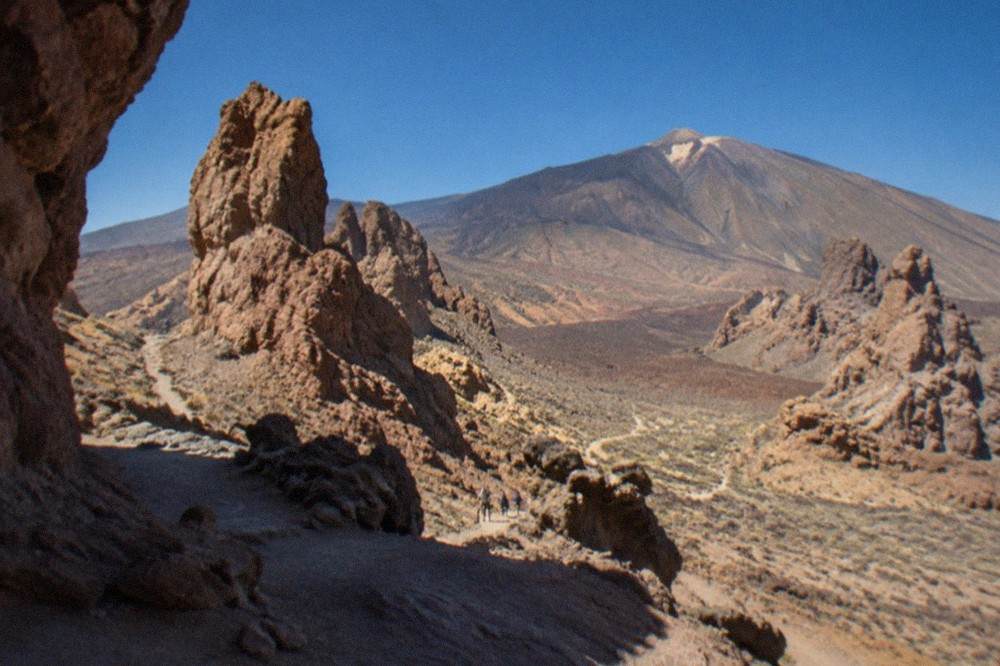
For a day built entirely around the volcano without self-driving, a small-group tour is the simplest route, and the listing above covers the volcanic and forest highlights of the park in four to five hours. Readers who want the evening instead should look at the Teide stargazing tours page: the observatory ridge at Izana holds a Starlight Reserve designation from the Fundacion Starlight, dated October 2013, and AEMET's normals for that station record 382 sunshine hours in both June and July.
Day Two: Whale Watching Off the South Coast
Day two goes to sea because the waters between Tenerife and La Gomera hold a resident population of pilot whales and bottlenose dolphins inside a Whale Heritage Area designated by the World Cetacean Alliance in January 2021, and every authorised boat flies the Barco Azul flag under Decreto 178/2000, which bans approaches within 60 m, allows at most three boats within 500 m and forbids swimming within 500 m of the animals.
The designation matters because many pages attribute it to the wrong body. It is the World Cetacean Alliance's programme, now called Whale Heritage Areas, and the same page records a migration stop for 21 other cetacean species. The law that governs the boats is Decreto 178/2000 of 6 September, and its distances are the ones a reader should expect a compliant operator to keep: no approach within 60 m, a maximum of 4 knots within 500 m, no feeding, chasing or circling. Boats without the Barco Azul flag are not authorised.
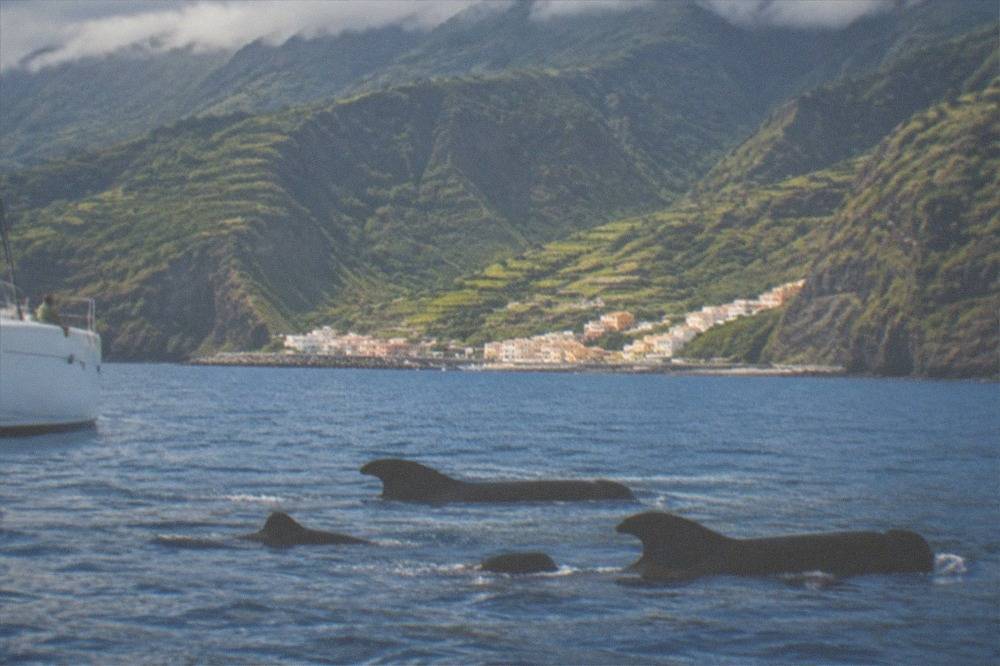
Trips leave from Los Cristianos, Costa Adeje and Los Gigantes, and the choice is mostly about the boat and the time. A catamaran with transfer and a buffet suits a family day; a small boat with ten guests suits readers who want the quieter version. The listing below is the mid-weight option.
The afternoon of day two is the week's most flexible block. El Duque in Costa Adeje is a grey sandy beach on the tourist board's own page, not the golden stretch some brochures imply, while Las Vistas in Arona and Las Teresitas in San Andres are the ones the board describes as golden sand behind breakwaters. The sea surface off the south coast averages 23.1 to 23.7 degrees Celsius in September and October on the NOAA series, the warmest readings of the year.
Day Three: Masca, Garachico and Icod de los Vinos
Day three is the west coast, anchored by the Masca gorge, which is open under a pilot scheme as a descent only with a pre-booked boat exit, costs EUR 40.66 for the general ticket with the boat sold separately, and requires arrival on TITSA line 355 from Santiago del Teide, because hikers who turn up in a private vehicle are refused at the control.
Masca has more conditions attached to it than any other walk on the island, and every one of them is enforced. The booking site is caminobarrancodemasca.com, not Tenerife ON. The boat ticket must be bought in advance and timed for no later than four hours after the descent slot. Closed mountain footwear is a condition of entry, and the operator refuses walkers without it even when they hold a booking. The pier can close suddenly when the sea turns, and a closure voids that day's ticket. The operator also calls the gorge the place with the most rescues in the Canaries in recent years, which is the reason the rules exist. The full set of conditions is on the Masca page.
| Masca gorge rule | What the operator's page states |
|---|---|
| Direction | Descent only, boat exit from Masca bay |
| General ticket | EUR 40.66, boat not included |
| Free entry | Tenerife residents and Canarian federation members, refunded after the control check |
| Arrival | TITSA line 355 from Santiago del Teide, ticket shown at the control |
| Private vehicles | Refused |
| Entry sessions | 08:30 to 13:00, 25 places every 30 minutes, 50 at the 09:00 session |
| Footwear | Closed mountain footwear mandatory |
The return leg is not included: from Los Gigantes, TITSA lines 462 or 325 run back towards Santiago del Teide. Readers who would rather not manage the gorge logistics at all can take a coach loop instead, which pairs Masca village with Garachico and Icod de los Vinos in a single day, and the listing below is the island-tour version of that idea.
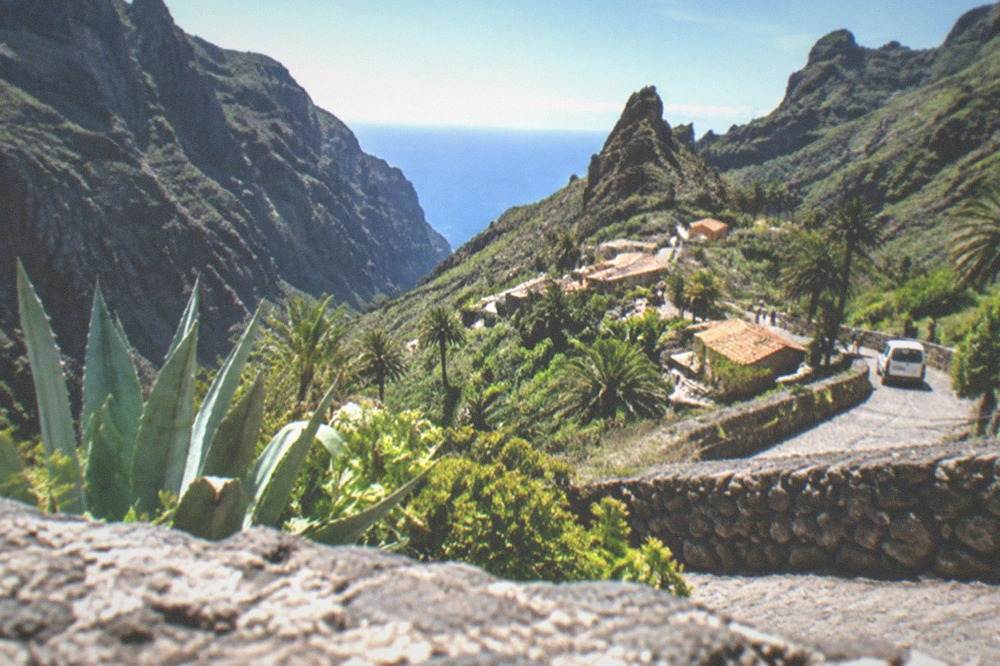
Garachico earns its stop in the facts: the Trevejo volcano erupted in 1706, destroyed almost the entire town and buried its old port, and the town had been the island's trade hub through the 16th and 17th centuries. In Icod de los Vinos, the Drago Milenario is a National Monument named in 1917, about 21 m tall with a trunk base about 17 m round, and its age is an estimate: Icod council attributes roughly 1,000 years to it while the tourist board says over 800, so the honest phrasing is 800 to 1,000 years. The whole west-coast loop is mapped out on the Masca, Garachico and Icod route page.
Day Four: Anaga Rural Park and the Northeast
Day four crosses to the Anaga massif in the island's northeast, a laurel-forest landscape whose best-known trail, El Pijaral, the Enchanted Forest on route PRA 72, needs a Tenerife ON reservation released on Mondays at 07:00 Canary time at most 14 days ahead, and where organised tours run by companies are not permitted, so most walkers use the permit-free alternatives the Cabildo itself names.
Those alternatives are the Bosque de los Enigmas trail and the Pista de Las Hiedras, both listed by the Cabildo as open-access options when the reserve is full or unbooked. Other reservation-only walks on the island include La Asomada to Cruz de Afur in Anaga, Rambla de Castro and Barranco del Infierno, the last of which costs EUR 15 for a non-resident adult with compulsory advance booking, a quota of 20 people every 30 minutes in the mornings, and no entry for children under 5. The Anaga Rural Park page carries the detail.
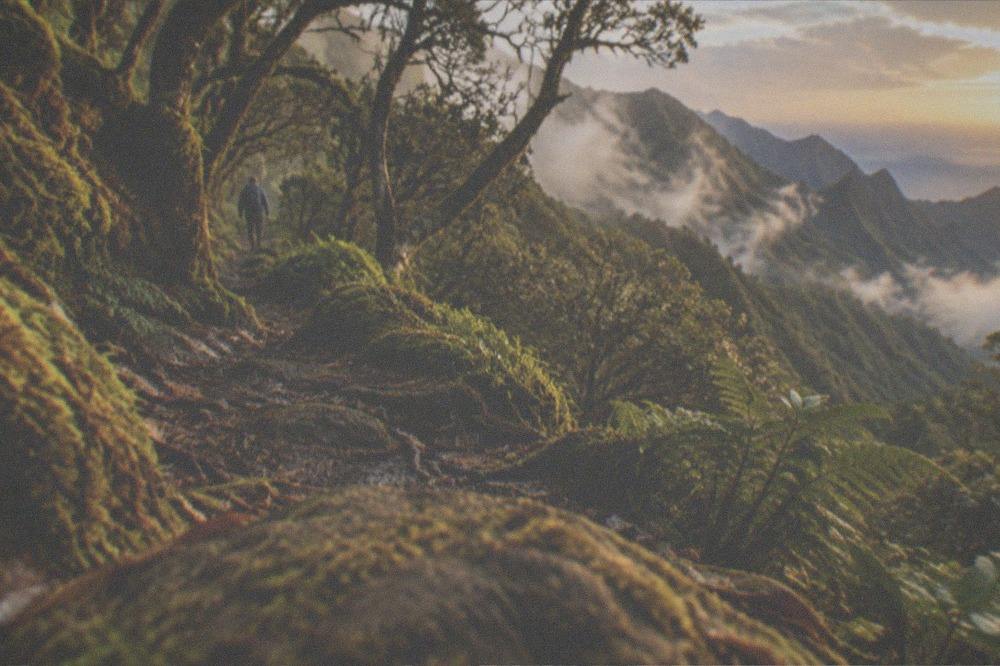
Weather is the reason this day stays flexible. AEMET's normals for Tenerife North Airport, at 632 m on the Los Rodeos side of the ridge, record 80 to 82 mm of rain in November, December and January, against 13 mm at the south coast station in the same months. The northeast is genuinely wetter than the south, and a rained-out Anaga day is common enough in winter that the rainy day in Tenerife page exists for exactly this problem. When the forecast holds, the northern road trip along the coast, mapped on the north Tenerife road trip page, is the best use of the daylight.
Day Five: Beaches, La Laguna and Santa Cruz
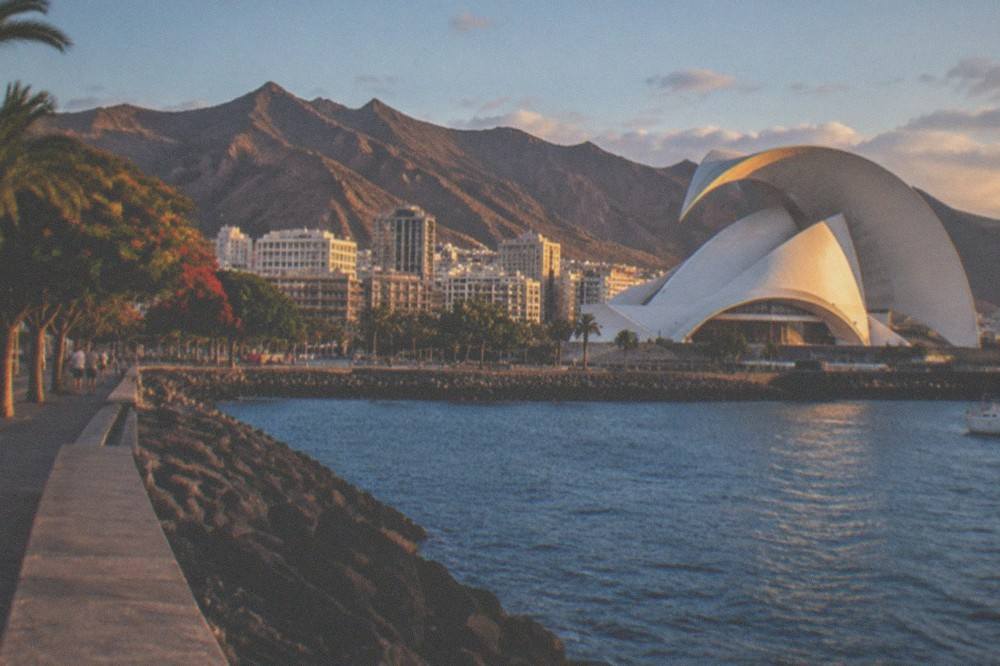
Day five stays low and close to the capital, pairing the golden sand of Las Teresitas at San Andres with the UNESCO-listed colonial centre of San Cristobal de La Laguna, described by UNESCO as the first non-fortified Spanish colonial town whose layout provided the model for many colonial towns in the Americas, and finishing in Santa Cruz, where the Auditorio de Tenerife, designed by Santiago Calatrava and inaugurated in 2003, sits by the water.
This is the day with no bookings at all. Las Teresitas is the beach the tourist board describes as golden sand with palm trees and breakwaters that calm the water. In the capital, the Mercado Nuestra Senora de Africa and the Palmetum fill a slow morning, and the Santa Cruz de Tenerife area page lists the rest. Families will find the pacing on the Tenerife with kids itinerary page, and readers weighing the capital against the resorts can start with the north versus south comparison.
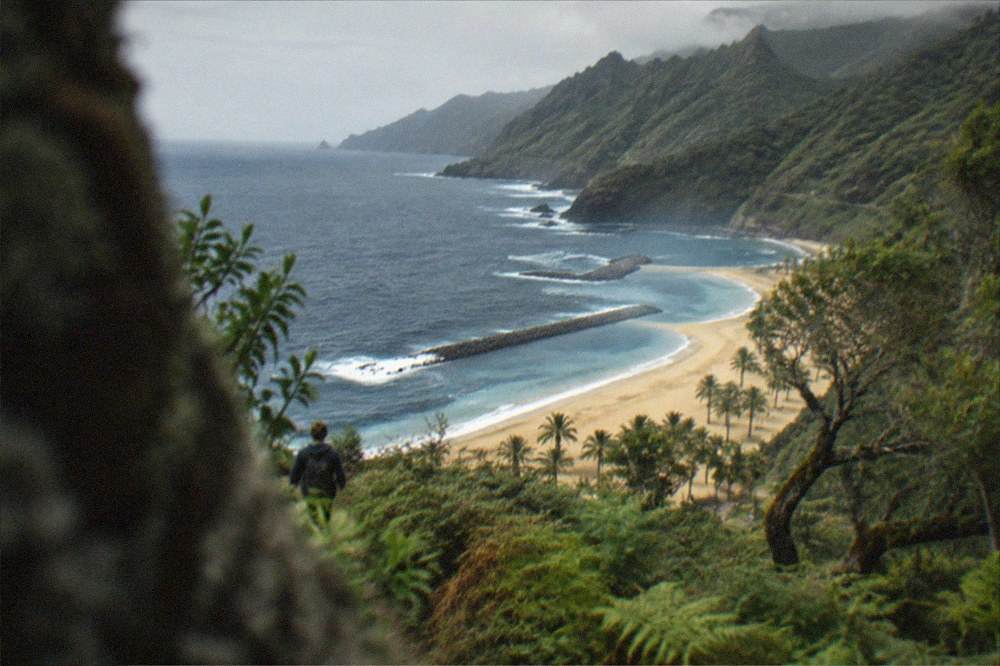
The climate table below explains why the south is where most visitors sleep. AEMET's 1981 to 2010 normals put the July and August mean daily maximum at 28.7 and 29 degrees Celsius in Santa Cruz, with 337 and 319 sunshine hours, and the rain concentrated between November and February.
| Month | Santa Cruz mean daily max C | Rain mm | Sunshine hours | Sea surface C |
|---|---|---|---|---|
| Jan | 21.0 | 32 | 178 | 19.9 |
| Feb | 21.2 | 35 | 186 | 19.2 |
| Mar | 22.1 | 38 | 221 | 19.1 |
| Apr | 22.7 | 12 | 237 | 19.5 |
| May | 24.1 | 4 | 282 | 20.2 |
| Jun | 26.2 | 1 | 306 | 21.4 |
| Jul | 28.7 | 0 | 337 | 22.2 |
| Aug | 29.0 | 2 | 319 | 23.1 |
| Sep | 28.1 | 7 | 253 | 23.7 |
| Oct | 26.3 | 19 | 222 | 23.7 |
| Nov | 24.1 | 34 | 178 | 22.5 |
| Dec | 22.1 | 43 | 168 | 21.1 |
The air normals are AEMET's 1981 to 2010 series and the sea figures are NOAA's 1991 to 2020 series: two datasets from two periods, and neither stands in for the other.
What Will Five Days in Tenerife Cost?
The official charges a visitor actually pays on this itinerary are the cable car return at EUR 42.00 from, the Teide summit reservation at EUR 15 for visitors on the 09:00 to 17:00 slots, the Masca ticket at EUR 40.66 plus the boat, and the Barranco del Infierno ticket at EUR 15, and there is no per-night tourist tax on Tenerife, because no official page read shows one in force or approved.
That last point is worth stating plainly because so many pages imply otherwise. The charges that do exist are per-booking fees on specific trails and the Masca ticket, and none of them is a lodging tax. On the mountain, the fee depends on the residence shown on your ID or passport, which must be carried to the checkpoint, and the bookings are non-refundable with no changes of date, slot or names, refunded only if the trail closes or the cable car is not operating. A no-show can bar the user from new applications for three months. Children are exempt from the summit fee, and the booking page shows the age band that applies.
| Official charge | Visitor price | Notes |
|---|---|---|
| Teide PNT 10 summit, 09:00 to 17:00 slots | EUR 15 | Free for Tenerife residents and children; EUR 6 for other Canary residents |
| Teide PNT 07 Montana Blanca, working days | EUR 6 | EUR 10 on weekends and public holidays |
| Cable car return | EUR 42.00 from | Child 3 to 13, EUR 21.00 from |
| Masca gorge ticket | EUR 40.66 | Boat sold separately, timed within 4 hours of the slot |
| Barranco del Infierno | EUR 15 | Advance online booking compulsory |
| TITSA day travelcard | EUR 10 | Seven-day version EUR 50 |
Does This Itinerary Work Without a Car?
The itinerary works without a car because TITSA buses reach every anchor on it, including line 355 to the Masca control, but visitors must pay their own fares, since the 2026 100% subsidy on passes applies to Canary residents only, and visitors travel on single tickets, the EUR 10 day travelcard or the EUR 50 seven-day travelcard.
The resident-free-transport point is the most misreported fact on the island, so it is worth the full sentence: the subsidy requires residency, a personalised Ten+ card and, for the youth and child passes, residency in the Canary Islands or Tenerife specifically. Visitors buy the travelcards at the airport ticket machines. The tram single fare is EUR 1.35 on a transit pass, but the tram serves neither airport, and TITSA's own airport pages list lines 10, 40, 711, 343 and 415 at Tenerife South and 20, 30 and 343 at Tenerife North. The bus-based version of this whole week is laid out on the Tenerife without a car page.
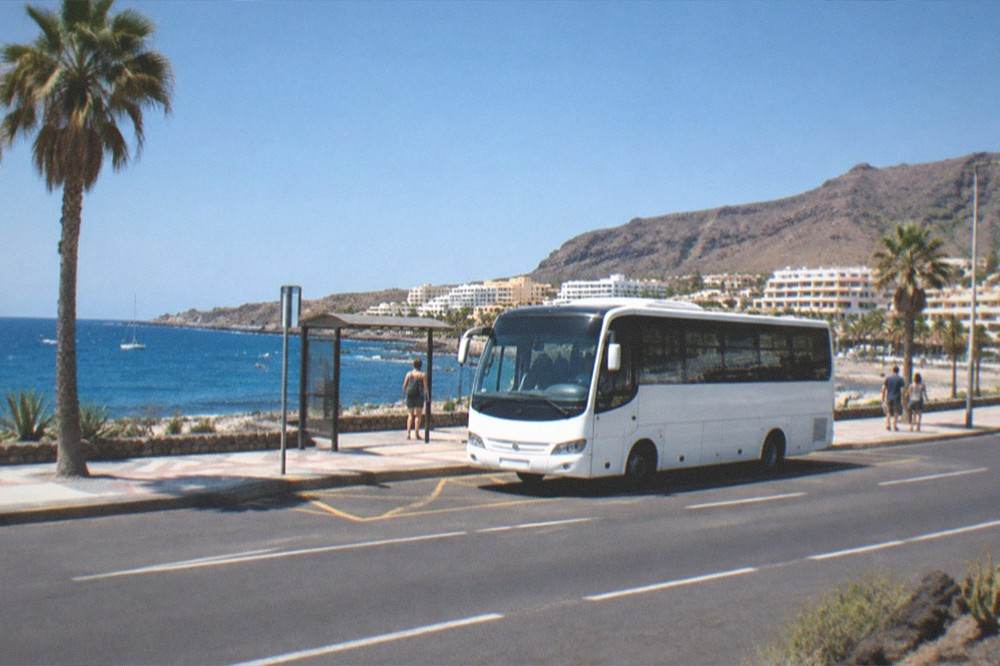
For readers who would rather drive the week themselves, car hire across the island is the flexible option, and the driving rules, including the 0.5 g/l blood-alcohol limit the DGT page refers to, are on file. A hired car is the one way to reach the Masca trailhead question wrongly, though: the Masca control refuses private vehicles, so on day three even drivers ride the 355. Taxis are white and metered from the start of the trip, with a fixed price agreeable in advance for excursions.
For the evenings, the free walking tours are the cheapest way into the towns: the Santa Cruz historic-centre walk and the Puerto de la Cruz walk both run on GuruWalk, free to join and tip-based. The free walking tours page lists them alongside the La Orotava walk.
Common Questions About Five Days in Tenerife
Can you do Mount Teide and Masca on the same day?
No, and the rules make it impossible rather than merely tight. The Masca descent requires an entry session between 08:30 and 13:00 with a boat exit timed within four hours, and the cable car's last ascent is one hour before closing, so the two anchor walks each consume half a day before travel time is counted. Give each its own day.
Do I need to book the Teide summit permit before I travel?
Yes, if you intend to stand on the crater rim. The reservation is made on Tenerife ON, registered and logged in, and a new week of slots is released every Monday at 07:00 Canary time so that 56 days stay bookable. The cable car alone does not need it, and neither does driving through the park.
Which five-day order is best if the weather looks bad?
Put Teide and Masca first, because both are weather-sensitive and non-refundable, and keep Anaga and the north coast day as the flexible one. AEMET's normals show the north side of the ridge is far wetter than the south in winter, so the Anaga day is the one most likely to need swapping, and the rainy-day itinerary can absorb it.
Is five days enough for La Gomera as well?
Not comfortably. The ferry from Los Cristianos to San Sebastian de La Gomera takes 50 minutes on the Fred. Olsen Express route, but a La Gomera day is a full day out, and adding it means dropping either Masca or Anaga from the Tenerife week. Readers set on both islands should move to the ten-day plan.
Do children pay the summit permit fee?
Children are exempt from the PNT 10 fee. The official page gives two different age cut-offs for the exemption, so check the age band shown on the booking page rather than relying on a number quoted elsewhere. Access rules are separate from fees: children under 3 are not allowed on the trail, and under-16s walk only with an adult.
What happens if the Masca pier closes?
Sudden pier closures from sea conditions void the ticket for that day, and the operator states this plainly alongside its warning that the gorge records the most rescues in the Canaries in recent years. This is the reason Masca sits early in the week, so a lost day can be rebuilt around the free north-coast block instead.