What to Do in Tenerife When It Rains
Rain in Tenerife is real, measurable and extremely lopsided: AEMET's climate normals record 520 mm a year at Tenerife North Airport and 132 mm at Tenerife South Airport. A wet day rarely covers the whole island, and the days that follow are usually dry again.
Short answer
Head indoors in the north (Loro Parque, the Pyramids of Guimar, the dragon tree at Icod de los Vinos), drive south where rain days average just over one a month, or take a boat: whale watching runs all year and the sea keeps its warmth. AEMET's stations show the north gets four times the south's rain, so a wet morning in Puerto de la Cruz often means sunshine in Costa Adeje.
Rain in Tenerife is not a myth, but it is a lopsided one. AEMET, the Spanish state meteorological agency, publishes climate normals for four stations on the island, and they tell two different stories: Tenerife North Airport, at 632 m above sea level, records 520 mm of rain a year falling on 64 days with at least 1 mm, while Tenerife South Airport, at 64 m, records 132 mm on 15.2 days. The wet day a holidaymaker meets is therefore far more likely to be a north-coast day than a beach day, and it is very often a single day inside an otherwise dry week.
This page works the problem the way an editorial desk has to: with the published figures, the operators' own opening hours and the official rules, rather than with folklore. The short version is that a rainy day in Tenerife is a routing problem, and there are good answers to it at every budget, several of which are actually better in cloud than in glare. The long version follows, and it starts with the numbers, because they decide where you should be standing when the front arrives.
How Much Rain Does Tenerife Actually Get?
AEMET's 1981-2010 climate normals put 520 mm of rain a year on 64 days at Tenerife North Airport, against 132 mm on 15.2 days at Tenerife South Airport, and the wet months cluster between October and February, when the north station averages 61 to 82 mm per month. The south never averages more than 30 mm in any month, and July and August record zero measurable rain at both coastal stations. The island's rain is concentrated in winter and in the north.
The monthly detail matters more than the annual totals, because a wet day in November is a different planning problem from a wet day in June. At the north airport, November and December are the wettest months, at 81 and 82 mm respectively, each spread across more than eight rain days. At the south airport the same months carry 26 and 30 mm on fewer than four rain days each. June, July and August are effectively dry at the coast: the south station records 0 mm in June and July and 1 mm in August.
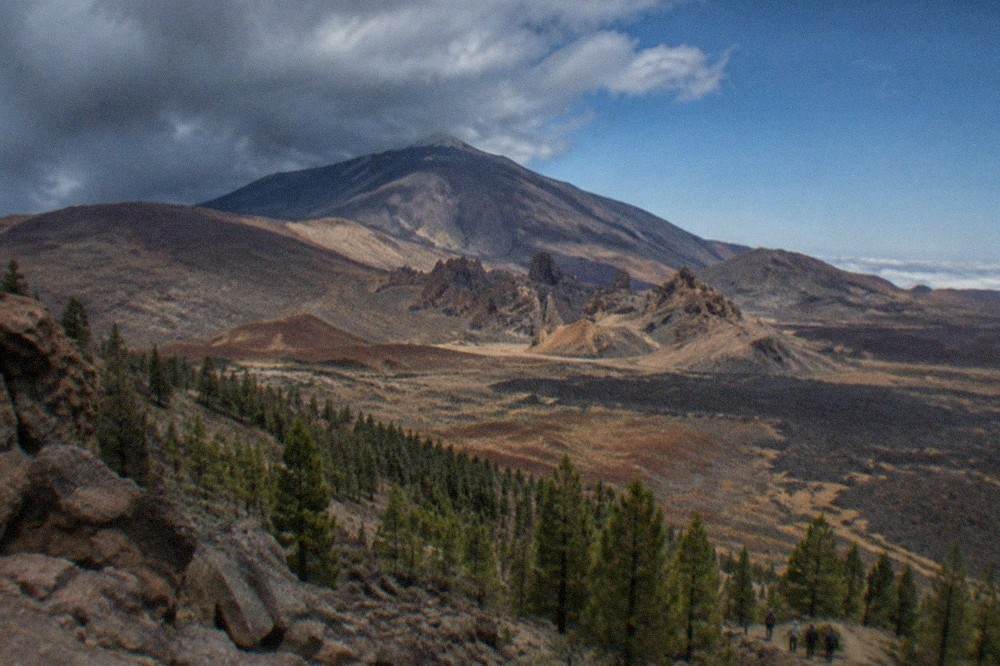
Up at altitude the picture changes sharply. Izana, the observatory ridge beside Teide at 2,369 m, records 67 mm in February and 60 mm in December, and its January mean daily maximum is just 7.5 degrees Celsius against 21.7 at the south airport. Rain at the coast can be snow on the stratovolcano, and Tenerife ON's trail rules respond: when ice and snow are present, crampons and an ice axe join the mandatory equipment list on the stratovolcano trails, plus a signed declaration.
| Month | Rain at Tenerife North Airport (mm) | Rain days (1 mm or more) | Rain at Tenerife South Airport (mm) | Rain days (1 mm or more) |
|---|---|---|---|---|
| Jan | 80 | 7.7 | 17 | 1.8 |
| Feb | 70 | 7.4 | 20 | 2.2 |
| Mar | 61 | 6.8 | 15 | 1.9 |
| Apr | 39 | 6.2 | 7 | 1.1 |
| May | 19 | 3.8 | 1 | 0.3 |
| Jun | 11 | 2.4 | 0 | 0 |
| Jul | 6 | 1.7 | 0 | 0 |
| Aug | 5 | 1.1 | 1 | 0.2 |
| Sep | 16 | 2.8 | 4 | 0.6 |
| Oct | 47 | 6.5 | 12 | 1.6 |
| Nov | 81 | 8.3 | 26 | 1.9 |
| Dec | 82 | 8.8 | 30 | 3.5 |
What to Do in Tenerife When It Rains Indoors
The strongest indoor options are Loro Parque in Puerto de la Cruz, open 09:30 to 17:30 every day of the year, the Pyramids of Guimar, open daily 10:00 to 18:00 except 1 January and 25 December, and the Museum of Nature and Archaeology in Santa Cruz, and all three sit on the island's bus network, so a wet day does not have to be a car day.
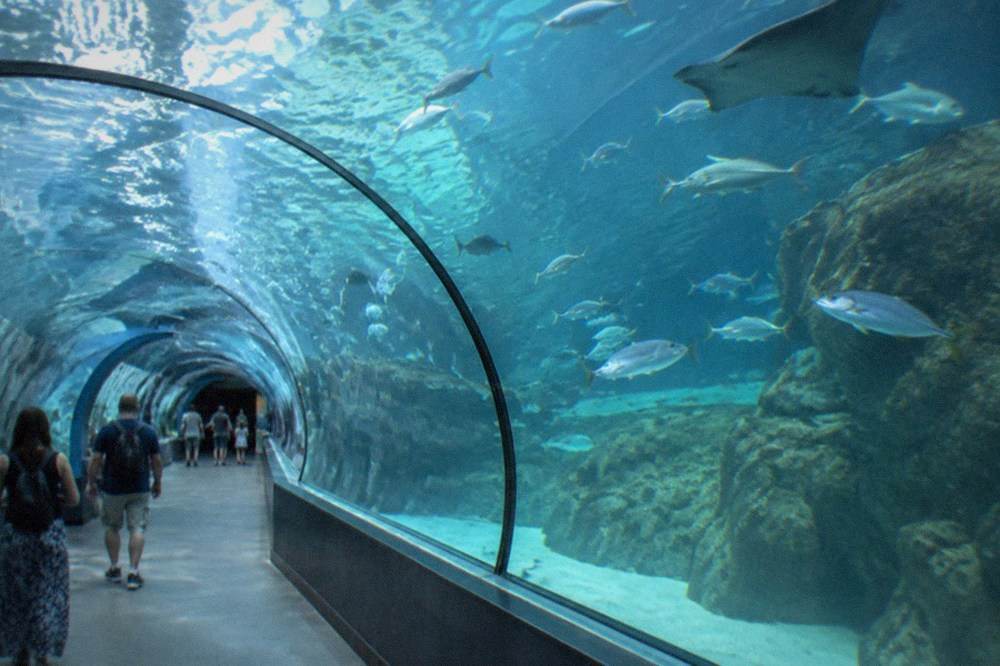
Loro Parque is the obvious anchor for a wet day in the north: the operator's own FAQ page lists 09:30 to 17:30, Monday to Sunday, every day of the year, with its own car park at EUR 7 per day. Much of the park is outdoors, but its aquarium and animal houses give long stretches under cover, and Puerto de la Cruz is where the rain gauge is busiest anyway. The Loro Parque page on this site carries the detail, including the twin-ticket option that bundles it with Siam Park.
The Pyramids of Guimar, on the east coast, are a drier proposition: the official visit page lists daily opening of 10:00 to 18:00, closed only on 1 January and 25 December, with a full ticket including audioguide at EUR 26.00 and a recommended visit of about two and a half hours, much of it inside the exhibition buildings. In Santa Cruz, the Museum of Nature and Archaeology and the Mercado Nuestra Señora de Africa covered market both do the job, and the 3 days in Tenerife itinerary slots them into a city day that survives rain.
Wet days are also the honest moment for the island's food culture. The guachinches, the no-frills eating houses of the north, and the wineries of Tacoronte and El Sauzal are roofed by definition, and a guided winery visit with tastings is a two-hour commitment that rain improves rather than spoils. The Tenerife food guide is not on this page's link list, but the Tacoronte winery tour in the band below is, and it is the single most rain-proof product on the island.
Does Rain Stop the Whale Watching Boats?
No, and the sea is part of the reason: NOAA's 1991-2020 series shows the sea surface off the south coast never falls below 19.1 degrees Celsius, and the whale fleet sails year-round under Decreto 178/2000, which regulates how boats behave around animals, not whether they may leave port in rain. A wet morning in Los Cristianos or Costa Adeje is still a workable whale-watching morning.
The rules that govern these trips are worth knowing whatever the weather. Decreto 178/2000 of 6 September bars any boat from approaching within 60 m of a cetacean, allows no more than three boats within 500 m, sets a maximum of 4 knots inside that 500 m zone, and bans swimming, diving, feeding, chasing and circling. Authorised boats must fly the Barco Azul flag, issued by the Canary tourism department with the permit and at each annual renewal. The World Cetacean Alliance designated the Tenerife-La Gomera marine area a Whale Heritage Area in January 2021, citing a unique resident population of pilot whales and bottlenose dolphins.
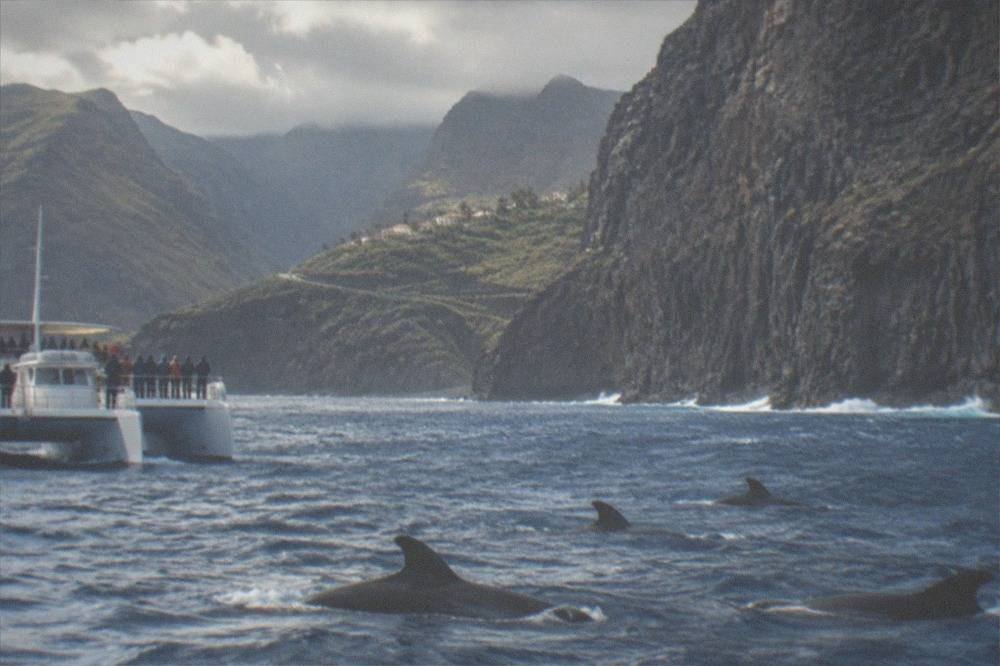
What rain changes is comfort, not operation. A catamaran with a covered deck and included snacks and drinks turns a grey sea into a moody one, and the Costa Adeje eco-cruise below runs three hours with food and drink on board. The whale and dolphin watching trips run from Los Cristianos, Costa Adeje and Los Gigantes, so the decision is really which coast to leave from, and the answer on a wet north-coast day is the south.
For a reader weighing the whole day, the north versus south comparison matters here: the rain that closes a beach in Puerto de la Cruz may never reach Costa Adeje, and the drive between them crosses the island's weather divide.
Is Rain at the Coast Snow on Mount Teide?
Very often, yes: Izana, the AEMET station at 2,369 m beside the observatory, records a January mean daily maximum of 7.5 degrees Celsius and 47 mm of rain that month, and Tenerife ON's trail rules state that ice and snow put crampons and an ice axe on the mandatory equipment list for the stratovolcano trails. A rainy winter day at the coast is regularly a winter-mountaineering day up on Teide.
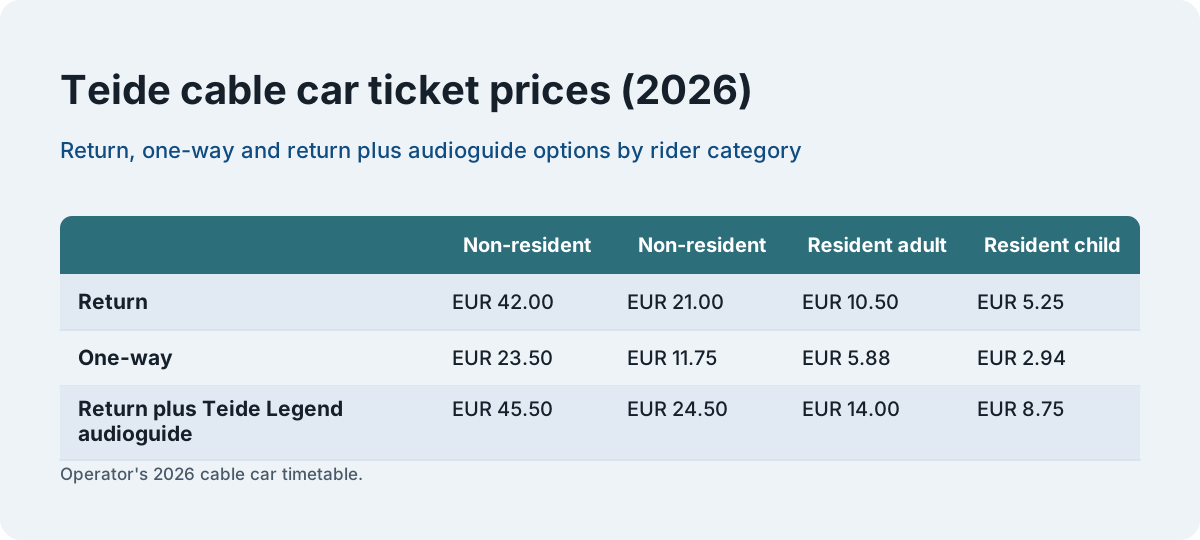
The cable car complicates the picture rather than simplifying it. The operator's 2026 timetable runs 09:00 to 17:00 in the standard season, with the last ascent one hour before closing and the last descent ten minutes before, and it carries passengers from the base station at 2,356 m to La Rambleta at 3,555 m. It does not reach the summit: the crater is the PNT 10 Telesforo Bravo trail, which needs a personal reservation on Tenerife ON, and since Monday 19 January 2026 the 09:00 to 17:00 slots cost EUR 15 for visitors and EUR 6 for residents of the other Canary Islands, free only for Tenerife residents and children. The Teide summit permit guide carries the booking mechanics, including the Monday 07:00 release rule that keeps 56 days bookable.
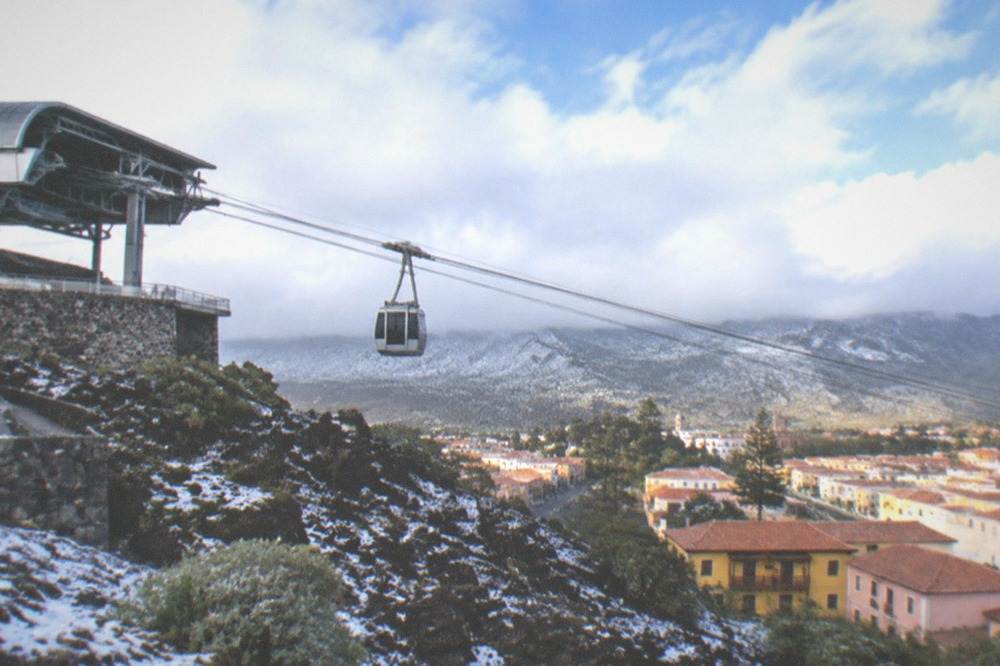
Rain also interacts with the island's fire rules. The Cabildo bans smoking in every open-air space of Teide National Park, car parks included, and Tenerife ON states that bookings can be suspended for fire risk or weather alerts, so the advice is to check the alerts page before driving up. On the rain side specifically, the operator's own access rules refuse the cable car to people with cardiovascular conditions, pregnant women and children under 3, and the child fare runs from age 3 to 13. More of these guides are collected on Tenerife Travel Guide.
| Cable car ticket (2026) | Non-resident adult | Non-resident child (3 to 13) | Resident adult | Resident child |
|---|---|---|---|---|
| Return | EUR 42.00 | EUR 21.00 | EUR 10.50 | EUR 5.25 |
| One-way | EUR 23.50 | EUR 11.75 | EUR 5.88 | EUR 2.94 |
| Return plus Teide Legend audioguide | EUR 45.50 | EUR 24.50 | EUR 14.00 | EUR 8.75 |
The Teide cable car page holds the full price table and the seasonal hours. The one Teide activity that is genuinely roofed is the observatory visit: the Teide Observatory at Izana takes guided visits by prior reservation only, and the observatory's own page was carrying a fully booked notice when this desk read it, so a rainy-day plan that leans on it needs the booking made well before the clouds arrive.
Can You Still Do Masca or the North in the Rain?
Masca is a poor wet-day choice: the operator's own booking page warns that sudden pier closures from sea conditions void the day's ticket, calls the gorge the place with the most rescues in the Canaries in recent years, and makes closed mountain footwear a condition of entry, so rain adds risk to a trail that is already tightly controlled. The north's towns, by contrast, are walkable wet-weather options.
The Masca rules stand whatever the weather. The gorge is open under a continuing pilot scheme, descent only, leaving by boat from Masca bay, booked at caminobarrancodemasca.com, with a general ticket of EUR 40.66 that does not include the boat. Hikers must arrive on TITSA line 355 from Santiago del Teide and show the bus ticket, because private vehicles are refused, and the boat ticket must be booked beforehand for no later than four hours after the descent slot. On a dry day all of that is administration; on a wet day, with the pier closure clause live, it is a reason to postpone. The Masca page carries the full rule set.
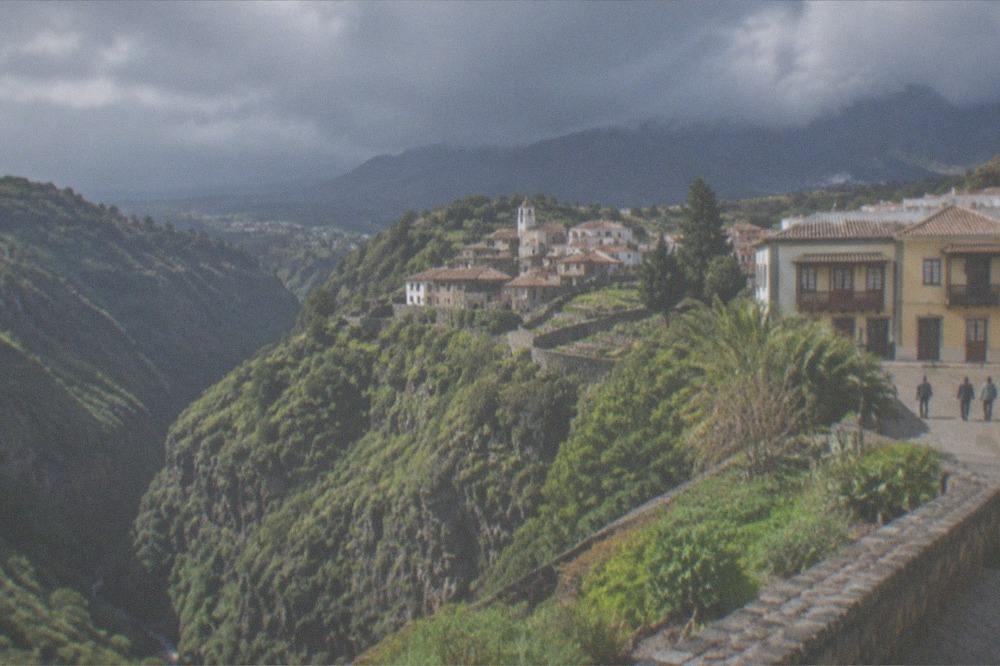
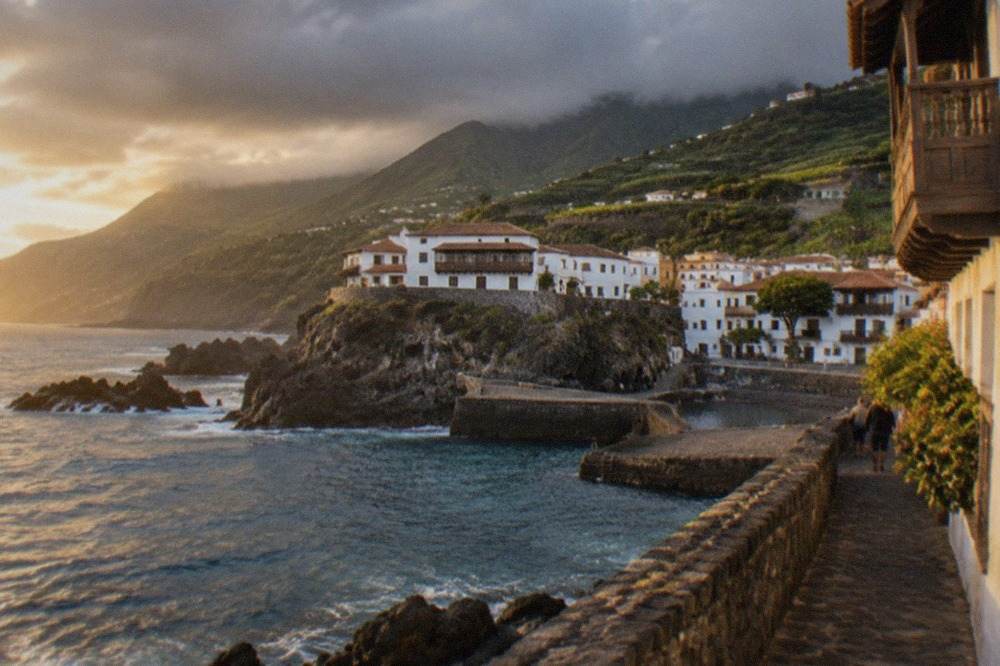
The northern towns are the better rain answer. La Orotava's historic centre, Icod de los Vinos with its dragon tree, and Garachico with its natural pools and low seafront streets are all compact enough that showers are a matter of doorways rather than days. The dragon tree is the one with the numbers: Icod council calls it a National Monument, about 21 m tall with a trunk base about 17 m round, and attributes to it an age of approximately 1,000 years, while the tourist board says over 800, so the honest figure is 800 to 1,000 years as an estimate. The Icod dragon tree page has the rest.
A wet north day also suits the covered market in Santa Cruz and the one day in Tenerife from the cruise port plan, whose indoor-heavy options were written for exactly this problem. Visitors moving between these towns by bus pay normal fares: single tickets priced by route, the EUR 10 day travelcard or the EUR 50 seven-day travelcard, because the 2026 free-transport subsidy applies to resident passes only.
What About a Rainy Day with Kids?
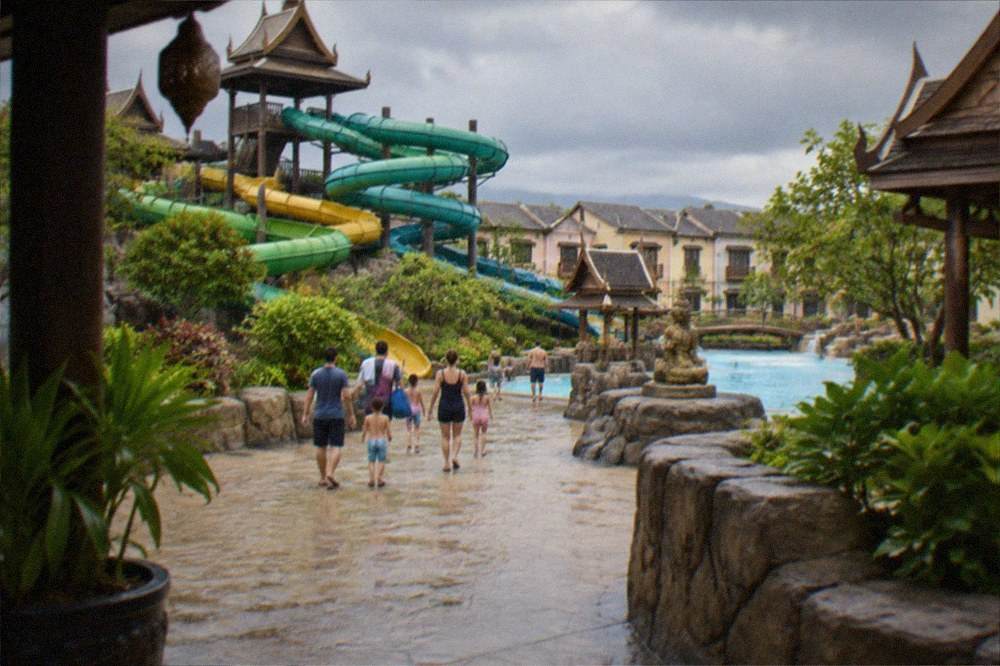
Siam Park answers most of it: the operator's own hours page lists opening 365 days a year, 10:00 to 18:00 from 1 May to 29 October and 10:00 to 17:00 from 30 October to 30 April, and a water park in rain is still a water park, while the island's indoor alternatives run from Loro Parque's aquarium to the covered exhibitions at the Pyramids of Guimar.
Rain changes a family day less than most parents expect. Children who are already wet care little about the weather, and the south-coast parks sit in the island's driest belt, the belt that averages fewer than two rain days a month from May to October. The Siam Park page carries the hours and the twin-ticket option with Loro Parque, which is the single most useful product for a split-base family week. The Tenerife with kids itinerary already sequences these parks against wet-day backups.
For the fully indoor hours, the north's aquarium interiors, the pyramid exhibitions at Guimar and the island's winery and banana-farm visits all run in rain, and several of them are short: the banana plantation experience runs about an hour, the winery tour about two. The 5 days in Tenerife itinerary keeps a wet-day slot open on purpose, which is the planning habit worth copying.
| Wet-day family option | Hours (operator's own page) | Location |
|---|---|---|
| Siam Park | 365 days; 10:00-18:00 (1 May to 29 Oct); 10:00-17:00 (30 Oct to 30 Apr) | Costa Adeje |
| Loro Parque | 09:30 to 17:30, every day of the year | Puerto de la Cruz |
| Pyramids of Guimar | Daily 10:00-18:00, except 1 Jan and 25 Dec | Guimar |
| Teide Observatory visit | Guided visits by prior reservation only | Izana, about 2,400 m |
Should You Chase the Sun or Stay Put?
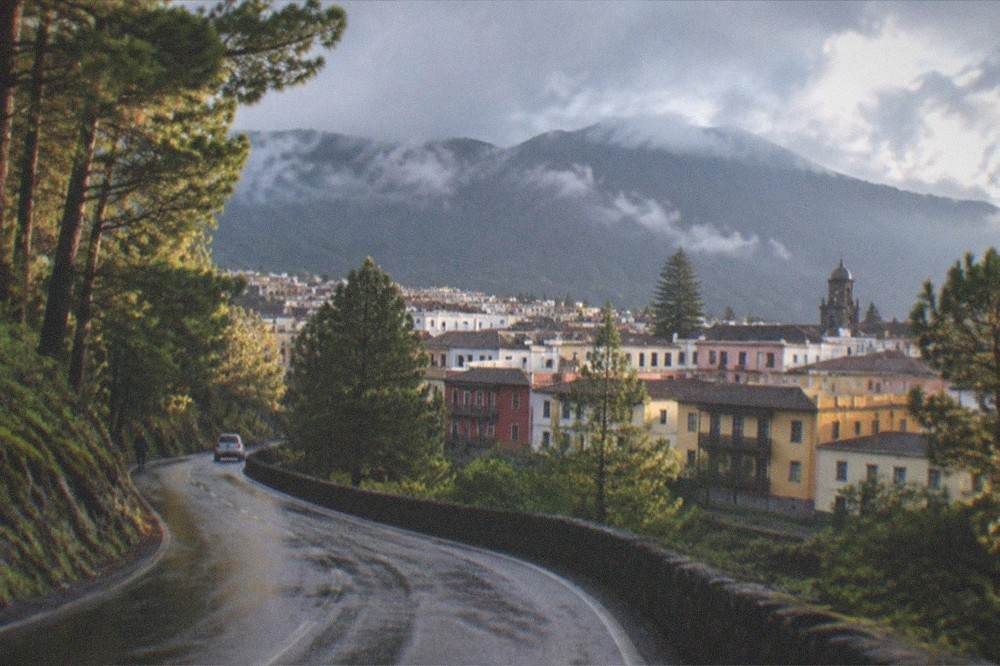
Chase it, and the drive is short: the rain gap between AEMET's north and south airport stations is 520 mm against 132 mm a year, so a wet morning in Puerto de la Cruz very often sits beside a dry one in Costa Adeje, and the island's road network makes the switch a single journey rather than a plan change. The honest caveat is that winter fronts can cover both coasts at once.
The practical arithmetic favours mobility. A holiday in the north that meets rain can relocate a day south; a holiday in the south meets so few rain days, 15.2 a year on AEMET's count, that the question rarely arises in reverse. Car hire is the flexible answer for exactly this need, since the wet-day decision is usually made at breakfast, and a car lets a family act on it: compare island car hire options before the trip rather than on the morning itself. The driving in Tenerife habits and the 7 days in Tenerife structure both assume this kind of day-swapping.
The two things not to chase in rain are the summit and the gorge. Teide's stratovolcano trails in ice and snow demand crampons, an ice axe and a signed declaration, and the summit permit is non-refundable, with no changes of date, slot or names, refunded only if the trail is closed or the cable car is not operating. Masca's pier closure clause voids the day's ticket when the sea turns. Both are superb on a clear day and both punish a stubborn one, which is why this desk's wet-day ranking puts boats, roofs and the south coast ahead of both.
| Visitor transport product | Price | Notes (TITSA fares page) |
|---|---|---|
| Single ticket | Priced by route | Card or cash |
| Day Travelcard | EUR 10 | Visitor product |
| 7 Day Travelcard | EUR 50 | Visitor product |
| Ten+ card | EUR 2 | Wallet top-ups EUR 2 to EUR 100; sold at airport ticket machines |
| Month | Mean daily max at Izana (2,369 m) | Rain at Izana (mm) | Mean daily max at Tenerife South Airport | Rain at TFS (mm) |
|---|---|---|---|---|
| Jan | 7.5 | 47 | 21.7 | 17 |
| Feb | 8.0 | 67 | 22.0 | 20 |
| Mar | 10.2 | 58 | 23.1 | 15 |
| Jul | 23.0 | 0 | 27.7 | 0 |
| Dec | 8.8 | 60 | 22.8 | 30 |
The pattern in that last table is the whole article in one line: the same island, the same month, and fourteen degrees of difference between the ridge and the resort. Rain in Tenerife is a place and an altitude, not a verdict on the week.
Common Questions About Rainy Days in Tenerife
what to do in tenerife when it rains
Move indoors in the north (Loro Parque, the Pyramids of Guimar, the covered market in Santa Cruz), take a whale-watching boat from the south, which sails in rain under the same Decreto 178/2000 rules as in sunshine, or drive south, where AEMET's station records 132 mm of rain a year against 520 mm at the north airport. The Teide summit trail and the Masca gorge are the two things to postpone: both have non-refundable or sea-dependent tickets and winter equipment rules.
Does it rain a lot in Tenerife?
It depends entirely on which end of the island you are standing on. AEMET's 1981-2010 normals give Tenerife North Airport 520 mm of rain a year on 64 days, and Tenerife South Airport 132 mm on 15.2 days. The south records zero measurable rain in June and July. Most of the rain at both coastal stations falls between October and February.
Is Tenerife still warm when it rains?
Yes, at the coast. AEMET's normals put the January mean daily maximum at 21 degrees Celsius in Santa Cruz and 21.7 at Tenerife South Airport, and even the wettest months keep mean daily maximums above 22 degrees in the south. Up at Izana, at 2,369 m, the January mean daily maximum is 7.5 degrees, so altitude, not rain, is where the cold lives.
Can you swim in the sea in Tenerife when it rains?
The sea itself stays warm all year: NOAA's 1991-2020 series for the south coast never drops below 19.1 degrees Celsius, peaking at 23.7 in September and October. Rain does not change the sea temperature, so swimming in a shower is a comfort question rather than a safety one, and the same breakwaters that calm Las Teresitas and Las Vistas work in any weather.
Do whale watching trips get cancelled when it rains?
Rain is not the operative risk. The trips run year-round under Decreto 178/2000, which governs how close boats may approach animals, within 60 m at the nearest, and requires authorised boats to fly the Barco Azul flag. Sea conditions are the thing to watch, and the Masca pier closure clause is a reminder that the operator's own terms, not the rain gauge, decide cancellations on any given morning.
Is the cable car open in the rain?
The operator's 2026 timetable runs standard hours of 09:00 to 17:00, with extended hours in late March to mid-April and July to September, and the last ascent one hour before closing. The cable car stops at La Rambleta at 3,555 m and does not reach the summit, which is the separate PNT 10 permit trail booked on Tenerife ON. In ice and snow, the trail rules add crampons and an ice axe to the mandatory equipment list, and the operator refuses the cable car to people with cardiovascular conditions, pregnant women and children under 3.