Driving in Tenerife
Tenerife is a small island with a tall volcano in the middle of it, and that single fact shapes every drive. The motorway hugs the coast, the mountain roads climb fast, and two trails now carry booking fees a driver needs to know about before setting out.
Short answer
Driving in Tenerife is straightforward on the coastal motorways and demanding in the mountains. The island has two airports served by TITSA buses, a drink-drive limit of 0.5 g/l, no tourist tax, and two Teide trails that since 19 January 2026 carry per-booking fees for visitors.
Tenerife packs a 3,715 m volcano into an island of 31 municipalities, and the road network never lets you forget it. The coastal motorway runs almost the whole way round, fast and well signed, while the cross-island roads climb through pine forest and lava field to reach Teide National Park, which recorded 5,242,653 visitors in 2024, the most of any park in Spain's national network. A driving holiday here is easy to organise and rewarding to run, but a handful of rules have changed recently, and several of the best-known pages on the subject are out of date.
This guide covers what a driver actually needs: how the roads behave, which trails now need a paid booking, why you cannot drive into the Masca gorge, what the law says about alcohol, and how the weather changes between the coast and the crater. Where a figure matters, it comes from the official page that publishes it: Tenerife ON for trail bookings, the cable car operator for its own prices, TITSA for the airport buses, AEMET for the climate normals and the DGT for the drink-drive limit.
Is It Easy to Drive in Tenerife?
Yes, on the coast, and with more care in the mountains. The island's main roads are modern, well surfaced and clearly signed in Spanish with international symbols, and the motorway network links the two airports with every major resort. The difficulty is altitude: cross-island roads climb to the cable car base station at 2,356 m, with hairpins, narrow sections and rapid weather changes, so the mountain legs of a drive need more time and more attention than the distances suggest.
The honest split is this. Driving between Santa Cruz, La Laguna, Puerto de la Cruz and the southern resorts is comparable to any developed European holiday region: dual carriageways, roundabouts, petrol stations and car parks. AENA's 2025 figures show why the roads are built for volume, with 13,969,678 passengers passing through Tenerife South airport alone, an all-time record, and 7,174,977 through Tenerife North.
The mountain roads are a different discipline. The route up to the cable car base station at 2,356 m is a sustained climb through the national park, and the park's own rules reach into the car: the Cabildo bans smoking in every open-air space of the park, car parks and viewpoints included, as a wildfire measure. That ban catches a lot of drivers who would never think of lighting up on a trail.
For anyone weighing up the alternatives, the car hire decision and the wider transport picture are covered in detail elsewhere on this site. The short version: a car earns its keep for the north, the mountains and the west coast, and sits idle on the days you spend at Costa Adeje or on a boat.
How Long Does It Take to Drive Around Tenerife?
No official source publishes a driving time for a circuit of the island, and this site does not estimate one. What the verified facts do establish is the scale: the island has 31 municipalities spread around a central volcano, the coastal motorway connects the main population centres of Santa Cruz de Tenerife, La Laguna, Puerto de la Cruz and the southern resorts, and every cross-island route has to climb over or around the mountain massif, which is what turns a short-looking distance into a long drive.
The reason this page refuses to print a number is that every figure you will meet elsewhere is somebody's guess. Journey times depend on whether you take the motorway or the old coast road, on holiday traffic around the south, on roadworks, and on whether you stop, which on this island you will. The tourist board's 2025 balance reported 5,451,268 tourists lodged in hotels and apartments, and the roads around those hotels carry the traffic to match.
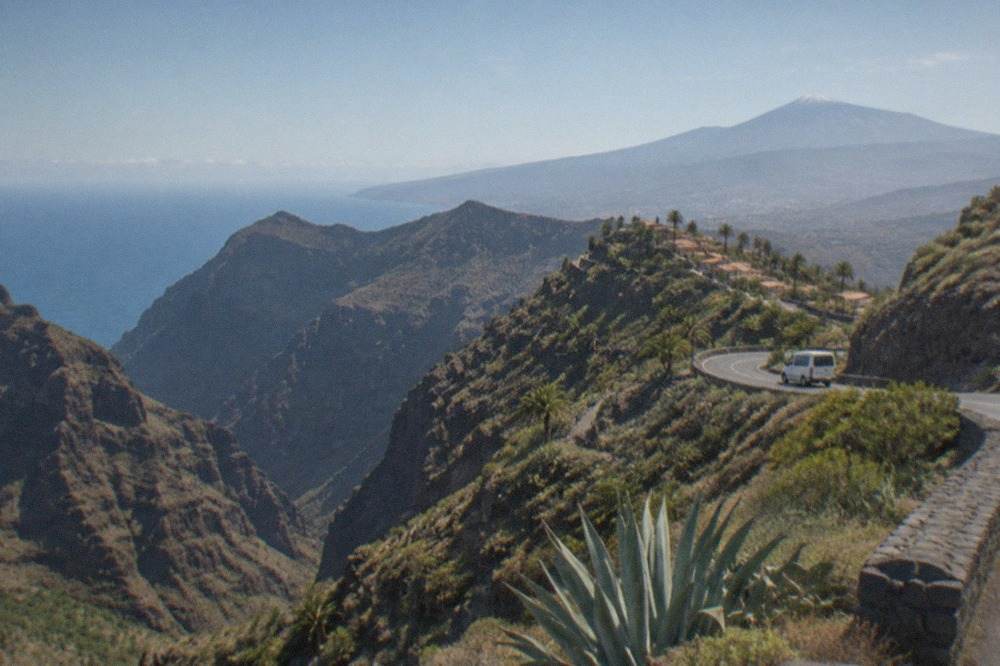
What can be said with a source behind it is where the time goes. The coastal ring is the fast part. The slow parts are the three great mountain crossings: to Teide from either side, the Anaga massif in the far northeast, and the Teno hills above Masca and Los Gigantes, where the tourist board says the cliffs tower up to 600 m above a seabed about 30 m deep at their foot. Plan each mountain crossing as the day's main event rather than a leg of a bigger loop.
A useful planning habit is to treat the island as a wheel. The motorway is the rim, fast and forgiving. The spokes are the mountain roads, slow and worth every minute. A day that tries to run two spokes plus the rim is the day that goes wrong.
Which Roads and Drives Are Worth Planning Around?
The drives worth building a day around are the Teide crossings from the north and the south, the northwest loop through Garachico, Icod de los Vinos and the Los Gigantes coast, and the Anaga roads in the northeast, because each one combines serious scenery with a specific access rule a driver must know in advance: the Teide trails carry booking fees and a smoking ban, Masca is reachable only by pre-booked shuttle bus, and Anaga's El Pijaral reserve needs a reservation.
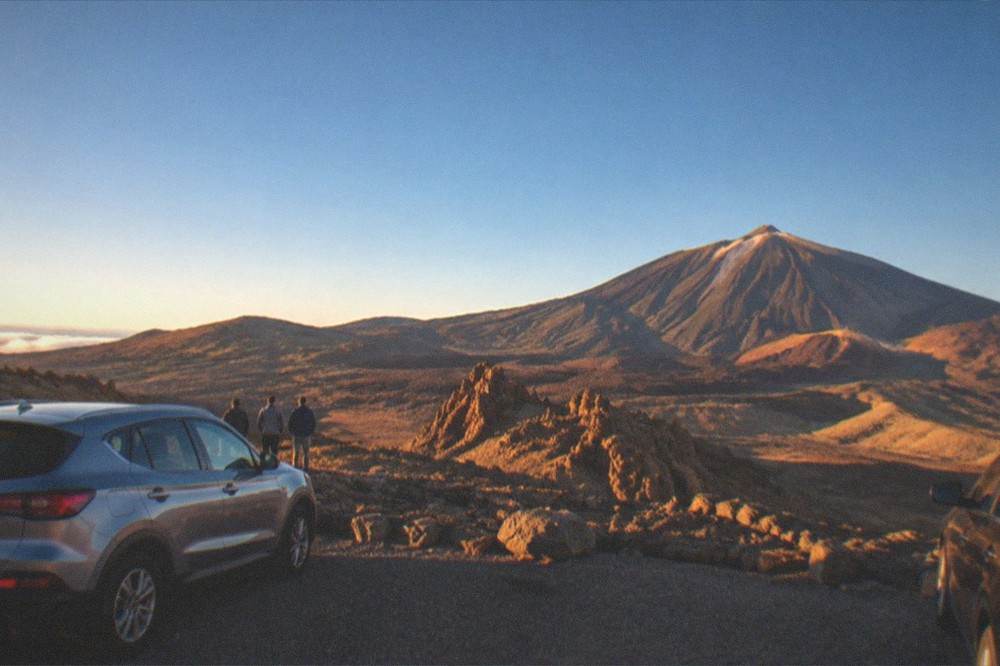
Start with Teide. The national park, declared by decree on 22 January 1954 and inscribed by UNESCO as World Heritage in 2007, is the island's engine: 5,242,653 visitors in 2024. Driving through it costs nothing, and no official page lists any park entry fee. The charges are per-booking fees on two trails only, and they are new enough that most guides have not caught up.
| Trail | Who pays | 09:00 to 17:00 slots | Booking |
|---|---|---|---|
| PNT 10 Telesforo Bravo (summit) | Tenerife residents | EUR 0 | Tenerife ON |
| PNT 10 Telesforo Bravo (summit) | Other Canary Islands residents | EUR 6 | Tenerife ON |
| PNT 10 Telesforo Bravo (summit) | All other visitors | EUR 15 | Tenerife ON |
| PNT 07 Montana Blanca (working days) | Other Canary Islands residents | EUR 3 | Tenerife ON |
| PNT 07 Montana Blanca (working days) | All other visitors | EUR 6 | Tenerife ON |
| PNT 07 Montana Blanca (weekends and public holidays) | All other visitors | EUR 10 | Tenerife ON |
Two corrections to older pages matter here. Since slots for 1 September 2025 onward, the summit permit is booked on Tenerife ON, and the old national parks booking page now only tells users to book there. And the permit is not free for visitors: since Monday 19 January 2026 the daytime slots cost EUR 15 for visitors, EUR 6 for residents of the other Canary Islands, and nothing for Tenerife residents and children. Permits are released every Monday at 07:00 Canary time, keeping 56 days bookable, and no official page says how fast they sell out. The full permit picture is in the Teide summit permit guide.
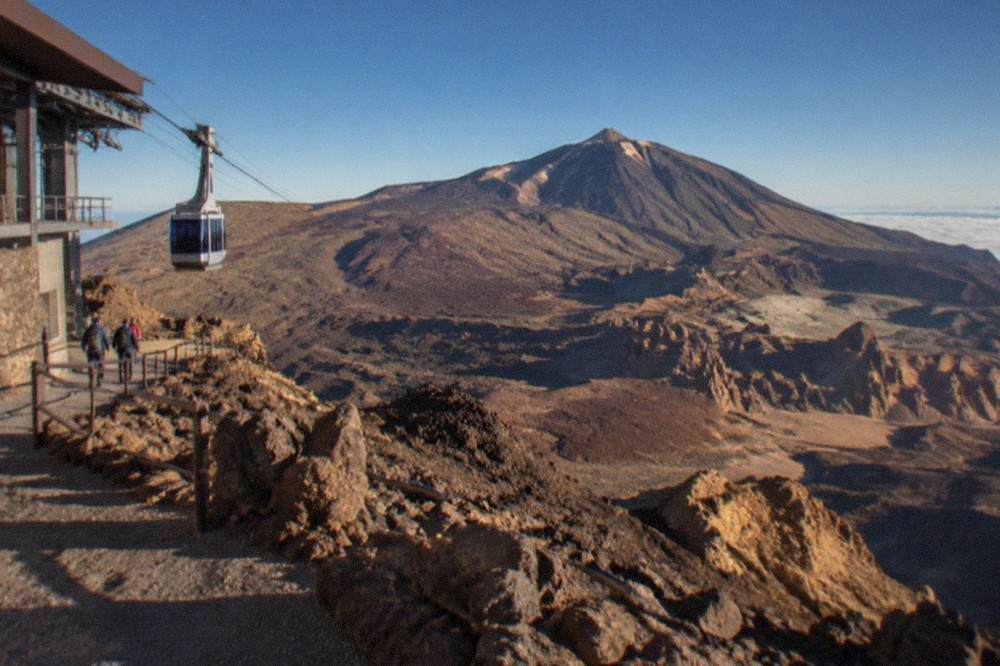
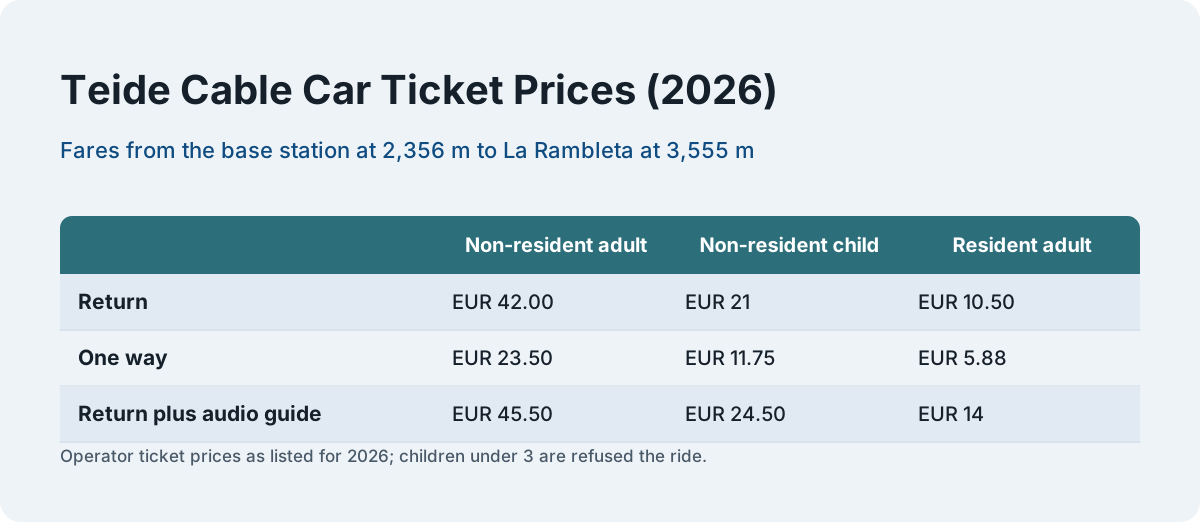
If you would rather ride than hike, the cable car runs from the base station at 2,356 m to La Rambleta at 3,555 m. It stops there: the crater is a separate, permit-only trail, and the operator's own access rules refuse the ride to people with cardiovascular conditions, pregnant women and children under 3.
| Cable car ticket (2026) | Non-resident adult | Non-resident child (3 to 13) | Resident adult |
|---|---|---|---|
| Return | EUR 42.00 | EUR 21 | EUR 10.50 |
| One way | EUR 23.50 | EUR 11.75 | EUR 5.88 |
| Return plus audio guide | EUR 45.50 | EUR 24.50 | EUR 14 |
The northwest loop is the second great drive: Garachico, whose old port was buried by the Trevejo volcano eruption in 1706 after the town had spent the 16th and 17th centuries as the island's trade hub, then Icod de los Vinos with its Drago tree, whose age is given as 800 to 1,000 years by the two official sources that estimate it, then the coast road to Los Gigantes. The Masca, Garachico and Icod route is the classic version.
Anaga, in the northeast, is the third. The laurel forest roads are narrow and spectacular, and one trail has a rule drivers rarely expect: El Pijaral, the Enchanted Forest, needs a prior reservation on Tenerife ON, released Mondays at 07:00 for at most 14 days ahead, and organised tours by companies are not permitted there at all. The Cabildo names two permit-free alternatives, the Bosque de los Enigmas trail and the Pista de Las Hiedras.
Can You Drive to Masca?
No, not to walk the gorge. The Masca gorge is open as a descent-only pilot scheme with a pre-booked boat exit, and hikers must arrive on TITSA line 355 from Santiago del Teide and show the bus ticket at the control; the operator's page states that arriving by private vehicle means refusal. The general ticket is EUR 40.66 with the boat sold separately, closed mountain footwear is a condition of entry, and the pier can close suddenly when the sea turns, voiding that day's ticket.
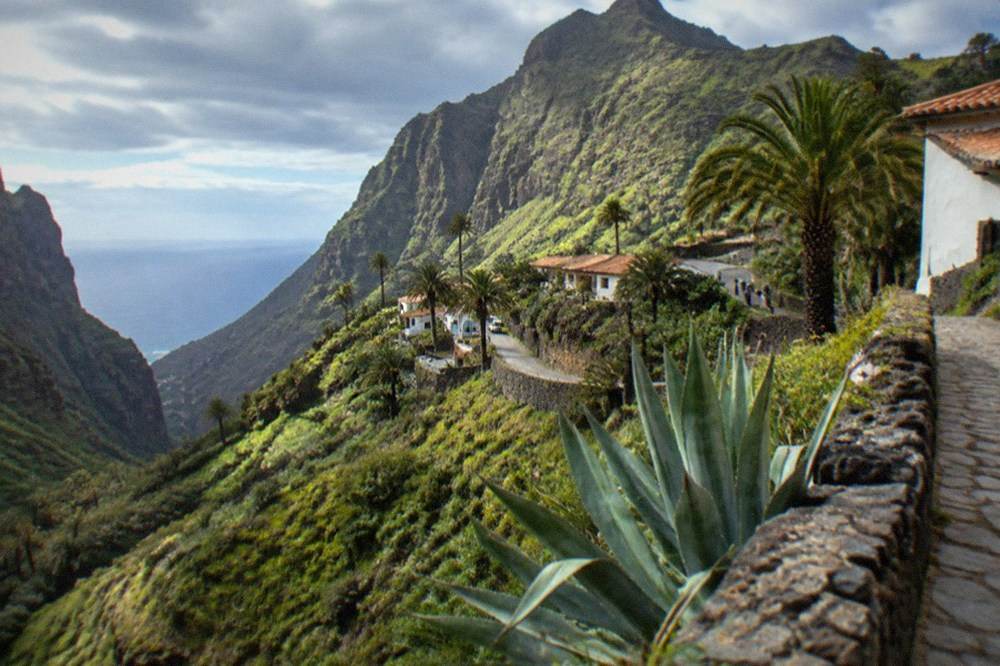
This is the single most misunderstood access rule on the island, so it is worth being blunt. You can drive to Masca village as a sightseer. You cannot drive there as a gorge hiker. The booking site is caminobarrancodemasca.com, not Tenerife ON, and the ticket, the shuttle and the boat all have to be in place before you set out.
| Masca gorge rule | What the operator's page states |
|---|---|
| Direction | Descent only, leaving by boat from Masca bay |
| General ticket | EUR 40.66, boat not included |
| Boat | Separate ticket, booked beforehand, no later than 4 hours after the descent slot |
| Access | Compulsory TITSA line 355 from Santiago del Teide; private vehicles refused |
| Hours | Trail open 08:30 to 18:00; entry sessions 08:30 to 13:00, 25 places every 30 minutes |
| Footwear | Closed mountain footwear, refused without it even with a booking |
| Free entry | Tenerife residents and Canarian federation members, refunded after the control check |
| Return | Not included; TITSA lines 462 or 325 from Los Gigantes to Santiago del Teide |
The operator's own risk statement deserves a driver's attention too: it calls the gorge the place with the most rescues in the Canaries in recent years. That is a reason to follow the entry sessions and the boat window exactly, not a reason to skip the walk, but it settles the question of whether this is a casual pull-off-the-road hike. It is not.
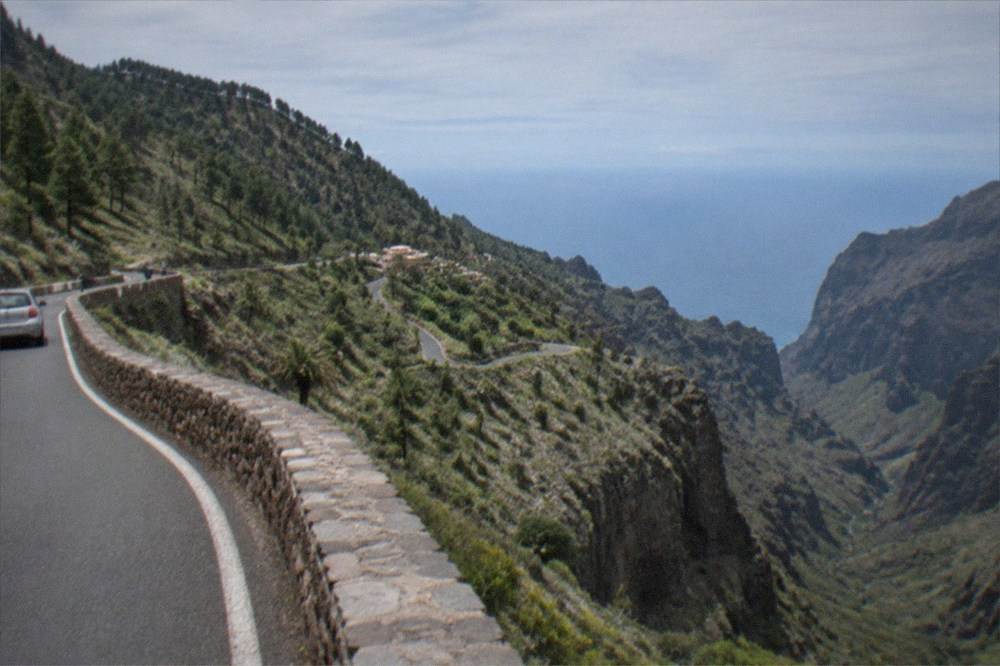
What a car is genuinely good for in the northwest is everything around the gorge: the viewpoint stops above Los Gigantes, the drive down to Buenavista del Norte, and the coastal stretch back through Garachico. Those roads are the reward for leaving the motorway behind.
What Are the Rules of the Road in Tenerife?
The drink-drive limit is 0.5 g/l in blood, the general legal limit the DGT page refers to, and the Canaries apply IGIC rather than VAT, with the tax agency's table showing 7% on everyday goods. Taxis are white and metered from the start of the trip. No official page read shows any per-night tourist tax on Tenerife; the charges a driver budgets for are the trail fees, the Masca ticket and the Barranco del Infierno ticket.
Spanish speed limits are not stated as figures on this site, because they were not read on the traffic authority's own page, and a driving guide that guesses at numbers is worse than one that sends you to the source. The DGT publishes the limits; check them there before you drive, and note that mountain roads often carry their own posted limits well below anything the motorway allows.
Alcohol deserves a plain word. The 0.5 g/l limit is lower than the UK's for most drivers, and a lunchtime glass of wine before an afternoon of hairpins is a worse idea here than at home. The DGT page frames it as a general legal limit for drivers, and nothing about a holiday softens it.
On money: the tax agency's IGIC table shows 7% on everyday goods, with 0%, 3% and 15% bands for other categories, and non-resident travellers can claim IGIC back. There is no tourist tax to budget for. What does exist, and what many pages miss, are the per-booking public fees that arrived on 19 January 2026 on the two Teide trails, alongside the long-standing Masca ticket and the Barranco del Infierno ticket of EUR 15 for non-resident adults, which requires compulsory advance online booking and admits 20 people every 30 minutes in the mornings.
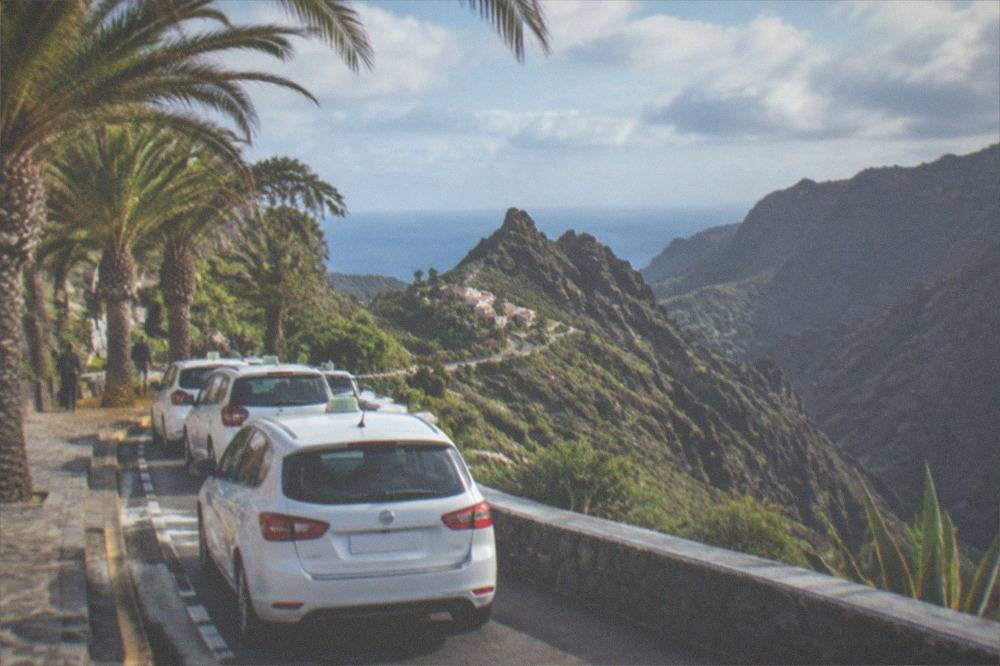
Taxis fill the gaps a hire car cannot: the tourist board notes that all of them are metered from the start of the trip, that a fixed price can be agreed in advance for excursions, and that adapted eurotaxis exist. For a day trip where parking is the problem, that excursion clause is worth using.
One more mountain rule catches drivers in winter: when ice and snow are on the stratovolcano trails, crampons and an ice axe join the mandatory equipment list, plus a signed declaration. The road to the cable car base station is cleared, but the conditions at 2,356 m are not the conditions at the beach, which is the next thing to plan around.
How Much Does the Weather Change as You Climb?
Enormously, and AEMET's climate normals put numbers on it: at Santa Cruz, 36 m above sea level, July's mean daily maximum is 28.7 Celsius, while at the Izana station on the Teide observatory ridge at 2,369 m, July's mean daily maximum is 23 Celsius and January's is 7.5 Celsius with nights at 1.1 Celsius. The same January day can mean 21 Celsius on the coast and freezing temperatures on the mountain, so a drive to Teide is a drive between climates.
The practical consequence is packing and timing. A driver who sets out from Costa Adeje in shorts will meet a different world at La Rambleta. The AEMET normals below show the gap, and they are worth reading as a planning tool rather than trivia: they tell you when the mountain is likely to be clear, when it is likely to be wet, and how much the day will swing.
| Month | Santa Cruz mean daily max (C) | Izana mean daily max (C) | Izana nights below 5 C | Santa Cruz rain (mm) |
|---|---|---|---|---|
| Jan | 21 | 7.5 | yes, mean min 1.1 | 32 |
| Mar | 22.1 | 10.2 | yes, mean min 2.7 | 38 |
| May | 24.1 | 14.5 | yes, mean min 5.8 | 4 |
| Jul | 28.7 | 23 | no, mean min 14 | 0 |
| Sep | 28.1 | 18.6 | no, mean min 10.4 | 7 |
| Nov | 24.1 | 11.1 | yes, mean min 4.5 | 34 |
Rain behaves differently by coast too. AEMET's annual figures record 226 mm of rain across 29.7 rain days of 1 mm or more at Santa Cruz, against 132 mm across 15.2 such days at Tenerife South airport, and 520 mm across 64 days at Tenerife North airport at Los Rodeos, 632 m up. The north is wetter and greener, the south is drier, and the mountain is its own world. The month-by-month weather guide breaks this down further.
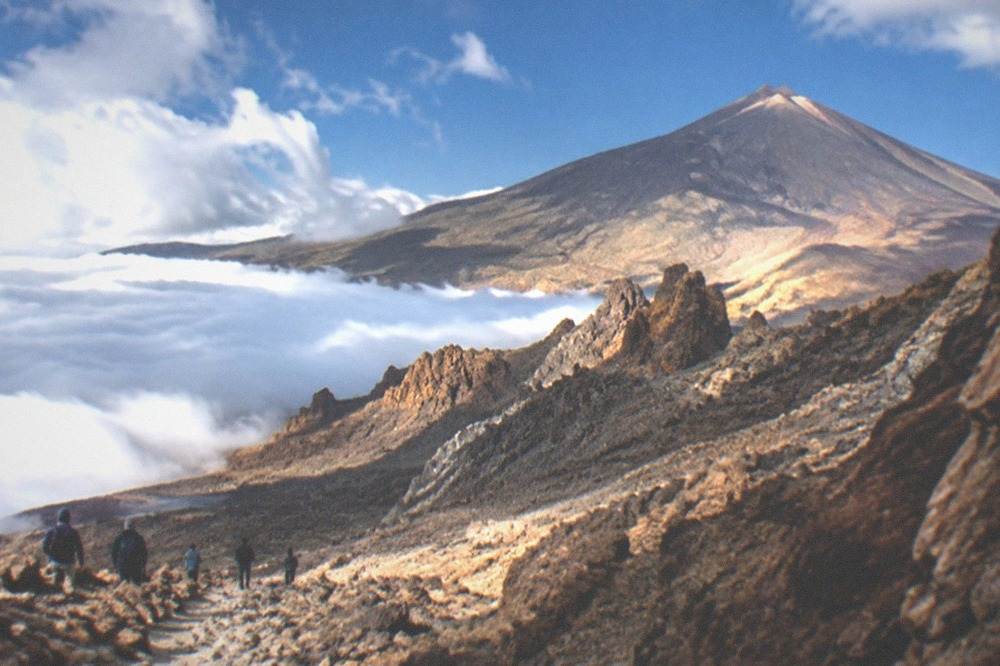
For stargazing drivers there is an official reason to climb at night: the Fundacion Starlight lists El Teide as a Starlight Tourist Destination and the Cumbres de Tenerife as a Starlight Reserve, both since October 2013. The observatory at Izana, about 2,400 m up, where the first telescope began work in 1964, runs guided visits by prior reservation only, and its page has carried a fully booked notice, so book before you plan the drive around it.
Which Airport Should You Fly Into for a Driving Holiday?
Tenerife South, AENA's Tenerife Sur, handled 13,969,678 passengers in 2025 and sits closest to the resort belt of Costa Adeje, Los Cristianos and Playa de las Americas, while Tenerife North, formally Tenerife Norte-Ciudad de La Laguna, handled 7,174,977 and serves Santa Cruz, La Laguna and Puerto de la Cruz. For a driving holiday the choice follows your base: south for the beaches and the fastest run at Teide, north for the old towns and the green side of the island.
Both airports are on the motorway network, and both have TITSA bus service if you plan to pick up a car later in the trip. TITSA's own airport pages list the lines, and they are worth having even with a car, because the day you hand the keys back you will want them.
| Airport | TITSA lines, per TITSA's own pages | Serves |
|---|---|---|
| Tenerife South (TFS) | 10, 40, 711, 343, 415 | Santa Cruz, Costa Adeje via Los Cristianos, night bus, express to Puerto de la Cruz via both airports, El Fraile and San Isidro |
| Tenerife North (TFN) | 20, 30, 343 | Santa Cruz via La Laguna, Puerto de la Cruz, express to the south |
The detailed airport guides, Tenerife South airport and Tenerife North airport, cover arrivals in full. One transport note belongs here because drivers ask: there is no tram to either airport. Metrotenerife's fares page does not state one, and TITSA buses serve both. The tram's single fare of EUR 1.35 on a transit pass, EUR 1.10 by mobile, is for the Santa Cruz to La Laguna corridor, useful the day you leave the car at the hotel.
Public transport is not free for visitors, whatever a page told you. The 2026 100% subsidy applies to resident passes only, held on a personalised Ten+ card. Visitors pay for singles, the EUR 10 day travelcard or the EUR 50 seven-day travelcard, sold at the airport ticket machines, and the Teide and Teno lines are excluded from the resident passes anyway. The TITSA bus guide has the detail.
Where Should You Not Bother Taking the Car?
The resort belt and the boat trips. Costa Adeje, Los Cristianos and Playa de las Americas are compact, walkable and on the motorway, and the sea off the south coast is a Whale Heritage Area designated by the World Cetacean Alliance in January 2021. Decreto 178/2000 protects its resident pilot whales: no approach within 60 m, at most three boats within 500 m, 4 knots within 500 m, no swimming within 500 m, and authorised boats fly the Barco Azul flag.
A car adds nothing to a whale-watching morning from Puerto Colon or Los Cristianos, and the transfer-included options remove even the parking question. This is the day to leave the car at the accommodation and let someone else drive.
The same goes for the two big parks if you would rather not navigate on a family day: Siam Park is open 365 days a year, 10:00 to 18:00 from 1 May to 29 October and 10:00 to 17:00 from 30 October to 30 April, and Loro Parque runs 09:30 to 17:30 every day of the year with its own car park at EUR 7 per day. Both are covered in the site's things to do in Tenerife round-up, and both are the kind of day where an organised ticket with transfer beats a hot car park.
What About Parking, Fuel and the Small Print?
No official page read for this site publishes fuel prices or island parking tariffs, so none is stated here. What the sources establish: the cable car base station car park runs 08:00 to 18:00 in the standard season, Loro Parque charges EUR 7 per day for its own car park, and Teide trail bookings are non-refundable with no changes of date, slot or names, refunded only if the trail closes or the cable car is not operating.
The refund rule is the one that costs drivers real money. A Teide booking is not a flexible ticket: book the slot you can actually keep, and check Tenerife ON's alerts before you drive up, because bookings can be suspended for fire risk or weather alerts. The small print goes further than most drivers expect: failing to use a booking can bar you from new applications for three months, and the base station car park extends to 19:40 in the cable car's longer operating periods. The smoking ban in every open-air space of the national park, car parks included, is enforced as a wildfire measure, and the fines are the least of it.
For the practicalities of hiring the car itself, the car hire guide covers the paperwork, and for a wider comparison of how the island stacks up against its neighbours, the north versus south guide helps you choose a base before you choose a route. If you want commentary on the drive up the mountain rather than a guide in the passenger seat, an audio tour of Teide is available through the operator's listing, and for the hire itself, island car hire quotes can be checked before you fly. This desk's own Tenerife Travel Guide homepage collects the routes, permits and seasons in one place.
Two last small prints that catch British drivers. The EU's Entry/Exit System started on 12 October 2025 and has been fully operational since 10 April 2026, registering UK and US visitors with a facial image and fingerprints instead of a passport stamp. And ETIAS is not running: the EU says it "is currently not in operation and no applications for travel authorisations are collected at this point", and that the date will be announced several months ahead, with the fee set at EUR 20. Any page giving you an ETIAS start date is guessing.
Common Questions About Driving in Tenerife
How long does it take to drive around Tenerife?
No official source publishes a circuit time and this site does not estimate one. The coastal motorway forms a fast ring linking Santa Cruz de Tenerife, La Laguna, Puerto de la Cruz and the southern resorts, while every cross-island route climbs over or around the central volcano, which is what makes the distances deceptive. Plan the mountain crossings, Teide, Anaga and the Teno hills, as the main events of their days rather than legs of a single loop.
Is it easy to drive in Tenerife?
On the coast, yes: the motorway network is modern and well signed, and it connects both airports with every major resort. In the mountains it demands more care, with sustained climbs to the cable car base station at 2,356 m, hairpins and rapid weather changes. The drink-drive limit is 0.5 g/l in blood, smoking is banned in every open-air space of Teide National Park including car parks, and the summit trail needs a Tenerife ON booking that since 19 January 2026 costs EUR 15 for visitors on the 09:00 to 17:00 slots.
Do I need a permit to drive through Teide National Park?
No. No official page lists any park entry fee or driving permit, and the 2026 charges are per-booking public fees on two trails only, PNT 10 Telesforo Bravo and PNT 07 Montana Blanca. The cable car is a separate operator ticket, and it stops at La Rambleta at 3,555 m; the crater trail is the permit-only part.
Can I drive to the Masca gorge hike?
No. The gorge is a descent-only pilot scheme with a pre-booked boat exit, and hikers must arrive on TITSA line 355 from Santiago del Teide and show the bus ticket; the operator states that arriving by private vehicle means refusal. The general ticket is EUR 40.66 with the boat sold separately, and closed mountain footwear is a condition of entry.
Is there a tourist tax on Tenerife I should budget for when driving?
No official page read shows a per-night lodging tax in force or approved on Tenerife. The charges that do exist are the Teide trail fees on PNT 10 and PNT 07, the Masca ticket and the Barranco del Infierno ticket of EUR 15 for non-resident adults, all of them per-booking fees rather than taxes on your stay.
Are the buses free in Tenerife if I leave the car for a day?
Not for visitors. The 2026 100% subsidy applies to resident passes only, held on a personalised Ten+ card. Visitors pay for single tickets, the EUR 10 day travelcard or the EUR 50 seven-day travelcard, and the Teide and Teno lines are excluded from the resident passes anyway.