Tenerife North Airport (TFN) Guide
Tenerife North Airport handled 7,174,977 passengers in 2025, sits at 632 m above sea level on the edge of La Laguna, and serves the capital, the north coast and the Orotava Valley better than its bigger southern rival.
Short answer
Tenerife North Airport (TFN), officially Tenerife Norte-Ciudad de La Laguna and also known as Los Rodeos, handled 7,174,977 passengers in 2025. TITSA lines 20, 30 and 343 serve it. It is the better airport for Santa Cruz, La Laguna, Puerto de la Cruz and the north of the island.
Tenerife has two airports, and the smaller of them is the one most British and Irish holidaymakers never see. Tenerife North Airport, TFN on your boarding pass, handled 7,174,977 passengers in 2025 according to AENA's statistics, roughly half the traffic of Tenerife South, and almost all of that traffic is Spanish and inter-island. That makes it a quieter, faster airport to move through, and for anyone staying in Santa Cruz de Tenerife, La Laguna, Puerto de la Cruz or the Orotava Valley, it is also the closer one. This guide sets out what the official sources say about the airport: where it is, who uses it, the buses that serve it, what visitors actually pay for transport, and how to decide between the island's two runways. For the wider picture of the island's airports, see the companion Tenerife South Airport guide.
Where Is Tenerife North Airport Located?
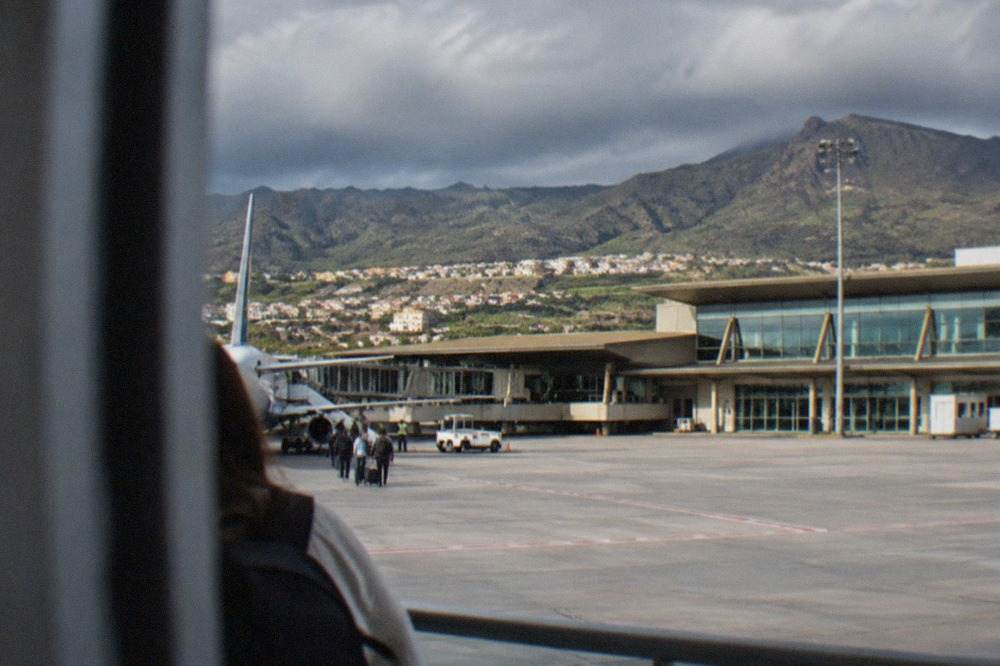
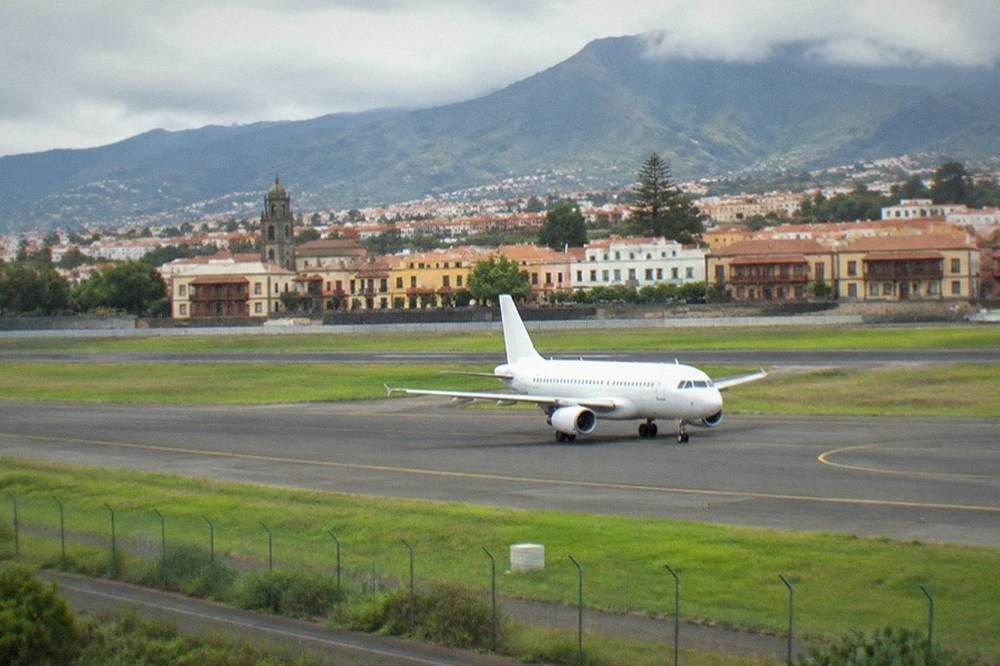
Tenerife North Airport sits at Los Rodeos on the inland edge of San Cristóbal de La Laguna, at 632 metres above sea level, and AENA's official name for it is Tenerife Norte-Ciudad de La Laguna. Older sources call it Los Rodeos, a name that survives informally but is no longer AENA's title. The airport sits in the island's green, cloud-catching north, minutes from the UNESCO-listed old town of La Laguna and the island's capital, Santa Cruz de Tenerife.
The altitude matters more than most travellers expect. AEMET's weather station at the airport itself, station C447A, records 632 m as its elevation, and the climate there is a different animal from the coast. The north of Tenerife sits in the path of the trade winds, which is why the airport's surroundings are green and the south of the island is dry. Anyone connecting through TFN to a beach resort in the south should not read the airport weather as a forecast for their hotel pool.
Geographically, the airport is a genuine northern asset. La Laguna's historic centre, the old colonial town whose layout UNESCO credits as the model for many colonial towns in the Americas, is the nearest big destination. Santa Cruz de Tenerife, the capital, is the other. Puerto de la Cruz, the old tourist town of the north coast, is the third pillar of the airport's catchment, and the whole Orotava Valley lies beyond it. For readers planning a driving trip around this part of the island, the north Tenerife road trip itinerary covers the same territory in detail.

| Airport | AENA's official name | Familiar name | Passengers 2025 | Elevation |
|---|---|---|---|---|
| TFN | Tenerife Norte-Ciudad de La Laguna | Los Rodeos | 7,174,977 | 632 m |
| TFS | Tenerife Sur | Reina Sofia | 13,969,678 (an all-time record, up 1.7%) | 64 m |
The contrast in elevation explains a lot of the weather difference between the two arrival experiences. AEMET's station at Tenerife South Airport sits at 64 m and records 132 mm of rain a year; the north airport station records 520 mm on 64 days with a millimetre or more. Two airports, one island, two climates.
Is Tenerife North Airport Still Used?
Yes, and heavily: AENA recorded 7,174,977 passengers at Tenerife North in 2025, a figure AENA rounds to 7.2 million on the airport's own page. The airport is not a relic of the pre-South-airport era, it is an active, busy terminal that handles a large share of the island's Spanish domestic and Canary Islands inter-island traffic, alongside international flights.
The island's air market as a whole is enormous. The tourist board's 2025 balance reports air connectivity from 34 markets and 159 airports, and the ISTAC monthly series counted 671,202 tourists arriving by air in December 2025 alone. Tenerife North's share of that flow is weighted towards mainland Spain and the other Canary Islands in a way the raw passenger number does not show, and the airport's role as the inter-island hub matters for anyone combining Tenerife with La Palma or El Hierro.
For a visitor, the practical meaning of the split is simple. The south airport is the charter and low-cost gateway to the resorts; the north airport is the working island's airport, and it is where you are likely to land if you are flying in from Madrid, Barcelona or another Canary Island. If your flight options include both airports, the decision usually comes down to where you are staying, which the which Tenerife airport guide works through in full.
If you are already sketching what to do with your week, these are three of the island's most reliable days out, all reachable from either airport:
Who Flies Into Tenerife North Airport?
AENA's 2025 statistics record 7,174,977 passengers through Tenerife North, and the airport's traffic is dominated by Spanish domestic routes and Canary Islands inter-island hops, with international services alongside them. This desk does not hold an official route list, so for a specific airline or destination, AENA's own airport page is the source that names the carriers currently serving TFN, and it changes with the seasons.
That is an honest limit worth stating plainly: airline lists go stale faster than any other fact on an airport page, and inventing one is worse than pointing at the source. What the verified numbers do establish is scale and character. AENA rounds the 2025 figure to 7.2 million on the airport page, which puts TFN among the busier regional airports in Spain's network, and the island's hotel and apartment sector logged 5,451,268 lodged tourists in 2025, with Spain itself the second-largest source market at 1,068,407. A large part of that Spanish demand arrives through the north airport.
For UK and Irish readers, the practical question is whether their route serves TFN at all. Many do not, and many serve both. Before booking, compare the two airports against your hotel base with the flights to Tenerife guide, and once the route is fixed, the transfer question, not the airline question, is the one that shapes your arrival day. Readers comparing the two islands before they even pick a flight may find the Tenerife vs Gran Canaria and Tenerife vs Lanzarote comparisons useful, and the broader which Canary island is best guide sits behind both.
| Month | Mean daily max C at TFN station | Rain mm | Days with 1 mm or more | Sunshine hours |
|---|---|---|---|---|
| January | 16.0 | 80 | 7.7 | 150 |
| February | 16.7 | 70 | 7.4 | 168 |
| March | 18.2 | 61 | 6.8 | 188 |
| April | 18.5 | 39 | 6.2 | 202 |
| May | 20.1 | 19 | 3.8 | 234 |
| June | 22.2 | 11 | 2.4 | 237 |
| July | 24.7 | 6 | 1.7 | 262 |
| August | 25.7 | 5 | 1.1 | 269 |
| September | 24.9 | 16 | 2.8 | 213 |
| October | 22.5 | 47 | 6.5 | 194 |
| November | 19.6 | 81 | 8.3 | 155 |
| December | 17.1 | 82 | 8.8 | 137 |
The table above is AEMET's own climate normal for the airport's weather station, and it doubles as a packing guide. A 16-degree January day at the airport is not a 22-degree day on the south coast, and the winter months at TFN genuinely carry rain, more than 80 mm in both November and December. The monthly guides to Tenerife in January and Tenerife in December cover what that means for the island as a whole.
How Early Should I Get to Tenerife North Airport?
No official page states a recommended arrival time for Tenerife North, so this desk states none as a rule. The sensible working assumption is the one airlines themselves apply across Spain: allow around two hours for an international departure and less for an inter-island hop, and always take your own airline's stated check-in deadline as the binding one, because that deadline, not any guide's advice, is what closes the flight.
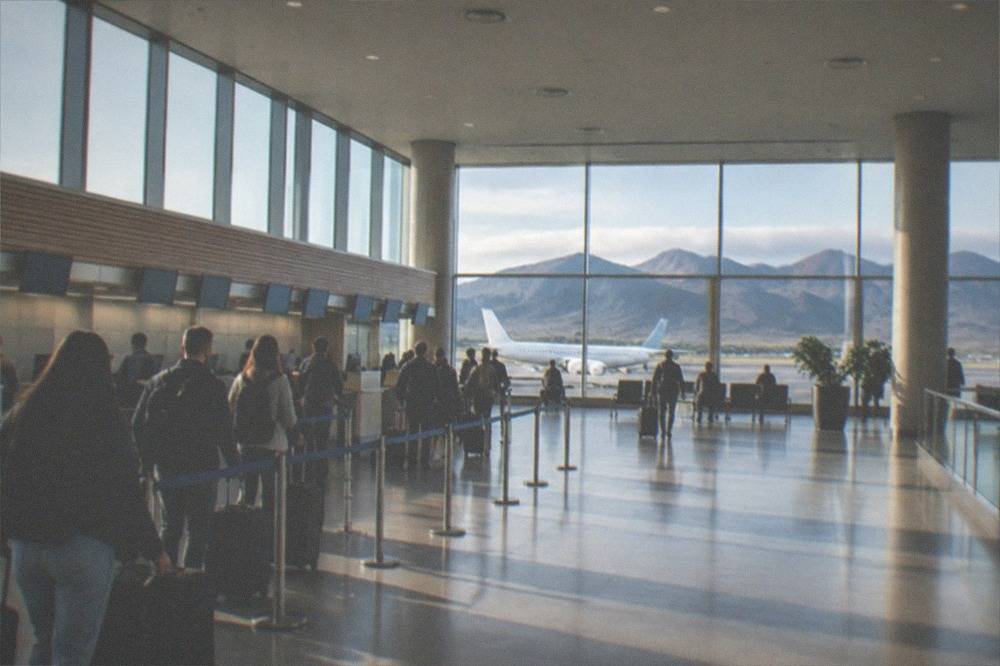
The honest detail is that TFN's smaller scale works in the traveller's favour. A terminal handling 7.2 million passengers a year, most of them on domestic and inter-island routes, does not generate the queue lengths of the south's 13.9-million-passenger charter machine in peak weeks. But "smaller" is not "empty", and the summer and Carnival periods concentrate demand sharply. Santa Cruz's Carnival draws the island's biggest crowds, and the official programme for 2027 runs from the opening on 22 January to the second Daytime Carnival on 27 February, with the Queen's Election Gala on 17 February. Anyone flying out on the Pinata weekend, 26 to 27 February 2027, should expect the airport to feel it. The full index of guides sits on Tenerife Travel Guide.
Two practical notes from the verified rules. First, the EU's Entry/Exit System, which began on 12 October 2025 and has been fully operational since 10 April 2026, registers non-EU nationals with a facial image and fingerprints instead of a passport stamp, so UK and US travellers should not be surprised by the extra step at the border. Second, on ETIAS: the EU's own page says the scheme "is currently not in operation and no applications for travel authorisations are collected at this point", and that the start date will be announced several months ahead. No guide should sell you an ETIAS today. The entry requirements page carries the full detail.
How Do You Get from Tenerife North Airport to Santa Cruz, La Laguna and Puerto de la Cruz?
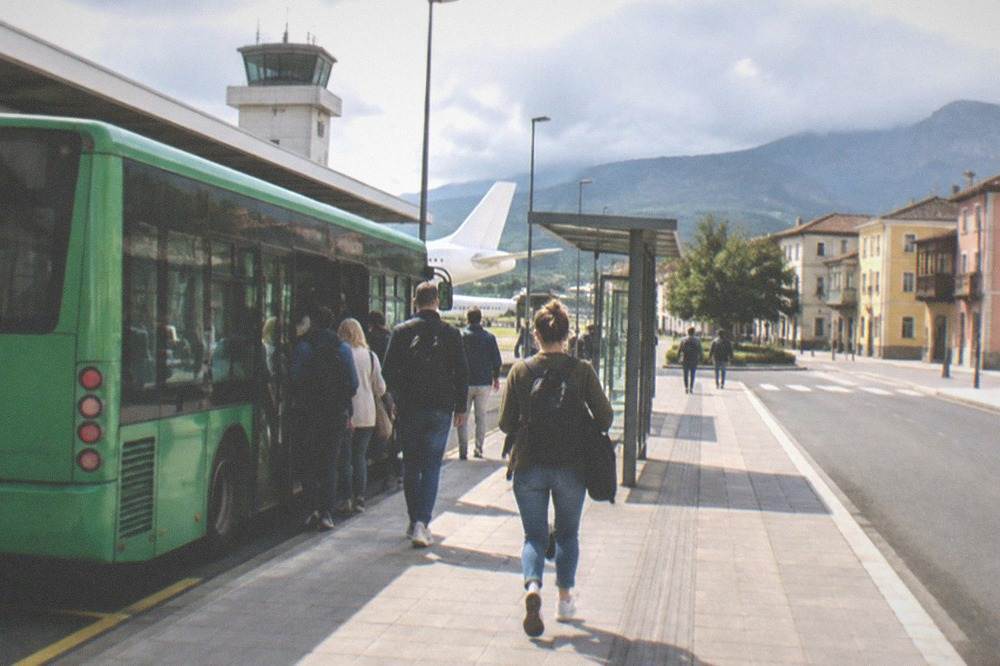
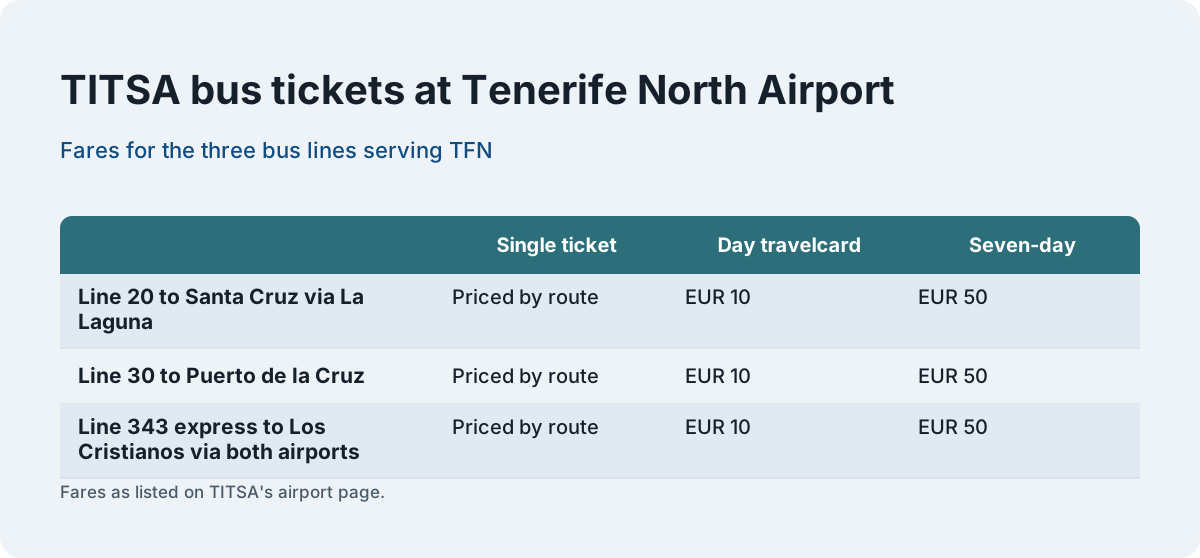
TITSA's own airport page lists three bus lines at Tenerife North: line 20 to Santa Cruz via La Laguna, line 30 to Puerto de la Cruz, and line 343, the express that runs to Los Cristianos in the south via both airports. Visitors pay for every one of them: single tickets priced by route, a EUR 10 day travelcard or a EUR 50 seven-day travelcard. There is no tram to either airport.
The bus is the backbone. Line 20 connects the airport to La Laguna and on into Santa Cruz; line 30 runs north to Puerto de la Cruz, the tourist town of the north coast; and line 343 is the island's airport-to-airport express, running down to the southern resorts. The full detail, including what the travelcards cover and where to buy them, is in the Tenerife buses and TITSA guide, and the wider airport transfers guide compares every option at both airports.
| TITSA line | At which airport | Where it goes, per TITSA's own page |
|---|---|---|
| 20 | Tenerife North | Santa Cruz via La Laguna |
| 30 | Tenerife North | Puerto de la Cruz |
| 343 | Both airports | Express, Puerto de la Cruz to Los Cristianos via both airports |
| 10 | Tenerife South | Santa Cruz |
| 40 | Tenerife South | Costa Adeje bus station via Los Cristianos |
| 711 | Tenerife South | Night bus: Santa Cruz, airport, Los Cristianos, Costa Adeje |
| 415 | Tenerife South | El Fraile, San Isidro |
Taxis are the alternative, and the tourist board's rules are clear: they are white, all metered from the start of the trip, a fixed price can be agreed in advance for excursions, and adapted eurotaxis exist. No regulated tariff from the airport is on file, so this desk prints none. For door-to-door service booked ahead, a private transfer from Tenerife North Airport can be arranged before you fly.
Car hire is the third option, and the north airport is a good place to pick a car up: the TF-5 motorway corridor puts La Laguna, Puerto de la Cruz and the Orotava Valley within an easy drive, and the airport's position suits a northern itinerary. The rules of the road, petrol stations and the island's road network are covered in the driving in Tenerife guide, and current car hire at Tenerife North Airport can be compared and reserved online. Current flights into Tenerife North are worth checking before you commit to one side of the island.
| Ticket, per TITSA's fares page | Price | Who it is for |
|---|---|---|
| Single ticket | Priced by route, card or cash | Everyone |
| Same-day return | 10% off on trips of 20 km or more | Everyone |
| Day Travelcard | EUR 10 | Visitors and residents alike |
| 7 Day Travelcard | EUR 50 | Visitors and residents alike |
| Ten+ card | EUR 2, top-ups EUR 2 to EUR 100 | Sold at airport ticket machines |
| Resident passes | Subsidised 100% for 2026 | Canary Islands residents only, personalised Ten+ card |
One correction worth making firmly, because it circulates widely: public transport in Tenerife is not free for visitors. The 2026 subsidy of 100% on passes and multi-trip tickets, in force since 1 January 2026 under Real Decreto-ley 17/2025, applies to resident passes only, and every subsidised pass requires residency in the Canary Islands. Visitors pay the single fare, or buy the day or seven-day travelcard. The Teide and Teno lines are excluded from the resident passes in any case. The getting around Tenerife guide puts every mode side by side.
Should You Fly Into Tenerife North or Tenerife South?
Choose Tenerife North if you are staying in Santa Cruz de Tenerife, La Laguna, Puerto de la Cruz, the Orotava Valley or anywhere on the north coast, or if your route is Spanish domestic or inter-island. Choose Tenerife South if you are staying in Costa Adeje, Los Cristianos, Playa de las Americas or any southern resort, since TFS handled 13,969,678 passengers in 2025 and is built for exactly that traffic. The wrong airport can cost you the best part of a day.
The rule of thumb is geography, plain and simple. The island's two airports sit at opposite ends, and the north vs south comparison covers the same choice for hotels rather than flights. If your accommodation is booked in the south, the where to stay in Tenerife guide will have told you so, and TFN is the wrong runway for you. If it is booked in the north, TFS is the wrong runway, and the drive between the two is a real cost in holiday hours rather than a footnote.
There is a second, softer reason to prefer TFN when the choice is genuinely open: the arrival itself. The airport sits at 632 m on the green shoulder of La Laguna, and the drive down to the coast passes through the Anaga foothills. The south airport sits at 64 m on the dry coastal plain. Neither is better, but they introduce you to two different islands, and knowing which one you are landing into sets your expectations correctly for the first hour of the trip.

What Can You Do Near Tenerife North Airport on Arrival Day?
The airport's immediate catchment holds La Laguna's UNESCO-listed old town, Santa Cruz de Tenerife with its Auditorio and its Carnival, Puerto de la Cruz with Loro Parque and Lago Martianez, and the Orotava Valley, all reachable by TITSA lines 20 and 30 or a short drive. Within a day trip of the north you can also reach Teide National Park, Anaga Rural Park and the island's northern trail network without ever crossing to the south.
La Laguna is the obvious first stop. UNESCO credits it as the first non-fortified Spanish colonial town, and says its layout provided the model for many colonial towns in the Americas. Santa Cruz follows: the Auditorio de Tenerife, designed by Santiago Calatrava and inaugurated in 2003, is the capital's landmark, and the city's Carnival is the island's biggest event. Puerto de la Cruz holds the Drago Milenario in nearby Icod de los Vinos, the lava landscapes of the north coast, and the black sand of El Bollullo at the foot of a cliff, per the tourist board's own description.
If the plan is to head straight into the mountains, the north is the quieter base for it. Teide National Park recorded 5,242,653 visitors in 2024, the most visited park in Spain's national park network, and driving through it needs no booking on any page this desk has read. The cable car to La Rambleta at 3,555 m is a separate operator ticket, and the summit trail PNT 10 Telesforo Bravo is a separate Tenerife ON reservation altogether; the Teide summit permit guide separates the three cleanly. A coach tour with the cable car ticket and transfer included is the simplest version of the day:
For families, the north's headline attraction is Loro Parque in Puerto de la Cruz, open 09:30 to 17:30 every day of the year with its own car park at EUR 7 per day. Its southern sibling, Siam Park, is open 365 days a year, 10:00 to 18:00 from 1 May to 29 Oct and 10:00 to 17:00 from 30 Oct to 30 Apr, and a pre-booked ticket skips the gate queue in high summer:
And if the north's clouds have you pining for the sea, remember that the south coast is where Tenerife's resident pilot whales live. The World Cetacean Alliance designated the Tenerife-La Gomera Marine Area a Whale Heritage Area in January 2021, citing a unique resident population of pilot whales, and authorised boats fly the Barco Azul flag under Decreto 178/2000, which bars any approach within 60 m. A no-chase catamaran out of Los Cristianos is the calmest way to meet them, with underwater windows for the dolphins:

What Does It Cost to Travel from Tenerife North Airport as a Visitor?
A visitor arriving at Tenerife North pays for every journey: TITSA single tickets are priced by route, the day travelcard is EUR 10 and the seven-day travelcard is EUR 50, with the Ten+ card itself at EUR 2 and top-ups from EUR 2 to EUR 100. The 2026 free-transport scheme covers resident passes only, so no visitor qualifies, and the Teide and Teno lines are excluded from the subsidised passes even for residents.
That is the whole cost picture for buses, and it is worth internalising because so many pages repeat the opposite. The Canary government's 100% subsidy, in force since 1 January 2026, is real, and on 15 June 2026 the State committed to continuing it, but every subsidised pass requires residency in the Canary Islands on a personalised Ten+ card. A tourist arriving at TFN buys a single, a day card or a seven-day card, and the airport ticket machines sell the Ten+ card and its top-ups.
Taxis meter from the start of every trip, per the tourist board's rules, and a fixed price can be agreed in advance for excursions. No regulated tariff is on file and none is printed here. Car hire pricing moves daily with season and pickup point, so this desk quotes no rate: the car hire in Tenerife guide explains what actually drives the cost instead, which is the season, the pickup point and how far ahead you book.
| Month | Tourists arriving by air in Tenerife, excluding Canary residents (ISTAC) | |
|---|---|---|
| 2024 | 2025 | |
| January | 612,169 | 643,460 |
| February | 632,295 | 648,255 |
| March | 678,693 | 677,688 |
| June | 522,461 | 542,881 |
| July | 580,512 | 611,623 |
| August | 603,529 | 618,578 |
| October | 617,714 | 631,662 |
| December | 679,245 | 671,202 |
The arrival figures matter for one practical decision: when to fly. The island's air arrivals peak in December and March and dip in May and June, and the same seasonality applies to both airports. Anyone flying in the December peak or around the Carnival period should expect fuller flights and longer transfer queues at both terminals, and should book the things worth booking, transport included, further ahead. For the fuller picture of the island's high and low seasons, the best time to visit Tenerife answer is the place to look.

Whatever your arrival month, these three products cover the days most visitors book first, and the cards below carry the live prices:
Common Questions About Tenerife North Airport
Is there a tram to Tenerife North Airport?
No. Metrotenerife's fares page states nothing about any airport tram link, and TITSA's own airport pages list buses only: lines 20, 30 and 343 at Tenerife North. Any page telling you to catch a tram to either airport is wrong, and the tram guide covers what the network actually serves.
Do visitors get free buses from Tenerife North Airport?
No. The 100% subsidy running through 2026 applies to resident passes only, and every subsidised pass requires residency in the Canary Islands with a personalised Ten+ card. Visitors pay single fares, or buy the EUR 10 day travelcard or the EUR 50 seven-day travelcard.
Can I hire a car at Tenerife North Airport?
Yes, car hire operates at the airport, and the north is a sensible place to collect a car if you are staying in La Laguna, Puerto de la Cruz or the Orotava Valley. Rates move with season and pickup point, so no figure is printed here; the car hire guide explains what drives the price.
Are taxis metered at Tenerife North Airport?
Yes. The tourist board's rules say all Tenerife taxis are white and metered from the start of the trip, and that a fixed price can be agreed in advance for excursions. No regulated airport tariff is on file, so agree the fare or let the meter run.
Is Tenerife North Airport the same as Los Rodeos?
Yes, it is the same airport. Los Rodeos is the familiar, informal name; AENA's current official title is Tenerife Norte-Ciudad de La Laguna, and the code TFN is the same on your boarding pass either way.