Flights to Tenerife: Routes, Flight Times and Direct Options
Tenerife is served by two airports, Tenerife South and Tenerife North, which together handled more than 21 million passengers in 2025. This guide sets out the routes, the airports, the entry rules and the onward transport, using official figures from AENA, TITSA and the European Commission.
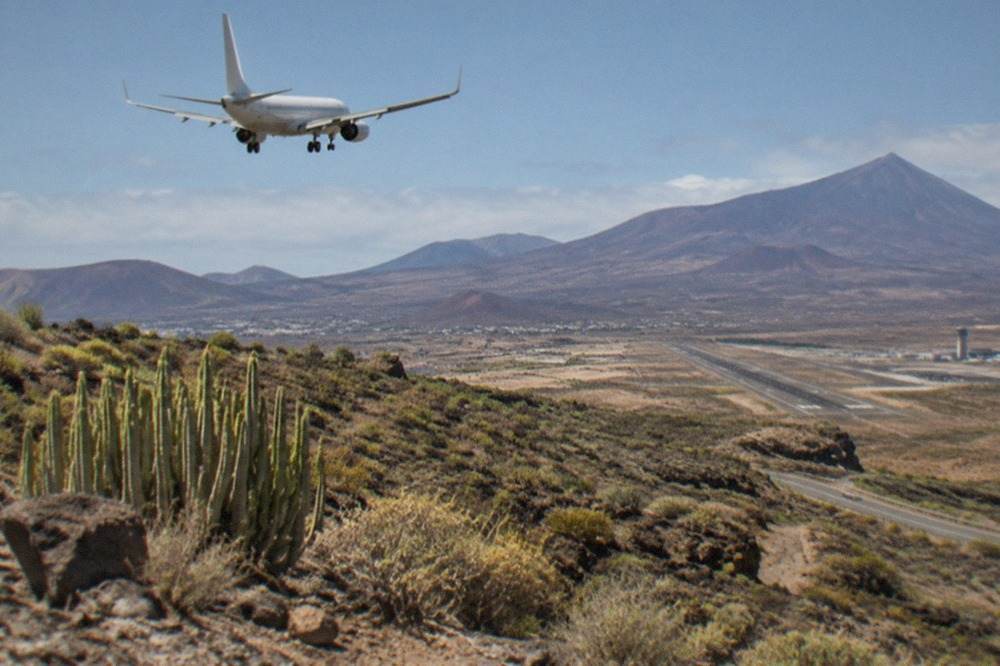
Short answer
Tenerife has two airports: Tenerife South (TFS), the busier base for most holiday flights, and Tenerife North (TFN), which carries domestic Spanish and some international services. There are no direct flights from the United States, so American visitors connect through Madrid or another European hub.
Tenerife welcomed 7,561,659 tourists in 2025, and every one of them arrived by air or by sea. The air side of that number runs through two airports with two very different jobs: Tenerife South, AENA's Tenerife Sur, which handled 13,969,678 passengers in 2025, an all-time record, and Tenerife North, formally Tenerife Norte-Ciudad de La Laguna, which handled 7,174,977. Knowing which one your airline uses, and what happens after the wheels touch down, is the single biggest planning decision on this page. The rest of this guide walks the whole journey: the routes that exist, the routes that do not, the entry system now in force, and the buses, taxis and car hire waiting on the other side of arrivals.
Which of Tenerife's Two Airports Should You Fly Into?
Tenerife South (TFS) is the airport for the main resort belt: Costa Adeje, Los Cristianos, Playa de las Américas and the surrounding south coast sit closest to it. Tenerife North (TFN) serves Santa Cruz, La Laguna and Puerto de la Cruz better, and carries most domestic Spanish flights. AENA's official names are Tenerife Sur and Tenerife Norte-Ciudad de La Laguna; the familiar names, Reina Sofia and Los Rodeos, are not AENA's current titles.
The split is not about quality. Both airports are modern AENA operations with the same shops, security standards and car-hire desks. It is geography. The south airport sits in Granadilla de Abona, a short drive from the beaches most visitors come for, which is why the charter and low-cost holiday traffic concentrates there. The north airport sits at 632 m near La Laguna, which is also why its weather is different: AEMET's normals for the north airport station record 520 mm of rain a year, against 132 mm at the south airport station. If your flight lands at the north airport and your hotel is in Costa Adeje, you cross the island after landing.
The passenger figures tell the story of the balance. Tenerife South's 13,969,678 passengers in 2025, up 1.7 per cent and an all-time record, make it one of the busiest airports in the Canaries. Tenerife North's 7,174,977, which AENA rounds to 7.2 million on the airport's own page, is a substantial airport in its own right, but its traffic leans to inter-island and mainland Spain services. If you are comparing island destinations before you book, our Tenerife vs Gran Canaria and Tenerife vs Lanzarote comparisons cover the flight side of that choice too.
| Airport | AENA official name | Code | 2025 passengers | Best for |
|---|---|---|---|---|
| Tenerife South | Tenerife Sur | TFS | 13,969,678 (+1.7%, all-time record) | Costa Adeje, Los Cristianos, Playa de las Américas, El Médano |
| Tenerife North | Tenerife Norte-Ciudad de La Laguna | TFN | 7,174,977 | Santa Cruz, La Laguna, Puerto de la Cruz, domestic connections |
Which Airlines Fly Direct to Tenerife?
Tenerife South takes the bulk of the direct holiday flights from the UK, Germany, Spain and the rest of Europe, and Tenerife North carries direct domestic services plus a smaller set of international routes. The island's 2025 air connectivity ran to 34 markets and 159 airports, the tourist board's balance reports, and the UK is by far the largest source market: 2,057,896 of the tourists lodged in hotels and apartments in 2025, 37.8 per cent of that total, were British.
The exact airline list changes with the seasons, and no official page this site has read publishes a fixed carrier-by-carrier table, so this desk does not print one. What is stable is the pattern. Direct flights from British airports run heaviest in winter, because Tenerife's winter is the product: AEMET's normals for Santa Cruz show a mean daily maximum of 21 to 22.1 degrees Celsius in January and February, against single figures in Britain. Spanish carriers link both Tenerife airports to Madrid and other mainland cities, which is the connection point that matters for long-haul travellers.
If you are still choosing islands rather than airports, the which Canary island is best guide weighs flight access against beaches, hiking and nightlife, and the Tenerife North vs South comparison explains what each half of the island does best once you have landed.
Can You Fly Direct from the USA to Tenerife?
No. There are no direct flights from the United States to Tenerife, and no direct flights from the US to the Canary Islands at all. American visitors fly to a European or Spanish hub, usually Madrid, and connect onward to Tenerife South or Tenerife North from there. The island's own connectivity figures, 34 markets and 159 airports in 2025, describe the network that exists, and the United States is not a nonstop market within it.
The practical route is straightforward. Fly into Madrid, or another major European hub, and take a domestic Spanish flight the rest of the way. Madrid connects to both Tenerife airports, which means the final leg can finish at whichever end of the island suits your hotel. Some travellers instead route through London or another European city and take a direct holiday flight onward, which can add a stop but sometimes fits better with transatlantic schedules.
Two related questions arrive with this one, and the answers are the same. Can you fly direct from the USA to the Canary Islands? No. Can you fly direct from the US to the Canary Islands? No, in identical fashion. The Canary Islands as a whole, not only Tenerife, sit beyond the nonstop range of the US market's current network, and every official figure this desk has read treats American arrivals as connecting traffic through Europe.
How long does it take to fly from New York to Tenerife? No official source in this site's research publishes a scheduled journey time for that route, because no such nonstop route exists, and this desk does not estimate one. What can be said is structural: the journey is a transatlantic leg to a hub plus a European domestic leg, and the total depends entirely on the connection. Travellers comparing total travel time should look at the layover, not the flying.
Once the flights are booked, the days themselves need filling, and the south coast's signature trip is on the water. The Los Gigantes dolphin and whale watching cruise with swim stop runs from the foot of cliffs the tourist board says tower up to 600 m, in waters governed by Decreto 178/2000, which bars any boat from approaching within 60 m of the animals and caps speed at 4 knots inside 500 m.
How Long Does It Take to Fly to Tenerife?
No official page in this site's research publishes scheduled flight times to Tenerife, so this desk prints none. What the verified record does show is the shape of the journey: European holiday flights are short-haul services into Tenerife South, long-haul arrivals always connect through a hub, and the ferry network from Los Cristianos adds 50 minutes to San Sebastián de La Gomera for island-hopping onward.
Flight time claims are the most commonly invented numbers in travel copy, and this site will not join in. A scheduled duration depends on the departure airport, the wind, and the routing, and none of those is a fact this desk can verify for your date. What is verified is the geography: Tenerife sits off the African coast, roughly level with Morocco, which is why European services are counted as short and medium-haul and why the island's winter-sun season is so strong.
The Tenerife weather by month guide carries AEMET's full climate tables for four stations, including both airports, which is the honest way to plan around the flight: pick the month, then pick the route. If a winter escape is the goal, the Tenerife in January and Tenerife in February guides cover the season the flights are busiest for.
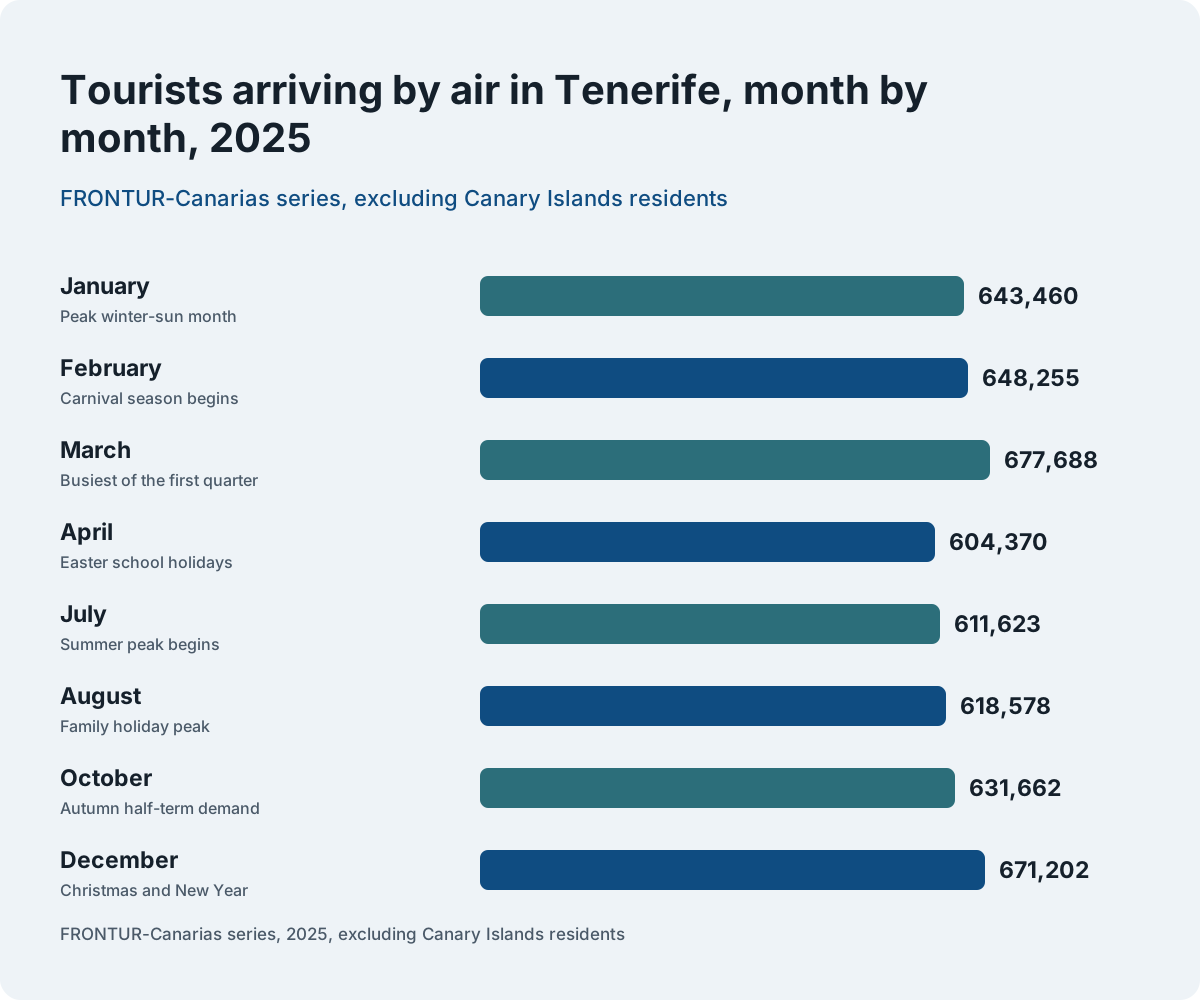
| Month | Tourists arriving by air, 2025 (excluding Canary Islands residents) | Notes from the FRONTUR-Canarias series |
|---|---|---|
| January | 643,460 | Peak winter-sun month |
| February | 648,255 | Carnival season begins |
| March | 677,688 | Busiest of the first quarter |
| April | 604,370 | Easter school holidays |
| July | 611,623 | Summer peak begins |
| August | 618,578 | Family holiday peak |
| October | 631,662 | Autumn half-term demand |
| December | 671,202 | Christmas and New Year |
What Is the Easiest Way to Get to Tenerife?
For European travellers, the easiest way is a direct flight into the airport nearest your resort: Tenerife South for the southern beaches, Tenerife North for Santa Cruz, La Laguna and Puerto de la Cruz. For visitors from the United States or other long-haul origins, the easiest way is a connection through Madrid, which serves both Tenerife airports. From the neighbouring islands, Fred. Olsen Express runs the 50-minute ferry from Los Cristianos to San Sebastián de La Gomera.
"Easiest" and "best" collapse into the same answer here, and the question this desk is asked most often in both wordings. The decision tree has three branches. Origin in Europe: fly direct, and match the airport to the resort, because a cross-island transfer after a flight is the one avoidable cost in most itineraries. Origin in North America: connect through Madrid or a European gateway, and finish at whichever Tenerife airport is closer to the bed. Origin in the Canaries: the inter-island flights and the Fred. Olsen Express ferries are both on file, with the Los Cristianos to La Gomera crossing at 50 minutes, La Palma at 150 minutes and El Hierro at 140 minutes.
The island-hopping and ferries guide covers the sea routes in full, and the La Gomera day trip page turns the shortest crossing into a plan. For the flight side, searching fares is a job for a comparison on your own dates: compare flights to Tenerife South or compare flights to Tenerife North from your departure airport.
What Are the Entry Rules for UK and US Visitors Flying to Tenerife?
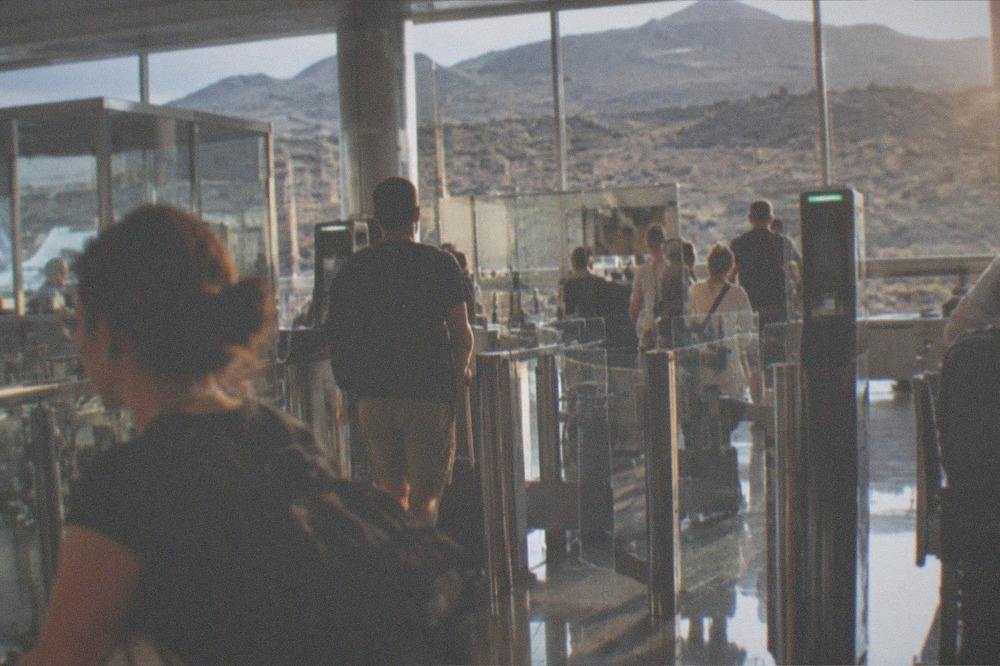
The EU's Entry/Exit System began on 12 October 2025 and has been fully operational since 10 April 2026: UK and US visitors are registered with a facial image and fingerprints on arrival instead of a passport stamp. ETIAS is a separate, future authorisation: the EU states it is currently not in operation, no applications are collected, and no start date has been announced. When it launches, the fee will be EUR 20.
The two systems get confused constantly, so the distinction matters. EES is here now. It applies to non-EU nationals on short stays, which covers British and American arrivals at both Tenerife airports, and it replaces the passport stamp with biometric registration at the border. Nothing is applied for in advance: the registration happens when you cross. The European Commission's announcement is the source for both dates, and this desk reports it as stated. The full index of guides sits on Tenerife Travel Guide.
ETIAS is not here. The EU's own page says the system "is currently not in operation and no applications for travel authorisations are collected at this point", and that the launch date will be announced several months ahead. Any site that prints a start date, a season or a year for ETIAS is guessing, and the fee detail that is on file is EUR 20, raised from an earlier figure of EUR 7. Passport validity rules and the length of the short-stay allowance were not read on an official page in this research, so this desk states no figures for either: check your own government's travel advice for those.
| System | Status | What it does | Applies to UK and US visitors |
|---|---|---|---|
| EES (Entry/Exit System) | Fully operational since 10 April 2026 | Records facial image and fingerprints at the border, replacing passport stamps | Yes, on every short stay |
| ETIAS | Not in operation; no start date announced | Pre-travel authorisation for visa-exempt nationals, fee EUR 20 | Not yet; no applications are collected |
How Do You Get from Tenerife South Airport to Your Hotel?
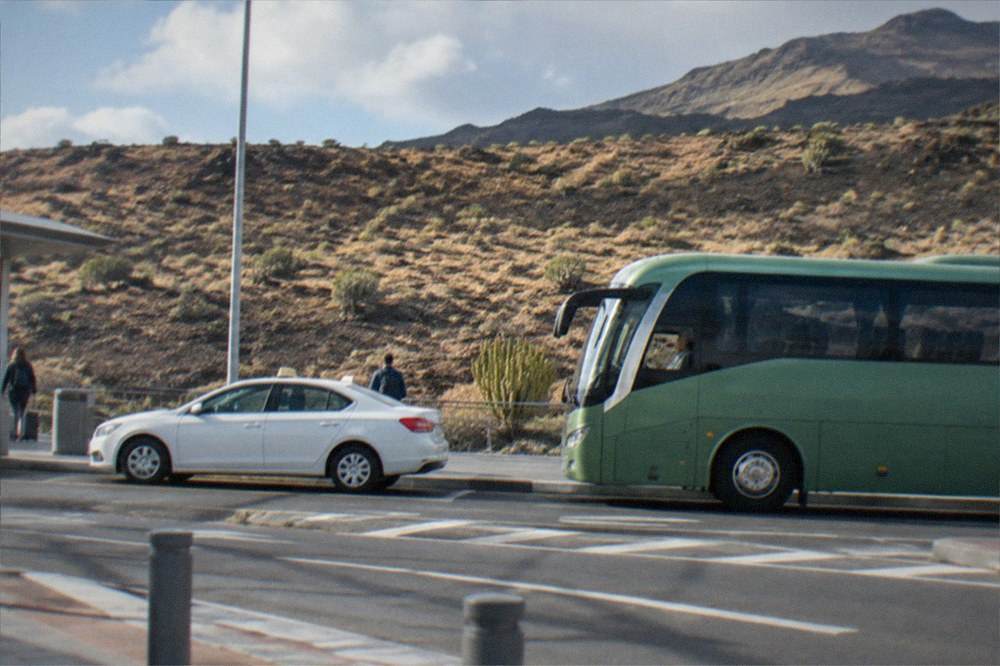
TITSA's own airport page lists five bus lines at Tenerife South: line 10 to Santa Cruz, line 40 to Costa Adeje bus station via Los Cristianos, line 711 as the night bus linking Santa Cruz, the airport, Los Cristianos and Costa Adeje, line 343 as the express from Puerto de la Cruz to Los Cristianos via both airports, and line 415 to El Fraile and San Isidro. Taxis are white and metered, and car-hire desks operate at the terminal.
The bus is the budget answer, and the network is genuinely useful. Line 40 is the one most south-coast visitors want: it runs to Costa Adeje bus station with a stop at Los Cristianos, which covers the two biggest resort bases in one route. Line 343 matters if you are staying in Puerto de la Cruz, because it links both airports to the north coast without a change in Santa Cruz. Line 711 is the night option, the one that still runs when the daytime timetable has finished.
Taxis on the island are white, all metered from the start of the trip, and a fixed price can be agreed in advance for excursions, per the tourist board's own transport page. No point-to-point fare from either airport is on file with this desk, so none is printed here; the meter and the journey decide. The full picture, including the visitor travelcards, is in the Tenerife buses and TITSA guide, and the airport transfers page compares every option end to end.
How Do You Get from Tenerife North Airport to Santa Cruz and Puerto de la Cruz?
TITSA lists three lines at Tenerife North: line 20 to Santa Cruz via La Laguna, line 30 to Puerto de la Cruz, and line 343, the express that links the two airports and runs south to Los Cristianos. There is no tram to either airport; the tram network's own fares page states nothing of the kind, and the airport links are bus lines only.
Line 20 is the commuter workhorse, running through La Laguna, the UNESCO-listed colonial town that sits between the airport and the capital. Line 30 runs north and west to Puerto de la Cruz, the historic resort on the north coast. Line 343 is the connector that matters to arriving flyers, because it ties the two airports together: a misrouted arrival at the wrong airport is recoverable by bus, though the Tenerife North airport and Tenerife South airport guides exist precisely so that mistake does not happen.
The visitor ticketing is on file and worth knowing before you board. Single tickets are priced by route, a same-day return carries 10 per cent off on trips of 20 km or more, and the visitor products are the EUR 10 day travelcard and the EUR 50 seven-day travelcard, both sold at airport ticket machines. The 2026 free-transport subsidy applies to resident passes only, so visitors pay their fares like everyone else.
| Airport | TITSA line | Route, per TITSA's own airport page |
|---|---|---|
| Tenerife South | 10 | Santa Cruz |
| Tenerife South | 40 | Costa Adeje bus station via Los Cristianos |
| Tenerife South | 711 | Night bus: Santa Cruz, airport, Los Cristianos, Costa Adeje |
| Tenerife South | 343 | Express: Puerto de la Cruz to Los Cristianos via both airports |
| Tenerife South | 415 | El Fraile and San Isidro |
| Tenerife North | 20 | Santa Cruz via La Laguna |
| Tenerife North | 30 | Puerto de la Cruz |
| Tenerife North | 343 | Express to the south, via the other airport |
When Is the Best Month to Book Flights For?
By arrivals, the busiest month in the 2025 by-air series was March, with 677,688 tourists, followed closely by December at 671,202 and February at 648,255, while the quietest were May at 539,410 and June at 542,881. Those figures count tourists arriving by air and exclude Canary Islands residents, and they point to the shoulder months of May and June as the least crowded window with the first of the summer sea temperatures.
The demand curve is the winter-sun curve. The island is at its busiest when northern Europe is at its coldest, and AEMET's Santa Cruz normals explain why: July and August mean daily maxima of 28.7 and 29 degrees Celsius, but January still manages 21 degrees with only 32 mm of rain across the month. The sea tells the same story from a different angle: the south-coast sea surface temperature, on NOAA's 1991 to 2020 series, runs from 19.1 degrees in March to 23.7 in September and October, so early summer is the first genuinely warm-water window.
No official source publishes a booking-lead-time rule for fares, and this desk invents none. What the data supports is choosing the month, not timing the purchase: the Tenerife in October, Tenerife in November and Tenerife in December guides carry the season-by-season detail, including Carnival planning for the winter.
| Month | Sea surface C (south coast, NOAA 1991-2020) | Santa Cruz mean daily max C (AEMET 1981-2010) | Rain days of 1 mm or more, Santa Cruz |
|---|---|---|---|
| January | 19.9 | 21 | 4.2 |
| March | 19.1 | 22.1 | 3.8 |
| May | 20.2 | 24.1 | 0.9 |
| July | 22.2 | 28.7 | 0 |
| September | 23.7 | 28.1 | 0.9 |
| December | 21.1 | 22.1 | 5.4 |
What If Your Flight Is Delayed or Cancelled?
EU air passenger rights apply to flights arriving in or departing from Tenerife regardless of carrier nationality, and disrupted travellers may be entitled to compensation, rerouting or care depending on the distance and the cause. Because the rules turn on the specific circumstances of the disruption, this desk does not state entitlement figures, and points affected passengers at a claim check instead.
The regulation in question is the EU's air passenger rights framework, which covers cancellations, long delays and denied boarding on flights operating to and from the EU. Whether a specific disruption qualifies depends on the route length, the length of the delay and whether the airline can invoke extraordinary circumstances, so a general promise of a payout would be dishonest. What is safe to say is procedural: keep your boarding passes and booking confirmation, get the disruption confirmed in writing by the airline at the airport, and file the claim with the airline first.
Travellers who want the claim assessed rather than self-filed can check a delayed or cancelled flight claim with a specialist service. The Tenerife holidays planning guide covers the rest of the pre-departure checklist, from travel insurance to packing.
Should You Hire a Car at the Airport or Rely on Buses?
Hire a car at the airport if your itinerary reaches the places the buses serve thinly: Masca, the Anaga mountains, the Teide viewpoints at your own pace and the north-coast towns. Rely on TITSA if you are staying in the south resort belt and taking organised trips, because lines 40 and 343 cover the airport-to-resort legs and the visitor travelcards cap the daily cost at EUR 10.
The honest answer is that both work, for different trips. The bus network is dense along the south coast and the Santa Cruz to Puerto de la Cruz corridor, and the getting around Tenerife guide maps where it thins out. A car earns its keep in the mountains and the west: the driving in Tenerife and car hire in Tenerife guides cover the road rules, the drink-drive limit of 0.5 g/l in blood that the DGT's page refers to, and the parking realities at the busy viewpoints.
One warning belongs on any car itinerary that includes Teide: the national park bans smoking in every open-air space, car parks included, and the summit trail needs a separate reservation on Tenerife ON, covered in full in the Teide summit permit guide. Since Monday 19 January 2026 the 09:00 to 17:00 slots on that trail cost EUR 15 for visitors and EUR 6 for residents of the other Canary Islands, free only for Tenerife residents and children.

What Should You Plan for the Days After You Land?
The three experiences that anchor most first visits are the Teide National Park, a boat trip off the south or west coast, and one of the island's big parks, and each can be reserved before the flight. Teide's cable car stops at La Rambleta at 3,555 m, the summit crater is a separate permitted trail, and the whale-watching boats operate under Decreto 178/2000, which keeps every vessel at least 60 m from the animals.
Booking ahead is the consistent theme across all three. The cable car sells timed tickets and the summit permit is released every Monday at 07:00 Canary time with 56 days always bookable, so a peak-week visit needs the reservation made early. The boat trips concentrate in Los Cristianos, Costa Adeje and Los Gigantes, and the authorised operators fly the Barco Azul flag issued by the Canary tourism department. The parks, Siam Park and Loro Parque, sell entry tickets that are cheaper combined than bought separately at the gate, which is why the twin ticket exists.
For the volcanic half of the island, a small-group guided day covers the national park's rocks and forests with a guide who can explain the geology, which matters on a site where UNESCO credits the mountain with rising 7,500 m above the ocean floor, regarded as the world's third-tallest volcanic structure. The Teide tours and Teide stargazing tours pages carry the full range, and the things to do in Tenerife round-up is the master list.
Common Questions About Flights to Tenerife
Can you fly directly to the Canary Islands?
Yes, from many European airports: the Canary network is one of Europe's densest short-haul markets, and Tenerife's 2025 connectivity alone ran to 34 markets and 159 airports. From the United States, no: every American arrival connects through a European or Spanish hub.
Can you fly direct to Tenerife from the US?
No. There are no direct flights from the United States to Tenerife or to any of the Canary Islands. The standard routing is a transatlantic flight to Madrid or another European gateway, then a domestic Spanish flight to Tenerife South or Tenerife North.
Which airlines fly direct to Tenerife?
The carrier list changes by season and no official page publishes a fixed table, so this desk prints none. The pattern is stable: UK and German holiday carriers dominate the direct routes into Tenerife South in winter, Spanish carriers serve both airports from the mainland year-round, and Tenerife North carries most domestic services.
What is the best way to get to Tenerife?
Direct into the airport nearest your resort: Tenerife South for the southern beaches, Tenerife North for Santa Cruz, La Laguna and Puerto de la Cruz. From North America, connect through Madrid. From the neighbouring islands, the ferries from Los Cristianos run 50 minutes to La Gomera, 150 minutes to La Palma and 140 minutes to El Hierro.
Do UK visitors need a visa or authorisation for Tenerife?
No visa, and no authorisation yet. The Entry/Exit System, fully operational since 10 April 2026, registers UK and US visitors with a facial image and fingerprints at the border instead of a stamp. ETIAS is not in operation, no applications are collected, and the EU has announced no start date; the fee when it launches will be EUR 20.
Is there a tourist tax to pay on arrival in Tenerife?
No per-night lodging tax exists in force or approved on any official page this site has read. The charges that do exist are per-booking fees on specific trails and sites: the Teide trail fees, the Masca gorge ticket and the Barranco del Infierno ticket.