Which Canary Island Is Best?
Seven islands, one archipelago, and a question every winter-sun searcher types at some point. This page compares them using published climate data, transport timetables and official visitor figures, with Tenerife as the reference point.
Short answer
There is no single best Canary Island: Tenerife has the highest mountain, the most flights and the widest range of things to do, while La Gomera, La Palma and El Hierro suit walkers, Lanzarote suits landscape and wine lovers, Fuerteventura suits beach and windsport holidays, and Gran Canaria sits between them all.
Seven islands make up the Canaries, and the honest answer to which one is best has always depended on what the holiday is for. What can be said with evidence is narrower and more useful: Tenerife carries the archipelago's highest peak, its busiest airports and the largest share of lodged holidaymakers, while its neighbours each hold a distinct specialty. This page, from the Tenerife Travel Guide editorial desk, compares the islands using published figures rather than folklore, and it names where each number comes from.
What Is So Special About the Canary Islands?
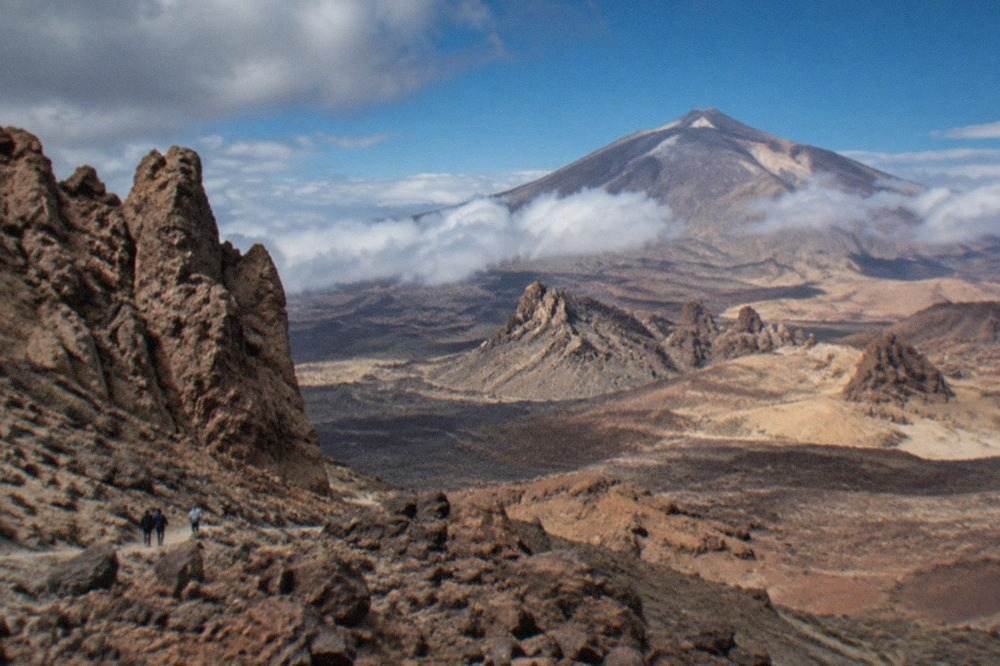
The Canary Islands belong to Spain and lie off the north-west coast of Africa, yet their weather, wildlife and landscapes are unlike either the Spanish mainland or Morocco: AEMET's climate normals record Santa Cruz at a mean of 18.2 degrees Celsius in January against 25 degrees in August, UNESCO lists Mount Teide as the world's third-tallest volcanic structure from the ocean floor, and the World Cetacean Alliance designates the Tenerife-La Gomera marine area a Whale Heritage Area. That combination, mild winters, a 3,715 m volcano, laurel forest and resident pilot whales within sight of each other, is what no comparable European destination offers.
The archipelago's latitude explains the climate, and the trade winds explain why the islands differ so much from each other. AEMET's station data shows the same island can hold a January mean of 18.4 degrees Celsius at Tenerife South Airport and 13.1 degrees at Tenerife North Airport, 632 m higher up the mountain. The north of each island catches cloud and rain, the south sits in shelter, and a visitor who picks the wrong side of an island can be disappointed by weather the island's other half is enjoying.
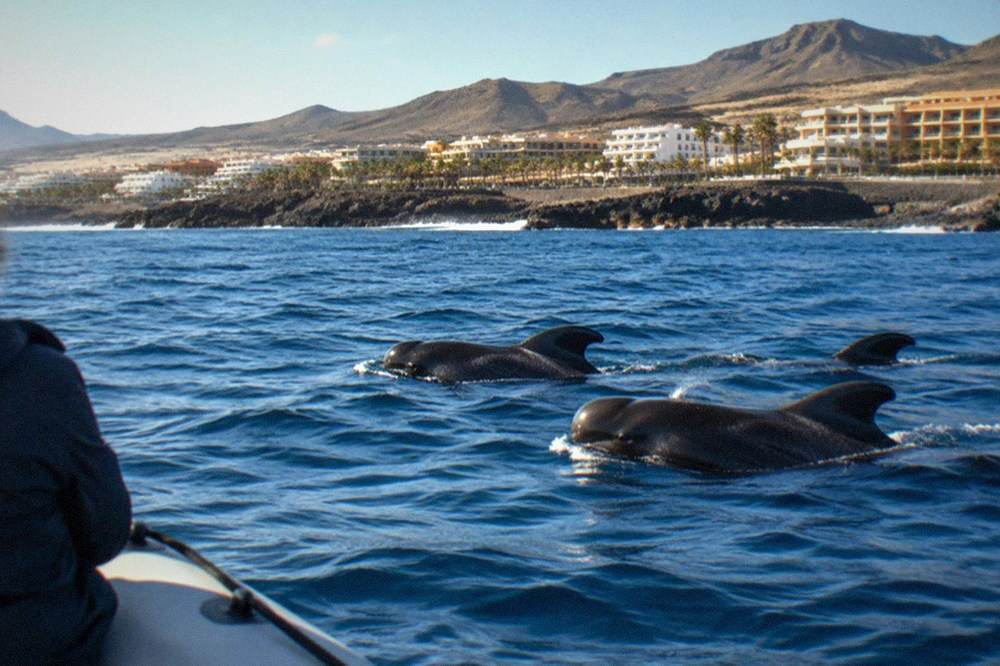
The wildlife side is less famous than the beaches and better documented. Decreto 178/2000, the Canary regulation on whale watching, forbids any boat approach within 60 m of a cetacean, limits boats to three within 500 m and bans swimming within 500 m, and authorised vessels fly the Barco Azul flag. The World Cetacean Alliance records a resident population of pilot whales and bottlenose dolphins off the south-west coast between Tenerife and La Gomera, plus a migration stop for 21 other cetacean species.
Is Tenerife Hotter Than Other Canary Islands?
Tenerife is not simply hotter than its neighbours, it is taller: the island stacks several climates on one landmass, so AEMET's normals show mean daily highs of 29 degrees Celsius at sea level in Santa Cruz in August against 22.6 degrees at the Izana station on the Teide ridge, and the south coast is consistently sunnier and drier than the north, with Tenerife South Airport recording 132 mm of rain a year against 520 mm at Tenerife North. Island-to-island temperature differences across the Canaries are smaller than the differences within Tenerife itself.
The data behind that matters when choosing where to stay, on any island. The table below sets out AEMET's published annual figures for four Tenerife stations, which is the same pattern a visitor will find on Gran Canaria, La Palma or the other islands: altitude and coast drive the weather far more than which island the map says you are on.
| AEMET station | Altitude | Annual rain | Rain days of 1 mm or more | July mean daily max |
|---|---|---|---|---|
| Santa Cruz de Tenerife | 36 m | 226 mm | 29.7 | 28.7 C |
| Tenerife South Airport (TFS) | 64 m | 132 mm | 15.2 | 27.7 C |
| Tenerife North Airport (TFN) | 632 m | 520 mm | 64 | 24.7 C |
| Izana (Teide ridge) | 2,369 m | not published as an annual total | 33.4 | 23 C |
Sea temperature tells the other half of the story. NOAA's 1991-2020 series for the south coast of Tenerife shows the sea at its warmest in September and October at 23.7 degrees Celsius and at its coolest in March at 19.1 degrees, a narrow annual band that holds across the archipelago. Swimming is a year-round activity in the Canaries in a way it simply is not on the Spanish mainland.
| Month | Sea surface temperature off south Tenerife |
|---|---|
| January | 19.9 C |
| March | 19.1 C |
| May | 20.2 C |
| July | 22.2 C |
| September | 23.7 C |
| October | 23.7 C |
| December | 21.1 C |
For month-by-month planning, the Tenerife weather by month guide works through the full tables, and the same logic, south for sun, north for green, applies across every island in the chain.
Which Canary Island Has the Most to Do?
Tenerife holds the archipelago's widest range of activities in a single island, and the official numbers back the claim: 7,561,659 tourists visited in 2025, the tourist board records air links to 34 markets and 159 airports, AENA logged 13,969,678 passengers at Tenerife South Airport alone in 2025, an all-time record, and the island holds Spain's most visited national park, with MITECO counting 5,242,653 visitors to Teide National Park in 2024. No other Canary Island combines a 3,715 m volcano, two major animal parks, a water park and a resident whale population on one road network.
That scale is the argument for Tenerife as the default choice, and it is also the argument against it. More visitors mean more built-up coastline in the south, and a reader asking which island is "least tacky" is really asking which island has the least of that. The honest comparison: Lanzarote's development has been held in check by strict island planning rules, La Gomera and El Hierro have almost no mass tourism at all, and Tenerife's north, from Puerto de la Cruz through La Orotava and the wine villages, keeps a older, greener character that the south does not.
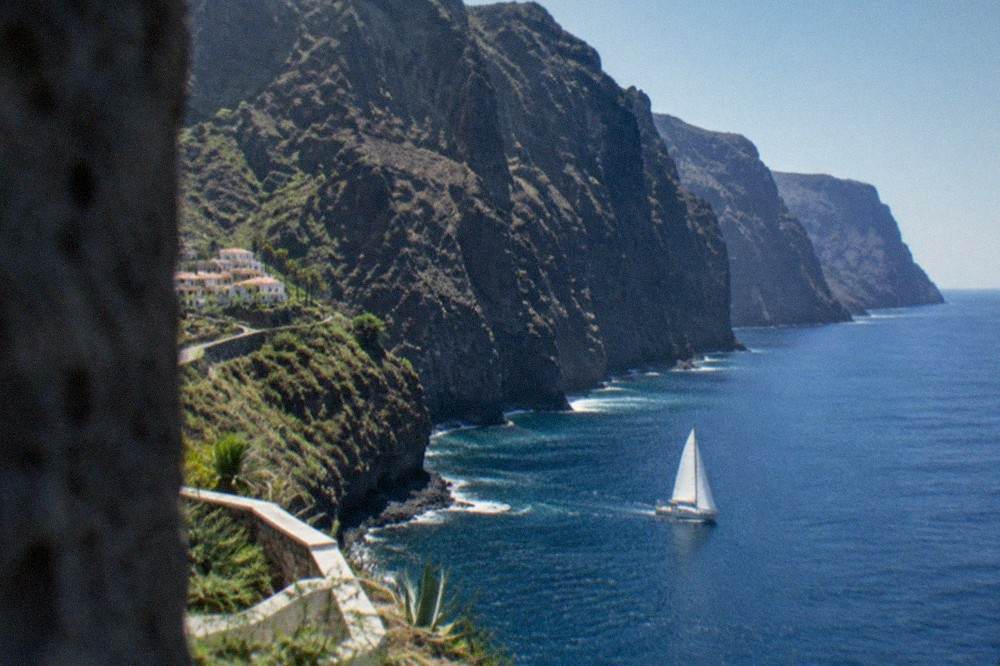
The whale watching is the clearest case where Tenerife is not just one option among seven. The World Cetacean Alliance's Whale Heritage Area designation covers the Tenerife-La Gomera marine area, and a sailboat trip out of Los Gigantes puts a visitor under cliffs the tourist board measures at up to 600 m, inside the waters where the resident pilot whales live. The card below is the trip this site rates as the benchmark for that experience.
The whale and dolphin watching tours page compares the full range of boats, from large catamarans to small eco vessels, all of them operating under the Barco Azul rules.
Which Island Should You Choose for a First Visit?
For a first Canary Islands holiday, Tenerife is the lowest-risk choice because it has the most flights, the widest spread of accommodation and the most varied sightseeing, while Gran Canaria is the closest equivalent for beach-and-resort holidays, Lanzarote suits volcanic landscape and wine, Fuerteventura suits beaches and wind sports, and La Palma, La Gomera and El Hierro are better as second trips for walkers and quiet seekers than as first landings.
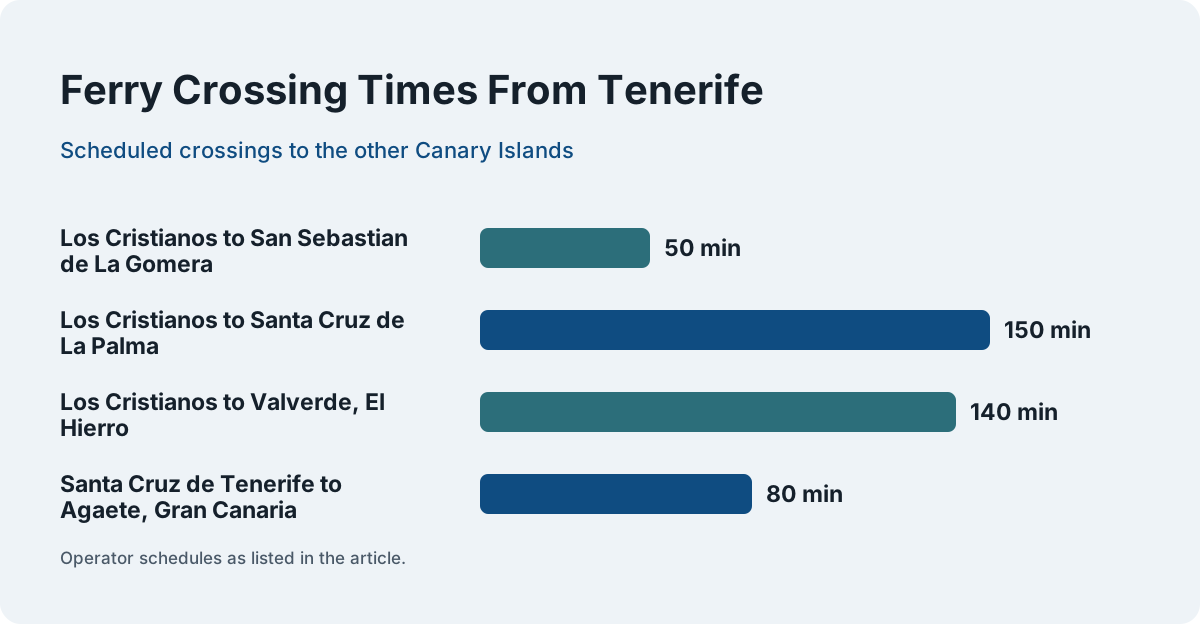
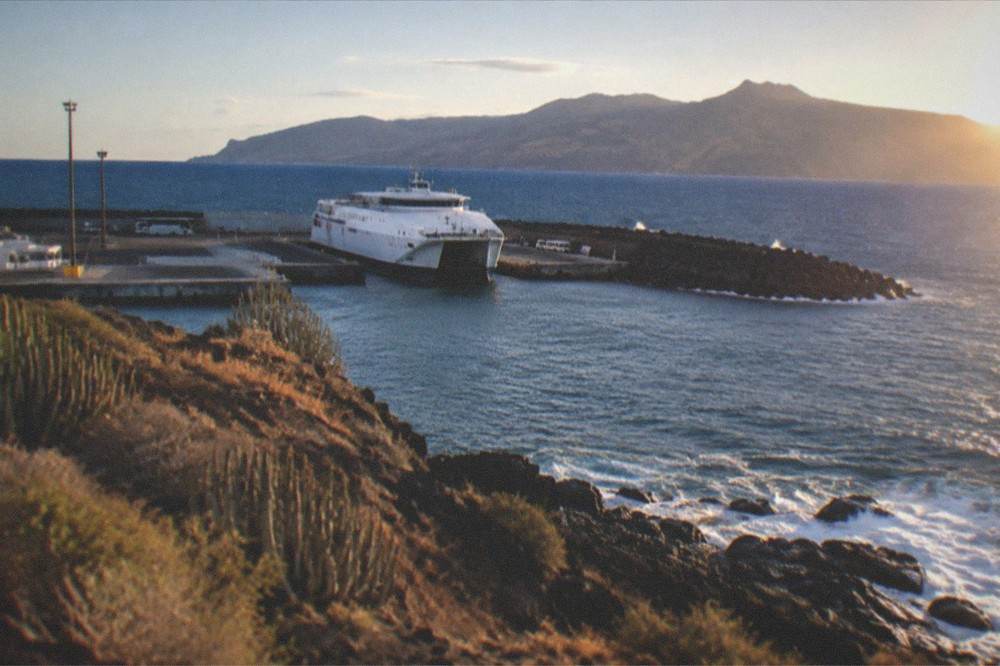
The comparison pages on this site work through the head-to-head cases in detail: Tenerife versus Gran Canaria covers the two big resort islands, and Tenerife versus Lanzarote covers the volcano-and-wine pairing. For island hopping once you are out here, the ferries and island-hopping guide sets out the routes, including the 50-minute Fred. Olsen Express crossing from Los Cristianos to San Sebastian de La Gomera.
| Ferry route from Tenerife | Operator | Crossing time |
|---|---|---|
| Los Cristianos to San Sebastian de La Gomera | Fred. Olsen Express | 50 min |
| Los Cristianos to Santa Cruz de La Palma | Fred. Olsen Express | 150 min |
| Los Cristianos to Valverde, El Hierro | Fred. Olsen Express | 140 min |
| Santa Cruz de Tenerife to Agaete, Gran Canaria | Fred. Olsen Express | 80 min |
A day trip to La Gomera from a Tenerife base is the easiest way to see a second island without moving hotels, and the Masca, Garachico and Icod route shows how much variety Tenerife itself holds within a single day's drive.
What Is the Best Island to Stay in the Canary Islands?
The best island to stay on is the one whose specialty matches the holiday: Tenerife for variety and the highest chance of good weather somewhere on the island, Gran Canaria for a single-resort beach week, Fuerteventura for sand and water sports, Lanzarote for landscape and wine, La Palma for star-gazing and hiking, La Gomera for walking and quiet, and El Hierro for diving and remoteness. Within Tenerife, the choice of base matters as much as the choice of island.
The where to stay guide maps the resort areas, and the north versus south comparison is the decision most first-time visitors agonise over. The short version, on the data: the south is drier, sunnier and more built up, the north is greener, cooler and more Spanish in character, and the AEMET rainfall table above is the reason both statements are true at once.
Which of the Canary Islands Is the Least Tacky?
No official source rates islands for "tackiness", so the honest answer rests on what the official pages do record: El Hierro, La Gomera and La Palma have the smallest tourism volumes in the archipelago, Lanzarote's building rules have kept its resort development low-rise and traditional in style, and on Tenerife the quiet options sit in the north, in La Orotava, Garachico and the Anaga mountains, well away from the southern resort strip. A visitor who wants the Canary Islands without the high-rise belt has three real strategies, and none of them requires leaving the archipelago.
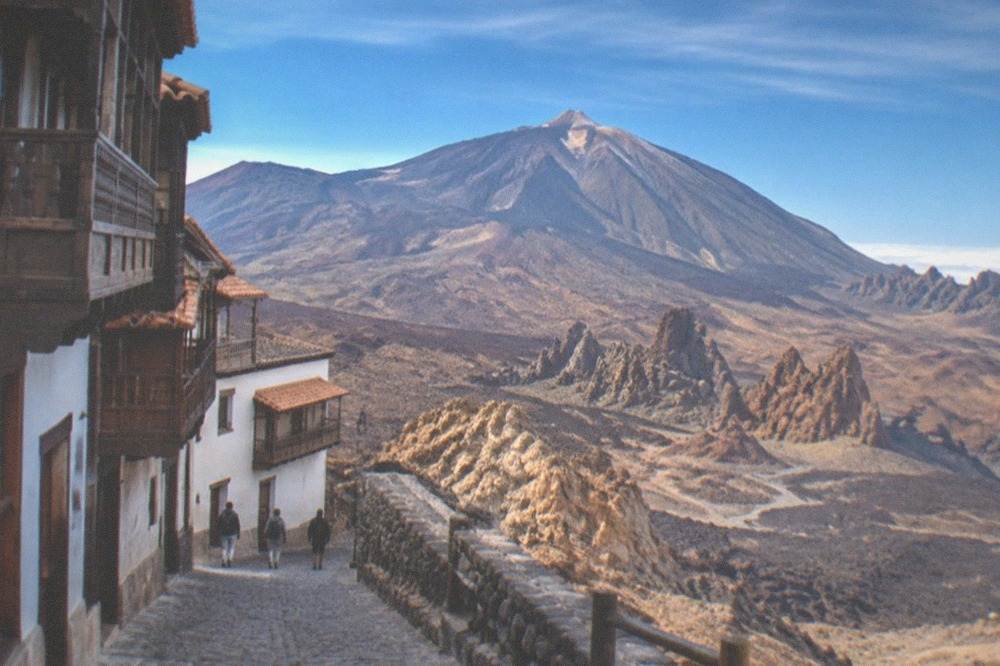
The first strategy is to pick a smaller island. La Gomera's tourism is walking-led, and its ferry-only access keeps day-tripper numbers modest. The second is to pick the quiet half of a big island: Tenerife's north holds the UNESCO-listed old town of San Cristóbal de La Laguna, the laurel forests of Anaga Rural Park, whose El Pijaral trail needs a Tenerife ON reservation and forbids company-run tours entirely, and the historic town of Garachico, which the tourist board records as having been almost destroyed by the Trevejo volcano's 1706 eruption.
The third is to pick the right season. The monthly arrival figures below show how sharply the winter months concentrate visitors, and travelling in the shoulder months puts a visitor on the same island with a fraction of the crowds.
What Month Is Best for the Canary Islands?
The Canaries have no bad month, but the data divides the year clearly: July and August are the hottest and driest, with Santa Cruz at a mean of 25 to 25.5 degrees Celsius and virtually no rain, October to December brings the highest sea temperatures of the year at 23.7 down to 21.1 degrees Celsius, and November, December and February are the busiest months for arrivals by air, with ISTAC recording 659,656 tourists by air in November 2025 and 648,255 in February 2025. May and June are the quietest warm months on the arrival data.
The winter-sun rush is the single biggest fact about Canary Islands seasonality. The table below shows ISTAC's monthly series of tourists arriving by air in Tenerife, excluding Canary Islands residents, and the pattern repeats across the archipelago: the islands fill precisely when northern Europe is at its coldest.
| Month | Tourists by air 2024 | Tourists by air 2025 |
|---|---|---|
| January | 612,169 | 643,460 |
| February | 632,295 | 648,255 |
| March | 678,693 | 677,688 |
| April | 578,602 | 604,370 |
| May | 528,408 | 539,410 |
| June | 522,461 | 542,881 |
| July | 580,512 | 611,623 |
| August | 603,529 | 618,578 |
| September | 551,175 | 563,261 |
| October | 617,714 | 631,662 |
| November | 652,800 | 659,656 |
| December | 679,245 | 671,202 |
The monthly guides on this site carry the detail for the popular months: Tenerife in January, February, March, October, November and December each work through weather, crowds and what is open.
What Does Tenerife Do That the Others Cannot?
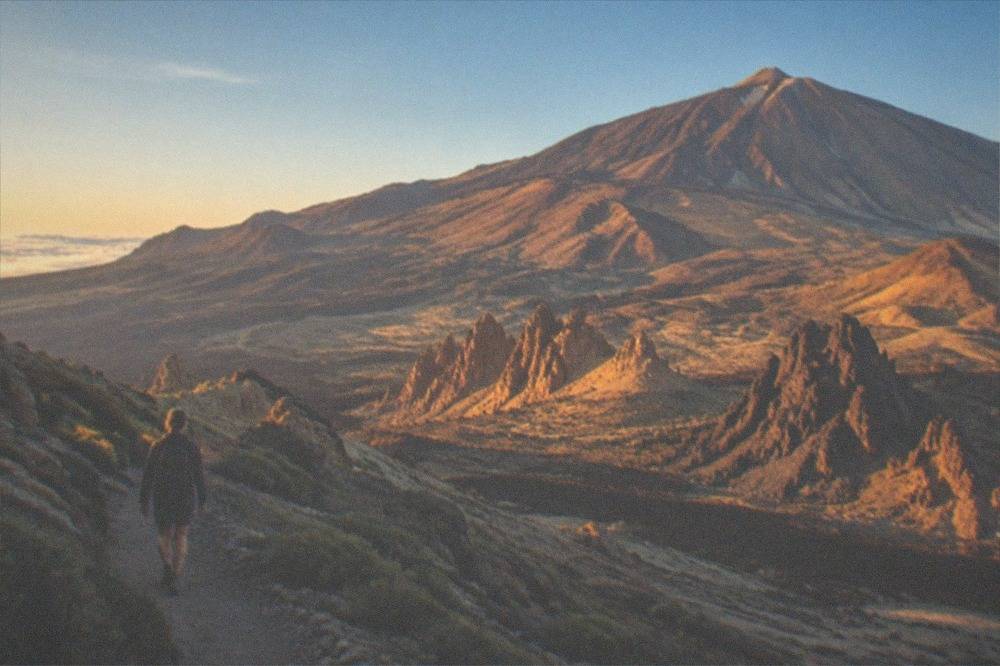
Three things on Tenerife have no equal in the archipelago: a 3,715 m volcano you can ride a cable car to 3,555 m on, which UNESCO lists as a World Heritage Site and describes as the world's third-tallest volcanic structure measured from the ocean floor, a resident pilot whale population off the south-west coast inside a World Cetacean Alliance Whale Heritage Area, and Spain's most visited national park, with 5,242,653 visitors in 2024 on MITECO's count. Every other island has beaches and walks; only Tenerife has all three of these.
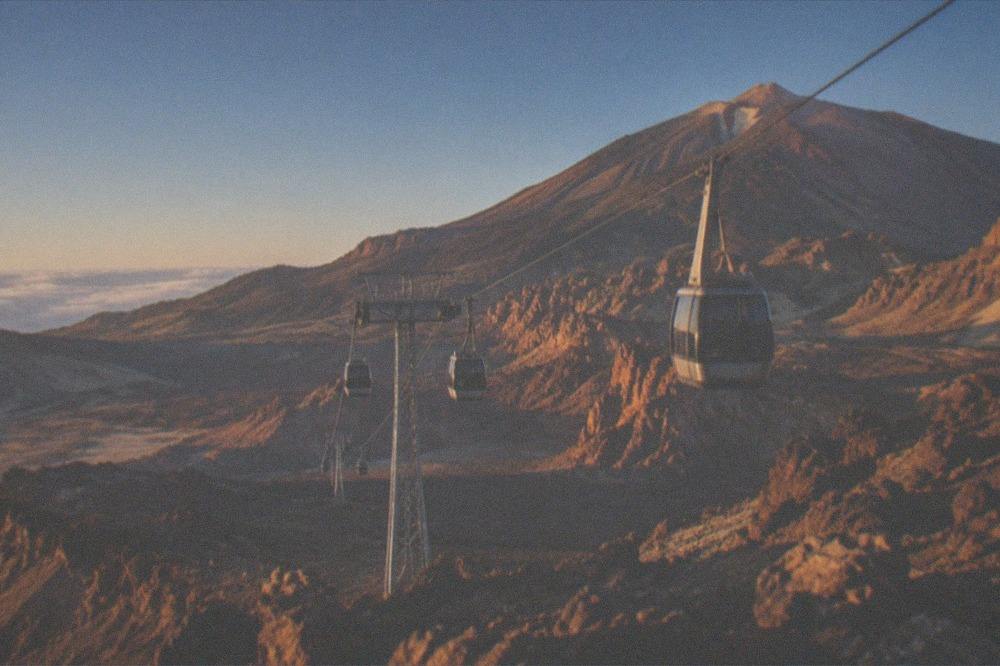
The cable car is the easiest of the three to arrange. The operator's 2026 price page lists a non-resident adult return at EUR 42.00 and a child return at EUR 21, shown as "price from", with the upper station at La Rambleta, 3,555 m. The summit crater itself is a separate thing entirely: it needs a reservation on Tenerife ON for trail PNT 10 Telesforo Bravo, and since Monday 19 January 2026 the 09:00 to 17:00 slots cost EUR 15 for visitors and EUR 6 for residents of the other Canary Islands, free only for Tenerife residents and children. The Teide summit permit guide works through the booking rules, and the is Mount Teide active page answers the question the crater view always prompts.
The parks are the family half of the argument. Siam Park opens 365 days a year, 10:00 to 18:00 from 1 May to 29 September on its own published hours, and Loro Parque runs 09:30 to 17:30 every day of the year with its own car park at EUR 7 per day. Loro Parque's own release records Tripadvisor awarding Siam Park the Travellers' Choice award for best water park in the world for a fifth consecutive year, though later years are not confirmed on the awarding body's page. The theme parks guide covers the rest.
What Will a Tenerife Holiday Actually Cost?
Tenerife has no per-night tourist tax, and no official page shows one in force or approved, but three visitor charges do exist: the Teide summit trail at EUR 15 for visitors on the 09:00 to 17:00 slots since 19 January 2026, the Masca gorge descent at EUR 40.66 for the general ticket with the boat extra, and the Barranco del Infierno trail at EUR 15 for non-resident adults with compulsory advance booking. Everything else on the official list, beaches, viewpoints, the national park drive, carries no charge on any page this site has read.
The transport costs are published too. TITSA's fares page lists the visitor products plainly: single tickets priced by route, a day travelcard at EUR 10 and a seven-day travelcard at EUR 50, with the Ten+ card itself at EUR 2. The 2026 free-travel subsidy applies to resident passes only, so a visitor should ignore any page claiming tourists ride free. The Tenerife buses guide explains the cards, and the getting around guide compares buses, tram, taxis and car hire.
| Official visitor charge | Visitors | Canary Islands residents | Tenerife residents |
|---|---|---|---|
| Teide summit trail PNT 10, 09:00 to 17:00 slots | EUR 15 | EUR 6 | EUR 0 |
| Teide trail PNT 07, 09:00 to 17:00, working days | EUR 6 | EUR 3 | EUR 0 |
| Teide trail PNT 07, weekends and public holidays | EUR 10 | EUR 5 | EUR 0 |
| Masca gorge descent (boat not included) | EUR 40.66 | reduced rates apply | EUR 0 |
| Barranco del Infierno | EUR 15 | EUR 5 | reduced rates apply |
| TITSA day travelcard | EUR 10 | resident passes subsidised | resident passes subsidised |
| TITSA seven-day travelcard | EUR 50 | resident passes subsidised | resident passes subsidised |
Getting to the island from either airport is straightforward on the published bus network. TITSA's own airport pages list the lines, and the airport transfers guide compares them with taxis and hire cars.
| Airport | TITSA bus lines | Destinations served |
|---|---|---|
| Tenerife South (TFS) | 10, 40, 711, 343, 415 | Santa Cruz, Costa Adeje via Los Cristianos, night bus, express to Puerto de la Cruz, El Fraile |
| Tenerife North (TFN) | 20, 30, 343 | Santa Cruz via La Laguna, Puerto de la Cruz, express to the south |
The Verdict on the Best Canary Island
The best Canary Island for most first-time visitors is Tenerife, on the evidence: it holds the archipelago's highest mountain, its most visited national park, a resident whale population under official protection, the busiest flight connections and the widest range of accommodation, while the best island for a particular holiday is whichever specialty that holiday needs, from Fuerteventura's beaches to La Palma's night skies. The archipelago is small enough that the decision is not final: the ferries run daily and La Gomera is 50 minutes from Los Cristianos.
Choose Tenerife when the holiday needs variety and certainty. Choose a neighbour when it needs one thing done extremely well. And whichever island wins, the practical rules in this guide, the south-coast sun, the resident-only free buses, the permits on Tenerife ON, travel with you across the chain, because the same Canary regulations govern all seven.
For the full range of bookable days out once the island is chosen, the things to do in Tenerife page is this site's complete index, and the Tenerife holidays planning guide walks through the whole trip from flights to packing.
Common Questions About the Canary Islands
What country do the Canary Islands belong to?
The Canary Islands belong to Spain. They are an autonomous community of Spain situated in the Atlantic Ocean off the north-west coast of Africa, and they sit outside the EU customs territory, which is why the Canaries apply their own sales tax, IGIC, rather than mainland VAT. The tax agency's table shows IGIC at 7% on everyday goods, with other bands at 0%, 3% and 15%.
What country owns the Canary Islands?
Spain owns and administers the Canary Islands. They form one of Spain's autonomous communities, with their own regional government, the Gobierno de Canarias, which publishes the islands' transport subsidies, tourism regulations and whale-watching rules referenced throughout this page.
What food are the Canary Islands known for?
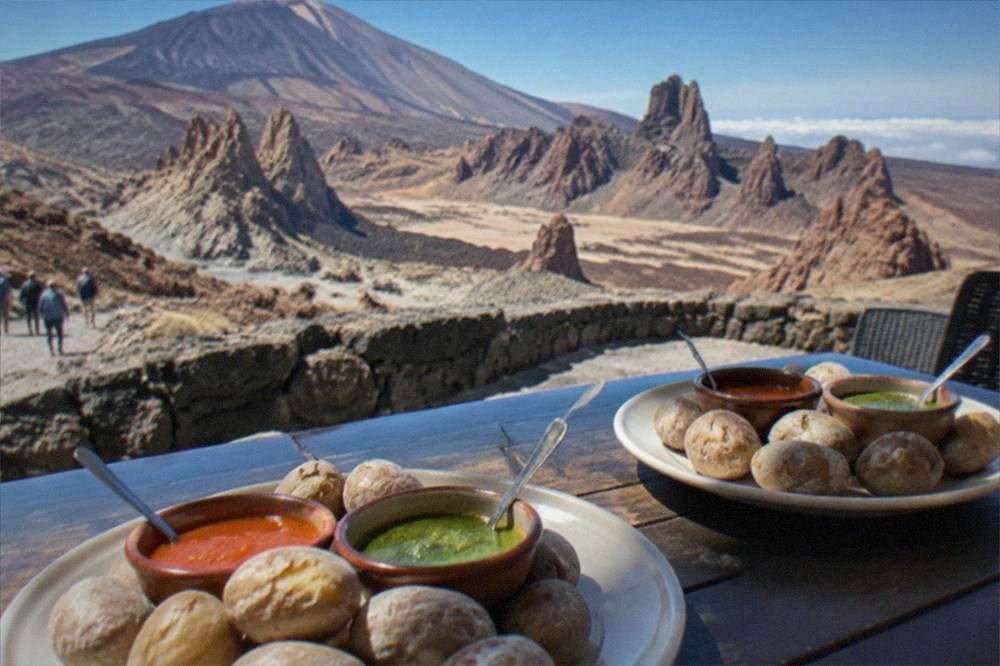
The Canaries are known for papas arrugadas served with mojo sauces, gofio, fresh fish, Canarian cheeses and their own wines grown on volcanic soil. On Tenerife specifically, the guachinches, informal eateries attached to wine growers in the north, pour the island's own vintages, and the Tenerife food guide covers the local dishes in full.
What's so special about the Canary Islands?
The combination is what makes them special: AEMET's climate normals show winter means around 18 degrees Celsius at sea level, the sea stays between 19 and 24 degrees all year on NOAA's series, and the islands hold a 3,715 m volcano, laurel forests, and a resident population of pilot whales that the World Cetacean Alliance protects inside a designated Whale Heritage Area. Few places on earth put all of that within one hour's drive.
Which country do the Canary Islands belong to?
Spain. The Canary Islands are a Spanish autonomous community, and although they lie far closer to Africa than to the Spanish mainland, their government, currency, entry rules and official tourism bodies are all Spanish.