Tenerife vs Lanzarote
Two of the most visited Canary Islands, compared on the facts that matter: scenery, weather, getting around, permits and what each island charges visitors.
Short answer
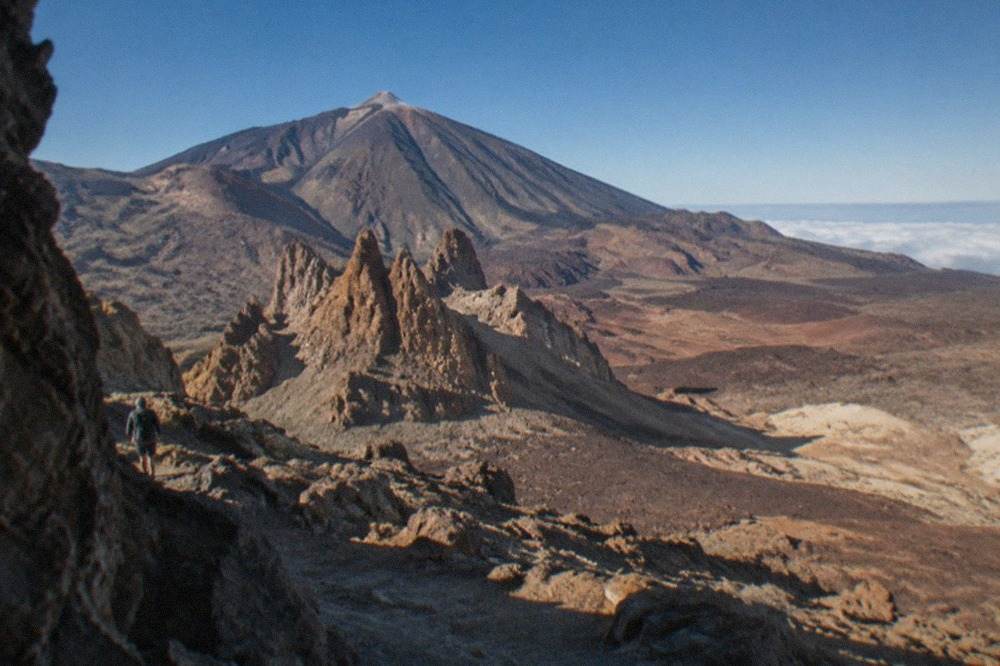
Tenerife suits travellers who want a big, varied island with a 3,715 m volcano, year-round whale watching and both busy resorts and quiet old towns. Lanzarote suits travellers who want a smaller, drier island built around one dramatic volcanic landscape. Neither is objectively nicer; they serve different trips.
Two islands, one archipelago, and a question British holidaymakers ask more than almost any other: Tenerife or Lanzarote? Both sit in the Canary Islands, both winter at comfortable temperatures, and both fly direct from a long list of UK airports. The honest answer is that they are different products. Tenerife is the largest and most populous of the Canaries, home to Spain's highest peak and a national park that UNESCO inscribed on its World Heritage list in 2007, while Lanzarote is a smaller, drier island whose identity is bound up with the volcanic landscape of Timanfaya National Park in its west. This site is a Tenerife resource, so every Tenerife figure below comes from an official source, and where the verified facts hold no number for Lanzarote, this page says so plainly rather than inventing one. For the wider island-by-island picture, see which Canary Island is best and the Tenerife vs Gran Canaria comparison.
Which Is Nicer, Lanzarote or Tenerife?
Neither island is objectively nicer, because they optimise for different holidays: Tenerife packs a 3,715 m volcano, laurel forests in Anaga, golden and black sand beaches, and two full-scale resort zones into one island of about 960,000 people, while Lanzarote is a smaller, quieter island organised around a single dramatic volcanic landscape and a low-rise, artist-shaped built environment. What counts as nicer depends entirely on whether you want variety or intensity.
"Nicer" is a word that hides a real choice. Tenerife's variety is measurable: the island holds Teide National Park, 18,990 hectares declared a national park by decree of 22 January 1954 and the most visited park in Spain's national park network, with 5,242,653 visitors recorded in 2024. It also holds the Anaga massif in the northeast, the cliffs at Los Gigantes which Turismo de Tenerife describes as towering up to 600 m, and a south coast built for swimming and boat trips. A visitor can drive between alpine rock, subtropical forest and a grey-sand resort beach in a single day.
Lanzarote's appeal runs the other way. It is a smaller island, and its landscape is dominated by the volcanic field of its western national park, a terrain of craters and black lava that defines nearly every visit. The built environment is famously low-rise and restrained, shaped by the island artist César Manrique, which gives the resorts a quieter, more uniform character than Tenerife's busier south. Travellers who want one strong impression, a base for a week and short drives tend to report that Lanzarote feels calmer. Travellers who want a new landscape every day tend to report the opposite.
The fair summary is this: Lanzarote is more coherent, Tenerife is more varied. A first-time Canary Islands visitor with a car and a full week gets more contrast from Tenerife; a visitor who wants a simple, sun-focused week with one or two excursions often finds Lanzarote easier. Both answers appear constantly in traveller discussions, and both are defensible, because the question is really about the shape of the holiday rather than the quality of the island.
Which Is Better, Tenerife or Lanzarote?
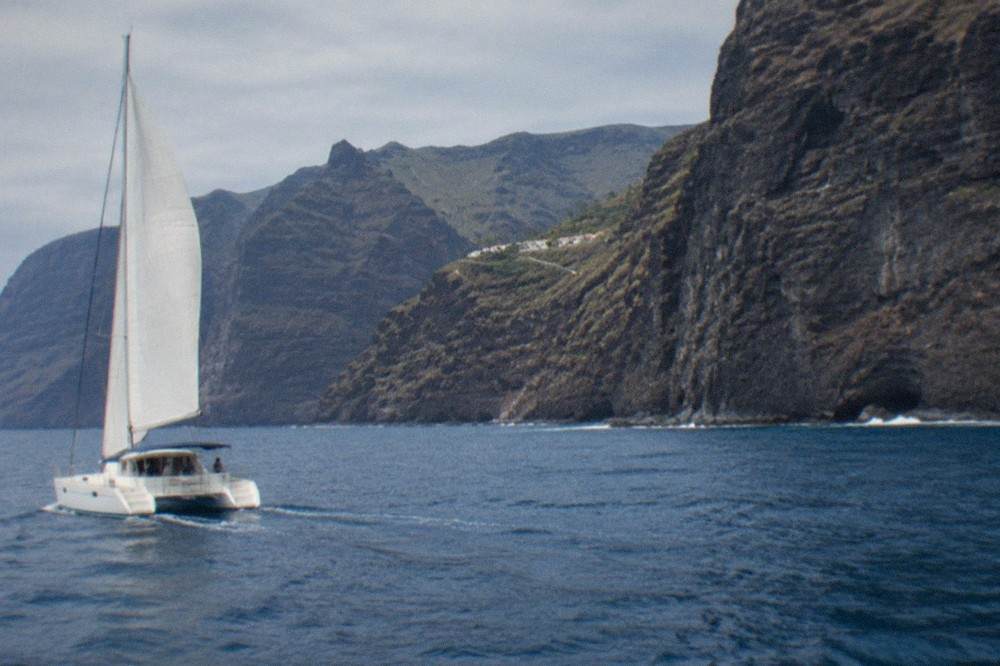
Tenerife is the better choice for travellers who want whales and dolphins from a boat, a walkable 3,715 m volcano with a cable car, two large water and animal parks, and a choice between a lively south and a greener north. Lanzarote is the better choice for travellers who want a compact island, a striking volcanic landscape and fewer moving parts. On activities alone, Tenerife's list is longer; on simplicity, Lanzarote wins.
Break the decision into what you actually book. On Tenerife, the standout experiences are the sea and the volcano. The waters between Tenerife and La Gomera hold what the World Cetacean Alliance calls a unique resident population of pilot whales, plus bottlenose dolphins and a migration stop for 21 other cetacean species, inside a Special Area of Conservation. The WCA designated the Tenerife-La Gomera Marine Area a Whale Heritage Area in January 2021. Boat trips run year round from Los Cristianos, Costa Adeje and Los Gigantes, and the activity is regulated by Decreto 178/2000, which forbids approaches within 60 m, caps speed at 4 knots within 500 m and requires authorised boats to fly the Barco Azul flag.
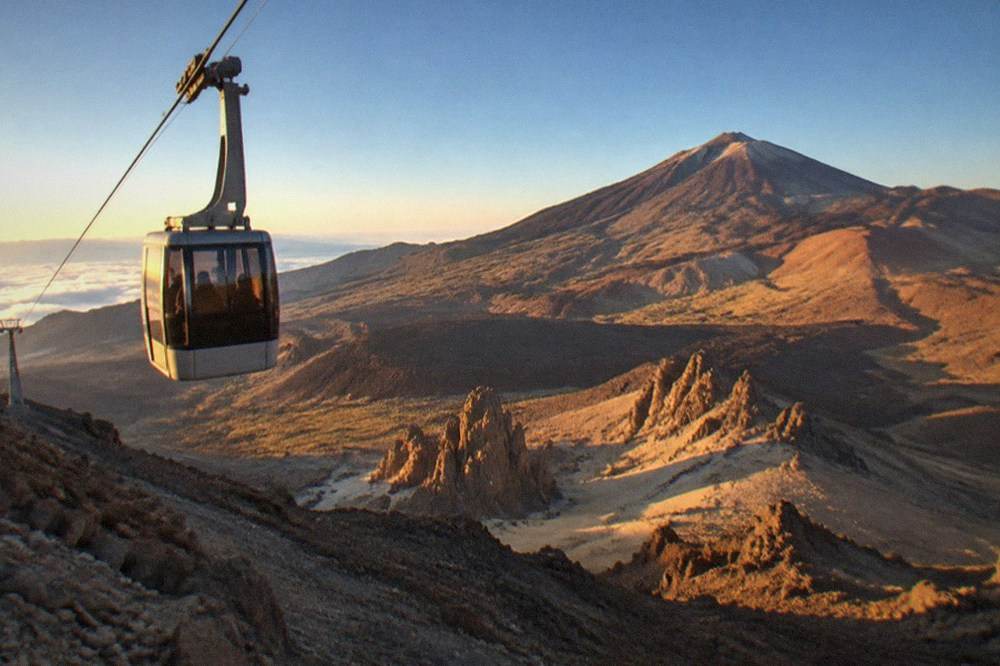
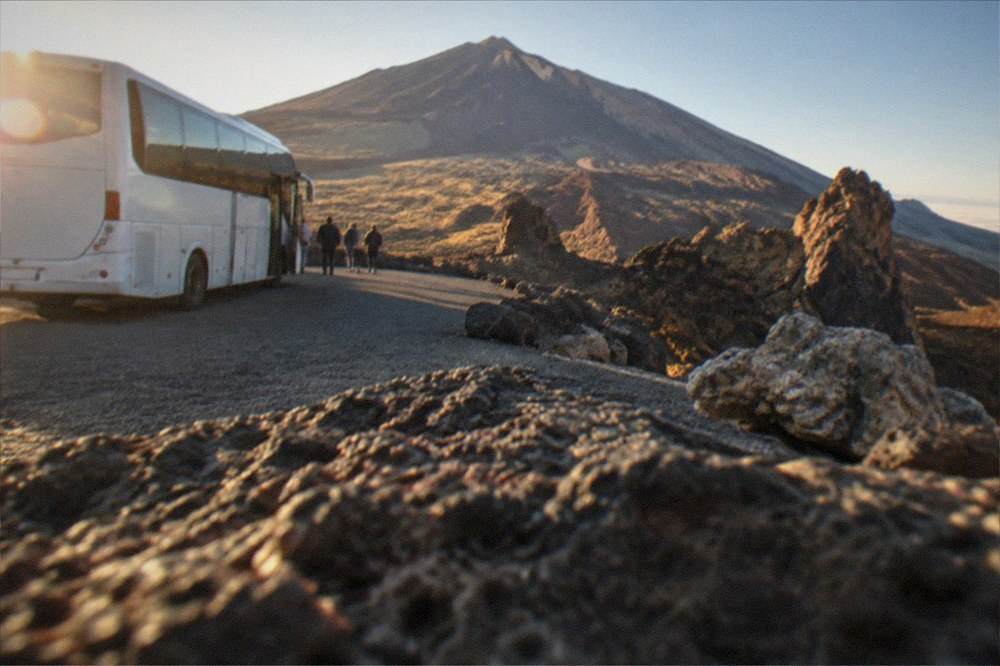
The volcano is the other half. Mount Teide stands at 3,715 m in the figure Spain's own sources give, and UNESCO, inscribing the park in 2007, describes it as rising 7,500 m above the ocean floor and regarded as the world's third-tallest volcanic structure. The cable car runs from a base station at 2,356 m to La Rambleta at 3,555 m, and the crater trail is a separate, permit-only route booked through Tenerife ON. The Teide summit permit guide covers that process in full.
Lanzarote's headline excursion is its volcanic park, plus a set of Manrique-designed attractions, cave systems and beaches that are typically reached in short drives from a single base. It is a strong, coherent week. What it does not offer is the range: there is no resident whale population of the kind the Tenerife-La Gomera marine area holds, no peak you can ascend by cable car, and no equivalent to the pairing of Siam Park and Loro Parque, which Loro Parque's own release says Tripadvisor awarded the Travellers' Choice for best water park in the world for a fifth consecutive year.
If your holiday is built around two or three big booked experiences, Tenerife's list is simply longer, and the island's most-booked products show it: whale watching, Teide by day and by night, and the twin-park ticket.
Is Tenerife or Lanzarote Prettier?
On scenery, Tenerife is the more various island: it combines a snow-capped-in-winter stratovolcano of 3,715 m, the laurel forests of Anaga Rural Park, cliffs at Los Gigantes that rise up to 600 m, and beaches ranging from golden sand at Las Teresitas and Las Vistas to black sand at El Bollullo. Lanzarote is prettier in a narrower, more theatrical sense, with a single dominant volcanic landscape and restrained white-and-green architecture.
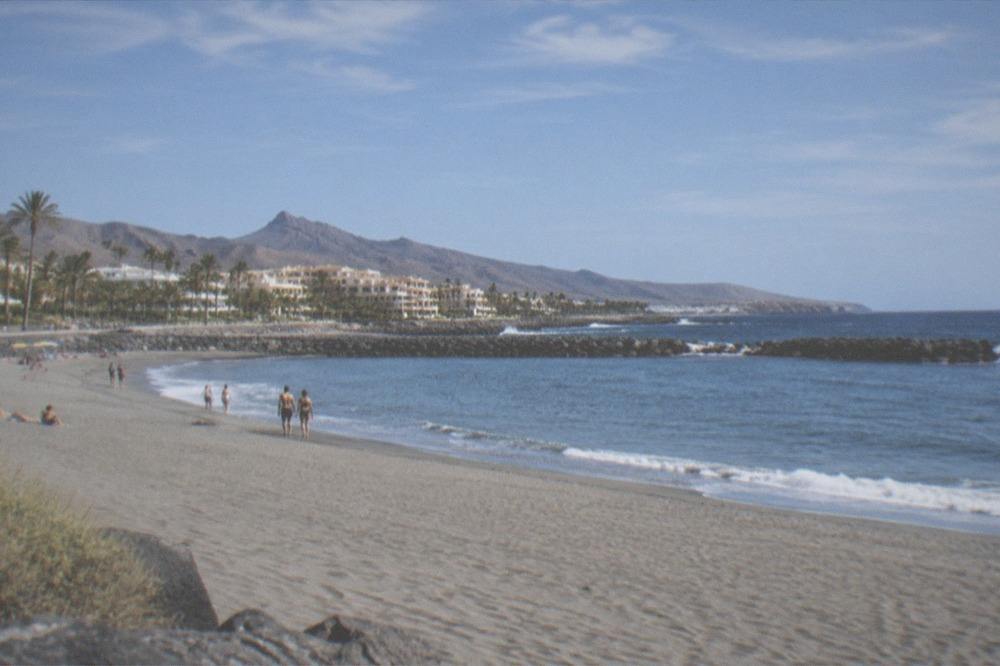
Prettiness is the most contested word in this comparison, and it is worth being precise about what each island actually looks like. Tenerife's south is the resort belt, and parts of it are unremarkable. But the island's edges are extraordinary: Anaga Rural Park in the northeast holds laurel forest, the Roques de Garcia rock formations sit inside Teide National Park, and the north coast mixes black-sand coves like El Bollullo with the historic towns of Garachico and La Orotava. The tourist board describes El Médano as fine grey sand under Montaña Roja, and Playa del Duque as a grey sandy beach, so even the "golden south" is more varied in colour than brochures suggest.
Lanzarote looks unlike anywhere else in Europe. Its volcanic field is a landscape of rust, black and ochre, and the island's strict building codes, white walls and green woodwork give it a visual discipline that many photographers prefer. If your idea of beauty is a single, powerful landscape held consistently across an island, Lanzarote makes a strong case. If your idea of beauty is contrast, forest against desert, cliff against beach, alpine rock against subtropical valley, Tenerife is the richer canvas.
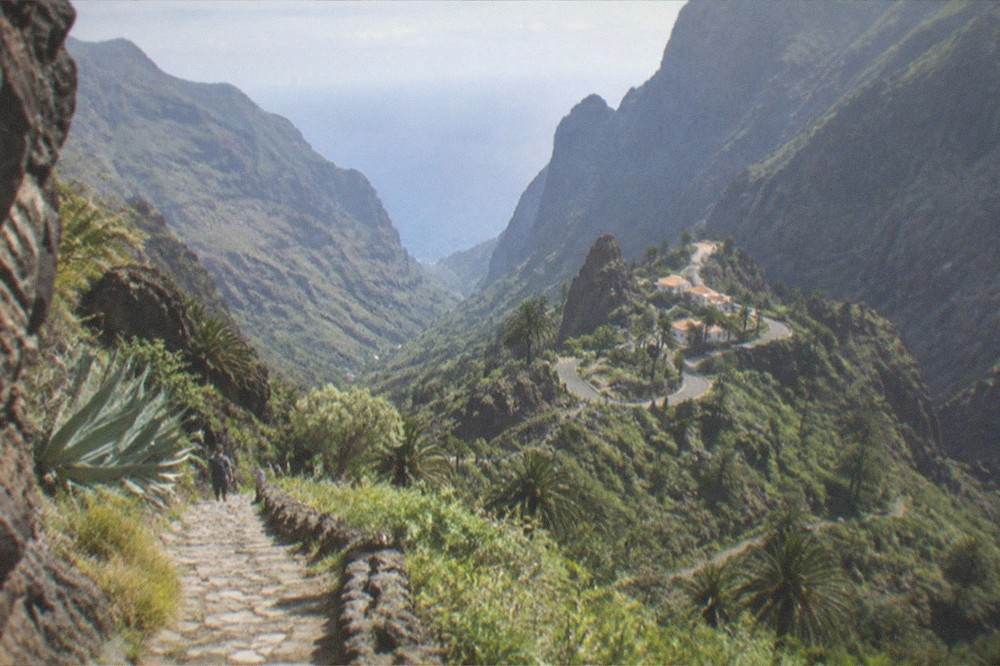
The practical difference matters too. Tenerife's beauty takes driving to reach: Anaga, Masca, the Teno peninsula and the national park are spread around a large island. Lanzarote's beauty is close to everywhere, because the island is small. Neither island is ugly; they simply reward different eyes, and any claim that one is objectively prettier is a preference dressed up as a fact.
What Tenerife Has That Lanzarote Cannot Match
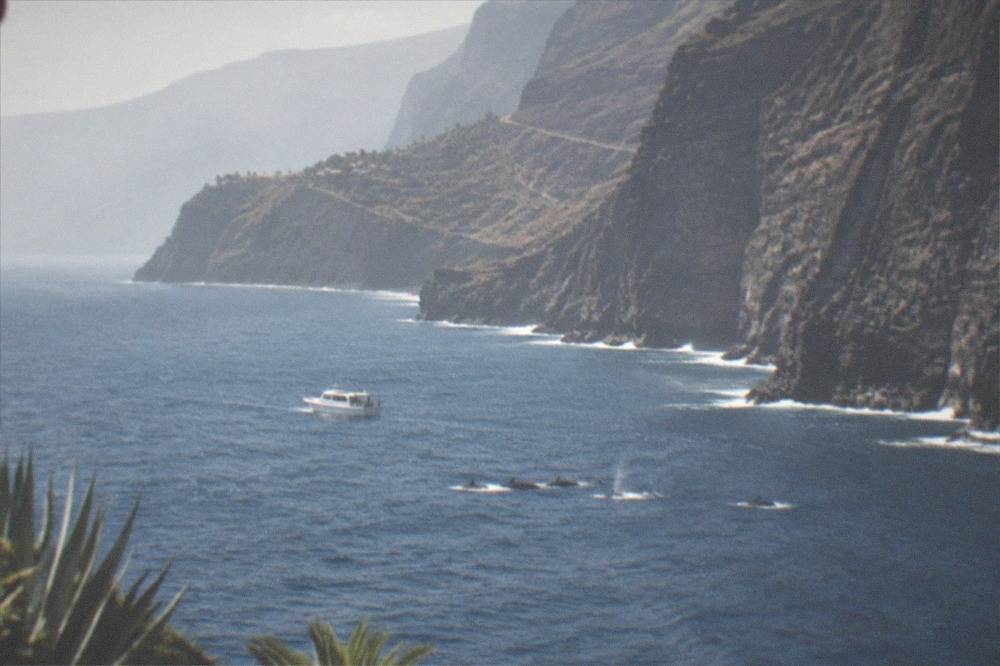
Three things on Tenerife have no Lanzarote equivalent: a resident whale and dolphin population in a protected marine area, watched year round under the rules of Decreto 178/2000; a 3,715 m volcano with a cable car to 3,555 m and a Starlight-certified night sky above it; and a working summit trail, PNT 10, for which permits are released weekly on Tenerife ON. Together they are the strongest argument for choosing Tenerife over Lanzarote.
Start with the sea. The stretch between Tenerife's southwest coast and La Gomera is one of the few places in Europe where whales are seen on most trips in most months, because the pilot whale population is resident rather than passing. The rules that protect them are strict and worth knowing: no approach within 60 m, at most three boats within 500 m, no swimming within 500 m, and authorised boats fly the Barco Azul flag. Trips leave from Los Cristianos, Costa Adeje and Los Gigantes, and the choice ranges from large catamarans to small sailboats.
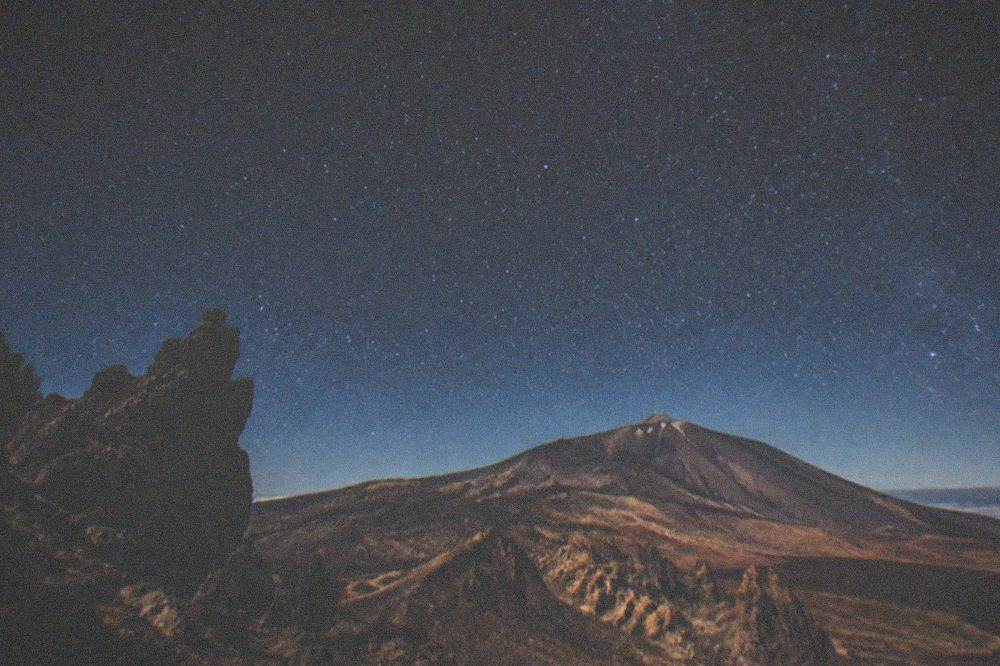
Then the sky. Teide National Park is a Starlight Tourist Destination, listed by the Fundación Starlight in October 2013, and the observatory at Izaña, about 2,400 m up, began work with its first telescope in 1964. Guided visits to the observatory run by prior reservation only. Sunset-and-stargazing tours are the most popular way to use the night sky, with telescopes and, in some cases, astrophotography sessions.
Finally the summit itself. The cable car stops at La Rambleta, 3,555 m, and the crater trail, PNT 10 Telesforo Bravo, needs a personal reservation on Tenerife ON. Every Monday at 07:00 Canary time a new week of slots is released so that 56 days are always bookable. Since Monday 19 January 2026 the 09:00 to 17:00 slots cost EUR 15 for visitors and EUR 6 for residents of the other Canary Islands, with Tenerife residents and children paying nothing. Lanzarote has fine walking, but nothing of this scale, and no equivalent permit system around a single peak.
How Does the Weather Compare?
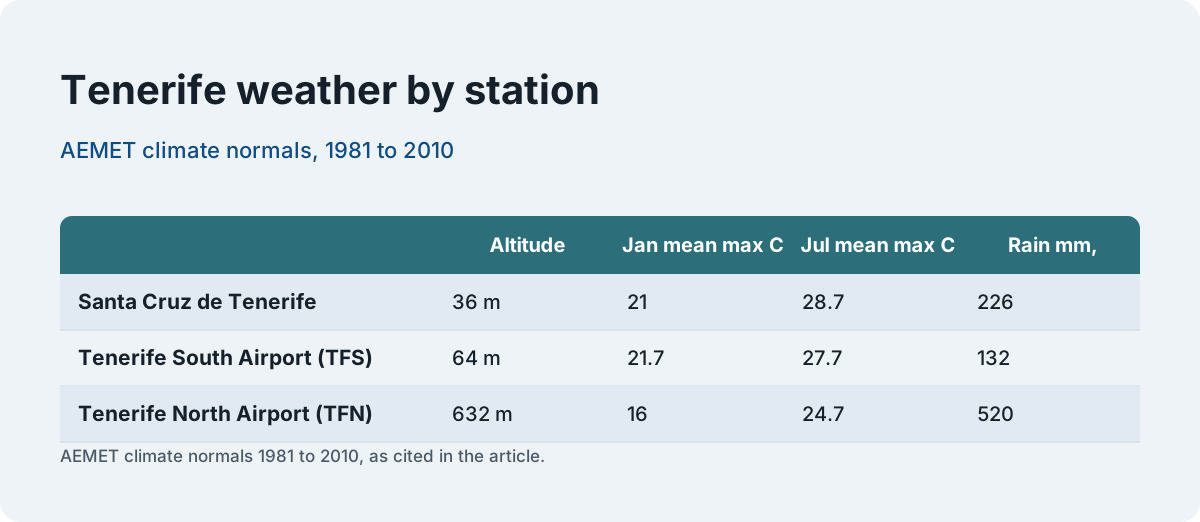
Tenerife is the greener and more varied island, and its own weather stations show why: Santa Cruz records 226 mm of rain per year, Tenerife South Airport 132 mm and Tenerife North Airport 520 mm, all on AEMET's 1981 to 2010 normals, while the sea off the south coast runs from 19.1 C in March to 23.7 C in September and October on NOAA's 1991 to 2020 series. Lanzarote is drier still, but no verified figure for it is held on file here.
The single most useful fact for a Tenerife vs Lanzarote decision is that Tenerife contains several climates at once. AEMET's climate normals, taken at four stations, show a south that is dry and sunny, a north that is green and wetter, and a mountain ridge that is genuinely cold. In January the mean daily maximum is 21 C in Santa Cruz and 21.7 C at Tenerife South Airport, but only 16 C at Tenerife North Airport and 7.5 C at Izaña on the Teide ridge, 2,369 m up. Pack for the volcano, not just the beach.
| Station (AEMET normals 1981 to 2010) | Altitude | Jan mean max C | Jul mean max C | Rain mm, annual |
|---|---|---|---|---|
| Santa Cruz de Tenerife | 36 m | 21 | 28.7 | 226 |
| Tenerife South Airport (TFS) | 64 m | 21.7 | 27.7 | 132 |
| Tenerife North Airport (TFN) | 632 m | 16 | 24.7 | 520 |
| Izaña, Teide ridge | 2,369 m | 7.5 | 23 | not published as an annual total here |
Lanzarote, in general and checkable terms, is the driest of the larger Canary Islands and sits lower and flatter than Tenerife, so it has less of this internal contrast. That is a plus if you want predictable beach weather and a minus if you like the idea of driving from sunshine into cloud forest. No rainfall or temperature figure for Lanzarote appears in the verified sources behind this page, so none is printed: confirm current conditions with the Spanish weather service before you book.
The sea is the other half of a winter-sun decision. Off Tenerife's south coast the surface temperature bottoms out at 19.1 C in March and peaks at 23.7 C in September and October, on NOAA's 1991 to 2020 averages, which is why the whale and dolphin boats run all year and why swimming is realistic even in January.
| Month | Sea surface C, south Tenerife coast (NOAA 1991 to 2020) |
|---|---|
| Jan | 19.9 |
| Mar | 19.1 |
| Jun | 21.4 |
| Sep | 23.7 |
| Dec | 21.1 |
For a month-by-month breakdown of Tenerife's air temperatures, rain and crowds, see the Tenerife weather by month guide.
How Easy Is Each Island to Get Around?
Tenerife is bigger and needs more planning: it has two airports, Tenerife Sur with 13,969,678 passengers in 2025 and Tenerife Norte with 7,174,977, linked by TITSA buses, a tram between Santa Cruz and La Laguna, and white metered taxis, with visitor travelcards at EUR 10 for a day and EUR 50 for seven days. Lanzarote is smaller, with one airport and shorter transfers, which many visitors find easier, though no verified Lanzarote figure is held here.
Size cuts both ways. Lanzarote's compactness means short drives and simple logistics. Tenerife's size means more to see and more decisions to make, starting with which airport you fly into. AENA's current names are Tenerife Sur and Tenerife Norte-Ciudad de La Laguna; the familiar names, Reina Sofía and Los Rodeos, are still heard but are not the official titles. Most UK charter and low-cost traffic uses the south airport, which sits close to the resort belt of Costa Adeje and Los Cristianos.
TITSA's own airport pages list the bus lines: at Tenerife South, lines 10 to Santa Cruz, 40 to Costa Adeje via Los Cristianos, the 711 night bus, the 343 express to Puerto de la Cruz via both airports and 415 to El Fraile and San Isidro; at Tenerife North, lines 20 to Santa Cruz via La Laguna, 30 to Puerto de la Cruz and the 343 express south.
| Airport | TITSA bus lines listed on TITSA's airport pages |
|---|---|
| Tenerife South (TFS) | 10, 40, 711, 343, 415 |
| Tenerife North (TFN) | 20, 30, 343 |
Visitors pay for public transport on Tenerife. The 100% subsidy in force for 2026 applies to resident passes only, held on a personalised Ten+ card, so a visitor buys single tickets, the EUR 10 day travelcard or the EUR 50 seven-day travelcard, all sold at airport ticket machines. The tram runs between Santa Cruz and La Laguna and does not serve either airport; a single tram fare is EUR 1.35 on a transit pass. The full picture is in the Tenerife buses and TITSA guide.
| TITSA / tram product | Price | Who it is for |
|---|---|---|
| Single bus ticket | Priced by route, card or cash | Everyone |
| Day Travelcard | EUR 10 | Visitors |
| 7 Day Travelcard | EUR 50 | Visitors |
| Resident subsidised pass | 100% subsidised in 2026 | Canary residents only, personalised card |
| Tram single | EUR 1.35 on a transit pass, EUR 1.10 by mobile | Everyone |
For Lanzarote, the general and checkable picture is one airport and a short transfer to the main resorts, with car hire the usual way to reach the volcanic park and the beaches. No bus line, fare or transfer time for Lanzarote is held in the verified facts behind this page, so confirm transport details with the operator or the island's own transport information before travelling.
What Will Each Island Cost You?
Neither island charges a tourist tax: no official page read shows a per-night lodging tax in force or approved on Tenerife, and the charges that do exist there are per-booking fees on specific trails, EUR 15 for the Teide summit trail's daytime slots, EUR 40.66 for the Masca gorge and EUR 15 for Barranco del Infierno. Lanzarote's entry charges are not held in the verified facts here, so confirm them with each venue.
The cost comparison most guides get wrong is the tax question. Tenerife has no tourist tax, full stop, and this site says so plainly rather than hedging. What Tenerife does have are per-activity public fees on a small set of protected trails, introduced for the two Teide trails from 19 January 2026, plus the long-standing tickets at Masca and Barranco del Infierno. Everything else, the beaches, the viewpoints, the driving route through the national park, costs nothing.
| Tenerife public charge | Visitors | Other Canary residents | Tenerife residents |
|---|---|---|---|
| Teide summit trail PNT 10, 09:00 to 17:00 slots | EUR 15 | EUR 6 | free |
| Teide trail PNT 07, working days | EUR 6 | EUR 3 | free |
| Teide trail PNT 07, weekends and public holidays | EUR 10 | EUR 5 | free |
| Masca gorge descent (boat not included) | EUR 40.66 | reduced rates apply | free |
| Barranco del Infierno | EUR 15 | EUR 5 | not stated here |
Children are exempt from the Teide trail fees, and the official booking page shows the age band that applies. The cable car is a separate operator ticket: EUR 42.00 for a non-resident adult return in 2026, EUR 21 for a child aged 3 to 13, shown as a price from on the operator's page. Note the operator's access rules: people with cardiovascular conditions, pregnant women and children under 3 may not ride, because of the altitude.
On everyday spending, the Canaries apply IGIC rather than VAT, and the tax agency's table shows 7% on everyday goods, with 0%, 3% and 15% bands for other categories; non-resident travellers can claim IGIC back on qualifying purchases. Lanzarote applies the same Canary tax system, so the two islands do not differ on sales tax. Resort prices in both islands' main tourist zones are broadly similar in character, seasonal and set by the market, and no verified price comparison between the two islands is held here, so none is invented.
How Far Is Lanzarote to Tenerife?
The verified sources behind this page hold no distance or direct crossing between Lanzarote and Tenerife: Fred. Olsen Express's route list shows Los Cristianos serving San Sebastián de La Gomera in 50 minutes, Santa Cruz de La Palma in 150 minutes and Valverde in 140 minutes, and Santa Cruz serving Agaete on Gran Canaria in 80 minutes, with no Lanzarote route listed, so the practical link between the two islands is by air and you should confirm current options with the airlines and ferry operators directly.
This is the question where inventing a number would be easy and wrong. Lanzarote lies to the northwest of the archipelago and Tenerife in its centre, and the two are not neighbours in the way Tenerife and La Gomera are. The ferry operators whose route lists are verified here serve the central and western islands from Tenerife, not Lanzarote. Inter-island flights connect the Canary airports, and AENA's statistics show both Tenerife airports handling large inter-island volumes, but no journey time or distance figure for a Tenerife to Lanzarote crossing is held in the verified facts, so this page states none.
The practical implication for planning is simple. Combining the two islands on one trip is possible, but it is a flight, not a day trip, and it eats a half day each way. If you are choosing one island for a week, choose it on its own merits rather than on the assumption you can hop across. If you want a genuine island-hopping day trip from Tenerife, La Gomera is the one that works: the ferry from Los Cristianos takes 50 minutes, and the La Gomera day trip guide covers the crossings and what a day there holds.
Common Questions About Tenerife vs Lanzarote
is lanzarote nicer than tenerife?
Not objectively. Lanzarote is calmer, more visually uniform and easier to get around, with one dominant volcanic landscape. Tenerife is far more varied, with a 3,715 m volcano, laurel forest in Anaga, cliffs up to 600 m at Los Gigantes and a year-round whale watching season. "Nicer" depends on whether you value coherence or contrast.
is tenerife or lanzarote better?
Tenerife is better for booked experiences: whale and dolphin trips under Decreto 178/2000, the Teide cable car to 3,555 m, stargazing in a Starlight Tourist Destination, and Siam Park and Loro Parque. Lanzarote is better for a simple week in one place with short drives. Longer activity list, Tenerife; simpler logistics, Lanzarote.
Which is prettier, Lanzarote or Tenerife?
Lanzarote is prettier if your ideal is a single dramatic landscape, black lava fields and restrained white architecture. Tenerife is prettier if you want contrast: golden sand at Las Teresitas and Las Vistas, black sand at El Bollullo, the Roques de Garcia, and forest in Anaga. Both are legitimate answers.
how far from tenerife to lanzarote
No distance or direct ferry crossing between the two islands is held in the verified sources here. Fred. Olsen Express's route list shows no Lanzarote route from Tenerife; its Tenerife sailings serve La Gomera, La Palma and El Hierro from Los Cristianos and Gran Canaria from Santa Cruz. The practical link between Tenerife and Lanzarote is an inter-island flight, so confirm options with airlines directly.
which is better, lanzarote or tenerife?
For most first-time visitors wanting a full week of varied activities, Tenerife's range wins: the volcano, the whales, the parks and the old towns of the north. For a quieter, lower-effort sun holiday built around one striking landscape, Lanzarote is the better fit. Decide on the shape of your week, not on a label.
The choice between these two islands is genuinely a choice between two kinds of holiday, and the facts above let you make it with open eyes: Tenerife for variety, scale and the biggest bookable experiences in the archipelago, Lanzarote for compactness and one unforgettable landscape. Whichever way you lean, this Tenerife Travel Guide holds the verified detail, from permits and bus lines to beaches and month-by-month weather, for planning the Tenerife half properly.