Tenerife North vs South: Which Side Should You Choose?
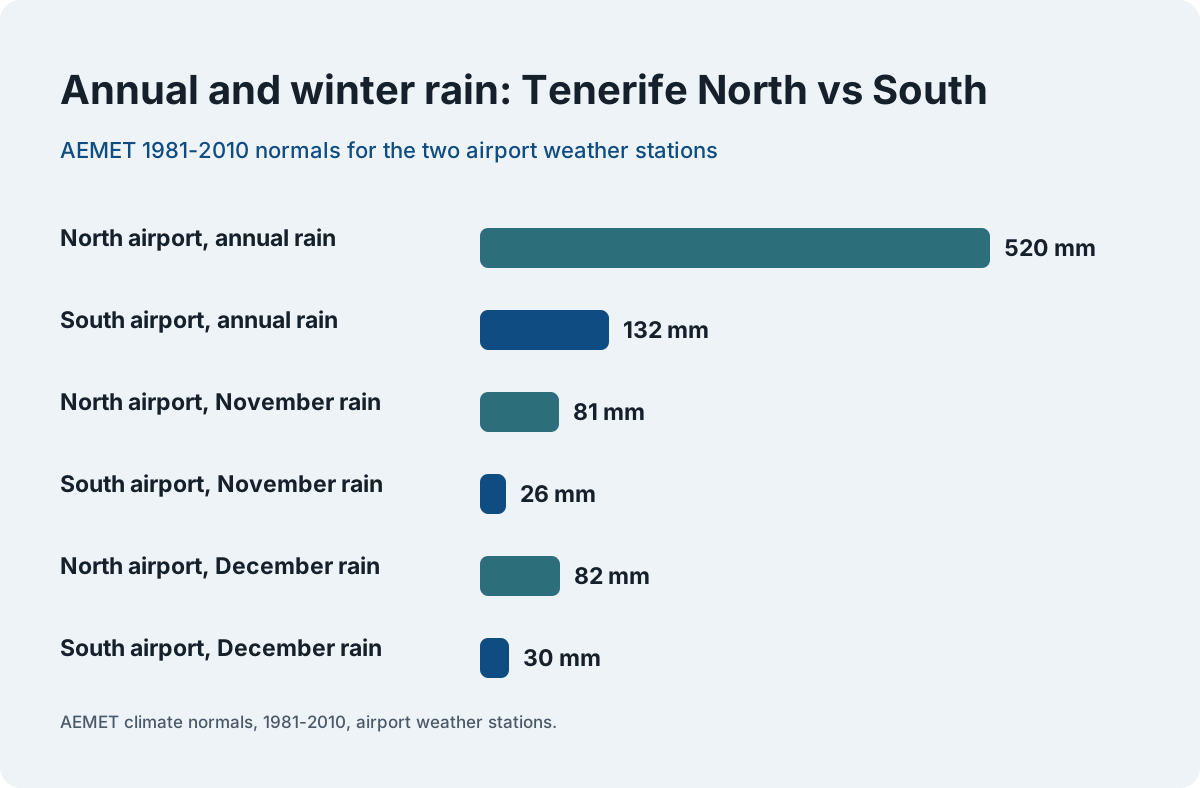
AEMET's normals put 520 mm of rain a year on the station at Tenerife North Airport and 132 mm on the station at Tenerife South Airport. Everything else about the north-versus-south question follows from that one difference.
Short answer
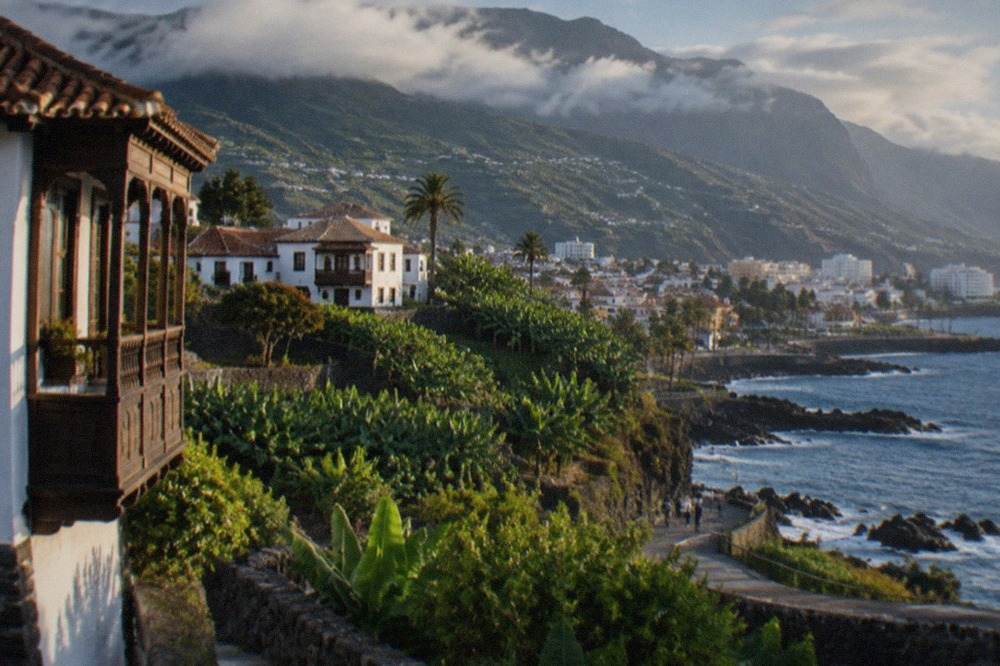
South Tenerife is warmer, drier and holds the main resort belt; the north is greener, with the island's oldest towns, gardens and laurel forests. Fly into the airport nearest your base: both sit on TITSA bus lines and the 343 express links them.
AEMET's climate normals put 520 mm of rain a year on the weather station at Tenerife North Airport and 132 mm on the station at Tenerife South Airport, two airfields serving the same island. That pair of numbers is the heart of the north-versus-south question. The same trade-wind system that keeps the south dry and bright soaks the green north, and much else follows from it: where the resorts clustered, where the beaches were developed, where the boat trips leave from and which airport most holiday flights use. This Tenerife Travel Guide compares the two halves on station records, AENA's passenger figures and the tourist board's own descriptions, so the choice rests on data rather than folklore.
Is It Better to Fly to Tenerife North or South?
Choose the airport that matches your base: Tenerife South, AENA's Tenerife Sur, is the holiday gateway beside Costa Adeje, Los Cristianos and Playa de las Américas, and it handled a record 13,969,678 passengers in 2025, while Tenerife Norte-Ciudad de La Laguna served 7,174,977 and suits Puerto de la Cruz, Santa Cruz de Tenerife and La Laguna. TITSA lists bus lines at both airports, including the 343 express that links the two, so neither choice leaves you stranded.
The split is lopsided, and AENA's 2025 statistics show how lopsided. Tenerife South, which many travellers still call Reina Sofia, passed its previous record and finished the year on 13,969,678 passengers, up 1.7 per cent. Tenerife North, familiarly Los Rodeos, handled 7,174,977. Those are AENA's formal names, and the familiar ones appear here only once, as "also known as", because the old names are not the airport operator's current titles.
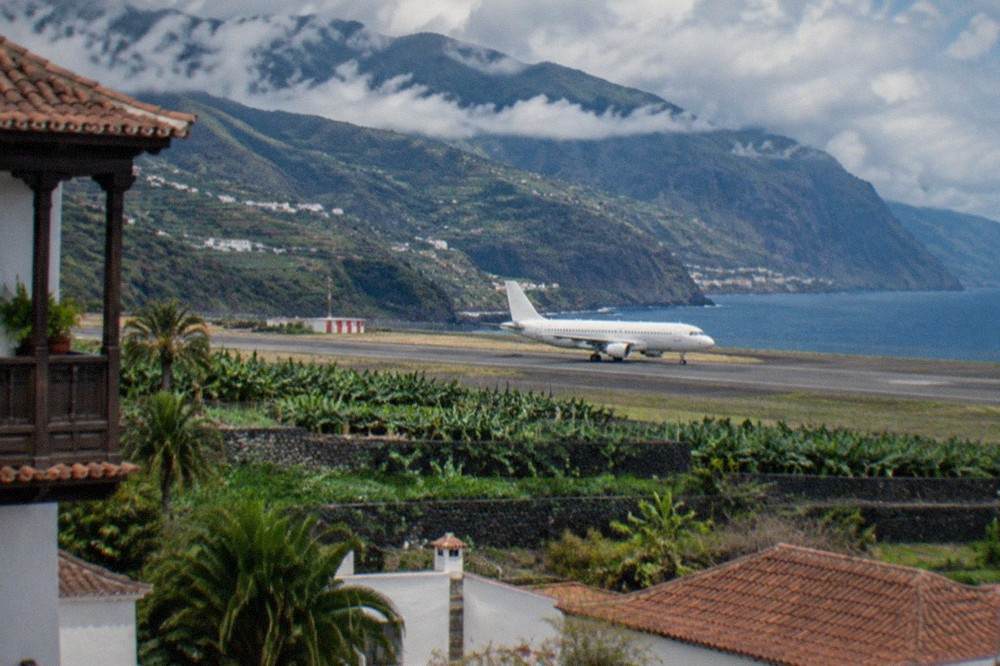
The practical rule is simple: match the airport to the first night's bed. Flying into the south and staying in Puerto de la Cruz, or the reverse, means crossing the island on arrival, which the 343 express makes possible but not painless with luggage. The Tenerife South Airport guide covers the lines and transfer options on that side, and the Tenerife North Airport guide does the same for the north.
| Tenerife South (TFS) | Tenerife North (TFN) | |
|---|---|---|
| AENA's formal name | Tenerife Sur | Tenerife Norte-Ciudad de La Laguna |
| Also known as | Reina Sofia | Los Rodeos |
| Passengers 2025 | 13,969,678, an all-time record | 7,174,977 |
| TITSA lines at the airport | 10, 40, 711, 343, 415 | 20, 30, 343 |
| Nearest bases | Costa Adeje, Los Cristianos, Playa de las Américas | Puerto de la Cruz, La Laguna, Santa Cruz de Tenerife |
TITSA's own airport pages are the source for those line numbers, and they are worth reading before you plan. At the south, line 10 runs to Santa Cruz, line 40 to the Costa Adeje bus station via Los Cristianos, the 711 is a night bus linking Santa Cruz, the airport, Los Cristianos and Costa Adeje, the 343 express runs from Puerto de la Cruz to Los Cristianos via both airports, and the 415 serves El Fraile and San Isidro. At the north, line 20 runs to Santa Cruz via La Laguna, line 30 to Puerto de la Cruz, and the 343 heads south. No tram runs to either airport, a point Metrotenerife's own fares page makes by omission: the tram is a city service between Santa Cruz and La Laguna.
Where Is Hotter, North or South Tenerife?
The south is warmer and much drier on AEMET's station records. Tenerife South Airport, at 64 m, averages a 21.7 C mean daily maximum in January and 27.7 C in July; Tenerife North Airport, at 632 m, averages 16 C and 24.7 C for the same months. The north station records 520 mm of rain a year on 64 days with at least 1 mm, the south 132 mm on 15.2 days. These are 1981-2010 normals.
The stations tell the story month by month, and the gap never closes. In August the south averages a 28.4 C mean daily maximum against 25.7 C in the north; in December it is 22.8 C against 17.1 C. Rain follows the same pattern in reverse. November dumps 81 mm on the north station and 26 mm on the south; June gives the north 11 mm and the south none at all. AEMET publishes the north airport's annual total as 520 mm on 64 days with at least 1 mm of rain, and the south's as 132 mm on 15.2 days. The north airport's altitude, 632 m against the south's 64 m, explains part of the temperature gap as well.
| Month | North airport mean daily max C | South airport mean daily max C | North rain mm | South rain mm |
|---|---|---|---|---|
| Jan | 16 | 21.7 | 80 | 17 |
| Feb | 16.7 | 22 | 70 | 20 |
| Mar | 18.2 | 23.1 | 61 | 15 |
| Apr | 18.5 | 23.1 | 39 | 7 |
| May | 20.1 | 23.9 | 19 | 1 |
| Jun | 22.2 | 25.4 | 11 | 0 |
| Jul | 24.7 | 27.7 | 6 | 0 |
| Aug | 25.7 | 28.4 | 5 | 1 |
| Sep | 24.9 | 27.9 | 16 | 4 |
| Oct | 22.5 | 26.8 | 47 | 12 |
| Nov | 19.6 | 24.8 | 81 | 26 |
| Dec | 17.1 | 22.8 | 82 | 30 |
Two cautions keep those numbers honest. First, they are mean daily maximums from AEMET's 1981-2010 normals, not mean temperatures and not any single day's forecast. Second, altitude matters as much as latitude. The north airport sits at 632 m, on a plateau where cloud gathers, while the south airport sits at 64 m near the shore. For a starker illustration, the observatory ridge at Izana, at 2,369 m beside Mount Teide, averages a January mean daily maximum of just 7.5 C against 21.7 C at the south airport. The island stacks several climates on top of each other, and the north-south split is only the first layer. The Tenerife Weather by Month guide unpacks the rest.
Sea temperature is a separate dataset with a separate period, NOAA's 1991-2020 series for the south coast, so it should never be quoted beside the air normals as if the two came from one study. That series puts the sea off the south coast at 19.9 C in January, 22.2 C in July and a peak of 23.7 C in September and October, which is why the swimming season stretches well past the British autumn.
Is It Better to Stay in Tenerife North or South?
Most visitors who want a beach-and-pool holiday base south, around Costa Adeje, Playa de las Américas and Los Cristianos, where the resort belt, the water parks and the boat departure points sit. The north, meaning Puerto de la Cruz, Santa Cruz de Tenerife and La Laguna, trades that for old towns, gardens, wine country and walking in Anaga. Neither side is far from Mount Teide, which stands at 3,715 m in the middle of the island.
The south's resort belt runs along the southwest coast through territory the tourist board maps precisely. Costa Adeje and El Duque belong to the municipality of Adeje, Las Vistas to Arona, Los Gigantes to Santiago del Teide. Together with Playa de las Américas and Los Cristianos, they form the contiguous holiday zone where most of the island's hotel capacity sits. The 2025 tourist board balance counted 5,451,268 tourists lodged in hotels and apartments across the island, and the resort infrastructure on the ground shows where the bulk of them sleep.
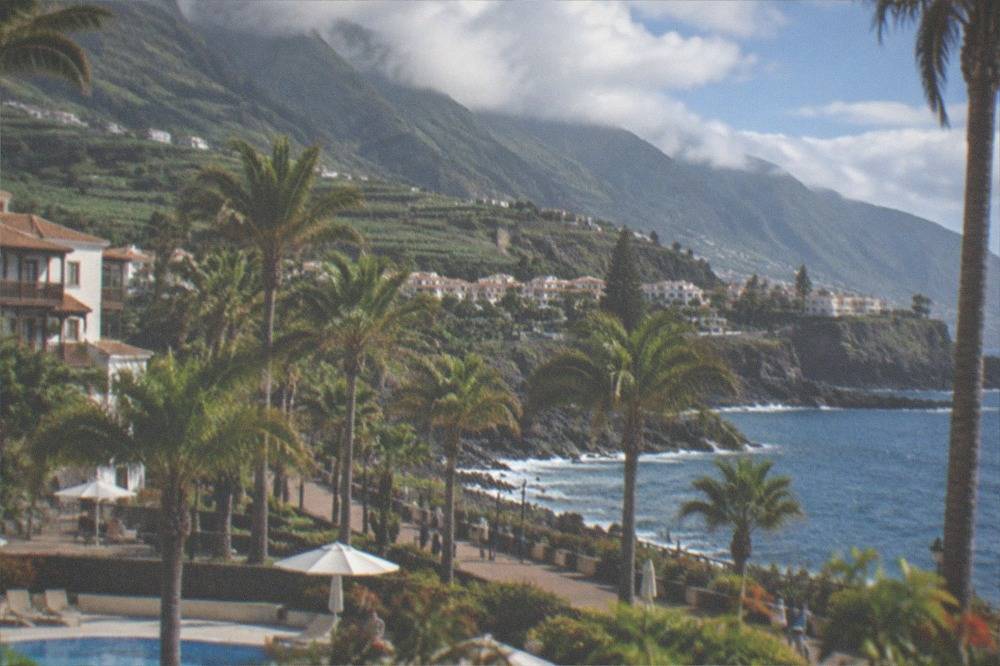
The north answers with a different inheritance. Puerto de la Cruz is the old resort, a town of gardens and seafront promenades that predates the southern package era. Santa Cruz de Tenerife, the capital, holds about 211,957 people, and neighbouring La Laguna about 161,108, against 87,793 in Arona and 50,021 in Adeje, so the north is where the island's urban life actually lives. The Los Cristianos vs Costa Adeje comparison covers the finer split inside the southern belt for readers weighing one resort against another.
Beach expectations should be set by the tourist board's own descriptions, not by brochure shorthand. Its pages describe El Duque, the flagship Costa Adeje beach, as grey sand, Las Teresitas in San Andrés and Las Vistas in Arona as golden sand, El Médano as fine grey sand under Montaña Roja, and El Bollullo in La Orotava as black sand at the foot of a cliff. The island's beaches are volcanic by default; the golden ones are the exceptions, engineered and protected by breakwaters.
| Beach | Municipality | Sand, per the tourist board |
|---|---|---|
| El Duque | Adeje | Grey |
| Las Vistas | Arona | Golden |
| El Médano | Granadilla de Abona | Fine grey |
| El Bollullo | La Orotava | Black |
| Las Teresitas | Santa Cruz, San Andrés | Golden |
How busy each side gets is measurable, but only if the figures are kept apart. Three 2025 totals circulate, and they count different things.
| What is counted | 2025 figure | Series |
|---|---|---|
| Tourists arriving by air, excluding Canary Islands residents | 7,412,046 | ISTAC monthly series |
| All tourists, mainland Spain and foreign | 7,561,659 | FRONTUR, via the tourist board |
| Tourists lodged in hotels and apartments | 5,451,268 | Tourist board balance |
The market-share percentages belong to the lodged figure and to no other. On that measure, the UK sent 2,057,896 lodged tourists in 2025, 37.8 per cent of the total, with Spain second on 1,068,407 and 19.6 per cent. Ireland, a smaller market, grew 11.1 per cent year on year to 220,066. British visitors, in other words, are more than a third of everyone sleeping in island accommodation, and the southern resort belt is where most of that market has historically been housed.
| Market | Lodged tourists 2025 | Share of lodged |
|---|---|---|
| UK | 2,057,896 | 37.8% |
| Spain | 1,068,407 | 19.6% |
| Germany | 442,958 | 8.1% |
| France | 223,159 | 4.1% |
| Ireland | 220,066 | 4.0% |
If the choice still feels close, the tours that sweep the whole island are one way to see both halves before committing your remaining days. The selection below includes exactly that kind of day trip alongside the evening trips that show you the island's middle.
Is Costa Adeje North or South Tenerife?
Costa Adeje is in the south of Tenerife. It belongs to the municipality of Adeje, on the island's southwest coast, in the same contiguous resort belt as Playa de las Américas and Los Cristianos. The tourist board describes its El Duque beach as grey sand, and the neighbouring beaches Las Vistas and Fanabe sit in Arona. The north of the island is the far side: Puerto de la Cruz, La Laguna and Santa Cruz de Tenerife.
The question is asked often enough to be worth a direct answer, and the municipal map settles it. Adeje, the municipality, runs from the coast at Costa Adeje up into the mountains; Arona, its neighbour, holds Las Vistas and the southern end of Playa de las Américas; Santiago del Teide holds Los Gigantes further west. All of it is the south. Nothing in the resort belt is closer to the north airport than the south one.
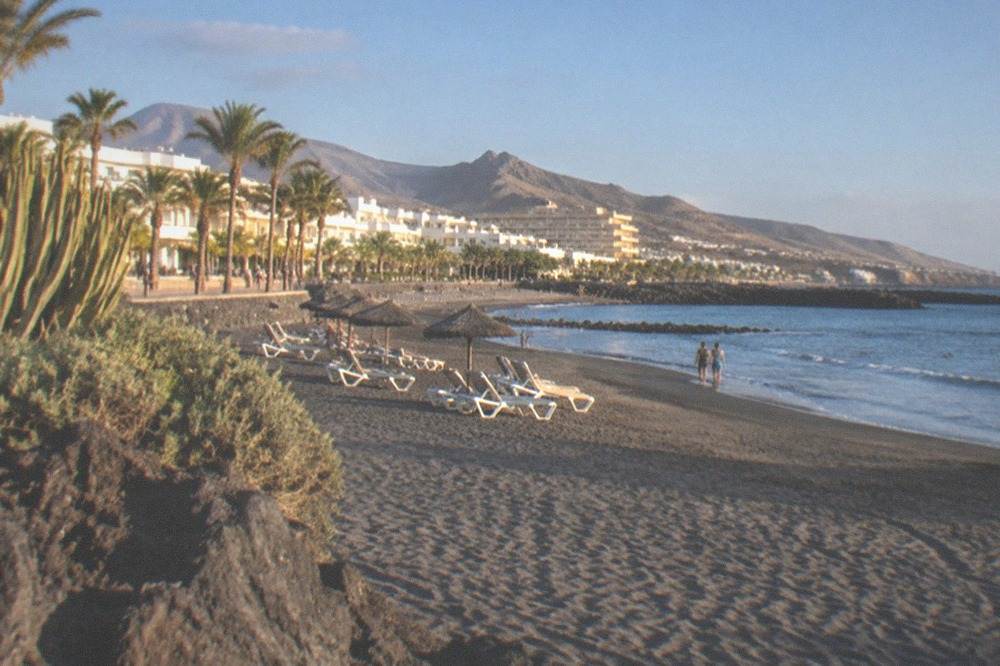
The confusion usually comes from hotel names and transfer lists, where "Costa Adeje" and "Puerto de la Cruz" appear side by side as if they were alternatives in one place. They are alternatives on opposite coasts, and the drive between them crosses the island's mountain spine. Booking a southern hotel and a northern flight, or the reverse, is the classic first-timer's mistake, and it is the reason this guide opened with the airport question.
Is North Tenerife Worth Visiting?
Yes, for most travellers it is. The north holds the UNESCO-listed town of San Cristóbal de La Laguna, the old port of Garachico, which the Trevejo volcano buried in 1706, the Drago Milenario in Icod de los Vinos, a tree officials estimate at 800 to 1,000 years old, and the laurel forests of Anaga Rural Park. Loro Parque, open 09:30 to 17:30 every day of the year, is also in the north at Puerto de la Cruz.
Start with the towns, because they are the north's strongest card. UNESCO describes La Laguna as the first non-fortified Spanish colonial town, and says its layout provided the model for many colonial towns in the Americas. Garachico was the island's trade hub in the 16th and 17th centuries until the Trevejo volcano erupted in 1706, destroyed almost the entire town and buried the old port, and the town that grew back is now known for its natural rock pools rather than its harbour. Icod de los Vinos holds the Drago Milenario, a National Monument since 1917, about 21 m tall with a trunk base about 17 m round; Icod's council says an age of approximately 1,000 years is attributed to it, while the tourist board says over 800, so the honest range is 800 to 1,000 years, and it is an estimate either way.
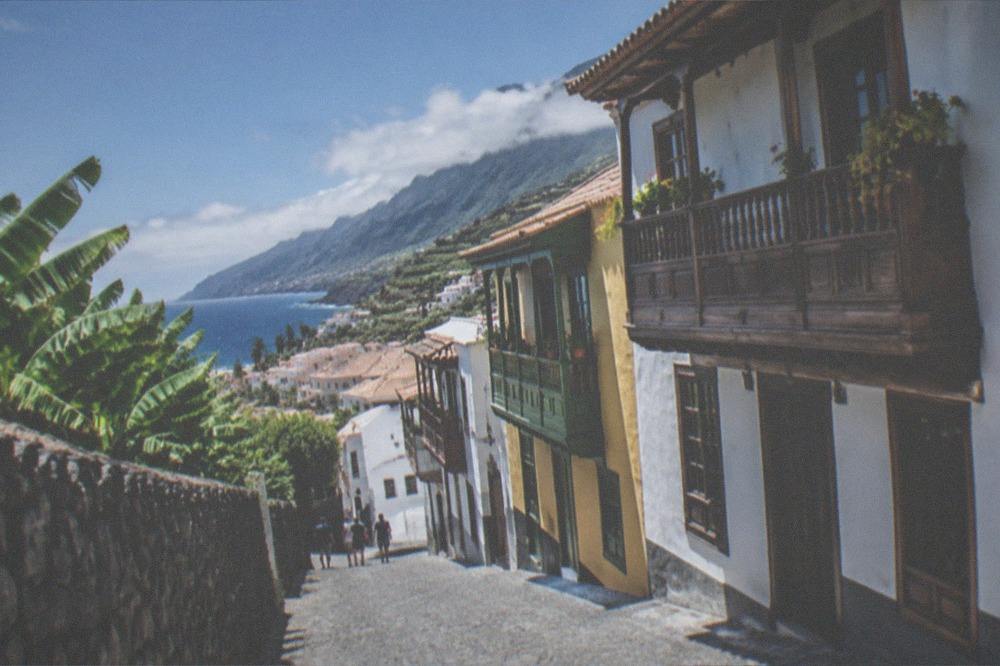
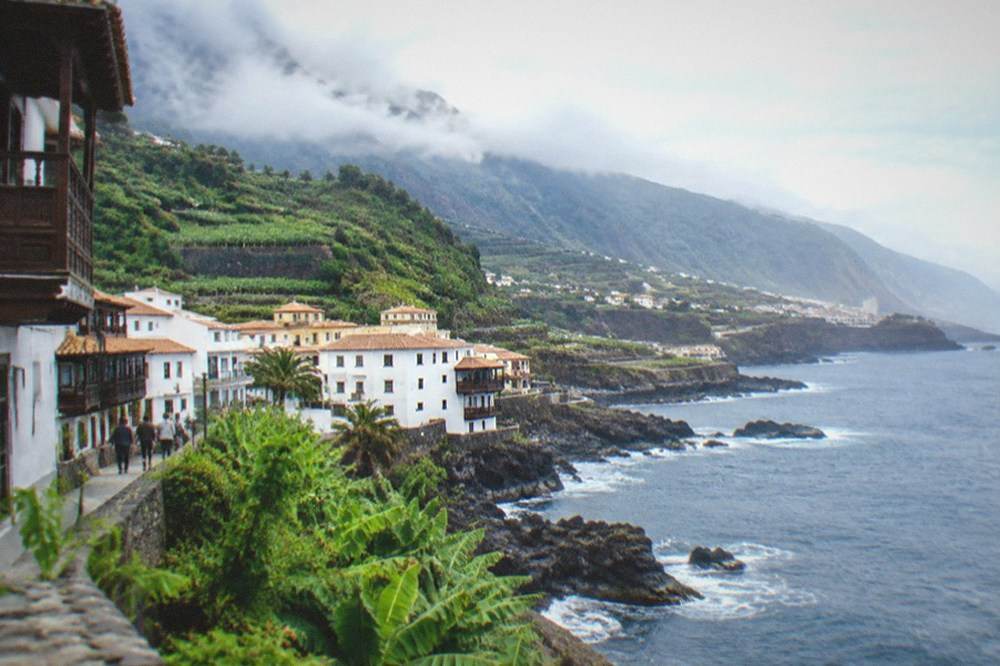
Then there is the landscape. Anaga Rural Park, in the island's northeast, holds laurel forest that survives from a wetter geological age, and parts of it are so protected that the El Pijaral trail, the so-called Enchanted Forest, requires a reservation through Tenerife ON, released on Mondays at 07:00 Canary time and bookable at most 14 days ahead, with organised company tours not permitted there at all. The Cabildo names permit-free alternatives in the same range, the Bosque de los Enigmas trail and the Pista de Las Hiedras. Rainfall is what feeds all of this: the north's 520 mm a year against the south's 132 mm is precisely why one side is laurel forest and the other is a sun deck.
The north also carries the island's cultural weight. Santa Cruz de Tenerife holds the Auditorio de Tenerife, Santiago Calatrava's white building inaugurated in 2003, and the Carnival whose 2027 theme is "Roma: El imperio del Carnaval", with the Queen's Election Gala on 17 February and the Piñata weekend on 26 and 27 February 2027. Loro Parque at Puerto de la Cruz opens 09:30 to 17:30 every day of the year, with its own car park at EUR 7 a day. For readers based in the south, the North Tenerife from the South day-trip guide covers the crossing, and the North Tenerife Road Trip itinerary strings the towns together for drivers.
A guided full-day island tour is the other way to sample the north without committing to it, and the listing below is the one this site rates for that job.
What Does Each Side of Tenerife Do Best?
The south specialises in water and theme parks, whale watching and boat trips: Siam Park opens 365 days a year, and the authorised whale boats depart from Los Cristianos, Costa Adeje and Los Gigantes under Decreto 178/2000. The north answers with gardens, historic towns, wineries and hiking. Mount Teide belongs to neither side; the cable car base station sits at 2,356 m in the middle of the island, and tours collect from both coasts.
The south's water park credentials are on the operator's own pages. Siam Park opens every day of the year, 10:00 to 18:00 from 1 May to 29 October and 10:00 to 17:00 from 30 October to 30 April, and its owner, Loro Parque, credits it with a fifth consecutive Tripadvisor Travellers' Choice award for the world's best water park. Aqualand Costa Adeje and the other southern parks fill out the same belt, and the Water Parks guide compares them in full.
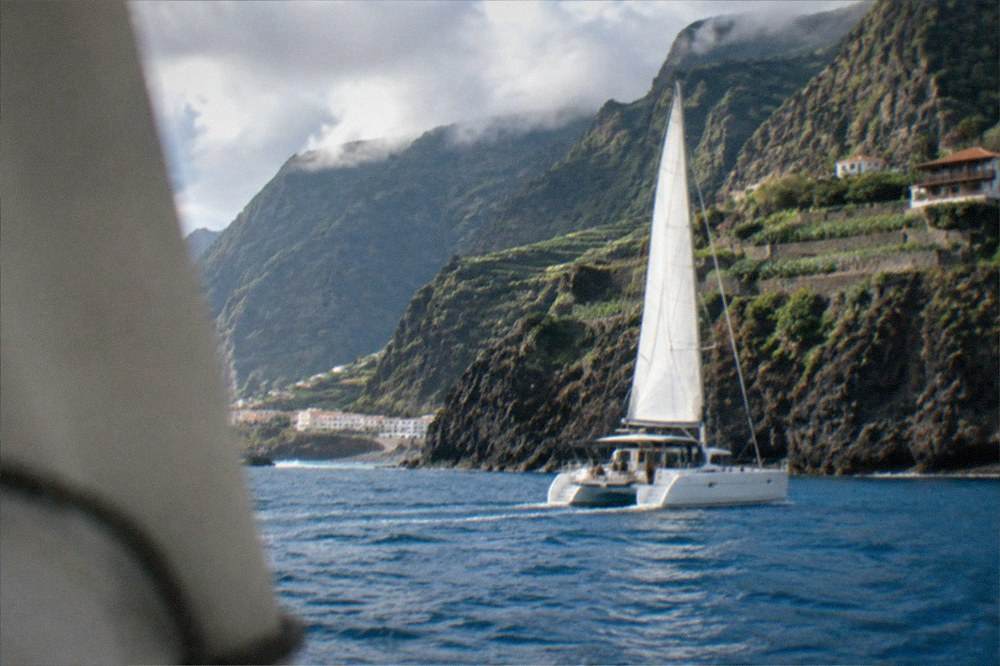
Whale watching is also a southern industry, and a tightly regulated one. Decreto 178/2000 of 6 September governs every authorised boat: no approach within 60 m of a cetacean, no more than three boats within 500 m, a maximum of 4 knots within 500 m, no swimming or diving within 500 m, and no feeding, chasing or circling. Authorised boats must fly the Barco Azul flag, issued with the permit and at each annual renewal. The World Cetacean Alliance designated the Tenerife-La Gomera Marine Area a Whale Heritage Area in January 2021, citing a unique resident population of pilot whales and bottlenose dolphins inside a Special Area of Conservation. The trips listed on this site depart from Los Cristianos, Costa Adeje and Los Gigantes, all on the south and southwest coast, and the sailboat below is the pick of them for a quiet crossing under the cliffs.
The north's strengths are quieter but no less real: the wineries of the Tacoronte and El Sauzal country, the banana plantations around La Orotava, the historic centres, and walking country from Anaga to the Orotava valley. The Teno massif in the far west, home of the Los Gigantes cliffs that the tourist board says tower up to 600 m, sits on the southern side of that divide but shares the green north's character.
Teide, meanwhile, refuses to belong to either coast. Spain's own sources put the peak at 3,715 m, the highest on Spanish soil, and UNESCO, inscribing the national park in 2007, says that rising 7,500 m above the ocean floor it is regarded as the world's third-tallest volcanic structure. The cable car runs from a base station at 2,356 m up to La Rambleta at 3,555 m, and the summit trail beyond is a separate reservation through Tenerife ON, with the 09:00 to 17:00 slots costing EUR 15 for visitors since 19 January 2026. The Teide Summit Permit guide carries the full rules. Because the mountain sits in the middle, the sunset and stargazing trips that show it best collect from both sides, and the Teide by Night experience below is the one this site rates highest for that evening.
How Do You Travel Between Tenerife North and South?
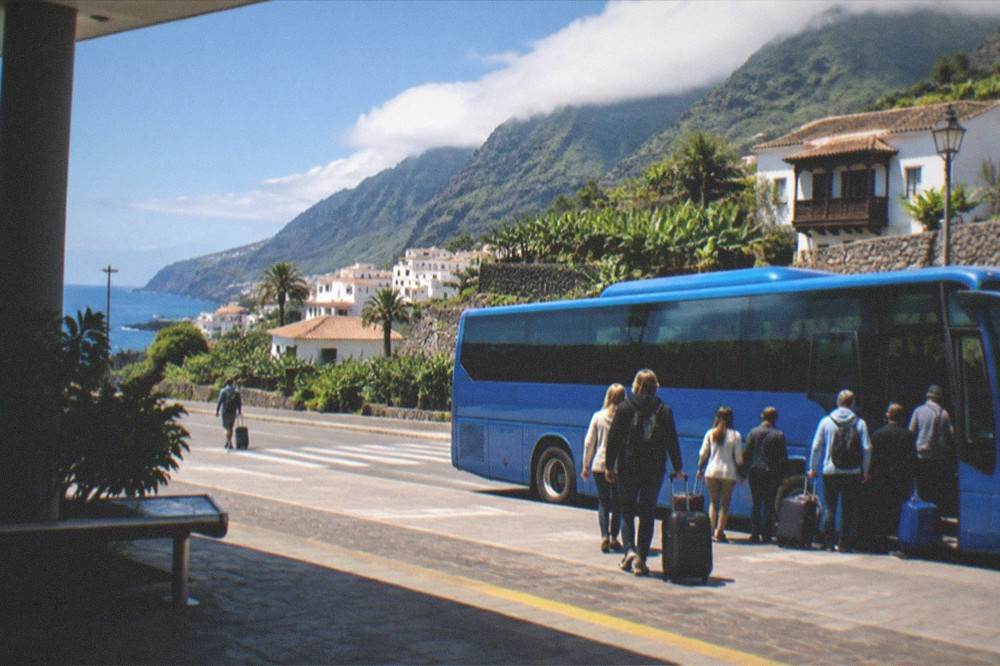
TITSA's line 343 express runs from Puerto de la Cruz to Los Cristianos via both airports, so the two halves are linked by one direct service, and lines 10 and 40 also serve Tenerife South from Santa Cruz and the Costa Adeje bus station. Visitors pay for every journey: single tickets are priced by route, the day travelcard costs EUR 10 and the seven-day travelcard EUR 50. The 2026 free-travel subsidy is for resident passes only.
The resident subsidy deserves a plain statement, because misleading versions of it circulate widely. The Canary government's 2026 measure subsidises resident passes by 100 per cent, and every subsidised pass requires residency in the Canary Islands on a personalised card. Visitors do not qualify. What visitors buy instead is straightforward: single tickets priced by route, paid by card or cash; a same-day return at 10 per cent off on trips of 20 km or more; the EUR 10 day travelcard; and the EUR 50 seven-day travelcard, both sold at airport ticket machines. Two TITSA lines, the Teide and Teno services, are excluded even from the resident passes, which tells you how those mountain routes are priced.
| Ticket | Price | Notes |
|---|---|---|
| Single ticket | Priced by route | Card or cash |
| Same-day return | 10% off | On trips of 20 km or more |
| Day Travelcard | EUR 10 | Visitor product |
| 7 Day Travelcard | EUR 50 | Visitor product |
| Ten+ card | EUR 2 | Wallet top-ups from EUR 2 to EUR 100 |
| Tram single | EUR 1.35 on a transit pass, EUR 1.10 by mobile | Metrotenerife, Santa Cruz to La Laguna |
The tram is worth a line of its own for anyone staying north. Metrotenerife's line connects Santa Cruz and La Laguna, with a single fare of EUR 1.35 on a transit pass or EUR 1.10 by mobile, and it serves neither airport. For airport-to-hotel logistics on either side, the Airport Transfers guide lays out the options, and taxis, which the tourist board describes as white and metered from the start of the trip, with a fixed price negotiable in advance for excursions, fill the gaps the buses leave.
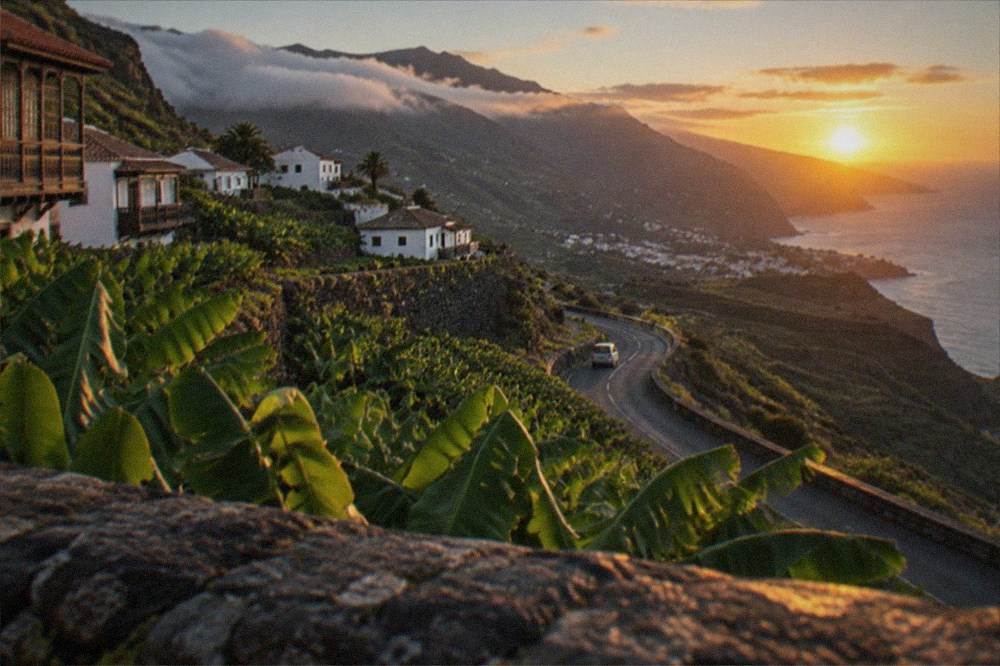
By now the decision usually makes itself. Sun, swimming and boat days point south; towns, gardens, green country and a slower rhythm point north; and the mountain in the middle belongs to everyone. Whichever way you lean, these three trips work from either base.
Common Questions About North and South Tenerife
Is it better to fly into Tenerife North or South?
Fly into the airport nearer your base. Tenerife South sits beside the southern resorts and handled 13,969,678 passengers in 2025; Tenerife North is closer to Puerto de la Cruz, La Laguna and Santa Cruz de Tenerife. TITSA's 343 express calls at both airports, so a wrong choice costs a bus ride, not a holiday.
Is it worth going to North Tenerife?
Yes. The north holds San Cristóbal de La Laguna, described by UNESCO as the first non-fortified Spanish colonial town and the model for many colonial towns in the Americas, the buried old port of Garachico, the Drago Milenario and the laurel forests of Anaga Rural Park. Loro Parque opens 09:30 to 17:30 every day of the year.
Is it better to go to north or south Tenerife?
South for beaches, boat trips and water parks; north for towns, gardens, wine and walking. Families after sun and swimming usually base south. Travellers who want the island's history and green country usually base north and travel south for a beach day.
Do buses connect the two Tenerife airports?
Yes. TITSA's line 343 express runs from Puerto de la Cruz to Los Cristianos via both Tenerife North and Tenerife South airports. TITSA's airport pages also list lines 10, 40, 711 and 415 at the south and lines 20 and 30 at the north.
Which side of Tenerife is better for whale watching?
The south. The whale and dolphin trips listed on this site depart from Los Cristianos, Costa Adeje and Los Gigantes, all on the south and southwest coast. Every authorised boat flies the Barco Azul flag and follows Decreto 178/2000, which bans approaching within 60 m of a whale and swimming within 500 m.