Tenerife South Airport (TFS) Guide
Tenerife South Airport handled 13,969,678 passengers in 2025, an all-time record, and it is the airport most holiday flights to the island use. Here is what the official sources say about its name, its buses and the journey from the terminal to your hotel.
Short answer
Tenerife South Airport (TFS) is AENA's Tenerife Sur airport, the busier of the island's two airports, served by TITSA bus lines 10, 40, 711, 343 and 415. Visitors pay for public transport: single tickets, the EUR 10 day travelcard or the EUR 50 seven-day travelcard.
Tenerife South Airport handled 13,969,678 passengers in 2025, up 1.7% and an all-time record according to AENA, the Spanish airport operator. It is the busier of the island's two airports by a wide margin: Tenerife North recorded 7,174,977 passengers the same year. Most holiday flights from Britain, Ireland, Germany and the rest of mainland Europe land here, in the dry, sunny south of the island, which is also where most of the resorts sit. This guide sets out what the official sources say about the airport: its name and its code, the TITSA bus lines that serve it, the transfer choices, the climate around the field, and the questions arriving passengers actually type into a search bar.
Where Is Tenerife South Airport?
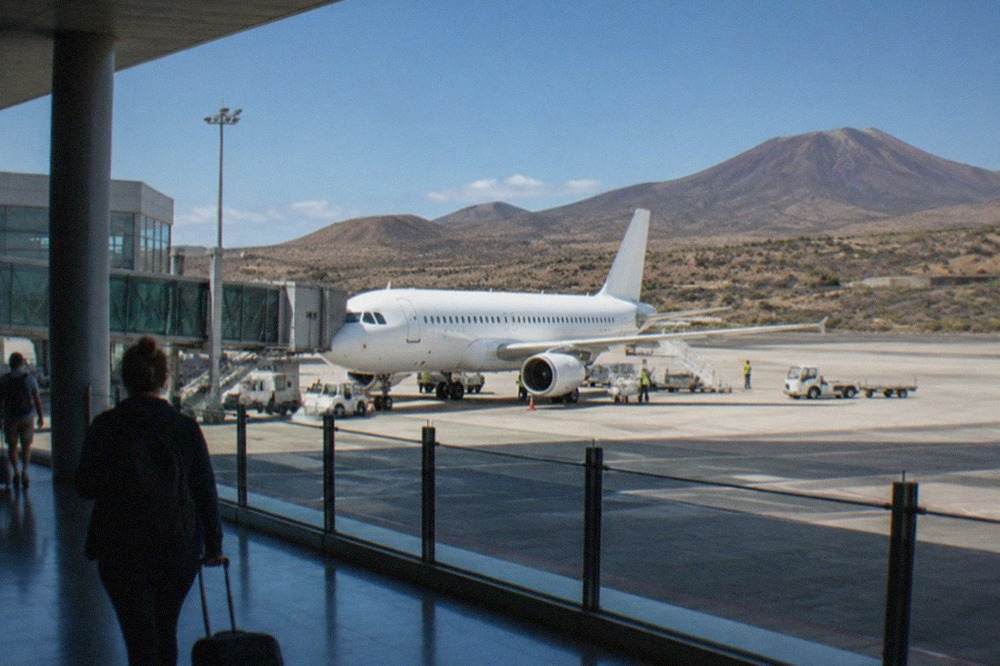
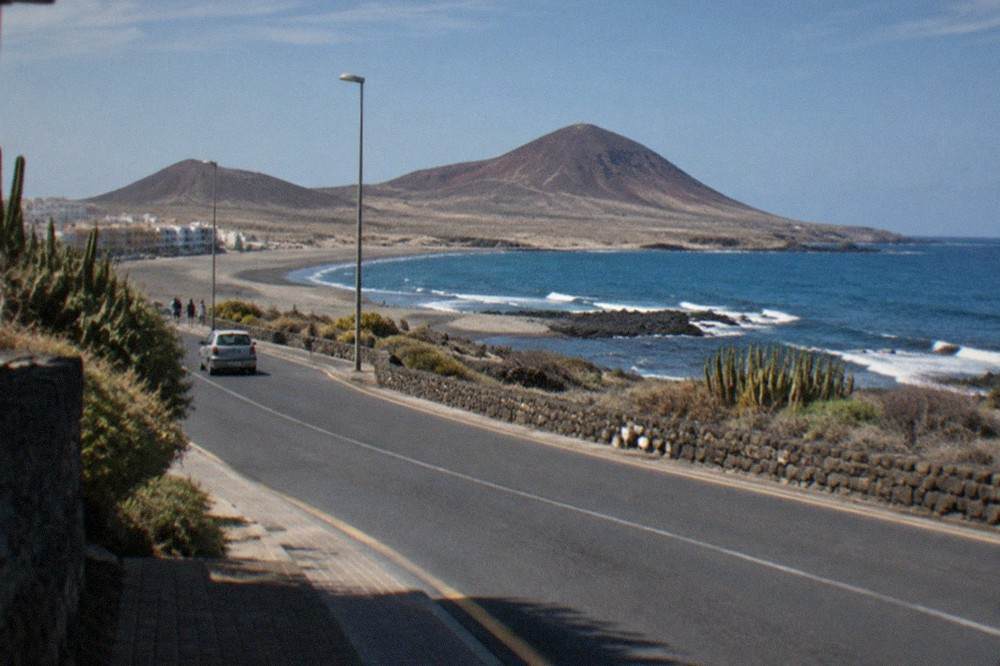
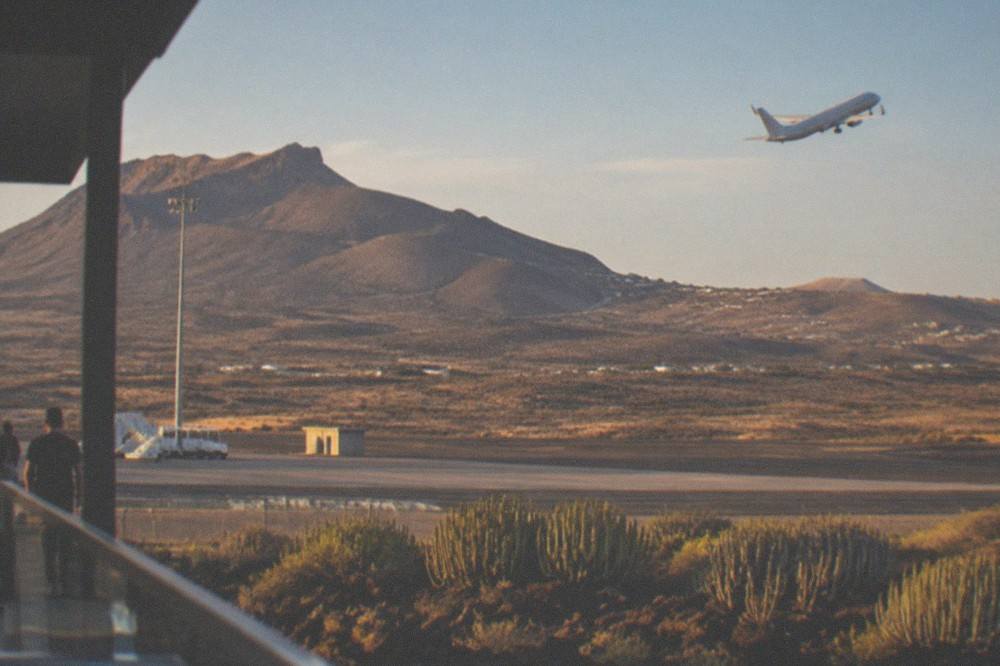
Tenerife South Airport sits in the municipality of Granadilla de Abona on the island's south coast, roughly between the resort areas of Costa Adeje and Los Cristianos to the west and El Medano to the east. Its AENA code is TFS, and AENA's official name for the airport is Tenerife Sur. It is one of two airports on the island, the other being Tenerife North in the municipality of San Cristóbal de La Laguna.
The airport's position is the reason it dominates holiday traffic. The big resort bases, Adeje, Arona and the coast around Los Cristianos, are all in the south of the island, so a flight into TFS puts a passenger within a short drive of most of the hotel stock. The trade-off is distance from the north: Puerto de la Cruz, La Orotava and the Anaga massif all sit on the far side of Mount Teide, and the island's road network means a longer transfer from the south. Our page on Tenerife North vs South works through that choice in detail, and where to stay in Tenerife covers the resort areas themselves.
Geography shapes the weather too. AEMET's climate normals for the Tenerife South Airport station, at 64 m above sea level, record a mean daily maximum of 27.7°C in July and 28.4°C in August, with July recording no measurable rain at all in the 1981 to 2010 normals. The same month at Tenerife North Airport, at 632 m, averages 6 mm of rain. The south is where the sun is, and the airport sits in the middle of it.
Is Tenerife South Airport the Same as Tenerife Sur?
Yes. Tenerife Sur is simply AENA's official Spanish name for the airport that English-speaking airlines and passengers call Tenerife South; the IATA code TFS covers both names and one single airport. The airport is also known familiarly as Reina Sofia, but AENA's current official title is Tenerife Sur, and that familiar name is not the one on the operator's own documents.
The naming causes real confusion, because several different labels point at the same place. A passenger holding a boarding pass that says "Tenerife Sur", a transfer confirmation that says "Tenerife South" and a hotel direction sheet that says "Reina Sofia Airport" is looking at three names for one airport. The parallel is exact at the other end of the island: Tenerife North is AENA's Tenerife Norte-Ciudad de La Laguna, familiarly Los Rodeos, code TFN. If you are deciding which of the two to fly into, our which Tenerife airport comparison lays out the differences, and the Tenerife North Airport guide covers the other field in the same depth as this one.
One practical consequence of the two-airport setup is worth stating plainly: some flights between Tenerife and the other Canary Islands, and the inter-island connections generally, use the north airport, while most international holiday traffic uses the south. Checking which code is on the ticket, TFS or TFN, settles the question before anything else does.
How Do You Get from Tenerife South Airport to Your Hotel?
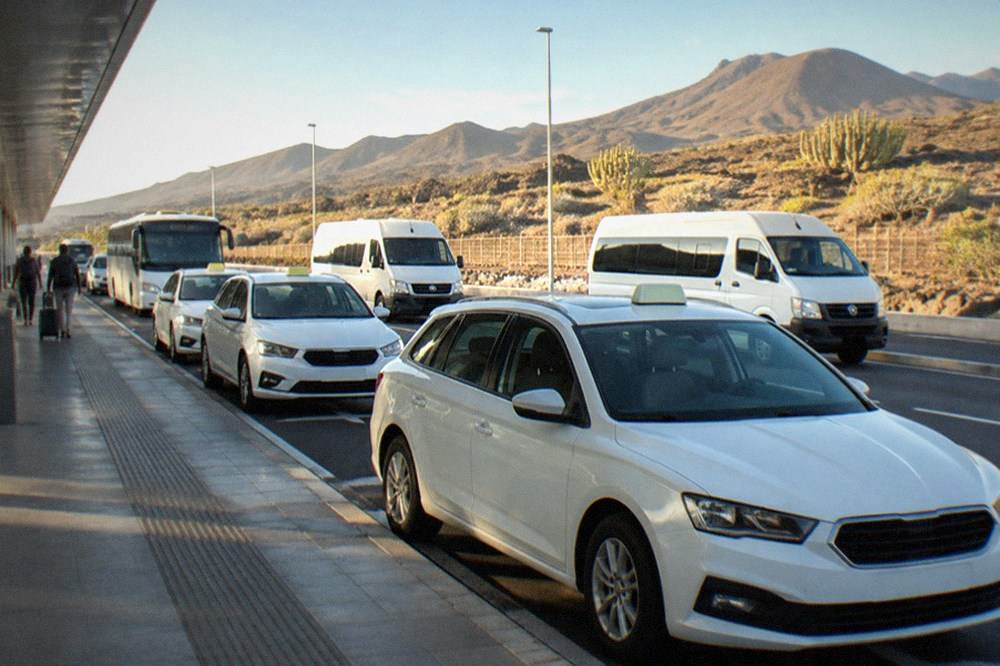
Four realistic options exist: the TITSA bus lines that stop at the terminal (10, 40, 711, 343 and 415), a metered white taxi from the rank, a pre-booked private or shared transfer, or hire car collected at the airport. Taxis on the island are white and metered from the start of the trip, and a fixed price can be agreed in advance for excursions. No tram serves either airport, and no point-to-point bus fare or fixed taxi fare from the airport is on file here.
The choice depends mostly on where you are staying and whether you plan to drive. The resort belt, Costa Adeje, Los Cristianos, Playa de las Américas, is close to the terminal and every option works for it. The north of the island is a different calculation: the transfer is longer, and many visitors heading for Puerto de la Cruz or La Orotava weigh a hire car against the 343 express bus, which runs from Puerto de la Cruz to Los Cristianos via both airports.
For passengers who want the door-to-door version sorted before landing, a pre-booked transfer can be arranged through the operator's live listing: arrange a private transfer from Tenerife South Airport. For those who prefer their own wheels, the airport's hire desks are the other route: compare hire car options at TFS, and read our car hire in Tenerife guide before deciding, plus driving advice in the getting around guide for the roads themselves.
Which TITSA Buses Serve Tenerife South Airport?
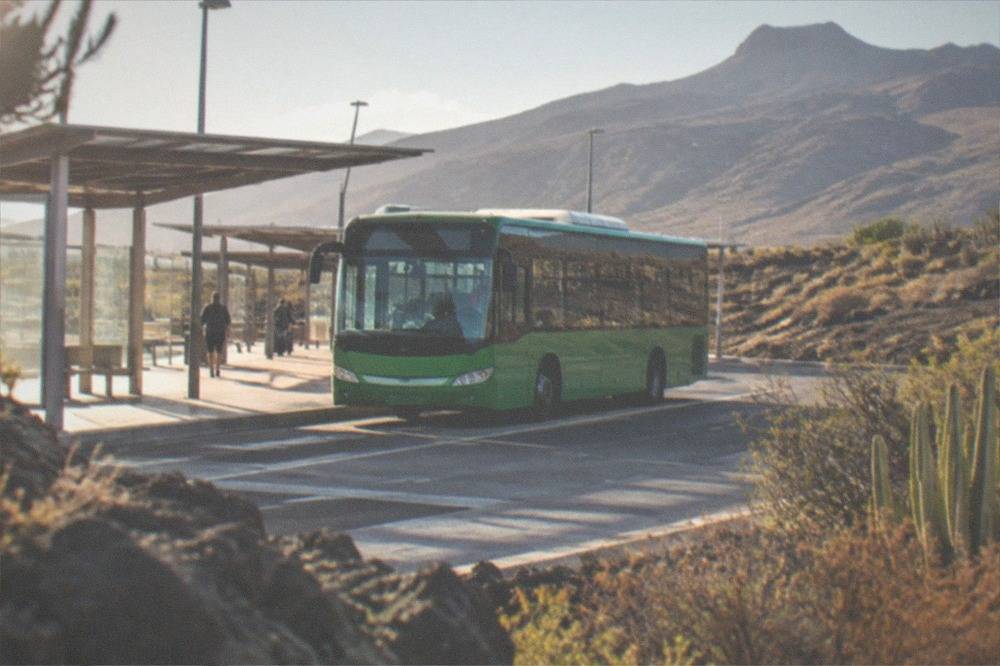
TITSA's own airport page lists five lines at Tenerife South: line 10 to Santa Cruz, line 40 to Costa Adeje bus station via Los Cristianos, line 711 as the night bus linking Santa Cruz, the airport, Los Cristianos and Costa Adeje, line 343 as the express from Puerto de la Cruz to Los Cristianos via both airports, and line 415 to El Fraile and San Isidro. No other line is confirmed at this airport.
Those five lines cover most of what a visitor needs. Line 40 is the one most resort-bound passengers use, because it runs through Los Cristianos to the Costa Adeje bus station. Line 343 is the island-spanning option, connecting both airports with Puerto de la Cruz in the north, which makes it possible to arrive at TFS and reach the north coast without a car. Line 10 goes to the capital, Santa Cruz de Tenerife.
| TITSA line | Route from Tenerife South Airport | Best for |
|---|---|---|
| 10 | Santa Cruz de Tenerife | The capital and the northeast |
| 40 | Costa Adeje bus station via Los Cristianos | The main resort belt |
| 711 | Night bus: Santa Cruz, airport, Los Cristianos, Costa Adeje | Late arrivals and departures |
| 343 | Express: Puerto de la Cruz to Los Cristianos via both airports | The north coast without a car |
| 415 | El Fraile, San Isidro | Local towns in Granadilla de Abona |
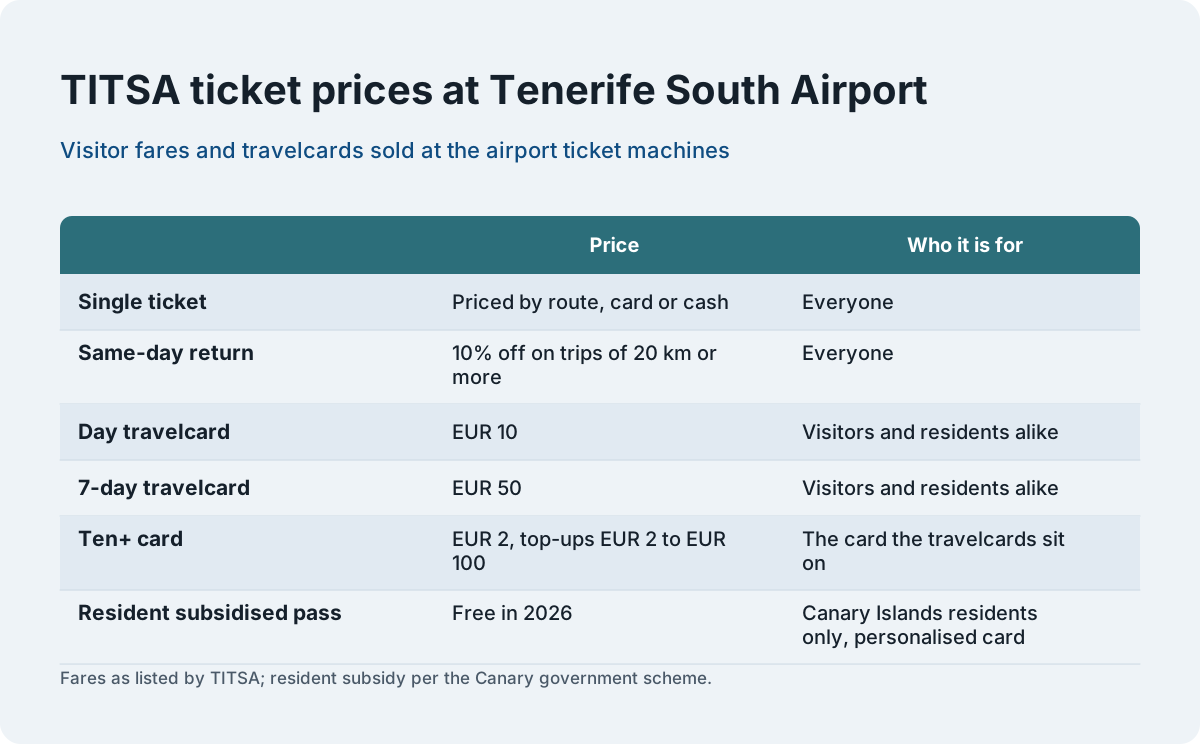
Tickets are the next question, and the visitor products are simple. TITSA sells single tickets priced by route, payable by card or cash, with a 10% same-day return discount on trips of 20 km or more. The visitor travelcards are the day travelcard at EUR 10 and the seven-day travelcard at EUR 50, and the Ten+ card itself costs EUR 2 with wallet top-ups from EUR 2 to EUR 100; the airport ticket machines sell them. Our full Tenerife buses and TITSA guide covers the network island-wide.
One correction that matters: public transport on Tenerife is not free for visitors. The 100% subsidy the Canary government runs for 2026 applies to resident passes only, held on a personalised Ten+ card by people resident in the Canary Islands. Visitors pay the fares and travelcard prices above. The resident scheme also excludes the Teide and Teno lines, so even residents buy tickets for those mountain routes.
| Ticket | Price | Who it is for |
|---|---|---|
| Single ticket | Priced by route, card or cash | Everyone |
| Same-day return | 10% off on trips of 20 km or more | Everyone |
| Day travelcard | EUR 10 | Visitors and residents alike |
| 7-day travelcard | EUR 50 | Visitors and residents alike |
| Ten+ card | EUR 2, top-ups EUR 2 to EUR 100 | The card the travelcards sit on |
| Resident subsidised pass | Free in 2026 | Canary Islands residents only, personalised card |
If a boat trip is on your list for the first full day, the catamaran option that includes hotel transfer and a buffet removes the need to think about the bus network at all: Check availability. The full picture of boat trips and catamarans is on its own page.
How Long Does It Take to Get Through Tenerife South Airport?
No official figure states a processing time for Tenerife South Airport, and none is invented here. What the sources do say is that 13,969,678 passengers used the airport in 2025, a record year, and that non-EU arrivals, which includes UK and US visitors, are now registered under the EU Entry/Exit System with a facial image and fingerprints instead of a passport stamp, a step that adds a moment at the border for those travellers.
The EES point is the one recent change that genuinely affects the time a UK or US passenger spends airside. The system started on 12 October 2025 and has been fully operational since 10 April 2026, so the era of the passport stamp is over for these travellers at Schengen borders. Four fingerprints and a face image are captured at first entry. It is a routine capture at the desk, but it is a new step, and the EU's own guidance is the place to read the detail, which our entry requirements for Tenerife page summarises for this island specifically.
ETIAS is a different thing and is frequently confused with EES. The EU states that ETIAS "is currently not in operation and no applications for travel authorisations are collected at this point", and that its start date will be announced several months before launch. No date is stated here, because no date exists on an official page. The fee, when it does launch, will be EUR 20.
Beyond the border, the usual variables apply: how many flights land together, whether baggage handling is busy, and the season. AENA publishes no service-standard figures for this airport, so any specific minutes-based claim you read elsewhere is a guess dressed as a fact. The honest planning advice is that a record-volume airport in peak season, with a new biometric step for non-EU passports, deserves the same margin you would give any busy holiday airport.
What Does TFS Stand for in Tenerife?
TFS is the IATA airport code for Tenerife South Airport, whose official AENA name is Tenerife Sur; the three letters identify the airport on tickets, baggage tags and flight trackers worldwide. It is not an abbreviation of any Spanish phrase in itself: it is the assigned code, in the same way TFN identifies Tenerife Norte-Ciudad de La Laguna, the island's other airport at La Laguna.
Airport codes are how airlines, transfer firms and booking systems keep the two Tenerife fields apart, and the confusion between them is the single most common mistake in Tenerife travel planning. A passenger who books a flight to TFN when the hotel is in Costa Adeje, or vice versa, has added an unexpected cross-island journey to the trip. The rule to check is simple and worth repeating: TFS means the south, the resort side; TFN means the north, the La Laguna and Santa Cruz side.
The code also matters for inter-island and domestic connections. Flights within the Canaries and to mainland Spain serve both airports, and the ticket shows which. When a transfer company or hotel asks which airport you arrive at, quoting the three letters removes all ambiguity, in either language.
Is There Only One Terminal at Tenerife South Airport?
This guide states no terminal count for Tenerife South Airport, because no official page in our source set records the number of terminals as a verified fact. AENA's own airport information for Tenerife Sur is the authority on the terminal layout, and a passenger's ticket and gate information will show the terminal that applies to their flight.
The reason this page declines to answer with a number is the same reason it declines to answer several questions on this page: the editorial desk behind this site, Tenerife Travel Guide, prints only what an official source states. Where an official page has not been read on a point, the honest answer is to say so and point at the authority, in this case AENA, the airport operator. Anything else would be a plausible-sounding guess about a building that changes with refurbishments.
What can be said from verified sources is the airport's scale. Nearly fourteen million passengers in one year makes TFS one of the busier airports in the Canary Islands, and the passenger numbers are growing, not shrinking. Practically, that means the usual advice about allowing time, checking gate screens on the day, and confirming terminal details on the airline's own booking page stands, with AENA's airport page as the reference for the layout itself.
What Hotels Are Near Tenerife Airport?
No hotel at Tenerife South Airport is listed in our verified sources, so this page names none. What the sources do establish is that the airport sits in Granadilla de Abona, with the resort municipality of Adeje (2025 population 50,021) and Arona (87,793) to the west along the coast, so the nearest substantial hotel stock is in the Costa Adeje, Los Cristianos and Playa de las Américas belt rather than in the airport's own municipality.
That geography is actually convenient for most visitors. The point of flying into TFS is that the hotels are close: the south coast resort strip is a short transfer from the terminal, which is why the airport exists where it does. Passengers arriving late often stay their first night in the resort belt and move on the next morning, and the transfer options in the earlier section cover that journey. For choosing the area itself, the where to stay in Tenerife guide and the best hotels in Tenerife page do that job properly, area by area.
No nightly rate is quoted anywhere on this site, because hotel rates move daily and cannot be re-checked at the moment you read this. What drives the price instead is the season, the exact resort and how far in advance you book, and those pages explain the trade-offs.
How Many Airports Are in Tenerife?
Tenerife has two airports: Tenerife South (TFS), officially Tenerife Sur, in Granadilla de Abona, and Tenerife North (TFN), officially Tenerife Norte-Ciudad de La Laguna, at La Laguna. In 2025 the south handled 13,969,678 passengers, an all-time record, while the north handled 7,174,977, so the south carries roughly two of every three air passengers arriving on the island.
The two fields serve different markets. The south is the holiday airport, fed by the charter and low-cost routes from Britain, Ireland, Germany and the rest of Europe that fill the southern resorts. The north handles a large share of the inter-island and mainland Spain traffic and sits closer to Santa Cruz, La Laguna and the north coast. Both are AENA airports, both are served by TITSA buses, and neither has a tram connection of any kind; Metrotenerife's fares page states nothing that would suggest one, and the tram is simply not part of airport transport on this island.
| Tenerife South (TFS) | Tenerife North (TFN) | |
|---|---|---|
| AENA official name | Tenerife Sur | Tenerife Norte-Ciudad de La Laguna |
| Familiar name | Reina Sofia | Los Rodeos |
| Municipality | Granadilla de Abona | San Cristóbal de La Laguna |
| Passengers 2025 | 13,969,678 | 7,174,977 |
| TITSA lines at the airport | 10, 40, 711, 343, 415 | 20, 30, 343 |
| Closest major resort belt | Costa Adeje and Los Cristianos | Puerto de la Cruz |
For passengers with time on the island rather than a fixed resort, the north-south split also shapes day trips. A visitor based in the south can reach the north on a planned excursion, and the north Tenerife from the south day trip page covers that route. The airport transfers guide covers arrivals at both fields.
What Is the Weather Like Around Tenerife South Airport?
AEMET's climate normals for the Tenerife South Airport station, 64 m above sea level, record July and August as the warmest months with mean daily maxima of 27.7°C and 28.4°C, and July with no measurable rain at all; December is the wettest month at 30 mm, and the annual total as AEMET publishes it is 132 mm of rain across 15.2 days with 1 mm or more. The sea off the south coast peaks at 23.7°C in September and October.
Those numbers explain why the south is where the beach holiday is. The airport's own weather station is one of the driest lowland sites on the island: 132 mm of rain a year, against 520 mm at Tenerife North Airport and 226 mm in Santa Cruz. The trade-off for the dryness is summer heat, with mean daily maxima above 27°C from July to September, though the sea breeze keeps the coast comfortable and the sea itself is at its warmest at the end of summer.
| Month | Mean daily max °C | Mean daily min °C | Rain mm | Sunshine hours |
|---|---|---|---|---|
| Jan | 21.7 | 15.2 | 17 | 193 |
| Feb | 22.0 | 15.0 | 20 | 195 |
| Mar | 23.1 | 15.6 | 15 | 226 |
| Apr | 23.1 | 16.0 | 7 | 219 |
| May | 23.9 | 17.0 | 1 | 246 |
| Jun | 25.4 | 18.8 | 0 | 259 |
| Jul | 27.7 | 20.2 | 0 | 295 |
| Aug | 28.4 | 21.1 | 1 | 277 |
| Sep | 27.9 | 21.1 | 4 | 213 |
| Oct | 26.8 | 20.0 | 12 | 214 |
| Nov | 24.8 | 18.2 | 26 | 193 |
| Dec | 22.8 | 16.5 | 30 | 195 |
The air normals are AEMET's 1981 to 2010 series; the sea temperatures are a separate dataset, NOAA's 1991 to 2020 normals, and the two periods are not interchangeable. The month-by-month picture for the whole island, including the dramatic difference between the south coast and the Teide observatory ridge at 2,369 m, is in the Tenerife weather by month guide, and the monthly pages, such as Tenerife in October and Tenerife in December, cover what the numbers mean for a visit.
What Can You Do on the Day You Land at Tenerife South?
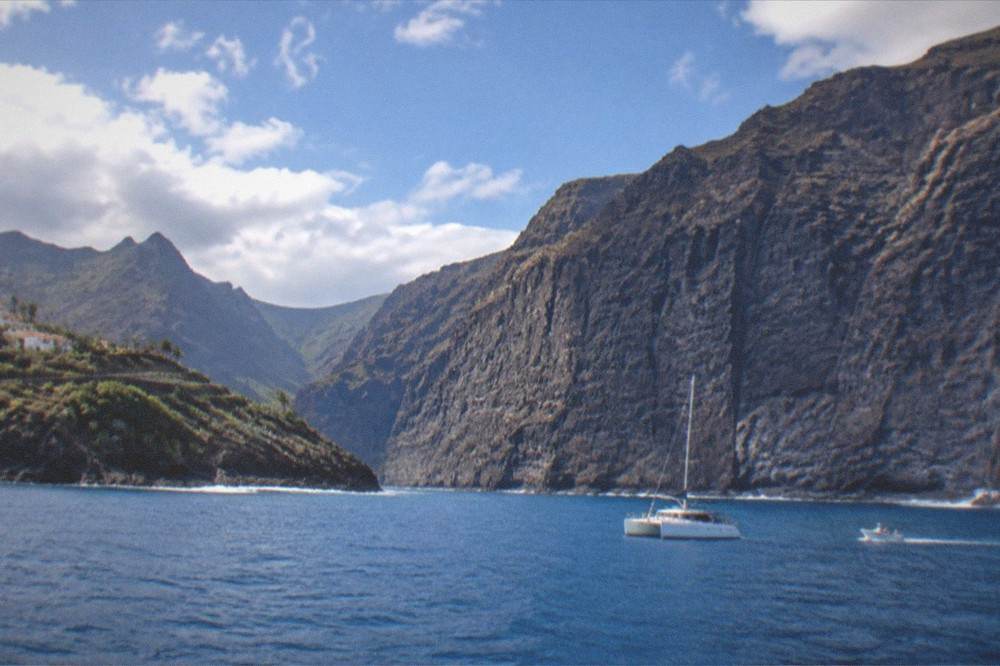
Landing at TFS puts you closest to the whale watching departures from Costa Adeje and Los Cristianos, the Teide National Park driving routes, and the island's two big animal and water parks, Siam Park in Costa Adeje and Loro Parque in Puerto de la Cruz. A combined twin ticket covers Loro Parque and Siam Park together, and the whale watching area off the southwest coast is a designated Whale Heritage Area under the World Cetacean Alliance programme.
The first-evening choice is usually a sunset trip rather than a full excursion, and the south coast is where most of those run. The whale watching fleet operates under Decreto 178/2000, the Canary regulation that forbids approaching within 60 m of a cetacean, limits boats to 4 knots within 500 m and bans swimming within 500 m, and authorised boats fly the Barco Azul flag. Choosing an operator that respects those rules is the single most meaningful choice a visitor makes about the trip, and the whale and dolphin watching page explains how to read a listing for it.
For the days after, the two parks are the biggest ticketed draws in the south and north respectively, and a twin ticket exists for visitors who want both parks on one booking. Siam Park opens 365 days a year, 10:00 to 18:00 from 1 May to 29 October and 10:00 to 17:00 for the rest of the year, per its own site. The wider list of options is on things to do in Tenerife.
What About Teide Trips After You Land?
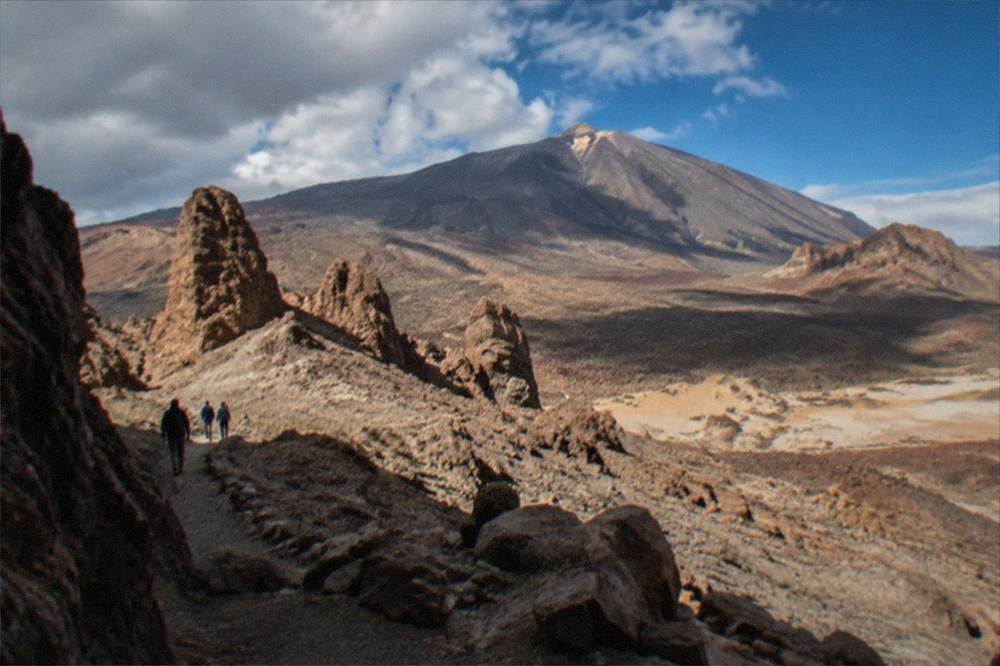
Teide National Park is a drive of roughly an hour inland from the airport area, and three separate things exist there: driving through the park, which needs no booking on any page read; the cable car to La Rambleta at 3,555 m, an operator ticket; and the summit trail PNT 10 Telesforo Bravo, which needs a personal reservation on Tenerife ON. Since 19 January 2026 the daytime summit slots cost EUR 15 for visitors, free only for Tenerife residents and children.
The permit system changed where it lives, and old pages have not caught up. Since slots for 1 September 2025 onward, the summit permit is booked on Tenerife ON, tenerifeon.es, and the old national parks booking page no longer takes Teide reservations. Slots are released every Monday at 07:00 Canary time so that 56 days are always bookable; no official page states how fast they sell out, so no lead time is claimed here. Our Teide summit permit guide covers the whole process.
For visitors who want the mountain without the permit logistics, the observatory is the other way in: the Teide Observatory at Izana, about 2,400 m up, runs guided visits by prior reservation only, and the observatory attraction page covers what the visit involves. A booked guided tour of the observatory is the simplest route for most people who want the astronomy side of the mountain on their first trip.
Common Questions About Tenerife South Airport
Is there a smoking area in Tenerife South Airport?
No official source in our verified set states the smoking facilities at Tenerife South Airport, so this page names none. AENA's own airport information for Tenerife Sur is the authority on terminal facilities, and it should be checked directly before travel. Note that beyond the terminal, smoking is banned in every open-air space of Teide National Park, trails, viewpoints and car parks included, under the Cabildo's wildfire measure.
Where is Tenerife Sur Airport?
Tenerife Sur Airport is in the municipality of Granadilla de Abona on Tenerife's south coast, between the resort belt of Costa Adeje and Los Cristianos to the west and the town of El Medano to the east. It is the island's busier airport, with 13,969,678 passengers in 2025.
How many airport in Tenerife?
Two. Tenerife South (TFS, officially Tenerife Sur) in Granadilla de Abona handled 13,969,678 passengers in 2025, and Tenerife North (TFN, officially Tenerife Norte-Ciudad de La Laguna) at La Laguna handled 7,174,977. Both are operated by AENA and served by TITSA buses.
Is there only one terminal at Tenerife South Airport?
No verified source in our set states the terminal count at Tenerife South Airport, so this page does not state one. AENA's airport page is the authority on the terminal layout, and your airline's booking confirmation shows the terminal that applies to your flight.
What hotels are near Tenerife airport?
Our verified sources name no hotel at the airport itself. The nearest substantial hotel stock is in the resort belt west of the terminal, in Costa Adeje, Los Cristianos and Playa de las Américas, all in the municipalities of Adeje and Arona. The where to stay guide on this site covers each area in detail.
Where is Tenerife South Airport?
On the south coast of Tenerife, in the municipality of Granadilla de Abona, roughly midway between the resort areas of Costa Adeje and Los Cristianos to the west and El Medano to the east. Its IATA code is TFS and AENA's official name for it is Tenerife Sur.
The short version of everything above: TFS is the south airport, AENA calls it Tenerife Sur, TITSA lines 10, 40, 711, 343 and 415 serve the terminal, and visitors pay for every ticket they ride on. Beyond that, the airport is a record-volume gateway into the sunniest corner of the island, and the rest of this site, from airport transfers to the Tenerife buses guide, picks up exactly where the arrivals hall ends.