The Best Hotels in Tenerife by Area and Budget
Tenerife's hotel map is really a choice between two coastlines: the dry, beach-lined south where most of the island's 5,451,268 lodged tourists of 2025 stayed, and the greener north around Puerto de la Cruz and La Laguna. This guide sets out what each base gives you, with the island's own numbers on beaches, buses, weather and crowds.
Short answer
Choose Costa Adeje or Los Cristianos for beaches, boat trips and the widest choice of hotels; choose Puerto de la Cruz for a traditional resort town with gardens and black-sand coves; choose Santa Cruz or La Laguna for city life and lower room demand. There is no tourist tax on Tenerife, and the main cost difference between areas is transport, not lodging charges.
Tenerife lodged 5,451,268 tourists in hotels and apartments in 2025, and almost every one of them faced the same first decision: south or north. The tourist board's own balance for the year records UK visitors alone accounting for 2,057,896 of those lodged guests, a market that overwhelmingly books the beach resorts of Adeje and Arona. That concentration is why the south has the deepest hotel supply and why the north can feel like a different island, greener, quieter and several degrees cooler. This guide walks through the bases one by one, with the island's verified numbers on beaches, buses, climate and seasonality, so the choice rests on facts rather than brochure language. For a wider run-through of the island's sights once the room is sorted, see things to do across Tenerife.
Which Area of Tenerife Should Your Hotel Be In?
The practical split is between the south, Costa Adeje, Los Cristianos, Playa de las Americas and El Medano, which holds most of the beach resort hotels, and the north, Puerto de la Cruz, Santa Cruz de Tenerife and La Laguna, which holds the historic towns, gardens and the island's two UNESCO-listed cultural assets. The south is drier and warmer; the north is greener and cooler. Your decision drives beach access, bus routes and day-trip reach more than it drives price.
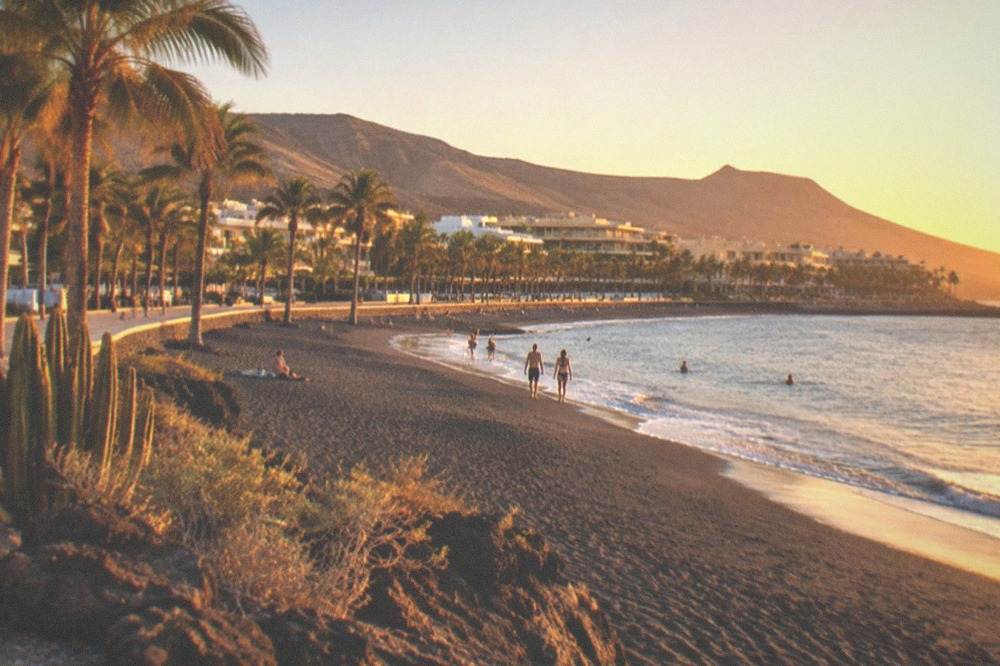
The south is where the sand is engineered for swimming. The tourist board describes Las Vistas in Arona as golden sand behind a row of breakwaters, and Fanabe as pale sand. El Medano in Granadilla de Abona is fine grey sand under Montana Roja, favoured by windsurfers. The municipality matters when you read hotel addresses: Costa Adeje and El Duque sit in Adeje, Las Vistas in Arona, El Medano in Granadilla de Abona, and Los Gigantes in Santiago del Teide, each with its own planning rules and local taxes.
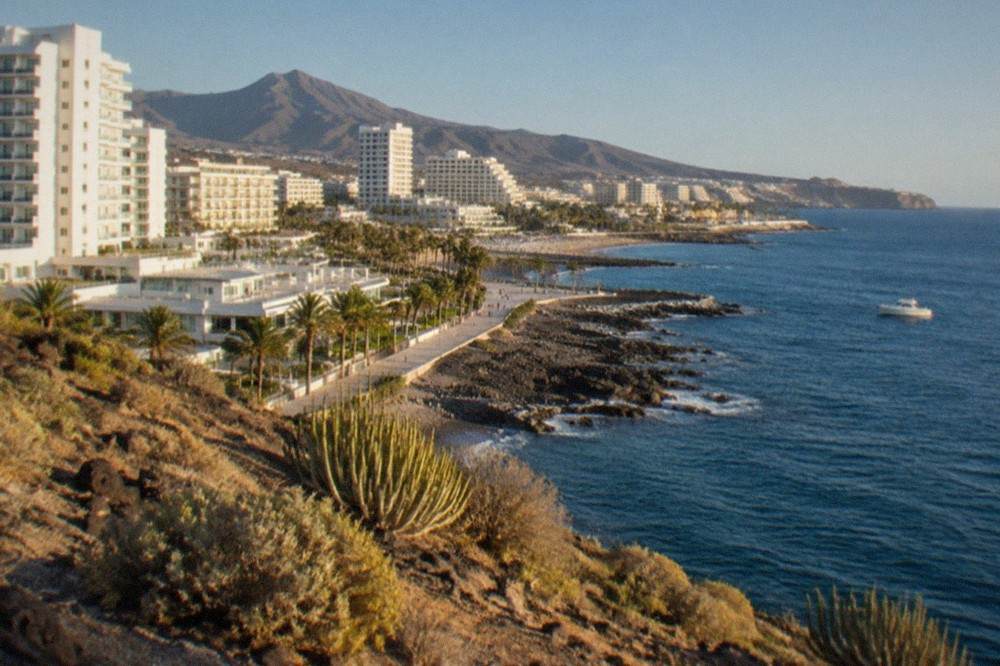
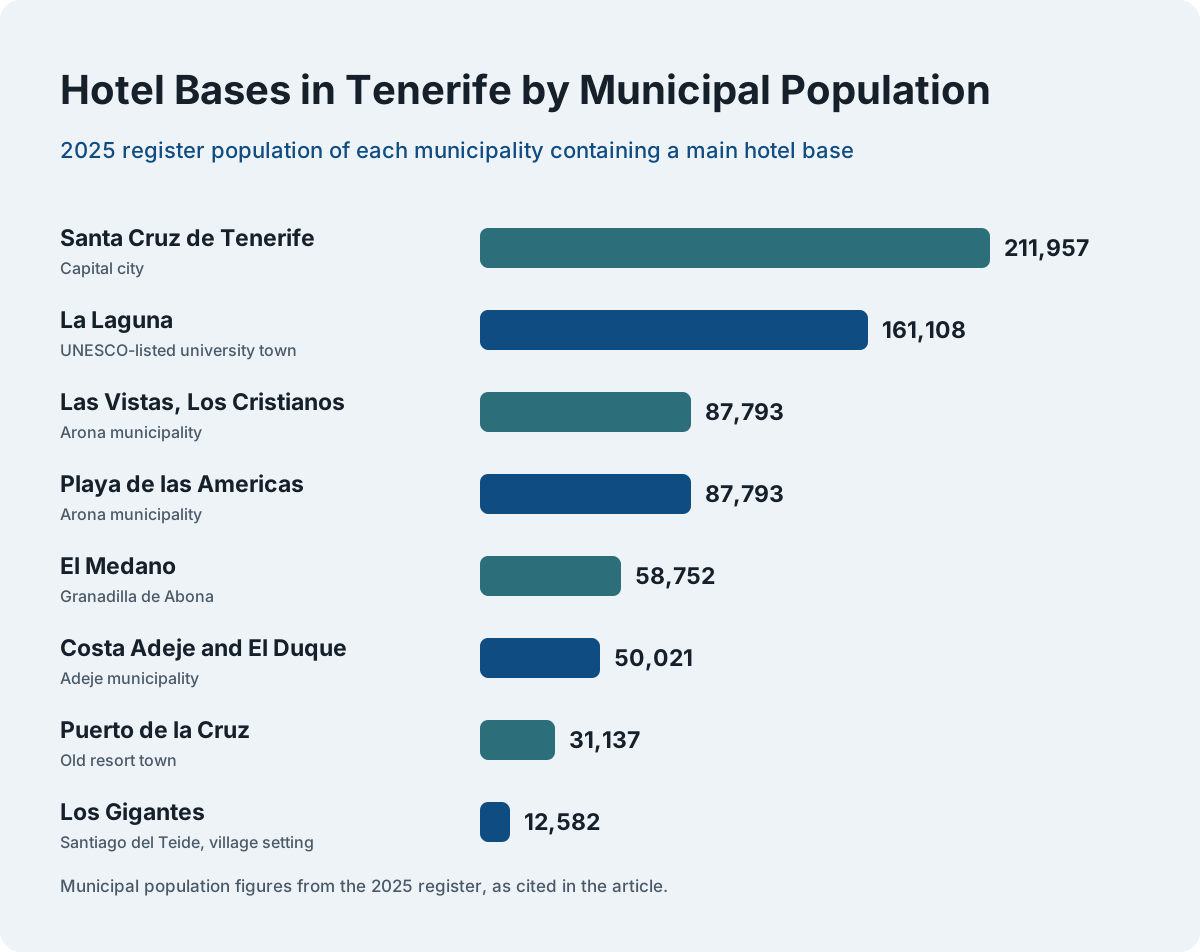
The north trades beaches for architecture and shade. Puerto de la Cruz, population 31,137, is the old resort, with Playa Jardin's dark sand and the gardens the town is known for. Santa Cruz de Tenerife, population 211,957, is the capital, and La Laguna, population 161,108, is the UNESCO-listed university town up the hill. A fuller treatment of the trade-offs, including the airport question, is in Tenerife North vs South, and the practicalities of each neighbourhood are covered in where to stay in Tenerife.
Here is where each named hotel base actually sits administratively, with the registered population of its municipality, which shapes everything from bus frequency to restaurant supply:
| Hotel base | Municipality | Municipal population, 2025 register |
|---|---|---|
| Costa Adeje and El Duque | Adeje | 50,021 |
| Las Vistas, Los Cristianos | Arona | 87,793 |
| Playa de las Americas | Arona | 87,793 |
| El Medano | Granadilla de Abona | 58,752 |
| Puerto de la Cruz | Puerto de la Cruz | 31,137 |
| Santa Cruz de Tenerife | Santa Cruz de Tenerife | 211,957 |
| La Laguna | La Laguna | 161,108 |
| Los Gigantes | Santiago del Teide | 12,582 |
Los Gigantes deserves its own line: Santiago del Teide is a small municipality of 12,582 people, so the cliff-front hotels there sit in a village setting rather than a resort strip, with the cliffs the tourist board says tower up to 600 m directly offshore.
Where Is the Most Luxurious Area of Tenerife to Stay?
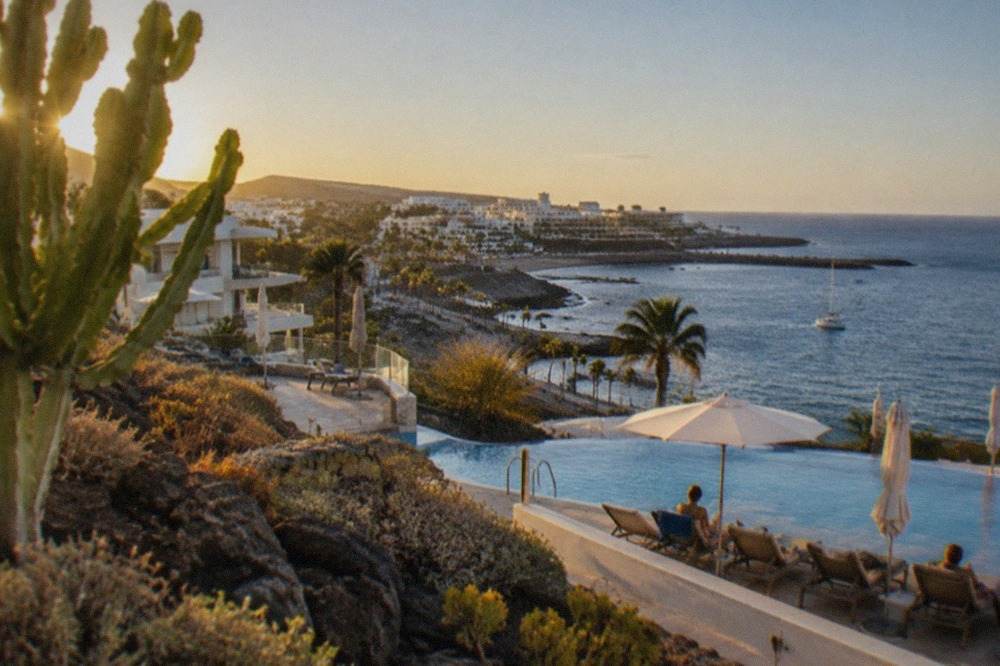
Costa Adeje, specifically the El Duque end of Adeje municipality, is the island's luxury hotel district: a concentrated strip of five-star properties fronting a grey sandy beach the tourist board itself describes as such, with the island's beach clubs, golf and the departure points for whale-watching catamarans all close by. The alternative luxury base is Los Gigantes, where hotels sit under cliffs the tourist board says tower up to 600 m.
El Duque is the address the brochures mean when they say Costa Adeje. The beach there is grey sand on the tourist board's own page, not the golden Saharan sand some older guides claim, but the water is calm and the promenade links the hotels to the upmarket end of the coast. Adeje municipality also holds the golf courses and the Costa Adeje catamaran departures, which is why the luxury product clusters there rather than in livelier Playa de las Americas.
The second luxury answer is quieter. Los Gigantes, in Santiago del Teide, puts hotels at the foot of cliffs that rise up to 600 m, with a seabed about 30 m deep at their foot inside Teno Rural Park. The trade-off is distance: this is the far west of the island, and the whale-watching cruises that leave from the marina there are among the few boat trips that do not require a transfer east.
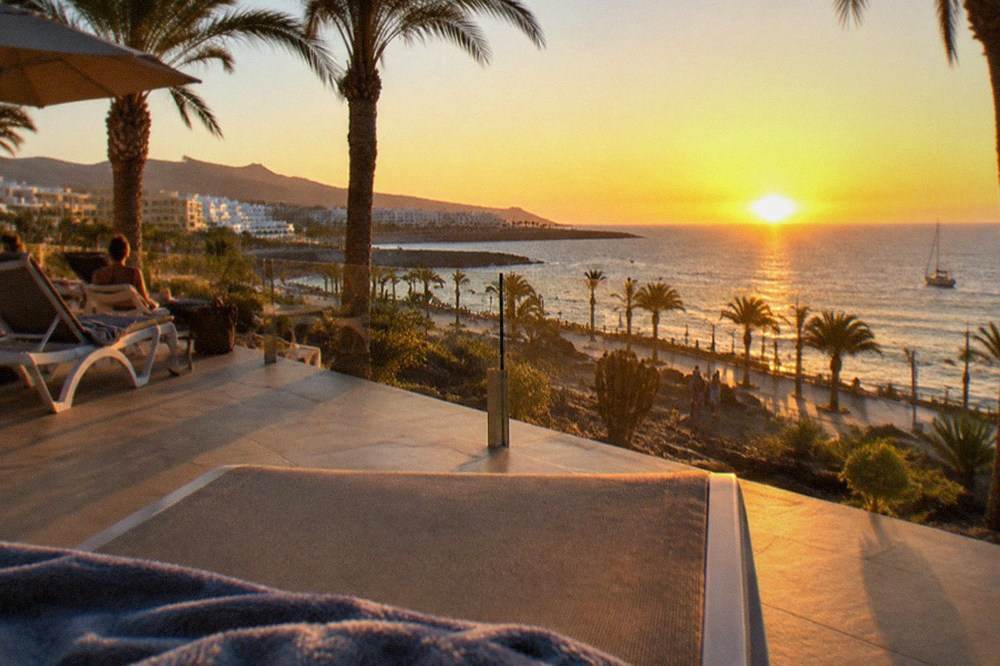
If your idea of luxury is a boat on the water rather than a bigger pool, the south-coast bases are the right ones: the eco no-chase whale and dolphin trips leave from Los Cristianos, and the operators' listings emphasise respectful approaches under the island's rules, which are set by Decreto 178/2000: no boat may approach within 60 m of a cetacean, no more than three boats may sit within 500 m, and authorised boats fly the Barco Azul flag.
Where Should Families Stay in Tenerife?
Arona is the family base with the numbers behind it: Las Vistas is golden sand behind breakwaters, the municipality holds Siam Park's water rides and the Los Cristianos boat departures, and TITSA's line 40 runs from the airport through Los Cristianos to Costa Adeje bus station, so a family with no car is not stranded. Puerto de la Cruz is the northern family alternative, with Loro Parque in the same town.
Las Vistas is the beach that answers the family question. The tourist board describes golden sand and water calmed behind a row of breakwaters, which is what parents actually swim in. Siam Park, in Costa Adeje, is open 365 days a year, 10:00 to 18:00 from 1 May to 29 Oct and 10:00 to 17:00 the rest of the year, so the water park works in winter too. Loro Parque, in Puerto de la Cruz, opens 09:30 to 17:30 every day of the year with its own car park at EUR 7 per day, which makes the north viable for animal-park families.
The twin-ticket option covering both parks is worth checking before you book either singly, and the combined admission card below shows the live price. The deeper planning question, pushchairs versus teenagers, pools versus excursions, is worked through in the best area for families.
South Tenerife Hotels: What the Costa Adeje and Los Cristianos Strip Gives You
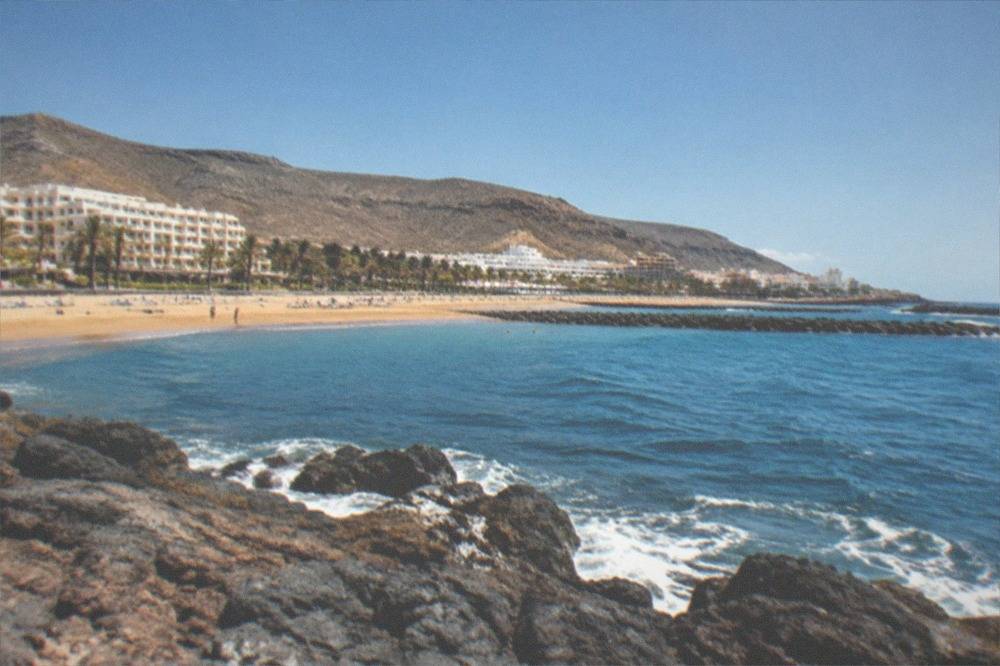
The south-coast strip, from Los Cristianos through Playa de las Americas to Costa Adeje, concentrates the island's warmest, driest weather, its engineered swimming beaches, its water parks and its boat departure points, all inside two adjoining municipalities, Adeje and Arona, served by TITSA lines 40 and 711 from Tenerife South Airport. It is the default answer for a beach holiday, and its weakness is distance from the green north.
The weather case for the south is measured, not felt. AEMET's normals for Tenerife South Airport record a July mean of 24 Celsius and zero rain days in June and July, against 80 mm of January rain and 7.7 rain days at Tenerife North Airport. Annual rainfall at the south airport is 132 mm on 15.2 days; at the north airport it is 520 mm on 64 days. A hotel in the south buys you roughly a third of the rain.
The beach case is set out on the tourist board's own pages, and the sand colours differ more than the brochures admit:
| Beach | Municipality | Sand, per the tourist board |
|---|---|---|
| El Duque | Adeje | Grey sand |
| Fanabe | Adeje | Pale sand |
| Las Vistas | Arona | Golden sand |
| El Medano | Granadilla de Abona | Fine grey sand under Montana Roja |
| Las Teresitas | Santa Cruz (San Andres) | Golden sand, palms, breakwaters |
None of this is a barrier to swimming: the sea off the south coast runs from 19.1 Celsius in March to 23.7 in September and October on the NOAA series, warm enough for the beach year-round. What the south lacks is the north's gardens, laurel forests and colonial architecture, and that is a day-trip rather than a deal-breaker, since Teide tours from the south and north Tenerife from the south are both established routes.
North Tenerife Hotels: Puerto de la Cruz, La Laguna and Santa Cruz
The northern bases trade beach-engineering for heritage and greenery: Puerto de la Cruz is the historic resort with Playa Jardin's dark sand and Loro Parque, La Laguna is the UNESCO-listed colonial town that provided the model for many colonial towns in the Americas, and Santa Cruz is the capital with Las Teresitas' golden sand at San Andres. Rain is higher, gardens are lusher, and room demand is thinner outside Carnival.
Puerto de la Cruz is the longest-established resort on the island, and it behaves like a town rather than a strip: restaurants, the seafront and the parks sit together, and the best restaurants guide covers where the local kitchen is worth the trip. La Laguna's UNESCO inscription rests on its being, in UNESCO's words, the first non-fortified Spanish colonial town, whose layout provided the model for many colonial towns in the Americas. Santa Cruz adds the Auditorio de Tenerife, Santiago Calatrava's white 23,000 m2 concert hall inaugurated in 2003, and the Carnival.
Carnival changes the capital's hotel market. The official 2027 programme puts the opening on 22 January, the Queen's Election Gala on 17 February and the Pinata weekend on 26 to 27 February 2027, dates that sit after Ash Wednesday and that the programme alone fixes. Anyone booking Santa Cruz for those weeks is booking into the island's biggest event; anyone wanting quiet should check the programme before choosing dates, and the detail is in Santa Cruz Carnival, while month-by-month guidance starts with Tenerife in February.
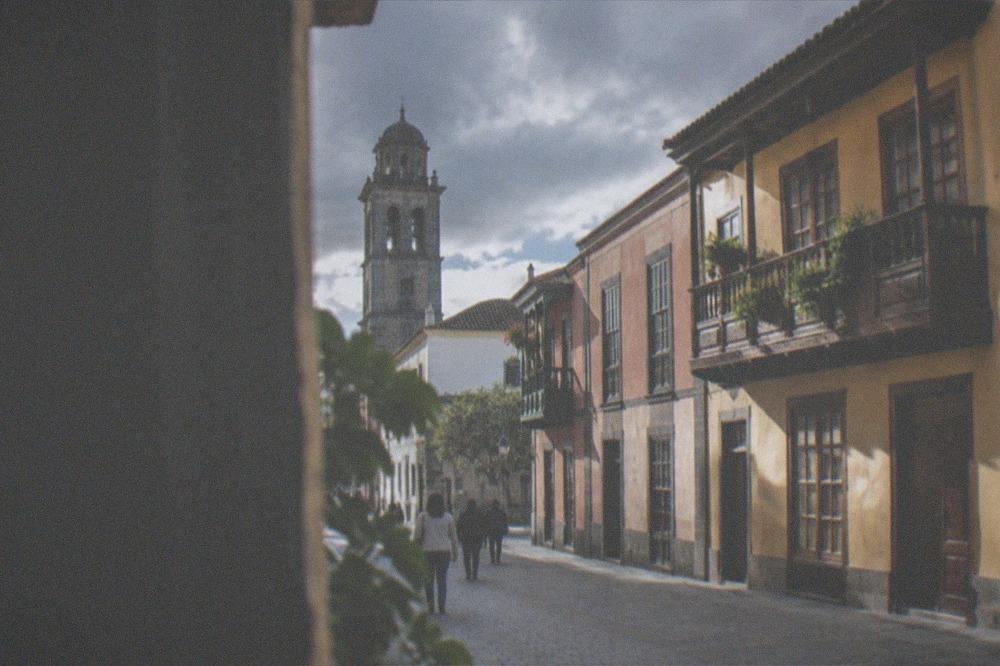
The northern towns also carry the island's free-walking-tour offer. GuruWalk lists three free, pay-what-you-want walks on this site's cards, all in the north: a La Orotava walk, a Puerto de la Cruz walk and a historic-centre Santa Cruz walk. The resort south has no free walking tour listed on GuruWalk, so a southern base means travelling for one, and a northern base means starting outside the door. More of these guides are collected on Tenerife Travel Guide.
What Does the Weather Do to Your Hotel Choice?
AEMET's station normals say the south airport area averages 24 Celsius in July with no rain days in midsummer, while the north airport, at 632 m of altitude, averages 20.2 Celsius in July with 6 mm of rain, and Santa Cruz sits between the two at 25 Celsius in July: so a hotel in the south buys the driest weather, a hotel around Puerto de la Cruz or La Laguna buys greenery at the price of roughly four times the annual rainfall.
The numbers behind that, from AEMET's 1981-2010 normals, are worth reading side by side:
| Station (altitude) | July mean C | July rain days | January mean C | January rain mm | Annual rain days |
|---|---|---|---|---|---|
| Tenerife South Airport (64 m) | 24 | 0 | 18.4 | 17 | 15.2 |
| Santa Cruz de Tenerife (36 m) | 25 | 0 | 18.2 | 32 | 29.7 |
| Tenerife North Airport (632 m) | 20.2 | 1.7 | 13.1 | 80 | 64 |
The green north is green because of those 64 rain days, and the brown south is brown because of 15.2 of them. Neither is a wrong answer; they are different holidays. What the station table also hides is the mountain: at Izana, on the Teide observatory ridge at 2,369 m, the January mean is 4.3 Celsius and July tops out at a mean daily maximum of 23. The summit ridge is a different climate zone from every hotel on the coast, which is why the cable car operator refuses passengers with cardiovascular conditions, pregnant women and children under 3.
Do You Need a Car from Your Hotel in Tenerife?
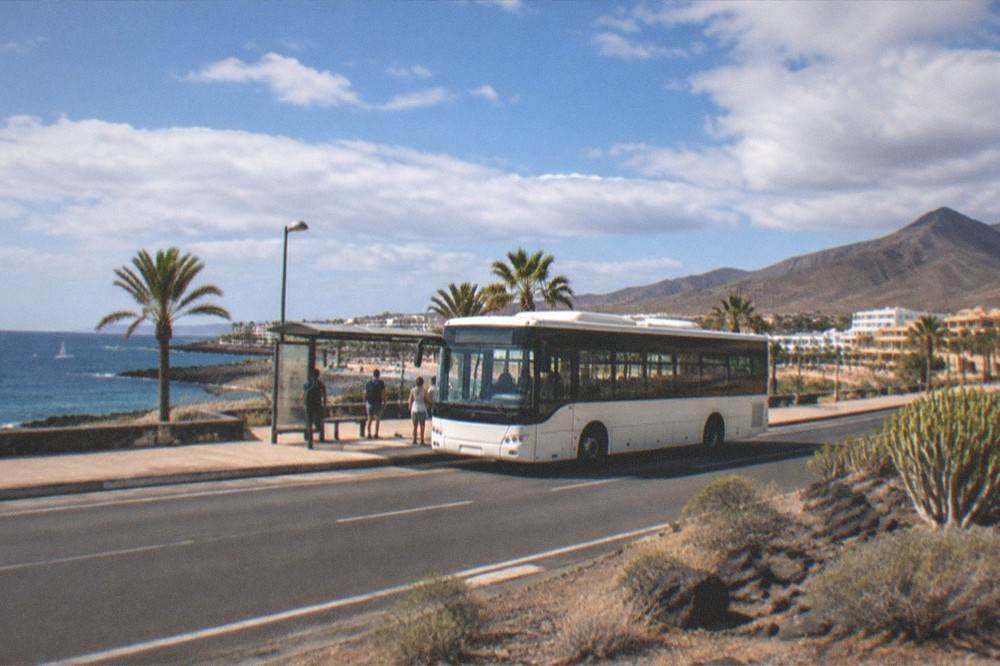
You do not need one if your hotel is on the south strip or in Puerto de la Cruz: TITSA runs lines 10, 40, 711, 343 and 415 past Tenerife South Airport and lines 20, 30 and 343 past Tenerife North Airport, and visitors can buy a EUR 10 day travelcard or a EUR 50 seven-day travelcard. A car earns its cost for Los Gigantes, Masca, Anaga and the west, where buses are thinner and the walking trails start from village stops.
The bus facts come from TITSA's own airport pages, and they are the backbone of a car-free stay:
| Airport | TITSA lines and destinations, per TITSA |
|---|---|
| Tenerife South | 10 Santa Cruz; 40 Costa Adeje bus station via Los Cristianos; 711 night bus to Santa Cruz, Los Cristianos and Costa Adeje; 343 express Puerto de la Cruz to Los Cristianos via both airports; 415 El Fraile and San Isidro |
| Tenerife North | 20 Santa Cruz via La Laguna; 30 Puerto de la Cruz; 343 express to the south |
Two warnings from the verified rules. First, public transport is not free for visitors: the 2026 subsidy applies to resident passes only, so visitors pay single fares or the travelcards above. Second, there is no tram to either airport; the tram serves the Santa Cruz to La Laguna corridor, at EUR 1.35 a single on a transit pass. Both points, and the resident-pass exclusions including the Teide and Teno lines, are unpacked in Tenerife buses and TITSA and car hire in Tenerife, and the airport logistics are in airport transfers.
When Is Hotel Demand Highest in Tenerife?
Tourist arrivals by air peak in December and the winter half-year: 671,202 arrived by air in December 2025 and 679,245 in December 2024, with January and February close behind, while the quietest months on the same series are May and June, at 539,410 and 542,881 in 2025. Tenerife is a winter-sun destination first, so the cheapest rooms sit in the island's summer, not its winter.
The monthly series from the Instituto Canario de Estadistica counts tourists arriving by air, excluding Canary Islands residents:
| Month | Arrivals by air, 2024 | Arrivals by air, 2025 |
|---|---|---|
| Jan | 612,169 | 643,460 |
| Feb | 632,295 | 648,255 |
| Mar | 678,693 | 677,688 |
| Apr | 578,602 | 604,370 |
| May | 528,408 | 539,410 |
| Jun | 522,461 | 542,881 |
| Jul | 580,512 | 611,623 |
| Aug | 603,529 | 618,578 |
| Sep | 551,175 | 563,261 |
| Oct | 617,714 | 631,662 |
| Nov | 652,800 | 659,656 |
| Dec | 679,245 | 671,202 |
The pattern is a double peak, March and the December-to-February run, with a genuine trough in May and June. That trough is also the best walking weather before the summer heat, and it is the window the month-by-month guides treat as the connoisseur's season. Budget travellers should read the May and June rows against Tenerife on a budget, where the same logic applies to flights as to rooms.
What Will a Tenerife Hotel Actually Cost You Beyond the Room?
There is no tourist tax on Tenerife: no official page read shows a per-night lodging tax in force or approved, so the only certain charges beyond the room are the per-booking public fees on the Teide trails PNT 10 and PNT 07, the Masca ticket at EUR 40.66 and the Barranco del Infierno ticket at EUR 15 for non-resident adults, plus transport. Everything else, beaches, viewpoints and most trails, carries no charge on any official page read.
The Teide fees are the ones most likely to surprise a hotel booker who has read older guides. Since Monday 19 January 2026, the 09:00 to 17:00 slots on the summit trail PNT 10 cost EUR 15 for visitors, EUR 6 for residents of the other Canary Islands and nothing for Tenerife residents and children; the Montana Blanca trail PNT 07 costs EUR 6 on working days and EUR 10 at weekends. Permits are released every Monday at 07:00 Canary time, keeping 56 days bookable, on Tenerife ON. The detail, including the cable car prices, is in the Teide summit permit guide.
| Charge | Visitor cost | Who it applies to |
|---|---|---|
| PNT 10 summit trail, 09:00 to 17:00 slots | EUR 15 | All users except Canary residents and children |
| PNT 07 Montana Blanca, working days | EUR 6 | All users except Canary residents |
| PNT 07 Montana Blanca, weekends and holidays | EUR 10 | All users except Canary residents |
| Masca gorge descent ticket | EUR 40.66, boat not included | General ticket; Tenerife residents free |
| Barranco del Infierno | EUR 15 | Non-resident adults; advance booking compulsory |
| Beaches, viewpoints, park drives | No charge listed | Everyone |
None of these is a room charge, and none is per night. The honest budget line is rooms plus transport plus whichever of those five tickets your itinerary actually needs. When you are ready to compare specific properties across the bases described here, you can compare places to stay against the areas above.
Common Questions About Tenerife Hotels
what is the best luxury hotel in tenerife?
This site does not rank individual properties, because no verified official source ranks Tenerife's hotels. What the verified facts do support is the area: Costa Adeje, at the El Duque end of Adeje municipality, is the luxury district, fronting a grey sandy beach with the island's beach clubs, golf and catamaran departures close by. Los Gigantes is the quieter luxury alternative, under cliffs the tourist board says tower up to 600 m.
what's the best all inclusive hotel in tenerife?
No verified official source ranks all-inclusive properties, so no hotel is named here. The area answer is the south strip, Los Cristianos, Playa de las Americas and Costa Adeje, where the all-inclusive product is concentrated because the swimming beaches, water parks and boat departures are all within two municipalities, Adeje and Arona, served by TITSA lines 40 and 711 from Tenerife South Airport.
how far is hotel best tenerife from the beach?
No verified source records the distance from any named hotel to any beach, and this site states no distance it has not read on an official page. What can be said from the tourist board's own pages is which bases front which sand: Costa Adeje and El Duque sit on grey and pale sand in Adeje, Las Vistas is golden sand in Arona, and Las Teresitas is golden sand at San Andres in Santa Cruz.
what happened to hotel tenerife tour?
No verified record on any official page read by this site covers a property called Hotel Tenerife Tour, so nothing is stated about it. The abandoned property this site does cover from verified sources is the former leper colony at Abades, on the island's east coast, which is a documented site rather than a hotel.
is tigotan hotel tenerife expensive?
No nightly rate for any named hotel is stated on this site, because room rates move daily and none can be re-checked at publication time. What drives Tenerife hotel prices is documented instead: demand peaks in December and the winter half-year, the quietest arrival months are May and June, and there is no tourist tax added to the room bill.
who owns cleopatra hotel tenerife?
No verified official source in this site's research records the ownership of a Cleopatra hotel in Tenerife, so no owner is named. Ownership claims about specific properties are the kind of fact that changes hands quietly, and an unverified answer would be worse than none.
The honest summary is that the hotel decision on this island is an area decision. Pick the south for engineered sand, warm weather and boat trips; pick the north for heritage towns, gardens and the free GuruWalk walking tours; and check the monthly arrival table before you choose dates, because the cheapest rooms sit where the island's summer sits, in May and June, not in the winter everyone else books.