Tenerife on a Budget
Tenerife rewards careful planners more than big spenders. This guide sets out the official fees, the free sights and the cheap-season numbers, so a budget trip rests on verified figures rather than guesswork.
Short answer
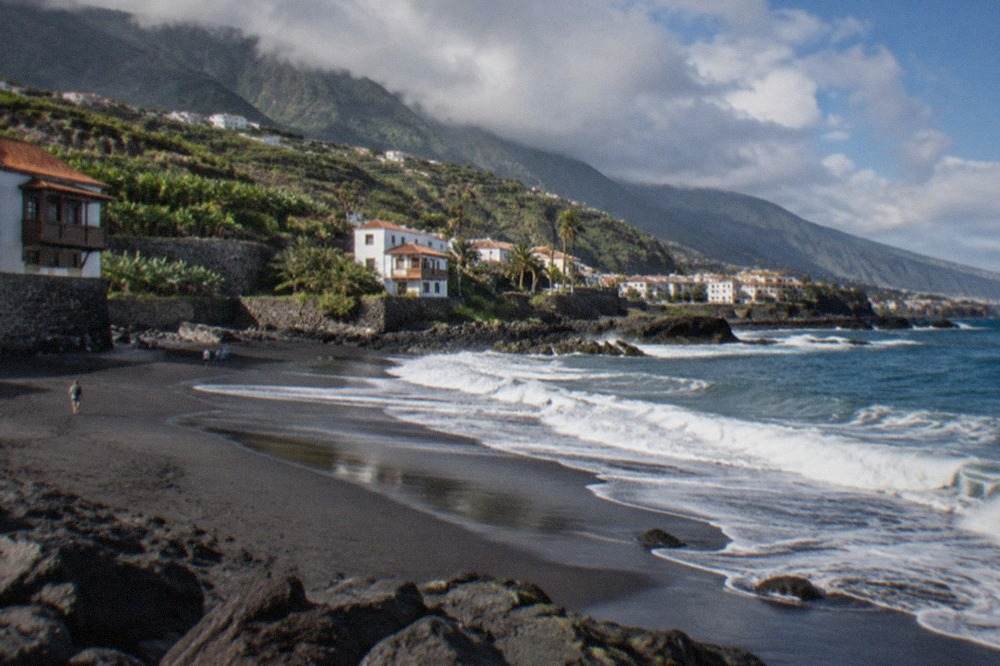
Yes, Tenerife can be done cheaply: no tourist tax exists, entry to beaches, viewpoints and most towns is free, a day of buses costs EUR 10, and the shoulder months of May, June and November combine lower crowds with 20-plus degrees of warmth.
Tenerife recorded 7,561,659 tourists in 2025 across all categories, and the island's own tourist board counts 5,451,268 of them in hotels and apartments. That volume keeps flights frequent and competition between operators sharp, which is the single biggest reason a cheap week here is realistic rather than lucky. The island also has an unusual cost structure: almost nothing a visitor most wants to see carries an entrance charge, while a small number of trails and boat exits carry official fees that are easy to plan around. This page sets out both sides of that ledger with the official figures, so the budget is built on what institutions publish rather than on what a brochure implies.
Is Tenerife Budget Friendly?
Yes, Tenerife is budget friendly, with three conditions: you avoid the peak school-holiday weeks, you use the buses rather than taxis, and you treat the paid attractions as occasional treats rather than a daily programme. Beaches, viewpoints, old towns and most walking trails cost nothing, no tourist tax exists on the island, and a full day of unlimited bus travel costs EUR 10.
The honest starting point is what the island charges for, because the list is short and every item on it is a choice rather than a necessity. No official page shows a per-night lodging tax in force or approved on Tenerife. The charges that do exist are per-booking public fees on two Teide trails, the Masca gorge ticket and the Barranco del Infierno ticket. A visitor who books none of those spends nothing beyond food, bed and transport.
That is why the budget question is really a planning question. The tourist board's 2025 figures show the United Kingdom supplied 2,057,896 lodged tourists, 37.8% of the total, and Ireland's 220,066 was up 11.1% on the year before. Those two markets travel heavily in the winter half, which pushes December and February prices up at the very moment northern Europeans most want the sun. The cheap windows are the ones the crowds skip, and the climate data below shows how little weather is sacrificed by taking them.
What Does a Cheap Tenerife Trip Actually Cost per Day?
A realistic daily budget splits three ways: EUR 10 covers unlimited buses for the day, food from markets and guachinches runs well below restaurant prices, and the island's core sights, the beaches, viewpoints and old towns, cost nothing at all. The only certain extra is the EUR 2 Ten+ card if you want the travelcard system, and official trail fees only apply if you book them.
Transport is the line most visitors get wrong, because a widely repeated claim says public transport on the island is free. The 2026 subsidy is real but it is a residents' scheme: every subsidised pass requires residency in the Canary Islands on a personalised card, and visitors do not qualify. What visitors pay instead is modest and fixed, as TITSA's fares page sets out.
| Product | Price | Who it is for |
|---|---|---|
| Single bus ticket | Priced by route, card or cash | Occasional journeys |
| Same-day return | 10% off on trips of 20 km or more | Day trips out and back |
| Day Travelcard | EUR 10 | Unlimited travel for one day |
| 7 Day Travelcard | EUR 50 | A week of bus use |
| Ten+ card itself | EUR 2 | The card the travelcards sit on |
| Tram single | EUR 1.35 on a transit pass, EUR 1.10 by mobile | Santa Cruz to La Laguna trips |
The arithmetic favours the seven-day card for anyone staying away from a resort strip. Taxis on the island are white and metered from the start of every trip, and a fixed price can be agreed in advance for excursions, but a metered ride to match a EUR 10 bus day is not realistic. The full bus picture, including which lines serve each airport, is in the Tenerife buses and TITSA guide, and the wider trade-offs between hiring a car and relying on buses are covered in whether you need a car in Tenerife.
Accommodation is the other big line, and it is the one this site does not quote rates for, because nightly prices move daily and no figure survives being printed. What can be said is structural: the south holds the densest, most competitive supply, while the north around Puerto de la Cruz runs cheaper still in the shoulder months. Hostels are the honest floor of the market, and the where to stay guide compares the areas properly. For beds at the bottom of the price range, check hostel availability for your dates.
Which Sights in Tenerife Cost Nothing?
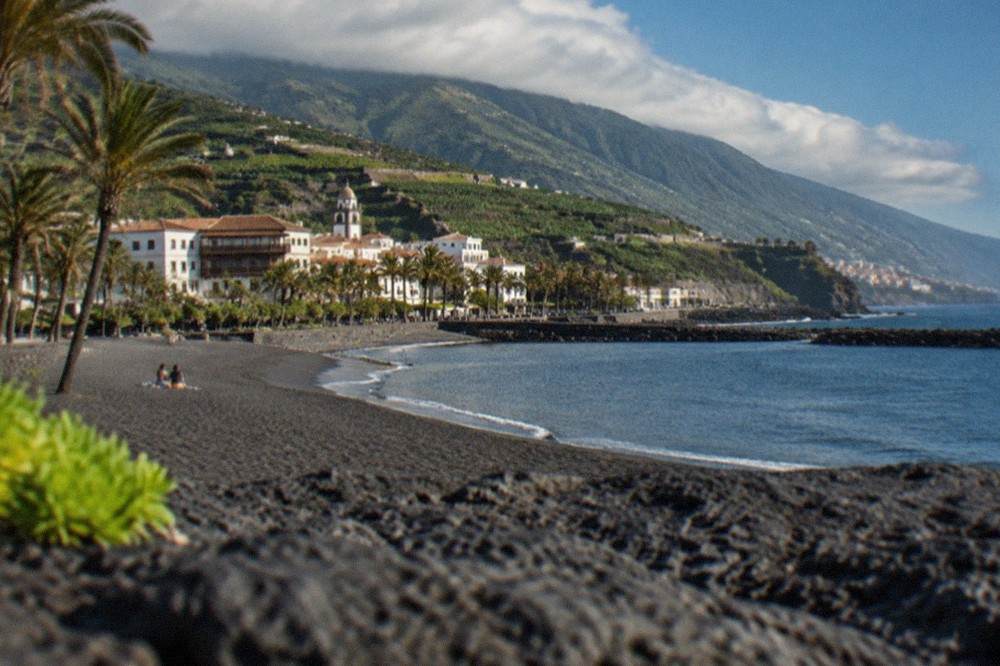
Every beach on the island is free to enter, including Las Teresitas with its golden sand, Las Vistas in Arona and the black-sand El Bollullo; every viewpoint in Teide National Park is free, with no park entry fee on any official page; and the old towns of La Laguna, La Orotava and Garachico are open ground with no ticket anywhere. Driving through the national park carries no charge either.
The free list is long enough to fill a week on its own. The tourist board describes Las Teresitas, at San Andrés near Santa Cruz, as golden sand behind breakwaters that calm the water, and Las Vistas in Arona the same way. El Bollullo in La Orotava is black volcanic sand at the foot of a cliff, and El Médano is fine grey sand under Montaña Roja. None of them charges, and none of the island's natural pools does either, including the Garachico pools formed when the 1706 Trevejo eruption buried the old port.
Up at altitude the same rule holds. Teide National Park was declared by decree of 22 January 1954 and covers 18,990 hectares, and no official page lists any entry fee for it. The 2026 charges are per-booking fees on two specific trails only, PNT 10 and PNT 07; driving the road through the park, stopping at the viewpoints and walking the other trails carries no charge on any page read. Tenerife ON states that its other trails need no authorisation or booking at all until 31 December 2026. The Roques de García, the rock formations beside the parador, sit in that free category, as does the whole volcanic landscape between them.
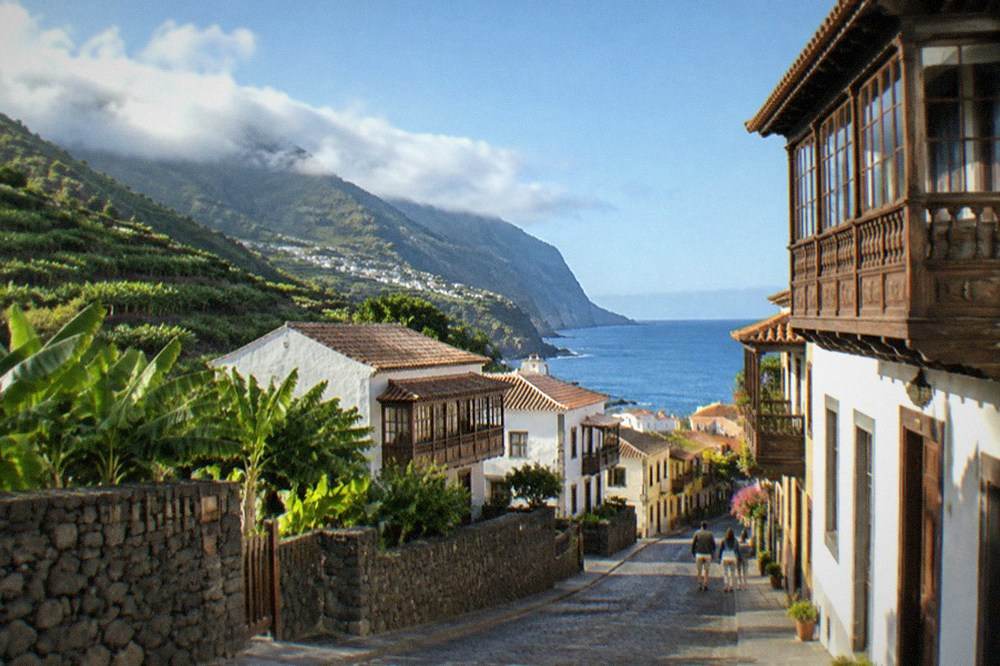
The towns complete the free core. San Cristóbal de La Laguna's colonial layout, which UNESCO credits as the model for many colonial towns in the Americas, is simply there in the streets. La Orotava's historic centre and Garachico's lava-rock coastline are the same. Even the island's biggest sight of all, the Los Gigantes cliffs, which the tourist board says tower up to 600 m, are viewed free from the village or from the water on any boat that passes.
The three paid experiences above are where a budget traveller tends to spend, and each solves a different problem: the cliffs and whales from the water, the volcanic high country with a guide, and the two big parks on one combined ticket. If only one paid day is on the cards, the Los Gigantes cruise is the one this page rates for value, because it bundles the cliffs, the whales and a swim stop into a single outing.
What Official Fees Exist and How Do You Avoid Overpaying?
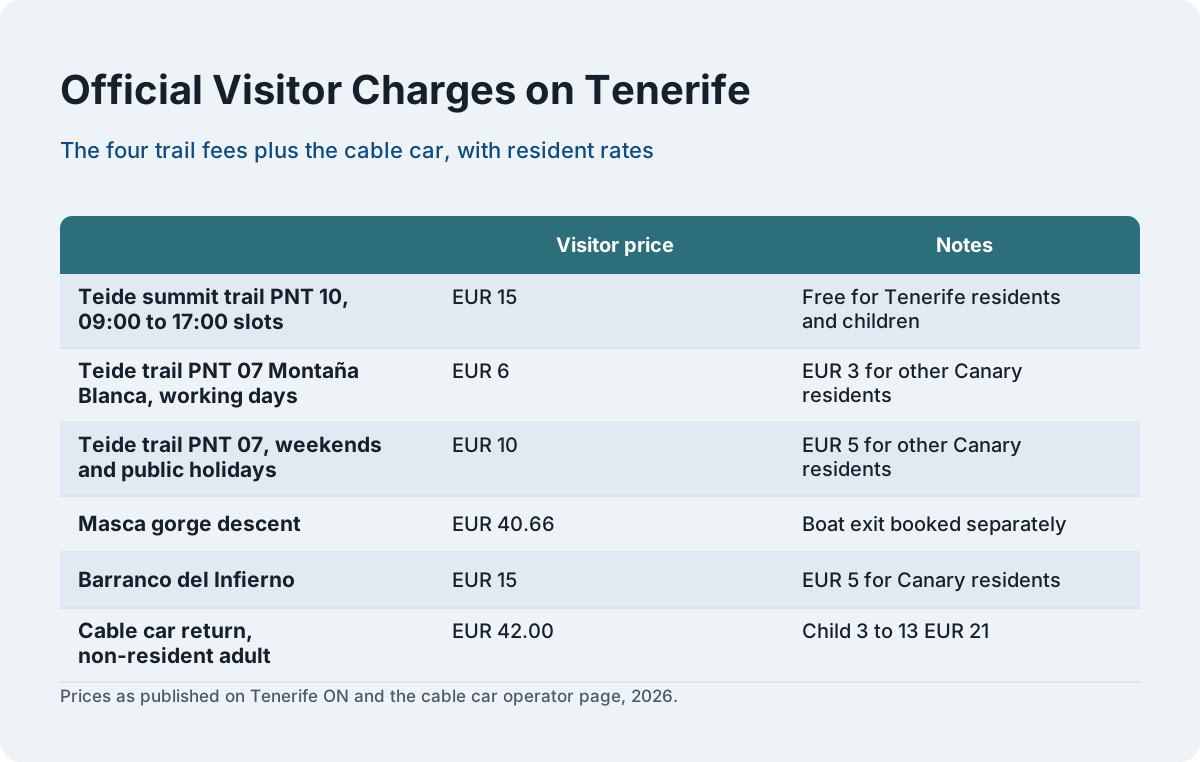
Four visitor charges exist on Tenerife: the Teide summit trail PNT 10 costs EUR 15 for visitors on the 09:00 to 17:00 slots, the Montaña Blanca trail PNT 07 costs EUR 6 on working days and EUR 10 at weekends, the Masca gorge descent costs EUR 40.66 without the boat, and Barranco del Infierno costs EUR 15. Everything else on the island's trail network is free to book or needs no booking at all.
The Teide fees deserve precision because so many pages still carry old or wrong versions. Since Monday 19 January 2026 the daytime slots on PNT 10 cost EUR 15 for visitors, EUR 6 for residents of the other Canary Islands and nothing for Tenerife residents and children. The booking is made on Tenerife ON, and every Monday at 07:00 Canary time a new week is released so that 56 days are always bookable. The cable car is a separate product entirely: it stops at La Rambleta at 3,555 m and does not reach the crater, whose trail needs the permit processed via Tenerife ON.
| Official charge | Visitor price | Notes |
|---|---|---|
| Teide summit trail PNT 10, 09:00 to 17:00 slots | EUR 15 | Free for Tenerife residents and children; booked on Tenerife ON |
| Teide trail PNT 07 Montaña Blanca, working days | EUR 6 | EUR 3 for other Canary residents |
| Teide trail PNT 07, weekends and public holidays | EUR 10 | EUR 5 for other Canary residents |
| Masca gorge descent | EUR 40.66 | Boat exit booked separately, in advance |
| Barranco del Infierno | EUR 15 | EUR 5 for Canary residents; online booking compulsory |
| Cable car return, non-resident adult | EUR 42.00 | Child 3 to 13 EUR 21; shown as "price from" |
Two warnings matter for a budget. First, these bookings are non-refundable, with no changes of date, slot or names, and a no-show can bar the booker from new applications for three months, so an impulse permit is a poor use of a tight budget. Second, the free alternatives are genuinely good: Tenerife ON names the Bosque de los Enigmas trail and the Pista de Las Hiedras in Anaga as permit-free options, and the whole rest of the trail network needs nothing until the end of 2026. The full permit mechanics, including the sunrise and sunset slots, are in the Teide summit permit guide.
Masca deserves its own caution. The gorge is open as a descent-only pilot scheme with a compulsory boat exit, and hikers must arrive on TITSA line 355 from Santiago del Teide and show the bus ticket; arriving by private vehicle means refusal. Sea conditions can close the pier suddenly and void the day's ticket. For a budget traveller the honest summary is that Masca is a splurge, not a staple, and the free trails of the Teno and Anaga massifs deliver comparable scenery for the price of a bus fare. The Masca, Garachico and Icod route guide covers how the pieces fit together cheaply.
When Is the Cheapest Time to Visit Tenerife?
May and June are the cheapest credible months: 539,410 and 542,881 tourists arrived by air in those months of 2025 against 671,202 in December, while AEMET's normals for Tenerife South Airport still show mean daily maxima of 23.9 and 25.4 Celsius and almost no rain. November is the other quiet-value window, with 659,656 air arrivals and a 24.8-degree mean maximum.
The demand pattern is unusually legible because the island's statistics are published monthly. The winter half is the expensive half: December 2025 brought 671,202 air arrivals and February 648,255, both ahead of any spring month. The trough sits in May and June, with a secondary dip in April once Easter has passed. A traveller who shifts a week from mid-December to mid-May trades nothing in beach weather and gains shorter queues at every paid sight. The full index of guides sits on Tenerife Travel Guide.
| Month | Tourists arriving by air, 2025 | Mean daily max, south airport | Rain, mm |
|---|---|---|---|
| February | 648,255 | 22.0 | 20 |
| April | 604,370 | 23.1 | 7 |
| May | 539,410 | 23.9 | 1 |
| June | 542,881 | 25.4 | 0 |
| September | 563,261 | 27.9 | 4 |
| November | 659,656 | 24.8 | 26 |
| December | 671,202 | 22.8 | 30 |
The sea temperature column of the same datasets backs the choice up: the water off the south coast runs 20.2 Celsius in May and 21.4 in June, against 19.9 in January, so the cheap months are actually the warmer ones for swimming. September and October sit in between on price and are the warmest of all, with sea temperatures of 23.7 Celsius. Month-by-month detail, including the north of the island where rain is heavier, is in the Tenerife weather by month guide, and the shoulder-month pages such as Tenerife in May and Tenerife in November go deeper on what each window costs and offers.
How Do You Eat Cheaply in Tenerife?
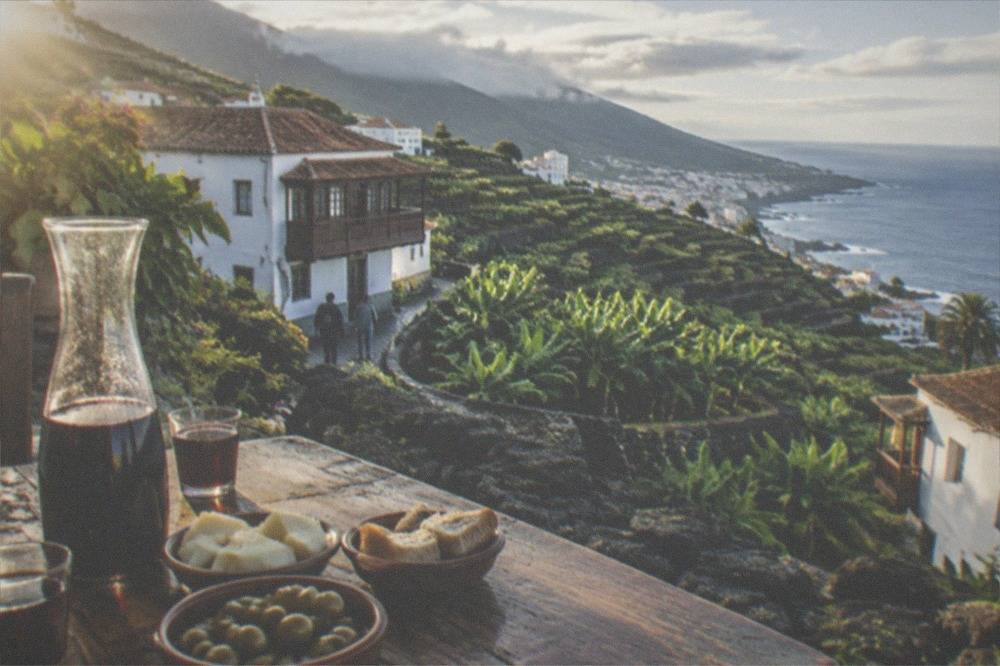
The cheapest honest eating on the island is at the guachinches, small licensed farmhouse eateries in the north that sell their own wine alongside a short home-cooked menu, and at the municipal markets, where the produce is local and the prices are set for residents. Both are fully covered by island rules and neither is a tourist construct.
Guachinches are regulated rather than improvised: they may only serve their own wine and a limited menu, which caps what they can charge. They cluster in Tacoronte, El Sauzal and La Orotava wine country, which pairs neatly with the free towns of the north. The markets are the other pillar: the Mercado Nuestra Señora de África in Santa Cruz is the island's grand one, and every town of size has its weekly market day. The guachinches guide lists how the system works and where the clusters sit, and the Tenerife markets guide does the same for produce and bargains.
The island's own dishes are naturally frugal. Papas arrugadas are wrinkled small potatoes with mojo sauce, peasant food that happens to be the signature dish, and the guide to papas arrugadas and mojo explains what to look for. A budget eater who shops at a market at midday, walks a free trail in the afternoon and eats at a guinche at night is not compromising on the island; that is how a large share of its residents eat all year.
Can You Do Tenerife Cheaply Without a Car?
Yes, and for the tightest budgets the bus is the better tool: the EUR 10 day travelcard covers unlimited TITSA travel, lines 10, 40, 711, 343 and 415 serve Tenerife South Airport, and lines 20, 30 and 343 serve Tenerife North, so the airport transfer itself can cost a single fare rather than a taxi meter.
The airport connections are the piece that decides the whole question, because a taxi transfer on arrival day can consume a day's food budget. TITSA's own airport pages list the lines above, and the detail for each terminal is in the Tenerife South Airport guide and the Tenerife North Airport guide. One caveat from the same pages: the tram serves neither airport, so the Santa Cruz to La Laguna tram is a town tool, not a transfer.
| Airport | TITSA lines | Destinations |
|---|---|---|
| Tenerife South (TFS) | 10 | Santa Cruz |
| Tenerife South (TFS) | 40 | Costa Adeje bus station via Los Cristianos |
| Tenerife South (TFS) | 711 | Night bus: Santa Cruz, airport, Los Cristianos, Costa Adeje |
| Tenerife South (TFS) | 343 | Express Puerto de la Cruz to Los Cristianos via both airports |
| Tenerife South (TFS) | 415 | El Fraile, San Isidro |
| Tenerife North (TFN) | 20 | Santa Cruz via La Laguna |
| Tenerife North (TFN) | 30 | Puerto de la Cruz |
| Tenerife North (TFN) | 343 | Express to the south |
Beyond the airports, the bus network reaches every major sight a budget traveller wants: line 343 links the two tourist coasts through both airports, the Teide and Teno lines run up into the high country, and TITSA line 355 is the compulsory vehicle for the Masca scheme besides. The trade-offs of skipping car hire altogether, including where buses genuinely beat a hire car and where they do not, are laid out in getting around Tenerife, and the costs and quirks of driving are in the car hire guide for comparison. For a week based in Puerto de la Cruz or Los Cristianos with two or three bus day trips, the EUR 50 seven-day travelcard is usually the whole transport bill.
What Free Guided Tours Exist in Tenerife?
Three free, pay-what-you-want walking tours are listed on this site, all in the north: a La Orotava historic-centre tour of about 90 minutes, a Puerto de la Cruz tour of about 90 minutes, and a Santa Cruz historic-centre tour of about two hours. All three run on GuruWalk, the free-tour platform, and none carries a fixed price.
The free walks are a genuine budget tool because they turn the free towns into interpreted sights. The La Orotava walk covers the balconied houses and gardens of the old town, the Puerto de la Cruz walk covers the historic core of the island's original resort, and the Santa Cruz walk covers the historic centre of the capital. Each is free to join and tip-based, and each card below links to its listing.
One honest limit: the resort south, meaning Los Cristianos, Costa Adeje, Adeje, Arona and Playa de las Américas, has no free walking tour listed on GuruWalk at the time this site's listings were compiled. That is a statement about what is listed, not proof that none exists. A southern-based budget traveller can either bus north for one of the three walks or explore the southern towns under their own steam, which costs nothing.
Where Should a Budget Traveller Stay in Tenerife?
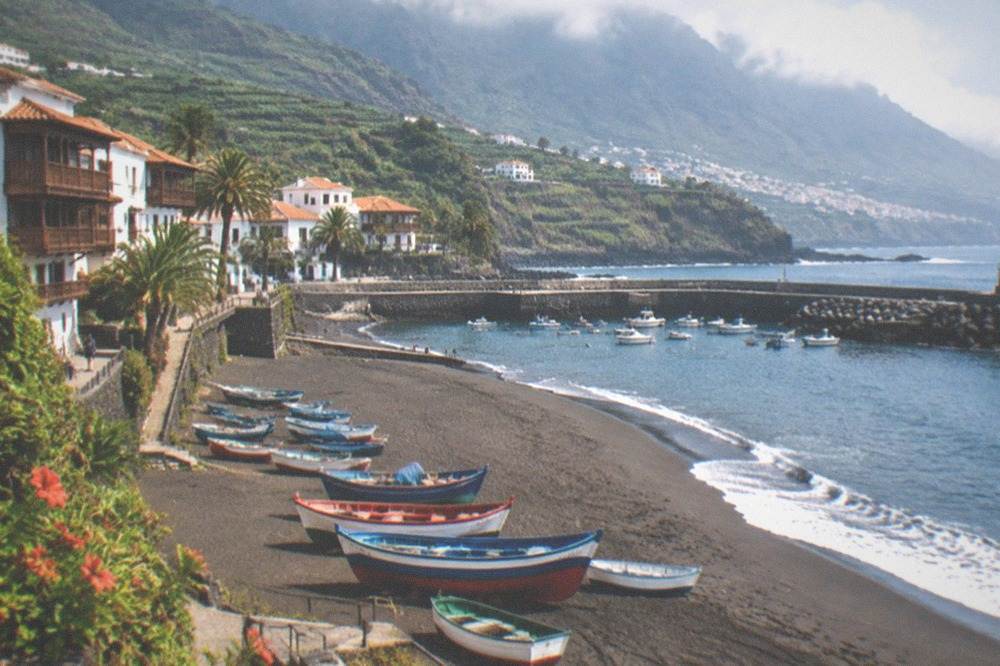
Puerto de la Cruz is the strongest budget base in the north: it is walkable, sits on TITSA line 30 from the northern airport, and its old town, seafront and the free Playa Jardín area need no vehicle. In the south, Los Cristianos is the value anchor, on the 40 and 343 bus lines with the ferry port next door, while Costa Adeje trades higher prices for the island's most polished beach strip.
The structural argument is in the numbers. Puerto de la Cruz counted 31,137 residents in 2025 against Adeje's 50,021 and Arona's 87,793, and the smaller, older towns carry the smaller price tags. The south wins on flight access: Tenerife South handled 13,969,678 passengers in 2025, an all-time record, against 7,174,977 at Tenerife North, so southern flights are the frequent, competitive ones. The north wins on character per euro: the guachinches, the free towns and the Orotava valley all sit on its doorstep.
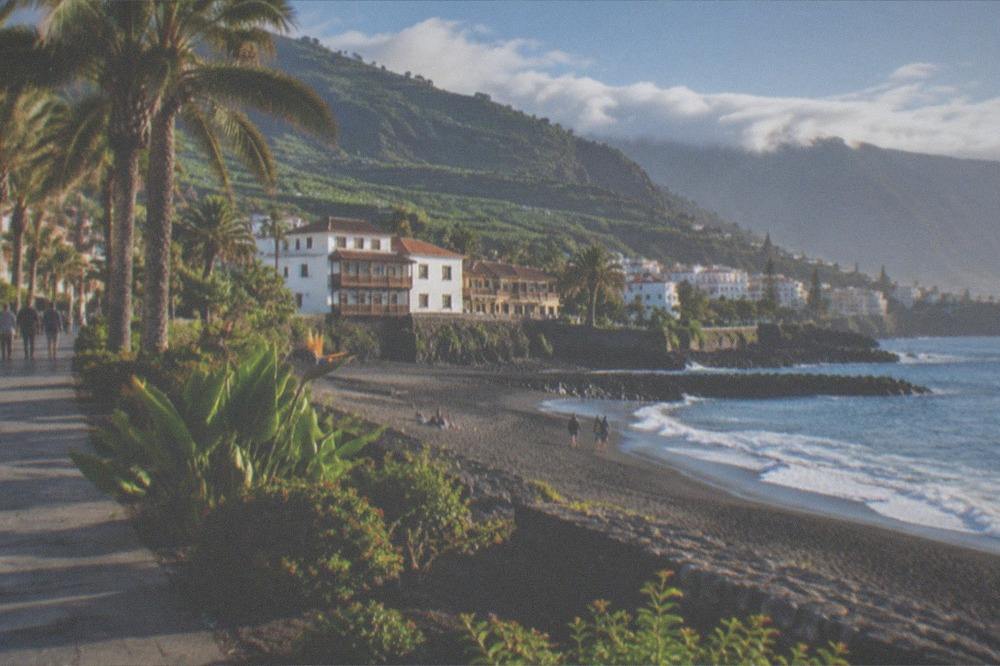
The area-by-area comparison, including the couples' and family angles, sits in where to stay in Tenerife, with the broader north-versus-south decision laid out in the north vs south guide. For hostel beds specifically, the same advice as above holds: check hostel availability for your dates before assuming a resort is the only option.
What Would a Full Cheap Week Look Like?
A realistic budget week: two beach days that cost nothing, one free-walk day in La Orotava or Santa Cruz, one bus day into Teide National Park using the free viewpoints and trails, one paid boat day at Los Gigantes, and one market-and-guinch day in the north, all held together by the EUR 50 seven-day travelcard, with the only certain extras being food and the one paid tour.
The point of the itinerary is that the paid day is load-bearing, not decorative. Whale watching is regulated by Decreto 178/2000, which forbids any approach within 60 m, allows at most three boats within 500 m, caps speed at 4 knots inside that zone and bans swimming within 500 m, and authorised boats fly the Barco Azul flag. A boat that follows those rules is the cheapest legitimate way to see the resident pilot whales, which the World Cetacean Alliance describes as a unique resident population, and the Los Gigantes cruise below bundles that with the cliffs and a swim stop.
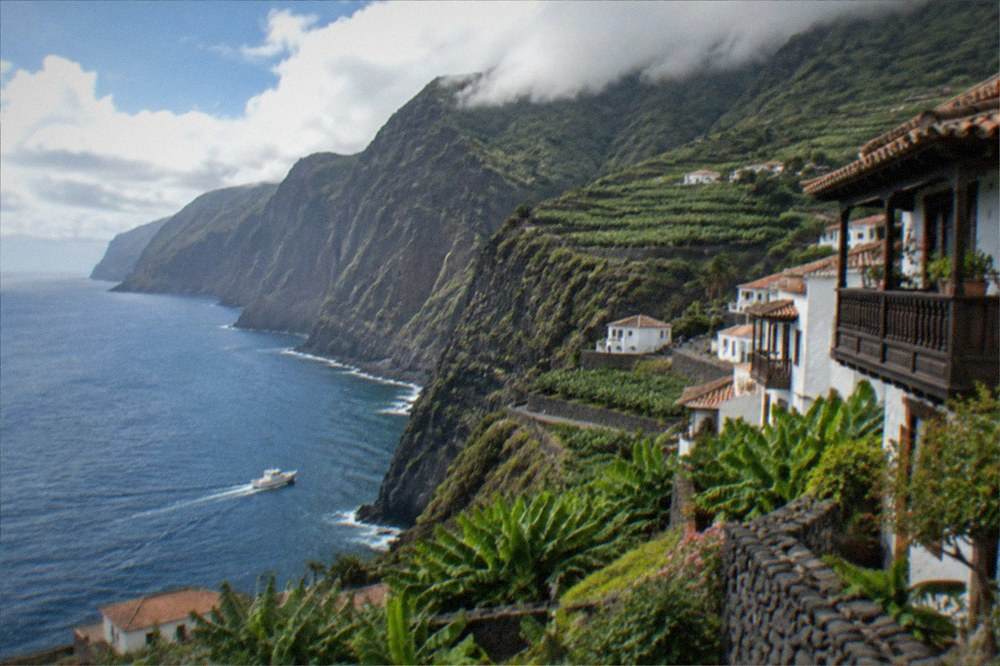
The rest of the week fills itself. A Teide day by bus costs a travelcard swipe and nothing else if the summit permit is skipped: the park's roads, viewpoints and permit-free trails are open ground, and the smoking ban across all open-air spaces of the park, car parks included, is the only rule a day visitor really needs to know. An Anaga day works the same way on the permit-free trails the Cabildo itself names. And a rest day on Las Teresitas or Las Vistas costs the bus fare and an ice cream.
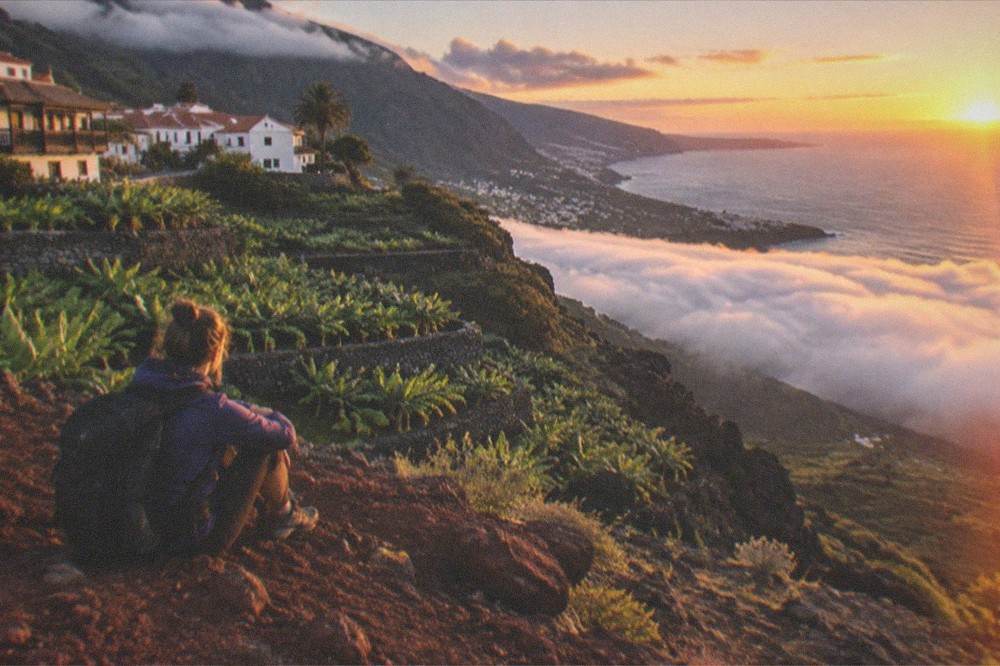
For a longer stay the same logic scales, and the itineraries this site publishes, including 3 days in Tenerife and 7 days in Tenerife, can be run on this page's free-and-frugal spine by swapping the paid segments in and out as the budget allows.
Common Questions About a Budget Tenerife Trip
Is Tenerife budget friendly?
Yes. Beaches, viewpoints, old towns and most trails cost nothing, no tourist tax exists, a day of unlimited buses costs EUR 10 and the seven-day travelcard EUR 50. The only compulsory spending is food, bed and transport; every official fee on the island, from the Teide trails to Masca, is an optional booking rather than a cost of entry.
Is there a tourist tax in Tenerife?
No official page shows a per-night lodging tax in force or approved on Tenerife. The charges that do exist are per-booking fees: the Teide trail fees on PNT 10 and PNT 07, the Masca gorge ticket at EUR 40.66 and the Barranco del Infierno ticket at EUR 15. None of them applies unless you book the activity.
Are buses free for tourists in Tenerife?
No. The 2026 100% subsidy covers resident passes only, on a personalised Ten+ card, and visitors do not qualify. Visitors pay for single tickets, the EUR 10 day travelcard or the EUR 50 seven-day travelcard, all sold at airport ticket machines.
Is it expensive to visit Mount Teide?
Only if you choose the paid options. Driving through the national park, the viewpoints and the permit-free trails cost nothing. The summit trail PNT 10 costs EUR 15 for visitors on the daytime slots, the Montaña Blanca trail PNT 07 costs EUR 6 on working days and EUR 10 at weekends, and the cable car return is EUR 42.00 for a non-resident adult, shown as a price from.
What is the cheapest month to go to Tenerife?
May and June are the quietest credible beach months: 539,410 and 542,881 tourists arrived by air in those months of 2025, the lowest full-month figures of the year, while the south airport's mean daily maxima were 23.9 and 25.4 Celsius with 1 mm of rain or less.