Papas Arrugadas and Mojo
Papas arrugadas, wrinkled potatoes boiled in heavily salted water, with red and green mojo sauces, is the dish most closely tied to Tenerife's tables. This guide explains what it is, where to find it and how to build a holiday around it.
Short answer
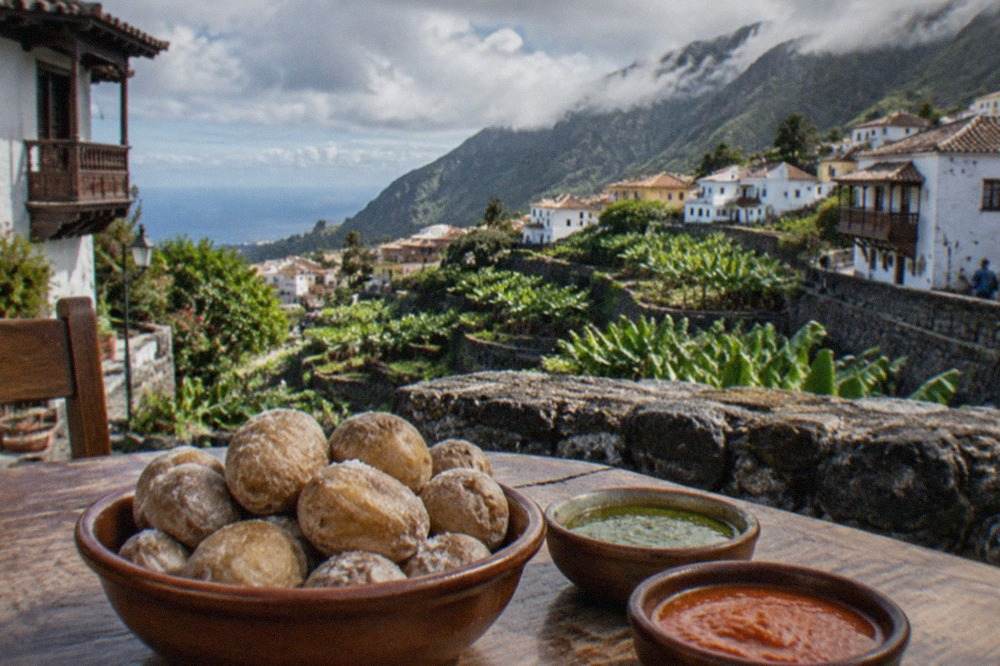
Papas arrugadas are small Canarian potatoes boiled in very salty water until the skin wrinkles and a fine salt crust forms, served with mojo, a sauce that comes above all in a red version built on dried peppers and a green version built on coriander. They are a standard starter across Tenerife, from guachinche country in the north to the restaurants of the south.
Papas arrugadas is the dish that appears on more Tenerife menus than anything else: small local potatoes boiled in heavily salted water until the skin wrinkles and dries into a white crust, served with one or two bowls of mojo sauce for dipping. It is a starter, a side and, in the old guachinches of the north, often the reason the table was booked in the first place. The version of the island most visitors meet, beach clubs and hotel buffets, only tells half the story. The dish belongs to a wider food culture of small growers, local wine and simple cooking that this guide walks through, with the practical planning around it: where to stay, how to get about and which months reward the trip.
What Are Papas Arrugadas?
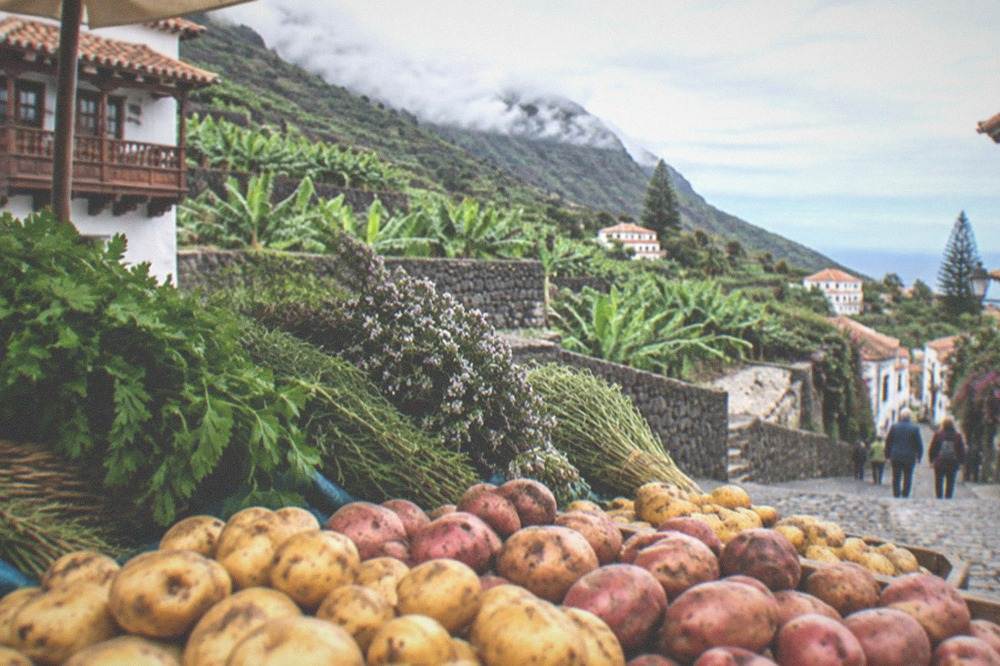
Papas arrugadas are small potatoes boiled in water salted far beyond ordinary cooking, drained and returned to the dry heat of the pan until the skin wrinkles and a fine crust of salt forms, then served whole and unpeeled with mojo sauce. The name simply means wrinkled potatoes, and the dish is eaten across the Canary Islands rather than in Tenerife alone. No restaurant page states a fixed recipe, and portions, potato varieties and salt levels vary from kitchen to kitchen.
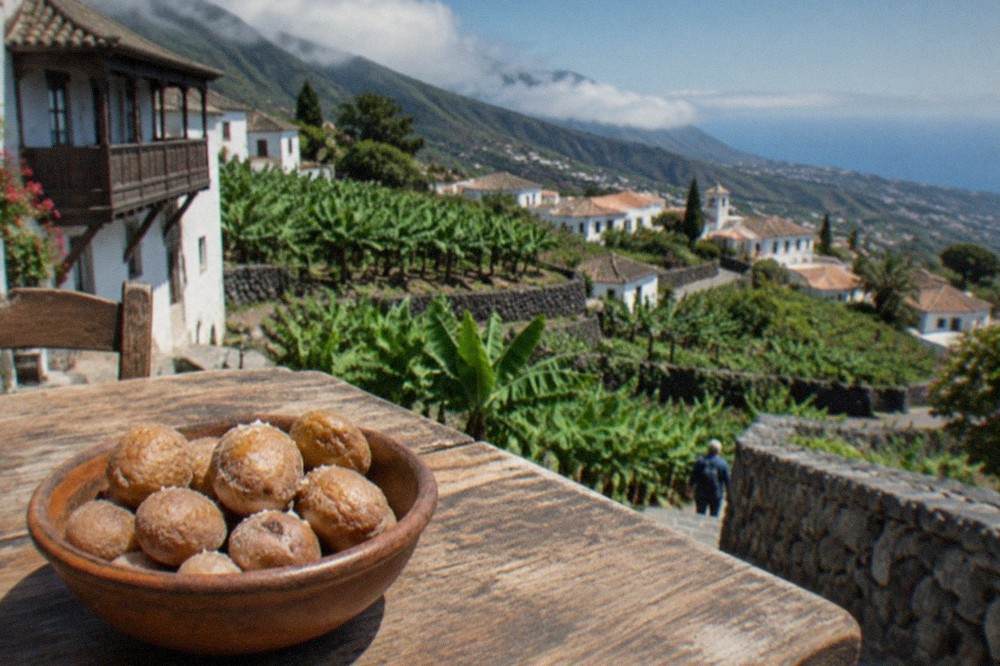
The point of the method is the skin. Boiling in saturated salt water seasons the potato through the jacket, and the final drying in the pan leaves the characteristic wrinkled, lightly crusted surface that gives the dish its name. Diners break the skin with their fingers rather than peeling it, and the salt on the outside meets the sauce on the inside.
The potatoes themselves matter. Canarian agriculture produces a range of local potato varieties, and the island's growers supply the markets and restaurants that feature the dish. This guide's verified fact file holds no figures for potato varieties, harvest volumes or agricultural statistics, so none is stated here: what can be said is that the dish is built around small, firm, thin-skinned potatoes rather than large floury ones, and that the variety used is a fair question to ask in any restaurant that takes the dish seriously.
What Is Mojo and What Are the Main Types?
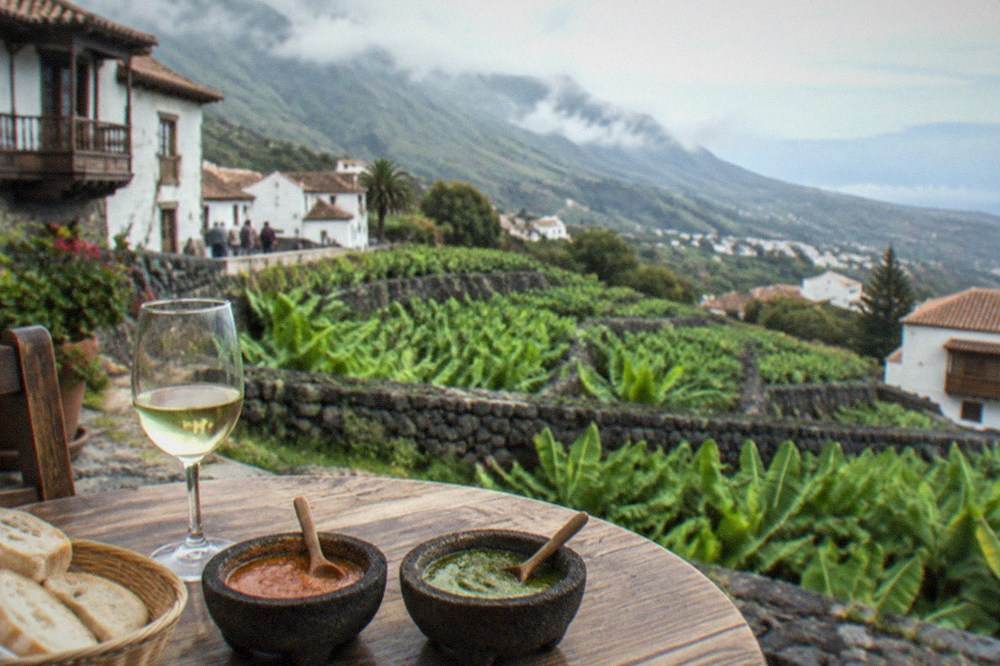
Mojo is the Canarian family of sauces served with papas arrugadas, and the two types on almost every menu are mojo rojo, a red sauce built on dried red peppers with garlic and oil, and mojo verde, a green version built on coriander or parsley. Both are pounded or blended sauces rather than cooked ones, and both are served in bowls for dipping rather than spooned over the potatoes. Recipes are household and restaurant property, so heat, texture and colour vary widely.
The red sauce is the traditional partner for meat dishes as well as potatoes, and its backbone is the dried red pepper that gives it both colour and a deep, rounded warmth. The green version leans on fresh herbs and usually accompanies fish and seafood. Beyond those two, Canarian kitchens make other mojos, and a menu that lists a variant such as a cheese mojo or a smoked version is showing rather than hiding its range.
Because no official source in this site's verified fact file records a standard recipe, ingredient list or spiciness scale for mojo, this page states none. What a visitor can rely on is the pattern: two bowls, one red and one green, arriving with the potatoes, and a cook's own balance of garlic, oil, pepper and herb doing the rest. If heat is a concern, ask before spooning, because a restaurant's rojo can be mild or fierce and the menu rarely says which.
The dish travels well through the day. It appears at lunch in working kitchens, at dinner in tourist restaurants, and at festivals as the carbohydrate under whatever meat or fish the celebration is built around. It is also one of the few dishes that is genuinely local rather than adapted for visitors: a restaurant serving papas arrugadas badly is more often cutting the salt step than changing the recipe.
Where to Eat Papas Arrugadas in Tenerife?
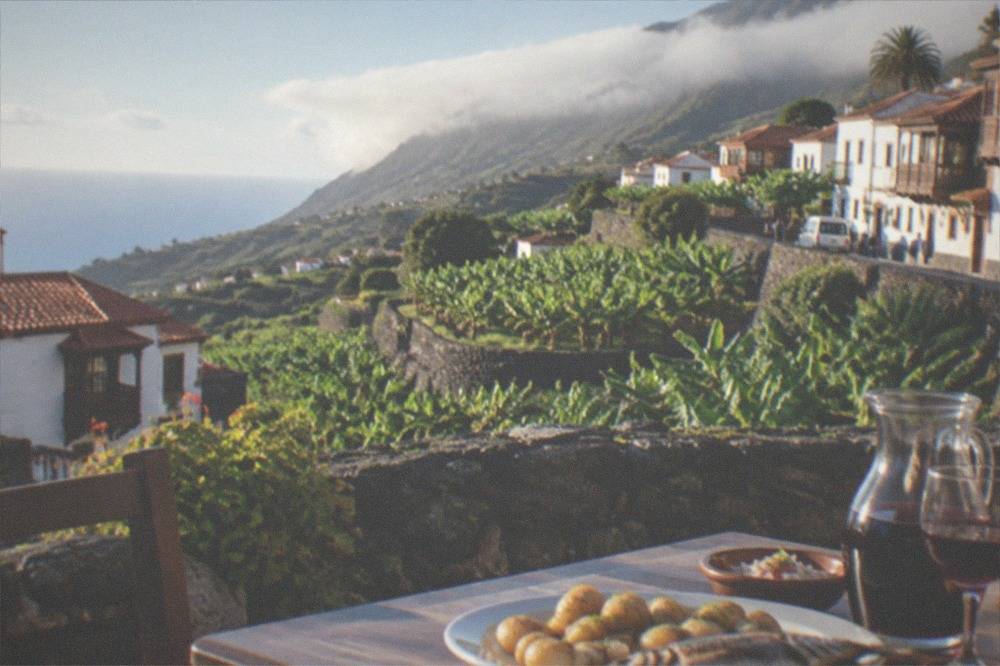
The two settings to seek out are the guachinches of the north, farm kitchens licensed to serve their own wine and a short menu of simple dishes, and the seafood restaurants of the coasts, where papas arrugadas and mojo verde arrive alongside fresh fish. Opening hours, bookings and seasonal closures are set by each venue, so confirm them directly before travelling to a specific restaurant.
Hotel buffets and international restaurants also serve the dish, but the version worth crossing the island for is the one in kitchens that cook it daily for local tables, and that distinction shapes the rest of this section.
The guachinche is the more distinctive of the two. These are small, licensed farm-gate eating places, historically tied to the wine harvest, and the genuine ones serve a short list of dishes with the grower's own wine. Because their licensing limits what they can offer and their seasons follow the harvest, a guachinche that was open last trip may be closed this one, and the only reliable answer is to check with the venue itself. This site keeps a separate guide to them, and it is the right first stop for planning a food-focused day in the north.
The coastal restaurants run on fish, and the pairing there is papas arrugadas with mojo verde. From the harbours of the south to the old town of Garachico, the pattern repeats: whatever the catch of the day is, the potatoes and the two sauces arrive first or alongside. A good approach for a first visit is to plan one meal in a guachinche country inland and one on the coast, and compare the two bowls of mojo rather than trust a single kitchen to define the dish.
For readers who want the food culture explained rather than just served, a guided stop helps. The banana plantation experience below is a farm visit rather than a restaurant, but it is the same story from the other end: how a crop is grown on this island and what ends up on the table. Check availability for the dates you have in mind.
Can You Cook Papas Arrugadas at Home?
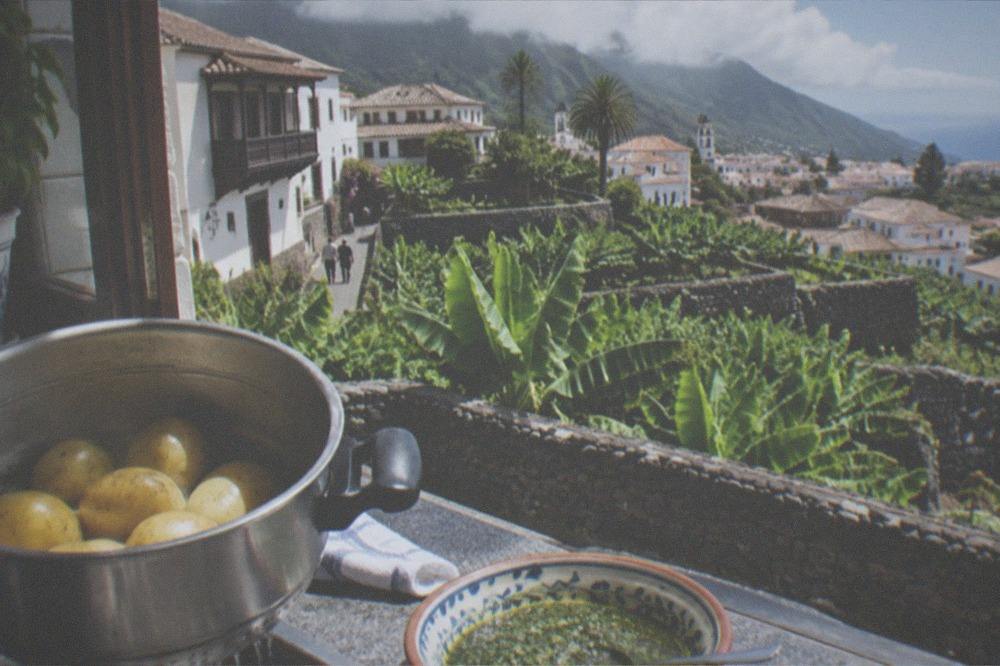
Yes, and the method is short: boil small thin-skinned potatoes in generously salted water until tender, drain them, then return them to the hot dry pan over low heat until the skins wrinkle and dry into a light crust. The sauce is where the work is, since mojo is a raw, pounded sauce of garlic, oil, pepper and herbs or coriander. No verified source fixes the salt quantity or the timing, so treat any single recipe as one cook's version rather than the rule.
The reason the method survives is that it needs no oven and no precision. The salt water does the seasoning, the dry pan does the wrinkling, and the potatoes are done when the skins look the part. Cooks who under-salt the water get smooth potatoes and no crust, which is the most common failure reported in recipe discussions, and cooks who skip the drying step get wet skins that the sauce will not cling to. The rest of the planning pages sit on Tenerife Travel Guide.
The sauce rewards a mortar or a good blender and a willingness to adjust. A red mojo needs dried red peppers rehydrated, and a green mojo needs a generous handful of fresh coriander or parsley. Both need enough oil to carry the flavour and enough garlic to make the point. Recipes differ on vinegar, cumin and spice, and that variance is the dish's character rather than a problem with it.
How Does the Dish Fit Into a Tenerife Holiday?
Papas arrugadas is a starter and a side rather than a destination in itself, so it fits a holiday as the food thread through other plans: lunch after a morning on the coast, dinner after a day trip, the shared plate at a festival table. The island's food regions also line up with its sightseeing ones, with the north holding the guachinche country and the south holding the resort restaurants, so the dish is a reason to cross between the two rather than stay in one.
A practical shape for a food-led week is to base yourself somewhere with easy access to both halves of the island. The question of where to plant yourself is covered in detail in this site's guide to where to stay in Tenerife, and the trade-offs between the two halves are laid out in Tenerife North vs South. The short version for food purposes: the north is where the guachinches and the older agricultural towns sit, while the south is where the widest range of restaurants, including the resort kitchens, is concentrated.
Getting between the two is a bus question for most visitors. TITSA runs the island's network, and the visitor products are straightforward: single tickets priced by route, a day travelcard at EUR 10 and a seven-day travelcard at EUR 50. The free public transport that made headlines in the Canaries applies to resident passes only, so visitors should plan on paying. The full detail, including airport lines, is in the guide to Tenerife buses and TITSA, and the broader picture is in getting around Tenerife.
| TITSA product | Price | Notes |
|---|---|---|
| Single ticket | Priced by route | Card or cash on board |
| Same-day return | 10% off | On trips of 20 km or more |
| Day travelcard | EUR 10 | Visitor product |
| 7-day travelcard | EUR 50 | Visitor product |
| Ten+ card | EUR 2 | Wallet top-ups from EUR 2 to EUR 100, sold at airport ticket machines |
If you would rather have the city explained than navigate it alone, the Santa Cruz bike and e-bike tour below starts at the cruise terminal and covers the capital's highlights in about two and a half hours, which pairs neatly with a long lunch afterwards.
When Is the Best Time to Eat Your Way Around Tenerife?
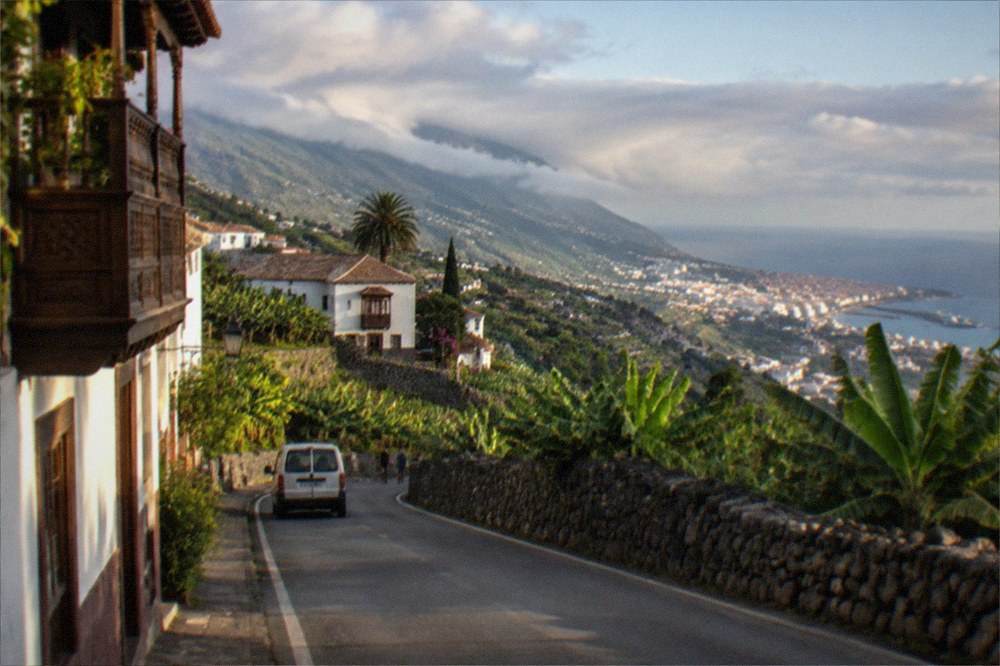
For the south and the coasts, the warmest and driest months are June to September, when AEMET's normals for Tenerife South Airport show zero or near-zero rain and mean daily maxima from 25.4 to 28.4 Celsius. For the north, summer is the driest half of the year too, but winter is wetter everywhere, with Tenerife North Airport recording 80 mm of rain in January and 82 mm in December against the south airport's 17 mm and 30 mm.
There is no month when the island shuts, and food venues run all year, so the choice of month is about weather and crowds rather than anything closing. The two halves of the island have genuinely different climates, and that matters for a plan built around driving to guachinches or harbours. The north is greener and wetter, which is why it grows the produce and the wine; the south is drier and sunnier, which is why the resorts sit there. A month-by-month breakdown with the full AEMET tables is in the guide to Tenerife weather by month, and month-specific planning pages exist for the popular half of the year, including Tenerife in October, Tenerife in November and Tenerife in December.
| Month | South airport mean daily max (C) | South airport rain (mm) | North airport mean daily max (C) | North airport rain (mm) |
|---|---|---|---|---|
| Jan | 21.7 | 17 | 16 | 80 |
| Feb | 22 | 20 | 16.7 | 70 |
| Mar | 23.1 | 15 | 18.2 | 61 |
| Apr | 23.1 | 7 | 18.5 | 39 |
| May | 23.9 | 1 | 20.1 | 19 |
| Jun | 25.4 | 0 | 22.2 | 11 |
| Jul | 27.7 | 0 | 24.7 | 6 |
| Aug | 28.4 | 1 | 25.7 | 5 |
| Sep | 27.9 | 4 | 24.9 | 16 |
| Oct | 26.8 | 12 | 22.5 | 47 |
| Nov | 24.8 | 26 | 19.6 | 81 |
| Dec | 22.8 | 30 | 17.1 | 82 |
The sea follows its own calendar. Off the south coast, the surface temperature bottoms out at 19.1 Celsius in March and peaks at 23.7 Celsius in September and October, so the warmest swimming water arrives at the end of summer rather than in the middle of it. A coastal lunch with a swim before or after is a realistic plan from June to November.
| Month | Sea surface temperature off the south coast (C) |
|---|---|
| Jan | 19.9 |
| Feb | 19.2 |
| Mar | 19.1 |
| Apr | 19.5 |
| May | 20.2 |
| Jun | 21.4 |
| Jul | 22.2 |
| Aug | 23.1 |
| Sep | 23.7 |
| Oct | 23.7 |
| Nov | 22.5 |
| Dec | 21.1 |
How Busy Is the Island When You Go?
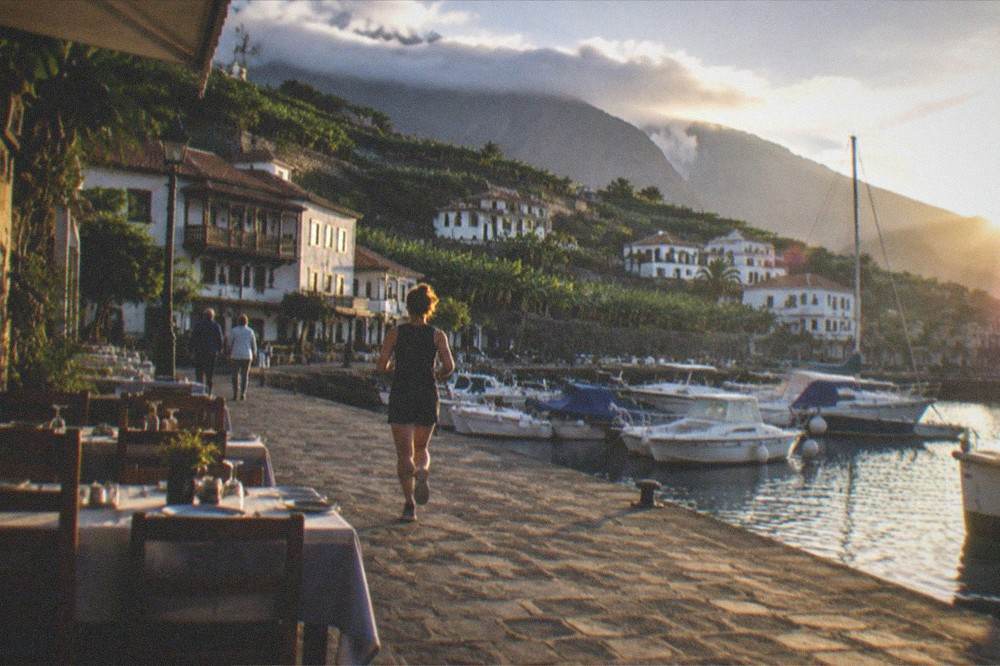
Tenerife's air arrivals run in two waves: a winter peak around December and January, when 671,202 tourists arrived by air in December 2025, and a summer shoulder that is noticeably lighter, with 539,410 in May 2025. October and November are also busy, at 631,662 and 659,656 by air in 2025. For restaurant planning, the quieter the arrival month, the easier a table in a small guachinche or a harbourside kitchen will be, though individual venues set their own booking rules.
These figures count tourists arriving by air, excluding Canary Islands residents, and they are the only monthly series this site holds. They matter for food planning because the island's small kitchens have finite tables and the winter months fill them. A traveller who can shift a trip from the December peak to a spring month trades a little weather certainty for a lot of availability.
| Month | Tourists arriving by air, 2024 | Tourists arriving by air, 2025 |
|---|---|---|
| Jan | 612,169 | 643,460 |
| Feb | 632,295 | 648,255 |
| Mar | 678,693 | 677,688 |
| Apr | 578,602 | 604,370 |
| May | 528,408 | 539,410 |
| Jun | 522,461 | 542,881 |
| Jul | 580,512 | 611,623 |
| Aug | 603,529 | 618,578 |
| Sep | 551,175 | 563,261 |
| Oct | 617,714 | 631,662 |
| Nov | 652,800 | 659,656 |
| Dec | 679,245 | 671,202 |

What Else Pairs Well with a Food-Focused Day?
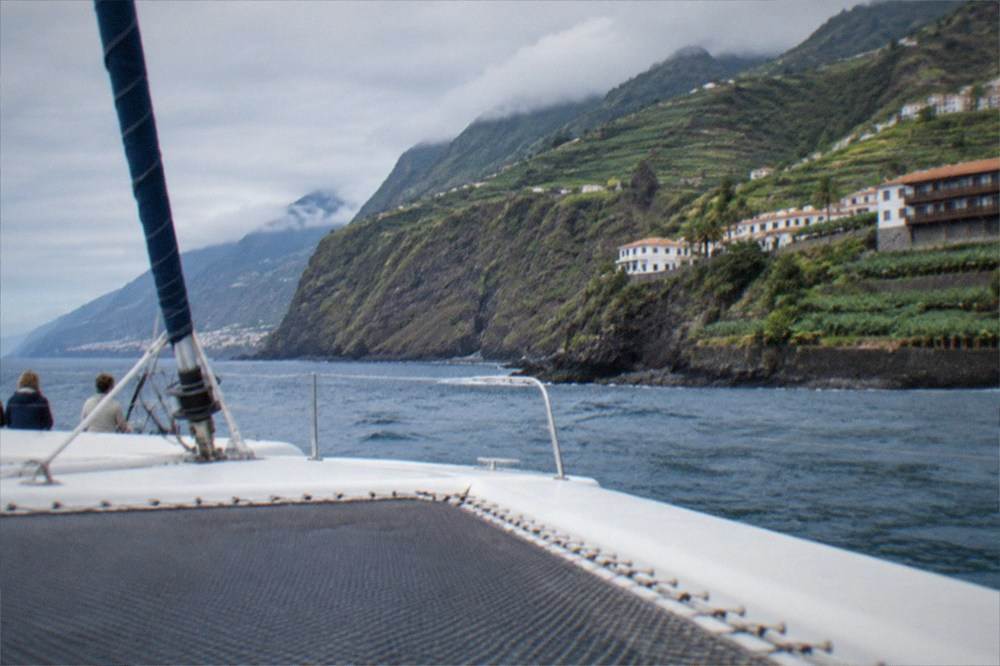
A food-focused day in Tenerife pairs naturally with the water, since the harbours that land the fish are the same ones the boat trips leave from, and with the island's markets and farm visits, which show the produce end of the same food chain. The classic combination is a morning on a boat, a long lunch with papas arrugadas and mojo verde at a harbour restaurant, and an afternoon at a market or a farm visit.
The boat half of that day is well served from Los Gigantes, where dolphin and whale watching cruises run with a swim stop, and the cliffs there rise up to 600 m in the tourist board's words, which makes the coastline part of the meal's view.
The whale watching itself is tightly regulated, which is worth knowing before choosing a boat. Canary Islands Decreto 178/2000 forbids any approach within 60 m of the animals, allows at most three boats within 500 m, sets a 4-knot limit inside 500 m and bans swimming with them, and authorised boats must fly the Barco Azul flag. The area between Tenerife and La Gomera has been a designated Whale Heritage Area under the World Cetacean Alliance since January 2021, and the alliance describes a unique resident population of pilot whales there.
For the wider planning, the island's headline list of activities is gathered at things to do in Tenerife, and the beach side of a trip is covered in the guide to the best beaches in Tenerife. If the trip needs a base with a kitchen, so the potatoes can be attempted at home, the accommodation options are compared in where to stay in Tenerife.
Common Questions About Papas Arrugadas and Mojo
What does papas arrugadas mean?
Wrinkled potatoes. The name describes the skin, which wrinkles and dries into a light salt crust after the potatoes are boiled in heavily salted water and finished in the hot dry pan.
Do you eat the skin on papas arrugadas?
Yes, the skin is the point of the dish. Diners break it with their fingers and dip the potato into the mojo, and the salt crust is part of the flavour rather than something to remove.
Is mojo very spicy?
It varies by kitchen. The red version is built on dried red peppers and can range from mild to fiercely hot, and the green version is usually milder and herb-led. Ask in the restaurant before spooning a large amount.
Are papas arrugadas served everywhere in Tenerife?
They are close to universal on the island's menus, from guachinches to resort restaurants, but the style differs. Farm kitchens and traditional restaurants are the places most associated with the dish, and hotel buffets are the least.
Can vegetarians eat papas arrugadas and mojo?
Yes, the potatoes and the standard red and green mojos are meat-free, though recipes vary and some kitchens add ingredients such as cheese to specialty versions, so it is worth confirming with the restaurant if that matters to you.
Can I bring the dish home as a souvenir?
The practical souvenirs are the ingredients: dried red peppers for mojo rojo and local salt are sold in the island's markets, and the sauce keeps well. The potatoes are best eaten on the island, since the local varieties do not travel as a product category this site can verify.