The Best Beaches in Tenerife
Tenerife's beaches split into golden, grey, pale and black sand, and the official descriptions are more varied than most guides admit. Here is what the tourist board, AEMET and the ferry and bus operators actually say.
Short answer
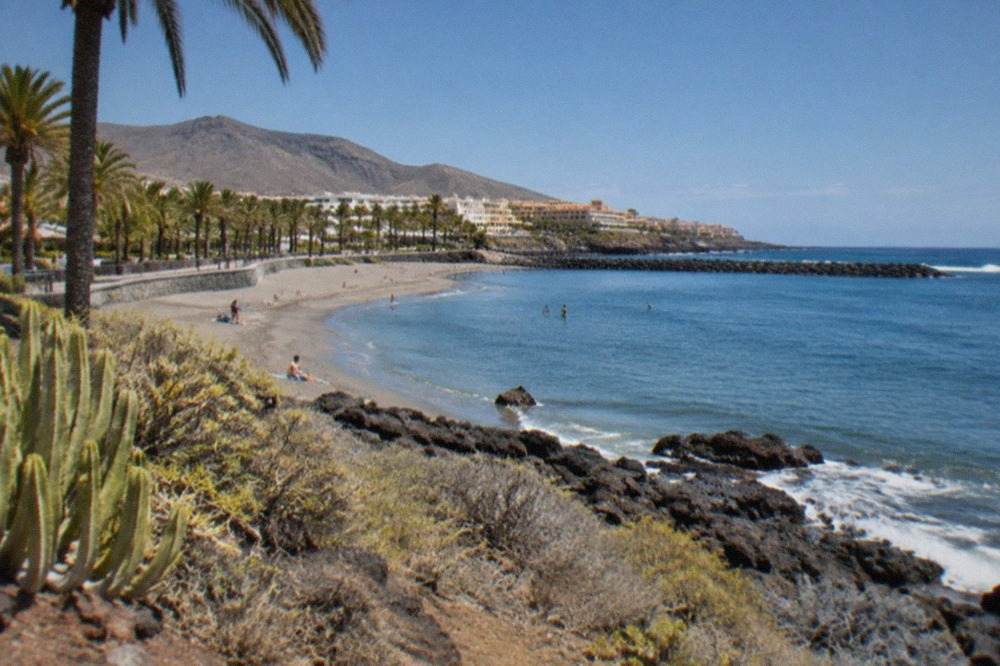
Las Teresitas and Las Vistas are the golden-sand beaches, El Duque and El Medano are grey, Fanabe is pale and El Bollullo is black. The clearest water sits along the south and west coasts, and the prettiest beach towns include Los Gigantes and El Medano.
Tenerife's beaches do not share one story. The tourist board's own pages describe Las Teresitas and Las Vistas as golden sand, El Duque as grey, Fanabe as pale, El Medano as fine grey sand under Montana Roja, and El Bollullo as black sand at the foot of a cliff. That is five different colours on one island, and it is the reason the question "which beach is best" has no single answer. This guide works through what the official sources say, beach by beach, so a reader can match a shore to a holiday rather than to a slogan.
What Is the Nicest Beach in Tenerife?
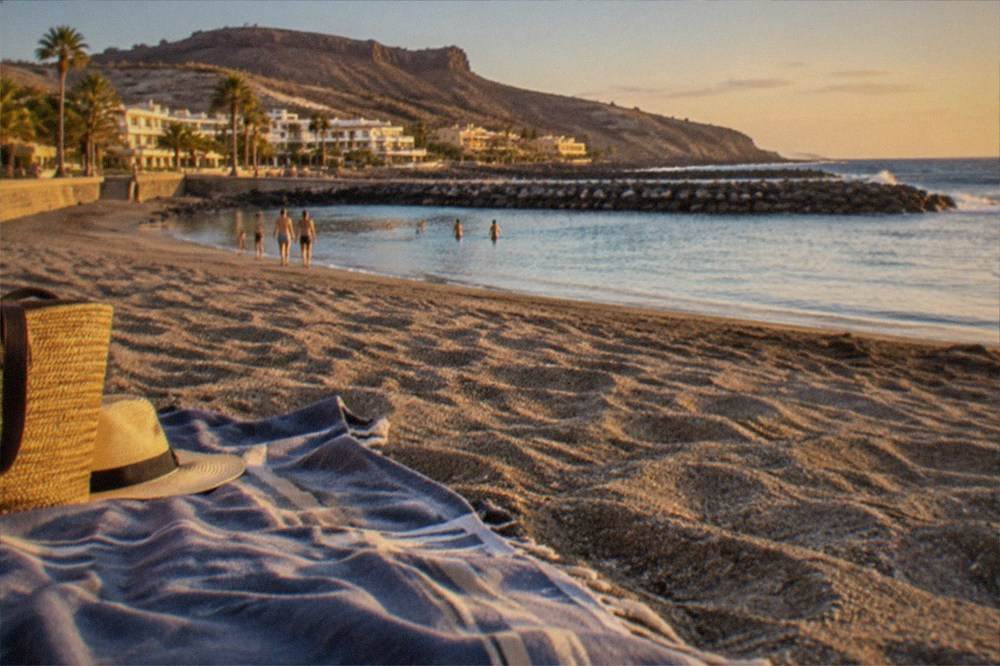
There is no single official answer, but the tourist board's own descriptions point to two golden-sand beaches above the rest: Las Teresitas, at San Andres just outside Santa Cruz, with palms and breakwaters that calm the water, and Las Vistas in Arona, golden sand behind a row of breakwaters. Both are described in those words on the tourist board's beach pages, and both offer the combination most visitors mean by "nice": golden sand, sheltered swimming water and easy access.
Everything else on the island is a trade-off, and the tourist board is honest about it. El Duque in Costa Adeje is described as a grey sandy beach, not a golden one, whatever older guides claim. Fanabe is "pale sand". El Medano is fine grey sand under Montana Roja, a windswept shore that suits wind and kite surfers more than floaters. El Bollullo, in the La Orotava valley, is black sand at the foot of a cliff, and it is the beach to choose when the point of the day is the setting rather than the swim.
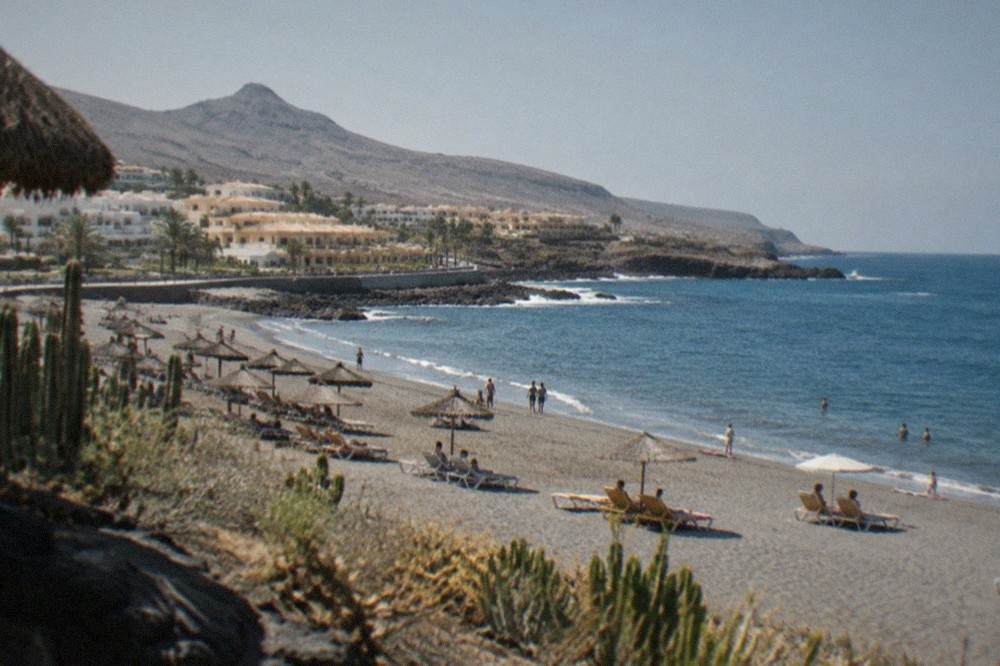
The table below collects the tourist board's own wording for each of the six beaches it describes in detail, together with the municipality each one sits in, which matters for bus planning and for knowing which resort area you are actually in. A beach listed as being in Adeje is a beach in the Costa Adeje resort belt; a beach listed as being in La Orotava is an hour's drive into the green north. The municipality column is doing quiet but useful work.
| Beach | Sand, in the tourist board's words | Municipality |
|---|---|---|
| Las Teresitas | Golden sand, palm trees, breakwaters that calm the water | Santa Cruz (San Andres) |
| Las Vistas | Golden sand, calm behind a row of breakwaters | Arona |
| Playa del Duque | Grey sandy beach | Adeje |
| Fanabe | Pale sand | Adeje |
| El Medano | Fine grey sand, under Montana Roja | Granadilla de Abona |
| El Bollullo | Black sand at the foot of a cliff | La Orotava |
For a deeper dive into the dark end of that table, the black sand beaches of Tenerife have their own guide, and the golden ones are covered in detail in the golden sand beaches guide. Choosing between the north and the south of the island, which is really a choice between grey and black volcanic shores in the north and the developed southern resorts, is covered in Tenerife North vs South.
Where Is the Clearest Water in Tenerife?
The clearest, calmest swimming water on the island sits behind the breakwaters of Las Teresitas and Las Vistas, both of which the tourist board describes as calm, and along the sheltered southwest coast from Los Cristianos to Los Gigantes, where the sea is protected from the open Atlantic by the island's shape. No official source ranks Tenerife's beaches by water clarity, so the honest answer is structural: breakwaters and sheltered bays mean clear, still water, and exposed shores mean swell.
The southwest is where the whale-watching fleet operates, and that is not a coincidence. The sea between Los Cristianos and the Los Gigantes cliffs, which the tourist board says tower up to 600 m, is a Special Area of Conservation holding what the World Cetacean Alliance calls a unique resident population of pilot whales. Water clear enough for a year-round wildlife industry is water clear enough for a swim.
Boats on wildlife trips are regulated by Decreto 178/2000: no approach within 60 m of the animals, no more than three boats within 500 m, a maximum of 4 knots inside 500 m, and no swimming or diving within 500 m. Authorised boats fly the Barco Azul flag. A reader choosing a trip from the southwest beaches can check for that flag as a quick marker of a legal operator. The decree also bans feeding, chasing and circling the animals, which is the standard against which the "no-chase" style of trip is named.
A day on the sand pairs naturally with a day on the water, and the southwest beaches are where most of those departures begin. The trips below leave from the same stretch of coast as the beaches in the table above.
What Is the Prettiest Beach Town in Tenerife?
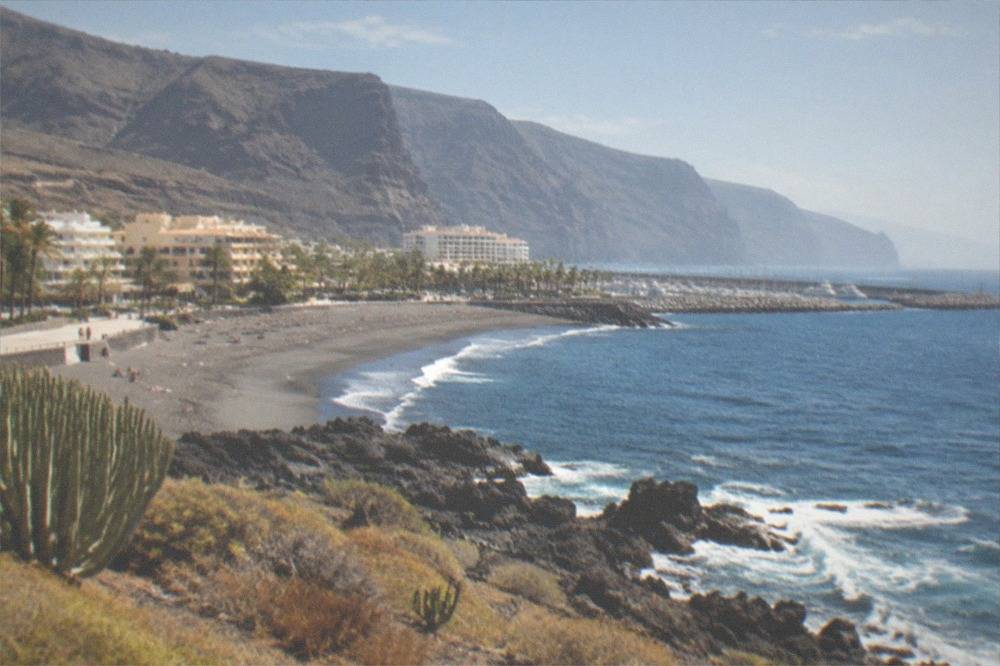
Los Gigantes, in the municipality of Santiago del Teide, is the strongest candidate on the official record: a small resort town at the foot of cliffs the tourist board says tower up to 600 m, with a seabed about 30 m deep at their foot inside Teno Rural Park. El Medano is the other official standout, a low-rise town of fine grey sand under the volcanic cone of Montana Roja. No official body ranks beach towns, so each case rests on the tourist board's own pages.
Los Gigantes gives a beach town a backdrop few shores anywhere can match. The town sits inside Teno Rural Park on the island's far west, and its marina is the departure point for boat trips along the base of the cliffs. The tourist board's page for the cliffs records both the height and the depth of water at their foot, which tells a swimmer the shore here is dramatic rather than shallow and paddling.
El Medano is the opposite character: a low, windy, natural shore that the tourist board describes as fine grey sand under Montana Roja. It is the island's windsurfing centre by reputation, and its protected status as a natural landscape keeps the town low. Between the two, Garachico on the north coast deserves a mention, a town the tourist board records as the island's trade hub in the 16th and 17th centuries until the Trevejo volcano erupted in 1706 and buried its old port, and whose shore today is a set of natural pools rather than a sandy beach. The natural pools of Tenerife are a whole subject of their own, and Garachico is the best-known place to swim in them.
A beach day does not have to be on a beach. Siam Park, in Costa Adeje, is open 365 days a year, from 10:00 to 18:00 between 1 May and 29 Oct and 10:00 to 17:00 between 30 Oct and 30 Apr, according to its own opening-hours page, and it is the natural fallback when the wind is up or a family wants slides instead of swell.
What Is the Secret Beach in Tenerife South?
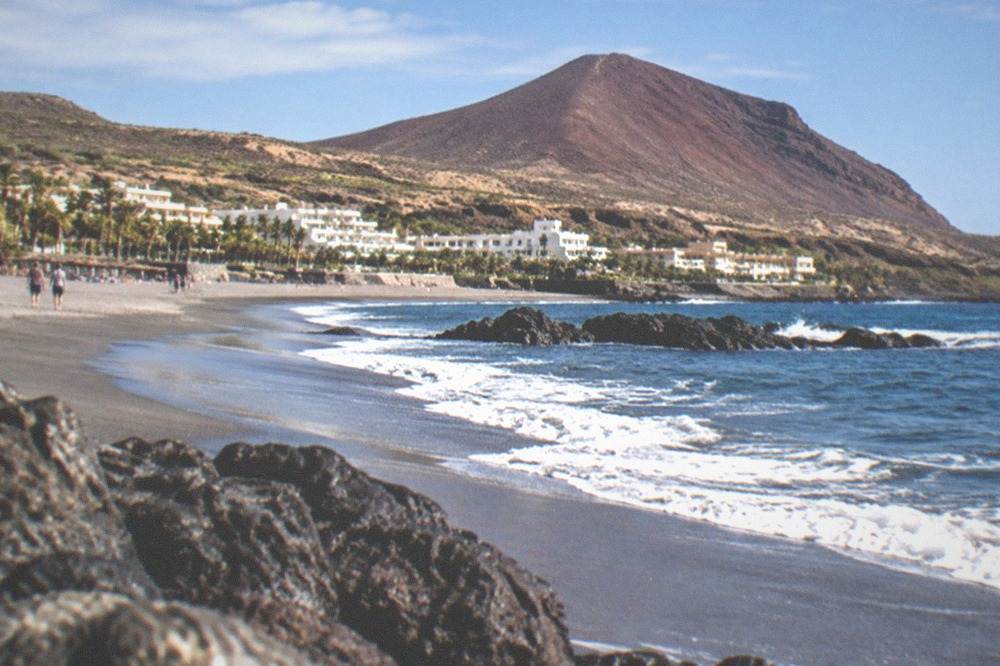
The closest thing to a secret beach in the south on the official record is Playa de la Tejita, the natural shore at the foot of Montana Roja beside El Medano, in the municipality of Granadilla de Abona: a fine grey sand beach with a volcanic cone behind it that has escaped the wall-to-wall development of Costa Adeje. The tourist board lists it among its described beaches, but it sits apart from the resort strip, and its setting under the mountain is what marks it out.
"Secret" is doing some work in that question, and honesty requires saying so. Every beach on Tenerife is on the map, and the ones that feel hidden are the ones that take a bus or a walk to reach. El Bollullo in the north is the other candidate: black sand at the foot of a cliff in La Orotava, reached through banana-growing country rather than through a hotel lobby. In the south, the honest answer is the shores that development passed by, and La Tejita with Montana Roja is the clearest case.
For readers who want the full spread of lesser-visited shores, the hidden gems of Tenerife are covered in their own article, and the question of whether you need a car in Tenerife matters here, because the quieter beaches are exactly the ones the resort shuttle buses do not serve.
Is There Any Nudist Beach in Tenerife?
No official Tenerife source lists designated nudist beaches, so no beach on this island can be named here as an officially designated naturist shore. In practice, the quieter volcanic beaches away from the resorts are the ones naturists use, and the general Spanish rule is that naturism is tolerated on remote beaches rather than licensed by them. Any specific beach recommendation beyond that would be a claim no official page in this site's research supports, so it is not made.
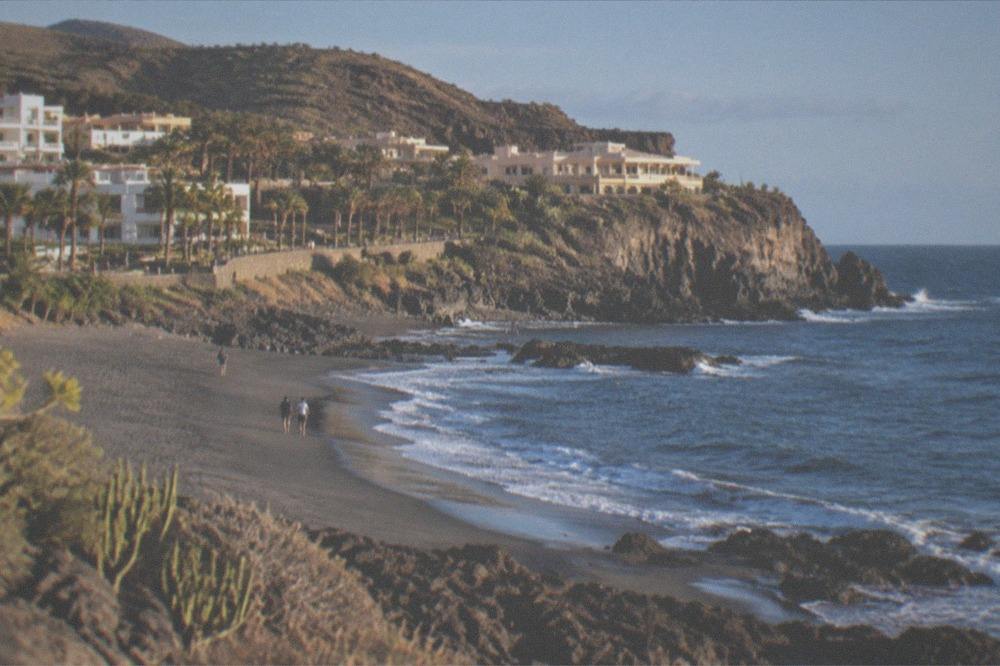
What the record does support is which beaches are quiet. El Bollullo's black sand at the foot of a cliff in La Orotava, the shores of the Anaga peninsula in the far northeast, and the stretch of coast around Punta de Teno at the far west of Teno Rural Park are all far from the resort strip. A reader looking for solitude has a better chance on those shores than anywhere in Costa Adeje or Los Cristianos, whatever they intend to wear. Other pages covering the same trip are gathered on Tenerife Travel Guide.
When Is the Best Time of Year for Tenerife's Beaches?
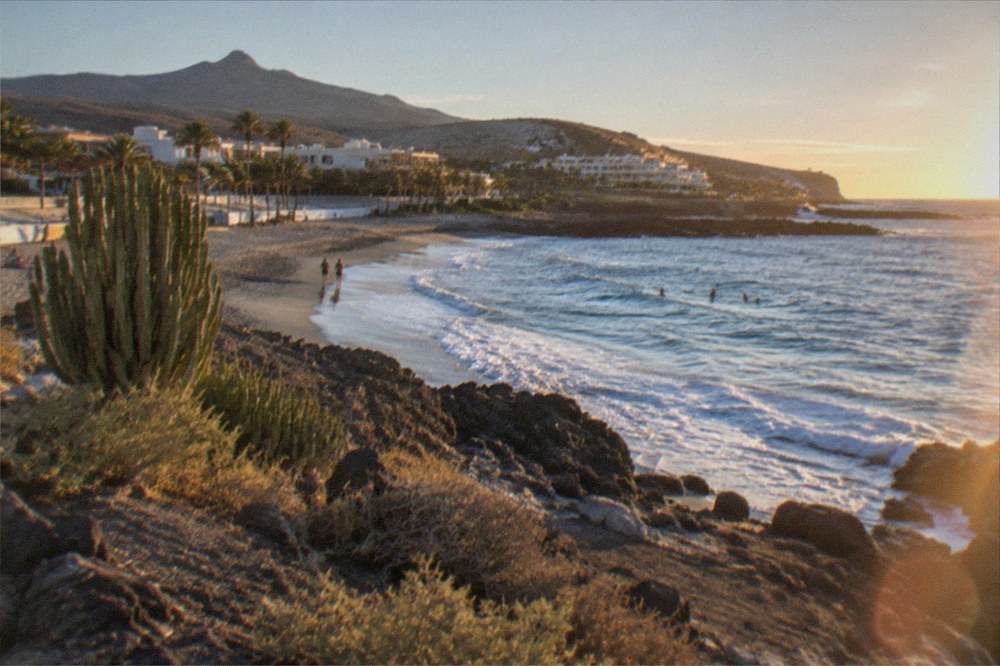
Sea surface temperature off the south coast peaks at 23.7 degrees Celsius in September and October and bottoms out at 19.1 degrees in March, while air temperatures at Santa Cruz peak at a mean daily maximum of 29 degrees in August, so the warmest swimming of the year is early autumn, not midsummer. The south coast is also the driest part of the island: AEMET's normals record 132 mm of rain a year at Tenerife South Airport against 520 mm at Tenerife North.
Those two AEMET station records are the single most useful thing a beach planner can read about this island. The same month can be a beach month in the south and a coat month in the north, and the rain-day counts make the difference concrete: 15.2 days a year with a millimetre or more of rain at the south airport against 64 at the north. The beach holiday and the time of year are therefore one decision, not two.
| Month | Sea surface C, south coast | Mean daily max C, Santa Cruz | Rain days of 1 mm or more, south airport |
|---|---|---|---|
| Jan | 19.9 | 21 | 1.8 |
| Feb | 19.2 | 21.2 | 2.2 |
| Mar | 19.1 | 22.1 | 1.9 |
| Apr | 19.5 | 22.7 | 1.1 |
| May | 20.2 | 24.1 | 0.3 |
| Jun | 21.4 | 26.2 | 0 |
| Jul | 22.2 | 28.7 | 0 |
| Aug | 23.1 | 29 | 0.2 |
| Sep | 23.7 | 28.1 | 0.6 |
| Oct | 23.7 | 26.3 | 1.6 |
| Nov | 22.5 | 24.1 | 1.9 |
| Dec | 21.1 | 22.1 | 3.5 |
The sea figures are NOAA's 1991-2020 normals and the air figures are AEMET's 1981-2010 normals: two datasets, two periods, and neither should be quoted as the other. Month-by-month planning, including what the water and the air do in every month of the year, is laid out in the Tenerife weather by month guide.
How Do You Get to Tenerife's Beaches Without a Car?
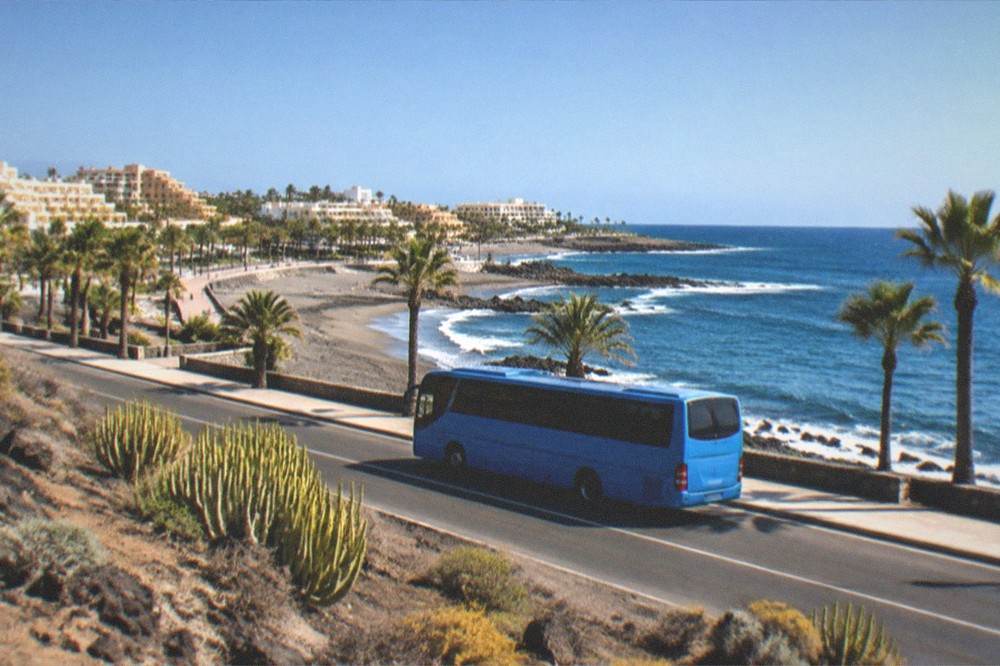
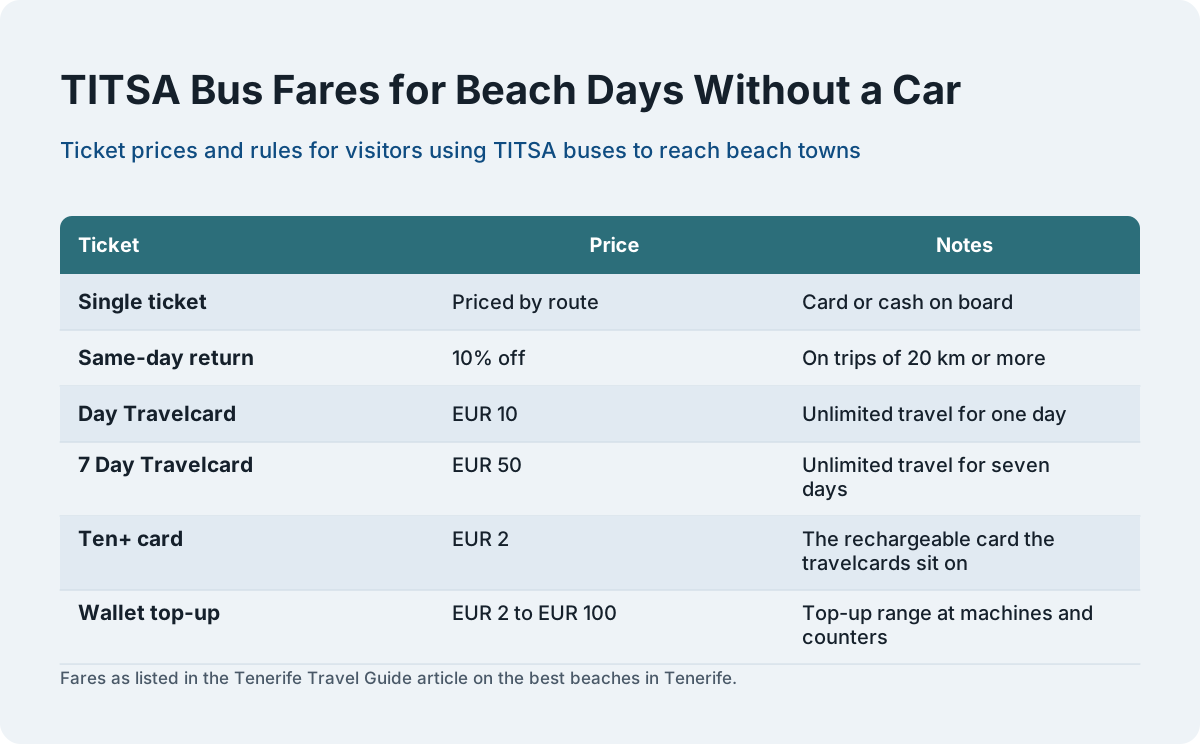
TITSA buses serve every major beach town on the island, and visitors pay normal fares: single tickets priced by route, the EUR 10 day travelcard or the EUR 50 seven-day travelcard, with the Ten+ card itself costing EUR 2. The 2026 free-transport subsidy applies only to resident passes held by people resident in the Canary Islands, so visitors should budget for fares. Las Teresitas is reached from Santa Cruz, and the Costa Adeje beaches from the resort bus stations.
The distinction matters because a lot of confident copy claims buses are free for everyone. They are not. Metrotenerife's fares page, which administers the subsidy rules, is explicit that every subsidised pass requires Canary Islands residency on a personalised card. Visitors buy the travelcards listed above, sold at airport ticket machines among other places, and the Tenerife buses guide covers the network in full.
| Ticket | Price | Notes |
|---|---|---|
| Single ticket | Priced by route | Card or cash on board |
| Same-day return | 10% off | On trips of 20 km or more |
| Day Travelcard | EUR 10 | Unlimited travel for one day |
| 7 Day Travelcard | EUR 50 | Unlimited travel for seven days |
| Ten+ card | EUR 2 | The rechargeable card the travelcards sit on |
| Wallet top-up | EUR 2 to EUR 100 | Top-up range at machines and counters |
Taxis are an alternative for the beaches the buses reach awkwardly. The tourist board's own page on taxis records that they are white, all metered from the start of the trip, and that a fixed price can be agreed in advance for excursions, which is worth doing for a day trip to a far-flung shore such as Punta de Teno. The full picture, including airport runs, is in getting around Tenerife.
Which Beaches Suit Families and Which Suit a Quiet Day?
Las Vistas in Arona is the family pick on the official record: golden sand with water the tourist board describes as calm behind a row of breakwaters, inside a resort town with full facilities. Las Teresitas is the family pick for the Santa Cruz side, with the same breakwater-calmed water and palms on the sand. For a quiet day, the black sand of El Bollullo in La Orotava, or the grey sand of La Tejita under Montana Roja, are the shores the crowds pass by.
The breakwater detail is the one to notice. A row of breakwaters is what turns an Atlantic shore into a paddling pool, and the tourist board names breakwaters at both golden-sand beaches. The exposed shores, El Medano above all, trade calm for wind, which is precisely why the wind and kite surfers gather there. A family with small children should read that trade-off as a rule: breakwaters first, open coast second.
Accessibility is covered in its own accessible Tenerife guide, and families planning a whole trip rather than a beach day will find the Tenerife with kids guide and the wider things to do in Tenerife round-up useful companions to this page.
The sea is warmest in September and October at 23.7 degrees Celsius, the sand comes in four official colours, and the calmest water sits behind named breakwaters. Those three facts, each on an official record, narrow any shortlist faster than any list of superlatives can.
Between the beach days, the south coast offers the two additions most shore-bound holidays benefit from: a legal, Barco Azul-flagged wildlife boat trip, and ten minutes above the water on a parasail. The listings below carry the current prices and times.
Common Questions About Tenerife Beaches
Where is the nicest beach in Tenerife?
The tourist board's golden-sand beaches are Las Teresitas at San Andres near Santa Cruz and Las Vistas in Arona, both with breakwaters that calm the water. If golden sand and safe swimming define "nicest", those two are the answer on the official record.
What are the nicest beaches in Tenerife?
Las Teresitas and Las Vistas for golden sand and calm water, Playa del Duque and Fanabe for the Costa Adeje resort experience on grey and pale sand, El Medano for wind sports on fine grey sand, and El Bollullo for black sand beneath a cliff in La Orotava.
What is the nicest beach on the Canary Islands?
No official Canary Islands source ranks beaches across the seven islands, so no such ranking is made here. Within Tenerife, the tourist board's golden-sand beaches are Las Teresitas and Las Vistas. For a comparison of the islands themselves, see the guide to which Canary island is best.
What's the nicest beach in Tenerife?
For golden sand and sheltered swimming, Las Teresitas near Santa Cruz and Las Vistas in Arona, in the tourist board's own descriptions. For drama rather than sand colour, the black sand of El Bollullo under its cliff is the island's most striking shore.
Which is the best beach in Tenerife?
It depends on the day you want. Calm family swimming points to Las Vistas or Las Teresitas, wind sports to El Medano, a resort base to Playa del Duque, and an away-from-it-all day to El Bollullo or La Tejita. The official sand descriptions in the table above are the place to start matching a beach to a plan.
Can you swim in the sea in Tenerife?
Yes, year round. Sea surface temperature off the south coast stays between 19.1 and 23.7 degrees Celsius across the year, peaking in September and October, and the breakwater-protected beaches hold calm water even when the open coast has swell.