Black Sand Beaches in Tenerife
Tenerife is a volcano island, and its beaches remember it. This guide sets out what the official sources say about the island's dark sand, beach by beach, with the sea temperatures and rainfall figures a swimmer actually needs.
Short answer
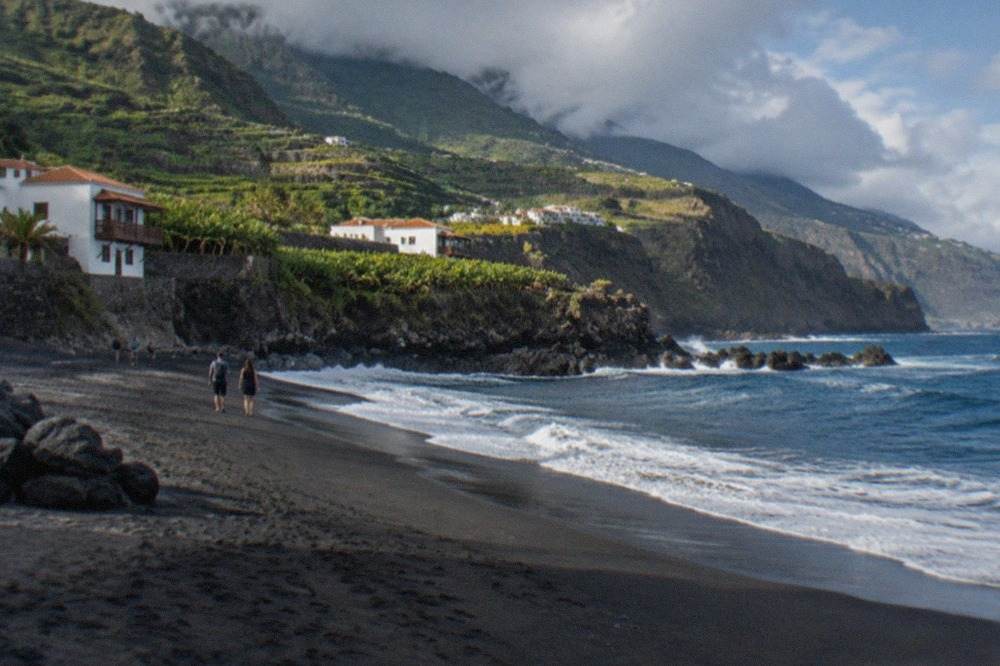
Yes, Tenerife has black sand beaches, but not all of them. The sand is dark because the island is volcanic, and the tourist board describes El Bollullo as black sand and El Medano as fine grey sand, while Las Teresitas and Las Vistas are golden.
Tenerife is the eroded summit of a volcano that rises 7,500 m above the ocean floor, and UNESCO regards it as the world's third-tallest volcanic structure. That single fact explains almost everything about the island's coastline. Spain's own sources put the peak at 3,715 m above the sea, and everything below the peak, including every beach, is built from the same dark volcanic rock. Not every beach on the island is black, though, and the differences matter when you are choosing where to swim. This guide reports what the tourist board's own beach pages say, sand grain by sand grain, and adds the climate and sea-temperature figures a beach day actually depends on.
Why Is the Sand Black in Tenerife?
The sand is black because Tenerife is a volcanic island and its beaches are made from eroded lava and volcanic rock rather than the pale quartz that forms white or golden sand elsewhere. Mount Teide sits at the centre of the island, and the same dark geology that built the volcano built its coastline.
The chain runs like this. The national park that protects the volcano was declared by decree on 22 January 1954 and covers 18,990 hectares at the island's heart. The rock that erupts and erodes from that system is basaltic, dark in colour, and it breaks down into dark grains. Where rivers and cliffs deliver that material to the sea, the beach that forms is black or dark grey. Where the island's tourism history imported or favoured lighter sand, the beach reads golden instead, and the tourist board's own pages record the difference plainly.
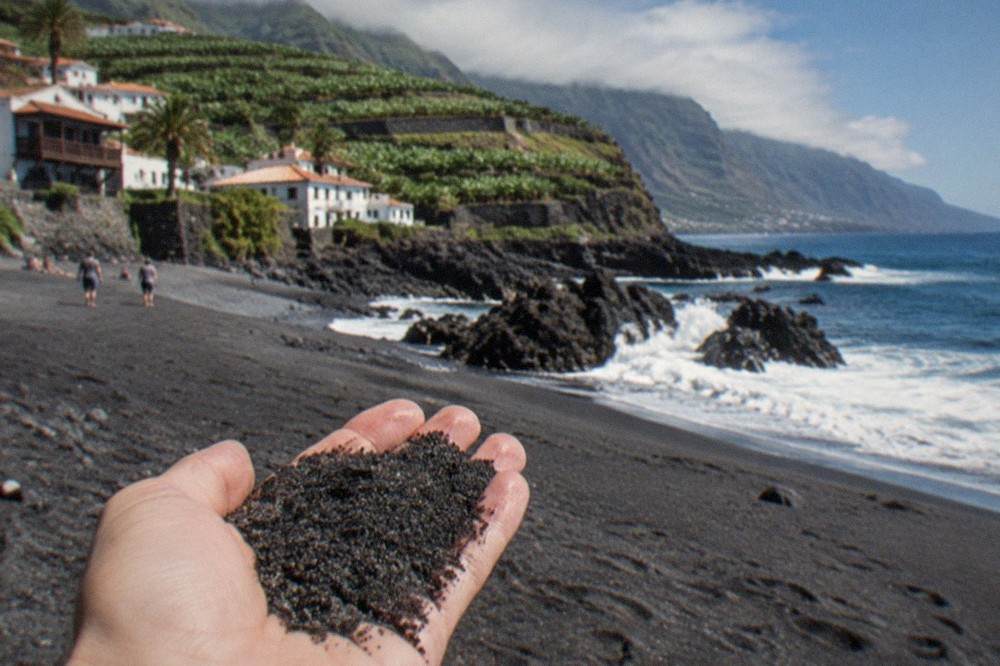
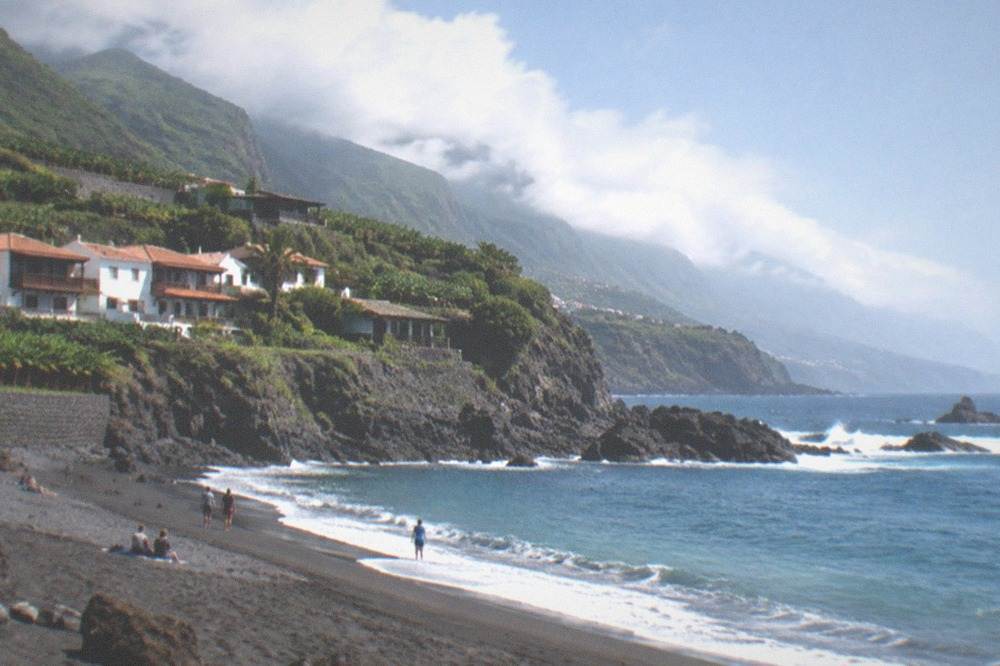
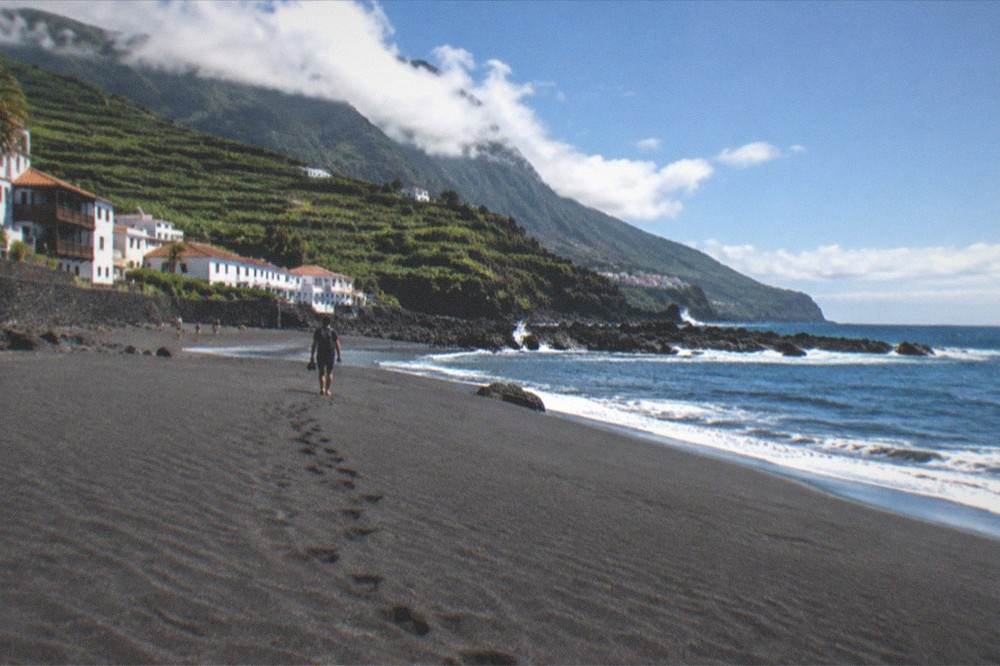
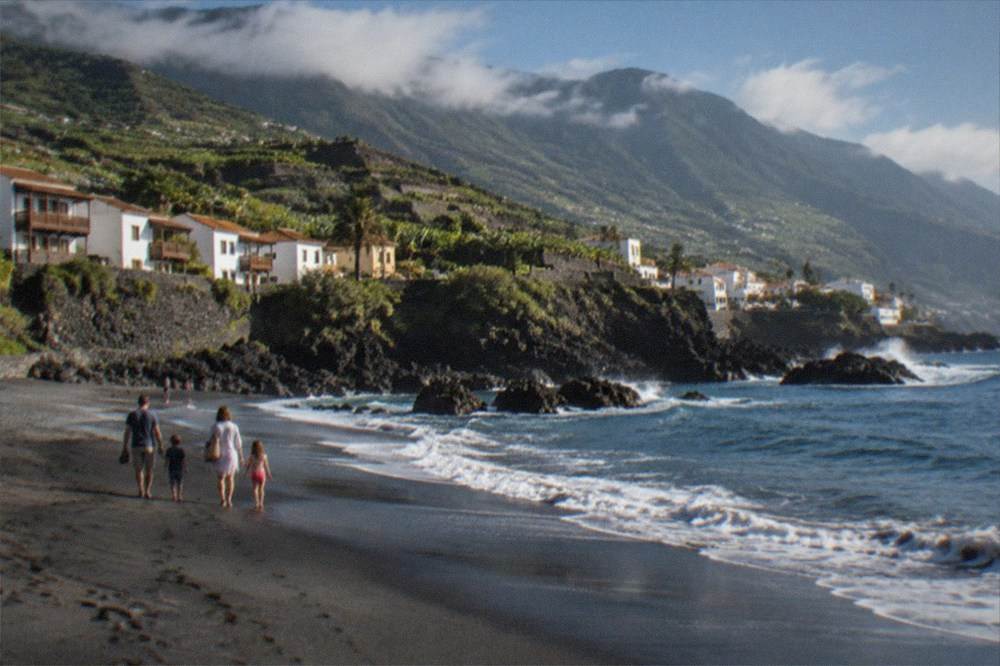
This is also why the black sand beaches cluster where they do. The north of the island, with its older cliffs and greener valleys, holds the classic dark coves: the tourist board describes El Bollullo, in the municipality of La Orotava, as black sand at the foot of a cliff. The trade winds, the cliffs and the geology all point the same way, which is one reason the north and south of Tenerife feel like different islands. The south's big resort beaches, by contrast, are the ones the tourist board describes in lighter tones, as the table further down sets out.
Do All the Beaches in Tenerife Have Black Sand?
No. The tourist board's own pages describe a mixed coastline: El Bollullo is black sand, El Medano is fine grey sand, Playa del Duque is grey, Fanabe is pale, and Las Teresitas and Las Vistas are golden. A first-time visitor who expects every beach to be black will be surprised by how much of the developed coast is not.
The myth runs in both directions. Some guides imply the whole island is ringed with black sand, which the official beach pages contradict, and others treat the golden beaches as if they were somehow less authentic, which the tourist board's own descriptions also undercut. Las Teresitas, in San Andres just outside Santa Cruz, is described by the tourist board as golden sand with palm trees and breakwaters that calm the water. Las Vistas, in Arona, is golden sand, calm behind a row of breakwaters. These are the island's flagship swimming beaches, and the official record is unambiguous about their colour.
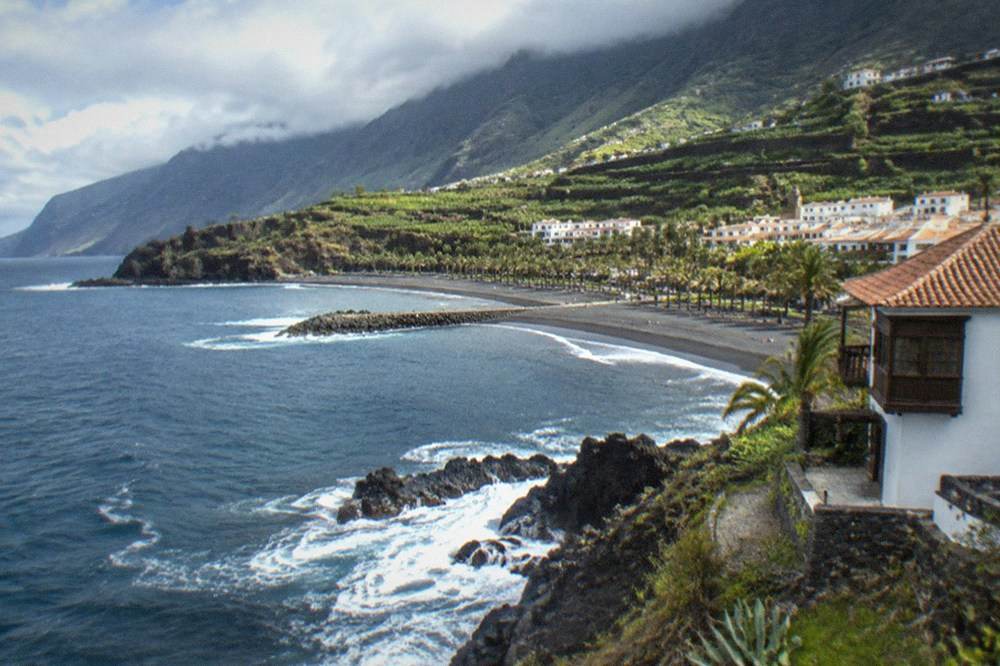
What the official pages do not say is equally important. The tourist board's page for Las Teresitas records golden sand, palms and breakwaters, and nothing about where the sand came from. This guide does not state an origin for that sand either, because no official page read for it does. If you want the fuller picture of the island's lighter beaches, the golden sand beaches guide covers them in depth, and the best beaches in Tenerife guide ranks the whole coastline.
Which Beaches Does the Tourist Board Describe as Dark Sand?
The tourist board's beach pages name El Bollullo as black sand at the foot of a cliff in La Orotava, and El Medano as fine grey sand under Montana Roja in Granadilla de Abona. It describes Playa del Duque as grey, Fanabe as pale, and Las Teresitas and Las Vistas as golden. The board's wording, not a guidebook's, is the record this site reports.
Here is the full set as the official pages state it:
| Beach | Municipality | Sand, in the tourist board's words |
|---|---|---|
| El Bollullo | La Orotava | Black sand at the foot of a cliff |
| El Medano | Granadilla de Abona | Fine grey sand, under Montana Roja |
| Playa del Duque | Adeje | Grey sandy beach |
| Fanabe | Not stated on the source page | Pale sand |
| Las Teresitas | Santa Cruz (San Andres) | Golden sand, palm trees, breakwaters that calm the water |
| Las Vistas | Arona | Golden sand, calm behind a row of breakwaters |
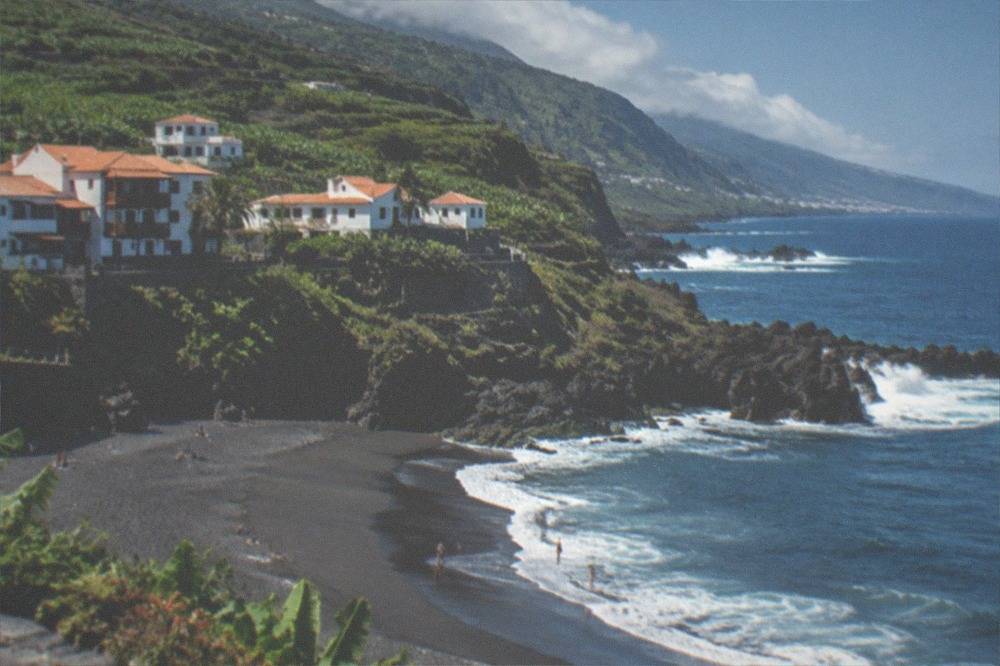
Two practical notes follow from the table. First, grey and black are not the same claim: El Medano's sand is fine and grey, and El Bollullo's is black, and a photographer planning a shoot should know which is which. Second, the dark beaches sit in the greener, cliffier parts of the island, which means a beach-hopping day that pairs El Bollullo with the north coast's old towns is a very different day from one spent walking between the southern resort beaches. The La Tejita and Montana Roja page covers the natural area behind El Medano, and the Fanabe beach page covers the pale-sand end of the scale.
If a day on the water appeals more than a day on the sand, the south coast's dark coves are also where the island's marine trips run from.
Where Are the Best Black Sand Beach Days in Tenerife?
El Bollullo in La Orotava is the headline black sand beach on the tourist board's own record, a dark cove at the foot of a cliff on the green north coast. El Medano in Granadilla de Abona is the fine grey sand alternative in the south, sitting under the Montana Roja natural monument, with a laid-back town behind it.
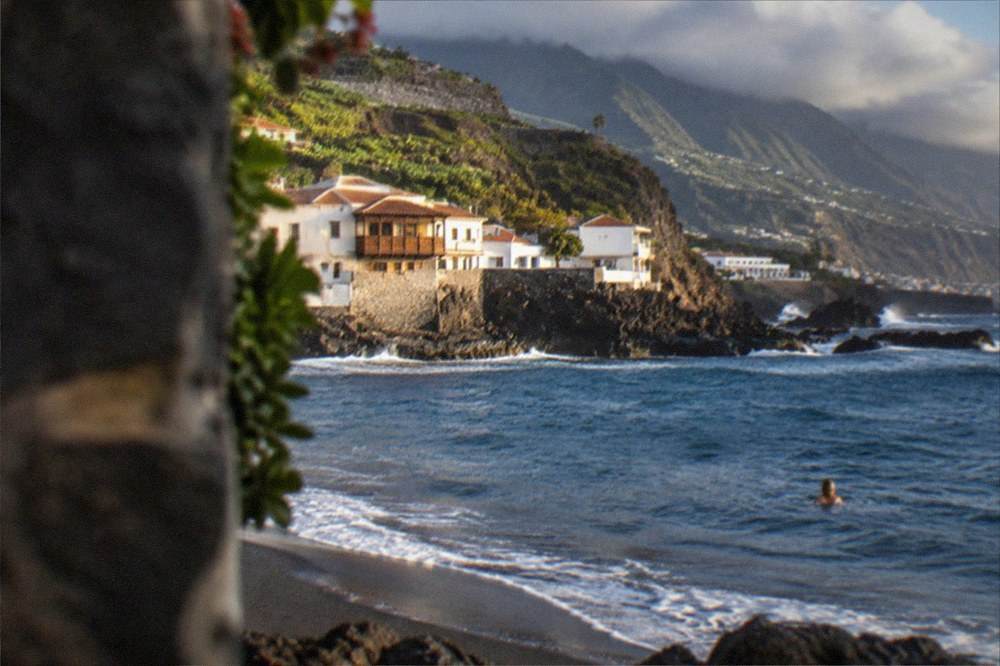
El Bollullo is the beach to plan around if black sand is the point of the trip. The tourist board's description, black sand at the foot of a cliff, places it in the La Orotava valley, the greenest part of the island, where the trade winds keep the coast cooler and the landscape is closer to the volcano's older, eroded flanks. A day here pairs naturally with the valley's towns and gardens rather than with water parks and promenades. The beach's dark grains also heat quickly in the sun, which is the one comfort detail every dark-sand beach shares: dry dark sand in full midday sun is hot underfoot, and beach shoes are the standard answer.
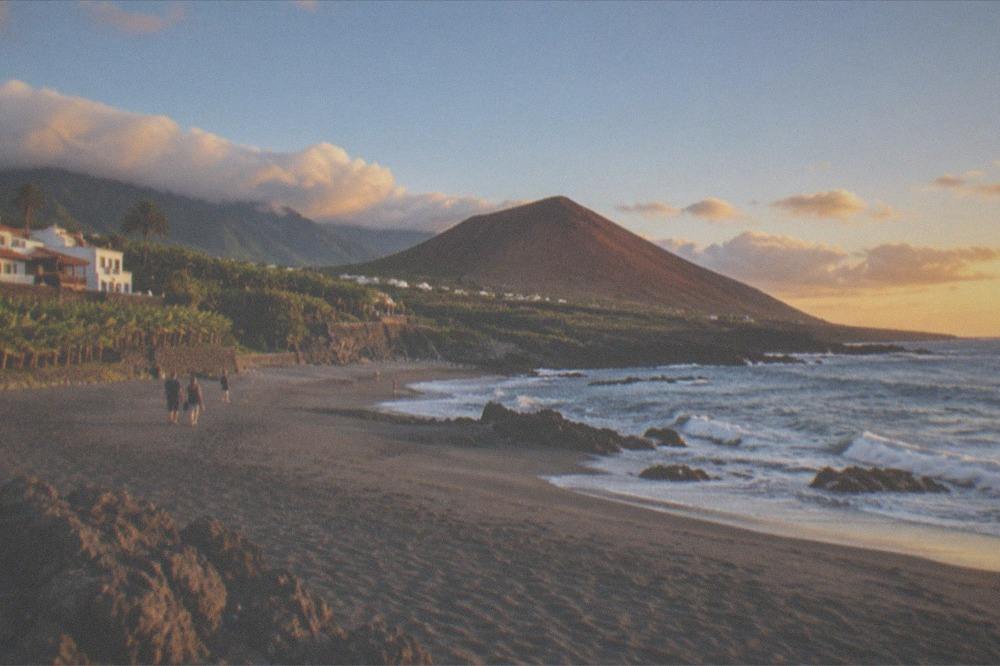
El Medano is the southern option, and its colour is a softer story: fine grey sand under Montana Roja. What the page records beyond the sand is the setting, a natural monument rising behind the beach, and the town's character follows from the wind that the geography funnels past it. For visitors basing themselves in the south, El Medano is the dark-sand beach within easiest reach, and it avoids the long drive over the island's spine to the north coast.
For visitors who want the beach day to include something in the water, the coves around the south coast hold a resident turtle habitat, and a first scuba experience is the way most visitors meet it.
The operator's listing describes a two-in-one try-dive with snorkelling for ages 8 and up, rated 4.7 from 1,968 reviews on its live listing. No prior experience is part of the product's design, which is why it fits a beach holiday rather than a diving trip. Check availability if a turtle encounter is on the list.
When Is the Sea Warmest for Swimming in Tenerife?
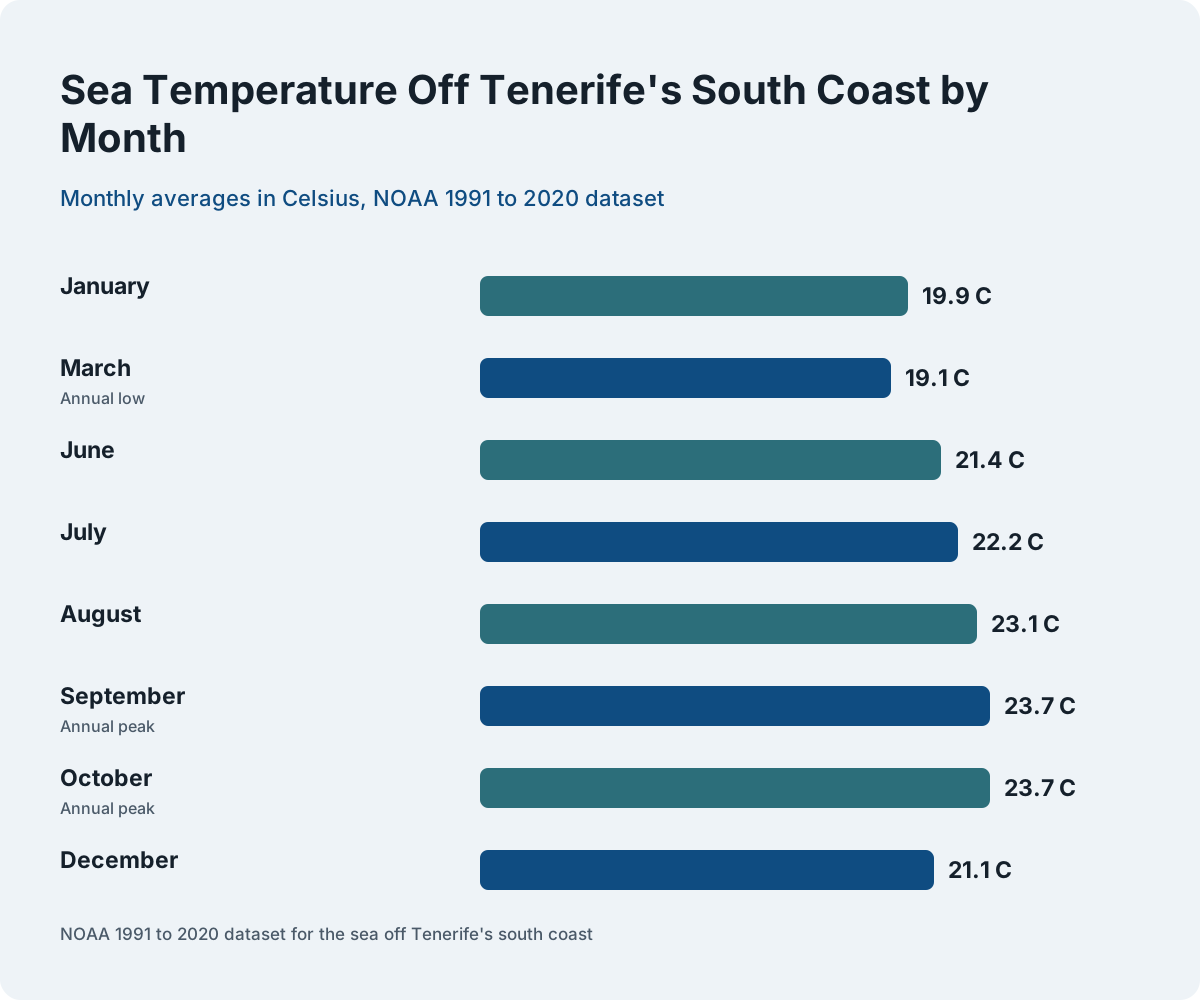
Sea surface temperatures off Tenerife's south coast peak at 23.7 Celsius in September and October, sit at 22.2 in July and 21.4 in June, and reach their low of 19.1 in March, according to NOAA's 1991 to 2020 dataset. The sea never drops below 19 Celsius, which is why swimming is a year-round activity here rather than a summer one.
The full monthly picture, from NOAA's 1991 to 2020 figures for the sea off the south coast:
| Month | Sea surface temperature |
|---|---|
| Jan | 19.9 C |
| Feb | 19.2 C |
| Mar | 19.1 C |
| Apr | 19.5 C |
| May | 20.2 C |
| Jun | 21.4 C |
| Jul | 22.2 C |
| Aug | 23.1 C |
| Sep | 23.7 C |
| Oct | 23.7 C |
| Nov | 22.5 C |
| Dec | 21.1 C |
Two honest cautions come with that table. The sea figures are a 1991 to 2020 dataset, while the air figures on this site are AEMET's 1981 to 2010 climate normals: two datasets, two periods, and this site never prints one period for both. And sea temperature is not the same as surf conditions: the breakwaters at Las Teresitas and Las Vistas are what the tourist board credits with calming the water there, and the dark north-coast coves have no such protection from the Atlantic swell.
The air side of the beach day matters too, and the island splits cleanly by coast. AEMET's normals show rain falling on 8.8 days with 1 mm or more in December at Tenerife North Airport, against 3.5 such days in the same month at Tenerife South Airport. The contrast across the year looks like this:
| Month | Rain days of 1 mm or more, Tenerife North Airport | Rain mm, Tenerife South Airport |
|---|---|---|
| Jan | 7.7 | 17 |
| Feb | 7.4 | 20 |
| Mar | 6.8 | 15 |
| Apr | 6.2 | 7 |
| May | 3.8 | 1 |
| Jun | 2.4 | 0 |
| Jul | 1.7 | 0 |
| Aug | 1.1 | 1 |
| Sep | 2.8 | 4 |
| Oct | 6.5 | 12 |
| Nov | 8.3 | 26 |
| Dec | 8.8 | 30 |
The practical reading is that the south is the reliable beach coast and the north is the dramatic one. AEMET publishes 132 mm of annual rain on 15.2 days for the south airport station, against 520 mm on 64 days at Tenerife North. The black sand of El Bollullo comes with the north's greenery, and the grey sand of El Medano comes with the south's near-dry summer. The Tenerife weather by month guide carries the full station-by-station breakdown.
Can I Take Black Sand from Tenerife?
No official Tenerife page read for this guide states a rule on taking sand home, so this site cannot quote one. What the sources do record is that the dark beaches sit in protected natural landscapes, El Medano under the Montana Roja natural monument and El Bollullo at the foot of a protected valley cliff, and the cautious choice is to leave the sand where it lies.
The honest position deserves spelling out. The tourist board's beach pages describe the sand; they do not legislate it. This site reports only what its sources state, and a confident claim either way, that taking sand is fine, or that a specific fine applies, would be invented. What can be said is that Tenerife's authorities demonstrably do regulate their natural spaces where the rules exist on the record: the Cabildo bans smoking in every open-air space of Teide National Park, car parks included, and trails such as PNT 10 and PNT 07 carry per-booking public fees. A landscape that protective of its volcanic ground is not the place to test an unwritten rule.
The souvenir that travels better is the island's own geology in a form that was made to be taken: the dark rock and sand tones show up across local crafts and jewellery, and the photographs cost nothing. If the beach day is part of a wider trip, the things to do in Tenerife page is the site's full index of the island's options.
What Should You Know Before a Black Sand Beach Day?
Plan around three facts: dark sand heats fast in direct sun, so beach shoes and shade matter more than on a golden beach; the sea is warmest in September and October at 23.7 Celsius; and the dark beaches sit on the rainier north coast, where December averages 8.8 rain days at the airport station, so the south's El Medano is the safer winter bet.
None of that is complicated, but it changes the packing list. The accessible Tenerife guide covers which stretches work for visitors with limited mobility, and the beach clubs guide covers the days when a sunbed and a kitchen beat a wild cove. For the rest, the practical table looks like this:
| Beach day question | What the verified record says |
|---|---|
| Warmest sea for swimming | 23.7 C in September and October, NOAA 1991 to 2020 |
| Coolest sea | 19.1 C in March |
| Driest beach coast | The south, 0 rain days in June and July at the south airport station |
| Black sand beach on the record | El Bollullo, La Orotava, black sand at the foot of a cliff |
| Grey sand beach in the south | El Medano, fine grey sand under Montana Roja |
| Golden sand alternatives | Las Teresitas and Las Vistas, both with breakwaters |
The water itself is the other half of the day. The same south-coast waters that hold the island's turtle habitat also carry its whale watching, under rules set by Decreto 178/2000: authorised boats must keep at least 60 m from the animals, no more than three boats may sit within 500 m, and swimming with them is barred within 500 m. Boats flying the Barco Azul flag are the authorised ones. The World Cetacean Alliance designated the Tenerife-La Gomera Marine Area a Whale Heritage Area in January 2021, citing a unique resident population of pilot whales.
For visitors who would rather be in the water than watching it, a small-group kayak and snorkel trip runs from Los Cristianos through the same marine ecosystem, rated 4.7 from 12,101 reviews on its listing.
And for a day that pairs the beach with the island's biggest animal attractions, the combined park ticket covers both Loro Parque and Siam Park on one admission, rated 4.7 from 8,367 reviews. Siam Park opens 365 days a year, 10:00 to 18:00 from 1 May to 29 October and 10:00 to 17:00 the rest of the year, on the park's own published hours.
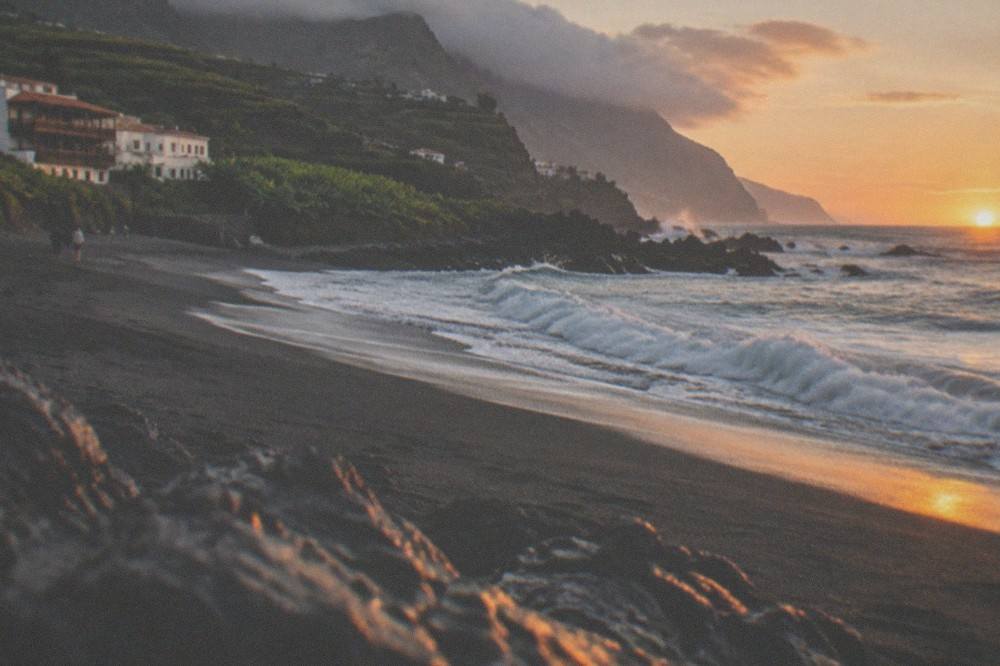
The black sand, in the end, is the island telling you what it is. Tenerife is a volcano that rises 7,500 m from the ocean floor, and the dark grains underfoot at El Bollullo are the same story as the peak at 3,715 m, told at sea level. A beach day here is a geology lesson you can swim in, and this Tenerife Travel Guide keeps the rest of the island's record, permits, bus lines and all, for the days when the beach is only the beginning.
Common Questions About Black Sand Beaches in Tenerife
Are there black sand beaches in Tenerife?
Yes. The tourist board's own page describes El Bollullo, in La Orotava on the north coast, as black sand at the foot of a cliff. El Medano, in Granadilla de Abona in the south, is described as fine grey sand under Montana Roja.
Is the sea warm enough to swim in Tenerife?
Yes, year-round. NOAA's 1991 to 2020 dataset puts the sea off the south coast between 19.1 and 23.7 Celsius, with the warmest water in September and October and the coolest in March.
Which coast is better for a beach holiday, north or south?
For reliable beach weather, the south. AEMET's normals give the south airport station 132 mm of rain a year on 15.2 days, against 520 mm on 64 days at Tenerife North Airport. The north holds the greener scenery and the classic dark cove at El Bollullo.
Does black sand get hotter than golden sand?
The official sources this site reports describe the sand's colour and origin but not its temperature, so no measured figure is quoted here. Dark surfaces absorb more sunlight than pale ones in general, and beach shoes are the standard precaution on any dark sand beach in full sun.
Are the black sand beaches good for families with children?
The calmer family swimming beaches on the official record are the golden ones with breakwaters, Las Teresitas and Las Vistas, which the tourist board credits with calm water. The dark coves are more exposed to Atlantic swell, so families usually pair a dark sand morning with a breakwater beach for the swimming.