The Best Beach Clubs in Tenerife
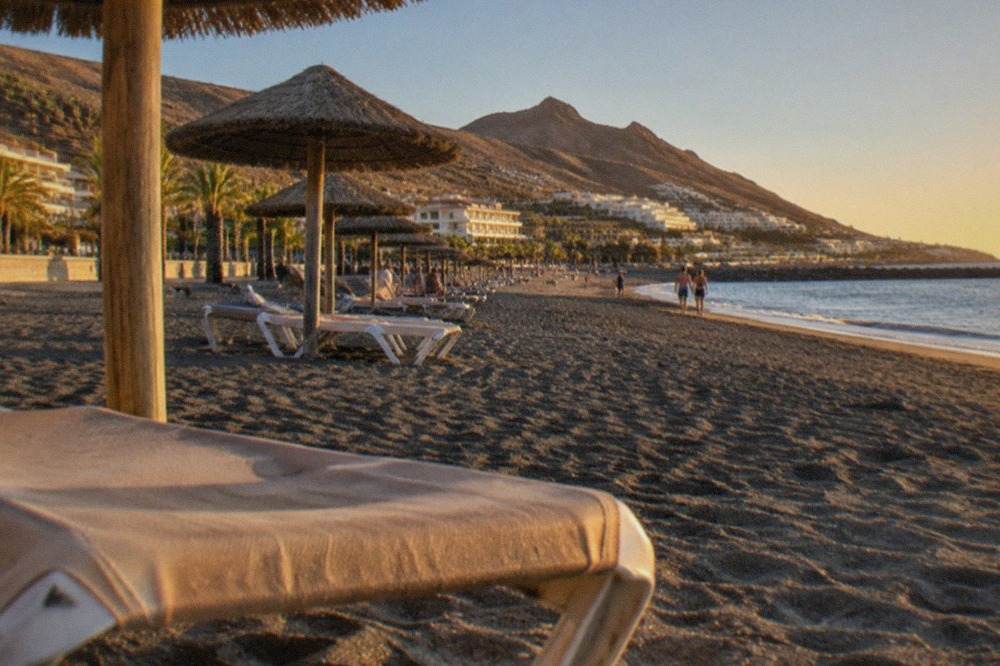
Tenerife's beach club scene is concentrated on the southwest coast, above all in Costa Adeje, where the tourist board's own beach pages describe grey and pale sands rather than the golden strands many visitors expect.
Short answer
Tenerife's beach clubs cluster in Costa Adeje and the adjacent resort strips of Adeje and Arona, on the sheltered southwest coast. The beaches they front are largely grey or pale sand, the sea is at its warmest from July to October, and the sunniest months on the AEMET climate normals are May through August.
Tenerife's southwest coast holds the island's beach club scene, and it sits on sand that surprises some first-time visitors. The tourist board's own page for Playa del Duque, the stretch most closely associated with the upmarket end of Costa Adeje, describes a grey sandy beach, not a golden one. Fanabe next door is listed as pale sand. The golden beaches the same official pages describe, Las Teresitas and Las Vistas, sit elsewhere on the island. None of this makes the beach clubs worse: it makes them different, and it is the single fact most worth knowing before booking a sunbed. This page sets out where the clubs sit, what the official climate and sea-temperature numbers say about timing, and how the coast is reached without a car.
What Are Beach Clubs in Tenerife, and Where Are They Concentrated?
Beach clubs in Tenerife are mostly private beachfront venues selling day passes or beds for the day, concentrated in Costa Adeje and the neighbouring resort strips of Adeje and Arona on the island's sheltered southwest coast, with a smaller scene around Los Cristianos and scattered options elsewhere. The concentration is not an accident of fashion. The southwest faces away from the prevailing trade winds, which is why the resort belt grew there in the first place, and the municipality of Adeje alone counted 50,021 residents on the INE register at 1 January 2025, with the neighbouring Arona at 87,793, two of the island's five biggest municipalities. Where the hotels are, the sunbeds follow.
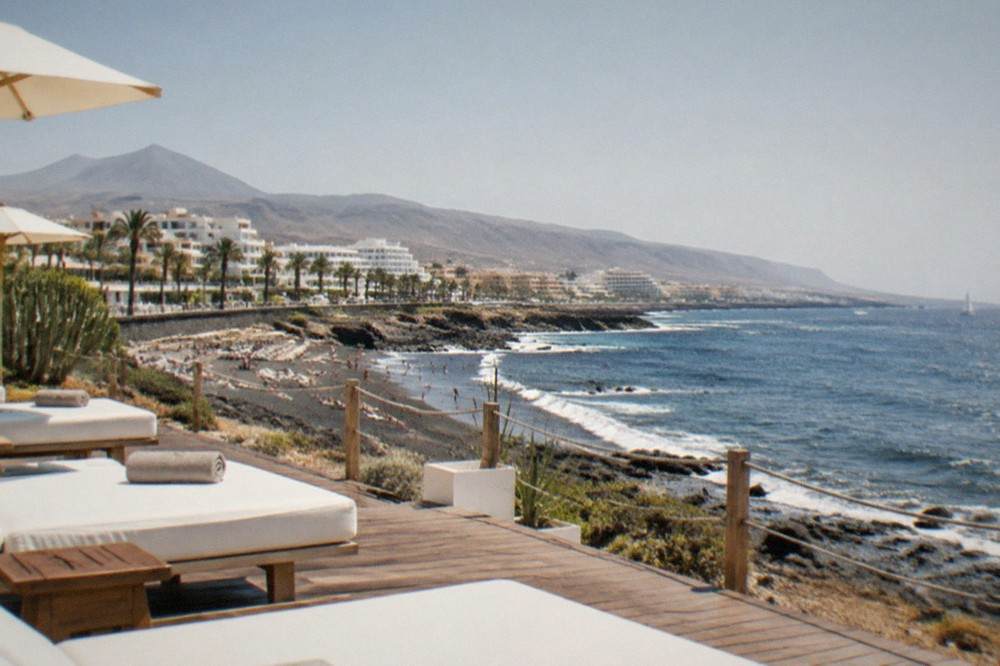
The scene divides into three broad shapes. First, hotel beach clubs: pools and terraces run by the large resorts that line Costa Adeje, some of which sell day access to outside guests. Second, independent chiringuitos and club-style venues directly on the sand, selling beds, food and drinks by the day. Third, water-sports-adjacent operators that function as de facto clubs, with equipment, showers and a base on the beach. What no official source lists is a ranked league table of the best, and this desk does not invent one. What can be stated is geography, sand, climate and access, all of which are on file.
For orientation before choosing a base, the comparison in Tenerife North vs South explains why the resort belt, and therefore the beach club scene, grew where it did.
Which Beaches Do Tenerife's Beach Clubs Sit On?
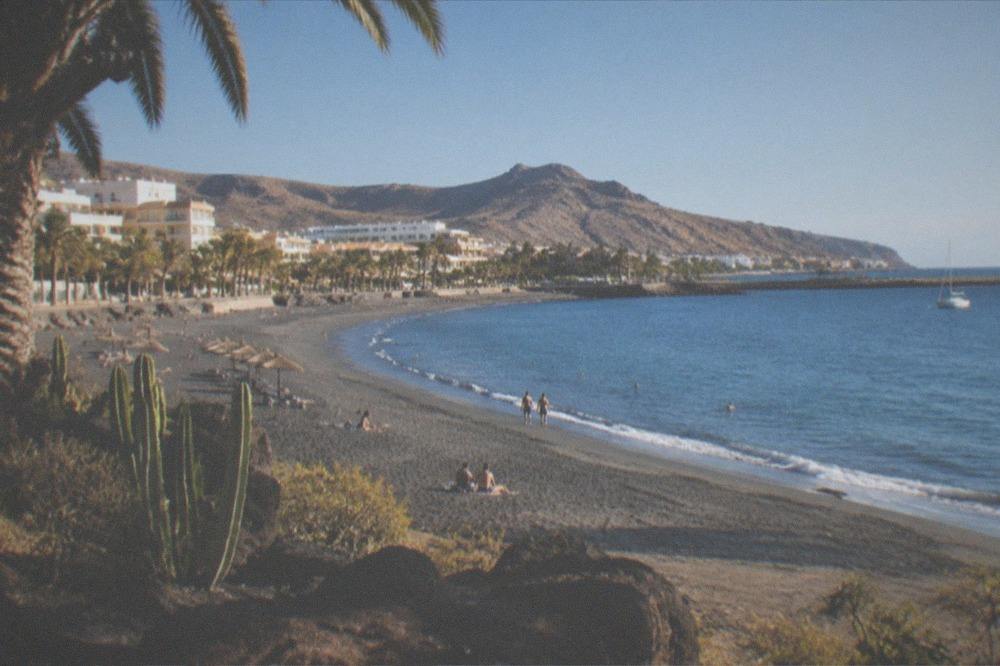
The beach club coast runs from Playa del Duque and Fanabe in Costa Adeje through Playa de las Américas to Las Vistas and Los Cristianos, and the tourist board's own pages describe most of it as grey or pale sand: El Duque is grey, Fanabe is pale, and only Las Vistas, in Arona, is listed as golden with calm water behind breakwaters. That last detail matters for swimmers: Las Vistas is described on the official page as calm behind a row of breakwaters, which is the same construction credited with calming the water at Las Teresitas in Santa Cruz.
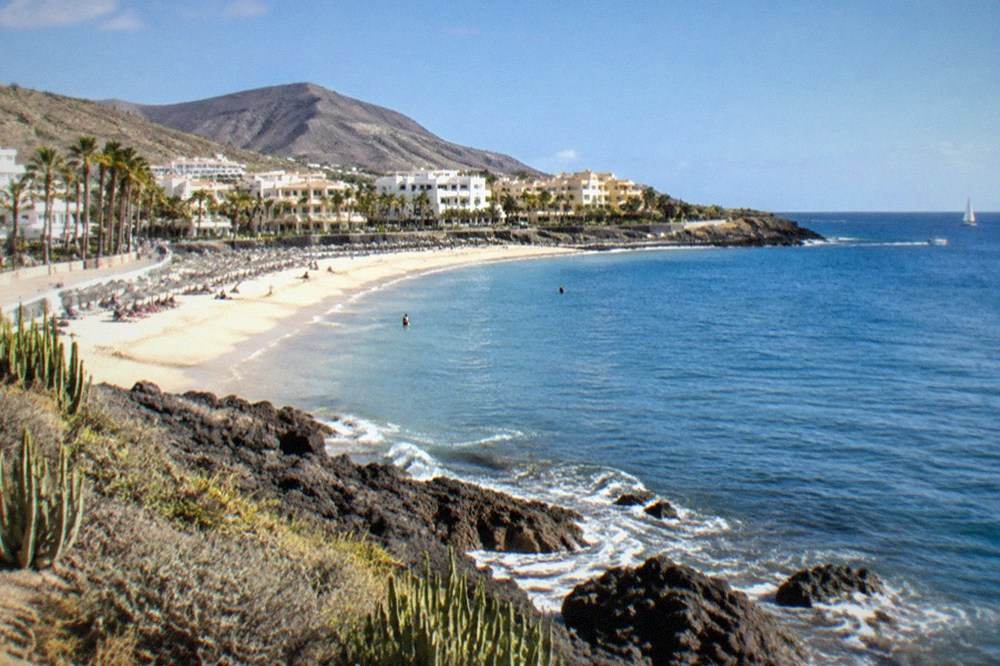
The sand colour table below is the tourist board's own wording, beach by beach, with the municipality each sits in. A visitor choosing between a Costa Adeje base and a beach club day elsewhere is really choosing between these descriptions.
| Beach | Sand, in the tourist board's words | Municipality |
|---|---|---|
| Playa del Duque | Grey sandy beach | Adeje |
| Fanabe | Pale sand | Adeje |
| Las Vistas | Golden sand, calm behind breakwaters | Arona |
| Las Teresitas | Golden sand, palms, breakwaters | Santa Cruz (San Andres) |
| El Medano | Fine grey sand, under Montana Roja | Granadilla de Abona |
| El Bollullo | Black sand at the foot of a cliff | La Orotava |
Two corrections are worth making plainly, because older pages repeat them. Playa del Duque is not golden: the official page says grey. And no official page read for this site states where the sand at Las Teresitas came from, so any tonnage figure a reader may have seen elsewhere is not something this desk can support. The official description is golden sand, palm trees and breakwaters, and that is where it stops.
The grey and pale sands of the southwest are volcanic, and they belong to the same island story told in Black Sand Beaches in Tenerife. El Medano, on the south coast under Montana Roja, is a different proposition altogether: fine grey sand and a wind exposure that has made it the island's kitesurfing hub rather than a sunbelt club strip, as the page for La Tejita and Montana Roja sets out.
What Does a Day at a Costa Adeje Beach Club Actually Involve?
A typical day means a booked bed or day pass on a terrace above the grey sand of El Duque or Fanabe, food and drinks served at the bed, pool or sea access depending on the venue, and, at the club end of the market, a dress code and a minimum spend in the evening, none of which is fixed by any official price list, so every figure belongs to the venue's own live listing. The beach club day in Costa Adeje is built around two things the official numbers confirm: reliable sunshine and a sea warm enough to swim in for most of the year.
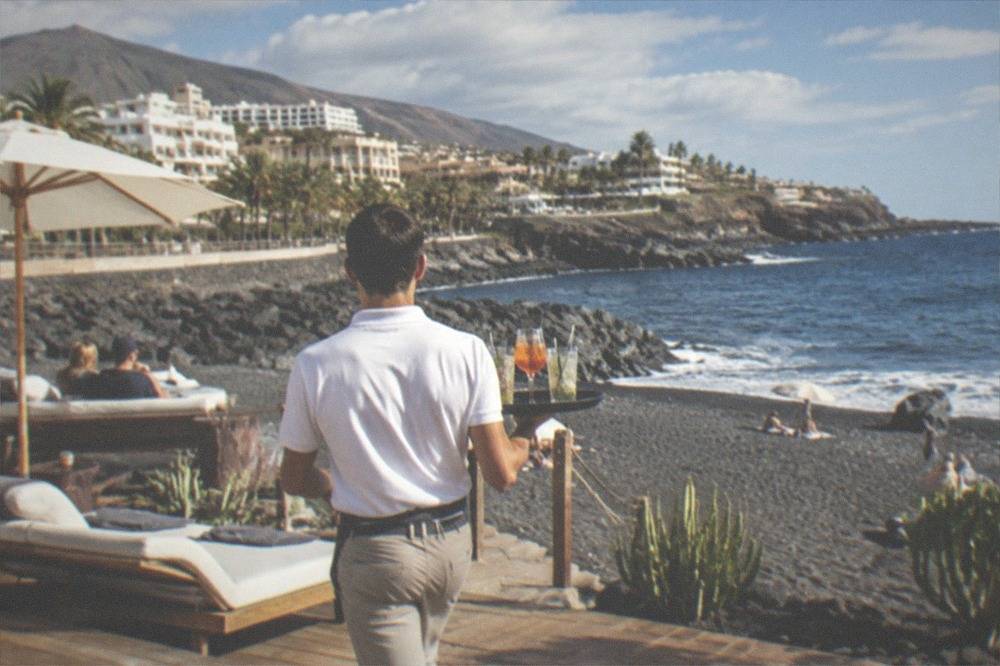
What varies, and what a reader should check on each venue's own page, is the shape of the pass. Some clubs sell a bed with food and drink credit against it. Some sell pure access. Some are hotel venues that open their pool decks to non-guests on quieter days. This desk does not print a price band for the category, because no official source holds one and both ends of any invented range would be fiction. What can be said is structural: the venues sit on beaches the tourist board describes as grey or pale sand, in the municipality of Adeje, within walking reach of the largest concentration of four- and five-star hotels on the island.
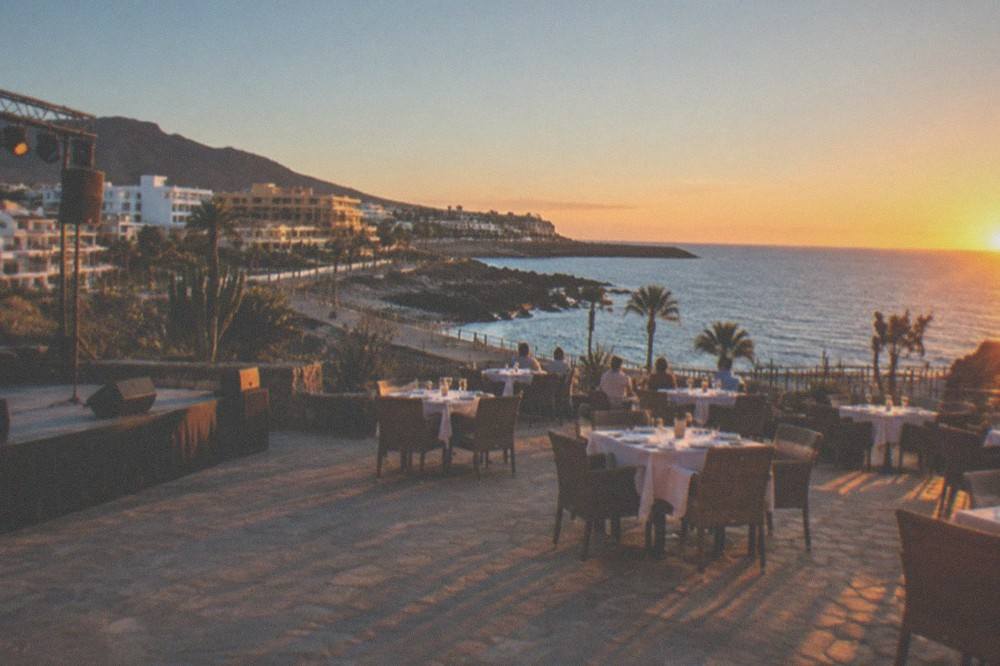
The evening is where the Costa Adeje club scene changes character. Several venues run dinner service and music as the sun drops behind La Gomera on the horizon, and the sunset here faces open Atlantic. For the beach itself, the page for Playa de Fanabe covers the pale-sand stretch that anchors the southern end of the club belt.
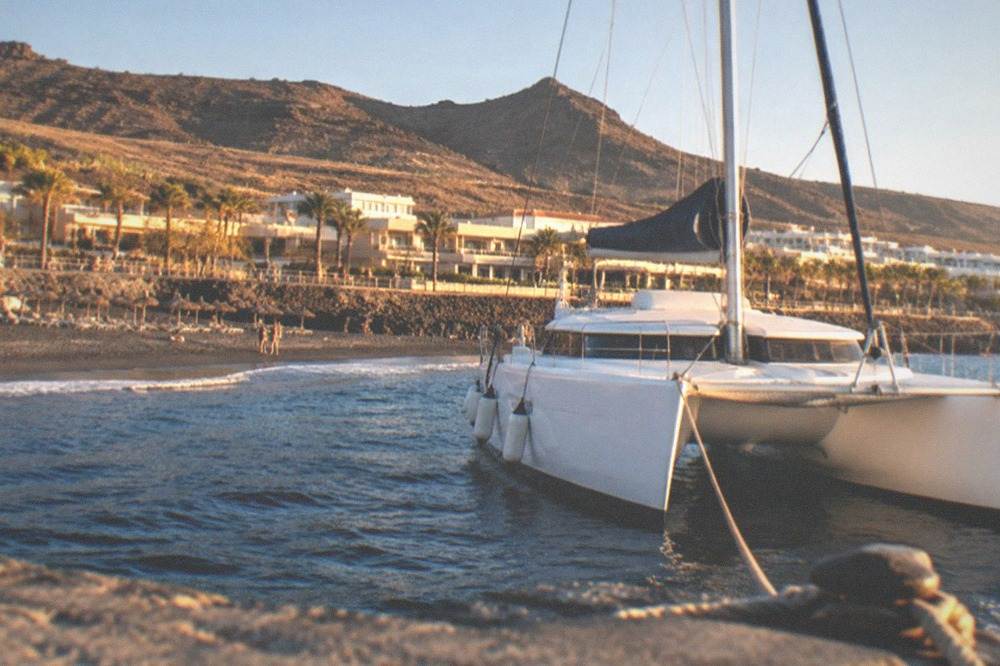
A morning on the water pairs naturally with an afternoon on a sunbed, and the operator's own listing is the place to see what the current price includes for the eco-cruise from Puerto Colon, which the listing shows as a three-hour catamaran trip with snacks and drinks included.
When Is the Best Time of Year for a Beach Club Holiday in Tenerife?
By the AEMET climate normals for Tenerife South Airport, the beach club months are May to August, when the south coast records 246 to 295 sunshine hours a month, rainfall of 1 mm or less, and mean daily maxima of 23.9 to 28.4 Celsius, while the sea off the south coast is warmest in September and October at 23.7 Celsius on the NOAA series. Winter is not off the table: January still averages 21.7 Celsius by day and 193 sunshine hours at the airport station, which is why the island keeps a year-round club scene at all.
The numbers below are AEMET's 1981 to 2010 normals for the station at Tenerife South Airport, 64 m above sea level, the closest official record to the Costa Adeje beach belt. The sea surface figures are a different dataset, NOAA's 1991 to 2020 series, and the two periods are not interchangeable. Other pages covering the same trip are gathered on Tenerife Travel Guide.
| Month | Mean daily max (C) | Mean daily min (C) | Rain (mm) | Sunshine hours |
|---|---|---|---|---|
| Jan | 21.7 | 15.2 | 17 | 193 |
| Feb | 22.0 | 15.0 | 20 | 195 |
| Mar | 23.1 | 15.6 | 15 | 226 |
| Apr | 23.1 | 16.0 | 7 | 219 |
| May | 23.9 | 17.0 | 1 | 246 |
| Jun | 25.4 | 18.8 | 0 | 259 |
| Jul | 27.7 | 20.2 | 0 | 295 |
| Aug | 28.4 | 21.1 | 1 | 277 |
| Sep | 27.9 | 21.1 | 4 | 213 |
| Oct | 26.8 | 20.0 | 12 | 214 |
| Nov | 24.8 | 18.2 | 26 | 193 |
| Dec | 22.8 | 16.5 | 30 | 195 |
| Month | Sea surface temp (C) | Month | Sea surface temp (C) |
|---|---|---|---|
| Jan | 19.9 | Jul | 22.2 |
| Feb | 19.2 | Aug | 23.1 |
| Mar | 19.1 | Sep | 23.7 |
| Apr | 19.5 | Oct | 23.7 |
| May | 20.2 | Nov | 22.5 |
| Jun | 21.4 | Dec | 21.1 |
Read together, the two tables settle the timing question. The warmest air is July and August; the warmest sea lags a month or two behind, peaking in September and October. A swimmer who cares more about water than air temperature should look at the autumn shoulder, when the sea is at 23.7 Celsius and the airport station still averages 26.8 Celsius by day in October. Rainfall on the south coast is modest even in the wettest months, 30 mm in December, but the sea itself turns rougher in winter and several club venues scale back their beach service then. The month-by-month detail, including the north coast stations where the rain falls harder, is in Tenerife Weather by Month.
How Do You Reach the Beach Club Coast Without a Car?
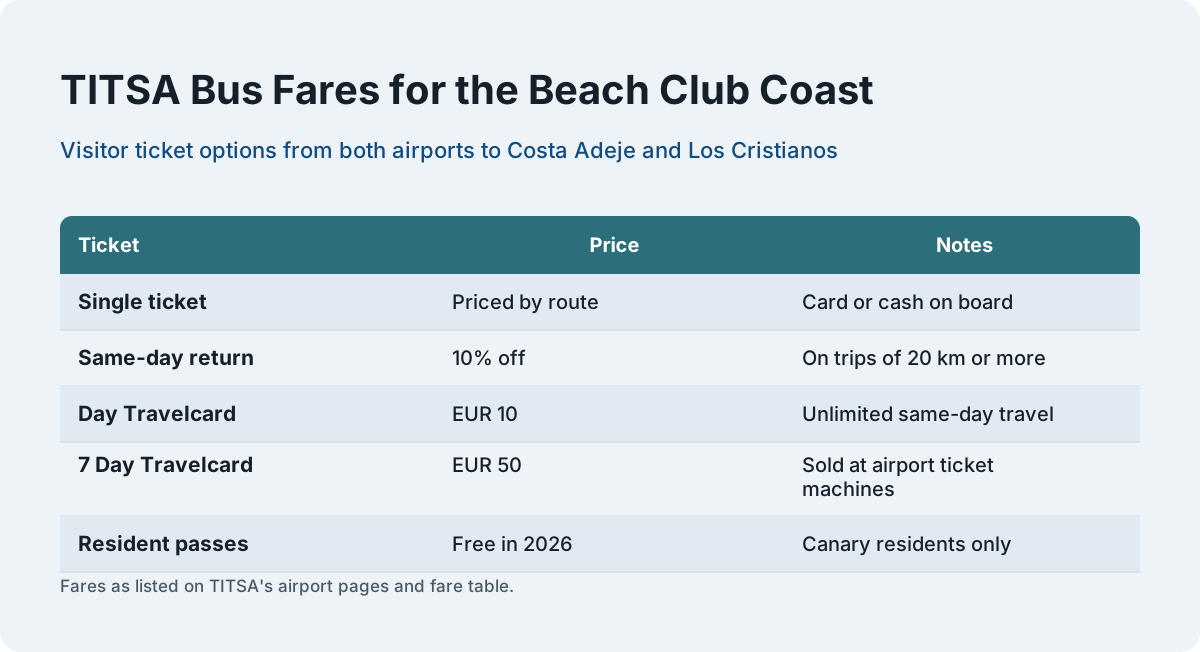
TITSA buses reach the Costa Adeje and Los Cristianos beach belt from both airports, and a visitor's fare options are the single ticket priced by route, the EUR 10 day travelcard or the EUR 50 seven-day travelcard, because the 2026 free-transport subsidy applies only to resident passes held by people resident in the Canary Islands. That last point is worth stating twice, because pages aimed at visitors keep getting it wrong: the free pass requires residency, a personalised Ten+ card, and visitors do not qualify.
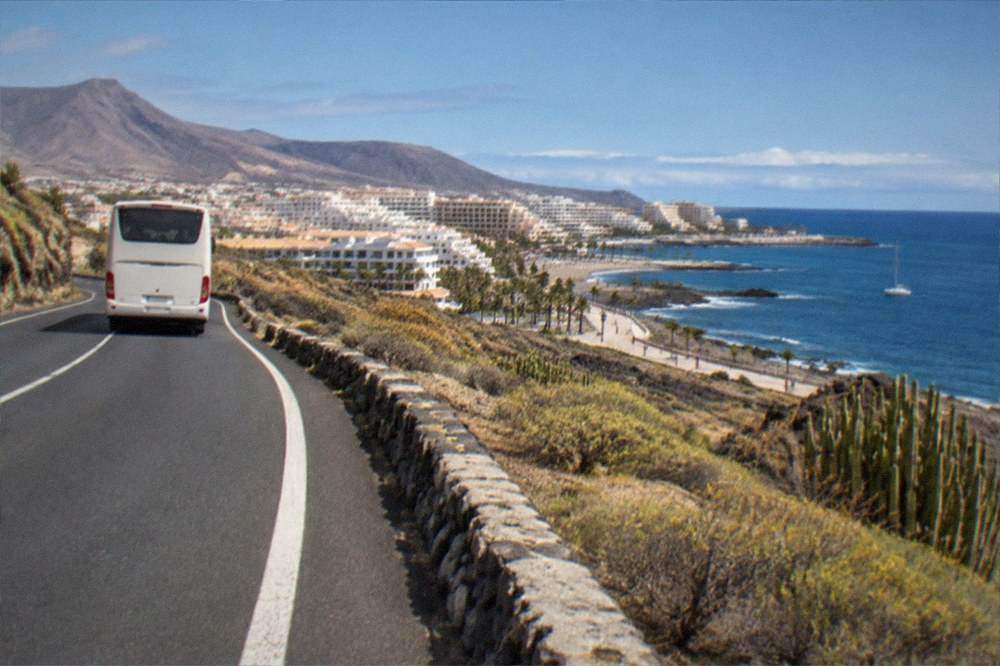
The airport connections are on TITSA's own airport pages. From Tenerife South Airport, line 40 runs to the Costa Adeje bus station via Los Cristianos, line 10 runs to Santa Cruz, and line 343 is the express that links Puerto de la Cruz to Los Cristianos via both airports. From Tenerife North Airport, line 343 is again the express south, with line 20 to Santa Cruz via La Laguna and line 30 to Puerto de la Cruz. The full route detail is in Tenerife Buses and TITSA, and the airport-by-airport breakdown is in Airport Transfers in Tenerife.
| Ticket | Price | Notes |
|---|---|---|
| Single ticket | Priced by route | Card or cash on board |
| Same-day return | 10% off | On trips of 20 km or more |
| Day Travelcard | EUR 10 | Unlimited same-day travel |
| 7 Day Travelcard | EUR 50 | Sold at airport ticket machines |
| Resident passes | Free in 2026 | Canary residents only, personalised Ten+ card |
Taxis complete the picture: the tourist board notes that Tenerife's taxis are white, all metered from the start of the trip, with a fixed price agreeable in advance for excursions. For a reader weighing whether a car is needed at all for a beach club holiday, Do You Need a Car in Tenerife answers that question directly, and the answer for a stay based on one beach is usually no.
What Can You Do Beyond the Sunbed on the Beach Club Coast?
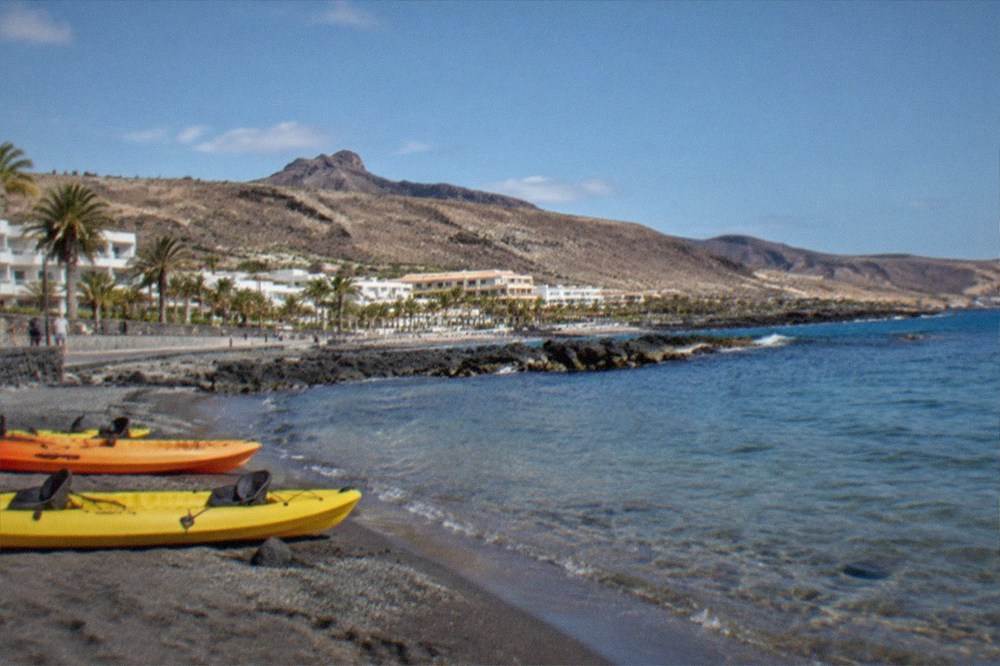
The beach club coast doubles as Tenerife's water-sports belt: the listings on this site cover surfing lessons on Playa de las Américas, kayaking with turtles at Los Cristianos, jet ski safaris from Arona, parasailing from Costa Adeje, and first-time scuba dives, all of which start from beaches within the same resort strip as the clubs themselves. The reason is the same sheltered water that makes the sunbeds comfortable.
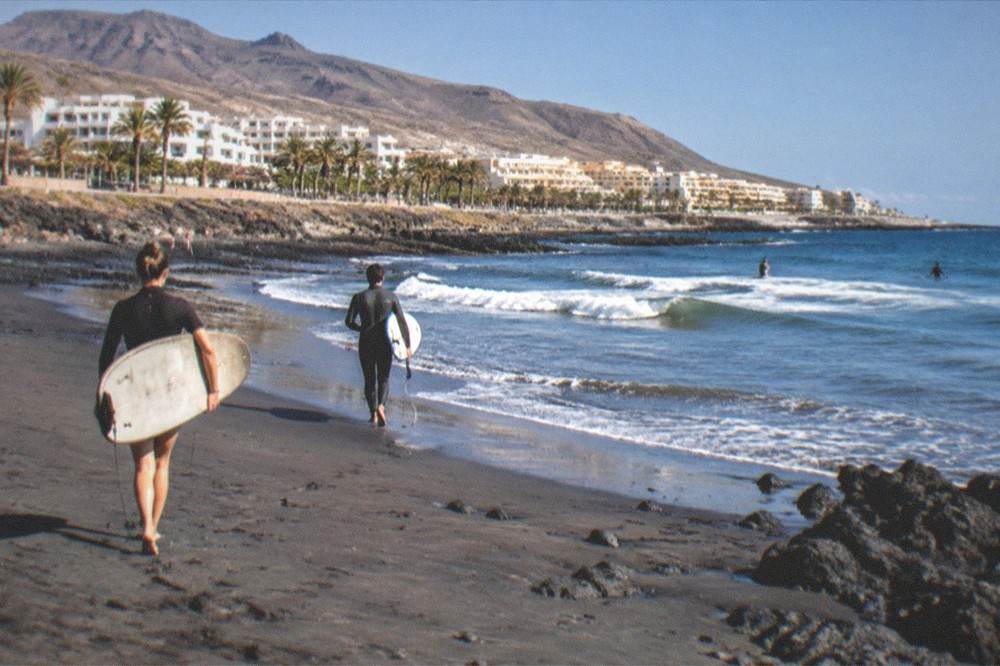
Surfing is the natural pairing, and the listing for the all-levels lesson at Playa de las Américas shows photos included and a two-hour session. The live price and current availability sit on the operator's listing, and sessions run to a timetable, with the calmest water of the day usually in the morning. Check availability before committing a beach morning to it.
The sea off this coast is also one of the most closely watched whale and dolphin habitats in Europe, a Whale Heritage Area designated by the World Cetacean Alliance in January 2021, and the boats that carry visitors are regulated by Decreto 178/2000: no approach within 60 m of a cetacean, at most three boats within 500 m, a maximum of 4 knots inside that radius, and authorised boats fly the Barco Azul flag. A catamaran morning followed by a club afternoon is the single most common structure for a day on this coast, and the eco-cruise listing shows a three-hour trip with snacks and drinks from Costa Adeje.
Evenings on the club coast split between the venues themselves and the island's bigger night shows. The medieval banquet and tournament show at Castillo San Miguel is the long-running dinner-show option inland from the beach belt, listed at two hours 30 minutes, and it runs to fixed sittings rather than all-day entry, so the dates of a stay should be checked against the show's own listing.
What Should Swimmers and Families Know About the Beaches Themselves?
Swimmers should know that the tourist board describes only Las Vistas and Las Teresitas as golden and calm behind breakwaters, that the Costa Adeje beaches are grey or pale sand, and that the sea off the south coast ranges from 19.1 Celsius in March to 23.7 Celsius in September and October, so the water is swimmable year-round but at its most inviting in late summer and autumn. Families choosing between bases should also note that the calmest official descriptions, breakwaters and calm water, belong to Las Vistas in Arona and Las Teresitas in Santa Cruz, not to the open-water stretches of the southwest.
One honest caveat belongs here. This desk holds no official record of which individual beaches fly which warning flags or ban smoking, so those details are not stated, and a reader should take them from the lifeguarded beach itself on the day. What the file does hold is the broader safety picture: the southwest coast is the island's most developed and most lifeguarded stretch, and the ferry port at Los Cristianos connects the same beach belt to La Gomera in 50 minutes on the Fred. Olsen Express route, which makes a beach-club-base holiday compatible with a day trip without moving hotels.
For readers comparing islands rather than beaches, Tenerife vs Gran Canaria and Which Canary Island Is Best cover the same question at archipelago level.
Common Questions About Tenerife Beach Clubs
Are there beach clubs in Tenerife?
Yes. The beach club scene is concentrated in Costa Adeje and the neighbouring resort strips of Adeje and Arona on the southwest coast, running from hotel beach clubs through independent venues on the sand to water-sports bases that function as clubs. No official body publishes a ranked list, so a reader should judge each venue on its own live listing.
What is the sand like at Tenerife beach clubs?
Mostly grey or pale. The tourist board describes Playa del Duque as a grey sandy beach and Fanabe as pale sand. The golden beaches it describes are Las Vistas in Arona and Las Teresitas in Santa Cruz. The sand is volcanic in origin, and the same island also carries black sand beaches such as El Bollullo in La Orotava.
When is the sea warmest for swimming on the Costa Adeje coast?
September and October, when the sea surface off the south coast averages 23.7 Celsius on the NOAA 1991 to 2020 series. The coolest months are February and March at 19.2 and 19.1 Celsius. The air, by contrast, peaks in July and August at 27.7 and 28.4 Celsius mean daily maxima on the AEMET south airport normals.
Can you visit a beach club without staying at the hotel?
Often, yes. Hotel beach clubs in Costa Adeje frequently sell day access or beds to outside guests, and independent venues on the sand sell beds and day passes directly. Access policies change with occupancy, so the venue's own page is the place to confirm before travelling.
Is public transport free for visitors getting to the beaches?
No. The 2026 free-transport subsidy in the Canary Islands applies to resident passes only, held by people resident in the islands on a personalised Ten+ card. Visitors pay for single tickets, the EUR 10 day travelcard or the EUR 50 seven-day travelcard, all sold by TITSA.
Do Tenerife beach clubs close in winter?
The coast does not close: December still averages 22.8 Celsius by day at the south airport station and 195 sunshine hours on the AEMET normals. Some venues scale back beach service in the winter months when the sea is rougher, and each venue's own page shows its current hours.