What Are Some Hidden Gems in Tenerife?
The quiet corners of Tenerife that most visitors miss, from permit-only gorges and laurel forests to black-sand coves and village natural pools, with the booking rules each one needs.
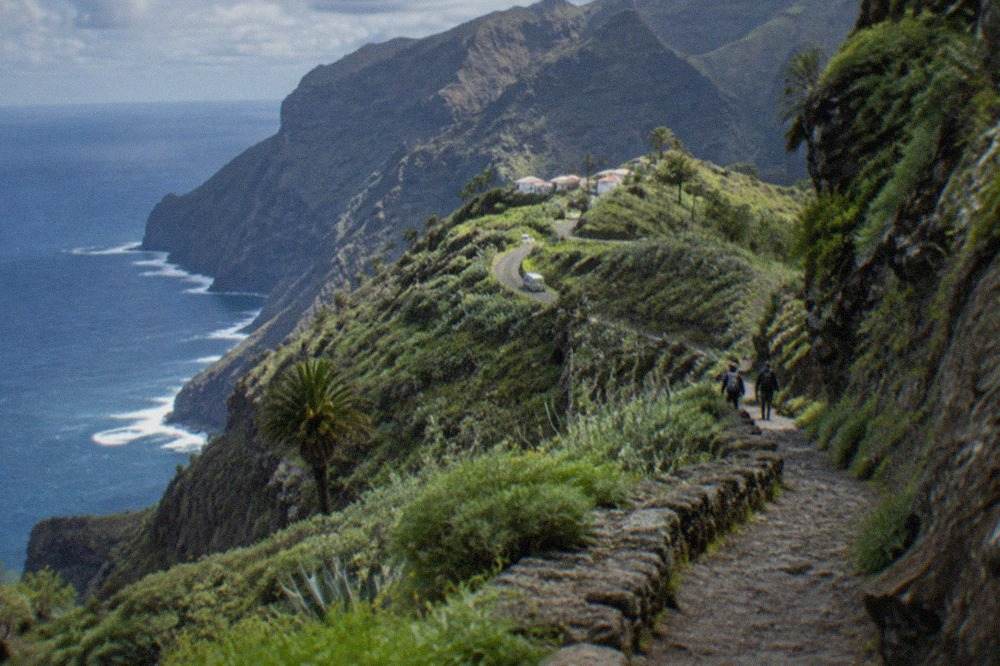
Tenerife hosted 5,242,653 visits to its national park in 2024, the most visited park in Spain's entire network, and the resort strips of the south absorb the bulk of the island's 7,561,659 tourists recorded in 2025. That concentration leaves real room. The same island holds a gorge that admits 20 people every half hour and ends at a waterfall, a laurel forest where company-run tours are banned outright, and a stretch of coast where the sand is black because nobody imported anything to change it.
This page gathers the corners that reward a bit of planning. Some are genuinely free and simply far from the coach routes. Others need a reservation booked on Tenerife ON or on an operator's own site, and the rules around those bookings change often enough that out-of-date advice now leads people to turn up at a checkpoint with no slot. Each entry below states what the official page says, and where a booking is required it says so plainly. For a broader canvas of the island's sights, the things to do in Tenerife roundup covers the headline names; this page is for the rest.
What Are Some Hidden Gems in Tenerife?
The genuine hidden gems are Barranco del Infierno in Adeje, the El Pijaral laurel forest in Anaga, the Paisaje Lunar badlands above Vilaflor, the Garachico natural pools, the black-sand cove of El Bollullo in La Orotava, the village of Masca reached by bus, and the Palmetum botanical garden in Santa Cruz. Several of these need a reservation booked in advance, and one of them, El Pijaral, forbids commercial tours entirely, which is precisely why it stays quiet.
That list is not a set of secrets in the marketing sense. Every one of them is on an official page, and the reservation systems exist because the sites are small and fragile. What makes them feel hidden is that the mass itineraries, the coach loops and the water-park days, never include them. A visitor with a car or a willingness to use the buses can reach every one of them, and the do you need a car in Tenerife question is worth settling before choosing which ones to attempt.
The distinction that matters is between the gems that are simply far away and the gems that are rationed. El Bollullo is far away and free. Barranco del Infierno is rationed: advance online booking is compulsory, the quota is 20 people every 30 minutes in the mornings, and the trail ends at a waterfall. Turning up without a slot does not work. The sections below sort the two kinds, because the planning they demand is completely different.
Which Corners of the North Reward a Slower Pace?
The north's quieter rewards are the Garachico natural pools, the black-sand beach of El Bollullo below the cliffs of La Orotava, the historic centre of Garachico itself, and the town of La Orotava with its traditional balconies. Garachico is the standout: a town that was the island's trade hub in the 16th and 17th centuries, then lost almost everything when the Trevejo volcano erupted in 1706 and buried its old port, and rebuilt itself at the water's edge.
Garachico's story is on the tourist board's own page, and it explains why the town feels different from the south. The eruption destroyed almost the entire town and buried the old port. What stands now is a low, stone-built coastal town with rock pools formed along the shore, listed among the island's natural pools. It sits on the road that links Icod de los Vinos and Buenavista del Norte, which makes it a natural stop on the same loop as the dragon tree at Icod, where the council attributes an age of roughly 1,000 years to the tree and the tourist board says over 800, an honest disagreement worth knowing before repeating either figure.
El Bollullo, in the municipality of La Orotava, is described by the tourist board as black sand at the foot of a cliff. That is the whole appeal. It is one of the island's black sand beaches, reached on foot from the road above, and it has none of the breakwater engineering of the urban beaches. La Orotava town, inland and uphill, holds the Casa de los Balcones and a historic core that the free GuruWalk walking tour of the town covers on a pay-what-you-want basis, a genuinely low-cost way into a place most visitors only drive past.
The north also holds the Cueva del Viento lava tube above Icod de los Vinos, one of the island's less-visited attractions, and the vineyards of the Tacoronte and El Sauzal stretch, where guided winery visits with wine and cheese tastings run to about two hours. These are the parts of Tenerife where the weather is different too: AEMET's normals for Tenerife North Airport record 520 mm of rain a year against 132 mm at the south airport, which is why the north is green and the laurel forests survive.
Which Gorges and Trails Need a Booking Before You Go?
Three of Tenerife's best walks are rationed by reservation: Barranco del Infierno, which costs EUR 15 for a non-resident adult and admits 20 people every 30 minutes; the El Pijaral trail PRA 72 in Anaga, bookable at most 14 days ahead on Tenerife ON; and the Masca gorge, a descent-only pilot scheme with a EUR 40.66 general ticket that excludes the exit boat. Walking any of them without the right booking can mean refusal at the checkpoint.
The rules are strict because the places are small. Barranco del Infierno, in Adeje, requires advance online booking, charges EUR 15 for non-resident adults and EUR 5 for Canary residents, does not admit children under 5, and sells child tickets for ages 5 to 12. The trail ends at a waterfall. El Pijaral, the forest often called the Enchanted Forest, is the strictest of all: Tenerife ON states that organised tours by companies or legal entities are not permitted, slots are released on Mondays at 07:00 Canary time with a 14-day booking window, and the Cabildo names permit-free alternatives in the same Anaga massif, the Bosque de los Enigmas trail and the Pista de Las Hiedras.
| Trail or site | Booking needed | Where to book | Visitor charge |
|---|---|---|---|
| Barranco del Infierno | Yes, advance online compulsory | barrancodelinfierno.es | EUR 15 adult, EUR 5 Canary resident |
| El Pijaral (PRA 72, Anaga) | Yes, Tenerife ON reservation | tenerifeon.es | No fee listed on the page read |
| Masca gorge | Yes, descent slot plus separate boat ticket | caminobarrancodemasca.com | EUR 40.66 general, boat extra |
| Rambla de Castro | Yes, prior authorisation | tenerifeon.es | No fee listed on the page read |
| La Asomada to Cruz de Afur | Yes, prior authorisation | tenerifeon.es | No fee listed on the page read |
Masca deserves its own paragraph because so much old advice about it is wrong. The gorge is open, under a continuing pilot scheme, but only as a descent with a pre-booked boat exit from Masca bay. Hikers must arrive on TITSA line 355 from Santiago del Teide and show the bus ticket; the operator's page states that arriving by private vehicle means refusal. Closed mountain footwear is a condition of entry, refused without it even with a booking. The return from Los Gigantes to Santiago del Teide is not included in the ticket, and runs on TITSA lines 462 or 325. The operator also warns that the pier can close suddenly when the sea turns, voiding the day's ticket, and calls the gorge the place with the most rescues in the Canaries in recent years. This is a hidden gem in the sense that it is extraordinary, not in the sense that it is easy.
One more rule protects all of these places: the Cabildo bans smoking in every open-air space of Teide National Park, car parks and viewpoints included, as a wildfire measure, and the same caution about fire and weather applies across the island's rural parks. Bookings elsewhere can be suspended for fire risk or weather alerts, and Tenerife ON's alerts page is the official place to check before any walk.
Where Does the South Hide Its Quieter Corners?
The south's quiet corners sit at its edges rather than its centre: the lighthouse point of Punta de Teno at the far western tip, the grey-sand beach of El Médano under Montana Roja, the volcanic badlands of the Paisaje Lunar above Vilaflor, and the abandoned leper colony of Abades on the east coast. None of them needs a booking, and each one is a short drive from resorts that hold most of the island's hotel beds.
Punta de Teno sits at the end of the road through the Teno massif, below the cliffs the tourist board describes at Los Gigantes as tower up to 600 m high, with a seabed about 30 m deep at their foot. The road itself is the filter: it is narrow, it is periodically closed to private traffic when it gets busy, and the TITSA network reaches the area on the same western lines that serve Los Gigantes. El Médano, in the municipality of Granadilla de Abona, is described by the tourist board as fine grey sand under Montana Roja, and it holds the island's steady wind, which is why the kites are always up.
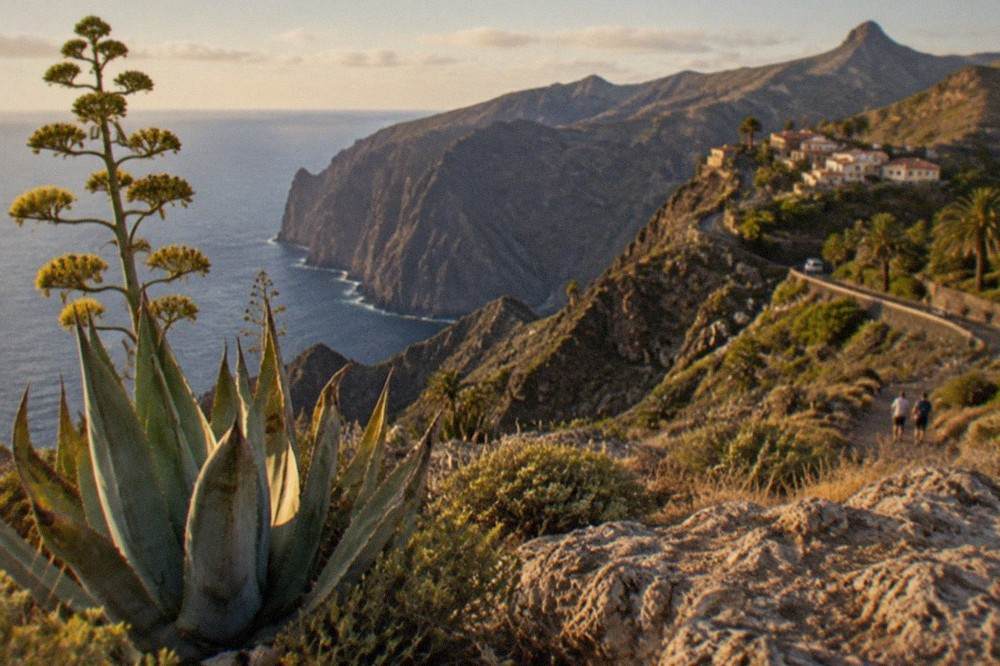
The Paisaje Lunar, above the town of Vilaflor, is a badland of pale, eroded volcanic ash that the island's own attractions list carries as a destination, reached on foot from the town. Abades, on the east coast, holds the remains of a leper colony that was never fully occupied and now stands as one of the island's stranger sights. Neither is on a coach route. Both are free, and both are examples of the island that the resort strips never show.
What Is Worth Seeking Out in the Island's Everyday Life?
The everyday gems are the Mercado de Nuestra Señora de África in Santa Cruz, the Palmetum, a botanical garden built on a former landfill site, the guachinche restaurants of the north, and the whale-watching waters off the south coast, where a resident population of pilot whales lives year-round under the protection of Decreto 178/2000. These are the parts of Tenerife that belong to the people who live there, and they cost little or nothing to enter.
The market in Santa Cruz is the island's working food market, and the guachinches, the small, licensed farmhouse restaurants of the north, serve their own wine with a limited menu under rules the island publishes. The Palmetum in Santa Cruz is a palm collection with a story: it occupies a former landfill, transformed into a botanical garden, and it sits minutes from the centre of the capital. For timing a visit around any of this, the best time to visit Tenerife page carries AEMET's month-by-month figures for both coasts, and the difference is large, 226 mm of rain a year in Santa Cruz against 132 mm at the south airport.
The whale waters deserve their place on a hidden-gem list because most visitors meet them only through the crowded speedboats. The World Cetacean Alliance designated the Tenerife-La Gomera Marine Area a Whale Heritage Area in January 2021, citing a unique resident population of pilot whales, bottlenose dolphins and a migration stop for 21 other cetacean species. Decreto 178/2000 of 6 September 2000 governs every boat out there: no approach within 60 m, at most three boats within 500 m, 4 knots maximum within 500 m, no swimming within 500 m, and authorised boats must fly the Barco Azul flag. A slower catamaran that observes those rules sees the same animals the fast boats chase.
For a fuller route through the island's better-known names alongside these quiet corners, Tenerife Travel Guide carries the complete island coverage, from the Teide permit rules to the ferry timetables for La Gomera.
Common Questions About Hidden Gems in Tenerife
what are some hidden gems in tenerife?
The best of them are Barranco del Infierno, the El Pijaral forest in Anaga, the Paisaje Lunar, the Garachico natural pools, El Bollullo beach, Punta de Teno and the Palmetum in Santa Cruz. Some need a reservation: Barranco del Infierno costs EUR 15 for a non-resident adult, El Pijaral is booked on Tenerife ON, and Masca is a descent-only pilot scheme with a EUR 40.66 ticket that excludes the exit boat.
Do any of these hidden gems need a permit or booking?
Yes. Barranco del Infierno requires advance online booking, El Pijaral requires a Tenerife ON reservation released on Mondays at 07:00 Canary time with a 14-day window, and the Masca gorge requires a booked descent slot plus a separate boat ticket. Walking a reservation-only trail without one can be penalised, and at Masca arriving by private vehicle means refusal.
Are the hidden gems in Tenerife free to visit?
Many are. The Paisaje Lunar, Punta de Teno, El Médano, El Bollullo and the Palmetum's surroundings cost nothing beyond transport. The rationed sites carry charges: EUR 15 at Barranco del Infierno for a non-resident adult, EUR 40.66 at Masca, and, since 19 January 2026, EUR 15 on the Teide summit trail's daytime slots for visitors. There is no tourist tax on Tenerife; these are per-booking activity fees.
Can you reach the hidden gems without a car?
Partly. TITSA buses reach Garachico, Icod de los Vinos and Santiago del Teide, and the Masca scheme actually requires the TITSA 355 bus from Santiago del Teide rather than a private car. The day travelcard costs EUR 10 and the seven-day version EUR 50 for visitors, since the free public transport subsidy applies only to Canary resident passes. Remoter points such as Punta de Teno and the Paisaje Lunar are far easier with a vehicle.
When is the best time to seek out the quieter spots?
The shoulder months suit them. AEMET's normals show the south coast at 19 to 20 degrees mean temperature in spring and autumn with modest rainfall, while the north is wetter, 520 mm a year at Tenerife North Airport against 132 mm at the south airport. Sea temperatures off the south coast run 23.7 degrees in September and October, the warmest of the year, and the sea state matters at Masca, where a sudden pier closure voids the day's ticket.