Where to Stay in Tenerife: The Best Areas Compared
Tenerife splits into two distinct holiday halves, a developed sunny south and a greener, more Spanish north, and the base you pick shapes everything else about the trip.
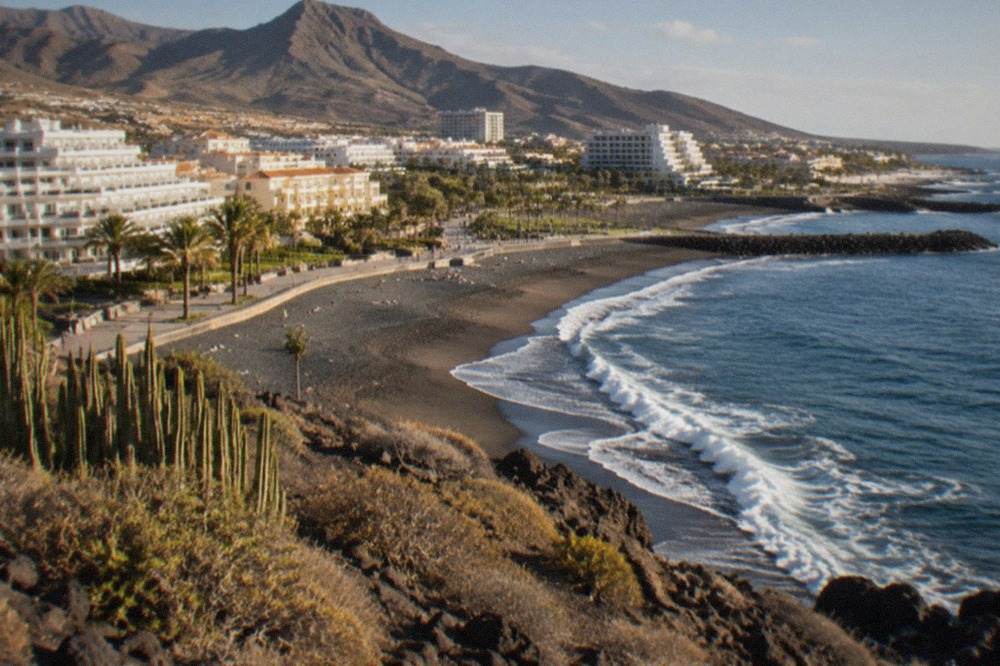
Short answer
Costa Adeje and Los Cristianos suit most first-time visitors for beaches and boat trips, Puerto de la Cruz suits a quieter, greener stay, and Santa Cruz or La Laguna suit city breaks and Carnival.
Tenerife is one island behaving like two. The south, around Costa Adeje and Los Cristianos, is the dry, beach-and-boat-trip half that most of the 7,561,659 tourists the tourist board counted in 2025 came for. The north, around Puerto de la Cruz and La Laguna, is greener, cooler and more Spanish in character. Choose wrong and you can spend a fortnight commuting; choose right and everything you came for sits within a short drive. This guide compares the bases using the island's own published figures, so the decision rests on climate data and transport facts rather than brochure adjectives.
Which Is the Best Area in Tenerife to Stay?
For a first beach holiday, Costa Adeje and neighbouring Los Cristianos are the strongest base: they sit on the driest corner of the island, next to the whale-watching ports, with AEMET's south-airport station recording zero rain days in July and a July mean maximum of 27.7 Celsius. Puerto de la Cruz is the best pick for a greener, quieter stay, and Santa Cruz or La Laguna for a city break built around Carnival and the island's museums.
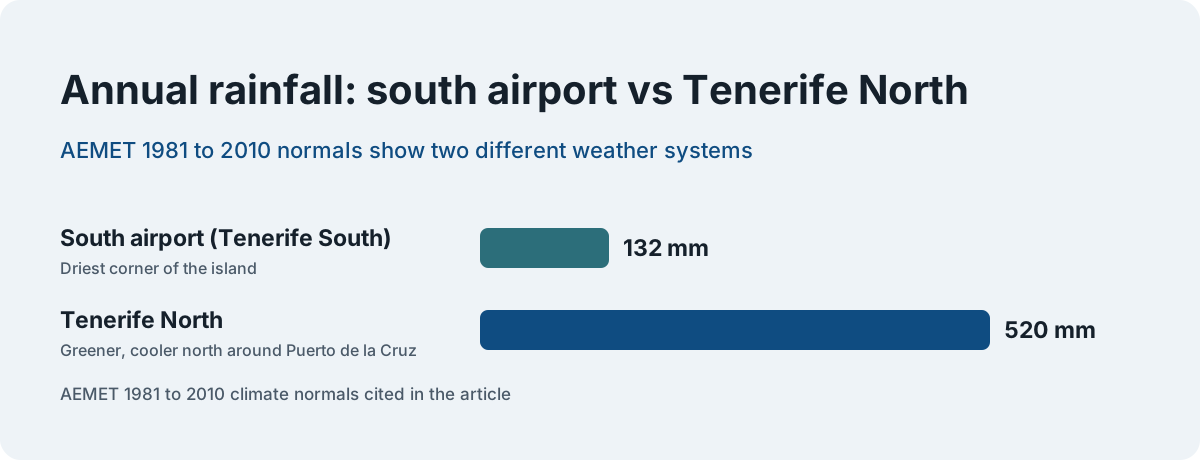
That answer comes with a caveat the climate tables make obvious: the north and south of Tenerife are different weather systems, not different ends of the same beach. AEMET's 1981 to 2010 normals put 132 mm of annual rain on the south airport against 520 mm at Tenerife North, and the sunshine gap in winter runs to roughly forty hours a month between the two. A visitor who books Puerto de la Cruz in November because "Tenerife is sunny in winter" has booked a different island from the one in the photographs.
The decision therefore has three honest branches. Sun, sand and boats: the south. Gardens, old towns and a slower pace: the north. City life, Carnival and no pool dependency: Santa Cruz or La Laguna, with a day trip either way. The rest of this guide works through each branch, then the practical layer underneath it: buses, charges and the rental-law context.
Where to Stay in Tenerife for First Timers?
First-time visitors should stay in the south, in Costa Adeje, Los Cristianos or Playa de las Américas, because that corner concentrates the things a first trip usually wants: AEMET's driest weather, the golden sand of Las Vistas, the whale-watching ports of Los Cristianos and Puerto Colón, and TITSA bus lines 40 and 711 linking the resorts to Tenerife South Airport. Puerto de la Cruz is the alternative for travellers who prefer gardens and towns over beaches.
The practical case for the south is density. Whale and dolphin watching trips, the island's most-booked sea product, leave from Los Cristianos and Puerto Colón, and the regulation behind them, Decreto 178/2000, keeps authorised boats at least 60 m from the animals with no more than three boats inside 500 m, so the experience is policed rather than a free-for-all. Siam Park in Costa Adeje opens 365 days a year, 10:00 to 18:00 from 1 May to 29 October and 10:00 to 17:00 the rest of the year. Teide day tours and sunset stargazing tours collect from southern hotels as a matter of routine.
The south is also where the airport arithmetic is simplest. TITSA's own airport page lists lines 10, 40, 711, 343 and 415 at Tenerife South, and line 40 runs to the Costa Adeje bus station via Los Cristianos, which covers most first-timer hotels in one fare. AENA recorded 13,969,678 passengers at Tenerife South in 2025, an all-time record, and the resort corridor absorbs most of them.
For a deeper comparison of the two halves before committing, read Tenerife North vs South, and for hotel-level picks once the area is decided, see the best hotels in Tenerife.
Where Is the Nicest Part of Tenerife to Stay?
"Nicest" splits by what you value. The tourist board describes El Duque in Costa Adeje as a grey sandy beach and Las Teresitas in San Andrés as golden sand behind breakwaters, so the "nicest beach" crown depends on your colour preference. For towns rather than beaches, La Laguna is a UNESCO-listed colonial city whose layout, in UNESCO's words, provided the model for many colonial towns in the Americas.
The beach league, in the tourist board's own adjectives rather than a writer's, looks like this.
| Beach | Area | Sand, per the tourist board's page |
|---|---|---|
| El Duque | Costa Adeje (Adeje) | Grey sand |
| Fanabe | Costa Adeje (Adeje) | Pale sand |
| Las Vistas | Los Cristianos (Arona) | Golden sand, calm behind breakwaters |
| Las Teresitas | San Andrés, Santa Cruz | Golden sand, palms, breakwaters |
| El Médano | Granadilla de Abona | Fine grey sand under Montaña Roja |
| El Bollullo | La Orotava | Black sand at the foot of a cliff |
That table is worth a moment, because the marketing of "golden sandy Tenerife" is only true of specific beaches. The dark volcanic sand most visitors actually encounter is a different aesthetic, and plenty of travellers end up preferring it. The golden-sand guarantee, such as it is, belongs to Las Teresitas and Las Vistas.
If your idea of nice is a town rather than a towel, the north wins. La Laguna's UNESCO inscription rests on it being, in UNESCO's description, the first non-fortified Spanish colonial town. Garachico, on the north-west coast, was the island's trade hub in the 16th and 17th centuries until the Trevejo volcano buried its old port in 1706, and its natural pools now stand where the harbour did. For travellers chasing the upscale end, where celebrities stay in Tenerife is covered separately.
South Tenerife: Costa Adeje, Playa de las Américas and Los Cristianos
The south is the island's main resort belt: Costa Adeje and El Duque sit in the municipality of Adeje, which counted 50,021 residents in 2025, while Los Cristianos and Las Vistas sit in Arona, home to 87,793. Between them they hold the driest climate on the island, the main whale-watching ports and the two big water parks, with Siam Park open every day of the year.
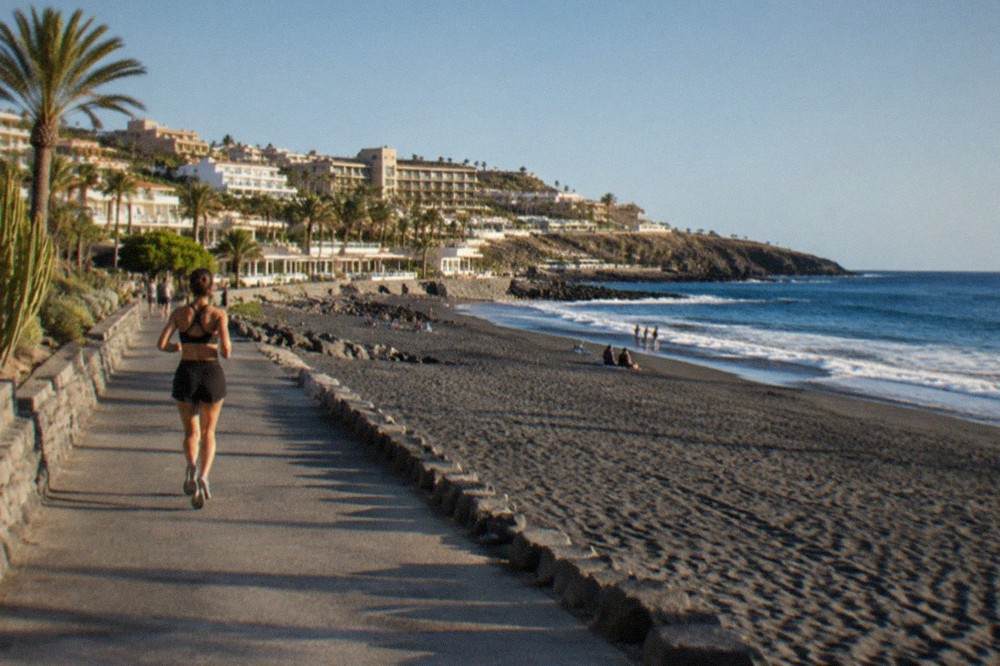
Costa Adeje is the polished end of the belt. El Duque, which the tourist board describes as a grey sandy beach, is the strip's most photographed stretch, and the area carries the bulk of the island's five-star inventory. It is also, administratively, simply the coast of Adeje, the same municipality that counted 50,021 residents at the start of 2025, which matters when a booking address says Adeje and the map shows the beach.
Los Cristianos, next along in Arona, is the working port end. The whale-watching fleet docks here, the ferries to La Gomera, La Palma and El Hierro leave from here, and Las Vistas, a golden-sand beach behind breakwaters in the tourist board's description, sits between it and Playa de las Américas. Families weighing this coast against others should read the dedicated best area for families guide, and couples the best area for couples one.
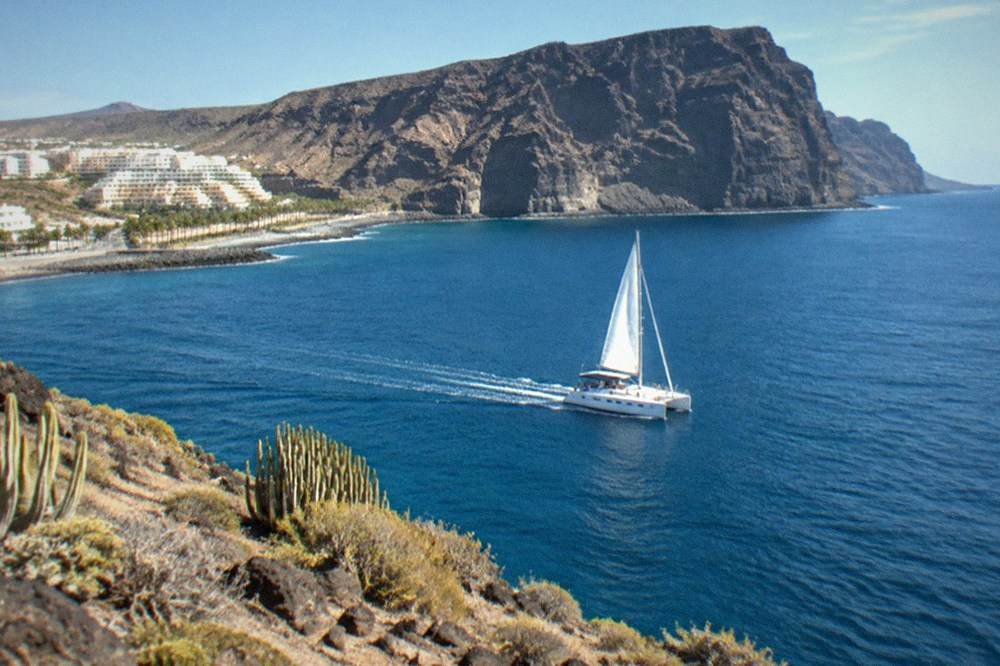
The whale-watching product deserves a word, because the law behind it is unusually strict and it shows in the experience. Decreto 178/2000 bans approaching within 60 m, caps three boats inside 500 m, limits speed to 4 knots inside that zone and forbids swimming with the animals, and authorised boats must fly the Barco Azul flag. The World Cetacean Alliance designated the Tenerife-La Gomera Marine Area a Whale Heritage Area in January 2021, citing a unique resident population of pilot whales. A cruise from Los Gigantes, on the cliffs the tourist board says tower up to 600 m, is the most scenic way to see that population:
El Médano, on the south-east corner in Granadilla de Abona, is the belt's laid-back alternative: fine grey sand under Montaña Roja, and the island's windsurfing capital. It trades hotel density for space.
West Tenerife: Los Gigantes, Puerto de Santiago and Masca
The west coast, in the municipality of Santiago del Teide (12,582 residents in 2025), is the quiet-resort option: Los Gigantes sits under cliffs the tourist board describes as towering up to 600 m, with a seabed about 30 m deep at their foot, and it is also the departure point for the boat leg of the Masca gorge descent, which costs EUR 40.66 for the trail ticket with the boat sold separately.
Los Gigantes is the base for travellers who want the south's sun without the south's noise. The cliffs of Teno Rural Park drop straight into the sea here, and the whale-watching cruises that leave the small marina work the same protected waters as the Los Cristianos fleet under the same decree. The sunset aspect, facing open Atlantic, is the area's signature.
The Masca connection matters for hikers. The gorge is open as a descent-only pilot scheme, booked at caminobarrancodemasca.com, and the rules are strict: the general ticket is EUR 40.66 with the boat not included, hikers must arrive on TITSA line 355 from Santiago del Teide and show the bus ticket, private vehicles are refused, closed mountain footwear is a condition of entry, and the boat out of Masca bay must be pre-booked for no later than four hours after the descent slot. Sea conditions can close the pier and void the day's ticket. The operator itself calls it the place with the most rescues in the Canaries in recent years, which is a sentence a booking page should not soften.
A combined boat-and-bays excursion from Los Cristianos covers the west coast scenery without the permit logistics:
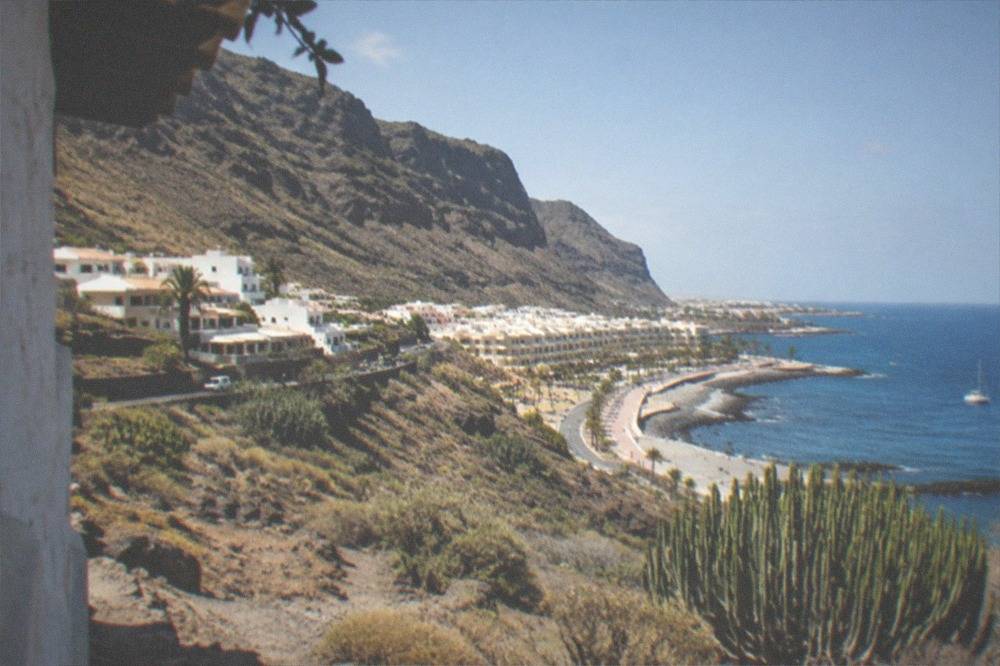
North Tenerife: Puerto de la Cruz, La Laguna and Garachico
Puerto de la Cruz (31,137 residents in 2025) is the north's resort: greener, cooler and older than the south, with AEMET's north-airport station recording a July mean maximum of 24.7 Celsius against 27.7 at the south airport, and 64 rain days a year against 15.2. La Laguna (161,108 residents) is the UNESCO-listed university city up the hill, and Garachico the small coastal town whose port a volcano buried in 1706.
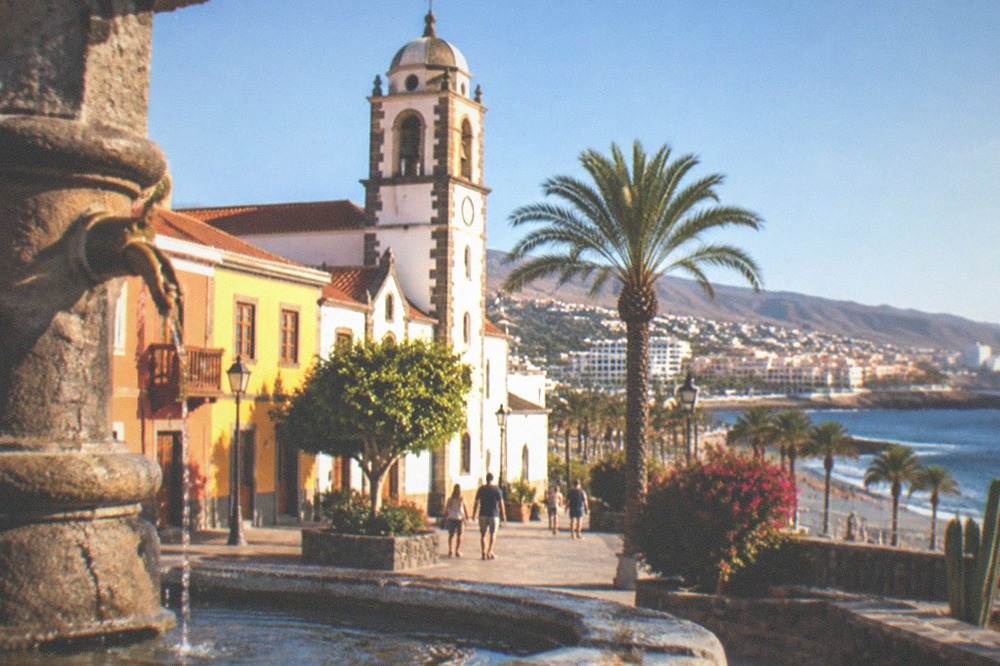
Puerto de la Cruz was welcoming northern European visitors before the south had a single hotel, and it still trades on gardens, black-sand coves and a town you can walk through rather than a strip you drive along. The trade is weather: those AEMET normals show November and December carrying 81 and 82 mm of rain at the north airport, against 26 and 30 mm at the south. In summer the gap narrows to almost nothing, which is why the north is a much easier sell from June to September. The rest of the planning pages sit on Tenerife Travel Guide.
The north is also where the island's two big animal and garden attractions sit. Loro Parque, in Puerto de la Cruz, opens 09:30 to 17:30 every day of the year with its own car park at EUR 7 a day. A twin ticket covering both Loro Parque and Siam Park suits families splitting a fortnight between the coasts:
La Laguna, ten minutes up the hill, is the island's second city and its UNESCO-listed old colonial core. Garachico, further west, is the day-trip town: the 1706 Trevejo eruption destroyed almost the entire town and buried the old port, and the natural pools that fill the lava ledges today are the swimming spot that grew out of that loss. Icod de los Vinos, inland from Garachico, holds the Drago Milenario, a dragon tree the council says stands about 21 m tall with an age of approximately 1,000 years attributed to it, while the tourist board's estimate is over 800 years: an estimate either way, and presented as one.
Santa Cruz and La Laguna: The City Option
Santa Cruz de Tenerife, the island's capital with 211,957 residents in 2025, works as a genuine city base: it holds the Auditorio de Tenerife, the work of Santiago Calatrava inaugurated in 2003, the Carnival whose 2027 programme runs from 22 January to 27 February, and the golden sand of Las Teresitas at San Andrés. La Laguna, at 161,108 residents, is the quieter, university-town alternative ten minutes inland.
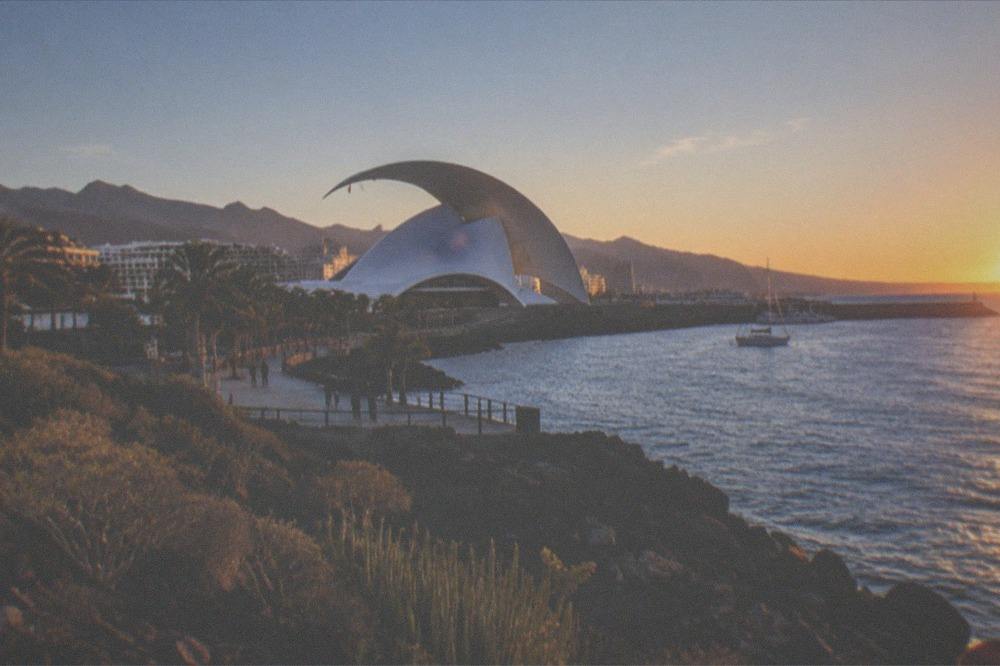
The city case is strongest in late winter, when Carnival takes over. The official 2027 programme puts the Queen's Election Gala on 17 February, the floats contest on 19 February and the two Daytime Carnivals on 21 and 27 February, under the theme "Roma: El imperio del Carnaval". Those dates sit after Ash Wednesday, and they follow the programme rather than the church calendar, so book around the published schedule and not around assumptions about when Carnival "should" fall. The dedicated Santa Cruz Carnival guide carries the detail.
Outside Carnival, Santa Cruz is a normal working capital with a good food scene, the Mercado Nuestra Señora de África, and Las Teresitas a bus ride away: golden sand, palms and breakwaters in the tourist board's description. The trade is beach-independence. This is a base for people whose holiday is restaurants, museums and evenings out, with the beach as an excursion.
What Is the Prettiest Part of Tenerife?
On the official descriptions, the prettiest ground is the Anaga massif in the far north-east, a laurel-forest rural park whose El Pijaral trail needs a Tenerife ON reservation, and the west-coast stretch from Los Gigantes to Garachico, where cliffs the tourist board says tower up to 600 m meet a town rebuilt after a 1706 eruption buried its port. La Laguna is the prettiest built environment on the island, on UNESCO's own inscription.
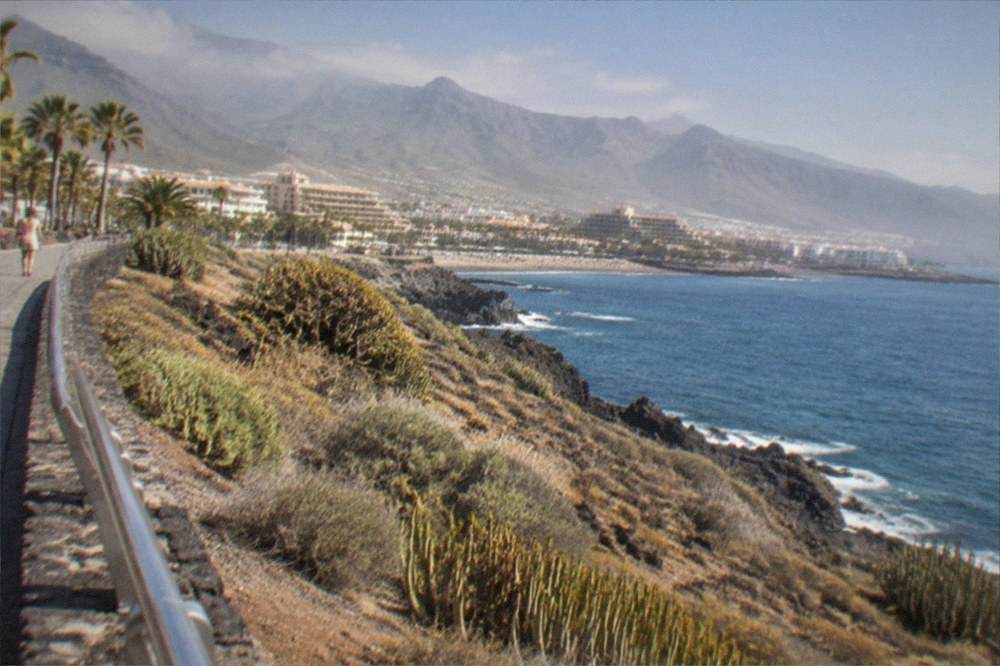
Anaga is the island's oldest landscape and its most regulated walk. The El Pijaral trail, PRA 72, needs a prior reservation on Tenerife ON, released Mondays at 07:00 Canary time with at most 14 days of bookability, and organised tours by companies are not permitted on it. The Cabildo's named permit-free alternatives in the same massif are the Bosque de los Enigmas trail and the Pista de Las Hiedras. A guided hike in Anaga is one of the few ways to see the laurisilva with a route chosen on the day's conditions.
The west competes with scenery of a harder kind. Los Gigantes gives the cliffs, Masca the gorge village above them, and Garachico the lava-rock pools. Puerto de la Cruz and La Orotava supply the garden belt: the Orotava valley is the greenest inhabited stretch on the island, and it is no accident that the banana farms and wineries open to visitors cluster there.
Which Is the Nicest Resort in Tenerife?
On the published descriptions, Costa Adeje is the most polished resort area, with El Duque as its flagship beach, and Los Cristianos the most convenient, sitting on the ferry port and the whale-watching marina. Puerto de la Cruz is the nicest resort of the north, and Los Gigantes the nicest small one, under cliffs the tourist board describes as rising up to 600 m from a seabed about 30 m deep.
Resort "niceness" is mostly a proxy for three measurable things: beach type, sea access and noise. Costa Adeje wins the polish category because El Duque, Fanabe and the hotel stock cluster together, and because Siam Park sits inside the same municipality. Loro Parque's own release says Tripadvisor awarded it the Travellers' Choice Award for the best waterpark in the world for a fifth consecutive year, an attributed claim rather than this desk's.
Los Cristianos wins convenience: ferries to La Gomera (50 minutes with Fred. Olsen Express), La Palma (150 minutes) and El Hierro (140 minutes) all leave from its port, and the whale fleet docks beside them. Anyone planning island-hopping alongside a beach stay should read the island hopping and ferries guide, and anyone weighing Tenerife against its neighbours the Tenerife vs Gran Canaria and Tenerife vs Lanzarote comparisons.
How Different Is the Weather Between the Bases?
Very: AEMET's 1981 to 2010 normals put 132 mm of annual rain on the south airport against 520 mm at Tenerife North, and July mean maxima at 27.7 and 24.7 Celsius respectively, while Santa Cruz records 226 mm of rain and 29.7 rain days a year. The sea off the south coast, on NOAA's 1991 to 2020 series, runs from 19.1 Celsius in March to 23.7 in September and October.
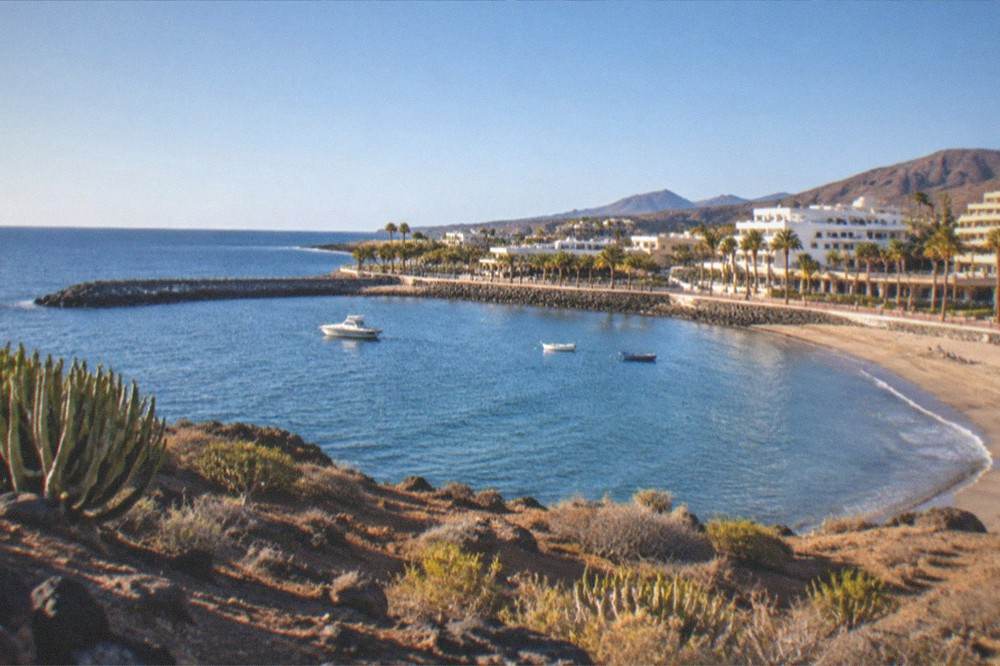
The comparison that matters for choosing a base is the winter one, because that is when the two halves diverge hardest.
| AEMET normals, 1981 to 2010 | South Airport (64 m) | North Airport (632 m) | Santa Cruz (36 m) |
|---|---|---|---|
| January mean max | 21.7 C | 16.0 C | 21.0 C |
| January rain, mm | 17 | 80 | 32 |
| July mean max | 27.7 C | 24.7 C | 28.7 C |
| July rain days (1 mm or more) | 0 | 1.7 | 0 |
| November rain, mm | 26 | 81 | 34 |
| Annual rain, mm | 132 | 520 | 226 |
| Annual rain days (1 mm or more) | 15.2 | 64 | 29.7 |
Two readings of that table are honest. The first is that a winter sun holiday belongs in the south, where December still averages a 22.8 Celsius mean maximum and 195 sunshine hours. The second is that the north's "worse" weather is relative: 150 sunshine hours in a La Laguna December would be a good month in Britain, and the rain is what keeps the Orotava valley green. The month-by-month detail, including the sea temperatures, is in Tenerife weather by month, and the winter-specific planning in the Tenerife in November, Tenerife in December and Tenerife in January guides.
Getting Around from Each Base
Visitors pay for public transport on Tenerife: single tickets are priced by route, the day travelcard costs EUR 10 and the seven-day travelcard EUR 50, because the 2026 free-travel subsidy applies only to Canary-resident passes on a personalised Ten+ card. TITSA lists lines 10, 40, 711, 343 and 415 at Tenerife South airport and lines 20, 30 and 343 at Tenerife North, and the tram runs only within the Santa Cruz and La Laguna system, never to an airport.
| Airport | TITSA lines, per TITSA's own page | Where they go |
|---|---|---|
| Tenerife South (TFS) | 10 | Santa Cruz |
| Tenerife South (TFS) | 40 | Costa Adeje bus station via Los Cristianos |
| Tenerife South (TFS) | 711 | Night bus: Santa Cruz, airport, Los Cristianos, Costa Adeje |
| Tenerife South (TFS) | 343 | Express Puerto de la Cruz to Los Cristianos via both airports |
| Tenerife South (TFS) | 415 | El Fraile, San Isidro |
| Tenerife North (TFN) | 20 | Santa Cruz via La Laguna |
| Tenerife North (TFN) | 30 | Puerto de la Cruz |
| Tenerife North (TFN) | 343 | Express to the south |
What this means per base is simple. The southern belt is a one-bus proposition from the main airport, which is why first-timers land there so easily. Puerto de la Cruz has a direct line 30 from the northern airport and the 343 express from the southern one. Santa Cruz and La Laguna share the tram, whose single fare is EUR 1.35 on a transit pass or EUR 1.10 by mobile, and the tram's fares page is also the source for the residency rule on subsidised passes. The full bus picture, including the Teide and Teno lines that resident passes do not cover, is in the Tenerife buses guide, and the airport logistics in airport transfers.
A car changes the calculus, especially for Anaga, Masca and the west coast. The car hire in Tenerife guide covers that trade without quoting a single daily rate, because hire prices move daily and no figure here could stay true.
Are There Extra Charges After You Book Your Stay?
No per-night tourist tax exists on Tenerife: no official page shows a lodging tax in force or approved. The charges that do exist are per-booking activity fees, not accommodation taxes: EUR 15 for visitors on the 09:00 to 17:00 Teide summit slots since 19 January 2026, EUR 6 to 10 on the Montana Blanca trail depending on the day, EUR 40.66 for the Masca gorge and EUR 15 for Barranco del Infierno.
| Charge | Who pays what | Booked via |
|---|---|---|
| Teide summit trail PNT 10, 09:00 to 17:00 | Visitors EUR 15; other Canary residents EUR 6; Tenerife residents and children exempt | Tenerife ON |
| Montana Blanca PNT 07, working days | Visitors EUR 6; other Canary residents EUR 3 | Tenerife ON |
| Montana Blanca PNT 07, weekends and holidays | Visitors EUR 10; other Canary residents EUR 5 | Tenerife ON |
| Masca gorge descent | EUR 40.66 general, boat sold separately; Tenerife residents free | caminobarrancodemasca.com |
| Barranco del Infierno | EUR 15 non-resident adult; EUR 5 Canary residents; under-5s not allowed | barrancodelinfierno.es |
Two context points belong beside that table. The first is the rental-law backdrop: the Canary Islands published Ley 6/2025, of 10 December, on the sustainable ordering of tourist use of housing, in the official gazette on 12 December 2025. Its effects on an individual booking were not read by this desk, so nothing is claimed here beyond the law's existence. The second is the border layer: the EU's Entry/Exit System has been fully operational since 10 April 2026 and registers UK and US visitors with a facial image and fingerprints instead of a passport stamp, while ETIAS is, in the EU's own words, currently not in operation, with its fee set at EUR 20 when it launches. Neither is a reason to change your base, but both belong in a planning checklist.
Once the base is chosen and the budget's activity lines are clear, the three trips worth locking in earliest are the ones this page has kept returning to: the Los Gigantes whale cruise, the observatory tour and the Siam Park ticket.
Common Questions About Where to Stay in Tenerife
What is the nicest resort in Tenerife?
Costa Adeje is the most polished resort area, with El Duque as its flagship beach and Siam Park inside the same municipality, while Los Cristianos is the most convenient, on the ferry port and whale-watching marina. Puerto de la Cruz is the nicest resort of the north, and Los Gigantes the nicest small one, under cliffs the tourist board describes as towering up to 600 m.
what is the nicest part of tenerife to stay in?
It depends on the holiday. For beaches, boats and the driest weather, the stretch from Costa Adeje to Los Cristianos, where AEMET records zero July rain days. For gardens, old towns and a greener pace, Puerto de la Cruz and La Orotava. For a city break, Santa Cruz, with Las Teresitas at San Andrés for the golden sand.
What is the prettiest place in Tenerife?
The Anaga massif in the north-east, a laurel-forest rural park whose El Pijaral trail needs a Tenerife ON reservation, is the island's most dramatic natural landscape on the official descriptions. Among towns, La Laguna holds the UNESCO inscription, and Garachico, rebuilt after the 1706 eruption buried its port, is the prettiest small coastal town.
what is the best resort in the canary islands?
This desk compares rather than crowns, and no official body ranks the islands' resorts. On the measurable planning facts, Tenerife's south offers the driest climate in the group's data here, a regulated whale-watching fleet under Decreto 178/2000, and a water park open 365 days a year. The honest comparisons are in the Tenerife vs Gran Canaria and which Canary island is best guides on this site.
what is the best area to stay in the canary islands?
No official source ranks the islands' areas, so the honest answer is conditional: for winter sun and boat trips, Tenerife's south-west, from Costa Adeje to Los Gigantes, on AEMET's rainfall and sunshine figures. For walking and green landscapes, the Anaga and Orotava belt of north Tenerife. Cross-island comparisons are covered in the Tenerife vs Lanzarote and Tenerife vs Gran Canaria guides.
Where to stay in Tenerife for first timers?
Costa Adeje or Los Cristianos. Both sit on the driest corner of the island, both are on TITSA line 40 from Tenerife South airport, and both put the whale-watching ports, the golden sand of Las Vistas and the Teide tour pickups within reach. Puerto de la Cruz is the alternative for first-timers who prefer towns and gardens to beaches.