Markets in Tenerife: Days, Places and What to Buy
Tenerife's markets range from a grand covered hall in Santa Cruz to small town squares, and the honest answer about market days is that they change: this page separates what is verified from what every visitor should check locally.
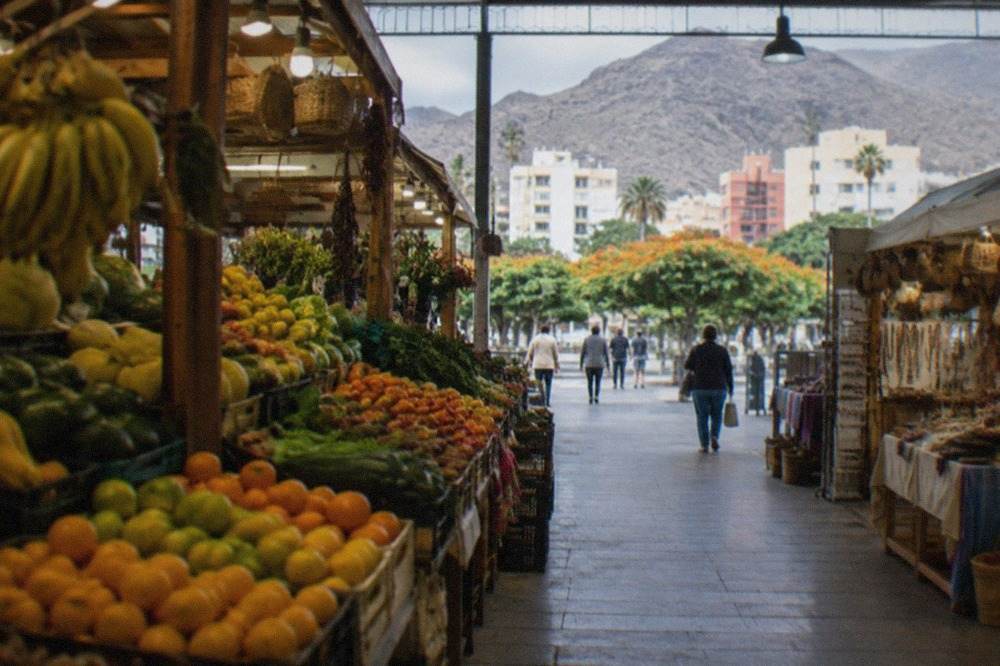
Short answer
The main covered market on file is the Mercado Nuestra Señora de África in Santa Cruz. Around the resorts, Adeje old town and the Arona coast hold the regular markets closest to Costa Adeje, and no official schedule for individual market days is published in one place, so check locally before planning a day around one.
Tenerife runs on two kinds of shopping. One is the commercial centre, air-conditioned and fixed. The other is the market: fruit stalls, cheese counters, second-hand clothes, leather, and tables of carved stone, and it moves. A market that fills a square on one day of the week is a car park on the others, and the schedules that circulate online are among the most reliably out-of-date pages in Canary travel. This desk has read what the official sources actually publish, and the short version is this: the island's one grand covered market is in Santa Cruz, the resort south has smaller markets clustered around Adeje old town and the Arona coast, and market days themselves are set by each municipality and are not held in any single official calendar. Everything below separates the verified from the merely repeated, and this Tenerife Travel Guide page does the same for the rest of the island.
Where Are the Best Markets in Tenerife?
The strongest single answer on file is the Mercado Nuestra Señora de África in Santa Cruz, the island's grand covered market and the only market with a full page in this site's attraction coverage. For the resort south, the regular markets closest to Costa Adeje sit around Adeje old town and the Arona coast, and no official ranking of Tenerife's markets exists, so "best" means the biggest covered hall plus the markets nearest where you are staying.
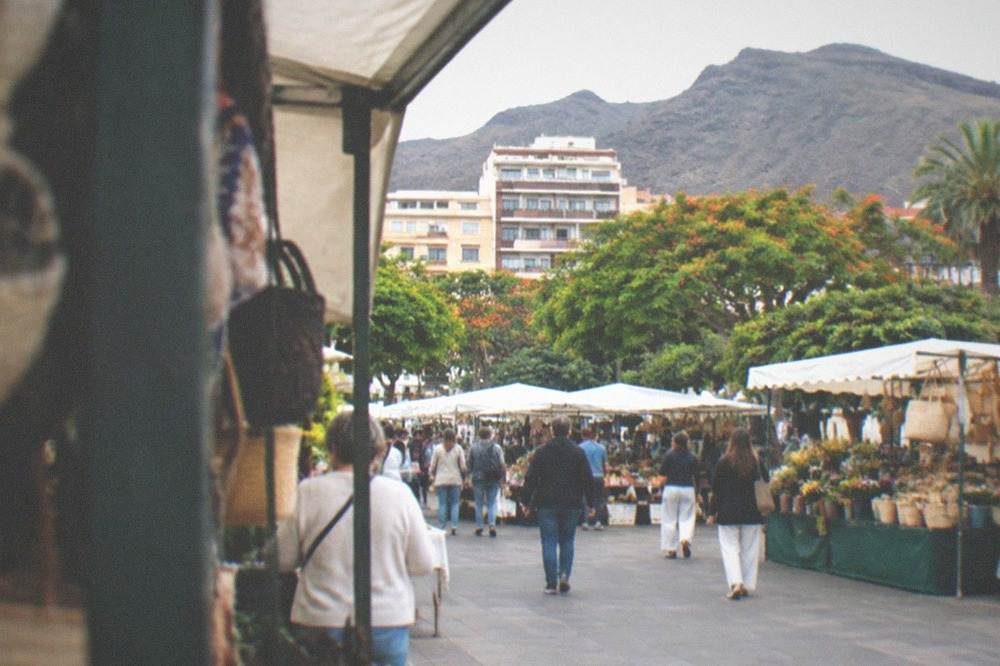
Start with the covered hall, because it is the one market that does not move. The Mercado Nuestra Señora de África in Santa Cruz is the island's main municipal market, the place where the capital's restaurants and households shop, and the closest thing Tenerife has to the great food halls of mainland Spain. Its attraction page on this site covers what it holds and how to plan a visit.
The open-air markets are a different animal. They are set up and taken down, they depend on a municipality granting the pitch, and their days shift. Adeje old town, the historic quarter above the resort strip, is the natural market base for anyone staying in Costa Adeje, and the neighbouring coast through Los Cristianos towards Las Galletas carries its own smaller markets. The honest planning rule is simple: treat any published market day as a claim to verify, not a fact to build a day on.
What Can You Buy at a Tenerife Market?
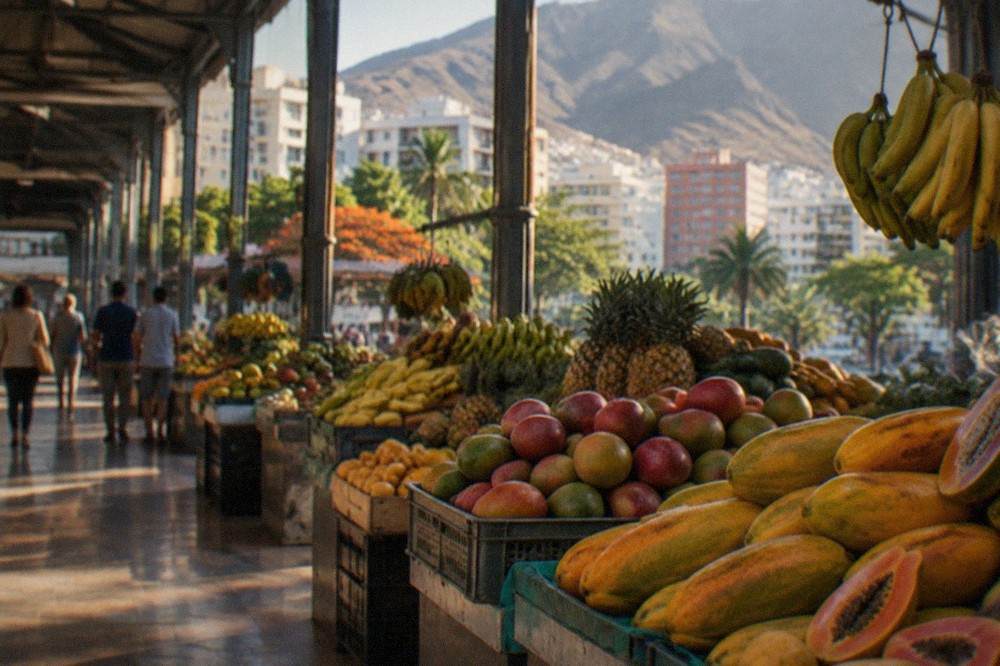
The three things worth carrying home from a Tenerife market are food grown on the island, mojo and cheese made in the Canaries, and handmade goods such as embroidery, leather and carved wood. Bananas are the island's signature crop and the one product sold at plantation tours as well as stalls, while cheap electronics and designer-brand goods at resort markets are imports, and the island's tax regime is IGIC, not VAT.
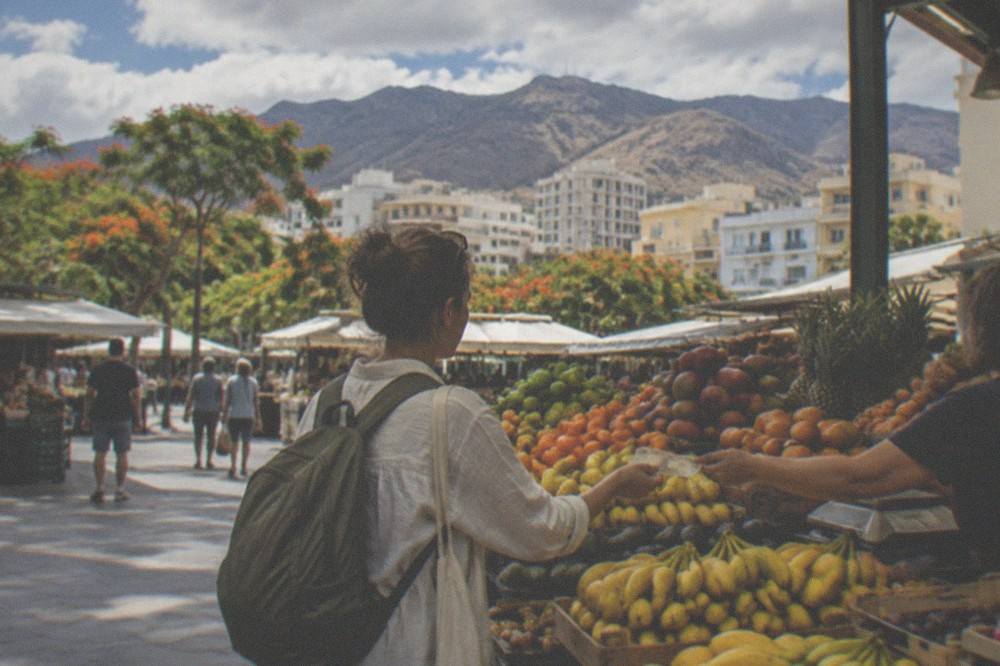
The food is the point. Canarian agriculture gives market stalls a range that mainland Europe pays a premium for: small local bananas, tropical fruit, honey, wine from the island's volcanic vineyards, and fresh cheese. The two products most visitors end up taking home are mojo, the Canarian sauce that comes in red and green versions, and queso, the smoked and fresh cheeses made across the islands. This site's guide to papas arrugadas and mojo covers the sauce, and the island's food culture, including the guachinche farm-kitchen tradition, has its own page.
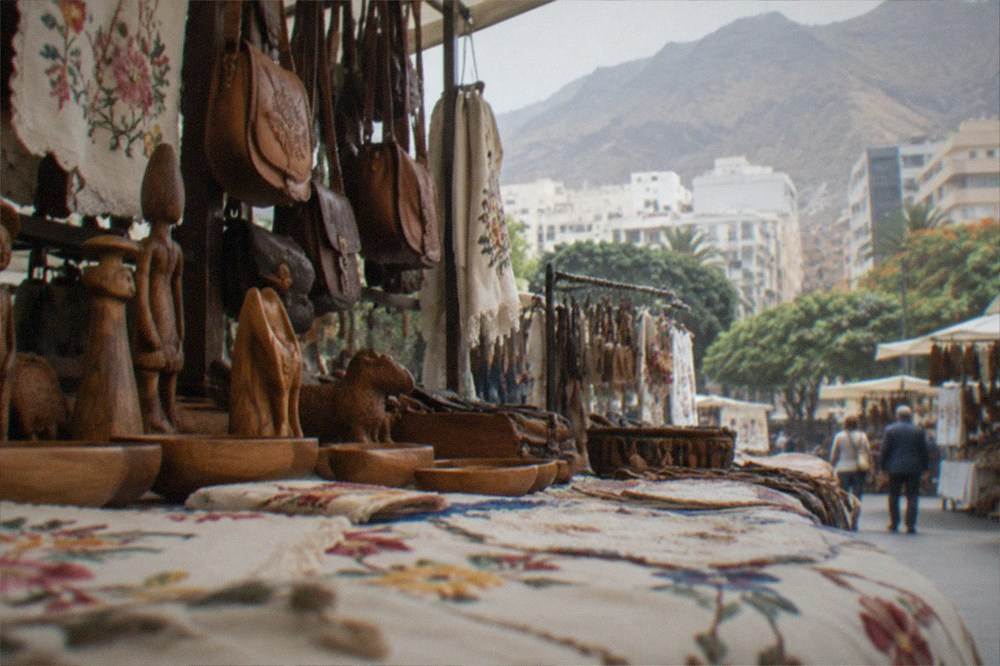
Handmade goods are the second tier. Embroidery and lace work have a long tradition on the islands, and leather, ceramics and carved stone appear on the craft stalls. The third tier, the one worth a warning, is the branded goods trade at the big resort markets: watches, handbags and electronics at prices that make the brand implausible. The tax point is a genuine Canarian curiosity: the islands apply IGIC rather than mainland VAT, the tax agency's table shows 7% on everyday goods with other bands at 0%, 3% and 15%, and non-resident travellers can claim IGIC back on qualifying purchases through the islands' own scheme.
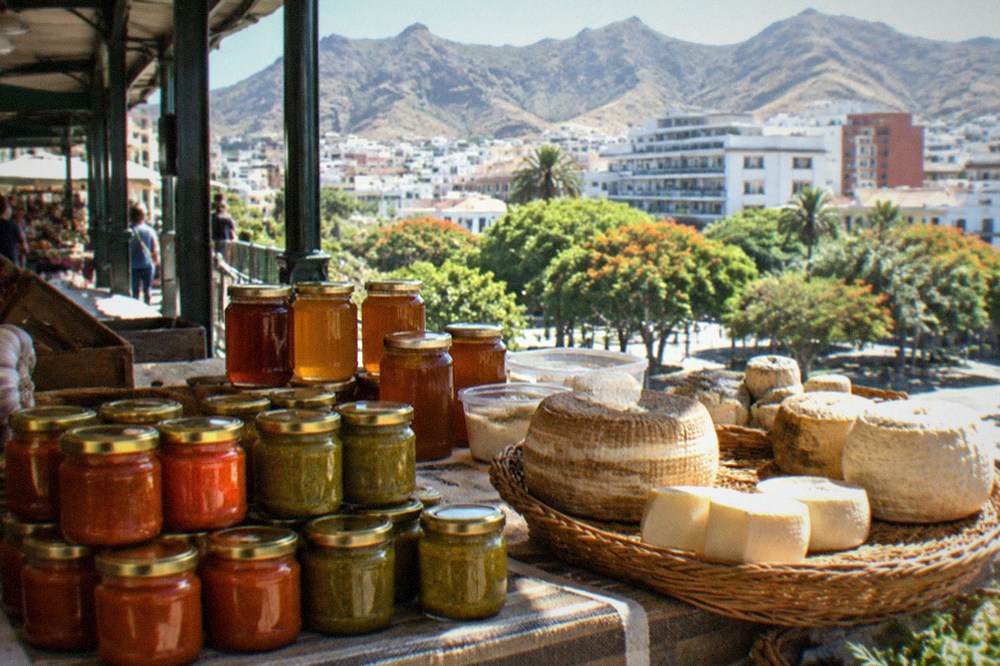
A market morning also feeds the rest of the day. The produce you cannot carry home, you eat on the island, and the market-to-table thread runs through the guide to the best restaurants on this site.
Is There a Costa Adeje Market?
There is no single permanent covered market in Costa Adeje itself on file. The market scene for the Adeje resort coast clusters around Adeje old town, the historic quarter inland of the hotels, and around the neighbouring Arona coast towards Los Cristianos and Las Galletas. Costa Adeje's own shopping is anchored by commercial centres, and the open-air market days nearest the resort are the ones to check with the local council or your accommodation before you plan around them.
This is the question the target keyword really asks, and it deserves a straight answer rather than a list of ten markets copied from an out-of-date forum. Costa Adeje is the resort belt of the municipality of Adeje, a municipality of about 50,000 people in the 2025 register, and its retail is dominated by shopping centres along the coast road. The old town, a separate settlement uphill, is where the municipality's own market tradition sits, and this site has a page on Adeje old town covering the quarter itself.
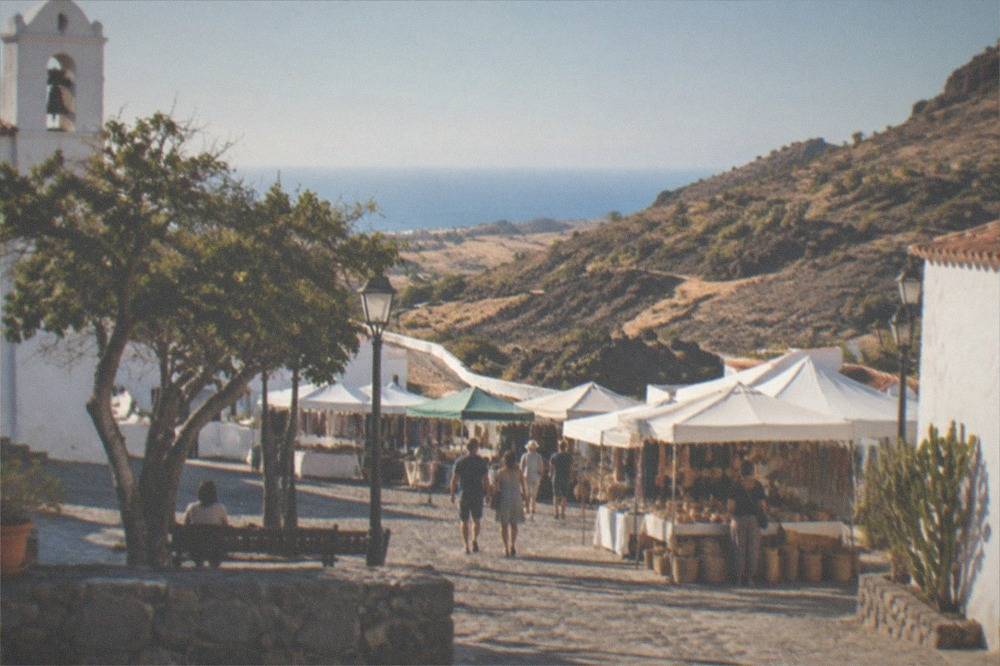
Two practical notes follow. First, the resort south is compact: Los Cristianos, Costa Adeje and Playa de las Américas sit against each other, and the comparison guide to Los Cristianos vs Costa Adeje on this site explains which base suits which kind of traveller, market access included. Second, the coast south of the resorts, through Las Galletas and Costa del Silencio, carries a smaller, more local market scene that many visitors staying in the big hotels never see.
If a market morning leaves the afternoon open, the Adeje coast has the island's best-known water park on its doorstep, and the pairing is a natural one.
How Do Market Days Fit Into a Tenerife Holiday?
Plan the market first and the island around it, because a market only exists on its market day, while beaches, viewpoints and parks are there every day. The busiest visitor months are the northern winter, with 659,656 tourists arriving by air in November 2025 and 671,202 in December, and market squares are at their most crowded exactly then, so an early start matters more in February than in May.
The seasonality is worth understanding before you build an itinerary. The monthly air-arrival figures below are the official FRONTUR-Canarias series from the Instituto Canario de Estadística, counting tourists who arrived by air and excluding Canary Islands residents. They show the shape of the island's year: a winter peak, a spring lull, a July surge.
| Month | 2024 arrivals by air | 2025 arrivals by air |
|---|---|---|
| Jan | 612,169 | 643,460 |
| Feb | 632,295 | 648,255 |
| Mar | 678,693 | 677,688 |
| Apr | 578,602 | 604,370 |
| May | 528,408 | 539,410 |
| Jun | 522,461 | 542,881 |
| Jul | 580,512 | 611,623 |
| Aug | 603,529 | 618,578 |
| Sep | 551,175 | 563,261 |
| Oct | 617,714 | 631,662 |
| Nov | 652,800 | 659,656 |
| Dec | 679,245 | 671,202 |
What that means for a market day is a question of crowds and weather. The south coast is at its driest and busiest in the summer, and wetter in the winter, though "wetter" on this coast is a modest thing. The rain-day figures below are AEMET's climate normals for the Tenerife South Airport station, the closest long-record measurement to the Adeje coast.
| Month | Mean daily max (C) | Rain (mm) | Days with 1 mm or more of rain |
|---|---|---|---|
| Jan | 21.7 | 17 | 1.8 |
| Feb | 22.0 | 20 | 2.2 |
| Mar | 23.1 | 15 | 1.9 |
| Apr | 23.1 | 7 | 1.1 |
| May | 23.9 | 1 | 0.3 |
| Jun | 25.4 | 0 | 0.0 |
| Jul | 27.7 | 0 | 0.0 |
| Aug | 28.4 | 1 | 0.2 |
| Sep | 27.9 | 4 | 0.6 |
| Oct | 26.8 | 12 | 1.6 |
| Nov | 24.8 | 26 | 1.9 |
| Dec | 22.8 | 30 | 3.5 |
The fit with the rest of a holiday is where markets earn their slot. A one-week stay has room for a market morning, a beach afternoon and one big excursion, and the 7 days in Tenerife itinerary on this site shows how the pieces go together; shorter stays, covered by the how many days in Tenerife answer, need to be more ruthless. The classic pairing on the Adeje coast is a market or old-town morning before the heat, then the sea: the water temperature off the south coast, from NOAA's 1991 to 2020 series, is warmest in September and October at 23.7 C and at its lowest in March at 19.1 C.
| Month | Sea surface temperature (C) |
|---|---|
| Jan | 19.9 |
| Feb | 19.2 |
| Mar | 19.1 |
| Apr | 19.5 |
| May | 20.2 |
| Jun | 21.4 |
| Jul | 22.2 |
| Aug | 23.1 |
| Sep | 23.7 |
| Oct | 23.7 |
| Nov | 22.5 |
| Dec | 21.1 |
What Should You Know Before You Go to a Tenerife Market?
Take cash, go in the morning, and do not expect card payments at every stall. Visitors pay for public transport to get there, single tickets, the EUR 10 day travelcard or the EUR 50 seven-day travelcard, because the 2026 free-travel subsidy is for residents only. There is no tourist tax on Tenerife, and the only visitor charges that exist are per-booking fees on specific trails and sites, none of them at a market.
Money first. Canarian market stalls run on cash, and while the bigger halls take cards, the open-air stalls often do not. The currency is the euro, and this site's coverage of currency, cash and tipping covers the rest. On tax, the honest statement is that no official page shows a per-night lodging tax in force or approved on Tenerife; the charges that do exist are per-booking fees on two Teide trails, the Masca gorge ticket and the Barranco del Infierno ticket, listed below.
| Charge | Visitor amount | Who pays |
|---|---|---|
| Teide trail PNT 10, 09:00 to 17:00 slots | EUR 15 | All users except Tenerife residents and children |
| Teide trail PNT 07, working days 09:00 to 17:00 | EUR 6 | All users except Tenerife residents |
| Teide trail PNT 07, weekends and public holidays | EUR 10 | All users except Tenerife residents |
| Masca gorge trail ticket | EUR 40.66, boat not included | General ticket; Tenerife residents free |
| Barranco del Infierno | EUR 15, advance booking compulsory | Non-resident adults; Canary residents EUR 5 |
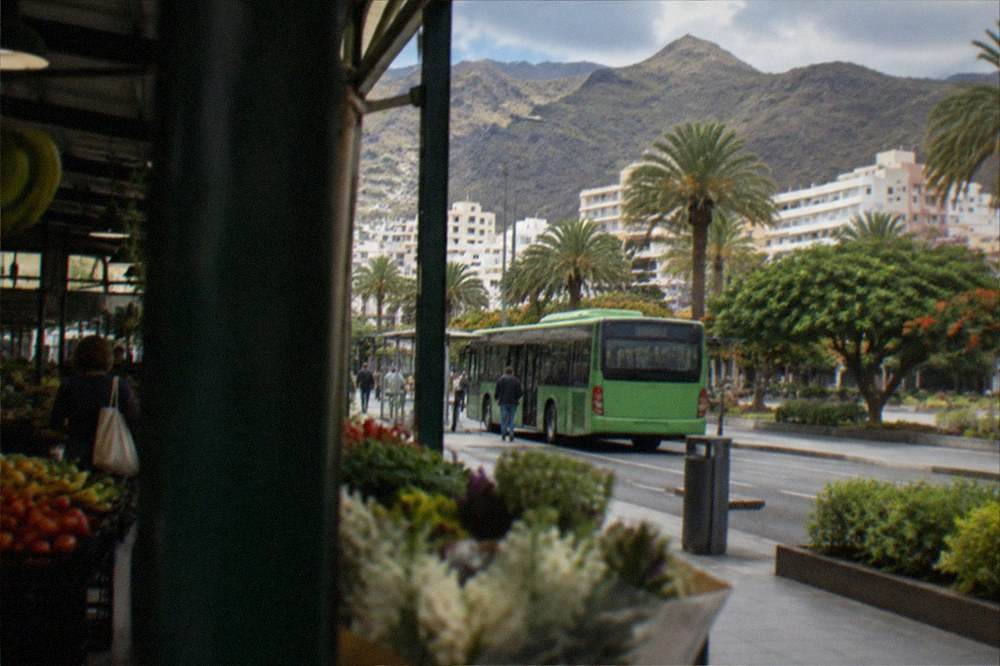
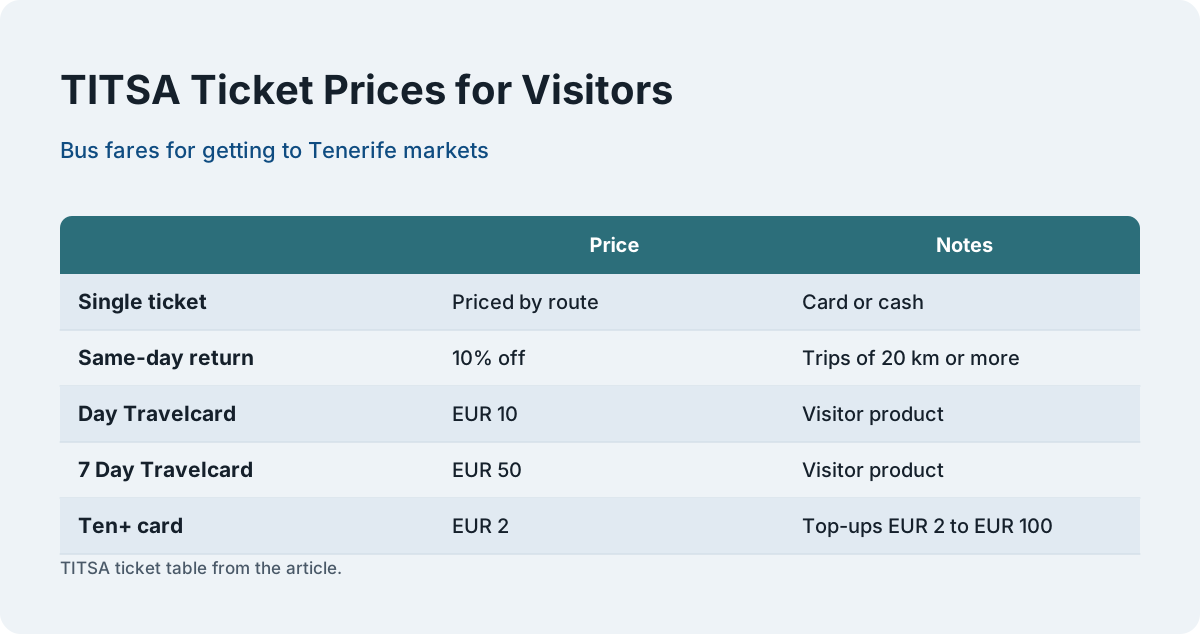
Getting there runs on TITSA buses, and the visitor products are plain: a single ticket priced by route, the EUR 10 day travelcard or the EUR 50 seven-day travelcard, with the Ten+ card itself at EUR 2. The 100% fare subsidy the Canary government operates for 2026 applies to resident passes only, tied to residency in the Canary Islands and a personalised card, so a visitor should simply buy the travelcard that matches the length of stay. The same-day return, at 10% off on trips of 20 km or more, is worth knowing for a market trip that is there and back in one day.
| TITSA ticket | Price | Notes |
|---|---|---|
| Single ticket | Priced by route | Card or cash |
| Same-day return | 10% off | Trips of 20 km or more |
| Day Travelcard | EUR 10 | Visitor product |
| 7 Day Travelcard | EUR 50 | Visitor product |
| Ten+ card | EUR 2 | Top-ups EUR 2 to EUR 100 |
One more thing worth knowing, because it is the kind of detail a first page of search results will not tell you: the resort south has no free walking tour listed on GuruWalk, the platform this site names for its pay-what-you-want walks. All three English-guided free walks carded here are in the north, and a market-and-old-town morning in the south is something you do on your own feet or with a paid guide. The northern walks, by contrast, pair naturally with the markets and old quarters of Puerto de la Cruz and Santa Cruz.
What About the Markets of the North?
The north holds the island's market tradition at its most local: the covered hall in Santa Cruz, the old quarters of Puerto de la Cruz and La Orotava, and the wine country of Tacoronte and El Sauzal around them. The north is also the wetter half of the island, with 520 mm of rain a year at Tenerife North Airport against 132 mm at the southern airport, so a northern market day carries a slightly higher chance of needing the covered option.
The contrast between the two halves is real and measurable, and it shapes the market calendar more than most visitors expect. The north vs south guide on this site covers the choice of base in full; the rainfall split below is AEMET's own annual figure for each airport station.
| Station | Annual rain | Rain days of 1 mm or more |
|---|---|---|
| Tenerife North Airport, 632 m | 520 mm | 64 |
| Tenerife South Airport, 64 m | 132 mm | 15.2 |
| Santa Cruz de Tenerife, 36 m | 226 mm | 29.7 |
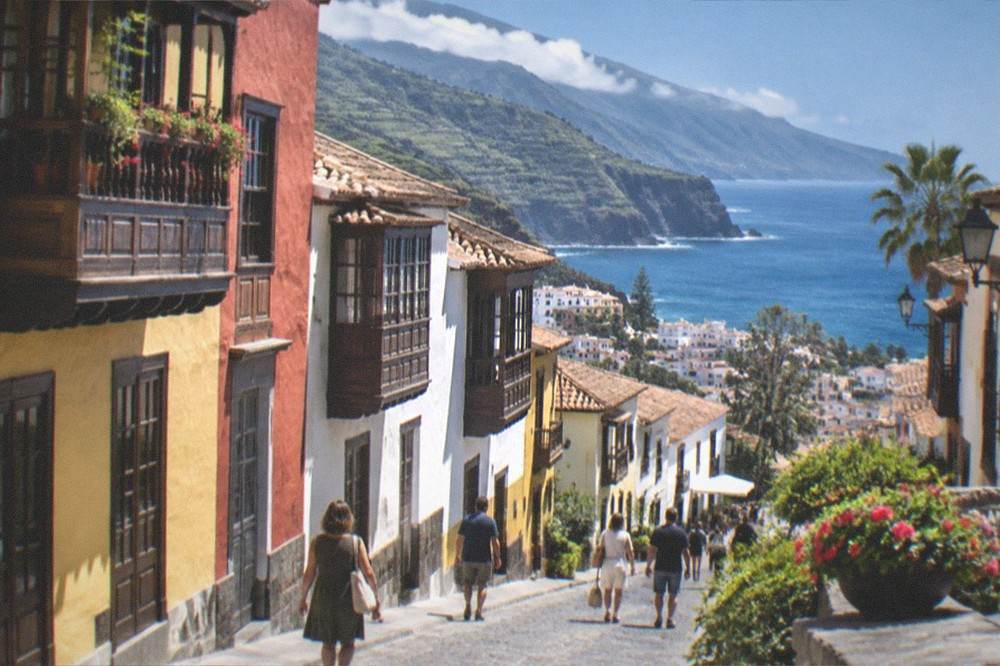
The northern towns reward the market visitor differently. Puerto de la Cruz is the old resort, a town of squares and a covered retail tradition rather than a single market field, and GuruWalk lists a free, pay-what-you-want walking tour of it, an hour and a half long, that covers the historic centre in the company of a local guide. Santa Cruz has the same: a two-hour free walking tour of the historic centre, listed on GuruWalk, which pairs with a visit to the Mercado Nuestra Señora de África better than any bus commentary.
The wine country above the coast, around Tacoronte and El Sauzal, is where the market produce actually grows, and the winery tours carded on this site, including a guided winery visit with wine and cheese tastings, sit in exactly that country. A northern day can run market, old quarter and vineyard without retracing a step, and the north Tenerife road trip itinerary shows the loop.
Which Markets Pair Best with the Rest of a Tenerife Trip?
The pairings that work are a Santa Cruz market morning with the capital's sights, an Adeje old-town morning with an afternoon at Siam Park, open 365 days a year from 10:00, and a market stop on the road through the island's wine country or up towards Teide. No Tenerife market requires a booking, a permit or a ticket of any kind, which makes it the cheapest half-day on the island.
That last point deserves its own sentence in a holiday budget. The Teide summit trail needs a reservation on Tenerife ON and, since 19 January 2026, EUR 15 for visitors on the daytime slots; Masca needs a pre-booked boat-exit ticket; Barranco del Infierno needs advance online booking. A market needs none of it. You walk in, you buy what you want, you leave, and the whole cost is whatever you spend on cheese.
The excursions, when you want them, are carded across this site, and the trio below is the one this page routes to: the Siam Park entry ticket for the Adeje afternoon, the whale and dolphin eco-cruise from Costa Adeje for the sea day, and a first scuba dive with turtles for the water itself. Each card carries its own live price and rating, and the button on each is a plain check of availability, nothing more.
For the wider plan, the itineraries on this site slot a market morning in wherever it fits: 3 days in Tenerife for a short stay, 5 days in Tenerife for the middle length, and 10 days in Tenerife when there is room for the north, the south and a slow morning or two. The theme parks guide covers the paid attractions that a market day leaves time for, and the photography guide on this site notes the light and the colour that make market stalls one of the island's better subjects.
The chart below shows the shape of the island's visitor year, the monthly air arrivals that decide how busy any market square will be when you stand in it: the winter peak, the spring dip, the summer climb.
Common Questions About Markets in Tenerife
what is the best market in tenerife?
No official ranking exists, and this desk does not invent one. The strongest single answer on file is the Mercado Nuestra Señora de África in Santa Cruz, the island's main covered market, for food and atmosphere in one permanent hall. For craft stalls and the resort experience, the markets around Adeje old town and the Arona coast are the ones nearest the southern hotels. "Best" depends on whether you want a food hall or a market square.
what's the biggest market in tenerife?
The Mercado Nuestra Señora de África in Santa Cruz is the main municipal covered market on file, and it is the closest thing the island has to the big covered halls of mainland Spain. No official figure ranks the open-air markets by size, so no claim is made here about which square market is the largest.
which market is best in tenerife?
For produce, cheese and mojo, the covered hall in Santa Cruz. For a morning near the southern resorts, the markets around Adeje old town and the Arona coast, checked locally for the day. For crafts and embroidery, the northern towns hold the older tradition. The honest rule is to match the market to where you are staying rather than crossing the island for one.
what is the main market in tenerife?
The Mercado Nuestra Señora de África in Santa Cruz is the island's main market, the covered hall where the capital shops. It is the one market on this island with a full attraction page on this site, and it is open as a permanent hall rather than a weekly square, which makes it the only market here you can plan a visit to without first confirming a market day.