Mercado De Nuestra Senora De Africa
The Mercado de Nuestra Senora de Africa is Santa Cruz de Tenerife's best-known covered market, a working food hall rather than a tourist attraction, and this page sets out how to reach it, what to expect inside and how to plan a day around it.
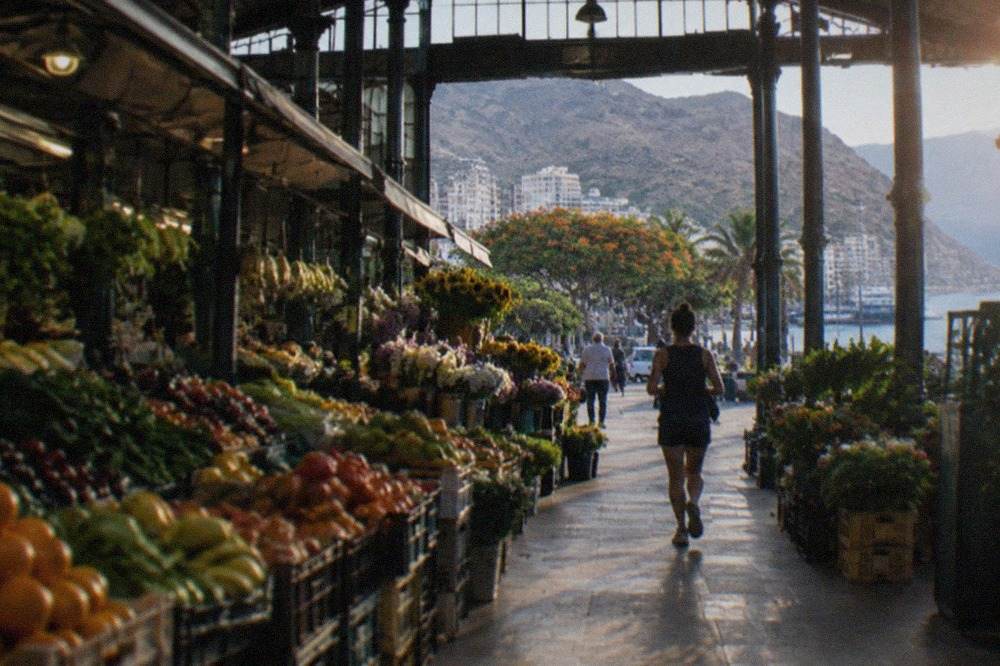
Short answer
The Mercado de Nuestra Senora de Africa is the main covered market of Santa Cruz de Tenerife, reached by TITSA bus or the Metrotenerife tram, and best visited in the morning when the produce and fish stalls are fully stocked.
The Mercado de Nuestra Senora de Africa sits in the centre of Santa Cruz de Tenerife, and it works the way a city market should: it feeds the people who live in the capital, and it happens to be one of the most rewarding places a visitor can walk into. There is no verified fact packet for the market itself on this site, so this page does not print its opening hours, its stall count or its history. What it does instead is give you everything around the visit that is verified: the bus and tram fares, the climate you will be standing in, the food culture the stalls belong to, and the ways to fold the market into a wider day in Santa Cruz. Where a detail about the market itself matters, the honest instruction is to confirm it with the venue before you go.
What Is the Mercado de Nuestra Senora de Africa?
It is the principal covered food market of Santa Cruz de Tenerife, named for the Virgin of Candelaria's title of Our Lady of Africa, and it functions as the capital's working food hall rather than as a tourist attraction, a municipal market of the classic Spanish type where residents do their daily shopping. The building is an enclosed hall of numbered stalls, run as individual concessions, where the city's residents shop for fruit, vegetables, fish, meat, cheese and flowers. Because no verified fact file exists for the venue on this site, no opening hour, stall count or construction date is printed here. Confirm current hours with the venue or the Santa Cruz council before planning a visit around them, and treat any figure you read elsewhere on the internet with the same caution.
The reason the market earns a page on this site is context. Tenerife's food culture is unusually strong for a mass holiday island: papas arrugadas with mojo, fresh Atlantic fish, goats' cheese, gofio and locally grown fruit all converge in a capital-city market hall, and the produce on the stalls is the same produce the island's guachinches and restaurants cook from. A visitor who understands what is on the stalls understands the island's table better than one who only sees the resort menus.
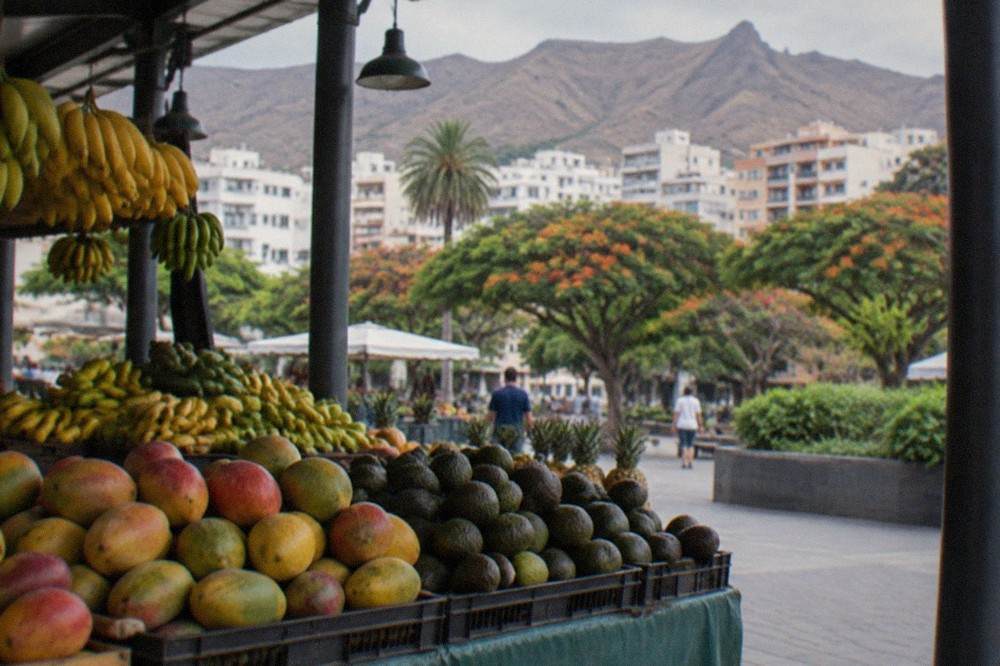
The market also matters for timing. Spanish municipal markets are morning institutions: they are stocked early, they are busiest before midday, and several stalls wind down in the early afternoon. That rhythm is not a verified fact about this specific hall, but it is the general pattern of the institution, and it is the reason every practical itinerary in this page places the market in the first half of the day.
How Do You Get to the Santa Cruz Market in Tenerife?
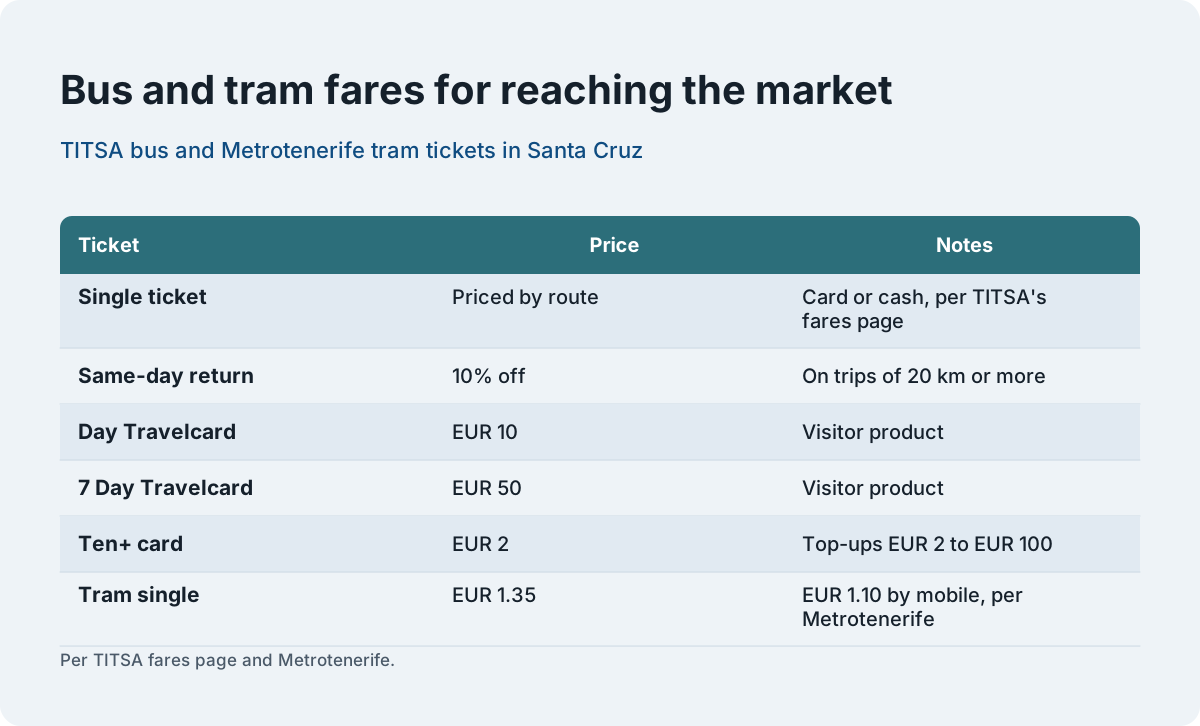
Santa Cruz de Tenerife is served by TITSA buses and the Metrotenerife tram, visitors pay normal fares on both networks, and the market sits in the central area of the capital that these networks serve, so no booking and no special ticket is needed to reach it. There is no free public transport for visitors: the 2026 subsidy of 100% on passes applies to resident passes only, held on a personalised Ten+ card by people resident in the Canary Islands. Visitors buy single tickets priced by route, or one of the travelcards TITSA sells at airport ticket machines.
| Ticket | Price | Notes |
|---|---|---|
| Single ticket | Priced by route | Card or cash, per TITSA's fares page |
| Same-day return | 10% off | On trips of 20 km or more |
| Day Travelcard | EUR 10 | Visitor product |
| 7 Day Travelcard | EUR 50 | Visitor product |
| Ten+ card | EUR 2 | Top-ups EUR 2 to EUR 100 |
| Tram single | EUR 1.35 | EUR 1.10 by mobile, per Metrotenerife |
The tram is a genuinely useful line for the capital and its inland neighbour: it links Santa Cruz with La Laguna, the UNESCO-listed colonial town that is the island's second population centre. Metrotenerife's own fares page is the reference for routes and frequencies, and it is also the page that states who qualifies for the free and discounted passes, which is residents only. The Tenerife tram has a full guide on this site. The tram does not serve either airport, and no airport-transfer copy on this site will tell you otherwise: TITSA buses serve both.

If you are starting from an airport, TITSA's own airport pages list the lines. At Tenerife South, AENA's Tenerife Sur, the lines are 10 to Santa Cruz, 40 to Costa Adeje bus station via Los Cristianos, 711 as the night bus, the 343 express from Puerto de la Cruz to Los Cristianos via both airports, and 415 to El Fraile and San Isidro. At Tenerife North, AENA's Tenerife Norte-Ciudad de La Laguna, the lines are 20 to Santa Cruz via La Laguna, 30 to Puerto de la Cruz, and the 343 express to the south. The full airport picture, including which airport suits which holiday, is in this site's guide to Tenerife South Airport and the comparison of the two.
| Airport | AENA's name | TITSA lines listed by TITSA |
|---|---|---|
| Tenerife South (TFS) | Tenerife Sur | 10, 40, 711, 343, 415 |
| Tenerife North (TFN) | Tenerife Norte-Ciudad de La Laguna | 20, 30, 343 |
Taxis in Tenerife are white and metered from the start of the trip, and a fixed price can be agreed in advance for excursions, which is worth doing for a market-and-back trip from a resort area. What this site will not do is quote a taxi fare or a car-hire day rate: those figures move daily and none can be re-checked at build time. What drives the cost is the pickup point and the season, and the honest comparison is between the bus network above and the car hire decision.
What Will You Find on the Stalls?
The stalls of a Tenerife capital market hold the island's own produce: Canary bananas, tropical fruit, Atlantic fish, goats' cheese, mojo sauces, gofio and flowers, sold by the stallholders who run each concession, and the range is the same one the island's restaurants and guachinches cook from every day. The banana is the island's signature crop and the one product a visitor can be certain of finding in season, because Tenerife grows its own: the banana plantation experiences sold on this site, in Arona and La Orotava, exist because the crop is a genuine island industry rather than an import. The fruit stalls of the Canaries carry mangoes, avocados and papaya alongside the temperate produce, a range the islands' subtropical climate makes possible.
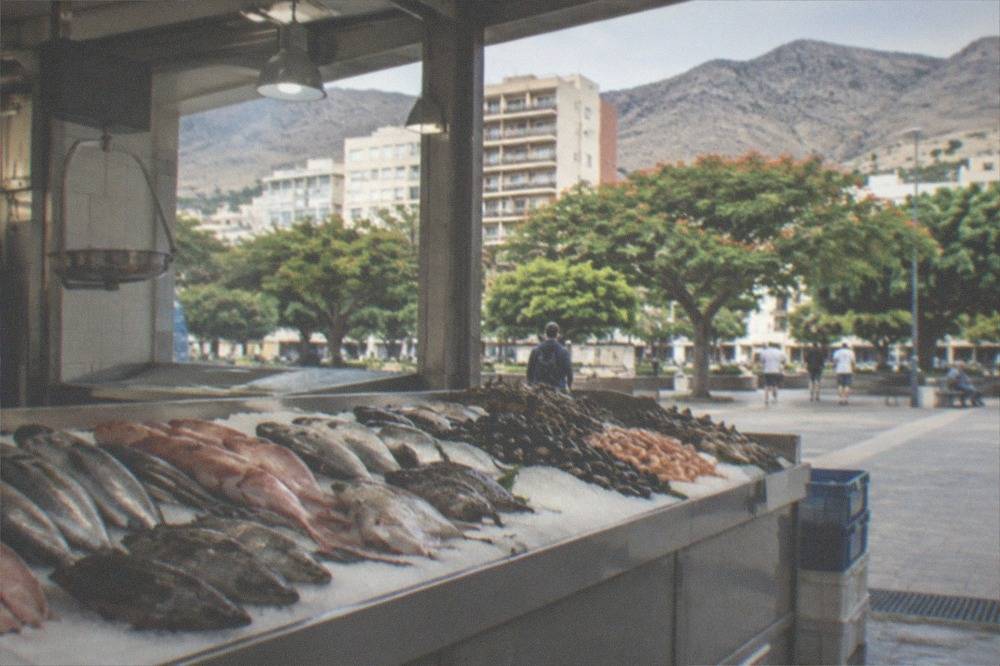
The fish counters are the part visitors from northern Europe tend to remember. The Canaries sit in the Atlantic with a regulated whale-watching zone off the south-west coast and a fishing fleet that supplies the islands' kitchens, and a capital market's fish section reflects that. The rule that governs the boats, Decreto 178/2000, is a conservation measure: no approach within 60 m of whales, at most three boats within 500 m, 4 knots within 500 m, and no swimming within 500 m. It says nothing about fishing, but it is the clearest statement of how seriously the islands regulate their waters.
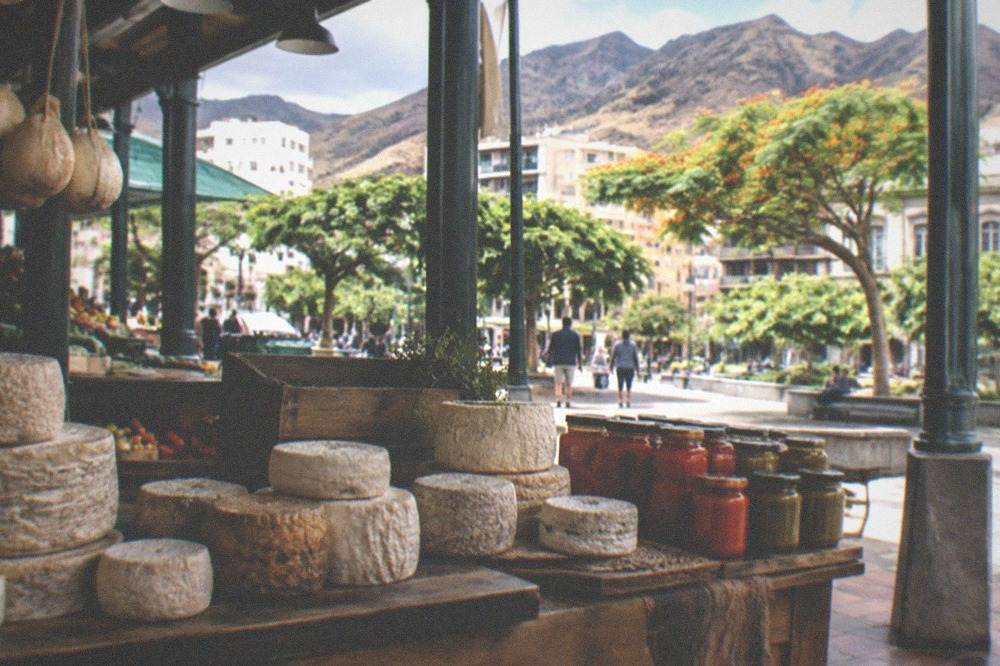
Two products deserve a sentence each before you shop. Mojo, the islands' sauce family, comes in a red version built on pepper and a green version built on coriander, and it is the condiment of the archipelago. Gofio, roasted grain flour, is older than tourism on these islands and turns up in everything from breakfast porridge to desserts. Neither needs a tour to understand, but both explain why the restaurant food of Tenerife tastes different from mainland Spain's, which is the point of walking the stalls before you eat out.
Can Cruise Visitors Reach the Market from the Port?
Cruise passengers dock at the cruise port in Santa Cruz, and the market sits in the central area of the same city, so a market stop is practical on a port day, though no walking time or distance is stated on this site because none has been measured from a verified source. This site names no berth, quay or terminal at the port, and it prints no minutes-on-foot figure, for the plain reason that no official page in the research file records one. What can be said is that Santa Cruz is a compact capital, the market is central, and the port is in the same municipality, so the geometry is on the visitor's side.
The decision a cruise visitor actually faces is how to spend a single day, and the market is a morning component rather than a whole plan. This site carries a dedicated itinerary for exactly that situation, one day in Tenerife from the cruise port, which sequences the capital against the island's headline sights. The shore excursion below is the other half of that decision: a small-group tour from Santa Cruz that pairs Teide National Park with Icod and Garachico, the classic north-loop day.
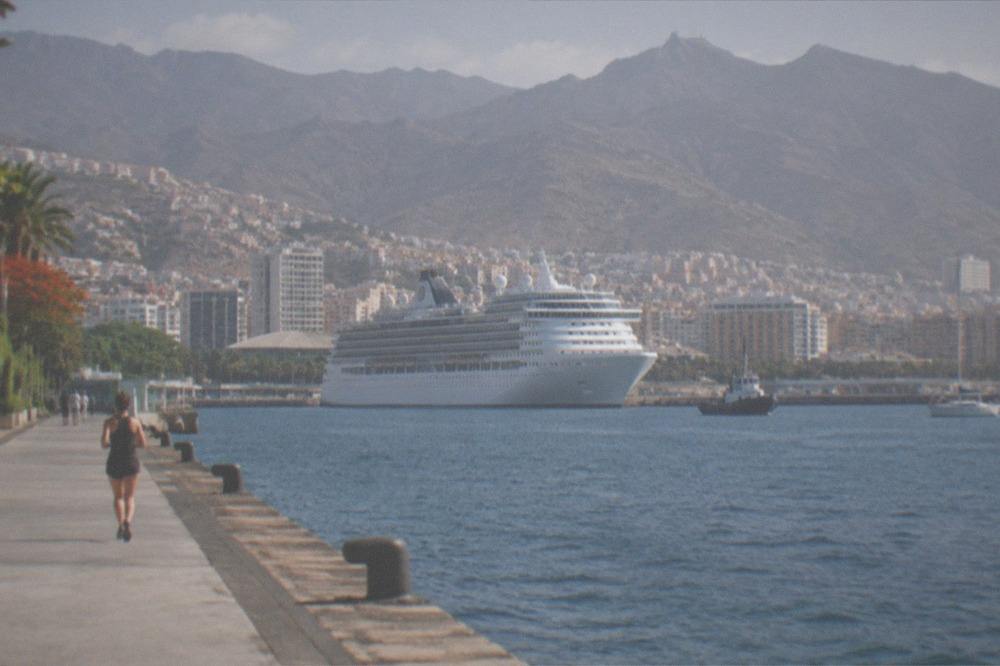
For visitors who prefer to stay in the capital, the alternatives are real. The bike and e-bike highlights tour of Santa Cruz starts at the cruise terminal and covers the city's landmarks in two and a half hours, which pairs naturally with a market morning. The free walking tour of the historic centre of Santa Cruz, run through GuruWalk, is free to join and tip-based, and a free walk cannot be described honestly without saying whose it is: it is a GuruWalk walk, and its button on this site reads "See this free tour on GuruWalk". The rest of the planning pages sit on Tenerife Travel Guide.
How Does the Market Fit Into a Day in Santa Cruz?
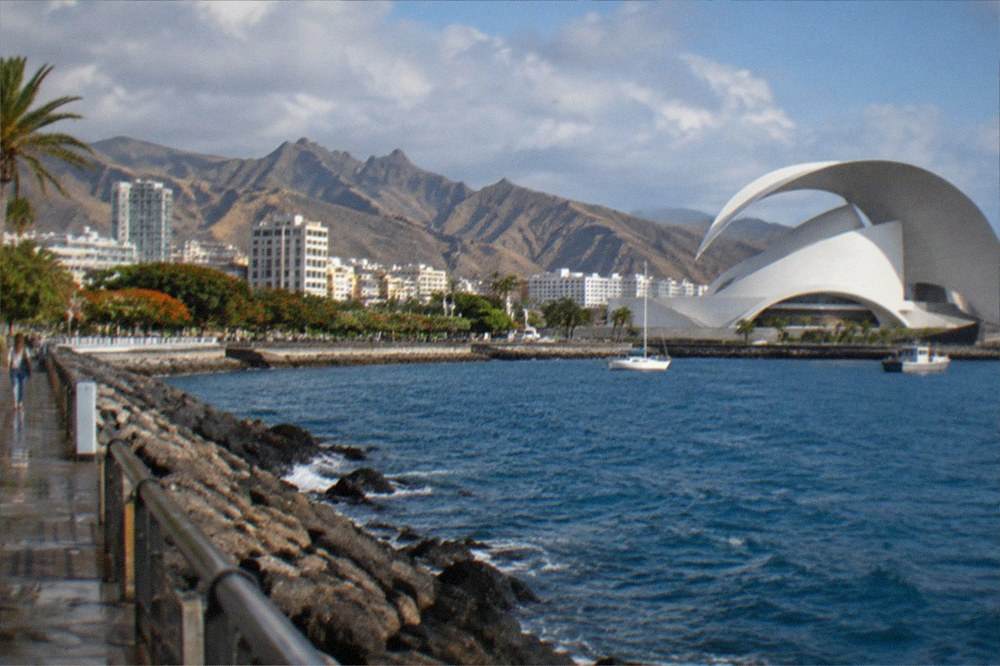
A market morning slots into a Santa Cruz day alongside the Auditorio de Tenerife, the city's seafront, the Carnival heritage and the tram link to La Laguna, all of which sit in or beside the capital, and the whole day can be built on bus and tram fares alone. The Auditorio de Tenerife is the city's signature building, designed by Santiago Calatrava and inaugurated in 2003, a 23,000 m2 concert hall in white trencadis that stands on the waterfront. It is the single most photographed structure in the capital, and the Auditorio de Tenerife has its own page on this site with the full detail.
Santa Cruz is also a Carnival city, and the Carnival is not a minor local affair: the official programme for 2027 runs from the opening on 22 January to the second Daytime Carnival on 27 February 2027, with the Queen's Election Gala on 17 February and the theme "Roma: El imperio del Carnaval". If your visit falls anywhere near those weeks, the market and the Carnival belong in the same sentence, and the Santa Cruz Carnival guide carries the verified programme. Outside Carnival season the city is calmer, but the market's rhythm does not change.
Beyond the capital, the tram puts La Laguna within easy reach, and La Laguna is the other half of the city's story: UNESCO describes it as the first non-fortified Spanish colonial town, whose layout provided the model for many colonial towns in the Americas. A morning in the market, a tram ride, an afternoon in La Laguna's streets is a day that costs almost nothing beyond fares and food, and it is a day no resort-based visitor regrets. The free walking tours page lists the GuruWalk walks in each of the island's towns if you want a guide for either half.
What Is the Weather Like in Santa Cruz?
Santa Cruz is warm year-round: AEMET's 1981-2010 normals for the city show mean daily maxima from 21 Celsius in January to 29 in August, with July recording zero rain days and December the wettest month at 43 mm. The capital sits at 36 m above sea level on the leeward side of the island, which is why its climate is markedly drier than the north coast: AEMET's station at Tenerife North Airport, at 632 m, records 520 mm of rain across the year against Santa Cruz's 226 mm on 29.7 days with 1 mm or more.
| Month | Mean daily max C | Mean daily min C | Rain mm | Rain days 1 mm+ | Sunshine hours |
|---|---|---|---|---|---|
| Jan | 21 | 15.4 | 32 | 4.2 | 178 |
| Feb | 21.2 | 15.3 | 35 | 3.8 | 186 |
| Mar | 22.1 | 15.9 | 38 | 3.8 | 221 |
| Apr | 22.7 | 16.5 | 12 | 2.4 | 237 |
| May | 24.1 | 17.8 | 4 | 0.9 | 282 |
| Jun | 26.2 | 19.5 | 1 | 0.2 | 306 |
| Jul | 28.7 | 21.2 | 0 | 0 | 337 |
| Aug | 29 | 21.9 | 2 | 0.3 | 319 |
| Sep | 28.1 | 21.7 | 7 | 0.9 | 253 |
| Oct | 26.3 | 20.3 | 19 | 3.1 | 222 |
| Nov | 24.1 | 18.4 | 34 | 4.7 | 178 |
| Dec | 22.1 | 16.6 | 43 | 5.4 | 168 |
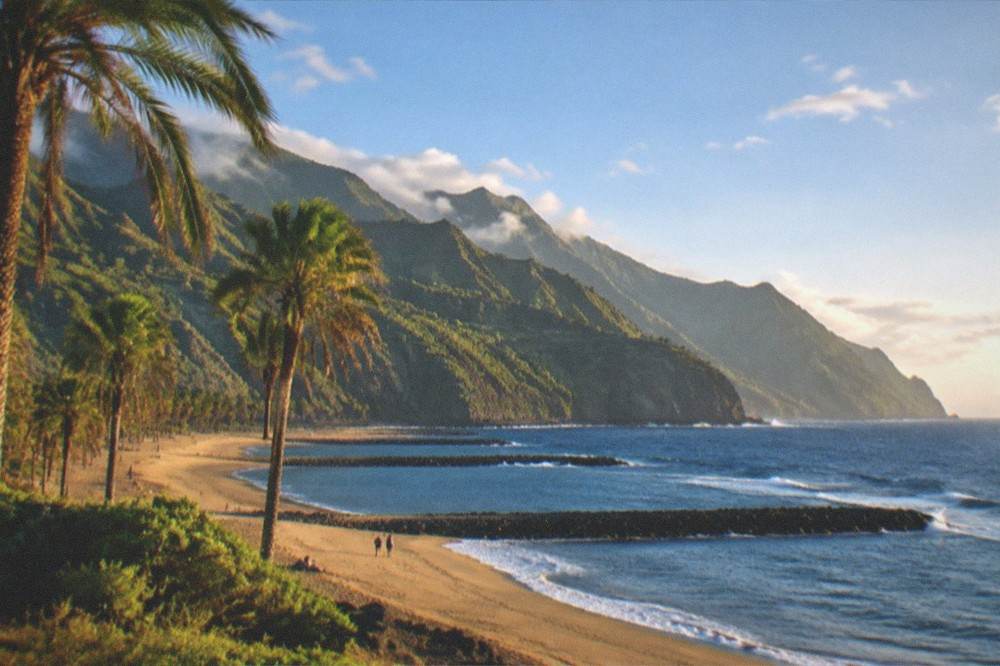
For the market visit itself the numbers mean one thing: there is no month in which a morning in a covered hall in Santa Cruz is uncomfortable, and the hottest afternoons, July and August, are the ones where an indoor stop and a sea breeze at the Playa de las Teresitas beach at San Andres make a better pairing than a midday walk. Las Teresitas is the capital's own golden-sand beach, with palms and breakwaters that calm the water, in the tourist board's own description.
The sea itself is swimmable all year. NOAA's 1991-2020 sea-surface normals off the south coast of Tenerife run from a low of 19.1 Celsius in March to 23.7 in September and October, and those two datasets use different periods, so never let a page tell you one period covers both the air and the sea. The practical reading is simple: the water is at its warmest at the end of summer, and it never drops below a level most British visitors would call cold rather than unbearable.
What Else Can You Combine with a Market Trip?
The market pairs naturally with the island's food and farm experiences, the walking tours of the historic towns, and the hikes of the Anaga mountains, all of which start from or near the capital, so a visitor basing themselves in Santa Cruz can build several very different days around one market habit. The food, wine and farm category on this site covers winery tours in Tacoronte, the banana plantation experience in Arona and a full-day gastronomy tour, and every one of them is a way to meet the same produce the stalls sell in the place it grows. The Tacoronte winery tour, four wines and four cheeses in two hours, is the closest of them to the capital's wine country.
The Anaga mountains are the other half of a Santa Cruz base. The rural park sits on the island's north-eastern shoulder, and its laurel forest is the landscape the Canaries conserve most fiercely: the El Pijaral trail, the "Enchanted Forest", needs a Tenerife ON reservation, released Mondays at 07:00 Canary time and bookable at most 14 days ahead, and company-run tours are not permitted there. The Cabildo's own permit-free alternatives are the Bosque de los Enigmas trail and the Pista de Las Hiedras, so a walker without a reservation still has options.
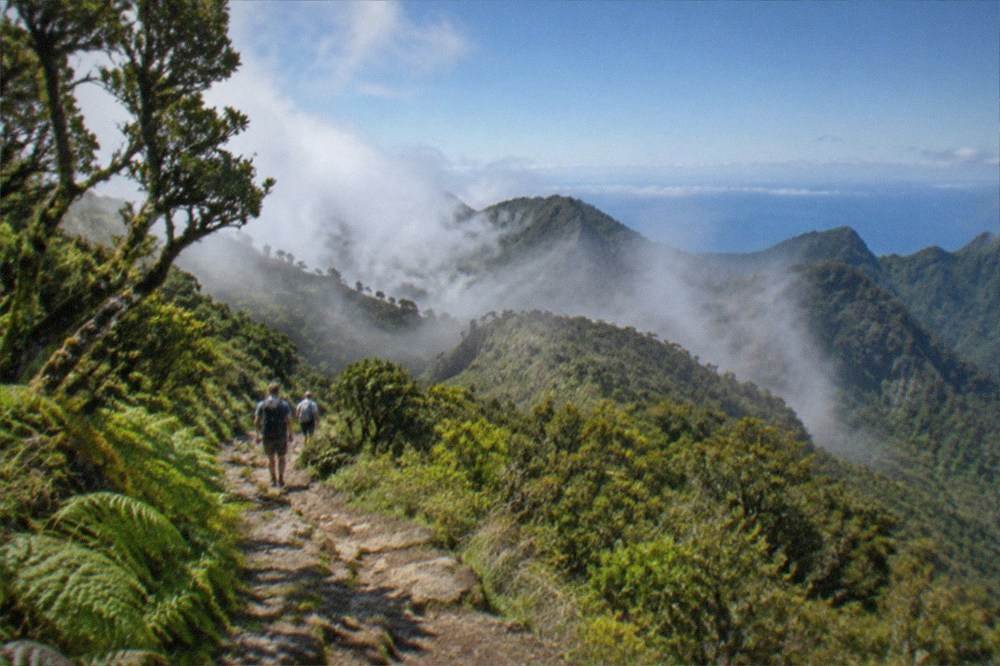
The full-day Anaga hiking tour above is the guided route into that landscape from a southern pickup, and the Anaga Rural Park page carries the trail-by-trail detail. For a gentler companion to the market, the botanical garden in Puerto de la Cruz and the Palmetum in Santa Cruz are the island's two great plant collections, and the Palmetum Santa Cruz is close enough to the market to share a day. The Jardin Botanico sits in the north, beside Puerto de la Cruz, and belongs to a different day's plan.
Common Questions About the Mercado de Nuestra Senora de Africa
What are the Mercado de Nuestra Senora de Africa opening hours?
No verified fact file for the market exists on this site, so no opening hours are printed here. Spanish municipal markets generally trade in the morning and early afternoon, but confirm the current hours with the venue or the Santa Cruz council before building a day around them.
Is the Santa Cruz market worth visiting for tourists?
Yes, as a working food market rather than a sight. The stalls hold the island's own produce, from Canary bananas and tropical fruit to Atlantic fish, goats' cheese, mojo and gofio, and a walk through them explains the island's restaurant food better than any resort menu does. Go in the morning, when municipal markets are at their fullest.
How do I get to the market from Tenerife South Airport?
TITSA line 10 runs from Tenerife South Airport to Santa Cruz, and the 343 express also serves the capital. Visitors pay normal fares: single tickets priced by route, a EUR 10 day travelcard or a EUR 50 seven-day travelcard. The free public transport subsidy applies to resident passes only, not to visitors.
Can I visit the market on a cruise day in Santa Cruz?
Yes. Cruise ships dock at the cruise port in Santa Cruz and the market sits in the central area of the same city. This site prints no walking time from the port because no verified source records one, but the market is a practical morning stop before an afternoon tour or a walk along the seafront.
Do I need to book anything to visit the market?
No booking is needed for the market itself. Bookings matter elsewhere on the island: the Teide summit trail, the Montaña Blanca trail, the Masca descent, El Pijaral in Anaga and Barranco del Infierno all require advance reservations, and none of them is a market concern.
What food should I look for at a Tenerife market?
Look for papas arrugadas with red and green mojo, fresh Atlantic fish, Canary goats' cheese, gofio, and the island's own bananas and tropical fruit. These are the staples of the Canarian table, and buying them where residents buy them is the cheapest food education on the island.