The Santa Cruz to La Laguna Tram
The tram is the one railway Tenerife has, and it exists almost entirely for the island's two biggest cities. This guide sets out what Metrotenerife's own fares page publishes, what visitors actually pay, and how the line fits into a holiday that is otherwise built around buses and cars.
Short answer
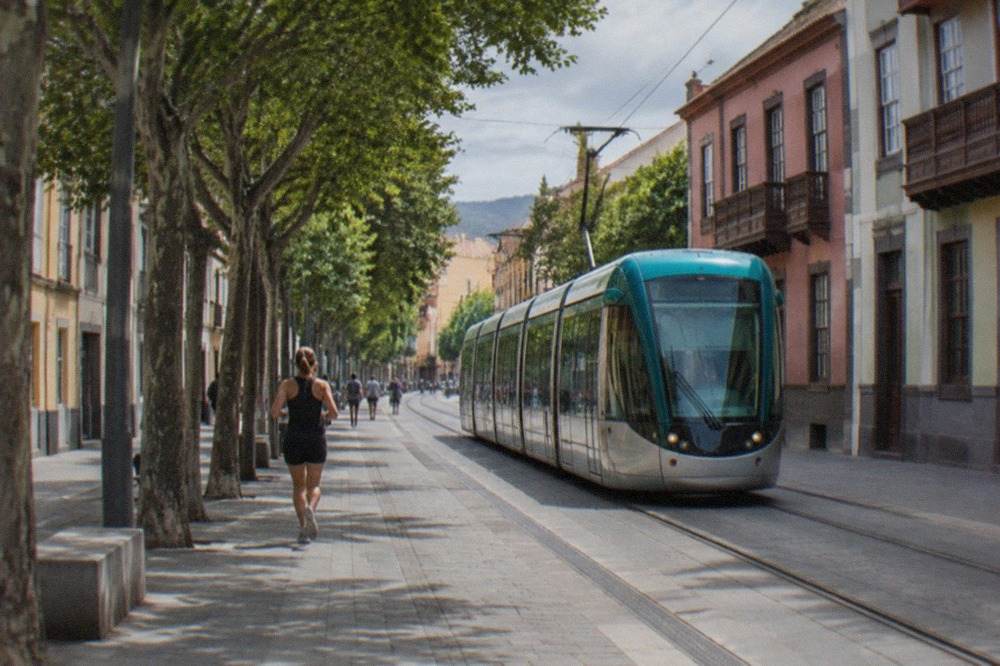
The Tenerife tram links Santa Cruz de Tenerife and La Laguna, the island's two largest cities. A single fare is EUR 1.35 on a transit pass or EUR 1.10 by mobile, per Metrotenerife's fares page. The 2026 free-transport subsidy is for resident passes only, visitors do not qualify, and no tram serves either airport: TITSA buses do.
Tenerife has exactly one railway, and it is not a tourist train. Metrotenerife, the island's tram operator, runs the line that gives this page its title, and its own fares page is the source for every ticket figure quoted below. The two cities it serves are the two biggest on the island: Santa Cruz de Tenerife, home to 211,957 people at the start of 2025, and La Laguna, home to 161,108, according to the INE municipal register. Between them they hold more than a third of Tenerife's population of about 960,000.
That concentration is the reason the line exists at all. Most holiday visitors stay in the south, in Arona and Adeje, and never ride it, but anyone based in Santa Cruz de Tenerife or La Laguna, or arriving on a cruise at the island's capital, will find it the simplest piece of public transport on the island to use. This editorial desk has assembled what the official pages state: fares, ticket types, who qualifies for the 2026 subsidy, and what the tram can and cannot do for a visitor's plans.
What Is the Tenerife Tram and Where Does It Run?
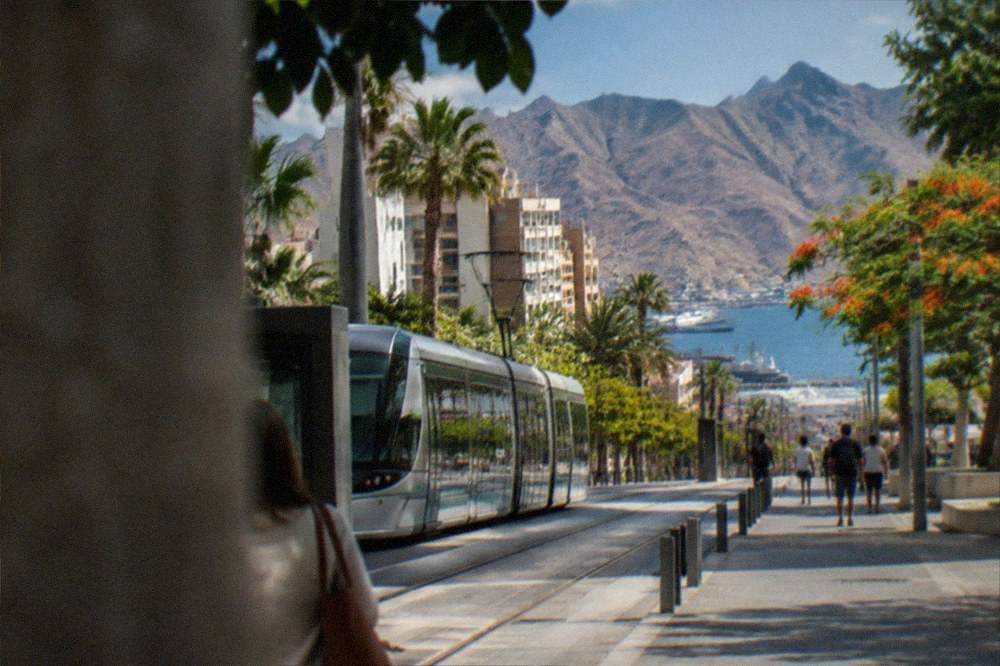
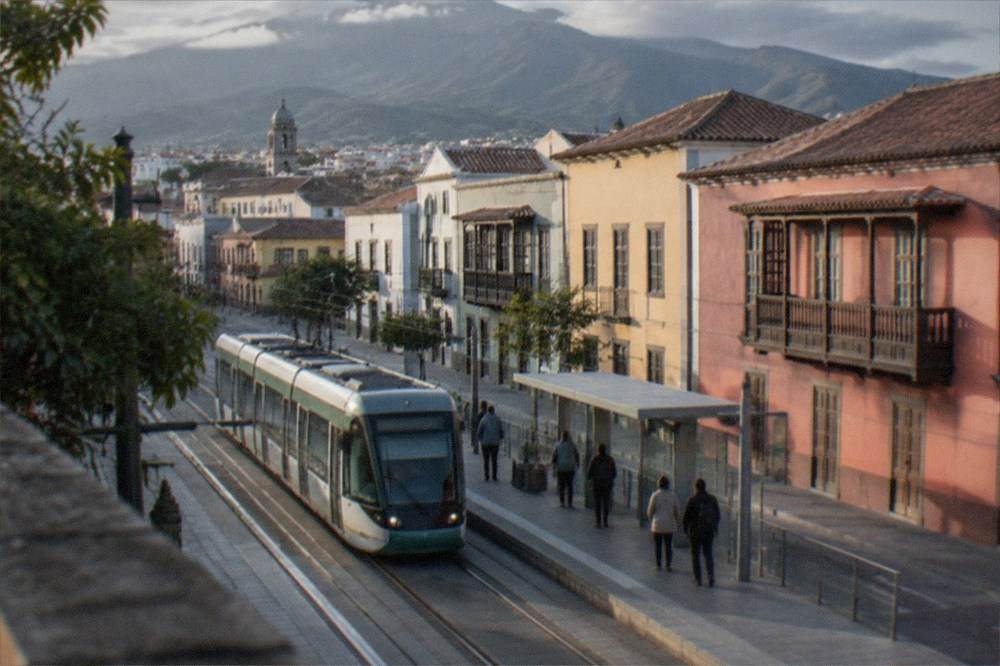
The tram is Tenerife's only railway, an urban light-rail line operated by Metrotenerife that connects the island's capital, Santa Cruz de Tenerife, with La Laguna, the second-largest city, and it exists because those two cities together hold close to 400,000 residents. It is a commuter and city-to-city service, not a scenic tourist line, and its fares page is the authoritative source for every ticket it sells.
Metrotenerife publishes its fares and ticket types on its own tickets page, and that page is where the figures in this guide come from. The operator's network exists to move people between the capital and the historic city uphill from it, a corridor that also carries university students and daily commuters. For a visitor, the practical effect is that the two cities behave, for transport purposes, like one conurbation: you can spend a morning in one and an afternoon in the other without a car.
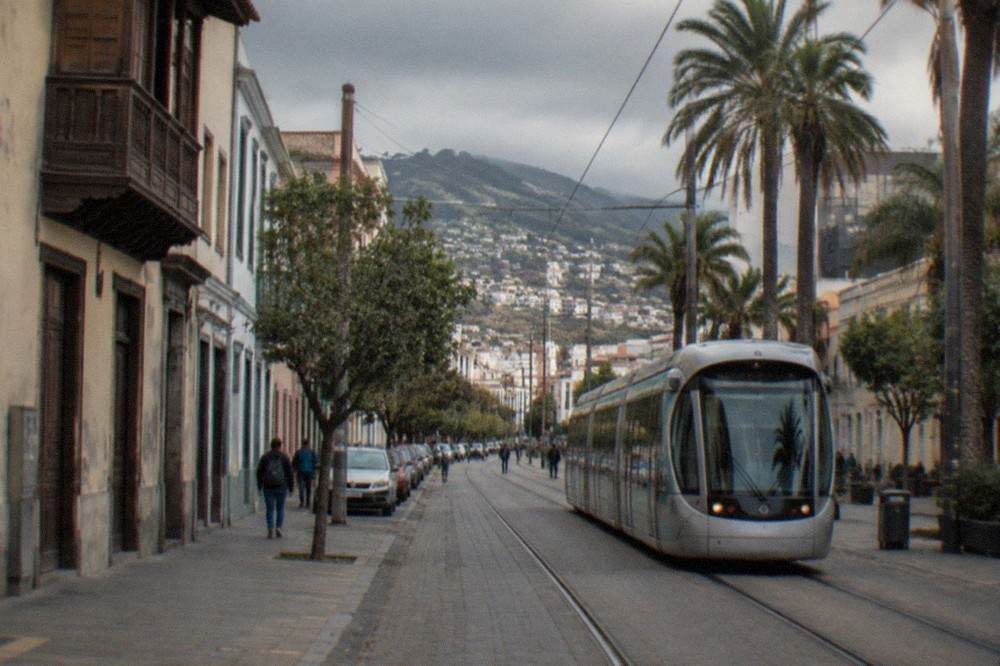
The two termini could hardly be more different in character. Santa Cruz is the working capital, with the Auditorio de Tenerife, the Mercado Nuestra Señora de África and the Palmetum Santa Cruz among its sights. La Laguna is a UNESCO World Heritage property under criteria (ii) and (iv), described by UNESCO as "the first non-fortified Spanish colonial town, and its layout provided the model for many colonial towns in the Americas". A day split between the two is one of the most rewarding car-free days the island offers.
What the tram does not do matters just as much. It does not serve the south coast resorts, it does not climb into the mountains, and it does not connect to either airport, a point covered in full further down. Visitors staying in Costa Adeje or Los Cristianos will use TITSA buses for everything and may never see a tram platform.
How Much Does the Tram Cost and Which Ticket Should You Buy?
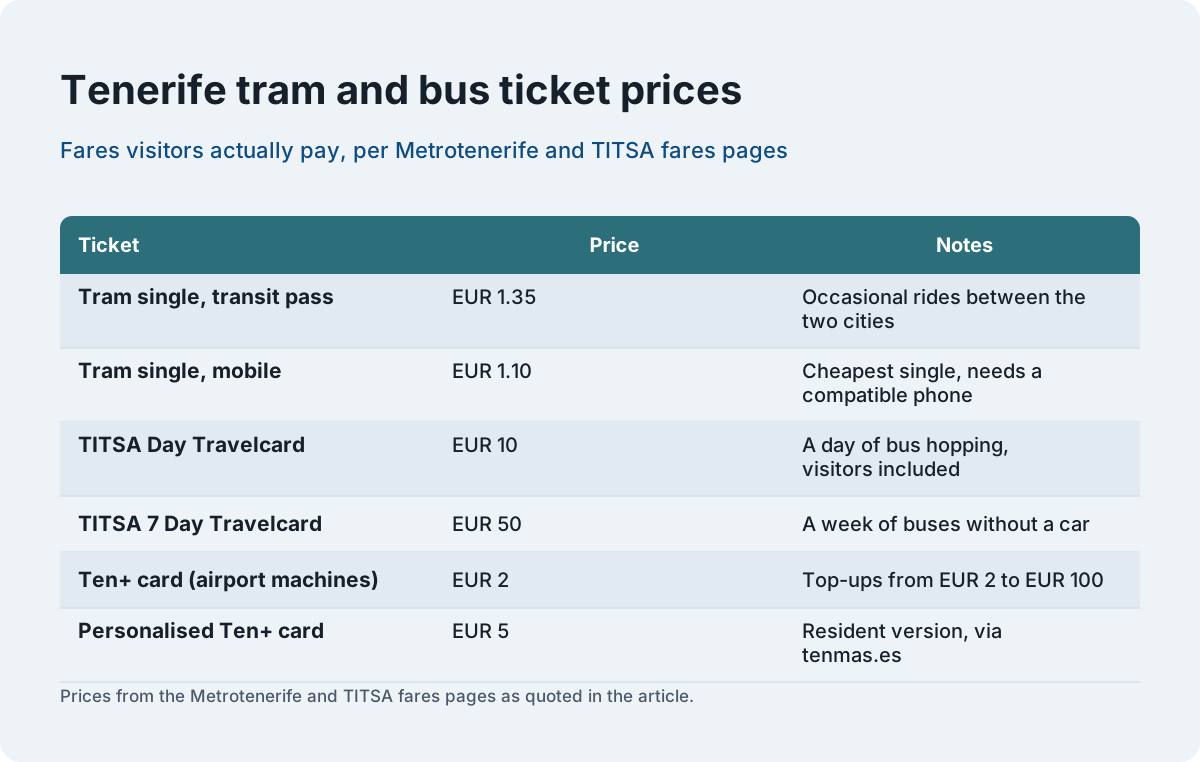
A single tram fare is EUR 1.35 paid on a transit pass, or EUR 1.10 paid by mobile, per Metrotenerife's fares page. Visitors have no free option: the 2026 subsidy applies only to resident passes, so a short stay is paid in singles or through a rechargeable card, and the Ten+ card that TITSA sells at airport machines costs EUR 2 with top-ups from EUR 2 to EUR 100.
The fare table is short because the product range is short. Here is what the official pages state, side by side:
| Ticket | Price | Who it suits | Source |
|---|---|---|---|
| Tram single, transit pass | EUR 1.35 | Occasional rides between the two cities | Metrotenerife fares page |
| Tram single, mobile | EUR 1.10 | Visitors with a compatible phone, cheapest single | Metrotenerife fares page |
| TITSA single bus ticket | Priced by route, card or cash | Bus journeys anywhere on the island | TITSA fares page |
| TITSA Day Travelcard | EUR 10 | A day of bus hopping, visitors included | TITSA fares page |
| TITSA 7 Day Travelcard | EUR 50 | A week of buses without a car | TITSA fares page |
| Ten+ card | EUR 2, top-ups EUR 2 to EUR 100 | The rechargeable card, sold at airport ticket machines | TITSA fares page |
Two practical notes follow from the official small print. First, the same-day return discount on TITSA, 10% off on trips of 20 km or more, is a bus product, not a tram one. Second, the personalised Ten+ card that unlocks subsidised resident passes is a different product from the EUR 2 rechargeable card sold at airport machines; the resident version requires residency documentation and costs EUR 5 via tenmas.es. A visitor buying the standard card at the airport is buying the paid product, which is exactly what the TITSA page intends.
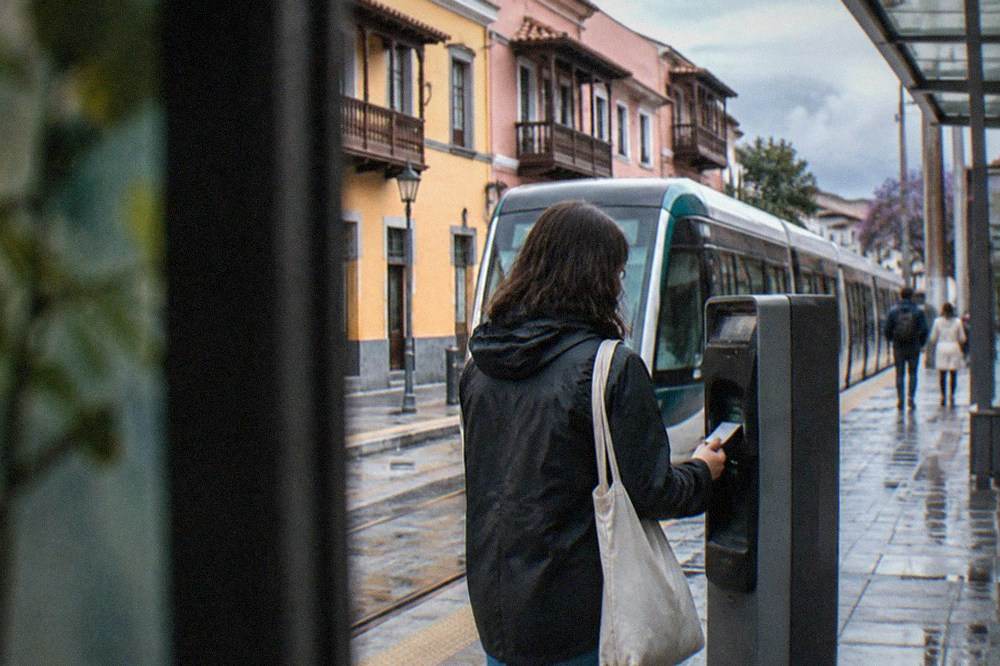
For a cruise passenger or a city-based visitor, the arithmetic is simple: one or two tram rides a day cost less than any alternative, and the mobile fare at EUR 1.10 is the cheapest single on the island's rail network. For anyone planning wider exploration, the bus travelcards do the heavy lifting, and the tram fares sit beside them rather than instead of them.
If your day in the capital is a shore day rather than a stay, a guided excursion can cover far more ground than the tram alone, with transport and timings handled for you.
Is Public Transport Really Free in Tenerife?
No, not for visitors. The Canary government's 100% subsidy, in force since 1 January 2026 under Real Decreto-ley 17/2025, applies to resident passes and multi-trip tickets only: the monthly pass requires residency in the Canary Islands, the youth pass requires being under 30 and resident, and the child card requires residency in Tenerife. Visitors pay every fare on this page in full.
The subsidy is real, generous and frequently misdescribed in travel content. The Canary government announced on 27 February 2026 that it had presented the documentation to guarantee the 100% bonus on public transport for the whole of 2026, and on 15 June 2026 the State committed to the overdue payments and to continuing the measure. Every one of those subsidised products, however, is tied to a personalised card that proves residency. Metrotenerife's own fares page states the conditions in plain terms, and it also lists the lines excluded from resident passes: the Teide and Teno lines.
| Pass type | Who qualifies | Visitors eligible? |
|---|---|---|
| Monthly pass, resident in the Canary Islands | Canary Islands residents, personalised Ten+ card | No |
| Youth pass | Under 30 and resident | No |
| Child card | Under 10 and resident in Tenerife | No |
| Tram single, transit pass | Anyone | Yes, paid at EUR 1.35 |
| Tram single, mobile | Anyone | Yes, paid at EUR 1.10 |
| Day Travelcard | Anyone | Yes, paid at EUR 10 |
| 7 Day Travelcard | Anyone | Yes, paid at EUR 50 |
The honest summary for a holiday planner: nothing on this page is free for you, and any page that says otherwise is describing the residents' scheme. What visitors get instead is a cheap, frequent service in the northeast and an island-wide bus network whose travelcards are priced in round euros and sold where you land.
Does the Tram Go to Either Tenerife Airport?
No. Metrotenerife's fares page does not state any tram service to either airport, and TITSA's own airport pages list the bus lines that do the job: lines 10, 40, 711, 343 and 415 serve Tenerife South, and lines 20, 30 and 343 serve Tenerife North. The two airports are AENA's Tenerife Sur and Tenerife Norte-Ciudad de La Laguna, and both are bus territory.
The airport question is where tram advice most often goes wrong, so it is worth being blunt. No tram line serves either airport, and airport-transfer planning should name buses, taxis or a hire car, never the tram. TITSA, the island's bus operator, publishes the lines on its own airport pages, and those are the only lines this site names:
| Airport | AENA's name | TITSA lines serving it | Key destinations |
|---|---|---|---|
| Tenerife South (TFS) | Tenerife Sur | 10, 40, 711, 343, 415 | Santa Cruz, Costa Adeje, Los Cristianos, Puerto de la Cruz, El Fraile |
| Tenerife North (TFN) | Tenerife Norte-Ciudad de La Laguna | 20, 30, 343 | Santa Cruz via La Laguna, Puerto de la Cruz, express to the south |
Line 343 is the useful one for a tram-connected trip: it is the express that links Puerto de la Cruz and Los Cristianos via both airports. A visitor landing at Tenerife North can reach Santa Cruz or La Laguna on line 20 and pick up the tram there. A visitor landing at Tenerife South, where most holiday flights arrive, is heading for resorts the tram does not touch, and the bus lines 40 and 343 are the practical answer. Everything else covered here is indexed on Tenerife Travel Guide.
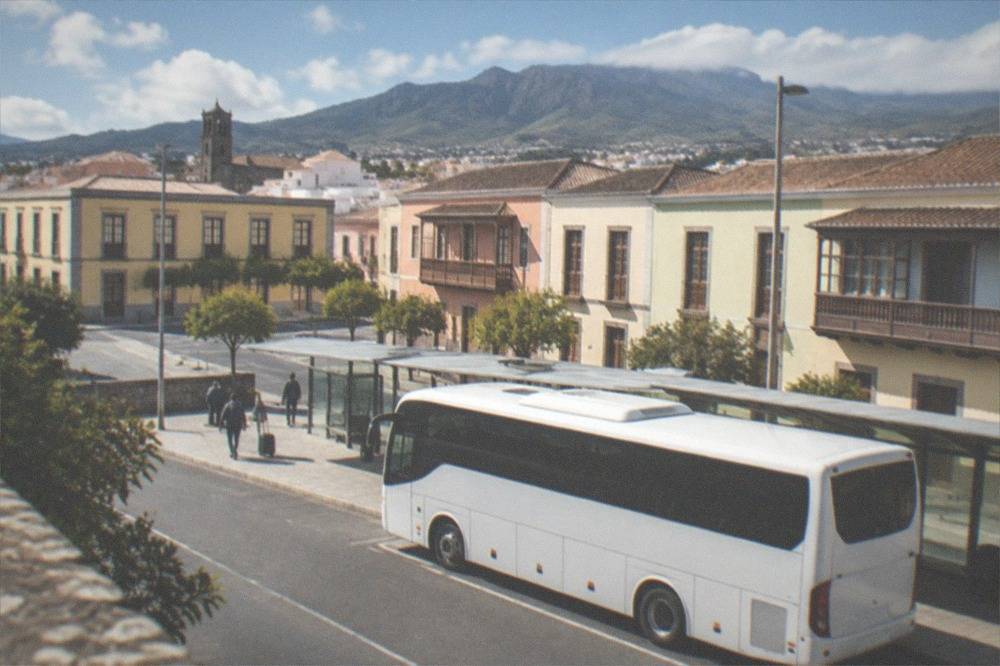
Taxis fill the gaps. The tourist board describes the island's taxis as white and metered from the start of the trip, with a fixed price agreeable in advance for excursions and adapted eurotaxis available. For a family with luggage at midnight, that is often the sensible call; the meter, not a published tariff, is what decides the fare, and this site does not quote taxi rates.
What Should You See at Each End of the Line?
Santa Cruz rewards a half day around its waterfront and market, with the Auditorio de Tenerife, the Palmetum and the Mercado Nuestra Señora de África as the headline sights, while La Laguna is a UNESCO-listed colonial town whose street plan shaped cities across the Americas, best explored slowly on foot with its churches, patios and student quarter. The tram turns the pair into one easy day.
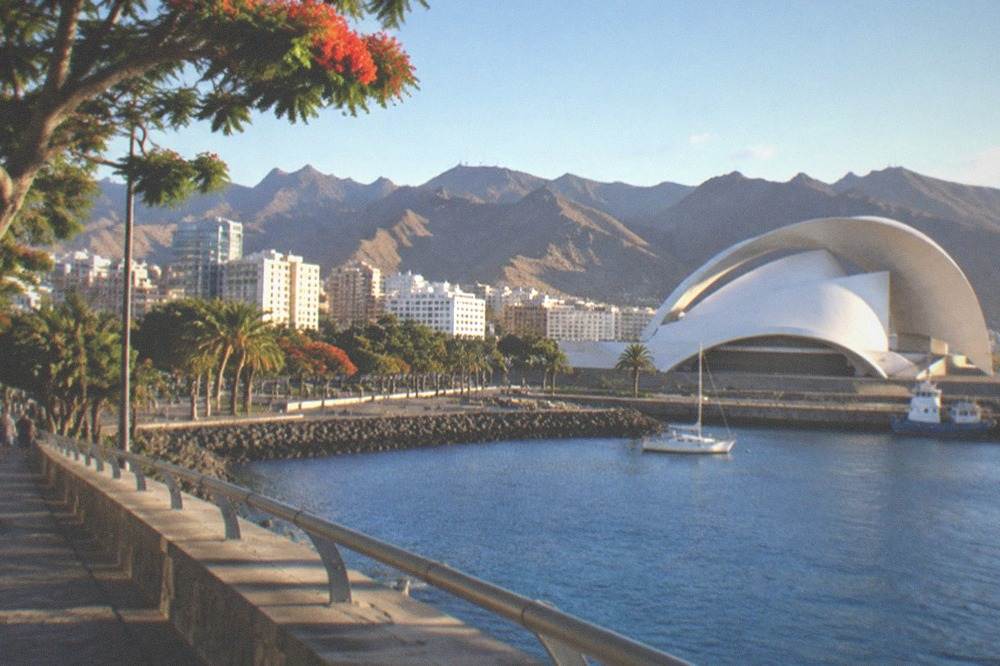
In Santa Cruz, the official sights cluster. The Auditorio de Tenerife, designed by Santiago Calatrava and inaugurated in 2003, is the white landmark of the waterfront, 23,000 square metres under a trencadís skin. The Palmetum Santa Cruz is a botanical hillside built over a former landfill, and the Mercado Nuestra Señora de África is the market where the city shops. If your visit lands in late winter, check the dates of the Santa Cruz Carnival, whose official programme puts the 2027 Queen's Election Gala on 17 February and the two Daytime Carnival parades on 21 and 27 February.
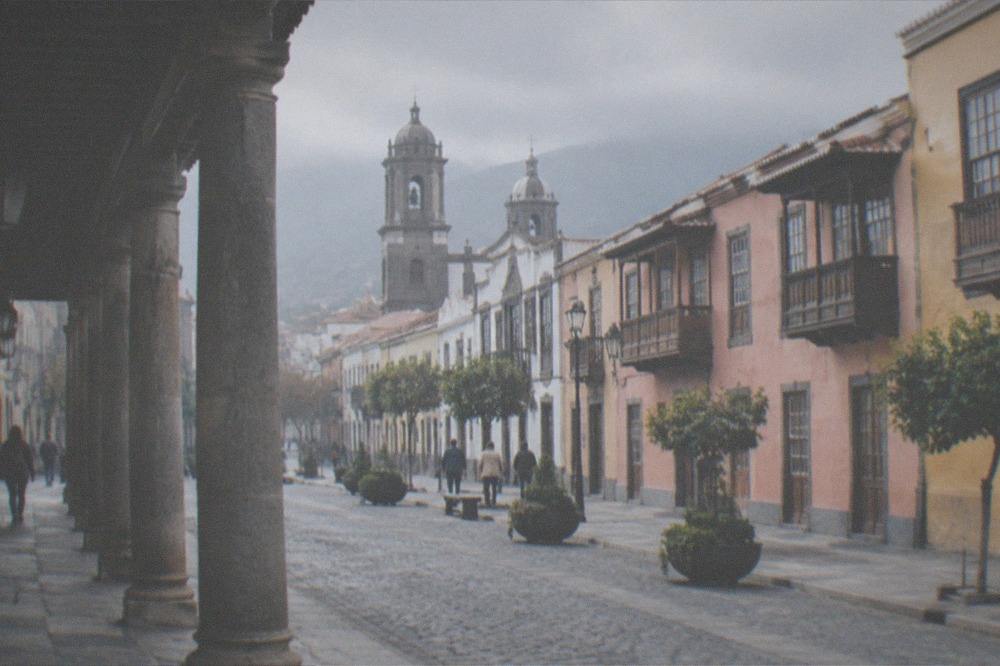
La Laguna is the quieter half and the more historic one. UNESCO inscribed it under criteria (ii) and (iv) for its town plan, calling it "the first non-fortified Spanish colonial town, and its layout provided the model for many colonial towns in the Americas". The streets are low, colonnaded and made for wandering. A free, tip-based walking tour is a good way to cover it: GuruWalk lists a free tour of the historic centre of Santa Cruz de Tenerife, free to join and pay what you want, and this site's free walking tours page collects the options at both ends of the line.
Beyond the two cities, the tram's corridor is a sensible base for the northeast. The north Tenerife road trip picks up La Laguna, La Orotava, Icod de los Vinos and Garachico, and the question of Tenerife north vs south is worth settling before you book, because the tram only helps you if the north is where you are staying.
When Is the Best Time of Year to Ride and Explore?
The northeast is warm year-round but not the desert the south can feel like: AEMET's normals show Santa Cruz averaging 25 degrees in July and 18.2 in January, while the Tenerife North airport station at 632 metres averages 13.1 in January and 20.2 in July, with far more rain. Summer is the driest, warmest and busiest time to use the cities; winter is mild at the coast and wet inland.
The two stations tell the story of the island's northeast in one table. AEMET's 1981-2010 normals:
| Month | Santa Cruz mean daily max | Santa Cruz rain, mm | TFN station mean daily max | TFN station rain, mm |
|---|---|---|---|---|
| January | 21.0 | 32 | 16.0 | 80 |
| April | 22.7 | 12 | 18.5 | 39 |
| July | 28.7 | 0 | 24.7 | 6 |
| October | 26.3 | 19 | 22.5 | 47 |
La Laguna sits at altitude in the same damp corner of the island as the Tenerife North station, so the TFN column is the better guide to its weather, while the Santa Cruz column describes the coast. What this means for a tram day: in summer both cities are dry and hot, and La Laguna's elevation makes it the more comfortable of the two; in winter the coast stays beach-adjacent while the heritage town can be under cloud and drizzle, which is when the museums and the market earn their keep.
Crowds follow the calendar. The FRONTUR-Canarias series, which counts tourists arriving by air and excludes Canary Islands residents, shows the monthly rhythm:
| Month | Tourists arrived by air, 2025 |
|---|---|
| January | 643,460 |
| February | 648,255 |
| March | 677,688 |
| April | 604,370 |
| May | 539,410 |
| June | 542,881 |
| July | 611,623 |
| August | 618,578 |
| September | 563,261 |
| October | 631,662 |
| November | 659,656 |
| December | 671,202 |
The peak months for arrivals by air are December, March and February, so the cities are busiest when the weather is at its most mixed. May and June combine the year's lowest arrival figures with AEMET's driest normals, which makes late spring the quiet sweet spot for a city-and-tram itinerary.
Tram, Bus, Taxi or Hire Car: Which Fits a Holiday?
For staying in Santa Cruz or La Laguna, the tram plus TITSA buses cover nearly everything at negligible cost, and a hire car is unnecessary. For a resort base in the south, the tram is irrelevant to daily life and only worth riding on a dedicated city day, reached by bus or car, while taxis suit luggage, nights and tight timings. The right answer depends on where you sleep, not on the island.
The decision table, built only from what the official pages state:
| Your base | Tram | TITSA buses | Taxi | Hire car |
|---|---|---|---|---|
| Santa Cruz or La Laguna | Core transport, EUR 1.10 to 1.35 a single | For everywhere else, travelcards EUR 10 and EUR 50 | Metered, fixed price possible for excursions | Optional, parking is the constraint |
| South coast resorts | Day-trip extra only | Lines 10, 40, 711, 343, 415 from Tenerife South | Metered from the rank | Most flexible for the whole island |
| Cruise port, Santa Cruz | Short city visits | Line 343 links both airports and coasts | Plentiful at the port | Not worth it for one day |
| Puerto de la Cruz | Not on the line | Line 30 from Tenerife North, 343 express | Metered | Handy for the north |
One planning note the official sources make easy to miss: the resident subsidy does not apply to the Teide and Teno bus lines, and no tram reaches the national park at all. Mountain days are bus-line or car days regardless of where you stay. If a mountain day is on your list, the Teide summit permit has its own booking rules, and the question of whether Mount Teide is active has its own page.
How Does a Tram Day Fit a Longer Tenerife Itinerary?
A tram day works best as the city leg of a wider route: pair a Santa Cruz morning with a La Laguna afternoon, then spend the rest of the week on the north's heritage towns, the national park and the south's beaches, using the bus travelcards or a hire car for everything the line does not touch. Three to five days is enough to cover the two cities properly and still see Teide.
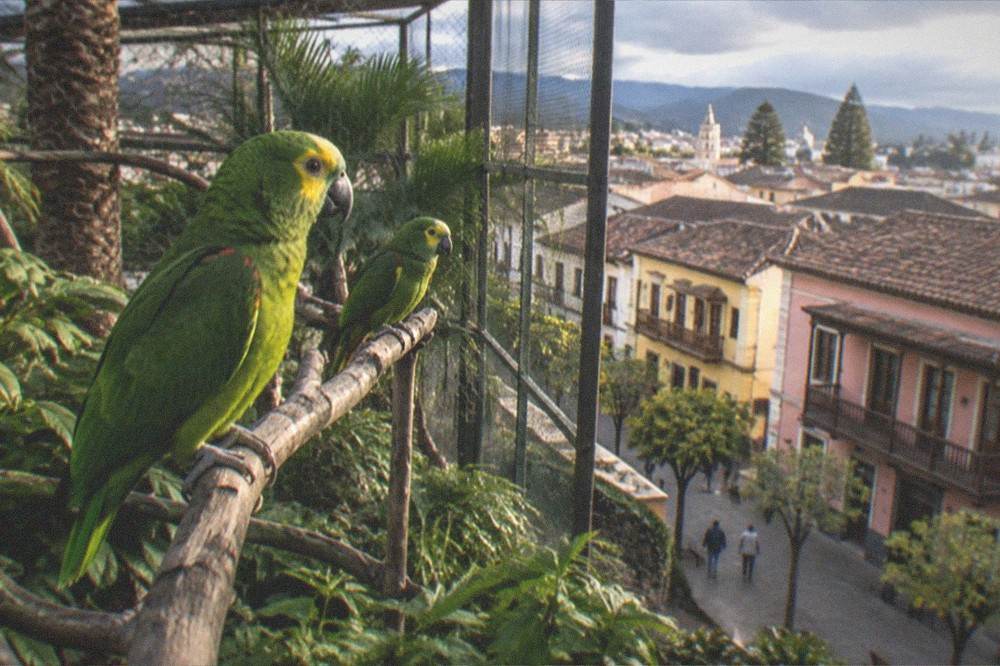
The practical sequencing is straightforward. Give the northeast one full day, tram between the two cities, and give the north coast another on the road trip through La Orotava, Icod de los Vinos and Garachico. Then decide whether your remaining days belong to the volcano or to the sea. Families usually split the difference, and the park tickets are the one category where booking ahead genuinely matters: Loro Parque in Puerto de la Cruz sells an entry ticket that this site can check live availability for, and it pairs naturally with a northern day.
Cruise visitors have the tightest arithmetic of anyone. A ship at the cruise port in Santa Cruz gives one day, and the tram's two cities plus a coach excursion into the mountains is the classic pattern: the shore excursions from Santa Cruz that take in Teide, Icod and Garachico are built for exactly that window, and they return you to the port rather than leaving you to manage the return leg yourself.
For everyone else, the honest closing word on the tram is proportion. It is a superb little railway for the two cities it serves, cheap by any European standard, and useless for three-quarters of the island's sights. Ride it for what it is, plan the rest around buses and mountain permits, and the northeast becomes the easiest part of Tenerife to do without a car.
Common Questions About the Tenerife Tram
How much does the Tenerife tram cost?
Metrotenerife's fares page lists a single at EUR 1.35 on a transit pass and EUR 1.10 by mobile. There is no visitor discount; the subsidised passes are resident-only products.
Is public transport free in Tenerife for tourists?
No. The 100% subsidy in force since 1 January 2026 covers resident passes and multi-trip tickets only, and every subsidised pass requires proof of Canary Islands residency. Visitors pay the published fares: tram singles, TITSA single tickets, the EUR 10 Day Travelcard or the EUR 50 7 Day Travelcard.
Does the tram go to Tenerife South Airport?
No. Neither airport has tram service. TITSA's airport pages list lines 10, 40, 711, 343 and 415 at Tenerife South and lines 20, 30 and 343 at Tenerife North, and those buses are the connection to the tram cities.
Can you do Santa Cruz and La Laguna in one day?
Yes, and the tram is the simplest way. The two cities are the island's largest, and a morning in the capital followed by an afternoon in the UNESCO-listed colonial town is a standard car-free day. Free, tip-based GuruWalk walking tours operate in the historic centre of Santa Cruz de Tenerife.
Do I need a car if I stay in Santa Cruz or La Laguna?
Not for the cities themselves. The tram and TITSA buses cover the northeast well, and a hire car only earns its keep for the national park, the west coast and the south, all of which are reachable by bus with more planning.
Is the tram good for cruise passengers?
Yes, for the city sights. A day at the cruise port in Santa Cruz gives easy access to both tram cities, though shore visitors with a single day often choose a guided excursion instead, since coach tours from the port reach Teide, Icod and Garachico and handle the return timing.