Santa Cruz De Tenerife
Santa Cruz de Tenerife is the capital of the island and of the whole Canary archipelago jointly with Las Palmas, a working Spanish city of 211,957 residents that most holidaymakers only see from a cruise ship or a bus window.
Short answer
Santa Cruz de Tenerife is worth visiting for its architecture, the Carnival, the Anaga mountains on its doorstep and Las Teresitas beach, and it pairs well with a resort stay in the south or a base in Puerto de la Cruz.
Santa Cruz de Tenerife is the capital of Tenerife and, jointly with Las Palmas de Gran Canaria, one of the two capitals of the Canary Islands. The municipal register counted 211,957 residents on 1 January 2025, which makes it the largest of the island's 31 municipalities, ahead of La Laguna at 161,108. It is a real Spanish city with government offices, a cruise port, a tram line and the island's most famous festival, not a resort built around a beach strip, and that distinction shapes everything below. This guide sets out what the official sources say the city offers, what it is known for, how a day there runs, and where it fits in a holiday that may otherwise be based in the south. For the wider picture across the island, the Tenerife Travel Guide homepage gathers the planning pages, and the long-tail rundown of things to do in Tenerife for cruise visitors covers the port day in detail.
What Is the Difference Between Tenerife and Santa Cruz De Tenerife?
Tenerife is the island, with about 960,000 residents across 31 municipalities; Santa Cruz de Tenerife is one of those municipalities, the largest at 211,957 residents, and it serves as the island's capital and as a capital of the Canary Islands jointly with Las Palmas de Gran Canaria. Confusing the two is like confusing Scotland with Edinburgh.
The distinction matters when you book. Flights arrive at Tenerife South or Tenerife North airport, neither of which is in the city, and the big resort hotels sit in Adeje and Arona, roughly the other end of the island's road network. A holiday "in Tenerife" may involve no night in Santa Cruz at all. What the city offers instead is the administrative and cultural centre: the regional parliament, the Auditorio de Tenerife, the island's main Carnival, and the ferry terminals for La Gomera, La Palma and El Hierro from the neighbouring port areas.
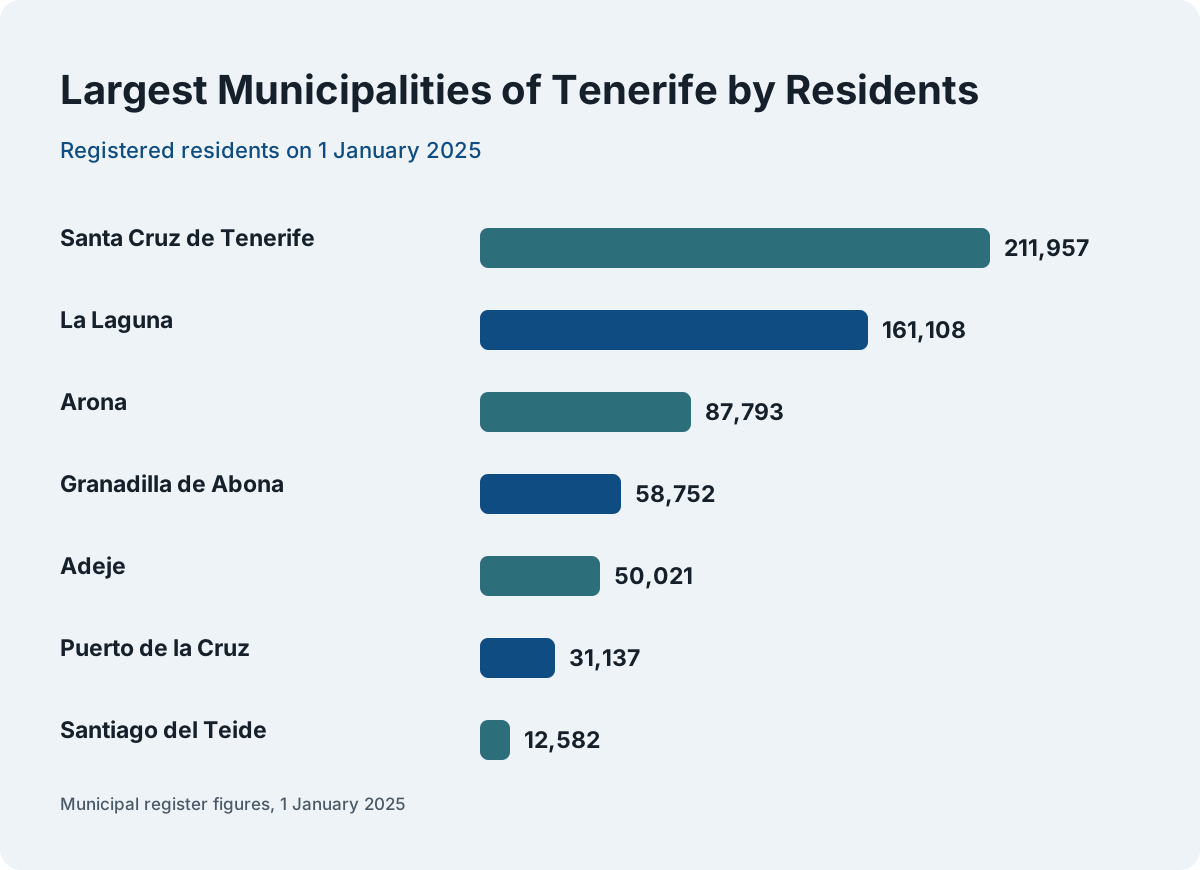
The register figures below show how the island's population is distributed, and they explain why the capital feels like a city rather than a holiday town. The south's numbers, Adeje at 50,021 and Arona at 87,793, are swollen by tourism but remain well behind the capital.
| Municipality | Residents, 1 January 2025 |
|---|---|
| Santa Cruz de Tenerife | 211,957 |
| La Laguna | 161,108 |
| Arona | 87,793 |
| Granadilla de Abona | 58,752 |
| Adeje | 50,021 |
| Puerto de la Cruz | 31,137 |
| Santiago del Teide | 12,582 |
La Laguna, the second row of that table, is the capital's historic twin. UNESCO credits it as the first non-fortified Spanish colonial town whose layout provided the model for many colonial towns in the Americas, and the two cities are now so joined that the tram runs between them. A visit to one is easily half a visit to the other: see the La Laguna area guide for the colonial core.
What Is Santa Cruz De Tenerife Known For?
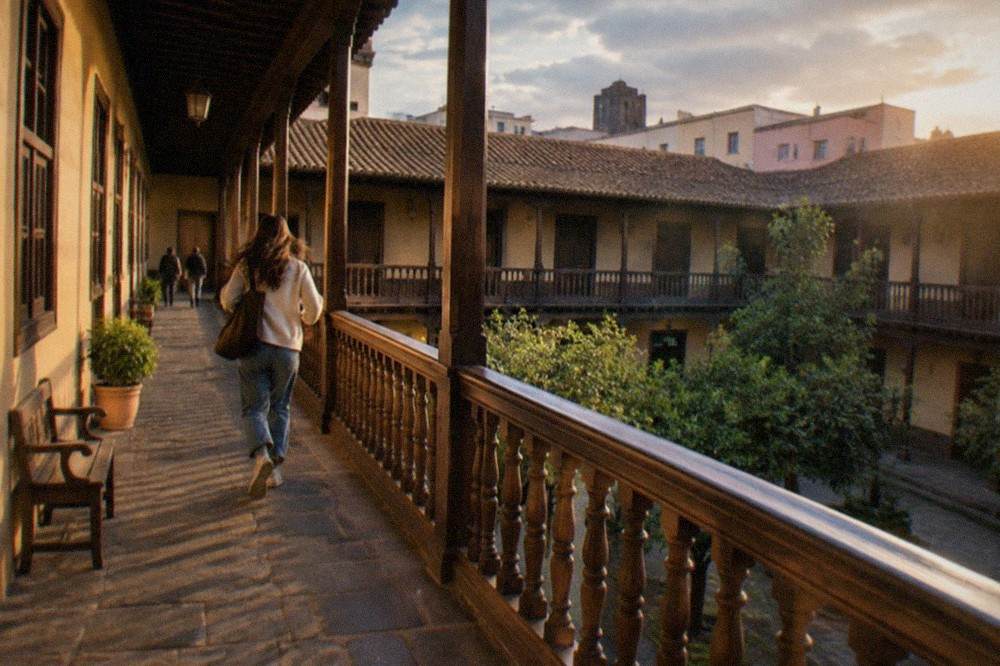
Santa Cruz de Tenerife is known for four things above all: its Carnival, whose 2027 theme is Roma: El imperio del Carnaval; the Auditorio de Tenerife, Santiago Calatrava's white concert hall inaugurated in 2003; the Anaga mountains, a laurel-forest massif on the city's doorstep; and Las Teresitas, the golden-sand beach at San Andrés with palm trees and calming breakwaters.
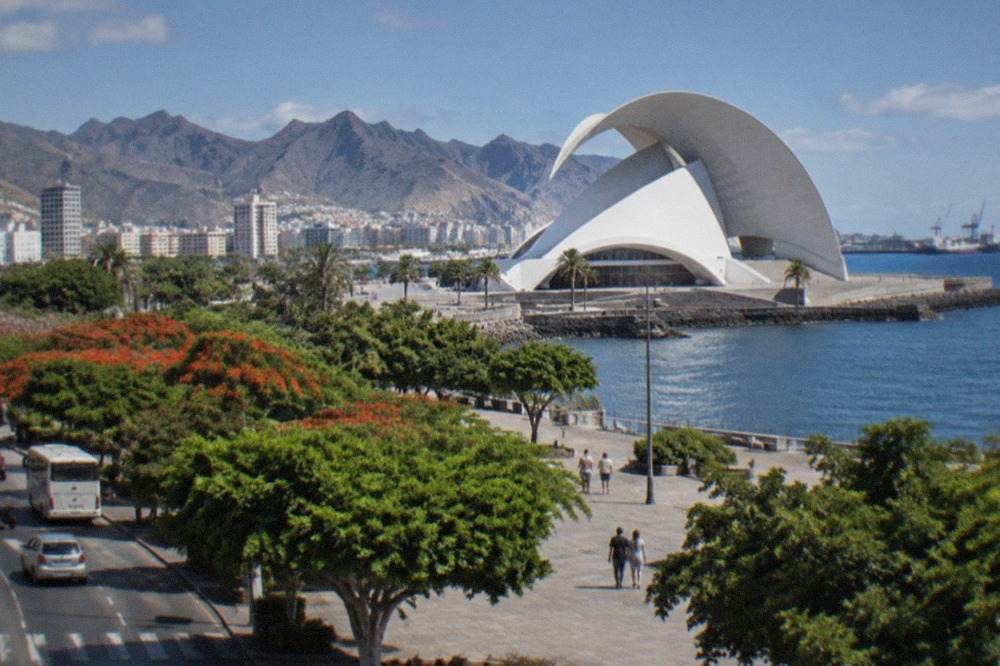
The Auditorio is the city's postcard. The venue's own page records the facts that matter: designed by Santiago Calatrava, inaugurated in 2003, 23,000 square metres under a white trencadis skin, the broken-tile finish that catches the light off the water. It sits at the edge of the port, and its silhouette is the image the city uses of itself. The Auditorio attraction page covers visiting it in detail.
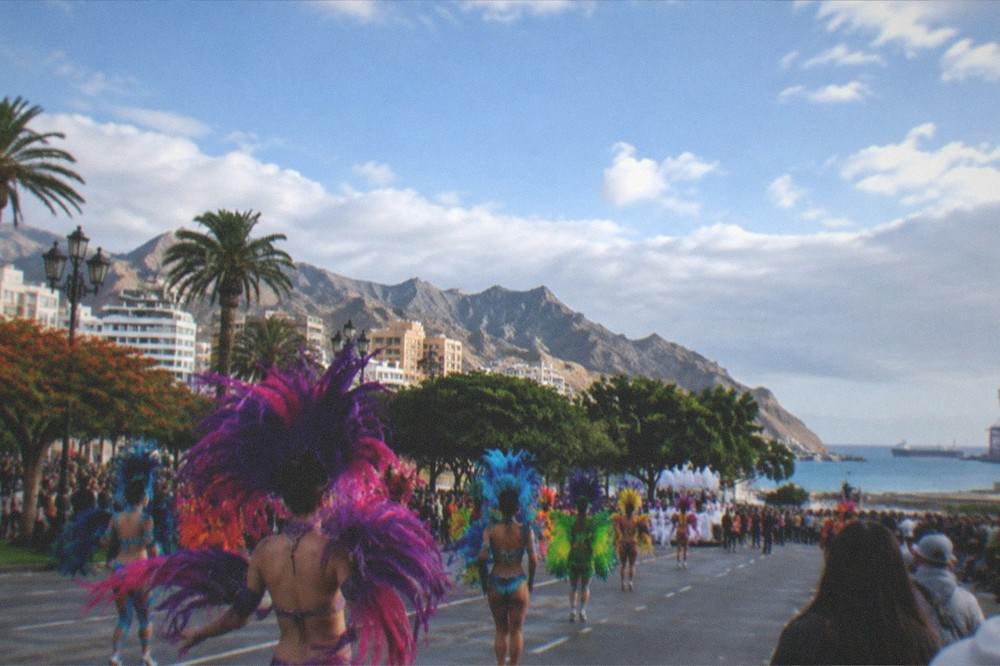
The Carnival is the other headline. The official programme for 2027 runs from the opening on 22 January to the second Daytime Carnival on 27 February, with the Queen's Election Gala on 17 February and the floats contest on 19 February. Those dates sit after Ash Wednesday, which falls on 10 February 2027, and the official programme is the only calendar worth following: plenty of second-hand summaries get it wrong. The full rundown of dates, themes and what each event involves is on the Santa Cruz Carnival guide.
Then there is the geography. The Anaga Rural Park begins at the city's northern edge, a range of laurel forest that the Cabildo protects with reservations on its most fragile trails. El Pijaral, the so-called Enchanted Forest, needs a Tenerife ON reservation released each Monday at 07:00 Canary time, at most 14 days ahead, and organised tours by companies are not permitted there; the Cabildo itself names the Bosque de los Enigmas trail and the Pista de Las Hiedras as permit-free alternatives. The Anaga Rural Park page maps the options, and the wild beach of Playa de Benijo sits at the far end of the same peninsula.
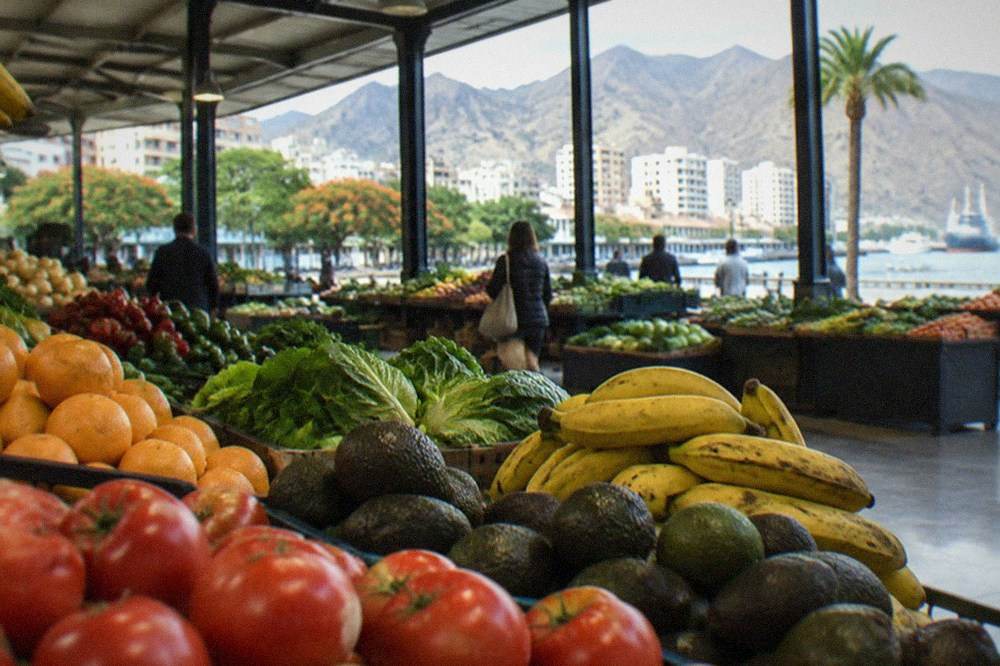
Add the everyday city: the Mercado de Nuestra Señora de África, the botanical garden, the Palmetum planted on a former landfill, and a shopping and dining scene aimed at residents rather than visitors. None of that is packaged tourism, which is precisely the appeal for travellers who want the island's Spanish side.
How Do You Spend a Day in Santa Cruz, Tenerife?
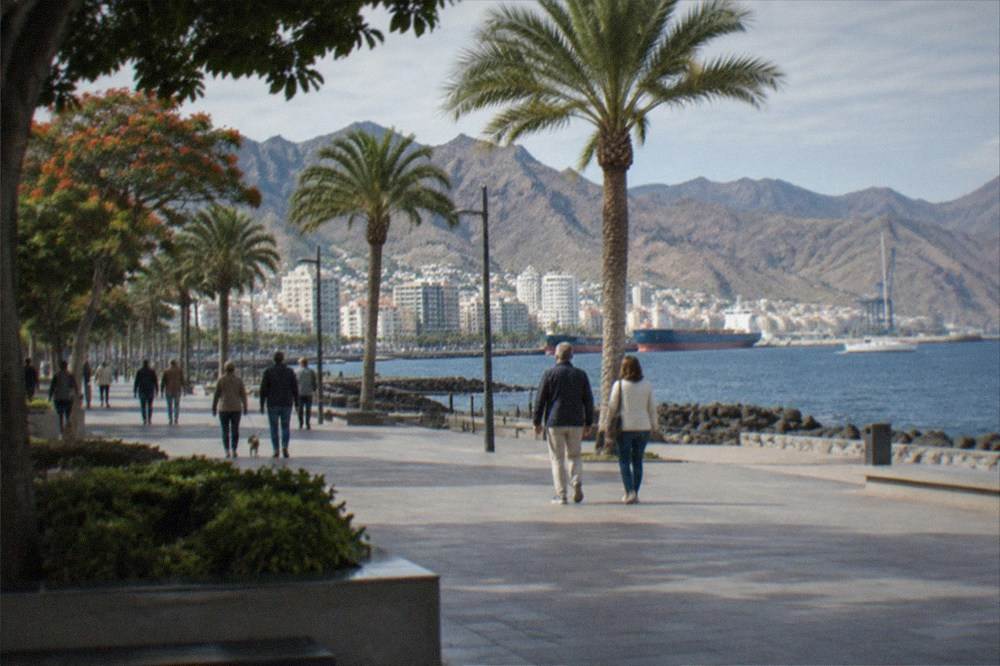
A sensible day pairs the waterfront with the old centre: the Auditorio and the Palmetum in the morning, the Mercado de Nuestra Señora de África and the pedestrian streets around the Plaza de España at midday, then Las Teresitas for a late swim, with the tram to La Laguna as an alternative if the weather turns cloudy, as it more often does here than in the south.
Start at the water. The Auditorio and the Palmetum sit close together on the port side, and both reward an unhurried look, the concert hall from outside, the palm collection on its hill. The market follows: the Mercado de Nuestra Señora de África is the city's food heart, and it is where the restaurant trade shops. Lunch in the centre, in the streets behind the Plaza de España, is a resident's meal rather than a visitor's one.
The afternoon forks. Las Teresitas, covered in the beach section below, is the city's own golden-sand beach at San Andrés. The other fork is the tram: Metrotenerife's line runs from the centre to La Laguna, and the UNESCO-listed colonial core there is the island's most complete historic streetscape. A single tram ticket costs EUR 1.35 on a transit pass or EUR 1.10 by mobile, per Metrotenerife's fares page, so the detour costs less than a coffee.
Covering the ground efficiently is a real question in a city that spreads along the coast, and the listing for the Santa Cruz highlights bike and e-bike tour starts at the cruise terminal, which tells you the route is built around the waterfront sights.
If you prefer to cover the centre on foot at a slower pace, GuruWalk lists a free, pay-what-you-want walking tour of the historic centre of Santa Cruz de Tenerife, rated 4.81 from 233 English-language reviews on its listing. It is free to join and tip-based, which suits a first orientation before you spend on anything else. More such walks, all in the north of the island, are compared on the free walking tours page.
Is Santa Cruz De Tenerife Worth Visiting?
Yes, for most travellers, as a day or two of culture rather than a beach base: the Carnival, the Auditorio, La Laguna and the Anaga trails are genuinely island-defining, and the city's restaurants and shops serve residents, so prices and atmosphere differ from the southern resorts. What it does not offer is the south's concentration of beach hotels and evening entertainment.
The honest trade-off is this. The south, Costa Adeje and Playa de las Américas, exists for beach holidays and has the weather to match; AEMET's normals put the south coast around 24 degrees Celsius mean in July against the capital's 25, but the resort side sees more reliable sunshine hours in the winter half of the year. The north and the capital give you the Spanish city, the green mountains and the island's history, with more cloud. Puerto de la Cruz splits the difference, a historic resort town on the north coast.
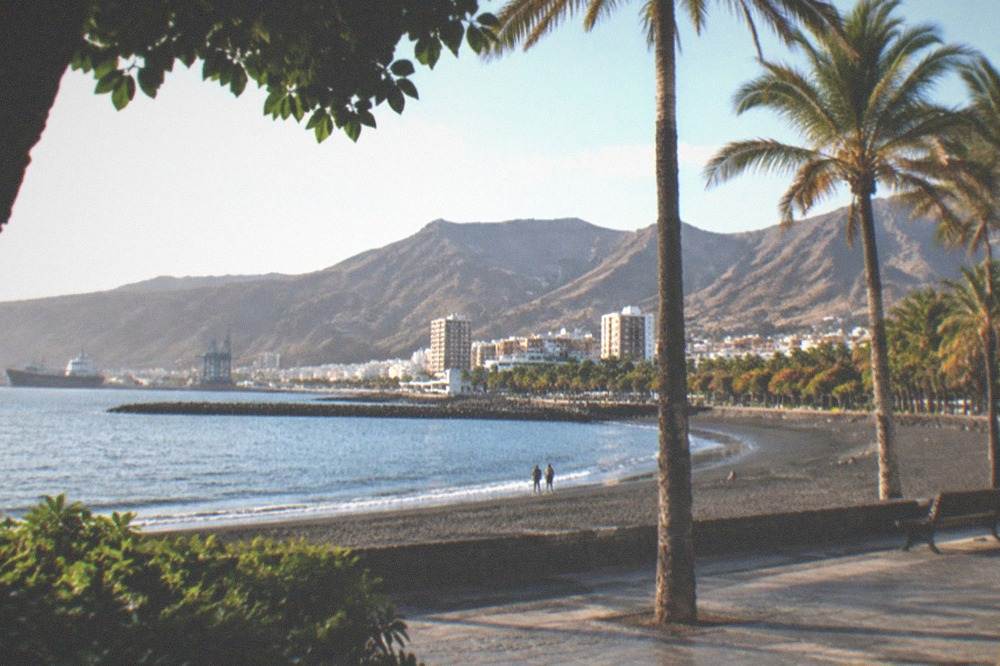
Staying in the capital is a real option, and the listings for places to stay in Santa Cruz below are worth checking if Carnival dates or a cruise departure anchor your trip.
If your time on the island is short and you want the city plus the volcano in one loop, the small-group shore excursion from the port covers Mount Teide, Icod and Garachico in a single day, which is the efficient way to see the north-west without a hire car.
What Is the Best Beach in Santa Cruz Tenerife?
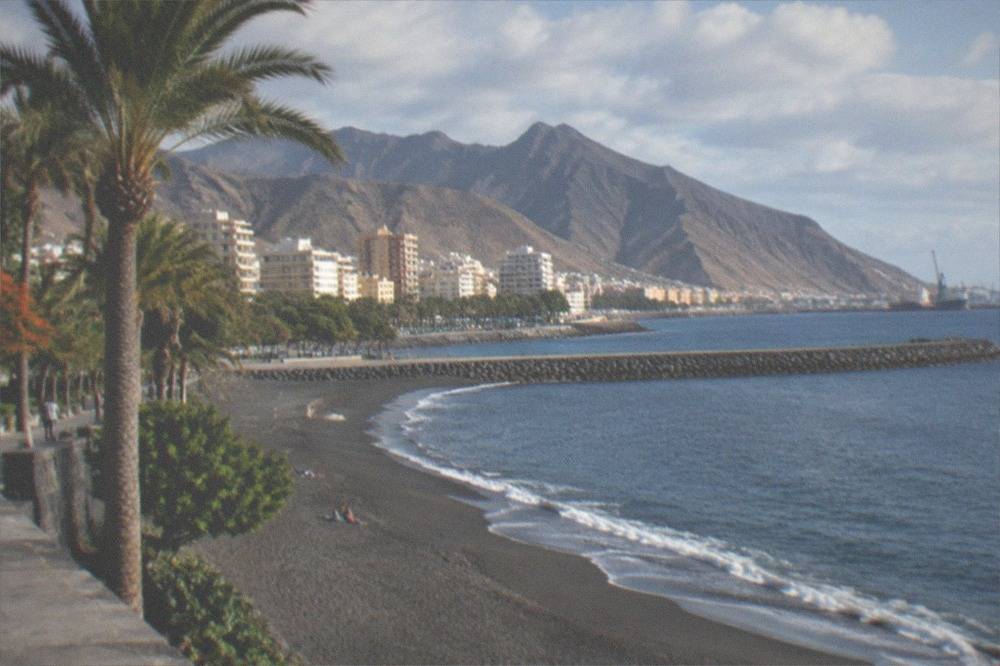
Las Teresitas is the best beach in Santa Cruz: the tourist board describes golden sand, palm trees and breakwaters that calm the water, at San Andrés just along the coast from the city centre. It is the capital's own beach, and unlike the grey volcanic strands elsewhere on this coast it was built as a bathing beach rather than left as one.
The tourist board's description carries three details that matter to a swimmer: the sand is golden, the palms line the back of the beach, and the breakwaters hold the Atlantic still inside the bay. That last point is the practical one. The natural beaches of the north coast, and the wild strands of Anaga such as Playa de Benijo, take the ocean as it comes. Las Teresitas does not, which is why families and swimmers end up there.
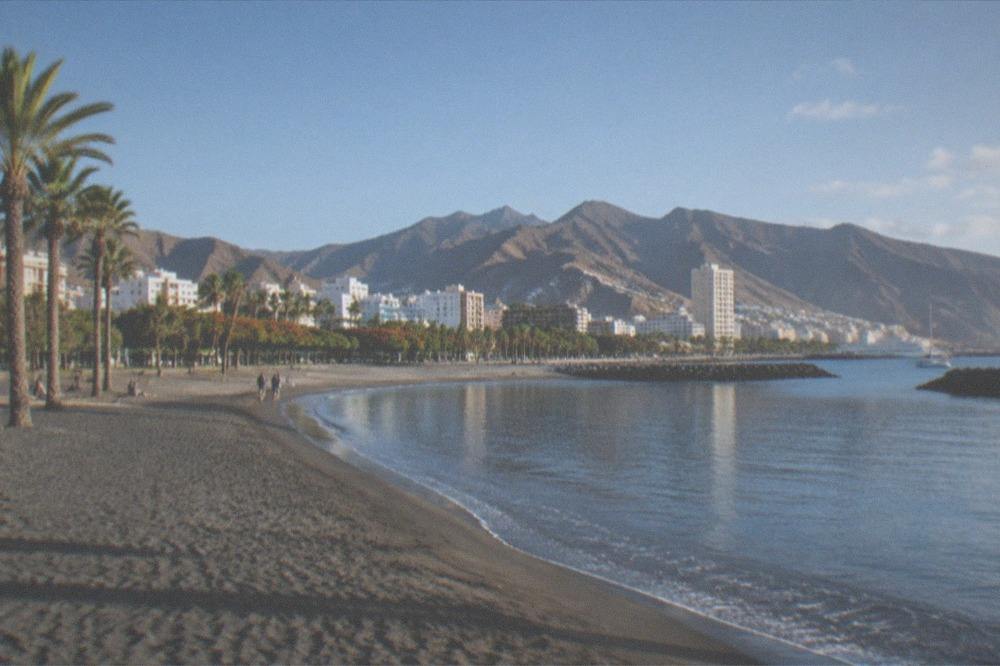
It is worth being clear about what it is not. It is not in the resort zone, and it is not the beach you would choose if your holiday is built around sunbathing: for that, the south's beaches, from Playa de las Vistas to Playa del Duque, are the established answer. Las Teresitas is the city's beach, the one residents use, and the one that belongs in a Santa Cruz day. The Las Teresitas page covers access and what to expect.
Is Santa Cruz De Tenerife Walkable from Cruise Port?
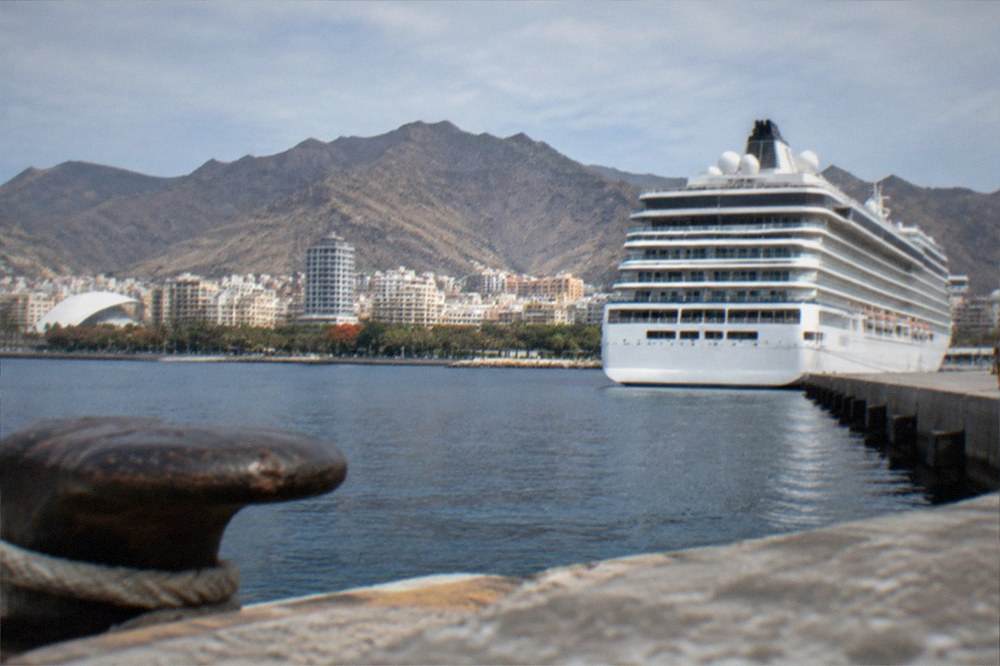
No verified walking distance or time exists between the cruise port and any sight in the city, so this guide does not state one; what the sources do show is that the port sits within the municipality, that the bike tour listing starts at the cruise terminal, and that shore excursions pick up at the port itself, which together suggest the sights are reachable on foot or by a short ride.
That is a careful answer, and the care is the point. Plenty of pages quote a number of minutes from the ship to the Plaza de España, and none of the official sources this site has read supplies one. What is on file is firmer: the cruise port is in Santa Cruz, the bike and e-bike tour listing names the cruise terminal as its start point, and the small-group shore excursion to Teide, Icod and Garachico picks up at the port. Cruise visitors therefore have three honest options: walk into the city, ride a bike from the terminal, or join an excursion that starts there.
One practical note for port days with a late departure: the listings for luggage storage near the port let you leave bags and use the last hours in the city rather than aboard.
The excursion itself is the strongest card the port has. The listing describes a small-group day to the Teide National Park, Icod and Garachico, rated 4.9 from 275 reviews, seven hours, and it is the one product on this page aimed squarely at cruise passengers.
How Do You Get Around Santa Cruz De Tenerife?
Within the city you walk or take the tram, whose single fare is EUR 1.35 on a transit pass or EUR 1.10 by mobile per Metrotenerife; for buses across the island, visitors pay with single tickets, the EUR 10 day travelcard or the EUR 50 seven-day travelcard, sold at airport ticket machines, because the 2026 free-transport subsidy applies only to Canary Islands residents holding personalised passes.
The resident subsidy is the fact most visitors get wrong. The Canary government confirmed a 100% subsidy on passes and multi-trip tickets for 2026, but every subsidised pass requires Canary residency: the monthly pass, the under-30 youth pass, the under-10 child card, all resident-only, on a personalised Ten+ card. Visitors do not qualify. What visitors buy instead is on TITSA's fares page: the day travelcard at EUR 10, the seven-day travelcard at EUR 50, and the Ten+ card itself at EUR 2 with top-ups from EUR 2 to EUR 100. The Teide and Teno lines are excluded from the resident passes anyway.
| Ticket | Price | Notes |
|---|---|---|
| Tram single, transit pass | EUR 1.35 | Metrotenerife fares page |
| Tram single, mobile | EUR 1.10 | Metrotenerife fares page |
| TITSA Day Travelcard | EUR 10 | Visitor product, airport ticket machines |
| TITSA 7 Day Travelcard | EUR 50 | Visitor product, airport ticket machines |
| Ten+ card | EUR 2 | Top-ups EUR 2 to EUR 100 |
| Single bus ticket | Priced by route | Card or cash |
The tram's own route is the useful one for visitors: it links the centre with La Laguna. The Tenerife tram guide covers it in full. For buses across the island, the TITSA guide lists the lines from both airports, and the broader getting around page compares buses, trams, taxis and hire cars.
When Is Carnival in Santa Cruz De Tenerife?
Carnival 2027 runs from the opening on 22 January to the second Daytime Carnival on 27 February, with the Children's Queen gala on 7 February, the Queen's Election Gala on 17 February, the floats contest on 19 February, the first Daytime Carnival on 21 February and the Piñata Friday on 26 February, under the theme Roma: El imperio del Carnaval.
The programme is the official one from the Carnival's own site, and it is the only calendar to plan by. Note the shape of it: the biggest events sit after Ash Wednesday, which falls on 10 February 2027, so the festival does not stop when Lent starts. Anyone "correcting" the dates from the church calendar is working from the wrong rulebook.
| Event, Carnival 2027 | Official date |
|---|---|
| Opening | 22 January |
| Children's Queen gala | 7 February |
| Ash Wednesday | 10 February |
| Queen's Election Gala | 17 February |
| Floats contest | 19 February |
| First Daytime Carnival | 21 February |
| Piñata Friday | 26 February |
| Second Daytime Carnival | 27 February |
If the Carnival is the reason for your trip, book early and expect the city to be full: 2025 brought 7,561,659 tourists to the island in total, and February is one of the strongest months for arrivals by air, 657,396 in February 2026 by the Canarian statistics service's count. The Carnival guide covers what each event involves and how the city changes during the fortnight.
What Is the Weather Like in Santa Cruz De Tenerife?
AEMET's 1981-2010 normals for Santa Cruz, at 36 m elevation, show mean daily maxima from 21.0 degrees Celsius in January to 29.0 in August, with 226 mm of rain across the year on 29.7 days, and sunshine peaking at 337 hours in July against 168 in December; it is warm year-round, drier than the north of the island and cloudier than the south coast.
The table gives the planning picture. Winter days average a maximum of 21 degrees; summer nights rarely fall below 21. Rain is concentrated between November and February, and July records none at all in the normals. The contrast with Tenerife North airport's station, at 632 m on the windward side, is the island in miniature: that station records 520 mm of rain a year against the capital's 226 mm.
| Month | Mean daily max C | Mean daily min C | Rain mm | Sunshine hours |
|---|---|---|---|---|
| Jan | 21.0 | 15.4 | 32 | 178 |
| Feb | 21.2 | 15.3 | 35 | 186 |
| Mar | 22.1 | 15.9 | 38 | 221 |
| Apr | 22.7 | 16.5 | 12 | 237 |
| May | 24.1 | 17.8 | 4 | 282 |
| Jun | 26.2 | 19.5 | 1 | 306 |
| Jul | 28.7 | 21.2 | 0 | 337 |
| Aug | 29.0 | 21.9 | 2 | 319 |
| Sep | 28.1 | 21.7 | 7 | 253 |
| Oct | 26.3 | 20.3 | 19 | 222 |
| Nov | 24.1 | 18.4 | 34 | 178 |
| Dec | 22.1 | 16.6 | 43 | 168 |
Crowds follow the sun but not exactly. The Canarian statistics service's count of tourists arriving by air, excluding Canary Islands residents, shows the winter months as busy as midsummer: 643,460 arrived by air in January 2025 and 671,202 in December, against 542,881 in June. The chart below shows the 2025 pattern month by month.
| Month | Tourists arriving by air, 2025 |
|---|---|
| Jan | 643,460 |
| Feb | 648,255 |
| Mar | 677,688 |
| Apr | 604,370 |
| May | 539,410 |
| Jun | 542,881 |
| Jul | 611,623 |
| Aug | 618,578 |
| Sep | 563,261 |
| Oct | 631,662 |
| Nov | 659,656 |
| Dec | 671,202 |
Those arrivals figures count tourists arriving by air and exclude Canary Islands residents, which is why they differ from the tourist board's lodged-tourist totals. For choosing a month, the pairing that matters is this: the capital's cloudiest, wettest weeks are November to February, which are also its busiest for arrivals, while May and June combine the lowest arrivals of the year with the onset of the dry season.
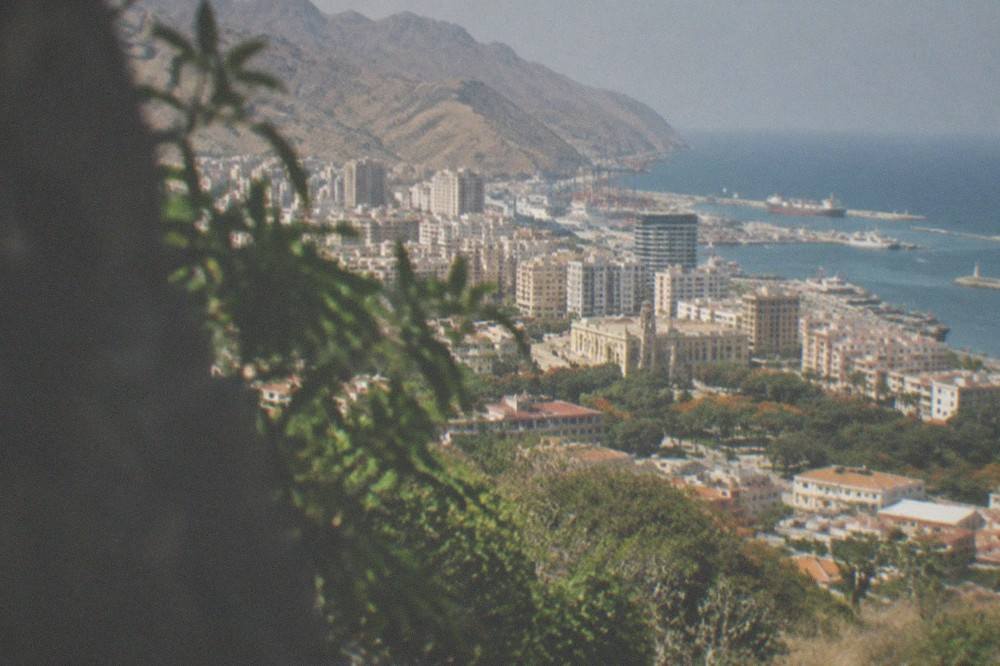
Whatever the month, the city works as a base or a day trip, and the three products below cover the main ways visitors experience it: the shore excursion from the port, the bike tour of the waterfront and the guided hikes into the Anaga mountains.
Common Questions About Santa Cruz De Tenerife
Is Santa Cruz in Tenerife worth visiting?
Yes. The Carnival, the Auditorio de Tenerife, the UNESCO-listed colonial core of La Laguna next door and the laurel-forest trails of Anaga make the capital worth at least a full day, and the city's restaurants and shops serve residents rather than tourists, which many travellers prefer.
Is Santa Cruz, Tenerife worth visiting?
Yes, as a cultural stop rather than a beach resort. AEMET's normals show the capital cloudier in winter than the south coast, so pair it with the resorts if sunbathing is the priority, but the architecture, the market and the mountains on its doorstep justify the trip.
Is it worth visiting Santa Cruz De Tenerife?
It is, especially around Carnival, when the official 2027 programme runs from 22 January to 27 February, and in any season for the Auditorio, Las Teresitas beach and the tram ride to La Laguna at EUR 1.35 a trip on a transit pass.
What is the best part of Santa Cruz De Tenerife?
The waterfront around the Auditorio de Tenerife and the Palmetum, plus the streets behind the Plaza de España and the Mercado de Nuestra Señora de África, make up the core most visitors enjoy; the Anaga mountains to the north are the part residents would keep for themselves.