Cycling and E-Bike Tours
Tenerife is a vertically dramatic island, which is exactly why e-bikes have changed what a cycling holiday here can look like. This page sets out what the verified records say about the climate, the transport cards that carry a bike-bound traveller between rides, and the tours that pair well with a day on two wheels.
Bike or E-Bike, Cruise Terminal Start
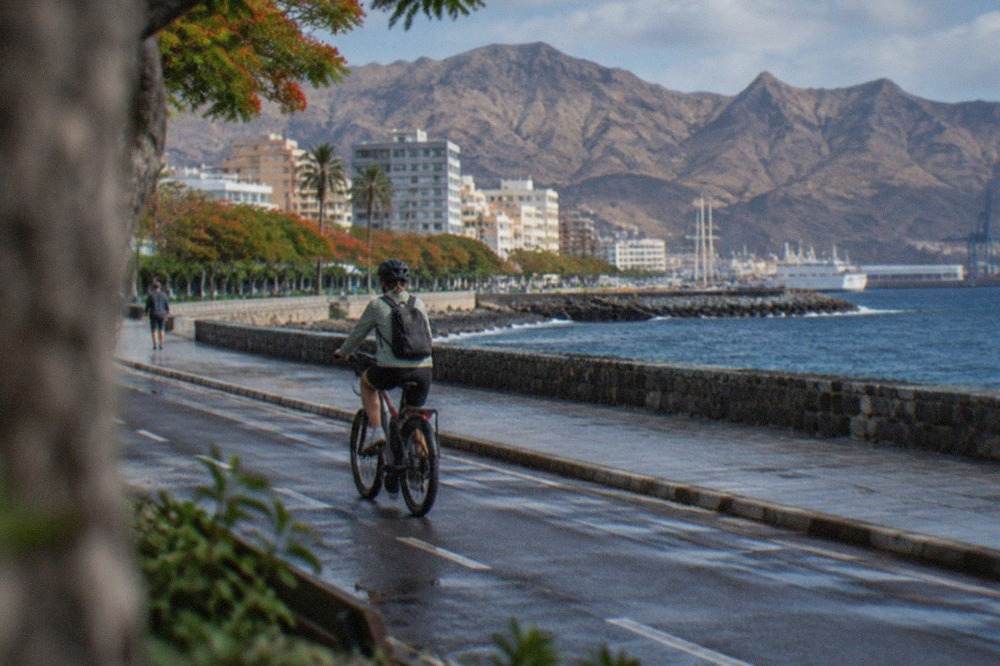
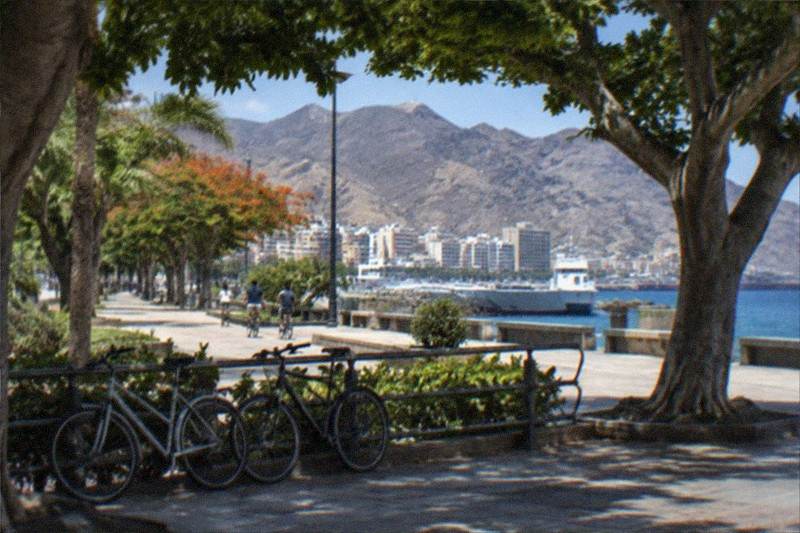
Tenerife: Santa Cruz Highlights Bike and E-Bike Tour
Choose a standard bike or an e-bike and follow a guide through Santa Cruz: the Auditorio, the parks and the old centre, with stops to explain what you are passing. The start point sits near the cruise terminal, which suits passengers with limited hours.
from $28.48 Per person, in USD. A promotional rate, so the regular price is higher.
Check Price & Availability →Opens the live booking page with up-to-date dates and prices. All booking and payment happen there; this guide takes none of it.
- Area
- Santa Cruz de Tenerife
- Length
- 2 hours 30 minutes
- Kind
- Town Walks and City Tours
Short answer
Yes, Tenerife suits cyclists of several kinds: the south is where most holiday riders stay, the climb towards Teide National Park is the island's signature road challenge, and e-bikes have opened the same roads to riders who would never attempt them on a muscle bike. No verified fact packet exists for bike hire itself, so confirm hire terms, routes and prices directly with each operator.
Tenerife is a volcano with a coastline, and that single sentence shapes every cycling decision a visitor makes here. The island rises from the sea to 3,715 m at Teide, the highest peak on Spanish soil according to UNESCO, which means the roads are rarely flat and the rewards for climbing are enormous. E-bikes have changed the arithmetic: a rider who would never attempt the pull up to the national park on a muscle bike can now do it with assistance, and the growth of guided e-bike touring reflects that. This page reports what the verified records hold, the climate data that tells you when to ride, and the practical rules that matter when a bike is part of your holiday. No verified fact packet exists for bike hire businesses themselves, so wherever a hire detail matters, this page says plainly that you should confirm it with the operator.
Is Tenerife a Good Place for Cycling?
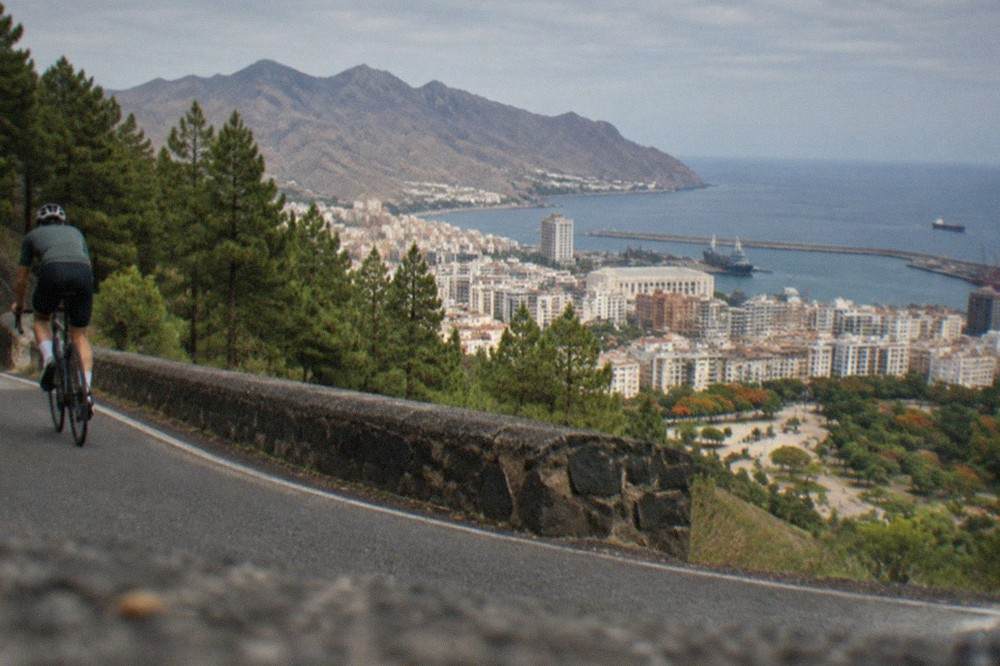
Yes, for three distinct kinds of rider: the southern resort belt suits easy coastal riding on largely gentle roads, the climb towards Teide National Park is one of the most serious road-cycling challenges anywhere in Europe, and the Anaga and Teno massifs offer quiet, winding lanes for riders who want scenery over speed. The island's size, roughly 31 municipalities linked by a main road network, means a fit rider can cross several climate zones in a single morning.
The island's geography is the whole story. Santa Cruz de Tenerife sits at 36 m above sea level, where AEMET's climate station records a mean daily maximum of 21 Celsius in January and 29 in August. The Teide Observatory ridge at Izana sits at 2,369 m, where the same weather service records a January mean maximum of just 7.5 Celsius. A ride that starts in shorts by the harbour and ends in a jacket above the tree line is not a novelty here, it is a normal consequence of the terrain. Riders should plan layers, and should treat any route into the high mountains as a serious undertaking rather than a scenic detour.
The second thing the records support is the climate itself. AEMET's 1981-2010 normals for Santa Cruz show zero days with rain of 1 mm or more in July, and the south coast station at Tenerife South Airport shows the same for June and July. This is an island where a week of riding in summer involves very little weather risk at sea level, and where the riding season is effectively the whole year, with the caveat that the high mountains are a different climate entirely. The Izana station records 67 mm of rain in February and 60 mm in December, and winter ice and snow on the stratovolcano trails are serious enough that Tenerife ON lists crampons and an ice axe as mandatory equipment on those routes when conditions demand them.
Third, the infrastructure question. Tenerife's main road, the TF-1 down the south and the TF-5 up to the north, connects the big population centres, and quieter country roads thread through the wine districts of Tacoronte and El Sauzal, the Orotava Valley and the hills above Los Gigantes. Cyclists planning to combine riding with other transport should note that visitors pay for public buses: single tickets, the EUR 10 day travelcard or the EUR 50 seven-day travelcard, because the 2026 free-travel subsidy applies to resident passes only. Whether a specific bus carries a bike is a detail no verified source in our files confirms, so ask TITSA or the hire operator before planning a ride that depends on it.
Can You Rent a Bike in Tenerife?
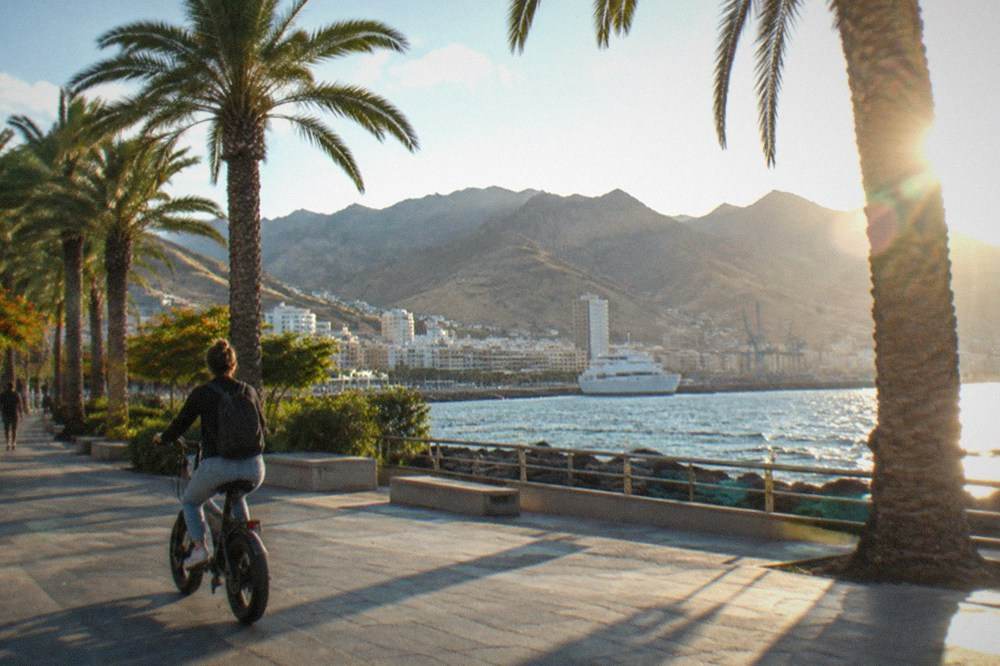
Yes, bike hire exists on the island, and a guided e-bike tour in Santa Cruz de Tenerife is bookable through this site, but no verified fact packet covers hire shops' prices, opening hours or fleet details, so those specifics must be confirmed with each operator directly. What the records do support is the transport layer around a hire bike: visitor travelcards, the tram fare and the road network. Treat any hire price you see on another page as unverified until the operator confirms it.
The honest position on hire itself is that this site's verified facts hold no row for hire shops: no price, no opening hour, no fleet size, no delivery radius. Rather than invent those figures, this page points at what a reader can check. The one cycling product carried in this site's roster is the Santa Cruz Highlights Bike and E-Bike Tour, a 2 hour 30 minute guided ride that starts from the cruise terminal area and covers the city's landmarks, bookable through the card below. For independent hire, confirm with the operator whether the price includes a helmet, a lock, delivery to your hotel, and roadside assistance, because none of those is a standard this site can verify.
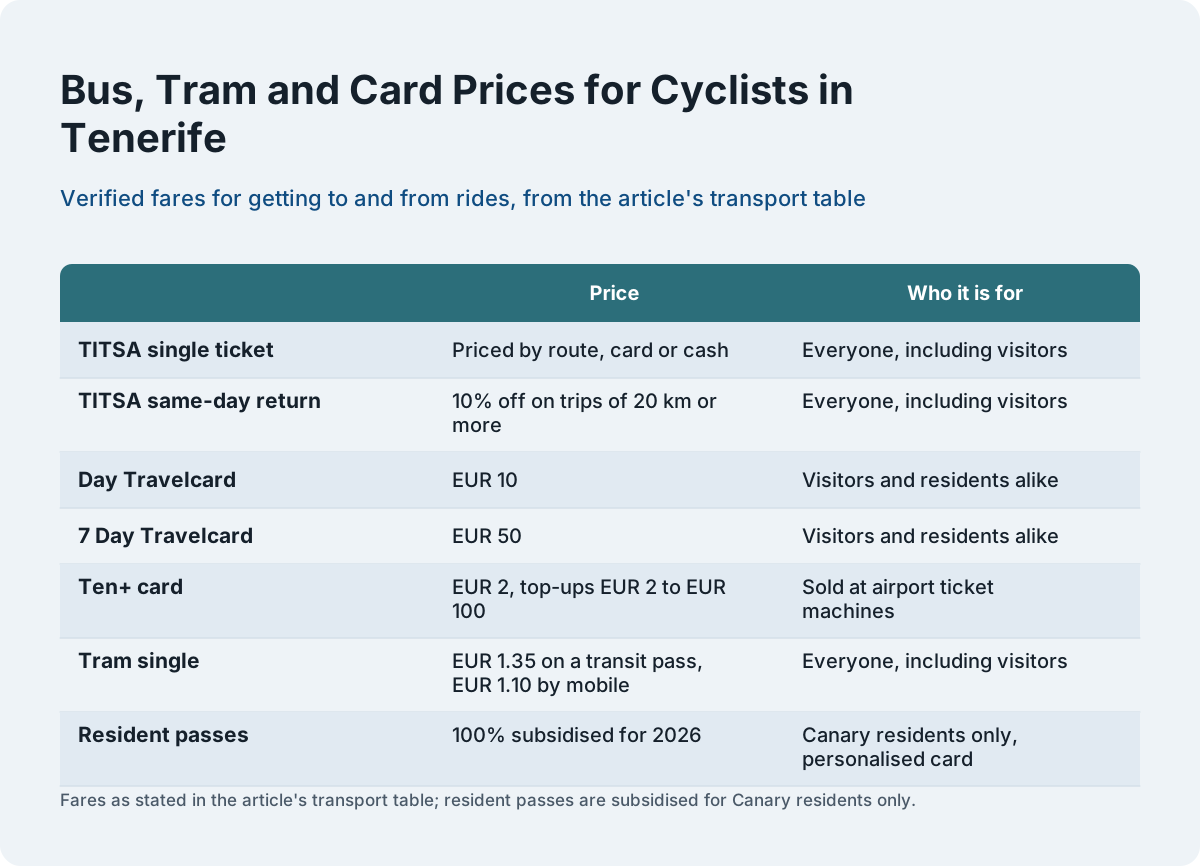
Getting to a ride, or back from one, is where the verified facts are solid. TITSA sells a day travelcard at EUR 10 and a seven-day travelcard at EUR 50, both available at airport ticket machines, and the Ten+ card itself costs EUR 2 with wallet top-ups from EUR 2 to EUR 100. The tram in the La Laguna corridor charges EUR 1.35 for a single on a transit pass, EUR 1.10 by mobile. None of these is free for visitors: the 100% subsidy announced by the Canary government for 2026 applies to resident passes only, a distinction worth repeating because many pages still blur it.
| Transport product | Price | Who it is for |
|---|---|---|
| TITSA single ticket | Priced by route, card or cash | Everyone, including visitors |
| TITSA same-day return | 10% off on trips of 20 km or more | Everyone, including visitors |
| Day Travelcard | EUR 10 | Visitors and residents alike |
| 7 Day Travelcard | EUR 50 | Visitors and residents alike |
| Ten+ card | EUR 2, top-ups EUR 2 to EUR 100 | Sold at airport ticket machines |
| Tram single | EUR 1.35 on a transit pass, EUR 1.10 by mobile | Everyone, including visitors |
| Resident passes | 100% subsidised for 2026 | Canary residents only, personalised card |
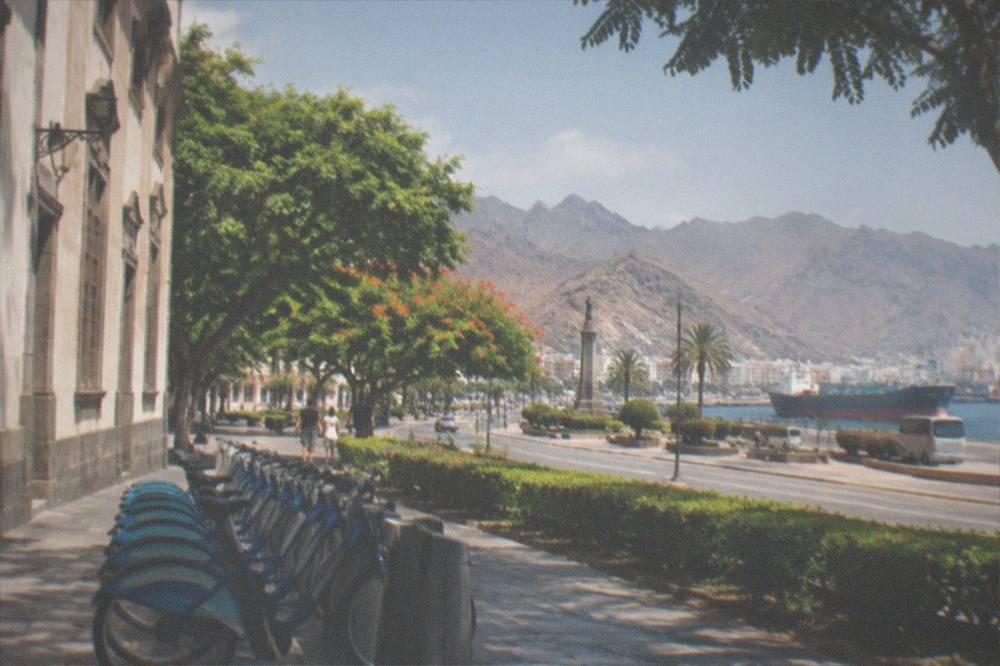
For riders who want to see the island's interior without pedalling up it, there is a middle path between the bike and the coach. A scooter is the natural companion vehicle for a cycling holiday, useful on the days your legs need a rest, and scooter rental can be checked through that link. Car hire is the other obvious pairing, covered in detail on our car hire in Tenerife guide, and riders with accessibility needs will find verified practical information on accessible Tenerife.
What Is the Best Time of Year for Cycling in Tenerife?
For coastal and southern riding, the verified climate normals point to May, June and September as the sweet spot: AEMET records mean daily maxima of 24.1, 26.2 and 28.1 Celsius at Santa Cruz in those months, with 4, 1 and 7 mm of rain, and sea surface temperatures of 20.2, 21.4 and 23.7 Celsius for a post-ride swim. For the high mountains, the same tables favour late spring and early autumn, because the Izana station records freezing mean minima from November to April.
The numbers deserve a table, because they are the single most useful planning tool on this page. All air figures are AEMET's 1981-2010 normals; the sea figures are NOAA's 1991-2020 series, a different dataset over a different period, and the two are never blended.
| Month | Santa Cruz mean max C | Tenerife South Airport mean max C | Tenerife North Airport mean max C | Izana (2,369 m) mean max C |
|---|---|---|---|---|
| Jan | 21 | 21.7 | 16 | 7.5 |
| Feb | 21.2 | 22 | 16.7 | 8 |
| Mar | 22.1 | 23.1 | 18.2 | 10.2 |
| Apr | 22.7 | 23.1 | 18.5 | 11.8 |
| May | 24.1 | 23.9 | 20.1 | 14.5 |
| Jun | 26.2 | 25.4 | 22.2 | 18.9 |
| Jul | 28.7 | 27.7 | 24.7 | 23 |
| Aug | 29 | 28.4 | 25.7 | 22.6 |
| Sep | 28.1 | 27.9 | 24.9 | 18.6 |
| Oct | 26.3 | 26.8 | 22.5 | 14.3 |
| Nov | 24.1 | 24.8 | 19.6 | 11.1 |
| Dec | 22.1 | 22.8 | 17.1 | 8.8 |
Read that table as a rider, not a sunbather. The July and August maxima at Santa Cruz, 28.7 and 29 Celsius, are fine on the coast with a sea breeze and punishing on an unshaded climb. The north of the island is wetter at every month of the year: Tenerife North Airport records 80 mm of rain in January and 82 mm in December, against 17 and 30 mm at the southern airport, which is why riders chasing dry tarmac in winter base themselves in the south. And the Izana column is the mountain column: even in August its mean minimum is 13.8 Celsius, and from November to April the mean minima sit between 1.1 and 4.5 Celsius, cold enough that a high-mountain ride in those months is a properly equipped expedition.
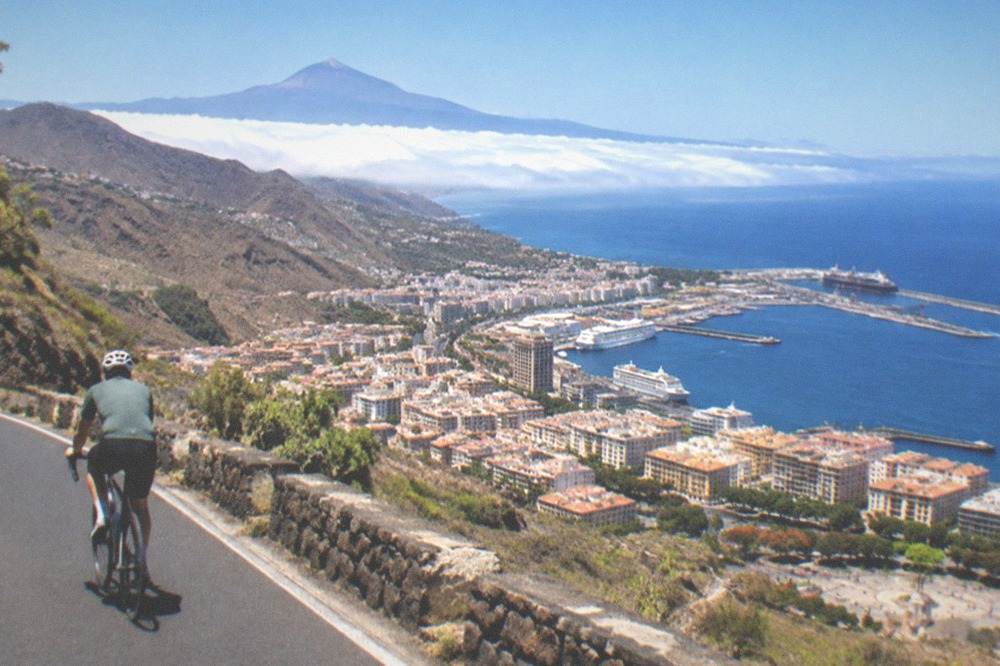
The sea matters too, because for most riders a swim is the reward at the end of the ride. NOAA's 1991-2020 series for the south coast puts the sea at its warmest in September and October at 23.7 Celsius, cooling to 19.1 at its lowest in March.
| Month | Sea surface C off the south coast |
|---|---|
| Jan | 19.9 |
| Feb | 19.2 |
| Mar | 19.1 |
| Apr | 19.5 |
| May | 20.2 |
| Jun | 21.4 |
| Jul | 22.2 |
| Aug | 23.1 |
| Sep | 23.7 |
| Oct | 23.7 |
| Nov | 22.5 |
| Dec | 21.1 |
Crowd pressure is the other seasonal factor, and the tourist figures in our files measure it. ISTAC's FRONTUR-Canarias series counts 679,245 tourists arriving by air in December 2024 and 612,169 in January of that year, against 522,461 in June: the winter months are the island's busiest by air arrivals, which means busier coastal roads and busier hire desks exactly when the southern weather is at its most rideable. Summer is quieter on the roads and hotter at sea level. The trade-off is real, and the e-bike is part of the answer to it: assistance flattens the heat problem as much as the hill problem.
Which Areas of Tenerife Suit a Bike Best?
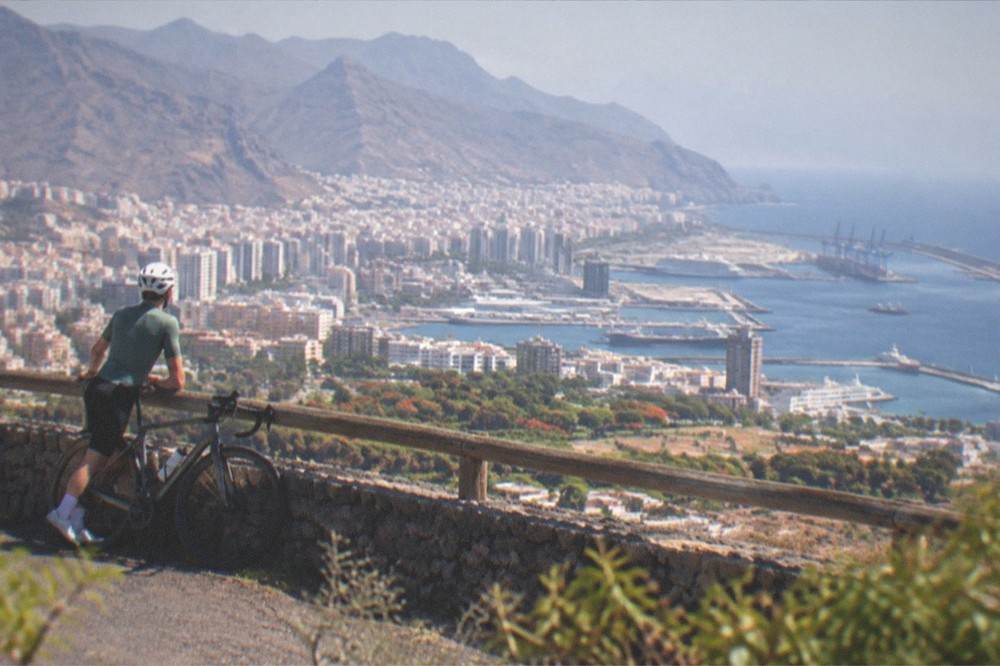
The south, from Costa Adeje through Los Cristianos to El Medano, is where most holiday riding happens, on seafront promenades and rolling coastal roads; the northeast around Santa Cruz and La Laguna suits city riding and the guided e-bike format; and the serious road-cycling terrain is the climb from the Orotava Valley or Vilaflor up towards Teide National Park, which is a mountain ride in every sense and should be planned as one.
The southern resort belt is the easy answer. Costa Adeje, Los Cristianos and Playa de las Americas are covered in detail in our things to do in Tenerife round-up, and the coastal paths between them are the flattest riding on the island. El Medano, in the municipality of Granadilla de Abona, sits under Montana Roja with fine grey sand on its beach, and the wind that makes it a kitesurfing centre is worth knowing about as a cyclist: a persistent breeze is a friend on a hot climb and a nuisance on an exposed flat. Riders staying in Los Cristianos can also pair a morning on the bike with an afternoon on the water, and our whale and dolphin watching tours page covers the boat side of that combination.
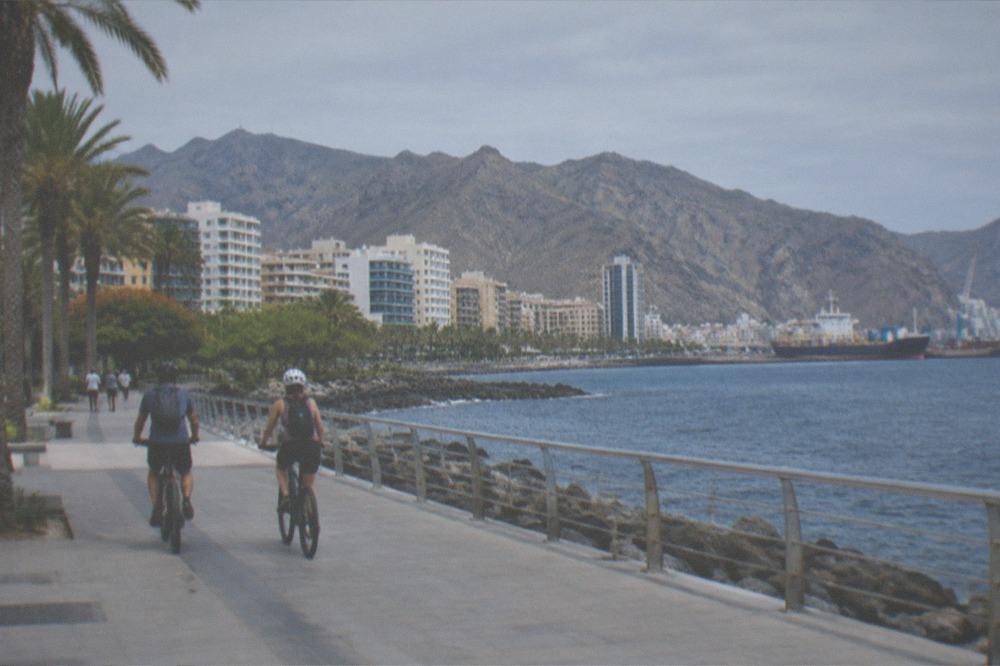
The northeast is the cultural ride. Santa Cruz de Tenerife and La Laguna, the island's two biggest municipalities with 211,957 and 161,108 residents respectively in the 2025 register, are linked by the tram corridor, and the Santa Cruz Highlights Bike and E-Bike Tour in this site's roster is built exactly for this: a guided 2 hour 30 minutes starting from the cruise terminal area. La Laguna's UNESCO-inscribed old town, described by UNESCO as the first non-fortified Spanish colonial town whose layout provided the model for many colonial towns in the Americas, is better walked than ridden, which is why a bike tour that covers both formats of sightseeing earns its place. Everything else covered here is indexed on Tenerife Travel Guide.
The mountains are the third answer, and they deserve respect rather than romance. A ride that enters Teide National Park is a ride into an 18,990 hectare protected landscape at altitude, where the Cabildo bans smoking in every open-air space, car parks included, and where the weather can close roads. The national park recorded 5,242,653 visits in 2024, the most visited park in Spain's national network, so the upper roads are shared with a great deal of motor traffic. Riders heading up for the evening rather than the morning should know that the park is also the island's stargazing centre, a Starlight Tourist Destination since October 2013, and our Teide stargazing tours page covers the night side of it.
How Does Cycling Fit with the Rest of a Tenerife Holiday?
A bike or e-bike slots into a Tenerife holiday as one block of a multi-activity week: the verified pairing is a morning ride along the southern coast, an afternoon boat trip from the same ports, and a separate full day for the national park, reached by bike only if you are a serious rider and otherwise by coach, jeep or quad. The island's tour roster covers every one of those formats, and the transport cards in the table above move you between them.
The practical combinations are worth naming. A rider based in Los Cristianos is a short ride from the departure points of the eco no-chase whale and dolphin trips that leave that harbour, and the whale watching on this coast is regulated by Decreto 178/2000, which forbids any approach within 60 m of the animals and caps boats at three within 500 m, with authorised boats flying the Barco Azul flag. Choosing an operator that follows those rules is the single most meaningful decision a visitor makes on that afternoon.
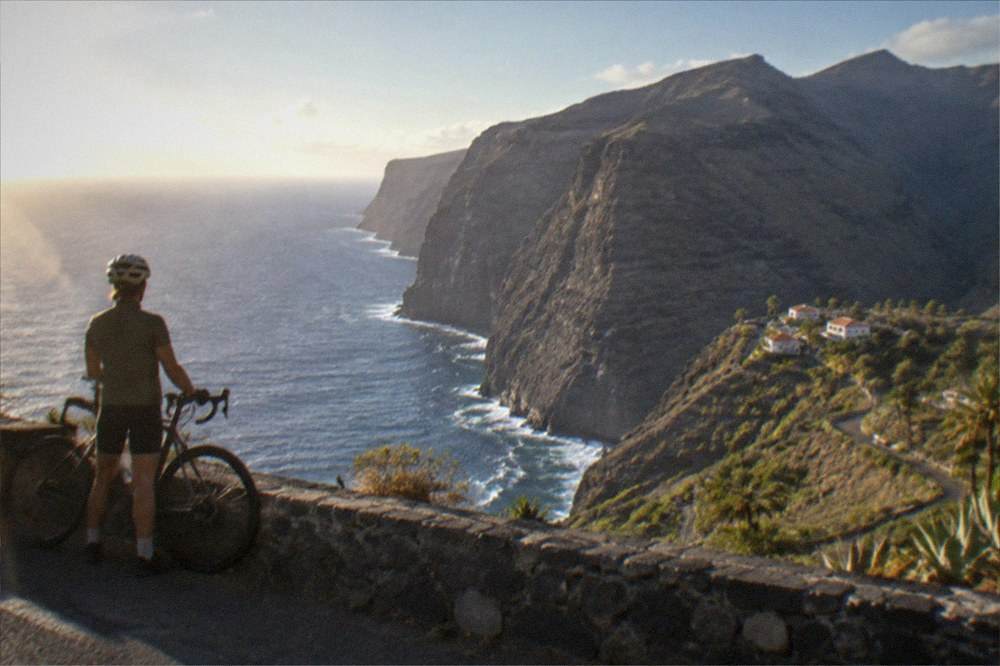
For the national park day, a bike is one option among several. The Teide cable car carries passengers from 2,356 m to La Rambleta at 3,555 m, with a non-resident adult return shown at EUR 42.00 on the operator's price page, and the summit trail above La Rambleta needs a separate Tenerife ON reservation, with the 09:00 to 17:00 slots costing EUR 15 for visitors since 19 January 2026. Riders who want the mountain without the pedals can compare the coach and jeep formats on our Teide tours and jeep safari pages, and the wider excursion menu is on Tenerife excursions.
Families should weigh the bike against the parks. Siam Park is open 365 days a year, 10:00 to 18:00 from 1 May to 29 October and 10:00 to 17:00 the rest of the year, and Loro Parque runs 09:30 to 17:30 every day with its own car park at EUR 7 per day. A day at either is a day off the saddle, and the twin ticket covering both parks is one of the products this site carries. That is the shape of a good cycling holiday here: two or three days on the bike, and the rest of the week spent on everything the island does that a bike cannot reach.
What Should a Cyclist Check Before Booking Anything?
Three checks matter more than any gear list: confirm the hire operator's own terms directly, because no verified record covers hire prices or inclusions; check the Tenerife ON alerts page before any high-mountain ride, because bookings and access can be suspended for fire risk or weather; and never plan a Teide summit hike as an add-on to a ride without the proper reservation, which since 19 January 2026 costs EUR 15 for visitors on the daytime slots and is booked on Tenerife ON.
The first check is honesty about what is verified. This site's facts file holds rows for the cable car, the permits, the buses and the climate, and holds nothing for hire shops. So the questions that decide a hire booking, price, helmet inclusion, delivery, battery range on an e-bike, what happens if the bike breaks, are questions for the operator, and a page that prints confident answers to them without a source is guessing. The guided Santa Cruz tour in this site's roster is the one cycling product whose duration, format and rating are on file, and its live listing carries the current price.
The second check is the alerts page. The smoking ban across every open-air space of the national park is one visible edge of a wider fire-prevention regime, and Tenerife ON states that bookings can be suspended for fire risk or weather alerts. A rider planning to climb into the park in late summer should read the alerts on the morning of the ride, not the week before. In winter, ice and snow on the stratovolcano trails trigger a mandatory equipment rule, crampons and ice axe plus a signed declaration, which tells a rider exactly how seriously the island treats its high mountain.
The third check is the permit question, and it is the one existing guides get wrong most often. The summit trail PNT 10 Telesforo Bravo is booked on Tenerife ON, with a new week of slots released every Monday at 07:00 Canary time so that 56 days stay bookable, and walking it without a reservation may be penalised. The Altavista refuge has reopened after refurbishment with 49 beds and takes prior reservations, but this site does not claim a night there replaces the permit, because no official page read confirms that. A cyclist's holiday plan should treat the summit as its own project, not a spur-of-the-moment extension of a ride.
For riders whose holiday budget covers more than the bike, the island's paid experiences stack up fast, and the pairing that suits most cycling holidays is a boat afternoon. The eco no-chase whale and dolphin encounter from Los Cristianos is the roster's most-reviewed option in that category, and the twin park ticket covers the two big family days.
Common Questions About Cycling in Tenerife
Do I need a helmet on a bike in Tenerife?
No verified row in this site's facts file covers Spanish cycle helmet law, so confirm the current rule with the hire operator or the traffic authority before riding. As a practical matter, hire operators on the island routinely issue helmets, and this site's position is that a helmet is worth wearing on any mountain road regardless of what the law requires.
Can I take a bike on Tenerife buses or the tram?
The verified facts confirm the fares, single tickets priced by route, a EUR 10 day travelcard, a EUR 50 seven-day travelcard and a EUR 1.35 tram single on a transit pass, but no verified source in our files states the bike-carrying rules for either network. Ask TITSA for buses and Metrotenerife for the tram before planning a ride that depends on carrying a bike aboard.
Is cycling to Teide realistic for an ordinary rider?
On a muscle bike it is a serious mountain ride, from sea level towards an altitude of 3,715 m, the figure Spain's own sources give, and it should be planned as one. On an e-bike it is achievable for many more riders, but the high mountain is still a different climate: AEMET's Izana station at 2,369 m records a mean daily minimum of 1.1 Celsius in January and 14 Celsius in July, and the national park bans smoking in all open-air spaces and can suspend access for fire risk. Check Tenerife ON alerts before setting off.
Are there any charges I should know about that affect a cycling day?
The charges that exist on Tenerife are per-booking fees on specific trails, not a general tourist tax, which no official page read shows in force or approved. The Teide summit trail's 09:00 to 17:00 slots cost EUR 15 for visitors since 19 January 2026, the Montana Blanca trail costs EUR 6 on working days and EUR 10 at weekends for visitors, Masca is EUR 40.66 general with the boat extra, and Barranco del Infierno is EUR 15 for non-resident adults. Ordinary road cycling carries none of these, but a ride that turns into a hike might.
What about a free walking tour on a rest day?
Rest days are part of every cycling week, and this site carries three free, pay-what-you-want walking tours booked through GuruWalk: a Santa Cruz historic centre walk, a Puerto de la Cruz walk and a La Orotava walk. They cost nothing to join, you tip what you choose, and they suit a day when the legs need a break from the pedals.
Is the sea warm enough to swim after a ride?
For most of the year, yes. NOAA's 1991-2020 series for the south coast puts the sea at 23.7 Celsius in September and October at its warmest, 21.4 in June, and 19.1 in March at its lowest. A post-ride swim in winter is still perfectly swimmable by northern European standards, and the air normals for the south coast, a mean daily maximum of 21.7 Celsius in January at the airport station, are part of why the riding season here never really closes.