One Day in Tenerife from the Cruise Port
A cruise call gives you one day on an island that holds Spain's highest peak, a UNESCO national park and a resident population of pilot whales. Here is what fits into that day, what does not, and what each option officially costs.
Short answer
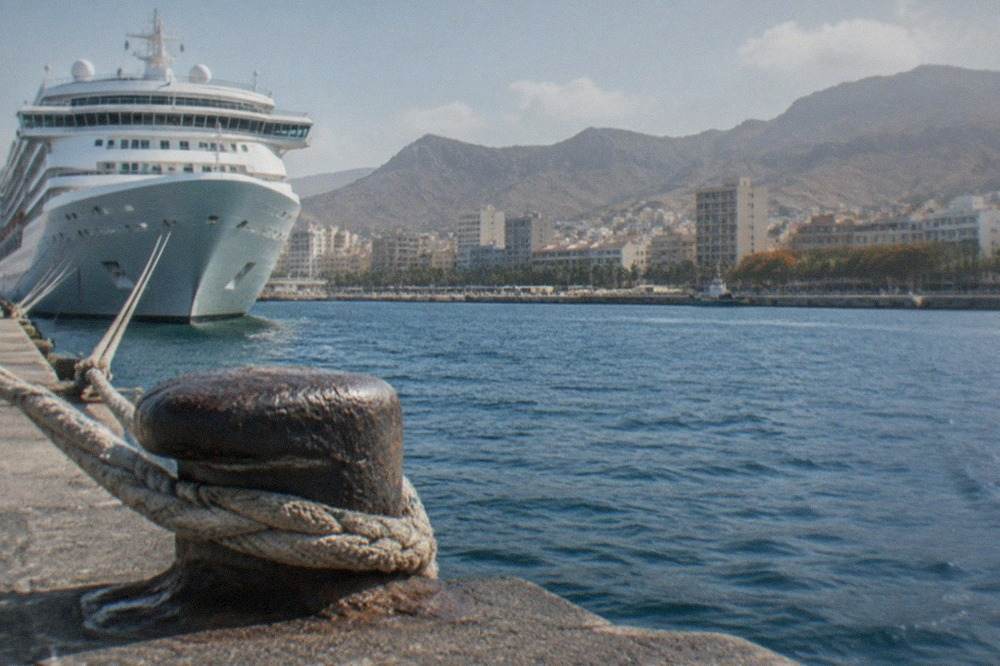
Most cruise ships call at the cruise port in Santa Cruz de Tenerife, on the island's north-east coast. Mount Teide, whale watching off the south coast and the colonial streets of La Laguna are all realistic for a single day; the Masca gorge descent is not, because its rules require a boat exit and a timed entry slot.
A single day is enough to stand above the clouds on a volcano, sail past cliffs that the tourist board measures at up to 600 m, or eat papas arrugadas in a colonial town that UNESCO lists alongside the great cities of the Americas. It is not enough to do all three. The cruise port in Santa Cruz de Tenerife sits on the north-east corner of the island, and every honest plan for the day starts with that geography: the volcano is west and high, the whale grounds are south, and the beaches the tourist board praises for golden sand are a bus ride away in either direction.
This page works through the day the way a planning desk would: where the ship actually is, what is reachable, what each official option costs, and which ideas should be dropped before breakfast. The verified numbers come from the Cabildo, the cable car operator, the bus company and the meteorological service, not from a brochure. Where a figure is not on an official page, it is not printed here.
Where Do Cruise Ships Dock in Tenerife
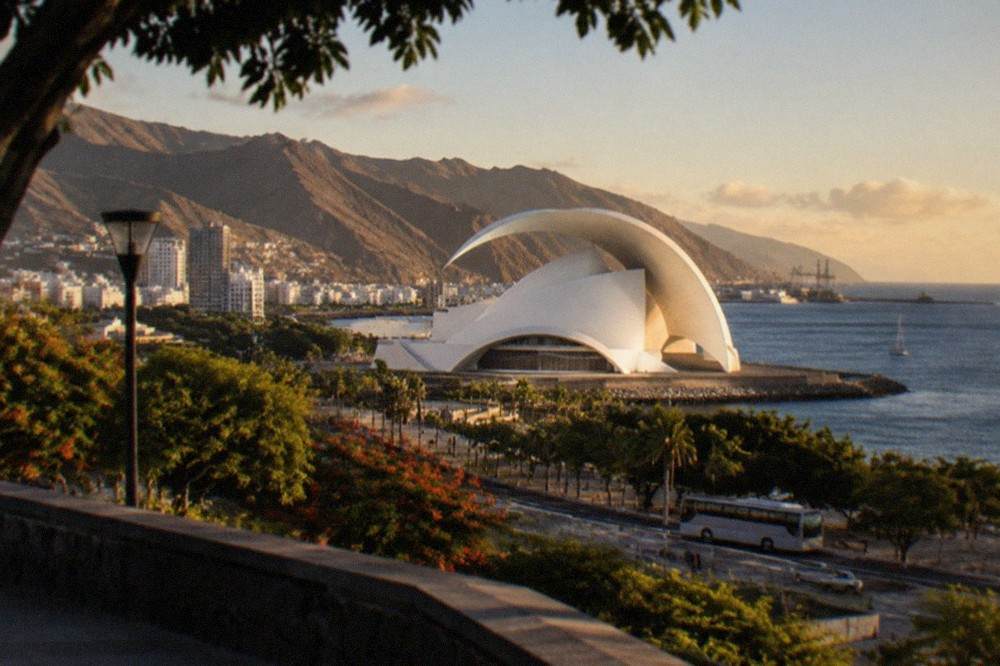
Cruise ships dock at the cruise port in Santa Cruz de Tenerife, the island's capital, on the north-east coast. Santa Cruz is one of the two big cities on Tenerife and the port sits right at the edge of its centre, with the Auditorio de Tenerife, a concert hall by Santiago Calatrava inaugurated in 2003, standing beside the water. No specific berth, quay or terminal is named here because none has been verified on an official page.
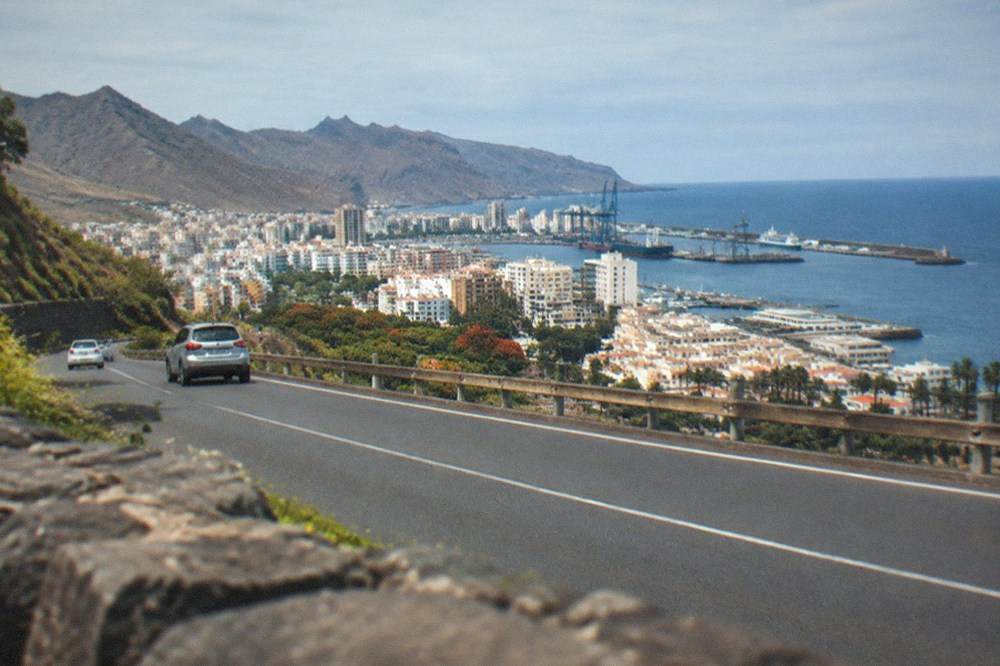
What that location means in practice: the island's biggest attractions are not at the doorstep. Mount Teide and its national park sit in the centre of the island at altitude. The whale-watching fleets work out of the southern resorts, Los Cristianos and Costa Adeje, where the resident pilot whales live. La Laguna, the UNESCO-listed colonial town, is inland of the capital. A day in port is therefore a choice, not a checklist.
The port is also a working ferry terminal. Fred. Olsen Express runs from Santa Cruz to Agaete on Gran Canaria in 80 minutes, and the southern port of Los Cristianos connects to San Sebastian de La Gomera in 50 minutes, Santa Cruz de La Palma in 150 minutes and Valverde on El Hierro in 140 minutes. Those routes matter to cruise passengers only as context: the island-hopping options are covered properly in the La Gomera day trip guide, which explains why a ferry crossing is a poor fit for a single-day call.
What to Do in Tenerife Off a Cruise Ship
Four kinds of day work from the cruise port: a volcano day at Teide National Park, a boat day with the resident pilot whales off the south coast, a city day in Santa Cruz and La Laguna, and a north-coast day taking in the dragon tree at Icod de los Vinos and the Garachico natural pools. A fifth idea, the Masca gorge, does not work, because its pilot scheme requires a timed entry, a mandatory bus arrival and a pre-booked boat exit.
The choice is mostly about hours. A volcano day or a whale day eats the whole call; a city day leaves room for a long lunch; the north-coast loop suits a late departure. Shore excursions sold on board and tours booked independently cover the same ground, and the deciding factors are pickup at the port and the size of the group. The three options below are the ones this desk would weigh first for a one-day call.
For passengers who prefer to plan their own hours, the rest of this page gives the official prices and rules for each of those days, so the comparison can be made on facts rather than on a sales desk's promises.
Can You Reach Mount Teide from the Cruise Port in One Day
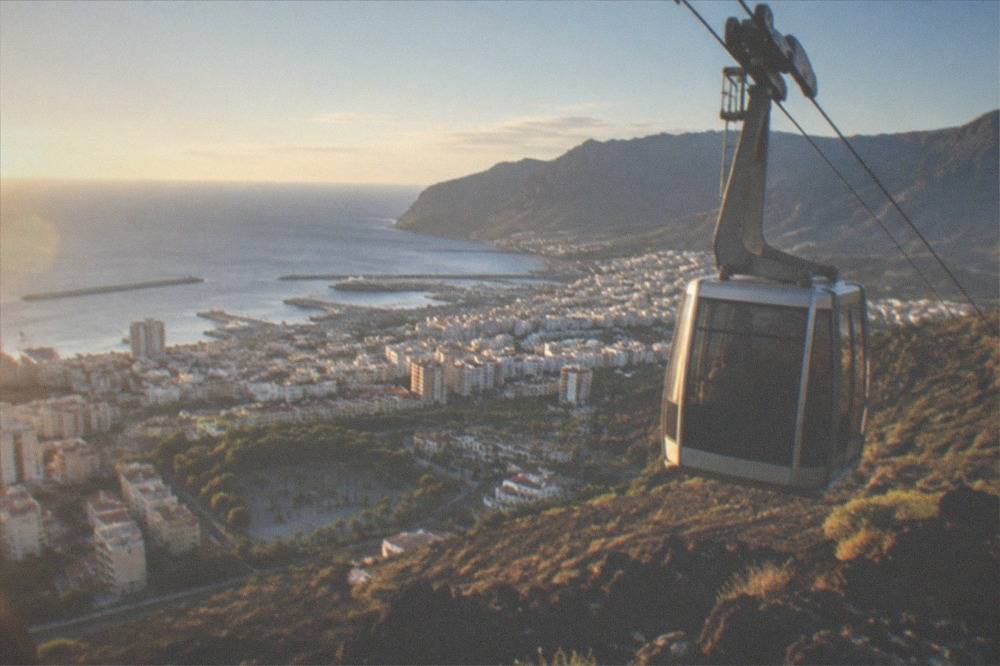
Yes, and it is the most popular single-day plan from the cruise port. The cable car runs from a base station at 2,356 m up to La Rambleta at 3,555 m, inside a national park that UNESCO inscribed on 2 July 2007 and that recorded 5,242,653 visitors in 2024, the most visited park in Spain's network. The cable car does not reach the summit: the crater trail is a separate, permit-only path booked through Tenerife ON.
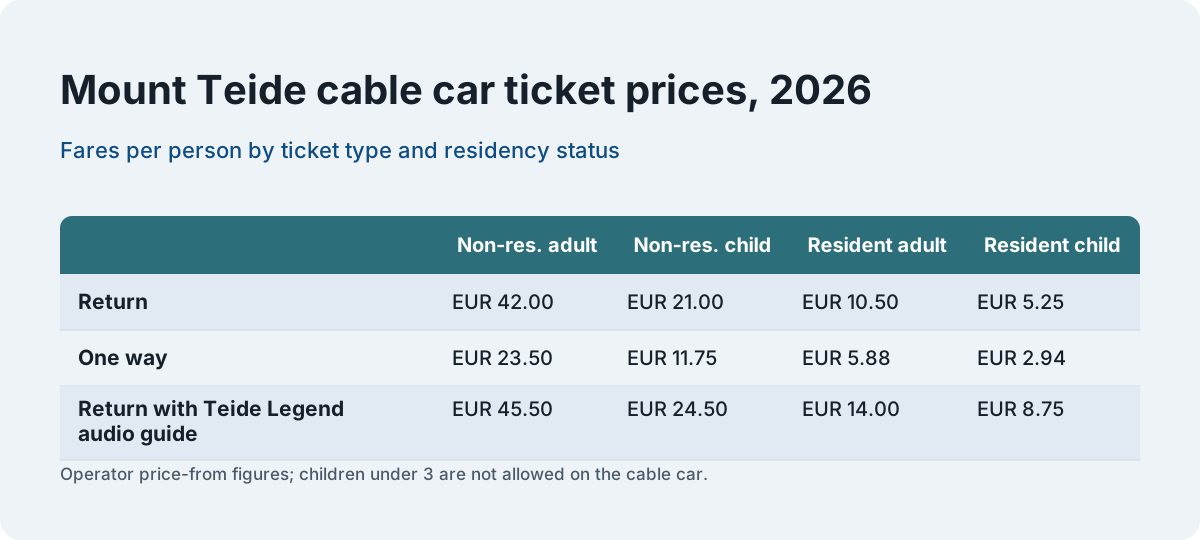
The distinction between the three Teide experiences matters more here than anywhere else, because a day in port leaves no room for a booking mistake. Driving through Teide National Park costs nothing and needs no booking on any page read. The cable car is an operator ticket, priced by the operator as follows.
| Cable car ticket, 2026 | Non-resident adult | Non-resident child (3 to 13) | Resident adult | Resident child |
|---|---|---|---|---|
| Return | EUR 42.00 | EUR 21.00 | EUR 10.50 | EUR 5.25 |
| One way | EUR 23.50 | EUR 11.75 | EUR 5.88 | EUR 2.94 |
| Return with Teide Legend audio guide | EUR 45.50 | EUR 24.50 | EUR 14.00 | EUR 8.75 |
The operator shows the return fare as a "price from" figure, and the operator's access rules exclude people with cardiovascular conditions, pregnant women and children under 3, because of the altitude. Standard 2026 hours are 09:00 to 17:00 for much of the year, extending to 18:40 in the peak periods; the last ascent is one hour before closing and the last descent ten minutes before. Hours for the last weeks of the year are not on file, so the operator's timetable is the thing to check before a winter call.
The third Teide experience, the summit trail PNT 10 Telesforo Bravo, needs a personal reservation on Tenerife ON, with accredited guides required and organisations not allowed. Since Monday 19 January 2026 the 09:00 to 17:00 slots cost EUR 15 for visitors and EUR 6 for residents of the other Canary Islands, free only for Tenerife residents and children. New weeks of slots are released every Monday at 07:00 Canary time, keeping 56 days bookable. A new week is released every Monday at 07:00 Canary time, keeping 56 days bookable, and a no-show can bar a user from new applications for three months. The full rules, including the out-of-hours sunrise and sunset slots, are laid out in the Teide summit permit guide.
For a cruise day, the honest summary is this: the cable car plus the viewpoints is a complete volcano day on its own, and a summit permit is a booking to make only with a plan for the altitude and the checkpoint. The Cabildo also bans smoking in every open-air space of the national park, car parks included, which catches many visitors out. Whether the volcano is merely sleeping is a separate question, answered in is Mount Teide active.
A shore excursion with port pickup solves the hardest part of the Teide day, the transfer, and the small-group version above is built around exactly that constraint. For a passenger weighing whether to book it, the operator's live listing carries the current price and departure details.
Is Tenerife Walkable from the Cruise Port
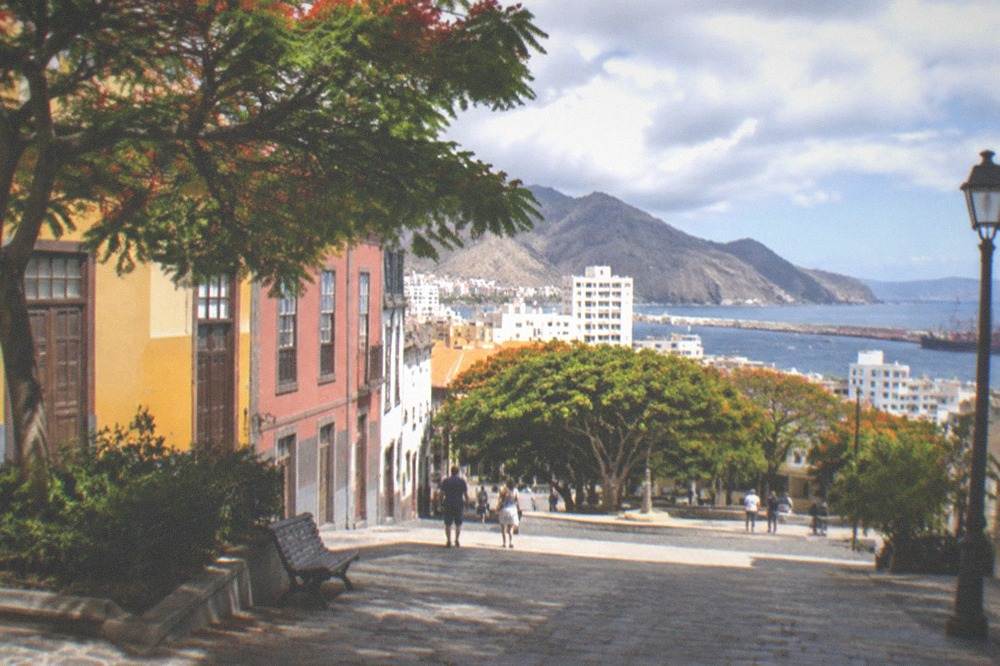
Santa Cruz itself is walkable from the port in the sense that the city centre, the Mercado de Nuestra Senora de Africa market and the Auditorio de Tenerife all sit beside the water. No walking time or distance from the port to any of them is printed here, because none has been measured on a verified source. Beyond the capital, nothing on this island is walkable from the port: Teide, the south-coast whale grounds and the north-coast towns all need a vehicle, a bus or a booked excursion.
For passengers who want a day on foot, the capital rewards it. The free walking tours of the historic centre of Santa Cruz run on GuruWalk, free to join and tip-based, and the card below shows the current English-language rating. La Laguna, the UNESCO-listed colonial town whose layout provided the model for many colonial towns in the Americas, is a short bus or tram ride inland; the tram's single fare is EUR 1.35 on a transit pass, EUR 1.10 by mobile, per Metrotenerife's fares page. The tram does not serve the cruise port, and no claim is made here about where its lines run beyond that.
Passengers travelling with luggage between a hotel and the port have a dedicated left-luggage option, and the practical move for a late departure is to store bags near the port in Santa Cruz and use the last hours without hauling them.
Whale Watching on a Port Day: What the Rules Allow
The waters between Tenerife and La Gomera hold a unique resident population of pilot whales, bottlenose dolphins and a migration stop for 21 other cetacean species, inside a Special Area of Conservation. The World Cetacean Alliance designated the Tenerife-La Gomera Marine Area a Whale Heritage Area in January 2021. Boat behaviour is regulated by Decreto 178/2000: no approach within 60 m, at most three boats within 500 m, 4 knots within 500 m, and no swimming within 500 m.
That decree is why the authorised boats fly the Barco Azul flag, issued by the Canary tourism department with the permit and renewed annually. A cruise passenger choosing a whale trip is choosing within a regulated fishery, and the no-chase operators advertise precisely the conduct the decree demands. The trips leave from the southern ports, Los Cristianos and Costa Adeje, which is why most cruise passengers reach them on an organised excursion rather than by public transport, given a single day. The full index of guides sits on Tenerife Travel Guide.
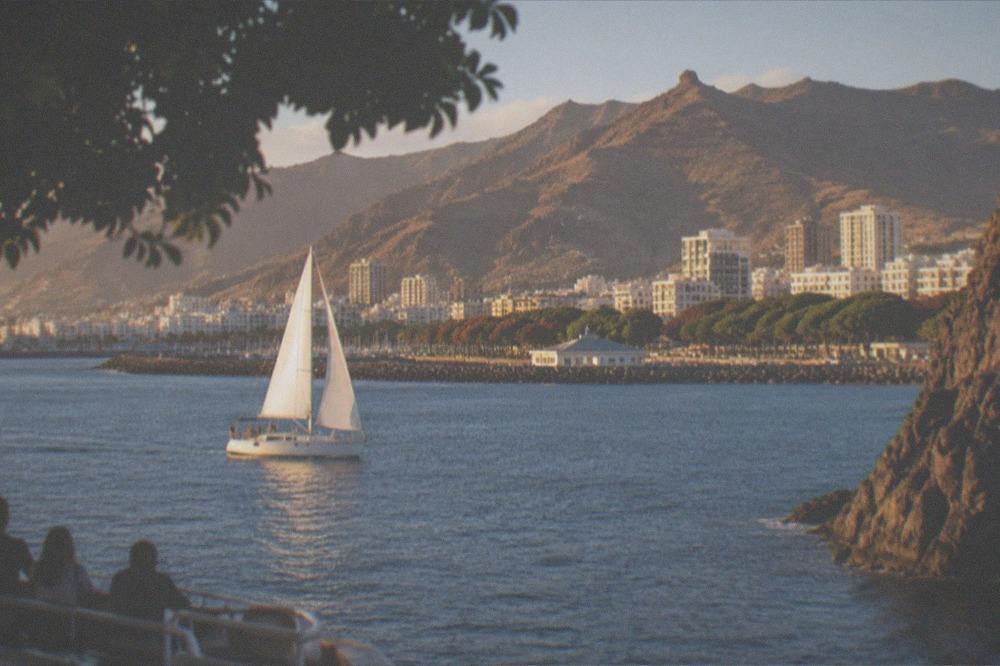
The sailboat above works the Los Gigantes coast, where the cliffs tower up to 600 m in the tourist board's words, with a seabed about 30 m deep at their foot. More options across the southern ports, catamarans and eco-cruises included, are compared in the Teide from the south day trip guide, which covers the same geography from a resort base.
What Is the Weather Like in the Tenerife Cruise Port
Santa Cruz de Tenerife is warm all year: AEMET's 1981-2010 normals for the city station give a mean of 18.2 C in January and 25.5 C in August, with July and August averaging 28.7 and 29 C in daytime maximums. Rain is concentrated in November to February, and the sea off the south coast never drops below 19.1 C in the annual cycle, peaking at 23.7 C in September and October.
The port sits at 36 m altitude on the sheltered north-east coast, and the numbers below are the official climate normals for the city itself. They matter to a cruise day because the island's vertical geography multiplies them: the same day that reads 25 C in Santa Cruz can read single figures on the Teide ridge, where AEMET's Izana station at 2,369 m averages a January maximum of 7.5 C and a July maximum of 23 C. Anyone booking a volcano day should pack for two climates.
| Month | Mean daily max C | Mean daily min C | Rain mm | Sunshine hours |
|---|---|---|---|---|
| Jan | 21.0 | 15.4 | 32 | 178 |
| Feb | 21.2 | 15.3 | 35 | 186 |
| Mar | 22.1 | 15.9 | 38 | 221 |
| Apr | 22.7 | 16.5 | 12 | 237 |
| May | 24.1 | 17.8 | 4 | 282 |
| Jun | 26.2 | 19.5 | 1 | 306 |
| Jul | 28.7 | 21.2 | 0 | 337 |
| Aug | 29.0 | 21.9 | 2 | 319 |
| Sep | 28.1 | 21.7 | 7 | 253 |
| Oct | 26.3 | 20.3 | 19 | 222 |
| Nov | 24.1 | 18.4 | 34 | 178 |
| Dec | 22.1 | 16.6 | 43 | 168 |
AEMET publishes the Santa Cruz annual as 226 mm of rain on 29.7 days with 1 mm or more. The sea temperatures are a different dataset on a different period, 1991-2020, and are never mixed into the air figures.
What Is the Best Beach Near Tenerife Cruise Port
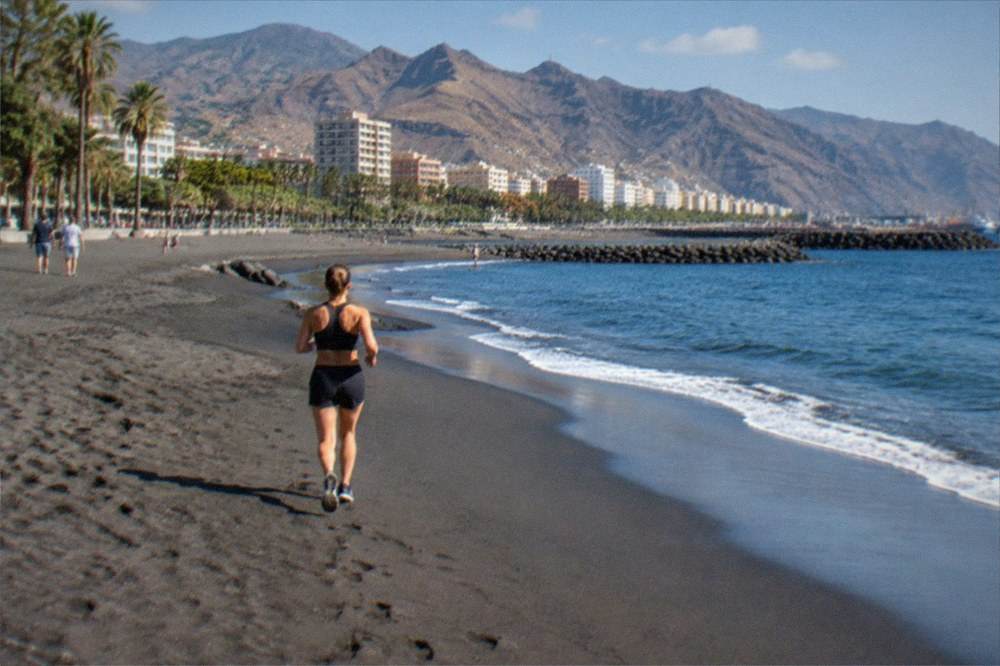
The beach the tourist board praises closest to the capital is Las Teresitas, at San Andres in Santa Cruz, described on its official page as golden sand with palm trees and breakwaters that calm the water. The other tourist-board golden sands, Las Vistas at Arona, sit in the southern resorts rather than near the port. Playa del Duque at Costa Adeje is grey sand on the tourist board's own page, a detail many guides get wrong.
For a port day, Las Teresitas is the practical swim: it belongs to the same municipality as the port, the breakwaters make the water family-friendly, and no ferry or long transfer is involved. No journey time from the port is stated here, because none is verified. The full comparison of golden and grey sands, including Las Teresitas, Las Vistas, El Duque and the black sand of El Bollullo, is in the best beaches guide.
Passengers who want animals rather than sand have the twin-ticket option, which pairs the two big parks on one ticket: Loro Parque at Puerto de la Cruz, open 09:30 to 17:30 every day of the year, and Siam Park at Costa Adeje, open 365 days from 10:00 to 18:00 in the summer season and 10:00 to 17:00 in the winter one. On a single-day call the twin ticket only makes sense for a ship that departs late; as a pairing it suits a longer stay, which is why it appears in the seven-day itinerary instead.
What Is the Best Month to Cruise the Canary Islands
The Canary Islands cruise season runs all year, and the official numbers show why: 643,460 tourists arrived in Tenerife by air in January 2025 and 618,578 in August, with the shoulder months of April, May and June the quietest, at 604,370, 539,410 and 542,881 respectively. The sea is warmest in September and October at 23.7 C and the island's rain falls mostly in November to February, so no month is a write-off and the choice is between crowds, heat and rain risk.
Those arrival figures count tourists by air, excluding Canary Islands residents, and are published by the Canary statistics institute. Cruise passengers are a separate stream again, but the air numbers are the best official proxy for how busy the island's marquee attractions will feel. The pattern is consistent: winter is the high season, exactly when northern Europe flees its own weather, and the port reflects it.
| Month, 2025 | Tourists arriving by air | Sea surface C off the south coast |
|---|---|---|
| Jan | 643,460 | 19.9 |
| Feb | 648,255 | 19.2 |
| Mar | 677,688 | 19.1 |
| Apr | 604,370 | 19.5 |
| May | 539,410 | 20.2 |
| Jun | 542,881 | 21.4 |
| Jul | 611,623 | 22.2 |
| Aug | 618,578 | 23.1 |
| Sep | 563,261 | 23.7 |
| Oct | 631,662 | 23.7 |
| Nov | 659,656 | 22.5 |
| Dec | 671,202 | 21.1 |
The air normals behind the sea column are 1981-2010 and the sea figures are 1991-2020, two datasets on two periods, so they are never blended into one "climate" number. For a month-by-month read of the whole island, including the north-south split that decides a beach day, see the Tenerife weather by month guide.
Port Day Rules: Buses, Permits and the Charges That Exist
Visitors pay for public transport on Tenerife: single tickets are priced by route, the day travelcard costs EUR 10 and the seven-day travelcard EUR 50, per TITSA's fares page. The 2026 free-transport subsidy is a residents' scheme, requiring a personalised Ten+ card and Canary Islands residency, and visitors do not qualify. There is no tourist tax on Tenerife: no official page read shows a per-night lodging tax in force or approved, and the charges that do exist are per-booking fees on specific trails.
For a port day the practical table is this one, the official per-booking charges a cruise passenger might actually meet. None is a tax on staying; each buys a specific access.
| Official charge | Who pays what |
|---|---|
| Teide summit trail PNT 10, 09:00 to 17:00 slots | EUR 15 visitors; EUR 6 other Canary Islands residents; free for Tenerife residents and children |
| Teide trail PNT 07 Montana Blanca, 09:00 to 17:00, working days | EUR 6 visitors; EUR 3 other Canary residents; free for Tenerife residents |
| Teide trail PNT 07, weekends and public holidays | EUR 10 visitors; EUR 5 other Canary residents; free for Tenerife residents |
| Masca gorge descent | EUR 40.66 general ticket, boat not included; free for Tenerife residents |
| Barranco del Infierno | EUR 15 non-resident adult; EUR 5 Canary residents; advance online booking compulsory |
The Masca row deserves its own warning, because it is the plan most often attempted and most often doomed by a cruise timetable. The gorge is open under a pilot scheme, descent only, with entry sessions from 08:30 to 13:00, 25 places every 30 minutes and 50 at the 09:00 session. Hikers must arrive on TITSA line 355 from Santiago del Teide and show the bus ticket; private vehicles are refused. The boat ticket is separate, must be booked beforehand and shown at the controls, and a sudden pier closure from sea conditions voids the day's ticket. Closed mountain footwear is a condition of entry. A cruise passenger can, in principle, do all of this; in practice the Masca, Garachico and Icod route is the realistic way to see that corner of the island, on a day with no departure deadline.
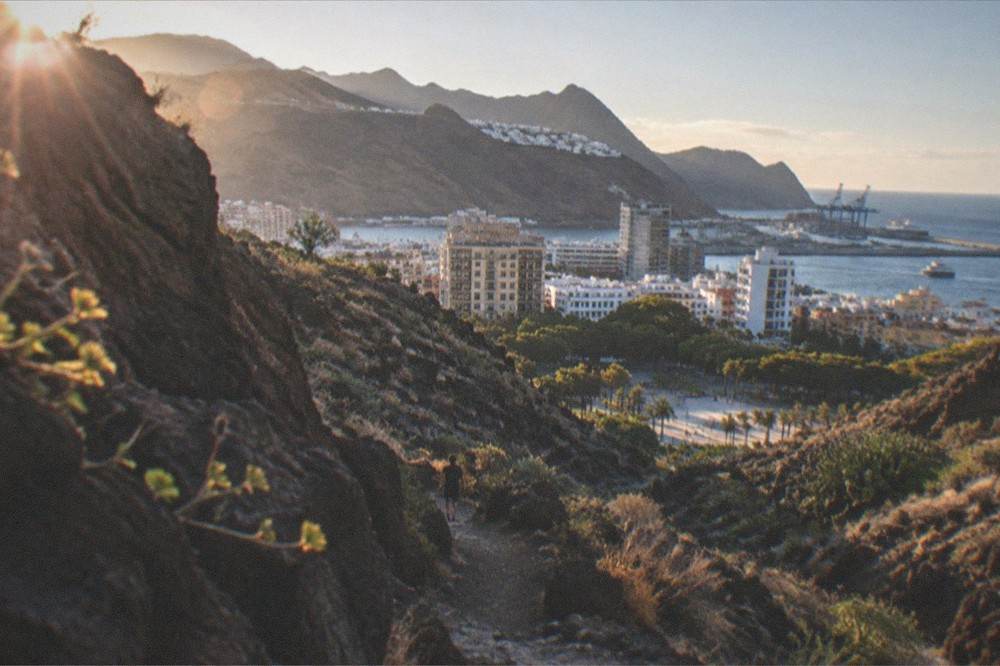
Passengers who decide the island deserves more than one day, and many do, can compare the island against its neighbours in which Canary island is best or against Gran Canaria specifically in Tenerife versus Gran Canaria. This desk's own view, from the numbers above, is that a single call is enough to know whether the island earns a return flight: the volcano, the whales and the colonial capital are three different holidays sharing one coastline. For anyone whose day in port has settled the question, the three bookable options that fit a cruise call best are gathered below.
For those extending the stay, hiring a vehicle is the move that unlocks the north coast and the gorge country, and the practical comparison is on the car hire options across the island. The driving rules, including the 0.5 g/l blood-alcohol limit the DGT page refers to, are in the driving in Tenerife guide.
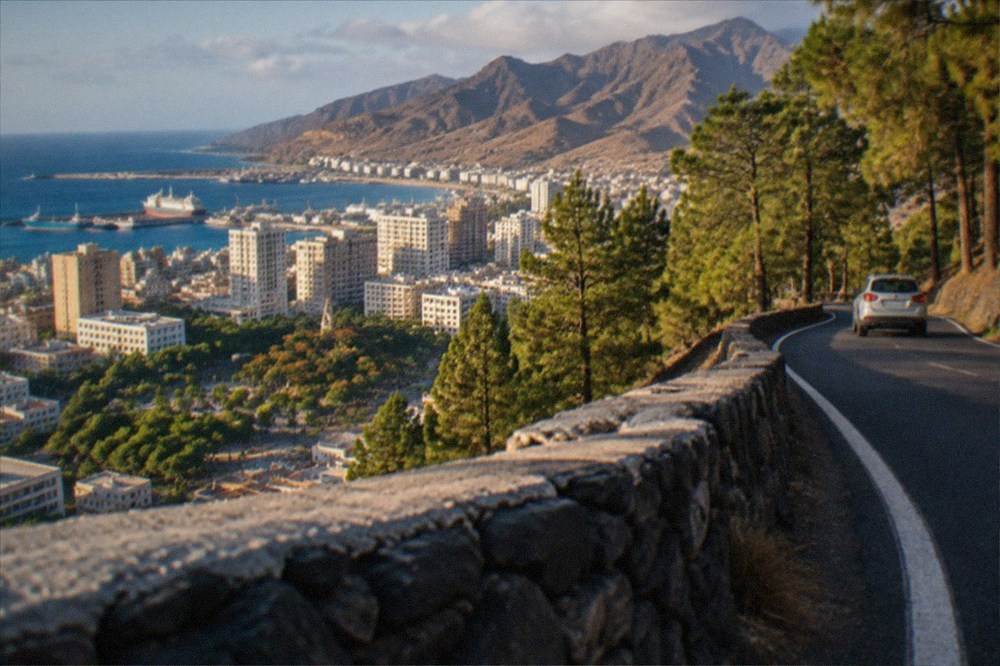
Common Questions About Tenerife Cruise Port Days
What to do in Tenerife from cruise ship?
The realistic single-day options are the Teide National Park by cable car or excursion, a whale-watching trip from the southern ports, a city day in Santa Cruz with the free GuruWalk walking tour of the historic centre, or the north-coast loop to the dragon tree at Icod de los Vinos and the Garachico natural pools. The Masca gorge descent is not a realistic cruise-day plan because of its timed entry, mandatory bus arrival and pre-booked boat exit.
Where do cruise ships dock in Tenerife Canary Islands?
At the cruise port in Santa Cruz de Tenerife, the island's capital, on the north-east coast. No specific berth, quay or terminal is named on this site because none has been verified on an official page.
What to do in Tenerife off a cruise ship?
Choose one big thing rather than three small ones: the volcano, the whales, or the colonial city. The cable car return fare is EUR 42.00 for a non-resident adult on the operator's 2026 price page, whale trips are regulated by Decreto 178/2000 with a 60 m minimum approach distance. The Santa Cruz historic centre also has a free, tip-based GuruWalk walking tour.
Do I need a permit for anything on a cruise day?
Only if the plan includes the Teide summit trail PNT 10, which needs a personal reservation on Tenerife ON, or the Masca gorge, which needs a ticket and boat booking through caminobarrancodemasca.com. The cable car, the viewpoints, the national park drive, the beaches and the city need no permit at all.
Is there a tourist tax in Tenerife?
No official page read shows a per-night lodging tax in force or approved on Tenerife. The charges that do exist are per-booking fees on specific trails: the Teide trails PNT 10 and PNT 07, the Masca gorge and the Barranco del Infierno.