Teide National Park and Mount Teide
Teide National Park is the most visited national park in Spain, and Mount Teide is the highest peak on Spanish soil. Here is what the official pages actually say about fees, permits, hours and weather.
Short answer
Entry to Teide National Park carries no charge on any official page read. The paid things are the cable car, the summit trail permit and the Montaña Blanca trail. Since 19 January 2026 the daytime summit slots cost visitors EUR 15.
Teide National Park recorded 5,242,653 visitors in 2024, which makes it the most visited park in Spain's entire national park network, according to the network's own annual visitor report. At its centre stands Mount Teide, 3,715 m high in the figure Spain's own environment ministry gives, the highest peak on Spanish soil in UNESCO's words, and the reason most of those five million people came. The park was declared by decree on 22 January 1954, covers 18,990 hectares with a peripheral protection zone of 7,374.32 hectares, and was inscribed by UNESCO as a World Heritage Site on 2 July 2007 under natural criteria (vii) and (viii). This page gathers what the official pages say: what the cable car costs and when it runs, what the summit permit really involves, how cold the top gets, and which rules catch visitors out.
What Is Special About Mount Teide?
Mount Teide is a 3,715 m stratovolcano, the highest peak on Spanish soil, rising inside the most visited national park in Spain, and UNESCO describes it as rising 7,500 m above the ocean floor, "regarded as the world's third-tallest volcanic structure". The park around it, declared in 1954, is the largest and oldest national park in the Canary Islands.
The height deserves care, because official sources do not fully agree. MITECO, the Spanish ministry that runs the national park network, and Turismo de Tenerife both give 3,715 m. UNESCO's inscription page gives 3,718 m. This site uses 3,715 m throughout, because two Spanish official sources carry it. The "third-tallest" claim is even more delicate: the only supportable wording is UNESCO's own, which says the volcano rises 7,500 m above the ocean floor and is "regarded as the world's third-tallest volcanic structure". Shorten that sentence and it stops being true.
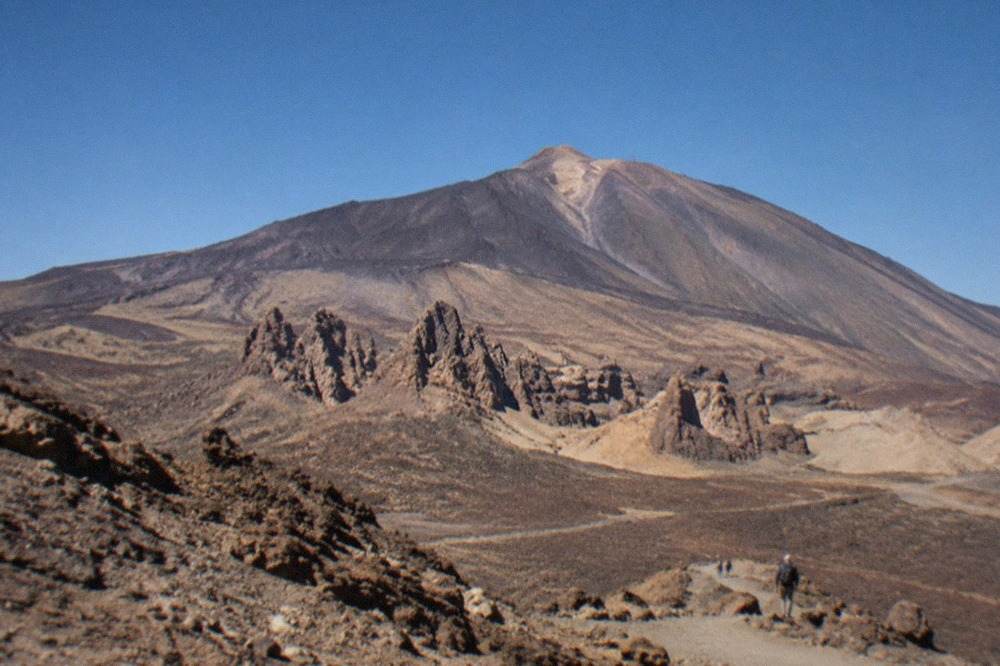
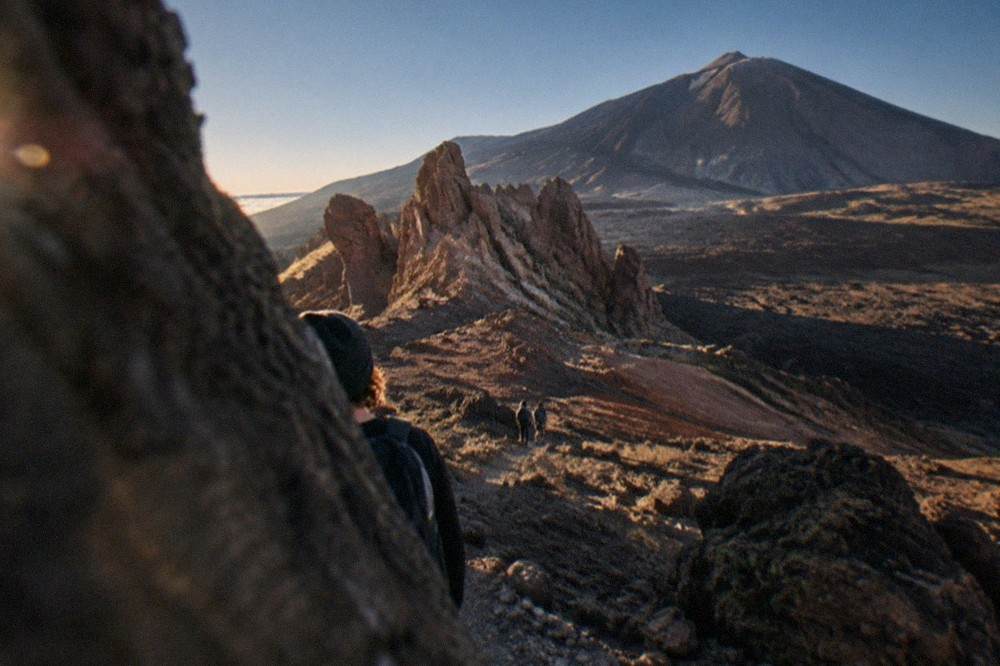
The landscape is the other half of the answer. The park sits high enough that AEMET, the Spanish met office, runs a weather station on the Izaña ridge at 2,369 m, and its climate normals read like a mountain station in central Europe rather than a subtropical island: January mean daily maximum 7.5 Celsius, July mean daily maximum 23 Celsius. The rock formations, lava fields and the Roques de García rock group are what most day visitors photograph, and the whole park is a Starlight Reserve in the Fundación Starlight listing, which is the formal backbone of the stargazing industry that runs here every clear night.
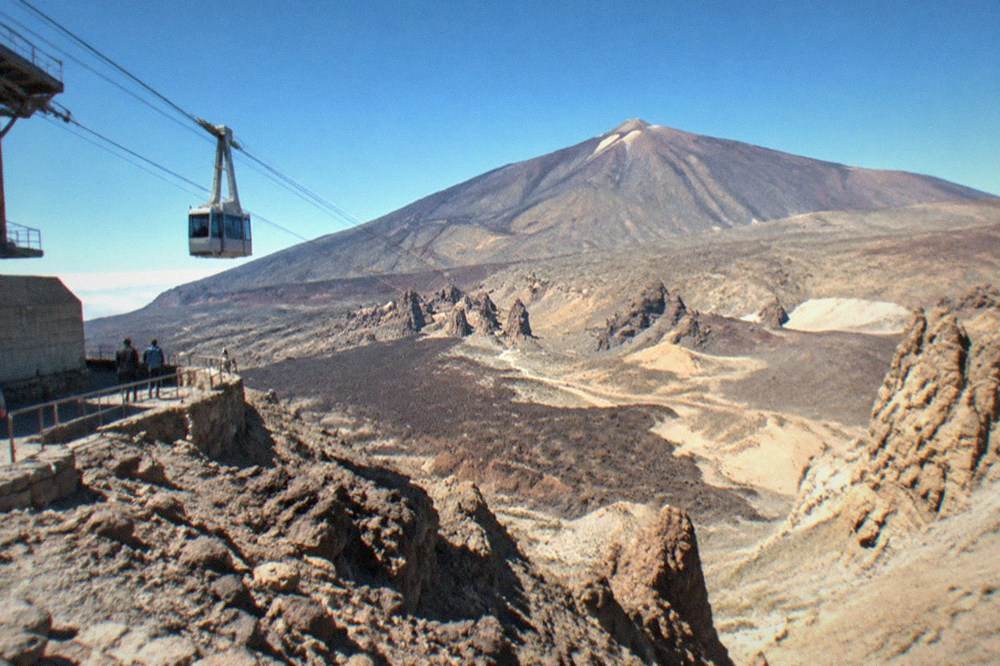
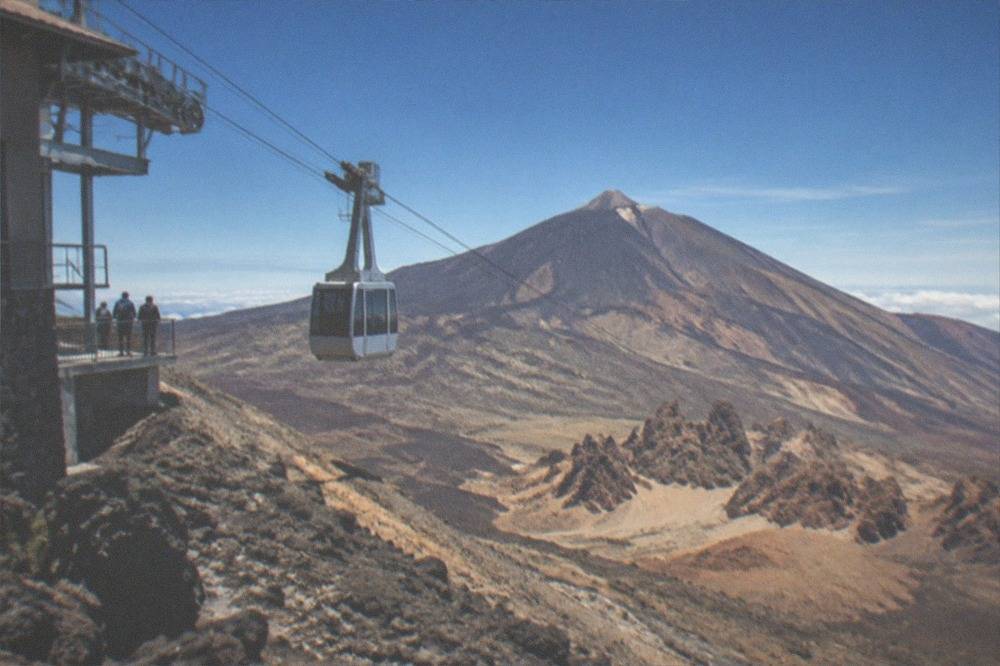
One more distinction matters before anything else, because half the confusion about Teide comes from blurring three separate things. Driving through the national park and stopping at the viewpoints carries no charge on any official page read. The cable car is an operator ticket that stops at La Rambleta, 3,555 m. The crater at the very top is a permit-only trail, booked on Tenerife ON, and no tour or cable car ticket substitutes for it. The Teide cable car has its own page with the full price table; the permit process is covered in the Teide summit permit guide.
Is It Worth Going Up Mount Teide?
Going up is worth it for almost every visitor, and the official numbers explain why: the cable car lifts you from 2,356 m to 3,555 m in minutes, the park above the clouds holds Spain's highest viewpoint network, and the same ridge hosts one of the world's major observatories. The one honest caveat is altitude: the operator refuses people with cardiovascular conditions, pregnant women and children under 3.
The value case rests on what you cannot get any other way. From La Rambleta, the upper cable car station, the views run across the caldera and, on clear days, to Gran Canaria, La Palma and La Gomera. The sunsets are the reason the evening coach tours exist: above the inversion layer that often traps cloud on the coast, the sky stays clear while the island below goes dark. AEMET's sunshine normals for the Izaña ridge show why the stargazing operators can plan with confidence: 382 sunshine hours in both June and July, and never fewer than 218 hours in any month of the year.
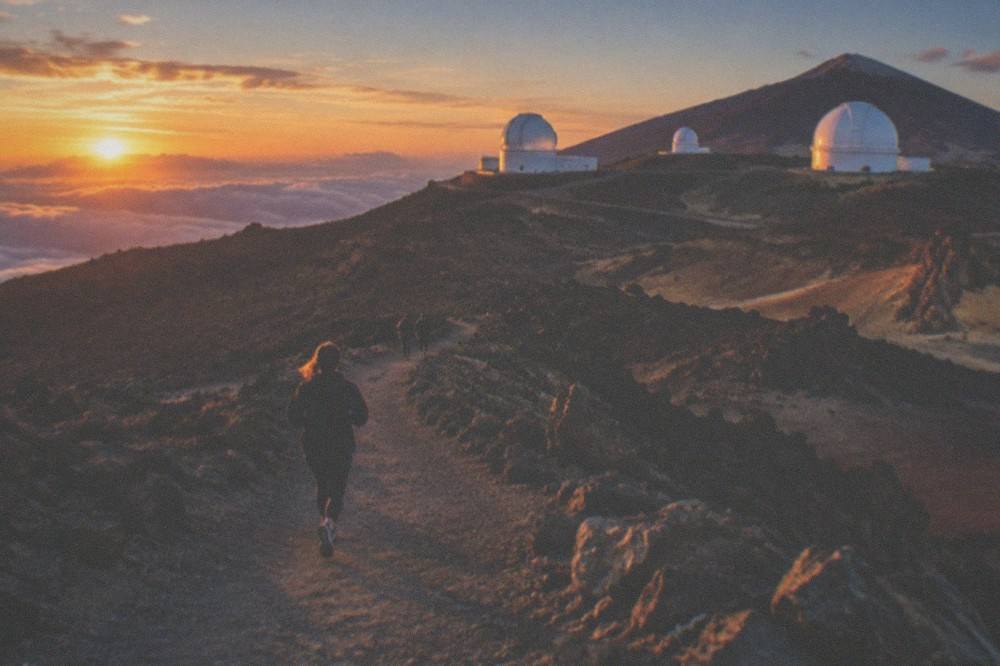
The altitude caveat is the operator's own, not this site's editorialising. The cable car company's access rules state that people with cardiovascular conditions, pregnant women and children under 3 are not allowed because of the altitude, and that anyone with health problems should ask a doctor first. The same logic applies on the summit trail, which Tenerife ON describes as not suitable for people with heart, respiratory or mobility problems. Altitude is also why the Teide Observatory sits here at about 2,400 m: the observatory's own page notes its first telescope began work in 1964, and guided visits run by prior reservation only.
For visitors who want the summit itself rather than the upper station, there is a guided option that handles the permit and the pickup.
How Much Does It Cost to Go Up Mount Teide?
Entry to the national park itself carries no charge on any official page read. The paid items are the cable car, from EUR 42.00 for a non-resident adult return ticket, and the two booked trails: since 19 January 2026 the daytime summit slots cost visitors EUR 15 and the Montaña Blanca trail EUR 6 on working days, EUR 10 at weekends.
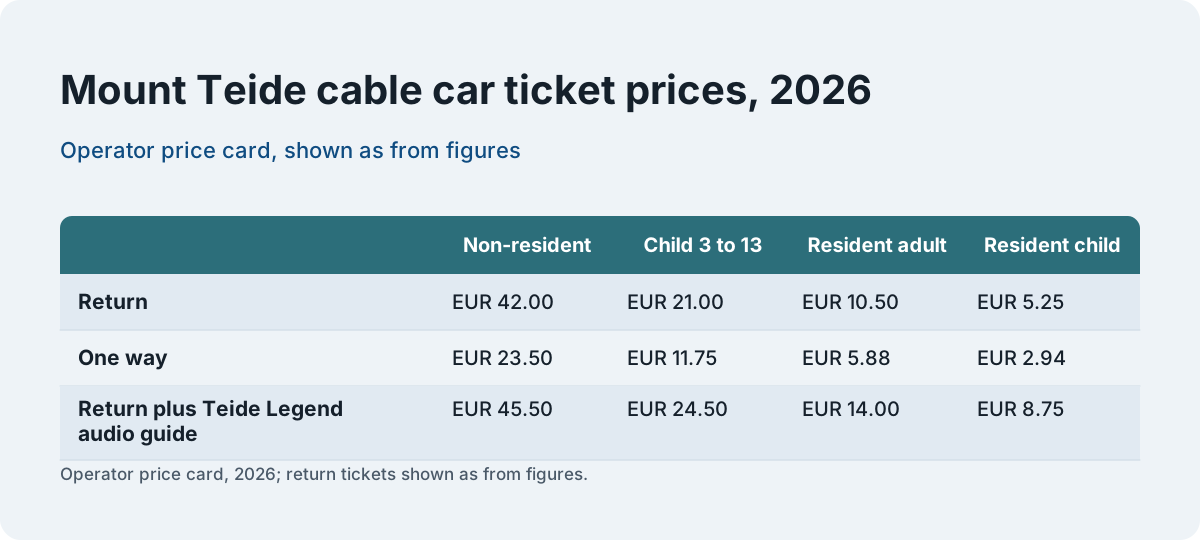
The cable car price card for 2026, as published by the operator, is worth reading in full because the resident rates are less than a quarter of the visitor rates. The return ticket is shown as a "price from" figure, which is the operator's own wording.
| Ticket | Non-resident adult | Non-resident child (3 to 13) | Resident adult | Resident child |
|---|---|---|---|---|
| Return | EUR 42.00 | EUR 21.00 | EUR 10.50 | EUR 5.25 |
| One way | EUR 23.50 | EUR 11.75 | EUR 5.88 | EUR 2.94 |
| Return plus Teide Legend audio guide | EUR 45.50 | EUR 24.50 | EUR 14.00 | EUR 8.75 |
The trail fees are public charges set by the Cabildo, not operator prices, and they apply only to the 09:00 to 17:00 slots. Tenerife ON lists the 06:00 to 09:00 and 18:00 to 22:00 slots on the summit trail as bookable reservations with no fee mark on them, but a reservation is still required, and walking without one can be penalised.
| Trail | Slot | Tenerife resident | Other Canary resident | All other users |
|---|---|---|---|---|
| PNT 10 Telesforo Bravo (summit) | 09:00 to 17:00 | EUR 0 | EUR 6 | EUR 15 |
| PNT 07 Montaña Blanca, working day | 09:00 to 17:00 | EUR 0 | EUR 3 | EUR 6 |
| PNT 07 Montaña Blanca, weekend or public holiday | 09:00 to 17:00 | EUR 0 | EUR 5 | EUR 10 |
Children are exempt from the summit trail fee, though the official page itself gives two different age cut-offs, so the booking page is the place to check which age band applies. The fee is set by the place of residence on the ID card or passport, which must be shown with the booking at the checkpoint. Refunds are not given: the booking is non-refundable, with no changes of date, slot or names, and money comes back only if the trail is closed or the cable car is not operating. Failing to use a booking can bar a user from new applications for three months.
For visitors who would rather fold transport and ticket into one booking, the day tours from the south coast handle both.
Is Mount Teide in Tenerife Still Active?
Yes, Mount Teide is an active volcano, and the official pages describe it as such: it is a stratovolcano with recorded eruptions in living memory, and the national park exists largely because of that volcanic history. The full eruption record, including the most recent one, is set out on this site's page on whether Mount Teide is active.
The question is asked constantly, and the answer has practical edges. The summit trail's own conditions page carries an ice and snow rule: when winter conditions arrive, crampons and an ice axe join the mandatory equipment list, plus a signed declaration. The park's wildfire rules bite harder for more visitors: the Cabildo bans smoking in all open-air spaces of the national park, trails, viewpoints, car parks and recreation areas included, and bookings can be suspended for fire risk or weather alerts. Tenerife ON's alerts page is the official place to check before any walk. Everything else covered here is indexed on Tenerife Travel Guide.
The volcanic story is also why the landscape looks the way it does. The lava fields, the Pico Viejo craters and the obsidian layers of the Montaña Blanca route are all part of the same geological record that earned the park its UNESCO inscription under natural criteria. Visitors who want the eruption history in detail should read is Mount Teide active, which carries the verified chronology.
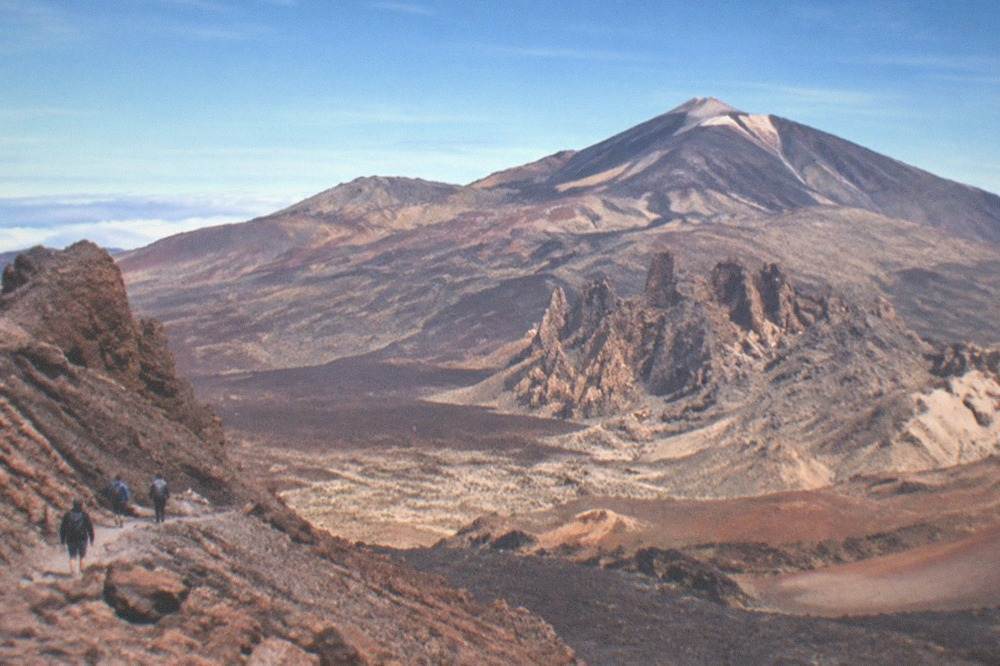
How Cold Is It at the Top of Mount Teide?
The ridge at 2,369 m averages 4.3 Celsius in January and 18.5 Celsius in July, with nights below freezing from November to April, according to AEMET's climate normals for the Izaña station. At La Rambleta, 3,555 m and more than 1,000 m higher, it is colder still, and no official station sits there to measure it.
The Izaña normals are the closest official dataset to the cable car base station, which stands at 2,356 m. They show a mountain climate, not an island one.
| Month | Mean daily max (C) | Mean daily min (C) | Rain (mm) | Sunshine hours |
|---|---|---|---|---|
| Jan | 7.5 | 1.1 | 47 | 226 |
| Feb | 8.0 | 1.3 | 67 | 223 |
| Mar | 10.2 | 2.7 | 58 | 260 |
| Apr | 11.8 | 3.5 | 18 | 294 |
| May | 14.5 | 5.8 | 7 | 356 |
| Jun | 18.9 | 9.9 | 0 | 382 |
| Jul | 23.0 | 14.0 | 0 | 382 |
| Aug | 22.6 | 13.8 | 5 | 358 |
| Sep | 18.6 | 10.4 | 13 | 295 |
| Oct | 14.3 | 6.9 | 37 | 259 |
| Nov | 11.1 | 4.5 | 54 | 220 |
| Dec | 8.8 | 2.4 | 60 | 218 |
Two practical readings follow. First, the contrast with the coast is enormous: AEMET's Santa Cruz station, at 36 m, averages 18.2 Celsius in January and 25 Celsius in July, so a visitor can leave a beach at midday and stand in a freezing wind by mid-afternoon. Second, the winter numbers explain the crampon rule on the stratovolcano trails: with January nights averaging 1.1 Celsius at 2,369 m and precipitation peaking at 67 mm in February, ice on the upper trail is a normal winter condition, not a freak event. The Tenerife weather by month guide carries the coastal and airport stations for comparison.
What Is the Best Time to Visit Teide?
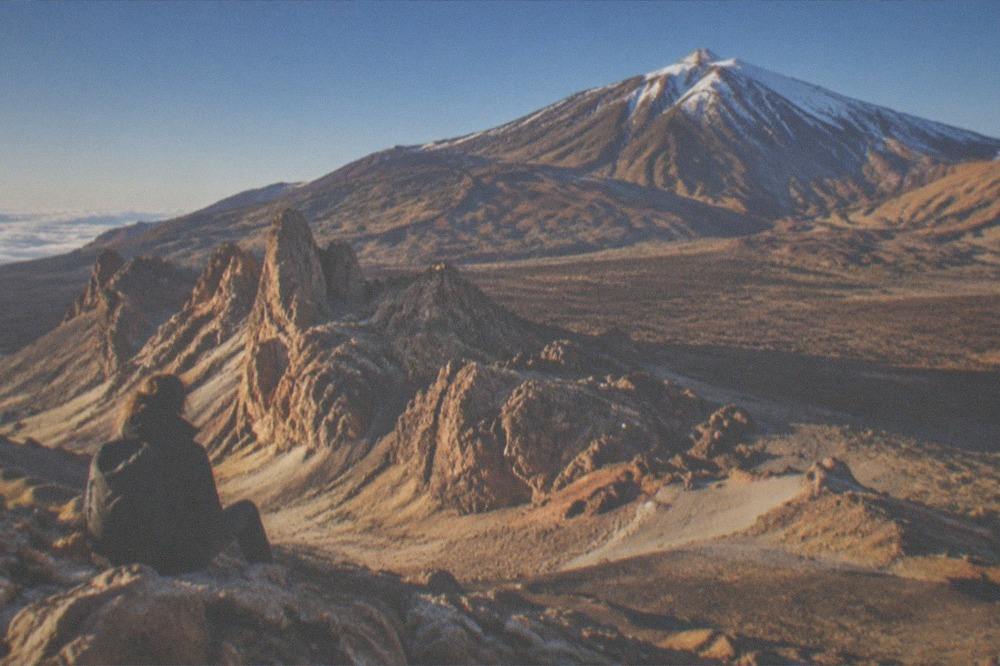
The best time to visit Teide depends on what you want: the cable car's own 2026 timetable runs longest from 28 March to 12 April and 1 July to 30 September, the driest and sunniest months on the ridge are May to August, and the summit permit's release rule, a new week every Monday at 07:00 Canary time keeping 56 days bookable, means the day you can get is the day that matters.
The cable car hours change through the year, and the last ascent is one hour before closing, the last descent ten minutes before.
| Period (2026) | Cable car hours | Last ascent |
|---|---|---|
| 1 Jan to 27 Mar | 09:00 to 17:00 | 16:00 |
| 28 Mar to 12 Apr | 09:00 to 18:40 | 17:40 |
| 13 Apr to 30 Jun | 09:00 to 17:00 | 16:00 |
| 1 Jul to 30 Sep | 09:00 to 18:40 | 17:40 |
| 1 to 13 Oct | 09:00 to 18:00 | 17:00 |
| 14 to 24 Oct | 09:00 to 17:30 | 16:30 |
The base station car park runs 08:00 to 18:00 in the standard season and to 19:40 in the extended periods. Hours for the last weeks of the year are not on file, so the operator's timetable is the place to check for November and December visits.
On timing the crowds, the verified numbers say the park took 5,242,653 visitors in 2024, the most of any park in a network that totalled 16,006,242. The busiest stretch on the island's own arrival figures is the winter half-year, with December and January the two heaviest months for tourists arriving by air. The shoulder months of May and June combine the driest ridge weather (7 mm and 0 mm of rain in the normals) with the start of the long cable car hours, which is why many planners aim there. For the summit trail, no lead time can be promised: the only release rule on file is the Monday 07:00 weekly opening, and no official page gives a figure for how fast slots go.
How Hard Is It to Cycle Up Mount Teide?
Cycling up Mount Teide is a serious mountain climb, and no official page states a route distance, gradient or typical time for it, so none is given here. What the verified facts do establish is the scale: the road climbs from the coast to above 2,300 m at the cable car base station, and AEMET's ridge station records everything from summer heat to winter ice at that altitude.
This is a question with a real following, and the honest answer is that the official sources this site relies on do not measure the climb. What they do measure is the environment. A cyclist finishing at the base station finishes at 2,356 m, higher than any road pass in Britain, in air that averages 4.3 Celsius in January. The ice and snow rule that applies to the stratovolcano trails is a warning about the same conditions on the road above the tree line. The ride is done, and done often, but this site states no time, no distance and no difficulty grade, because no official page carries one.
What can be said is practical. The park's rules apply to everyone on two wheels as well: the smoking ban covers all open-air spaces, and bookings for the paid trails can be suspended for weather alerts. Cyclists planning a multi-day trip should also know that bivouac in the national park needs authorisation through Tenerife ON, only in areas the park plan permits, and that camping is free of charge with a maximum of seven consecutive days. The general hiking in Tenerife guide covers the trail network around the mountain for anyone pairing a ride with a walk.
Is Mount Teide the Highest Mountain in Europe?
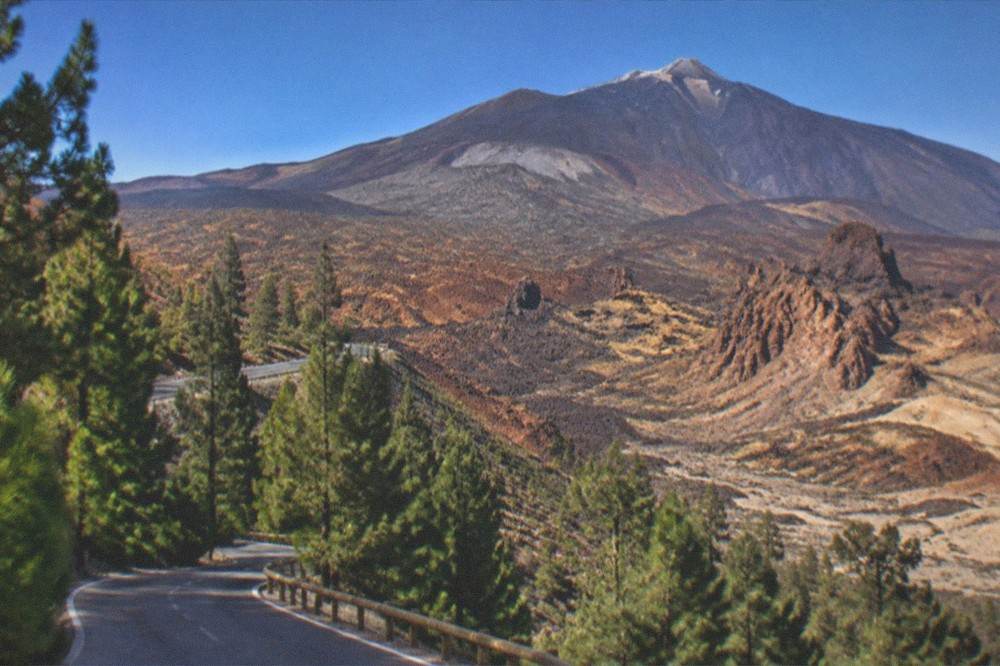
No, Mount Teide is not the highest mountain in Europe: that title belongs to the Caucasus, and Teide's verified superlatives are narrower and still remarkable. It is the highest peak on Spanish soil at 3,715 m, the highest mountain on any Atlantic island, and UNESCO describes it as rising 7,500 m above the ocean floor, regarded as the world's third-tallest volcanic structure.
The confusion comes from a real fact pushed too far. Teide is indeed the highest point in Spain, and Spain is in Europe, so the chain "highest in Spain, therefore highest in Europe" gets built and then breaks on the Caucasus peaks. The supportable claims are the ones in the paragraph above, each with its source: MITECO and UNESCO for the Spanish record, UNESCO's exact wording for the ocean-floor measurement. The "third-tallest" sentence must keep UNESCO's phrase "volcanic structure" and the words "from the ocean floor", because measured from sea level the ranking is a different one entirely.
Is Teide by Night Worth It?
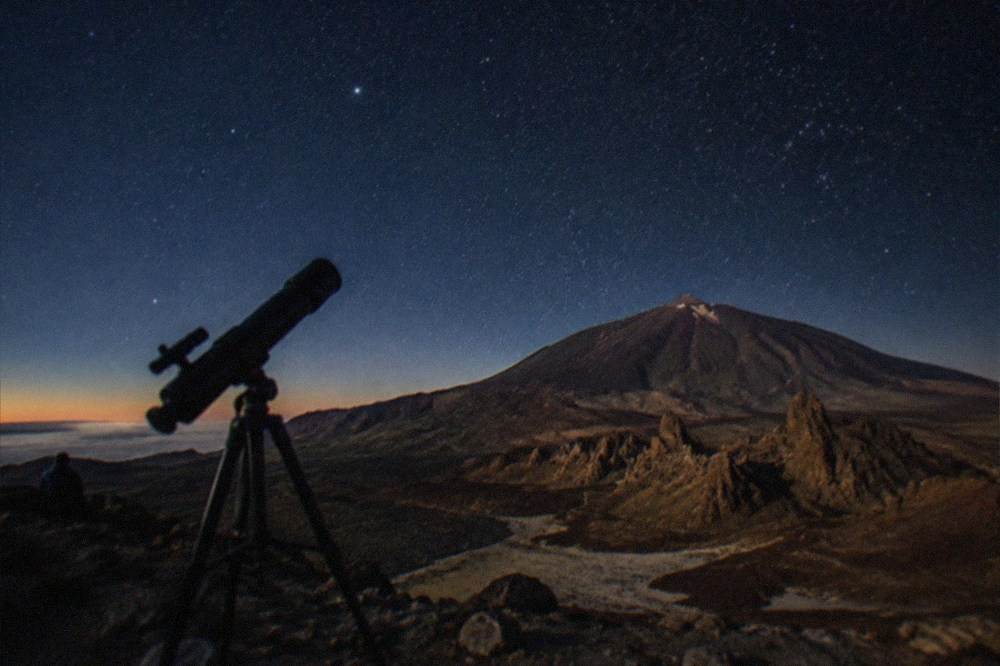
Teide by night is the park's strongest offer for many visitors, and the official facts behind it are solid: the ridge averages 382 sunshine hours in June and July, the Fundación Starlight lists El Teide as a Starlight Tourist Destination and Cumbres de Tenerife as a Starlight Reserve, both dated October 2013, and the observatory beside the ridge has been working since 1964.
The evening stargazing industry rests on the island's official dark-sky credentials. The Fundación Starlight, the certifying body, lists "El Teide (Canarias), Octubre 2013" among its tourist destinations and "Cumbres de Tenerife (Canarias), Octubre 2013" among its reserves. The Teide Observatory, at Izaña about 2,400 m, runs guided visits by prior reservation only, with under-16s free and a resident discount, and its page carried a fully booked notice when last checked, which says something about demand.
The sunset and stargazing tours come in several shapes, from a three-hour telescope session to a full coach evening with dinner.
The Teide stargazing tours page compares the evening options in detail, and the wider Teide tours index covers the daytime coach trips, jeep safaris and guided hikes. Visitors staying on the south coast can read the Teide day trip from the south planning page for the driving times and route choices that the operators' pickups follow.
One planning note that comes up in every evening discussion: the smoking ban applies after dark too, across all open-air spaces of the park, and the night-time summit slots on PNT 10, 18:00 to 22:00, are reservations like the daytime ones. Tenerife ON lists them with no fee mark, but walking the trail without one can be penalised. The Altavista refuge, reopened after a 2026 refurbishment with 49 beds and booking on refugioaltavista.com, serves the high-mountain nights, though this site states no price for it and makes no claim that a night there replaces the summit permit: the refuge's own booking page is the place to check what a reservation includes.
Common Questions About Mount Teide and Teide National Park
Is Teide National Park worth visiting?
Yes, and the scale of the answer is measurable: 5,242,653 people visited in 2024, more than any other park in Spain's national park network, which totalled 16,006,242. Entry carries no charge on any official page read, the viewpoints and drive-through cost nothing, and the paid options, the cable car and two booked trails, are add-ons rather than a gate fee.
Do you need a permit for the summit trail on Mount Teide?
Yes. Trail PNT 10 Telesforo Bravo, from La Rambleta to the crater, needs a personal reservation booked on Tenerife ON, and the page lists accredited guides as required. Since 19 January 2026 the 09:00 to 17:00 slots cost EUR 15 for visitors, EUR 6 for residents of the other Canary Islands and nothing for Tenerife residents and children. A new week of slots is released every Monday at 07:00 Canary time, keeping 56 days bookable.
Can you smoke in Teide National Park?
No. The Cabildo de Tenerife bans smoking in all open-air spaces of the national park as a wildfire measure, and that includes trails, viewpoints, car parks and recreation areas. Bookings can also be suspended for fire risk or weather alerts, so the Tenerife ON alerts page is worth checking before a walk.
Which Teide trails need a booking?
Tenerife ON lists PNT 10 Telesforo Bravo, PNT 07 Montaña Blanca to La Rambleta, PNT 09 (Teide, Pico Viejo, Mirador de las Narices), PNT 23 Los Regatones Negros and PNT 28 Chafari as requiring prior authorisation. As a temporary measure, all other trails on the platform need no authorisation or booking until 31 December 2026.
Can you stay overnight on Mount Teide?
The Altavista refuge has reopened after a 2026 refurbishment and takes prior reservations on refugioaltavista.com, with 49 beds, a first-aid room, dining area and toilets but no showers. Camping and bivouac in the park need authorisation through Tenerife ON, camping is free of charge, and the maximum stay is seven consecutive days. Check the refuge's own page for prices and for what a booking includes.
The one-sentence summary this site stands behind: the park is free to enter, the cable car is an operator ticket from EUR 42.00, the summit is a EUR 15 daytime reservation for visitors, and the mountain is 3,715 m high in Spain's own figure. Plan around the Monday 07:00 permit release, pack for a climate that averages 4.3 Celsius in January at ridge height, and check the Tenerife ON alerts page before you walk.