Roques De Garcia
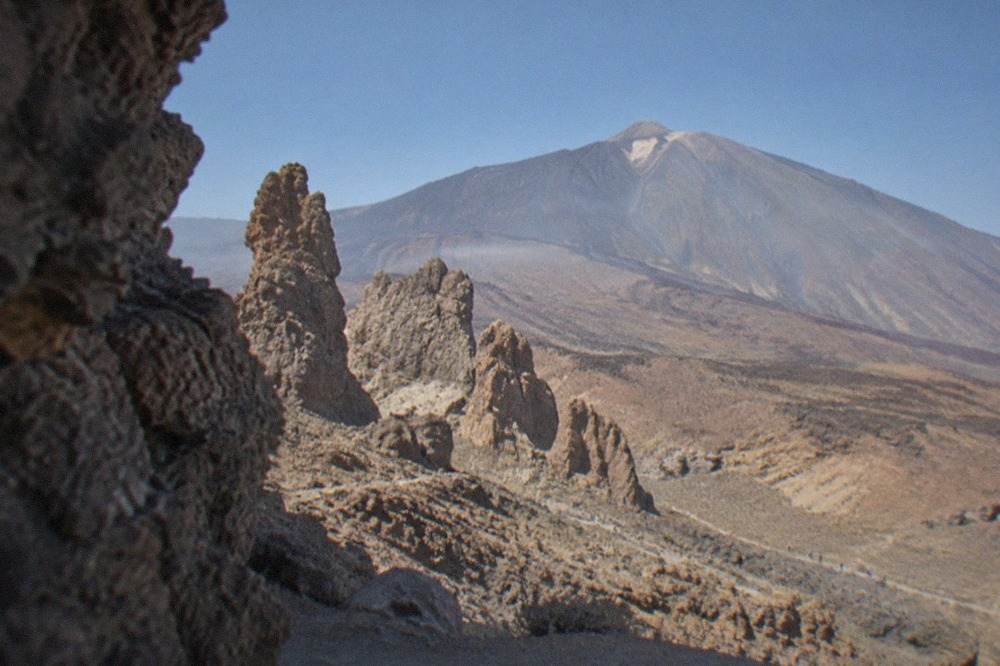
The Roques de Garcia are a line of jagged volcanic rock formations on the southern edge of the Teide caldera, inside Spain's most visited national park and one of the island's most photographed sights.
Short answer
The Roques de Garcia are free to view, sit beside the Parador hotel on the TF-21 road through Teide National Park, and need no permit or booking, though the nearby cable car and two high trails do carry charges and reservations.
The Roques de Garcia are a row of eroded volcanic rock formations standing on the southern rim of the Teide caldera, and they belong to the most visited national park in Spain. MITECO's visitor count for 2024 records 5,242,653 visits to Teide National Park, more than any other park in the Spanish network, and the Roques sit on the route almost every one of those visitors drives or walks. The park itself was declared by decree on 22 January 1954, covers 18,990 hectares with a peripheral protection zone of 7,374.32 hectares, and was inscribed by UNESCO as a World Heritage Site on 2 July 2007 under natural criteria (vii) and (viii). This guide sets out what the formations are, how to reach them, what costs money nearby and what does not, and what the rules are once you are there.
What Are the Roques de Garcia?
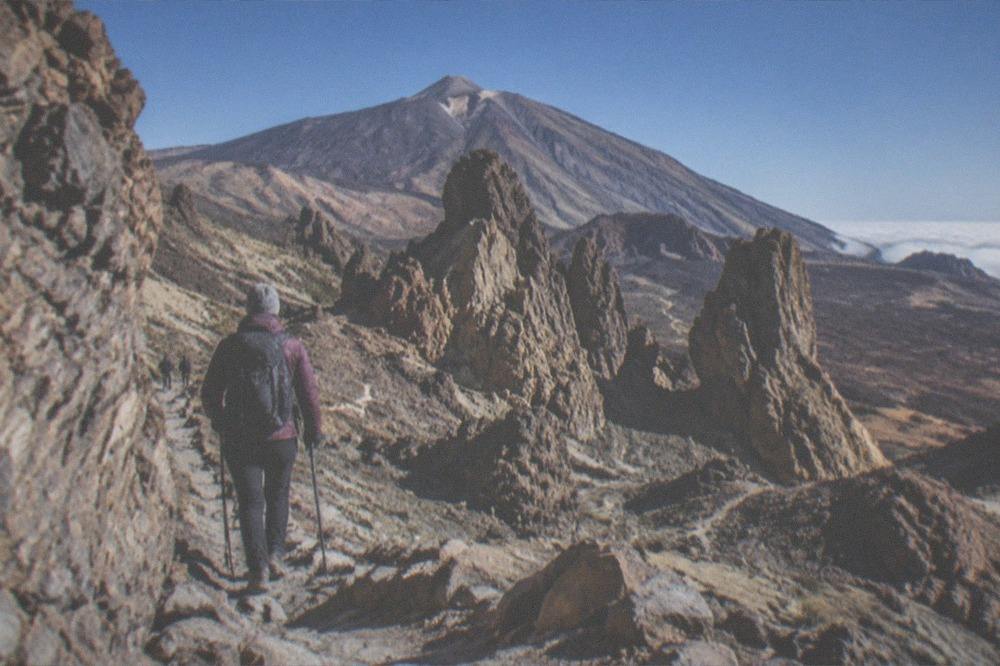
The Roques de Garcia are a chain of sharply eroded rock towers and ridges on the southern edge of the Teide caldera, carved out of old volcanic materials by weathering, with the best-known individual rock known for its balanced, totem-like profile. They stand inside Teide National Park, a UNESCO World Heritage Site since 2 July 2007, at the foot of a volcano whose summit reaches 3,715 m according to Spain's MITECO and Turismo de Tenerife.
The formations are the remains of materials that erosion has stripped away over a very long time, leaving harder rock standing in towers while softer ground around them wore down. The result is a landscape of pale, layered rock walls and isolated pinnacles that photographs of Tenerife return to again and again. UNESCO's own description of the wider park notes that Teide, rising 7,500 m above the ocean floor, is regarded as the world's third-tallest volcanic structure, and it is the highest peak on Spanish soil.
The site's fame has a practical consequence. The rocks sit directly beside one of the park's main roads and beside the Parador hotel, which makes them one of the easiest headline sights in Tenerife to reach by car or by an organised tour. They also sit close to the lower cable car station, at 2,356 m, which means many visitors combine the Roques with a ride up to La Rambleta at 3,555 m. If you are planning a wider trip, our things to do in Tenerife round-up places the Roques in context alongside the island's beaches, parks and boat trips.
Where Are the Roques de Garcia and How Do You Get There?
The Roques de Garcia sit on the southern side of the Teide caldera in the centre of Tenerife, beside the TF-21 road and the Parador hotel, roughly equidistant in driving terms from the island's north and south coasts. Most visitors arrive by hire car, by an organised coach or jeep tour, or by bus, and the site is a stop on the standard route between the south coast resorts and the volcano.
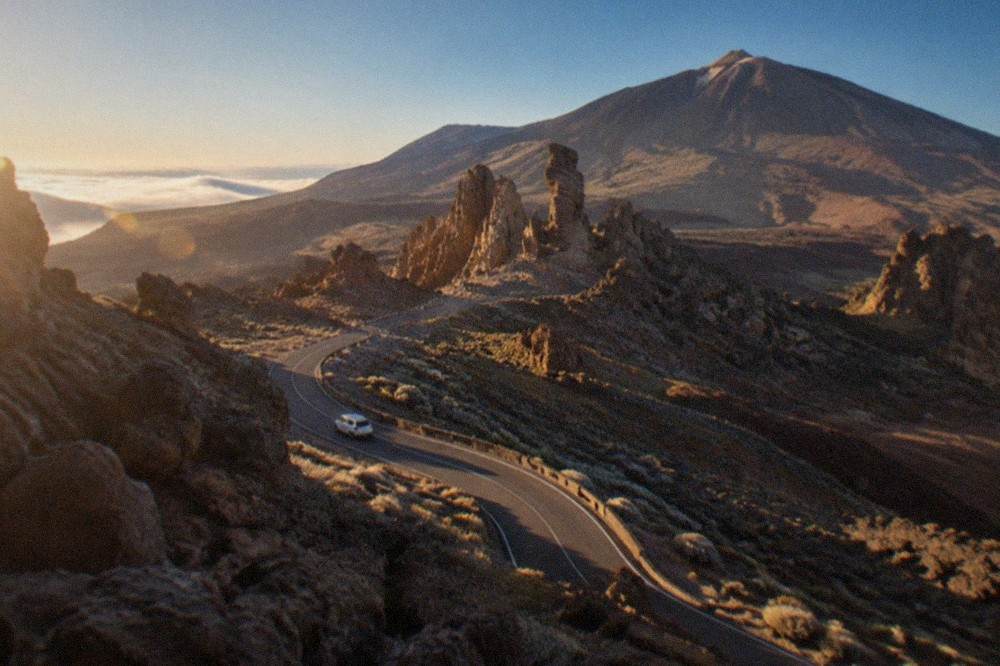
Driving is the most flexible option. The TF-21 climbs into the national park from the south, and the formations sit beside the road with a car park serving the viewpoint and the hotel. The park's altitude matters for planning: the base cable car station nearby stands at 2,356 m, and AEMET's climate normals for the Izana station at 2,369 m record a mean daily maximum of just 7.5 Celsius in January against 23 Celsius in July, so the same island that sells winter sun at the coast can hold ice and snow at this height in winter. AEMET's figures for the station show January and February as the wettest months at 47 mm and 67 mm respectively, while June and July record no measurable rain at all.
Public transport exists but is limited, and visitors pay for it: the 2026 free-travel subsidy covers resident passes only, so visitors use single tickets, the EUR 10 day travelcard or the EUR 50 seven-day travelcard. Organised tours are the third route, and several kinds fit. Coach and jeep tours that take in the national park stop at the Roques, and the island's guided hiking programme uses the area too. For travellers staying in the resort belt, the drive up from the south passes through pine forest before the caldera opens out; those based in the north can reach the site from the Puerto de la Cruz side. Our Puerto de la Cruz and Santa Cruz de Tenerife area guides cover both bases.
Do You Need a Ticket or Permit to Visit the Roques de Garcia?
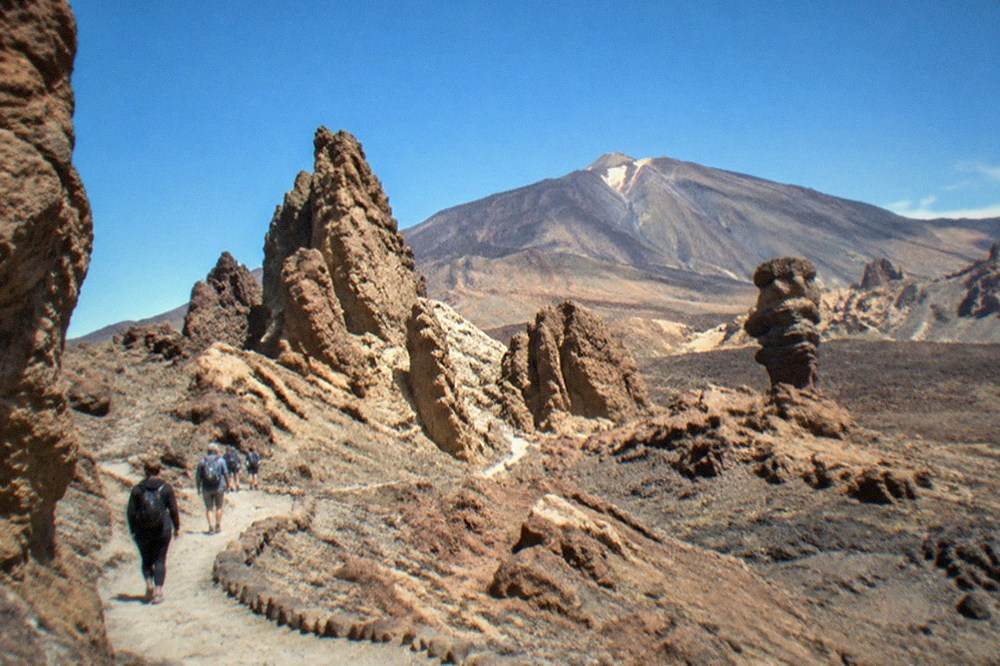
No. The Roques de Garcia viewpoint and the paths around the formations carry no entry fee, no booking and no permit on any official page this site has read. The charges that exist nearby are separate: the cable car is an operator ticket, and two high trails, PNT 10 and PNT 07, carry per-booking public fees since 19 January 2026. Driving through the park and using the viewpoints costs nothing on any page read.
This distinction matters because a lot of confused copy circulates about Teide. No official page lists an entry fee for the national park itself. What exists instead is a fee regime on two specific trails: PNT 10 Telesforo Bravo, the summit trail from La Rambleta to the crater, and PNT 07 Montana Blanca to La Rambleta. Since Monday 19 January 2026, the 09:00 to 17:00 slots on PNT 10 cost EUR 15 for visitors, EUR 6 for residents of the other Canary Islands and nothing for Tenerife residents, with children exempt from the fee. PNT 07 costs visitors EUR 6 on working days and EUR 10 at weekends and public holidays. Neither trail is the Roques walk.
The summit trail also needs a personal reservation made through Tenerife ON, the Cabildo's booking platform, and slots are released every Monday at 07:00 Canary time so that 56 days are always bookable. Bookings are non-refundable, and walking the summit trail without a reservation may be penalised. Our full Teide summit permit guide covers that process in detail.
| What | Charge | Booking needed |
|---|---|---|
| Roques de Garcia viewpoint and paths | No fee on any page read | No |
| Driving through the national park | No fee on any page read | No |
| PNT 10 summit trail, 09:00 to 17:00 slots | EUR 15 visitors, EUR 6 other Canary residents, free for Tenerife residents and children | Yes, via Tenerife ON |
| PNT 07 Montana Blanca trail, working days | EUR 6 visitors, EUR 3 other Canary residents | Yes, via Tenerife ON |
| PNT 07 Montana Blanca trail, weekends and holidays | EUR 10 visitors, EUR 5 other Canary residents | Yes, via Tenerife ON |
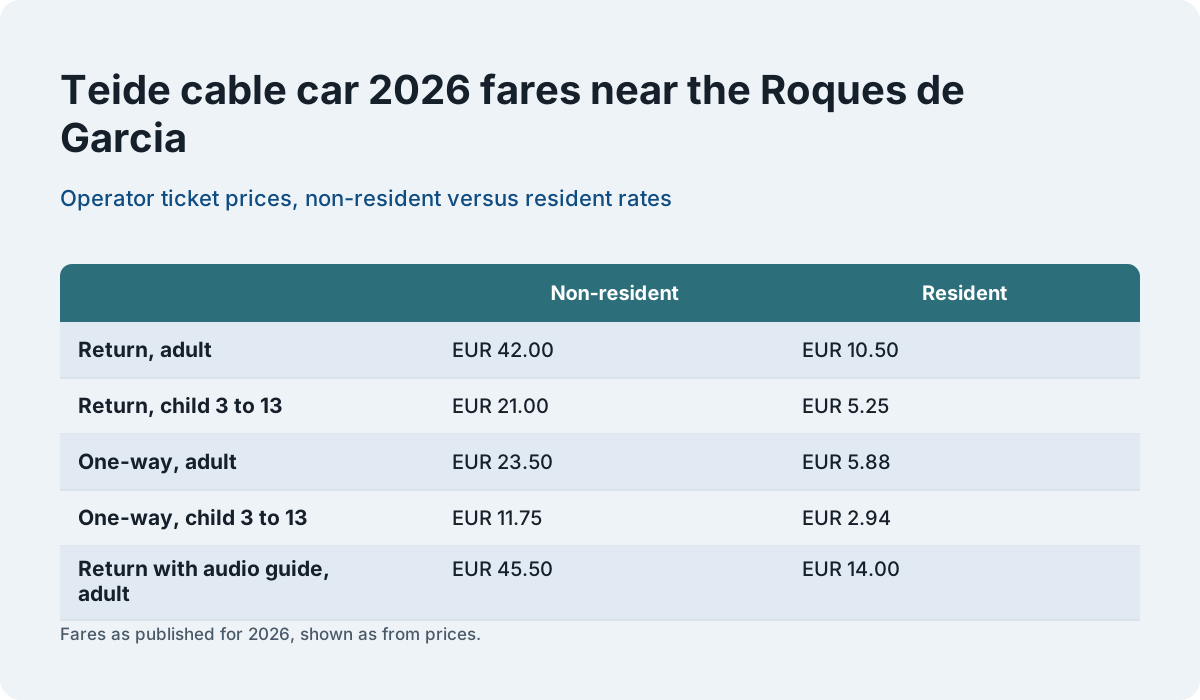
The cable car is the other paid item near the rocks, and it is an operator ticket rather than a public permit. The 2026 return fare is EUR 42.00 for a non-resident adult and EUR 21.00 for a child aged 3 to 13, shown as a price from, with resident rates of EUR 10.50 and EUR 5.25. The operator does not allow children under 3, pregnant women or people with cardiovascular conditions to ride, and the cable car stops at La Rambleta at 3,555 m: it does not reach the summit, and the crater is a separate permit-only trail. Our Teide cable car page carries the full price and hours breakdown.
| Cable car ticket, 2026 | Non-resident | Resident |
|---|---|---|
| Return, adult | EUR 42.00 | EUR 10.50 |
| Return, child 3 to 13 | EUR 21.00 | EUR 5.25 |
| One-way, adult | EUR 23.50 | EUR 5.88 |
| One-way, child 3 to 13 | EUR 11.75 | EUR 2.94 |
| Return with audio guide, adult | EUR 45.50 | EUR 14.00 |
What Can You See from the Roques de Garcia?
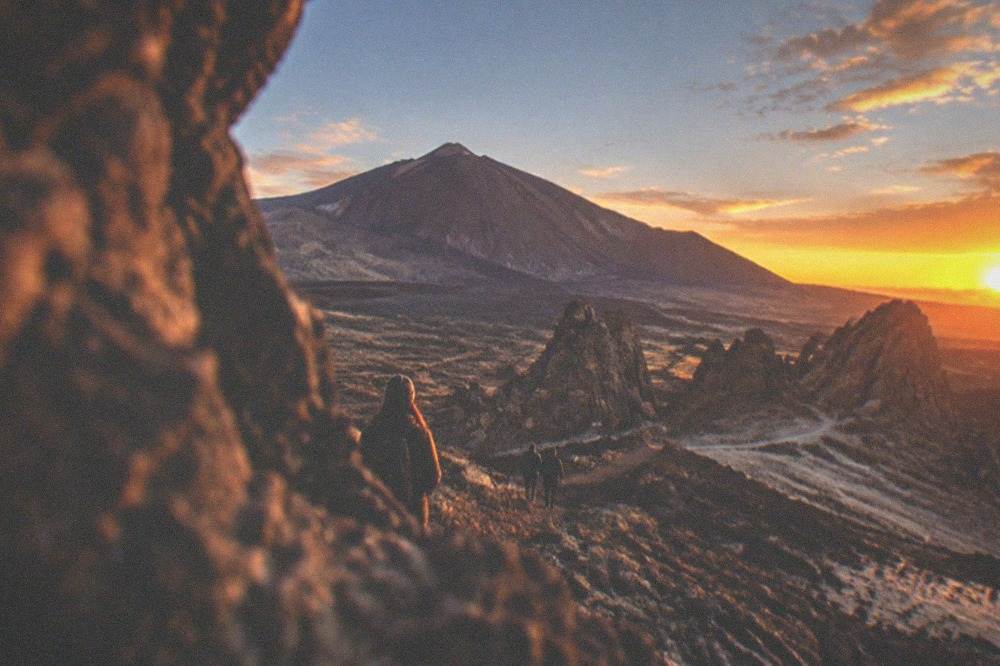
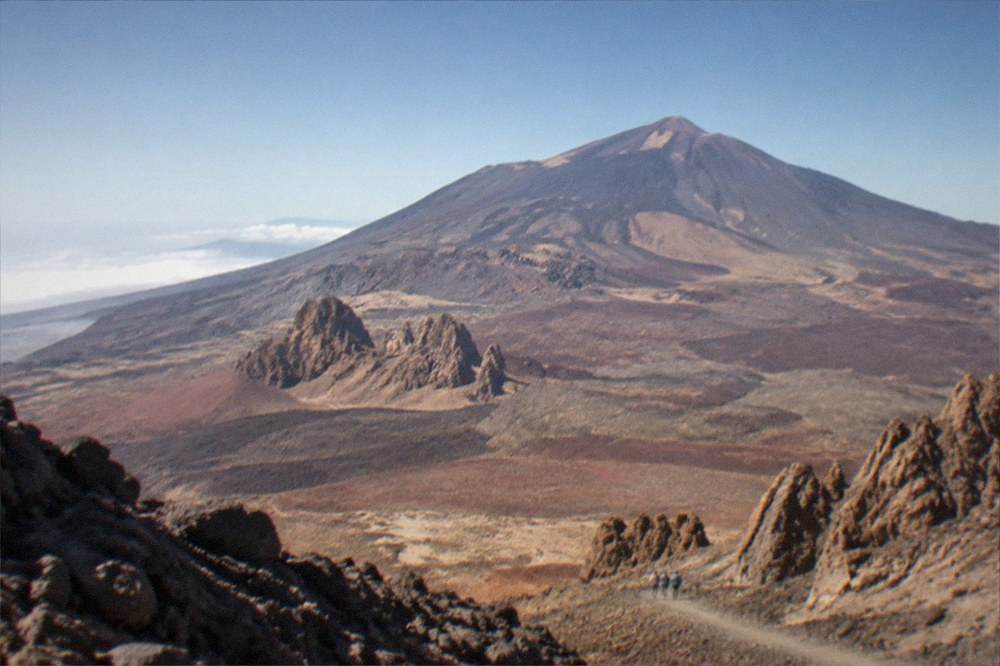
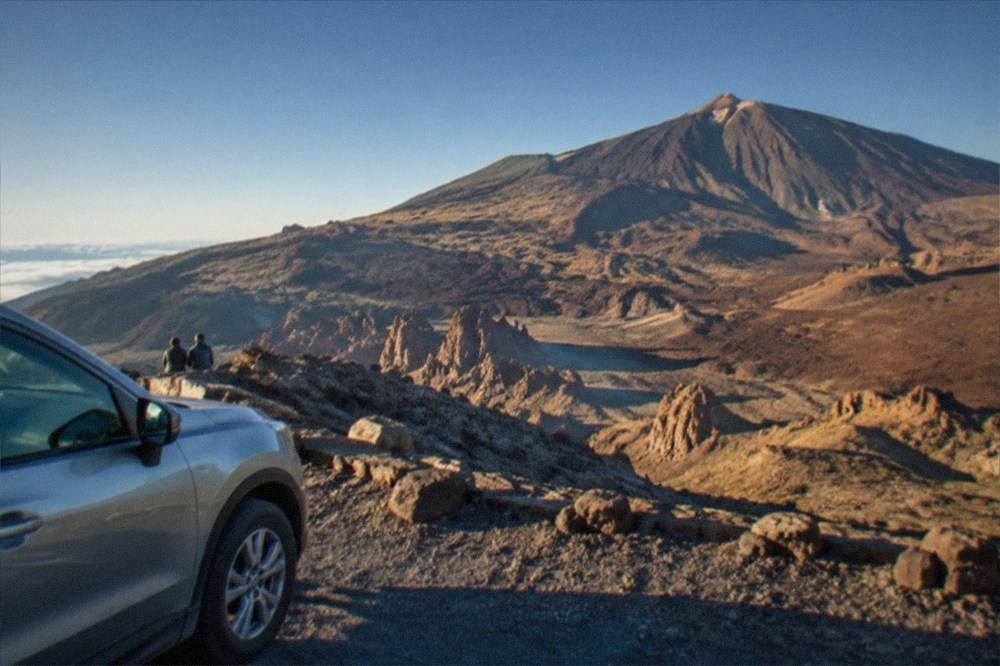
From the Roques you look north across the caldera floor to Mount Teide itself, at 3,715 m the highest peak on Spanish soil, and across a bowl of lava fields, old eruption cones and the Pico Viejo flank. The formations' own ridge line, with its famous balanced rock, is the foreground, and the clarity of the mountain air beside the cable car base station at 2,356 m makes the caldera one of the most reliable viewpoints on the island.
The panorama is the reason tour itineraries keep the stop. The caldera's scale is hard to convey: the national park covers 18,990 hectares, and the Roques sit on its southern lip, so the view sweeps from the volcano's cone across the Ucanca plain. On clear days the islands of La Gomera, El Hierro and La Palma sit on the horizon to the west, and the Teno massif with its cliffs, which Turismo de Tenerife describes as towering up to 600 m, edges the seaward view. The Los Gigantes cliffs belong to that same western massif and make a natural second stop on a driving day.
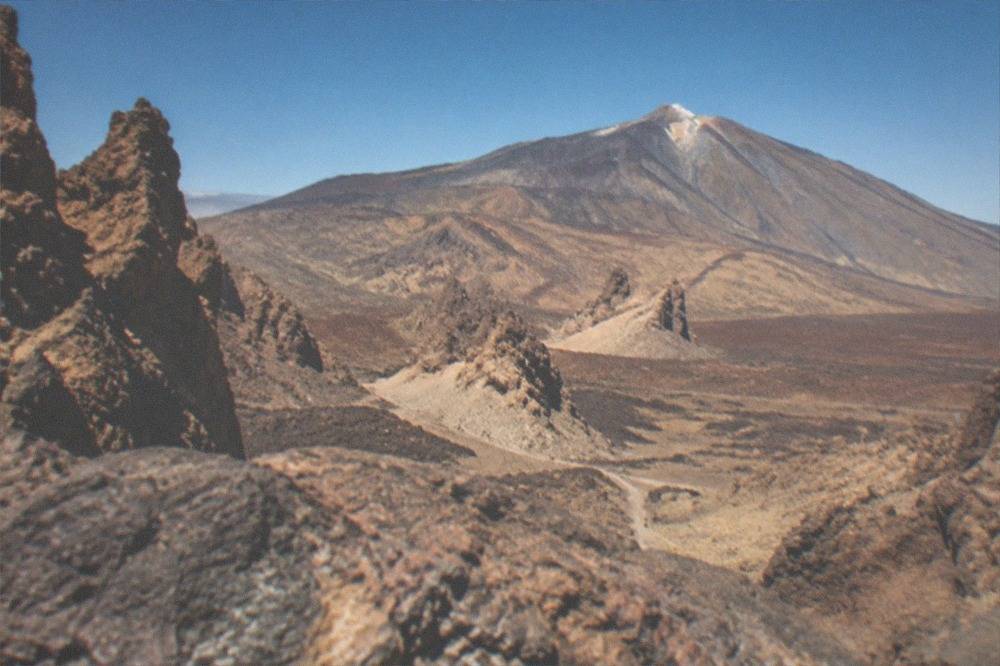
Sunset and night are the other two faces of the site. The park holds Starlight Reserve status for the Cumbres de Tenerife, awarded by the Fundacion Starlight in October 2013, and El Teide is listed as a Starlight Tourist Destination from the same month. After dark the caldera becomes one of the best stargazing platforms in Europe, which is why sunset-and-telescope tours are among the island's most popular products. Our sunsets in Tenerife guide ranks where the evening light lands.
If you would rather have the science explained than just the view, the Teide Observatory at Izana, about 2,400 m, runs guided visits by prior reservation only, and the operator's live listing shows current availability for Check availability. An audio tour of Teide is another way to carry the geology with you if you are exploring independently.
When Is the Best Time to Visit the Roques de Garcia?
Summer gives the warmest and driest conditions, with AEMET's Izana station, at 2,369 m beside the park, recording mean daily maxima of 23 Celsius in July and no measurable rain in June or July, while winter brings mean maxima of 7.5 Celsius in January with 47 mm of rain and the possibility of ice and snow on the high trails. Early morning and sunset beat midday for both light and crowds.
The climate table below is AEMET's own set of 1981 to 2010 normals for the Izana station, the closest long-record station to the rocks, and it shows the pattern every visitor should plan around: a hot, bone-dry summer and a cool, damp winter at altitude. The contrast with the coast is stark. AEMET's Santa Cruz station at 36 m records a July mean daily maximum of 28.7 Celsius against Izana's 23 Celsius, and January rain of 32 mm against Izana's 47 mm. A day that starts on a beach can end in fog or snow at the Roques, so layers matter; our what to pack for Tenerife guide covers the clothing logic.
| Month | Mean daily max C at Izana | Mean daily min C | Rain mm | Sunshine hours |
|---|---|---|---|---|
| Jan | 7.5 | 1.1 | 47 | 226 |
| Feb | 8.0 | 1.3 | 67 | 223 |
| Mar | 10.2 | 2.7 | 58 | 260 |
| Apr | 11.8 | 3.5 | 18 | 294 |
| May | 14.5 | 5.8 | 7 | 356 |
| Jun | 18.9 | 9.9 | 0 | 382 |
| Jul | 23.0 | 14.0 | 0 | 382 |
| Aug | 22.6 | 13.8 | 5 | 358 |
| Sep | 18.6 | 10.4 | 13 | 295 |
| Oct | 14.3 | 6.9 | 37 | 259 |
| Nov | 11.1 | 4.5 | 54 | 220 |
| Dec | 8.8 | 2.4 | 60 | 218 |
Winter carries a specific safety note. When ice and snow appear on the stratovolcano trails, crampons and an ice axe join the mandatory equipment list on the booked routes, with a signed declaration, and Tenerife ON warns that bookings can be suspended for fire risk or weather alerts. Check the Tenerife ON alerts before you travel up in the colder months. Our month-by-month Tenerife weather guide pairs these altitude figures with the coastal picture.
What Are the Rules at the Roques de Garcia?
The rule that catches most visitors out is the smoking ban: the Cabildo de Tenerife prohibits smoking in every open-air space of the national park, including trails, viewpoints, car parks and recreation areas, as a wildfire measure. Beyond that, the standard park rules apply: stay on marked paths, take your litter away with you, and treat the rock formations as protected heritage inside a UNESCO World Heritage Site.
The smoking ban is total and it is enforced as a fire-prevention measure, so it covers the car park beside the rocks as much as the trails. Fire risk can also suspend bookings and close access, and Tenerife ON's alerts page is the official channel for closures. Camping and bivouacs anywhere in the park need prior authorisation through Tenerife ON, and camping is free of charge with a maximum of seven consecutive days where the park plan permits it. Everything else covered here is indexed on Tenerife Travel Guide.
The rocks themselves are part of a World Heritage Site, which is a legal protection, not a label. Off-trail walking damages fragile high-altitude vegetation and the site's geology, and the park's status as the largest and oldest national park in the Canaries, in MITECO's wording, rests on that landscape staying intact. The practical version for a visitor is simple: the viewpoint and the marked paths, yes; climbing on the formations, no.
Which Tours Work Well Around the Roques de Garcia?
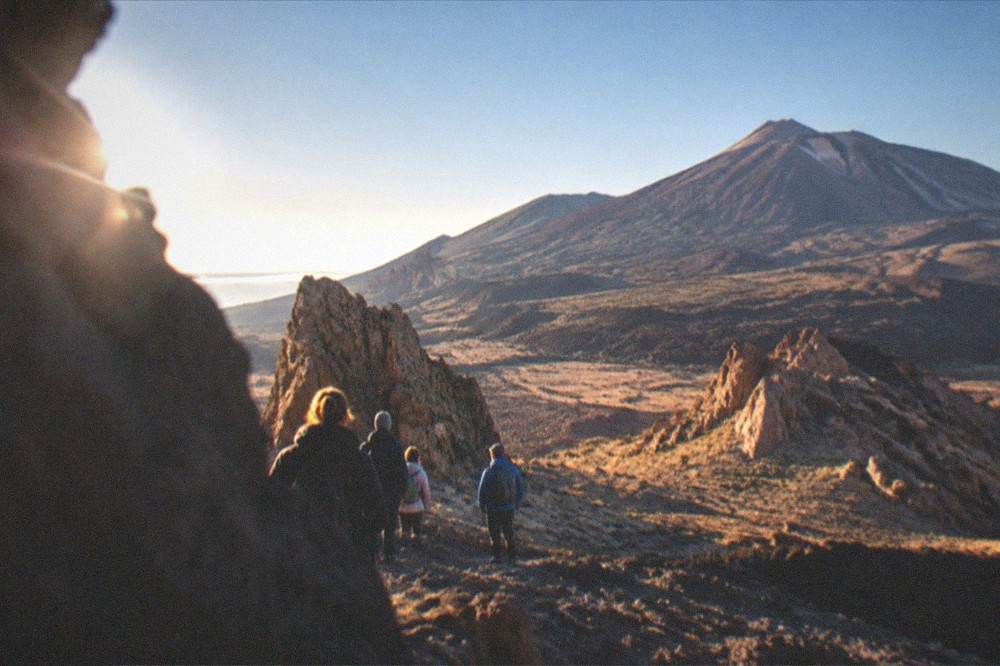
The tours that fit best are the national park day tours that stop at the Roques, the sunset and stargazing trips that use the caldera after dark, and guided hikes that cover the park's trails, including the reserved routes. Company-run tours are not permitted on every trail in Tenerife, but the national park's main paths, including the area around the Roques, appear on standard itineraries.
Day tours reach the rocks by coach, jeep or minibus from the south coast resorts, usually paired with other caldera stops. Sunset and stargazing tours time the visit for the evening, when the Starlight Reserve status earns its keep, and several include telescope sessions and hotel pickup. Guided hikes suit visitors who want the trail context rather than the roadside view, and our hiking in Tenerife guide sorts the booked routes from the free ones. One caution from the verified rules: on El Pijaral in Anaga, organised tours by companies are not permitted, so check a trail's status before assuming a guide can accompany you.
For a self-guided day, the rocks pair naturally with the drive west through the park toward the Teno massif, where Punta de Teno sits at the island's far north-west corner, or with a descent to the coast at Playa de Benijo in the Anaga ranges. Visitors who would rather leave the mountain roads to someone else will find guided hiking days with south-coast pickup listed in the tour selections on this page.
How Do the Roques Fit Into a Wider Tenerife Trip?
Most visitors see the Roques as a half-day stop on a route that links the south-coast resorts with the volcano, or as the scenic centrepiece of a full island loop that adds Icod de los Vinos, Garachico and Masca. The site sits on the TF-21, the main road through the caldera, which makes it the natural turning point between a beach morning and a sunset evening at altitude.
Two itineraries use the rocks especially well. The first is the classic volcano day: drive or ride up in the morning, walk the viewpoint paths, take the cable car if the fare and the queue suit you, and come back down for a late swim. The second is the sunset day, which reverses the order: beaches and towns below in the heat of the afternoon, then up through the pines as the light drops, with dinner in the caldera or a stargazing session after dark. The La Laguna side of the island offers a third option, since the old UNESCO-listed town sits on the northern route to the park and breaks the drive.
Common Questions About the Roques de Garcia
Are the Roques de Garcia free to visit?
Yes. The viewpoint and the paths around the formations carry no fee, no booking and no permit on any official page this site has read. The paid items nearby are separate: the cable car is an operator ticket, and the summit and Montana Blanca trails carry per-booking public fees since 19 January 2026.
How do I get to the Roques de Garcia without a car?
Organised coach, jeep and hiking tours stop at the formations, and public transport exists, though services into the national park are limited. Visitors pay for buses: the 2026 free-travel subsidy covers resident passes only, so visitors use single tickets, the EUR 10 day travelcard or the EUR 50 seven-day travelcard.
Can you walk to Mount Teide from the Roques de Garcia?
The summit is a separate matter from the rocks. The cable car from the nearby base station at 2,356 m stops at La Rambleta at 3,555 m, and the crater trail PNT 10 Telesforo Bravo needs a personal reservation through Tenerife ON, with 09:00 to 17:00 slots costing visitors EUR 15 since 19 January 2026. Walking the summit trail without a reservation may be penalised.
Is the Roques de Garcia walk suitable for children?
The viewpoint paths beside the road are short and manageable for most families, but the site sits at mountain altitude and AEMET's Izana normals show mean daily minima of 1.1 Celsius in January. The cable car operator does not allow children under 3 to ride, and the summit trail bars under-3s and requires an adult for under-16s. Bring layers whatever the coast is doing.
When is the Roques de Garcia open?
The national park's roads and viewpoints are not gated attractions with ticketed hours, and no official page read lists opening hours for the Roques themselves. The cable car beside the site runs to a published seasonal timetable, and the base station car park runs 08:00 to 18:00 in the standard season, so daylight visits are the norm. Check the operator's timetable and the Tenerife ON alerts page before travelling in winter.
Can you smoke at the Roques de Garcia?
No. The Cabildo de Tenerife bans smoking in all open-air spaces of Teide National Park, including trails, viewpoints, car parks and recreation areas, as a wildfire measure. The car park beside the rocks is covered like everywhere else.