Los Gigantes Cliffs (Acantilados De Los Gigantes)
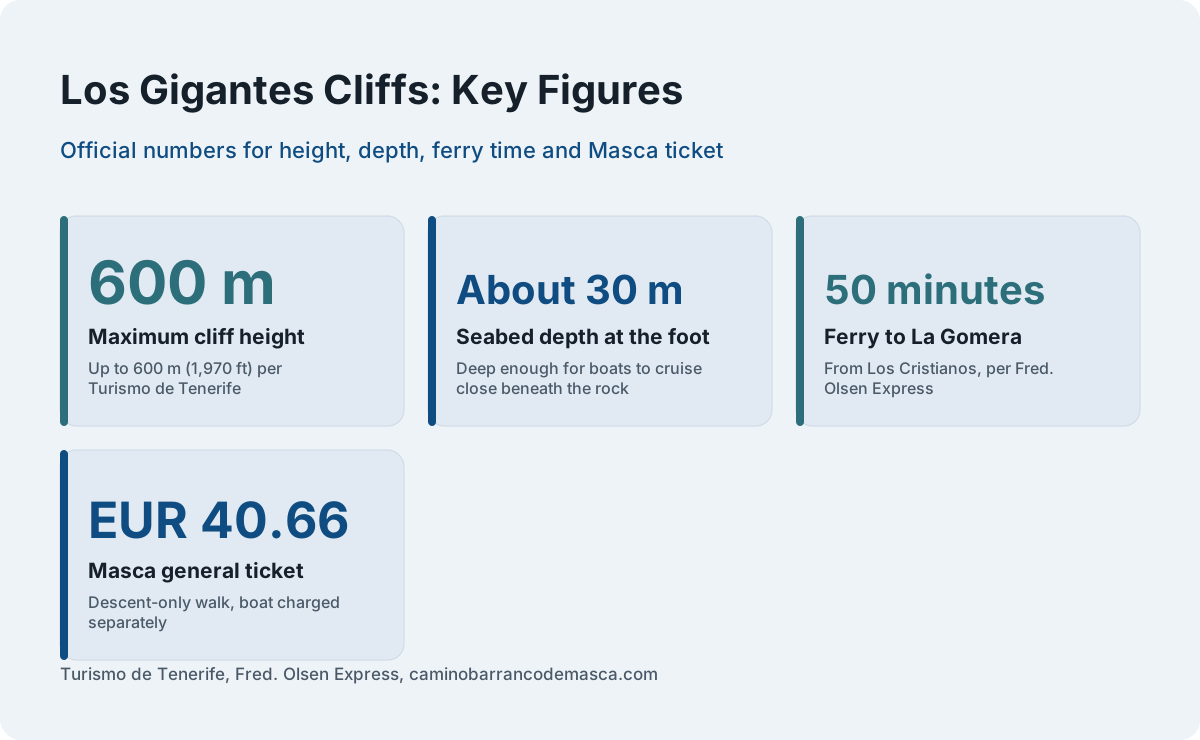
Turismo de Tenerife describes the Acantilados de Los Gigantes as cliffs that tower up to 600 m above the sea, with a seabed about 30 m deep at their foot. Here is what the official pages say about where they sit, what sails beneath them and how the rules around the water work.
Short answer
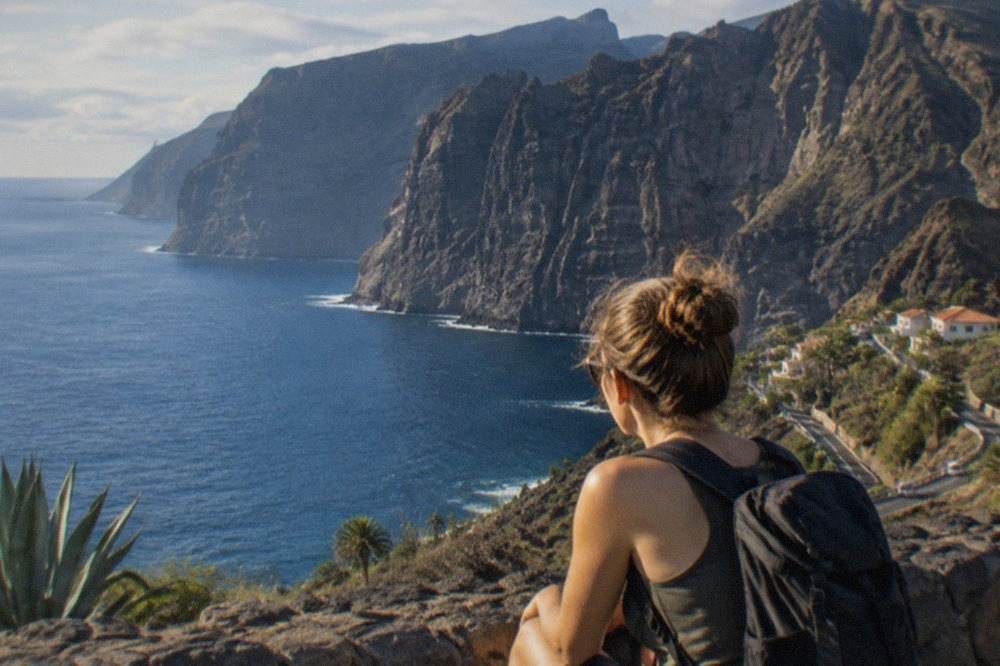
The Los Gigantes cliffs stand on Tenerife's west coast in the municipality of Santiago del Teide, inside Teno Rural Park. Turismo de Tenerife says they tower up to 600 m high, with the seabed about 30 m deep at their foot. Boat trips leave from the marina at Los Gigantes, and the waters off the coast are governed by the Canary whale watching decree.
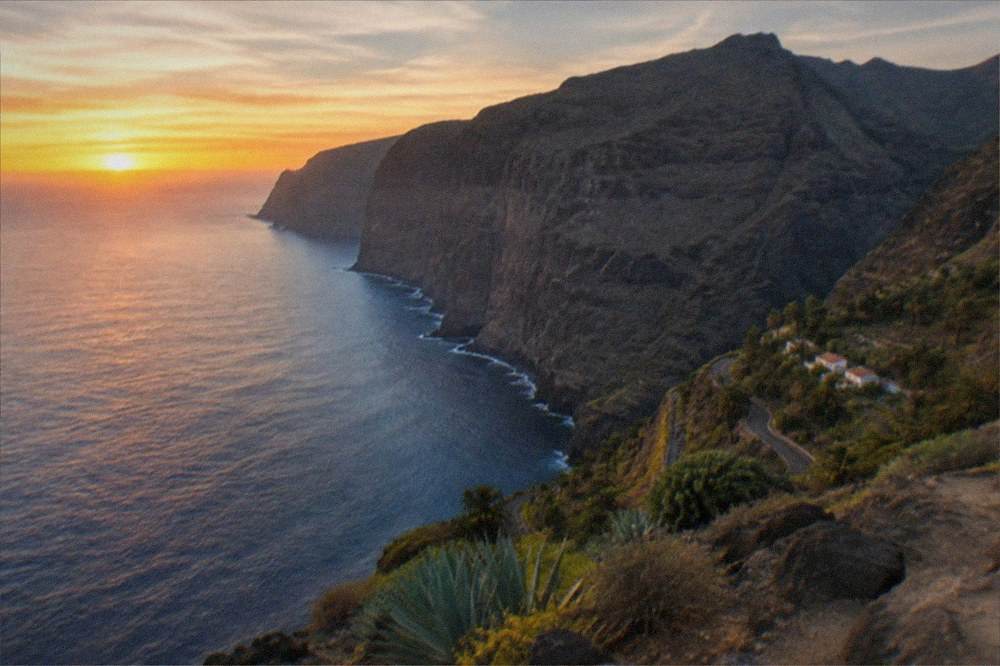
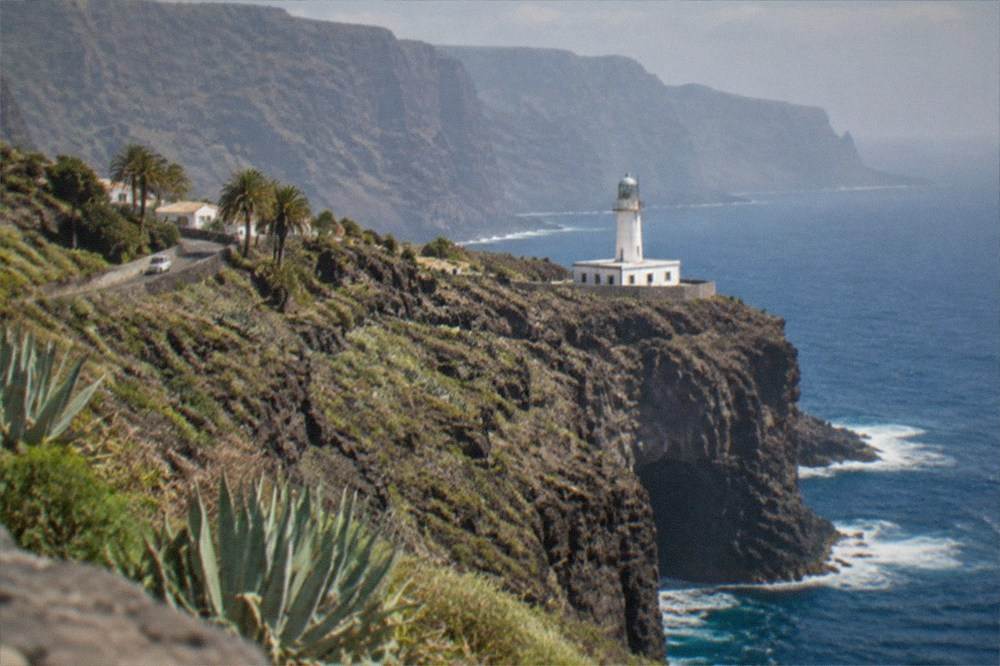
The Acantilados de Los Gigantes are the wall of dark rock that closes the west coast of Tenerife, and the tourist board's own page for them is unusually precise about the two numbers that matter. Turismo de Tenerife says the cliffs "tower up to 600 m (1,970 ft) high", and that the seabed at their foot lies about 30 m down. Both figures are worth holding onto, because plenty of older pages round the height up to a figure no official source supports.
The cliffs sit inside Teno Rural Park, the protected stretch of north-west Tenerife that also holds the lighthouse headland at Punta de Teno and the village of Masca. The resort of Los Gigantes takes its name from them and clusters at their southern foot, around a small marina from which nearly every boat trip to the cliffs departs. This page sets out what the official sources say about the cliffs themselves, the whale watching rules that govern the water beneath them, the regulated Masca gorge that ends its descent by boat along this same coast, and the practical question of reaching the area without a car.
Where Are the Los Gigantes Cliffs Located in Tenerife, Spain?
The Los Gigantes cliffs stand on the west coast of Tenerife, in the municipality of Santiago del Teide, inside Teno Rural Park, with the resort and marina of Los Gigantes at their southern foot. They face the open Atlantic and the neighbouring island of La Gomera, and the same municipality also administers the Masca gorge and the Punta de Teno headland, so the whole protected north-west corner of the island belongs to one administrative stretch of coast.
They face the open Atlantic and the neighbouring island of La Gomera, which the Fred. Olsen Express route table puts 50 minutes away by ferry from Los Cristianos. The resort town of Los Gigantes belongs to Santiago del Teide, which the municipal register counts at 12,582 people, one of the smaller municipalities on an island of about 960,000.
Santiago del Teide is the same municipality that administers the Masca gorge, which is why the two attractions keep crossing paths on official pages. Tenerife ON's trail page for Masca lists bus lines 355 and 365 at stop code 4553, and the Masca operator's own booking page names the compulsory arrival route from Santiago del Teide. The cliffs, the gorge and the lighthouse at Punta de Teno form one protected corner of the island, and a day spent here usually touches at least two of the three.
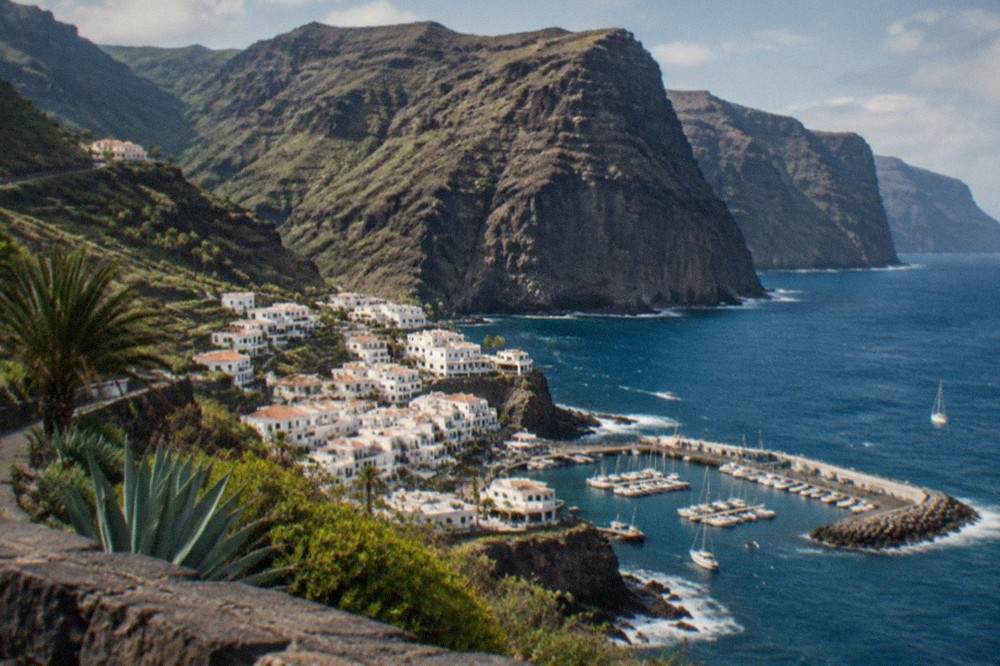
The neighbouring resort of Puerto de Santiago runs along the coast immediately south of Los Gigantes, so accommodation in either puts the marina and the boat trips within easy reach. Further south still, the coast softens into the smaller resorts of Los Abrigos and the airport belt, but the cliffs themselves belong firmly to the north-west.
| Fact | Figure | Source |
|---|---|---|
| Height | Up to 600 m (1,970 ft) | Turismo de Tenerife |
| Seabed at the foot | About 30 m deep | Turismo de Tenerife |
| Protected area | Inside Teno Rural Park | Turismo de Tenerife |
| Municipality | Santiago del Teide | INE municipal register |
| Neighbouring island in view | La Gomera, 50 min by ferry from Los Cristianos | Fred. Olsen Express |
How Tall Are the Acantilados de Los Gigantes Really?
The cliffs rise up to 600 m, in the words of Turismo de Tenerife, which is the only height figure this site states for them, and the tourist board's phrasing matters in another way too: "up to" means the highest section, not a uniform wall, and the rock drops in varying steps along the whole stretch of coast, so no single number describes every part of it.
Older guides often print 800 m, and that figure appears on no official page read for this site's fact file. The tourist board's phrasing matters in another way too: "up to" means the highest section, not a uniform wall, and the rock drops in varying steps along the whole stretch of coast.
The seabed figure is the one that explains why the cliffs matter to boats. At about 30 m deep at the foot, the water is deep enough for vessels to cruise close beneath the rock, which is exactly what the trips from the marina do. The same depth is part of why this stretch of coast, together with the water between Tenerife and La Gomera, holds the resident marine life that the whale watching fleet comes out for.
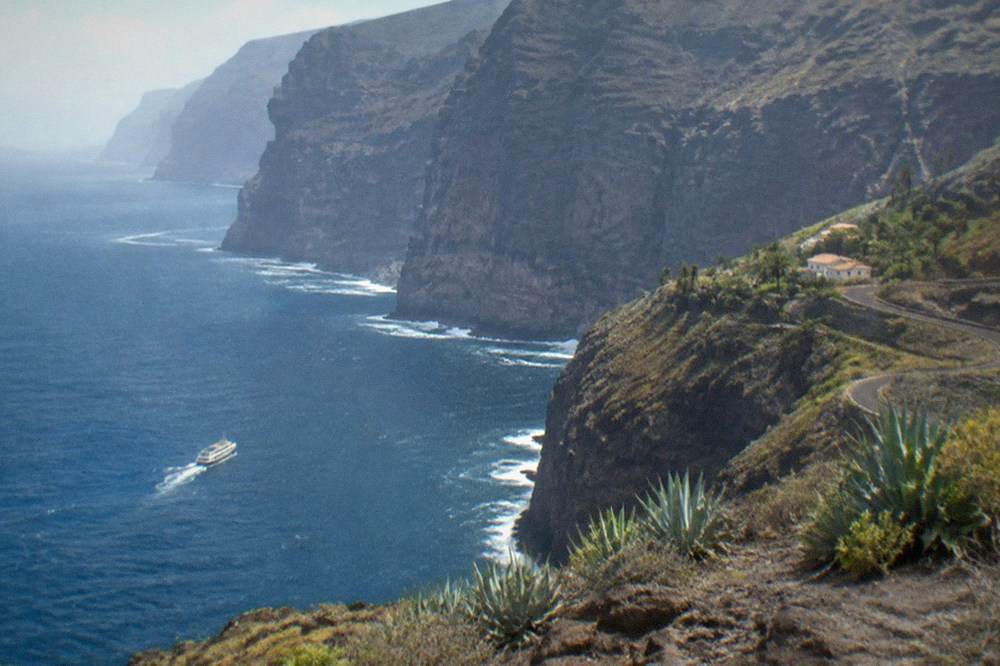
The rock itself belongs to the same volcanic story as the rest of the island, and the cliffs give their name to the resort rather than the other way round. What the official pages do not do is date the cliffs or attribute them to a single eruption, so this site does not either. What can be said, from the Garachico record on the other side of the same north-west corner, is that this coast has a documented volcanic history: the Trevejo volcano erupted in 1706, destroyed almost the entire town of Garachico and buried its old port, ending that town's run as the island's trade hub of the 16th and 17th centuries.
What Can You Actually Do at the Los Gigantes Cliffs?
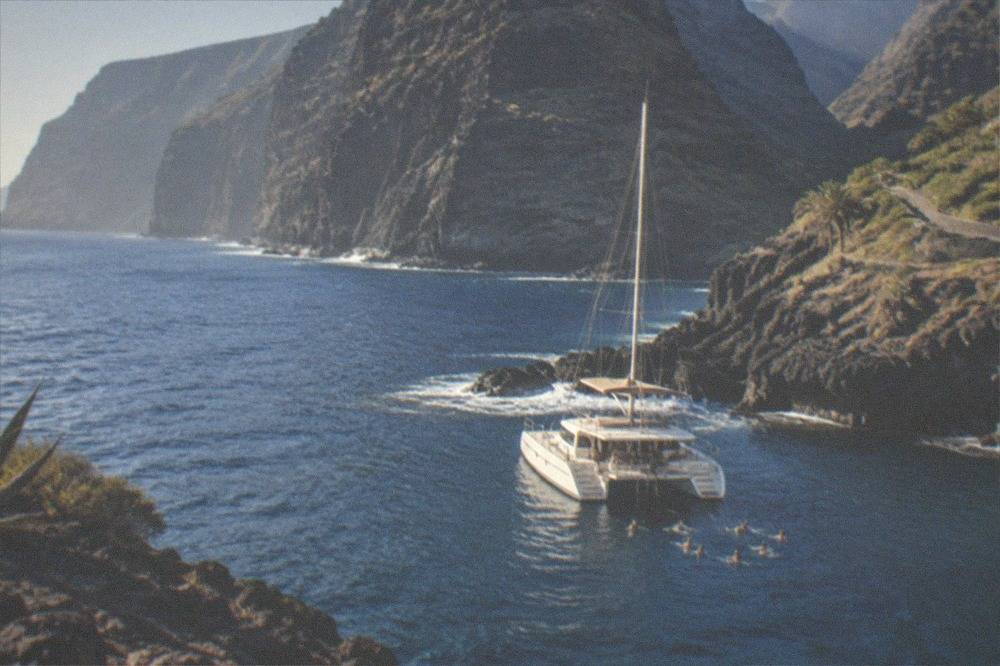
The main activity is a boat trip from the Los Gigantes marina out beneath the rock wall, typically with a swim stop in one of the coves, and the second is whale and dolphin watching in the same water, run under the Canary whale watching decree. Beyond the water, the resort itself offers a seafront promenade, a small beach and the viewpoints above town, and the wider Teno area holds Punta de Teno and the start of the regulated Masca gorge route.
The boat trips come in several shapes, and the roster on this site reflects that spread. The listing for the Los Gigantes dolphin and whale watching cruise with a swim stop runs 2 hours and is rated 4.7 from 5,673 reviews. The sailboat version, rated 4.9 from 2,264 reviews, runs 3 hours under sail. A combined land-and-sea excursion visits Masca, the cliffs and natural pools with a picnic included, rated 4.6 from 417 reviews over 5 to 5.5 hours. The eco yacht safari from Los Cristianos, rated 4.7 from 19,175 reviews, is the most reviewed product in the whole whale watching category and includes a swim stop.
Whichever shape of trip suits, the departure point matters. The Los Gigantes cruises leave from the marina at the foot of the cliffs, so staying in Los Gigantes or Puerto de Santiago puts the boarding point close by. The eco yacht and the Masca-and-pools excursions start from Los Cristianos or points south, which suits visitors based in the main southern resorts.
Want to See the Cliffs from the Water?
The operator's live listing shows the current departure times and availability before you commit.
The swim stop deserves a note of honesty. The coves beneath the cliffs are open Atlantic water, deep quickly, and trips only stop where conditions allow. The decree that governs whale watching also governs how boats behave around the animals, and a trip that finds pilot whales will usually spend its water time watching rather than swimming. Both things can happen on one outing, but no operator promises both.
What Are the Whale Watching Rules at Los Gigantes?
Whale watching around Tenerife is regulated by Decreto 178/2000, which bans any approach within 60 m of the animals, caps boats at three within 500 m, limits speed to 4 knots within 500 m and forbids swimming, diving, feeding, chasing or circling. Authorised boats must fly the Barco Azul flag, issued by the Canary tourism department with the permit and renewed annually. These are the rules every legal trip from Los Gigantes operates under.
The reason the rules matter here is that this stretch of water is genuinely special. The World Cetacean Alliance records that the Tenerife-La Gomera Marine Area became a designated Whale Heritage Area in January 2021, under a programme now called Whale Heritage Areas. The designation is the WCA's, not UNESCO's, and this site says so plainly. The WCA describes a unique resident population of pilot whales, bottlenose dolphins, and a migration stop for 21 other cetacean species, inside a Special Area of Conservation. No official count of the pilot whales exists, so none is printed here.
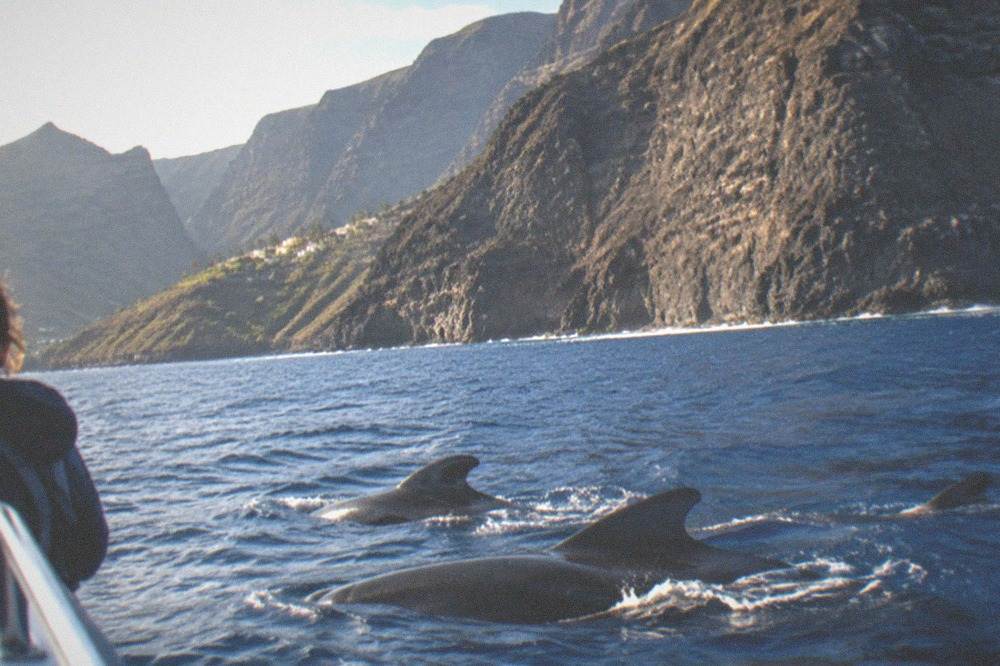
What the decree means in practice for a visitor is simple to check. A legal boat flies the Barco Azul flag, keeps its distance, and lets the animals decide the encounter. The no-chase principle has even become a selling point: the roster on this site carries an eco no-chase catamaran trip and a small-boat eco adventure capped at ten guests, both built around the rules rather than around closeness.
| Rule from Decreto 178/2000 | What It Means on the Water |
|---|---|
| No approach within 60 m | Boats hold back from the animals |
| Maximum three boats within 500 m | No crowding of a single group |
| Maximum 4 knots within 500 m | Slow approach and slow departure |
| No swimming or diving within 500 m | You do not get in the water with whales |
| No feeding, chasing or circling | The animals set the course of the encounter |
| Barco Azul flag mandatory | Look for the flag on any boat you board |
Can You Combine the Cliffs with the Masca Gorge?
Yes, but only on the gorge's own terms: Masca is open under a continuing pilot scheme as a descent-only walk with a pre-booked boat exit, and the general ticket costs EUR 40.66 with the boat charged separately. The booking site is caminobarrancodemasca.com, not Tenerife ON, and the walk ends at Masca bay, on the same stretch of coast the Los Gigantes boats cruise.
The rules around Masca are strict, and the operator enforces every one of them. Hikers must arrive on TITSA line 355 from Santiago del Teide and show the bus ticket at the control; arriving by private vehicle means refusal. Closed mountain footwear is a condition of entry, and walkers are turned away without it even with a valid booking. The boat ticket out of the bay must be booked beforehand and timed for no later than 4 hours after the descent slot. Only the descent is sold in the current phase: there is no two-way walk. Everything else covered here is indexed on Tenerife Travel Guide.
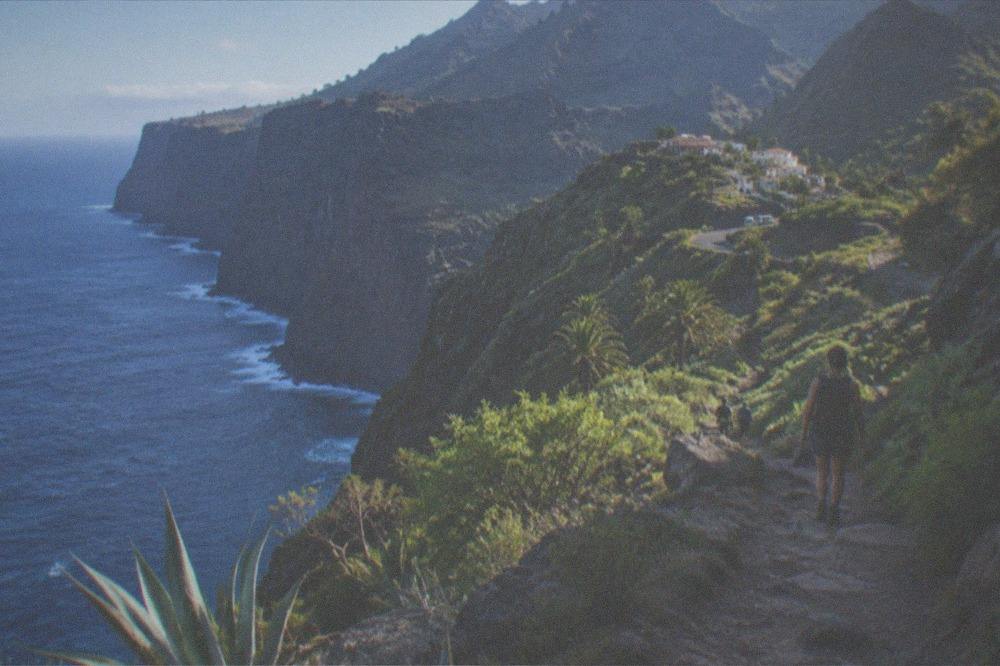
The operator is blunt about risk, calling Masca the place with the most rescues in the Canaries in recent years, and warns that the pier can close suddenly when the sea turns. A pier closure voids the ticket for that day. Entry sessions run 08:30 to 13:00 within trail hours of 08:30 to 18:00, with 25 places released every 30 minutes and 50 at the 09:00 session. Tenerife residents and mountaineering or caving federation members from the Canaries enter free, with the payment refunded after the check at the control, and special rates exist for Canary residents, under-18s and federated members. The return leg from Los Gigantes to Santiago del Teide is not included in the ticket: TITSA lines 462 or 325 cover it.
| Masca Gorge Rule | Detail |
|---|---|
| Status | Open, descent only, pilot scheme |
| Booking site | caminobarrancodemasca.com |
| General ticket | EUR 40.66, boat not included |
| Arrival | TITSA line 355 from Santiago del Teide, ticket shown at control |
| Private vehicles | Refused |
| Footwear | Closed mountain footwear mandatory |
| Boat exit | Booked beforehand, no later than 4 hours after the descent slot |
| Hours | Trail 08:30 to 18:00, entry sessions 08:30 to 13:00 |
| Quota | 25 places every 30 minutes, 50 at the 09:00 session |
| Return bus | TITSA lines 462 or 325 from Los Gigantes |
For visitors who want the Masca landscape without the permit logistics, the combined excursions that pair Masca village with the cliffs and natural pools are the simpler route, and the classic loop that ties Masca, Icod and Garachico together is covered in detail on the Masca, Garachico and Icod route page.
When Is the Best Time to Visit the Los Gigantes Cliffs?
The sea is warmest from July to October, when the surface temperature off Tenerife's south coast runs at 22.2 to 23.7 Celsius, and the cliff-top air is at its most reliable between May and September, the months when the south of the island records little or no rain. The sea figures come from NOAA's 1991 to 2020 dataset, the air figures from AEMET's 1981 to 2010 climate normals, and the two periods are different things.
For a swim-stop boat trip, September and October are the sweet spot in the data: the sea is at its yearly maximum of 23.7 Celsius while the air at Tenerife South Airport averages a daily maximum of 26.8 and 27.9 Celsius. Winter trips are perfectly feasible, with the sea at 19 to 20 Celsius, but the Atlantic swell off the west coast is a different proposition from the sheltered south, and the Masca operator's warnings about sudden pier closures apply to this whole coast. Boat trips run year round; the sea decides the swim stops.
| Month | Sea Surface Temp (C) | Mean Daily Max at Tenerife South (C) | Rain Days (1 mm or more) |
|---|---|---|---|
| Jan | 19.9 | 21.7 | 1.8 |
| Feb | 19.2 | 22.0 | 2.2 |
| Mar | 19.1 | 23.1 | 1.9 |
| Apr | 19.5 | 23.1 | 1.1 |
| May | 20.2 | 23.9 | 0.3 |
| Jun | 21.4 | 25.4 | 0 |
| Jul | 22.2 | 27.7 | 0 |
| Aug | 23.1 | 28.4 | 0.2 |
| Sep | 23.7 | 27.9 | 0.6 |
| Oct | 23.7 | 26.8 | 1.6 |
| Nov | 22.5 | 24.8 | 1.9 |
| Dec | 21.1 | 22.8 | 3.5 |
Crowd pressure follows the island's arrival figures rather than the weather alone. ISTAC's monthly count of tourists arriving by air shows the winter months carrying more visitors than midsummer: January 2026 recorded 649,614 arrivals by air against 600,339 in July 2026. The cliff boats are busiest when the resorts are fullest, so a spring or early-summer date combines warm sea with thinner crowds in the data.
How Do You Get to Los Gigantes Without a Car?
TITSA buses reach the area on lines 355, 365, 462 and 325, with line 355 the compulsory arrival route for Masca gorge hikers from Santiago del Teide, and the marina at Los Gigantes is the departure point for the cliff boats. Visitors pay normal fares: the day travelcard costs EUR 10 and the seven-day travelcard EUR 50, and the free public transport subsidy of 2026 applies only to Canary resident passes, not to visitors.
The resident subsidy is worth being clear about, because misleading claims travel fast. The Canary government's 100% subsidy on passes and multi-trip tickets, in force since 1 January 2026 under Real Decreto-ley 17/2025, requires residency in the Canary Islands and a personalised Ten+ card. Every subsidised pass on Metrotenerife's fares page carries a residency condition. Visitors buy single tickets, the EUR 10 day travelcard or the EUR 50 seven-day travelcard, both sold at airport ticket machines.
| Route | TITSA Line | Notes |
|---|---|---|
| Santiago del Teide to Masca | 355 | Compulsory for gorge hikers, ticket shown at control |
| Masca village service | 365 | Listed by Tenerife ON at stop code 4553 |
| Los Gigantes to Santiago del Teide | 462 | The gorge's stated return route |
| Alternative return | 325 | Second return option named by the Masca operator |
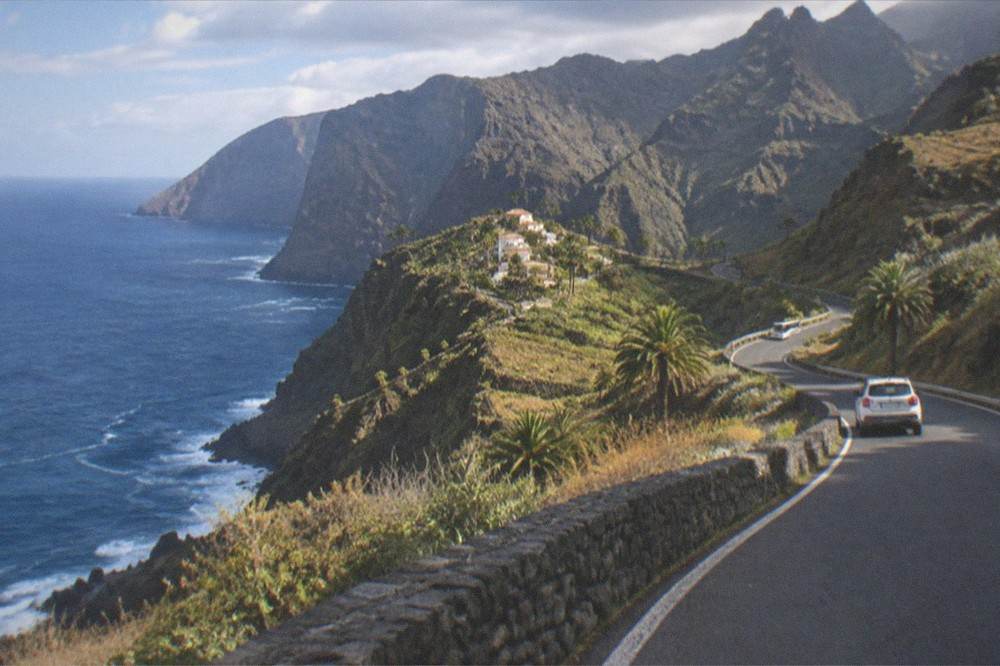
Driving is an option for the resort and the viewpoints, and the driving in Tenerife habits of the island apply, but it is not an option for the gorge itself: the Masca operator refuses private vehicles outright. For anyone planning the wider west coast, the whale and dolphin watching category page compares the boat options across the island's departure points, and the choice between the main southern resorts is covered in the Los Cristianos vs Costa Adeje guide.
What Should You Not Miss Near the Los Gigantes Cliffs?
Punta de Teno, the lighthouse headland at the north end of the same rural park, and the village of Masca above the gorge are the two sights that share the cliffs' stretch of coast, with the boat trip beneath the rock wall as the thing that ties the day together. Punta de Teno sits at the end of the Teno massif and looks back along the whole cliff line, which makes it the complement to the sea-level view.
The order of a good day here writes itself from the geography. A morning boat from the marina puts the 600 m of rock overhead and, on a calm day, pilot whales in the water between here and La Gomera. An afternoon drive or bus ride to Punta de Teno frames the same cliffs from the land. A second day, for walkers who plan ahead, takes the line 355 bus to Masca for the regulated descent, though that is a full expedition with a boat exit and a bus return, not a casual add-on.
For a longer loop, the north-west corner connects onward to Garachico's natural pools and the dragon tree at Icod de los Vinos, both covered elsewhere on this site. The cliffs themselves ask little of a visitor: no permit, no ticket, no reservation. The paid parts of this coast are the boats, the Masca gorge and the whale watching fleet, and each of those is a booking this site can help with. The rock is free.
Common Questions About the Los Gigantes Cliffs
Where are the Los Gigantes Cliffs located in Tenerife, Spain?
They stand on the west coast of Tenerife, in the municipality of Santiago del Teide, inside Teno Rural Park, with the resort and marina of Los Gigantes at their southern foot and La Gomera across the water.
How tall are the Los Gigantes cliffs?
Turismo de Tenerife says they tower up to 600 m (1,970 ft) high. The 800 m figure that appears on many older pages is not supported by any official source this site has read.
Can you swim at the foot of the cliffs?
Boat trips from the marina include swim stops in the coves when sea conditions allow. The whale watching decree forbids swimming within 500 m of the animals, so swim stops happen away from any sighting.
Do you need a booking to see the cliffs?
No. The cliffs, the viewpoints and the resort cost nothing and need no permit. The boat trips, the whale watching excursions and the Masca gorge are the bookable parts of this coast.
Can you hike from Masca to Los Gigantes?
The Masca gorge is a descent-only route under its pilot scheme, ending with a pre-booked boat exit from Masca bay, and the return to Santiago del Teide is by TITSA bus lines 462 or 325 from Los Gigantes. There is no two-way walk in the current phase.
When is the sea warmest for a boat trip at Los Gigantes?
September and October, when the sea surface off Tenerife's south coast averages 23.7 Celsius in NOAA's 1991 to 2020 dataset.