Los Cristianos vs Costa Adeje vs Playa De Las Americas
Three resorts sit side by side on Tenerife's south coast, and the choice between them comes down to sand, scale and how much you want to walk. Here is what the official record says about each.
Short answer
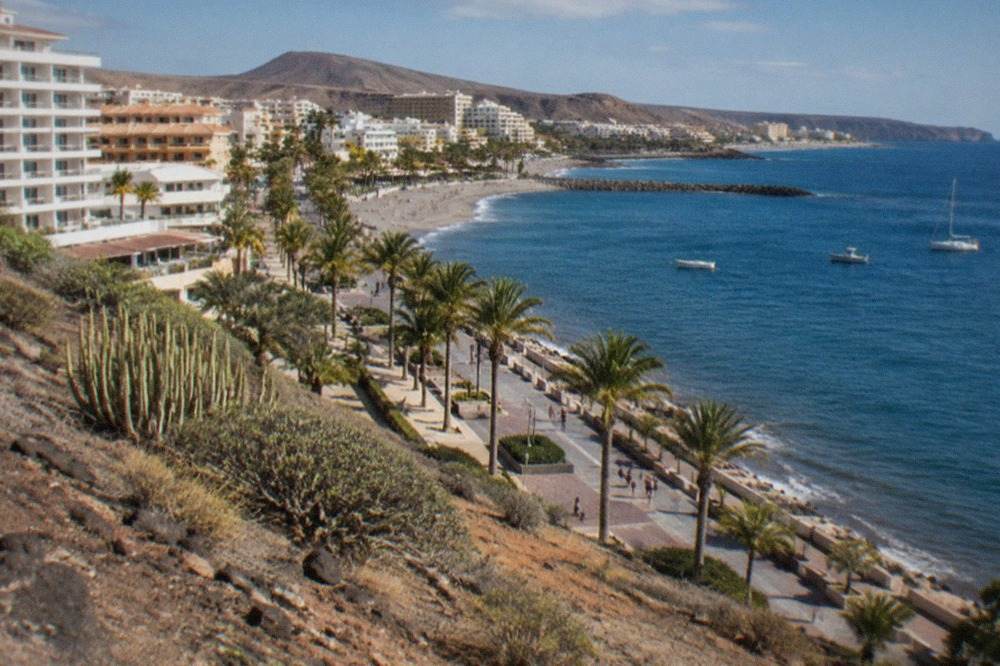
Los Cristianos is the quieter, more Spanish-established base in Arona with a working harbour; Costa Adeje is the newer, hotel-heavy stretch in Adeje around grey-sand El Duque; Playa de las Americas is the nightlife and entertainment strip between them.
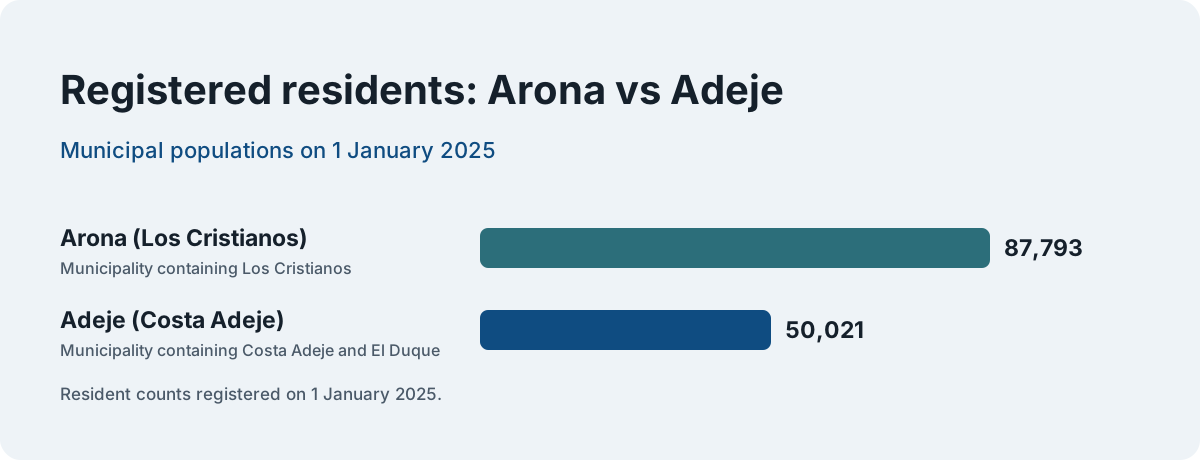
Arona, the municipality that contains Los Cristianos, registered 87,793 residents on 1 January 2025, and its neighbour Adeje, which contains Costa Adeje and El Duque, registered 50,021. Two towns, two councils, one continuous stretch of hotel coastline. The third name in the comparison, Playa de las Americas, sits between them as the entertainment strip, and the three together form the busiest holiday belt on the island. Choosing between them is less about quality, all three share the same weather station and the same sea, and more about which kind of holiday each one is built for. This page compares them using the tourist board's own beach descriptions, the state weather service's climate normals and the bus operator's fare table, so every figure here has an official source behind it.
What Is the Difference Between Los Cristianos and Costa Adeje?
Los Cristianos is the older, more established resort in the municipality of Arona, built around a working fishing harbour, while Costa Adeje is the newer, hotel-led stretch in the municipality of Adeje, centred on the beaches of El Duque and Fanabe. The tourist board describes El Duque as a grey sandy beach and Fanabe as pale sand, and both sit in Adeje, while Los Cristianos belongs to Arona, a municipality of 87,793 residents against Adeje's 50,021.
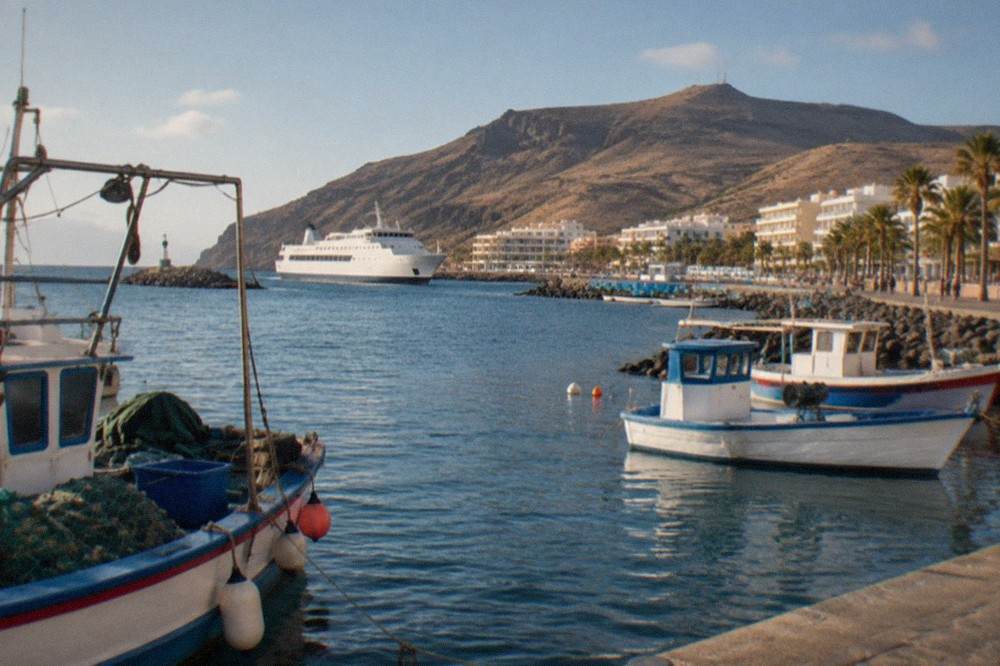
The difference is administrative as much as atmospheric, and it matters practically. Two councils run two sets of services, and the municipal boundary runs straight through the built-up coast. Los Cristianos grew around a real town that predates mass tourism: the harbour still sends ferries to La Gomera, La Palma and El Hierro, run by Fred. Olsen Express with crossing times of 50, 150 and 140 minutes respectively, and the resort's street plan still follows the shape of the original village. Costa Adeje, by contrast, is a purpose-built hotel zone, wider boulevards, larger resort complexes and a promenade that strings together a series of beaches rather than one town beach.
Scale is the other difference. Costa Adeje's hotel stock is the island's densest concentration of large resort properties, and the 2025 tourist board balance records EUR 2,121 million of hotel and apartment revenue island-wide, with the south coast carrying the largest share of it. Los Cristianos has hotels too, but it also has a Spanish town centre where locals shop, which is why the resort keeps a reputation as the calmer, more residential-feeling base of the two. The full area profiles are in the site's Los Cristianos area guide and Costa Adeje area guide, which go deeper on each one individually.
Which Is Better, Costa Adeje or Playa de las Américas?
Costa Adeje is the better base for hotel comfort, quieter evenings and family beaches, while Playa de las Américas is the better base for nightlife, bars and the biggest concentration of evening entertainment on the island. The two are adjacent and walkable, so the choice is about where you sleep, not about what you can reach: everything in either resort is reachable on foot from the other along the seafront promenade.
Playa de las Américas is the strip. It carries the island's densest run of bars, clubs and late venues, and this site's Tenerife nightlife guide covers it in detail. Travellers who want that scene within a few minutes of their hotel door should stay in Playa de las Américas itself; travellers who want a comfortable bed and a quieter street at midnight, with the option to walk into the strip when they feel like it, are better placed in Costa Adeje. The walk between the two is flat and continuous, along the promenade that links the whole coast.
Costa Adeje's advantages are concrete rather than atmospheric. It holds the island's flagship water park, Siam Park, which opens 365 days a year, 10:00 to 18:00 from 1 May to 29 October and 10:00 to 17:00 from 30 October to 30 April, plus Aqualand Costa Adeje as a second park option covered in the Aqualand guide. It also holds the grey-sand beach of El Duque, the most photographed stretch of sand in the resort. Playa de las Américas has the surf, and that is a real differentiator: the island's main beginner surf beaches sit in and around this stretch, which is why the surf lesson below is carded from here.
What Are the Beaches Like in Each Resort?
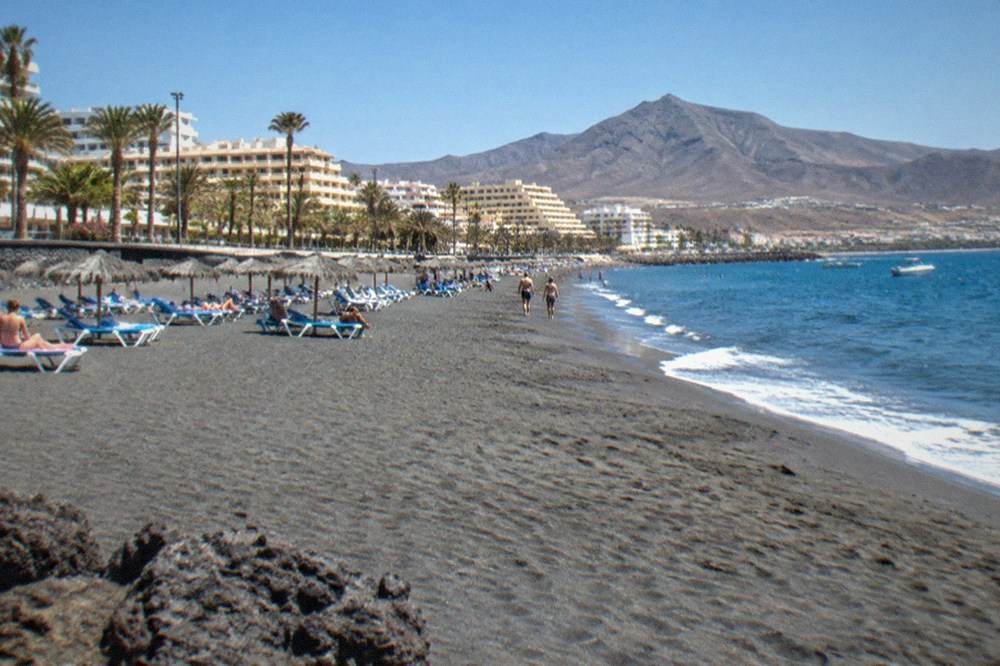
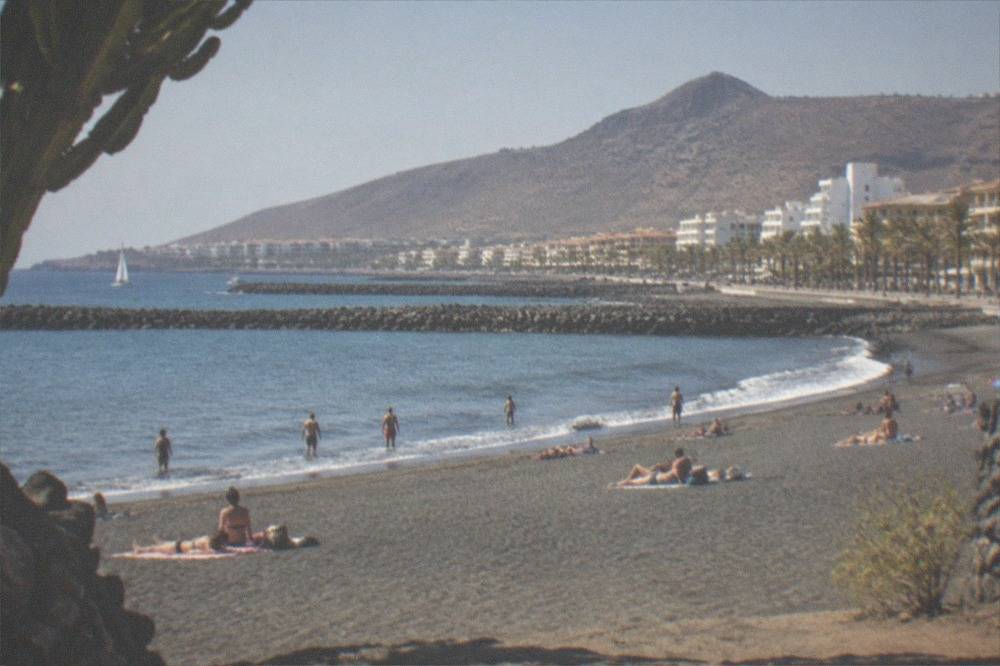
Las Vistas, between Los Cristianos and Playa de las Américas, is golden sand behind breakwaters; Fanabe in Costa Adeje is pale sand; El Duque in Costa Adeje is grey sand, all per the tourist board's own beach pages. Los Cristianos town beach sits beside the harbour, and the calmest swimming water on this coast is behind the breakwaters at Las Vistas and Los Cristianos bay, not on the open stretches.
Sand colour is the comparison most guides fudge, so here it is exactly as the tourist board states it. The official pages describe El Duque as a grey sandy beach, Fanabe as pale sand, and Las Vistas as golden sand, calm behind a row of breakwaters. That is the whole ranking on looks: if golden sand is the priority, Las Vistas in Arona is the beach on this coast that the official description gives it to, and the full profile is in the Las Vistas beach guide. El Duque's grey sand is not a defect, it is volcanic Tenerife being honest about itself, and the beach's setting is the most upscale on the coast.
| Beach | Resort / municipality | Tourist board description |
|---|---|---|
| Las Vistas | Between Los Cristianos and Playa de las Américas, Arona | Golden sand, calm behind a row of breakwaters |
| Playa del Duque | Costa Adeje, Adeje | Grey sandy beach |
| Fanabe | Costa Adeje, Adeje | Pale sand |
| Las Teresitas | San Andrés, Santa Cruz (day trip) | Golden sand, palm trees, breakwaters that calm the water |
One beach deserves a special note for families weighing Los Cristianos. Las Teresitas, the golden-sand beach with palm trees and breakwaters, lies in San Andrés near Santa Cruz, so it is not on the south coast at all, but it is the island's most deliberately family-friendly stretch of sand and the Las Teresitas guide covers the trip. For a south-coast holiday without a car, Las Vistas does the same job closer to hand. Fanabe's pale sand, covered in the Fanabe beach guide, is the middle option: softer in colour than El Duque, calmer in setting than the Américas strip.
Is Los Cristianos or Costa Adeje Better for Families?
Costa Adeje is the stronger family base on attractions: Siam Park opens 365 days a year on its doorstep, Aqualand is nearby, and the combined Loro Parque and Siam Park ticket lets one purchase cover two parks. Los Cristianos is the stronger family base on calm water and daily routine, with Las Vistas's breakwater-protected bay, a working town beach and the ferry port for a La Gomera day trip.
Both work; they work differently. The Costa Adeje case rests on density of things to do. Siam Park's own hours page confirms it never closes, and the twin ticket covering both Siam Park and Loro Parque in Puerto de la Cruz is the single most efficient purchase for a family doing both parks in one week. The Los Cristianos case rests on the shape of the day: a calm bay, a promenade that loops the town, and a harbour from which Fred. Olsen Express runs the 50-minute crossing to San Sebastián de La Gomera, the easiest big excursion on the coast, covered in the site's La Gomera day trip guide.
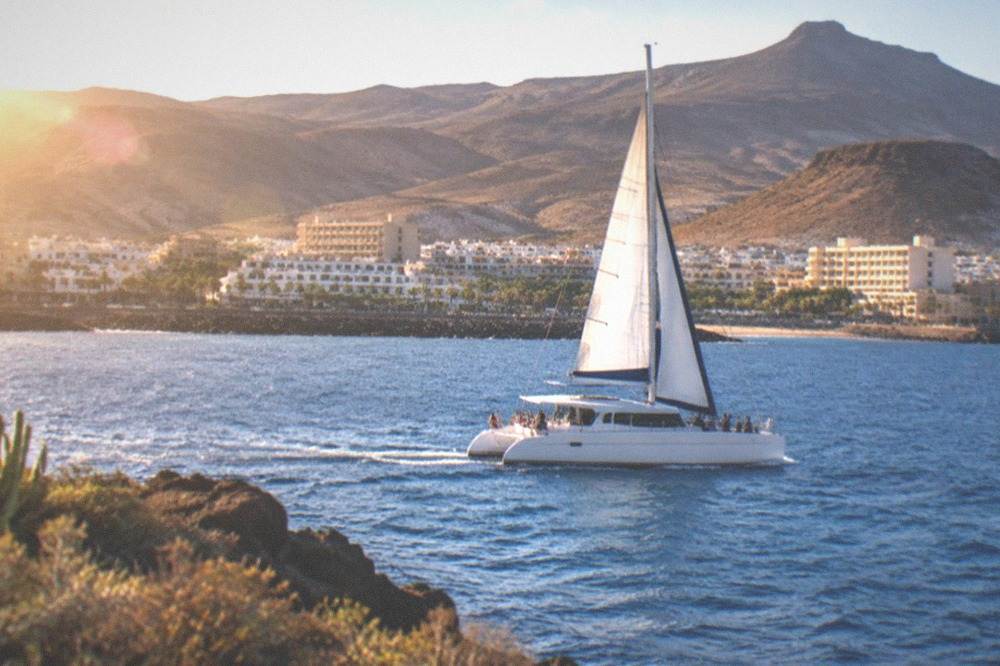
The whale-watching fleet is shared between the two, since most boats leave from the ports at both ends of the coast, and the resident pilot whale population the World Cetacean Alliance describes is the same one whichever harbour you sail from. The eco yacht trip below is one of the highest-rated options on the coast, and the full comparison of operators is in the site's whale and dolphin watching guide.
Do the Three Resorts Have Different Weather?
No: all three sit under the same weather record. The AEMET station at Tenerife South Airport, the closest official station to the coast, records a July and August mean daily maximum of 28.4 to 29 degrees Celsius and 27.7 to 28.7 in the hottest months, with zero rain days in June and July, so the practical difference between the resorts is microclimate noise, not data.
The south coast is the reason people choose this end of the island at all. The station at Tenerife South Airport, 64 m above sea level, records an annual 132 mm of rain across 15.2 days with 1 mm or more, against 520 mm on 64 days at Tenerife North Airport in Los Rodeos. That contrast, not any difference between neighbouring resorts, is what the weather data actually shows, and it is why this coast holds the winter-sun market. The site's north vs south guide covers the split in full.
| Month | Mean daily max (C) | Mean daily min (C) | Rain (mm) | Rain days (1 mm+) | Sunshine (hours) |
|---|---|---|---|---|---|
| Jan | 21.7 | 15.2 | 17 | 1.8 | 193 |
| Feb | 22.0 | 15.0 | 20 | 2.2 | 195 |
| Mar | 23.1 | 15.6 | 15 | 1.9 | 226 |
| Apr | 23.1 | 16.0 | 7 | 1.1 | 219 |
| May | 23.9 | 17.0 | 1 | 0.3 | 246 |
| Jun | 25.4 | 18.8 | 0 | 0 | 259 |
| Jul | 27.7 | 20.2 | 0 | 0 | 295 |
| Aug | 28.4 | 21.1 | 1 | 0.2 | 277 |
| Sep | 27.9 | 21.1 | 4 | 0.6 | 213 |
| Oct | 26.8 | 20.0 | 12 | 1.6 | 214 |
| Nov | 24.8 | 18.2 | 26 | 1.9 | 193 |
| Dec | 22.8 | 16.5 | 30 | 3.5 | 195 |
Figures are AEMET's 1981-2010 climate normals for station C429I at Tenerife South Airport. The sea tells the same story from a different dataset: NOAA's 1991-2020 series for the south coast puts the sea surface at 23.7 degrees Celsius in September and October, the warmest months, and 19.1 to 19.2 in February and March, the coolest. Two datasets, two periods, and the distinction matters if you are quoting either one. Other pages covering the same trip are gathered on Tenerife Travel Guide.
| Month | Sea surface temperature (C) | Month | Sea surface temperature (C) |
|---|---|---|---|
| Jan | 19.9 | Jul | 22.2 |
| Feb | 19.2 | Aug | 23.1 |
| Mar | 19.1 | Sep | 23.7 |
| Apr | 19.5 | Oct | 23.7 |
| May | 20.2 | Nov | 22.5 |
| Jun | 21.4 | Dec | 21.1 |
Which Resort Should You Choose for Walking and Hiking?
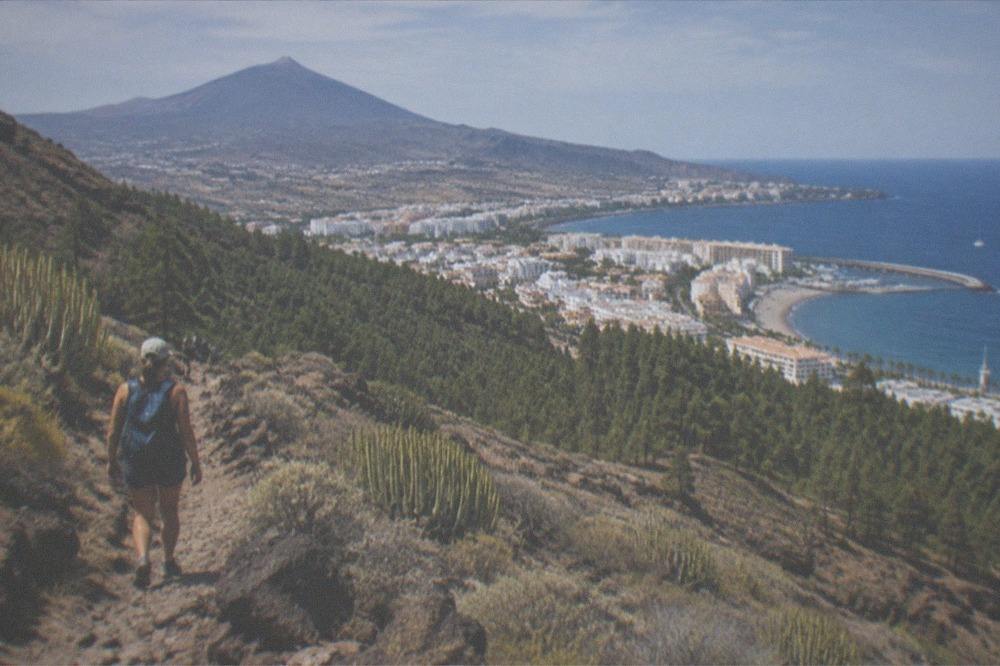
Neither resort is a hiking base in itself, but Los Cristianos is the marginally better launch point, because its harbour carries the ferries and its bus station sits on the lines that serve the island's walking trails. The big hikes are all inland or west: Teide, Anaga and the Masca gorge, and each of the permit trails has its own booking rule that no resort choice changes.
The south coast is a beach base, and any serious walking day starts with a drive or a bus ride. What the coast offers instead is the flat promenade that links all three resorts, which runs continuously along the seafront and is the everyday walking most visitors actually do. For the real trails, the hiking in Tenerife guide lists what needs a booking: the Teide summit trail PNT 10 and the Montaña Blanca trail PNT 07 both take Tenerife ON reservations, with daytime slots since 19 January 2026 costing EUR 15 for visitors on PNT 10 and EUR 6 to 10 on PNT 07 depending on the day, and the Masca descent takes a pre-booked boat-exit ticket at EUR 40.66, bought at caminobarrancodemasca.com, with arrival on TITSA line 355 compulsory.
One point of honesty about the resort south: the three English-guided free, pay-what-you-want walking tours carded on this site, on GuruWalk, all run in the north, La Orotava, Puerto de la Cruz and Santa Cruz. No free walking tour is listed for Los Cristianos, Costa Adeje or Playa de las Américas. That is a statement about what is listed, not proof that none exists, but as things stand a free guided walk means a trip up to the north coast. The trade is worth it: the Teide from the south day trip guide shows how the volcano day works from either base, and both resorts sit on the same approach road.
Is Los Cristianos or Costa Adeje Cheaper?
On the costs that are published, the two resorts are identical: the same TITSA bus fares, the same EUR 10 day travelcard, the same EUR 50 seven-day travelcard, and the same official attraction prices. The differences that exist are in hotel rates, which move daily and are not stated on this page; the published costs a visitor can verify do not change across the municipal boundary.
Transport is the clearest example. TITSA's fare page prices the day travelcard at EUR 10 and the seven-day travelcard at EUR 50, sold at airport ticket machines, and the Ten+ card itself costs EUR 2 with wallet top-ups from EUR 2 to EUR 100. Those are island-wide products; there is no Los Cristianos price and no Costa Adeje price. The 2026 subsidy that made travel free applies to resident passes only, so visitors pay the fares in the table below wherever they stay.
| TITSA product | Price | Notes |
|---|---|---|
| Single ticket | Priced by route | Card or cash |
| Same-day return | 10% off | On trips of 20 km or more |
| Day Travelcard | EUR 10 | Sold at airport ticket machines |
| 7 Day Travelcard | EUR 50 | Sold at airport ticket machines |
| Ten+ card | EUR 2 | Wallet top-ups EUR 2 to EUR 100 |
Attraction prices are equally indifferent to your base. Siam Park's hours are the same whichever hotel you wake up in, and the Loro Parque car park charges EUR 7 per day whether you drive from Arona or Adeje. Where the resorts genuinely differ is accommodation cost, and that is a live market this site does not quote: rates move daily with season and demand, and the honest advice is that the budget end of the coast clusters in Los Cristianos and the upper end clusters around El Duque. For the fuller money picture, the Tenerife on a budget guide covers what to book ahead and what to pay on the day.
How Do You Get Between the Three Resorts?
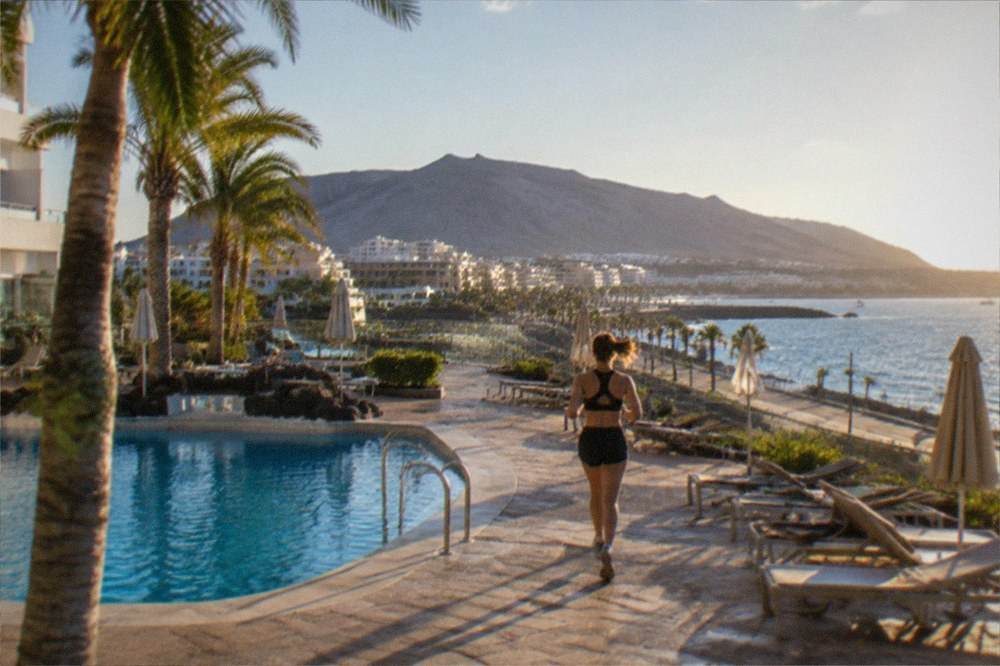
On foot along the coast promenade, or by TITSA bus along the main coast road; the three resorts are continuous, and the promenade links Los Cristianos harbour to Costa Adeje's beaches without a break. From Tenerife South Airport, TITSA lists line 40 to Costa Adeje bus station via Los Cristianos, and line 343 as the express linking both airports with Puerto de la Cruz and Los Cristianos.
The airport is the practical anchor. TITSA's own airport page lists five lines at Tenerife South: line 10 to Santa Cruz, line 40 to Costa Adeje bus station via Los Cristianos, line 711 as the night bus, line 343 as the express to Puerto de la Cruz via both airports and Los Cristianos, and line 415 to El Fraile and San Isidro. Line 40 is the one that serves the resort comparison directly, since its route names both ends of the coast. AENA recorded 13,969,678 passengers at Tenerife South in 2025, an all-time record, which is why the airport transfer question matters more here than anywhere else on the island; the airport transfers guide covers it in full.
Once in the resort belt, a car is optional. Taxis are white and metered from the start of the trip, with a fixed price agreeable in advance for excursions, per the tourist board's taxi page. The do you need a car in Tenerife answer works through the decision, and the short version for this coast is that a car buys you the west, the Los Gigantes cliffs and the Teno roads, while the coast itself is walkable and bus-served. The getting around Tenerife guide has the full transport picture.
What About Eating Out in Each Resort?
All three resorts share the same island food culture, but the published record points to different strengths: Los Cristianos holds the traditional market-town eating scene around its old centre, Costa Adeje holds the largest concentration of resort restaurants and beach clubs, and the island's distinctive guachinche tradition, informal wine-kitchen dining, is a northern phenomenon worth travelling for.
The restaurant comparison this site can stand behind is structural rather than culinary. Los Cristianos has a town, and towns keep the kind of unpretentious local kitchens that hotel zones do not; the best restaurants guide and the Tenerife markets guide cover where the food culture is strongest. Costa Adeje's dining runs from beach clubs to resort buffets, and the beach clubs guide covers that end of it. The guachinches, the vineyard kitchens of the north described in the guachinches guide, are the one eating experience that genuinely requires leaving the south, and a holiday split between the two coasts is the usual way to do it.
The cultural contrast is worth planning around rather than agonising over. A week in Los Cristianos with a bus pass reaches the same beaches, the same boats and the same volcano as a week in Costa Adeje; what changes is the view from the balcony and the walk to dinner. Travellers who want the biggest hotel and the grey-sand setting of El Duque choose Costa Adeje. Travellers who want a harbour, a town and the golden sand of Las Vistas choose Los Cristianos. Travellers who want the bars choose Playa de las Américas, and the Playa de las Américas area guide covers that strip on its own terms.
For anyone weighing the whole island rather than one coast, the things to do in Tenerife overview puts the south-coast decision in context, and the Tenerife holidays planning guide walks through the full booking sequence. This page's comparison, though, stands on its own: three resorts, one climate record, two councils, and a choice that comes down to what kind of evening you want after the same beach day.
Surfing from the Playa de las Américas Base
The beginner surf beaches of the south coast sit in and around Playa de las Américas, which makes the strip or its edges the natural base for a surf-first holiday; Los Cristianos and Costa Adeje both reach the same lesson beaches on foot or by a short bus ride along the coast road.
The surf lesson below is the highest-volume product of its kind on this coast, rated from thousands of reviews and running two-hour sessions with photos included. It is carded here because the geography genuinely favours the middle resort: the lesson beaches are the strip's own. Staying in Costa Adeje or Los Cristianos adds nothing to the surf day except the walk, and the promenade makes that walk pleasant if you would rather not ride it.
Common Questions About Los Cristianos and Costa Adeje
which is better, playa de las americas or costa adeje?
Costa Adeje is better for hotel comfort, family beaches and a quieter base; Playa de las Américas is better for nightlife and the surf beaches. The two are adjacent and linked by a continuous promenade, so each is reachable from the other on foot.
Which is better, Costa Adeje or Playa de las Américas?
For most families and couples, Costa Adeje: it holds Siam Park, which opens 365 days a year, the grey-sand beach of El Duque and the larger resort hotels. For groups and night owls, Playa de las Américas, whose strip carries the island's densest run of bars and late venues.
Which is better, Costa Adeje or Playa de las Americas?
They are the same two places as in the question above, and the answer is the same: Costa Adeje for comfort, parks and calmer evenings; Playa de las Americas for the nightlife strip and the surf. The resorts share one weather record and one bus network, so the choice is about the base, not the island.
Which is better to stay in, Puerto de la Cruz or Costa Adeje?
Costa Adeje for reliable beach weather, the water parks and the newest hotel stock; Puerto de la Cruz for a historic spa town, Loro Parque on the doorstep and greener, cooler surroundings. The AEMET normals put Tenerife North Airport at 520 mm of annual rain against 132 mm at the south station, which is the honest shape of the difference.
Is Los Cristianos quieter than Costa Adeje?
Both are calmer than Playa de las Américas, and between the two, Los Cristianos has the more town-like centre around its harbour while Costa Adeje is the more purpose-built hotel zone. Neither is a quiet resort in absolute terms; both sit in the busiest holiday belt on the island.
Do I need a car in Los Cristianos or Costa Adeje?
No for the coast itself: the promenade links the resorts and TITSA buses serve the whole belt, with the EUR 10 day travelcard and the EUR 50 seven-day travelcard the visitor products. A car adds value for the west coast, the Los Gigantes cliffs and Teno, and for reaching northern towns at your own pace.