Playa De Las Teresitas
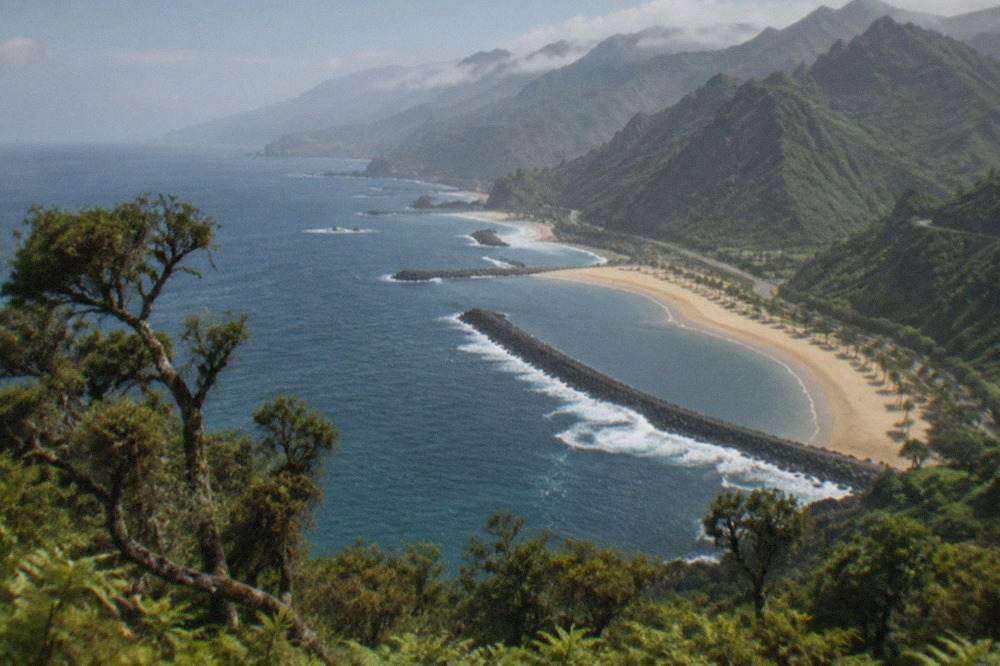
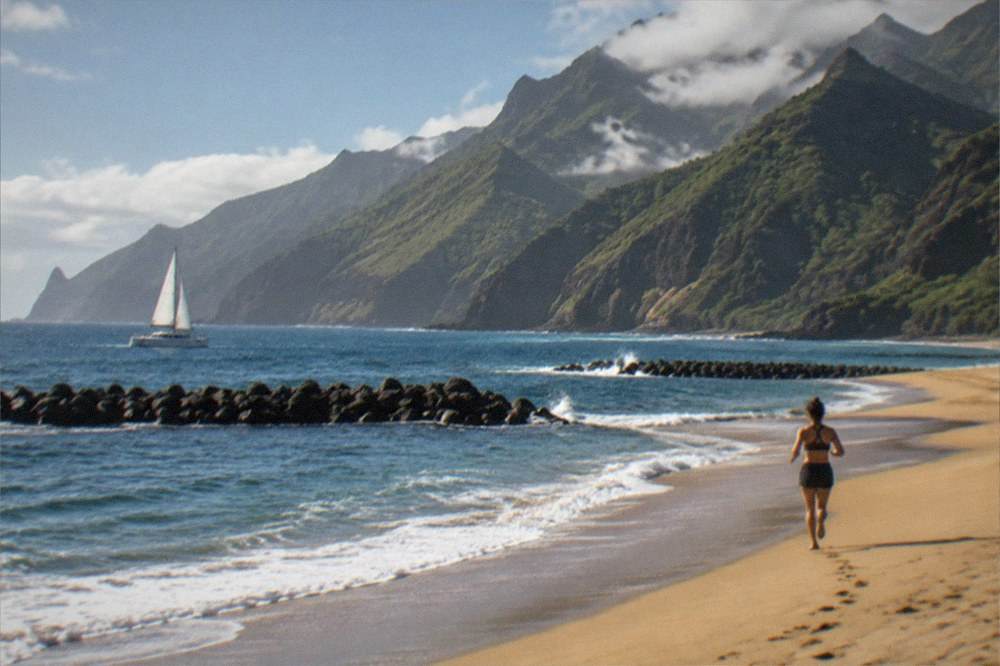
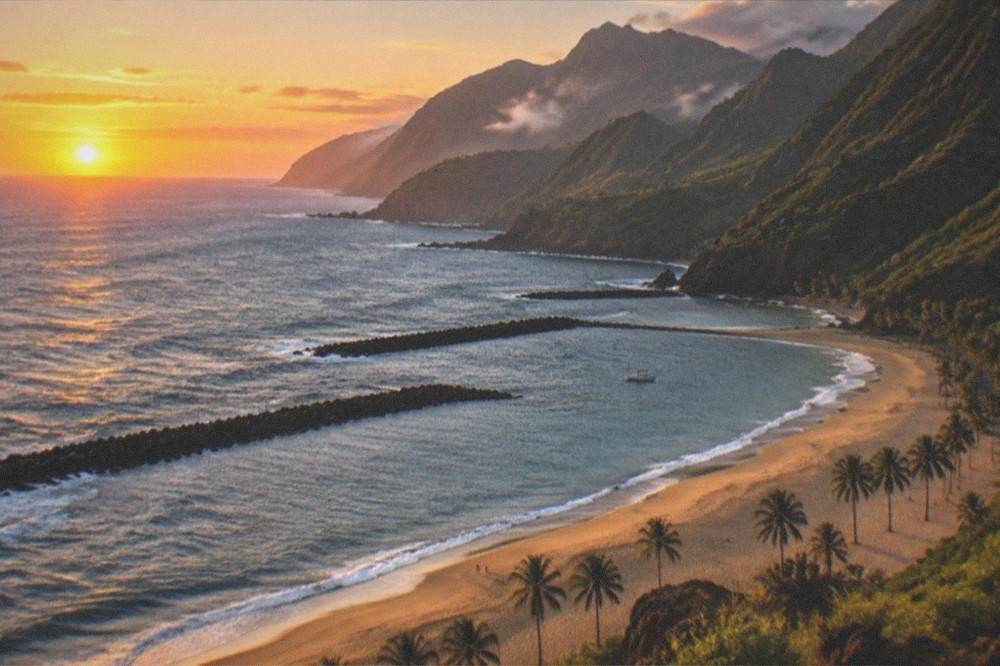
Playa de las Teresitas is the golden-sand beach the tourist board describes at San Andres, a short hop from Santa Cruz, and it is the island's most deliberate piece of coastline: palms, breakwaters and calm water in a part of Tenerife better known for dark volcanic sand.
Short answer
Playa de las Teresitas is a golden-sand beach in San Andres, in the municipality of Santa Cruz, described by the tourist board as having palm trees and breakwaters that calm the water. It sits about 15 km from the centre of the capital and is reached by TITSA bus or car.
Golden sand is rare enough on Tenerife that the tourist board singles out the beaches that have it, and Playa de las Teresitas is first among them. Its own page on the tourist board's site describes golden sand, palm trees and breakwaters that calm the water, three features that together describe almost no other beach in the island's north-east. The beach sits at San Andres, a former fishing village that the capital has all but absorbed, in the municipality of Santa Cruz. For anyone staying in the city, or arriving through the cruise port, it is the nearest stretch of deliberately comfortable coastline, and this page sets out what the official sources say about it: what the beach actually is, how to get there, when the weather favours it, and which paid activities sit naturally alongside a day on the sand.
Where Is Playa De Las Teresitas?
Playa de las Teresitas sits at San Andres, in the municipality of Santa Cruz, on Tenerife's north-east coast facing the Atlantic. The tourist board places it in San Andres, Santa Cruz, and describes it as a golden-sand beach with palm trees and breakwaters that calm the water, which makes it the capital's own beach rather than a resort-zone one.
San Andres was a fishing village before the city grew around it, and the settlement still sits between the beach and the Anaga foothills. The practical consequence is that Las Teresitas is the beach you reach from Santa Cruz without crossing the island: the road runs out of the city along the coast and ends, more or less, at the sand. That geography shapes who uses it. On weekdays it belongs largely to people from the city; at weekends the whole north-east of the island arrives, and the tourist board's description of breakwaters that calm the water explains why families come: the sea inside the barriers behaves nothing like the open Atlantic a few hundred metres out.
The beach also marks a boundary of sorts. Beyond San Andres the coast turns into the Anaga massif, where the beaches change character completely: Playa de Benijo, further north, is a wild black-sand cove with no breakwaters at all. Anyone comparing the two should read the Playa de Benijo page before choosing, because the two beaches answer different questions. Las Teresitas is a swimming beach with a city behind it; Benijo is scenery with surf in front of it, and the difference is not a matter of quality but of purpose.
What Makes Las Teresitas Different from Tenerife's Other Beaches?
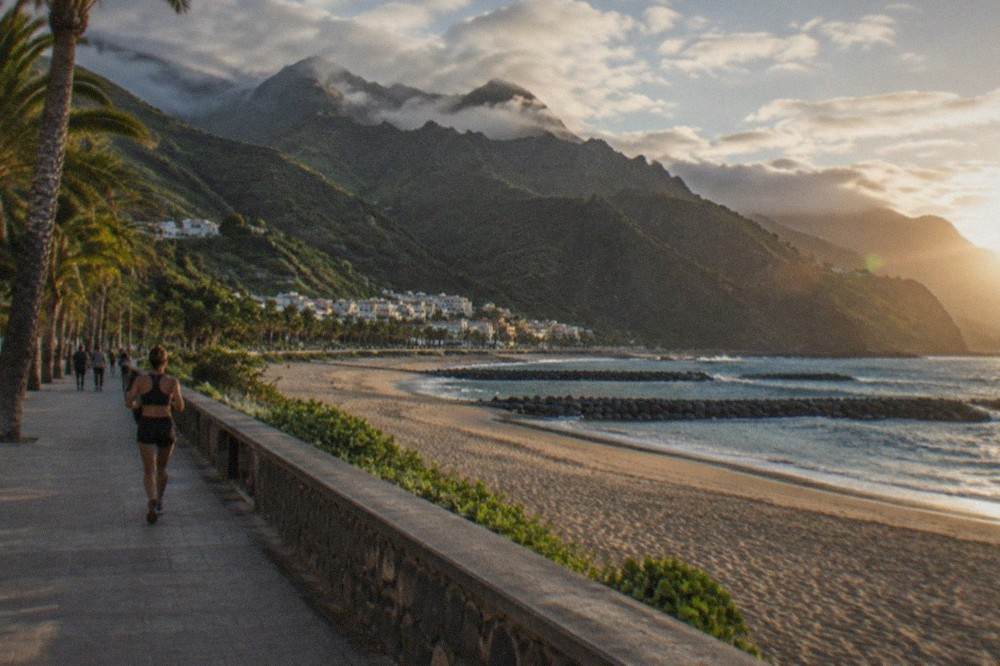
Las Teresitas is one of the few Tenerife beaches the tourist board describes as golden sand, and the only one of those with palms and breakwaters together on the same page. Most of the island's coastline is volcanic: El Bollullo is black sand, El Medano fine grey sand, and even El Duque, the smartest beach in Costa Adeje, is grey sand on the tourist board's own description.
The comparison matters because a good deal of what visitors expect from a Caribbean-style beach is manufactured here, and the official pages say so in their wording. The tourist board's entry for Las Teresitas lists golden sand, palm trees and breakwaters as its defining features. The entry for Las Vistas, down in Arona, also lists golden sand and calm behind breakwaters, so the two are the closest equivalents on opposite sides of the island: one serving Santa Cruz, one serving the southern resorts. The Las Vistas page covers the southern one.
| Beach | Municipality | Tourist board's sand description | Shelter |
|---|---|---|---|
| Las Teresitas | Santa Cruz (San Andres) | Golden sand | Breakwaters that calm the water |
| Las Vistas | Arona | Golden sand | Calm behind a row of breakwaters |
| Playa del Duque | Adeje | Grey sand | Not stated on the page read |
| Playa de Fanabe | Adeje | Pale sand | Not stated on the page read |
| El Medano | Granadilla de Abona | Fine grey sand | Open, under Montana Roja |
| El Bollullo | La Orotava | Black sand | At the foot of a cliff |
One claim this site will not repeat: many pages say the sand was shipped from the Sahara in a single dated operation. The official page says only golden sand, palms and breakwaters, and no source on file supports the tonnage story, so it does not appear here. What can be said is what the beach is now: golden, planted with palms and held calm by the barriers, which is a combination the island's natural coves do not offer.
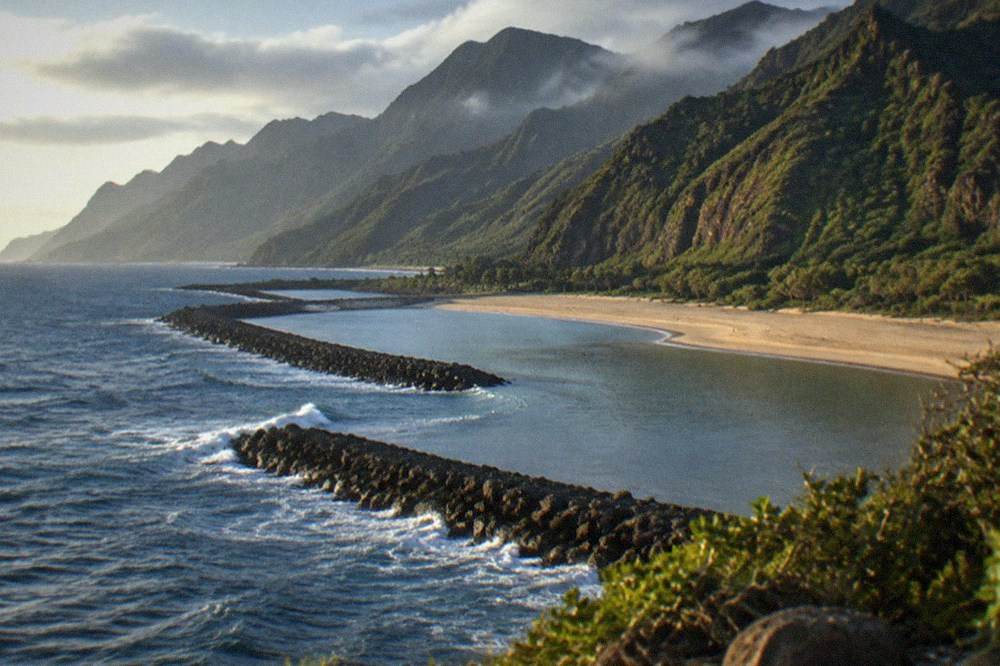
The breakwaters also change what the water is for. Inside the barriers the sea is a swimming basin; outside them the coast faces the open Atlantic, and the calm-water guarantee the tourist board describes ends at the line of the rocks. Swimmers should stay inside the barriers, and the beach's own character, sheltered and family-facing, is the reason most of them do. The palms play their part too: they give the sand its postcard look, and they are the feature that most clearly separates this beach from every unimproved cove on the same coast.
Is Playa De Las Teresitas Good for Swimming and Families?
Yes, and the reason is stated on the tourist board's own page: the breakwaters calm the water, which is the feature most family beaches on the island lack. Golden sand and palms sit on top of that, so the beach reads as a swimming beach first and a scenery beach second, the opposite of the unsheltered coves in Anaga.
The calm inside the barriers is the whole proposition. Open-coast beaches in the north and east, Benijo among them, take the Atlantic as it comes; Las Teresitas does not. For families that difference decides the day. The tourist board's description of Las Vistas uses almost the same wording, calm behind breakwaters, and that beach is the south's family equivalent, but Las Teresitas serves it to the capital's population without a crossing of the island.
There are limits worth knowing. The site holds no verified row on lifeguard hours, flag systems or seasonal services at Las Teresitas, so none is stated here; check the signage on the beach on the day. What can be said from the climate data is that the sea itself is warm year-round: the south-coast sea surface temperature, measured by NOAA for the waters off the island, never drops below 19 Celsius in the averages, and peaks at 23.7 Celsius in September and October. That is a swimming season that simply does not close.
How Do You Get to Playa De Las Teresitas?
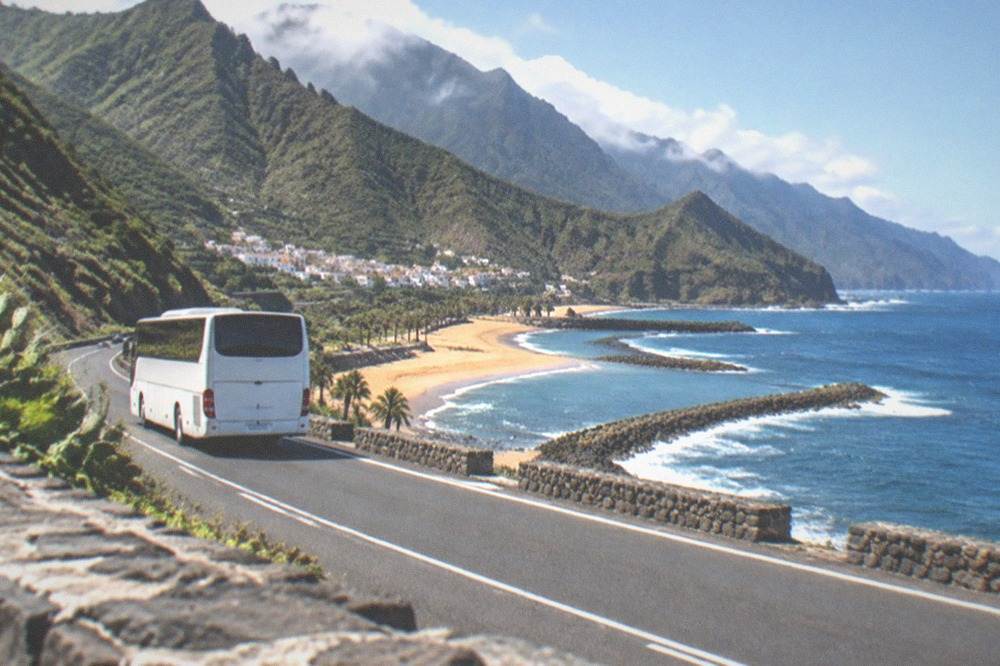
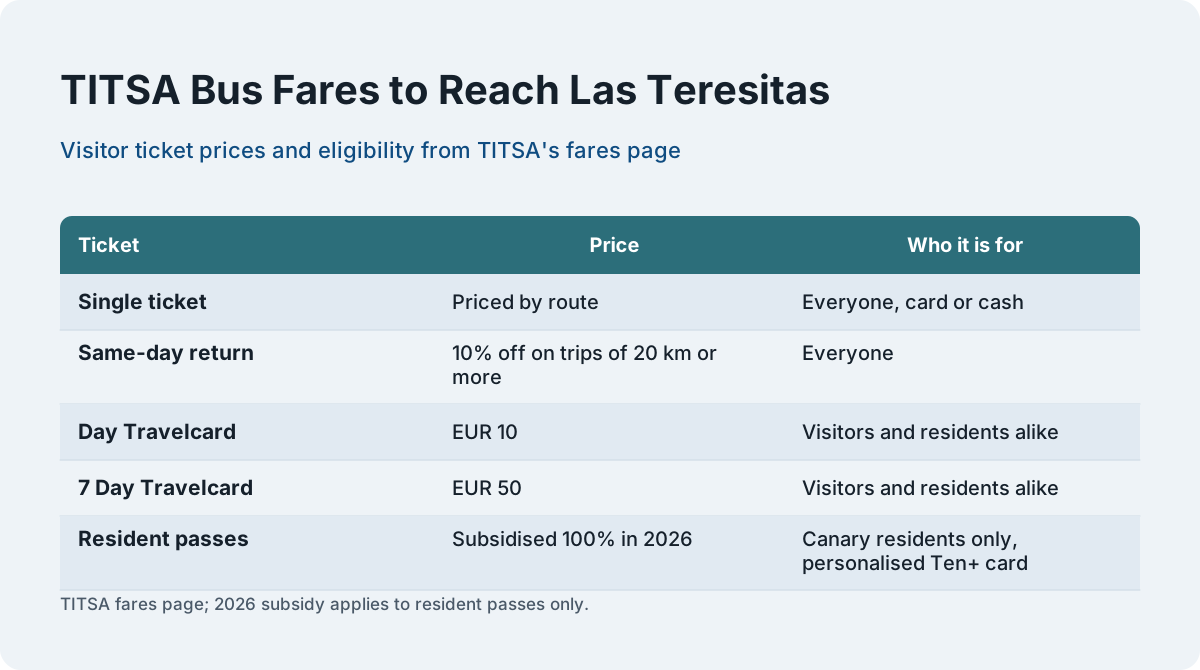
Las Teresitas is reached from Santa Cruz by road along the coast to San Andres, by car or by TITSA bus, and visitors pay normal fares: single tickets, the EUR 10 day travelcard or the EUR 50 seven-day travelcard. Public transport on Tenerife is not free for visitors; the 2026 subsidy covers resident passes only.
The bus detail matters because the free-transport claim travels widely and is wrong for visitors. TITSA's fares page lists the visitor products: single tickets priced by route, the EUR 10 day travelcard and the EUR 50 seven-day travelcard, all sold at airport ticket machines and elsewhere. The 100% subsidy the Canary government announced for 2026 applies to resident passes held on a personalised Ten+ card, and residency is a condition of every subsidised pass. A visitor arriving at either airport buys a ticket or a travelcard like everyone else.
For cruise passengers the geography is simple: the cruise port sits in Santa Cruz, and Las Teresitas is the city's own beach. This site names no berth, quay or terminal, and no walking time from the port is stated here because none has been measured on a source; the honest answer is that the beach is a short bus or taxi ride from the port area, with taxis white and metered from the start of the trip, as the tourist board's taxi page states. A fixed price can be agreed in advance for excursions, the same page adds, which is worth doing for a round trip to the beach with a wait included.
| TITSA ticket | Price | Who it is for |
|---|---|---|
| Single ticket | Priced by route | Everyone, card or cash |
| Same-day return | 10% off on trips of 20 km or more | Everyone |
| Day Travelcard | EUR 10 | Visitors and residents alike |
| 7 Day Travelcard | EUR 50 | Visitors and residents alike |
| Resident passes | Subsidised 100% in 2026 | Canary residents only, personalised Ten+ card |
Drivers should note that the beach is in a built-up village, so arriving early on a weekend is the practical advice, though the site states no car park capacity because no official figure is on file. Visitors staying in the south should weigh the crossing honestly: the island is bigger than it looks from a map, and a southern resort to San Andres is a substantial drive each way, so many southern visitors use Las Vistas instead and save Las Teresitas for a Santa Cruz day.
When Is the Best Time of Year for Las Teresitas?
The beach is usable all year, and AEMET's climate normals for Santa Cruz show why: the mean daily maximum never falls below 21 Celsius and rainfall stays modest except in November, December and February, which are the wettest months at 34, 43 and 35 mm respectively. July and August are the driest and warmest, at 28.7 and 29 Celsius mean daily maximum.
The Santa Cruz station, at 36 m, is the relevant one for this beach, and its numbers describe one of the most temperate cities in Europe. Winter is not a season to avoid here: a January mean of 18.2 Celsius is a British summer's day. The trade-off is the rain distribution. AEMET's annual total for the station is 226 mm spread over 29.7 days with 1 mm or more, and most of those days fall between November and February.
| Month | Mean daily max C | Mean daily min C | Rain mm | Sunshine hours |
|---|---|---|---|---|
| Jan | 21 | 15.4 | 32 | 178 |
| Feb | 21.2 | 15.3 | 35 | 186 |
| Mar | 22.1 | 15.9 | 38 | 221 |
| Apr | 22.7 | 16.5 | 12 | 237 |
| May | 24.1 | 17.8 | 4 | 282 |
| Jun | 26.2 | 19.5 | 1 | 306 |
| Jul | 28.7 | 21.2 | 0 | 337 |
| Aug | 29 | 21.9 | 2 | 319 |
| Sep | 28.1 | 21.7 | 7 | 253 |
| Oct | 26.3 | 20.3 | 19 | 222 |
| Nov | 24.1 | 18.4 | 34 | 178 |
| Dec | 22.1 | 16.6 | 43 | 168 |
The sea adds a second calendar. The south-coast sea surface normals, a different dataset covering 1991 to 2020 where the air figures cover 1981 to 2010, bottom out at 19.1 Celsius in March and peak at 23.7 Celsius in September and October. For swimmers the sweet spot is late summer and autumn: warm sea, modest rain and the highest sunshine totals of the second half of the year.
| Month | Sea surface C | Month | Sea surface C |
|---|---|---|---|
| Jan | 19.9 | Jul | 22.2 |
| Feb | 19.2 | Aug | 23.1 |
| Mar | 19.1 | Sep | 23.7 |
| Apr | 19.5 | Oct | 23.7 |
| May | 20.2 | Nov | 22.5 |
| Jun | 21.4 | Dec | 21.1 |
What Else Is There Around San Andres and Santa Cruz?
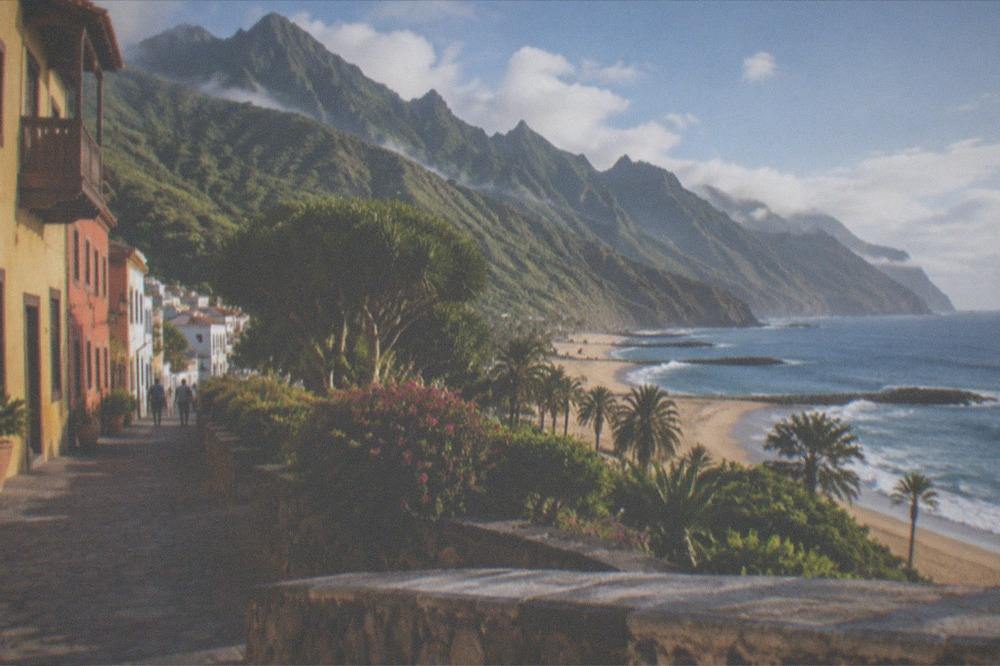
San Andres itself is small, but the beach sits at the foot of the Anaga massif and at the edge of Santa Cruz, so the surroundings run from a UNESCO-listed colonial town to one of Spain's most visited markets. La Laguna, the Auditorio de Tenerife and the Mercado Nuestra Senora de Africa are all within the capital's orbit, and the Anaga trails begin where the beach road ends.
The Anaga side is the serious walking country. The rural park's laurel forest is the island's oldest landscape, and some trails there need reservations, as the hiking pages on this site set out; the Anaga Rural Park page covers what needs booking. For a gentler half-day, Santa Cruz offers the Auditorio de Tenerife, the white concert hall the tourist board credits to Santiago Calatrava, inaugurated in 2003, and the Mercado Nuestra Senora de Africa for produce and Canary coffee. La Laguna, the old colonial town whose layout UNESCO says provided the model for many colonial towns in the Americas, is a short bus hop inland, and the La Laguna area page covers it.
Closer to the sand, the Santa Cruz area page gathers the city's own sights, and the market and auditorium pages carry the detail. A day that pairs Las Teresitas in the morning with the city in the afternoon is the natural shape of a visit from the capital, and it needs no car. Visitors with more time can push past San Andres into Anaga proper, where the road climbs through laurel forest to viewpoints over the same coast the beach faces, though the reservation rules for certain trails there, El Pijaral among them, mean some walks must be booked ahead on Tenerife ON.
Which Tours and Tickets Pair Well with a Day at Las Teresitas?
The pairings that make sense are water-based: a surf lesson on the island's Atlantic side, a whale and dolphin trip from the southern ports, and a day at Loro Parque for families splitting the week between beach and park. Las Teresitas itself needs no ticket; the paid activities are elsewhere on the island, and the beach is the free part of the day.
The beach costs nothing, and that is worth saying plainly: Tenerife's coastline is mostly free, and the paid layer, boat trips, lessons and park tickets, is what this site's listings cover. For a visitor based in Santa Cruz, the surf option is the natural first pick, since a lesson turns a beach day into a skill day. The listing for the surfing lesson in Playa de las Americas runs two hours with photos included and takes all levels.
Whale watching is the island's other signature water activity, and it is tightly regulated: Decreto 178/2000 forbids boats from approaching within 60 m of the animals, caps boats within 500 m at three, limits speed to 4 knots inside that zone and bans swimming with them, and authorised boats must fly the Barco Azul flag. The World Cetacean Alliance designated the Tenerife-La Gomera marine area a Whale Heritage Area in January 2021, citing a unique resident population of pilot whales. Trips leave from the southern ports, so pair one with a south-coast day rather than with Las Teresitas itself.
For families, Loro Parque in Puerto de la Cruz is the classic park pairing, open 09:30 to 17:30 every day of the year with its own car park at EUR 7 per day, and the Puerto de la Cruz area page covers the town around it. The twin-ticket option, Loro Parque plus Siam Park, suits visitors splitting a fortnight between the north and the south.
Common Questions About Playa De Las Teresitas
Is Playa de las Teresitas a natural beach?
The tourist board describes golden sand, palm trees and breakwaters, and the palms and barriers are plainly built features. Where the sand came from is not stated on any official page on file, so this site does not say; what is certain is that the calm water the beach is known for depends on the breakwaters.
Can you swim at Playa de las Teresitas?
Yes. The tourist board's description, breakwaters that calm the water, is the reason the beach works as a swimming beach, unlike the open-coast coves further north in Anaga. Sea surface temperatures off the island's south coast average between 19.1 and 23.7 Celsius across the year, so the water is swimmable in every month.
Is Playa de las Teresitas near Santa Cruz?
Yes. The beach is at San Andres, in the municipality of Santa Cruz, and it is the capital's own beach. No walking time from the city centre or the cruise port is stated on this site because none has been measured on a verified source; the practical answer is a short bus or taxi ride along the coast road.
Are the buses to Las Teresitas free for tourists?
No. The 2026 subsidy on Canary public transport applies to resident passes held on a personalised Ten+ card. Visitors pay single fares, the EUR 10 day travelcard or the EUR 50 seven-day travelcard, exactly as TITSA's fares page states.
Which is better, Las Teresitas or Las Vistas?
They are the same idea on opposite coasts: the tourist board describes both as golden sand with calm water behind breakwaters. Las Teresitas serves Santa Cruz and the north-east; Las Vistas serves Arona and the southern resorts. Choose by where you are staying, not by the beach itself.
The honest summary, and the one this Tenerife Travel Guide desk stands behind, is that Las Teresitas is the beach Santa Cruz built for swimming, described by the tourist board in exactly those terms, and that everything else on this page, the climate tables, the fares, the tours, is the planning layer around a free day of golden sand and calm water.