Playa De Las Vistas
Playa de Las Vistas is the golden-sand beach between Los Cristianos and Costa Adeje, and the tourist board describes it as calm behind a row of breakwaters. Here is what the official pages say about the sand, the swim, the buses and the weather.
Short answer
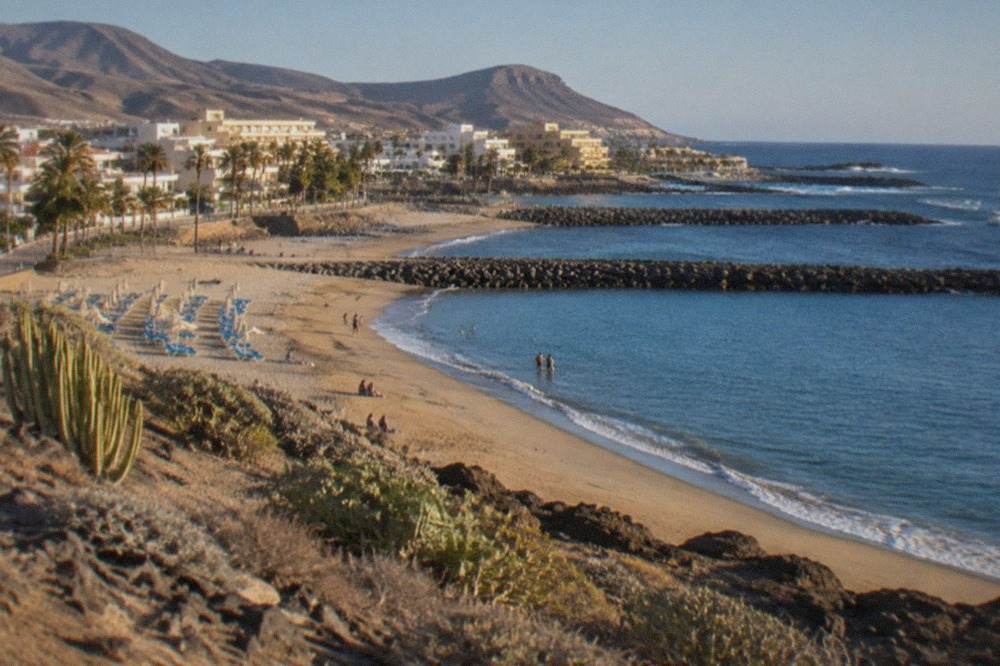
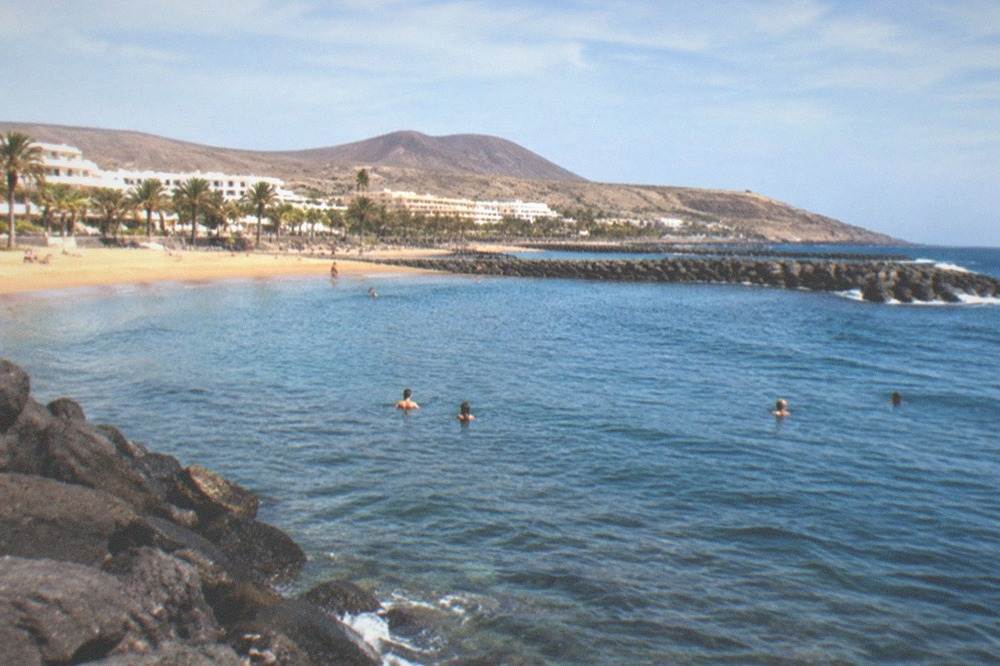
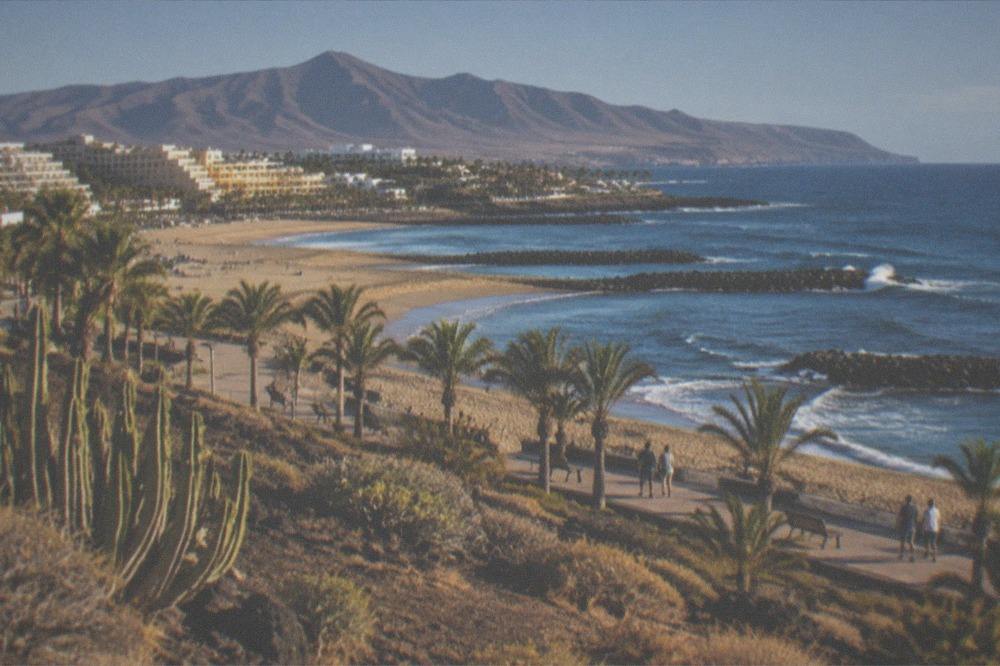
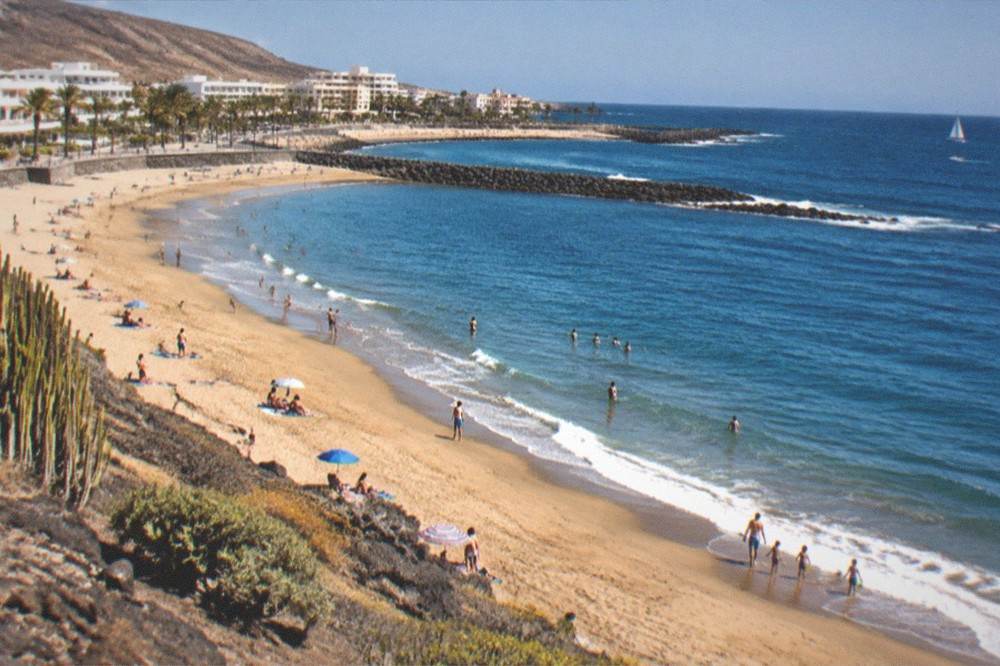
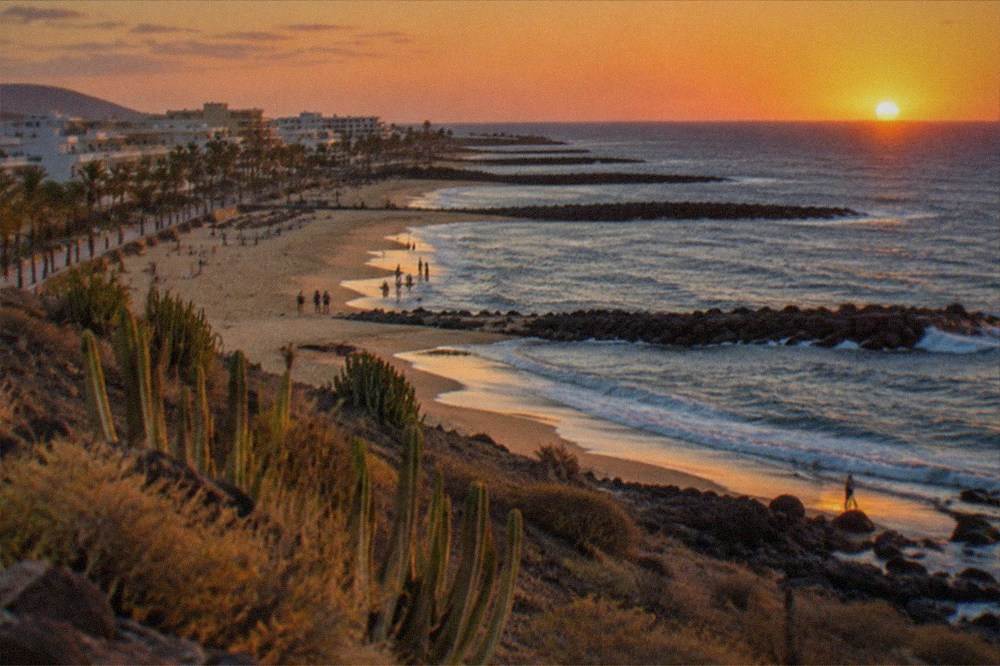
Playa de Las Vistas is a golden sandy beach in the municipality of Arona, between Los Cristianos and Costa Adeje. Turismo de Tenerife describes it as golden sand with calm water behind a row of breakwaters, which makes it one of the island's most sheltered swimming beaches.
Golden sand, a row of breakwaters and a position straddling the border of two of Tenerife's biggest resorts: that is Playa de Las Vistas, the beach that Turismo de Tenerife describes simply as golden sand with calm water behind a row of breakwaters. It sits in the municipality of Arona, on the stretch of coast where Los Cristianos hands over to Costa Adeje, and it exists because engineers decided the open Atlantic swell on this side of the island needed taming. The result is one of the most dependable swimming beaches in the Canaries, and this page sets out what the official sources actually say about it, from the sand underfoot to the bus that stops nearby.
Where Is Playa de Las Vistas?
Playa de Las Vistas sits on the south coast of Tenerife in the municipality of Arona, on the stretch of shore between Los Cristianos and Costa Adeje. The tourist board lists it as a golden sandy beach with calm water behind a row of breakwaters, and it is one of the few beaches on the island whose official description names the neighbouring resort areas rather than a village or a rural parish.
That position matters more than it sounds. Arona is one of the island's largest municipalities, with a registered population of 87,793 in the 2025 municipal register, and its coast holds much of the resort belt that most visitors never leave. Las Vistas occupies the middle of that belt, which means the beach is served by the infrastructure of two resorts at once: the promenade, the boat trips and the transfer coaches of Los Cristianos on one side, and the hotels, beach clubs and water sports of Costa Adeje on the other.
The tourist board's own beach pages divide the south coast into named strands, and Las Vistas is the one it describes in terms of calm rather than scenery. Neighbouring Playa del Duque in Costa Adeje is described as a grey sandy beach, Playa de Fanabe as pale sand, and Las Vistas as golden. That distinction is worth knowing before you pick a base, and the comparison between Los Cristianos and Costa Adeje is the longer read if the choice of resort is still open.
Why Is the Water at Las Vistas So Calm?
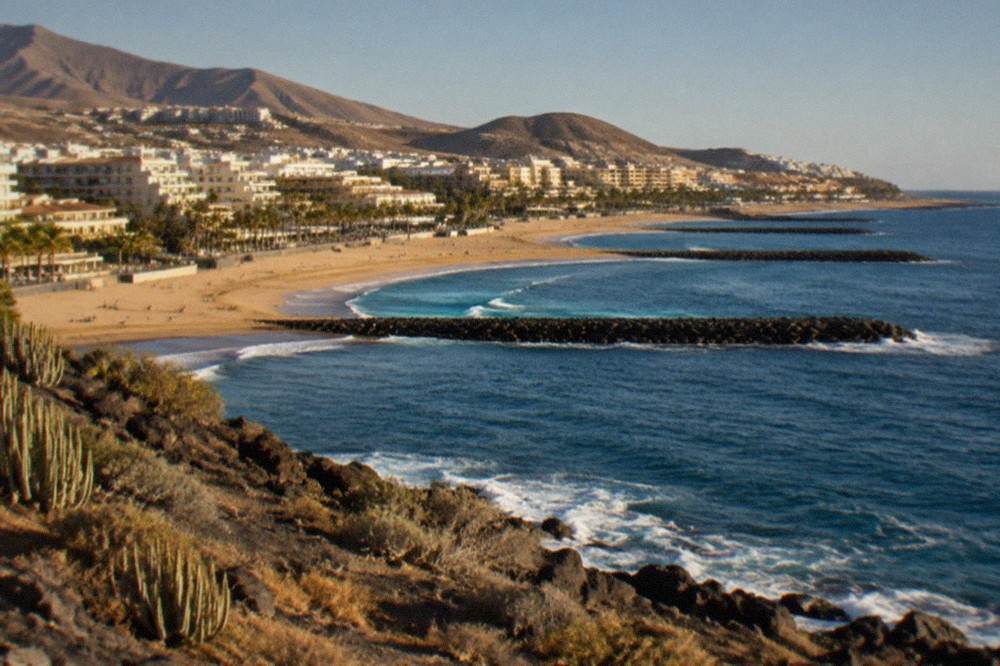
The calm comes from a row of breakwaters that hold back the open Atlantic swell, and Turismo de Tenerife names those breakwaters as the defining feature of the beach in its official description. The same wording is applied to Las Teresitas in Santa Cruz, the other great engineered beach on the island, where the tourist board lists golden sand, palm trees and breakwaters that calm the water.
Las Vistas is, in other words, a beach built for swimming rather than for surf. That has consequences for what you can sensibly do here. The sheltered water suits families, hesitant swimmers and anyone who wants to float rather than battle a current, and it is the reason the beach anchors the resort coast rather than sitting empty between two towns. What it does not suit is wave riding: a beach inside breakwaters produces no dependable swell, and the surf schools of the south work from open-coast beaches instead, principally Playa de las Americas next door, where the waves arrive unbroken.
The calm also shapes what lives in the water. Sheltered, shallow, sun-warmed bays along this coast are the habitat sea turtles use, and the kayak and snorkel trips that leave from Los Cristianos market themselves on exactly that ecosystem. The whale and dolphin boats work further offshore, in the channel between Tenerife and La Gomera, where the World Cetacean Alliance records a unique resident population of pilot whales and bottlenose dolphins. The rules that protect them are strict and written down: Decreto 178/2000 bans any approach within 60 metres, allows at most three boats within 500 metres, sets a four-knot limit inside that zone and forbids swimming or diving within 500 metres of the animals. Authorised boats fly the Barco Azul flag, issued with their permit, so a reader can check the flag before boarding.
If a boat trip is on your list, the eco-focused options are the ones that lean on those rules in their own descriptions.
What Can You Do at Playa de Las Vistas?
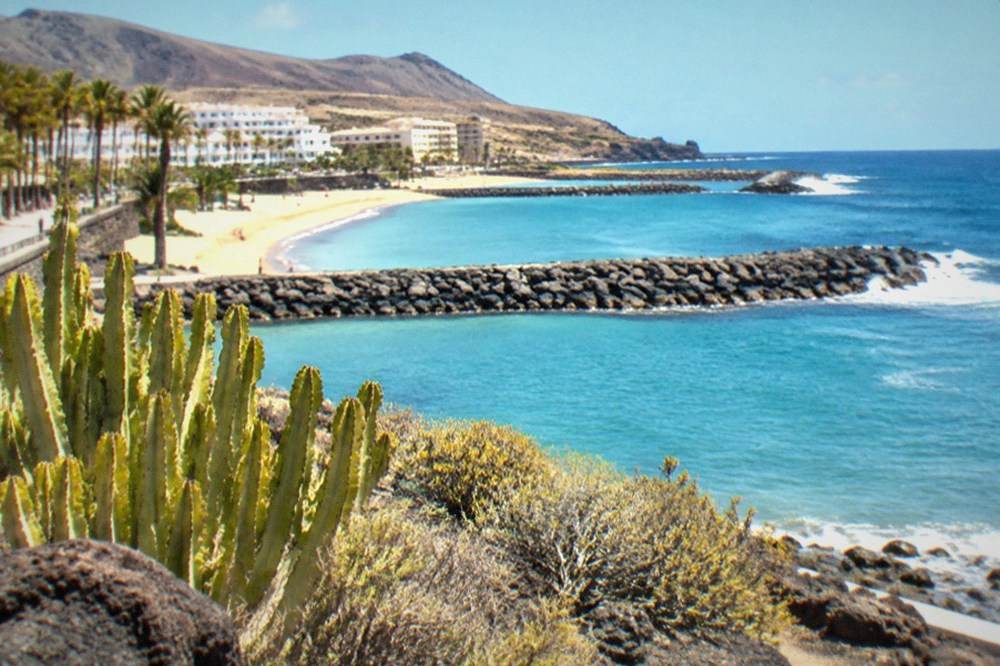
The core of a day at Las Vistas is swimming and sunbathing on a golden sand beach with calm water, in walking range of the promenade facilities of Los Cristianos and Costa Adeje. The beach itself needs no booking and carries no entry charge, and the paid activities that fit it best are the water sports and boat trips that leave from the resorts either side of it.
The beach is the free part, and it is worth saying plainly: no official page lists any charge to set foot on Las Vistas. The things that cost money are the ones around it. Sunbeds and parasols are hired commercially along the south coast, the boat trips and lessons are operator products, and the island's big-ticket attractions are a bus or a car ride away. For a family combining a beach morning with a park afternoon, the pairing that dominates the south coast is Las Vistas with Siam Park, which opens 365 days a year, 10:00 to 18:00 from 1 May to 29 Oct and 10:00 to 17:00 from 30 Oct to 30 Apr, per the park's own hours page.
For a day built around the sea rather than the slides, the choices split by energy. A surf lesson needs open-coast waves, so it means the beaches of Playa de las Americas rather than Las Vistas itself. A kayak and snorkel trip suits sheltered water and sells itself on the turtles and the fish of the bay. A first scuba dive is marketed to complete beginners from Costa Adeje. The operators' listings carry the current prices, durations and pickup details, and this site never prints a product price: the cards below and beside this text are fed live figures.
Do You Need a Car to Reach Las Vistas?
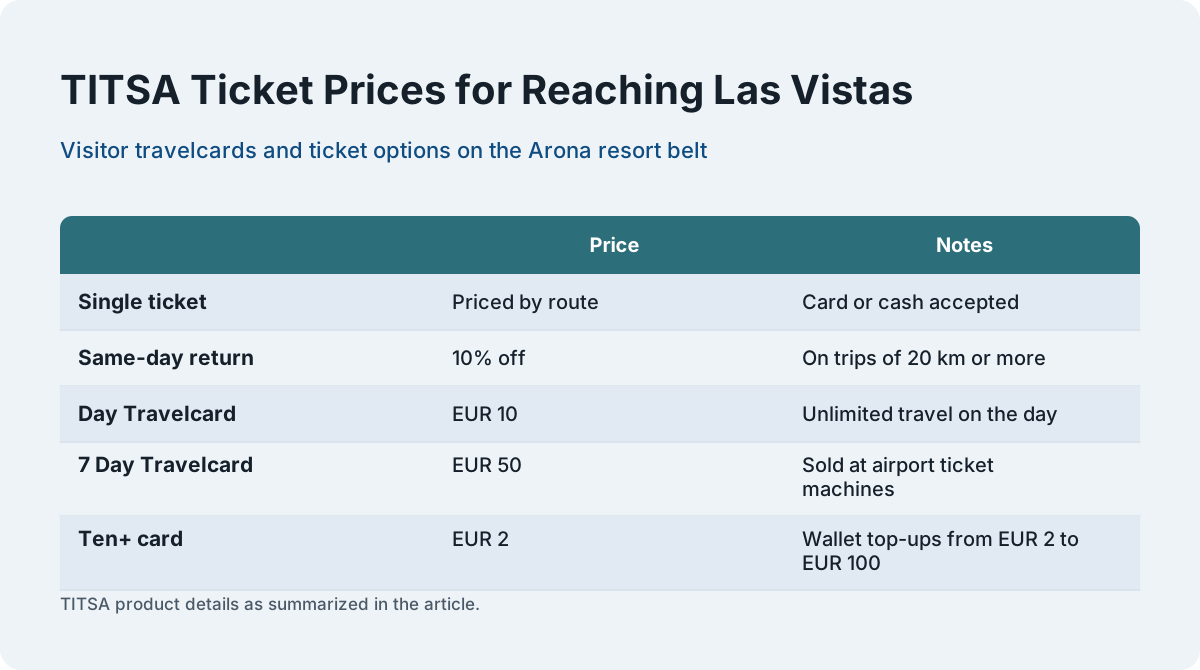
No, and for once the bus is genuinely the better plan: Las Vistas sits inside the TITSA-served resort belt of Arona, where the visitor travelcards are the EUR 10 day travelcard and the EUR 50 seven-day travelcard, both sold at airport ticket machines. Visitors pay for public transport on Tenerife, because the 100% fare subsidy the Canary government announced for 2026 applies to resident passes only.
That last point is worth labouring, because a good deal of outdated copy on the internet still tells visitors that Tenerife's buses are free. They are not, and the distinction is residency, not nationality or ticket type. Every subsidised pass requires residency in the Canary Islands and a personalised Ten+ card. What a visitor buys instead is set out in TITSA's own fares page, and the useful products are these:
| TITSA product | Price | What TITSA's page says |
|---|---|---|
| Single ticket | Priced by route | Card or cash accepted |
| Same-day return | 10% off | On trips of 20 km or more |
| Day Travelcard | EUR 10 | Unlimited travel on the day |
| 7 Day Travelcard | EUR 50 | Sold at airport ticket machines |
| Ten+ card | EUR 2 | Wallet top-ups from EUR 2 to EUR 100 |
For a visitor staying in Los Cristianos, Costa Adeje or Playa de las Americas, the day travelcard covers a loop of the resort coast and a run up to the island's other attractions for less than the price of a taxi each way. The tram is irrelevant here: Metrotenerife's network serves Santa Cruz and La Laguna in the north, and no official page states any tram link to either airport, let alone to the south coast. For the journeys a beach day actually involves, the buses are the whole story, and the guide to TITSA buses covers the lines in detail.
Car hire is the better answer only for the days you leave the south: the drive to Punta de Teno or the Anaga massif is a half-day commitment that buses serve thinly. A beach day at Las Vistas is not that day.
When Is the Best Time of Year for Las Vistas?
The south coast is warm enough for beach days all year: AEMET's climate normals for Tenerife South Airport record a mean daily maximum of 21.7°C in January and 28.4°C in August, with July and August the driest months and November and December the wettest. The sea is at its warmest in September and October, at 23.7°C in both months in the NOAA series for the south coast.
The airport station is the right reference for this beach, because it sits at a comparable altitude on the same side of the island, and its normals describe the weather a sunbather at Las Vistas actually gets. The table below is AEMET's own data, cut to the columns a beach planner uses.
| Month | Mean daily max °C | Mean daily min °C | Rain mm | Sunshine hours |
|---|---|---|---|---|
| Jan | 21.7 | 15.2 | 17 | 193 |
| Feb | 22.0 | 15.0 | 20 | 195 |
| Mar | 23.1 | 15.6 | 15 | 226 |
| Apr | 23.1 | 16.0 | 7 | 219 |
| May | 23.9 | 17.0 | 1 | 246 |
| Jun | 25.4 | 18.8 | 0 | 259 |
| Jul | 27.7 | 20.2 | 0 | 295 |
| Aug | 28.4 | 21.1 | 1 | 277 |
| Sep | 27.9 | 21.1 | 4 | 213 |
| Oct | 26.8 | 20.0 | 12 | 214 |
| Nov | 24.8 | 18.2 | 26 | 193 |
| Dec | 22.8 | 16.5 | 30 | 195 |
Two readings of that table are worth spelling out. First, there is no bad month for the beach on this coast: even the January maximum sits above 21°C, and the rain, 132 mm across the whole year as AEMET publishes it, falls on 15.2 days. Second, the warmest sea arrives after the warmest air: the water keeps heating through August and peaks in September and October, which is why autumn, not high summer, is when the swimming is at its most comfortable. The sea series is a different dataset from the air series, 1991-2020 against 1981-2010, so the two are never blended into one claim.
| Month | Sea surface °C | Month | Sea surface °C |
|---|---|---|---|
| Jan | 19.9 | Jul | 22.2 |
| Feb | 19.2 | Aug | 23.1 |
| Mar | 19.1 | Sep | 23.7 |
| Apr | 19.5 | Oct | 23.7 |
| May | 20.2 | Nov | 22.5 |
| Jun | 21.4 | Dec | 21.1 |
How Does Las Vistas Compare with Tenerife's Other Beaches?
Las Vistas is one of only two beaches the tourist board describes as golden sand with calm water behind breakwaters, the other being Las Teresitas outside Santa Cruz. Most of the island's beaches are darker: the tourist board calls Playa del Duque grey, El Medano fine grey sand and El Bollullo black sand at the foot of a cliff, so golden, sheltered sand is the exception on Tenerife, not the rule.
That is the single most useful thing to understand about beach planning on this island. Tenerife is a volcanic island, and its natural beaches are mostly dark sand and pebbles. The golden strands exist where sand has been imported or engineered, and the tourist board's descriptions make the pattern plain. The table below collects its wording, beach by beach, so the comparison is on the record rather than on rumour.
| Beach | Municipality | Turismo de Tenerife's description |
|---|---|---|
| Las Vistas | Arona | Golden sand, calm behind a row of breakwaters |
| Las Teresitas | Santa Cruz (San Andres) | Golden sand, palm trees, breakwaters that calm the water |
| Playa del Duque | Adeje | Grey sandy beach |
| Playa de Fanabe | Adeje | Pale sand |
| El Medano | Granadilla de Abona | Fine grey sand, under Montana Roja |
| El Bollullo | La Orotava | Black sand at the foot of a cliff |
| Playa de Benijo | Anaga coast | Wild black-sand coast, no breakwaters |
The comparison also runs along a second axis: engineered calm against open-coast drama. Las Vistas and Las Teresitas are the calm pair. At the other extreme sit the Anaga beaches such as Playa de Benijo, where the Atlantic arrives unbroken and the sand is black, and the natural-pool coves of the north coast such as Garachico, where swimming happens in rock basins rather than in the sea. In between lie the open south-coast strands like La Tejita under Montana Roja, which trade the shelter of breakwaters for space and dunes.
For most visitors the honest summary is this: if the priority is a dependable, calm, golden-sand swim within walking distance of hotels, Las Vistas is the strongest answer on the island. If the priority is scenery, wildness or a photograph, the north and the Anaga coast win, and the drive between the two is the price.
What Is Around Las Vistas When You Leave the Sand?
The beach is flanked by the promenades and facilities of Los Cristianos and Costa Adeje, which puts ferry departures, boat trips, water sports and the resort's restaurants within the same coastal strip. Further out, the south's family attractions cluster within a short drive, including Siam Park in Costa Adeje and Jungle Park in Arona, and the island's headline day trips, Teide and Masca, run from pickup points in this belt.
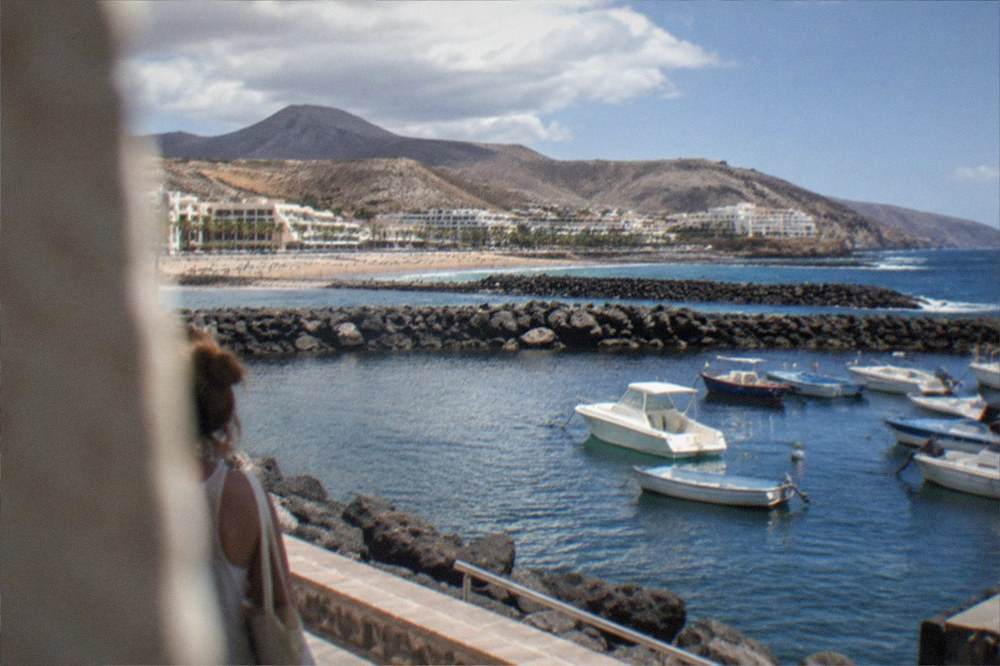
A day at Las Vistas rarely stays a day at Las Vistas, because everything the south coast sells starts within reach of it. The whale and dolphin boats leave from Los Cristianos and from Puerto Colon in Costa Adeje. The kayak, snorkel, jet ski and parasail operators work the same water. The ferries to La Gomera, La Palma and El Hierro leave from Los Cristianos harbour, and Fred. Olsen Express gives the crossing to San Sebastian de La Gomera as 50 minutes. A beach morning can therefore become a boat afternoon without moving your base.
The dry-land options divide by distance. Jungle Park is in Arona itself, in the hills above the coast. Siam Park is on the Costa Adeje side of the boundary. The full-day excursions, the coach loops to Teide National Park, to Masca, to Icod de los Vinos and Garachico, collect passengers from hotels across this strip precisely because the density of visitors here is the highest on the island. The tour kinds that fit a Las Vistas base are the on-the-water products, the whale watching and the park tickets, and the cards below are the three that pair most naturally with this beach.
One gap is worth naming honestly. The resort south, Los Cristianos, Costa Adeje, Adeje, Arona and Playa de las Americas, has no free walking tour listed on GuruWalk. The three English-guided, pay-what-you-want walks carded on this site all run in the north: La Orotava, Puerto de la Cruz and the historic centre of Santa Cruz de Tenerife. A visitor who wants a free, tip-based walk should plan it for a northern day rather than expect one from this beach.
What Should Families Know Before Going?
Las Vistas is the family-friendly end of the south coast by design: golden sand, calm water behind breakwaters and a position between two resorts whose whole business is family holidays. The official description of the beach as calm behind a row of breakwaters is the safety case in one line, though no official page read for this site states lifeguard hours or flag rules, so those are checked on the day rather than assumed here.
That caveat is deliberate. Plenty of pages invent lifeguard schedules and flag systems for beaches they have not checked; this site does not. What can be stated is what the sources hold. The beach carries no entry charge and needs no booking. The water is engineered calm. The sea temperature is at its highest, 23.7°C, in September and October, which suits small swimmers. And the two parks that anchor a family week, Siam Park and Loro Parque, publish their own hours: Siam Park opens 365 days a year, and Loro Parque, in Puerto de la Cruz in the north, opens 09:30 to 17:30 every day with its own car park at EUR 7 per day, per the park's FAQ page.
For the journey itself, children pay the same travelcard logic as adults: the visitor products are the EUR 10 day travelcard and the EUR 50 seven-day travelcard, and the resident subsidy does not apply to visiting families. The guide to travelling around Tenerife with children carries the fuller itinerary, and the things to do with children on the island page overlaps it.
Common Questions About Playa de Las Vistas
Is Playa de Las Vistas good for swimming?
Yes. Turismo de Tenerife describes it as golden sand with calm water behind a row of breakwaters, which is the sheltered-swimming profile. The sea off the south coast is at its warmest, 23.7°C, in September and October in the NOAA series.
Is Playa de Las Vistas free to visit?
Yes, no official page lists any entry charge for the beach. The costs around it are commercial: sunbed hire, boat trips and lessons. Visitors do pay for public transport, with the EUR 10 day travelcard and the EUR 50 seven-day travelcard the TITSA products aimed at them.
Is the sand at Las Vistas natural golden sand?
The tourist board describes the beach as golden sand, calm behind a row of breakwaters. It is one of only two beaches it describes in those terms, the other being Las Teresitas in San Andres, Santa Cruz. No official page read for this site states where the sand came from, so that question is left open here.
Can you surf at Playa de Las Vistas?
Not sensibly: the breakwaters that make the water calm also remove the swell a surf lesson needs. The surf schools of the south work from the open-coast beaches of Playa de las Americas instead, where the waves arrive unbroken.
Which is better, Las Vistas or Las Teresitas?
They are the island's two calm, golden-sand beaches, and the tourist board describes both in the same terms, sand and breakwaters. Las Teresitas sits in San Andres near Santa Cruz, Las Vistas in the resort belt of Arona. The choice is really between the capital's coast and the hotel strip of the south.
Are there free walking tours near Las Vistas?
The resort south has no free walking tour listed on GuruWalk. The three English-guided, pay-what-you-want walks carded on this site all run in the north: La Orotava, Puerto de la Cruz and the historic centre of Santa Cruz de Tenerife.
The short version of all of it: Las Vistas is the beach you choose when the swim matters more than the photograph. Golden sand, breakwater calm and a bus pass are the whole plan, and the rest of the coast, from the whale boats of Los Cristianos to the slides of Costa Adeje, starts where the sand ends. For everything else on the island, start with the Tenerife Travel Guide homepage and work outward.