Playa Del Duque
The tourist board calls Playa del Duque a grey sandy beach in Adeje, on Tenerife's south-west coast. Here is what the official pages say about the sand, the water, the weather and the things to do around it.
Short answer
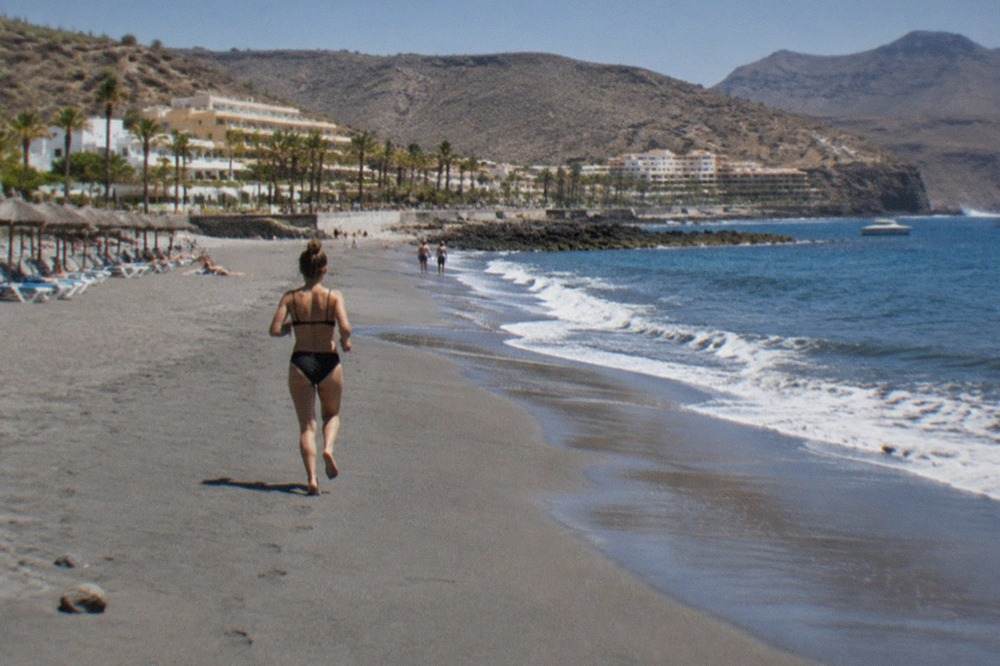
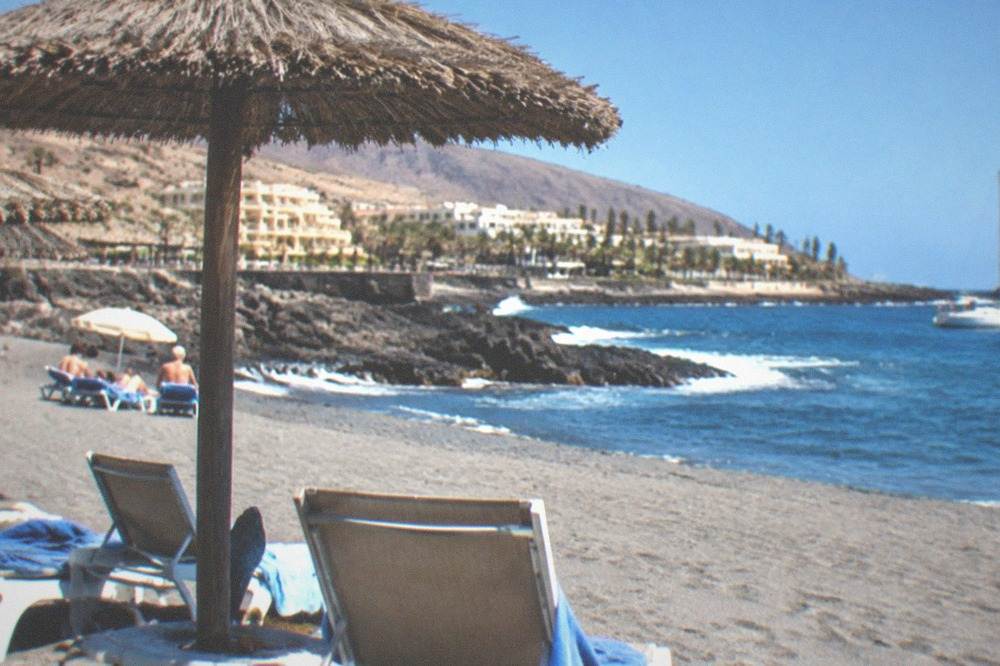
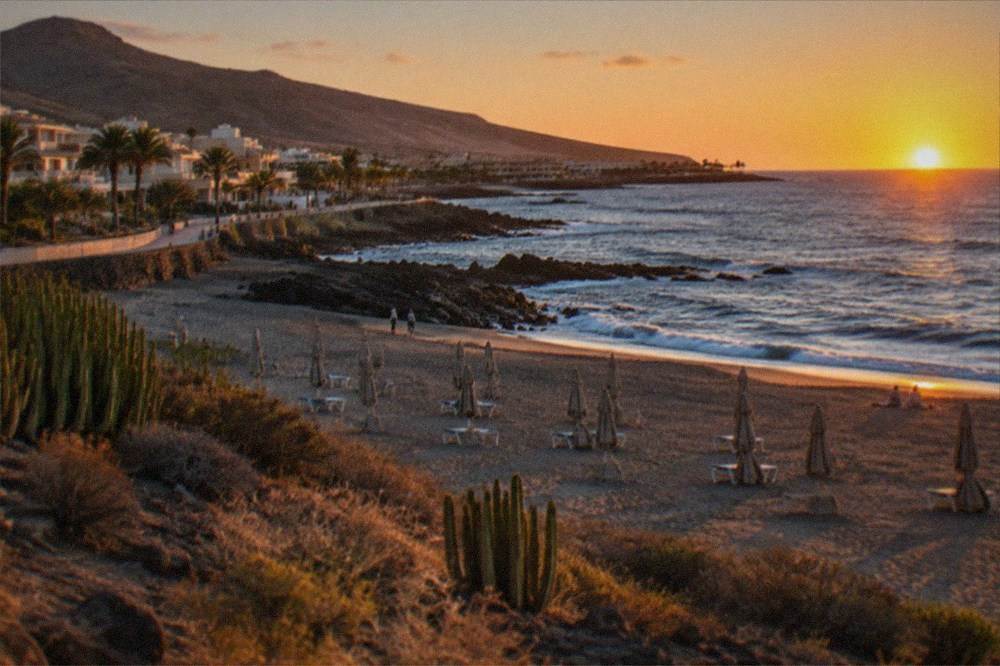
Playa del Duque is the main beach of the Costa Adeje resort area in the municipality of Adeje, south-west Tenerife. The tourist board describes it as a grey sandy beach, unlike the golden sand it records at Las Teresitas and Las Vistas.
The beach the tourist board records for El Duque is a grey sandy beach in the municipality of Adeje, the same municipality that contains the whole Costa Adeje resort strip on Tenerife's south-west coast. That single sentence separates this page from most of what a search returns: a great many guides describe golden sand here, and the tourist board's own page does not. What follows is what the official sources actually say, from the colour of the sand to the temperature of the water by month, and the bookable things that sit within reach of it.
Where Is Playa del Duque?
Playa del Duque sits in Costa Adeje, in the municipality of Adeje, on the south-west coast of Tenerife, roughly between Playa de las Americas to the east and La Caleta to the north-west. The tourist board's own beach pages place both Costa Adeje and El Duque inside Adeje municipality, which also holds the neighbouring beach of Fanabe along the same stretch of resort coastline.
Adeje is one of the island's smaller municipalities by population, about 50,021 residents on the INE register, yet it carries one of the densest concentrations of visitor accommodation on the island. The beach sits at the polished end of that strip. The resort area around it runs continuously into neighbouring Arona municipality, which holds Playa de las Americas and Las Vistas, so the boundary between the two is administrative rather than visible. If you are choosing between the two resort bases, the Los Cristianos vs Costa Adeje comparison covers the practical differences.
The whole south-west coast faces open Atlantic water, which is one reason the whale and dolphin watching fleet is based here. Los Cristianos, Costa Adeje and Puerto Colon are the departure points listed on most of the boat trips carded on this site, and the resident pilot whale population the World Cetacean Alliance records for the Tenerife-La Gomera marine area lives in exactly this channel.
What Kind of Sand Does Playa del Duque Have?
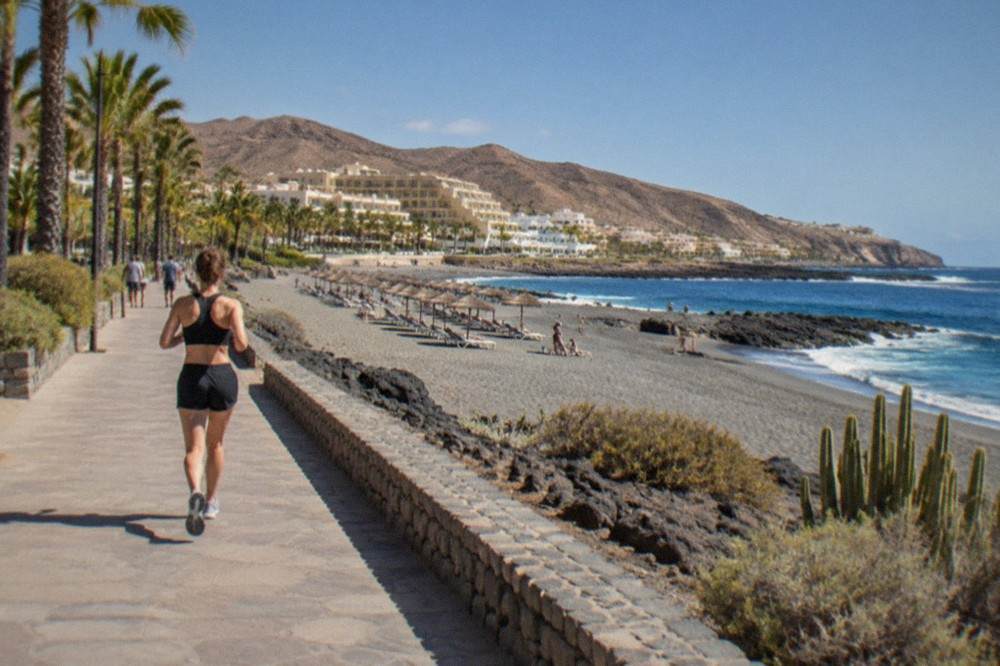
The tourist board describes Playa del Duque as a grey sandy beach. Golden sand is what it records for Las Teresitas in Santa Cruz and Las Vistas in Arona, not here. Grey is the natural colour of weathered volcanic sand on Tenerife, and no official page read for this site states that the sand at El Duque was imported or that it is golden.
This matters because the golden-sand claim is repeated constantly in second-hand guides. The tourist board's beach pages are the primary source, and on the colour question they are unambiguous. The same pages give the colours of the island's other well-known beaches, and the contrast is worth seeing side by side:
| Beach | Sand, in the tourist board's words | Municipality |
|---|---|---|
| Playa del Duque | Grey sandy beach | Adeje |
| Playa de Fanabe | Pale sand | Adeje |
| Las Vistas | Golden sand, calm behind breakwaters | Arona |
| Las Teresitas | Golden sand, palms, breakwaters | Santa Cruz (San Andres) |
| El Medano | Fine grey sand, under Montana Roja | Granadilla de Abona |
| El Bollullo | Black sand at the foot of a cliff | La Orotava |
The grey does not make it a lesser beach. What the colour records is origin: this is volcanic material, the same rock that built the island, worn to sand. Visitors who want the golden look have two genuine options on the official record, Las Teresitas near Santa Cruz and Las Vistas in Arona, and both are described with breakwaters that calm the water. For the darker end of the spectrum, the north coast holds El Bollullo in La Orotava with black sand at the foot of a cliff.
Is the Water Warm Enough to Swim at Playa del Duque?
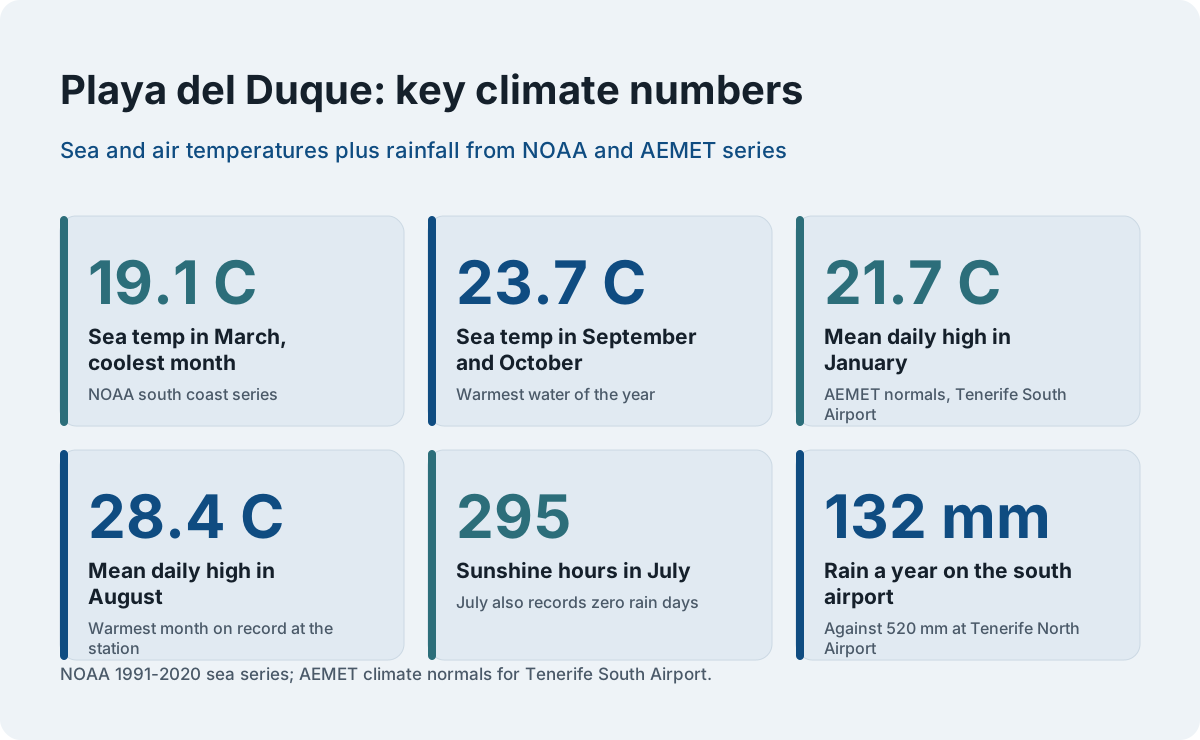
Sea surface temperatures off Tenerife's south coast run from 19.1 Celsius in March, the coolest month in the NOAA series, to 23.7 Celsius in September and October, and the water stays above 21 Celsius from June through December. The sea off this coast is warm enough for swimming year-round by the standards of most European beach holidays, with the coolest readings in late winter.
The figures come from NOAA's 1991-2020 series for the south coast, and they are worth planning around. The warmest water of the year arrives in early autumn, not midsummer, which is one reason September and October are strong months for the south-west beaches. The full monthly picture:
| Month | Sea surface temperature |
|---|---|
| Jan | 19.9 C |
| Feb | 19.2 C |
| Mar | 19.1 C |
| Apr | 19.5 C |
| May | 20.2 C |
| Jun | 21.4 C |
| Jul | 22.2 C |
| Aug | 23.1 C |
| Sep | 23.7 C |
| Oct | 23.7 C |
| Nov | 22.5 C |
| Dec | 21.1 C |
Calm, sheltered, warm water is exactly what makes this stretch popular with families and with swimmers who want an easy sea rather than a surf beach. It is also what makes the underwater life accessible. The turtles that live along this coast are the reason a beginner try-dive is one of the most popular products carded for Costa Adeje, and the same calm conditions suit first-time scuba divers and snorkellers alike.
For a visitor weighing the three, the honest framing is this: the try-dive is the one that uses the beach in front of you, the catamaran trip takes you out to the whales that live in the channel offshore, and the Siam Park ticket is the day the family swaps sea for slides. All three run from or near Costa Adeje, so none of them costs a long transfer.
What Is the Weather Like at Playa del Duque?
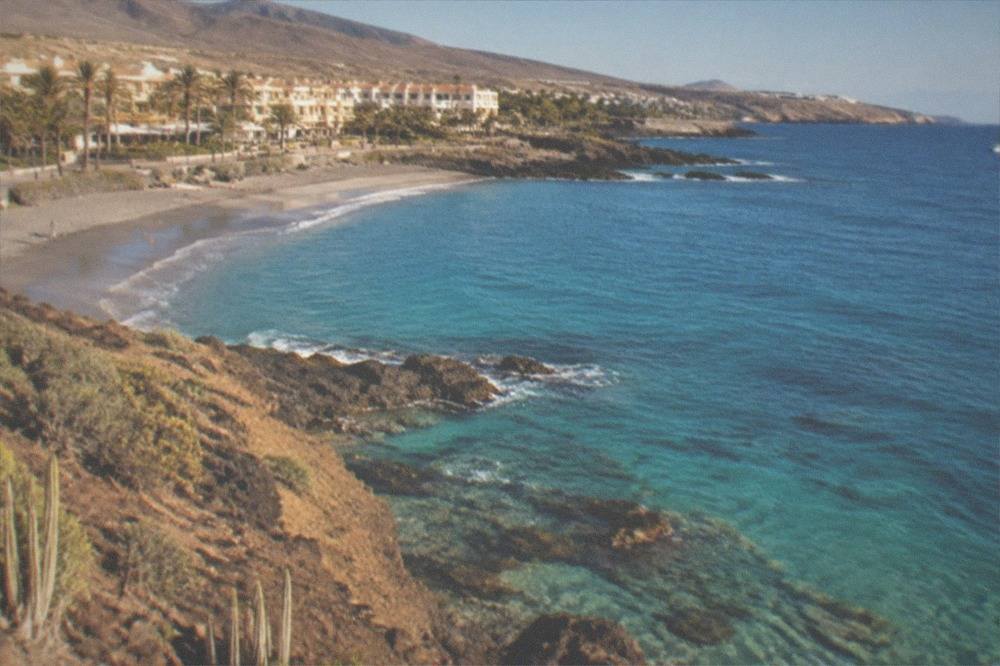
AEMET's climate normals for Tenerife South Airport, the station nearest this coast, show mean daily highs of 21.7 Celsius in January rising to 28.4 Celsius in August, with July recording zero rain days and 295 sunshine hours. Rain is scarce and concentrated between November and February, and the south coast is markedly drier than the north of the island.
The contrast within one small island is the striking part. AEMET's normals put 132 mm of rain a year on the south airport, against 520 mm at Tenerife North Airport, and the sunshine hours run higher here too. This is why the south-west holds the resort strip: the same weather system that soaks the north's laurel forests leaves this coast dry. The monthly figures:
| Month | Mean daily max C | Mean daily min C | Rain, mm | Sunshine hours |
|---|---|---|---|---|
| Jan | 21.7 | 15.2 | 17 | 193 |
| Feb | 22.0 | 15.0 | 20 | 195 |
| Mar | 23.1 | 15.6 | 15 | 226 |
| Apr | 23.1 | 16.0 | 7 | 219 |
| May | 23.9 | 17.0 | 1 | 246 |
| Jun | 25.4 | 18.8 | 0 | 259 |
| Jul | 27.7 | 20.2 | 0 | 295 |
| Aug | 28.4 | 21.1 | 1 | 277 |
| Sep | 27.9 | 21.1 | 4 | 213 |
| Oct | 26.8 | 20.0 | 12 | 214 |
| Nov | 24.8 | 18.2 | 26 | 193 |
| Dec | 22.8 | 16.5 | 30 | 195 |
Two practical readings follow. First, winter here is a beach season in every meaningful sense: January's average high sits above 21 Celsius, which is warmer than a British summer day. Second, the shoulder months of May, June and September combine warm air, warm sea and almost no rain, and September's sea temperature of 23.7 Celsius is the year's peak alongside October's.
How Does Playa del Duque Compare with Its Neighbouring Beaches?
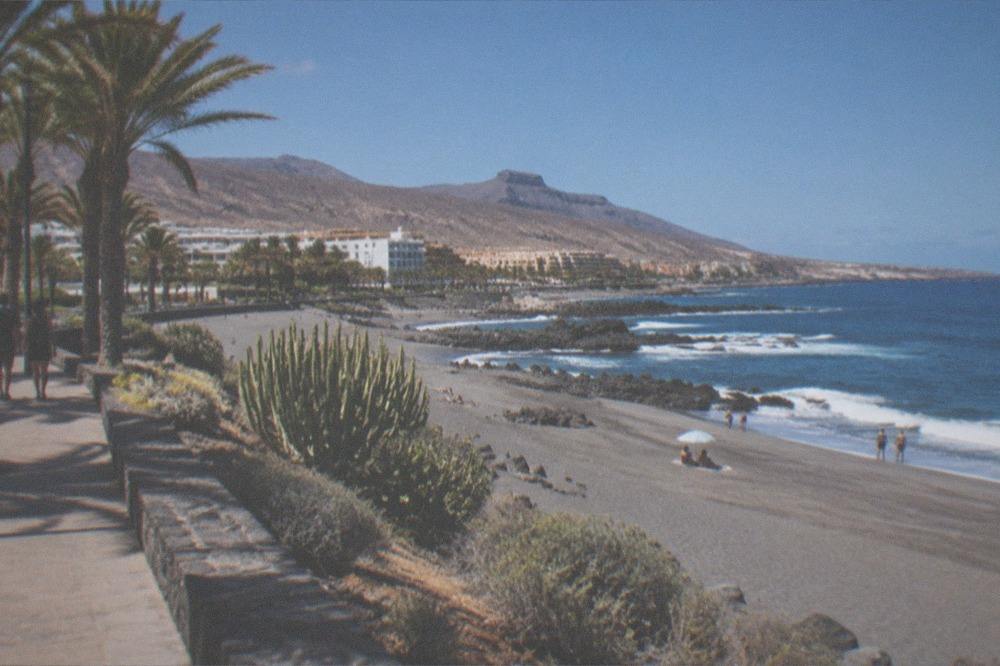
Within a short stretch of the Adeje and Arona coast sit Playa del Duque, Fanabe, Las Vistas and Playa de las Americas, and the official record distinguishes them by sand colour and municipality: El Duque is grey sand in Adeje, Fanabe is pale sand in the same municipality, Las Vistas is golden sand in Arona, and the whole strip shares the same calm, warm south-west water.
The honest comparison is about character rather than quality. El Duque sits at the quieter, more polished end of the Costa Adeje frontage. Fanabe runs directly along from it, pale sand in the tourist board's words, and the promenade connects the two without a break. Cross into Arona and the strip becomes Playa de las Americas, the island's densest concentration of nightlife and young-oriented resorts, with golden-sand Las Vistas in the middle of it.
For visitors weighing the two resort towns against each other, the Los Cristianos vs Costa Adeje guide sets out the trade-offs in detail. In short: Costa Adeje, where El Duque sits, is the more upmarket and quieter base; Los Cristianos and Playa de las Americas are livelier and better positioned for the ferry port that serves La Gomera.
What Can You Do Near Playa del Duque?
The bookable options that fit this base are the on-the-water activities, the whale and dolphin watching fleet that leaves from Los Cristianos and Costa Adeje, and the two big parks, with Siam Park in Costa Adeje itself, open 365 days a year from 10:00 to 18:00 in the summer season and 10:00 to 17:00 in the winter season.
The sea is the main draw. The whale watching fleet here operates under Decreto 178/2000, the Canary regulation that forbids approaching within 60 m of a cetacean, caps boats at three within 500 m, limits speed to 4 knots inside that radius and bans swimming within 500 m, and authorised boats fly the Barco Azul flag. The World Cetacean Alliance designated the Tenerife-La Gomera marine area a Whale Heritage Area in January 2021, citing a unique resident population of pilot whales and bottlenose dolphins. A catamaran with buffet and transfer is the family-friendly version of the trip, and a small-boat eco-adventure with ten guests maximum is the quieter one.
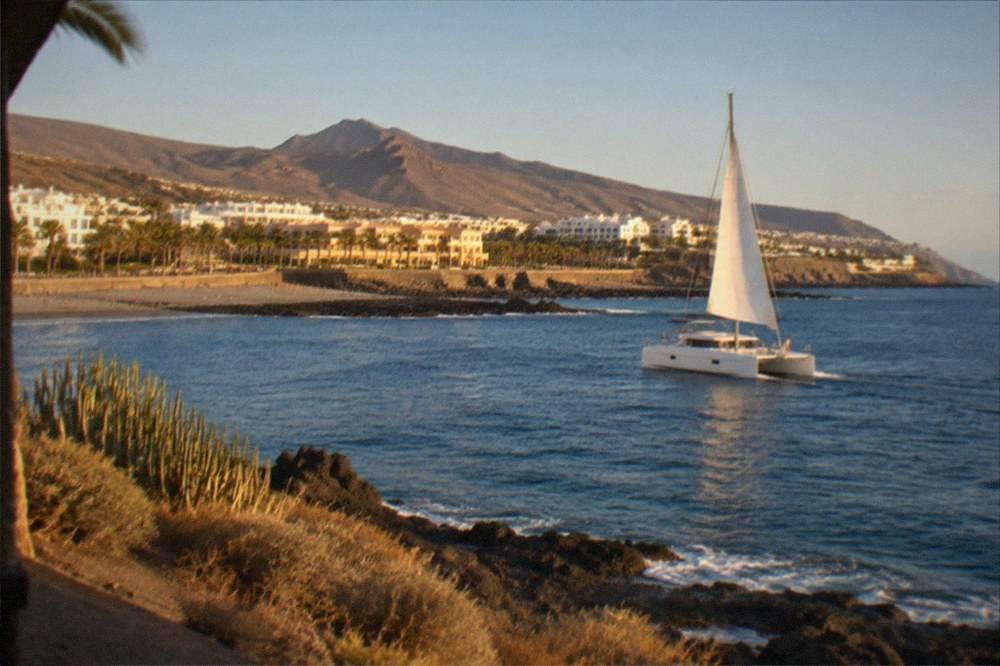
Above the water, a parasailing flight from Costa Adeje puts the whole grey-sand coastline in one frame, and a jet ski safari runs from Arona along the same coast. For the bigger half-day commitments, Siam Park's hours by season are on the operator's own page and are worth planning around, because the summer and winter closing times differ by a full hour:
| Siam Park season | Opening hours |
|---|---|
| 1 May to 29 Oct | 10:00 to 18:00 |
| 30 Oct to 30 Apr | 10:00 to 17:00 |
The park is open every day of the year, so the choice is about crowds and daylight rather than access. Loro Parque, the island's other big-ticket park, sits in Puerto de la Cruz on the north coast, and a twin ticket covering both parks is carded on this site for visitors planning to do the two on one holiday.
How Do You Get to Playa del Duque?
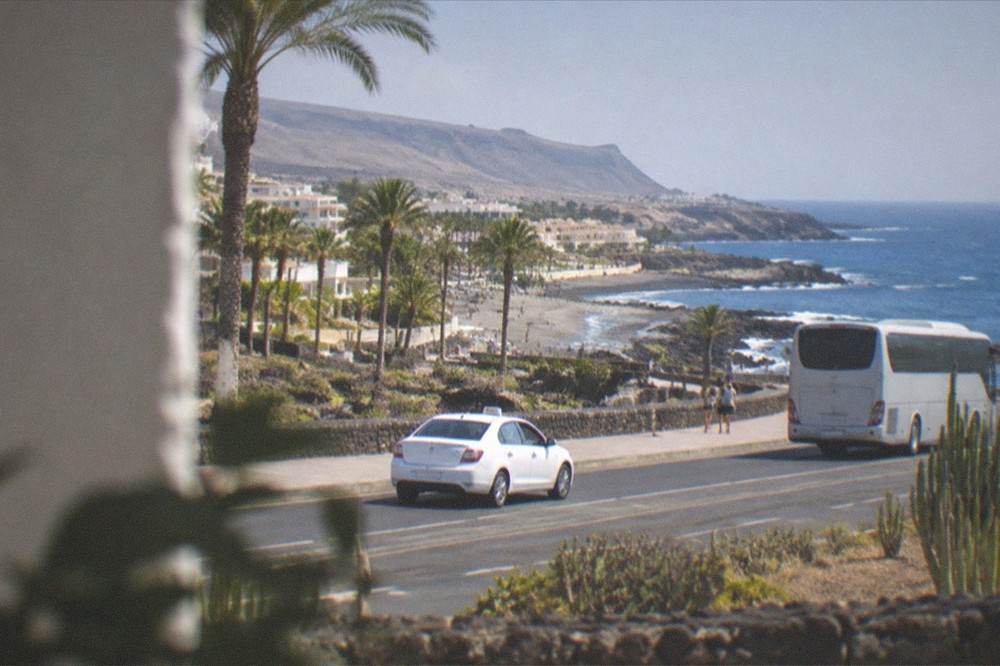
Tenerife South Airport is the airport for this coast, and TITSA's own airport page lists line 40 to the Costa Adeje bus station via Los Cristianos, line 343 express to Los Cristianos, and line 711 as the night bus, among others. From the Costa Adeje bus station the beach frontage is served by the local bus network, and visitors pay for public transport: single tickets, the EUR 10 day travelcard or the EUR 50 seven-day travelcard.
The airport detail is worth being precise about, because many guides name bus lines from memory. TITSA's own pages list lines 10, 40, 711, 343 and 415 at Tenerife South Airport, and lines 20, 30 and 343 at Tenerife North Airport. Line 40 is the one that matters for Costa Adeje, running to the resort's bus station via Los Cristianos. A same-day return ticket carries a 10% discount on trips of 20 km or more, and the travelcards are sold at the airport's ticket machines.
One correction that needs stating plainly: public transport on Tenerife is not free for visitors. The 2026 subsidy the Canary government announced covers resident passes only, held on a personalised Ten+ card. Visitors buy single tickets or the travelcards listed above. Taxis are white and metered from the start of the trip, with a fixed price agreed in advance possible for excursions. There is no tram to either airport, and the tram network does not reach the south of the island.
Are There Any Charges or Permits to Worry About?
The beach itself carries no fee on any official page read, and Tenerife has no per-night tourist tax in force or approved. The charges that do exist on this island are per-booking fees on specific trails, the Teide summit and Montana Blanca trails and the Masca gorge ticket, none of which affects a beach day in Costa Adeje.
This is worth setting out because the internet is full of confident wrong answers. No official page shows a per-night lodging tax on Tenerife, and nothing about proposals is sourced, so this site does not repeat any of it. What does cost money, for visitors planning beyond the beach: since Monday 19 January 2026 the 09:00 to 17:00 slots on the Teide summit trail cost EUR 15 for visitors and EUR 6 for residents of the other Canary Islands, free for Tenerife residents and children; the Montana Blanca trail costs EUR 6 on working days and EUR 10 at weekends for visitors; the Masca descent ticket is EUR 40.66 with the boat extra; and Barranco del Infierno is EUR 15 for non-resident adults. All are booked in advance, on Tenerife ON for the Teide trails and on the operator's own site for the others.
None of that touches a Costa Adeje beach holiday unless you plan a Teide day, which many visitors do. The cable car, the summit trail and the drive through the national park are three separate things, and the Teide cable car page on this site untangles them.
What About Free Walking Tours Near Playa del Duque?
The resort south, Los Cristianos, Costa Adeje, Adeje, Arona and Playa de las Americas, has no free pay-what-you-want walking tour listed on GuruWalk, and the three English-guided free walks carded on this site all run in the north, at La Orotava, Puerto de la Cruz and Santa Cruz de Tenerife.
That is a statement about what is listed, not a claim that nothing exists. The three northern walks are genuine options on a day trip up the island, each around 90 minutes to two hours, free to join and tip-based:
| Free walk | Area | Length |
|---|---|---|
| Visit to La Orotava - Free Tour | La Orotava | 1 hour 30 minutes |
| Visit to Puerto de la Cruz - Free Tour | Puerto de la Cruz | 1 hour 30 minutes |
| Free Tour of the Historic Center of Santa Cruz de Tenerife | Santa Cruz de Tenerife | 2 hours |
A day combining the north coast with one of these walks pairs naturally with the black-sand beaches and the colonial architecture of the Orotava valley, and the Puerto de la Cruz area guide covers what else that town holds. The free walks on GuruWalk are the one product on this site where the platform is named openly, because a free walk cannot be described honestly without saying whose it is.
For a fuller picture of how this beach fits an island itinerary, the Tenerife Travel Guide homepage gathers the planning pages, from ferries and car hire to month-by-month weather. If your holiday is based on this coast and you want the single biggest day out, the trio below is the shortlist that fits: the beginner dive with turtles that runs from Costa Adeje, the catamaran whale trip with buffet and transfer, and the Siam Park day ticket.
Common Questions About Playa del Duque
Is Playa del Duque a golden-sand beach?
No. The tourist board's own page describes El Duque as a grey sandy beach. Golden sand is what the same source records for Las Teresitas in Santa Cruz and Las Vistas in Arona.
Which municipality is Playa del Duque in?
Adeje. The tourist board places both Costa Adeje and El Duque inside Adeje municipality, which also holds Fanabe. The neighbouring resort strip of Playa de las Americas and Las Vistas sits across the boundary in Arona.
When is the sea warmest at Playa del Duque?
September and October, both at 23.7 Celsius in NOAA's 1991-2020 series for the south coast. The coolest reading is 19.1 Celsius in March, so the water never drops out of swimmable range for most visitors.
Is there a tourist tax to pay in Tenerife?
No per-night lodging tax is in force or approved on any official page read. The charges that do exist are per-booking fees on specific walking trails, such as the Teide summit trail at EUR 15 for visitors on the daytime slots since 19 January 2026, and the Masca gorge ticket at EUR 40.66.
Can you get to Playa del Duque by bus from the airport?
Yes. TITSA's own airport page lists line 40 from Tenerife South Airport to the Costa Adeje bus station via Los Cristianos, plus line 343 express and the 711 night bus. Visitors pay normal fares: single tickets, the EUR 10 day travelcard or the EUR 50 seven-day travelcard.
Are there free walking tours in Costa Adeje?
The resort south has no free pay-what-you-want walking tour listed on GuruWalk. The three free walks carded on this site all run in the north, at La Orotava, Puerto de la Cruz and Santa Cruz de Tenerife.