Playa El Bollullo
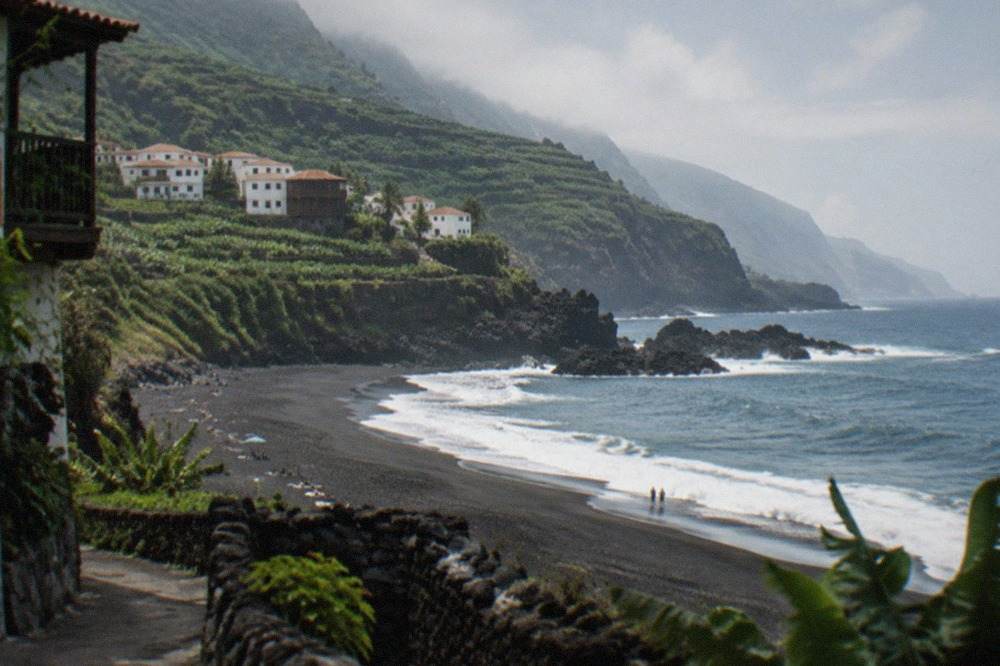
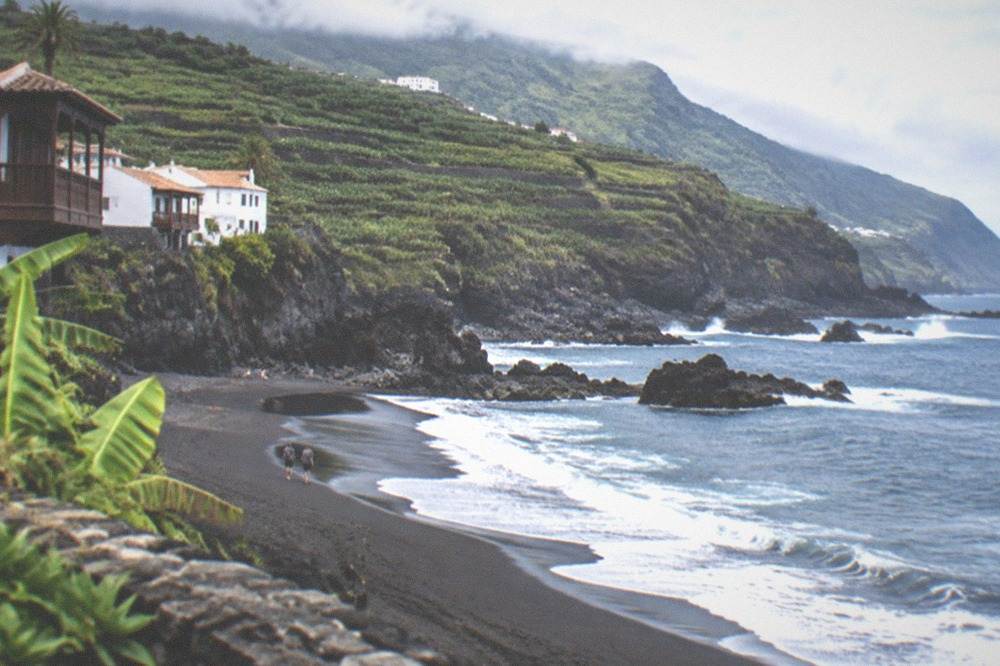
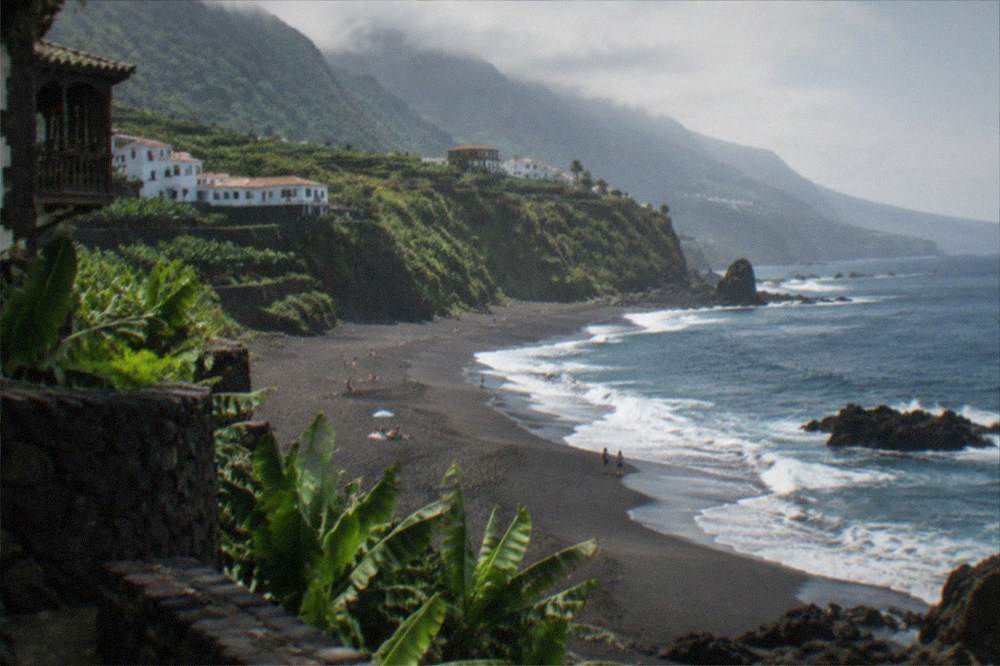
Playa El Bollullo is the tourist board's black-sand beach at the foot of a cliff, in the municipality of La Orotava on Tenerife's north coast. This page sets out what the official sources say about the beach, the sand, the sea, and how a visit fits into a wider day in the north of the island.
Short answer
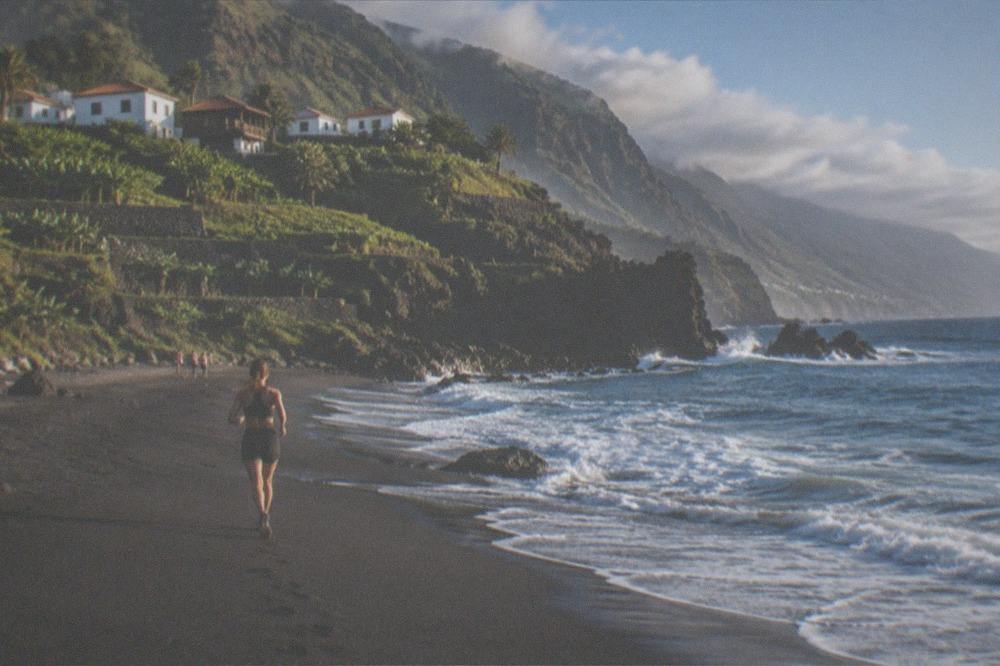
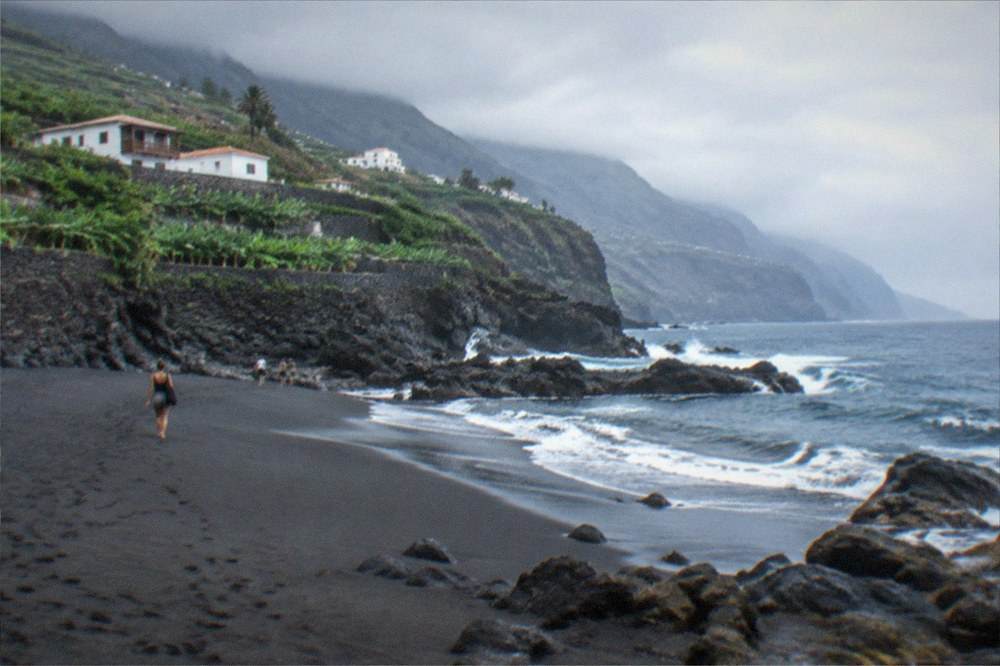
Playa El Bollullo is a black-sand beach at the foot of a cliff in La Orotava, on Tenerife's north coast. The tourist board describes it as black sand at the foot of a cliff, and it sits in the municipality of La Orotava, the same municipality that climbs from the coast up toward Teide National Park.
Playa El Bollullo is one of the places people mean when they talk about Tenerife's wilder side. The tourist board's own page for the beach keeps its description short and physical: black sand at the foot of a cliff. That is the fact this whole page stands on, and it is a more useful one than it sounds, because the sand colour and the setting separate El Bollullo from every beach in the purpose-built southern resorts. The beach sits in the municipality of La Orotava, the historic hill town whose land runs from the valley floor up to the edge of Teide National Park, and the north coast's weather belongs to a different climate station from the one at the airport in the south. This guide sets out what the official sources actually say, from the sand to the sea temperature to the bus fares, and where the honest gaps are.
Where Is Playa El Bollullo?
Playa El Bollullo sits on Tenerife's north coast in the municipality of La Orotava, and the tourist board describes it as black sand at the foot of a cliff. It is one of the island's north-coast beaches rather than a southern resort beach, which places it in the wetter, greener half of Tenerife, closer to Puerto de la Cruz and the Orotava valley than to Costa Adeje or Playa de las Américas.
The municipality matters more than most guides acknowledge. Tenerife is divided into 31 municipalities, and the tourist board's own beach pages assign each major beach to one. El Bollullo belongs to La Orotava, the same municipality that contains part of the island's high mountain country. The official register figures put La Orotava among the island's established towns, and its land stretches from the coast up toward the slopes below the national park. A visitor staying in Puerto de la Cruz or La Orotava town is already on the correct side of the island for this beach.
That geography has a practical consequence. The south of Tenerife, where most of the package hotels stand, faces the sheltered leeward coast. The north faces the open Atlantic and the trade winds, and AEMET's climate station at Tenerife North Airport, Los Rodeos, records a different climate from the one at Tenerife South. The two stations are on the same island, roughly an hour's coastline apart, and their published normals disagree by hundreds of millimetres of rain a year. Anyone planning a beach day in the north should plan with the north's numbers.
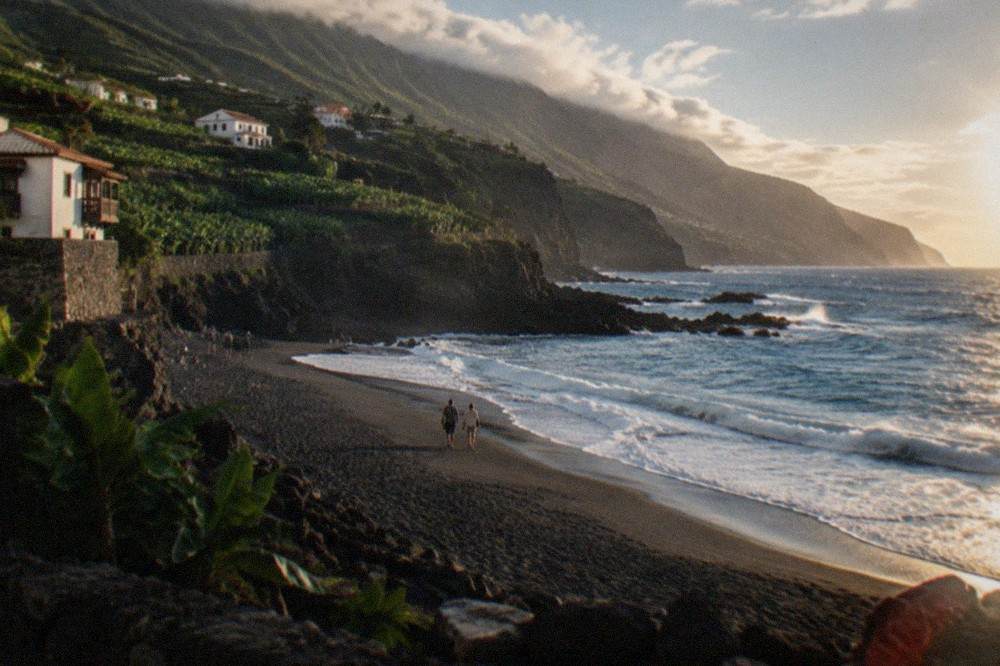
The tourist board assigns each of the island's headline beaches to a municipality, and the pattern is worth reading in one place:
| Beach | Municipality | Tourist board's sand description |
|---|---|---|
| El Bollullo | La Orotava | Black sand at the foot of a cliff |
| Las Teresitas | Santa Cruz (San Andrés) | Golden sand, palm trees, breakwaters |
| Las Vistas | Arona | Golden sand, calm behind breakwaters |
| Playa del Duque | Adeje | Grey sand |
| Fánabe | Adeje | Pale sand |
| El Médano | Granadilla de Abona | Fine grey sand under Montaña Roja |
Two things follow from that table. First, El Bollullo is the only beach on it described as black sand, which is the single clearest reason it appears on photographers' shortlists. Second, the golden-sand beaches the brochures show are all engineered or imported in character, with breakwaters doing the work of calm, while the black and grey beaches are the island's own material, left as the volcanoes delivered it. Neither is better; they are different products, and the honest guide is the one that says so.
What Is the Sand at El Bollullo Actually Like?
The tourist board describes El Bollullo as black sand at the foot of a cliff, and that description is the official one on file. The sand is the island's own volcanic material rather than imported or engineered beach fill, and no official page read for this site states its grain size, its mineral composition or its source, so those details are left out here rather than guessed at.
What can be said is what the description implies. A cliff-backed beach on a volcanic island is a beach whose sand arrives by erosion from the rock above and behind it, and Tenerife is a volcanic island by every official definition: its central feature is the stratovolcano Teide, which Spain's national parks agency lists as the highest peak in Spain at 3,715 m and which UNESCO records as rising 7,500 m above the ocean floor. The dark colour of a north-coast beach like this one is the colour of that geology ground fine. No official page in the fact file puts a figure on the cliff height at El Bollullo, and this site does not invent one.
The comparison the tourist board itself draws is between beach types. Its page for Las Teresitas describes golden sand, palm trees and breakwaters that calm the water, a beach built deliberately for safe swimming beside the capital. Its page for El Bollullo describes none of those things. It describes black sand and a cliff. The reader who wants a swimming lagoon and the reader who wants a wild, dark shoreline are being served by different beaches, and the official descriptions make the distinction without editorial help.
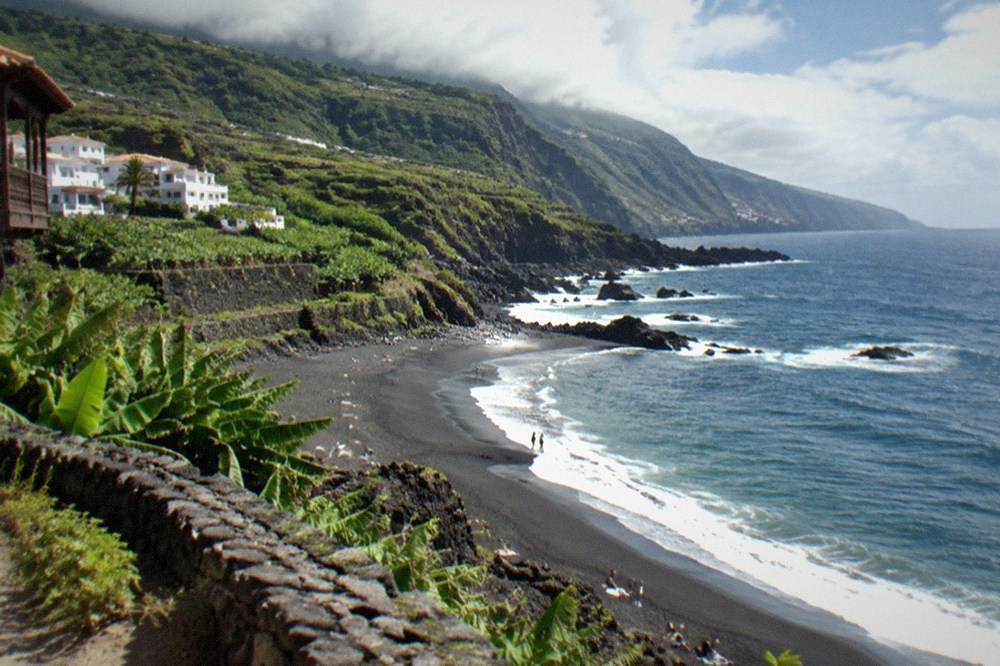
A note on the sand-colour claims that circulate online. Some pages describe Playa del Duque as golden Saharan sand; the tourist board's own page calls it a grey sandy beach, and that is the description this site prints. The same discipline applies here in the other direction: El Bollullo's sand is black by the official description, and no tonnage figure, no origin story and no age belongs on the page, because no official source read for this article states one. Where a number is not on file, the sentence does not get written.
How Do You Get to Playa El Bollullo?
El Bollullo is reached from the La Orotava side of Tenerife's north coast, and visitors who use public transport pay for it: TITSA sells single tickets priced by route, a EUR 10 day travelcard and a EUR 50 seven-day travelcard, and the airport ticket machines stock the cards. No bus route number for the beach itself is stated on any official page read for this guide, so the journey should be planned on TITSA's own journey planner rather than on a route number quoted from memory.
The transport facts that are on file are the fare structures, and they are worth knowing before any island journey. TITSA, the island bus operator, prices single tickets by route and accepts card or cash. The day travelcard at EUR 10 and the seven-day travelcard at EUR 50 are the visitor products, sold at airport ticket machines, and the Ten+ card itself costs EUR 2 with wallet top-ups from EUR 2 to EUR 100. A same-day return carries 10% off on trips of 20 km or more. Those are the published figures, in euros, exactly as the operator states them.
One warning that belongs on every transport paragraph on this site: public transport in Tenerife is not free for visitors. The Canary government's 2026 subsidy of 100% applies to resident passes only, held on a personalised Ten+ card by people resident in the Canary Islands. Visitors pay the fares above. Any page that tells a tourist the buses are free is describing somebody else's entitlement.
| Ticket | Price | Notes |
|---|---|---|
| Single ticket | Priced by route | Card or cash accepted |
| Same-day return | 10% off | Trips of 20 km or more |
| Day Travelcard | EUR 10 | Sold at airport ticket machines |
| 7 Day Travelcard | EUR 50 | Sold at airport ticket machines |
| Ten+ card | EUR 2 | Top-ups EUR 2 to EUR 100 |
For drivers, the honest position is the same as for bus numbers. No official page read for this guide states the car park arrangements at El Bollullo, its capacity or its hours, so none is claimed here. What the site can say is the general rule for the north coast: it is the island's greener, wetter half, and the road network serves the Orotava valley's towns, of which La Orotava itself is the one the beach's municipality is named for. Plan the drive on a current map, and treat any claim about a specific car park as unverified until seen on an official page.
For anyone weighing the two halves of the island before booking a base, the comparison guide to Los Cristianos vs Costa Adeje covers the southern options, and the north is where El Bollullo, Puerto de la Cruz and the Orotava valley sit. The beach rewards a north-coast base; from the south it is a deliberate day trip.
Is Playa El Bollullo Good for Swimming?
The sea off El Bollullo is the open north-coast Atlantic, and no official page read for this guide states lifeguard provision, flag systems or water conditions at the beach, so no safety claim is made here. The sea surface temperature off Tenerife's south coast runs from 19.1 to 23.7 Celsius across the year in NOAA's 1991-2020 figures, and the north coast's air climate, recorded at the nearby Tenerife North airport station, is wetter and milder than the south's.
Swimming is the question this site has to answer most carefully, because it is where invented reassurance does the most harm. The verified facts hold no lifeguard row, no flag description and no current statement for El Bollullo, and the correct treatment is to say so and point at judgement: the north coast faces open ocean, the beach sits below a cliff, and conditions on any given day are a matter for the visitor's own assessment and the local signage on the day. What the file does hold is climate, and climate is worth printing.
The sea temperature series is the south-coast one, and it is stated with its own provenance: NOAA's 1991-2020 normals, a different dataset and period from AEMET's 1981-2010 air normals, and never mixed into one claim. The warmest water in the series is September and October at 23.7 Celsius; the coolest is March at 19.1 Celsius. For a black-sand beach day, the practical reading is that the sea is swimmable in every month by temperature alone, and the variable is the wind and swell, not the warmth.
| Month | Sea surface temperature (C) |
|---|---|
| January | 19.9 |
| February | 19.2 |
| March | 19.1 |
| April | 19.5 |
| May | 20.2 |
| June | 21.4 |
| July | 22.2 |
| August | 23.1 |
| September | 23.7 |
| October | 23.7 |
| November | 22.5 |
| December | 21.1 |
The air climate tells the other half of the story. AEMET's station at Tenerife North Airport, Los Rodeos, sits at 632 m on the island's northern side, and its published normals show the pattern a visitor to the Orotava coast should expect: mild, sometimes wet winters and warm, dry summers, with far more rain than the south records.
| Month | Mean daily max (C) | Mean daily min (C) | Rain (mm) | Rain days of 1 mm or more |
|---|---|---|---|---|
| January | 16.0 | 10.2 | 80 | 7.7 |
| February | 16.7 | 10.0 | 70 | 7.4 |
| March | 18.2 | 10.7 | 61 | 6.8 |
| April | 18.5 | 10.9 | 39 | 6.2 |
| May | 20.1 | 12.0 | 19 | 3.8 |
| June | 22.2 | 14.0 | 11 | 2.4 |
| July | 24.7 | 15.7 | 6 | 1.7 |
| August | 25.7 | 16.6 | 5 | 1.1 |
| September | 24.9 | 16.5 | 16 | 2.8 |
| October | 22.5 | 15.2 | 47 | 6.5 |
| November | 19.6 | 13.3 | 81 | 8.3 |
| December | 17.1 | 11.5 | 82 | 8.8 |
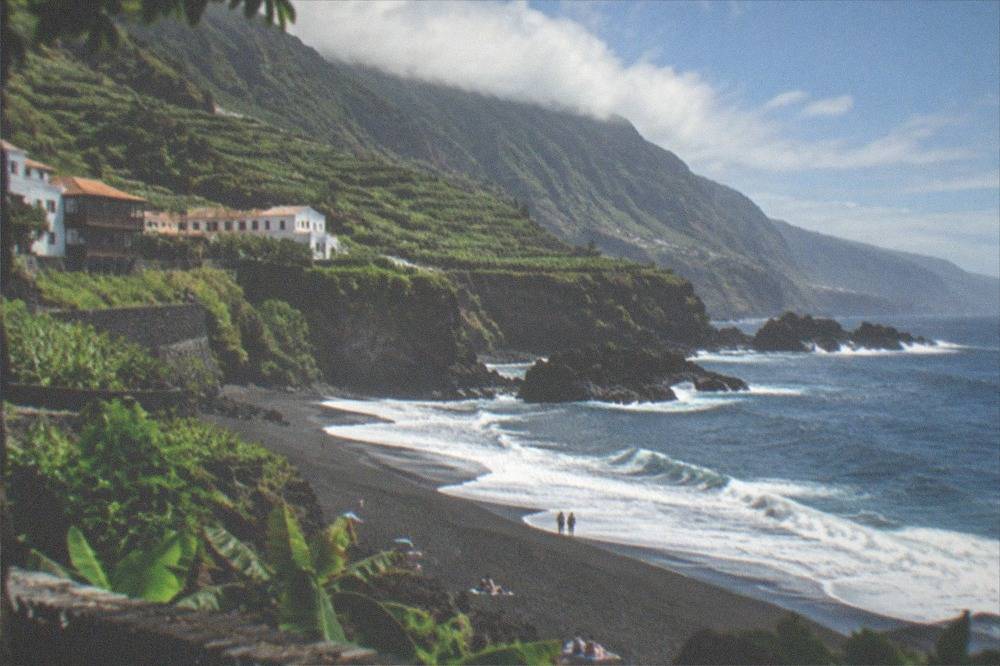
Compare that with the south. Tenerife South Airport's station records an annual 132 mm of rain on 15.2 rain days; the north airport's station records 520 mm on 64 days. The north is where the island's laurel forests and the Orotava valley's greenery live, and the rain is the reason. For a beach visitor, the trade is straightforward: the north coast gives dramatic scenery and changeable weather, the south gives reliability and engineered calm. El Bollullo is a north-coast product in full.
If a calmer, warmer water day is what the family actually needs, the south coast's water sports are the alternative. Parasailing runs from Costa Adeje, and the ten-minute flight format suits visitors who want the coastline from above without a full day's commitment.
What Can You Combine with a Day at El Bollullo?
A day built around El Bollullo fits naturally with the north coast's other sights: Playa Jardín in Puerto de la Cruz, the Garachico natural pools, the black-sand cove at Benijo in Anaga, and the drive up into Teide National Park, which charges no entry fee on any official page read for this site. The Orotava valley positions all of them within one day's driving, and the north's rain pattern means a flexible plan beats a rigid one.
The pairings that make sense are the ones the geography hands you. Playa Jardín sits in Puerto de la Cruz, the north's historic resort town, and works as the town stop on the same coastline. The Garachico natural pools are further west along the same coast, in the town the 1706 Trevejo eruption largely destroyed and whose old port it buried, according to the tourist board's own history of the place. For a wilder beach still, Benijo sits in the Anaga massif at the island's northeastern tip, where the mountains meet the Atlantic in the manner the north coast is known for.
Inland, the biggest single pairing is Teide National Park. The park is Spain's most visited national park, 5,242,653 visitors in 2024 by the national parks network's own count, and no official page read for this guide lists an entry fee for driving through it, the viewpoints or the other trails. The charges that do exist are per-booking fees on two specific trails, PNT 10 and PNT 07, and since 19 January 2026 the daytime slots cost EUR 15 for visitors on PNT 10 and EUR 6 or EUR 10 on PNT 07 depending on the day of the week. The beach and the volcano are the same municipality's two extremes, from black sand at sea level to 3,715 m at the summit.
For visitors who want the water rather than the view of it, the north coast's conditions are one option and the south's sheltered water is the other. Kayaking with turtles runs from Los Cristianos, in a small-group format with snorkelling and free videos, and it suits the traveller whose main aim is getting under the surface. Everything else covered here is indexed on Tenerife Travel Guide.
The whale watching is also based on the southwest, and it is the island's signature boat product. The waters between Tenerife and La Gomera hold what the World Cetacean Alliance calls a unique resident population of pilot whales, alongside bottlenose dolphins, and the WCA designated the Tenerife-La Gomera Marine Area a Whale Heritage Area in January 2021. The activity is regulated by Decreto 178/2000: no boat may approach within 60 m, at most three boats may be within 500 m, speed is limited to 4 knots inside 500 m, and no one may swim within 500 m. Authorised boats fly the Barco Azul flag. A cruise from Los Gigantes adds the cliffs that the tourist board describes as towering up to 600 m.
Do You Need to Book Anything for El Bollullo?
No. The beach itself carries no booking, no permit and no entry fee on any official page read for this site, and the trails around it carry none either under Tenerife ON's temporary rule that its other trails need no authorisation until 31 December 2026. The things a visitor to this island does have to book are elsewhere: the Teide summit trail, the Masca gorge and Barranco del Infierno, none of which is this beach.
That answer is worth spelling out because the island's booking landscape has grown complicated, and a visitor could be forgiven for assuming a permit lurks behind every landscape. The verified position is specific. Tenerife ON, the Cabildo's booking platform, requires reservations for a short list of high-demand spaces: the Teide summit trail PNT 10, the PNT 07 Montaña Blanca trail, the El Pijaral reserve in Anaga, the Masca gorge, Barranco del Infierno and a handful of others. For all other trails on the platform, the temporary rule states no authorisation or booking is needed until 31 December 2026. A beach visit is not on the reservation list.
The contrast is instructive. Masca, the gorge descent on the northwest coast, costs EUR 40.66 for the general ticket, boat not included, and requires arrival on TITSA line 355 from Santiago del Teide, with private vehicles refused. Barranco del Infierno costs EUR 15 for a non-resident adult, booked online in advance. Those are real, sourced, bookable things, and this site says so plainly. El Bollullo is not one of them. It is a beach, and the honest page treats it as one.
| Activity or place | Booking needed? | Cost on file |
|---|---|---|
| El Bollullo beach | No | None stated |
| Teide National Park, driving and viewpoints | No | No entry fee on any page read |
| Teide summit trail PNT 10, 09:00 to 17:00 slots | Yes, on Tenerife ON | EUR 15 visitors, EUR 6 other Canary residents |
| PNT 07 Montaña Blanca, working days | Yes, on Tenerife ON | EUR 6 visitors |
| Masca gorge descent | Yes, caminobarrancodemasca.com | EUR 40.66, boat extra |
| Barranco del Infierno | Yes, online in advance | EUR 15 non-resident adult |
One further money question belongs here, because it is asked of every destination now. Tenerife has no tourist tax: no official page read for this site shows a per-night lodging tax in force or approved on the island. The charges that do exist are the per-booking fees in the table above, none of which is a tax on staying. That is the complete, sourced answer, and any page promising a future tax as a decided thing is going beyond what the official record supports.
When Is the Best Time of Year for El Bollullo?
The best months by the published numbers are June to September, when the Tenerife North station records its lowest rainfall, 5 to 16 mm per month, and the sea surface off the south coast is at its warmest, 21.4 to 23.7 Celsius. Winter months bring 70 to 82 mm of rain per month at the north airport station, so a winter visit trades reliability for dramatic light.
The monthly shape of the island's tourism is on record too, and it says something about how crowded any beach will feel. ISTAC's FRONTUR-Canarias series counts tourists arriving by air, excluding Canary Islands residents, and its recent months show the pattern: July 2025 brought 611,623 air arrivals, August 2025 brought 618,578, while May 2025 brought 539,410. The shoulder months are quieter, and the north coast, which takes a minority of the island's visitors, is quieter still. Those figures count arrivals by air, and that definition travels with them wherever they are printed.
The rain table above is the planning tool. A visitor in February faces a mean daily maximum of 16.7 Celsius and 70 mm of rain at the north airport station; a visitor in August faces 25.7 Celsius and 5 mm. The sea is warmest late in the year, September and October both at 23.7 Celsius in the south-coast series, which makes early autumn the overlap where the air is warm, the rain is low and the water is at its peak. That is the window this site's own numbers point to, and it is a better answer than a generic "year-round" claim that ignores where the rain actually falls.
What Should You Bring to a Black-Sand Beach?
Bring what the official descriptions imply: the tourist board's page for El Bollullo mentions no facilities, no kiosks and no equipment hire, so nothing of the kind is claimed here. Dark sand absorbs heat strongly on sunny days, footwear matters, and the north coast's rain days, 64 a year with 1 mm or more at the north airport station, make a light waterproof a sensible addition outside the summer months.
The dark-sand point is physics rather than a sourced beach fact, and it is framed that way deliberately: black sand under strong sun gets hotter underfoot than pale sand, and families report this on every volcanic island. Beyond that, the honest packing advice is the general one for the north coast. The what to pack question is answered in full elsewhere on this site; for this beach the short version is footwear, water, and a layer for the wind the trade winds bring to any cliff-backed shore.
The beach's lack of an official facilities page is not a defect of this guide; it is the finding. The tourist board describes the sand and the cliff and stops there. A visitor should plan on the assumption that the beach is what it is described as being, a wild shoreline rather than a serviced resort beach, and be pleasantly surprised by whatever is there on the day rather than relying on an invented chiringuito.
How Does El Bollullo Compare with Tenerife's Other Beaches?
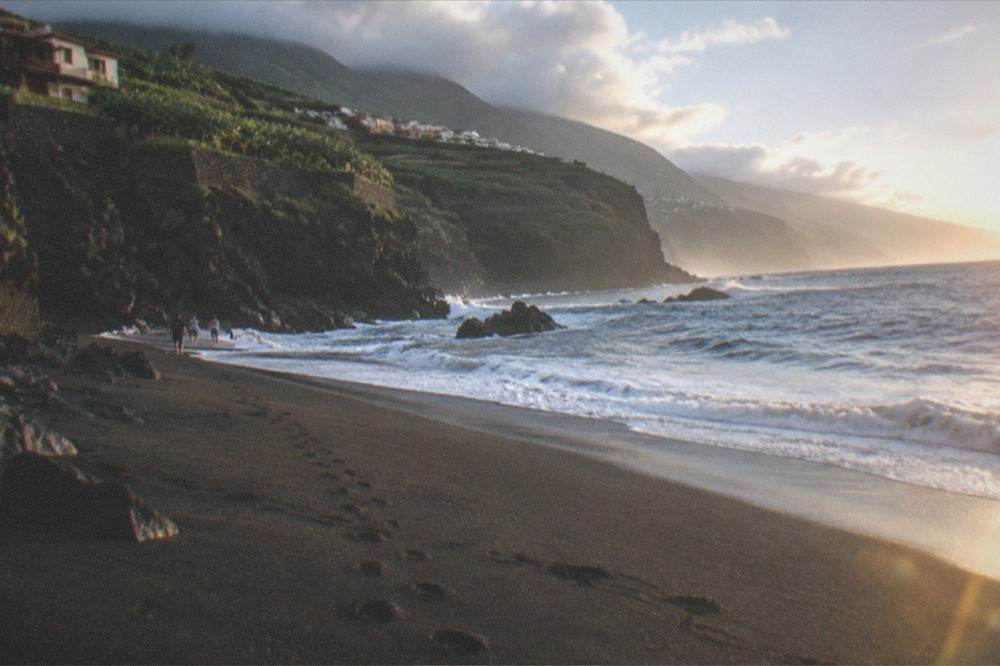
El Bollullo is the island's only officially black-sand beach in the tourist board's set, sitting at the wild end of a spectrum that runs through the grey sands of El Duque and El Médano to the golden, breakwater-protected Las Teresitas and Las Vistas. The choice is between a natural volcanic shoreline and an engineered swimming beach, and the official sand descriptions map that choice precisely.
Read the descriptions side by side and the island's beach offer sorts itself. Las Teresitas and Las Vistas are described with golden sand and calm water behind breakwaters: family swimming beaches. El Duque and Fánabe are grey and pale: resort beaches, serviced and convenient. El Médano is fine grey sand under Montaña Roja: a wind-sports beach. El Bollullo is black sand at the foot of a cliff: scenery first, swimming second. A first-time visitor who knows which of those five experiences they want can pick from the descriptions alone, and this site's best beaches roundup and the dedicated black sand beaches guide carry the fuller comparison.
For visitors splitting a week between the two coasts, the practical pattern is easy to state. Base in the south for the serviced beach days, the water parks and the boat trips, and take one or two days north for El Bollullo, the Orotava valley and the volcano. The south holds the island's headline park, Siam Park, open 365 days a year, 10:00 to 18:00 from 1 May to 29 Oct and 10:00 to 17:00 the rest of the year by the park's own timetable, and it is the natural rainy-day swap for a beach day that the north's weather has cancelled.
The south also holds the island's other great water draw, the whale and dolphin watching off the southwest coast, where the resident pilot whales the World Cetacean Alliance describes are protected by the approach rules in Decreto 178/2000 and the authorised boats fly the Barco Azul flag. An eco-focused, no-chase encounter from Los Cristianos is the format for visitors who want the sighting without the pursuit.

Common Questions About Playa El Bollullo
Is Playa El Bollullo free to visit?
No official page read for this site lists an entry fee, a permit or a booking requirement for El Bollullo. The beach is not on Tenerife ON's list of spaces requiring prior authorisation, and under the platform's temporary rule its other trails need no authorisation until 31 December 2026. The island's bookable items, the Teide summit trail, the Masca gorge and Barranco del Infierno, are elsewhere.
Is the sand at El Bollullo really black?
Yes, by the tourist board's own description: black sand at the foot of a cliff. It is the only beach in the tourist board's set of headline beaches described as black sand. No official source states the sand's depth, tonnage or composition, and this site does not guess at them.
Can you swim at El Bollullo?
The sea temperature is not the obstacle: NOAA's series puts the water off the south coast between 19.1 and 23.7 Celsius year-round, and the north's figures sit in the same mild range. What no official page states is lifeguard provision, flag systems or currents at this beach, so treat it as an open-Atlantic shore, read the local signage on the day, and let conditions decide.
Which municipality is El Bollullo in?
La Orotava. The tourist board assigns the beach to that municipality, the same one whose land climbs from the coast up toward Teide National Park. Tenerife has 31 municipalities in total by the INE register.
When should you visit El Bollullo?
By the published numbers, June to September is the driest window at the north airport station, 5 to 16 mm of rain per month, and the sea is warmest in September and October at 23.7 Celsius in the south-coast series. Early autumn is the overlap of warm air, low rain and peak water temperature.
Does Tenerife have a tourist tax that applies to a beach visit?
No. No official page read for this site shows a per-night lodging tax in force or approved on Tenerife. The charges that do exist are per-booking fees on specific trails and gorges, and none of them applies to a beach.